The thought of an interview can be nerve-wracking, but the right preparation can make all the difference. Explore this comprehensive guide to Control Room Operation interview questions and gain the confidence you need to showcase your abilities and secure the role.
Questions Asked in Control Room Operation Interview
Q 1. Describe your experience with monitoring and responding to system alerts.
Monitoring and responding to system alerts is the cornerstone of effective control room operation. It involves proactively identifying potential issues before they escalate into major incidents. My experience encompasses a wide range of alert types, from simple informational messages to critical failures requiring immediate action. I utilize a multi-layered approach.
- Tiered Alert System: I’m adept at categorizing alerts based on severity (critical, major, minor, warning) and source. This allows for efficient prioritization and routing. For instance, a critical database failure would immediately trigger escalation protocols, while a minor network fluctuation might only require monitoring.
- Automated Response and Escalation: I’m experienced with systems that automate responses to specific alerts, such as automatically restarting a service. However, judgment is crucial; automated responses need careful oversight. For example, simply restarting a server might solve a temporary issue, but could mask a larger underlying problem. Manual intervention is often necessary.
- Root Cause Analysis: My approach isn’t limited to immediate remediation. I investigate the root cause of recurring alerts to implement preventative measures. For instance, if a server consistently experiences high CPU utilization during peak hours, we might need to upgrade its hardware or optimize its configuration.
- Documentation and Reporting: Thorough documentation is vital. I meticulously record alert details, actions taken, and outcomes. This information is invaluable for identifying patterns, improving incident management procedures and for generating reports to stakeholders.
In a previous role, I successfully mitigated a server crash that could have led to a significant service disruption by quickly identifying the cause – a faulty hard drive – through the alert system and initiating a failover to a redundant server. This prevented a major outage and demonstrated the importance of proactive monitoring and prompt response.
Q 2. Explain your understanding of different types of control room software.
Control room software varies significantly depending on the industry and specific needs. However, several common types exist.
- Network Monitoring Systems (NMS): These tools provide real-time visibility into network performance, allowing for the identification of bottlenecks, outages, and security threats. Examples include SolarWinds and Nagios.
- Security Information and Event Management (SIEM) Systems: SIEMs collect and analyze security logs from various sources to detect and respond to security incidents. Splunk and QRadar are prominent examples.
- Supervisory Control and Data Acquisition (SCADA) Systems: These are critical for industrial control systems, monitoring and controlling physical processes in real-time. SCADA is commonly used in power grids, water treatment plants, and manufacturing facilities.
- Incident Management Systems: These platforms centralize incident reporting, tracking, and resolution. They often integrate with other systems to provide a holistic view of the operational environment. Tools like ServiceNow and Jira Service Management fall under this category.
My experience includes working with both NMS and SIEM systems, utilizing their capabilities to correlate alerts, pinpoint problematic areas and facilitate timely resolutions. For instance, I’ve used a SIEM system to detect a sophisticated intrusion attempt by identifying unusual login activity patterns, subsequently preventing a security breach.
Q 3. How do you prioritize multiple critical incidents simultaneously?
Prioritizing multiple critical incidents simultaneously requires a structured approach and a calm demeanor. Think of it like triage in a hospital emergency room – the most critical cases get immediate attention. I employ a multi-step process:
- Assessment: Quickly assess the severity and potential impact of each incident. This usually involves determining the affected systems, number of users impacted, and potential business consequences. For instance, a server crash affecting a core application warrants immediate attention over a minor network connectivity issue.
- Impact Analysis: Determine the business impact of each incident. Prioritize incidents with the highest potential for financial loss, reputational damage, or safety risks. For instance, a system outage impacting customer transactions would be prioritized higher than a system outage affecting internal reporting.
- Resource Allocation: Assign team members and resources based on the priority levels. The most experienced team members may address the most critical incidents. Simultaneously, other members can address less urgent issues.
- Communication: Maintain clear and constant communication among the team members and affected stakeholders. This helps ensure everyone is aware of the situation and their responsibilities.
- Escalation: Escalate incidents beyond the immediate team as needed, engaging management or other specialized teams when appropriate. For instance, a major security breach would require engagement with the cybersecurity team.
Effective prioritization is vital to minimize disruption and ensure efficient resource utilization. It requires experience, composure, and clear judgment.
Q 4. What are the key performance indicators (KPIs) you monitor in a control room setting?
Key Performance Indicators (KPIs) in a control room setting vary depending on the specific organization and its objectives. However, some common KPIs include:
- Mean Time To Resolution (MTTR): The average time taken to resolve an incident. Lower MTTR indicates improved efficiency.
- Mean Time Between Failures (MTBF): The average time between system failures. A higher MTBF indicates better system reliability.
- Uptime/Downtime: The percentage of time systems are operational versus down. High uptime is a crucial goal.
- Number of Incidents: The total number of incidents reported within a given time period. Trends in this KPI can indicate underlying system issues.
- Customer Satisfaction (CSAT): Measures customer satisfaction with service recovery following an incident.
- Alert Fatigue: Measures the number of false positives or low-priority alerts; minimizing this improves operational efficiency.
By monitoring these KPIs, we can identify areas for improvement and optimize control room operations. For example, consistently high MTTR might indicate a need for additional training or process improvements, whereas consistently high alert fatigue might suggest improvement to alert filtering criteria.
Q 5. Describe your experience with troubleshooting technical issues in a control room environment.
Troubleshooting technical issues in a control room requires a systematic and methodical approach. My experience spans a wide range of issues, from simple configuration errors to complex hardware failures.
- Gather Information: Start by collecting as much information as possible about the issue. This includes error messages, logs, and any other relevant data. This stage relies heavily on the information gathered during the alert system’s monitoring.
- Isolate the Problem: Once the problem is identified, try to isolate the root cause. This might involve using diagnostic tools, checking system logs, or contacting relevant technical support teams.
- Test Solutions: Once a potential solution is identified, test it thoroughly in a controlled environment (if possible) before implementing it in the production environment. This prevents introducing further issues.
- Document Solutions: Carefully document the problem, the steps taken to resolve it, and the final solution. This information is valuable for future troubleshooting and preventative maintenance.
- Post-Incident Review: Conduct a post-incident review to identify areas for improvement. Did the monitoring system catch the problem early enough? Were our response procedures efficient?
For example, I once resolved a network connectivity issue by systematically checking cables, network switches, and router configurations, eventually identifying a misconfigured firewall rule that was blocking traffic.
Q 6. How do you maintain situational awareness during high-pressure situations?
Maintaining situational awareness during high-pressure situations is crucial in a control room. It’s about having a clear understanding of what’s happening, what needs to be done, and what resources are available. I accomplish this through several techniques:
- Prioritization and Delegation: Prioritizing tasks based on urgency and impact allows me to focus my attention on the most critical issues. Delegation helps efficiently distribute workload among team members.
- Use of Monitoring Tools: Real-time monitoring tools provide a comprehensive overview of the system’s status. This allows for quicker identification of potential problems.
- Clear Communication: Regular communication with the team and stakeholders keeps everyone informed and allows for rapid response to changing circumstances.
- Breaks and Stress Management: Taking short breaks during high-pressure situations can help maintain focus and prevent burnout. Techniques for stress management, such as deep breathing exercises, can be helpful.
- Regular Training and Drills: Regular training and drills help prepare the team for high-pressure situations and reinforce procedures for incident response.
In a past incident involving multiple simultaneous outages, I used a combination of these techniques to maintain situational awareness, successfully coordinating the team’s efforts and ensuring a swift resolution.
Q 7. What are your methods for effective communication within a control room team?
Effective communication within a control room team is paramount for efficient incident response. I utilize a multi-pronged approach.
- Clear and Concise Language: Using clear and concise language avoids misunderstandings and ensures that everyone understands the situation and their role. Technical jargon is minimized and explained when necessary.
- Standardized Procedures: Implementing standardized communication procedures ensures consistency and efficiency in reporting and escalation.
- Regular Briefings: Regular briefings keep the team informed about the current status of ongoing incidents. These updates ensure everyone remains on the same page.
- Use of Communication Tools: Leveraging communication tools, such as instant messaging, ticketing systems and collaborative platforms, for seamless and rapid information exchange is crucial. For instance, a shared ticketing system streamlines the logging and tracking of issues.
- Active Listening: Actively listening to team members and stakeholders is vital to understand their perspectives and ensure that all voices are heard.
In one situation, using our team’s established communication protocol facilitated a quick resolution to a widespread service interruption by ensuring the right teams were informed and engaged quickly.
Q 8. How do you handle conflicting priorities or conflicting instructions from different sources?
Conflicting priorities are a daily occurrence in a control room environment. My approach involves a structured prioritization process. First, I identify the source and urgency of each instruction. I assess the potential impact of each task – considering factors such as safety, operational efficiency, and service level agreements (SLAs). Then, I use a matrix or decision tree, weighing the urgency and impact to rank tasks. If a true conflict remains, I escalate the issue to my supervisor, explaining the competing priorities and my rationale for the chosen course of action. For instance, if a minor system alert conflicts with a critical incident affecting a large number of customers, the critical incident takes precedence. Transparent communication with all involved parties is key, so they understand the prioritization rationale.
Q 9. Explain your experience with escalating issues to higher management.
Escalation is a crucial part of effective control room management. My experience includes escalating issues through various channels depending on severity and urgency. For example, a minor software glitch might be addressed within the team, while a major outage impacting core services requires immediate escalation to senior management and potentially even external stakeholders. I use a clear and concise communication format, providing factual details, impact assessment, and suggested solutions. I typically document all communication and actions taken in our logging system, maintaining a clear audit trail. In one instance, a sudden surge in network traffic threatened service availability. I immediately escalated the issue, providing real-time updates, and collaborated with the network team to implement a mitigation strategy, minimizing service disruption.
Q 10. What is your experience with using reporting and logging systems?
Reporting and logging systems are fundamental to control room operations. I have extensive experience with various systems, including those that track incidents, performance metrics, and security events. I’m proficient in generating reports, analyzing data trends, and using this information to identify areas for improvement. My skills encompass data visualization techniques, allowing for effective communication of findings to both technical and non-technical audiences. For example, I’ve used reporting systems to identify peak incident times, allowing for proactive staffing adjustments and improved resource allocation. I am also adept at using these systems to investigate the root cause of recurring incidents and to track the effectiveness of implemented solutions.
Q 11. Describe your knowledge of cybersecurity protocols relevant to control room operations.
Cybersecurity is paramount in control room operations. My understanding includes awareness of access control measures (e.g., multi-factor authentication, role-based access), regular security audits, incident response plans, and the importance of adhering to strict data handling policies. I am familiar with common vulnerabilities, such as phishing and social engineering, and how to mitigate them. I am also trained to recognize and report suspicious activity. I regularly participate in cybersecurity awareness training and stay updated on the latest threats and best practices. For example, in a previous role, we implemented a rigorous security awareness program to train staff on identifying and reporting phishing emails, substantially reducing the risk of successful attacks.
Q 12. How do you ensure data integrity and accuracy within the control room system?
Data integrity and accuracy are critical. We maintain data integrity through a combination of techniques, including data validation checks, regular data backups, version control, and the use of checksums to verify data consistency. All data modifications are logged, creating an auditable trail. We also employ rigorous data entry protocols and train personnel on proper procedures. For instance, any discrepancies or anomalies in data are flagged for immediate investigation and rectification. Data quality is regularly monitored, and corrective actions are put in place to maintain accuracy and minimize errors. This rigorous approach is crucial for providing reliable information for decision-making and operational efficiency.
Q 13. What are your strategies for maintaining focus and alertness during long shifts?
Maintaining focus and alertness during long shifts is challenging but essential for effective control room operation. I employ several strategies to combat fatigue and maintain peak performance. These include regular breaks, hydration, and avoiding long periods of sitting. I also utilize techniques such as mindfulness exercises to reduce stress and improve concentration. Collaboration with colleagues is also important – regular communication helps to maintain alertness and prevent task monotony. In addition, our control room environment includes features designed to promote alertness, such as adequate lighting and comfortable workspace ergonomics. Prioritizing tasks, delegating where appropriate, and utilizing technology for automation are further methods used to maintain productivity and avoid burnout.
Q 14. How familiar are you with disaster recovery and business continuity plans?
Disaster recovery (DR) and business continuity (BC) plans are critical aspects of control room operations. My experience includes participating in the development, testing, and execution of DR/BC plans. I understand the importance of having redundant systems, backup power, and alternative communication channels. I am familiar with various recovery strategies, such as failover systems and hot/cold site setups. I’ve been involved in various drills and simulations, ensuring readiness for a variety of scenarios, including natural disasters and cyberattacks. Regular reviews and updates to the plans are crucial to ensuring their continued relevance and effectiveness. A thorough understanding of these plans allows for quick and effective responses during critical incidents, minimizing downtime and safeguarding critical operations.
Q 15. Describe your experience with incident management and post-incident analysis.
Incident management is the process of responding to and resolving disruptions to normal operations, while post-incident analysis involves a thorough review to identify root causes, improve processes, and prevent recurrence. My experience spans several years, encompassing everything from minor service interruptions to major outages.
For instance, during a recent network failure impacting critical systems, I led the incident response team. We followed a structured approach: Identify the issue (network connectivity loss), Isolate the affected systems, Resolve the problem (a faulty router), Restore service, and then conducted a detailed post-incident review. This analysis uncovered a lack of redundancy in our router configuration, which we subsequently addressed. The post-incident analysis report, shared with relevant stakeholders, detailed the timeline, root cause analysis, corrective actions, and preventive measures.
- We utilized a ticketing system to track all actions and communications.
- Root cause analysis was performed using the 5 Whys method to drill down to the underlying issues.
- Corrective actions included implementing redundant routers and enhanced monitoring.
This systematic approach has consistently ensured rapid resolution times and minimized the impact on our operations.
Career Expert Tips:
- Ace those interviews! Prepare effectively by reviewing the Top 50 Most Common Interview Questions on ResumeGemini.
- Navigate your job search with confidence! Explore a wide range of Career Tips on ResumeGemini. Learn about common challenges and recommendations to overcome them.
- Craft the perfect resume! Master the Art of Resume Writing with ResumeGemini’s guide. Showcase your unique qualifications and achievements effectively.
- Don’t miss out on holiday savings! Build your dream resume with ResumeGemini’s ATS optimized templates.
Q 16. Explain your understanding of regulatory compliance within your field.
Regulatory compliance in control room operations varies depending on the industry (e.g., finance, energy, transportation). It involves adhering to various regulations concerning data privacy, security, operational safety, and environmental protection. My understanding is comprehensive and industry-specific, always staying abreast of the latest updates.
For example, in a financial institution’s control room, I’d be well-versed in regulations like GDPR (General Data Protection Regulation) and SOX (Sarbanes-Oxley Act), understanding their implications for data handling and reporting procedures. In an energy control room, compliance would extend to regulations concerning grid stability, emergency response, and environmental impact. I’m familiar with the processes needed for audits and documentation to ensure ongoing compliance.
My approach involves proactively monitoring regulatory changes, implementing necessary controls, and maintaining comprehensive documentation to demonstrate ongoing compliance. This ensures not only legal adherence but also maintains the integrity and security of the systems and information under my purview.
Q 17. How proficient are you in using relevant monitoring tools and technologies?
I’m highly proficient in using a variety of monitoring tools and technologies, both hardware and software. This includes network monitoring systems (e.g., Nagios, Zabbix), security information and event management (SIEM) tools (e.g., Splunk, QRadar), and system performance monitoring tools.
I am experienced in using these tools to monitor system performance, identify anomalies, and proactively address potential issues. For example, I use Splunk to analyze log data, identifying patterns indicative of security threats or performance bottlenecks. Using this information, I can effectively prevent problems before they impact the operations.
Beyond specific tools, my proficiency extends to understanding how these tools integrate with each other, allowing me to create a holistic view of our operational environment. This ensures efficient monitoring and timely response to any event.
Q 18. Describe a time you made a critical decision under pressure in a control room setting.
During a major power surge that threatened to cause a complete system shutdown, I had to make a critical decision under immense pressure. Initial diagnostics pointed to a potential cascade failure across multiple systems. I had less than five minutes to act before critical operations were compromised.
Instead of attempting a full system restart which would have caused significant downtime, I opted to isolate the affected sections, diverting the load to redundant systems. This approach, though risky, mitigated the impact to a fraction of what it could have been. While there was a brief service disruption to some users, we avoided a total outage. The post-incident analysis confirmed the decision was effective, and we further strengthened our redundancy measures.
This experience highlighted the importance of quick thinking, decisive action, and the ability to weigh risks in high-pressure situations. The understanding of our systems and their redundancies was key to that effective decision.
Q 19. How familiar are you with various communication systems used within a control room?
I’m familiar with a wide range of communication systems used in control room environments, including:
- Two-way radios: For immediate communication between control room staff and field personnel.
- Phone systems: Including internal and external phone lines for communication with stakeholders and emergency services.
- Paging systems: For urgent alerts and notifications.
- Email and instant messaging platforms: For routine communication and collaboration.
- Video conferencing: For remote collaboration with experts and stakeholders.
Understanding the capabilities and limitations of each system is essential for effective communication and coordination, particularly during emergencies. I have experience integrating these systems to create a seamless and efficient communication network.
Q 20. Explain your experience with managing and coordinating with external teams or agencies.
Managing and coordinating with external teams or agencies is crucial in many control room settings. This often involves collaborating with law enforcement, emergency services, or other utility providers.
For example, during a severe weather event, I coordinated with the local power company to ensure the safety of our facilities and minimize disruptions. This included regular updates, joint problem-solving, and efficient resource allocation. Effective communication, clear reporting, and adherence to established protocols were essential for a smooth collaboration.
My experience demonstrates the ability to establish strong working relationships with external entities, fostering trust and collaboration during both routine and emergency situations. This ensures a unified and effective response to challenges impacting our operations.
Q 21. Describe your experience with automation and scripting in a control room environment.
Automation and scripting play a vital role in modern control room operations, enhancing efficiency and reducing human error. My experience includes developing and implementing scripts for automated tasks such as system monitoring, alert generation, and incident response.
For instance, I created a Python script that automatically monitors server performance metrics and triggers alerts if thresholds are exceeded. This script integrates with our existing monitoring tools, providing proactive alerts and reducing the need for manual intervention. # Example Python snippet: if cpu_usage > 90: send_alert()
Beyond scripting, I’m familiar with various automation platforms and tools, allowing for the integration of different systems and the automation of complex workflows. This reduces manual work, improves response times, and enables us to handle a larger volume of events more efficiently.
Q 22. How do you identify and address potential system vulnerabilities?
Identifying and addressing system vulnerabilities in a control room requires a multi-layered approach, combining proactive measures with reactive responses. Think of it like securing a castle – you need strong walls (prevention) and vigilant guards (detection and response).
- Vulnerability Assessments: Regularly scheduled penetration testing and vulnerability scans using tools like Nessus or OpenVAS are crucial. These identify weaknesses in our systems, from outdated software to misconfigured firewalls.
- Security Information and Event Management (SIEM): A SIEM system collects and analyzes logs from various sources, providing real-time alerts on suspicious activity. For instance, a sudden spike in login attempts from an unusual location might indicate a brute-force attack.
- Intrusion Detection/Prevention Systems (IDS/IPS): These act as the castle’s guards, monitoring network traffic for malicious patterns. An IDS will alert us to a potential threat; an IPS will automatically block it.
- Regular Software Updates and Patching: This is fundamental. Outdated software is a prime target for attackers. We maintain a strict patching schedule and utilize automated update mechanisms where possible.
- Access Control: Implementing strong password policies, multi-factor authentication (MFA), and role-based access control (RBAC) limits unauthorized access. This ensures only authorized personnel can access sensitive systems and data.
- Incident Response Plan: Having a well-defined plan for handling security incidents is critical. This plan outlines steps for containing the breach, mitigating the damage, and conducting a post-incident analysis.
For example, during a recent audit, we identified a vulnerability in our SCADA system’s communication protocol. Our response involved immediately patching the vulnerability, implementing enhanced logging, and retraining operators on security best practices.
Q 23. What are your methods for training new control room operators?
Training new control room operators is a structured process that blends theoretical knowledge with hands-on experience. It’s not just about knowing the buttons; it’s about understanding the systems and processes behind them. We use a blended learning approach:
- Classroom Training: This covers theoretical aspects such as system architecture, emergency procedures, and safety regulations. We use interactive simulations and case studies to enhance understanding.
- On-the-Job Training (OJT): New operators work alongside experienced mentors, shadowing them during routine operations and gradually taking on more responsibility. This allows for practical application of learned knowledge and helps build confidence.
- Simulations and Role-Playing: We use realistic simulations to replicate various scenarios, including equipment malfunctions and emergency situations. Role-playing allows operators to practice their response skills in a safe environment.
- Regular Assessments and Feedback: We conduct regular performance evaluations to identify areas for improvement and provide targeted feedback. This ensures continuous skill development.
- Continuing Education: We encourage operators to participate in ongoing training and professional development programs to stay abreast of new technologies and best practices.
Imagine teaching someone to fly a plane – you can’t just hand them the controls. Our training program mirrors this, gradually building their skills and confidence until they are ready to operate independently.
Q 24. Describe your experience with using remote access technologies for monitoring and control.
My experience with remote access technologies for monitoring and control is extensive. Secure remote access is becoming increasingly crucial in today’s interconnected world, allowing for efficient monitoring and troubleshooting from anywhere with a secure connection. We primarily utilize VPNs (Virtual Private Networks) and secure remote desktop protocols.
- VPNs: Create encrypted tunnels, securing data transmitted between remote locations and our control room. This protects sensitive information from interception.
- Secure Remote Desktop Protocols: Allow authorized personnel to access and control systems remotely, essential for troubleshooting equipment failures or performing routine maintenance. We use strong authentication and encryption.
- Cloud-Based Monitoring Platforms: We leverage cloud-based platforms that allow us to monitor system performance and receive alerts in real-time, irrespective of location. This provides an additional layer of oversight.
- Cybersecurity Measures: Strict access controls, regular security audits, and intrusion detection systems are paramount to ensuring the security of remote access. Multi-factor authentication is mandatory.
For instance, during a recent power outage at a remote substation, our team used secure remote access to diagnose the problem, remotely reset the system, and minimize downtime. This illustrates the critical role of remote access in enhancing operational efficiency and resilience.
Q 25. What are your strategies for managing stress and fatigue in a control room setting?
Managing stress and fatigue in a control room environment is vital for ensuring operator well-being and operational safety. It’s a high-pressure environment, and burnout is a real risk. Our strategies include:
- Ergonomic Workstations: Providing comfortable chairs, adjustable screens, and well-lit workspaces minimizes physical strain.
- Shift Rotation and Adequate Breaks: Implementing effective shift patterns and ensuring adequate break times help prevent fatigue. We rotate shifts to minimize disruption to circadian rhythms.
- Stress Management Training: We provide training on stress management techniques, such as mindfulness and breathing exercises. This empowers operators to manage stress effectively.
- Teamwork and Communication: Fostering a strong team environment where operators feel supported and can openly communicate reduces individual stress loads. Regular team meetings are encouraged.
- Wellness Programs: We offer wellness programs that include access to mental health resources, employee assistance programs, and health screenings.
- Monitoring Operator Performance: We monitor key performance indicators (KPIs) and operator behavior to identify potential signs of fatigue or stress. This allows us to intervene proactively.
Think of it like a marathon, not a sprint. We need to pace ourselves and support each other to reach the finish line successfully. A fatigued operator is a safety risk.
Q 26. Explain your knowledge of different network topologies and their implications for control room operations.
Understanding network topologies is crucial for efficient and secure control room operations. The choice of topology impacts performance, scalability, and security. Common topologies include:
- Star Topology: All devices connect to a central hub or switch. This is common in control rooms due to its simplicity and ease of management. However, a single point of failure exists at the hub.
- Ring Topology: Devices are connected in a closed loop. Data travels in one direction. This offers redundancy but can be more complex to manage.
- Mesh Topology: Multiple paths exist between devices. This is highly reliable and fault-tolerant but can be costly and complex to implement.
- Bus Topology: Devices are connected to a single cable. Simple but susceptible to single points of failure.
In our control room, we primarily utilize a star topology for its simplicity and ease of management. However, redundant network pathways are incorporated to minimize disruption during failures. Choosing the wrong topology can significantly impact operational efficiency and system resilience. For example, a bus topology would be highly vulnerable to a single cable failure, causing complete network outage.
Q 27. How do you ensure compliance with safety regulations and procedures?
Ensuring compliance with safety regulations and procedures is paramount in control room operations. We employ a multi-pronged approach:
- Regular Audits and Inspections: We conduct regular internal and external audits to verify compliance with relevant standards and regulations. This ensures our operations remain within legal and safety parameters.
- Standard Operating Procedures (SOPs): We maintain detailed SOPs for all critical operations, outlining step-by-step procedures for handling various situations. These ensure consistency and minimize the risk of human error.
- Training and Certification: All operators undergo comprehensive training and receive necessary certifications to ensure competence and compliance. This is crucial for maintaining safety standards.
- Emergency Response Plans: We have comprehensive emergency response plans in place, including procedures for handling equipment failures, natural disasters, and cybersecurity incidents. These plans are regularly tested and updated.
- Documentation and Record Keeping: We maintain meticulous records of all operations, maintenance activities, and safety incidents. This aids in identifying trends, improving processes, and demonstrating compliance.
- Continuous Improvement: We actively seek opportunities to improve our safety performance through regular reviews, analysis of incidents, and implementation of best practices.
For example, we adhere strictly to OSHA (Occupational Safety and Health Administration) standards for electrical safety and confined space entry. Compliance isn’t just a box to check; it’s a continuous commitment to safety.
Q 28. How do you handle technical failures or equipment malfunctions in the control room?
Handling technical failures or equipment malfunctions requires a calm, systematic approach. Our response involves:
- Immediate Assessment: Quickly identify the nature and extent of the failure. This involves checking system logs, alarms, and operator reports.
- Emergency Procedures: Implement pre-defined emergency procedures for the specific type of failure. This might involve switching to backup systems, isolating affected components, or initiating safety shutdowns.
- Troubleshooting and Repair: Based on the assessment, initiate troubleshooting steps to identify the root cause and implement the necessary repairs. This might involve consulting technical manuals, contacting vendors, or engaging specialized technicians.
- Communication: Maintain clear and timely communication with relevant stakeholders, including supervisors, other operators, and maintenance personnel. This ensures everyone is aware of the situation and involved in the response.
- Documentation: Meticulously document all aspects of the failure, troubleshooting steps, and repair actions. This is essential for post-incident analysis and prevention of future occurrences.
- Post-Incident Review: After the issue is resolved, conduct a thorough review to identify the root cause of the failure, evaluate the effectiveness of the response, and implement corrective actions to prevent recurrence.
For example, during a recent server failure, our team quickly switched to our backup server, minimizing downtime. Following a post-incident review, we upgraded our server hardware and implemented more robust redundancy measures.
Key Topics to Learn for Control Room Operation Interview
- System Monitoring & Diagnostics: Understanding the intricacies of monitoring various systems (e.g., power grids, network infrastructure, industrial processes) and effectively diagnosing malfunctions or deviations from normal operating parameters. Practical application includes interpreting real-time data, identifying anomalies, and initiating appropriate responses.
- Emergency Response Procedures: Mastering established protocols for handling emergencies, including understanding escalation paths, communication strategies, and safety measures. Practical application involves simulating crisis scenarios and demonstrating effective decision-making under pressure.
- Data Analysis & Reporting: Analyzing operational data to identify trends, patterns, and potential issues. This includes generating accurate reports, identifying areas for improvement, and contributing to continuous process optimization. Practical application includes using data visualization tools and presenting findings effectively.
- Technical Troubleshooting & Problem Solving: Developing a systematic approach to identifying and resolving technical issues, utilizing diagnostic tools and resources effectively. This includes documenting troubleshooting steps and collaborating with other teams to resolve complex problems. Practical application involves case studies of troubleshooting scenarios and demonstrating methodical problem-solving skills.
- Safety & Compliance Regulations: A thorough understanding of relevant safety protocols, industry standards, and regulatory compliance requirements. Practical application includes demonstrating awareness of safety procedures and adhering to regulations in simulated operational scenarios.
- Teamwork & Communication: Effective communication and collaboration with colleagues, supervisors, and other stakeholders. This includes clear, concise reporting and the ability to work effectively in a team environment under pressure. Practical application includes demonstrating strong interpersonal skills and effective communication techniques in role-playing scenarios.
Next Steps
Mastering Control Room Operation opens doors to exciting career advancements, offering opportunities for specialization, leadership roles, and increased earning potential. To maximize your job prospects, a well-crafted, ATS-friendly resume is crucial. ResumeGemini is a trusted resource to help you build a professional resume that highlights your skills and experience effectively. We provide examples of resumes tailored to Control Room Operation to guide you through the process. Invest time in crafting a compelling resume – it’s your first impression to potential employers.
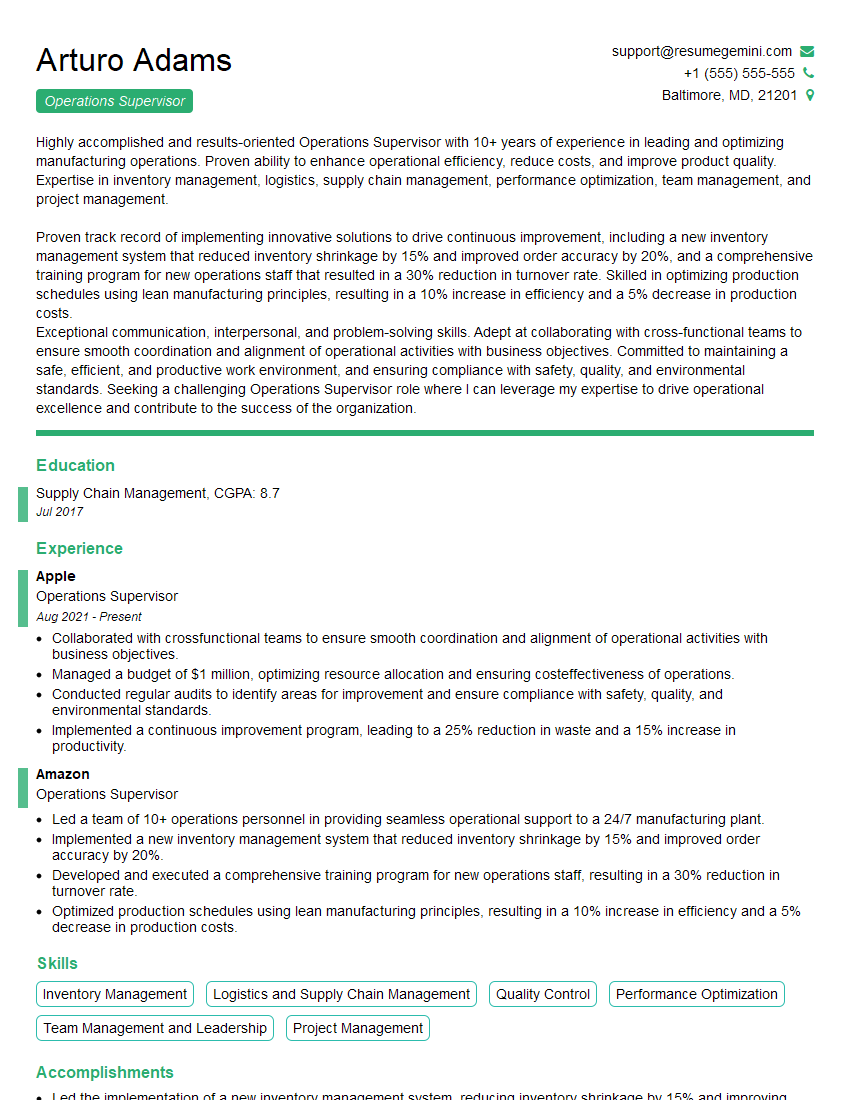
Operations Supervisor Resume Sample
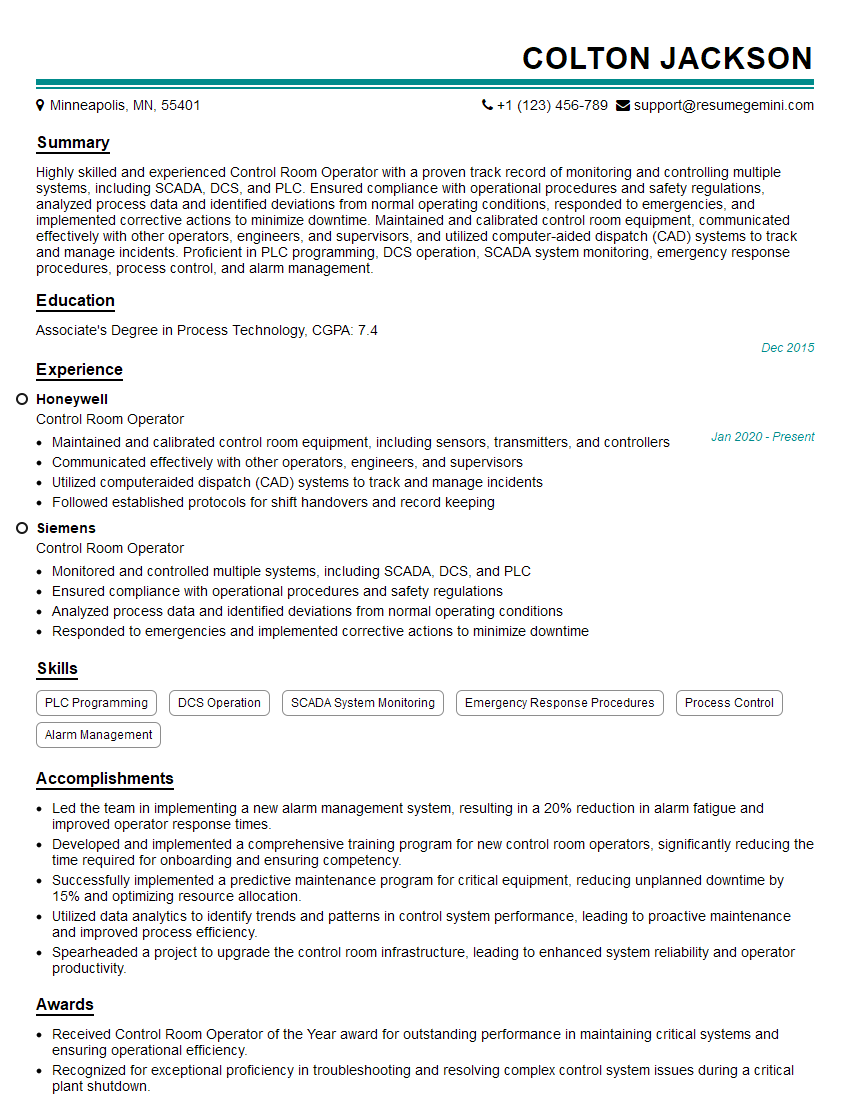
Control Room Operator Resume Sample
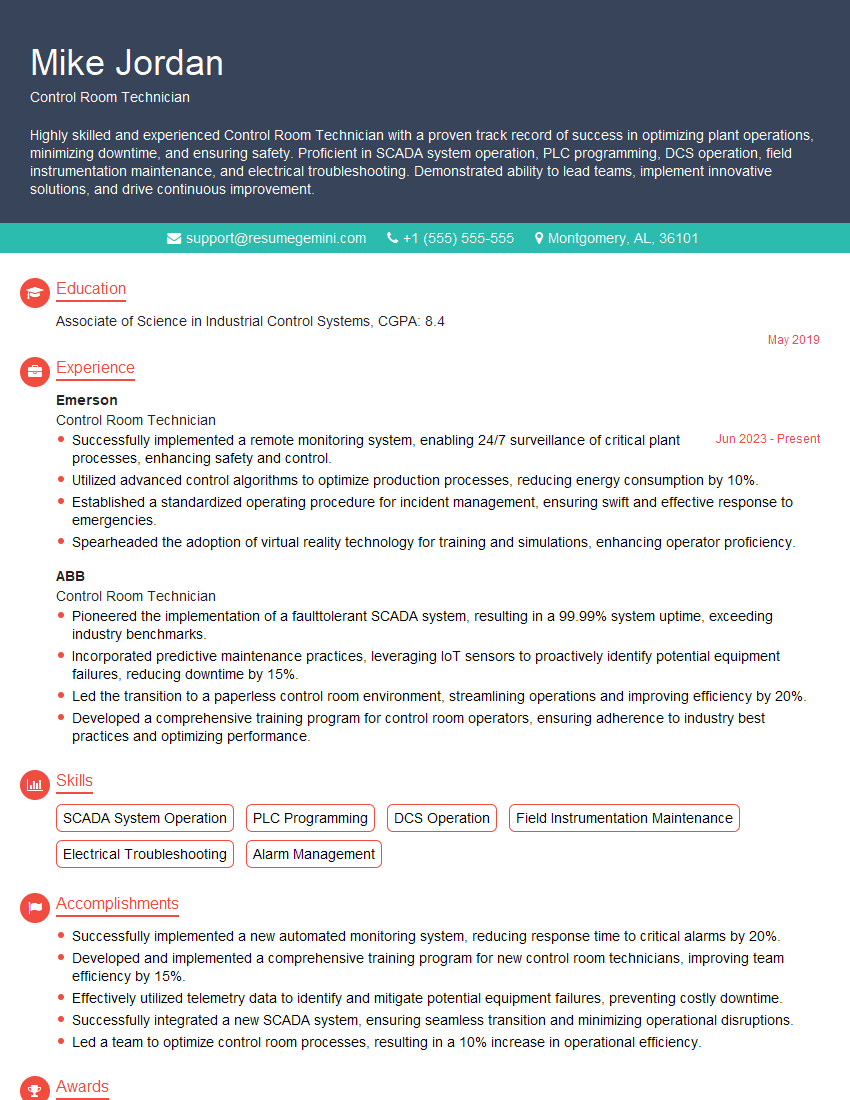
Control Room Technician Resume Sample
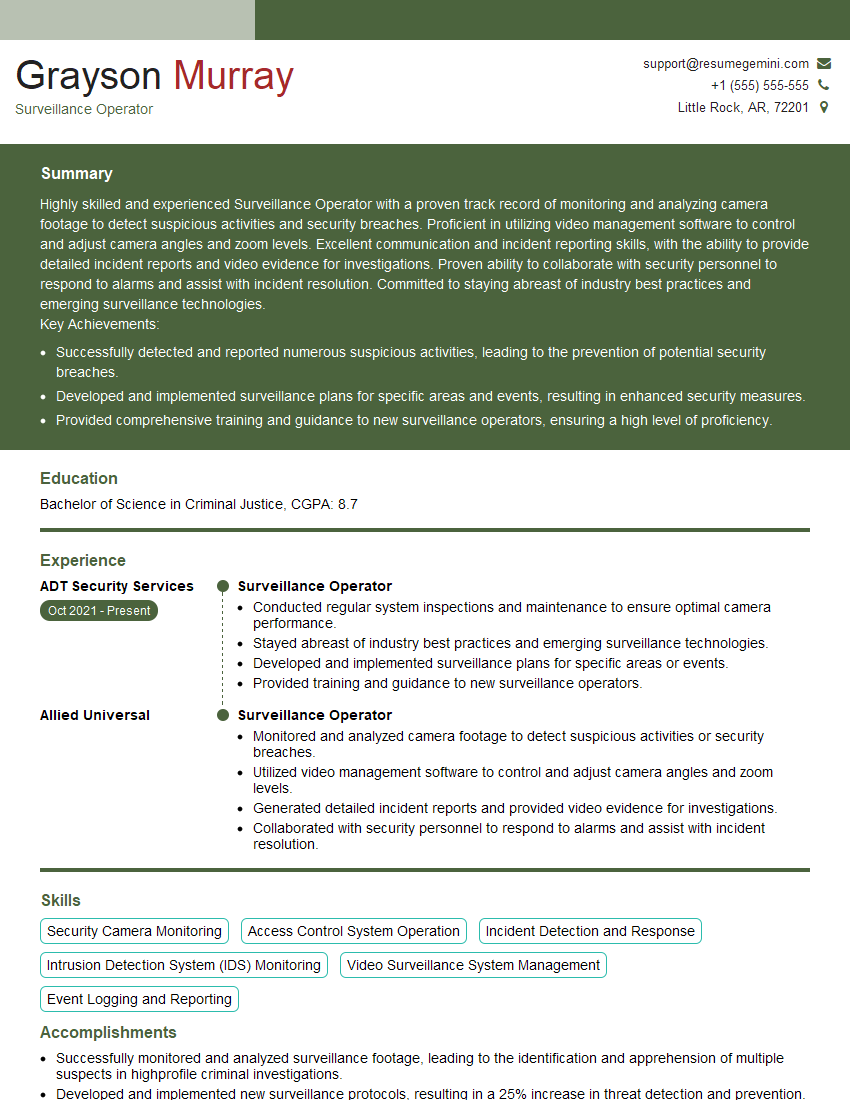
Surveillance Operator Resume Sample
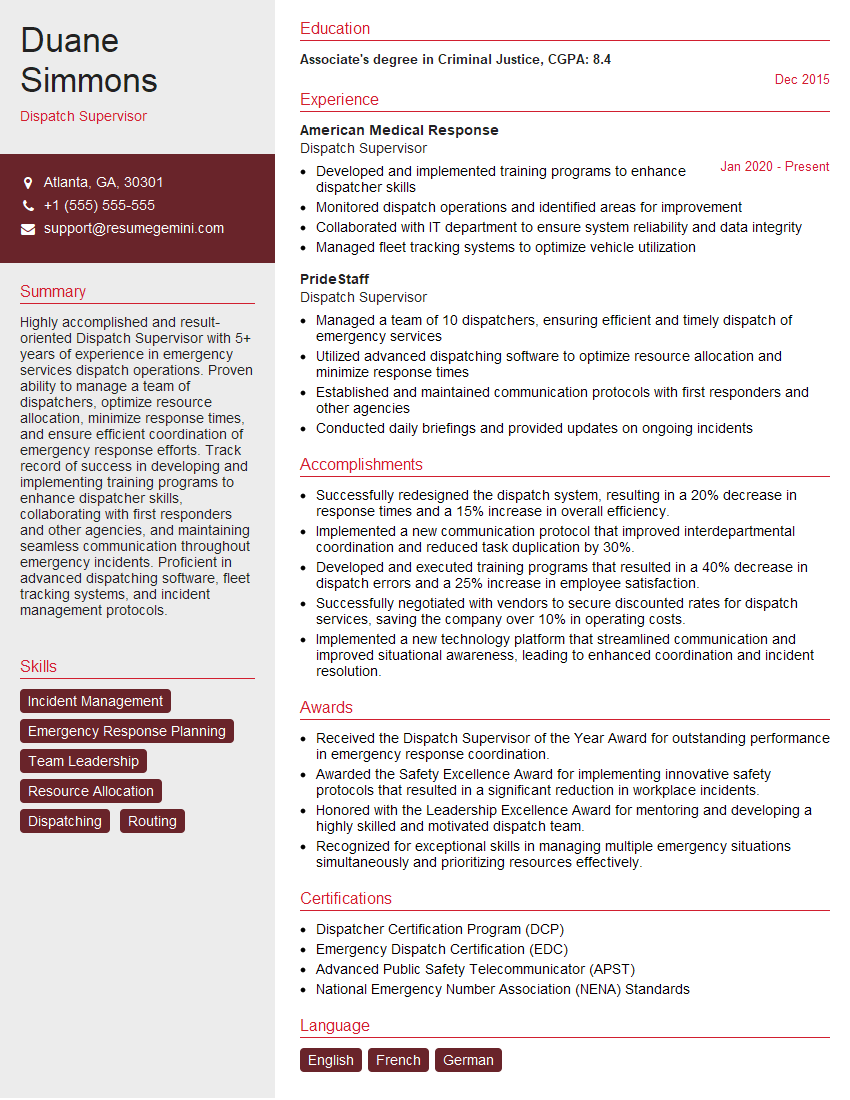
Dispatch Supervisor Resume Sample
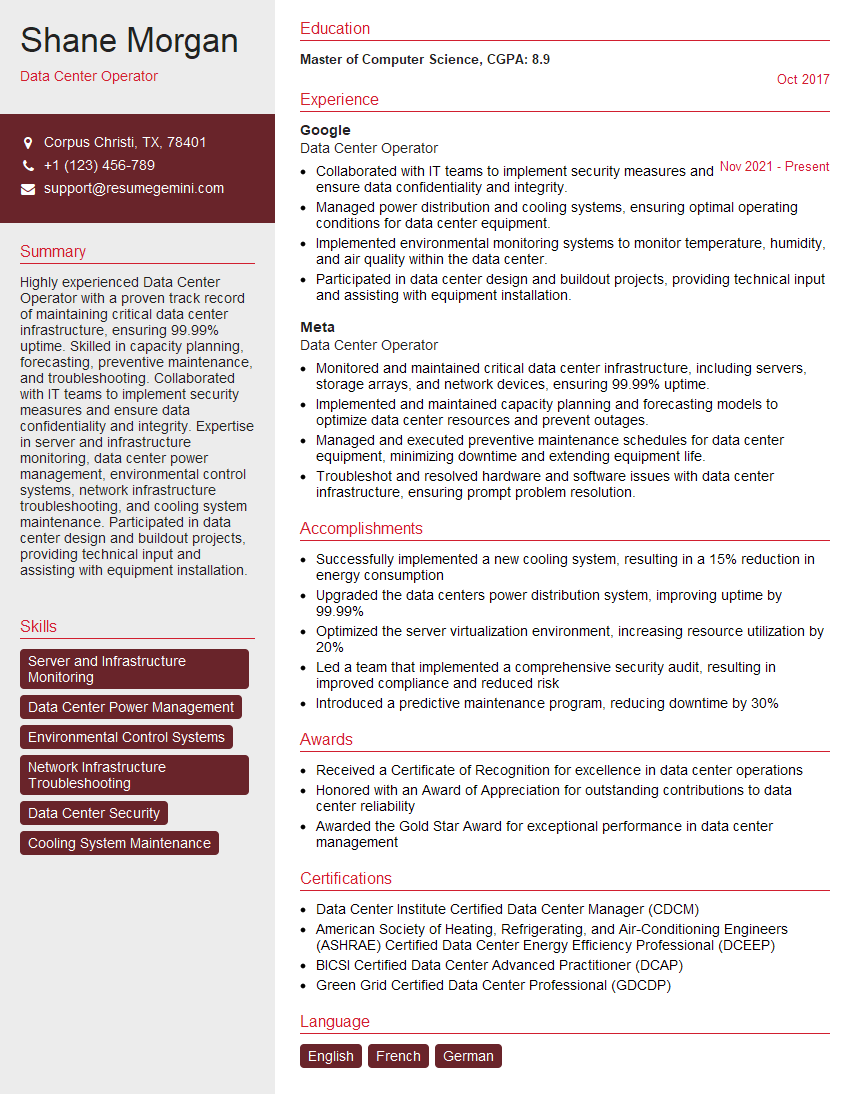
Data Center Operator Resume Sample
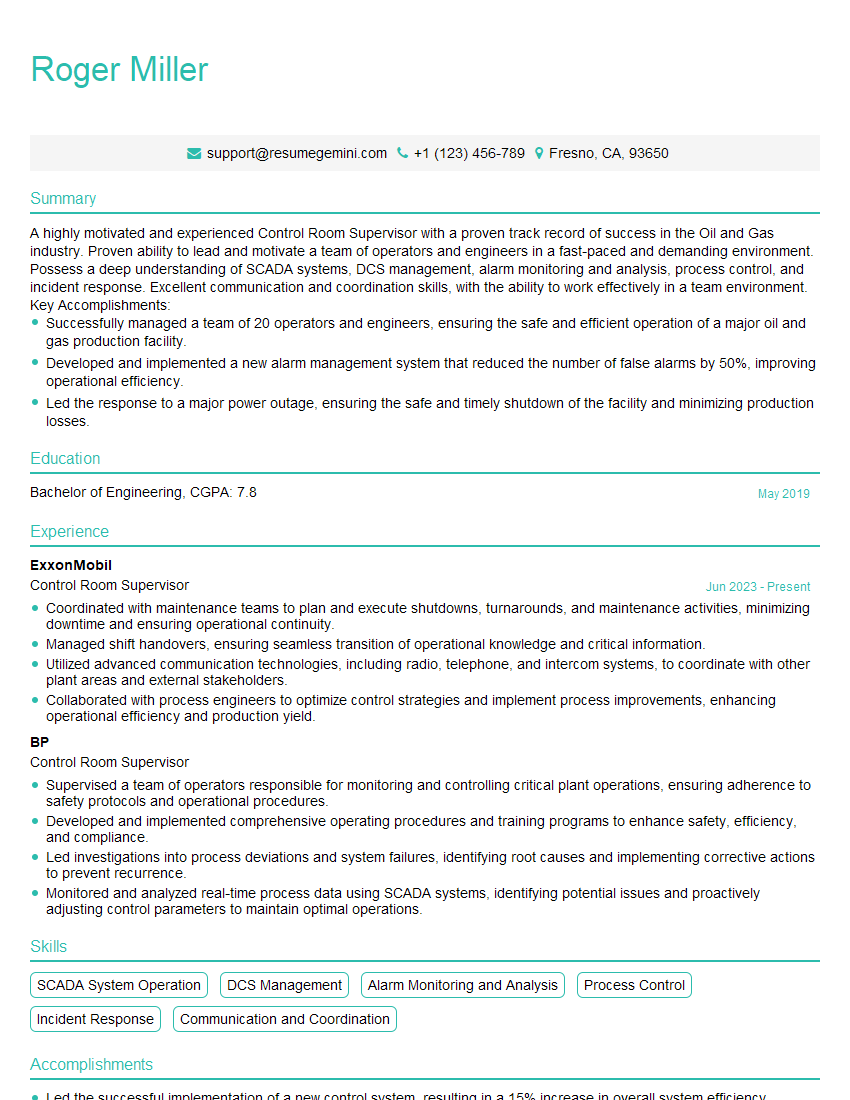
Control Room Supervisor Resume Sample
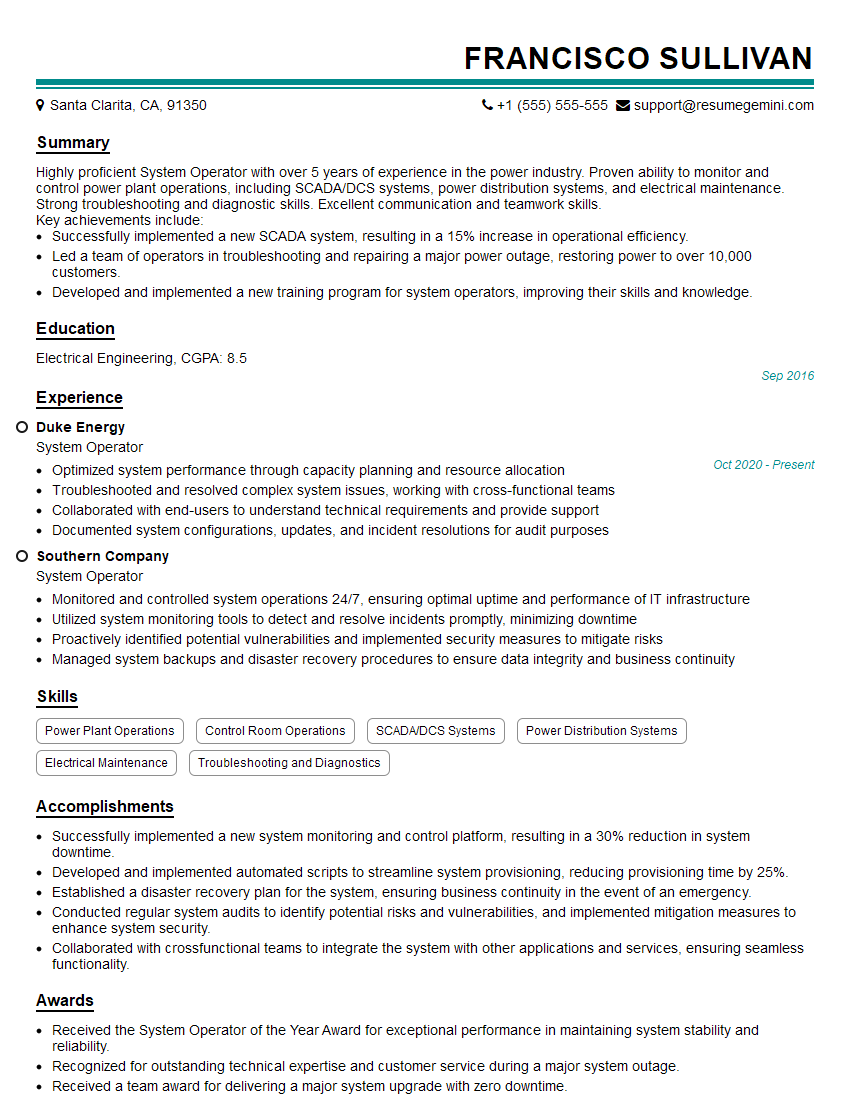
System Operator Resume Sample
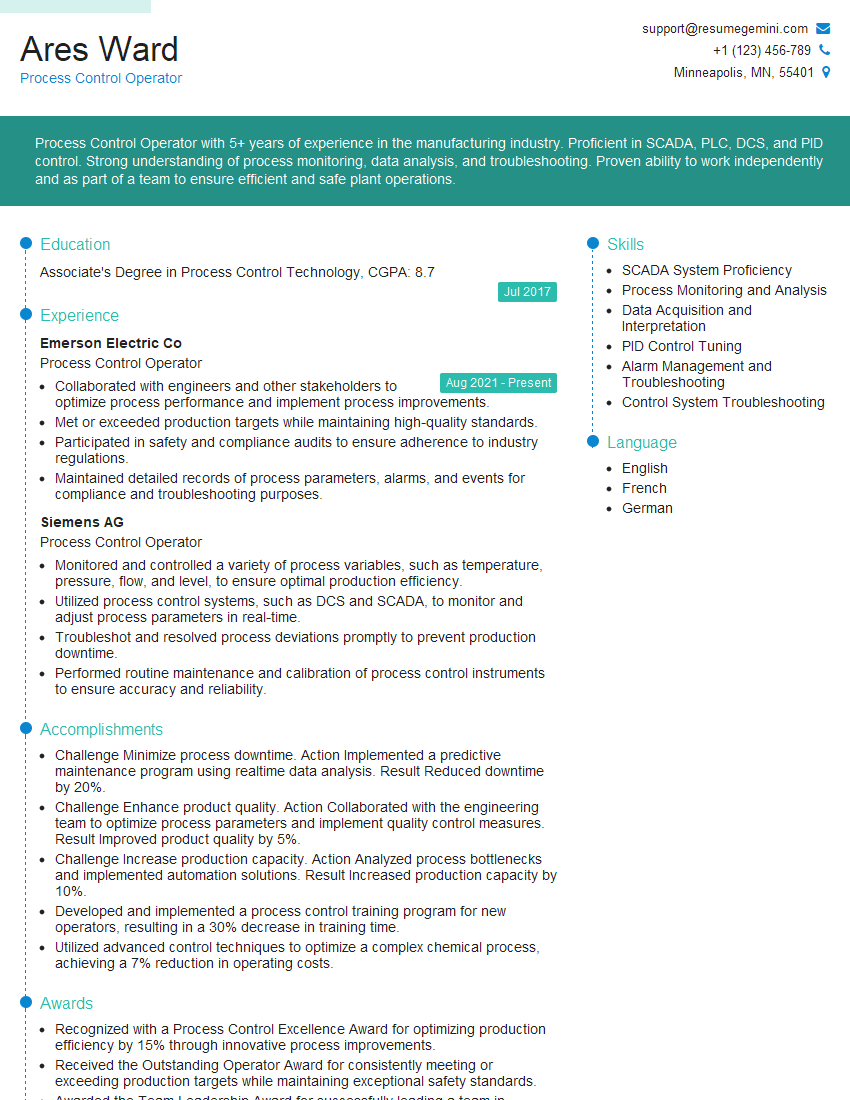
Process Control Operator Resume Sample
Explore more articles
Users Rating of Our Blogs
Share Your Experience
We value your feedback! Please rate our content and share your thoughts (optional).
What Readers Say About Our Blog
To the interviewgemini.com Webmaster.
Very helpful and content specific questions to help prepare me for my interview!
Thank you
To the interviewgemini.com Webmaster.
This was kind of a unique content I found around the specialized skills. Very helpful questions and good detailed answers.
Very Helpful blog, thank you Interviewgemini team.