Interviews are opportunities to demonstrate your expertise, and this guide is here to help you shine. Explore the essential Core Description interview questions that employers frequently ask, paired with strategies for crafting responses that set you apart from the competition.
Questions Asked in Core Description Interview
Q 1. Explain the different types of core analysis.
Core analysis encompasses a suite of techniques used to characterize subsurface rock samples (cores) retrieved during drilling operations. These analyses are crucial for understanding reservoir properties and predicting hydrocarbon production. The types of core analysis can be broadly categorized as follows:
- Routine Core Analysis (RCA): This involves basic measurements like porosity, permeability, and fluid saturation to provide a preliminary understanding of reservoir quality.
- Special Core Analysis (SCAL): This delves deeper into reservoir properties, often involving more sophisticated techniques to investigate aspects such as relative permeability, capillary pressure, and wettability. SCAL is crucial for reservoir simulation and enhanced oil recovery (EOR) studies.
- Petrophysical Core Analysis: This focuses on the rock’s mineralogical composition, pore structure, and other properties affecting its ability to store and transmit fluids. Techniques may include X-ray diffraction (XRD), scanning electron microscopy (SEM), and thin section analysis.
- Geomechanical Core Analysis: This examines the rock’s mechanical properties, such as strength, elasticity, and stress sensitivity, which are important for wellbore stability and reservoir management.
The choice of core analysis type depends on the specific needs of the project and the reservoir characteristics. For instance, a mature field might require detailed SCAL to optimize EOR techniques, while an exploration well might only need RCA to assess initial reservoir potential.
Q 2. Describe the process of core description, including visual and physical properties.
Core description is a systematic process of documenting the visual and physical properties of core samples. It’s the cornerstone of reservoir characterization, providing crucial data for geologists, petrophysicists, and reservoir engineers. The process generally involves these steps:
- Visual Description: This involves meticulously observing and recording the core’s visual characteristics such as color, texture, grain size, sorting, cementation, and the presence of any sedimentary structures (e.g., cross-bedding, bedding planes). We document the presence of fractures, vugs (cavities), and any visible hydrocarbons. Imagine describing a cake; you’d note its color, texture (fluffy, dense), and any decorations.
- Physical Property Measurements: This step involves quantitative measurements. We record the core’s diameter and length, and often calculate bulk density using water displacement. We also take photographs to document the visual observations. Sometimes we will utilize gamma ray logging tools to characterize the core.
- Detailed Lithological Logging: We use detailed logs to summarize observations, creating a comprehensive record of the core’s properties along its length. This record may include lithology (rock type), sedimentary structures, bioturbation (disturbances by organisms), and any signs of alteration or diagenesis (changes after deposition).
Imagine it like creating a detailed police sketch of a rock – capturing every characteristic to identify it and understand its history.
Q 3. How do you identify different lithologies in core samples?
Identifying lithologies in core samples relies on a combination of visual inspection and often, advanced analytical techniques. Visual characteristics such as color, texture, grain size, cementation, and the presence of fossils are key indicators. For example:
- Sandstone: Typically displays well-sorted grains of quartz or other minerals, often with visible pore spaces.
- Shale: Characterized by fine-grained, layered structure, often exhibiting fissility (the ability to split along parallel planes).
- Limestone: Can vary widely, but often displays a crystalline texture and may contain fossils. Some limestones are very fine grained, appearing homogenous.
- Dolomite: Similar to limestone but often shows a slightly different crystalline structure, and sometimes reacts differently to dilute hydrochloric acid (HCl).
Beyond visual observation, techniques like thin-section microscopy, X-ray diffraction (XRD), and scanning electron microscopy (SEM) provide detailed mineralogical analysis for precise lithological identification, especially when visual identification is ambiguous.
Q 4. What are the key parameters you measure during core description?
The key parameters measured during core description vary depending on the project objectives, but typically include:
- Lithology: The type of rock (e.g., sandstone, shale, limestone).
- Grain size and sorting: The size distribution of the grains and how well they are sorted.
- Porosity: The percentage of pore space in the rock.
- Permeability: The ability of the rock to transmit fluids.
- Fluid saturation: The amount of fluid (water, oil, gas) occupying the pore space.
- Bulk density: The total mass of the core per unit volume.
- Water saturation: The percentage of pore space filled with water.
- Fracture frequency and orientation: The number and orientation of fractures present in the core.
- Color: Provides clues about the rock’s composition and diagenetic history.
These parameters, along with others, are essential for building a detailed reservoir model and predicting hydrocarbon production.
Q 5. Explain the significance of porosity and permeability in core analysis.
Porosity and permeability are fundamental rock properties that dictate a reservoir’s ability to store and transmit hydrocarbons. Think of it like a sponge:
- Porosity: Represents the void space within the rock. A sponge with large holes has high porosity. It is expressed as a percentage of the total rock volume. High porosity means more space to store hydrocarbons. This is calculated by measuring the bulk volume and the pore volume of the rock sample.
- Permeability: Represents the ability of the rock to allow fluids to flow through its pore network. A sponge with interconnected holes allows water to flow easily, indicating high permeability. Low permeability means fluids flow slowly. Permeability is measured in Darcy or millidarcy and is affected not only by porosity but also by the size and interconnectedness of pores.
High porosity and permeability are essential for a productive reservoir. A reservoir with high porosity but low permeability will store a lot of hydrocarbons but will not produce them efficiently. Conversely, a reservoir with high permeability but low porosity will not be able to store much hydrocarbon.
Q 6. How do you determine the fluid saturation in a core sample?
Fluid saturation, specifically water saturation (Sw), is determined using various techniques. A common method is the Dean-Stark extraction, where a solvent is used to extract the hydrocarbons from the core sample, and the remaining water is measured.
Another widely used method involves resistivity measurements. The electrical resistivity of a rock sample is inversely proportional to the water saturation. This is based on the principle that hydrocarbons are non-conductive while water is conductive. We measure the resistivity of the rock and use empirical relationships to determine water saturation. This method often requires knowing the formation water resistivity (Rw).
Neutron logs and Nuclear Magnetic Resonance (NMR) are also powerful tools used to determine fluid saturation in the reservoir using logs acquired from the wellbore. NMR offers the additional benefit of providing information about the pore size distribution within the reservoir rock.
The choice of method depends on factors such as the type of fluid present (oil, gas, or water) and the accuracy required.
Q 7. Describe different techniques used for core description and analysis.
Core description and analysis utilize a variety of techniques, ranging from simple visual inspection to sophisticated laboratory measurements:
- Visual core description: This involves the detailed observation and documentation of the core’s physical characteristics (as discussed earlier).
- Digital image analysis: Software tools can assist in quantifying features such as grain size and shape from core photographs.
- Porosity and permeability measurements: Techniques like helium porosimetry and steady-state or unsteady-state gas permeametry are used to quantify these crucial reservoir properties.
- Capillary pressure measurements: These tests determine the relationship between capillary pressure and fluid saturation, crucial for understanding fluid distribution in the reservoir.
- Relative permeability measurements: These tests determine how easily oil and water can flow through the rock simultaneously, crucial for reservoir simulation.
- Thin section microscopy: This allows for detailed examination of the rock’s mineralogy, texture, and pore structure at a microscopic level.
- X-ray diffraction (XRD): Used to identify the mineralogical composition of the rock.
- Scanning electron microscopy (SEM): Provides high-resolution images of the rock’s pore structure.
The selection of techniques depends on the project’s goals and the information needed. A simple RCA might only involve visual description and porosity/permeability measurements, while a complex SCAL study could involve many of these techniques.
Q 8. What software or tools are you familiar with for core description data management?
Core description data management relies heavily on specialized software and tools. My experience encompasses a range of solutions, from basic spreadsheet programs like Excel for initial data entry and simple calculations to sophisticated dedicated core analysis packages. These advanced packages often include features for image analysis, data visualization, and database management.
- Specialized Core Description Software: I’m proficient with software like Petrel, Kingdom, and IHS Markit’s Petra, each offering unique functionalities for handling core data, integrating it with well logs, and generating comprehensive reports. These programs facilitate efficient data entry, quality control, and analysis workflows.
- Database Management Systems (DBMS): For large-scale projects, relational databases like Oracle or SQL Server are crucial for managing the massive datasets generated during core description. This ensures data integrity and efficient retrieval for various analyses.
- Image Analysis Software: Software like ImageJ or specialized modules within the core analysis packages are essential for quantitative analysis of core images, facilitating the measurement of porosity, permeability, and fracture characteristics.
The choice of software depends greatly on the project’s scale, the type of data being collected, and the available budget. For smaller projects, a simpler approach might suffice, while larger, more complex projects necessitate more robust solutions.
Q 9. How do you handle and document core samples to maintain data integrity?
Maintaining data integrity in core description is paramount. It begins with meticulous sample handling and documentation from the moment the core arrives at the lab. Each core section receives a unique identifier, typically a combination of well name, depth interval, and section number. This identifier is consistently used throughout the entire workflow.
- Chain of Custody: A detailed chain of custody document tracks the core sample’s journey, from retrieval to final archiving, ensuring accountability and minimizing the risk of sample mix-ups. This includes recording all handling and analysis procedures.
- Detailed Logging: Every core description step is meticulously documented, including visual descriptions (color, texture, lithology), measurements (diameter, length), and the results of all tests performed (porosity, permeability, etc.). Digital photography and scanning are standard practice to create a permanent visual record.
- Data Validation and Quality Control: Regular checks and validations are performed throughout the process to ensure data consistency and accuracy. This involves cross-checking measurements, comparing visual observations with test results, and employing statistical methods to detect outliers.
- Secure Storage: Proper storage conditions are crucial to prevent core degradation. Cores are typically stored in climate-controlled facilities, often in specialized sleeves or containers to protect them from damage or contamination.
Imagine building a house: a solid foundation (meticulous initial logging) and careful construction (consistent data handling) are vital to ensure the final structure (reliable dataset) is strong and reliable. Any lapse in this process can compromise the integrity and usefulness of the entire dataset.
Q 10. How do you interpret core data in the context of well logs?
Core data and well logs provide complementary perspectives on subsurface formations. Well logs offer continuous measurements over the entire wellbore, while cores provide detailed, discrete samples for laboratory analysis. Integrating these two data sources enhances the understanding of reservoir properties.
For example, well logs might show a zone with high porosity and permeability. Core analysis can then be used to determine the rock type, pore geometry, fluid saturation, and other properties within that zone. By comparing core data with well log responses, we can calibrate the logs, improve their interpretation, and refine our geological model.
- Calibration: Core data is used to calibrate well log responses. For instance, core porosity measurements can be used to develop a relationship between neutron porosity log readings and actual porosity.
- Lithological Identification: Well logs provide indications of lithology, which is then confirmed and refined by visual core description and mineralogical analysis.
- Fluid Properties: Core analysis provides direct measurements of fluid saturation, which can be compared with the results from well log interpretations like NMR or resistivity logs.
The synergy between these two data types is crucial for building accurate reservoir models and making informed decisions during reservoir development and management. It’s like having a detailed blueprint (core data) and a panoramic view (well logs) of the same building – each provides valuable information that complements the other.
Q 11. Explain the relationship between core data and reservoir simulation models.
Core data forms the cornerstone of reservoir simulation models, providing the essential input parameters that define the reservoir’s physical and petrophysical characteristics. The accuracy of the simulation is directly dependent on the quality and quantity of core data.
- Petrophysical Properties: Core analysis provides crucial petrophysical data, such as porosity, permeability, and saturation, which are directly used to define the reservoir properties in the simulation model.
- Relative Permeability: Laboratory measurements of relative permeability, obtained from core samples under different saturation conditions, are crucial for accurately simulating fluid flow in the reservoir.
- Capillary Pressure: Core analysis can determine capillary pressure curves, which influence the distribution of fluids in the reservoir and affect the recovery process.
- Rock Mechanical Properties: Core data can be used to determine rock mechanical properties like Young’s modulus and Poisson’s ratio, which are important for modeling geomechanics and predicting reservoir behavior under different stress conditions.
Consider a reservoir simulation model as a complex computer game. Core data provides the fundamental rules and parameters that govern the game’s behavior. The more accurate and complete the data, the more realistic and reliable the simulation results will be.
Q 12. How do you identify and classify different types of fractures in core samples?
Fracture identification and classification in core samples require a multi-faceted approach combining visual inspection, quantitative measurements, and potentially advanced imaging techniques.
- Visual Inspection: Careful visual examination of the core under various lighting conditions is the first step. Features like fracture aperture, orientation, infilling material (e.g., calcite, quartz), and fracture density are noted.
- Quantitative Measurements: Fracture parameters like length, spacing, and aperture are measured using calipers, rulers, or digital image analysis software. Orientation is usually measured with a compass or protractor.
- Advanced Imaging Techniques: Techniques like X-ray computed tomography (CT) scanning or thin section microscopy can provide high-resolution images of the fractures, revealing details not visible to the naked eye. These images can be used for quantitative analysis of fracture networks.
- Fracture Classification: Fractures are classified based on various characteristics, including their origin (e.g., tectonic, hydraulic), morphology (e.g., planar, branched), and infilling material. Standard classification schemes are often used to ensure consistency and comparability.
For example, a tightly spaced network of small, healed fractures might indicate a significant history of tectonic activity, potentially influencing reservoir permeability. Conversely, a few large, open fractures could represent significant flow pathways.
Q 13. Describe the challenges in core description and how to overcome them.
Core description presents several challenges that demand careful planning and execution. These challenges span the entire workflow, from sample acquisition to data interpretation.
- Sample Representativeness: Cores are inherently limited in their ability to represent the entire reservoir heterogeneity. Careful sampling strategies are crucial to ensure that the selected core sections are representative of the overall reservoir properties.
- Sample Disturbance: The process of drilling and retrieving cores can cause damage or alteration to the rock, potentially affecting the measured properties. Careful handling and appropriate corrective measures are essential to minimize these effects.
- Data Interpretation Ambiguity: Interpreting core data can be subjective, especially when dealing with complex geological features. Standardized procedures and expert judgment are required to ensure consistent and reliable interpretations.
- Cost and Time Constraints: Core analysis can be a time-consuming and expensive process, limiting the scope and detail of analysis. Efficient planning and prioritization are critical to maximize the return on investment.
Overcoming these challenges requires meticulous planning, the use of advanced technologies and standardized procedures, robust quality control measures and, perhaps most importantly, a team of experienced professionals who can work together to interpret and integrate multiple data sources effectively.
Q 14. How do you ensure the accuracy and reliability of core description data?
Ensuring the accuracy and reliability of core description data is a continuous process that starts before the core even reaches the lab and continues through data analysis and reporting.
- Quality Control at Each Stage: Implementing rigorous quality control checks at every stage of the workflow is crucial. This includes verifying sample identification, validating measurement accuracy, and checking for inconsistencies in data.
- Cross-Checking and Verification: Data obtained through different methods should be cross-checked and compared to identify and resolve inconsistencies. For example, visual observations should be compared to the results of quantitative measurements and well logs.
- Use of Standard Operating Procedures (SOPs): Adhering to standardized operating procedures ensures consistency and reduces the risk of human error. SOPs should be clearly documented and regularly reviewed.
- Calibration of Equipment: Regular calibration and maintenance of all laboratory equipment are crucial to ensure that the measurements are accurate and reliable.
- Experienced Personnel: The expertise and experience of the personnel involved in core description are paramount. Well-trained geologists and petrophysicists are essential for accurate data interpretation and reporting.
Think of it like a scientific experiment: careful planning, accurate measurements, and rigorous analysis are all needed to generate reliable and reproducible results. In core description, this translates to a commitment to quality at every step, ensuring the data serves its intended purpose in informing critical reservoir decisions.
Q 15. What are the limitations of core analysis?
Core analysis, while incredibly valuable, has inherent limitations. Firstly, the core itself is just a sample; it doesn’t represent the entire reservoir perfectly. Heterogeneity within the reservoir means that a single core may not capture the full range of properties. Secondly, core recovery can be incomplete or damaged during drilling and retrieval, leading to biased results. This damage can alter the rock’s properties, especially its porosity and permeability. Thirdly, the subsurface conditions—pressure, temperature, and fluid saturation—are different from laboratory conditions, affecting measurements. For instance, capillary pressure curves measured in the lab may not perfectly reflect reservoir behavior under in-situ conditions. Finally, the analysis itself can introduce errors. Human error in sample preparation, measurement techniques, and data interpretation can influence the final results. It’s crucial to acknowledge these limitations and implement quality control measures throughout the core analysis workflow.
Career Expert Tips:
- Ace those interviews! Prepare effectively by reviewing the Top 50 Most Common Interview Questions on ResumeGemini.
- Navigate your job search with confidence! Explore a wide range of Career Tips on ResumeGemini. Learn about common challenges and recommendations to overcome them.
- Craft the perfect resume! Master the Art of Resume Writing with ResumeGemini’s guide. Showcase your unique qualifications and achievements effectively.
- Don’t miss out on holiday savings! Build your dream resume with ResumeGemini’s ATS optimized templates.
Q 16. Explain the importance of core description in reservoir characterization.
Core description is fundamental to reservoir characterization because it provides the foundational data for understanding reservoir rock properties. It forms the basis for subsequent analyses, including petrophysical evaluation, fluid flow modeling, and reservoir simulation. Detailed core descriptions, including lithology, texture, porosity, and permeability, help establish the reservoir’s geological framework. For instance, identifying different facies within the core allows us to understand the depositional environment and predict reservoir heterogeneity. The visual description combined with other data such as thin sections and X-ray images helps determine the pore structure, which is essential for understanding fluid flow pathways and predicting reservoir performance. By integrating core data with well logs and seismic data, we can build a comprehensive 3D reservoir model for enhanced hydrocarbon recovery planning.
Q 17. How do you use core data to improve well placement and completion strategies?
Core data plays a critical role in optimizing well placement and completion strategies. Analyzing core permeability and porosity helps determine the best locations for well placement to maximize hydrocarbon production. For example, identifying high-permeability zones within a reservoir indicates optimal locations for perforations. Core data also helps predict the reservoir’s response to various completion techniques. For instance, the presence of natural fractures revealed by core analysis might suggest a horizontal drilling strategy to intersect the fractures and enhance productivity. Similarly, understanding the rock’s mechanical properties, derived from core testing, is crucial for designing appropriate well completion strategies, including selecting suitable cement and casing designs to prevent wellbore instability.
Q 18. Describe your experience with different types of core plugs and their preparation.
My experience encompasses various core plug types and their preparation. We commonly use standard cylindrical plugs (typically 1-inch diameter by 1.5-inch length) for routine core analysis. These are cut from the core using a core cutting machine and are carefully prepared to ensure the plug’s ends are perfectly flat and parallel. For special core analysis (SCAL), we might use plugs of different dimensions depending on the specific test required. Preparing these plugs involves meticulous cleaning to remove drilling fluids and other contaminants. Cleaning processes can include solvent washes, ultrasonic cleaning, and drying under controlled conditions. The preparation protocol depends heavily on the type of analysis; some tests, like nuclear magnetic resonance (NMR), require minimal disturbance to the core’s natural state, while others, like permeability measurement, need highly precise plug preparation. Quality control checks are implemented at each step to ensure data reliability.
Q 19. How do you handle and interpret data from special core analysis (SCAL)?
Special core analysis (SCAL) provides detailed information about reservoir rock properties beyond standard core analysis. Interpreting SCAL data involves a multi-step process. First, the data is reviewed for quality control, checking for any inconsistencies or outliers. Next, we perform data processing and corrections, such as accounting for temperature and pressure effects. Then, the data is interpreted in the context of other available data like petrophysical logs and geological models. For example, capillary pressure curves from SCAL provide insights into the fluid distribution within the reservoir at various saturation levels. Analyzing these curves, along with relative permeability data, allows us to build more accurate reservoir simulation models. We may utilize specialized software to analyze SCAL data and integrate it with other reservoir data, interpreting the results to provide crucial parameters for reservoir engineering and simulation studies.
Q 20. What is your experience with digital core analysis techniques?
I have extensive experience with digital core analysis techniques. This involves using high-resolution imaging techniques like X-ray computed tomography (CT scanning) and microscopy to create 3D digital representations of the core. These digital images provide a wealth of information about pore structure, mineralogy, and other rock properties. We can then use image analysis software to quantify these properties, such as porosity, permeability, and pore throat size distribution. Digital core analysis offers several advantages over traditional methods. It’s non-destructive, allowing for repeated analysis without damaging the core. It also allows for more detailed measurements at higher resolution than traditional methods and the analysis is often quicker and easier than manual measurements. Integrating digital core data with conventional core analysis results provides a comprehensive understanding of reservoir heterogeneity and improves the accuracy of reservoir simulations.
Q 21. How do you communicate core description results effectively to a technical audience?
Effective communication of core description results to a technical audience involves a multi-faceted approach. I typically start with a concise summary of the key findings, highlighting the most important observations and their implications. Then, I present the data using clear and concise visuals, including tables, graphs, and cross-sections. Detailed core descriptions are presented with supporting images, such as photographs and thin-section micrographs. Using software like Petrel or similar, I create comprehensive reports and presentations, focusing on visual representation of data. During presentations, I emphasize clear explanations, answering questions and providing clarifications where needed. I tailor the level of technical detail to the audience’s background, ensuring that the information is understandable and relevant. The goal is to provide the audience with a clear understanding of the core data and its impact on reservoir characterization and engineering decisions. A successful communication strategy ensures the core data is used efficiently and effectively to enhance reservoir management.
Q 22. Explain your understanding of uncertainty in core description data and analysis.
Uncertainty in core description is inherent due to the nature of the data acquisition process. It’s not a simple, perfectly reproducible process. We’re dealing with a physical sample representing a very small portion of a potentially vast subsurface volume. Several sources contribute to this uncertainty:
- Sampling Bias: The core itself is a selection of the formation; it might not be fully representative of the entire reservoir.
- Measurement Error: Human error in visual description, inaccuracies in laboratory measurements (porosity, permeability, etc.), and limitations of the analytical equipment all introduce uncertainty.
- Heterogeneity: Reservoir rocks are rarely homogeneous. Variations in lithology, porosity, and permeability at a scale smaller than the core sample introduce uncertainty in extrapolating results to the entire reservoir.
- Data Interpretation: Different geologists might interpret the same core description data slightly differently, leading to subjective uncertainties.
We address this uncertainty through rigorous quality control, multiple measurements, statistical analysis, and by understanding the limitations of our methods. For example, we might use multiple cores from a well to improve our understanding, or employ statistical methods to quantify the uncertainty range in porosity estimation.
Q 23. How do you integrate core data with other geological and geophysical data?
Integrating core data with other geological and geophysical data is crucial for building a comprehensive subsurface model. Core data provides detailed, high-resolution information about the rock properties at a specific point. This is then integrated with other data sets to improve our overall understanding and reduce uncertainty.
- Well Logs: Core data helps calibrate and validate well log interpretations. For example, core porosity measurements can be used to calibrate density logs, improving the accuracy of porosity estimations throughout the well.
- Seismic Data: Core properties, such as velocity and density, can be used to improve seismic interpretation and reservoir characterization. We can use core data to build rock physics models that link seismic attributes to reservoir properties.
- Geochemical Data: Core data provides the physical context for geochemical analyses, improving the understanding of fluid flow and reservoir quality. For instance, analyzing core samples for clay mineralogy helps interpret geochemical logs.
- Production Data: Core data helps predict reservoir performance by providing essential information about permeability and fluid saturations. Comparing these data to actual production data can reveal discrepancies and provide insights into reservoir behavior.
Integration often involves creating cross-plots, developing statistical models, and using geocellular modeling software to create a 3D representation of the reservoir, combining all available data sources into a single coherent model.
Q 24. Describe your experience working with different core types (e.g., conventional, sidewall, etc.).
I have extensive experience working with various core types, each offering unique advantages and challenges. Conventional cores, obtained using conventional drilling techniques, provide continuous sections of the formation and are best suited for detailed description and laboratory analysis. I am also familiar with sidewall cores which are smaller diameter cores and less representative. Sidewall cores are obtained by a specialized tool that extracts a small cylindrical sample from the borehole wall, useful when conventional coring is not feasible. The limitations of sidewall cores lie in their smaller size and potential for alteration during extraction.
My experience also includes working with:
- Full Diameter Cores: These cores provide a larger sample size, allowing for more detailed analyses and better representation of the heterogeneity of the formation.
- Oriented Cores: These cores have their orientation in the subsurface recorded, providing valuable information about the bedding plane and other structural features.
The choice of core type depends on the specific geological questions and the project budget. Each type has its strengths and weaknesses, and I understand how to interpret and utilize data from each of them effectively.
Q 25. How familiar are you with quality control procedures in core analysis?
Quality control (QC) in core analysis is paramount for ensuring the reliability and validity of the data. I am very familiar with various QC procedures, including:
- Visual Inspection: A thorough visual inspection of the core for any signs of damage, alteration, or drilling disturbance is the first step. Documentation of these observations is critical.
- Measurement Duplicates: Repeating measurements on multiple samples or on different parts of the same sample helps identify inconsistencies and assess the precision of the measurements.
- Calibration of Equipment: Regular calibration of laboratory equipment used for porosity, permeability, and other measurements is crucial for ensuring accuracy.
- Data Validation: Comparing measurements from different techniques or laboratories allows for data validation and the identification of outliers or inconsistencies.
- Chain of Custody: Maintaining a clear chain of custody from core retrieval to analysis ensures the integrity of the samples and prevents contamination or mislabeling.
By diligently following these QC procedures, we minimize errors and ensure the data obtained is reliable and can be used with confidence in reservoir characterization and decision-making.
Q 26. What is your experience with core storage and preservation techniques?
Proper core storage and preservation are essential to maintain the integrity of the samples over time and to prevent alteration or contamination. My experience encompasses various techniques:
- Controlled Environment: Storing cores in a climate-controlled environment with stable temperature and humidity prevents weathering and alteration.
- Protective Packaging: Cores are carefully wrapped and protected to prevent damage during handling and transportation.
- Special Handling for Sensitive Samples: Some cores, like those containing unstable minerals or organic matter, require specialized storage conditions to prevent degradation.
- Preventative Measures: Using appropriate chemical treatments to prevent oxidations or other unwanted reactions.
- Detailed Cataloguing & Management: Maintaining accurate and detailed logs and databases allows for efficient retrieval and access to core information.
Improper storage can lead to significant data degradation, so maintaining optimal storage conditions is crucial for the long-term value of the core data.
Q 27. Describe a situation where you had to troubleshoot a problem during core description.
During a project involving a highly fractured carbonate reservoir, we encountered a significant discrepancy between visual core description and well log interpretations of porosity. The well logs indicated high porosity, while the initial visual descriptions suggested lower values. This raised concerns about the validity of the data and its implications for reservoir characterization.
To troubleshoot this, we:
- Re-examined the cores: We carefully re-examined the cores, paying close attention to fracture density, orientation, and infill material. This revealed that the fractures were extensive but highly vuggy, meaning that a significant portion of the porosity was within the fractures, and not immediately evident on a quick visual assessment.
- Laboratory Analysis: We then conducted additional laboratory tests, including high-resolution image logging on the core. This confirmed the presence of substantial fracture porosity not initially apparent in visual descriptions. We also undertook porosity analysis using more sophisticated techniques.
- Data Reconciliation: With this new information, we reconciled the discrepancy between the visual core description and the well log interpretations by developing a more realistic model that incorporated the fracture porosity.
This experience highlighted the importance of integrating various data sources and applying a critical eye to potential discrepancies. It reinforced the need for a thorough investigation before drawing conclusions based on a single data source.
Q 28. How do you stay current with advances in core description techniques and technologies?
Keeping up-to-date with advances in core description techniques and technologies is crucial for staying at the forefront of the field. I employ several strategies:
- Professional Organizations: I am an active member of professional organizations such as the AAPG (American Association of Petroleum Geologists) and SPE (Society of Petroleum Engineers), attending conferences and workshops to learn about the latest advances.
- Scientific Publications: I regularly read scientific journals and publications focused on core description and reservoir characterization to stay informed about new techniques and research findings.
- Industry Conferences and Workshops: Attending industry conferences and workshops allows for networking with other professionals and learning about practical applications of new technologies.
- Online Resources and Databases: I use online resources, such as professional society websites and online databases, to access research papers and technical reports.
- Continuing Education: I actively seek opportunities for continuing education, such as short courses and webinars, to enhance my knowledge and skills.
By consistently engaging in these activities, I ensure my knowledge and skills remain current and that I am prepared to utilize the latest technological advancements for my analyses.
Key Topics to Learn for Core Description Interview
- Defining Core Description: Understanding the purpose and scope of a core description in different contexts (e.g., product descriptions, job descriptions, technical documentation).
- Identifying Key Features and Benefits: Distilling essential information and highlighting the most compelling aspects for the target audience. Practice identifying key selling points in various scenarios.
- Audience Adaptation: Tailoring the core description to resonate with specific audiences (technical vs. non-technical, experienced vs. novice). Consider examples of how language and detail vary depending on audience.
- Conciseness and Clarity: Mastering the art of succinct communication, avoiding jargon and ambiguity. Practice writing concise and impactful descriptions.
- SEO Optimization (if applicable): Incorporating relevant keywords and phrases to enhance searchability and discoverability (if the role involves online content). Understand basic SEO principles.
- Structural Organization: Understanding how to structure a core description logically and effectively, using headings, bullet points, and other formatting elements for optimal readability.
- Problem-Solving with Core Descriptions: How to address challenges like limited space, conflicting information, or a need to convey complex ideas simply.
- Ethical Considerations: Understanding responsible and accurate representation of information in core descriptions, avoiding misleading or deceptive language.
Next Steps
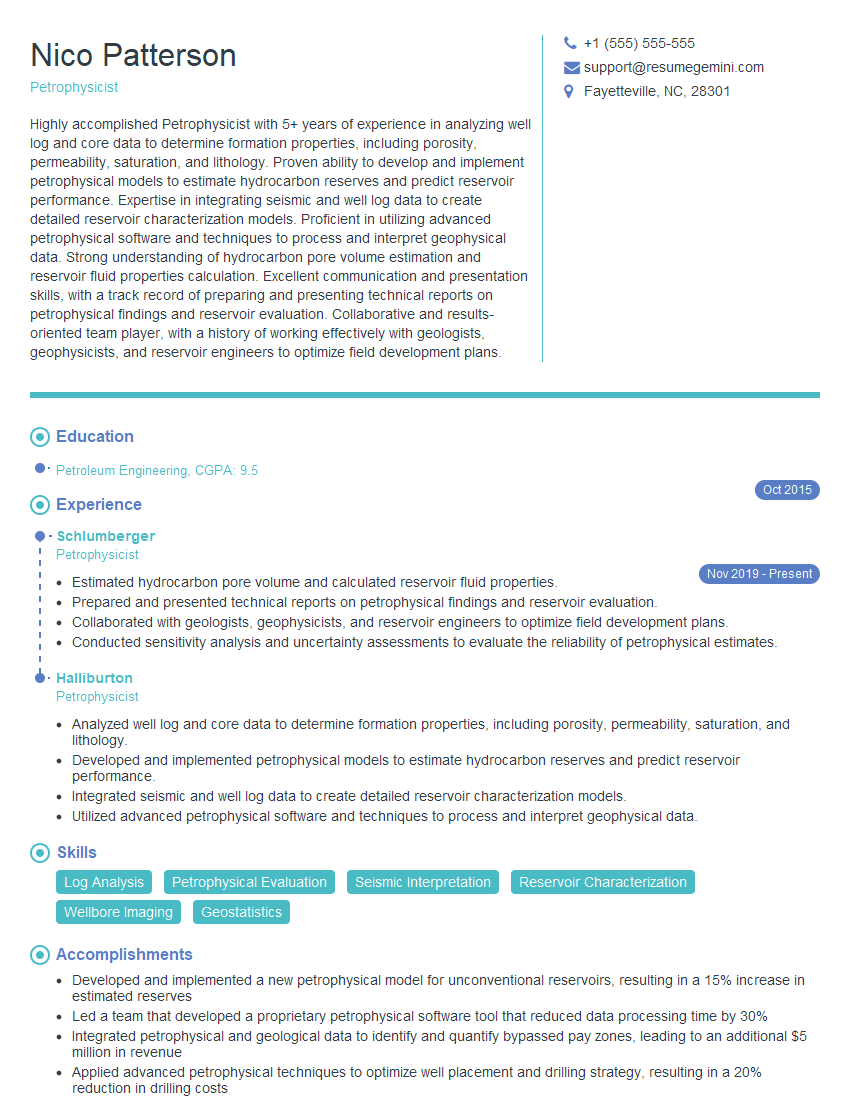
Mastering the art of crafting compelling core descriptions is crucial for career advancement in many fields, demonstrating your ability to communicate effectively and concisely. A strong core description, whether for a product, project, or yourself, is essential for making a lasting impression. To significantly boost your job prospects, creating an ATS-friendly resume is paramount. ResumeGemini can help you build a professional resume that stands out to recruiters. We provide examples of resumes tailored to Core Description roles to help you get started. Take the next step and create a resume that showcases your skills and experience effectively!






Explore more articles
Users Rating of Our Blogs
Share Your Experience
We value your feedback! Please rate our content and share your thoughts (optional).
What Readers Say About Our Blog
To the interviewgemini.com Webmaster.
Very helpful and content specific questions to help prepare me for my interview!
Thank you
To the interviewgemini.com Webmaster.
This was kind of a unique content I found around the specialized skills. Very helpful questions and good detailed answers.
Very Helpful blog, thank you Interviewgemini team.