Every successful interview starts with knowing what to expect. In this blog, we’ll take you through the top Dam Removal and Fish Passage Restoration interview questions, breaking them down with expert tips to help you deliver impactful answers. Step into your next interview fully prepared and ready to succeed.
Questions Asked in Dam Removal and Fish Passage Restoration Interview
Q 1. Describe the different methods used for dam removal.
Dam removal methods vary greatly depending on the dam’s size, type, age, and the surrounding environment. The process often involves a phased approach, beginning with thorough planning and engineering assessments. Common methods include:
- Partial Deconstruction: This involves removing only portions of the dam, often focusing on the critical elements obstructing fish passage, while leaving other sections intact for other purposes.
- Full Deconstruction: In this approach, the entire dam structure is systematically removed. Techniques may involve mechanical demolition using excavators and heavy machinery, controlled blasting for larger concrete structures, or a combination of both. Careful planning is vital to prevent environmental damage during this stage.
- In-situ Disassembly: This method aims to minimize the environmental impact by breaking down the dam on-site. This is often used for smaller dams, but it can be slow and labour intensive.
- Hydraulic Excavation: High-pressure water jets are used to break down the dam material, which is then transported away. This method is environmentally friendly as it minimizes vibrations and debris generation. It is more commonly used for earthfill dams than concrete dams.
The selection of the optimal method requires a detailed feasibility study considering factors such as cost, safety, environmental impact, and regulatory requirements. For instance, a large concrete gravity dam might necessitate controlled blasting and careful sediment management, while a smaller earthen dam might be more amenable to mechanical excavation and in-situ disassembly.
Q 2. Explain the environmental impact assessment process for dam removal projects.
An Environmental Impact Assessment (EIA) for dam removal is a crucial process, ensuring the project aligns with environmental protection standards. It’s a multi-stage process involving:
- Baseline Studies: Thorough pre-removal assessments of water quality, aquatic and terrestrial ecosystems, sediment characteristics, and potential downstream impacts are essential.
- Impact Prediction: Modeling and prediction of potential short-term and long-term impacts, including changes in water flow, sediment transport, habitat alteration, and potential risks to downstream communities. This often involves sophisticated hydrological and ecological modeling.
- Mitigation Planning: Developing strategies to minimize negative impacts and maximize positive outcomes. This can include sediment management plans, habitat restoration strategies, and measures to control erosion.
- Public Consultation: Engaging stakeholders including local communities, government agencies, and environmental groups is vital. Their input helps to refine the project design and address concerns.
- Monitoring and Evaluation: Post-removal monitoring is critical to track the actual impacts and assess the effectiveness of the mitigation measures. Regular monitoring of water quality, fish populations, and habitat recovery is necessary.
The EIA report becomes a vital document for obtaining necessary permits and approvals. A well-conducted EIA ensures that dam removal projects are environmentally responsible and sustainable.
Q 3. What are the key considerations for designing fish passage structures?
Designing effective fish passage structures requires a multidisciplinary approach, integrating engineering, hydrology, and ecological principles. Key considerations include:
- Species-Specific Needs: Different fish species have varying swimming abilities, migratory behaviors, and habitat preferences. The design must cater to the target species, considering their size, swimming speed, and upstream/downstream movement patterns. For example, a fish ladder designed for salmon may not be suitable for smaller minnows.
- Water Flow Regime: The design must consider the natural flow variations of the river and ensure sufficient water flow in the passage structure at all times. Excessive water velocity may deter fish, while insufficient flow may make passage impossible.
- Structure Materials and Design: Materials should be environmentally benign and designed to minimize fish injury. Careful consideration of the structure’s geometry, including the slope, pool spacing, and rest areas, is essential to facilitate safe and efficient movement.
- Environmental Conditions: The surrounding environment plays a crucial role. The design should integrate with the river morphology, minimizing disruption to existing habitats. Providing suitable resting areas, cover from predators, and access to suitable spawning grounds is vital.
- Maintenance and Monitoring: Regular maintenance and monitoring are essential to ensure the long-term effectiveness of fish passage structures. Blockages, damage, and changes in flow patterns need to be addressed promptly.
For example, a fish ladder might be appropriate for a relatively steep river gradient, while a fish bypass channel might be more suitable for a low gradient river with abundant aquatic vegetation.
Q 4. How do you assess the effectiveness of fish passage restoration efforts?
Assessing the effectiveness of fish passage restoration is a multifaceted process. It often involves:
- Fish Population Monitoring: Pre- and post-removal monitoring of fish populations using various techniques (e.g., electrofishing, sonar, mark-recapture studies) is crucial to assess changes in abundance, species composition, and distribution.
- Genetic Analysis: Analyzing genetic markers can provide insights into fish migration patterns and connectivity among populations.
- Habitat Assessment: Evaluating the quality of restored habitats is essential. This includes assessments of water quality, substrate composition, vegetation cover, and presence of suitable spawning grounds.
- Tagging and Tracking Studies: Deploying tags on fish to track their movement patterns through the passage structure provides direct evidence of its effectiveness.
- Hydrological Monitoring: Evaluating water flow conditions within the passage structure is important to ensure that the design provides adequate water flow for fish passage.
Data analysis and statistical modeling are crucial for interpreting the collected data and determining whether the fish passage restoration efforts have achieved their intended goals. The success of a project is often measured against pre-defined targets for fish passage rates, population increases, and habitat recovery.
Q 5. What are the common challenges faced during dam removal projects?
Dam removal projects often face several challenges:
- Sediment Management: The release of sediment downstream can alter river morphology, affect water quality, and harm downstream ecosystems. Careful planning and implementation of sediment management strategies are crucial.
- Cost and Funding: Dam removal projects are expensive and require significant upfront investment. Securing funding can be a major challenge.
- Engineering Complexity: Removing large dams presents complex engineering challenges, requiring specialized expertise and equipment.
- Regulatory Hurdles: Navigating the permitting and regulatory processes can be time-consuming and complex, requiring extensive documentation and stakeholder engagement.
- Social and Economic Impacts: Dam removal may have significant social and economic consequences for communities that rely on the dam for water supply, hydropower, or recreation.
- Unforeseen Circumstances: Unexpected issues, such as encountering unexpected subsurface conditions or experiencing extreme weather events, can significantly delay or complicate projects.
Effective project management, thorough planning, and stakeholder engagement are vital to mitigate these challenges and ensure successful project completion.
Q 6. Describe your experience with permitting and regulatory compliance for dam removal.
Permitting and regulatory compliance for dam removal projects are critical aspects that require expertise in environmental law and regulations. My experience involves navigating a diverse range of agencies and regulations at both the state and federal levels. This includes:
- Assembling Complete Applications: Preparing comprehensive applications including detailed EIA reports, engineering plans, and stakeholder consultation summaries.
- Engaging with Regulatory Agencies: Maintaining consistent communication and collaborating with relevant agencies like the Army Corps of Engineers, the Environmental Protection Agency, and state environmental departments.
- Addressing Regulatory Concerns: Proactively addressing agency comments and concerns throughout the permitting process, often involving revisions to project plans or mitigation strategies.
- Navigating Legal Processes: Understanding and complying with environmental laws and regulations. This includes knowledge of the Clean Water Act, Endangered Species Act, and other relevant legislation.
- Ensuring Compliance: Implementing monitoring and reporting protocols to ensure compliance with permit conditions throughout the project life cycle.
Successful navigation of these processes requires meticulous attention to detail, strong communication skills, and a thorough understanding of environmental laws and regulations. It is a time-intensive but essential component of responsible dam removal.
Q 7. Explain different types of fish passage structures and their suitability for various species.
Various fish passage structures exist, each with specific strengths and limitations:
- Fish Ladders (Fishways): These consist of a series of pools and weirs, providing a gradual ascent for fish to overcome the dam’s height. They are effective for many species but require sufficient water flow and may not be suitable for all species or river conditions.
- Fish Bypasses (or bypass channels): These channels divert water around the dam, creating a natural pathway for fish. They are effective for a wide range of species, but they require significant land area and careful design to maintain appropriate water flow and habitat conditions.
- Fish Lifts (or elevators): These mechanical devices transport fish vertically over the dam. They are particularly useful for species with poor swimming abilities or in situations with limited water flow, but they can be expensive to build and maintain.
- Rock Ramps: These utilize natural rock formations or strategically placed rocks to create a gentle slope for fish passage. They are cost-effective and blend well with the natural environment, but are less suitable for high dams or areas with significant water velocity changes.
- Vertical Slot Fishways: These consist of a series of vertical slots that allow fish to swim upwards against the current. They are relatively efficient and compact, but the design must be tailored to the species’ swimming behaviour.
The choice of the appropriate fish passage structure depends on many factors such as the dam’s height, the river’s flow regime, the target species, and environmental constraints. A comprehensive assessment considering these factors is essential to select the most effective and sustainable solution. For example, a large concrete dam might necessitate a fish lift, while a smaller earthfill dam may be suitable for a fish ladder or rock ramp.
Q 8. How do you mitigate risks associated with dam removal, such as sediment transport?
Mitigating sediment transport risks during dam removal is crucial for preventing downstream damage and ecological disruption. Sediment, trapped behind a dam for decades, can be released in large quantities, causing channel erosion, habitat destruction, and water quality issues. Our mitigation strategies involve a multi-pronged approach.
Pre-removal sediment management: This includes detailed sediment surveys and modeling to predict release rates and volumes. We often employ techniques like controlled releases of sediment prior to the main dam removal, gradually adjusting the river to increased sediment loads.
In-stream habitat restoration: Designing and implementing measures like the creation of engineered logjams or strategically placed rock structures to trap sediment and create diverse habitats. This slows down the flow and encourages deposition in less sensitive areas.
Downstream protection: Implementing measures like sediment traps, channel stabilization techniques (e.g., bank protection), and strategic placement of riparian vegetation to filter out sediment and slow erosion.
Monitoring and Adaptive Management: Continuous monitoring of water quality, sediment transport rates, and channel morphology is essential. This data guides adjustments to our mitigation strategies in real-time, enabling us to adapt as needed. For example, if sediment deposition in a particular area exceeds projections, we may deploy additional sediment traps or adjust the flow regime.
For example, in a recent project, we used a combination of pre-removal sediment releases and in-stream structures to successfully manage sediment transport. Post-removal monitoring showed sediment deposition patterns largely within the predicted range, minimizing negative impacts on downstream communities and ecosystems.
Q 9. What are the key factors influencing the success of river restoration projects?
River restoration success hinges on a complex interplay of factors. It’s not just about removing a dam; it’s about restoring the entire river ecosystem to a more natural state.
Clear Project Goals and Objectives: Defining specific, measurable, achievable, relevant, and time-bound (SMART) goals. This includes identifying target species and habitats for restoration.
Comprehensive Site Assessment: Thorough hydrological, geomorphological, ecological, and socio-economic studies are vital for understanding the river’s condition and the potential impacts of the restoration project. We need to understand the baseline conditions before making any changes.
Holistic Approach: Addressing multiple aspects of river degradation, not just dam removal. This could involve riparian zone restoration, invasive species management, and water quality improvement.
Adaptive Management: Regularly monitoring the project’s progress and adapting strategies based on data collected. Restoration is an iterative process, and flexibility is key to success.
Stakeholder Engagement: Collaboration with all interested parties—local communities, government agencies, and other stakeholders—is crucial to ensure project success and long-term sustainability.
Sufficient Funding and Resources: River restoration is a long-term commitment requiring adequate funding for planning, implementation, and monitoring.
In one project, we failed to adequately account for the impact of altered sediment transport on a specific fish species. By monitoring and adapting our strategy, we were able to rectify the issue and ensure the project’s ultimate success.
Q 10. Describe your experience with hydrological modeling in the context of dam removal.
Hydrological modeling is indispensable for predicting the consequences of dam removal. We use sophisticated models to simulate changes in water flow, sediment transport, and water quality after the dam is gone. This helps us anticipate potential problems and design appropriate mitigation measures.
We commonly use models like HEC-RAS (Hydrologic Engineering Center’s River Analysis System) and MIKE 11. These models require extensive data input, including:
Topography: High-resolution digital elevation models (DEMs) of the river basin.
Hydrology: Rainfall data, streamflow measurements, and estimates of evapotranspiration.
Sediment transport parameters: Sediment grain size distribution, sediment yield, and erosion rates.
Example input parameter in HEC-RAS: Manning's roughness coefficient for various river reaches.
The models help us predict changes in water levels, flow velocities, and sediment deposition patterns. This informs the design of measures like channel stabilization, sediment traps, and fish passage structures. The output often forms a crucial part of the environmental impact assessment and informs permitting processes.
Q 11. Explain the importance of stakeholder engagement in dam removal projects.
Stakeholder engagement is paramount in dam removal projects. These projects often impact a wide range of interests, from local communities and businesses to environmental groups and government agencies. Failing to include everyone leads to conflict and potential project failure.
Our engagement strategies include:
Public Meetings and Workshops: Providing opportunities for stakeholders to voice their concerns and learn about the project.
Surveys and Questionnaires: Gathering feedback on project plans and priorities.
Focus Groups: Facilitating discussions with specific stakeholder groups (e.g., anglers, landowners).
Open Communication: Regular updates on project progress and addressing stakeholder concerns proactively.
Collaborative Decision-Making: Involving stakeholders in the design and implementation of the project.
A successful example involves a project where we actively engaged local fishing communities from the beginning. This resulted in the successful incorporation of fish passage solutions and created a sense of ownership within the community, leading to increased support and reduced conflict during the project implementation.
Q 12. How do you monitor water quality parameters before, during, and after dam removal?
Water quality monitoring is essential throughout the dam removal process, providing crucial data for assessing the project’s environmental impacts. We typically monitor several parameters before, during, and after dam removal:
Pre-removal: Establishing baseline water quality conditions to compare with post-removal data. This involves collecting samples at various locations upstream and downstream of the dam.
During removal: Intensive monitoring during construction to detect any immediate effects on water quality. This often requires continuous monitoring using automated sensors.
Post-removal: Long-term monitoring to track the recovery of water quality. This helps to evaluate the effectiveness of any implemented mitigation measures.
Key parameters include:
Dissolved oxygen (DO): Essential for aquatic life.
Turbidity: A measure of water clarity, indicating sediment levels.
Temperature: Affects the solubility of oxygen and other parameters.
Nutrients (nitrogen and phosphorus): Can cause eutrophication.
pH: Measures acidity or alkalinity.
Metals: Concentrations of potentially toxic metals.
Data is analyzed using statistical methods to determine significant changes in water quality and identify any potential problems. This information allows for timely intervention if needed.
Q 13. What are the potential ecological impacts of dam removal, and how are they mitigated?
Dam removal can have both positive and negative ecological impacts. While the overarching goal is ecological restoration, we need to anticipate and mitigate potential negative consequences.
Potential Negative Impacts:
Sediment release: As discussed earlier, excessive sediment can smother benthic habitats and impact fish spawning grounds.
Changes in flow regime: Sudden changes in water flow can disrupt aquatic ecosystems, altering habitat availability and species composition.
Exposure of previously submerged habitats: This can create new habitats but also expose previously stable ecosystems to environmental stress.
Loss of reservoir habitat: The loss of the reservoir itself can impact aquatic species that depended on this habitat.
Mitigation Strategies:
Controlled sediment release: Implementing measures to manage sediment release, as mentioned previously.
Habitat restoration: Creating new habitats to compensate for lost habitats and to enhance biodiversity. This includes the construction of riffle-pool sequences and the addition of large woody debris.
Fish passage improvements: Constructing fish ladders, fishways, or other passage structures to allow fish to migrate past the dam site.
Invasive species control: Managing invasive species that might proliferate in the newly altered environment.
Monitoring and adaptive management: Tracking ecological changes over time and adapting management strategies as needed.
For example, in one project, we successfully mitigated the negative impact of sediment release by implementing pre-removal sediment flushing and strategically placing in-stream structures to trap sediment, thus protecting downstream habitats.
Q 14. Discuss your experience with geotechnical investigations related to dam removal.
Geotechnical investigations are critical before dam removal to assess the dam’s structural integrity and to evaluate the potential for foundation instability after removal. This is important for ensuring worker safety and preventing downstream hazards.
Our investigations typically include:
Drilling and sampling: Obtaining soil and rock samples from the dam and its foundation to determine their properties (e.g., strength, permeability, and compressibility).
In-situ testing: Performing tests like cone penetration tests (CPTs) and pressuremeter tests to assess soil strength and other parameters.
Laboratory testing: Analyzing soil and rock samples in a laboratory to determine their physical and mechanical properties.
Seismic analysis: Assessing the potential for seismic activity to affect the dam and its foundation.
Ground Penetrating Radar (GPR): Used to visualize the internal structure of the dam and locate potential weaknesses.
The results of these investigations are used to develop a safe and efficient dam removal plan. For example, understanding the permeability of the dam foundation is essential for predicting potential seepage and erosion after removal. The data also helps to design measures like erosion control and slope stabilization to prevent downstream hazards. Without this information, there would be a significant risk of unplanned collapses, endangering construction crews and nearby communities.
Q 15. Describe your experience in developing project budgets and schedules for dam removal projects.
Developing budgets and schedules for dam removal projects requires a multi-faceted approach, blending engineering expertise with financial acumen. It’s not simply a matter of adding up costs; it’s about meticulously planning every stage, from initial assessments to post-removal monitoring.
Firstly, we conduct thorough site investigations to estimate the volume of material to be removed, the complexities of the dam structure, and potential environmental challenges. This informs the selection of appropriate demolition techniques (e.g., controlled blasting, hydraulic excavators), each with associated costs and timelines. We then factor in costs for labor, equipment rental, transportation, permitting, environmental mitigation, and post-removal restoration.
Scheduling involves creating a critical path method (CPM) schedule, identifying tasks with dependencies and their duration. This includes periods for environmental impact assessments, regulatory approvals, contractor procurement, construction, and post-removal monitoring. We build in buffer time to account for unforeseen delays, such as adverse weather conditions or unexpected discoveries during demolition. We use software like Primavera P6 or Microsoft Project to manage the schedule and track progress, constantly updating it based on real-time data.
For example, in a recent project, we estimated a 12-month timeline for a small dam removal, carefully breaking down each stage (site survey: 2 months, permitting: 3 months, demolition: 4 months, restoration: 3 months). A larger project involving a high dam and extensive environmental restoration could easily span several years, requiring more detailed planning and robust risk management.
Career Expert Tips:
- Ace those interviews! Prepare effectively by reviewing the Top 50 Most Common Interview Questions on ResumeGemini.
- Navigate your job search with confidence! Explore a wide range of Career Tips on ResumeGemini. Learn about common challenges and recommendations to overcome them.
- Craft the perfect resume! Master the Art of Resume Writing with ResumeGemini’s guide. Showcase your unique qualifications and achievements effectively.
- Don’t miss out on holiday savings! Build your dream resume with ResumeGemini’s ATS optimized templates.
Q 16. How do you ensure the safety of workers during dam removal operations?
Worker safety is paramount in dam removal, a high-risk environment. Our safety protocols are comprehensive and rigorously enforced. We start with a thorough risk assessment identifying potential hazards, including structural instability, heavy machinery operation, confined space entry, and exposure to hazardous materials.
We establish clear safety procedures for each phase of the project, including pre-work briefings, mandatory use of personal protective equipment (PPE), and designated safety officers on-site. We use advanced monitoring technologies like inclinometers and strain gauges to continuously track dam stability during demolition. Specialized training programs are implemented for all personnel, covering safe operating procedures for specific equipment and emergency response protocols. Regular safety audits and toolbox talks keep safety at the forefront of every team member’s mind.
For instance, we might use a phased demolition approach, breaking down the dam in smaller sections to minimize the risk of catastrophic collapse. Detailed escape routes and emergency communication systems are also vital. Our commitment to worker safety is not just a policy; it’s a cultural value deeply embedded in our operations.
Q 17. What are the long-term monitoring requirements for dam removal and fish passage projects?
Long-term monitoring is crucial to assess the effectiveness of dam removal and fish passage restoration efforts. It’s not a one-time event but an ongoing process, ensuring the project’s long-term success and addressing any unforeseen consequences.
Monitoring typically involves a suite of ecological, hydrological, and geotechnical parameters. Ecological monitoring focuses on fish populations, riparian vegetation, water quality, and sediment transport. We track fish passage success using fish counters, visual surveys, and genetic analysis. Hydrological monitoring includes water flow, temperature, and sediment load measurements at various points upstream and downstream. Geotechnical monitoring evaluates the stability of the dam site and surrounding areas, particularly important in the years following removal.
The frequency and duration of monitoring depend on the project’s scale and complexity. For instance, water quality may be monitored weekly, while fish population surveys might be conducted annually for several years. Data collected is meticulously analyzed to evaluate project effectiveness and identify any necessary adjustments. This data is also used to inform future dam removal projects and enhance our understanding of river ecosystem restoration.
Q 18. How do you address conflicts between different stakeholder interests in dam removal projects?
Dam removal projects often involve diverse stakeholders with potentially conflicting interests – environmental groups, landowners, recreational users, industries, and government agencies. Effective conflict resolution is crucial for project success.
We employ a collaborative approach, involving stakeholders from the outset through open communication, transparent decision-making, and engagement in participatory planning processes. We facilitate workshops and public forums to gather input and address concerns. Early engagement can prevent conflicts from escalating and foster trust amongst stakeholders.
If conflicts arise, we employ conflict resolution techniques like mediation or negotiation, striving to find mutually acceptable solutions. This could involve compromises on project design, mitigation measures, or compensation packages. Detailed impact assessments, clearly outlining potential benefits and drawbacks for each stakeholder group, assist in informed decision-making. Documentation of all agreements and resolutions is essential.
For example, in one project, a disagreement between landowners and conservation groups regarding the use of restored riparian areas was resolved by creating a shared management plan, integrating the landowners’ needs with environmental protection objectives.
Q 19. Describe your experience with using GIS software for dam removal project planning and management.
Geographic Information Systems (GIS) software is indispensable in planning and managing dam removal projects. It allows us to integrate and visualize diverse spatial data, improving project design, facilitating communication, and enhancing decision-making.
GIS enables us to map dam infrastructure, hydrological features, ecological habitats, and stakeholder boundaries. This integrated view enhances our understanding of the project area and allows for efficient planning of demolition activities, transportation routes, and restoration efforts. We use GIS to create detailed topographic maps, analyze site accessibility, and assess potential environmental impacts. Real-time data, such as water levels and sediment transport, can be integrated into the GIS for dynamic monitoring.
Furthermore, GIS facilitates communication among stakeholders by providing a shared platform for visualizing project information. It assists in creating compelling visual aids for public presentations and reports, fostering greater transparency and understanding. Software such as ArcGIS or QGIS are routinely used, enabling the analysis of spatial relationships, the creation of detailed maps, and integration with other software platforms.
Q 20. Explain the principles of hydraulic modeling as applied to fish passage design.
Hydraulic modeling is crucial for designing effective fish passage structures. It helps simulate water flow, predict velocities and depths, and analyze how fish might navigate the structure. Accurate modeling ensures the design effectively accommodates various species, flow conditions, and environmental parameters.
We use specialized software such as HEC-RAS or MIKE 11 to create detailed hydraulic models of the river and fish passage. These models require high-resolution bathymetric data (depth measurements), accurate flow data, and precise geometric information of the passage design. The models simulate different flow scenarios, allowing us to optimize the design for various conditions (e.g., high flows, low flows, floods). We consider factors such as water velocity, turbulence, and depth to ensure conditions are suitable for different fish species, avoiding areas of high velocity or excessive turbulence that could impede fish passage.
For example, we might simulate various spillway designs, analyzing flow patterns and identifying potential bottlenecks. The modeling results inform the final design, optimizing the structure for effective fish migration while maintaining channel stability.
Q 21. What are the different types of ecological assessments used in dam removal projects?
Ecological assessments are fundamental to dam removal projects, providing crucial information about the project’s potential impacts on the environment. These assessments inform project design, mitigation measures, and post-removal monitoring plans.
Various assessment types are employed. Habitat assessments identify the existing aquatic and riparian habitats, their biodiversity, and the presence of endangered or threatened species. These assessments can use techniques like habitat mapping, fish surveys, and benthic invertebrate sampling. Water quality assessments analyze the chemical and biological characteristics of the water, identifying potential pollutants and their effects on aquatic life. Sediment assessments quantify sediment characteristics and assess potential for erosion and sedimentation during and after dam removal.
We use these assessments to predict the potential impacts of the project and to design mitigation strategies. For instance, habitat assessments might identify areas requiring restoration after dam removal. Water quality assessments can inform the design of sediment control measures. Comprehensive ecological assessments ensure the project aligns with environmental protection regulations and promotes ecological restoration.
Q 22. How do you determine the appropriate scale of a fish passage structure for a given river system?
Determining the appropriate scale of a fish passage structure requires a holistic approach, considering various ecological and hydrological factors. It’s not a one-size-fits-all solution. We begin by assessing the target species’ migratory behavior, their size and swimming capabilities, and the river’s flow regime. For example, a small, slow-flowing stream might only need a simple rock ramp, while a large, fast-flowing river might require a more complex structure like a fish ladder or fish bypass channel.
- Species-Specific Needs: Different species have different needs. Salmonids, for instance, require a continuous, slow-flowing water column to avoid exhaustion, while some smaller fish might navigate faster flows. We use species-specific criteria from scientific literature and existing data to design effective passages.
- Hydraulic Modeling: We employ sophisticated hydraulic modeling software to simulate water flow and velocities under various conditions. This helps us predict water depths and velocities at different points within the passage to optimize fish passage efficiency. This is crucial to prevent injuries or mortalities.
- Environmental Conditions: The river’s morphology, substrate composition, and surrounding habitat are carefully considered. The passage must seamlessly integrate with the existing river system to avoid creating bottlenecks or unnatural flow patterns.
- Longitudinal Connectivity: We must assess the entire river reach to make sure that the passage is only one element in a larger strategy that addresses barriers both upstream and downstream. This is crucial to ensure that fish can reach suitable spawning and feeding grounds.
For instance, in a project on the [River Name], we modeled different fish ladder designs using HEC-RAS (Hydrologic Engineering Center’s River Analysis System) software before selecting the most effective and ecologically sound design for the local salmon population.
Q 23. Explain the role of habitat restoration in successful fish passage projects.
Habitat restoration is paramount for successful fish passage projects. Simply providing passage isn’t enough; fish need suitable habitat to survive and thrive once they reach their destination. A fish passage project without adequate habitat restoration is like building a magnificent door to a derelict house; the door is useless without a functional home beyond it.
- Upstream and Downstream Connectivity: Restoration efforts should focus on restoring connectivity between upstream and downstream habitats. This might involve removing riparian vegetation that restricts access to the river, removing in-stream barriers besides the main dam or restoring spawning gravels.
- Riparian Zone Restoration: Healthy riparian zones provide shade, stability, and food sources for fish. Restoring native vegetation helps regulate water temperature, reduce erosion, and provide cover from predators.
- In-Stream Habitat Improvement: This can include adding woody debris to create complex flow patterns and hiding places, restoring pools and riffles to enhance diversity, and removing sediment that smothers the riverbed.
- Water Quality Improvements: Addressing water quality issues such as pollution and excess nutrients is also critical. Fish are sensitive to pollutants, and restoration efforts must focus on improving water clarity and oxygen levels.
In one project, we combined the construction of a fish ladder with riparian planting and in-stream habitat enhancement. The result was not just an increase in fish passage but a significant increase in the overall health and biodiversity of the river ecosystem.
Q 24. Discuss your experience with different construction methods used in fish passage construction.
Fish passage construction employs a variety of methods, tailored to site-specific conditions. The choice depends on factors like the river’s size, flow rate, substrate, and the target species.
- Rock Ramps: These are simple, low-cost structures suitable for small streams. They involve carefully placing rocks to create a gradual incline that fish can navigate. Durability and stability are crucial considerations.
- Fish Ladders (Pool and Weir): These are more complex structures consisting of a series of pools and weirs (low dams) that allow fish to rest and regain energy as they climb. They are suitable for larger rivers with higher flow rates and must accurately match water depths and flow rates to prevent fish from getting disoriented.
- Vertical Slot Fishways: These structures use a series of vertical slots to create upward currents that aid fish movement.
- Nature-like Fishways: These aim to mimic natural river features to provide a more biologically appropriate passage.
I have experience with all these methods. For instance, in one project we used a combination of rock ramps and a pool-and-weir fish ladder to create a multi-species passage. In another, we employed a nature-like fishway designed to mimic the natural stream channel to ensure passage for a sensitive population of trout.
Q 25. How do you evaluate the cost-effectiveness of different dam removal and fish passage options?
Evaluating the cost-effectiveness of dam removal and fish passage options requires a comprehensive life-cycle cost analysis, which considers both upfront costs and long-term benefits. It’s not just about the initial construction price; we must factor in maintenance, monitoring, and potential ecological benefits.
- Upfront Costs: These include design, permitting, construction, and land acquisition.
- Long-Term Costs: These encompass maintenance, repairs, monitoring, and potential mitigation for unforeseen issues.
- Benefits: These are often harder to quantify but include improved fish passage, enhanced river ecosystem health, increased property values, improved recreational opportunities, and potential economic benefits from increased fishing and tourism. We use benefit-cost analysis to assign economic values to these intangible assets where possible.
- Sensitivity Analysis: We run various scenarios to assess the impact of changes in cost estimates and benefit projections.
For example, in comparing dam removal with building a fish ladder, we might find that dam removal has higher upfront costs but lower long-term maintenance costs and provides greater ecological benefits, ultimately making it a more cost-effective solution in the long run.
Q 26. What are the key performance indicators (KPIs) for measuring the success of a dam removal project?
Key Performance Indicators (KPIs) for measuring the success of a dam removal project are multifaceted, going beyond simply observing fish passage. We track several indicators across multiple years to assess long-term impacts.
- Fish Passage Success: This is measured using fish counters, acoustic telemetry, and visual surveys to track the number and species of fish successfully migrating upstream and downstream. We compare pre- and post-project data to assess improvements.
- Habitat Improvements: We monitor changes in water quality, flow regime, in-stream habitat complexity, and riparian vegetation cover. This indicates how the removal of the dam has restored natural river processes.
- Ecosystem Health: Wider ecological assessments look at changes in the overall biodiversity of the river ecosystem, including macroinvertebrate communities and aquatic plant life. This provides a holistic view of the restoration’s success.
- Sediment Transport: Monitoring sediment movement helps assess the restoration of natural sediment dynamics, crucial for healthy river ecosystems.
- Community Impacts: We gauge the project’s impact on local communities through surveys and interviews, measuring the extent to which the project has met community goals and expectations.
Long-term monitoring is crucial. We often collect data for several years following a project to ensure that initial improvements are sustained and to detect any unforeseen consequences.
Q 27. Describe your experience with community outreach and education related to dam removal projects.
Community outreach and education are vital for successful dam removal projects. Public perception and buy-in are essential. Transparency, engagement, and clear communication are key strategies.
- Public Forums and Meetings: Holding open forums and meetings allows stakeholders to express their concerns, ask questions, and participate in the decision-making process.
- Educational Materials: We create brochures, websites, and presentations explaining the project’s goals, methods, and benefits. Simple, accessible language is vital to reach a broad audience.
- Collaboration with Local Groups: Working closely with local fishing clubs, environmental groups, and community leaders fosters trust and builds consensus.
- Addressing Concerns: Actively addressing concerns about potential negative impacts, such as changes in downstream water levels or recreational access, is crucial for building support.
In one project, we organized a series of community workshops where stakeholders could actively participate in the design process. This helped resolve potential conflicts and resulted in a project that was better tailored to the needs of the community.
Q 28. How do you manage and interpret data collected from fish passage monitoring programs?
Data from fish passage monitoring programs are analyzed using a combination of quantitative and qualitative methods. The goal is to understand passage efficiency, identify bottlenecks, and assess the overall success of the project.
- Data Collection Methods: This involves various techniques including fish counters (e.g., acoustic or video), PIT (Passive Integrated Transponder) tags to track individual fish, and visual surveys.
- Statistical Analysis: We use statistical methods to analyze fish passage rates, species composition, and migration timing. We often compare pre- and post-project data to quantify the impact of the intervention.
- Spatial Analysis: Mapping fish movements and passage success along the river helps pinpoint areas where improvements are needed.
- Qualitative Data: Information from visual surveys, observations, and stakeholder interviews provides contextual information to complement quantitative data. This can help us understand factors affecting fish passage that are not captured by the quantitative data alone.
For example, we might use statistical modeling to assess the relationship between flow rate and fish passage success. Combining this with visual observations and stakeholder feedback helps inform adaptive management strategies for improving the fish passage structure over time.
Key Topics to Learn for Dam Removal and Fish Passage Restoration Interview
- Hydrological Impacts of Dams: Understanding pre- and post-dam removal hydrology, including flow regime changes, sediment transport, and water quality implications.
- Fish Passage Design and Engineering: Practical application of different fish passage structures (e.g., fish ladders, bypass channels) and their suitability for various species and river conditions. Consider site-specific design challenges and limitations.
- Environmental Assessment and Permitting: Navigating the regulatory landscape, including environmental impact assessments, permitting processes, and stakeholder engagement strategies.
- Dam Removal Planning and Execution: Understanding the phased approach to dam removal, including safety considerations, dewatering techniques, and post-removal monitoring.
- Ecological Restoration Principles: Applying ecological restoration principles to achieve desired habitat conditions for fish and other aquatic organisms post-dam removal. This includes understanding riparian zone restoration and habitat connectivity.
- Geotechnical Considerations: Assessing geotechnical risks associated with dam removal, including dam stability, foundation conditions, and potential downstream impacts.
- Monitoring and Evaluation: Developing and implementing effective monitoring programs to assess the success of dam removal and fish passage restoration projects. Understanding data analysis techniques and adaptive management strategies.
- Project Cost Estimation and Budgeting: Developing realistic project budgets and managing project costs effectively.
- Stakeholder Communication and Collaboration: Effective communication with diverse stakeholders (e.g., landowners, regulatory agencies, community groups) throughout the project lifecycle.
- Emerging Technologies and Best Practices: Staying current with advancements in dam removal technologies, fish passage design, and ecological restoration techniques.
Next Steps
Mastering Dam Removal and Fish Passage Restoration opens doors to a rewarding career in environmental engineering and ecological restoration, offering opportunities for impactful work and professional growth. To maximize your job prospects, create an ATS-friendly resume that effectively highlights your skills and experience. ResumeGemini is a trusted resource to help you build a professional and impactful resume tailored to this exciting field. Examples of resumes tailored to Dam Removal and Fish Passage Restoration are available to help guide your process.
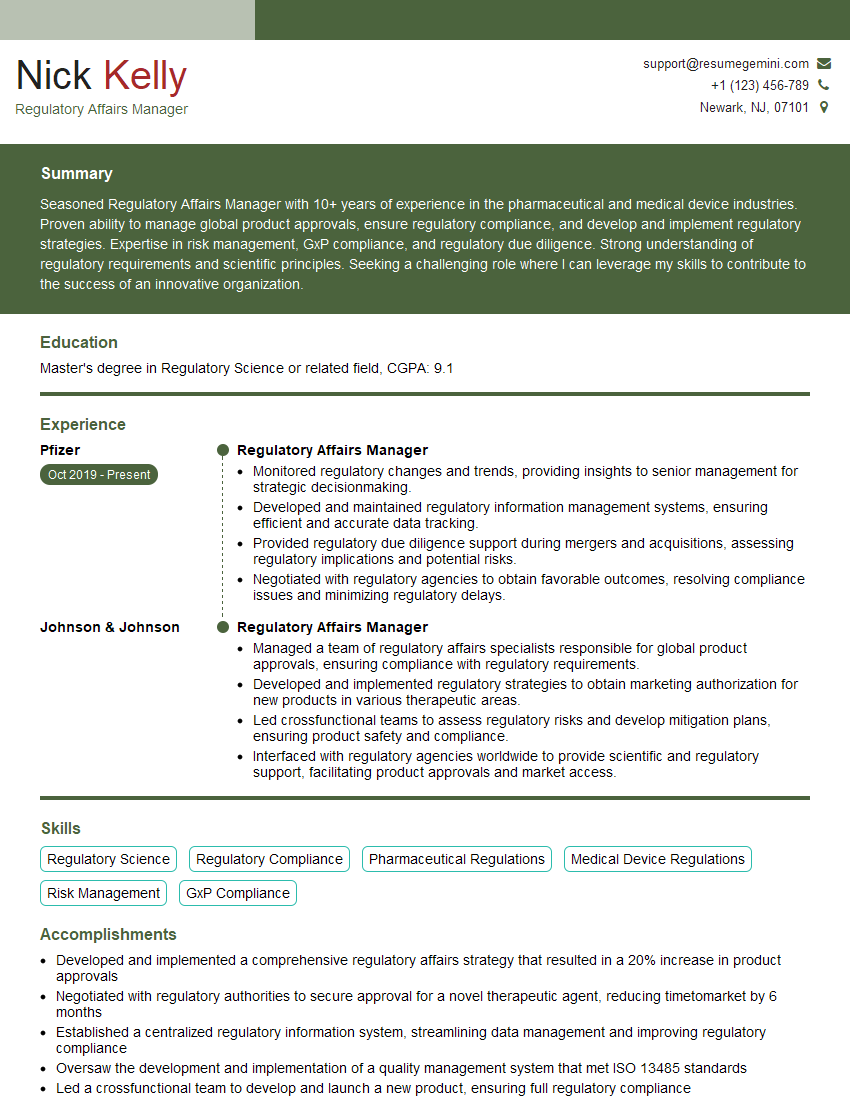
Regulatory Affairs Manager Resume Sample
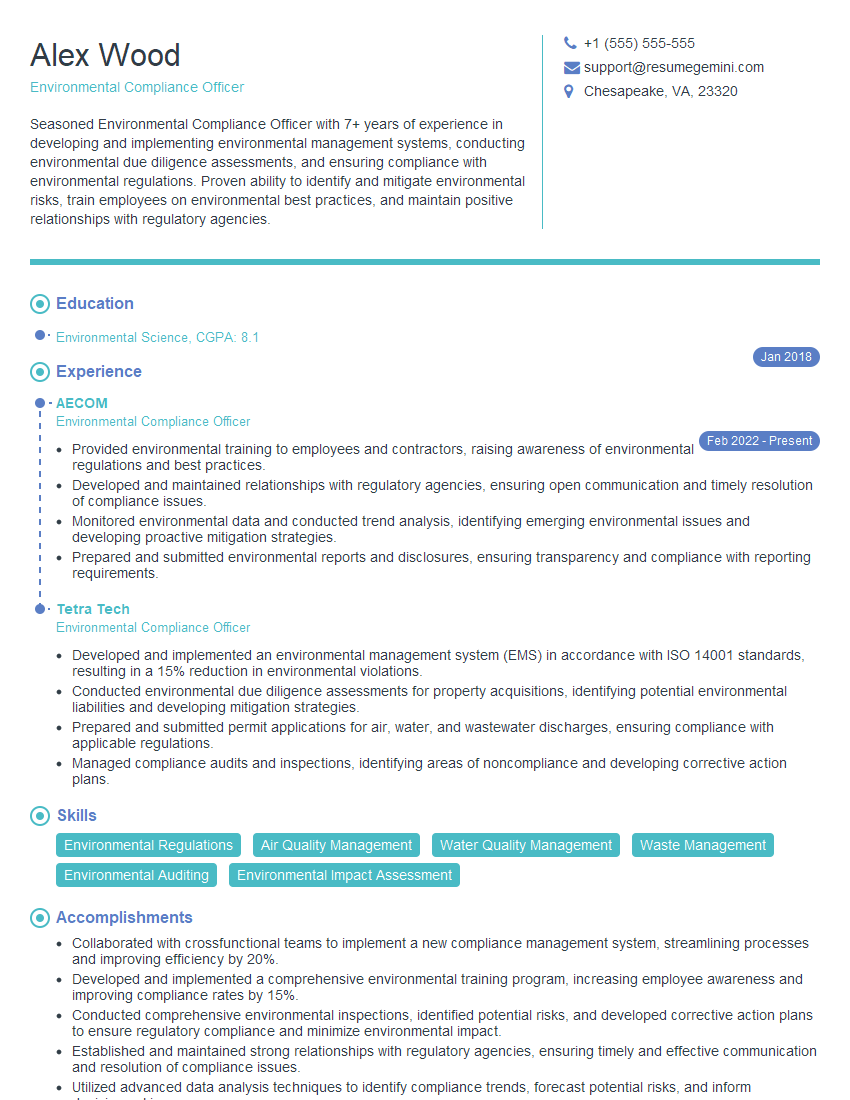
Environmental Compliance Officer Resume Sample
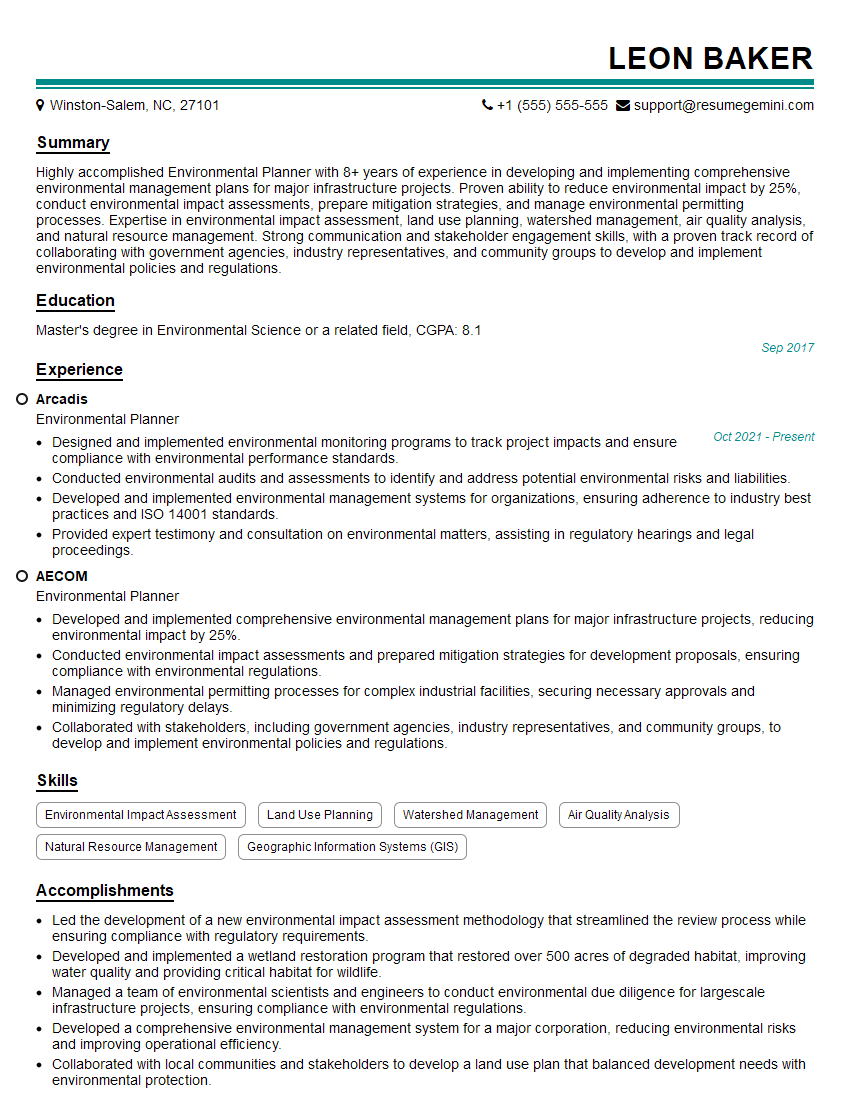
Environmental Planner Resume Sample
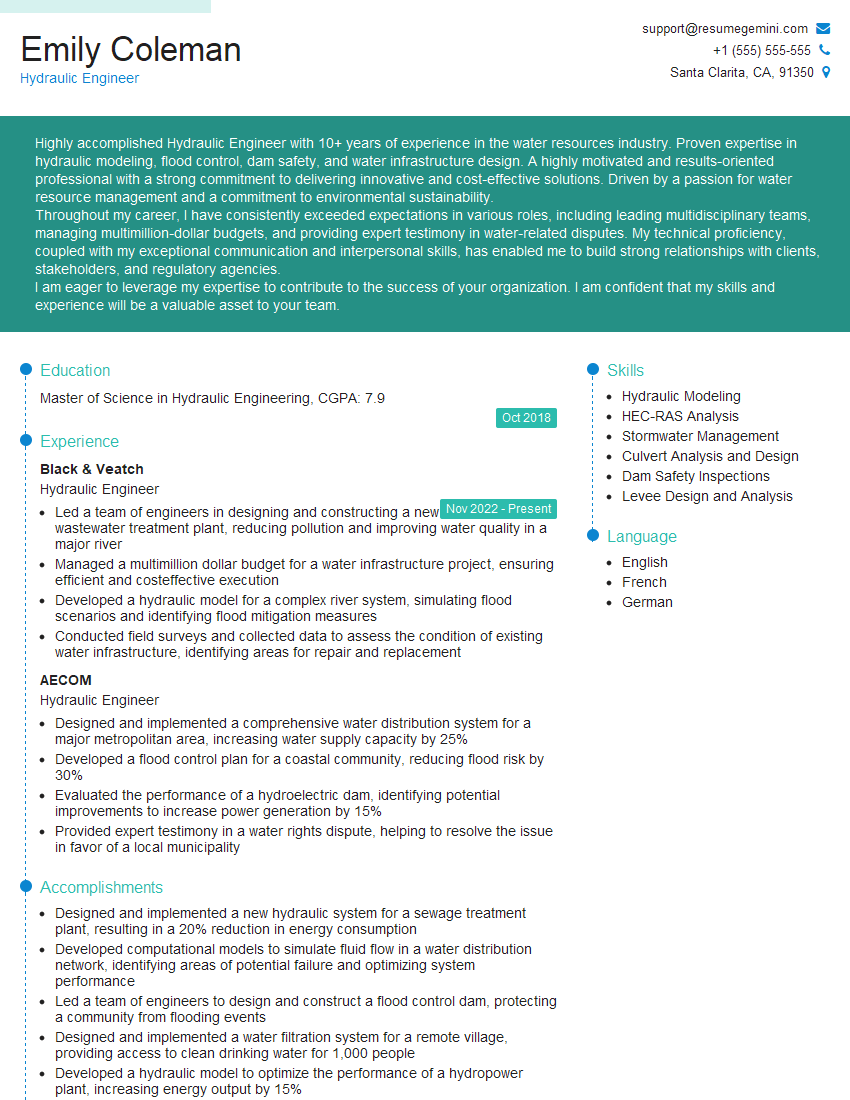
Hydraulic Engineer Resume Sample
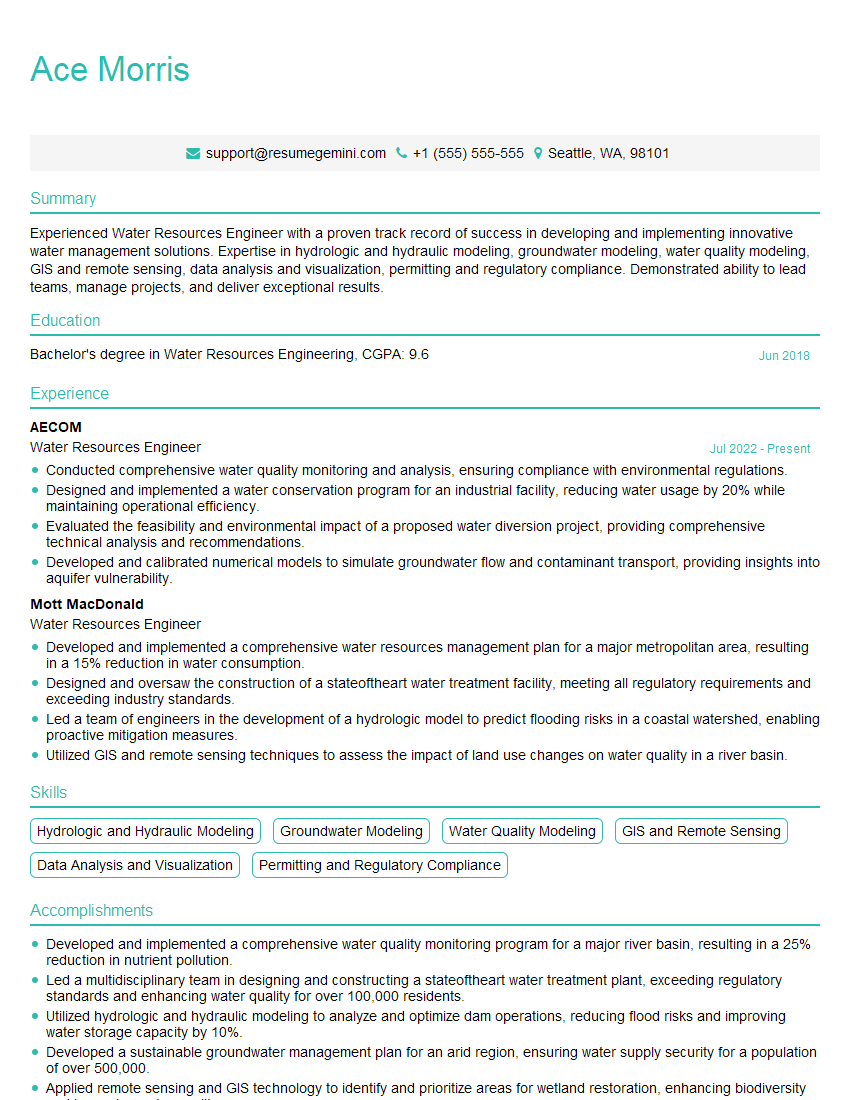
Water Resources Engineer Resume Sample
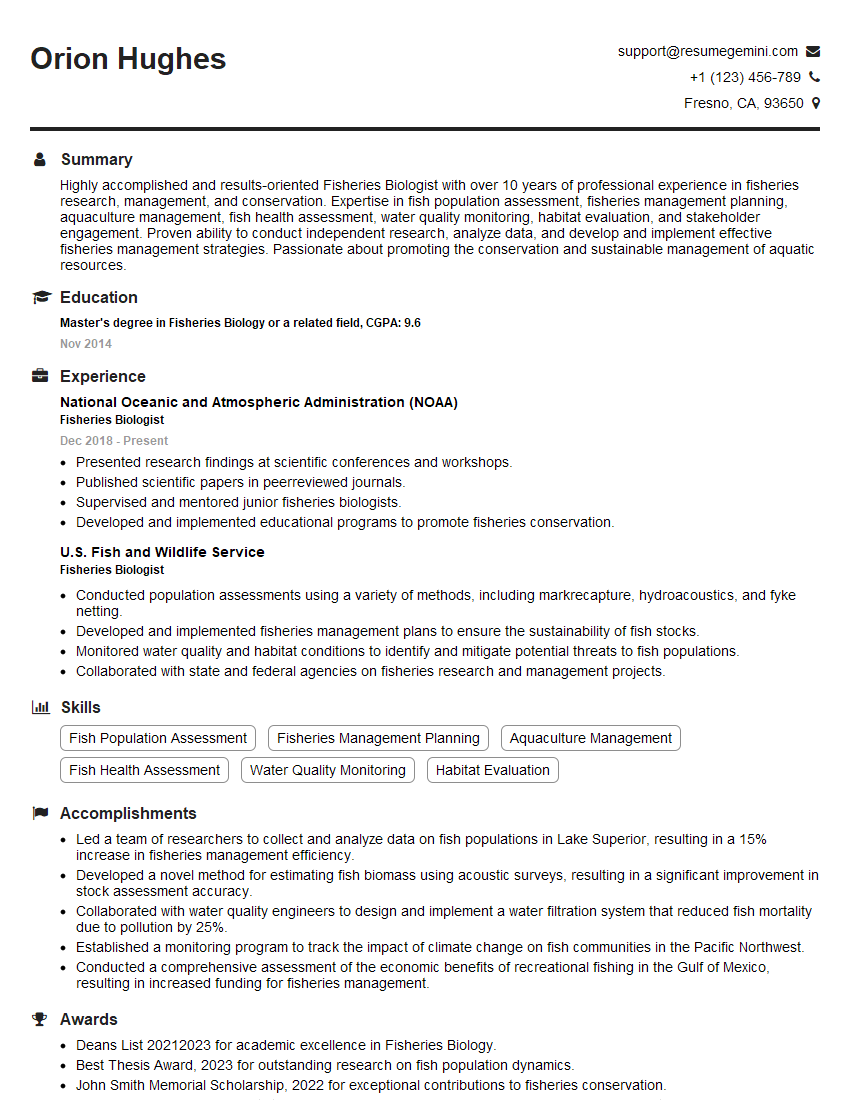
Fisheries Biologist Resume Sample

Wildlife Biologist Resume Sample
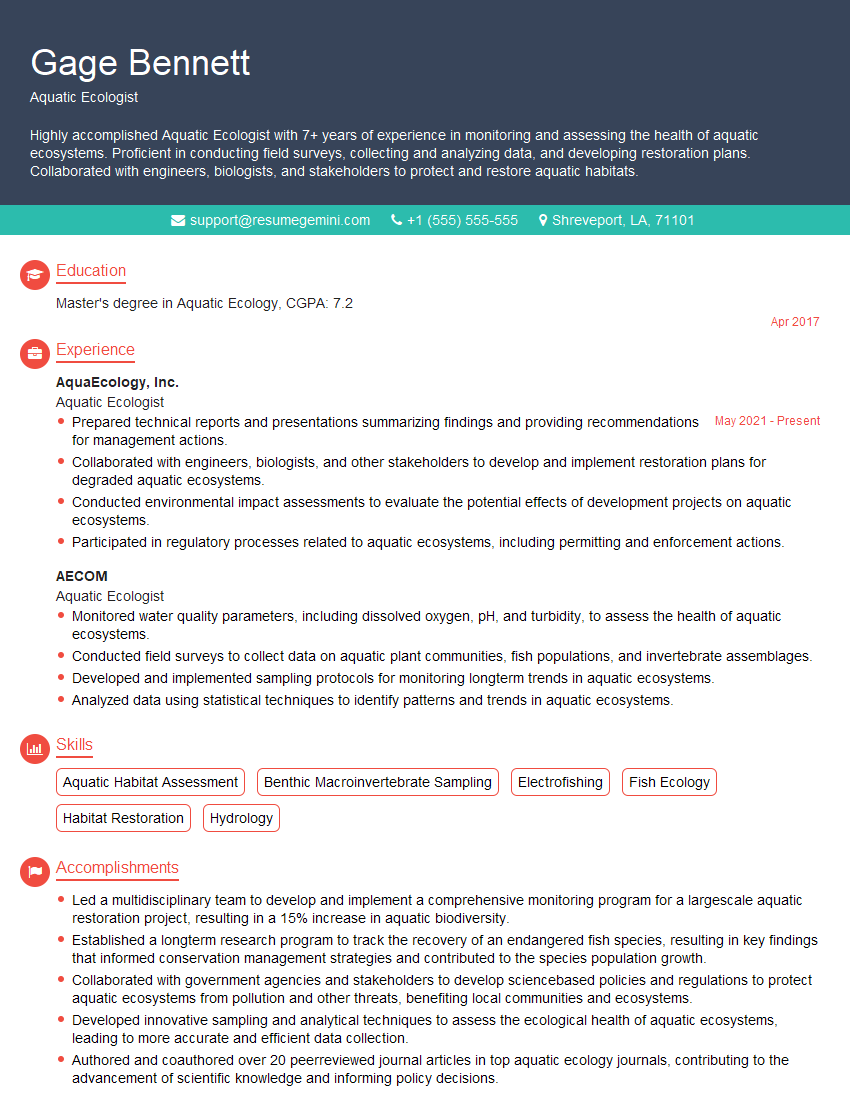
Aquatic Ecologist Resume Sample
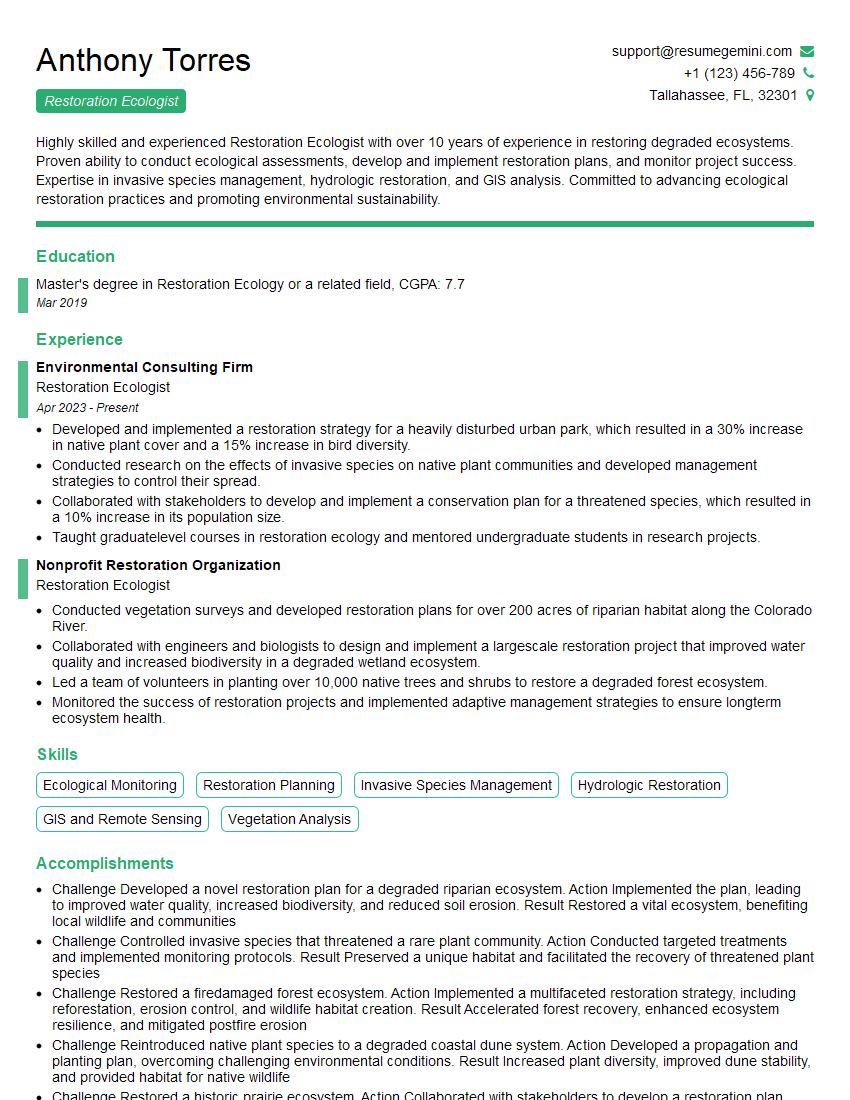
Restoration Ecologist Resume Sample
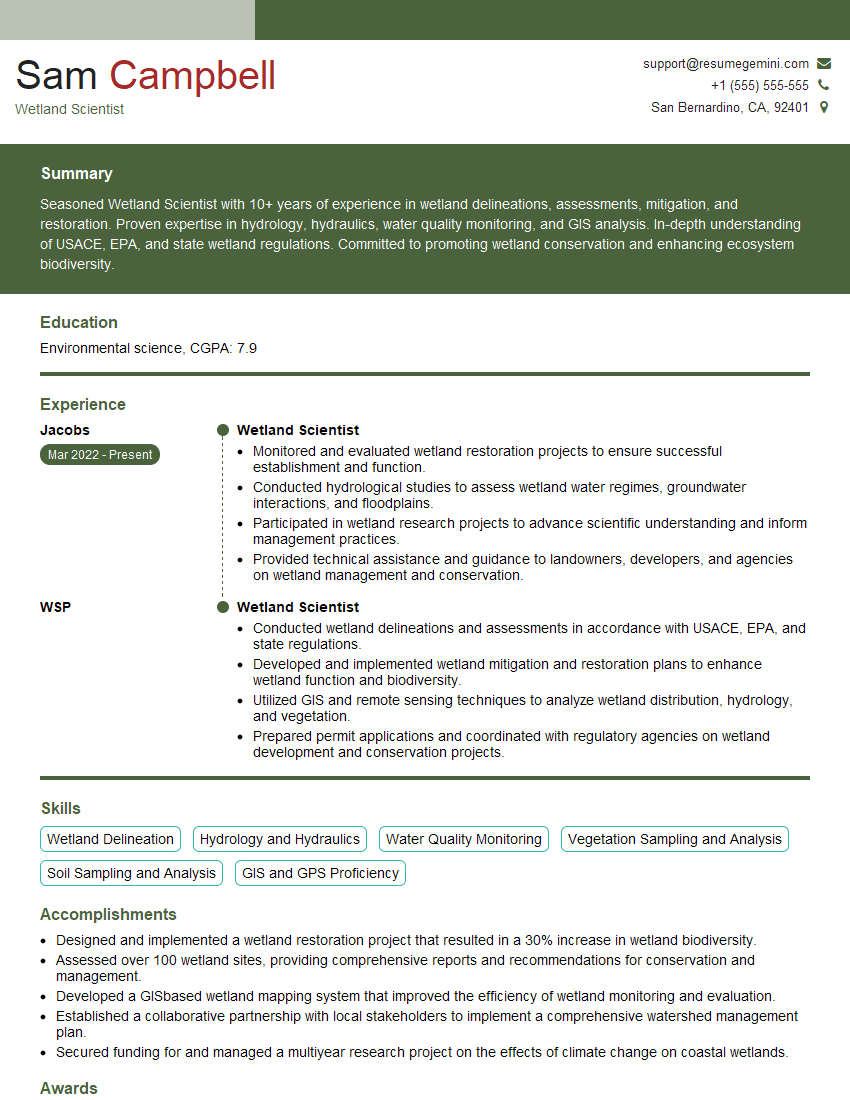
Wetland Scientist Resume Sample
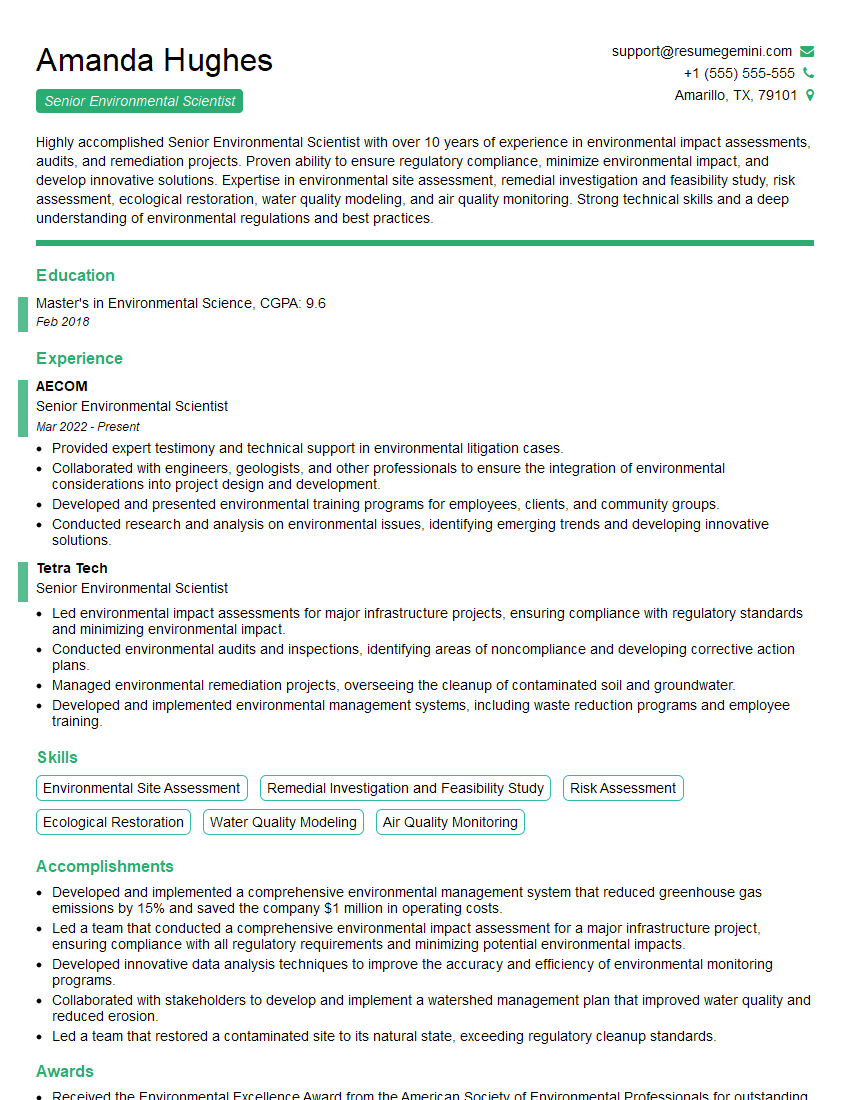
Senior Environmental Scientist Resume Sample
Explore more articles
Users Rating of Our Blogs
Share Your Experience
We value your feedback! Please rate our content and share your thoughts (optional).
What Readers Say About Our Blog
To the interviewgemini.com Webmaster.
Very helpful and content specific questions to help prepare me for my interview!
Thank you
To the interviewgemini.com Webmaster.
This was kind of a unique content I found around the specialized skills. Very helpful questions and good detailed answers.
Very Helpful blog, thank you Interviewgemini team.