Interviews are more than just a Q&A session—they’re a chance to prove your worth. This blog dives into essential Data Governance and Privacy interview questions and expert tips to help you align your answers with what hiring managers are looking for. Start preparing to shine!
Questions Asked in Data Governance and Privacy Interview
Q 1. Explain the concept of data governance.
Data governance is the collection of policies, processes, and standards that ensure the availability, usability, integrity, and security of an organization’s data. Think of it as the overall framework for managing and protecting your most valuable asset – your data. It’s not just about technology; it involves people, processes, and technology working in harmony.
For example, a well-governed data environment would clearly define who has access to what data, how that data is used, and what security measures are in place to protect it. It also ensures data quality and consistency across the organization.
Q 2. What are the key principles of data governance?
Key principles of data governance include:
- Accountability: Clearly defining roles and responsibilities for data management.
- Transparency: Ensuring data processes are open and easily understood.
- Integrity: Maintaining the accuracy and consistency of data.
- Security: Protecting data from unauthorized access, use, disclosure, disruption, modification, or destruction.
- Compliance: Adhering to relevant laws and regulations, such as GDPR or CCPA.
- Availability: Ensuring data is accessible to authorized users when and where needed.
- Usability: Making data easy to find, understand, and use.
These principles work together to create a robust data governance framework.
Q 3. Describe your experience with data quality management.
In my previous role at [Previous Company Name], I led the implementation of a data quality management program. We faced challenges with inconsistent data across multiple systems, leading to inaccurate reporting and inefficient decision-making. My team and I developed a comprehensive data quality framework that included data profiling, data cleansing, and data standardization processes.
We used a combination of automated tools and manual processes to identify and correct data errors. For example, we utilized data profiling tools to identify outliers and inconsistencies in our customer database. We then implemented data cleansing routines to correct these errors and standardized data formats across different systems. This resulted in a significant improvement in data quality, leading to more accurate reporting and better business decisions.
Q 4. How do you ensure data integrity and accuracy?
Ensuring data integrity and accuracy requires a multi-faceted approach. This includes:
- Data validation: Implementing checks and balances at the point of data entry to prevent errors.
- Data cleansing: Regularly identifying and correcting errors in existing data.
- Data standardization: Establishing consistent data formats and definitions across the organization.
- Data auditing: Regularly reviewing data for accuracy and completeness.
- Version control: Tracking changes to data over time to allow for rollback if necessary.
- Access controls: Limiting access to data to authorized personnel only.
For example, we might implement data validation rules in a form to prevent users from entering invalid data types, such as text in a numerical field. Regular data audits help identify trends and patterns in data errors, allowing for proactive measures to prevent future issues.
Q 5. What are the different types of data privacy regulations?
Data privacy regulations vary by region and jurisdiction, but some of the most prominent include:
- GDPR (General Data Protection Regulation): Applies to personal data processed in the European Union.
- CCPA (California Consumer Privacy Act): Applies to California residents.
- HIPAA (Health Insurance Portability and Accountability Act): Applies to protected health information in the United States.
- PIPEDA (Personal Information Protection and Electronic Documents Act): Applies to personal information in Canada.
These regulations often overlap, and organizations operating internationally must navigate multiple frameworks.
Q 6. Explain GDPR and its key requirements.
GDPR is a comprehensive data privacy regulation in the European Union. Its key requirements include:
- Consent: Obtaining explicit consent from individuals before processing their personal data.
- Data minimization: Collecting only the necessary data.
- Purpose limitation: Using data only for specified, explicit, and legitimate purposes.
- Data security: Implementing appropriate technical and organizational measures to protect personal data.
- Data subject rights: Granting individuals rights to access, correct, and delete their personal data.
- Data breaches: Reporting data breaches to the relevant authorities within 72 hours.
Non-compliance can result in significant fines.
Q 7. What is CCPA and how does it differ from GDPR?
The CCPA is a California data privacy law that grants consumers certain rights regarding their personal information. Key differences from GDPR include:
- Scope: CCPA applies only to California residents, whereas GDPR applies to personal data processed within the EU.
- Enforcement: CCPA enforcement is primarily handled by the California Attorney General, while GDPR enforcement varies across EU member states.
- Definition of Personal Information: Both laws define personal information, but their scope and detail differ.
- Rights Granted to Consumers: While both laws grant consumers certain rights (access, deletion, etc.), the specifics and processes differ.
While both aim to protect consumer data, their implementation and enforcement differ significantly.
Q 8. Describe your experience with data mapping and classification.
Data mapping and classification are fundamental to effective data governance. Data mapping involves identifying where data resides, its format, and how it flows through an organization. Classification involves categorizing data based on its sensitivity and value, such as Public, Confidential, or Highly Confidential. This allows for the implementation of appropriate security controls and compliance measures.
In my previous role at Acme Corp, I led a project to map and classify over 100 terabytes of data spread across multiple databases, cloud storage, and legacy systems. We used a combination of automated tools and manual reviews to identify data sources, understand their structure, and ultimately assign sensitivity levels. This resulted in a comprehensive data inventory and a structured classification scheme that informed our risk assessments and data security policies. For example, Highly Confidential data, like customer financial information, was assigned stricter access controls and encryption requirements than Public data, such as website analytics.
The process also revealed data silos and redundancies, enabling us to optimize data storage and improve data quality. We created a visual data map using a specialized software that clearly demonstrated data flow and dependencies, making it easy for stakeholders to understand the organization’s data landscape. The project successfully established a foundation for improved data governance and compliance.
Q 9. How do you handle data breaches?
Handling data breaches requires a swift and organized response. My approach follows a well-defined incident response plan that aligns with industry best practices and relevant regulations, such as GDPR or CCPA. The first step is to contain the breach – limiting further data exposure and preventing unauthorized access. This involves immediately isolating affected systems and disabling compromised accounts. Next, we conduct a thorough investigation to identify the root cause, the extent of the breach (what data was compromised and who was affected), and the potential impact.
Simultaneously, we notify affected individuals and relevant authorities as required by law. We then work to remediate the vulnerability that caused the breach, implementing appropriate security controls to prevent future incidents. Throughout the process, detailed records are maintained for auditing and reporting purposes. For instance, in a previous incident involving a phishing attack, we followed this plan, containing the breach within hours, notifying affected customers, and implementing multi-factor authentication across the organization. Post-incident analysis led to improved employee training on phishing awareness and strengthened security protocols.
Finally, the entire process is documented meticulously, and lessons learned are shared across the organization to improve future preparedness. This includes regular reviews and updates of our incident response plan.
Q 10. What is a Data Loss Prevention (DLP) strategy and how do you implement one?
A Data Loss Prevention (DLP) strategy aims to prevent sensitive data from leaving the organization’s control. It involves a multi-layered approach encompassing technical, procedural, and human elements. Implementing a DLP strategy typically involves several key steps:
- Identify sensitive data: This involves data mapping and classification (as discussed earlier).
- Implement technical controls: This includes using DLP tools to monitor data movement, block unauthorized transfers, and encrypt sensitive data both in transit and at rest. Examples include data loss prevention software that scans emails, files, and network traffic for sensitive information, and encryption tools that protect data stored on devices and in the cloud.
- Establish policies and procedures: This includes developing clear data handling policies, acceptable use policies, and employee training programs to raise awareness about data security risks.
- Monitor and review: Regularly reviewing DLP logs and reports to identify potential threats and adjust the strategy accordingly is critical.
- Employee training: Educating employees about data security risks and best practices is crucial. Training should cover topics such as phishing awareness, password security, and data handling procedures.
A successful DLP strategy requires a holistic approach, combining technology with well-defined policies and ongoing employee training. It is an iterative process, constantly adapting to evolving threats and technological advancements.
Q 11. Explain the role of a Data Protection Officer (DPO).
A Data Protection Officer (DPO) is responsible for overseeing an organization’s compliance with data privacy regulations, such as GDPR. They are the go-to person for all data protection-related matters. The DPO’s role is crucial for organizations processing significant amounts of personal data. Their responsibilities include:
- Monitoring compliance: Ensuring the organization adheres to data privacy laws and regulations.
- Advising on data protection: Providing guidance to management and staff on data protection issues.
- Implementing data protection policies: Developing and implementing data protection policies and procedures.
- Cooperating with supervisory authorities: Responding to requests from data protection authorities.
- Data breach management: Responding to data breaches and managing the incident response.
Think of the DPO as the organization’s internal data privacy expert, ensuring that data is handled responsibly and ethically. They act as a bridge between the organization and regulatory bodies, promoting a culture of data protection and accountability.
Q 12. What are the key elements of a data governance framework?
A robust data governance framework provides a structured approach to managing and protecting organizational data. Key elements include:
- Data strategy and policies: Defining a clear vision for data management, outlining policies for data quality, security, and privacy.
- Data architecture and management: Designing and managing the infrastructure for data storage, processing, and access.
- Data quality management: Implementing processes for ensuring data accuracy, completeness, and consistency.
- Data security and privacy: Establishing security measures to protect data from unauthorized access, use, disclosure, disruption, modification, or destruction, and adhering to relevant privacy regulations.
- Data lifecycle management: Defining the stages of data’s life cycle, from creation to archiving and disposal.
- Data governance roles and responsibilities: Clearly defining who is responsible for various aspects of data management.
- Metrics and reporting: Measuring the effectiveness of data governance initiatives and reporting on progress.
A well-defined framework helps ensure that data is used efficiently, effectively, and ethically, minimizing risks and maximizing value. It acts as a roadmap for all data-related activities within an organization.
Q 13. How do you balance data privacy with business needs?
Balancing data privacy with business needs requires a thoughtful and strategic approach. It’s not a zero-sum game; both can coexist. The key is to find innovative ways to utilize data while protecting individuals’ privacy. This involves:
- Privacy by design: Integrating privacy considerations into every stage of the data lifecycle, from the initial design of systems and processes to data disposal.
- Data minimization: Collecting only the data necessary for specific purposes, and not retaining it longer than needed.
- Anonymization and pseudonymization: Techniques to remove or replace identifying information while retaining data utility for analytics.
- Transparency and consent: Clearly communicating data collection and usage practices with individuals and obtaining their informed consent.
- Access control: Restricting data access to authorized personnel only.
- Regular privacy impact assessments: Conducting regular assessments to identify and mitigate potential privacy risks.
For example, a company might use anonymized customer data for market research without compromising individual privacy. Finding this balance necessitates clear communication between business units and the data protection team, ensuring that business objectives are met without compromising ethical or legal obligations.
Q 14. Describe your experience with data retention policies.
Data retention policies dictate how long an organization should keep specific types of data. Developing a sound policy requires careful consideration of legal requirements, business needs, and risk management. The policy should clearly define:
- Retention periods: Specifying how long each data type should be retained, considering legal obligations (like tax records), business requirements (like customer service history), and potential risks (like data breaches).
- Data types: Clearly identifying the data types subject to the policy, such as customer records, financial data, or employee information.
- Storage and disposal methods: Defining secure methods for storing and disposing of data once the retention period expires, ensuring compliance with data protection regulations and security best practices.
- Exception handling: Establishing procedures for handling exceptions, such as legal holds or ongoing investigations.
- Regular reviews: The policy should be reviewed and updated regularly to account for changes in legal requirements and business needs.
In practice, this involves regularly purging outdated data, securely deleting it according to regulations, and ensuring that systems support automated deletion or archiving based on defined retention periods. Failure to implement robust data retention policies can lead to legal and regulatory issues, increased storage costs, and heightened security risks.
Q 15. How do you ensure compliance with data privacy regulations?
Ensuring compliance with data privacy regulations like GDPR, CCPA, and HIPAA requires a multifaceted approach. It starts with a thorough understanding of the specific regulations applicable to your organization and the data you handle. This involves identifying the types of personal data collected, where it’s stored, how it’s used, and who has access to it.
- Data Mapping: A comprehensive data map is crucial. This inventory documents all personal data, its location, processing activities, and legal basis for processing.
- Privacy by Design: Integrate privacy considerations into every stage of the data lifecycle, from collection to disposal. This includes using privacy-enhancing technologies and implementing data minimization principles.
- Data Security: Robust security measures are essential to prevent data breaches. This encompasses technical safeguards like encryption and access controls, as well as physical security measures.
- Employee Training: Regular training for employees on data privacy best practices is vital. They need to understand their responsibilities and the potential consequences of non-compliance.
- Data Subject Rights: Establish processes for handling data subject requests, such as access, rectification, erasure, and restriction of processing, efficiently and in accordance with the law.
- Incident Response Plan: Develop a comprehensive plan to handle data breaches, including notification procedures and remediation strategies.
Regular audits and assessments are also critical to ensure ongoing compliance. Think of it like a health checkup for your data – you need regular checks to identify and address potential problems before they become major issues.
Career Expert Tips:
- Ace those interviews! Prepare effectively by reviewing the Top 50 Most Common Interview Questions on ResumeGemini.
- Navigate your job search with confidence! Explore a wide range of Career Tips on ResumeGemini. Learn about common challenges and recommendations to overcome them.
- Craft the perfect resume! Master the Art of Resume Writing with ResumeGemini’s guide. Showcase your unique qualifications and achievements effectively.
- Don’t miss out on holiday savings! Build your dream resume with ResumeGemini’s ATS optimized templates.
Q 16. What are your strategies for mitigating data privacy risks?
Mitigating data privacy risks requires a proactive and layered approach. It’s not enough to simply react to breaches; we must anticipate and prevent them.
- Risk Assessment: Identify and assess potential data privacy risks, considering factors like data sensitivity, processing activities, and potential threats. This allows for prioritizing mitigation efforts.
- Access Control: Implement robust access control mechanisms based on the principle of least privilege, ensuring that only authorized individuals have access to specific data.
- Data Encryption: Encrypt sensitive data both in transit and at rest to protect it from unauthorized access even if a breach occurs. Imagine encrypting a valuable document – only someone with the key can unlock and read it.
- Data Loss Prevention (DLP): Utilize DLP tools to monitor and prevent sensitive data from leaving the organization’s controlled environment. Think of it as a security guard at the exit, checking every package to prevent sensitive information from leaving.
- Regular Security Audits and Penetration Testing: Regularly assess the effectiveness of security controls by conducting penetration testing to identify vulnerabilities and weaknesses in the system.
- Vendor Risk Management: If you use third-party vendors to process data, implement strong contracts and security audits to ensure they also adhere to high data privacy standards.
Furthermore, continuous monitoring and incident response planning are critical to quickly identify and respond to any potential breaches or security incidents.
Q 17. What tools or technologies have you used for data governance?
Throughout my career, I’ve utilized various tools and technologies for data governance, each chosen based on the specific needs of the project and organization.
- Data Catalogs (e.g., Collibra, Alation): These tools provide a centralized repository for metadata, allowing for better discovery, understanding, and management of data assets.
- Data Quality Tools (e.g., Talend, Informatica): These help to identify and address data quality issues, improving data accuracy and consistency.
- Data Masking and Anonymization Tools (e.g., IBM Guardium, Informatica): These tools protect sensitive data by masking or anonymizing it, enabling secure data sharing and analysis.
- Data Governance Platforms (e.g., Collibra, Informatica): These platforms integrate various data governance capabilities, providing a holistic view of data management processes.
- Data Discovery and Classification Tools (e.g., Azure Purview, AWS Glue Data Catalog): These tools automate data discovery and classification, assisting with identifying and categorizing sensitive data.
The specific tools and technologies are often integrated into a larger data governance framework to ensure seamless data management and compliance. It’s important to choose tools that align with your organization’s technical infrastructure and specific data governance objectives.
Q 18. How do you communicate complex data governance concepts to non-technical audiences?
Communicating complex data governance concepts to non-technical audiences requires simplifying the language and using relatable analogies. Avoid jargon and technical terms whenever possible.
- Use Simple Language: Replace technical terms with everyday language. For example, instead of ‘data lineage,’ explain it as ‘tracking the journey of data from its origin to its final destination.’
- Visual Aids: Use charts, diagrams, and infographics to illustrate complex concepts visually. A picture is worth a thousand words, especially when explaining data flows or relationships.
- Real-World Examples: Relate data governance concepts to everyday scenarios that resonate with the audience. For example, you might compare data governance to managing a household budget.
- Storytelling: Use narratives and storytelling to make the information more engaging and memorable. This helps to keep the audience focused and interested.
- Interactive Sessions: Engage the audience with interactive sessions, quizzes, and discussions to reinforce understanding and encourage questions.
The goal is to ensure everyone understands the importance of data governance and their role in protecting sensitive information. This fosters a culture of data responsibility and accountability.
Q 19. Describe a time you had to resolve a data governance conflict.
In a previous role, we faced a conflict between the marketing department’s need for customer data for targeted advertising and the legal department’s concerns about GDPR compliance. The marketing team wanted access to detailed customer profiles, while the legal team emphasized data minimization and consent requirements.
To resolve this, I facilitated a series of meetings involving representatives from both departments and the data protection officer. We collaboratively defined clear use cases for customer data, identifying the minimum necessary data elements for each marketing campaign. We developed a consent management process that ensured customers understood how their data would be used and could opt-out at any time. This involved updating the privacy policy and implementing consent forms aligned with GDPR guidelines.
The solution involved creating a data governance framework that defined data access permissions and established clear lines of accountability. This involved documenting processes, establishing regular reviews, and training both teams on the new protocols. The conflict was successfully resolved by finding a balance between business needs and regulatory compliance through open communication and collaboration. The result was a more compliant and efficient process that met the marketing department’s needs without compromising customer privacy.
Q 20. How do you measure the effectiveness of a data governance program?
Measuring the effectiveness of a data governance program requires a multi-faceted approach combining quantitative and qualitative metrics.
- Data Quality Metrics: Track improvements in data accuracy, completeness, consistency, and timeliness. This could involve measuring the reduction in data errors or the improvement in data processing speed.
- Compliance Metrics: Monitor compliance with relevant regulations and internal policies. This could include tracking the number of data breaches, data subject requests processed, and the time taken to resolve compliance issues.
- Cost Savings: Evaluate cost savings achieved through improved data quality, reduced data breaches, and streamlined data management processes.
- User Satisfaction: Gather feedback from data users to assess their satisfaction with data quality, access, and usability.
- Risk Reduction: Monitor the reduction in data privacy and security risks. This involves tracking the number of vulnerabilities identified and remediated.
These metrics should be tracked regularly and reported to stakeholders to demonstrate the value of the data governance program and identify areas for improvement. It is crucial to establish Key Performance Indicators (KPIs) aligned with the overall objectives of the program. Regular reviews and adjustments based on data analysis are crucial for ongoing improvement.
Q 21. Explain the importance of data lineage in data governance.
Data lineage is the comprehensive tracking of data’s journey from its origin to its final destination. It’s like a detailed map showing every step of a data’s lifecycle, including its creation, transformation, movement, and usage. This is crucial for several reasons in data governance:
- Data Quality Improvement: Understanding data lineage allows for the identification of data quality issues at their source, enabling quicker remediation. If you see inaccurate data downstream, lineage helps trace it back to identify and fix the root cause.
- Compliance and Auditability: Data lineage is crucial for demonstrating compliance with regulations like GDPR. Being able to track data’s journey helps to easily respond to data subject requests and demonstrate accountability.
- Security and Risk Management: Tracking data flow helps in identifying potential security vulnerabilities and risks. Knowing where data is and how it is used enables better security planning and response to breaches.
- Data Discovery and Understanding: Lineage provides context for data, making it easier to understand how data is used and its impact on business processes.
- Data Governance and Stewardship: A clear understanding of data lineage empowers data stewards and owners to manage their data assets effectively.
Without data lineage, tracing the origin and impact of data issues becomes extremely difficult, making it challenging to ensure data quality, security, and compliance. Imagine trying to find a lost package without tracking information – data lineage provides that crucial tracking information.
Q 22. What is your experience with data anonymization and pseudonymization?
Data anonymization and pseudonymization are crucial techniques for protecting personal data while still allowing its use for research, analysis, or other purposes. Anonymization aims to remove all identifying information, making it impossible to link the data back to an individual. Pseudonymization, on the other hand, replaces identifying information with pseudonyms, allowing data linkage within a controlled environment but preventing direct identification.
My experience spans several projects where I’ve led the implementation of both techniques. For example, in a recent healthcare project, we anonymized patient records by removing names, addresses, and medical record numbers, replacing them with unique identifiers. This allowed researchers to analyze patient data without violating privacy regulations. In another project, we pseudonymized customer data for marketing analysis, using hashed identifiers to link purchase history while protecting individual identities.
Choosing between anonymization and pseudonymization depends on the specific context and risk tolerance. Anonymization offers stronger privacy protection but may limit the utility of the data, whereas pseudonymization provides a balance between privacy and data usability. It’s crucial to consider the potential for re-identification when employing these techniques, and rigorous methods must be used to ensure the irreversible removal or secure management of identifiers.
Q 23. How do you address data subject access requests?
Data Subject Access Requests (DSARs) are a cornerstone of data privacy regulations, granting individuals the right to access their personal data held by an organization. Processing a DSAR effectively requires a well-defined process and robust data management systems.
My approach involves a multi-step process: First, we verify the requester’s identity using secure methods to prevent unauthorized access. Second, we locate all relevant data across our systems – this often necessitates a deep understanding of where data is stored and how it is structured. Third, we provide the data in a clear, accessible format, often redacting irrelevant or sensitive information not subject to the request. Fourth, we document the entire process, complying with audit trails and record-keeping requirements. Finally, we respond to the request within the legally mandated timeframe.
In a recent case, a customer requested a copy of their transaction history. We carefully retrieved their data, redacted information unrelated to their transactions, and provided the data in a secure, downloadable format. We also documented the entire request handling process, ensuring compliance and transparency.
Q 24. Explain the concept of consent in the context of data privacy.
Consent, in the context of data privacy, is the freely given, specific, informed, and unambiguous indication of the data subject’s wishes by which he or she, by a statement or by a clear affirmative action, signifies agreement to the processing of personal data relating to him or her.
This means that consent cannot be implied; it must be actively given. The individual must understand exactly what data is being collected, how it will be used, and who will have access to it. Consent must be freely given, meaning it shouldn’t be coerced or conditional. This is often expressed through clear checkboxes or opt-in mechanisms rather than pre-selected boxes. It’s also crucial to allow the individual to easily withdraw their consent at any time.
Think of it like this: If you’re signing up for a newsletter, the website must clearly state what information they collect, how they use it, and how you can unsubscribe. If they don’t, the consent is not valid.
GDPR and other similar regulations emphasize the importance of obtaining valid consent. Failure to comply can result in significant penalties.
Q 25. How do you ensure the ethical use of data?
Ensuring the ethical use of data requires a multifaceted approach that goes beyond simply complying with regulations. It necessitates a strong ethical framework integrated into organizational culture, processes, and technology.
This starts with establishing clear ethical guidelines and principles. We should ask ourselves: What are the potential harms and benefits of using this data? How can we minimize bias and discrimination? Are we being transparent about data collection and use? We should establish oversight committees or ethics boards to review data use proposals and ensure they align with organizational values. Further, we must implement data minimization – collecting only the data necessary for a specific purpose and deleting it when no longer needed. We should also promote data literacy and awareness among employees to foster responsible data handling.
For example, in a project involving sentiment analysis of social media data, we carefully defined parameters to prevent the amplification of biased or discriminatory language, ensuring fairness and preventing harm.
Q 26. What are your experiences with implementing data governance policies?
I have extensive experience implementing data governance policies across various organizations. This involves developing comprehensive data governance frameworks that encompass data quality, data security, data privacy, and data lifecycle management.
My approach typically includes:
- Defining roles and responsibilities: Clearly assigning ownership and accountability for data throughout its lifecycle.
- Establishing data standards and policies: Creating standardized procedures for data classification, storage, and access.
- Implementing data quality management: Defining metrics to ensure data accuracy, completeness, and consistency.
- Using data governance tools: Employing technology to automate tasks like data discovery, classification, and access control.
- Regular monitoring and auditing: Continuously evaluating the effectiveness of policies and processes.
In a past project, we implemented a data governance framework for a financial institution, leading to improved data quality, reduced compliance risks, and enhanced operational efficiency.
Q 27. How do you stay up-to-date on changes in data privacy regulations?
Staying updated on ever-evolving data privacy regulations requires a proactive and multi-pronged approach.
I actively follow leading data privacy regulatory bodies like the ICO (UK), CNIL (France), and the FTC (USA), regularly reviewing their guidance, publications and updates. I subscribe to reputable legal and technology newsletters that specialize in data privacy. I also actively participate in industry conferences and webinars, engaging with experts and learning about emerging best practices and case studies. Maintaining professional certifications, such as the Certified Information Privacy Professional (CIPP), demonstrates continued commitment to professional development and staying abreast of legal and technical changes.
This ongoing learning allows me to quickly adapt policies and procedures to new requirements and to advise organizations on how to effectively comply with the latest regulations.
Q 28. Describe your experience with data security best practices.
Data security best practices are essential for protecting sensitive information. My experience encompasses various aspects of data security, from implementing robust access controls to conducting regular security audits.
Key practices I employ include:
- Data encryption: Encrypting data both at rest and in transit to protect against unauthorized access.
- Access control: Implementing strict access control measures based on the principle of least privilege.
- Regular security assessments: Conducting periodic vulnerability scans and penetration tests to identify and address security weaknesses.
- Incident response planning: Developing and regularly testing incident response plans to manage data breaches effectively.
- Employee training: Educating employees on security best practices and raising awareness of social engineering attacks.
- Data loss prevention (DLP): Implementing measures to prevent sensitive data from leaving the organization’s control.
For instance, in a recent project, we implemented multi-factor authentication (MFA), strengthened access control lists, and conducted regular security audits to enhance data security across the organization. This resulted in a significant reduction in security vulnerabilities and improved protection of sensitive data.
Key Topics to Learn for Data Governance and Privacy Interview
- Data Governance Frameworks: Understand common frameworks like COBIT, DAMA-DMBOK, and NIST Cybersecurity Framework. Consider their practical application in defining data policies and procedures.
- Data Quality Management: Explore techniques for ensuring data accuracy, completeness, consistency, and timeliness. Think about real-world examples of data quality issues and how they were resolved.
- Data Security and Privacy Regulations: Master key regulations like GDPR, CCPA, HIPAA, and others relevant to your target industry. Practice applying these regulations to hypothetical scenarios.
- Data Classification and Access Control: Learn how to classify data based on sensitivity and implement appropriate access controls to protect confidential information. Consider the practical implications of different access control models.
- Data Loss Prevention (DLP): Understand DLP strategies and technologies to prevent sensitive data from leaving the organization. Explore case studies of successful DLP implementations.
- Data Retention and Disposal Policies: Learn best practices for managing the lifecycle of data, including secure disposal methods. Consider the legal and regulatory implications of data retention.
- Risk Management and Compliance: Understand how to identify, assess, and mitigate data governance and privacy risks. Practice conducting risk assessments and developing mitigation strategies.
- Data Subject Rights and Consent Management: Familiarize yourself with data subject rights (e.g., right to access, rectification, erasure) and how to manage consent effectively. Consider how to handle subject access requests efficiently.
- Data Governance Technology: Explore various technologies used in data governance, such as data catalogs, data quality tools, and master data management (MDM) systems. Be prepared to discuss their benefits and limitations.
- Auditing and Monitoring: Understand the importance of regular audits and monitoring activities to ensure compliance with data governance and privacy policies. Discuss different auditing techniques and methodologies.
Next Steps
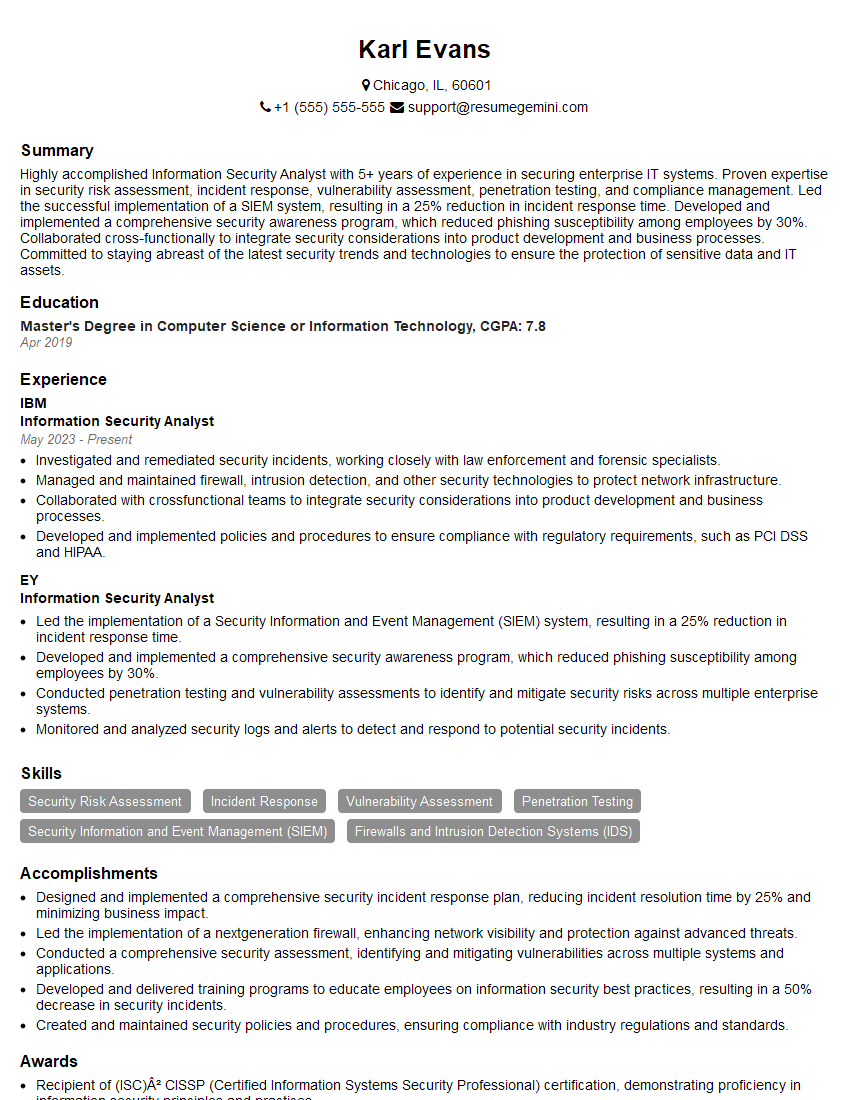
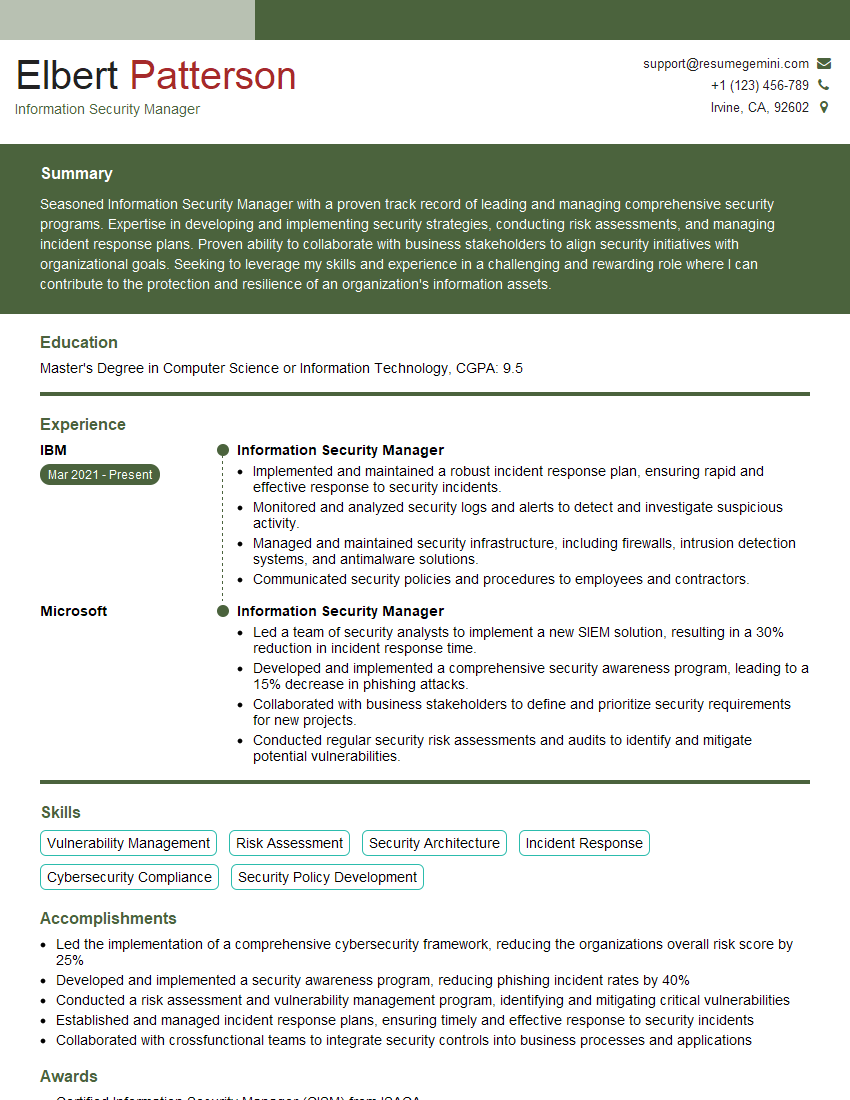
Mastering Data Governance and Privacy is crucial for a successful and rewarding career in today’s data-driven world. It demonstrates a commitment to ethical data handling and opens doors to high-demand roles. To significantly boost your job prospects, focus on crafting an ATS-friendly resume that highlights your relevant skills and experience. ResumeGemini is a trusted resource that can help you build a professional and impactful resume. We provide examples of resumes tailored to Data Governance and Privacy to guide you in creating yours.
Explore more articles
Users Rating of Our Blogs
Share Your Experience
We value your feedback! Please rate our content and share your thoughts (optional).
What Readers Say About Our Blog
To the interviewgemini.com Webmaster.
Very helpful and content specific questions to help prepare me for my interview!
Thank you
To the interviewgemini.com Webmaster.
This was kind of a unique content I found around the specialized skills. Very helpful questions and good detailed answers.
Very Helpful blog, thank you Interviewgemini team.