The right preparation can turn an interview into an opportunity to showcase your expertise. This guide to Developmental Surveillance and Early Intervention interview questions is your ultimate resource, providing key insights and tips to help you ace your responses and stand out as a top candidate.
Questions Asked in Developmental Surveillance and Early Intervention Interview
Q 1. Describe the key milestones in typical child development from birth to age 5.
Typical child development is a dynamic process, and milestones are guidelines, not rigid rules. Variations exist within the normal range. That said, key developmental milestones from birth to age 5 span several domains: physical, cognitive, language, and social-emotional.
- Birth to 1 year: Physical milestones include head control, rolling over, sitting, crawling, and walking. Cognitively, infants develop object permanence (understanding that objects continue to exist even when out of sight). Language development begins with cooing, babbling, and eventually saying first words. Socially and emotionally, infants show attachment to caregivers and begin to express emotions.
- 1 to 2 years: Toddlers refine their motor skills, walking confidently, running, climbing stairs, and developing fine motor skills like scribbling. Cognitive development involves increased understanding of cause and effect and symbolic play. Language skills expand rapidly, with toddlers forming simple sentences. Socially and emotionally, they are increasingly independent but also need considerable reassurance and security.
- 2 to 3 years: Children become more adept at physical activities, like jumping and hopping. Cognitively, they show improved problem-solving skills and pretend play becomes more complex. Language development progresses to longer sentences and better communication. Social-emotional development sees an increase in parallel play (playing alongside other children without direct interaction) and understanding of sharing (though it’s still a work in progress!).
- 3 to 4 years: Motor skills continue to improve, including riding a tricycle. Cognitive development involves more advanced pretend play, understanding of numbers and colors, and beginning to understand simple stories. Language is more fluent, and children can tell simple stories. Social-emotional development focuses on increased interaction with peers, understanding of rules, and expressing a wider range of emotions.
- 4 to 5 years: Children are quite agile, engaging in activities like skipping and hopping on one foot. Cognitively, they are beginning to understand more complex concepts, such as time and counting. Language is quite well-developed, and children can participate in conversations. Social-emotional development involves increased cooperation, sharing, and empathy.
Remember that these are just examples, and each child develops at their own pace. Significant deviations from these milestones warrant further investigation.
Q 2. Explain the difference between developmental surveillance and developmental screening.
Developmental surveillance and developmental screening are both crucial aspects of early childhood development monitoring, but they differ in their approach and purpose.
Developmental surveillance is an ongoing process of observing a child’s development across different domains (physical, cognitive, language, social-emotional) during routine well-child visits. It involves gathering information through regular parent interviews and informal observations by healthcare providers, focusing on identifying children who may be at risk for developmental delays. It’s a continuous process integrated into regular check-ups. Think of it as a constant ‘check-in’ to monitor the child’s progress.
Developmental screening, on the other hand, is a brief assessment that uses standardized tools to identify children who may have developmental delays or disabilities. Screenings are typically done at specific intervals and utilize specific questionnaires or tests to evaluate the child’s developmental progress against age-specific norms. They are more formal and targeted, identifying children needing further evaluation.
In short: Surveillance is ongoing monitoring; screening is a specific, targeted assessment using standardized tools.
Q 3. What are the common red flags indicating potential developmental delays in infants and toddlers?
Several red flags can indicate potential developmental delays in infants and toddlers. It’s crucial to remember that one red flag doesn’t automatically signify a delay; however, the presence of multiple flags or persistent concerns warrants a comprehensive assessment.
- Persistent lack of eye contact: Infants and toddlers typically develop eye contact as they get older; lack of this could indicate a communication disorder or autism spectrum disorder.
- Delayed gross motor skills: Significant delays in rolling over, sitting, crawling, or walking compared to age-related norms.
- Delayed fine motor skills: Difficulty with grasping objects, feeding themselves, or using utensils.
- Lack of babbling or words by 12 months: Limited language development could suggest hearing impairment or other communication delays.
- Absence of social smiles: Infants usually respond with smiles; lack of them could indicate underlying conditions.
- Repetitive behaviors or unusual mannerisms: Repetitive actions (hand flapping) or unusual body movements can indicate potential autism spectrum disorder.
- Poor head control after 4 months: Delayed head control could hint at hypotonia (low muscle tone).
- Persistent irritability or difficulty calming down: Excessive fussiness or inconsolability beyond typical infant fussiness could indicate pain, hunger, or other issues.
- Failure to follow simple instructions: Difficulty following simple directives like “come here” or “give me that” can indicate cognitive delays.
These are just some examples, and the specific red flags will vary depending on the child’s age and developmental stage. Parents’ concerns are also crucial; if a parent expresses consistent concerns, it is vital to investigate further.
Q 4. How do you conduct a developmental screening using standardized assessment tools?
Conducting developmental screenings using standardized assessment tools requires careful adherence to protocols. I’ll outline a general process, noting that the specifics vary based on the chosen tool.
- Choose an appropriate screening tool: The selection depends on the child’s age and suspected developmental area of concern. Examples include the Ages and Stages Questionnaires (ASQ), the Denver Developmental Screening Test II (DDST-II), or the Bayley Scales of Infant and Toddler Development.
- Obtain informed consent from parents/guardians: Ensure they understand the purpose, procedures, and implications of the screening.
- Administer the screening tool: Follow the standardized instructions precisely. This might involve observing the child’s behavior, asking parents questions, or presenting tasks to the child. The tool will specify how the assessment should be completed.
- Document observations carefully: Record all responses and behaviors, even those that seem irrelevant. The information from the observation is important for creating a comprehensive picture of the child’s development.
- Score the assessment: Use the standardized scoring system provided with the chosen tool. This system will provide a numerical score indicating whether the child’s performance falls within the typical range or suggests a need for further evaluation.
- Interpret the results: Based on the scores and observations, determine if the results fall within the normal range. If the screening suggests potential developmental delays, a comprehensive evaluation is warranted.
- Communicate results to parents/guardians: Explain the findings in a clear and non-judgmental manner, providing support and resources as needed. If there are concerns, refer them to appropriate specialists.
Example: Using the ASQ, I’d systematically ask parents questions about their child’s communication skills, gross motor skills, and fine motor skills, comparing their answers to the age-appropriate milestones. The scoring guide would then determine whether further assessment is needed. It’s critical to avoid judgment and focus on providing support.
Q 5. What are the key components of an Individualized Family Service Plan (IFSP)?
An Individualized Family Service Plan (IFSP) is a legally mandated document developed for infants and toddlers (birth to age 3) who have developmental delays or disabilities and their families. It’s a collaborative process involving the family, service providers, and other relevant professionals.
Key components include:
- Present levels of performance (PLP): A comprehensive description of the infant or toddler’s current developmental functioning across various domains.
- Family resources, priorities, and concerns: A section detailing the family’s strengths, needs, aspirations for their child, and concerns about the child’s development.
- Outcomes and goals: Specific, measurable, achievable, relevant, and time-bound (SMART) goals designed to improve the child’s development and support the family.
- Early intervention services: A detailed description of the specific services to be provided, including the type, intensity, frequency, and duration of each service.
- Natural environments: Specifies the settings where services will be provided, prioritizing natural environments, such as home or daycare, to maximize development.
- Service coordinator: Identifies the person responsible for coordinating the delivery of services and ensuring the plan’s implementation.
- Review and evaluation: A schedule for regularly reviewing the IFSP to monitor progress, adjust goals as needed, and reassess the child’s development.
The IFSP emphasizes family-centered care, empowering families to actively participate in decision-making and service delivery.
Q 6. Describe your experience with different assessment tools used for developmental surveillance and screening.
Throughout my career, I’ve utilized various assessment tools for developmental surveillance and screening. My experience encompasses both parent-reported questionnaires and direct observational assessments. Examples include:
- Ages and Stages Questionnaires (ASQ): A parent-reported questionnaire assessing development across multiple domains. I’ve found it useful for its ease of administration and ability to screen for potential delays across various age groups. The ASQ’s strength is that it facilitates early identification of potential delays through parental input.
- Bayley Scales of Infant and Toddler Development: A comprehensive assessment battery that includes both parent-reported questionnaires and direct observation of the child’s performance on various tasks assessing cognitive, motor, and language skills. This provides a more detailed evaluation, and its usefulness for comprehensive assessments is unparalleled. The detailed nature, however, requires more time and specialized training for effective administration and interpretation.
- Denver Developmental Screening Test II (DDST-II): A standardized test to assess personal-social, fine motor-adaptive, language, and gross motor skills. While useful, its limitations include relying heavily on observation and a potential bias towards motor skills assessment.
- Modified Checklist for Autism in Toddlers (M-CHAT): A screening tool for autism spectrum disorder in toddlers. This is useful for identifying children who might benefit from a more thorough autism evaluation.
Selecting the appropriate tool depends on the child’s age, the specific areas of concern, and the available resources. It’s crucial to understand the strengths and limitations of each tool when interpreting results.
Q 7. How do you integrate family perspectives and cultural considerations into the early intervention process?
Integrating family perspectives and cultural considerations is paramount in effective early intervention. It’s not just about providing services; it’s about partnering with families to achieve their goals for their children within their cultural context.
Here’s how I approach this:
- Active listening and collaboration: I prioritize listening to families’ concerns, understanding their beliefs about child development, and learning about their cultural practices. I collaboratively develop the intervention plan, involving the family in decision-making at every step.
- Culturally sensitive communication: I use language that is accessible and respectful of the family’s culture and linguistic background. This might involve using interpreters or adapting communication styles.
- Respectful engagement: I respect families’ diverse approaches to parenting and childcare, avoiding judgment and ensuring that recommendations are culturally relevant. For instance, recognizing that different cultural groups may have unique socialization practices influences my recommendations.
- Cultural humility: I continuously seek to expand my knowledge and understanding of diverse cultures and families’ beliefs about child development. I am open to acknowledging my own limitations and biases and avoid making assumptions.
- Tailored interventions: I tailor interventions to respect cultural practices, beliefs and values. For example, I may adapt play therapy activities to reflect familiar cultural themes.
- Community involvement: Collaborating with community resources that are familiar and trusted within the family’s culture to provide additional support.
For example, when working with a family whose primary language is not English, I ensure that services are provided in their native language through a qualified interpreter. Also, I incorporate culturally relevant materials and activities into therapy sessions to increase engagement and effectiveness.
Q 8. Explain your understanding of the principles of early intervention best practices.
Early intervention best practices are guided by several core principles, all focused on maximizing a child’s developmental potential. These principles emphasize family-centered care, meaning the family is an active partner in every step of the process. We also prioritize developmental appropriateness, tailoring interventions to the child’s age, abilities, and interests. Individualized intervention plans are crucial, as children have unique needs, and a ‘one-size-fits-all’ approach is ineffective. Evidence-based practices ensure that interventions are supported by research, maximizing their effectiveness. Finally, interdisciplinary collaboration is paramount; effective early intervention requires the coordinated expertise of various professionals working together.
For example, in working with a child with a developmental delay, we wouldn’t just focus on isolated skills. We would collaborate with the family to understand their routines and preferences, then integrate therapeutic activities seamlessly into their daily life, such as incorporating language stimulation during playtime or fine motor skill development during mealtime.
Q 9. Describe your experience with collaborating with interdisciplinary teams in early intervention settings.
I have extensive experience working within interdisciplinary teams in early intervention. These teams typically include professionals such as therapists (occupational, physical, speech), special education teachers, psychologists, social workers, and medical personnel. Effective collaboration hinges on open communication, shared decision-making, and a common understanding of the child’s needs and goals. I actively participate in team meetings, contribute my expertise, and respect the contributions of other team members. Regular communication ensures everyone is on the same page regarding intervention strategies and progress monitoring.
For instance, in a case involving a child with autism, I collaborated with an occupational therapist to address sensory processing challenges while the speech-language pathologist focused on communication skills. We regularly shared updates and adjusted our individual interventions based on each other’s observations and input, leading to a more holistic and effective treatment plan.
Q 10. How do you document and report developmental progress and challenges?
Documentation and reporting of developmental progress are crucial for tracking a child’s development and ensuring effective intervention. I utilize various methods, including standardized assessments (e.g., Bayley Scales, ASQ), progress notes that detail specific observations, and parent reports that provide valuable insights into the child’s development in different contexts. I use both qualitative and quantitative data to paint a comprehensive picture of a child’s strengths and challenges. This information is summarized in reports shared with the family and other professionals on the team, often using visual aids like graphs to illustrate progress.
For example, if a child is working on language development, I would document specific examples of their language use (e.g., number of words used, sentence complexity), noting both successes and areas needing improvement. Progress reports would clearly outline the child’s strengths and areas where interventions are targeted. I also maintain meticulous records according to HIPAA regulations and agency policies.
Q 11. How do you adapt intervention strategies to meet individual child’s needs and preferences?
Adapting intervention strategies is vital for success. Every child is unique, and interventions must align with their individual learning styles, preferences, and developmental needs. I utilize a variety of approaches, including play-based therapy, incorporating the child’s interests into activities, adjusting the intensity and duration of therapy sessions based on the child’s attention span and tolerance, and regularly assessing the child’s response to determine the effectiveness of the strategy. Continuous feedback from the child and parents helps shape the intervention to ensure the process is engaging and effective.
For example, if a child doesn’t respond well to a structured, direct teaching approach for language development, I might shift to a more playful approach, using songs, puppets, or interactive games. This personalized approach ensures engagement and makes learning more enjoyable.
Q 12. What is your experience with different therapeutic approaches used in early intervention?
My experience encompasses a range of therapeutic approaches used in early intervention, including but not limited to developmental approaches (e.g., Floortime), behavioral approaches (e.g., Applied Behavior Analysis or ABA), play therapy, and sensory integration therapy. The choice of approach is dictated by the child’s specific needs and diagnosis. I often integrate elements from several approaches, creating a customized intervention plan based on what works best for the individual child.
For example, in a case involving a child with autism, I might integrate elements of ABA to address specific behavioral goals, while simultaneously using play therapy to facilitate social interaction and communication. The choice of strategy is data-driven, and I regularly assess effectiveness and adjust accordingly. This ensures the approach is both evidence-based and child-centered.
Q 13. How do you communicate effectively with parents/families regarding their child’s development?
Effective communication with parents and families is the cornerstone of successful early intervention. I prioritize active listening, empathy, and clear, respectful communication. I use plain language, avoiding jargon, and explain concepts in a way that parents can easily understand. I involve families in the development of the intervention plan, ensuring their input is valued. I regularly provide updates, seek feedback, and offer support and resources. Collaboration and shared decision-making are key.
For example, before starting any intervention, I engage in extensive conversations with the parents to understand their concerns, expectations, and preferences. I schedule regular meetings to discuss progress, challenges, and any adjustments needed to the plan. I also provide educational materials and resources to support the parents’ understanding of their child’s development and the intervention process.
Q 14. Describe your understanding of evidence-based practices in early intervention.
Evidence-based practices in early intervention are interventions supported by rigorous scientific research demonstrating their effectiveness. These practices are not just ‘best guesses’; they are grounded in data showing positive outcomes for children. I regularly consult peer-reviewed journals, research databases (e.g., PubMed), and reputable professional organizations (e.g., American Speech-Language-Hearing Association) to stay updated on the latest research and ensure my interventions are aligned with current evidence. This commitment to evidence-based practice ensures I deliver the most effective and appropriate services for the children in my care.
For example, before implementing a specific intervention for a child with a language delay, I would conduct thorough research to identify interventions proven effective for similar cases. I’d consider the research methodology, sample size, and the overall strength of the evidence before incorporating the intervention into a treatment plan.
Q 15. What are your strategies for managing challenging behaviors in young children?
Managing challenging behaviors in young children requires a multifaceted approach rooted in understanding the underlying causes. It’s crucial to remember that challenging behaviors are often communication attempts, expressions of unmet needs, or reactions to sensory overload. My strategy focuses on:
- Functional Behavior Assessment (FBA): This involves systematically observing the child’s behavior to identify the triggers (antecedents), the behavior itself, and the consequences. For example, if a child throws toys (behavior) when frustrated (antecedent), the consequence might be getting attention from adults. Understanding this pattern allows targeted intervention.
- Positive Behavior Support (PBS): Instead of focusing solely on punishment, PBS emphasizes teaching replacement behaviors. For instance, if a child hits when angry, we teach them to use words to express their feelings or take deep breaths. We proactively provide positive reinforcement for appropriate behaviors.
- Environmental Modifications: Altering the child’s environment can significantly reduce challenging behaviors. This might involve minimizing distractions, structuring the environment to facilitate success, or providing sensory breaks as needed. For a child easily overwhelmed, a designated quiet space could be incredibly helpful.
- Collaboration with Parents and Team: Effective behavior management requires a cohesive team approach. I work closely with parents, therapists, and educators to ensure consistency in strategies across all settings. Regular communication and shared decision-making are key to success.
For example, I worked with a child who frequently bit others. Through FBA, we discovered this happened when he was overwhelmed. We implemented a visual schedule to help him anticipate transitions, a designated ‘calm down’ corner, and taught him sign language to communicate his frustration. This multi-pronged approach dramatically decreased his biting behavior.
Career Expert Tips:
- Ace those interviews! Prepare effectively by reviewing the Top 50 Most Common Interview Questions on ResumeGemini.
- Navigate your job search with confidence! Explore a wide range of Career Tips on ResumeGemini. Learn about common challenges and recommendations to overcome them.
- Craft the perfect resume! Master the Art of Resume Writing with ResumeGemini’s guide. Showcase your unique qualifications and achievements effectively.
- Don’t miss out on holiday savings! Build your dream resume with ResumeGemini’s ATS optimized templates.
Q 16. Explain your approach to transitions in early intervention services.
Transitions in early intervention can be stressful for both children and families. My approach prioritizes predictability, preparation, and positive reinforcement. I believe in:
- Visual Supports: Using visual schedules, timers, and social stories helps children understand what to expect and reduces anxiety. A simple picture schedule showing the transition from playtime to snack time can make a world of difference.
- Preparation and Choice: Giving children advance notice of upcoming transitions and offering limited choices within those transitions empower them and improve compliance. For example, ‘In five minutes we’ll clean up. Do you want to put away the blocks or the cars first?’
- Positive Reinforcement: Rewarding successful transitions reinforces positive behavior and reduces resistance. A sticker chart or verbal praise can be incredibly motivating.
- Sensory Strategies: For some children, transitions may be difficult due to sensory sensitivities. Providing sensory tools (e.g., weighted blankets, fidget toys) during transitions can help them regulate their emotions and handle the change better.
- Collaboration with Families: I work closely with families to establish consistent transition routines across home and intervention settings, reinforcing strategies throughout the day.
For example, with a child who struggled with transitions from one activity to another, we introduced a visual timer along with a preferred activity to help them understand the end of playtime. We then reinforced the transition with praise and a small reward after the cleanup.
Q 17. Describe your experience with various types of assistive technology.
My experience encompasses a range of assistive technologies, including:
- Augmentative and Alternative Communication (AAC) devices: From simple picture cards to sophisticated speech-generating devices (SGDs), I have experience implementing and training families on their use. I’ve seen firsthand how AAC can unlock communication for children who struggle with verbal language.
- Adaptive toys and equipment: I’m familiar with adapting toys to improve accessibility for children with various physical needs, ensuring they can participate in play. This could involve modifying grips on toys or using switch-activated devices.
- Assistive listening devices: I understand the benefits of FM systems and other hearing aids to improve auditory access in the classroom and therapy settings. This is particularly helpful for children with hearing impairments.
- Mobility aids: While I don’t directly provide physical therapy, I collaborate with physical therapists to ensure that wheelchairs and other mobility devices are properly fitted and used to optimize the child’s movement and participation.
- Adaptive technology for computers and tablets: I’m knowledgeable about software that provides accessibility options, such as screen readers, alternative input methods, and visual supports for children with visual or cognitive impairments.
I always focus on finding the right technology that supports the child’s specific needs and abilities, while taking into consideration the family’s preferences and resources.
Q 18. How do you support the inclusion of children with disabilities in inclusive settings?
Supporting the inclusion of children with disabilities in inclusive settings requires a collaborative effort and a proactive approach. My strategies center around:
- Universal Design for Learning (UDL): Implementing UDL principles ensures that the learning environment and curriculum are accessible to all children, regardless of their abilities or disabilities. This involves offering multiple means of representation, action and expression, and engagement.
- Individualized Education Program (IEP) or Individualized Family Service Plan (IFSP) collaboration: I work closely with IEP or IFSP teams to ensure that the child’s goals and support needs are integrated into the inclusive setting. This involves identifying appropriate accommodations and modifications.
- Teacher and Peer Training: Training teachers and peers about the child’s disability, strengths, and communication methods promotes understanding and acceptance. This also improves peer interactions and social inclusion.
- Environmental Modifications: Adjusting the physical environment (e.g., reducing noise levels, providing designated quiet spaces) can make it easier for the child to participate and learn.
- Positive behavioral support: Supporting teachers and peers in employing proactive strategies to manage potential challenges and promote positive interactions.
I worked with a school to create an inclusive classroom for a child with autism spectrum disorder. We implemented a visual schedule, quiet areas, and provided social skills training for the classmates. The child thrived in this supportive environment, participating actively in learning activities and forming positive relationships with peers.
Q 19. How do you assess a child’s strengths and needs?
Assessing a child’s strengths and needs is a comprehensive process that involves gathering information from multiple sources. I utilize a combination of methods:
- Developmental screening tools: Standardized questionnaires and assessments, like the Ages and Stages Questionnaires (ASQ), help identify potential delays or areas of concern. These tools provide a starting point for further evaluation.
- Observation: I conduct direct observations of the child in various settings to assess their skills and behaviors. This involves observing their play, interactions, and responses to different situations.
- Parent interviews: Parents are invaluable sources of information about their child’s development, strengths, challenges, and routines. These interviews are conducted in a respectful, supportive manner.
- Formal assessments: Depending on the child’s needs and concerns, formal standardized tests and assessments may be administered by myself or other specialists to gain a more in-depth understanding of a child’s specific strengths and weaknesses.
- Collaboration with other professionals: I often work collaboratively with other professionals, such as pediatricians, therapists, and educators, to gain a holistic understanding of the child’s development and needs.
The results of this multi-faceted assessment are then used to develop an individualized plan that addresses the child’s unique needs while building upon their strengths.
Q 20. What are your experience with different models of service delivery for early intervention?
My experience encompasses several models of service delivery for early intervention:
- Center-based services: I’ve worked in settings where children attend a specialized center for therapy and educational services. This model provides structured opportunities for intervention and interaction with other professionals.
- Home-based services: I’ve also provided services directly in children’s homes, allowing me to observe their development in their natural environment and support families in their routines and caregiving. This model is very family centered.
- Community-based services: I’m familiar with delivering services in various community settings, such as playgrounds, libraries, or preschools. This approach allows for natural opportunities for skill development and integration.
- Consultative models: I have experience working with providers using consultative models, where I provide guidance and support to educators or caregivers without direct service to the child. This helps them implement effective strategies.
- Integrated service models: I support integrated service models, where multiple disciplines (therapists, educators, social workers) work collaboratively to provide comprehensive services. This improves coordination and efficiency.
The most effective model depends on the child’s individual needs, family preferences, and available resources. I always prioritize a family-centered approach, ensuring that the services are tailored to their specific circumstances and preferences.
Q 21. Describe how you would address the concerns of a parent who is hesitant about early intervention services.
Addressing parental hesitancy towards early intervention services requires empathy, understanding, and clear communication. I would begin by:
- Active listening: I’d start by actively listening to the parent’s concerns and validating their feelings. Understanding their perspective is paramount before offering solutions.
- Educating and clarifying misconceptions: Many parents have misconceptions about early intervention. I would explain the benefits clearly and answer any questions honestly, dispeling common myths and providing clear explanations. I might emphasize the focus on strengths and skill building rather than solely addressing deficits.
- Providing examples of positive outcomes: I would share success stories and case studies of children who have benefitted from early intervention to build their confidence in the process.
- Focusing on the family’s goals and values: I would work with the family to identify their priorities for their child and how early intervention can support those goals. It’s crucial that they feel empowered and in control.
- Respecting their choices: Ultimately, the decision to participate in early intervention services rests with the family. I would respect their choices and provide ongoing support regardless of their decision.
Often, parental hesitation stems from fear of judgment or labeling. Reassuring them that early intervention is about supporting their child’s development and empowering the family is crucial. I would also emphasize that early intervention is not a lifetime commitment, and the goals and services can be adjusted as the child progresses.
Q 22. How do you identify and address potential ethical dilemmas in early intervention?
Ethical dilemmas in early intervention are common, arising from balancing the child’s best interests with parental rights, resource allocation, and confidentiality. For example, a parent might disagree with a recommended intervention, or we might face a situation where limited resources force difficult choices. Addressing these requires a multi-step approach.
Collaboration: Open and honest communication with families is crucial. We work collaboratively to understand their perspectives, concerns, and values, ensuring they are active participants in decision-making.
Informed Consent: We ensure that parents fully understand the proposed interventions, potential benefits and risks, and alternative options before providing consent. This involves using clear, accessible language and addressing any questions or concerns thoroughly.
Advocacy: If a parent’s decision contradicts a child’s best interests and poses a significant risk, we advocate for the child while respecting the family’s autonomy. This may involve consultation with supervisors, ethical review boards, or legal professionals to ensure appropriate action.
Confidentiality: We adhere strictly to confidentiality guidelines, only sharing information with relevant professionals directly involved in the child’s care with explicit consent.
Documentation: Meticulous record-keeping is essential, documenting all interactions, decisions, and rationale behind them to support our actions and ensure accountability.
Q 23. What are your strengths and weaknesses as an early intervention professional?
My strengths lie in my ability to build strong therapeutic relationships with children and their families, creating a safe and trusting environment. I’m adept at adapting my approach based on individual needs and preferences, and I have a proven track record of designing and implementing effective intervention plans. My knowledge of various developmental milestones and assessment tools is extensive. Furthermore, I’m a collaborative team player, comfortable working with a multidisciplinary team to ensure holistic care.
A weakness I’m actively working on is time management, particularly when juggling multiple cases and administrative tasks. I am implementing strategies like prioritizing tasks, using time-blocking techniques and seeking support from colleagues when needed to improve efficiency.
Q 24. What are your goals for professional development in early intervention?
My professional development goals focus on expanding my expertise in specific areas such as evidence-based practices for children with autism spectrum disorder and enhancing my skills in data analysis to effectively measure intervention outcomes. I aim to deepen my understanding of trauma-informed care and its implications for early intervention. Furthermore, I plan to pursue advanced training in specific therapeutic modalities, such as play therapy or assistive technology integration, to broaden my intervention repertoire. I’m also committed to staying current with the latest research and best practices in the field by attending conferences and engaging with professional organizations.
Q 25. How do you ensure cultural competence in your practice?
Cultural competence is paramount in early intervention. It’s about understanding and respecting the diverse backgrounds, beliefs, and practices of the families we serve. I achieve this through several strategies:
Cultural Humility: I recognize that I am constantly learning and strive to approach each family with humility and a genuine desire to understand their unique perspectives.
Family-Centered Practice: I prioritize involving families in every aspect of the intervention process, ensuring that our approaches align with their values and cultural norms.
Culturally Sensitive Assessment: I use assessment tools and techniques that are culturally appropriate and avoid making assumptions based on stereotypes. This might include seeking input from community members or adapting assessment methods to better suit the family’s communication styles.
Collaboration with Community Resources: I build relationships with community organizations and interpreters to ensure access to appropriate support and resources.
Ongoing Learning: I regularly engage in cultural sensitivity training and actively seek opportunities to learn more about diverse cultures.
Q 26. Describe your experience working with children who have specific developmental delays (e.g., autism, Down syndrome).
I have extensive experience working with children diagnosed with autism spectrum disorder and Down syndrome. With autistic children, I’ve used Applied Behavior Analysis (ABA) techniques, focusing on skill-building through positive reinforcement and addressing challenging behaviors using functional behavioral assessments. For instance, I worked with a child who had difficulty transitioning between activities. By using a visual schedule and rewarding successful transitions, we significantly improved his adaptability.
With children with Down syndrome, my focus has been on supporting their overall development, including speech and language, fine motor skills, and cognitive development. Early intervention is critical for this population, and I have found that incorporating play-based therapy and working closely with the family to create a supportive home environment produces the best outcomes. For example, I supported a family with strategies to promote their child’s language development through daily interactions, creating opportunities for communication and expression.
Q 27. Explain how you would prioritize interventions based on the child’s needs and available resources.
Prioritizing interventions involves a careful consideration of the child’s developmental needs, available resources, and family preferences. I utilize a multi-step process:
Comprehensive Assessment: A thorough assessment identifies the child’s strengths and weaknesses across various developmental domains (cognitive, physical, social-emotional, communication).
Goal Setting: Collaboration with the family helps establish prioritized goals that are measurable, achievable, relevant, and time-bound (SMART goals). We focus on the most impactful areas first, targeting skills that will have a cascading positive effect on other areas.
Resource Allocation: Considering available resources (therapy sessions, equipment, community support), we develop an intervention plan that’s feasible and sustainable. We may need to prioritize interventions based on their potential impact and the availability of resources. If certain interventions are not currently available, we may focus on bridging the gap through parent training or temporary alternatives.
Regular Monitoring and Adjustment: The intervention plan is regularly reviewed and modified to ensure its effectiveness and align with the child’s evolving needs. Flexibility and adaptability are crucial in early intervention.
Q 28. How do you measure the effectiveness of early intervention services?
Measuring the effectiveness of early intervention requires a multifaceted approach combining both quantitative and qualitative data.
Standardized Assessments: We utilize standardized developmental assessments (e.g., Bayley Scales, ASQ) at regular intervals to track progress on specific developmental skills. Comparing scores over time provides quantitative data demonstrating improvement.
Progress Monitoring Tools: We use progress monitoring tools tailored to specific intervention goals, to frequently assess progress and make data-driven adjustments to the intervention plan. This might involve charting specific behaviors or skill acquisition over time.
Qualitative Data: We collect qualitative data through observations, parent reports, and teacher feedback. This provides a rich understanding of the child’s overall development, including areas not easily captured by standardized tests. For example, observing a child’s social interactions or documenting parent reports on behavioral changes provide valuable insights.
Functional Outcomes: We focus on measuring functional outcomes—how the intervention impacts the child’s everyday life. This might involve tracking a child’s ability to participate in activities, their level of independence, and their overall well-being.
Parent Satisfaction: Regular feedback from families provides invaluable information on the satisfaction of services and the overall impact of interventions on family life.
Key Topics to Learn for Developmental Surveillance and Early Intervention Interview
- Developmental Milestones: Understanding typical developmental trajectories across various domains (cognitive, physical, social-emotional, language) from infancy through early childhood. Consider the variations within normal development and factors influencing individual differences.
- Screening Tools and Assessments: Familiarize yourself with common screening tools used for developmental surveillance (e.g., Ages & Stages Questionnaires, ASQ-3). Understand the principles of standardized testing, interpreting results, and their limitations.
- Early Intervention Models and Approaches: Explore different models of early intervention, such as the family-centered approach, developmental-ecological framework, and evidence-based practices. Understand the importance of collaboration with families and other professionals.
- Individualized Family Service Plans (IFSPs): Learn about the process of developing and implementing IFSPs, including goal setting, intervention strategies, and monitoring progress. Understand the family’s role in this process.
- Ethical Considerations: Review ethical considerations related to confidentiality, informed consent, cultural sensitivity, and advocacy for children and families.
- Communication and Collaboration: Practice effective communication techniques for interacting with families, colleagues, and other professionals involved in early intervention services. This includes active listening, empathy, and clear articulation of information.
- Data Collection and Analysis: Understand the importance of documenting progress, analyzing data to inform intervention decisions, and using data to demonstrate program effectiveness.
- Common Developmental Delays and Disabilities: Gain familiarity with common developmental delays and disabilities, such as autism spectrum disorder, Down syndrome, and cerebral palsy, including their characteristic features and intervention strategies.
Next Steps
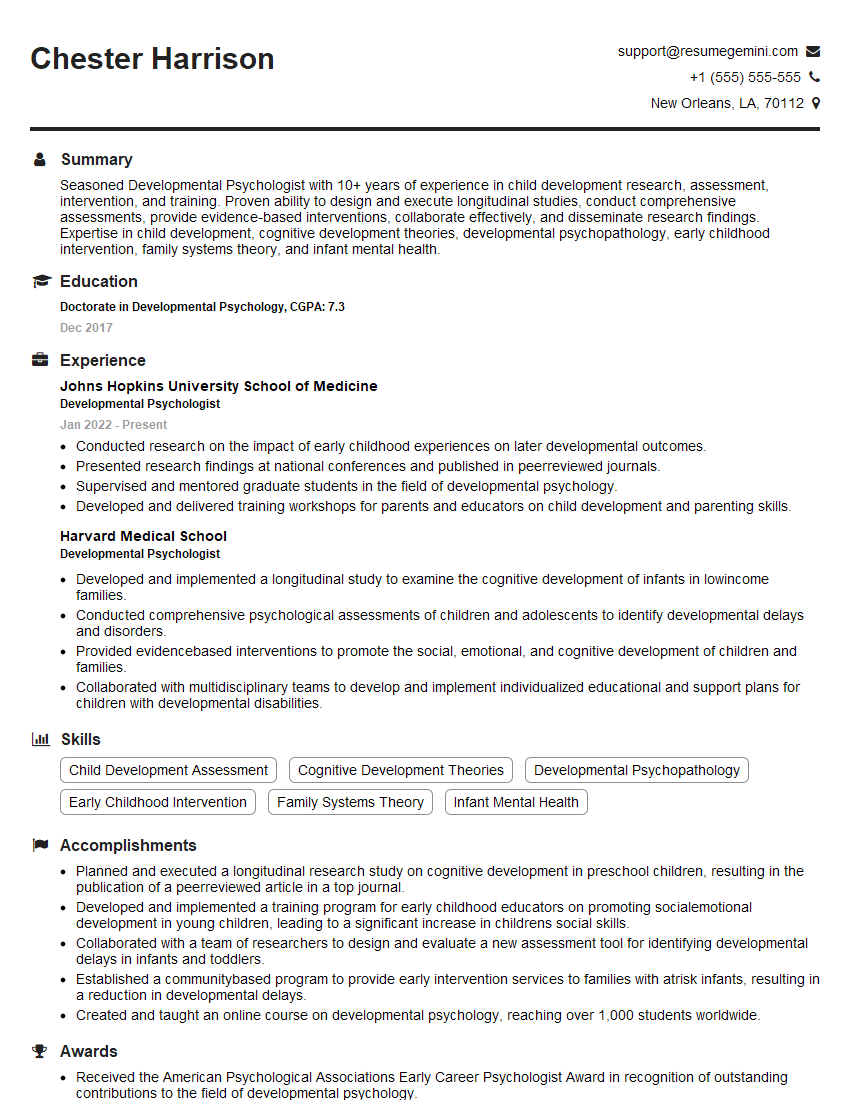
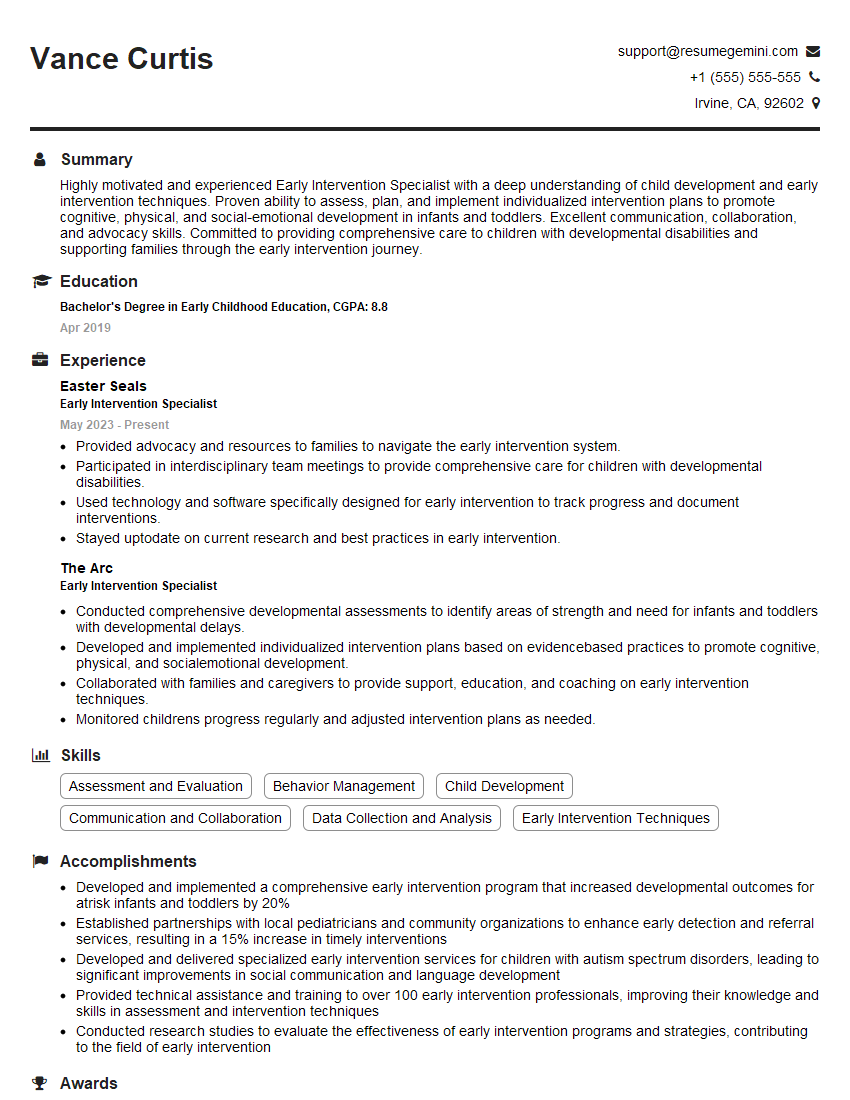
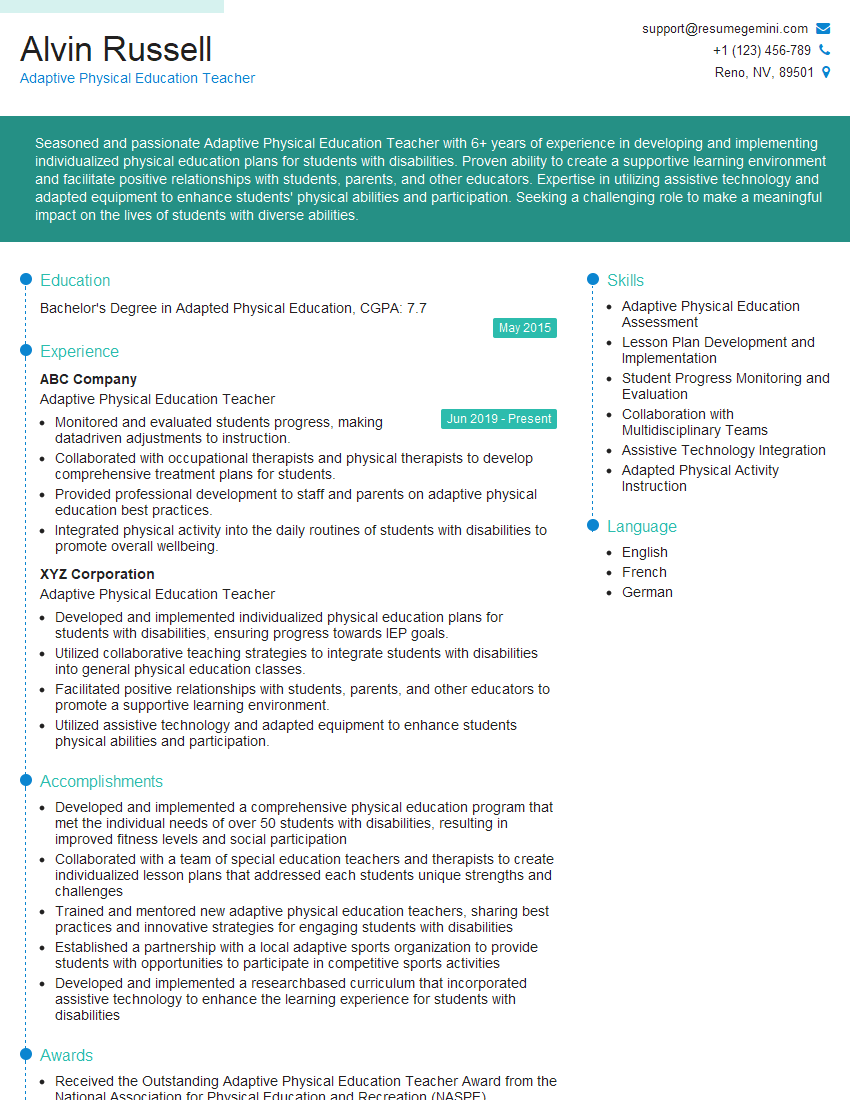
Mastering Developmental Surveillance and Early Intervention is crucial for a rewarding and impactful career. It allows you to make a significant difference in the lives of young children and their families. To enhance your job prospects, create a strong, ATS-friendly resume that highlights your skills and experience. We recommend using ResumeGemini, a trusted resource, to build a professional and effective resume. ResumeGemini provides examples of resumes tailored to Developmental Surveillance and Early Intervention, helping you showcase your qualifications effectively and increase your chances of landing your dream job.
Explore more articles
Users Rating of Our Blogs
Share Your Experience
We value your feedback! Please rate our content and share your thoughts (optional).
What Readers Say About Our Blog
To the interviewgemini.com Webmaster.
Very helpful and content specific questions to help prepare me for my interview!
Thank you
To the interviewgemini.com Webmaster.
This was kind of a unique content I found around the specialized skills. Very helpful questions and good detailed answers.
Very Helpful blog, thank you Interviewgemini team.