Interviews are opportunities to demonstrate your expertise, and this guide is here to help you shine. Explore the essential Downstream oil and gas knowledge interview questions that employers frequently ask, paired with strategies for crafting responses that set you apart from the competition.
Questions Asked in Downstream oil and gas knowledge Interview
Q 1. Explain the process of crude oil refining.
Crude oil refining is a complex process that transforms raw crude oil into a variety of useful petroleum products. Think of it like baking a cake – you start with raw ingredients (crude oil) and through a series of steps, you end up with different, usable products (gasoline, diesel, etc.). The process generally involves these key steps:
- Pre-treatment: Crude oil is first desalted and heated to remove impurities. This ensures smoother processing in subsequent stages.
- Distillation: The heated crude oil enters a large fractionating column where it’s separated into different fractions based on boiling points. Lighter components like gasoline boil at lower temperatures and rise to the top, while heavier components like fuel oil remain at the bottom. This is like separating candies of different sizes based on their weight.
- Conversion: Some fractions are further processed through conversion processes such as cracking (breaking down larger molecules into smaller ones) or reforming (rearrangement of molecules to improve octane rating). This step ensures that we get the right balance of different products.
- Treatment: Products from the conversion processes undergo treatment to remove impurities such as sulfur, which reduces their environmental impact and improves quality. Think of it as cleaning the final product before packaging.
- Blending: Finally, different fractions are blended together to meet specific product specifications, such as octane rating for gasoline or cetane rating for diesel. This is like mixing various ingredients to get the desired flavor and texture in a cake.
The entire process is highly automated and controlled to ensure optimal efficiency and product quality. Different refineries might use slightly different processes or emphasize specific products based on market demand and crude oil characteristics.
Q 2. Describe different types of petroleum products and their applications.
Petroleum products are incredibly diverse, serving a wide range of applications. Here are some key examples:
- Gasoline: The most common fuel for automobiles, powering our daily commutes.
- Diesel Fuel: Primarily used in heavy-duty vehicles like trucks, buses, and trains, as well as in some power generation.
- Jet Fuel: Specifically designed for aircraft engines, needing a balance of energy density and performance at high altitudes.
- Heating Oil: Used for residential and commercial heating, particularly in colder climates.
- Liquefied Petroleum Gas (LPG): Commonly used for cooking and heating in homes and industries. It’s also a popular automotive fuel in some regions.
- Lubricating Oils: Essential for reducing friction and wear in machinery, protecting engines, and ensuring smooth operation.
- Petrochemicals: These are the building blocks for plastics, synthetic fibers, fertilizers, and a wide array of other products we use daily. Think of them as the raw materials for the chemical industry.
The specific properties of each petroleum product are tailored to its intended use. For instance, jet fuel requires a high flash point for safety, while gasoline needs a high octane rating for efficient combustion in engines.
Q 3. What are the key performance indicators (KPIs) in a refinery?
Key Performance Indicators (KPIs) in a refinery are critical for monitoring efficiency, profitability, and safety. They fall into several categories:
- Operational Efficiency: This includes things like on-stream factor (percentage of time the refinery is operating), yield (amount of desired products produced from a given amount of crude oil), energy consumption, and waste generation.
- Product Quality: This focuses on meeting product specifications, such as octane rating for gasoline, sulfur content, and other critical quality parameters. Maintaining consistent quality is vital for customer satisfaction and market competitiveness.
- Safety: Safety is paramount in a refinery. KPIs include the total recordable incident rate (TRIR), lost time incident rate (LTIR), and near-miss reporting rates. These metrics help track safety performance and identify areas for improvement.
- Environmental Performance: Refining operations produce emissions and waste. KPIs monitor greenhouse gas emissions, wastewater discharge, and air pollution levels. Compliance with environmental regulations is critical.
- Financial Performance: Ultimately, the refinery’s success is measured by its profitability. KPIs here include operating margins, return on investment (ROI), and overall profitability.
Regular monitoring and analysis of these KPIs are crucial for identifying areas for improvement, optimizing operations, and ensuring the long-term success of the refinery.
Q 4. Explain the concept of octane rating and its significance.
The octane rating is a measure of a gasoline’s resistance to knocking or pinging during combustion in an engine. Knocking is an uncontrolled explosion of the air-fuel mixture, which can damage the engine and reduce efficiency. A higher octane rating indicates greater resistance to knocking.
Think of it like this: imagine two types of firecrackers. One burns smoothly and evenly (high octane), while the other explodes erratically and violently (low octane). In an engine, we want the smoother burn, ensuring efficient power delivery without damaging the engine.
The significance of octane rating is crucial because it directly impacts engine performance and durability. Higher-octane gasoline is required for high-performance engines with higher compression ratios, which can generate more power but are more susceptible to knocking. Modern engines are designed to handle various octane levels, and the recommended grade is specified by the manufacturer.
Q 5. How do you optimize refinery operations for maximum efficiency and profitability?
Optimizing refinery operations for maximum efficiency and profitability involves a multi-faceted approach:
- Process Optimization: Utilizing advanced process control systems and simulations to fine-tune operating parameters and maximize yields. This might involve adjusting temperatures, pressures, and feedstocks to enhance product quality and minimize waste.
- Inventory Management: Efficiently managing inventory levels of crude oil, intermediate products, and finished goods to minimize storage costs and avoid stockouts. Sophisticated inventory control systems and forecasting techniques are used.
- Maintenance Optimization: Implementing a robust maintenance program that minimizes downtime and maximizes equipment reliability. Predictive maintenance, using data analytics to predict potential equipment failures, is crucial.
- Energy Management: Implementing energy-efficient technologies and optimizing energy consumption to reduce operational costs and improve sustainability. This could include utilizing waste heat recovery systems or optimizing boiler operations.
- Feedstock Optimization: Selecting the right blend of crude oils based on their properties and market prices to achieve the desired product slate at the lowest cost.
- Real-time Data Analytics: Implementing sophisticated data analytics to identify bottlenecks, optimize production, and improve decision-making. This can involve using machine learning and artificial intelligence to enhance operational efficiency.
By integrating these strategies, refineries can substantially improve their efficiency, reduce operating costs, and enhance their profitability in a dynamic market environment.
Q 6. Describe different blending techniques for gasoline and diesel.
Blending is a critical step in producing finished gasoline and diesel fuels to meet specific quality requirements. The goal is to achieve a balance of performance characteristics, such as octane rating (gasoline) or cetane rating (diesel), while controlling costs.
Several techniques are employed:
- Simple Blending: This involves mixing different components in predetermined ratios to achieve target specifications. For example, blending different gasoline components (reformate, alkylate, etc.) to obtain the desired octane rating and volatility.
- Component Blending: This approach uses a detailed analysis of the properties of individual components to create a precise blend that optimizes performance and cost. Advanced software models simulate the properties of the blend.
- Additive Blending: Additives are introduced to enhance performance, improve combustion, and reduce emissions. For example, detergents are added to gasoline to keep engine components clean, while cetane improvers are added to diesel to enhance its ignition quality.
- Online Blending: In modern refineries, online blending systems allow for real-time adjustments to blending ratios based on the properties of incoming components and the demands of the market. This system allows for immediate adjustments and maximizes efficiency.
Blending is a science, requiring careful control and monitoring to ensure the final product meets all relevant specifications and regulations. Sophisticated software and analytical tools are essential for optimal blending operations.
Q 7. Explain the challenges in managing the downstream supply chain.
Managing the downstream oil and gas supply chain presents numerous challenges:
- Demand Volatility: The demand for petroleum products fluctuates significantly due to seasonal changes, economic conditions, and geopolitical events. Predicting demand accurately is crucial for efficient planning and inventory management.
- Logistics Complexity: The downstream supply chain involves transporting large volumes of products over long distances using various modes of transportation (pipelines, tankers, trucks). Efficient logistics are critical to ensuring timely delivery and minimizing costs.
- Product Variety: The vast array of petroleum products, each with specific handling and storage requirements, adds significant complexity to the supply chain.
- Safety and Environmental Regulations: Strict safety and environmental regulations must be adhered to throughout the supply chain, which adds operational complexity and cost.
- Infrastructure Limitations: Existing pipeline and transportation infrastructure may be inadequate to handle the growing demand or require upgrades to handle new products or higher volumes.
- Market Competition: The downstream sector is highly competitive, with margins often being squeezed. Optimizing operations and supply chain efficiency is crucial for maintaining profitability.
- Geopolitical Risks: Global political events and instability can significantly impact crude oil prices and the availability of products, adding uncertainty to the supply chain.
Effective management requires advanced planning, sophisticated logistics systems, strong relationships with suppliers and customers, and a keen awareness of market trends and geopolitical factors.
Q 8. How do you ensure regulatory compliance in downstream operations?
Ensuring regulatory compliance in downstream operations is paramount. It’s not just about avoiding penalties; it’s about maintaining public trust and operating responsibly. This involves a multi-faceted approach.
- Comprehensive Regulatory Knowledge: We must stay updated on all relevant local, national, and international regulations. This includes environmental protection laws (like emissions standards), safety regulations (handling hazardous materials), and product quality standards.
- Internal Compliance Programs: We develop and implement robust internal programs. These programs define clear roles and responsibilities, establish procedures for handling non-compliance issues, and include regular audits and training for all employees. Think of it like a company-wide ‘rulebook’ with clearly defined consequences for breaking the rules.
- Record Keeping and Reporting: Meticulous record-keeping is essential. We maintain detailed records of all activities, including inventory, transport, sales, and environmental monitoring data. Accurate reporting to regulatory agencies is equally important – timely submission of reports is crucial.
- Third-Party Audits: Independent third-party audits provide an objective assessment of our compliance efforts. This offers an extra layer of assurance and identifies areas for improvement.
- Continuous Improvement: Compliance is an ongoing process. We regularly review and update our compliance programs to reflect changes in regulations and best practices. For example, if a new emission standard is introduced, our operations must be immediately adjusted to meet the new requirements.
Q 9. What are the environmental considerations in downstream oil and gas activities?
Environmental considerations are central to responsible downstream operations. The industry’s impact on air, water, and land necessitates a proactive approach to minimizing environmental harm.
- Emissions Control: Reducing greenhouse gas emissions (GHGs) from refineries and storage facilities is critical. This involves adopting technologies like vapor recovery systems to prevent fugitive emissions and investing in cleaner fuel production methods.
- Wastewater Management: Refining processes generate wastewater containing hydrocarbons and other pollutants. Effective wastewater treatment and disposal are vital to prevent water contamination. This often involves advanced treatment technologies followed by responsible discharge.
- Soil and Groundwater Protection: Preventing spills and leaks from storage tanks and pipelines is crucial to avoid soil and groundwater contamination. Regular inspections, leak detection systems, and robust spill response plans are essential safeguards.
- Responsible Disposal of Waste: Proper management of hazardous and non-hazardous wastes generated during refining and distribution is vital. This involves secure storage, treatment, and disposal in accordance with environmental regulations.
- Environmental Monitoring: Continuous monitoring of air and water quality around our facilities allows us to track our environmental performance and identify any potential issues early on. This data is also used in reporting to regulatory bodies.
Think of it like this: We don’t just operate a business; we’re stewards of the environment. Our operations must minimize their footprint.
Q 10. How do you manage risks associated with petroleum product storage and transportation?
Managing risks associated with petroleum product storage and transportation requires a layered approach encompassing multiple strategies.
- Safety Standards and Procedures: Strict adherence to safety standards, including those established by organizations like OSHA (Occupational Safety and Health Administration), is paramount. This includes training programs for personnel, regular inspections of equipment, and emergency response planning. We use checklists and audits to ensure consistent application of safety protocols.
- Infrastructure Maintenance: Regular maintenance of storage tanks, pipelines, and transport vehicles is vital to prevent leaks and spills. This includes scheduled inspections, leak detection systems, and timely repairs.
- Spill Prevention and Response: Comprehensive spill prevention and response plans are crucial. This includes identifying potential spill sources, developing response strategies, and regularly conducting drills. Imagine a scenario where a pipeline leaks – our plan needs to be activated immediately, minimizing environmental damage and ensuring safety.
- Security Measures: Robust security measures, including access control and surveillance, are necessary to protect against theft and sabotage. We’ll use things like security cameras and access control systems to monitor our facilities.
- Transportation Risk Management: Selecting appropriate transportation methods, monitoring vehicle conditions, and driver training all minimize transportation risks. We also monitor weather conditions to ensure safe transport of hazardous materials.
Q 11. Explain the role of quality control in downstream operations.
Quality control in downstream operations is critical for maintaining product consistency, meeting customer specifications, and ensuring product safety. It’s a continuous process that starts at the refinery and continues throughout the distribution chain.
- Refining Process Control: Precise control of the refining process ensures that products meet specific quality parameters. This includes continuous monitoring of process variables and regular testing of intermediate and final products. Imagine it like baking a cake – the right ingredients and temperatures are essential for the desired outcome.
- Product Testing and Analysis: Rigorous testing of petroleum products at various stages ensures compliance with industry standards and customer specifications. Tests range from basic properties like density and viscosity to more complex analyses of chemical composition.
- Quality Management Systems: Implementing a quality management system, such as ISO 9001, provides a framework for controlling and improving quality throughout the process. Think of it as a systematic approach to ensure consistent high quality in everything we do.
- Traceability: The ability to trace products throughout the supply chain helps identify and address quality issues quickly. This might involve batch numbering and detailed documentation of all steps in the process.
- Customer Feedback: Collecting and addressing customer feedback helps us identify quality issues and areas for improvement. We are continuously seeking improvement based on the needs of our clientele.
Q 12. Describe the different marketing strategies for petroleum products.
Marketing strategies for petroleum products vary depending on the product, target market, and competitive landscape. However, some common strategies include:
- Branding and Differentiation: Creating a strong brand image and differentiating products from competitors through quality, performance, or added services. Think about how different fuel brands position themselves – some emphasize quality, others focus on price.
- Pricing Strategies: Using different pricing strategies like competitive pricing, value pricing, or premium pricing depending on the product and market. Price is always a factor but is often coupled with the quality and brand image.
- Distribution Networks: Establishing efficient and extensive distribution networks to ensure wide product availability. This could include partnerships with wholesalers, retailers, and fuel stations.
- Targeted Marketing: Reaching specific customer segments with tailored marketing messages. For example, promoting specific products to different sectors like trucking companies or passenger vehicle drivers.
- Customer Loyalty Programs: Rewarding loyal customers through loyalty programs and discounts to enhance customer retention. Think of your local gas station’s rewards card.
- Digital Marketing: Utilizing online platforms and digital tools to reach customers, promote products, and build brand awareness.
Q 13. How do you forecast demand for petroleum products?
Forecasting demand for petroleum products is complex and involves a combination of qualitative and quantitative methods. It’s essential for optimizing refinery operations, inventory management, and investment decisions.
- Economic Indicators: Analyzing macroeconomic factors such as GDP growth, industrial production, and consumer confidence to gauge overall demand trends. Strong economic growth typically translates to higher fuel consumption.
- Demographic Trends: Considering population growth, urbanization, and changing transportation patterns to understand future fuel demand. Rapid urbanization generally leads to increased demand for personal transportation.
- Government Policies: Assessing the impact of government regulations, including fuel efficiency standards and tax policies, on product demand. Policies promoting fuel efficiency might dampen demand growth.
- Technological Advancements: Evaluating the potential impact of technological developments, such as electric vehicles and alternative fuels, on future demand. The adoption of EVs can significantly impact gasoline demand.
- Statistical Modeling: Using statistical models such as time series analysis and regression analysis to forecast demand based on historical data and various factors. This involves advanced mathematical modeling to predict demand trends.
- Market Research and Surveys: Gathering information from industry experts, market surveys, and consumer behavior studies to refine forecasts. Understanding consumer preferences and trends is critical for accurate forecasts.
Q 14. What are the economic factors impacting the downstream oil and gas sector?
Several economic factors significantly impact the downstream oil and gas sector. Fluctuations in these factors can lead to volatility in prices, profitability, and investment decisions.
- Crude Oil Prices: The price of crude oil is the most significant factor, directly affecting the cost of refining and the profitability of downstream operations. A rise in crude oil prices will inevitably lead to higher fuel prices.
- Exchange Rates: Fluctuations in exchange rates impact the cost of imported and exported products. A weaker domestic currency increases import costs.
- Demand and Supply Dynamics: Global supply and demand dynamics influence product prices. High demand relative to supply usually leads to higher prices, and vice-versa.
- Taxes and Regulations: Government policies such as fuel taxes and environmental regulations can affect operating costs and product prices. Higher taxes directly increase the prices of petroleum products.
- Economic Growth: The overall economic performance of countries and regions directly impacts fuel demand. Economic downturns generally lead to reduced fuel consumption.
- Competition: The level of competition within the industry affects pricing strategies and profitability. High competition usually leads to more competitive prices.
- Interest Rates: Interest rates influence borrowing costs for investments in downstream infrastructure and operations. Higher interest rates make financing projects more expensive.
Q 15. Explain the concept of price volatility in the petroleum market.
Price volatility in the petroleum market refers to the rapid and unpredictable fluctuations in the prices of crude oil and petroleum products. This volatility is driven by a complex interplay of factors, making it a significant challenge for businesses involved in the industry. Think of it like a rollercoaster – sometimes the price climbs steeply, other times it plummets.
- Geopolitical Events: Wars, political instability, and sanctions in major oil-producing regions can drastically impact supply and, consequently, prices. For example, the Russian invasion of Ukraine significantly disrupted global oil supplies and caused a sharp price increase.
- Supply and Demand Imbalances: Unexpected disruptions to oil production (e.g., hurricanes, refinery outages) or sudden surges in global demand can lead to price spikes. Conversely, periods of low demand, like during economic recessions, can cause prices to fall.
- Speculative Trading: The futures market, where oil is bought and sold for future delivery, plays a major role. Speculators can influence prices by anticipating future supply and demand, sometimes creating self-fulfilling prophecies.
- OPEC Decisions: The Organization of the Petroleum Exporting Countries (OPEC) exerts significant influence by coordinating production levels to manage supply and prices. Their decisions often have a dramatic effect on the market.
- Economic Factors: Global economic growth, currency exchange rates, and inflation all influence oil prices. A strong global economy generally leads to higher demand and thus higher prices.
Understanding and managing price volatility requires sophisticated forecasting models, risk management strategies, and hedging techniques. Companies use various financial instruments to mitigate the impact of price swings on their profitability.
Career Expert Tips:
- Ace those interviews! Prepare effectively by reviewing the Top 50 Most Common Interview Questions on ResumeGemini.
- Navigate your job search with confidence! Explore a wide range of Career Tips on ResumeGemini. Learn about common challenges and recommendations to overcome them.
- Craft the perfect resume! Master the Art of Resume Writing with ResumeGemini’s guide. Showcase your unique qualifications and achievements effectively.
- Don’t miss out on holiday savings! Build your dream resume with ResumeGemini’s ATS optimized templates.
Q 16. Describe different types of petroleum storage facilities and their functionalities.
Petroleum storage facilities are crucial for maintaining a reliable supply of products. Different types cater to specific needs and operational requirements. Think of them as the warehouses of the oil and gas industry.
- Tank Farms: These are large-scale facilities consisting of numerous aboveground storage tanks, typically holding crude oil or refined products. They are often located near refineries, ports, or pipelines. The tanks vary in size depending on the product and required storage capacity.
- Salt Caverns: These are underground storage facilities carved out of salt formations. They offer immense storage capacity and are particularly suitable for long-term storage of crude oil or natural gas liquids due to their stable temperature and pressure environment.
- Depleted Oil and Gas Reservoirs: After a reservoir is depleted, it can be repurposed to store other petroleum products. This offers a significant storage capacity and reduces environmental impact compared to building new facilities.
- Aboveground Storage Tanks (ASTs): These are common in many settings – from refineries to distribution terminals. They come in various sizes and designs, ranging from small tanks for specialized products to large tanks for bulk storage. Safety regulations are stringent for these tanks, including regular inspections and maintenance.
The functionality of each facility type depends on its design and location. Factors considered include storage capacity, product type, access to transportation networks, and environmental regulations. Effective management ensures efficient inventory control and maintains product quality.
Q 17. How do you ensure the safety of personnel and equipment in downstream operations?
Safety is paramount in downstream operations. A multi-layered approach is essential, incorporating stringent procedures, technological safeguards, and a strong safety culture. Imagine it like a tightly woven safety net – multiple layers working together to prevent accidents.
- Process Safety Management (PSM): This comprehensive framework involves hazard identification, risk assessment, and the implementation of safety measures to minimize the potential for incidents. PSM programs include regular safety inspections, emergency response plans, and employee training.
- Personal Protective Equipment (PPE): Appropriate PPE, such as safety glasses, hard hats, gloves, and flame-retardant clothing, is mandatory for personnel working in high-risk environments. Regular inspections and training ensure proper use.
- Emergency Response Plans: Detailed emergency response plans must be in place to handle incidents such as fires, spills, and equipment malfunctions. These plans are regularly tested through drills and simulations.
- Safety Training and Awareness: Comprehensive training programs are crucial for employees at all levels. This includes both classroom instruction and hands-on training, focusing on hazard recognition, safe work practices, and emergency procedures.
- Technological Safeguards: Implementing advanced technologies like automated shutdown systems, leak detection systems, and advanced process control systems helps prevent and mitigate accidents.
Regular audits and inspections are critical to ensuring continuous improvement in safety performance. A strong safety culture, where safety is valued above all else, is crucial to reducing accidents and protecting both personnel and equipment.
Q 18. Explain the use of process control systems in refineries.
Process control systems (PCS) are the nervous system of a refinery, enabling efficient and safe operation. They automate various processes, monitor parameters, and optimize performance. Think of them as the brains of the operation, coordinating the intricate dance of refining processes.
- Supervisory Control and Data Acquisition (SCADA): SCADA systems provide real-time monitoring and control of various unit operations, such as distillation columns, reactors, and heat exchangers. They collect data from sensors and actuators across the refinery and provide operators with a comprehensive view of the plant’s status.
- Distributed Control Systems (DCS): DCS systems manage and control individual process units within the refinery. They can handle complex control algorithms and ensure consistent product quality. They ensure precise control of temperature, pressure, flow rates, and other critical parameters.
- Advanced Process Control (APC): APC employs advanced optimization techniques to improve efficiency and reduce energy consumption. This might involve optimizing feed rates to maximize product yield or minimizing energy usage while maintaining quality.
- Safety Instrumented Systems (SIS): SIS is designed to automatically shut down equipment or take corrective action in case of hazardous events. This prevents major accidents and minimizes potential damage.
Modern refineries rely heavily on PCS to optimize operations, enhance safety, and improve product quality. The integration of various systems provides a comprehensive and effective way to manage complex refining processes.
Q 19. Describe the importance of pipeline integrity management.
Pipeline integrity management (PIM) is a systematic approach to ensuring the safe and reliable operation of pipelines. It’s crucial to prevent leaks, spills, and other incidents that can have devastating environmental and economic consequences. Think of it as regular check-ups for a vital artery of the oil and gas industry.
- Risk Assessment: A thorough risk assessment identifies potential threats to pipeline integrity, such as corrosion, soil conditions, and third-party damage. This assessment determines the areas requiring the most attention.
- In-Line Inspection (ILI): ILI uses specialized tools to inspect pipelines from the inside, detecting flaws such as corrosion, cracks, and dents. The data helps prioritize repairs and maintenance.
- External Corrosion Monitoring: Regular inspection of pipelines from the outside detects external corrosion or damage caused by environmental factors or third-party activities.
- Cathodic Protection: Cathodic protection uses electrical currents to prevent corrosion by making the pipeline less susceptible to electrochemical attack.
- Data Management and Analysis: Sophisticated data management systems track inspection data, maintenance records, and repair history, enabling proactive risk management.
Effective PIM requires a combination of advanced technologies, rigorous inspection programs, and proactive maintenance strategies. It’s a continuous process aimed at minimizing risks and ensuring the safe and reliable transportation of petroleum products.
Q 20. Explain different methods of petroleum product transportation.
Petroleum products are transported via various methods, each chosen based on factors like distance, volume, cost, and product type. Imagine a versatile transportation network, catering to different needs.
- Pipelines: Pipelines are the most efficient and cost-effective method for transporting large volumes of crude oil and refined products over long distances. They are a key component of the oil and gas infrastructure.
- Tankers (Marine Vessels): Tankers are used for transporting crude oil and refined products across oceans and seas. These vessels vary in size and design, carrying huge volumes of product.
- Rail Tank Cars: Rail transportation is used for moving refined products to inland locations where pipelines might not be available. It’s often used for shorter distances compared to pipelines or tankers.
- Trucks: Trucks are commonly used for delivering refined products to distribution terminals, service stations, and industrial customers. This mode is suitable for smaller volumes and shorter distances.
- Barges: Barges are utilized for transporting petroleum products on rivers and inland waterways. They are especially useful for connecting inland refineries to distribution networks.
The choice of transportation method involves a careful consideration of cost-effectiveness, safety, environmental impact, and the specific requirements of the petroleum product being transported.
Q 21. What are the key considerations in selecting the optimal location for a refinery?
Selecting the optimal location for a refinery involves a complex decision-making process, weighing several crucial factors. It’s like choosing the perfect spot to build a vital hub for the oil and gas industry.
- Proximity to Crude Oil Sources: Locating the refinery near crude oil sources minimizes transportation costs and reduces the risk of supply disruptions. This often means being close to pipelines or ports receiving crude oil imports.
- Access to Transportation Networks: Efficient transportation infrastructure is essential for delivering refined products to market. This includes access to pipelines, roadways, railways, and waterways.
- Market Demand: The refinery’s location should be strategically positioned to meet the demand for petroleum products in the surrounding region. This means understanding the local and regional consumption patterns.
- Environmental Considerations: Environmental regulations and the potential impact on the surrounding environment are major factors. This includes air and water quality standards, waste disposal, and the potential for environmental incidents.
- Infrastructure and Utilities: Adequate infrastructure, including water, electricity, and other utilities, is crucial for refinery operations. The availability and cost of these resources must be considered.
- Regulatory Environment: The local regulatory environment, including permits, licensing, and safety standards, impacts the feasibility and cost of building and operating a refinery.
- Labor Costs and Availability: Access to a skilled workforce is crucial, and labor costs need to be considered in the location decision.
A detailed cost-benefit analysis considering all these factors is crucial to ensure long-term economic viability and responsible environmental stewardship.
Q 22. How do you assess the environmental impact of a downstream project?
Assessing the environmental impact of a downstream project requires a comprehensive approach, encompassing various stages from initial planning to decommissioning. We begin with a thorough Environmental Impact Assessment (EIA), identifying potential impacts across air, water, and land. This involves analyzing emissions of greenhouse gases (GHGs) like CO2, methane, and NOx, evaluating water usage and potential contamination, and assessing waste generation and disposal methods. Specific concerns include air quality around refineries and storage facilities, the potential for soil and groundwater contamination from spills or leaks, and the impact of wastewater discharge on aquatic ecosystems.
The EIA uses tools like dispersion modeling to predict pollutant concentrations, risk assessments to evaluate the likelihood and consequences of accidents, and life-cycle assessments to trace the environmental footprint of the entire project’s lifespan. Mitigation strategies are then developed and incorporated into the project design, aiming to minimize negative impacts. These might include installing advanced emission control technologies, implementing robust spill prevention and response plans, and using closed-loop water systems. Regular monitoring and reporting are crucial throughout the project’s operation to track performance and ensure compliance with environmental regulations.
For instance, in a recent project involving a new petrochemical plant, we used advanced air quality modeling to predict the impact of emissions on surrounding communities. This led to the implementation of a selective catalytic reduction (SCR) system to minimize NOx emissions, significantly reducing the environmental footprint of the project.
Q 23. Explain the role of technology in optimizing downstream operations.
Technology plays a pivotal role in optimizing downstream operations, boosting efficiency, enhancing safety, and minimizing environmental impact. Advanced process control systems (APCS) allow for real-time monitoring and optimization of refinery processes, maximizing yields and minimizing energy consumption. For example, using advanced algorithms in an APCS can optimize the cracking process in a fluid catalytic cracker (FCC), leading to higher gasoline production and reduced coke formation.
Predictive maintenance techniques, leveraging data analytics and machine learning, enable proactive identification of potential equipment failures, reducing downtime and maximizing operational uptime. Imagine a scenario where sensors on a crucial pump continuously feed data into a predictive model; if a potential failure is detected, maintenance can be scheduled before it impacts production.
Digital twin technology creates virtual representations of refineries or other downstream assets, allowing for simulations and optimization studies before implementing changes in the real world. This reduces risk and improves decision-making. Furthermore, blockchain technology can enhance transparency and traceability throughout the supply chain, improving accountability and security.
Q 24. How do you handle emergencies or unplanned events in downstream operations?
Handling emergencies and unplanned events in downstream operations requires a robust and well-rehearsed emergency response plan. This plan should be tailored to the specific risks of each facility and include procedures for various scenarios, such as fires, spills, equipment failures, and natural disasters. Key elements include clear communication protocols, well-trained emergency response teams, readily accessible emergency equipment, and pre-defined evacuation routes.
Regular drills and simulations are crucial to ensure the effectiveness of the plan and the preparedness of the personnel. We use a tiered response system, escalating the response based on the severity of the incident. A small leak might be handled by the on-site team, while a major fire would involve external emergency services and potentially a larger-scale evacuation. Post-incident investigations are conducted to determine the root cause of the event and implement corrective actions to prevent recurrence.
For instance, during a recent pipeline leak, our pre-planned response, which included rapid containment using specialized booms and absorbent materials, enabled us to minimize environmental damage and quickly restore operations. The post-incident investigation identified a flaw in the pipeline’s integrity management program, leading to improvements in inspection and maintenance schedules.
Q 25. Describe your experience with inventory management in downstream oil and gas.
Effective inventory management is paramount in downstream operations, ensuring the availability of raw materials and finished products while minimizing storage costs and risks. We utilize sophisticated inventory management systems (IMS) that integrate data from various sources, including production schedules, sales forecasts, and transportation logistics. These systems help us optimize inventory levels across the entire supply chain, reducing stockouts and overstocking.
Real-time tracking of inventory levels allows us to anticipate potential shortages and adjust production or procurement strategies proactively. We also employ techniques like Just-in-Time (JIT) inventory management to minimize storage space and reduce the risk of product spoilage or obsolescence. Regular inventory audits and reconciliation are performed to ensure the accuracy of inventory data and identify any discrepancies.
For example, during a period of high demand for gasoline, our IMS predicted a potential shortage based on sales forecasts and production capacity. This allowed us to proactively adjust our production schedule and secure additional supply from our trading partners, preventing a disruption in supply.
Q 26. Explain your understanding of different refinery configurations and their advantages.
Refinery configurations vary significantly depending on feedstock availability, product demand, and environmental regulations. Common configurations include:
- Conventional Refineries: These utilize a combination of atmospheric and vacuum distillation units, followed by various conversion processes like fluid catalytic cracking (FCC), hydrocracking, and alkylation. They are versatile but can be less efficient than more modern designs.
- Complex Refineries: These incorporate a wider range of conversion processes and advanced technologies to maximize the yield of valuable products like gasoline and diesel, often including residue fluid catalytic cracking (RFCC) and coking units to process heavier feedstocks.
- Residue Fluid Catalytic Cracking (RFCC): These units process the heaviest components of crude oil, maximizing the production of gasoline and diesel from residual oils. This reduces waste and enhances profitability.
- Hydrotreating Refineries: Emphasize the removal of sulfur and other impurities from various refinery streams using hydrogen, reducing the environmental impact of fuel production.
The choice of refinery configuration involves a complex trade-off between capital costs, operating costs, and product yields. A complex refinery may have higher capital costs but can achieve higher yields and better product quality, making it economically advantageous in certain circumstances. Similarly, hydrotreating processes increase capital costs but result in cleaner fuels that satisfy stringent emission regulations.
Q 27. Describe your experience with using simulation software in refinery optimization.
Simulation software is invaluable for refinery optimization, allowing us to model various scenarios and assess the impact of changes before implementing them in the real world. We utilize software packages such as Aspen Plus, Petro-SIM, and HYSYS to model refinery processes, conduct what-if analyses, and optimize operational parameters.
These tools allow us to simulate the impact of changes in feedstock quality, process parameters, and product specifications. For instance, we can simulate the impact of upgrading a particular unit or changing the operating conditions to determine the potential increase in yield or reduction in energy consumption. This helps in making informed decisions regarding process improvements, debottlenecking, and capital investment projects.
A recent project involved using Aspen Plus to simulate the impact of installing a new hydrocracker in our refinery. The simulation showed a significant increase in diesel production and a reduction in the production of less valuable products. This analysis was instrumental in securing the funding for the project and demonstrating its economic viability.
Q 28. How do you manage and improve the efficiency of the downstream supply chain?
Managing and improving the efficiency of the downstream supply chain involves optimizing various aspects, including procurement, logistics, storage, and distribution. We utilize a combination of strategies and technologies to achieve this. This includes implementing advanced planning and scheduling systems to optimize production and transportation schedules, ensuring timely delivery of products to meet customer demand.
Collaboration and information sharing with our partners throughout the supply chain are essential. We leverage digital platforms to facilitate communication and data exchange, enhancing visibility and reducing bottlenecks. Real-time tracking of shipments and inventory levels allows for proactive identification and resolution of potential disruptions. We also continuously evaluate our logistics network to identify opportunities for optimization, such as streamlining transportation routes and improving warehouse management.
For example, implementing a collaborative planning, forecasting, and replenishment (CPFR) system with our key customers enabled us to achieve better demand forecasting accuracy, reducing inventory holding costs and improving on-time delivery performance. This improved customer satisfaction and strengthened our relationships with key players across the downstream value chain.
Key Topics to Learn for Downstream Oil and Gas Knowledge Interviews
- Refining Processes: Understand the different stages of crude oil refining, from distillation to cracking and reforming. Be prepared to discuss various refining technologies and their efficiency.
- Petrochemicals: Familiarize yourself with the production of petrochemicals from refinery byproducts. Discuss the importance of petrochemicals in various industries and the market dynamics influencing their demand.
- Logistics and Transportation: Explore the complexities of transporting refined products – pipelines, tankers, and storage facilities. Understand the challenges and best practices in ensuring safe and efficient delivery.
- Marketing and Sales: Grasp the principles of marketing and selling refined products, including pricing strategies, customer segmentation, and competitive analysis. Consider the impact of market fluctuations on pricing and sales.
- Health, Safety, and Environment (HSE): Demonstrate a strong understanding of HSE regulations and best practices within the downstream sector. Be ready to discuss risk mitigation strategies and emergency response protocols.
- Regulations and Compliance: Be aware of relevant environmental regulations and industry standards impacting downstream operations. Discuss your understanding of compliance requirements and reporting procedures.
- Economic Analysis and Forecasting: Understand the economic factors influencing the downstream oil and gas sector, such as supply and demand, global market trends, and geopolitical events. Demonstrate your ability to analyze data and forecast future trends.
- Project Management in Downstream: Be prepared to discuss your experience, if any, in planning, executing, and managing projects within a downstream environment. This includes budget management, risk assessment, and stakeholder engagement.
Next Steps
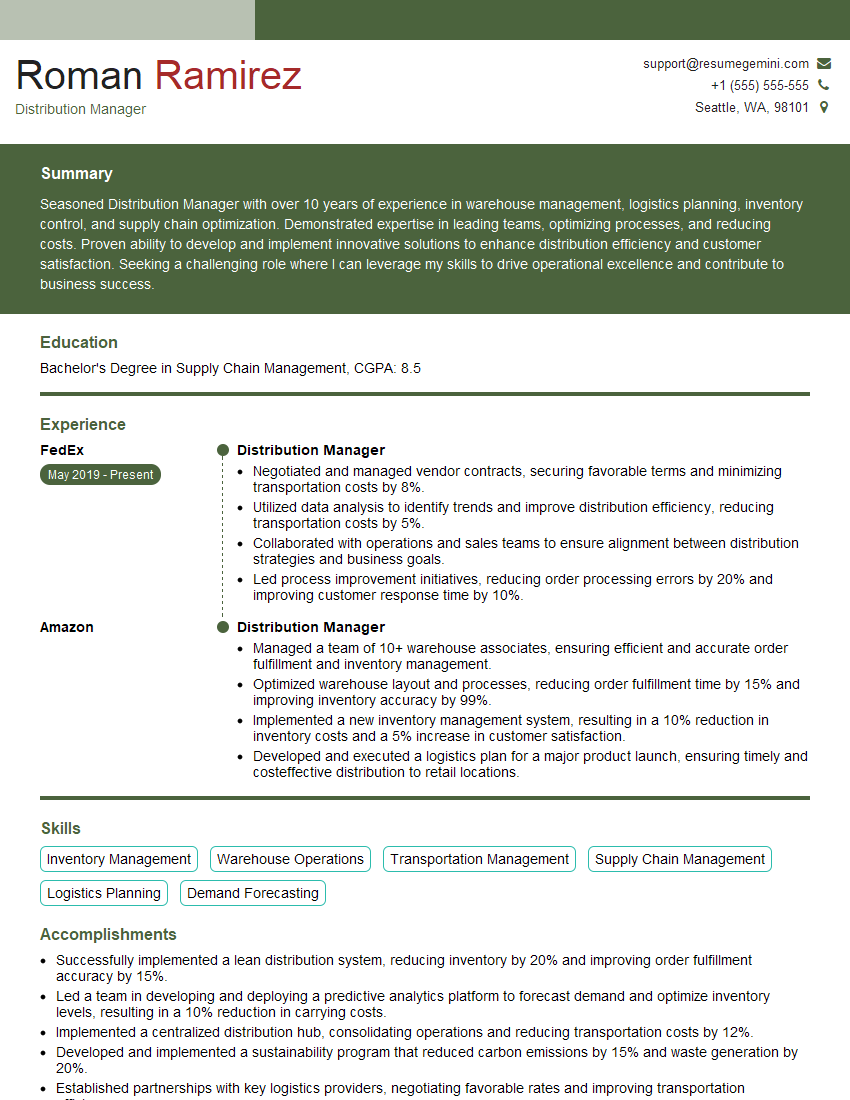
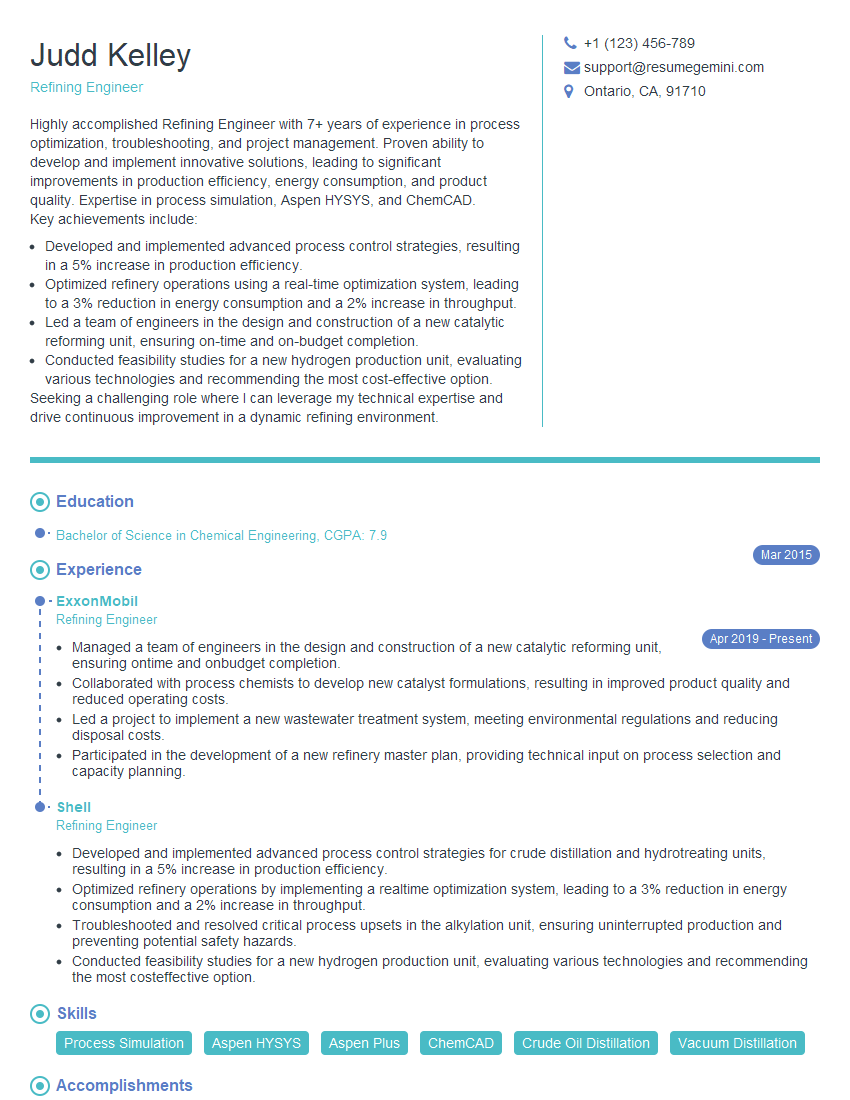
Mastering downstream oil and gas knowledge is crucial for advancing your career in this dynamic and vital industry. A strong understanding of these concepts will significantly enhance your interview performance and open doors to exciting opportunities. To further strengthen your job prospects, focus on creating an ATS-friendly resume that highlights your skills and experience effectively. ResumeGemini is a trusted resource that can help you build a professional and impactful resume tailored to the energy sector. Examples of resumes tailored to Downstream oil and gas knowledge are available to guide you.
Explore more articles
Users Rating of Our Blogs
Share Your Experience
We value your feedback! Please rate our content and share your thoughts (optional).
What Readers Say About Our Blog
To the interviewgemini.com Webmaster.
Very helpful and content specific questions to help prepare me for my interview!
Thank you
To the interviewgemini.com Webmaster.
This was kind of a unique content I found around the specialized skills. Very helpful questions and good detailed answers.
Very Helpful blog, thank you Interviewgemini team.