The right preparation can turn an interview into an opportunity to showcase your expertise. This guide to Drilling and Sampling Techniques interview questions is your ultimate resource, providing key insights and tips to help you ace your responses and stand out as a top candidate.
Questions Asked in Drilling and Sampling Techniques Interview
Q 1. Explain the different types of drilling methods and their applications.
Drilling methods are chosen based on factors like ground conditions, target depth, and project goals. Let’s explore some common types:
- Rotary Drilling: This is the most prevalent method, using a rotating bit to bore a hole. It’s further categorized into several sub-types:
- Auger Drilling: Uses helical augers to extract soil samples. Ideal for shallow, unconsolidated formations. Think of it like a giant corkscrew.
- Cable-tool Drilling: Employs a heavy bit repeatedly lifted and dropped to break rock. Best suited for hard rock formations in situations where rotary drilling is not feasible.
- Reverse Circulation Drilling: Air or fluid is pumped down the drill string to lift cuttings to the surface. Useful for sampling in challenging ground conditions and for larger diameter holes.
- Diamond Core Drilling: Utilizes a diamond-encrusted bit to extract cylindrical rock cores. This provides high-quality, continuous samples ideal for geological analysis and geotechnical investigations. Think of it as taking a cylindrical ‘plug’ of the rock.
- Percussion Drilling: Employs repeated impacts to break up rock and soil. While less common for geotechnical purposes than rotary, it’s utilized in specific scenarios such as water well drilling.
- Sonic Drilling: Uses high-frequency vibrations to break up the rock. This method is less disruptive and generates less vibration and noise than other methods.
The choice between these methods is heavily influenced by the site’s geology. For example, auger drilling is perfect for shallow soil investigations, while diamond core drilling is needed for detailed rock analysis in deep boreholes for projects such as dam foundations.
Q 2. Describe the process of selecting appropriate drilling equipment for a specific project.
Selecting the right drilling equipment involves a systematic approach. First, a thorough understanding of the project requirements is crucial, including:
- Target Depth: Shallow investigations require smaller, more portable rigs, while deep drilling needs powerful equipment.
- Ground Conditions: Hard rock requires robust rigs with diamond core bits, while soft soil might only necessitate an auger rig.
- Sample Type and Quality: The desired sample quality (e.g., undisturbed samples) dictates the drilling method and sampling technique.
- Project Budget and Timeline: Cost-effective choices are essential, and the rig’s availability impacts the project timeline.
- Accessibility: The site’s accessibility dictates the rig’s size and maneuverability.
Once these factors are assessed, the appropriate rig type, bit type, and ancillary equipment (e.g., mud pumps, sample handling tools) can be chosen. A detailed risk assessment should also be undertaken to identify potential hazards and select appropriate safety equipment.
For instance, a large-scale infrastructure project requiring deep rock sampling might necessitate a large, versatile rotary drilling rig with a diamond core barrel, while a smaller site assessment in unconsolidated soil might only need an auger rig.
Q 3. What are the safety procedures you follow during drilling operations?
Safety is paramount in drilling operations. Our standard operating procedures (SOPs) include:
- Pre-start Checks: Thorough inspection of equipment, ensuring all components are functional and safe.
- Personal Protective Equipment (PPE): Mandatory use of hard hats, safety glasses, hearing protection, and appropriate clothing for all personnel.
- Site Hazard Assessment: Identifying and mitigating potential hazards like unstable ground, overhead obstructions, and traffic.
- Emergency Response Plan: Establishment of clear communication protocols and emergency procedures for incidents like equipment malfunctions or accidents.
- Confined Space Entry Procedures: Strict adherence to safety protocols when working in confined spaces like boreholes.
- Training and Competence: Ensuring all personnel are adequately trained and competent to perform their tasks.
- Regular Safety Meetings: Holding regular safety meetings to address potential issues and reinforce safety procedures.
For example, before commencing drilling, we always conduct a thorough site inspection to identify any potential hazards, ensuring the stability of the ground and the absence of any underground utilities.
Q 4. How do you ensure the integrity of samples collected during drilling?
Maintaining sample integrity is critical for accurate data interpretation. This involves careful handling from extraction to analysis:
- Proper Sample Handling: Samples are carefully extracted and immediately placed in appropriate containers to prevent damage or contamination.
- Sample Identification and Labeling: Clear and unambiguous labeling with information like depth, date, and project details ensures traceability.
- Chain of Custody: Maintaining a documented chain of custody prevents tampering or accidental mixing of samples.
- Environmental Protection: Preventing contamination from environmental factors like moisture, sunlight, or chemicals.
- Storage and Transportation: Samples are stored and transported in secure, climate-controlled environments to preserve their integrity.
For undisturbed soil samples, we use Shelby tubes to collect samples without damaging their structure. These samples are crucial in geotechnical analysis for determining soil strength and compressibility.
Q 5. Explain different sampling techniques used in geotechnical investigations.
Various sampling techniques are used, depending on the soil or rock type and the project’s objectives:
- Disturbed Sampling: Obtaining samples where the original structure is partially or fully destroyed. This is suitable for general soil classification and composition analysis. Examples include grab sampling and bucket auger sampling.
- Undisturbed Sampling: Collecting samples while preserving their original structure. This is crucial for accurate determination of geotechnical properties like shear strength and permeability. Methods include Shelby tube sampling and block sampling.
- Rock Core Sampling: Extracting cylindrical core samples using diamond core drills. This provides high-quality samples for detailed geological analysis and geotechnical investigations.
- Split-Spoon Sampling: Uses a split-spoon sampler driven into the ground to obtain disturbed samples for visual soil classification.
For example, Shelby tube samples are essential for determining the consolidation properties of clays in foundation design, providing valuable data for engineers in evaluating settlement risks.
Q 6. What are the common problems encountered during drilling and how are they addressed?
Drilling challenges are common and require quick problem-solving:
- Lost Circulation: Drilling fluid is lost into fractures or permeable zones. This can be addressed by using a different drilling fluid, reducing drilling pressure, or employing plugging techniques.
- Stuck Drill String: The drill string becomes stuck in the borehole due to various reasons. This usually requires specialized tools and techniques to free the string.
- Wellbore Instability: The borehole walls collapse due to unstable soil or rock formations. This requires appropriate casing to stabilize the wellbore.
- Difficult Ground Conditions: Unexpected hard rock or boulders can impede drilling progress. This requires the use of specialized drilling equipment and techniques.
- Equipment Malfunctions: Mechanical breakdowns require prompt repairs or equipment replacement.
For example, if we encounter lost circulation in a fractured rock formation, we might switch to a higher viscosity drilling fluid with additives to seal off the fractures.
Q 7. Describe the process of logging and interpreting drilling data.
Drilling data logging and interpretation is a crucial step that translates raw field data into usable information:
- Logging: This involves recording information like drilling depths, rate of penetration, drilling fluid properties, core recovery, and any observed geological formations. Detailed descriptions of the recovered samples are also meticulously recorded.
- Data Interpretation: This phase involves analyzing the collected data to develop a comprehensive understanding of the subsurface conditions. Geotechnical engineers use this data to produce geological logs, interpret soil stratigraphy, and estimate geotechnical parameters (e.g. shear strength, compressibility). Specialized software and geological expertise are often utilized in this phase.
For example, a geological log showing variations in soil layers, along with data on the rate of penetration, can reveal crucial information about the ground’s bearing capacity. This is vital for engineers designing building foundations.
Q 8. How do you manage drilling fluids and maintain their properties?
Managing drilling fluids involves continuous monitoring and adjustment to maintain optimal properties throughout the drilling operation. Think of it like maintaining the perfect recipe for a cake – the ingredients (fluid components) and their proportions need careful control to achieve the desired outcome (successful drilling).
This involves several key aspects:
- Regular testing: We routinely analyze the fluid’s properties such as viscosity, density, pH, and filtration rate. This is done using specialized equipment on-site. Deviations from the desired range indicate a need for adjustments.
- Fluid additions: Based on the test results, we add various chemicals – weighting agents (like barite) to increase density, polymers to enhance viscosity, and other chemicals to control fluid loss, pH, and rheology (flow characteristics). This is a bit like adding more flour or baking soda to adjust the cake batter’s consistency.
- Solids control: Drilling generates cuttings (rock fragments) which need to be removed from the mud to prevent problems like pump wear and loss of circulation. We use equipment like shale shakers, desanders, and desilters to remove these solids. This is analogous to removing lumps from the cake batter.
- Waste management: Spent drilling fluids are carefully treated and disposed of according to environmental regulations. This involves processes such as settling ponds, filtration, and sometimes specialized treatment plants. This is crucial for protecting the environment.
Effective fluid management minimizes problems like wellbore instability, stuck pipe, and lost circulation, ultimately improving the efficiency and safety of the drilling operation.
Q 9. What are the environmental considerations for drilling projects?
Environmental considerations are paramount in drilling projects. We need to minimize our footprint and protect the surrounding ecosystem.
- Wastewater management: Drilling fluids, cuttings, and produced water require careful handling and disposal to prevent soil and water contamination. This often involves treatment and recycling to reduce the volume of waste sent to disposal sites.
- Air emissions: Drilling rigs release gases (like methane and diesel exhaust) into the atmosphere. We use emission control technologies and practices to minimize this impact. This includes regular equipment maintenance and utilizing cleaner energy sources where possible.
- Noise pollution: Drilling operations can generate significant noise. We implement noise reduction measures such as using quieter equipment, noise barriers, and scheduling work during less sensitive times.
- Habitat protection: We conduct environmental impact assessments before the start of any project to identify sensitive habitats and implement measures to avoid or mitigate any adverse effects. For example, we might modify drilling pad locations to avoid endangered species’ habitats.
- Spill prevention and response: We develop and implement contingency plans to prevent and respond to spills of drilling fluids or other hazardous materials. This includes regular equipment inspections and training for personnel.
Compliance with environmental regulations is not only a legal requirement but also a crucial aspect of responsible resource extraction. Ignoring environmental factors can lead to significant fines, reputational damage, and even legal action.
Q 10. Explain the concept of drilling mud and its functions.
Drilling mud, or drilling fluid, is a specially formulated mixture of liquids and solids that plays a critical role in drilling operations. Think of it as the lifeblood of a well, performing numerous vital functions.
- Lubrication and cooling: It lubricates the drill bit and the drill string, reducing friction and wear. Simultaneously, it cools the bit, preventing overheating and damage.
- Carrying cuttings: The fluid suspends and transports rock cuttings from the wellbore to the surface. Without it, cuttings would accumulate and obstruct drilling.
- Wellbore stability: Mud helps to prevent the collapse of the wellbore by exerting pressure on the surrounding formation. This is especially important in unstable formations.
- Pressure control: It prevents formation fluids (oil, gas, water) from entering the wellbore. It controls the pressure balance between the formation and the wellbore, preventing blowouts.
- Seal formation: Certain mud types form a thin filter cake on the wellbore wall, which reduces fluid loss into the formation.
The type of drilling mud used depends on the specific geological conditions and the well’s characteristics. Water-based, oil-based, and synthetic-based muds are common types, each with its own advantages and disadvantages.
Q 11. How do you calculate the rate of penetration (ROP)?
Rate of Penetration (ROP) is a crucial parameter indicating the speed at which a drill bit penetrates the formation. It’s a key indicator of drilling efficiency and is essential for planning and cost control.
The basic calculation is simple:
ROP = Depth drilled / Drilling time
For instance, if a drill bit penetrates 100 feet in 2 hours, the ROP is 50 ft/hr (100 ft / 2 hr = 50 ft/hr).
However, calculating ROP often involves more sophisticated methods accounting for various factors influencing penetration rate, such as:
- Formation properties: Hard formations result in lower ROP compared to softer formations.
- Bit type and condition: Different bits penetrate at different rates, and a dull bit significantly reduces ROP.
- Weight on bit (WOB): Increasing WOB generally improves ROP, but excessive WOB can damage the bit.
- Rotary speed (RPM): Optimum RPM varies depending on bit type and formation. Too high or too low RPM can hinder ROP.
- Mud properties: The mud’s density, viscosity, and filtration properties influence ROP.
Modern drilling rigs use sophisticated software to monitor ROP and adjust drilling parameters in real-time for optimal performance.
Q 12. Describe different types of drill bits and their applications.
Drill bits are the cutting tools at the bottom of the drill string. Various types cater to different formations and drilling objectives.
- Roller cone bits: These bits have rotating cones with teeth or inserts that crush and cut the formation. They’re robust and effective in hard, abrasive formations. Imagine using a rock crusher to break up hard rock.
- PDC (Polycrystalline Diamond Compact) bits: These bits use diamond inserts to cut the formation. They provide very high ROP in softer to medium-hard formations and are less susceptible to wear than roller cone bits. Think of them as extremely sharp, durable cutting tools.
- Insert bits: These bits use hard metal inserts to cut the formation. They are cost-effective and efficient in softer formations. These are like specialized chisels for softer rocks.
The choice of drill bit depends on the geological formation, the desired ROP, the drilling budget, and other operational factors. For example, a hard, abrasive formation might require a robust roller cone bit, while a softer formation might be best drilled with a PDC bit to maximize ROP and minimize wear.
Q 13. What is the significance of core recovery in drilling?
Core recovery refers to the percentage of rock retrieved from a wellbore as a solid cylindrical sample (core). It’s crucial for accurate geological interpretation and reservoir characterization.
High core recovery is essential because:
- Detailed geological analysis: Cores provide detailed information about the formation’s lithology (rock type), porosity, permeability, and other physical and chemical properties. This data is crucial for assessing reservoir quality, identifying potential hydrocarbon traps, and optimizing reservoir management strategies.
- Geomechanical analysis: Cores help in understanding the rock’s strength, stress state, and other geomechanical properties. This information is critical for wellbore stability analysis and designing effective well completion strategies.
- Reservoir simulation: Core data is often used to calibrate and validate reservoir simulation models, which are used to predict reservoir performance and optimize production.
- Reducing uncertainty: Cores provide direct measurement of formation properties, reducing reliance on indirect measurements and interpretations, leading to better decision-making.
Low core recovery can lead to significant uncertainties and affect project decisions. Optimizing core recovery requires careful selection of drilling parameters, proper core handling, and using appropriate core-retrieval tools.
Q 14. How do you assess the quality of a soil sample?
Assessing soil sample quality involves a multi-step process to ensure it accurately represents the subsurface conditions. This is a critical step in many projects, from foundation design to environmental remediation.
Key aspects of assessment include:
- Visual inspection: Observing the soil’s color, texture, moisture content, and presence of any unusual features like organic matter or debris provides initial insights. We look for signs of contamination or alteration.
- Moisture content determination: The moisture content affects soil strength and engineering properties. It’s determined through laboratory testing using methods like oven drying.
- Grain size analysis (particle size distribution): The distribution of various particle sizes (clay, silt, sand, gravel) determines the soil’s classification and engineering properties. This is often done using sieve analysis and hydrometer tests.
- Atterberg limits (plasticity): These tests determine the consistency limits of fine-grained soils, indicating their plasticity and behavior under different moisture conditions. Liquid limit, plastic limit, and shrinkage limit are key parameters.
- Shear strength and consolidation tests: These tests evaluate the soil’s ability to resist deformation and failure under various stresses. This is crucial for foundation design and slope stability analysis.
- Contaminant analysis: Depending on the project’s context, testing may involve analyzing the soil for various contaminants like heavy metals, hydrocarbons, or other hazardous materials.
The specific tests performed depend on the project requirements and the intended use of the soil sample. A thorough quality assessment ensures that the data derived from the sample is reliable and appropriate for its intended use.
Q 15. What are the different methods for soil stabilization?
Soil stabilization is crucial in geotechnical engineering to improve the engineering properties of soil, making it suitable for construction purposes. This involves modifying the soil’s strength, stiffness, and permeability. Several methods exist, categorized broadly as mechanical, chemical, and bio-stabilization.
- Mechanical Stabilization: This involves improving soil properties through physical means. Examples include compaction (using rollers or vibratory compactors to densify the soil), preloading (applying a load over time to cause settlement), and the incorporation of granular materials like gravel or crushed stone to improve drainage and strength. Imagine compacting sand on a beach—it becomes significantly firmer.
- Chemical Stabilization: This involves altering soil properties by adding chemical reagents. Common methods include cement stabilization (mixing cement with soil to create a stronger, more rigid composite), lime stabilization (using lime to improve soil strength and reduce plasticity), and fly ash stabilization (using fly ash, a byproduct of coal combustion, to enhance soil properties). Think of cement binding sand and gravel together to form concrete—a similar principle applies here.
- Bio-stabilization: This technique uses microorganisms to improve soil properties. It’s a more environmentally friendly approach and often involves introducing specific bacteria that bind soil particles together or consume organic matter to enhance strength. This is still a developing field but holds significant promise for sustainable construction.
The choice of method depends on factors such as soil type, project requirements, environmental considerations, and cost.
Career Expert Tips:
- Ace those interviews! Prepare effectively by reviewing the Top 50 Most Common Interview Questions on ResumeGemini.
- Navigate your job search with confidence! Explore a wide range of Career Tips on ResumeGemini. Learn about common challenges and recommendations to overcome them.
- Craft the perfect resume! Master the Art of Resume Writing with ResumeGemini’s guide. Showcase your unique qualifications and achievements effectively.
- Don’t miss out on holiday savings! Build your dream resume with ResumeGemini’s ATS optimized templates.
Q 16. Explain the process of preparing a drilling program.
Preparing a drilling program is a critical step in any geotechnical investigation. It’s like planning a detailed expedition before embarking on a journey. A thorough program minimizes risks, ensures efficiency, and provides reliable data. The process typically involves these steps:
- Project Objectives: Clearly define the goals of the drilling program. What information is needed? Is it for foundation design, environmental assessment, or mineral exploration?
- Site Investigation: Gather existing information on the site, including geological maps, aerial photographs, and previous reports. This helps anticipate potential challenges.
- Drilling Method Selection: Choose the appropriate drilling method based on factors like soil conditions, depth, access, and budget. Different methods are better suited for different ground conditions (e.g., auger drilling for shallow, unconsolidated soils; rotary drilling for harder rock).
- Drilling Locations: Determine the optimal locations for boreholes based on the project’s scope and anticipated geological variations. Consider factors like topography, accessibility, and the location of existing structures.
- Sampling Strategy: Define the sampling intervals, types of samples to be collected (e.g., undisturbed, disturbed), and preservation techniques. The sampling strategy must ensure representative samples are obtained.
- Health and Safety Plan: Develop a comprehensive health and safety plan that addresses potential risks associated with drilling operations, including potential hazards from ground collapse, equipment failure, and exposure to hazardous materials.
- Logistics: Plan the logistics, including mobilization and demobilization of equipment, access to the site, and permits.
- Budget and Timeline: Develop a realistic budget and timeline for the drilling program.
A well-defined drilling program ensures that the geotechnical investigation is carried out efficiently, safely, and provides the necessary data for decision-making.
Q 17. How do you handle unexpected geological conditions during drilling?
Unexpected geological conditions during drilling are common and require adaptability and quick thinking. It’s like encountering a detour on a planned road trip—you need to adjust your route.
Handling these situations involves:
- Immediate Assessment: Carefully assess the situation. What has changed? Is it a change in soil type, the presence of unexpected groundwater, or an obstacle like a large boulder?
- Safety First: Prioritize the safety of personnel and equipment. If necessary, stop drilling operations until the situation can be safely addressed.
- Adapting the Drilling Program: Modify the drilling program based on the new conditions. This might involve changing the drilling method, sampling strategy, or borehole location.
- Specialized Equipment: If the unexpected conditions require specialized equipment (e.g., a different type of drill bit or casing), this will need to be sourced and implemented.
- Documentation: Meticulously document the unexpected conditions, changes to the drilling program, and any remedial actions taken. This documentation is crucial for future reference.
- Consulting with Experts: If the situation is complex or beyond the expertise of the on-site team, consult with experienced geotechnical engineers or geologists.
For example, encountering an unexpected aquifer during drilling might require the installation of additional casing to prevent groundwater contamination or borehole collapse.
Q 18. What are the common types of drilling rig and their capabilities?
Drilling rigs come in various types, each with its own capabilities and applications. The choice of rig depends on factors such as ground conditions, depth, and project requirements.
- Auger Rigs: These are typically used for shallow drilling in unconsolidated soils. They are relatively simple and inexpensive but have limited depth capabilities. Think of a giant corkscrew extracting soil.
- Rotary Drilling Rigs: These use a rotating drill bit to bore into the ground. They are versatile and can be used in a wider range of soil and rock conditions. They can achieve greater depths than auger rigs. This is like using a drill to make a hole in wood, but on a much larger scale.
- Reverse Circulation Drilling Rigs: These are often employed in challenging ground conditions, such as loose, unstable soils or those containing large amounts of groundwater. They use a system of air or fluid to circulate cuttings to the surface for removal. This is advantageous for maintaining a stable borehole.
- Sonic Drilling Rigs: These use high-frequency vibrations to break up the ground, making them ideal for drilling through hard or fractured rock without causing significant disturbance. It’s like using a sonic toothbrush to dislodge food particles—the vibration breaks down the material.
- Percussion Drilling Rigs: These use repeated impact forces to break up the ground. They are often used in very hard rock conditions, but can cause significant vibrations.
Each rig type has specific advantages and disadvantages regarding speed, cost, depth capacity, and suitability for different ground conditions. Selecting the appropriate rig is crucial for an efficient and successful drilling program.
Q 19. Describe your experience with different types of sampling tools.
I have extensive experience with a variety of sampling tools, each suited for different soil types and sampling objectives.
- Shelby Tubes: These are thin-walled tubes that obtain relatively undisturbed samples, crucial for geotechnical testing requiring accurate measurements of soil shear strength and consolidation behavior. Think of them like taking a core sample of an apple—you want to keep the apple as intact as possible.
- Split-Spoon Samplers: These are commonly used in standard penetration testing (SPT) to obtain disturbed samples and measure the number of blows required to drive the sampler a specific distance. This provides an indication of soil consistency and relative density.
- Thin-Walled Tubes: Similar to Shelby tubes but generally slightly larger, providing a larger sample, which can be useful for certain analyses.
- Bucket Samplers: Used to collect disturbed samples of soil and rock. They’re useful for obtaining larger amounts of material and suitable for situations where the sample’s integrity is less critical.
- Rotary Core Barrels: Designed to retrieve intact rock core samples. These are essential in rock mass characterization. Imagine a cylindrical ice-core sample from a glacier—it’s preserved in its natural orientation.
The selection of the appropriate sampling tool is critical for ensuring that the samples collected are representative of the in-situ conditions and meet the requirements of the planned laboratory testing program. Experience helps in selecting the optimal tool for each specific situation.
Q 20. Explain the importance of proper sample preservation techniques.
Proper sample preservation is paramount to obtaining reliable and meaningful results from laboratory testing. It’s like preserving a delicate piece of art—you want to maintain its original condition.
Key preservation techniques include:
- Protection from Moisture Loss or Gain: Samples should be sealed in airtight containers to prevent desiccation or saturation, which can alter their properties.
- Prevention of Oxidation: Samples susceptible to oxidation (e.g., those containing iron) should be stored in sealed containers to prevent exposure to oxygen. For some samples, it may be necessary to create an inert atmosphere by purging the sample container with nitrogen gas.
- Temperature Control: Samples should be stored at a controlled temperature, often refrigerated, to prevent microbial growth or chemical changes.
- Chain of Custody: Maintaining a clear chain of custody for every sample collected is crucial. Proper documentation should be present at all times to ensure the integrity of the sampling process. This involves carefully tracking who handled the sample, when it was collected, and the location of storage.
- Avoiding Contamination: Samples should be handled carefully to prevent contamination from outside sources. This can include using clean tools, containers, and gloves.
Failing to properly preserve samples can lead to inaccurate test results and erroneous conclusions, significantly impacting project decisions and safety.
Q 21. How do you ensure accurate and representative sampling?
Ensuring accurate and representative sampling is fundamental to any geotechnical investigation. It’s like taking a representative sample of a large batch of cookies—you don’t just grab a few from the top. We need to capture the variability in the soil strata.
Several strategies are employed to achieve this:
- Proper Drilling and Sampling Techniques: Using appropriate drilling and sampling techniques to obtain undisturbed or minimally disturbed samples, depending on the intended testing and analytical requirements.
- Sufficient Sampling Density: Collecting a sufficient number of samples at appropriate intervals to capture the variability of soil conditions.
- Detailed Logging: Maintaining detailed logs of drilling conditions, soil descriptions, and sampling locations. These logs are crucial for interpreting the results and assessing the quality of the collected samples.
- Quality Control Measures: Implementing quality control measures throughout the sampling process, including regular calibration of equipment, visual inspection of samples, and internal quality control checks.
- Statistical Analysis: Using statistical methods to evaluate the representativeness of the collected data and assess variability across the soil strata. This ensures confidence in the interpretations and conclusions drawn from the results.
By meticulously following these steps, we can ensure that the collected samples accurately reflect the in-situ conditions and that conclusions drawn from the laboratory tests are reliable and suitable for informed decision-making.
Q 22. What are the limitations of different sampling methods?
Different sampling methods each have inherent limitations that affect the accuracy and representativeness of the collected data. These limitations often depend on the geological context, the target material, and the available resources.
Grab Sampling: This method, while quick and easy, is highly susceptible to bias. The sample collected may not be representative of the overall material, as it only captures a small, potentially atypical portion. For example, grabbing a sample from a heterogeneous soil profile might inadvertently miss a crucial layer with unique properties.
Auger Drilling: Auger drilling is cost-effective and useful for shallow sampling, but it can be affected by soil conditions (e.g., cobbles or bedrock) which might hinder penetration and sample recovery. Also, auger drilling can introduce disturbance and contamination to the sample.
Core Drilling: While providing relatively undisturbed samples, core drilling is expensive, time-consuming, and may not be suitable for all geological formations. Core recovery (the percentage of core retrieved) can be affected by factors like fracturing or unconsolidated material.
Rotary Drilling: Rotary drilling is highly versatile, but it can create significant sample disturbance, making it less suitable for sensitive geotechnical analyses. Sample retrieval can also be challenging in certain formations.
Split-Spoon Sampling: This standard penetration test (SPT) method is useful for estimating soil strength and determining the stratigraphy, but the samples are highly disturbed and can only provide limited information about the material’s intact properties. It also may not be suitable for very loose or very dense materials.
Choosing the optimal sampling method requires carefully considering the project’s objectives, the geological setting, the budgetary constraints, and the desired level of accuracy.
Q 23. Describe your experience with data analysis from drilling and sampling data.
My experience with data analysis from drilling and sampling data encompasses a wide range of projects, from geotechnical site investigations to environmental remediation. I’m proficient in using various software packages (e.g., Leapfrog Geo, RockWorks) to manage, visualize, and analyze this data. My workflow typically involves:
Data Cleaning and Validation: Identifying and correcting errors in the field data, including inconsistencies and outliers.
Descriptive Statistics: Calculating summary statistics (mean, median, standard deviation) to understand the central tendency and variability of the data.
Geostatistical Analysis: Using techniques like kriging to interpolate data and create continuous representations of geological parameters (e.g., soil strength, contaminant concentration). This helps in visualizing spatial variations and predicting values at unsampled locations.
Data Visualization: Creating various graphs, charts, and cross-sections to illustrate the findings in a clear and easily interpretable manner.
Correlation and Regression Analysis: Investigating relationships between different parameters to identify potential correlations and build predictive models.
For example, in a recent project involving groundwater contamination, I used geostatistical methods to model the extent of plume migration, guiding remediation efforts. Data analysis is a crucial step in ensuring that the drilling and sampling campaign produces meaningful results that can be used for informed decision-making.
Q 24. How do you interpret the results from various laboratory tests on samples?
Interpreting laboratory test results requires a solid understanding of geotechnical and geological principles. Different tests provide distinct insights into the material’s properties. I approach this by considering:
Grain Size Distribution: This analysis, often using sieving and hydrometer methods, reveals the proportion of different particle sizes, informing us about soil classification and permeability.
Atterberg Limits: These tests (liquid limit, plastic limit, shrinkage limit) define the soil’s consistency and help classify its behavior. They are essential for assessing the soil’s suitability for foundation design.
Strength Tests: Unconfined compressive strength (UCS) tests, triaxial tests, and direct shear tests determine the soil’s shear strength, crucial for stability analyses (e.g., slope stability, retaining walls).
Permeability Tests: These tests, such as constant head and falling head tests, measure the soil’s ability to transmit water. This information is vital for groundwater flow analysis and seepage calculations.
Chemical Analysis: Tests on the chemical composition of soil or rock samples (e.g., X-ray fluorescence, ICP-MS) provide critical information about potential contaminants, helping to assess risks to human health and the environment.
I always cross-reference lab results with field observations and other data to ensure a consistent and accurate interpretation. For instance, a high plasticity index from Atterberg limits needs to be verified by other parameters to avoid misleading conclusions.
Q 25. How do you communicate technical information effectively to non-technical audiences?
Communicating technical information to non-technical audiences requires simplifying complex concepts without sacrificing accuracy. My strategy involves:
Using Clear and Concise Language: Avoiding jargon and technical terms whenever possible; if necessary, I provide definitions.
Visual Aids: Employing graphs, charts, maps, and illustrations to make data more accessible and engaging. A picture truly is worth a thousand words in this context.
Analogies and Real-World Examples: Relating technical concepts to everyday experiences to facilitate understanding. For example, explaining soil permeability using the analogy of a sponge.
Tailoring the Message: Adjusting the complexity of the information to the audience’s level of understanding. A presentation to a board of directors will differ drastically from an explanation given to local residents.
Active Listening and Feedback: Engaging in a dialogue to address questions and concerns, ensuring the audience feels heard and understood.
For example, when presenting findings from a groundwater contamination study to the public, I used simple visuals and relatable analogies to explain complex concepts like plume migration and remediation strategies.
Q 26. Describe your experience working in a team setting on drilling projects.
I’ve consistently worked in collaborative team environments on drilling projects. My experience includes coordinating with geologists, engineers, technicians, and lab personnel. Effective teamwork relies on:
Clear Communication: Maintaining open and transparent communication channels, utilizing daily or weekly meetings to coordinate activities and discuss challenges.
Shared Responsibility: Distributing tasks and responsibilities based on individual expertise and abilities, creating a sense of shared ownership of the project.
Respectful Collaboration: Creating a positive and inclusive work environment where all team members feel valued and respected.
Problem Solving: Working together to identify and resolve issues in a timely and efficient manner.
Risk Management: Proactively identifying and mitigating potential risks, both technical and logistical.
In one project, our team successfully navigated a challenging site with limited access, working collaboratively to optimize the drilling plan and ensure sample integrity. Successful team dynamics are crucial for achieving project goals while maintaining safety and quality.
Q 27. What are your strategies for time management and project planning in a drilling operation?
Effective time management and project planning in drilling operations is paramount. My strategies include:
Detailed Project Planning: Developing a comprehensive project plan with clearly defined objectives, timelines, and milestones. This plan needs to include contingency plans for potential setbacks.
Resource Allocation: Efficiently allocating resources, including personnel, equipment, and materials, to avoid delays. This often involves using critical path analysis techniques.
Risk Assessment: Identifying and evaluating potential risks and developing mitigation strategies to avoid unexpected delays. Contingency planning is essential in mitigating unforeseen problems.
Regular Monitoring and Reporting: Tracking progress against the project plan, identifying deviations, and making necessary adjustments. Regular progress reports are essential to keep stakeholders informed.
Communication and Coordination: Maintaining effective communication with all stakeholders, including clients, contractors, and regulatory bodies.
I utilize project management software to streamline these processes. In essence, thorough upfront planning and consistent monitoring are key to successfully completing drilling operations on time and within budget.
Q 28. Describe a time you had to solve a complex problem during a drilling project.
During a deep foundation investigation, we encountered an unexpected layer of extremely hard, fractured bedrock that significantly hindered drilling progress. Our initial drilling plan was based on softer strata predictions, and this unanticipated obstacle threatened to cause major delays and cost overruns.
To solve this, I worked with the drilling crew to systematically evaluate different drilling techniques. We assessed the feasibility of using different drill bits, modifying the drilling fluid properties, and exploring alternative drilling methods. Through a combination of enhanced drilling fluid lubrication, specialized hard rock bits, and a revised drilling sequence, we successfully penetrated the problematic layer, minimizing delays and significantly reducing the overall cost impact.
This experience underscored the importance of adaptability, creative problem-solving, and strong communication with the drilling team in overcoming unexpected challenges during drilling projects. It also highlighted the value of having a flexible plan capable of adapting to new information.
Key Topics to Learn for Drilling and Sampling Techniques Interview
- Drilling Methods: Understanding various drilling techniques (e.g., rotary, percussion, core drilling) including their applications, limitations, and suitability for different geological formations. Consider the theoretical principles behind each method and how factors like rock strength and drilling fluid influence choices.
- Sample Recovery and Handling: Mastering procedures for obtaining representative samples, minimizing sample disturbance, and proper logging and handling techniques to maintain sample integrity. This includes understanding the impact of different sampling methods on data quality and the importance of chain of custody.
- Sample Analysis and Interpretation: Familiarize yourself with common analytical techniques used to assess the properties of collected samples (e.g., geotechnical, geochemical). Practice interpreting analytical data and relating it back to the geological context and drilling conditions. This includes understanding the limitations and potential sources of error.
- Health and Safety Regulations: Demonstrate a thorough understanding of relevant health and safety regulations and best practices associated with drilling and sampling operations. This includes risk assessment, hazard mitigation, and emergency procedures.
- Equipment and Technology: Become familiar with the operation and maintenance of common drilling equipment and associated technologies. This includes understanding the principles behind different types of drilling rigs and sample collection tools.
- Data Management and Reporting: Learn how to effectively manage, analyze and report data from drilling and sampling operations. Understand the importance of accurate and consistent data recording for successful projects. This includes aspects of database management and report generation.
- Problem-solving in Drilling: Practice diagnosing and troubleshooting common problems encountered during drilling operations (e.g., lost circulation, stuck drill string). Develop your ability to offer practical and efficient solutions.
Next Steps
Mastering Drilling and Sampling Techniques is crucial for career advancement in the geosciences and related fields. A strong understanding of these techniques opens doors to more challenging and rewarding roles, showcasing your practical skills and technical expertise. To maximize your job prospects, it’s essential to create an ATS-friendly resume that highlights your skills and experience effectively. ResumeGemini is a trusted resource to help you build a professional and impactful resume that stands out. Examples of resumes tailored to Drilling and Sampling Techniques are available to guide you.

Geologist Resume Sample
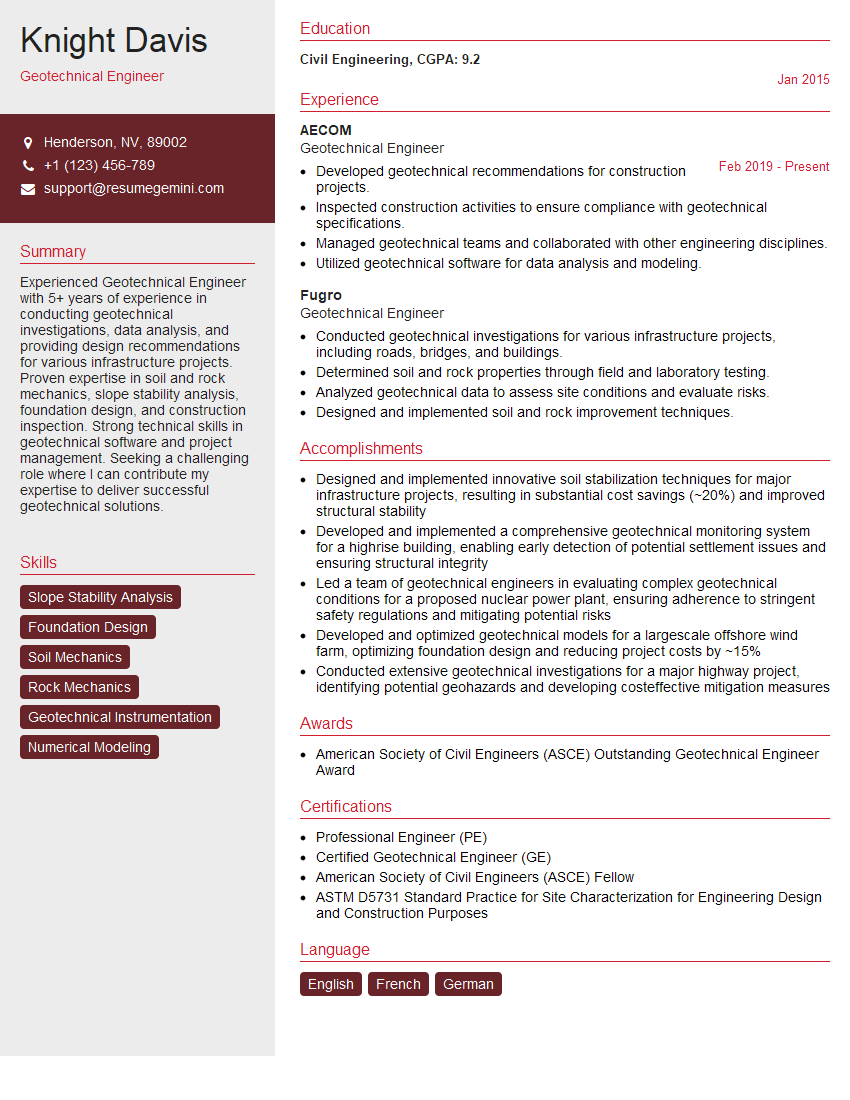
Geotechnical Engineer Resume Sample

Reservoir Engineer Resume Sample

Exploration Geologist Resume Sample

Completion Engineer Resume Sample
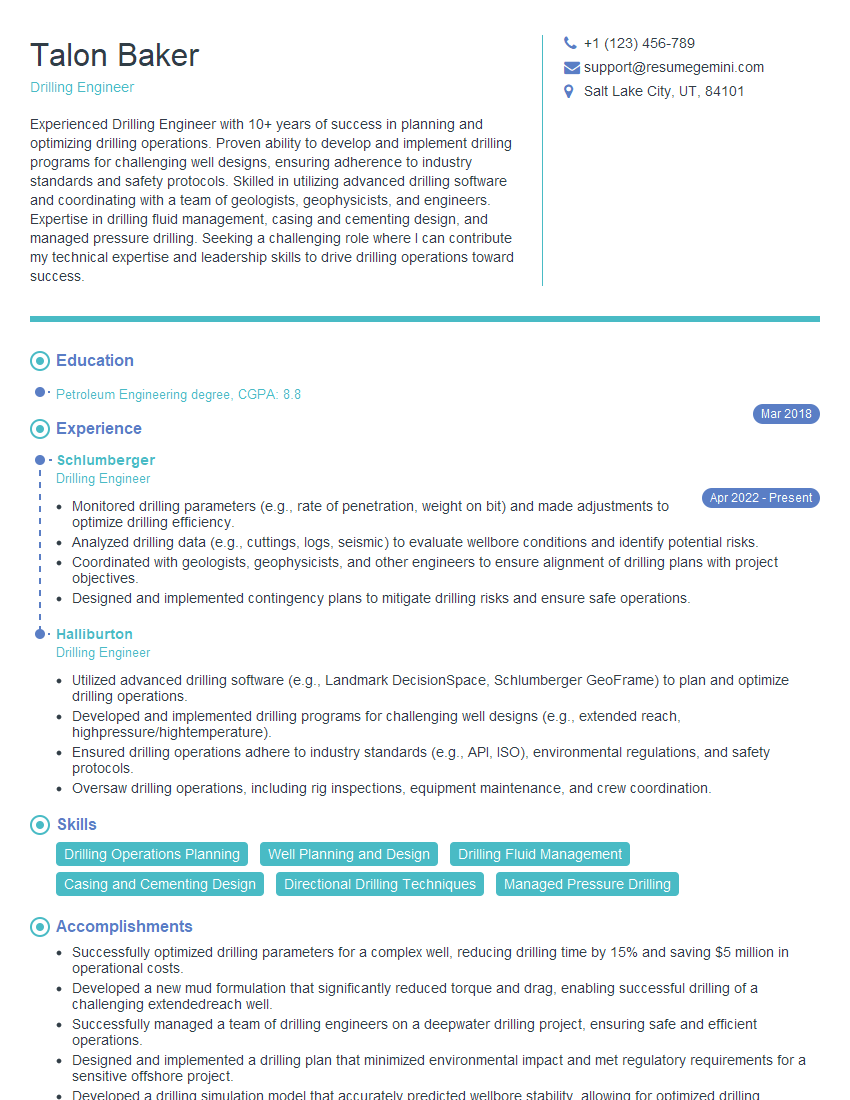
Drilling Engineer Resume Sample

Mud Engineer Resume Sample

Petrophysicist Resume Sample

Project Geologist Resume Sample

Remote Sensing Specialist Resume Sample

Geological Technician Resume Sample

Drilling Foreman Resume Sample
Explore more articles
Users Rating of Our Blogs
Share Your Experience
We value your feedback! Please rate our content and share your thoughts (optional).
What Readers Say About Our Blog
To the interviewgemini.com Webmaster.
Very helpful and content specific questions to help prepare me for my interview!
Thank you
To the interviewgemini.com Webmaster.
This was kind of a unique content I found around the specialized skills. Very helpful questions and good detailed answers.
Very Helpful blog, thank you Interviewgemini team.