Unlock your full potential by mastering the most common Earth Structure interview questions. This blog offers a deep dive into the critical topics, ensuring you’re not only prepared to answer but to excel. With these insights, you’ll approach your interview with clarity and confidence.
Questions Asked in Earth Structure Interview
Q 1. Explain the differences between the Earth’s crust, mantle, and core.
The Earth is composed of three main layers: the crust, the mantle, and the core. Think of it like an onion, each layer having distinct characteristics.
- Crust: This is the outermost, thinnest layer, like the skin of an apple. It’s relatively cool and rigid, composed primarily of lighter silicate rocks like granite (continental crust) and basalt (oceanic crust). The crust is further divided into tectonic plates that are constantly moving, albeit very slowly.
- Mantle: A much thicker layer beneath the crust, extending approximately 2,900 kilometers (1,800 miles) deep. It’s primarily composed of dense silicate rocks rich in iron and magnesium. While solid, the mantle behaves plastically over long timescales, allowing for convection currents that drive plate tectonics. The upper mantle is relatively rigid and forms the lithosphere along with the crust. Below that is the asthenosphere, a more ductile layer.
- Core: This is the Earth’s innermost layer, divided into a liquid outer core and a solid inner core. The outer core, about 2,200 kilometers (1,400 miles) thick, is composed mostly of iron and nickel and is responsible for generating Earth’s magnetic field. The inner core, about 1,220 kilometers (760 miles) in radius, is also predominantly iron and nickel, but the immense pressure at that depth forces it into a solid state, even at very high temperatures.
The differences between these layers are primarily in their composition, density, and physical state. The core is significantly denser than the mantle, which is denser than the crust, due to the different proportions of elements like iron, nickel, and silicon.
Q 2. Describe the process of plate tectonics and its impact on Earth’s structure.
Plate tectonics is the theory that Earth’s lithosphere (crust and upper mantle) is divided into several large and small plates that move relative to each other. This movement is driven by convection currents in the mantle, similar to how heat rises in a pot of boiling water.
- Driving forces: These convection currents are generated by heat escaping from the Earth’s interior. The hot material rises, cools, and sinks, creating a cycle that causes the plates to move. Other factors contribute, such as slab pull (the sinking of denser oceanic plates) and ridge push (the spreading of plates at mid-ocean ridges).
- Plate boundaries: Interactions between these plates create diverse geological features. At divergent boundaries, plates move apart, forming mid-ocean ridges and new oceanic crust. At convergent boundaries, plates collide, leading to mountain building (if continental plates collide), subduction (if an oceanic plate collides with a continental plate), or volcanic island arcs (if two oceanic plates collide). Transform boundaries occur where plates slide past each other, often causing earthquakes, as seen in the San Andreas Fault.
- Impact on Earth’s structure: Plate tectonics shapes Earth’s surface in profound ways. It’s responsible for the creation of mountains, ocean basins, volcanoes, and earthquakes. The continuous recycling of crustal material through subduction affects the planet’s chemical composition and its internal dynamics.
Understanding plate tectonics is crucial for predicting earthquakes, volcanic eruptions, and resource distribution. For instance, knowing where plate boundaries lie helps in assessing seismic hazards and locating potential mineral deposits.
Q 3. What are the different types of seismic waves and how are they used to study Earth’s interior?
Seismology uses seismic waves generated by earthquakes (or explosions) to probe Earth’s interior. There are two main types of body waves that travel through the Earth’s interior:
- P-waves (primary waves): These are compressional waves, meaning they travel by compressing and expanding the material they pass through. Think of a slinky being pushed and pulled. P-waves are the fastest seismic waves and can travel through solids, liquids, and gases.
- S-waves (secondary waves): These are shear waves, meaning they travel by moving the material perpendicular to the direction of wave propagation. Imagine shaking a rope up and down. S-waves are slower than P-waves and can only travel through solids.
In addition to body waves, there are surface waves which travel along the Earth’s surface. These waves are slower but more destructive.
By analyzing the arrival times, amplitudes, and waveforms of seismic waves recorded at different locations around the globe, scientists can infer the structure and properties of Earth’s interior. For example, the fact that S-waves do not travel through the Earth’s outer core provided crucial evidence for its liquid nature.
Seismic tomography is a technique that utilizes thousands of seismic wave recordings to create 3D images of Earth’s interior, revealing variations in density, temperature, and composition.
Q 4. Explain the concept of isostasy and its implications for Earth’s topography.
Isostasy is the state of gravitational equilibrium between the Earth’s lithosphere and asthenosphere. Imagine a block of wood floating in water; the deeper it sinks, the more water it displaces. Similarly, the Earth’s crust floats on the denser mantle, adjusting its elevation to maintain equilibrium.
Principle: Higher, mountainous regions have thicker roots extending down into the mantle, while lower-lying areas have thinner roots. The principle is based on buoyancy; a thicker root provides sufficient upward buoyant force to support the weight of a mountain range. This isostatic adjustment occurs over geological timescales.
Implications for Earth’s topography: Isostasy explains why mountain ranges are high and why oceanic crust is relatively low-lying. The process also has implications for post-glacial rebound, where landmasses that were once depressed under the weight of massive ice sheets slowly rise as the ice melts. The land slowly ‘rebounds’ to its isostatic equilibrium.
Isostatic adjustment isn’t always perfect, and deviations from isostatic equilibrium can indicate active tectonic processes or other geological phenomena.
Q 5. Describe the various types of rock formations and their origins.
Rocks are classified into three main types based on their origin:
- Igneous rocks: Formed from the cooling and solidification of molten rock (magma or lava). Intrusive igneous rocks, like granite, cool slowly beneath the Earth’s surface, resulting in large crystals. Extrusive igneous rocks, like basalt, cool rapidly at or near the Earth’s surface, resulting in fine-grained or glassy textures.
- Sedimentary rocks: Formed from the accumulation and cementation of sediments, which are fragments of pre-existing rocks, minerals, or organic matter. Examples include sandstone (composed of sand grains), shale (composed of clay minerals), and limestone (composed of calcium carbonate). These rocks often show distinct layering or stratification.
- Metamorphic rocks: Formed from the transformation of pre-existing rocks (igneous, sedimentary, or other metamorphic rocks) due to heat, pressure, or chemically active fluids. This process changes the rock’s mineralogy, texture, and sometimes its chemical composition. Examples include marble (formed from limestone) and slate (formed from shale).
The origin of a rock provides important clues about its formation environment and the geological history of the region. For example, the presence of volcanic rocks indicates past volcanic activity, while sedimentary rocks can reveal information about past climates and depositional environments.
Q 6. How are geological maps created and interpreted?
Geological maps are created by geologists to depict the distribution of different rock units and geological structures within a specific area. The process involves several steps:
- Field mapping: Geologists visit the area and observe rock outcrops, collect samples, and measure the orientation of geological structures like faults and folds.
- Data analysis: Laboratory analysis of rock samples helps determine their composition, age, and origin.
- Compilation and interpretation: The collected data is used to create a map showing the boundaries between different rock units, the types of rocks present, and the structural features of the area.
- Map creation: Specialized software is used to create the geological map. Different colours, patterns, and symbols are used to represent different rock units and geological features.
Geological maps are interpreted by analyzing the spatial distribution of rock units, their ages, and their structural relationships. They are crucial for understanding the geological history of an area, identifying potential resources like minerals and groundwater, and assessing geological hazards such as earthquakes and landslides.
For instance, a geologist might use a geological map to identify a fault line, which could be an indicator of a higher risk of seismic activity. Or a geological map might be used to locate a suitable site for a dam or a tunnel.
Q 7. Explain the principles of stratigraphy and its application in geological studies.
Stratigraphy is the branch of geology that deals with the study of rock layers (strata) and layering (stratification). It’s based on several fundamental principles:
- Principle of superposition: In an undisturbed sequence of sedimentary rocks, the oldest layers are at the bottom and the youngest are at the top.
- Principle of original horizontality: Sedimentary rocks are originally deposited in horizontal layers.
- Principle of lateral continuity: Sedimentary layers extend laterally in all directions until they thin out or terminate against the edge of their depositional basin.
- Principle of faunal succession: Fossil organisms succeed one another in a definite and determinable order, and any time period can be recognized by its fossil content.
Applications in geological studies: Stratigraphy is essential for establishing the relative ages of rock units, understanding the geological history of an area, and correlating rock layers across different locations. It plays a crucial role in reconstructing past environments, identifying ancient life forms, and exploring for fossil fuels and other resources.
For example, by applying the principles of stratigraphy, geologists can determine the relative ages of different fossil-bearing rock layers, thereby reconstructing the evolution of life on Earth. Furthermore, the identification of specific rock layers with characteristic fossil assemblages is important for stratigraphic correlation and mapping.
Q 8. Describe the different types of faults and their associated geological features.
Faults are fractures in the Earth’s crust where significant displacement has occurred. They are categorized based on the relative movement of the rock blocks on either side.
- Normal Faults: These form due to tensional forces (pulling apart) causing the hanging wall (the block above the fault plane) to move down relative to the footwall (the block below). Imagine stretching taffy until it breaks; that break is analogous to a normal fault. A classic example is found in rift valleys, like the East African Rift Valley.
- Reverse Faults: These result from compressional forces (pushing together), where the hanging wall moves up relative to the footwall. Think of pushing two blocks of wood together until one slides over the other. Reverse faults are often associated with mountain building (orogeny).
- Thrust Faults: A type of reverse fault with a shallowly dipping fault plane (less than 45 degrees). They can transport large volumes of rock over considerable distances. The Himalayas are a magnificent example of a mountain range formed by extensive thrust faulting.
- Strike-Slip Faults: These faults show horizontal movement parallel to the fault plane. Imagine two blocks sliding past each other horizontally. The San Andreas Fault in California is a famous example, a transform fault separating the Pacific and North American plates.
Associated geological features can include fault scarps (steep cliffs formed by vertical displacement), fault breccia (broken rock along the fault zone), and fault gouge (fine-grained material created by friction along the fault).
Q 9. What are the methods used to determine the age of rocks and geological formations?
Determining the age of rocks and geological formations involves two main approaches: relative dating and absolute dating.
- Relative Dating: This method determines the relative order of events (which came first, second, etc.) without assigning numerical ages. Principles like superposition (older rocks are at the bottom), cross-cutting relationships (a feature cutting across another is younger), and fossil succession (characteristic fossils indicate specific time periods) are crucial. Imagine a layer cake: the bottom layers are older.
- Absolute Dating (Radiometric Dating): This method uses radioactive decay of isotopes to provide numerical ages. Certain radioactive elements decay at a known rate (half-life). By measuring the ratio of parent isotope to daughter product, we can estimate the age. For instance, Carbon-14 dating is used for organic material up to around 50,000 years old, while Uranium-Lead dating is used for much older rocks.
Combining relative and absolute dating techniques provides a comprehensive understanding of geological history.
Q 10. Explain the process of rock metamorphism and its effects on rock properties.
Metamorphism is the transformation of pre-existing rocks (protoliths) into new rocks without melting. It occurs due to changes in temperature, pressure, and/or the introduction of chemically active fluids.
- Contact Metamorphism: Occurs when rocks are heated by contact with a magma body (intrusion). This creates zones of altered rock around the intrusion, often characterized by increased grain size and the formation of new minerals. Imagine baking a cake: the parts closer to the heat source are more affected.
- Regional Metamorphism: Occurs over large areas, typically associated with plate tectonics (mountain building). Intense pressure and temperature changes cause significant changes in the rock’s mineralogy and texture. Rocks like slate, schist, and gneiss are formed through this process. The metamorphic grade (degree of metamorphism) increases with depth and temperature.
- Dynamic Metamorphism: This is caused by intense shearing forces along fault zones. The rocks are pulverized and crushed, creating mylonites – fine-grained, intensely deformed rocks.
Effects on rock properties include changes in texture (grain size, orientation), mineralogy (new minerals forming), density, and strength. For instance, shale (a sedimentary rock) can be metamorphosed into slate (a metamorphic rock) that is harder and more resistant to weathering.
Q 11. Describe the different types of folds and their formation mechanisms.
Folds are bends in rock layers formed due to compressional forces. They are described by their geometry and the orientation of their limbs (sides of the fold).
- Anticline: A fold where the rock layers are arched upward. The oldest rocks are found in the core (center).
- Syncline: A fold where the rock layers are arched downward. The youngest rocks are found in the core.
- Monocline: A step-like fold with only one inclined limb.
- Dome: A large, roughly circular, upward fold. The oldest rocks are at the center.
- Basin: A large, roughly circular, downward fold. The youngest rocks are at the center.
Fold formation is often associated with plate convergence, where compressional forces cause the Earth’s crust to buckle and fold. Imagine pushing a rug together; it will wrinkle and fold.
Q 12. How are geological surveys conducted and what information do they provide?
Geological surveys involve systematic investigations of the Earth’s surface and subsurface to understand its geological structure, composition, and processes. They employ a range of techniques:
- Remote Sensing: Utilizing satellite imagery, aerial photography, and LiDAR to map landforms, identify geological structures, and assess vegetation patterns.
- Field Mapping: Direct observation and sampling of rocks, minerals, and geological structures in the field. Geologists create geological maps, cross-sections, and stratigraphic columns.
- Geophysical Surveys: Employing techniques like seismic reflection/refraction, gravity surveys, and magnetic surveys to infer subsurface structure and properties. Seismic methods use sound waves to image the subsurface, similar to using ultrasound to image a human body.
- Geochemical Surveys: Analyzing rock and soil samples to determine their chemical composition and identify mineral deposits or pollution sources.
- Drilling and Coring: Obtaining rock samples from boreholes to analyze stratigraphy, porosity, and other properties.
Geological surveys provide crucial information for various applications, including mineral exploration, groundwater resource assessment, hazard mitigation (earthquakes, landslides), and environmental management.
Q 13. Explain the concept of porosity and permeability in relation to groundwater flow.
Porosity and permeability are crucial properties of rocks and soils that determine the ability of groundwater to flow.
- Porosity: Represents the percentage of void space (pores) in a rock or sediment. It indicates how much water a material *can* hold. High porosity means lots of pore space. Think of a sponge; a more porous sponge holds more water.
- Permeability: Measures the ability of a material to transmit fluids (like water). It depends on both the amount and connectivity of pores. A material can have high porosity but low permeability if the pores are not interconnected. Think of a tightly packed box of sand: it might have some air space (porosity), but water would struggle to flow through it (low permeability).
Groundwater flow is governed by Darcy’s Law, which relates the flow rate to hydraulic gradient (the slope of the water table), permeability, and the fluid’s viscosity. High porosity and permeability are necessary for efficient groundwater flow and the development of aquifers (underground water reservoirs).
Q 14. Describe the various methods used to explore for oil and gas reserves.
Exploring for oil and gas reserves involves a multi-stage process that combines geological understanding with advanced technologies.
- Seismic Surveys: This is a primary exploration method. Seismic waves are sent into the earth and their reflections are analyzed to create subsurface images. These images help geologists identify potential reservoir rocks (rocks that can store and transmit hydrocarbons).
- Gravity and Magnetic Surveys: These methods help in identifying subsurface density and magnetic variations that may indicate the presence of hydrocarbon traps.
- Geological Mapping and Analysis: Surface geological data, including rock types, structures, and stratigraphy, are analyzed to predict potential locations of hydrocarbon accumulations.
- Exploratory Drilling: Once promising locations are identified, exploratory wells are drilled to directly sample the subsurface. Core samples and well logs provide detailed information about the rock properties, fluid content, and hydrocarbon reserves.
- Remote Sensing: Satellite and aerial imagery can aid in regional geological mapping and identification of potential structural features.
The success of oil and gas exploration relies on integrating data from multiple sources and applying advanced geological and geophysical interpretation techniques. Each stage plays a vital role in narrowing down the search and optimizing resource allocation.
Q 15. What are the different types of geological hazards and how can they be mitigated?
Geological hazards are naturally occurring events that pose risks to human life and property. They stem from Earth’s dynamic processes. We categorize them broadly into:
- Seismic Hazards: Earthquakes, triggered by tectonic plate movements. Mitigation involves building codes that incorporate seismic design, early warning systems, and land-use planning that avoids high-risk zones.
- Volcanic Hazards: Eruptions, lava flows, pyroclastic flows, and lahars (volcanic mudflows). Mitigation includes monitoring volcanic activity with seismic and gas sensors, establishing evacuation plans, and constructing protective structures.
- Landslides: Mass movements of rock and soil down slopes. Mitigation involves slope stabilization techniques like terracing, drainage improvements, and vegetation planting, along with land-use regulations that restrict building on unstable slopes.
- Floods: Overflow of water onto normally dry land. Mitigation includes flood control measures like dams, levees, and improved drainage systems, as well as flood forecasting and warning systems, and zoning regulations that avoid floodplains.
- Coastal Hazards: Erosion, storms, tsunamis. Mitigation strategies encompass seawalls, beach nourishment, coastal zone management plans, and early warning systems for tsunamis.
Effective mitigation requires a multi-pronged approach involving scientific understanding, engineering solutions, community preparedness, and effective land-use planning. For instance, the city of Kobe, Japan, has implemented stringent building codes after a devastating earthquake, significantly reducing casualties in subsequent seismic events.
Career Expert Tips:
- Ace those interviews! Prepare effectively by reviewing the Top 50 Most Common Interview Questions on ResumeGemini.
- Navigate your job search with confidence! Explore a wide range of Career Tips on ResumeGemini. Learn about common challenges and recommendations to overcome them.
- Craft the perfect resume! Master the Art of Resume Writing with ResumeGemini’s guide. Showcase your unique qualifications and achievements effectively.
- Don’t miss out on holiday savings! Build your dream resume with ResumeGemini’s ATS optimized templates.
Q 16. Explain the principles of geotechnical engineering in relation to construction projects.
Geotechnical engineering applies soil mechanics and rock mechanics principles to design and construct safe and stable structures. It’s crucial because structures interact directly with the Earth’s subsurface, and understanding the soil and rock properties is paramount.
- Site Investigation: This involves detailed subsurface exploration using methods like drilling, sampling, and geophysical surveys to determine soil type, strength, and groundwater conditions.
- Foundation Design: Appropriate foundation types (shallow or deep) are chosen based on the site investigation findings to ensure adequate bearing capacity and settlement control. For example, a skyscraper might require deep foundations like piles driven into bedrock, while a smaller building could use shallow spread footings on stable soil.
- Slope Stability Analysis: For projects involving excavations or embankments, geotechnical engineers evaluate slope stability to prevent landslides. This involves considering factors like soil strength, water content, and geometry.
- Earth Retaining Structures: These structures (retaining walls, sheet piling) are designed to hold back soil and prevent lateral earth pressure from impacting the structure. The design requires careful consideration of soil properties and stresses.
- Ground Improvement: Techniques like compaction, grouting, and soil stabilization are used to improve the engineering properties of the soil, making it suitable for construction. For example, unstable clay soils can be treated with lime to increase their strength.
Without proper geotechnical engineering, construction projects can face failures, delays, and cost overruns. For example, the infamous Tacoma Narrows Bridge collapse partially resulted from a lack of understanding of wind-soil interaction.
Q 17. How are geophysical techniques used to investigate subsurface structures?
Geophysical techniques use physical properties of subsurface materials to indirectly image subsurface structures without extensive excavation. Different techniques provide complementary data:
- Seismic Reflection/Refraction: Uses sound waves to image subsurface layers based on their acoustic impedance contrast. Seismic reflection is particularly useful for deep subsurface imaging, often employed in oil and gas exploration and earthquake studies. Seismic refraction is useful for shallower investigations such as locating bedrock.
- Electrical Resistivity: Measures the resistance of subsurface materials to the flow of electric current. It helps delineate geological units with varying conductivity (e.g., identifying groundwater aquifers, mapping contaminants).
- Ground Penetrating Radar (GPR): Uses electromagnetic waves to detect subsurface features. It’s useful for shallow investigations like locating buried utilities, cavities, or archaeological remains.
- Magnetic Surveys: Measures variations in the Earth’s magnetic field caused by variations in the magnetic susceptibility of subsurface materials. This is useful for mapping geological structures and identifying mineral deposits.
- Gravity Surveys: Measures variations in the Earth’s gravitational field caused by density contrasts in subsurface materials. This helps delineate geological structures and locate ore bodies.
The choice of geophysical technique depends on the specific geological question and the depth of investigation. Often, multiple techniques are used in a complementary way to obtain a comprehensive understanding of the subsurface.
Q 18. Describe the different types of geological data and their applications.
Geological data comes in many forms, each providing specific insights:
- Geological Maps: Show the distribution of rock units, structures, and geological features on the Earth’s surface. Essential for regional planning, resource assessment, and understanding geological history.
- Geophysical Data: (As described in the previous answer) provide information on subsurface structures and properties.
- Geochemical Data: Analyze the chemical composition of rocks, minerals, and fluids to understand geological processes, identify ore deposits, and assess environmental hazards.
- Borehole Data: Obtained from drilling and sampling provide detailed information about subsurface materials including their lithology, stratigraphy, and physical properties. This data is crucial for geotechnical engineering and resource exploration.
- Remote Sensing Data: From satellites and aerial platforms offer large-scale views of the Earth’s surface and can detect geological features like lineaments, faults, and vegetation patterns related to geology.
- Paleontological Data: Fossil remains provide insights into past environments, geological ages, and evolutionary history.
The application of geological data varies based on the type of data and the goal of the investigation. For example, geochemical data is used in mineral exploration to identify areas with high concentrations of ore-forming elements, while borehole data is crucial for foundation design in construction projects.
Q 19. Explain the concept of basin analysis and its significance in petroleum exploration.
Basin analysis is the study of sedimentary basins – large-scale geological depressions filled with sediment. It’s crucial for petroleum exploration because petroleum systems are closely tied to the formation and evolution of these basins.
The process involves:
- Stratigraphic Analysis: Examining the sequence of rock layers to understand the basin’s depositional history and identify potential reservoir rocks (rocks with porosity and permeability that can store hydrocarbons).
- Structural Analysis: Mapping faults and folds to understand the tectonic history of the basin and identify potential hydrocarbon traps (geological structures that prevent hydrocarbons from migrating).
- Geochemical Analysis: Analyzing the organic matter content of sediments to assess the source rock potential (rocks that generate hydrocarbons through maturation).
- Hydrocarbon Systems Modeling: Integrating all data to construct a model of the petroleum system, predicting the location and size of potential hydrocarbon accumulations.
Understanding the basin’s evolution and the interplay between source rocks, reservoir rocks, and traps is key to successful hydrocarbon exploration. Failure to consider basin evolution can lead to drilling dry wells and wasted resources.
Q 20. What are the environmental impacts of mining and how can they be minimized?
Mining has significant environmental impacts, including:
- Habitat Loss and Fragmentation: Mining operations directly destroy natural habitats, leading to biodiversity loss.
- Water Pollution: Acid mine drainage (AMD) from the oxidation of sulfide minerals can contaminate surface and groundwater with heavy metals and acidic runoff. Tailings ponds (waste disposal sites) can also leach pollutants into the environment.
- Air Pollution: Mining activities can release dust, particulate matter, and greenhouse gases into the atmosphere.
- Soil Degradation: Mining activities remove topsoil and can lead to soil erosion and degradation.
- Land Subsidence: Underground mining can cause land subsidence, leading to structural damage and potential hazards.
Minimizing these impacts requires a multifaceted approach:
- Careful Site Selection: Choosing mine locations that minimize environmental impacts.
- Best Practices in Mining Operations: Employing environmentally sound mining techniques to reduce pollution and waste generation.
- Water Treatment: Treating AMD and other mine effluents before discharge into the environment.
- Rehabilitation and Reclamation: Restoring mined lands to a productive state after mining operations cease. This includes re-vegetation, soil reconstruction, and water management.
- Monitoring and Management: Continuously monitoring environmental parameters to detect and respond to pollution events.
Sustainable mining practices are essential for balancing economic development with environmental protection. Examples include the use of in-situ leaching techniques, which minimize land disturbance, and implementing stringent environmental regulations and monitoring programs.
Q 21. Describe the different methods used to monitor groundwater quality.
Groundwater quality monitoring involves assessing the chemical, physical, and biological characteristics of groundwater to determine its suitability for various uses (drinking water, irrigation, etc.) and to detect contamination. Methods include:
- Well Sampling: Collecting groundwater samples from monitoring wells strategically placed in the aquifer. Samples are analyzed in a laboratory for various parameters.
- In-situ Measurements: Using sensors deployed in wells to continuously monitor parameters like pH, conductivity, dissolved oxygen, and temperature. This provides real-time data on groundwater conditions.
- Tracer Studies: Using non-toxic tracers to track groundwater flow paths and identify potential sources of contamination.
- Remote Sensing: Employing satellite imagery and aerial photography to detect surface features related to groundwater quality (e.g., vegetation stress indicating salinity).
- Geophysical Techniques: Techniques such as electrical resistivity can help delineate areas with different groundwater quality.
The frequency and intensity of monitoring depend on the potential for contamination and the intended use of the groundwater. Regular monitoring is critical for early detection of contamination, allowing for timely intervention and prevention of further degradation.
Q 22. Explain the role of GIS in geological studies and applications.
Geographic Information Systems (GIS) are indispensable tools in geological studies, offering a powerful platform to integrate, analyze, and visualize diverse spatial data. Imagine needing to map the distribution of a specific mineral across a vast region. Manually doing this would be incredibly time-consuming and prone to errors. GIS streamlines this process.
GIS allows geologists to combine geological maps, geophysical surveys (like gravity or magnetic data), satellite imagery, and drilling data into a single, integrated view. This allows for sophisticated spatial analysis, helping to identify patterns, predict geological events, and model subsurface structures. For instance, GIS can be used to model groundwater flow, predict landslide susceptibility, or optimize the location of exploration drilling sites.
- Data Integration: GIS can handle various data types, including vector (points, lines, polygons) and raster (images, grids) data, enabling comprehensive analysis.
- Spatial Analysis: Tools like overlay analysis, proximity analysis, and interpolation allow for sophisticated modeling and prediction.
- Visualization: GIS provides powerful visualization capabilities, making complex data readily understandable through maps, charts, and 3D models.
- Applications: Mineral exploration, environmental impact assessment, natural hazard mapping, and urban planning are all enhanced by GIS.
Q 23. How are remote sensing techniques used to study Earth’s surface features?
Remote sensing techniques utilize sensors on airborne or spaceborne platforms to acquire data about Earth’s surface features without direct physical contact. Think of it as taking a detailed ‘picture’ of the Earth from a distance, but with far more information than a standard photograph. These sensors detect reflected or emitted energy in various parts of the electromagnetic spectrum, from visible light to infrared and microwave radiation.
Different wavelengths reveal different information about the Earth’s surface. For example, infrared sensors can detect variations in temperature, useful for identifying volcanic activity or areas prone to wildfires. Radar can penetrate cloud cover and vegetation, allowing for the mapping of topography and subsurface features. Multispectral and hyperspectral imagery provide detailed information about the composition of surface materials, facilitating the identification of different rock types or vegetation patterns.
- Satellite Imagery: Landsat, Sentinel, and MODIS satellites provide high-resolution imagery for various applications.
- Aerial Photography: Traditional aerial photos, often enhanced digitally, remain valuable for detailed analysis of specific areas.
- LiDAR (Light Detection and Ranging): This technology uses laser pulses to create highly accurate 3D models of the terrain, providing critical data for various geological and environmental studies.
The data obtained through remote sensing is then processed and analyzed using GIS and other specialized software, yielding valuable insights into Earth’s surface features, processes, and changes over time.
Q 24. Describe the challenges involved in predicting earthquakes and volcanic eruptions.
Predicting earthquakes and volcanic eruptions is a formidable challenge due to the complexity of the Earth’s interior and the inherent unpredictability of these events. While significant progress has been made, accurately predicting the precise time, location, and magnitude of these events remains elusive.
- Earthquake Prediction: The difficulty arises from the lack of a complete understanding of the fault mechanics and stress buildup processes within the Earth’s crust. While we can identify areas with high seismic risk based on historical data and tectonic plate boundaries, precisely determining when and how an earthquake will occur remains a significant hurdle. We monitor seismic activity with sophisticated networks, but subtle precursors may be difficult to distinguish from background noise.
- Volcanic Eruption Prediction: Monitoring volcanic activity involves observing various precursors such as ground deformation (inflation or deflation of the volcano), changes in gas emissions (sulfur dioxide, carbon dioxide), seismic activity (increased frequency and intensity of tremors), and thermal anomalies (increased heat flow). However, the exact timing of an eruption remains difficult, as volcanic systems are complex and can show variable behavior.
The inherent complexity of these geological processes, coupled with the limited number of direct observations within the Earth, necessitates a multidisciplinary approach combining geological mapping, geophysical monitoring, geochemical analysis, and advanced modeling techniques to improve prediction capabilities.
Q 25. Explain the relationship between Earth’s structure and climate change.
Earth’s structure plays a crucial role in shaping its climate system. The interaction between the planet’s interior, oceans, atmosphere, and cryosphere (ice sheets and glaciers) governs long-term climate patterns and the response to changes, including those driven by human activities.
- Plate Tectonics and Ocean Currents: The movement of tectonic plates influences ocean basin formation and configuration, impacting ocean currents that distribute heat around the globe. Changes in ocean circulation patterns significantly affect regional and global climate.
- Volcanism and Greenhouse Gases: Volcanic eruptions release large amounts of greenhouse gases (like CO2 and water vapor) into the atmosphere, affecting the radiative balance and potentially influencing long-term climate change. Although volcanic contributions are dwarfed by anthropogenic emissions, they’ve played a role in past climate variations.
- Carbon Cycle and Rock Weathering: The long-term carbon cycle involves a complex interplay between the atmosphere, oceans, and Earth’s interior, including processes like rock weathering that removes CO2 from the atmosphere. This interaction is a significant regulator of long-term climate, though the exact mechanisms are still being researched.
- Earth’s Interior Heat Flow: Heat escaping from the Earth’s interior influences mantle convection, impacting plate tectonics and volcanic activity, indirectly affecting climate.
Understanding Earth’s structure and its dynamic processes is vital for comprehending both natural climate variability and the response to anthropogenic climate change.
Q 26. Discuss the ethical considerations involved in geological exploration and resource extraction.
Ethical considerations in geological exploration and resource extraction are paramount, requiring a balanced approach to satisfying societal needs while minimizing environmental and social impacts. It’s not simply about finding and extracting resources; it’s about doing so responsibly.
- Environmental Protection: Minimizing habitat destruction, pollution (air, water, soil), and greenhouse gas emissions is crucial. This involves careful planning, environmental impact assessments, and the implementation of mitigation strategies.
- Social Responsibility: Ensuring fair compensation and benefits for local communities affected by exploration and extraction activities is essential. This includes considering potential impacts on livelihoods, cultural heritage, and public health.
- Resource Stewardship: Promoting sustainable resource management practices, including efficient extraction techniques, waste minimization, and responsible land reclamation, is vital for ensuring long-term availability of resources for future generations.
- Transparency and Accountability: Open communication with stakeholders, including local communities, governments, and the public, is vital. This builds trust and ensures that decisions are made in a transparent and accountable manner.
- Safety: Prioritizing the safety of workers involved in exploration and extraction activities is non-negotiable. This includes implementing robust safety protocols and providing adequate training.
Ignoring these ethical considerations can lead to severe environmental degradation, social unrest, and long-term economic instability. A responsible approach necessitates collaboration between geologists, policymakers, local communities, and other stakeholders.
Q 27. How can geological data be used to assess the risks of landslides and other geohazards?
Geological data plays a critical role in assessing landslide and other geohazard risks. By understanding the underlying geological conditions, we can better predict where and when these events might occur, allowing for mitigation efforts and informed land-use planning.
Geological data, including topographic maps, geological maps, soil surveys, and geophysical surveys, provides crucial information about:
- Slope Stability: The angle of the slope, the presence of weak layers in the soil or rock, and the presence of water can all significantly influence slope stability. Geological maps and geophysical surveys (like seismic refraction or electrical resistivity tomography) can help identify these factors.
- Soil and Rock Properties: The strength, cohesion, and permeability of soil and rock are crucial for determining landslide susceptibility. Laboratory testing and field observations provide this information.
- Groundwater Conditions: Changes in groundwater levels can significantly affect slope stability, increasing the risk of landslides. Monitoring wells and groundwater modeling can help assess this risk.
- Past Landslide History: Identifying past landslide events, their locations, and their characteristics can provide insights into future risks. Historical records, aerial photography, and field investigations are valuable tools.
Integrating geological data with other types of information, such as rainfall data and land use patterns, helps to create comprehensive landslide hazard maps that inform land-use planning, emergency response, and mitigation strategies.
Q 28. Explain the use of well logs in understanding subsurface formations.
Well logs are a crucial source of subsurface information obtained during drilling operations. They provide continuous records of various physical properties of the formations penetrated by the wellbore, offering a detailed ‘fingerprint’ of the subsurface geology. Imagine it like taking an X-ray of the underground layers.
Different types of well logs measure different properties:
- Gamma Ray Logs: Measure the natural radioactivity of formations, helping to identify different rock types and identify potential shale layers.
- Resistivity Logs: Measure the electrical conductivity of formations, which is related to their porosity and fluid content (e.g., identifying hydrocarbons).
- Sonic Logs: Measure the speed of sound waves traveling through formations, providing information about porosity and lithology.
- Density Logs: Measure the bulk density of formations, providing information about porosity and lithology.
- Neutron Logs: Measure the hydrogen index of formations, providing information about porosity and fluid type.
By combining these various logs, geologists can interpret the lithology (rock type), porosity (the amount of void space), permeability (the ability of fluids to flow through the formation), and fluid saturation (the amount of fluids in the pores) of the subsurface formations. This information is critical for various applications such as hydrocarbon exploration, groundwater resource assessment, and geological modeling.
Key Topics to Learn for Earth Structure Interview
- Plate Tectonics: Understand plate boundaries (convergent, divergent, transform), plate movement mechanisms, and their impact on geological formations and hazards.
- Geophysical Methods: Familiarize yourself with seismic methods (reflection, refraction), gravity and magnetic surveys, and their applications in subsurface exploration and Earth structure modeling.
- Earth’s Interior: Master the composition and properties of the Earth’s crust, mantle, and core. Understand the evidence supporting our current models (e.g., seismic wave velocities).
- Mineral Physics: Explore the relationship between mineral properties (density, elasticity, etc.) and the physical conditions within the Earth. Understand how these properties influence seismic wave propagation.
- Geochemistry: Grasp the principles of geochemical processes within the Earth and how they contribute to the formation and evolution of Earth’s layers.
- Isostasy and Geoid: Understand the concept of isostatic equilibrium and its implications for topography and gravity anomalies. Know how the geoid relates to Earth’s gravity field.
- Practical Application: Be prepared to discuss how your knowledge of Earth structure can be applied to solving real-world problems, such as resource exploration, hazard mitigation, or environmental management.
- Problem-Solving: Practice interpreting geological data (e.g., seismic profiles, gravity maps) and applying your knowledge to build models of subsurface structure.
Next Steps
Mastering Earth structure is crucial for a successful career in geophysics, geology, or related fields. A strong understanding of these concepts will significantly enhance your problem-solving abilities and open doors to exciting opportunities. To maximize your job prospects, create an ATS-friendly resume that effectively highlights your skills and experience. ResumeGemini is a trusted resource for building professional resumes that stand out to recruiters. They offer examples of resumes tailored to Earth Structure careers, providing a valuable head start in your job search.
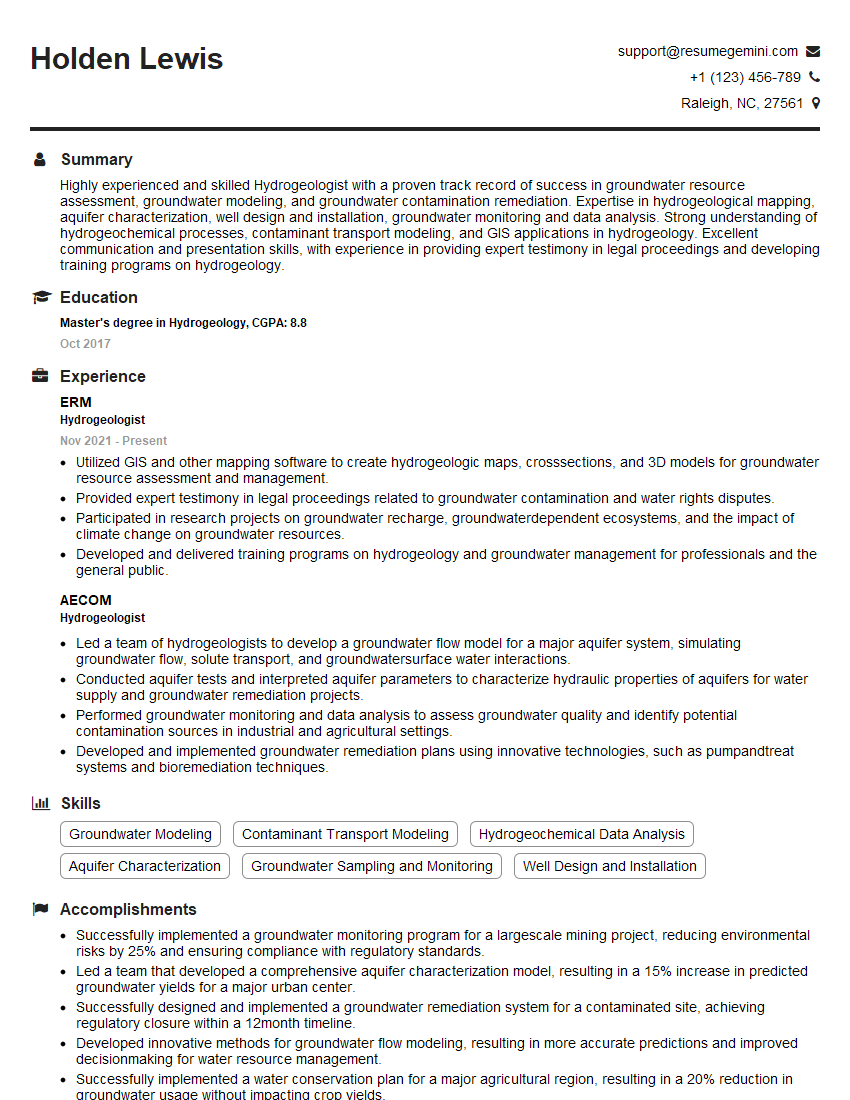
Hydrogeologist Resume Sample

Geologist Resume Sample
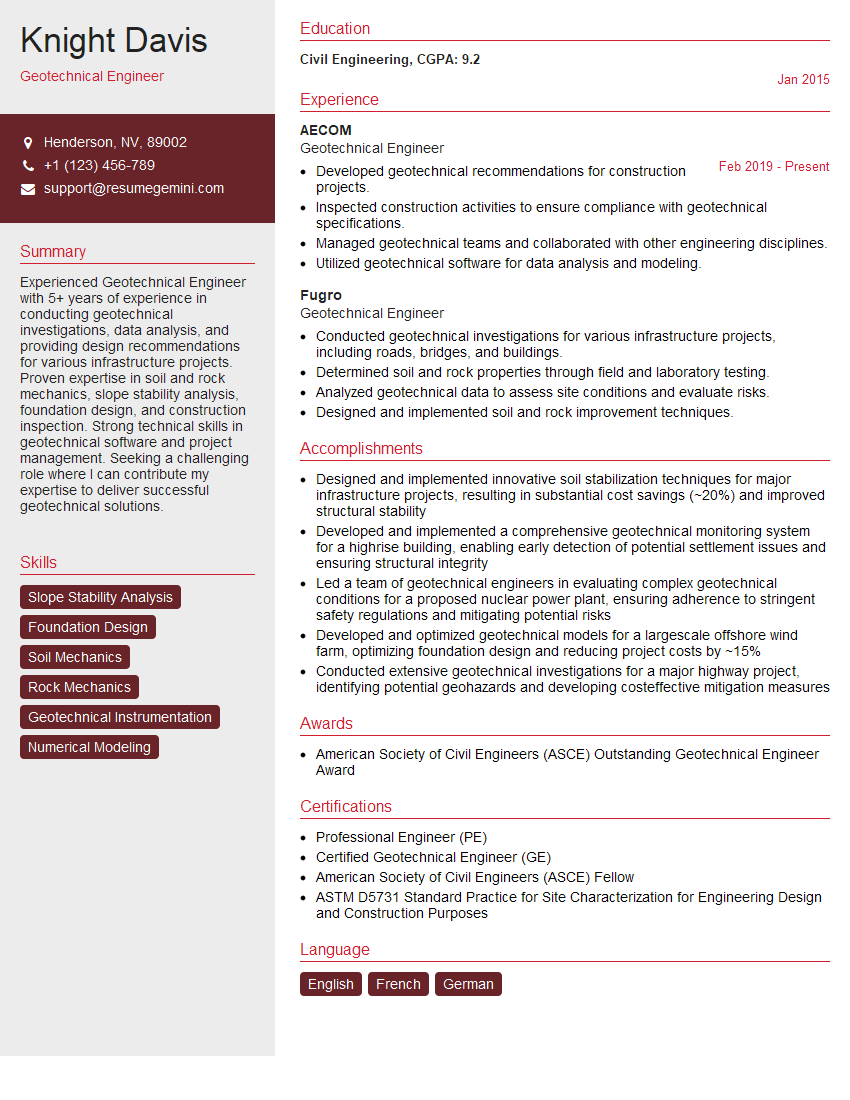
Geotechnical Engineer Resume Sample

Reservoir Engineer Resume Sample

Exploration Geologist Resume Sample

Engineering Geologist Resume Sample
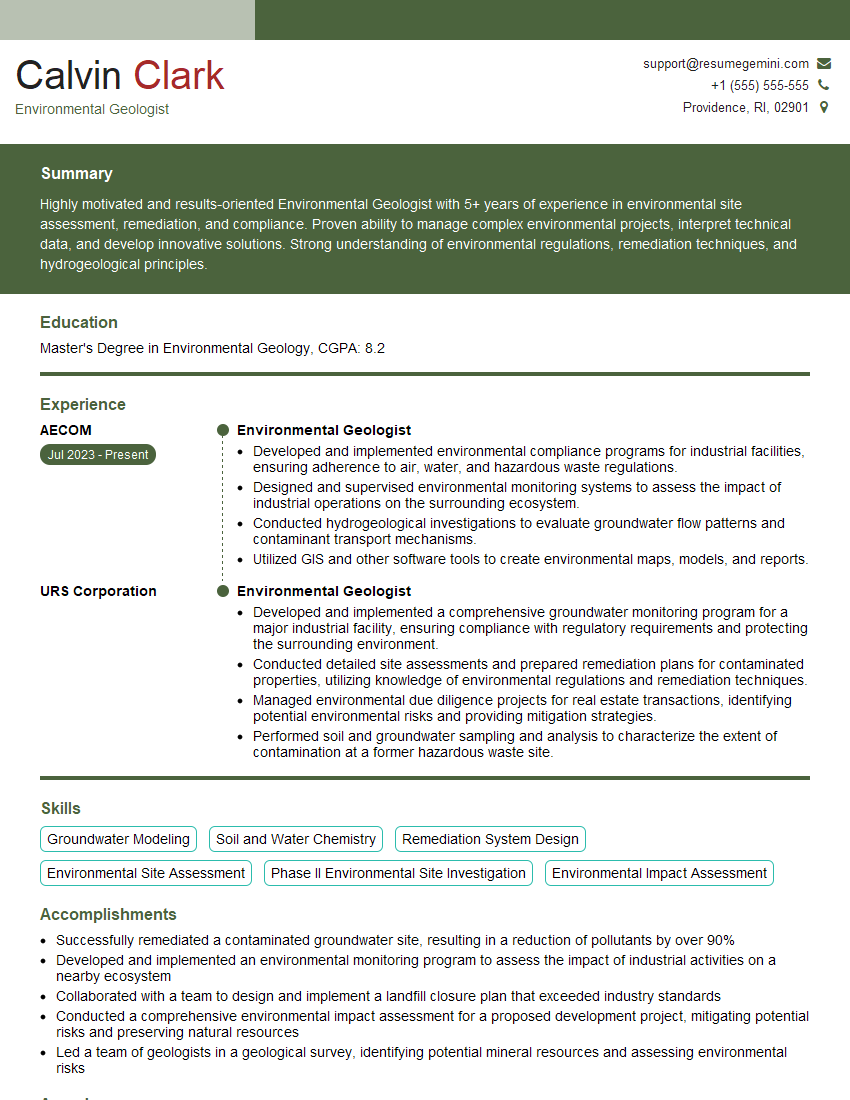
Environmental Geologist Resume Sample
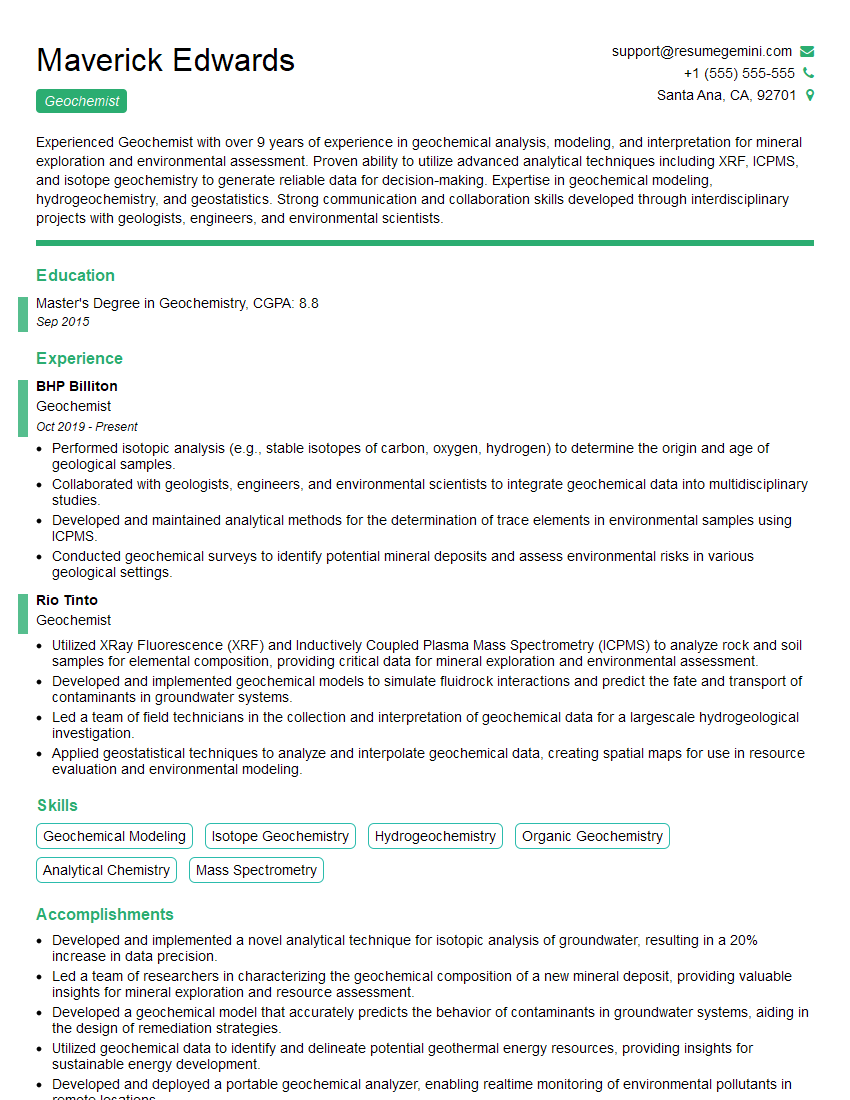
Geochemist Resume Sample
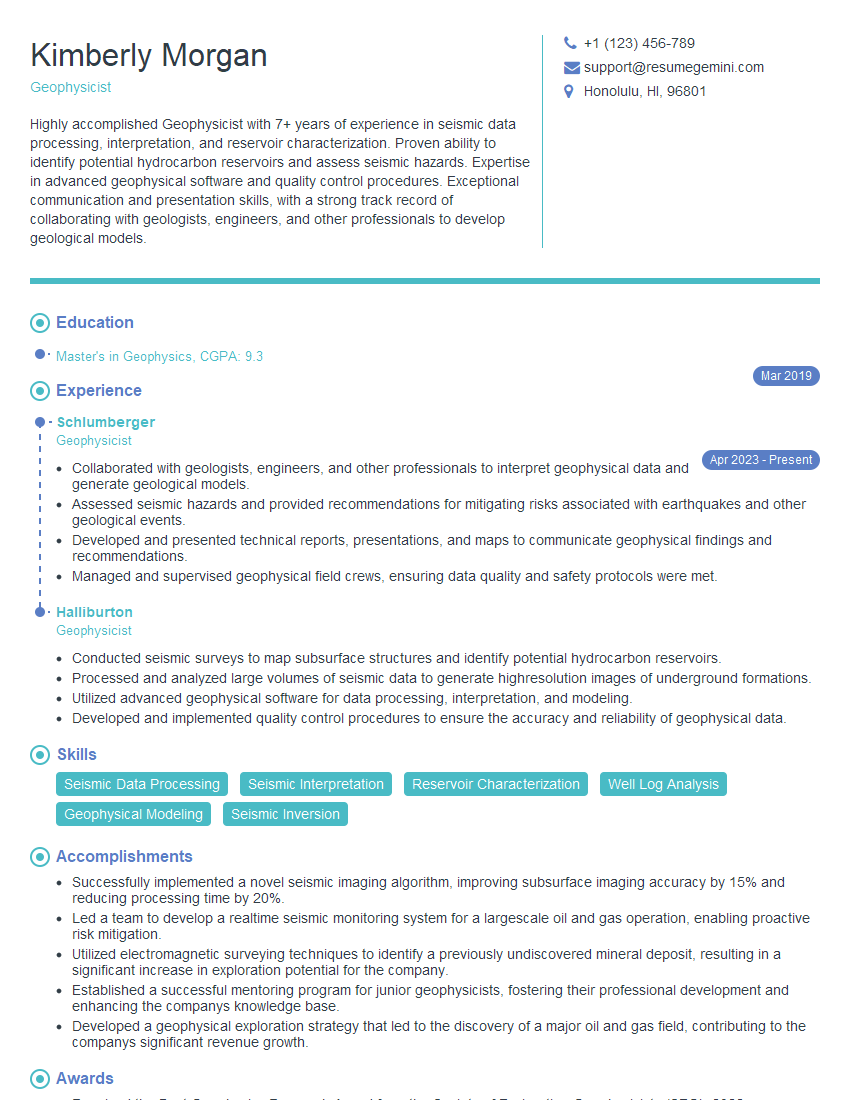
Geophysicist Resume Sample
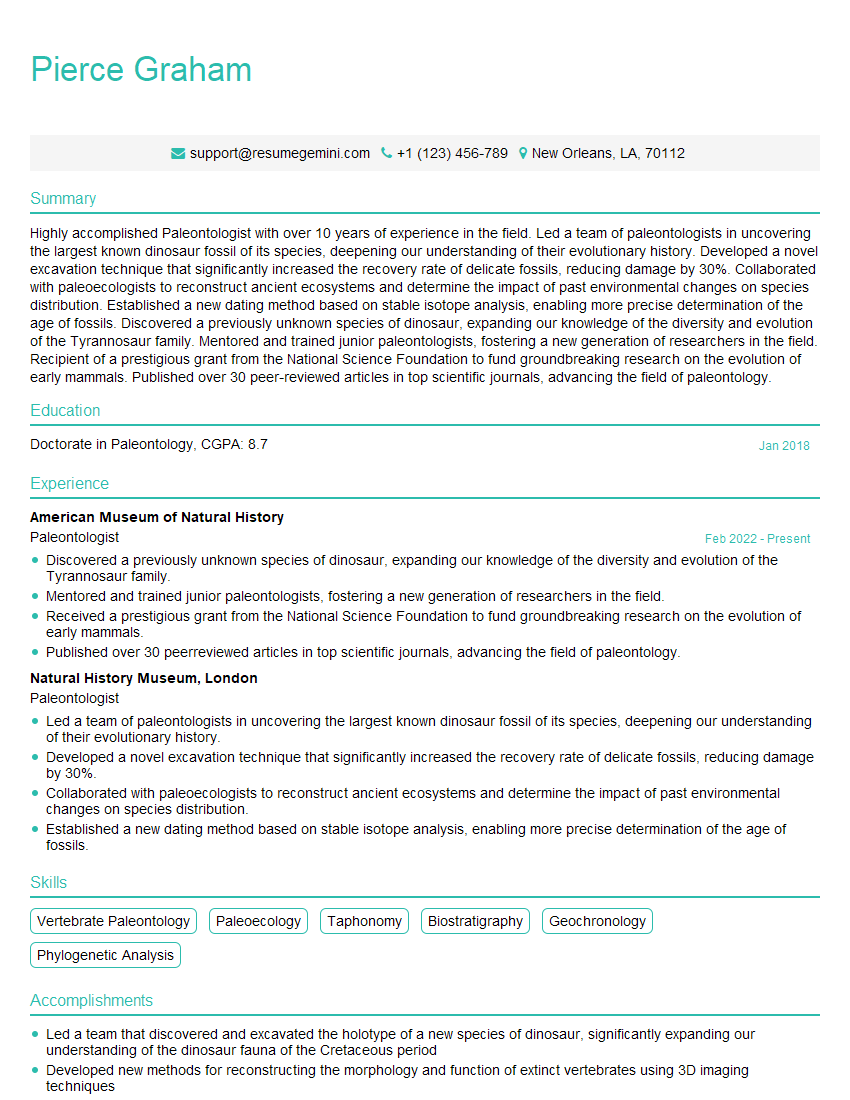
Paleontologist Resume Sample
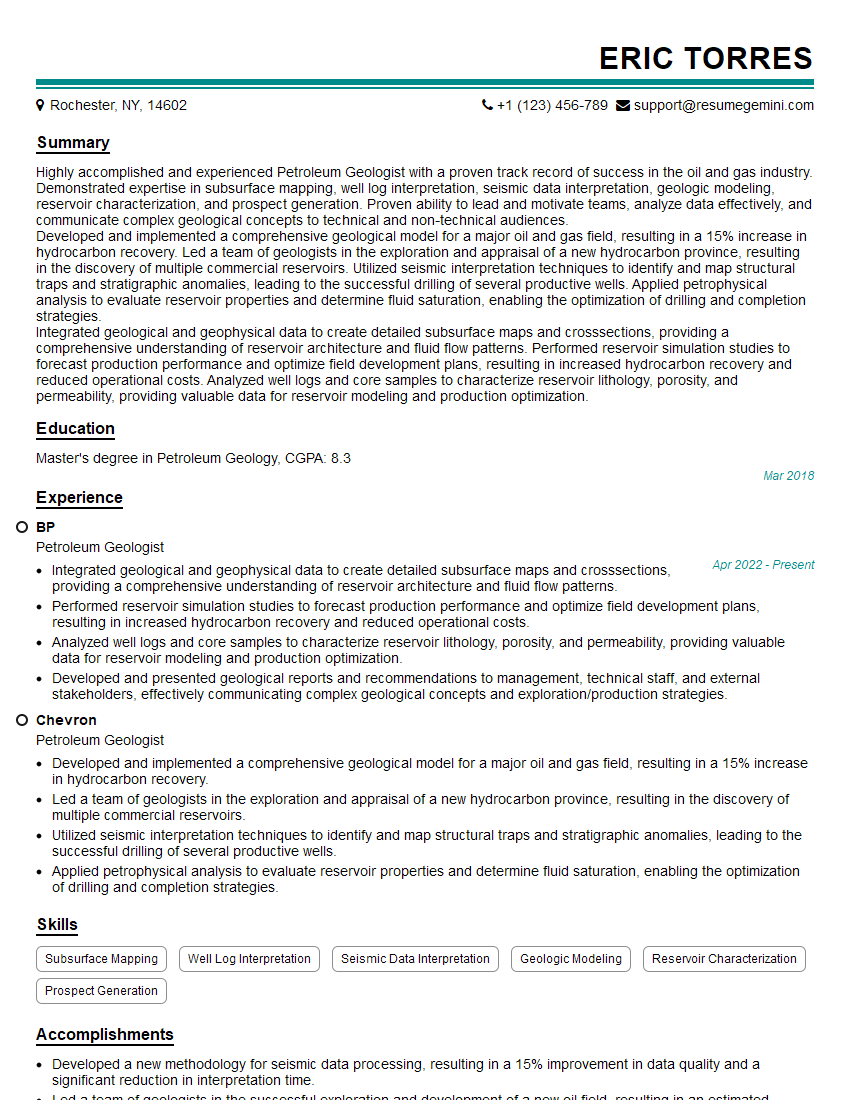
Petroleum Geologist Resume Sample

Petrologist Resume Sample

Seismologist Resume Sample

Remote Sensing Specialist Resume Sample

Geological Technician Resume Sample
Explore more articles
Users Rating of Our Blogs
Share Your Experience
We value your feedback! Please rate our content and share your thoughts (optional).
What Readers Say About Our Blog
To the interviewgemini.com Webmaster.
Very helpful and content specific questions to help prepare me for my interview!
Thank you
To the interviewgemini.com Webmaster.
This was kind of a unique content I found around the specialized skills. Very helpful questions and good detailed answers.
Very Helpful blog, thank you Interviewgemini team.