Interviews are more than just a Q&A session—they’re a chance to prove your worth. This blog dives into essential Electrical Equipment Installation interview questions and expert tips to help you align your answers with what hiring managers are looking for. Start preparing to shine!
Questions Asked in Electrical Equipment Installation Interview
Q 1. Explain the National Electrical Code (NEC) and its importance in electrical installations.
The National Electrical Code (NEC) is a widely adopted set of standards for electrical installations in the United States. Think of it as the rule book for safe and effective electrical work. It’s crucial for ensuring that electrical systems are designed, installed, and maintained to prevent hazards like fires, shocks, and electrocution. The NEC isn’t a law itself; instead, it’s adopted and enforced by local authorities, meaning specific regulations might vary slightly by region. However, the core principles remain consistent across the country.
Its importance stems from its focus on safety. The NEC details requirements for everything from wiring methods and circuit protection to grounding and bonding. Compliance reduces risks significantly. For example, proper grounding prevents dangerous voltage buildup, while adhering to ampacity requirements (the maximum current a wire can safely carry) avoids overheating and potential fires. Failing to follow the NEC can lead to serious consequences, including fines, insurance issues, and, worst of all, injury or death.
For example, I recently worked on a project where the client wanted to upgrade their outdated electrical system. Adhering strictly to the NEC ensured the new system met all safety standards and performed efficiently. This involved using the correct size conduits for the wire gauge, implementing the appropriate grounding techniques, and selecting the right circuit breakers for the intended loads.
Q 2. Describe your experience with different types of wiring methods (e.g., conduit, raceway, etc.).
I have extensive experience with various wiring methods, including conduit, raceway, and cable tray systems. The choice of method depends on several factors, including the environment (indoor vs. outdoor), the type of building, the number of conductors, and the required level of protection.
- Conduit: This involves running wires inside metal or plastic pipes, providing excellent protection against physical damage and environmental factors. I frequently use rigid metal conduit (RMC) for high-risk areas and flexible metal conduit (FMC) in situations requiring greater flexibility. I’ve used EMT (electrical metallic tubing) extensively for commercial and industrial applications, finding its balance of strength and ease of installation particularly beneficial.
- Raceway: This includes surface-mounted channels designed to house wires, often used for aesthetic reasons or when conduit is impractical. I have experience with various raceway types, including wire mold and channel systems. These are excellent for situations needing a clean, surface-mounted solution, particularly where aesthetics are a concern.
- Cable Tray Systems: These are often used in large-scale projects like industrial facilities to support and manage large bundles of cables. The flexibility of cable trays is crucial when dealing with many wires.
Choosing the right method is critical for both safety and efficiency. For instance, using improperly sized conduit could lead to overheating and fire hazards, whereas using an unsuitable raceway system might not provide sufficient protection from physical damage.
Q 3. How do you ensure proper grounding and bonding in an electrical installation?
Proper grounding and bonding are paramount for electrical safety. Grounding provides a path for fault currents to flow back to the source, preventing dangerous voltage buildup on exposed metal parts. Bonding connects various metal enclosures and components to ensure that they are at the same electrical potential. Think of grounding as a safety net and bonding as a way to prevent dangerous voltage differences.
My approach involves several key steps:
- Establishing a grounding electrode system: This could involve using ground rods, water pipes (if permitted), or other approved methods to connect the system to earth. The resistance of this connection is carefully measured to ensure it meets NEC requirements.
- Bonding all metal enclosures: This includes equipment enclosures, conduit, and other metallic parts of the electrical system. I use bonding jumpers or clamps to create a continuous path for fault currents.
- Using grounding conductors: These conductors are specifically designed to carry fault currents safely back to the source. Size and type must be appropriate for the application.
- Regular inspection and testing: I always conduct thorough inspections and tests to verify the effectiveness of the grounding and bonding system. This includes checking the continuity of the bonds and the resistance of the grounding electrode.
Neglecting grounding and bonding can lead to serious safety hazards, including electric shock and fire. For instance, I recall a situation where a faulty appliance caused a shock to a user because of improper grounding. This highlighted the critical importance of meticulous adherence to these safety measures.
Q 4. What are the safety precautions you take when working with high-voltage equipment?
Working with high-voltage equipment demands strict adherence to safety protocols. My priority is always preventing accidents. The first rule is never to work alone on high-voltage systems.
My safety practices include:
- Lockout/Tagout procedures: Before working on any energized equipment, I follow rigorous lockout/tagout (LOTO) procedures to ensure the power is completely isolated and cannot be accidentally re-energized.
- Personal Protective Equipment (PPE): I always use appropriate PPE, including insulated gloves, safety glasses, and arc flash protective clothing where necessary. The level of PPE directly correlates to the voltage level being worked with.
- Voltage testing: Before touching any equipment, I always double-check the voltage using an appropriate voltage tester to ensure it’s completely de-energized. I never trust visual inspections alone.
- Proper tools and equipment: I only utilize tools and equipment that are specifically rated for high-voltage applications. This includes insulated screwdrivers, pliers, and other tools.
- Awareness of surroundings: I maintain a keen awareness of my surroundings and any potential hazards.
The potential for serious injury or even death when working with high voltage is incredibly high, therefore a methodical and cautious approach is non-negotiable. I’ve seen firsthand the consequences of shortcuts; the time spent ensuring safety is an investment in avoiding catastrophic outcomes.
Q 5. Explain your experience with troubleshooting electrical faults and malfunctions.
Troubleshooting electrical faults is a core part of my expertise. My approach is systematic and methodical, starting with a thorough assessment of the symptoms and progressing through a logical process of elimination.
My troubleshooting process usually follows these steps:
- Gather information: I start by gathering information about the fault, including when it occurred, what was happening at the time, and any relevant symptoms.
- Visual inspection: I conduct a thorough visual inspection to check for obvious problems, such as loose connections, damaged insulation, or burnt components.
- Testing: I use various testing equipment (multimeters, meggers, etc.) to systematically test different parts of the circuit to identify the location of the fault. I might use a clamp meter to measure current draw or a multimeter to check voltage, resistance, or continuity.
- Tracing the circuit: I trace the circuit from the source to the point of failure, using schematics or diagrams to help identify the path of the current.
- Repair or replacement: Once the fault is identified, I either repair the damaged component or replace it with a suitable alternative.
- Testing again: After the repair, I retest the circuit to ensure the fault has been resolved and the system is functioning correctly.
For instance, I once encountered a situation where a building’s lights were flickering intermittently. After a systematic check, I discovered a loose connection in the main panel, which was easily resolved after tightening the connection. This highlights how even seemingly minor issues can cause significant problems if not properly addressed.
Q 6. Describe your familiarity with various electrical testing equipment (e.g., multimeters, meggers).
I am proficient in using various electrical testing equipment, including:
- Multimeters: These are essential tools for measuring voltage, current, and resistance. I use them regularly to diagnose circuit problems, check for shorts, and verify continuity. Different multimeters offer varying levels of accuracy and features, and I select the appropriate tool for the specific job.
- Meggers: Meggers, or insulation resistance testers, are used to check the insulation resistance of cables and equipment. This helps identify insulation breakdown and potential hazards. Regular testing is crucial in preventing equipment failures and ensuring safety. I utilize Meggers frequently to check the integrity of underground cables or high-voltage systems before operation.
- Clamp Meters: These are very useful for measuring current without breaking the circuit. This is important for live circuits, where measuring current directly could be hazardous.
- Loop Impedence Testers: Used to measure the protective device’s operation time for safety and coordination.
Understanding the limitations and capabilities of each piece of testing equipment is key to accurate diagnosis. For example, I would never use a standard multimeter to test high voltage equipment; specialized high voltage test equipment is essential in those scenarios.
Q 7. How do you interpret electrical schematics and blueprints?
Interpreting electrical schematics and blueprints is fundamental to my work. These documents provide a visual representation of the electrical system, showing the layout of wiring, components, and connections.
My approach to interpreting them involves:
- Understanding symbols and conventions: I have a solid grasp of industry-standard symbols and conventions used in electrical drawings. These symbols represent different components like switches, breakers, motors, and other devices. Familiarity with these symbols is essential to accurately interpret the layout.
- Tracing circuits: I can trace the path of wires and circuits from the source to the load, identifying all components and connections along the way. This ability allows me to understand how the system functions and to locate potential problems.
- Identifying components: I can readily identify different components shown in the drawings and understand their purpose within the overall system.
- Understanding load calculations: I can interpret the load calculations shown on the blueprints to ensure the system is appropriately sized and can handle the expected demand.
Without the ability to interpret these schematics effectively, electrical installation would be nearly impossible. They are the roadmaps that guide the installation process and are invaluable troubleshooting tools. I recall a project where an error in the original blueprints resulted in a conflict. I quickly found the error by analyzing the schematics in comparison to the on-site situation, saving the project from costly delays.
Q 8. Explain your experience with different types of electrical panels and their applications.
My experience encompasses a wide range of electrical panels, from small residential load centers to large industrial switchboards. Understanding the application is key to selecting the appropriate panel. For example, a residential panel typically uses a 100-amp main breaker and smaller circuit breakers for individual circuits. These are designed for relatively low current applications like lighting, receptacles, and small appliances. In contrast, industrial switchboards often handle thousands of amps and incorporate complex protection schemes for large motors, transformers, and process equipment. They’re built with more robust components and often include features like metering, control circuitry, and multiple busbars to distribute power efficiently. I’ve worked with various types, including:
- Load Centers: Commonly found in residential settings, these panels distribute power to individual circuits.
- Switchboards: Used in commercial and industrial settings, these panels distribute power to larger loads and often incorporate motor control centers.
- Motor Control Centers (MCCs): Specifically designed to control and protect electric motors, usually in industrial settings.
- Metering Panels: Used to measure energy consumption, often integrated with larger switchboards.
Selecting the right panel involves careful consideration of voltage, amperage, short circuit capacity, and the specific requirements of the connected equipment. I always ensure that the panel’s rating exceeds the expected load to prevent overloads and potential hazards.
Q 9. Describe your experience with installing and terminating various types of conductors and cables.
My experience covers a broad spectrum of conductors and cables, from small gauge wiring in residential applications to large, high-voltage cables in industrial settings. Proper termination is critical for safety and reliability. I’m proficient in various termination techniques, including:
- Crimping: Used for smaller gauge wires and connectors, requiring the right crimping tool for the specific connector type and wire size. Incorrect crimping can lead to loose connections and fire hazards.
- Soldering: A more precise method often used for smaller wires, requiring careful attention to temperature and cleanliness to avoid cold solder joints which can lead to increased resistance and heat generation.
- Bolted Connections: Used for larger cables in high-current applications. These connections must be meticulously tightened to the manufacturer’s specifications, ensuring reliable contact and preventing overheating.
- Compression Connectors: Offer a reliable and often faster termination method, especially for larger conductors.
I’m familiar with different cable types such as THHN (Thermoplastic High Heat Resistant Nylon) and XHHW (Cross-Linked High Heat Resistant Wire), choosing the appropriate cable based on the application’s requirements for temperature rating, voltage, and environmental conditions. I always adhere to strict safety protocols during termination, including using appropriate personal protective equipment (PPE) like insulated tools and gloves.
Q 10. How do you ensure compliance with relevant safety standards and regulations during an installation?
Compliance with safety standards and regulations is paramount in electrical installations. My work consistently adheres to the National Electrical Code (NEC) and any applicable local codes. This includes:
- Proper grounding and bonding: To ensure equipment safety and prevent electrical shocks. I carefully check continuity of grounding paths during installation and testing.
- Correct wire sizing and overcurrent protection: This prevents overheating and fire hazards. I use ampacity charts and calculations to determine the appropriate wire size and circuit breaker ratings.
- Arc flash hazard analysis: For high-voltage installations, this analysis helps determine the necessary PPE and safety procedures.
- Regular inspections and testing: Throughout the installation process and upon completion, I perform various tests such as insulation resistance testing, ground continuity testing, and circuit breaker trip testing to ensure the electrical system’s integrity.
- Documentation: Maintaining meticulous records of all work performed, including materials used, tests conducted, and any non-conformances identified and resolved.
I believe safety is not just a regulation, but a core value, and my work reflects that commitment. A thorough understanding and strict adherence to codes minimize risks and protect lives and property.
Q 11. Explain your experience with different types of electrical components (e.g., transformers, motors, circuit breakers).
My experience includes working with a variety of electrical components. Understanding their functionality and safety considerations is crucial for successful installations. For example:
- Transformers: I’ve worked with both step-up and step-down transformers of various sizes and ratings, paying careful attention to proper grounding, insulation, and ventilation. Incorrect installation can lead to overheating and failure.
- Motors: From small fractional horsepower motors to large industrial motors, I have experience selecting, installing, and wiring them, ensuring proper motor protection through the use of appropriate overload relays and circuit breakers. Incorrect wiring or overload protection can result in motor damage or even dangerous scenarios.
- Circuit Breakers: I’m familiar with various types, including molded-case circuit breakers and air circuit breakers, choosing the right type based on voltage, amperage, and interrupting capacity. Regular inspection and maintenance of circuit breakers are vital for safety.
Beyond these, I have experience with other components like contactors, relays, and variable frequency drives (VFDs), all of which require a solid understanding of electrical principles and safety practices for proper installation and operation.
Q 12. Describe your experience with installing and troubleshooting control systems.
My experience with control systems spans various types, from simple on/off controls to complex programmable logic controllers (PLCs). I’m comfortable with:
- Wiring and configuring PLCs: This involves understanding ladder logic programming and connecting input/output devices. PLC programming requires precise attention to detail to avoid logic errors.
- Troubleshooting control circuits: Using multimeters and other diagnostic tools to identify and resolve issues in control circuits. This often involves systematic testing to isolate faulty components.
- Human-Machine Interfaces (HMIs): I have experience configuring and programming HMIs to provide operators with easy access to system parameters and status information. Proper HMI design enhances system usability and safety.
A recent project involved troubleshooting a malfunctioning conveyor system controlled by a PLC. Through systematic testing, I identified a faulty proximity sensor causing erratic operation. Replacing the sensor resolved the issue, highlighting the importance of thorough diagnostics.
Q 13. How do you manage and organize your work on a large-scale electrical installation project?
Managing a large-scale project requires a structured approach. I utilize several strategies:
- Detailed planning: Starting with thorough review of blueprints, specifications and coordination with other trades.
- Project scheduling: Creating a timeline that identifies tasks, dependencies, and resource allocation.
- Material management: Accurately estimating material requirements, coordinating procurement, and tracking delivery to prevent delays.
- Team coordination: Working effectively with electricians and other tradespeople, ensuring clear communication and coordination of activities.
- Regular progress reports: Providing updates to stakeholders on progress, challenges, and potential issues.
Effective communication and meticulous organization are crucial for success on large projects. My experience has taught me the importance of proactive problem-solving to prevent delays and cost overruns.
Q 14. How do you handle unexpected issues or challenges during an electrical installation?
Unexpected issues are inevitable in electrical installations. My approach involves:
- Assessing the situation: Identifying the nature and scope of the issue. This might involve using diagnostic tools or consulting with colleagues.
- Developing solutions: Exploring various solutions, considering safety, cost-effectiveness, and the impact on the project timeline.
- Implementing the solution: Carefully executing the chosen solution, ensuring compliance with safety regulations.
- Documenting the issue and resolution: Keeping detailed records of the problem, the solution implemented, and any lessons learned. This helps improve future projects.
For instance, I once encountered an unexpected grounding issue during a large-scale installation. By carefully tracing the ground path and using a ground resistance tester, I identified a faulty ground rod. Replacing the faulty rod quickly resolved the problem. This experience reinforced the importance of thorough testing and planning to prevent and manage unforeseen challenges.
Q 15. Explain your experience with working from heights or in confined spaces.
Safety is paramount when working at heights or in confined spaces. My experience includes extensive training and adherence to all relevant safety regulations, including OSHA standards. This involves using appropriate fall protection equipment like harnesses and lanyards when working above ground level, ensuring proper anchor points are secured and regularly inspected. In confined spaces, I always utilize a permit-to-work system, ensuring proper ventilation, atmospheric monitoring for hazardous gases (like methane or carbon monoxide), and having a standby person outside the space ready to assist. For example, during the installation of high-bay lighting in a warehouse, I used a full-body harness and a lifeline system to ensure safety while working on a scissor lift at significant height. In a recent project involving cable tray installation in a manhole, we employed a confined space entry procedure, including air quality monitoring and a rescue plan.
Career Expert Tips:
- Ace those interviews! Prepare effectively by reviewing the Top 50 Most Common Interview Questions on ResumeGemini.
- Navigate your job search with confidence! Explore a wide range of Career Tips on ResumeGemini. Learn about common challenges and recommendations to overcome them.
- Craft the perfect resume! Master the Art of Resume Writing with ResumeGemini’s guide. Showcase your unique qualifications and achievements effectively.
- Don’t miss out on holiday savings! Build your dream resume with ResumeGemini’s ATS optimized templates.
Q 16. Describe your knowledge of different types of electrical load calculations.
Electrical load calculations are crucial for safe and efficient system design. I’m proficient in several methods, including the following:
- Simple Load Calculation: This method sums the individual loads of appliances and equipment to determine the total load. It’s useful for smaller projects but may be less accurate for complex systems.
- Demand Factor Method: This acknowledges that not all loads operate simultaneously. Demand factors, representing the percentage of the total load likely to operate at any given time, are applied to reduce the calculated load. For instance, a demand factor of 0.8 would mean that only 80% of the total connected load is expected to run at once.
- Diversity Factor Method: Similar to the demand factor, this considers the diversity of load usage among different parts of a system. This approach is used to refine the accuracy of load calculation in larger commercial or industrial projects.
- Three-Phase Load Calculations: This involves calculating the loads for three-phase systems using concepts of line-to-line voltage and line current.
Choosing the appropriate method depends on project complexity and required accuracy. I always document my calculations meticulously and consider safety factors to prevent overloading and potential hazards. For a recent hospital project, we used a detailed demand factor calculation for the operating theatre to account for the simultaneous operation of multiple sensitive medical devices.
Q 17. How do you ensure the quality and integrity of your work?
Quality and integrity are fundamental. I ensure quality through meticulous adherence to codes (like NEC), using high-quality materials, and implementing rigorous testing procedures at every stage. This begins with a thorough understanding of the design specifications and continues through each step of the installation process. Regular self-checks and peer reviews are integral. For instance, after wiring a panel, I always visually inspect all connections, ensuring correct wiring and secure termination. Testing involves using multimeters to check voltage, continuity, and insulation resistance, documenting all findings. I am also committed to following best practices, utilizing tools and techniques to achieve clean and efficient installations, minimizing errors and maximizing long-term reliability.
Q 18. Explain your experience with preventative maintenance of electrical equipment.
Preventative maintenance is critical for extending the lifespan of electrical equipment and preventing costly breakdowns. My experience encompasses several key areas: regular visual inspections for signs of wear and tear (loose connections, corrosion, overheating), testing insulation resistance, cleaning equipment of dust and debris, tightening connections, lubricating moving parts (where applicable), and functional testing of components. I create and maintain detailed logs of maintenance activities, recording dates, findings, and actions taken. For example, in a recent industrial facility, we implemented a schedule for infrared thermography scans to detect potential overheating issues in motor windings, preventing catastrophic failures.
Q 19. How do you communicate effectively with other tradespeople on a construction site?
Effective communication is essential on a construction site. I prioritize clear, concise, and respectful communication with all tradespeople. This involves regular pre-work meetings to coordinate tasks, using clear and unambiguous language to avoid misunderstandings, and proactively raising concerns or potential conflicts. I also utilize visual aids like drawings and diagrams to ensure everyone is on the same page. I actively listen to others’ input, valuing different perspectives and working collaboratively to find solutions. During a recent project, a plumbing issue was discovered that could impact electrical conduit placement. By immediately communicating this to the plumbing team and jointly deciding on alternative routing, we avoided costly delays.
Q 20. Describe your experience using various hand and power tools in electrical installation.
I’m proficient in using a wide range of hand and power tools, from basic screwdrivers and wire strippers to more specialized equipment like fish tape, conduit benders, and various types of drills. My experience encompasses safe and efficient use of each tool, regularly maintaining and inspecting them to ensure their operational integrity. For example, I’m well-versed in using various types of wire strippers for different gauge wires, ensuring proper insulation removal without damaging the wire conductors. Similarly, I can effectively use conduit benders to create smooth bends in various sizes of EMT and rigid conduit, maximizing efficiency and minimizing material waste.
Q 21. What is your experience with electrical estimating and budgeting?
I possess experience in electrical estimating and budgeting, which includes developing detailed material and labor cost estimates based on project specifications. This involves carefully reviewing blueprints, specifications, and site conditions to accurately determine material quantities and labor hours required. I’m proficient in using estimating software to generate accurate cost breakdowns, including contingency factors to account for potential unforeseen issues. I understand the importance of generating comprehensive proposals for clients, including detailed cost analysis, project timelines, and potential risks. This is coupled with my ability to work within budget constraints, finding cost-effective solutions while maintaining quality.
Q 22. How familiar are you with different types of lighting systems and their installation?
My familiarity with lighting systems is extensive, encompassing various types from traditional incandescent and fluorescent to modern LED and high-intensity discharge (HID) systems. Installation involves a thorough understanding of power requirements, luminaire selection, wiring techniques, and safety regulations.
- Incandescent: Simple installation, but inefficient and short lifespan. I’ve installed numerous incandescent fixtures in older buildings during renovations, focusing on proper wire sizing and junction box compatibility.
- Fluorescent: Require ballasts for operation; installation demands careful handling of mercury vapor and proper disposal of spent lamps. I’ve worked on large-scale fluorescent installations in commercial spaces, ensuring even lighting distribution and energy efficiency.
- LED: Energy efficient and long lasting, but require careful consideration of heat dissipation. I have significant experience installing LED systems, including integrating them with smart home automation for energy management and remote control.
- HID: High-intensity discharge lamps like metal halide and high-pressure sodium are powerful, requiring specialized ballasts and robust wiring. I’ve worked on outdoor lighting projects utilizing HID lamps, focusing on safety and compliance with relevant standards.
Each installation necessitates a detailed plan considering factors like ambient light levels, desired illuminance, and energy efficiency goals. Safety is paramount; I always adhere to relevant electrical codes and safety protocols.
Q 23. Explain your experience with fire alarm systems and their integration with electrical systems.
I have considerable experience with fire alarm systems, including their integration with electrical systems. This involves understanding the system’s components – smoke detectors, heat detectors, manual pull stations, control panels, and notification appliances – and their interconnection with the building’s electrical infrastructure.
Integration often involves dedicated circuits, power supplies, and potentially battery backup systems to ensure continuous operation during power outages. I’m familiar with various communication protocols, such as addressable and conventional systems, and the importance of regular testing and maintenance for compliance with building codes and fire safety regulations.
For instance, on a recent hospital project, I ensured that the fire alarm system’s power supply was independent from the main building power and had a separate battery backup system. This was crucial to guarantee continued operation during a potential power failure.
Furthermore, I’m experienced in working with fire alarm system technicians to ensure proper grounding, signal integrity, and coordination with the overall electrical system.
Q 24. Describe your experience working with different types of motor control centers (MCCs).
My experience with Motor Control Centers (MCCs) covers various types, from small, simple units to large, complex systems. I’m familiar with different designs, including those employing air circuit breakers, molded case circuit breakers, and solid-state starters.
- Air Circuit Breakers: I’ve worked with various manufacturers’ air circuit breakers, understanding their settings and testing procedures. I understand the importance of proper sizing and coordination for motor protection.
- Molded Case Circuit Breakers: These offer a more compact solution, and I’ve installed numerous systems using them, ensuring proper short-circuit protection and overload protection for various motor applications.
- Solid-State Starters: These offer precise control and energy savings, and I have experience installing and troubleshooting systems incorporating solid-state starters. I understand the importance of proper programming and coordination with the PLC (Programmable Logic Controller) system.
My work includes not only installation but also commissioning, troubleshooting, and maintenance of MCCs. I’ve worked on projects where I’ve had to replace faulty components, diagnose malfunctions, and ensure the continuous operation of critical machinery. Safety is always the top priority, and I rigorously follow lockout/tagout procedures before working on any energized equipment.
Q 25. How do you stay up-to-date with changes and advancements in electrical technology?
Staying current in electrical technology is crucial in this rapidly evolving field. I employ several strategies:
- Professional Organizations: Active membership in organizations like IEEE (Institute of Electrical and Electronics Engineers) provides access to publications, conferences, and networking opportunities that keep me informed about the latest advancements.
- Industry Publications and Websites: I regularly read industry magazines and online resources to stay abreast of new products, technologies, and best practices. This allows me to stay informed about emerging trends and new standards.
- Continuing Education: I actively pursue continuing education courses and workshops to update my skills and knowledge on specific technologies like smart grid technologies, renewable energy integration, and advanced control systems.
- Manufacturer Training: Attending manufacturer training programs provides hands-on experience with new equipment and software, enhancing my practical skills.
This multifaceted approach allows me to remain proficient and adapt to the ever-changing landscape of electrical technology.
Q 26. Explain your understanding of lockout/tagout procedures.
Lockout/Tagout (LOTO) procedures are critical for safety in electrical work. LOTO is a safety procedure used to prevent the unexpected energization or startup of machinery and equipment during servicing or maintenance.
My understanding of LOTO involves a systematic approach:
- Identify the energy sources: This includes electrical, mechanical, hydraulic, pneumatic, chemical, thermal, and other forms of energy.
- Isolate the energy sources: This involves disconnecting the power supply, locking out breakers, or disabling other energy sources.
- Lockout and Tagout: Each authorized person uses a personal lock and tag to prevent unauthorized re-energization.
- Verify isolation: This involves double-checking that the equipment is indeed de-energized.
- Release the LOTO devices: Once maintenance is complete, authorized personnel remove their locks and tags in a controlled manner, verifying that all individuals have completed their work.
I strictly adhere to LOTO procedures in every electrical installation and maintenance task, prioritizing safety above all else. Ignoring LOTO can lead to serious injuries or fatalities, and I am committed to preventing such incidents.
Q 27. Describe a challenging electrical installation project and how you overcame the challenges.
One challenging project involved the electrical installation in a historical building undergoing renovation. The building’s aging infrastructure posed significant difficulties. Wiring was outdated and inconsistent, documentation was incomplete, and there were unexpected obstacles, like hidden conduits and asbestos.
Overcoming these challenges required a multifaceted approach:
- Thorough Assessment: We began with a meticulous assessment of the existing electrical system, using thermal imaging and other diagnostic tools to identify potential hazards and plan the upgrade strategically.
- Creative Problem-Solving: We had to develop creative solutions to integrate the new electrical systems with the existing structure, minimizing disruption and preserving the historical integrity of the building. This involved careful routing of cables and innovative methods for mounting equipment.
- Collaboration: Close collaboration with architects, engineers, and other contractors was crucial for coordinating our work and ensuring that the electrical installation was compatible with other systems.
- Rigorous Safety Protocols: We implemented rigorous safety protocols to ensure the safety of our team and the preservation of the building’s structure. This included regular safety briefings and stringent adherence to all relevant codes and regulations.
Ultimately, we successfully completed the project, delivering a modern electrical system within a historical setting, demonstrating problem-solving skills and adherence to high safety standards.
Q 28. What are your salary expectations for this role?
My salary expectations are commensurate with my experience and expertise in electrical equipment installation, and the specific requirements of this role. I am open to discussing a competitive compensation package that reflects my value and contribution to the company.
Key Topics to Learn for Electrical Equipment Installation Interview
- Electrical Codes and Standards: Understanding and applying relevant national and local electrical codes (e.g., NEC) to ensure safe and compliant installations.
- Wiring Methods and Techniques: Proficiency in various wiring methods (conduit bending, cable tray installation, etc.) and their applications in different environments.
- Equipment Selection and Sizing: Choosing appropriate electrical equipment (transformers, circuit breakers, panels) based on load calculations and project requirements.
- Safety Procedures and Practices: Demonstrating a thorough understanding of lockout/tagout procedures, personal protective equipment (PPE) usage, and hazard identification.
- Troubleshooting and Diagnostics: Explaining your approach to identifying and resolving electrical faults using appropriate tools and techniques.
- Testing and Commissioning: Describing the process of testing installed equipment to ensure functionality and compliance with specifications.
- Blueprint Reading and Interpretation: Demonstrating the ability to understand and interpret electrical schematics and drawings to guide installations.
- Project Management Fundamentals: Briefly outlining your experience with project timelines, budgeting, and coordinating with other trades.
- Specific Equipment Knowledge: Highlighting expertise with specific types of electrical equipment relevant to your experience (e.g., motor controls, lighting systems, industrial controls).
- Problem-Solving Strategies: Articulating your methodical approach to problem-solving, emphasizing critical thinking and practical solutions in challenging situations.
Next Steps
Mastering Electrical Equipment Installation opens doors to exciting career opportunities, offering growth potential and specialization in various sectors. To significantly boost your job prospects, crafting a strong, ATS-friendly resume is crucial. This ensures your application is effectively screened by applicant tracking systems and reaches the hiring manager. We recommend using ResumeGemini to build a professional and impactful resume tailored to your skills and experience. ResumeGemini provides examples of resumes specifically designed for Electrical Equipment Installation professionals, guiding you to create a document that highlights your qualifications effectively.
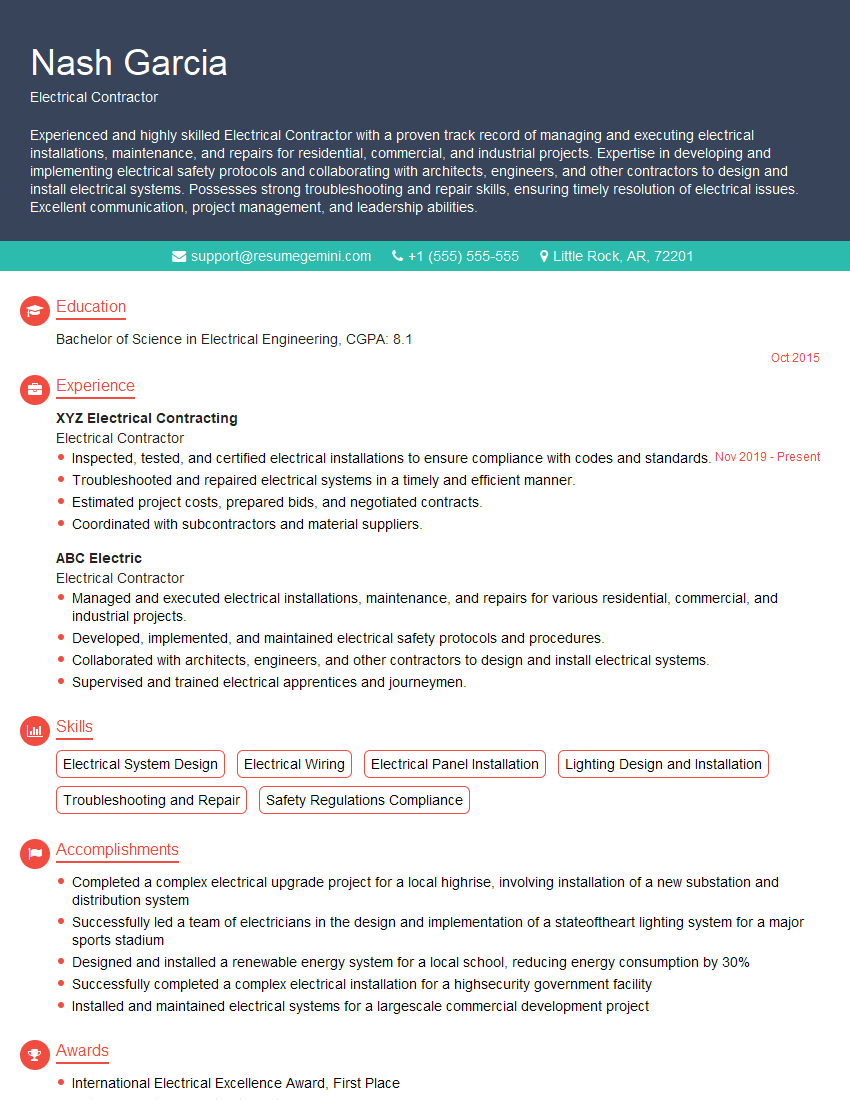
Electrical Contractor Resume Sample
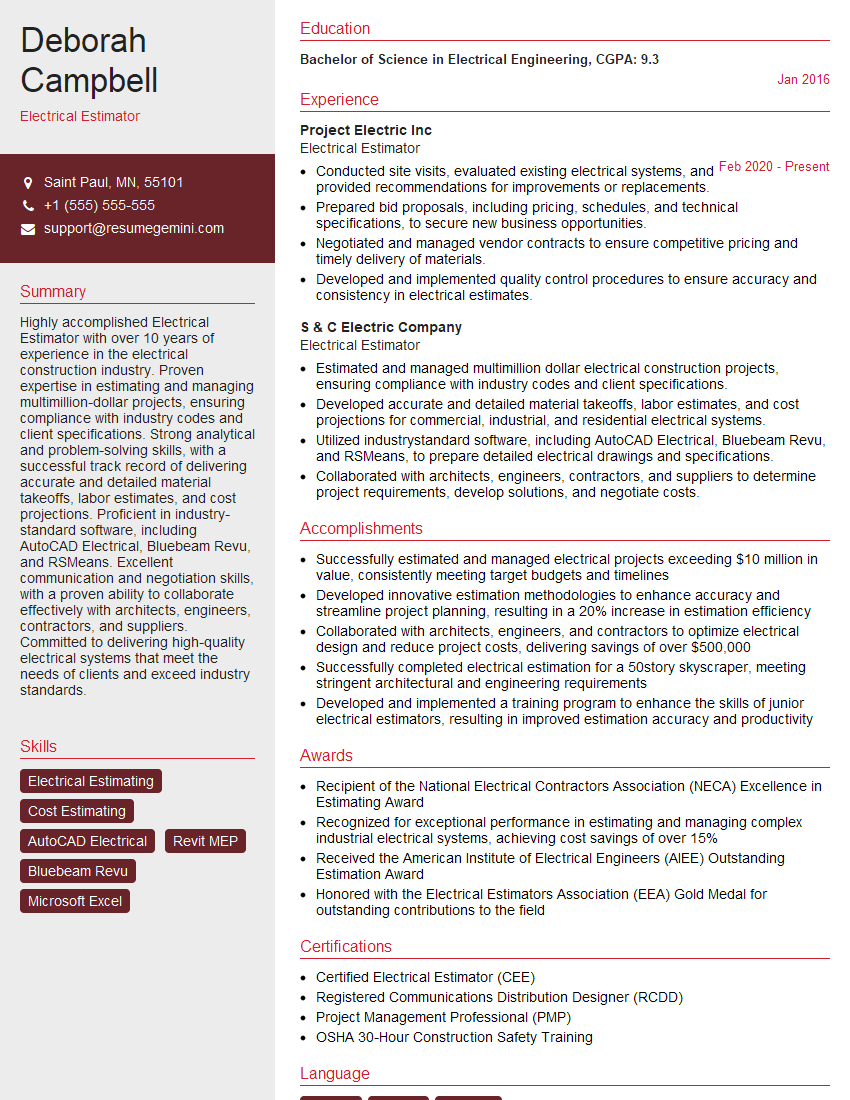
Electrical Estimator Resume Sample
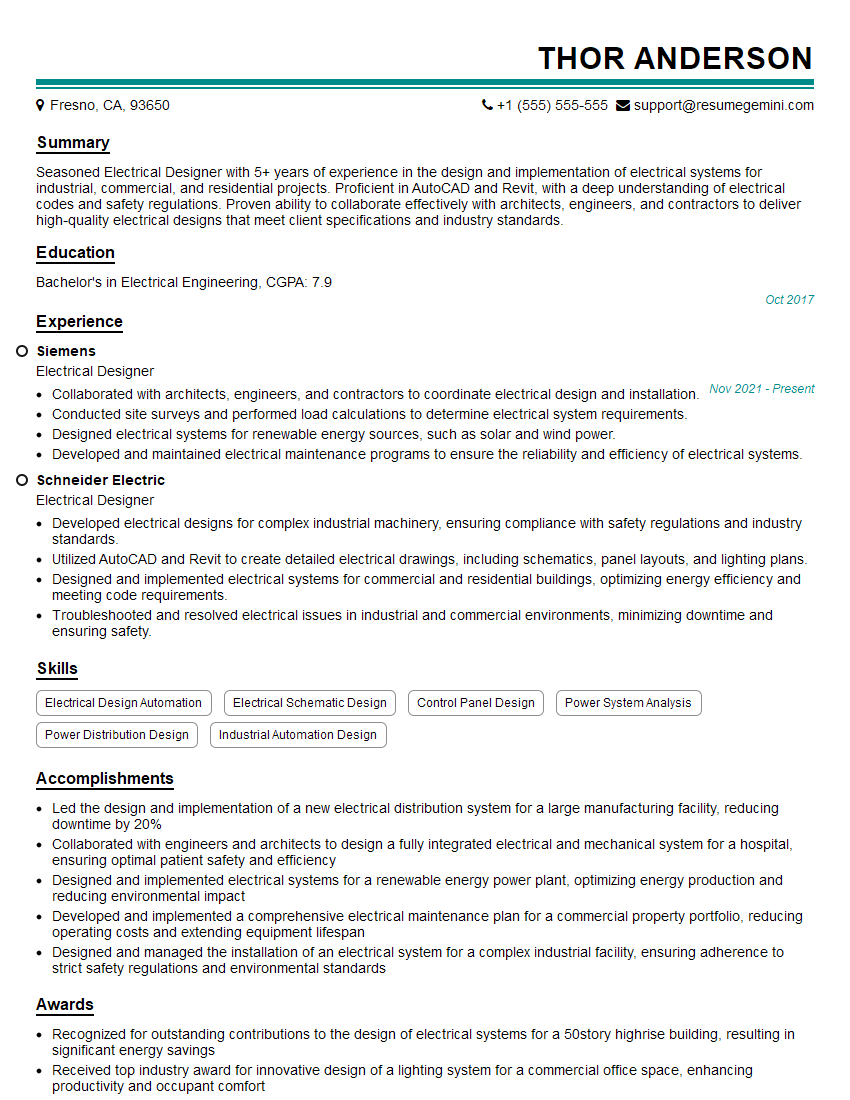
Electrical Designer Resume Sample
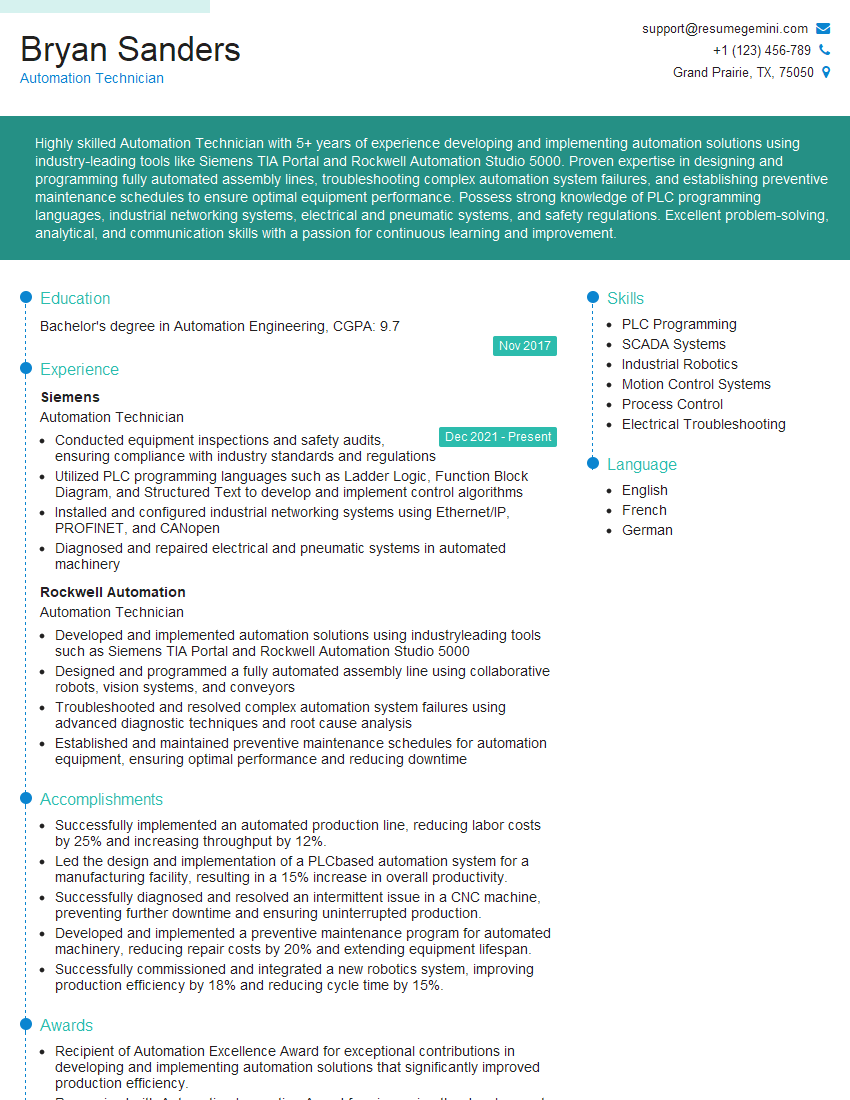
Automation Technician Resume Sample
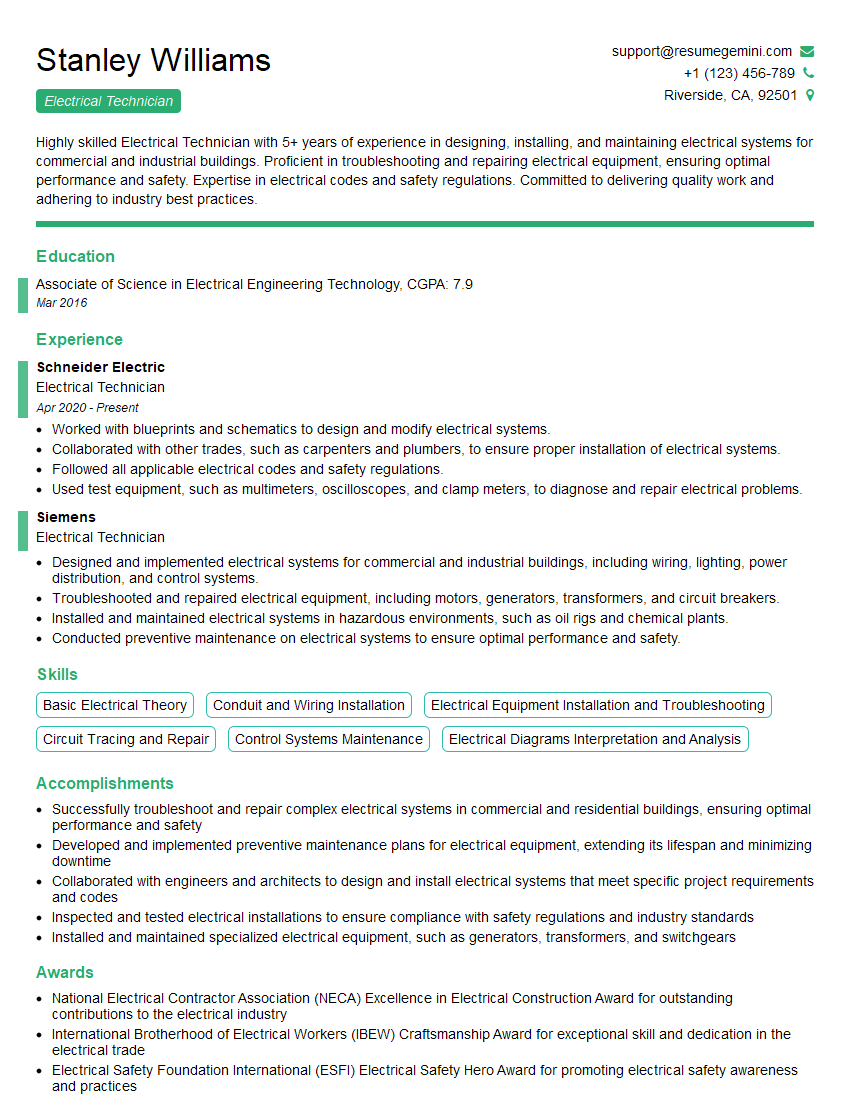
Electrical Technician Resume Sample
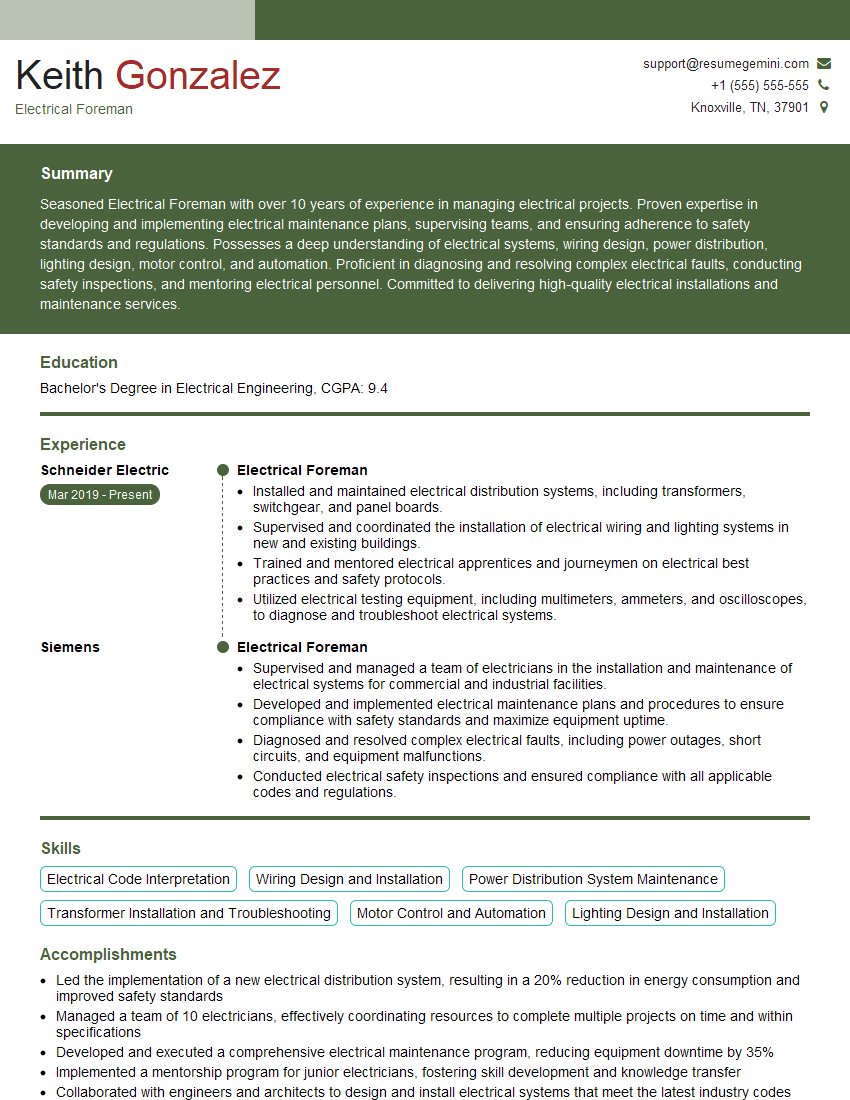
Electrical Foreman Resume Sample
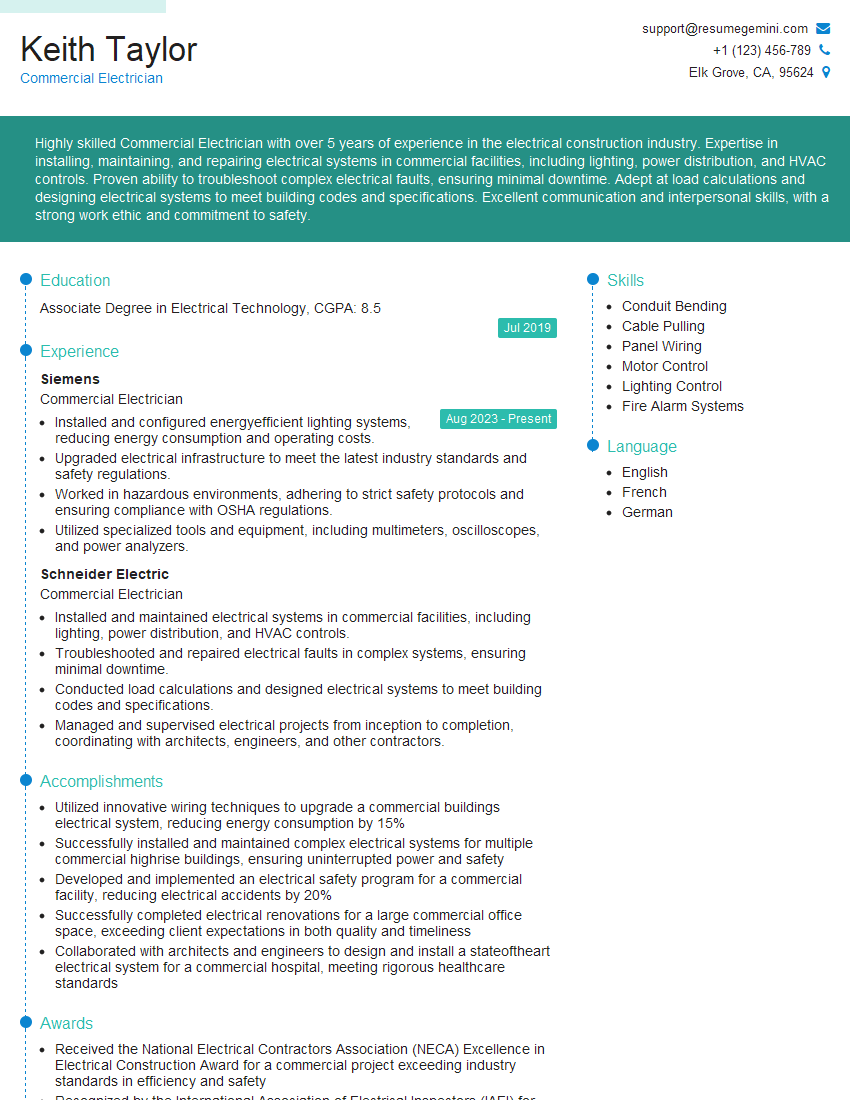
Commercial Electrician Resume Sample
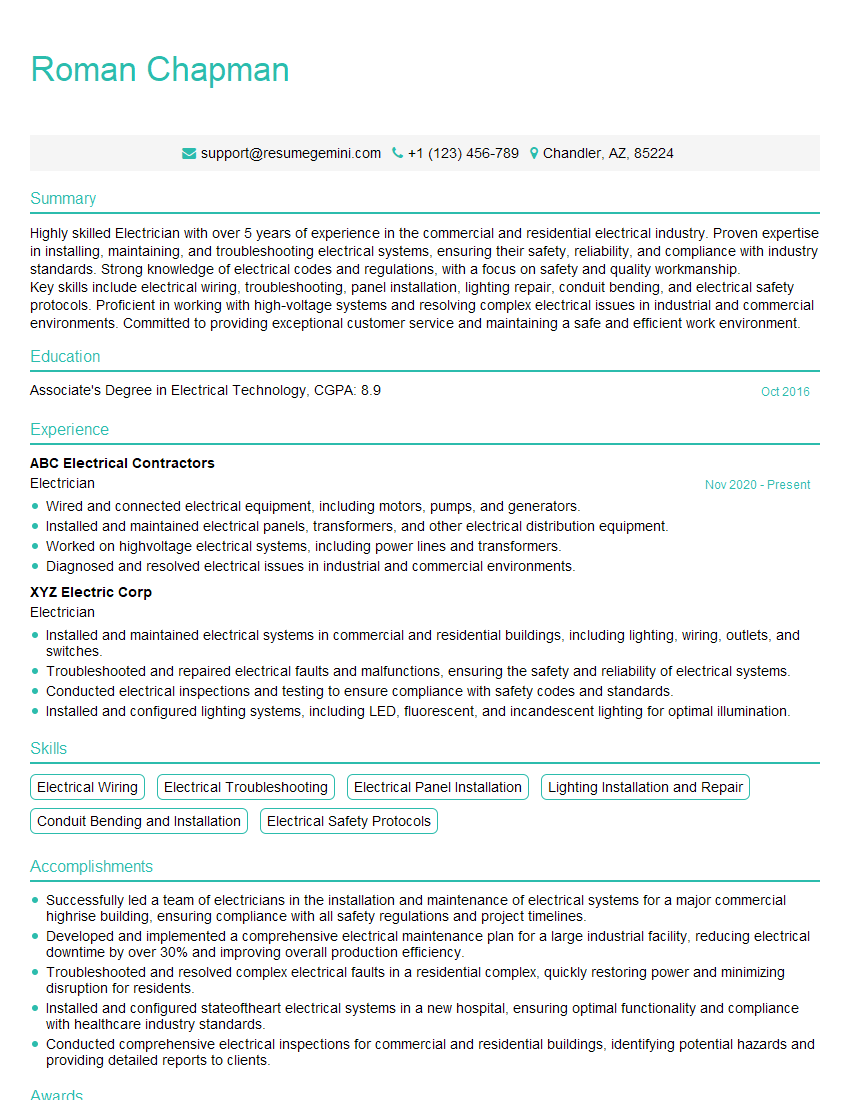
Electrician Resume Sample
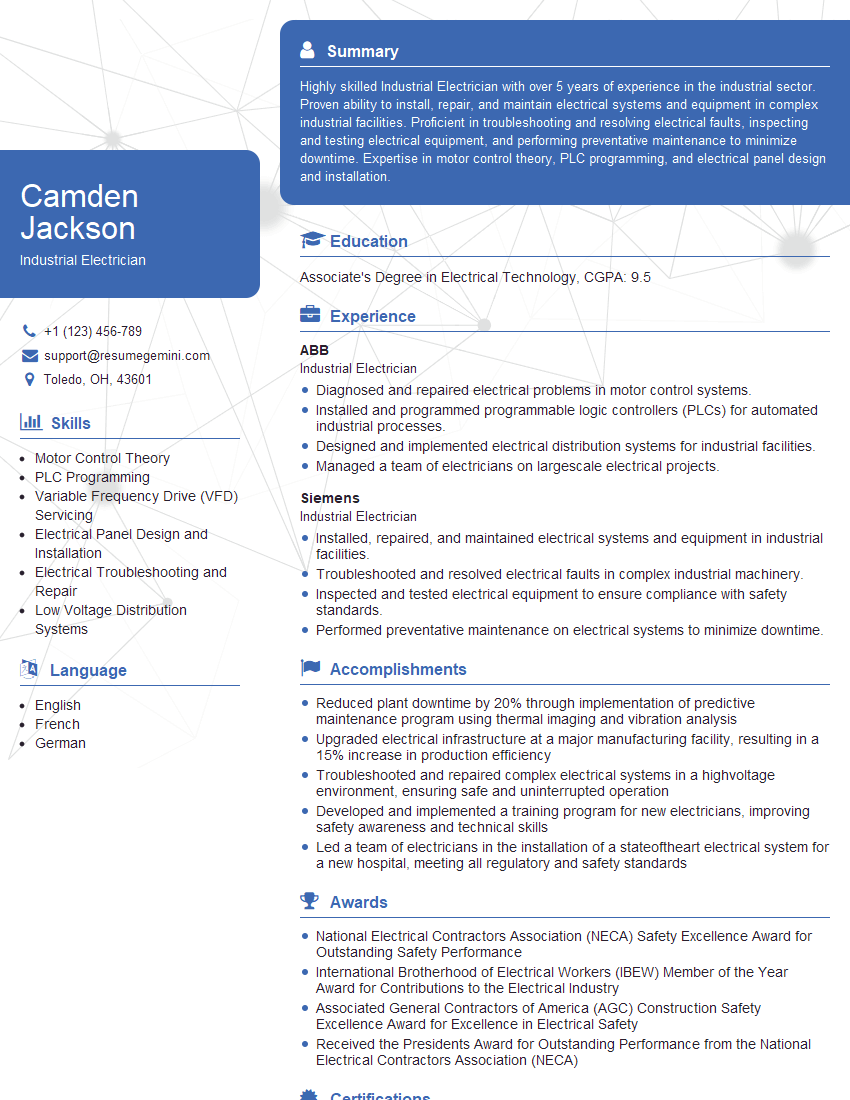
Industrial Electrician Resume Sample
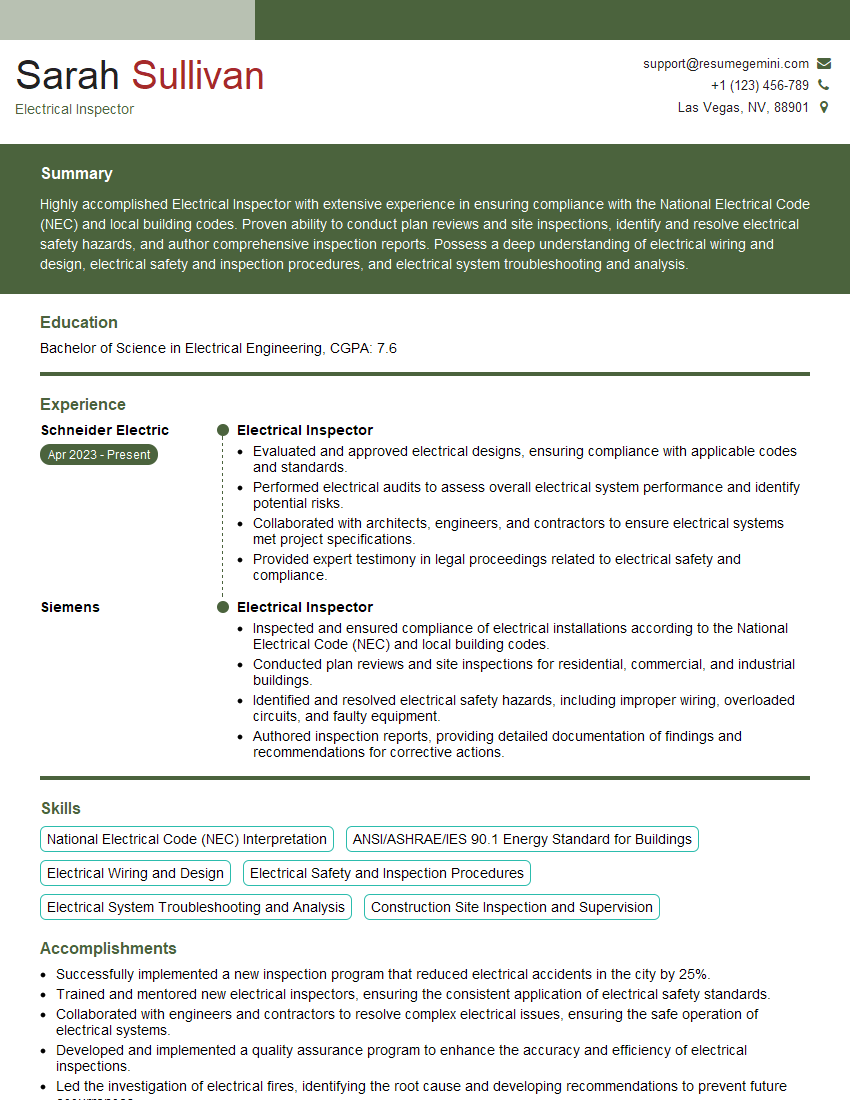
Electrical Inspector Resume Sample
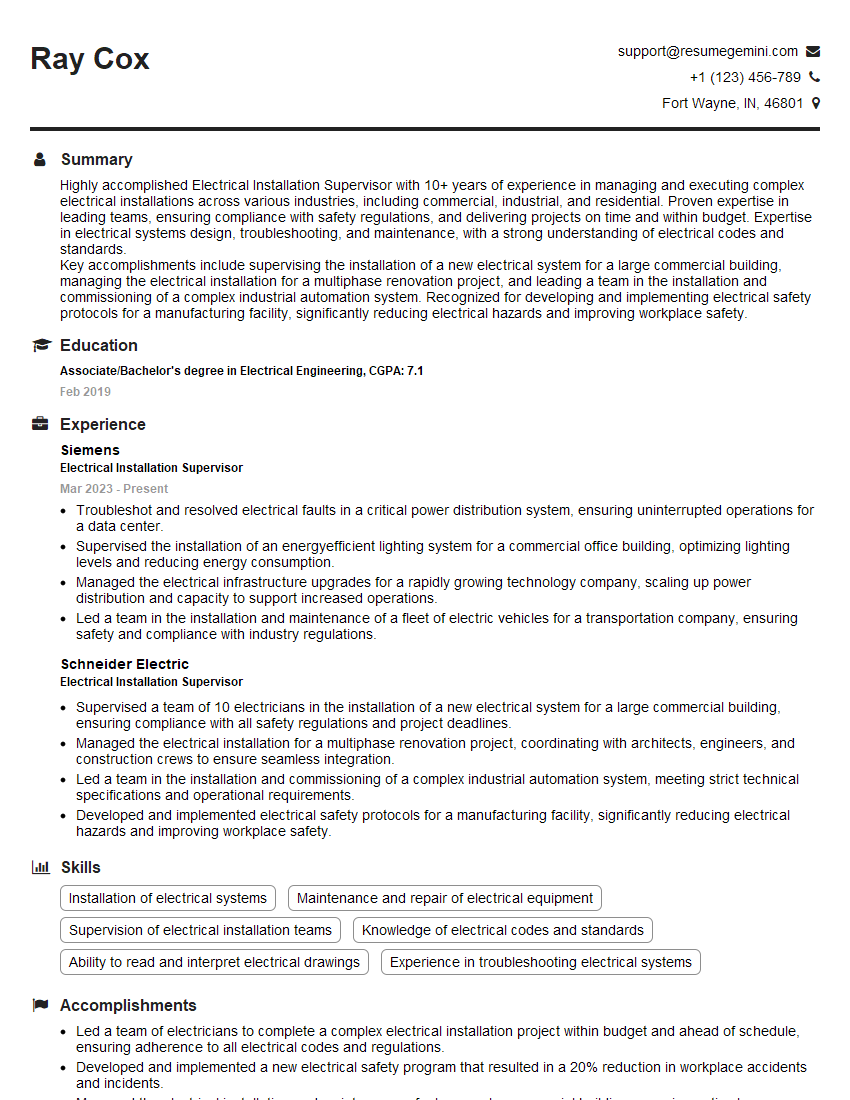
Electrical Installation Supervisor Resume Sample

Electrical Maintenance Technician Resume Sample
Explore more articles
Users Rating of Our Blogs
Share Your Experience
We value your feedback! Please rate our content and share your thoughts (optional).
What Readers Say About Our Blog
To the interviewgemini.com Webmaster.
Very helpful and content specific questions to help prepare me for my interview!
Thank you
To the interviewgemini.com Webmaster.
This was kind of a unique content I found around the specialized skills. Very helpful questions and good detailed answers.
Very Helpful blog, thank you Interviewgemini team.