Interviews are more than just a Q&A session—they’re a chance to prove your worth. This blog dives into essential Endoscopic Techniques interview questions and expert tips to help you align your answers with what hiring managers are looking for. Start preparing to shine!
Questions Asked in Endoscopic Techniques Interview
Q 1. Describe the different types of endoscopes used in procedures.
Endoscopes come in a variety of types, each designed for specific anatomical locations and procedures. The key differences lie in their size, flexibility, and the instruments they can accommodate.
- Rigid Endoscopes: These are typically used for procedures requiring a clear, unobstructed view and often the ability to perform surgical maneuvers. For example, a rigid cystoscope is used to examine the bladder. They offer excellent image quality but are less flexible and can be more challenging to navigate through complex anatomy.
- Flexible Endoscopes: These are more commonly used for exploring the gastrointestinal tract. Examples include colonoscopes (for the colon) and esophagogastroduodenoscopes (EGDs, for the esophagus, stomach, and duodenum). Their flexibility allows for navigation through curves and bends, making them ideal for examining longer, more convoluted pathways. However, image quality can sometimes be slightly compromised compared to rigid scopes due to the bending mechanism.
- Video Endoscopes: Almost all modern endoscopes are video endoscopes, meaning they transmit images to a monitor for real-time viewing and recording. This allows for better visualization and facilitates team collaboration.
- Therapeutic Endoscopes: Many endoscopes are designed to allow the passage of various instruments for therapeutic interventions, such as biopsy forceps, polypectomy snares, or stents. The specific channels and capabilities vary based on the intended application.
The choice of endoscope depends heavily on the clinical indication and the anticipated procedure.
Q 2. Explain the steps involved in preparing a patient for an endoscopy.
Preparing a patient for an endoscopy is crucial for ensuring patient safety and a successful procedure. This involves several steps:
- Informed Consent: The patient must be fully informed about the procedure, including benefits, risks, and alternatives. This is a critical step to ensure the patient understands and agrees to the procedure.
- Bowel Preparation (for colonoscopy): This is essential for colonoscopy to ensure clear visualization of the bowel. Patients typically follow a specific dietary regimen and use bowel-cleansing agents like polyethylene glycol solutions to clear their bowels before the procedure. Adequate bowel preparation significantly improves diagnostic accuracy and minimizes the risk of incomplete examinations.
- NPO Status (Nil per Os): Patients are generally required to fast for a certain period (typically 6-8 hours) before the procedure to prevent aspiration during sedation or anesthesia.
- Medication Review: The patient’s medications are carefully reviewed to identify potential interactions or risks, especially anticoagulants and antiplatelet agents, which might increase bleeding risk.
- Sedation/Anesthesia: Many endoscopic procedures involve sedation or general anesthesia to ensure patient comfort and relaxation. This is typically administered by a trained anesthesiologist or nurse anesthetist.
- Monitoring: During the procedure, vital signs such as heart rate, blood pressure, and oxygen saturation are continuously monitored.
The specific preparation will vary based on the type of endoscopy, patient medical history, and the physician’s preference.
Q 3. What are the potential complications of an endoscopic procedure?
While generally safe, endoscopic procedures carry the potential for various complications. It’s important to remember that the risk varies depending on the procedure, patient factors, and the skill of the endoscopist.
- Bleeding: This is a relatively common risk, particularly after procedures involving biopsies or polypectomy. It can range from minor bleeding to significant hemorrhage requiring transfusion.
- Perforation: A perforation (hole) in the organ being examined is a rare but serious complication. This requires immediate surgical intervention.
- Infection: Infection can occur at the insertion site or within the examined organ. This is less common with proper sterilization techniques.
- Pancreatitis (after ERCP): Endoscopic retrograde cholangiopancreatography (ERCP), used to examine the bile and pancreatic ducts, has a small risk of pancreatitis.
- Adverse Reactions to Sedation/Anesthesia: Patients can experience adverse reactions to sedation, such as respiratory depression or hypotension.
- Post-polypectomy Syndrome: This involves abdominal cramping and bleeding that can occur after the removal of polyps.
It’s crucial to discuss these risks with patients beforehand to provide informed consent and manage expectations. Appropriate prophylactic measures and prompt management of complications are essential to minimize these risks.
Q 4. How do you handle unexpected complications during an endoscopy?
Handling unexpected complications during an endoscopy requires immediate assessment and action. The response depends heavily on the nature of the complication.
- Bleeding: Immediate measures may include injecting epinephrine to constrict blood vessels, using clips or other haemostatic techniques, or potentially switching to open surgery.
- Perforation: This is a surgical emergency. The procedure must be stopped, and the patient stabilized for immediate surgical repair.
- Adverse Reactions to Sedation: The sedative can be reduced or stopped. Supportive measures like oxygen therapy and intravenous fluids may be provided. In severe cases, advanced airway support may be required.
- Infection: Treatment will include antibiotics. In serious cases, further management might be necessary, depending on the location and severity of infection.
A skilled endoscopist will have a plan in place for managing potential complications, including access to emergency equipment and surgical expertise. Immediate communication with the surgical team is vital when serious complications arise.
It’s critical to prioritize patient safety and stabilization. Documentation of the complication, management strategies, and the patient’s response is crucial.
Q 5. What is your experience with different types of endoscopic procedures (e.g., colonoscopy, EGD)?
Throughout my career, I’ve performed a wide range of endoscopic procedures, building extensive experience in both diagnostic and therapeutic techniques. I’ve performed hundreds of colonoscopies, detecting and removing polyps, identifying inflammatory conditions like colitis, and diagnosing various gastrointestinal disorders. My EGD experience includes diagnosing esophageal varices, treating strictures, performing biopsies for assessment of lesions and monitoring for diseases like Barrett’s esophagus. I’m also proficient in ERCP, performing biliary stent placements and managing gallstone issues.
Each procedure requires a different skill set and approach. Colonoscopy demands meticulous bowel preparation and careful navigation to ensure complete visualization of the colon. EGD necessitates precise technique to avoid esophageal injury while obtaining high-quality biopsies. ERCP requires advanced fluoroscopy skills and expertise in cannulating the ampulla of Vater. I maintain my proficiency through ongoing professional development and participation in continuing medical education courses.
Q 6. Explain the process of cleaning and sterilizing endoscopes.
Endoscope cleaning and sterilization are paramount to prevent cross-contamination and ensure patient safety. This involves a multi-step process that follows strict guidelines.
- Pre-cleaning: Immediately after a procedure, the endoscope is thoroughly cleaned by removing visible debris and rinsing with water. A dedicated cleaning brush is often used to clean the internal channels.
- High-Level Disinfection: The endoscope is then subjected to high-level disinfection using an automated endoscope reprocessor (AER). This process involves washing with enzymatic detergents, rinsing, and then immersion in a high-level disinfectant such as glutaraldehyde or peracetic acid. The AER ensures that the endoscope is correctly disinfected and rinsed, eliminating residual disinfectant.
- Sterilization (if required): For certain procedures or if the endoscope is heavily soiled, sterilization by autoclaving (steam sterilization) might be necessary. This kills all microorganisms, including spores.
- Drying and Storage: After cleaning and disinfection or sterilization, the endoscope is thoroughly dried and stored appropriately to prevent recontamination.
Stringent quality control procedures, including regular checks of disinfectant efficacy and monitoring AER function, ensure that the sterilization and disinfection processes meet rigorous standards. Meticulous documentation of each step is critical for tracking and ensuring compliance.
Q 7. How do you ensure patient safety during an endoscopic procedure?
Ensuring patient safety during an endoscopic procedure is my top priority. It’s a multifaceted process involving multiple aspects:
- Proper Patient Preparation: Accurate and thorough patient preparation as described earlier is essential.
- Skillful Procedure Performance: This includes adherence to established protocols, meticulous attention to detail, and anticipation of potential complications.
- Monitoring and Vigilance: Continuous monitoring of the patient’s vital signs during the procedure and prompt management of any unexpected events are vital.
- Appropriate Sedation/Anesthesia: The choice of sedation or anesthesia level must be tailored to the patient’s condition and the procedure, ensuring patient comfort and minimizing risks.
- Sterile Technique: Maintaining a sterile environment throughout the procedure prevents infections.
- Post-procedure Care: Careful post-procedural monitoring, including assessment for bleeding, perforation, or other complications, is crucial.
- Teamwork and Communication: Efficient communication and collaboration with the entire procedural team, including nurses, anesthesiologists, and support staff, is essential for a smooth and safe procedure.
Regular review and improvement of our protocols, and continuous medical education, ensures that we are constantly striving for improved patient safety standards.
Q 8. Describe your experience with endoscopic equipment maintenance.
Endoscopic equipment maintenance is critical for ensuring patient safety and procedure efficacy. My experience encompasses the entire process, from daily cleaning and disinfection to high-level sterilization and troubleshooting malfunctions. This includes meticulous cleaning of endoscopes using automated endoscope reprocessors (AERs), which follow a strict protocol involving enzymatic detergent washes, high-level disinfection with glutaraldehyde or peracetic acid, and thorough rinsing. I’m proficient in identifying and addressing minor malfunctions, such as replacing worn-out light sources or addressing minor leaks, while escalating more significant issues to qualified biomedical engineers. For instance, I once noticed a subtle decrease in the suction capacity of an endoscope during a procedure. A thorough inspection revealed a partially clogged suction channel. Promptly clearing this obstruction prevented a potential complication and ensured the smooth continuation of the procedure. Regular preventative maintenance, including calibration checks and documentation, is a cornerstone of my practice.
Furthermore, I’m intimately familiar with all relevant safety guidelines and regulations, including those related to high-level disinfection and sterilization to prevent cross-contamination. This includes comprehensive knowledge of the different types of disinfectants and sterilants, their efficacy, and appropriate handling protocols. Maintaining detailed and accurate records of equipment servicing and maintenance is paramount, allowing for effective tracking and preventative actions.
Q 9. What are the key differences between upper and lower endoscopy?
Upper endoscopy (esophagogastroduodenoscopy or EGD) and lower endoscopy (colonoscopy) differ significantly in their target areas and the techniques employed. Upper endoscopy examines the esophagus, stomach, and duodenum, utilizing a flexible endoscope inserted through the mouth. Lower endoscopy, on the other hand, visualizes the entire colon, from the rectum to the cecum, using a long, flexible endoscope inserted through the rectum. The preparation differs greatly, with colonoscopy requiring bowel cleansing, while EGD usually necessitates only fasting. The types of pathologies encountered also differ, with EGD more commonly used for diagnosing esophageal varices, peptic ulcers, and gastritis, while colonoscopy is key for detecting colorectal polyps, cancer, and inflammatory bowel disease. The procedures themselves involve similar principles of navigation and maneuverability, but the anatomical structures encountered are vastly different, demanding unique technical skills and understanding of the corresponding anatomy.
Q 10. How do you interpret endoscopic findings?
Interpreting endoscopic findings requires a systematic approach combining visual observation with a comprehensive understanding of gastrointestinal pathology. The process begins with careful review of the endoscopic images, noting the size, shape, location, and color of any lesions or abnormalities. For example, a reddish, raised lesion in the colon could be suggestive of an inflammatory polyp, while a pale, flat lesion might indicate a cancerous growth. I correlate these visual findings with the patient’s medical history and symptoms. This integrated approach facilitates a differential diagnosis and guides further investigations. Biopsies are often taken to confirm the diagnosis via microscopic examination. Further imaging, such as endoscopic ultrasound, may be required depending on the findings. The interpretation process involves a keen eye for detail, a sound understanding of gastrointestinal diseases, and the ability to integrate multiple sources of information.
Consider a patient presenting with abdominal pain and weight loss. During colonoscopy, I observe multiple, irregular, ulcerated lesions in the cecum. The appearance is highly suggestive of malignancy, and biopsies confirm the diagnosis of colorectal cancer. This highlights the crucial role of accurate endoscopic interpretation in guiding appropriate treatment planning and improving patient outcomes.
Q 11. Describe your experience with biopsy and polyp removal techniques.
My experience encompasses a wide range of biopsy and polyp removal techniques. Biopsy involves obtaining tissue samples using forceps or specialized needles, which are then sent for histological examination. Polyp removal techniques vary depending on the size, shape, and location of the polyp. Small, pedunculated polyps are easily removed using snare polypectomy, where a wire snare is looped around the polyp’s base and then resected using electrocautery. Larger or sessile polyps may require piecemeal polypectomy or endoscopic mucosal resection (EMR), techniques requiring more specialized skills and careful attention to prevent complications like perforation or bleeding. I am proficient in all these methods and meticulously follow safety protocols to minimize the risk of complications. Accurate hemostasis (bleeding control) is critical after any resection. During the procedure, it’s imperative to continuously monitor vital signs and assess the patient’s tolerance.
For example, I recently managed a patient with a large sessile polyp in the sigmoid colon. EMR was chosen given its size and location. The procedure was performed successfully using precise injection of saline and meticulous dissection, with minimal bleeding. Post-procedural monitoring ensured prompt identification and management of any complications, emphasizing the importance of both technical skill and careful patient management.
Q 12. How do you manage patient anxiety before and during an endoscopy?
Managing patient anxiety is a crucial aspect of providing compassionate and effective care. Before the procedure, I engage in a thorough discussion with the patient, explaining the procedure in detail, addressing their concerns, and answering their questions. I emphasize the benefits of the procedure, focusing on its diagnostic and therapeutic value. Offering sedation options, as appropriate, alleviates anxiety. During the procedure, maintaining open communication with the patient and providing reassurance and distraction techniques is vital. Establishing rapport and creating a comfortable environment promotes trust and reduces stress. I frequently use simple analogies to explain the process, making it less daunting for the patient. Moreover, involving the patient in the decision-making process empowers them and reduces their apprehension.
For instance, I had a patient with a severe phobia of needles. By using a topical anesthetic cream prior to venipuncture and explaining each step thoroughly and gently, I was able to perform the procedure without causing undue stress or discomfort.
Q 13. What are your skills in assisting the physician during the procedure?
As a skilled endoscopy assistant, my role is integral to the successful completion of the procedure. My responsibilities include prepping the patient, assembling and checking equipment, monitoring vital signs, handing instruments to the physician, and managing suction and irrigation. I anticipate the physician’s needs, ensuring a smooth workflow, and assist in maintaining a sterile field. I also assist with specimen collection, labeling, and documentation. My proactive approach allows the physician to focus on the procedure itself, ultimately leading to enhanced patient safety and procedural efficiency. Furthermore, my knowledge of the equipment and procedure allows me to identify potential issues early on and make effective suggestions to prevent complications.
In a recent procedure, I noticed the physician was having difficulty advancing the endoscope due to a tight bend in the colon. By proactively assisting with the repositioning and suctioning, I facilitated the smoother continuation of the procedure and prevented potential complications.
Q 14. Explain your understanding of infection control protocols in endoscopy.
Infection control in endoscopy is paramount, aiming to prevent the transmission of infectious agents between patients and healthcare workers. This involves strict adherence to established guidelines and protocols. My understanding encompasses high-level disinfection and sterilization of endoscopes using AERs, ensuring complete elimination of microorganisms. Proper hand hygiene, the use of personal protective equipment (PPE), and environmental cleaning are strictly followed. All instruments are meticulously handled to avoid contamination, and appropriate waste disposal procedures are adhered to diligently. I am well-versed in the reporting procedures for any potential infection or exposure incidents. I actively participate in continuing education to stay updated on the latest infection control guidelines and recommendations, ensuring optimal patient and staff safety. A high level of awareness is maintained for all relevant pathogens and the methods for effective prevention and control of their spread.
For example, I recently encountered a situation where a small amount of blood was spilled on the procedure table. Following strict protocol, I immediately cleaned and disinfected the area using appropriate agents, ensuring the safety of subsequent procedures. This demonstrates my commitment to maintaining a sterile environment and preventing the spread of infection.
Q 15. How do you document endoscopic procedures accurately?
Accurate documentation of endoscopic procedures is paramount for patient safety, legal compliance, and effective communication among healthcare professionals. It ensures continuity of care and facilitates research and quality improvement initiatives. My approach involves a multi-faceted strategy:
- Pre-procedure Documentation: This includes a detailed patient history, including allergies, medications, and relevant past medical history; the indication for the procedure; and informed consent documentation.
- Intra-procedure Documentation: Real-time charting during the procedure is crucial. This includes documenting the type of endoscope used, the findings (e.g., location, size, and appearance of lesions), any biopsies or interventions performed (with precise location), and the patient’s response to the procedure. I use a standardized template to ensure consistency and completeness, noting the time of each step. For example, I’d record: “10:15 AM: Colonoscope advanced to cecum without difficulty. 10:22 AM: 2 biopsies taken from 2cm polyp in ascending colon.”
- Post-procedure Documentation: This includes documenting the procedure’s findings, any complications encountered, the patient’s condition post-procedure, and instructions for post-procedure care and follow-up appointments. Imaging, if used, is attached. I always review my notes before finalizing them to ensure accuracy and completeness.
- Imaging Integration: Still images and video recordings are integrated, with precise descriptions correlating the images to the written documentation. For instance, a numbered still image can be cross-referenced with a corresponding numbered annotation in the report, specifying the anatomical location.
This rigorous approach minimizes ambiguity and ensures comprehensive documentation, which is invaluable for patient care and legal protection.
Career Expert Tips:
- Ace those interviews! Prepare effectively by reviewing the Top 50 Most Common Interview Questions on ResumeGemini.
- Navigate your job search with confidence! Explore a wide range of Career Tips on ResumeGemini. Learn about common challenges and recommendations to overcome them.
- Craft the perfect resume! Master the Art of Resume Writing with ResumeGemini’s guide. Showcase your unique qualifications and achievements effectively.
- Don’t miss out on holiday savings! Build your dream resume with ResumeGemini’s ATS optimized templates.
Q 16. What is your experience with different sedation techniques used in endoscopy?
My experience encompasses a range of sedation techniques used in endoscopy, always tailored to the individual patient’s needs and the procedure’s complexity. These include:
- Moderate Sedation: This involves using medications like midazolam and fentanyl to create a comfortable and relaxed state while maintaining the patient’s airway reflexes and ability to respond to verbal stimuli. This is commonly used for many routine procedures.
- Deep Sedation/Anesthesia: For more complex procedures or patients with anxiety, deep sedation or general anesthesia might be necessary, often administered by an anesthesiologist. The choice depends on factors such as patient health, procedure duration, and anticipated discomfort. For example, a patient with a history of severe anxiety might require deeper sedation than a patient with a straightforward procedure.
- Conscious Sedation: This involves less medication and aims to reduce anxiety without fully sedating the patient. We carefully monitor patients to identify and mitigate any adverse events, particularly respiratory depression. Prophylactic antiemetics may be used to prevent nausea and vomiting.
My experience includes managing various scenarios, including adjusting medication dosages based on patient response, recognizing and addressing potential complications like respiratory depression and hypotension, and coordinating with the anesthesia team as needed. Patient safety is always the top priority.
Q 17. How do you respond to adverse events during an endoscopy?
Responding to adverse events during an endoscopy requires quick thinking, clear communication, and a systematic approach. My response follows these steps:
- Immediate Assessment: Rapidly assess the patient’s vital signs (heart rate, blood pressure, oxygen saturation) and the nature of the adverse event (e.g., perforation, bleeding, respiratory depression).
- Stabilization: Prioritize stabilizing the patient’s condition. This may involve administering oxygen, fluids, or medication, as appropriate. In case of perforation, the procedure may need to be aborted immediately.
- Alerting the Team: Immediately alert the endoscopy team, including the anesthesiologist, if applicable, and communicate the situation clearly and concisely.
- Resuscitation: If necessary, initiate advanced life support measures according to established protocols (e.g., CPR, advanced airway management).
- Documentation: Meticulously document all events, actions taken, and the patient’s response, including any post-event testing or treatments.
For example, in the event of a perforation, immediate cessation of the procedure, notifying the surgical team, and preparing for potential surgical intervention is crucial. Post-procedure, close monitoring and follow-up are essential to ensure patient recovery and identify any late complications.
Q 18. Describe your knowledge of endoscopic anatomy.
A thorough understanding of endoscopic anatomy is fundamental to performing safe and effective procedures. My knowledge encompasses the anatomy of the gastrointestinal tract, respiratory tract, and biliary tract, depending on the type of endoscopy performed. This includes:
- Detailed knowledge of the GI tract: This involves understanding the esophagus, stomach, duodenum, small intestine, large intestine, rectum, and anus. I’m familiar with the variations in anatomy, such as anatomical differences across individuals, and the potential for variations due to diseases.
- Understanding of vascular supply and anatomical landmarks: This is important to avoid injury during procedures. For example, knowing the location of the splenic flexure during colonoscopy prevents inadvertent perforation.
- Knowledge of related organs and structures: Understanding the relationship of the GI tract to adjacent organs is vital to minimize risks. This includes the pancreas, liver, gallbladder, and kidneys.
- Experience with visualizing and interpreting endoscopic anatomy: I am proficient in identifying normal and abnormal findings during procedures. For instance, I can differentiate between normal colonic mucosa and inflammatory changes associated with colitis.
This in-depth understanding guides my procedural decisions, ensuring accurate diagnosis and safe intervention.
Q 19. How do you troubleshoot equipment malfunctions during a procedure?
Troubleshooting equipment malfunctions during a procedure requires a calm, methodical approach. My strategy involves:
- Immediate Assessment: Quickly identify the nature of the malfunction (e.g., loss of insufflation, camera malfunction, broken forceps).
- Safety First: If the malfunction compromises patient safety, immediately stop the procedure and address the issue, prioritizing patient well-being.
- Systematic Troubleshooting: Check connections, power sources, and settings, following the manufacturer’s troubleshooting guides and available resources. For example, a loss of insufflation may be due to a disconnected air pump or a leak in the tubing. I’ll check each systematically.
- Seeking Assistance: If unable to resolve the issue, immediately seek assistance from biomedical engineering or experienced colleagues. Timely communication is key.
- Documentation: Document the malfunction, the steps taken to troubleshoot, and any impact on the procedure.
The ability to quickly and effectively troubleshoot equipment issues is crucial for maintaining procedure efficiency and minimizing disruption to patient care. I’ve developed proficiency in diagnosing and resolving common equipment issues, enhancing my ability to deliver uninterrupted, high-quality endoscopic services.
Q 20. What is your proficiency in using endoscopic imaging systems?
My proficiency in using endoscopic imaging systems is extensive. I’m skilled in operating various systems, including high-definition endoscopes with advanced features such as narrow-band imaging (NBI), chromoendoscopy, and confocal laser endomicroscopy (CLE).
- Image Acquisition and Optimization: I can adjust settings such as brightness, contrast, and white balance to optimize image quality for optimal visualization. This ensures that subtle details of lesions are easily discernable.
- Image Interpretation: I have expertise in interpreting endoscopic images to detect and characterize various pathologies. NBI, for example, allows for the identification of subtle vascular patterns, which is particularly useful in the detection and characterization of early colorectal cancers.
- Advanced Imaging Modalities: I am familiar with newer imaging modalities that provide enhanced visualization, such as CLE, enabling real-time microscopic imaging of tissue during endoscopy, thus providing valuable information at the cellular level.
- Image Documentation and Management: I use digital imaging systems to acquire, store, and retrieve images for efficient reporting, patient follow-up, and research purposes.
My expertise in using advanced imaging systems enhances the diagnostic accuracy and therapeutic effectiveness of endoscopic procedures, ultimately improving patient outcomes.
Q 21. Explain your familiarity with different types of endoscopic accessories.
My familiarity extends to a wide range of endoscopic accessories, crucial for performing various procedures effectively and safely. This includes:
- Biopsy forceps: I’m proficient in using different types of biopsy forceps, selecting appropriate ones depending on the size, location, and nature of the lesion. I am adept at obtaining adequate tissue samples for histological analysis while minimizing trauma.
- Polypectomy snares: I am skilled in using polypectomy snares for the removal of polyps, using different techniques as required (e.g., snare polypectomy, cold snare polypectomy).
- Hemoclips and other hemostasis devices: I’m experienced in using various devices to control bleeding during endoscopic procedures, such as argon plasma coagulation (APC).
- Stents and other therapeutic accessories: I can use stents, balloons, and other therapeutic accessories in the management of various conditions such as strictures and tumors.
- Endoscopic ultrasound (EUS) accessories: I have experience with EUS accessories for advanced imaging and therapeutic interventions.
My understanding and skillful use of these accessories allow for precise interventions, improved patient outcomes, and minimized complications.
Q 22. How do you maintain sterile technique during endoscopy?
Maintaining sterile technique during endoscopy is paramount to prevent infections. It’s a multi-step process starting even before the procedure begins. We adhere to strict guidelines that include thorough hand hygiene using an alcohol-based hand rub, wearing sterile gloves, gown, and mask. The endoscope itself undergoes a rigorous cleaning and sterilization process, typically involving enzymatic cleaning, high-level disinfection, and potentially even sterilization depending on the procedure and the endoscope’s design. The procedure room is prepared with sterile drapes, and all instruments used are also sterile.
For example, imagine preparing for a colonoscopy. Before even touching the endoscope, I would meticulously scrub my hands for at least 30 seconds, then apply a sterile gown and gloves. The endoscope itself would have already undergone a pre-procedure automated cleaning cycle. During the procedure, maintaining a sterile field around the insertion site is critical. We constantly assess for any breach of sterility and take immediate action to rectify it, for instance, changing gloves if they become contaminated. Post-procedure, the endoscope undergoes another rigorous cleaning and sterilization cycle, ready for the next patient.
Q 23. Describe your understanding of the indications and contraindications for different endoscopic procedures.
Indications and contraindications for endoscopic procedures are highly specific to the type of procedure. For example, an upper endoscopy (esophagogastroduodenoscopy or EGD) is indicated for investigating symptoms like dysphagia (difficulty swallowing), abdominal pain, gastrointestinal bleeding, or detecting abnormalities like ulcers, tumors, or esophageal varices. Contraindications might include severe esophageal strictures that would make passing the scope too risky, or uncontrolled bleeding that could worsen during the procedure.
Colonoscopy, on the other hand, is indicated for colorectal cancer screening, investigation of bowel changes seen on imaging, and diagnosing or managing inflammatory bowel disease. Contraindications here may include acute severe diverticulitis or severe bowel perforation. Each procedure has its own set of guidelines, and careful consideration of the patient’s overall health is essential. Think of it like a puzzle – we need to assess all the pieces before we can decide which procedure is appropriate.
Q 24. What are your skills in patient education before and after an endoscopy?
Patient education is a crucial part of my role. Before the procedure, I explain the procedure in detail, using clear and simple language, answering all their questions patiently. I explain the risks and benefits, what to expect during the procedure (like sedation level, potential discomfort), and what to expect afterward (like dietary restrictions and potential side effects). I also emphasize the importance of bowel preparation if needed.
After the procedure, I review the findings with the patient, ensuring they understand the diagnosis and treatment plan. I answer any questions about medications, follow-up appointments, dietary changes, or activity restrictions. I provide written instructions for their reference. I believe clear communication before and after significantly reduces anxiety and ensures a smoother recovery. For instance, I might show a patient a diagram of their colon to illustrate the procedure and findings of a colonoscopy, improving their comprehension.
Q 25. How do you manage difficult or challenging endoscopic cases?
Difficult endoscopic cases require a combination of skill, experience, and a systematic approach. This might involve cases with severe anatomical distortions, difficult-to-access lesions, or unexpected complications. First, we meticulously assess the situation, often using advanced imaging modalities if needed to guide our approach. We may need to modify our technique, employing specialized instruments or approaches.
For instance, if I encounter significant angulation in the colon during a colonoscopy, I may carefully maneuver the scope using controlled techniques to navigate the bend. If bleeding is encountered, haemostatic techniques like injection or clipping might be necessary. In cases where significant complications occur, we immediately prioritize the patient’s safety and address the immediate issues, contacting additional specialists or transferring the patient to an appropriate care setting as needed. Teamwork is essential in such situations.
Q 26. Describe your understanding of quality control and quality assurance in endoscopy.
Quality control and quality assurance (QC/QA) in endoscopy are crucial for patient safety and optimal outcomes. QC involves regularly checking and maintaining the endoscopes and equipment, ensuring they are properly cleaned, disinfected, and in good working order. This often involves regular testing and calibration of the equipment. QA focuses on broader aspects, including the processes and protocols followed.
For example, QC involves daily checks of the endoscope’s light source, camera image quality, and the functionality of its channels. QA would include reviewing the procedure documentation to ensure all steps are correctly followed, and auditing the results for accuracy and completeness. We participate in regular quality improvement initiatives to identify areas where we can improve our practices and reduce the risk of errors or complications. Regular training and competency assessment are also part of QA.
Q 27. Explain your experience with reporting and documenting endoscopic findings.
Reporting and documenting endoscopic findings is a critical aspect of patient care. We meticulously record all details of the procedure, including the indications, procedure performed, findings (with detailed descriptions, including images when applicable), any biopsies taken, and the post-procedure course. This documentation is essential for communication with the referring physician, for follow-up care, and for future reference.
The reports are written using a structured format and often include high-quality images. We use precise medical terminology and avoid ambiguity. For example, when describing a polyp during a colonoscopy, we would note its location, size, shape, and any other relevant characteristics (e.g., sessile or pedunculated). This detailed documentation ensures accurate diagnosis, appropriate treatment, and legal protection.
Q 28. What are your career goals in the field of endoscopy?
My career goals involve continued advancement in the field of endoscopy, combining clinical practice with a focus on quality improvement and innovation. I aim to become a leader in my field, contributing to the development of new techniques and technologies that improve patient care. I’m particularly interested in advanced endoscopic procedures and hope to expand my skills in areas like endoscopic mucosal resection (EMR) and endoscopic submucosal dissection (ESD). My ultimate goal is to contribute to improved patient outcomes and advance the field of endoscopy through research, teaching and clinical practice.
Key Topics to Learn for Endoscopic Techniques Interview
- Endoscopic Anatomy and Physiology: Thorough understanding of relevant anatomy and physiological processes affected by endoscopic procedures.
- Instrumentation and Equipment: Familiarity with various endoscopic instruments, their functionalities, maintenance, and troubleshooting.
- Procedure Techniques: Mastery of common endoscopic procedures, including insertion, navigation, biopsy techniques, and post-procedure care. Consider specific procedures like colonoscopy, endoscopy, ERCP etc.
- Image Interpretation and Analysis: Ability to interpret endoscopic images, identify abnormalities, and understand diagnostic implications.
- Complications and Management: Knowledge of potential complications associated with endoscopic procedures and effective management strategies.
- Patient Safety and Infection Control: Understanding and adherence to strict protocols for patient safety, asepsis, and infection control.
- Advanced Endoscopic Techniques: Explore areas like advanced therapeutic endoscopy, minimally invasive surgery, and emerging technologies in the field.
- Ethical Considerations: Understanding the ethical implications of endoscopic procedures and patient consent processes.
- Communication and Teamwork: Highlight your ability to effectively communicate with patients, colleagues, and other healthcare professionals in a team environment.
Next Steps
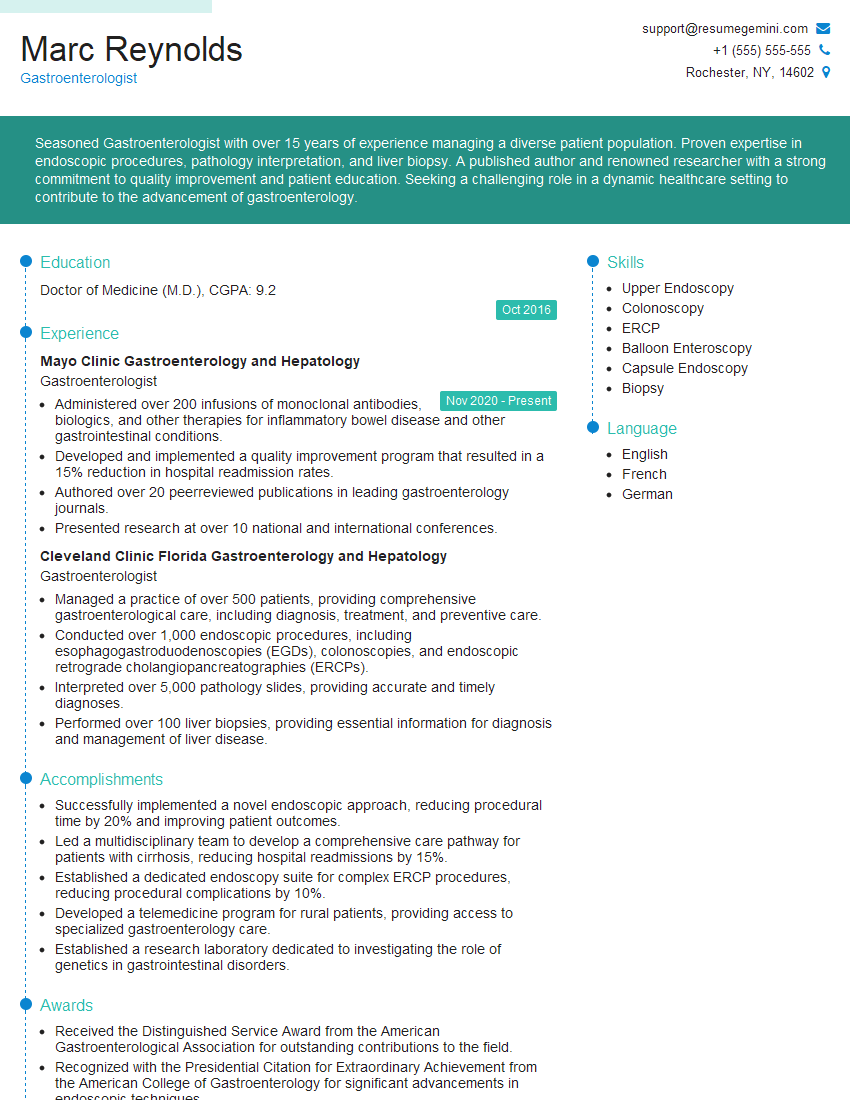
Mastering Endoscopic Techniques opens doors to exciting career advancements, offering opportunities for specialization, leadership roles, and higher earning potential. A strong resume is crucial for showcasing your expertise and securing your dream job. To maximize your chances, build an ATS-friendly resume that effectively highlights your skills and experience. ResumeGemini can help you create a professional and impactful resume tailored to the specific requirements of Endoscopic Techniques positions. We provide examples of resumes tailored to this field to guide you.
Explore more articles
Users Rating of Our Blogs
Share Your Experience
We value your feedback! Please rate our content and share your thoughts (optional).
What Readers Say About Our Blog
To the interviewgemini.com Webmaster.
Very helpful and content specific questions to help prepare me for my interview!
Thank you
To the interviewgemini.com Webmaster.
This was kind of a unique content I found around the specialized skills. Very helpful questions and good detailed answers.
Very Helpful blog, thank you Interviewgemini team.