Preparation is the key to success in any interview. In this post, we’ll explore crucial Energy Conservation and Efficiency Measures interview questions and equip you with strategies to craft impactful answers. Whether you’re a beginner or a pro, these tips will elevate your preparation.
Questions Asked in Energy Conservation and Efficiency Measures Interview
Q 1. Explain the difference between energy conservation and energy efficiency.
Energy conservation and energy efficiency are closely related but distinct concepts. Think of it like this: conservation is about reducing energy use, while efficiency is about getting more from the energy we already use.
Energy conservation focuses on minimizing energy consumption by changing behaviors and reducing demand. Examples include turning off lights when leaving a room, using public transport, or choosing energy-efficient appliances. It’s about doing less.
Energy efficiency, on the other hand, aims to maximize the output obtained from a given amount of energy input. This involves using technology and design improvements to reduce energy losses. Examples include installing better insulation in a building, using high-efficiency motors, or upgrading lighting systems to LEDs. It’s about doing the same with less.
In essence, conservation tackles the demand side, while efficiency improves the supply side. Both are crucial for sustainable energy management, and often work best in tandem.
Q 2. Describe various energy auditing methods and their applications.
Energy auditing employs several methods to pinpoint energy waste. The choice depends on the building or process being assessed.
- Walk-through audits: These are quick, inexpensive visual inspections identifying obvious energy-wasting issues like faulty equipment or poor insulation. Think of it as a preliminary health check for your energy consumption.
- Detailed energy audits: These go deeper, using specialized equipment to measure energy flows, conduct load testing and analyze historical utility bills. They provide more comprehensive data for precise recommendations.
- Infrared thermography: This uses thermal imaging cameras to detect heat loss through building envelopes, identifying areas needing better insulation or sealing. Imagine seeing a heat map of your house, pinpointing leaks.
- Building energy modeling: This uses computer software to simulate building energy performance under various conditions, allowing for the evaluation of different energy efficiency strategies before implementation. It’s like a virtual test run for your building’s energy systems.
Applications of these methods vary based on the context. A walk-through audit might suffice for a small business, whereas a detailed audit with thermography and modeling is often necessary for larger buildings or industrial facilities.
Q 3. What are the key performance indicators (KPIs) used to measure energy efficiency improvements?
Key Performance Indicators (KPIs) for energy efficiency improvements track progress and demonstrate the impact of implemented measures. Some common KPIs include:
- Energy consumption per unit of output (e.g., kWh/m² for buildings, kWh/ton for manufacturing): This shows how efficiently energy is used to produce goods or services. A lower value indicates better efficiency.
- Energy intensity: This is the ratio of energy consumed to a specific output, such as production volume or floor area. Similar to the above, a decrease suggests improvement.
- Return on Investment (ROI): This measures the financial return from energy efficiency investments, considering initial costs and long-term savings.
- Simple Payback Period: This measures the time it takes for cost savings to equal the initial investment cost.
- Greenhouse gas (GHG) emissions reductions: Tracks the reduction in carbon footprint due to energy efficiency measures, demonstrating environmental benefits.
Choosing the appropriate KPIs depends on specific objectives and context. A manufacturing plant might focus on energy consumption per unit produced, while a building owner might prioritize ROI and GHG reductions.
Q 4. How do you identify energy waste in a building or industrial process?
Identifying energy waste involves a systematic approach combining several techniques. A common strategy is the ‘energy audit’ as explained previously. In essence, it involves:
- Data collection: Gathering historical energy consumption data, including utility bills and equipment operating records.
- Site inspection: Conducting a visual inspection of the building or process to identify potential problems, such as malfunctioning equipment, poor insulation, or inefficient lighting.
- Energy modeling (optional): Using computer software to simulate the building’s energy performance and identify areas for improvement.
- Measurement and verification: Employing specialized equipment (like infrared cameras or energy meters) to measure energy use and losses.
- Analysis and reporting: Analyzing the collected data to identify energy-wasting activities and developing recommendations for improvements.
For example, an industrial facility might discover significant energy losses through compressed air leaks detected via sound analysis, or excessive heat loss through poorly insulated pipes revealed by infrared thermography. In a building, poorly sealed windows or inadequate insulation could be major sources of wasted energy, easily identified through site inspections and/or thermography. A systematic approach ensures no stone is left unturned in the quest for energy savings.
Q 5. Explain the concept of building energy modeling and its benefits.
Building energy modeling uses computer software to simulate a building’s energy performance. It’s like a virtual test drive for your building’s energy system before you make any changes.
Concept: The model inputs data about the building’s design, construction, climate, and HVAC systems. It then simulates the building’s energy consumption under various conditions, allowing for the evaluation of different design options and energy efficiency measures.
Benefits:
- Optimization of design: Helps identify and correct energy inefficiencies early in the design phase, reducing long-term energy costs.
- Evaluation of different strategies: Allows architects and engineers to compare various energy efficiency measures to find the most cost-effective solutions.
- Reduced energy consumption: By optimizing the building’s energy performance, the model can significantly reduce operational costs.
- Improved building comfort: Modeling can help optimize the indoor environmental quality and thermal comfort.
- Compliance with building codes: Models can be used to demonstrate compliance with energy efficiency standards and regulations.
For instance, a model might reveal that adding extra insulation to the roof will reduce energy consumption by 15%, making it a worthwhile investment. Without modeling, such cost-benefit analysis is much more difficult and uncertain.
Q 6. What are the common energy efficiency measures for HVAC systems?
Heating, ventilation, and air conditioning (HVAC) systems are major energy consumers. Many efficiency measures exist to reduce their energy use:
- High-efficiency equipment: Using HVAC systems with high SEER (Seasonal Energy Efficiency Ratio) and HSPF (Heating Seasonal Performance Factor) ratings. These ratings indicate how efficiently the system converts electricity into cooling or heating.
- Variable speed drives (VSDs): These allow for precise control of fan and pump speeds, optimizing airflow and reducing energy consumption.
- Improved zoning and controls: Dividing a building into zones and individually controlling the temperature in each zone reduces energy waste by only heating or cooling occupied areas.
- Demand-controlled ventilation: Adjusting ventilation rates based on occupancy and indoor air quality, optimizing ventilation without excessive energy consumption.
- Regular maintenance: Keeping HVAC systems clean and well-maintained improves their efficiency and lifespan. Think of it as regular checkups for your energy system’s health.
- Building automation systems (BAS): Integrating HVAC systems with a BAS allows for automated control and optimization based on real-time data and occupancy sensors.
Implementing these measures can significantly reduce the energy consumption of HVAC systems and lessen their environmental impact, translating to significant cost savings in the long run.
Q 7. Discuss the role of building automation systems in energy management.
Building automation systems (BAS) play a crucial role in energy management by providing centralized control and monitoring of building systems, including HVAC, lighting, and security.
Role:
- Real-time monitoring: BAS collects data from various building sensors, providing real-time insights into energy consumption and system performance. It’s like having a dashboard for your building’s energy usage.
- Automated control: BAS automatically adjusts building systems based on occupancy, weather conditions, and other factors, optimizing energy efficiency and comfort.
- Optimization of HVAC systems: BAS can optimize HVAC performance by adjusting temperature setpoints, fan speeds, and other parameters according to occupancy and real-time needs.
- Lighting control: BAS can automatically dim or switch off lights in unoccupied areas, reducing lighting energy consumption.
- Energy data analysis: BAS provides detailed energy consumption data, which can be analyzed to identify areas for improvement and track progress.
- Remote access and control: Many modern BAS allow for remote access and control, facilitating proactive maintenance and energy management.
By centralizing control and providing data-driven insights, BAS significantly improves energy management, leading to reduced energy consumption and operational costs, improved building performance and minimized environmental impact. It’s a powerful tool for any building seeking efficient energy use.
Q 8. Describe your experience with energy-efficient lighting technologies.
My experience with energy-efficient lighting technologies spans over a decade, encompassing design, implementation, and performance monitoring. I’ve worked extensively with various technologies, from the simple replacement of incandescent bulbs with LEDs to the design and integration of sophisticated lighting control systems.
For instance, in a recent project for a large office building, we replaced traditional fluorescent lighting with LED fixtures. This not only reduced energy consumption by over 60% but also improved the quality of light, leading to increased employee productivity and satisfaction. We further enhanced efficiency by installing occupancy sensors and daylight harvesting systems, which automatically adjust lighting levels based on occupancy and ambient light levels. This layered approach ensures that we’re optimizing energy use at every level.
I’m also proficient in designing lighting systems that leverage natural light effectively, reducing the need for artificial lighting during the day. This involves careful consideration of building orientation, window placement, and the use of light shelves and other architectural features to maximize daylight penetration. My expertise extends to understanding the various lighting metrics like lumens, efficacy, and color rendering index (CRI), allowing me to select the most appropriate lighting solutions for diverse applications.
Q 9. Explain different renewable energy sources and their applications in energy conservation.
Renewable energy sources are crucial for energy conservation. They harness naturally replenishing resources to generate power, reducing reliance on fossil fuels. Some key sources include:
- Solar Power: Photovoltaic (PV) systems convert sunlight directly into electricity, suitable for rooftops, solar farms, and even handheld devices. Solar thermal systems use sunlight to heat water or air, ideal for domestic hot water and space heating.
- Wind Power: Wind turbines convert wind energy into electricity. They are effective in areas with consistent, strong winds and are deployed in large wind farms or smaller, distributed installations.
- Hydropower: Dams harness the energy of flowing water to generate electricity. It’s a mature technology, but its impact on ecosystems needs careful consideration.
- Geothermal Energy: This taps into the Earth’s internal heat, providing heat for buildings and generating electricity. Its applications are geographically limited to areas with high geothermal activity.
- Biomass Energy: This utilizes organic matter like wood, crops, or waste to generate energy through combustion or anaerobic digestion. While renewable, sustainability concerns need addressing to prevent deforestation or unsustainable agricultural practices.
Applications in energy conservation are multifaceted. Renewable energy can directly replace fossil fuel-based electricity generation, reducing greenhouse gas emissions. It can power energy-efficient buildings, electric vehicles, and industrial processes, creating a more sustainable energy system.
Q 10. How do you calculate the simple payback period of an energy efficiency project?
The simple payback period (SPP) is a crucial metric for evaluating the financial viability of energy efficiency projects. It shows how long it takes for the cost savings from a project to equal the initial investment.
The calculation is straightforward:
SPP = Initial Investment / Annual Savings
For example, let’s say an energy-efficient motor costs $10,000 to install, and it reduces annual energy costs by $2,000. The SPP would be:
SPP = $10,000 / $2,000 = 5 years
This means the project would pay for itself in 5 years. A shorter SPP indicates a more financially attractive project. It’s essential to consider factors like the project’s lifespan and the discount rate when making investment decisions. More sophisticated methods like discounted cash flow analysis may be necessary for complex projects with varying annual savings over time.
Q 11. What are the benefits of implementing an energy management system (EMS)?
An Energy Management System (EMS) is a crucial tool for optimizing energy consumption and reducing operational costs in buildings and industrial facilities. It involves using integrated software and hardware to monitor, analyze, and control energy usage in real-time.
- Real-time Monitoring: EMS provides continuous monitoring of energy consumption across various systems, identifying areas of inefficiency.
- Data Analysis: The system analyzes the data to identify trends, anomalies, and opportunities for improvement. This enables proactive maintenance and targeted energy-saving measures.
- Automated Control: EMS can automatically adjust equipment operation based on occupancy, weather conditions, or other parameters. For example, it can dim lights in unoccupied spaces or optimize HVAC operation.
- Improved Efficiency: By optimizing system performance, EMS reduces energy waste, leading to significant cost savings.
- Reduced Operational Costs: Lower energy consumption translates directly into lower utility bills and reduced maintenance costs.
- Enhanced Sustainability: An EMS helps reduce a building’s carbon footprint, contributing to environmental sustainability goals.
In a practical setting, an EMS can significantly reduce energy costs in a large office building by optimizing HVAC systems, lighting control, and other energy-intensive processes. For example, an EMS might reduce HVAC energy usage by 15% by identifying and rectifying inefficiencies.
Q 12. Describe your experience with LEED certification or other green building standards.
I have extensive experience with LEED (Leadership in Energy and Environmental Design) certification and other green building standards. I’ve worked on numerous projects that achieved LEED certification, from Gold to Platinum levels. My involvement typically includes participating in the design phase, guiding the selection of sustainable materials, implementing energy-efficient building systems, and documenting the project’s sustainability features for LEED submission.
Beyond LEED, I am familiar with other green building rating systems such as BREEAM (Building Research Establishment Environmental Assessment Method) and Green Globes. Understanding these different standards allows me to tailor project strategies to meet specific client needs and local regulatory requirements. In several projects, my focus on optimizing energy performance significantly contributed to achieving high-level certifications. For example, I led the team that achieved a LEED Platinum certification for a net-zero energy office building by employing strategies like high-performance building envelope design and renewable energy integration.
Q 13. How do you prioritize energy efficiency projects based on cost-effectiveness?
Prioritizing energy efficiency projects based on cost-effectiveness involves a multi-step process. It goes beyond simply selecting the cheapest option, focusing on maximizing return on investment (ROI).
- Identify Potential Projects: Begin by identifying all potential energy efficiency improvements. This might involve energy audits, site inspections, and data analysis from existing energy monitoring systems.
- Estimate Costs and Savings: For each project, estimate the initial investment cost and the potential annual energy savings. This often requires detailed engineering calculations and market research.
- Calculate Key Metrics: Calculate the simple payback period (SPP), return on investment (ROI), and internal rate of return (IRR) for each project. These metrics help assess the financial viability of each project.
- Consider Non-Monetary Benefits: Factor in non-monetary benefits, such as improved indoor air quality, enhanced employee comfort, and reduced greenhouse gas emissions. These can significantly impact the overall value of the project.
- Prioritize Based on Metrics and Benefits: Prioritize projects based on a combination of financial metrics (SPP, ROI, IRR) and non-monetary benefits. This creates a ranked list of projects, ensuring that the most cost-effective and beneficial projects are tackled first.
This systematic approach ensures that resources are allocated effectively to maximize the overall impact of the energy efficiency program.
Q 14. Explain the concept of life-cycle cost analysis in energy projects.
Life-cycle cost analysis (LCCA) is a crucial tool for evaluating the long-term financial implications of energy projects. Unlike the simple payback period, which only considers initial investment and annual savings, LCCA considers all costs associated with a project throughout its entire lifespan.
This includes:
- Initial Investment Costs: Costs associated with purchasing and installing equipment.
- Operational and Maintenance Costs: Costs of operating and maintaining the equipment over its lifespan.
- Replacement Costs: Costs of replacing components or the entire system at the end of its useful life.
- Energy Savings: The reduction in energy costs over the project’s lifespan.
LCCA uses discounted cash flow analysis to determine the present value of all costs and savings, taking into account the time value of money. This provides a comprehensive picture of the project’s financial performance over its entire lifespan. For instance, a project with a higher initial investment might ultimately be cheaper in the long run due to lower operating and maintenance costs and longer lifespan. LCCA helps make informed decisions by considering the total cost of ownership, enabling a more accurate assessment of the project’s long-term value.
Q 15. What are the challenges in implementing energy efficiency measures in existing buildings?
Implementing energy efficiency measures in existing buildings presents a unique set of challenges. Unlike new constructions where design choices can be optimized from the outset, retrofitting existing structures requires careful consideration of several factors.
- Disruptive nature of renovations: Upgrades often necessitate temporary closures or disruptions to building occupants, impacting business operations or resident comfort. For example, replacing windows requires scheduling and coordination, potentially causing inconvenience.
- Financial constraints: Retrofits are capital intensive. Securing funding, navigating return on investment calculations, and prioritizing projects based on their energy-saving potential can be difficult, especially for older buildings with limited budgets.
- Physical limitations: Existing building layouts and infrastructure may restrict the types of upgrades feasible. Installing advanced insulation in a tight space, for instance, can prove challenging and costly.
- Building Codes and Regulations: Compliance with current building codes and regulations during renovations can add to the complexity and cost of the project, sometimes requiring expensive modifications.
- Occupant behavior: Energy savings from upgrades can be offset by occupant behavior. Educating occupants about energy conservation and encouraging their participation is crucial for maximizing the impact of efficiency measures.
Successfully navigating these challenges often involves a phased approach, prioritizing the most impactful upgrades first, using energy modeling to project savings, and engaging stakeholders throughout the process. A thorough energy audit is essential in identifying cost-effective opportunities.
Career Expert Tips:
- Ace those interviews! Prepare effectively by reviewing the Top 50 Most Common Interview Questions on ResumeGemini.
- Navigate your job search with confidence! Explore a wide range of Career Tips on ResumeGemini. Learn about common challenges and recommendations to overcome them.
- Craft the perfect resume! Master the Art of Resume Writing with ResumeGemini’s guide. Showcase your unique qualifications and achievements effectively.
- Don’t miss out on holiday savings! Build your dream resume with ResumeGemini’s ATS optimized templates.
Q 16. How do you communicate technical information about energy conservation to non-technical audiences?
Communicating technical energy conservation information to non-technical audiences requires simplifying complex concepts and using relatable analogies. I avoid technical jargon whenever possible and instead focus on clear, concise language and visuals.
- Use simple language and analogies: Instead of saying “reducing thermal bridging,” I might say, “preventing heat loss through cracks in the walls like drafts in an old window.”
- Visual aids: Charts, graphs, and infographics are immensely effective in conveying data. For example, a pie chart showing the proportion of energy used by different systems in a building is much easier to understand than a table of numbers.
- Storytelling and case studies: Relatable stories of successful energy conservation projects demonstrate the real-world impact of the measures. I often highlight cost savings and environmental benefits.
- Interactive sessions and workshops: Hands-on activities and interactive sessions facilitate understanding and retention. A simple energy-saving challenge can engage participants effectively.
- Focus on benefits, not just technical details: Instead of focusing solely on technical specifications, I emphasize the tangible benefits such as reduced energy bills, lower carbon footprint, and improved comfort.
Tailoring the communication style to the audience is crucial. A presentation to building owners will differ significantly from a workshop for tenants.
Q 17. Describe your experience with data analysis and reporting related to energy consumption.
My experience with data analysis and reporting on energy consumption is extensive. I’ve worked with various data sources, including smart meters, building management systems (BMS), and utility bills, to analyze energy usage patterns and identify areas for improvement.
My process typically involves:
- Data collection and cleaning: Gathering data from multiple sources, ensuring data quality, and handling missing or erroneous data.
- Data analysis: Using statistical methods and visualization tools to identify trends, anomalies, and correlations in energy consumption data. This might involve identifying peak usage times, unusual spikes, or the impact of specific equipment on overall consumption.
- Reporting: Creating clear and concise reports that summarize key findings, identify opportunities for energy savings, and track progress towards efficiency goals. These reports include graphs, charts, and tables that are easily understandable to both technical and non-technical stakeholders.
For example, in a recent project, I analyzed energy consumption data from a large office building, identifying that excessive HVAC usage during off-peak hours was significantly contributing to high energy bills. My report provided recommendations for optimizing the HVAC schedule and resulted in a 15% reduction in energy costs.
Q 18. What software or tools do you use for energy modeling and analysis?
I’ve utilized a range of software and tools for energy modeling and analysis throughout my career. My experience includes:
- EnergyPlus: A widely used whole-building energy simulation program, capable of detailed analysis of building energy performance. It allows for the modeling of various energy efficiency measures and their impact.
- TRNSYS: A powerful transient system simulation tool, useful for analyzing complex systems such as renewable energy integration and HVAC systems.
- eQUEST: A simplified energy simulation tool, valuable for quick assessments and preliminary analyses.
- IES VE (Integrated Environmental Solutions Virtual Environment): A comprehensive building performance simulation software that allows for integrated modelling across disciplines, including energy, daylighting, and thermal comfort.
- Spreadsheet software (Excel, Google Sheets): Used for basic data analysis, calculations, and report generation.
The choice of software depends on the project’s complexity and specific requirements. For simple analyses, spreadsheet software may suffice; for complex buildings, EnergyPlus or IES VE is often preferred.
Q 19. How do you stay updated on the latest advancements in energy conservation and efficiency technologies?
Staying updated on advancements in energy conservation and efficiency technologies is crucial in this rapidly evolving field. I employ a multi-pronged approach:
- Professional organizations: Active membership in organizations such as ASHRAE (American Society of Heating, Refrigerating and Air-Conditioning Engineers) and IEEE (Institute of Electrical and Electronics Engineers) provides access to publications, conferences, and networking opportunities.
- Industry publications and journals: Regularly reviewing industry journals, such as Energy and Buildings and Renewable and Sustainable Energy Reviews, keeps me informed about the latest research and technological breakthroughs.
- Conferences and workshops: Attending conferences and workshops allows me to learn from leading experts and network with colleagues in the field.
- Online resources and webinars: Utilizing online platforms and webinars offered by organizations and universities provides access to diverse learning materials and insights.
- Continuous learning: I actively pursue professional development opportunities, such as online courses and certifications, to enhance my knowledge and skills.
This multifaceted approach ensures I remain abreast of the latest innovations in energy efficiency, enabling me to apply cutting-edge techniques and technologies in my work.
Q 20. Explain the concept of energy benchmarking and its importance.
Energy benchmarking is the process of comparing a building’s energy performance to similar buildings. It’s a crucial tool for identifying opportunities for energy savings and tracking progress towards efficiency goals. Imagine it like comparing your car’s fuel efficiency to other similar cars – it gives you a sense of how well you’re doing.
The importance of energy benchmarking lies in its ability to:
- Identify underperformance: By comparing a building’s energy use to similar buildings, you can quickly pinpoint areas where it’s consuming more energy than it should.
- Set realistic goals: Benchmarking provides a baseline against which to set achievable energy reduction targets.
- Track progress: Regular benchmarking allows you to monitor the effectiveness of implemented energy efficiency measures and track progress over time.
- Identify best practices: By analyzing the performance of high-performing buildings, you can learn and implement best practices in your own building.
- Support investment decisions: Benchmarking data can help justify investments in energy efficiency upgrades by demonstrating potential returns.
Many cities and organizations now have publicly accessible energy benchmarking databases, facilitating this comparison process.
Q 21. What are the different types of energy audits?
Energy audits are systematic assessments of a building’s energy consumption to identify opportunities for improvement. There are several types, each with a different level of detail and scope:
- Walk-through audits: These are quick, less expensive assessments involving visual inspections and interviews with building occupants to identify obvious energy-wasting opportunities. Think of it as a quick check-up.
- Level 1 audits: These audits involve more detailed data collection and analysis of utility bills and building operating characteristics to identify areas needing improvement. It’s a more thorough examination of energy use.
- Level 2 audits: These are comprehensive audits that involve on-site measurements, detailed energy modeling, and thorough inspections to pinpoint specific energy-saving opportunities. This is the most detailed analysis.
- Specialized audits: These audits focus on specific systems or areas of the building, such as HVAC, lighting, or the building envelope. They are targeted investigations of a specific issue.
The choice of audit type depends on the building’s age, size, complexity, and the goals of the audit. A walk-through audit might suffice for a small, simple building, while a Level 2 audit is necessary for a large, complex facility.
Q 22. Discuss your experience with energy retrofits and upgrades.
Energy retrofits and upgrades involve improving the energy efficiency of existing buildings or industrial processes. My experience spans diverse projects, from residential building envelope improvements (insulation, window replacements) to large-scale industrial process optimization. For instance, I led a project retrofitting a manufacturing plant. We implemented a comprehensive strategy including upgrading HVAC systems, installing high-efficiency motors, and optimizing lighting. This resulted in a 25% reduction in energy consumption and significant cost savings for the client. In another project, we focused on improving the energy performance of a multi-family residential building by implementing measures such as smart thermostats and energy-efficient appliances. The key to successful retrofits lies in a thorough energy audit to identify areas of improvement, followed by the selection of appropriate technologies and implementation strategies.
I’m proficient in various techniques including building envelope improvements, HVAC system upgrades (including variable refrigerant flow systems and heat recovery ventilators), lighting retrofits (LED conversions), and process optimization in industrial settings. I also have experience with commissioning and verification to ensure that the implemented measures achieve the desired energy savings.
Q 23. How do you handle conflicting priorities between cost savings and environmental sustainability?
Balancing cost savings and environmental sustainability is crucial in energy efficiency projects. It’s not a zero-sum game; often, the most sustainable solutions are also the most cost-effective in the long run. My approach involves a thorough cost-benefit analysis, considering both upfront investment and long-term operational costs. I use tools like life-cycle cost analysis (LCCA) to compare different options, factoring in factors like energy savings, maintenance costs, and the lifespan of technologies.
For example, while installing solar panels might have a high initial cost, the long-term savings on electricity bills and the environmental benefits of reduced carbon emissions often outweigh the upfront investment. I’ll often prioritize options with a shorter payback period while ensuring environmental impact aligns with the client’s sustainability goals. Sometimes compromises are necessary, but I always strive to find solutions that maximize both cost savings and environmental benefits. This might involve prioritizing high-impact, cost-effective measures first, followed by progressively more expensive but still valuable improvements over time.
Q 24. Explain your understanding of energy codes and regulations.
A strong understanding of energy codes and regulations is paramount. These codes, such as ASHRAE 90.1 and IECC (International Energy Conservation Code), set minimum energy efficiency standards for new and existing buildings. My knowledge extends to various local, state, and national regulations, ensuring compliance in all projects. I’m familiar with the requirements for insulation levels, window performance, HVAC system efficiency, and lighting design. This knowledge helps me design projects that meet or exceed code requirements, optimizing energy efficiency while adhering to legal standards.
Furthermore, I understand the incentives and rebates often associated with compliance and exceeding these codes. Knowledge of these programs, such as tax credits for energy-efficient improvements, helps clients secure funding and maximize project value. Staying updated on evolving codes and regulations is an ongoing process, involving continuous professional development and tracking legislative changes.
Q 25. Describe your experience with energy performance contracts.
Energy performance contracts (EPCs) are financing mechanisms where energy savings pay for the project. I have extensive experience in developing and implementing EPCs. These contracts shift the financial risk from the client to the contractor, ensuring the project delivers the promised energy savings. My role in EPC projects involves conducting thorough energy audits, developing detailed proposals, negotiating contracts, overseeing implementation, and monitoring performance. The key to successful EPCs is accurate energy modeling and guaranteed savings.
For example, in a recent EPC project for a school district, we guaranteed a specific percentage reduction in energy consumption. We were responsible for all aspects of the project, from design and installation to ongoing maintenance. The school district benefited from immediate energy savings without upfront capital investment. The project’s success was measured against the guaranteed savings, ensuring accountability and client satisfaction.
Q 26. How do you measure the success of an energy efficiency project?
Measuring the success of an energy efficiency project goes beyond simply reducing energy bills. A multi-faceted approach is needed. Key performance indicators (KPIs) include:
- Energy Savings: This is often measured as a percentage reduction in energy consumption compared to a baseline period. We use utility bills, building automation system data, and energy meters to track energy use before and after improvements.
- Cost Savings: This is calculated by comparing the cost of energy before and after the project, accounting for any upfront investment.
- Return on Investment (ROI): This metric expresses the profitability of the project, considering both initial costs and long-term savings.
- Environmental Impact: This might include reductions in greenhouse gas emissions, water consumption, or waste generation. We use tools and models to quantify these impacts.
- Occupant Comfort and Satisfaction: Surveys and feedback mechanisms can assess how occupants perceive the improvements and if their comfort has increased.
Regular monitoring and reporting are crucial to track progress and identify any unexpected issues.
Q 27. What are some common barriers to implementing energy efficiency measures?
Several barriers hinder energy efficiency implementation. These can be:
- High Upfront Costs: Many energy efficiency measures require significant initial investment, which can be a deterrent for some clients.
- Lack of Awareness and Knowledge: Many building owners and managers lack awareness of available technologies and their benefits.
- Uncertainty about Energy Savings: It can be challenging to accurately predict the energy savings from a given measure.
- Lack of Funding: Securing financing for energy efficiency projects can be difficult, especially for smaller organizations.
- Operational Challenges: Implementing energy efficiency measures can disrupt operations, requiring careful planning and coordination.
- Technical Complexity: Some energy efficiency technologies are complex and require specialized expertise to install and maintain.
Addressing these barriers requires a multifaceted approach including education, financial incentives, technical assistance, and effective communication.
Q 28. How do you ensure the long-term sustainability of energy efficiency improvements?
Ensuring the long-term sustainability of energy efficiency improvements requires a holistic approach. This involves:
- Proper Design and Installation: High-quality design and installation are crucial to ensure the long-term performance of the implemented measures.
- Regular Maintenance: Regular maintenance and inspections are needed to identify and address any issues that may affect the performance of the systems.
- Occupant Training: Training building occupants on how to use energy-efficient equipment and practices is essential to maximize savings.
- Monitoring and Evaluation: Continuous monitoring and evaluation of energy consumption can help identify potential problems and areas for improvement.
- Building Operation and Maintenance (O&M) Plans: A comprehensive O&M plan should be developed and followed to ensure systems are properly maintained over their lifespan. This plan should detail regular inspections, maintenance schedules, and troubleshooting procedures.
- Data-Driven Decision Making: Use of data from building management systems and energy monitoring tools helps in making informed decisions about future upgrades and optimizations.
By addressing these aspects, we can ensure that energy efficiency improvements provide long-term benefits and contribute to the overall sustainability of buildings and industrial processes.
Key Topics to Learn for Energy Conservation and Efficiency Measures Interview
- Building Envelope Optimization: Understanding insulation, air sealing, window technologies, and their impact on energy consumption. Practical application: Analyzing building plans to identify areas for improvement in energy efficiency.
- HVAC Systems and Efficiency: Knowledge of different HVAC systems (e.g., heat pumps, chillers), their efficiency ratings (SEER, EER), and maintenance best practices. Practical application: Troubleshooting HVAC issues and recommending upgrades for improved performance.
- Lighting Technologies and Controls: Understanding various lighting technologies (LED, CFL, incandescent) and their energy consumption. Practical application: Designing efficient lighting systems for different building types, incorporating daylight harvesting and occupancy sensors.
- Renewable Energy Integration: Familiarity with solar photovoltaic (PV), wind, and other renewable energy sources and their integration into building systems. Practical application: Evaluating the feasibility and cost-effectiveness of renewable energy projects.
- Energy Auditing and Modeling: Understanding energy audit methodologies and using software tools for energy modeling and simulation. Practical application: Conducting energy audits to identify energy waste and recommending cost-effective solutions.
- Energy Management Systems (EMS): Knowledge of building automation systems and their role in optimizing energy consumption. Practical application: Programming and managing EMS to improve building performance.
- Legislation and Regulations: Familiarity with relevant energy codes, standards, and regulations. Practical application: Ensuring compliance with energy efficiency requirements in building projects.
- Life Cycle Cost Analysis (LCCA): Understanding the importance of considering the long-term cost implications of energy efficiency measures. Practical application: Conducting LCCA to evaluate the economic viability of different energy efficiency projects.
Next Steps
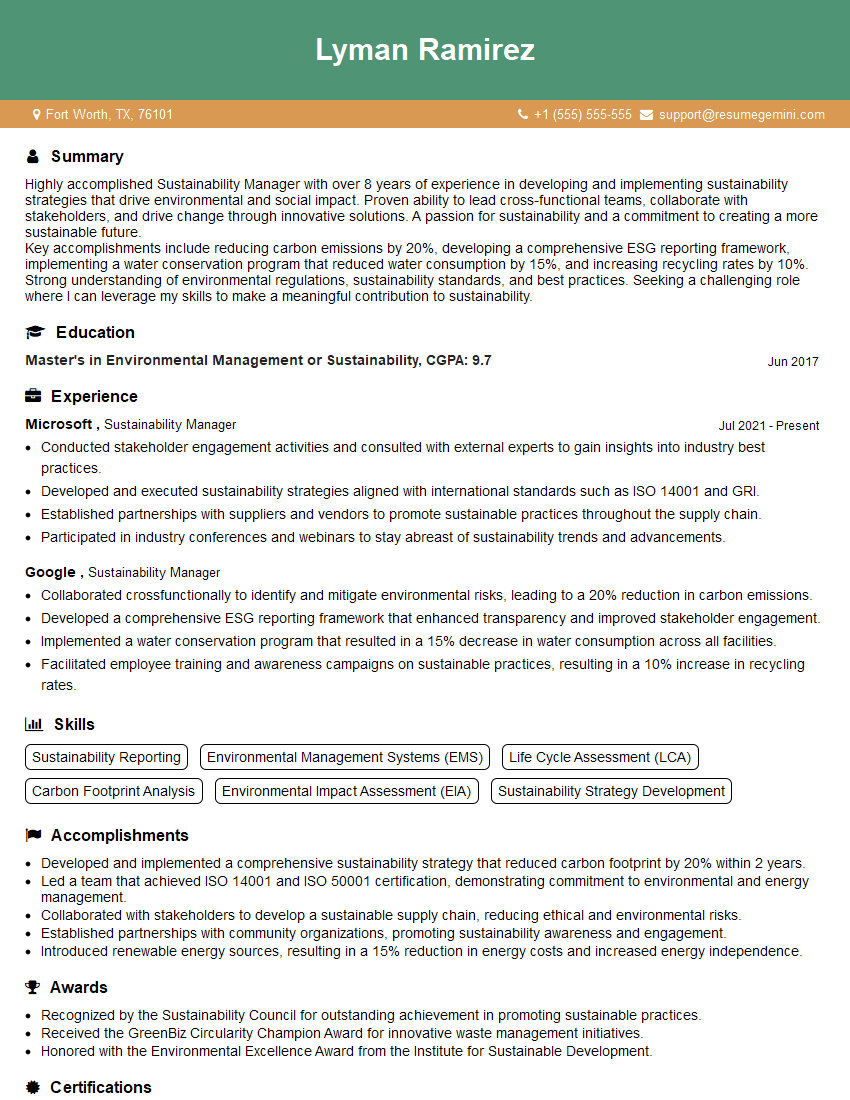
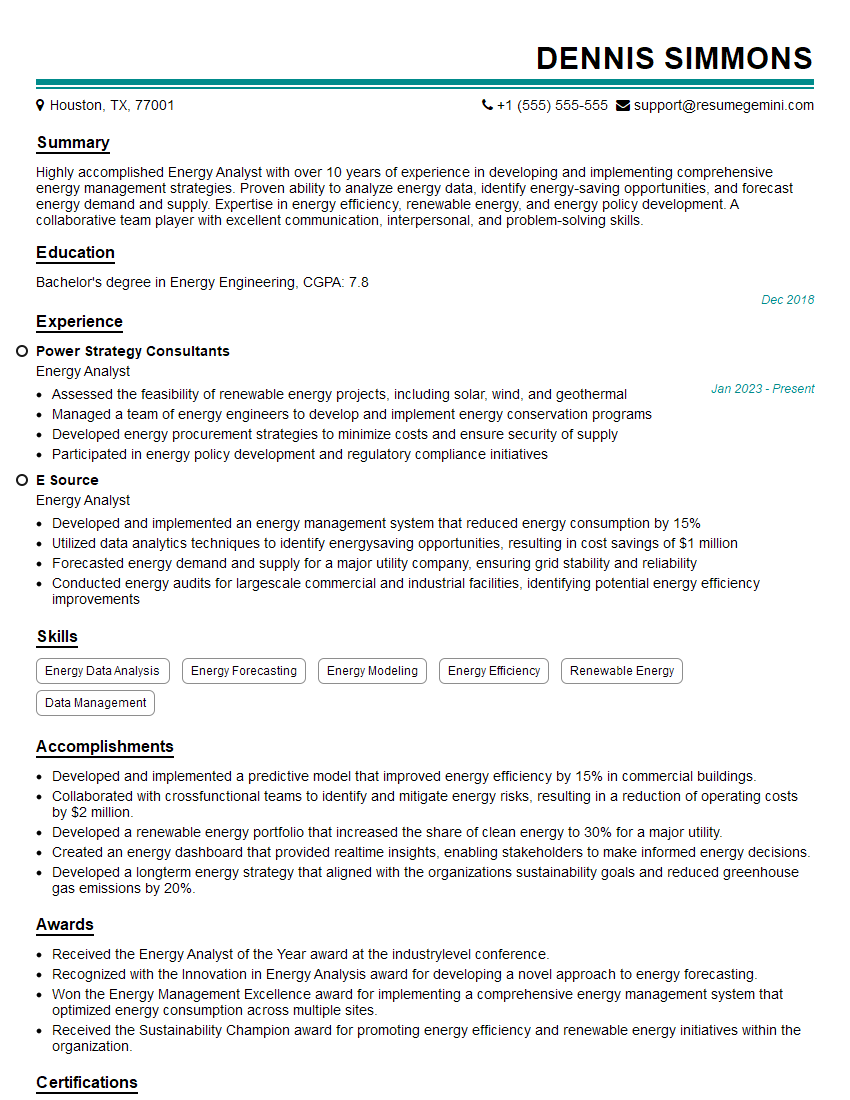
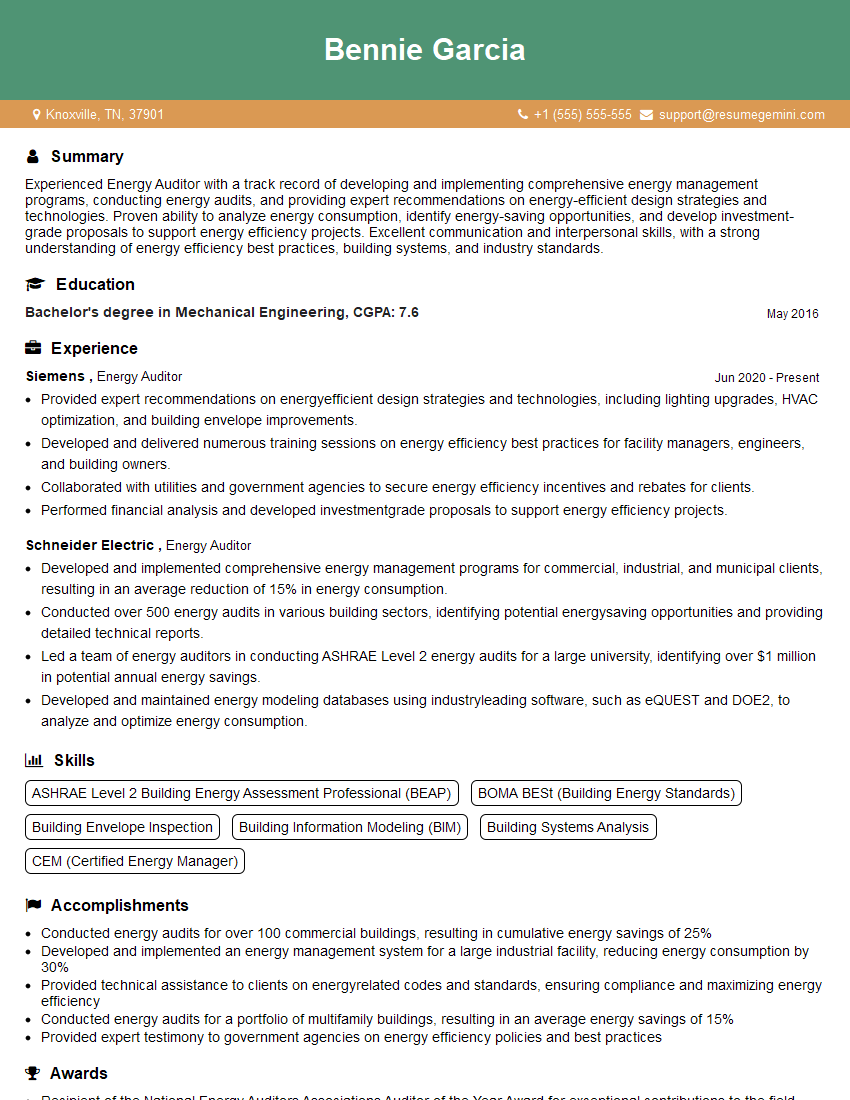
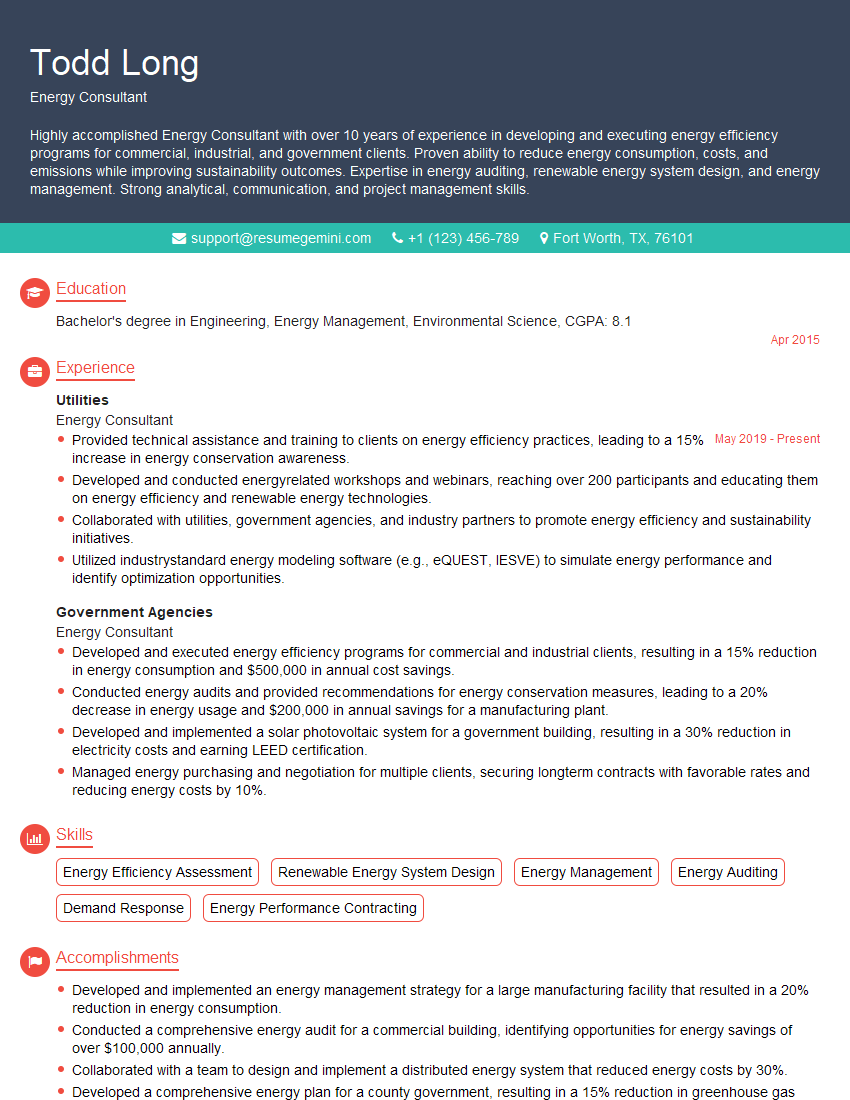
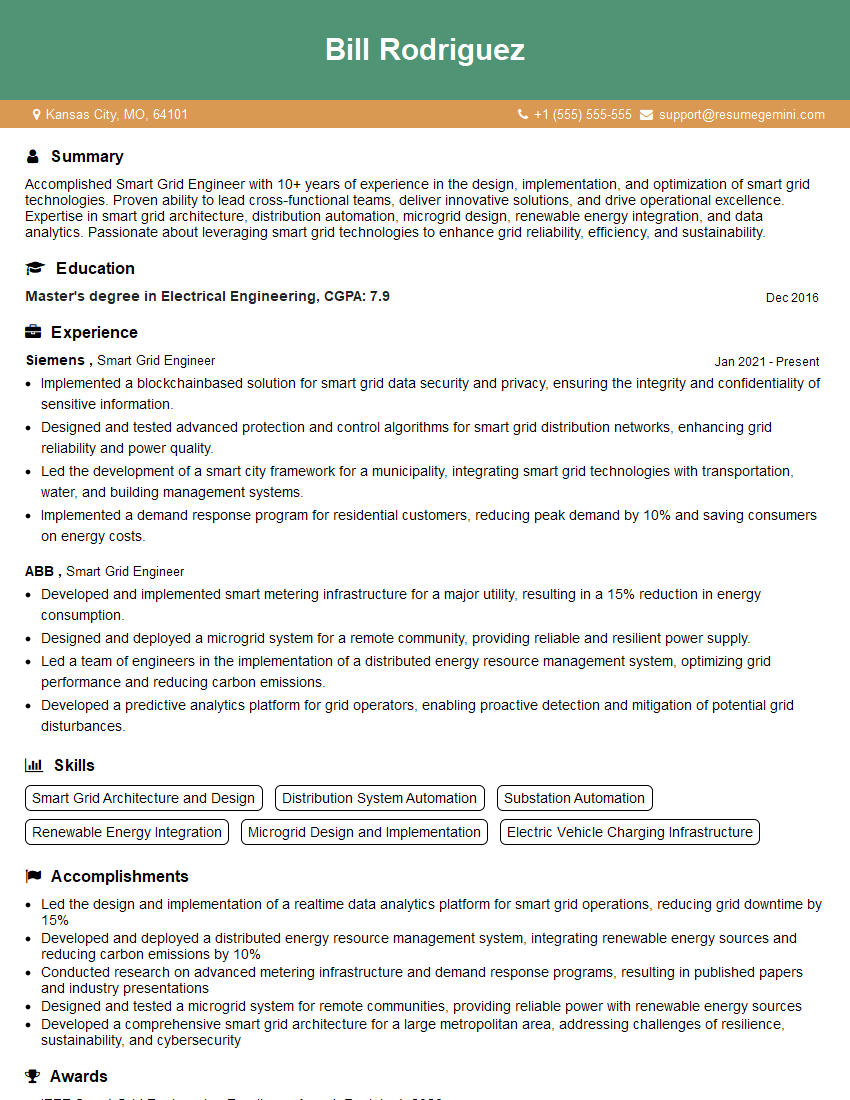
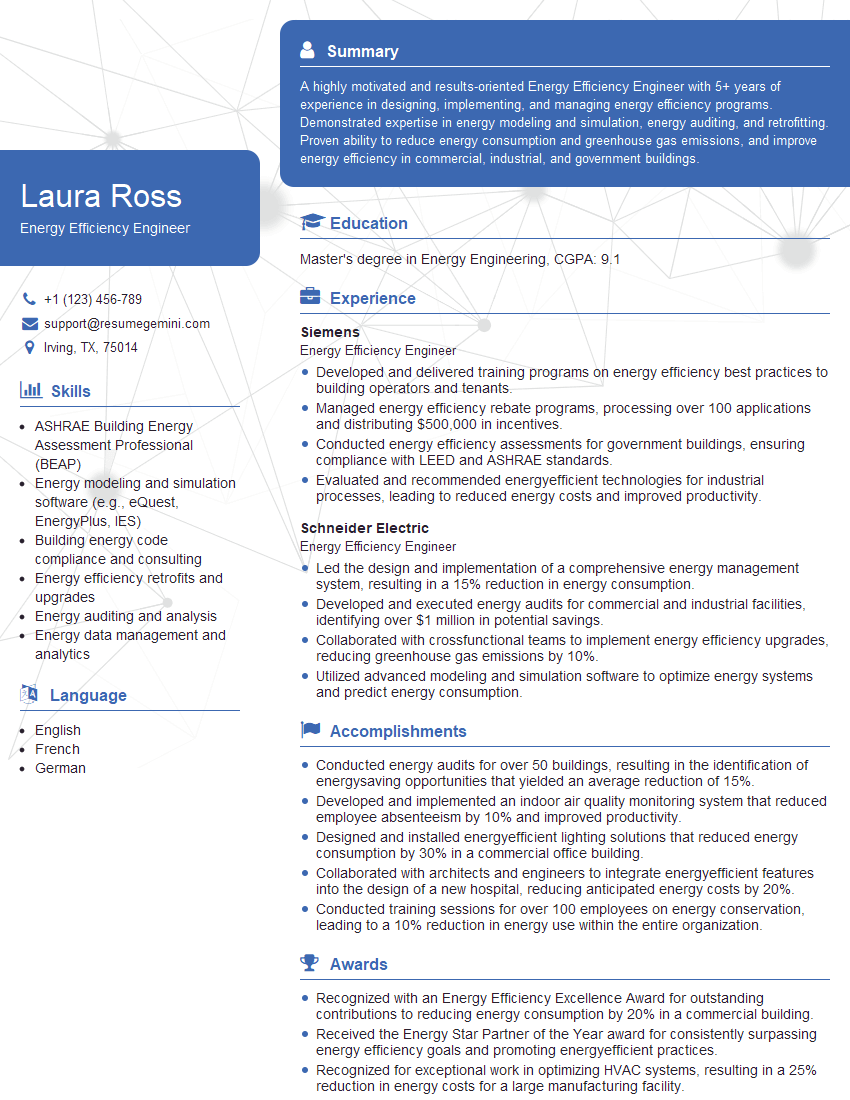
Mastering Energy Conservation and Efficiency Measures is crucial for a successful and rewarding career in a rapidly growing field. Demonstrating your expertise through a strong resume is the first step to securing your dream role. Create an ATS-friendly resume that highlights your skills and experience effectively. ResumeGemini is a trusted resource to help you build a professional and impactful resume that showcases your qualifications. Examples of resumes tailored to Energy Conservation and Efficiency Measures are available to guide you. Invest in your future – build a compelling resume and land your dream job!

Explore more articles
Users Rating of Our Blogs
Share Your Experience
We value your feedback! Please rate our content and share your thoughts (optional).
What Readers Say About Our Blog
To the interviewgemini.com Webmaster.
Very helpful and content specific questions to help prepare me for my interview!
Thank you
To the interviewgemini.com Webmaster.
This was kind of a unique content I found around the specialized skills. Very helpful questions and good detailed answers.
Very Helpful blog, thank you Interviewgemini team.