Interviews are more than just a Q&A session—they’re a chance to prove your worth. This blog dives into essential Energy Efficiency and Carbon Management interview questions and expert tips to help you align your answers with what hiring managers are looking for. Start preparing to shine!
Questions Asked in Energy Efficiency and Carbon Management Interview
Q 1. Explain the concept of embodied carbon.
Embodied carbon refers to the greenhouse gas emissions generated throughout the entire lifecycle of a building material, from the extraction of raw materials to its manufacturing, transportation, installation, and ultimately, disposal or recycling. Think of it as the ‘carbon footprint’ of the materials themselves, distinct from the operational carbon emissions (energy used during the building’s lifespan).
For example, the embodied carbon in a concrete column includes the emissions from cement production (a significant source), the quarrying of aggregates, transportation of these materials to the factory and the construction site, and the energy used in the manufacturing process. Understanding embodied carbon is crucial for sustainable building design, as it represents a significant portion of a building’s total lifetime carbon emissions. Minimizing embodied carbon often involves using sustainable materials like recycled content steel, timber from sustainably managed forests, or low-carbon concrete alternatives.
Q 2. Describe different methods for conducting an energy audit.
Energy audits employ various methods to assess a building’s energy consumption and identify areas for improvement. They typically involve a combination of approaches:
- Walkthrough Audits: A visual inspection of the building’s systems, identifying potential energy-saving opportunities based on observable factors like insulation levels, window efficiency, and lighting fixtures. This is a cost-effective initial assessment.
- Energy Modeling: Sophisticated software simulates a building’s energy performance under different conditions, allowing for detailed analysis and ‘what-if’ scenarios to evaluate the impact of various energy efficiency upgrades. This method provides a more accurate prediction of energy savings.
- Metering and Monitoring: Installing energy meters to precisely measure energy usage in different parts of the building provides real-time data on consumption patterns. This helps identify energy-intensive areas and track the effectiveness of implemented improvements.
- Thermographic Imaging: Infrared cameras detect heat loss, revealing areas where insulation is deficient, air leaks are present, or heating/cooling systems are inefficient. This method is particularly useful for detecting hidden problems.
The chosen method depends on the building’s complexity, budget, and desired level of detail. Often, a combination of these techniques is used to provide a comprehensive energy audit.
Q 3. What are the key metrics used to track carbon footprint reduction?
Tracking carbon footprint reduction requires consistent monitoring of key metrics. Some of the most important include:
- Absolute Greenhouse Gas (GHG) Emissions: The total amount of GHGs emitted in tonnes of CO2 equivalent (tCO2e), providing a direct measure of the organization’s overall climate impact.
- Emissions Intensity: GHG emissions per unit of output (e.g., tons of CO2e per kilowatt-hour of electricity produced or per square meter of building space). This metric shows efficiency improvements over time.
- Energy Consumption: Tracking energy use in kilowatt-hours (kWh) or other relevant units allows for the identification of energy-saving opportunities. Reducing energy consumption directly translates to lower GHG emissions.
- Carbon Intensity of Energy Sources: The amount of GHGs emitted per unit of energy generated, indicating the ‘cleanliness’ of the energy source used. Shifting to low-carbon energy sources significantly lowers overall emissions.
- Renewable Energy Use: The percentage of energy derived from renewable sources (solar, wind, hydro, etc.). A higher percentage indicates progress towards decarbonization.
Regular reporting on these metrics, often aligned with standards like the GHG Protocol, is vital for demonstrating progress towards carbon reduction goals.
Q 4. Explain the difference between renewable and non-renewable energy sources.
The fundamental difference lies in their renewability. Renewable energy sources are naturally replenished at a rate faster than they are consumed. These sources include solar, wind, hydro, geothermal, and biomass. They are considered sustainable and have minimal environmental impact.
Non-renewable energy sources are finite resources that take millions of years to form. Examples include fossil fuels (coal, oil, natural gas) and nuclear energy (uranium). Their extraction and combustion release greenhouse gases, contributing to climate change. Once depleted, these resources are not easily replaced within human timescales.
The shift from non-renewable to renewable energy is crucial for mitigating climate change and ensuring long-term energy security.
Q 5. How do you calculate a building’s energy performance?
A building’s energy performance is typically calculated using energy modeling software and expressed through key performance indicators (KPIs). The process involves:
- Gathering Data: Collecting information on the building’s design, construction materials, HVAC systems, lighting, and occupancy patterns.
- Inputting Data into Software: Software like EnergyPlus or eQuest uses algorithms to simulate the building’s energy performance based on the provided data.
- Simulation and Analysis: The software simulates the building’s energy use under various conditions, considering factors like climate, operating schedules, and equipment efficiencies.
- KPIs: The results are expressed as KPIs such as energy use intensity (EUI), which is the total energy consumed per unit of area (e.g., kWh/m²/year), or site energy use intensity, which is the same but only includes the energy consumed at the building’s site and excludes things like district heating and cooling. Other KPIs include carbon emissions (tCO2e/m²/year) and operational carbon.
These KPIs provide a quantitative assessment of the building’s energy efficiency and its environmental impact.
Q 6. What are some common energy efficiency technologies and their applications?
Numerous energy efficiency technologies are available for various applications:
- High-Performance Building Envelopes: Improved insulation (e.g., spray foam insulation), high-performance windows, and air sealing reduce heat transfer, minimizing heating and cooling loads.
- Efficient HVAC Systems: Heat pumps provide heating and cooling with higher efficiency than traditional systems. Variable refrigerant flow (VRF) systems offer precise climate control in individual zones. Smart thermostats optimize heating and cooling schedules based on occupancy and weather data.
- LED Lighting: LED lighting consumes significantly less energy than traditional incandescent or fluorescent lighting and lasts longer.
- Building Management Systems (BMS): Centralized control systems monitor and optimize building operations, including lighting, HVAC, and other energy-consuming systems.
- Renewable Energy Technologies: Solar photovoltaic (PV) panels generate electricity from sunlight. Solar thermal collectors provide hot water. Wind turbines harness wind energy to generate electricity.
The selection of appropriate technologies depends on the specific building type, climate, and budget.
Q 7. Describe your experience with carbon accounting and reporting standards (e.g., GHG Protocol).
I have extensive experience in carbon accounting and reporting, particularly using the GHG Protocol. I’ve been involved in numerous projects where we assessed operational and embodied carbon emissions, using standardized methodologies to calculate emissions factors and quantify reduction opportunities.
My work has included:
- Developing corporate carbon footprints: This involved collecting data on energy consumption, waste generation, business travel, and other emissions sources, and applying the relevant emission factors from the GHG Protocol.
- Conducting lifecycle assessments (LCAs): I have assessed the environmental impact of products and buildings from cradle to grave, considering both operational and embodied carbon.
- Developing and implementing carbon reduction strategies: This has involved identifying emission hotspots, recommending mitigation measures, and monitoring progress towards reduction targets.
- Preparing carbon reports: I have prepared reports compliant with global reporting initiatives such as the CDP (formerly the Carbon Disclosure Project) and GRI (Global Reporting Initiative), ensuring transparent and accurate reporting of climate-related information.
My experience spans various sectors including the built environment, manufacturing, and transportation. I am proficient in using various carbon accounting tools and software and am well-versed in the latest developments in carbon accounting standards and methodologies.
Q 8. How do you identify and prioritize energy efficiency improvement opportunities?
Identifying and prioritizing energy efficiency improvement opportunities requires a systematic approach. We begin with a thorough energy audit, using a combination of data analysis from utility bills and on-site measurements. This helps pinpoint areas of high energy consumption. Think of it like a financial audit for your energy usage – we’re looking for the ‘leaks’ in the system.
Next, we prioritize these opportunities based on factors like cost-effectiveness (simple payback period), feasibility (technical and logistical challenges), and potential impact. A simple payback period calculation, for example, tells us how quickly an investment in energy efficiency will pay for itself through reduced energy bills. We often use a weighted scoring system to compare different improvement options. For example, a project with a short payback period and significant energy savings would score higher than one with a long payback period and minor savings. This process ensures we tackle the most impactful and economically viable projects first.
- Example: In a manufacturing facility, we might find that upgrading outdated motors is more cost-effective than installing a new HVAC system, even if the HVAC system offers larger potential savings. The motor upgrade might have a payback period of 1 year, while the HVAC system could take 5 years, making the motor upgrade the higher priority.
- Example: In an office building, improved lighting (LEDs) might be prioritized over building envelope improvements due to lower upfront costs and quicker implementation.
Q 9. What are the different types of carbon offsets and their limitations?
Carbon offsets represent projects that reduce or remove greenhouse gas emissions from the atmosphere, compensating for emissions elsewhere. Think of it as balancing the scales – your company emits carbon, and an offset project removes an equivalent amount.
There are various types of carbon offsets, including:
- Renewable energy projects: Investing in renewable energy projects (e.g., wind, solar) prevents the emission of greenhouse gases that would have occurred from using fossil fuels.
- Forestry and land use projects: Planting trees or improving forest management practices sequesters carbon dioxide from the atmosphere.
- Methane capture projects: Capturing methane from landfills or agricultural sources prevents its release into the atmosphere.
However, carbon offsets have limitations:
- Additionality: Ensuring the project would not have happened without the offset investment is crucial. Many projects might have occurred anyway.
- Permanence: Some offset projects (e.g., forestry) require long-term monitoring to ensure the carbon remains sequestered. Forest fires or deforestation can negate the impact.
- Measurement and verification: Accurate measurement and verification of emission reductions are vital to ensure the offset’s integrity. Inaccurate measurements can lead to overestimation of reductions.
- Leakage: Reducing emissions in one area might lead to increased emissions elsewhere. For example, cheaper carbon credits could lead to increased production and higher overall emissions.
It’s crucial to choose high-quality, certified offsets from reputable organizations to mitigate these limitations.
Q 10. Explain the concept of lifecycle assessment (LCA) and its relevance to carbon management.
Lifecycle Assessment (LCA) is a comprehensive analysis of the environmental impacts of a product or service throughout its entire life cycle, from raw material extraction to disposal or recycling. It’s like a cradle-to-grave examination of a product’s environmental footprint.
In carbon management, LCA is invaluable because it allows us to identify the major sources of greenhouse gas emissions associated with a specific product or process. This holistic view helps in targeting carbon reduction efforts effectively. For example, a seemingly ‘green’ product might have a significant carbon footprint during its manufacturing or transportation phase, information that a simplified emissions calculation might miss.
Relevance to Carbon Management:
- Identifying hotspots: LCA pinpoints stages in the lifecycle with the highest emissions, guiding targeted reduction efforts.
- Comparing alternatives: LCA allows for the comparison of different materials, designs, or processes to select the most environmentally friendly option.
- Setting reduction targets: LCA provides a baseline understanding of current emissions, allowing for the setting of meaningful reduction targets.
- Demonstrating environmental performance: LCA results can be used to demonstrate environmental responsibility to stakeholders.
For instance, an LCA might reveal that the transportation of a product contributes significantly to its carbon footprint, prompting a switch to more sustainable transportation methods or a change in the product’s design to reduce shipping weight.
Q 11. Describe your experience with energy modeling software.
I have extensive experience using various energy modeling software packages, including EnergyPlus, TRNSYS, and eQUEST. These tools are crucial for simulating building energy performance and identifying energy efficiency opportunities.
For example, I’ve used EnergyPlus to model the impact of different window designs on a building’s heating and cooling loads. By adjusting parameters like window U-value and solar heat gain coefficient (SHGC), I could determine the optimal window specification to minimize energy consumption. The software generates detailed reports on energy use, providing a quantitative basis for decision-making. Similarly, I’ve used eQUEST for quicker assessments, especially in early design stages, providing a rapid evaluation of energy performance options. The choice of software depends on the project’s complexity and the specific information needed.
My experience extends beyond just running simulations. I’m proficient in building and validating models, interpreting results, and communicating findings effectively to both technical and non-technical audiences. I understand the limitations of these models and how to account for uncertainties in the input data.
Q 12. How do you develop and implement a carbon reduction strategy for a company?
Developing and implementing a carbon reduction strategy involves a structured, phased approach:
- Baseline Assessment: Conduct a thorough assessment to quantify current greenhouse gas emissions (using methodologies like GHG Protocol). This forms the basis for setting reduction targets.
- Target Setting: Set ambitious yet achievable emission reduction targets (e.g., 20%, 50% reduction by a specific year). This could align with science-based targets initiatives or broader company sustainability goals.
- Roadmap Development: Develop a detailed roadmap outlining specific actions to achieve the targets. This includes identifying opportunities for energy efficiency improvements, renewable energy adoption, carbon offsetting, and waste reduction.
- Implementation and Monitoring: Implement the identified actions and establish robust monitoring systems to track progress and identify any deviations from the plan. Regular reporting is crucial.
- Verification and Reporting: Verify emission reductions and report progress to stakeholders, demonstrating transparency and accountability. This might involve third-party verification of emission reductions.
Example: For a manufacturing company, the roadmap might include measures such as upgrading equipment to more energy-efficient models, investing in renewable energy sources (e.g., solar panels), improving waste management practices, and purchasing carbon offsets to compensate for unavoidable emissions. A crucial element is embedding carbon reduction into the company culture and operations, encouraging employee engagement and incentivizing sustainable practices.
Q 13. What are the key regulations and policies related to energy efficiency and carbon emissions in your region?
(This answer will need to be tailored to a specific region. The following is a general example using hypothetical regulations and policies. Replace these with the accurate details for your target region.)
In my region, key regulations and policies related to energy efficiency and carbon emissions include:
- Energy Efficiency Standards: Building codes mandate minimum energy efficiency standards for new construction and renovations, covering aspects like insulation, windows, and HVAC systems. There might be incentives for exceeding these standards.
- Carbon Pricing Mechanisms: A carbon tax or cap-and-trade system could be in place, imposing a cost on carbon emissions. This incentivizes businesses to reduce their emissions.
- Renewable Portfolio Standards (RPS): RPS mandates require a certain percentage of electricity to come from renewable energy sources, promoting the growth of renewable energy.
- Emissions Trading Schemes (ETS): These schemes allow companies to trade emission allowances, creating a market-based mechanism for emissions reduction. Companies that reduce emissions below their allowance can sell the surplus to companies that exceed their limits.
- Government Incentives and Subsidies: Various incentives and subsidies are often available to support energy efficiency upgrades and renewable energy adoption, making these investments more economically attractive.
Staying informed about these regulations and policies is critical for effective carbon management. Non-compliance can lead to significant penalties.
Q 14. Explain the concept of circular economy and its benefits.
The circular economy is an economic model that aims to minimize waste and maximize the utilization of resources. Instead of a linear ‘take-make-dispose’ model, the circular economy focuses on keeping resources in use for as long as possible, extracting maximum value from them whilst in use, then recovering and regenerating products and materials at the end of each service life.
Benefits of a Circular Economy:
- Resource efficiency: Reduced reliance on virgin materials, conserving natural resources.
- Waste reduction: Minimization of waste sent to landfills and incineration.
- Reduced carbon emissions: Lower emissions from manufacturing and transportation due to reduced resource extraction and waste processing.
- Economic benefits: Creation of new business opportunities in recycling, remanufacturing, and resource recovery.
- Enhanced resilience: Reduced dependence on fluctuating global supply chains.
Example: Instead of discarding old electronics, a circular economy approach would prioritize repairing, reusing, or recycling components, extracting valuable materials for use in new products. This reduces the need for mining new materials, saving energy and reducing emissions. This model applies across many sectors – from manufacturing and construction to food and agriculture.
Q 15. What are the barriers to adopting renewable energy sources, and how can they be overcome?
The transition to renewable energy faces several hurdles. Intermittency, meaning the inconsistent nature of solar and wind power, is a major challenge. Storage solutions are still developing to address this reliably. Another barrier is the upfront cost of renewable energy infrastructure, which can be significantly higher than traditional fossil fuel-based systems. Furthermore, the existing energy infrastructure, often heavily invested in fossil fuels, creates inertia and resistance to change. Grid integration challenges exist, as renewable energy sources often require significant upgrades to transmission and distribution networks. Finally, policy and regulatory frameworks need to be supportive, providing incentives and clear pathways for renewable energy development.
Overcoming these barriers requires a multi-pronged approach. This includes accelerating research and development in energy storage technologies like advanced batteries, pumped hydro, and compressed air energy storage. Government policies can play a crucial role by offering subsidies, tax breaks, and feed-in tariffs to make renewables more economically competitive. Smart grids, which use digital technology to optimize energy distribution, can better manage the variability of renewable energy sources. Public awareness campaigns can also shift societal attitudes and build support for the transition. Investing in grid modernization and developing flexible power generation resources like demand-response programs are also critical. For example, a combination of solar, wind, and battery storage coupled with a smart grid and supportive policy can drastically mitigate intermittency issues and lead to a smooth transition.
Career Expert Tips:
- Ace those interviews! Prepare effectively by reviewing the Top 50 Most Common Interview Questions on ResumeGemini.
- Navigate your job search with confidence! Explore a wide range of Career Tips on ResumeGemini. Learn about common challenges and recommendations to overcome them.
- Craft the perfect resume! Master the Art of Resume Writing with ResumeGemini’s guide. Showcase your unique qualifications and achievements effectively.
- Don’t miss out on holiday savings! Build your dream resume with ResumeGemini’s ATS optimized templates.
Q 16. How do you measure the effectiveness of energy efficiency initiatives?
Measuring the effectiveness of energy efficiency initiatives requires a multi-faceted approach, combining quantitative and qualitative data. Key Performance Indicators (KPIs) are crucial. These might include reductions in energy consumption (kWh), decreases in energy costs ($), improvements in energy intensity (kWh/unit of production), and reductions in greenhouse gas emissions (tons of CO2). We should look at both absolute and percentage changes from a baseline measurement. For example, a reduction in electricity consumption by 15% compared to the previous year shows clear progress. It’s vital to track these metrics over time to assess the long-term impact of implemented initiatives.
Beyond simple metrics, we need to assess the impact of those changes. Did the reduced energy consumption affect productivity? Were there unintended consequences, like higher maintenance costs? Regular audits, energy modeling, and employee feedback are essential. Data should ideally be compared against industry benchmarks to understand relative performance. Software tools and building management systems often provide automated data collection and analysis, simplifying the process.
Q 17. Describe your experience with energy management systems (EMS).
My experience with Energy Management Systems (EMS) encompasses both their implementation and optimization. I’ve worked with various EMS platforms, from basic building automation systems to sophisticated enterprise-level solutions. My work has involved everything from data analysis and reporting, to the fine-tuning of control algorithms to maximize energy savings. I’m proficient in integrating EMS data with other systems to create a holistic view of energy performance. For instance, I’ve helped integrate an EMS with a building’s HVAC system to optimize heating and cooling schedules based on occupancy patterns and weather forecasts, resulting in a 20% reduction in energy use. I’m also experienced in troubleshooting issues and ensuring the reliable operation of the system.
Furthermore, I understand the importance of data security and compliance when dealing with such systems. I have experience configuring alerts and reports to identify potential problems before they impact operations. My approach focuses on a data-driven approach to continually improve energy efficiency through proactive monitoring and informed decision-making. For example, in one project, by analyzing EMS data, we identified a malfunctioning chiller, which was causing significant energy waste, ultimately fixing the issue and significantly improving efficiency.
Q 18. How do you communicate complex technical information to non-technical audiences?
Communicating complex technical information to non-technical audiences requires a shift in perspective. I avoid jargon and technical terms whenever possible. Instead, I use analogies, visual aids, and real-world examples to illustrate complex concepts. For instance, explaining carbon emissions using the analogy of a bathtub overflowing with water, where the water represents emissions and the faucet represents sources of emissions, can be very effective. I use simple language and clear, concise sentences. I also tailor my communication style to the audience. For example, a presentation to a board of directors will differ from a training session for building operators. Interactive elements like Q&A sessions and workshops allow for clarification and engagement, fostering a better understanding.
I ensure the information is relevant and valuable to the audience. I focus on the “why” behind technical concepts – highlighting their benefits and impacts on the audience’s lives or business objectives. Storytelling can be powerful, illustrating technical concepts through real-world case studies or personal anecdotes. Finally, I always seek feedback to ensure the message is understood and that the audience is engaged. Using visual aids such as graphs and charts can provide immediate understanding of complex energy data.
Q 19. What is your understanding of carbon pricing mechanisms?
Carbon pricing mechanisms are market-based tools designed to internalize the environmental cost of greenhouse gas emissions. They aim to incentivize reductions in emissions by putting a price on carbon. The most common mechanisms are carbon taxes and emissions trading systems (ETS), often called cap-and-trade systems.
A carbon tax directly levies a tax on each ton of CO2 emitted. This makes carbon-intensive activities more expensive, encouraging businesses and individuals to adopt cleaner alternatives. An emissions trading system (ETS) sets a limit (cap) on total emissions and allows companies to buy and sell emission permits (allowances). Companies emitting less than their allocated permits can sell the excess, while companies exceeding their permits must buy additional ones. Both systems encourage emission reductions, though they do so through different mechanisms. A well-designed carbon pricing system can drive innovation, stimulate investment in clean technologies, and achieve significant emission reductions. However, effective implementation requires careful consideration of potential economic impacts and equity issues, including potential regressive effects on low-income households.
Q 20. How do you stay up-to-date with the latest trends in energy efficiency and carbon management?
Staying current in the rapidly evolving fields of energy efficiency and carbon management requires a multi-faceted approach. I regularly read industry publications, both print and online, including journals, magazines, and industry reports. I attend conferences, workshops, and seminars to hear from leading experts and learn about the latest innovations. Networking with colleagues and professionals in the field is also vital, fostering the exchange of ideas and knowledge. Online resources such as databases, research papers, and professional organizations provide up-to-date information. Monitoring governmental policies and regulations relating to energy and the environment is crucial for understanding the regulatory landscape. I also actively participate in online communities and forums dedicated to these areas, engaging in discussions and learning from others’ experiences.
In addition, I pursue continuous professional development through online courses, webinars, and certifications to acquire new skills and enhance my expertise in specialized areas. This ensures I’m constantly expanding my knowledge base and adapting to the changing trends. For example, the rapid development of sustainable building materials requires constant learning and updating of knowledge.
Q 21. Describe a time you had to troubleshoot an energy efficiency problem.
In a recent project involving a large industrial facility, we experienced unexpectedly high energy consumption in a specific production line. Initial investigations failed to identify the cause. My approach was systematic. First, we carefully reviewed all available data from the facility’s energy management system (EMS), looking for patterns and anomalies. We identified a slight but consistent increase in energy usage correlated with specific operating parameters of a particular piece of equipment.
Second, we conducted on-site inspections of the equipment, checking for any visible issues. We then performed load tests to determine the energy consumption under various operating conditions. After several days of investigation, we discovered a minor mechanical fault in the equipment causing increased friction and, consequently, higher energy consumption. Once repaired, energy consumption returned to normal levels. This experience underscored the importance of meticulous data analysis, diligent on-site inspections, and systematic troubleshooting in identifying and resolving energy efficiency issues. The resolution not only resulted in substantial cost savings but also highlighted the value of proactive monitoring and maintenance.
Q 22. What are your strengths and weaknesses in the field of energy efficiency and carbon management?
My strengths lie in my holistic approach to energy efficiency and carbon management. I’m proficient in conducting energy audits, developing and implementing energy-saving strategies, and utilizing carbon accounting methodologies to track progress. I excel at stakeholder engagement, clearly communicating complex technical information to diverse audiences. I am adept at using various software for energy modelling and data analysis. My weakness, which I am actively working to improve, is my experience with emerging technologies like blockchain in carbon offset verification. I am currently pursuing online courses to enhance my skills in this area.
Q 23. How do you balance cost and environmental considerations in energy efficiency projects?
Balancing cost and environmental considerations is crucial for successful energy efficiency projects. It’s about finding the optimal point on the cost-benefit curve. I approach this using a lifecycle cost analysis, which considers upfront investment, operational savings, and potential future costs (like maintenance or upgrades). For instance, switching to LED lighting has higher initial costs but significantly lowers long-term energy bills and reduces the carbon footprint. I also utilize techniques like discounted cash flow (DCF) analysis to compare projects with different timelines and cost profiles. Furthermore, I look for opportunities to leverage government incentives, rebates, and low-interest financing to offset initial investment costs, making environmentally sound projects more financially viable. Prioritizing energy-efficient practices often results in long-term cost savings that outweigh the initial expense.
Q 24. Explain the role of building automation systems in energy efficiency.
Building automation systems (BAS) play a vital role in optimizing energy consumption. These systems use sensors, controllers, and software to monitor and control building functions like HVAC, lighting, and security. A sophisticated BAS can automate processes like adjusting heating and cooling based on occupancy, optimizing lighting schedules, and monitoring energy usage in real-time. This results in reduced energy waste, improved occupant comfort, and better environmental performance. For example, a BAS can automatically dim or turn off lights in unoccupied rooms, lowering electricity consumption and costs. Furthermore, data collected by the BAS provides valuable insights for further improvements and helps track the effectiveness of energy-saving initiatives. The ability to remotely monitor and control systems is a crucial benefit especially for large buildings and distributed facilities.
Q 25. What are some key performance indicators (KPIs) for a sustainability program?
Key performance indicators (KPIs) for a sustainability program should measure progress towards environmental goals and track the financial implications of sustainability initiatives. Examples include:
- Energy consumption per square foot: Tracks overall energy efficiency of a building or facility.
- Carbon emissions per unit of output: Measures the carbon intensity of operations.
- Waste diversion rate: Monitors the amount of waste diverted from landfills through recycling and composting.
- Return on investment (ROI) for sustainability projects: Assesses the financial effectiveness of initiatives.
- Greenhouse gas emission reduction: Tracks progress towards emission targets.
- Employee engagement in sustainability programs: Demonstrates the impact of sustainability on company culture.
Q 26. Describe your experience working with stakeholders to promote energy efficiency and carbon reduction.
My experience with stakeholder engagement involves creating a collaborative environment. I start by understanding the needs and priorities of each stakeholder group (e.g., management, employees, investors, and community). I use clear, concise communication, tailoring my message to each audience’s level of understanding. For instance, when presenting to executives, I focus on financial benefits and ROI. With employees, I emphasize the positive impact on the work environment and the company’s commitment to sustainability. Building trust and rapport is crucial. I actively seek input and feedback and present a clear demonstration of the project’s progress through regular updates and reports. In one project, I worked with a manufacturing plant to implement energy efficiency upgrades. By showcasing potential cost savings and improved operational efficiency to management, and highlighting improved working conditions to employees, I was able to secure their buy-in and successfully implement the project.
Q 27. How do you ensure data accuracy and reliability in carbon accounting?
Ensuring data accuracy and reliability in carbon accounting is paramount. It starts with using standardized methodologies and protocols such as the Greenhouse Gas Protocol. This provides a framework for consistent data collection and reporting. We must meticulously document all data sources, including energy bills, emissions factors, and waste disposal records. Regular data validation and quality checks are essential. This includes comparing data from multiple sources, identifying discrepancies, and investigating potential errors. Data should be audited regularly by an independent party to increase transparency and enhance credibility. Utilizing reliable software and databases that ensure data integrity is crucial. Technology can automate data collection and calculations, reducing the risk of human error. For example, integrating smart meters and energy management systems with carbon accounting software provides accurate, real-time data and reduces the chances of manual data entry mistakes. This rigorous approach minimizes bias and ensures the integrity of the carbon footprint calculations.
Q 28. What are your salary expectations?
My salary expectations are in line with my experience and the market rate for a domain expert in energy efficiency and carbon management. Considering my expertise and proven track record of successfully delivering impactful sustainability projects, I am seeking a compensation package between [Insert Salary Range] annually. I am open to discussing this further based on the specific details of the role and the associated responsibilities.
Key Topics to Learn for Energy Efficiency and Carbon Management Interviews
- Energy Audits & Assessments: Understanding methodologies for identifying energy waste and carbon emission sources in buildings, industrial processes, and transportation systems. Practical application: Analyzing energy consumption data to pinpoint areas for improvement.
- Renewable Energy Technologies: Familiarize yourself with solar, wind, geothermal, and other renewable energy sources. Practical application: Evaluating the feasibility and integration of renewable energy systems into existing infrastructure.
- Carbon Accounting & Reporting: Mastering the principles of carbon footprint calculations and reporting frameworks like GHG Protocol. Practical application: Developing and implementing carbon reduction strategies based on accurate emissions data.
- Energy Efficiency Technologies & Measures: Explore energy-efficient building design, HVAC systems, lighting technologies, and industrial process optimization techniques. Practical application: Recommending and implementing cost-effective energy efficiency upgrades.
- Carbon Capture, Utilization, and Storage (CCUS): Understanding the technologies and challenges associated with capturing and storing CO2 emissions. Practical application: Evaluating the viability of CCUS for various industrial sectors.
- Energy Management Systems (EMS): Familiarize yourself with building automation systems and their role in optimizing energy consumption. Practical application: Designing and implementing strategies for effective EMS utilization.
- Policy & Regulations: Understanding relevant environmental regulations, carbon pricing mechanisms, and government incentives related to energy efficiency and carbon management. Practical application: Advising clients on compliance and leveraging policy opportunities.
- Life Cycle Assessment (LCA): Understanding how to assess the environmental impacts of products and processes throughout their entire lifecycle. Practical application: Comparing the environmental performance of different energy technologies or solutions.
- Data Analysis & Modeling: Developing proficiency in using data analysis tools and modeling techniques to predict energy consumption and carbon emissions. Practical application: Creating and interpreting energy efficiency forecasts and evaluating the effectiveness of mitigation strategies.
Next Steps
Mastering Energy Efficiency and Carbon Management is crucial for a thriving career in a rapidly evolving industry. This field offers exciting opportunities for innovation and impactful contributions to a sustainable future. To maximize your job prospects, creating a strong, ATS-friendly resume is essential. ResumeGemini is a trusted resource that can help you build a professional resume that highlights your skills and experience effectively. We provide examples of resumes tailored to Energy Efficiency and Carbon Management to guide you in creating a compelling application.
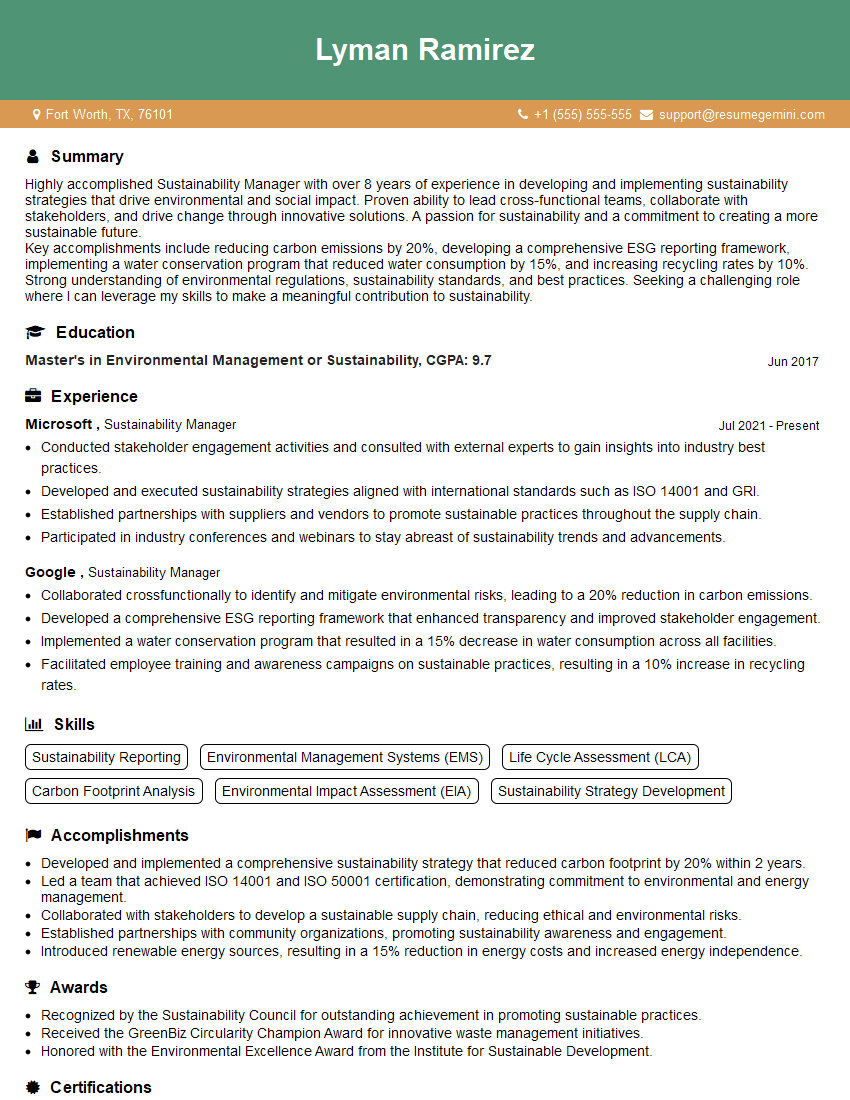
Sustainability Manager Resume Sample
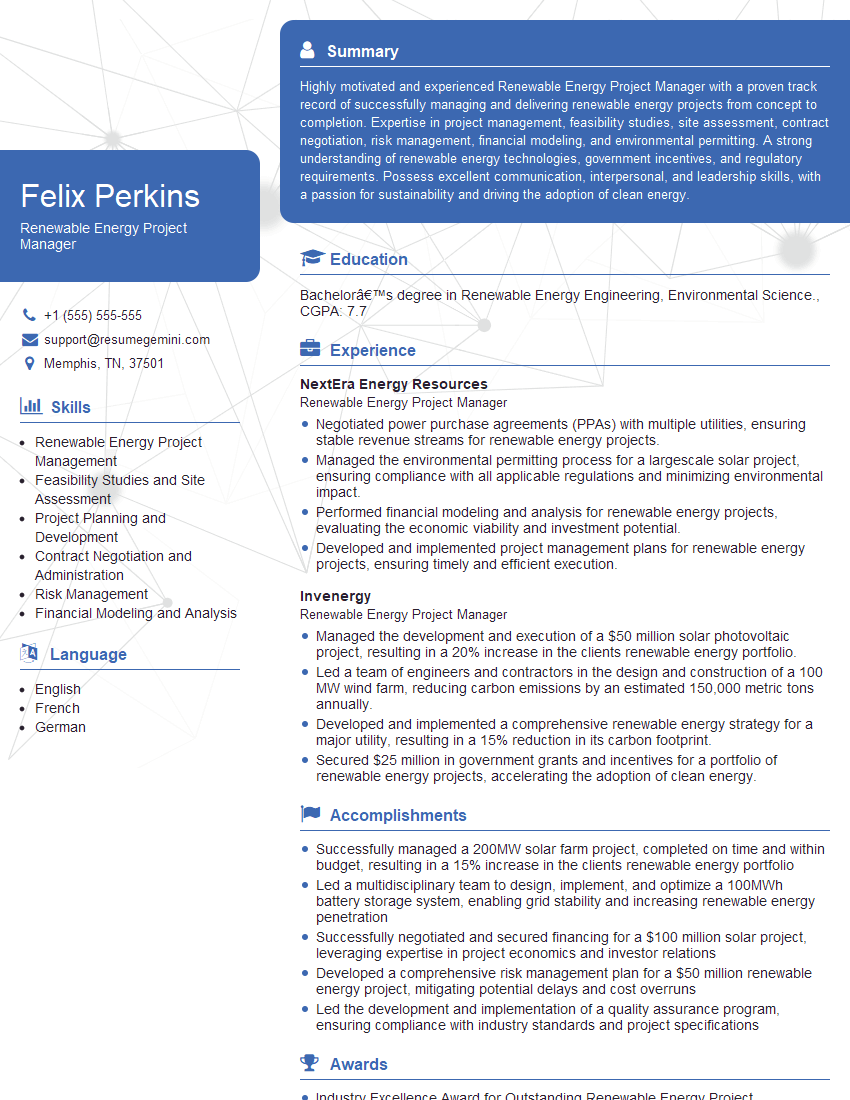
Renewable Energy Project Manager Resume Sample
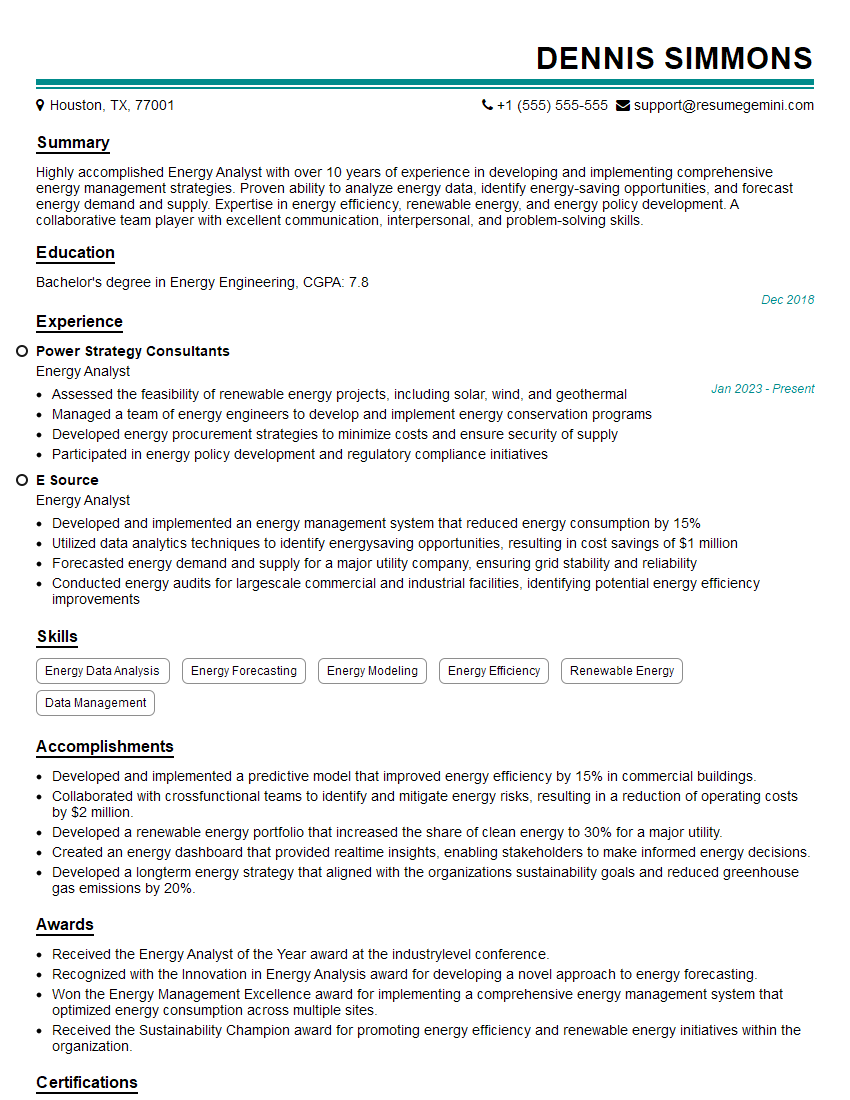
Energy Analyst Resume Sample
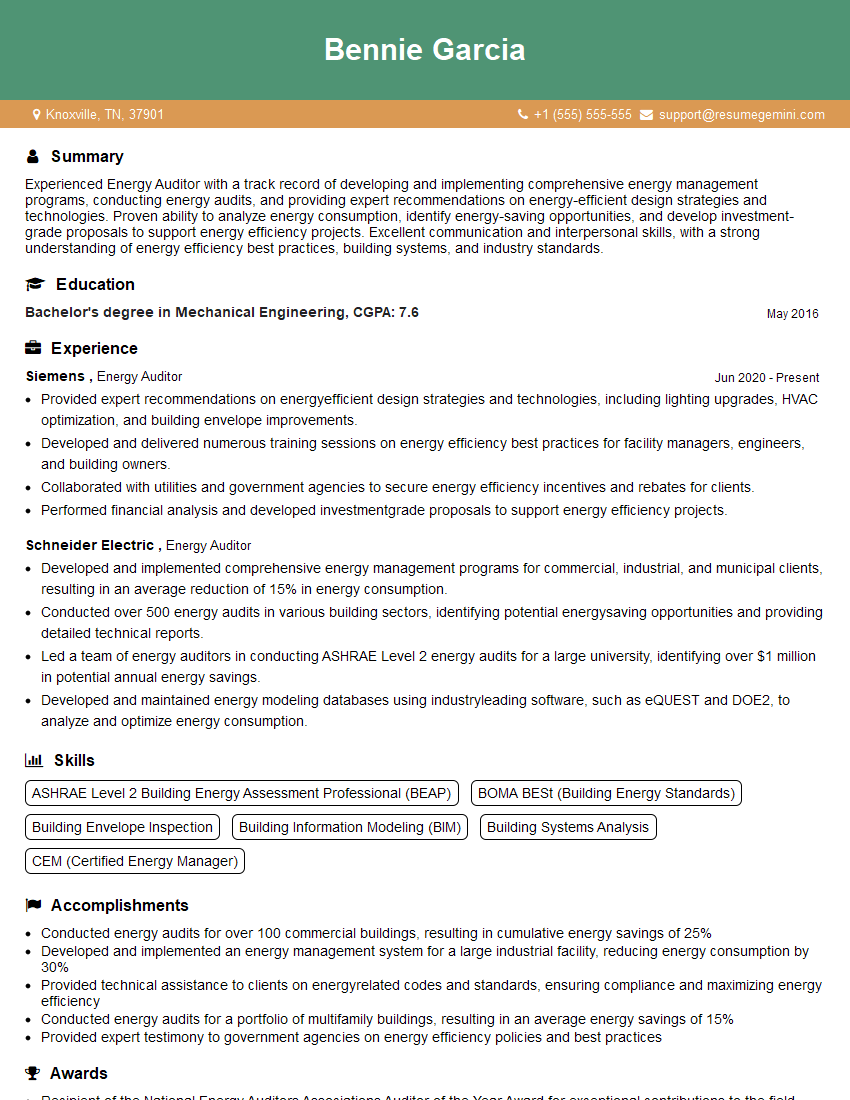
Energy Auditor Resume Sample

Sustainability Consultant Resume Sample
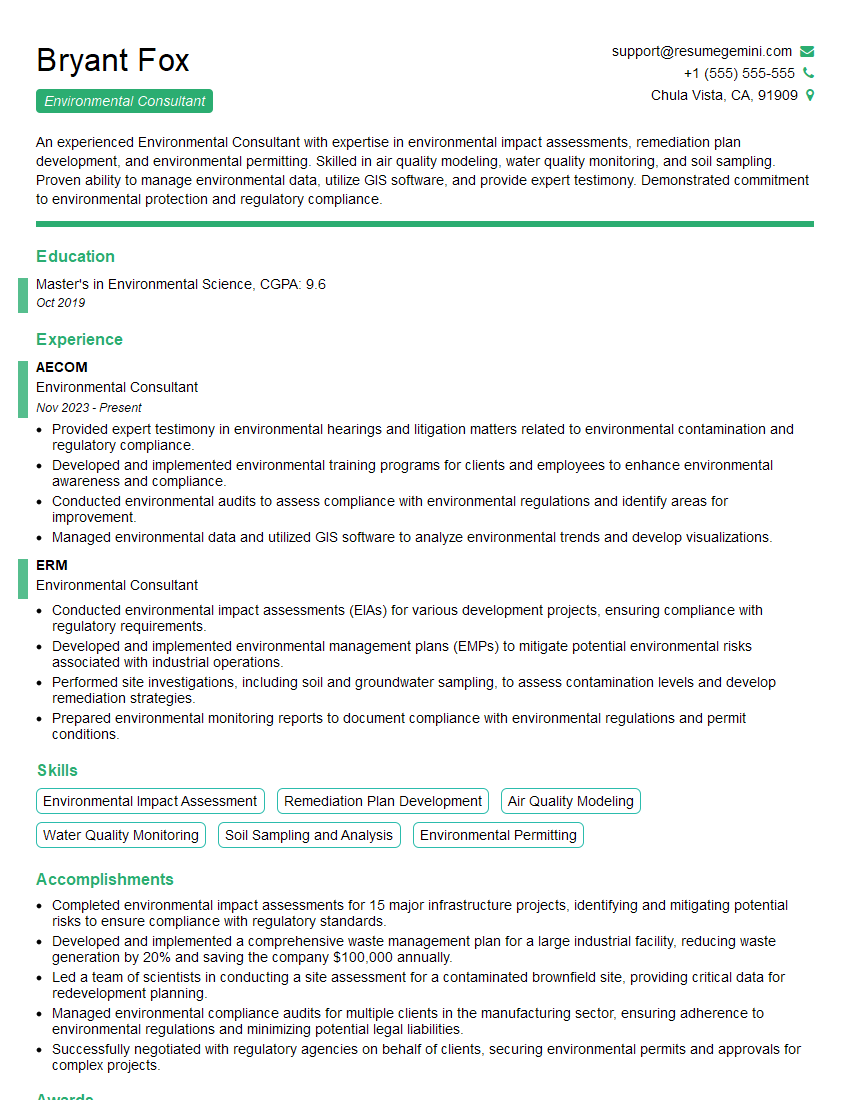
Environmental Consultant Resume Sample
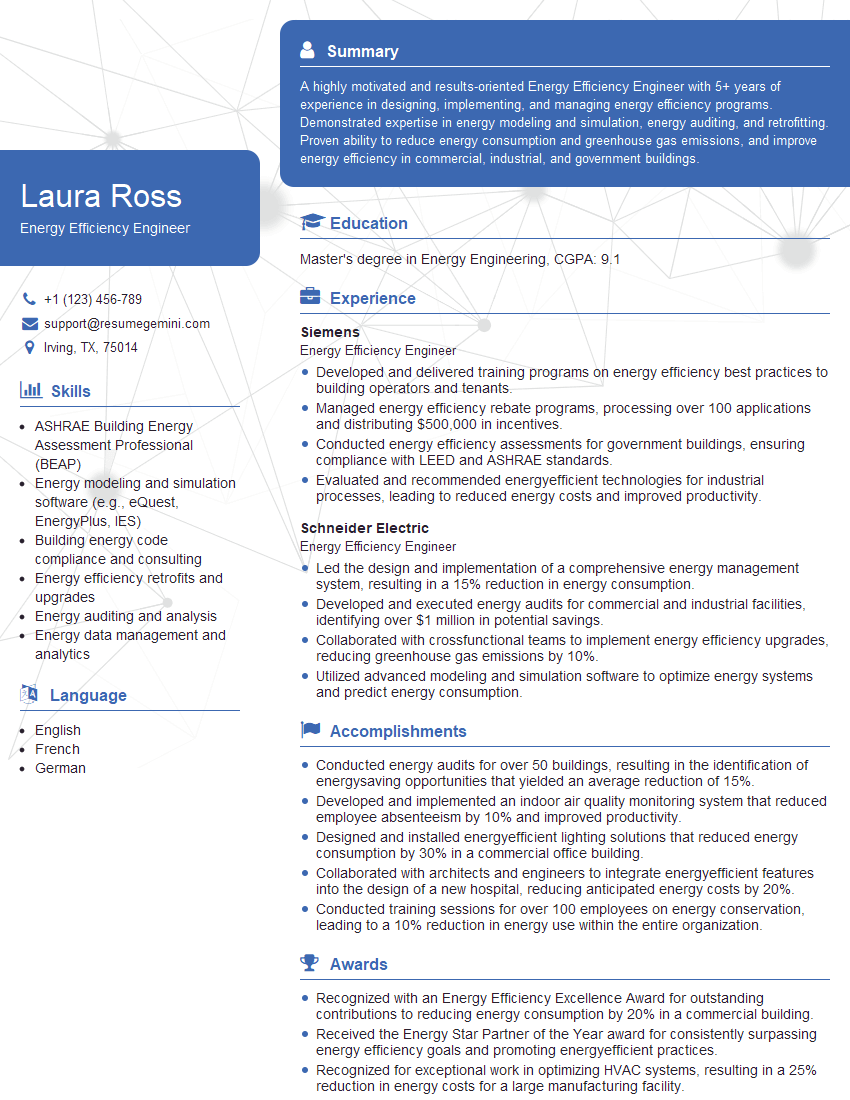
Energy Efficiency Engineer Resume Sample
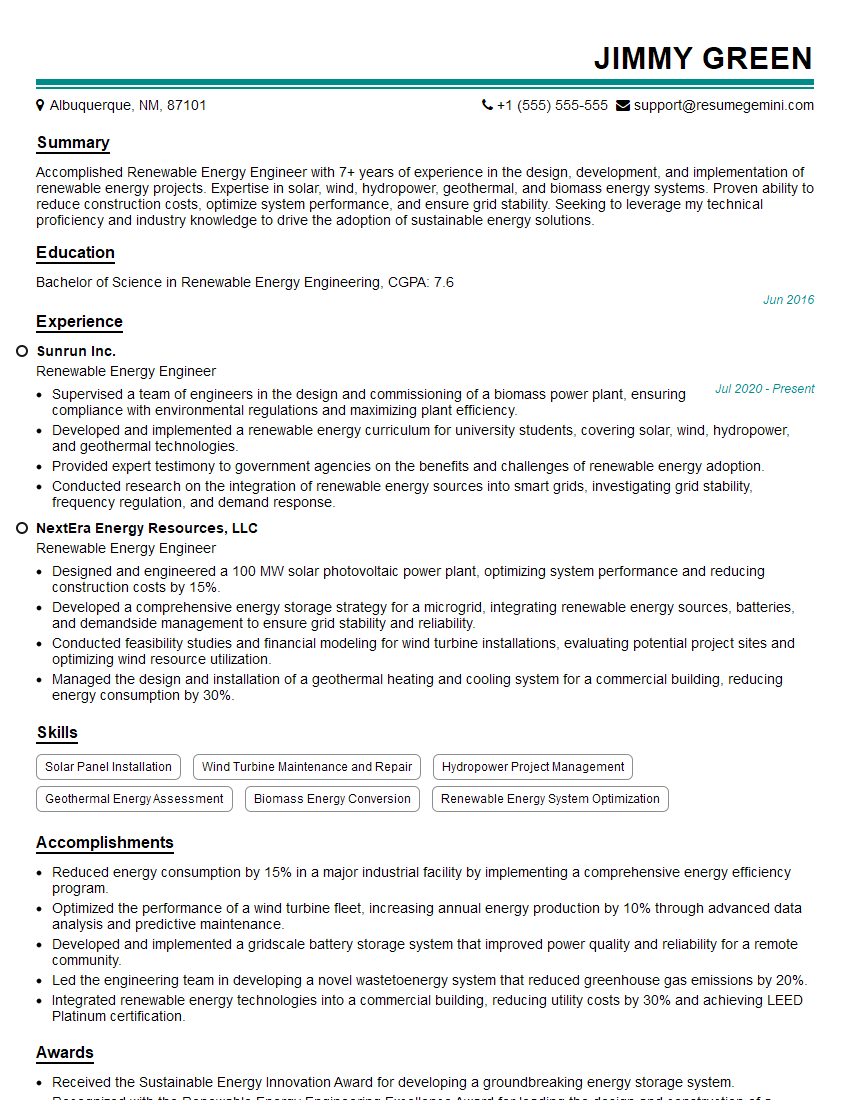
Renewable Energy Engineer Resume Sample
Explore more articles
Users Rating of Our Blogs
Share Your Experience
We value your feedback! Please rate our content and share your thoughts (optional).
What Readers Say About Our Blog
To the interviewgemini.com Webmaster.
Very helpful and content specific questions to help prepare me for my interview!
Thank you
To the interviewgemini.com Webmaster.
This was kind of a unique content I found around the specialized skills. Very helpful questions and good detailed answers.
Very Helpful blog, thank you Interviewgemini team.