Are you ready to stand out in your next interview? Understanding and preparing for Environmental Accounting and Reporting interview questions is a game-changer. In this blog, we’ve compiled key questions and expert advice to help you showcase your skills with confidence and precision. Let’s get started on your journey to acing the interview.
Questions Asked in Environmental Accounting and Reporting Interview
Q 1. Explain the concept of environmental accounting and its importance.
Environmental accounting is the process of identifying, quantifying, and reporting on an organization’s environmental impacts. It goes beyond traditional financial accounting by incorporating the environmental costs and benefits of business activities. Think of it as adding an ‘environmental lens’ to your financial statements. Its importance stems from increasing stakeholder demand for transparency and accountability around environmental performance. Investors, consumers, and regulators are increasingly scrutinizing companies’ environmental footprints, and robust environmental accounting is crucial for demonstrating responsible environmental stewardship and managing environmental risks. This helps organizations make informed decisions, attract responsible investors, improve their reputation, and comply with increasingly stringent environmental regulations.
Q 2. What are the key differences between traditional accounting and environmental accounting?
Traditional accounting focuses primarily on financial performance, measuring revenues, expenses, and profits. It primarily deals with monetary values and adheres to generally accepted accounting principles (GAAP) or International Financial Reporting Standards (IFRS). Environmental accounting, on the other hand, expands the scope to include non-monetary environmental impacts such as greenhouse gas emissions, water usage, waste generation, and biodiversity loss. It uses various metrics and methodologies to quantify these impacts and integrate them into decision-making. In essence, traditional accounting tells you how much money you made or lost, while environmental accounting reveals the environmental consequences of those activities.
- Focus: Traditional accounting focuses on financial capital; environmental accounting considers natural capital.
- Metrics: Traditional accounting uses monetary units; environmental accounting uses physical units (e.g., tons of CO2, liters of water) and monetary valuations where appropriate.
- Objective: Traditional accounting aims to maximize financial profits; environmental accounting aims to minimize environmental damage and maximize sustainability.
Q 3. Describe various environmental accounting frameworks (e.g., GRI, SASB, TCFD).
Several frameworks guide environmental accounting and reporting. These frameworks provide standardized guidelines for organizations to measure and disclose their environmental performance. Let’s look at a few key examples:
- Global Reporting Initiative (GRI): A widely used framework providing comprehensive guidelines for sustainability reporting, covering a broad range of environmental, social, and governance (ESG) issues. It’s flexible and allows organizations to tailor their reports to their specific context.
- Sustainability Accounting Standards Board (SASB): SASB standards focus on material environmental, social, and governance (ESG) issues that are financially impactful for specific industries. They provide a more industry-specific approach to sustainability reporting, focusing on the aspects most relevant to investors.
- Task Force on Climate-related Financial Disclosures (TCFD): The TCFD framework emphasizes the financial risks and opportunities associated with climate change. It encourages organizations to disclose their climate-related risks, strategies, and metrics, providing essential information for investors to assess climate-related risks.
Each framework has its strengths and weaknesses, and organizations often choose a combination or adapt elements from several to best suit their needs and reporting objectives.
Q 4. How do you measure and report greenhouse gas emissions?
Measuring and reporting greenhouse gas (GHG) emissions involves a multi-step process:
- Identify Emission Sources: Determine all sources of GHG emissions within your organization’s operations, such as energy consumption from electricity, heating, and transportation; fugitive emissions from leaks; and emissions from purchased goods and services.
- Data Collection: Gather data on energy use (electricity, gas, fuel), waste generation, transportation distances, and other relevant activities. This often involves reviewing utility bills, fuel consumption records, and production data.
- Emission Factor Calculation: Use emission factors specific to the type of fuel or activity. These factors convert activity data (e.g., kilowatt-hours of electricity) into GHG emissions (e.g., tons of CO2 equivalent).
- Emissions Quantification: Multiply the activity data by the appropriate emission factors to calculate total GHG emissions for each source.
- Reporting: Report the total GHG emissions, often categorized by scope (Scope 1: direct emissions; Scope 2: indirect emissions from purchased electricity; Scope 3: indirect emissions from the value chain).
The reporting is often done according to standards like the Greenhouse Gas Protocol, which provides comprehensive guidance on GHG accounting and reporting.
Q 5. Explain the process of carbon footprint calculation.
Calculating a carbon footprint involves quantifying the total GHG emissions associated with a product, service, event, or organization. It follows a similar methodology to GHG emission reporting but with a specific focus on the lifecycle stages. A comprehensive carbon footprint calculation typically includes:
- Define Scope: Specify the boundaries of the assessment (e.g., cradle-to-gate, cradle-to-grave, or a specific operational phase).
- Identify Emission Sources: Identify all GHG emission sources throughout the product/service lifecycle, including raw material extraction, manufacturing, transportation, use, and end-of-life.
- Data Collection: Collect data on energy use, material inputs, transportation, waste generation, and other relevant activities for each lifecycle stage.
- Emission Factor Application: Assign appropriate emission factors to each activity based on the specific source and its characteristics.
- Emissions Calculation: Calculate the total GHG emissions for each lifecycle stage and then aggregate them to obtain the overall carbon footprint.
- Reporting: Present the carbon footprint in clear and concise terms, often expressed in tons of CO2 equivalent (tCO2e).
Various software tools and databases are available to simplify the data collection and calculation processes.
Q 6. What are the challenges in accurately measuring environmental impacts?
Accurately measuring environmental impacts presents several significant challenges:
- Data Availability and Quality: Obtaining accurate and reliable data on environmental impacts can be difficult, especially for Scope 3 emissions or indirect impacts throughout a complex supply chain.
- Data Consistency and Comparability: Lack of standardized methodologies and reporting frameworks can make comparing environmental performance across different organizations challenging.
- Boundary Definition: Defining the appropriate scope of an environmental assessment can be complex, especially for complex product lifecycles or supply chains.
- Allocation of Shared Resources: Allocating environmental impacts (like energy consumption) to specific products or processes within a multi-product facility can be challenging.
- Uncertainty and Variability: Environmental impacts are often subject to significant uncertainty and variability, making precise quantification difficult.
- Value Attribution: Assigning monetary values to non-market environmental impacts (e.g., biodiversity loss) is challenging and subjective.
Addressing these challenges requires a combination of robust data collection methods, standardized methodologies, transparency in reporting, and ongoing improvements in data management and analysis techniques.
Q 7. How do you incorporate environmental costs into financial reporting?
Incorporating environmental costs into financial reporting requires a multi-faceted approach. It’s not simply about adding a new line item; it’s about integrating environmental considerations into the entire financial decision-making process:
- Environmental Cost Accounting: Identify and quantify all environmental costs, including direct costs (e.g., waste disposal fees, pollution control equipment) and indirect costs (e.g., lost productivity due to environmental incidents, fines for non-compliance).
- Full Cost Accounting: Extend traditional cost accounting to include both internal and external environmental costs, providing a more comprehensive picture of the true cost of doing business.
- Environmental Performance Indicators (EPIs): Develop and track key EPIs that reflect the environmental performance of different business units or operations.
- Natural Capital Accounting: Assess the value of natural capital assets (e.g., water resources, forests) used or impacted by business operations, helping organizations understand the long-term implications of their activities.
- Integrated Reporting: Combine environmental information with financial and other performance data in a single, integrated report, allowing stakeholders to gain a holistic view of the organization’s performance.
By integrating these approaches, organizations can provide a more transparent and accurate picture of their financial performance, accounting for both financial and environmental costs and benefits. This approach is essential for making informed business decisions and building a sustainable future.
Q 8. What are the key performance indicators (KPIs) used in environmental accounting?
Key Performance Indicators (KPIs) in environmental accounting are metrics that track an organization’s environmental performance. They provide a quantifiable measure of progress towards sustainability goals. Choosing the right KPIs depends heavily on the specific organization and its industry, but some common examples include:
- Greenhouse Gas (GHG) Emissions (e.g., tons of CO2e): Measures the organization’s contribution to climate change. A reduction in GHG emissions is a positive indicator.
- Water Consumption (e.g., liters per unit produced): Tracks the efficiency of water usage. Lower consumption indicates improved water stewardship.
- Waste Generation (e.g., kilograms of waste per unit produced): Monitors the amount of waste produced, highlighting areas for waste reduction and resource efficiency.
- Energy Consumption (e.g., kilowatt-hours per unit produced): Shows energy efficiency and potential for energy savings.
- Biodiversity Impact (e.g., number of protected species impacted): Assesses the impact on local ecosystems and biodiversity.
- Compliance Rate (e.g., percentage of environmental regulations met): Measures the organization’s adherence to environmental laws and standards.
For example, a manufacturing company might track its GHG emissions per unit produced, aiming to reduce this figure year-on-year. A retail company might focus on waste generation from packaging, striving for a reduction through eco-friendly packaging alternatives. The selection and monitoring of KPIs are crucial for driving continuous improvement in environmental performance.
Q 9. Explain the concept of natural capital accounting.
Natural capital accounting is a system for measuring the value of natural assets – such as forests, water resources, and minerals – and their contribution to the economy. It’s about recognizing that natural resources are not limitless and that their depletion has economic consequences. This approach moves beyond traditional accounting by including the environmental costs and benefits associated with resource use.
Imagine a fishing company. Traditional accounting might only track the financial aspects of its operations – revenue from fish sales, operating costs, etc. Natural capital accounting would also consider the stock of fish in the ocean (the natural capital) and the impact of fishing on the fish population. This allows for a more holistic view of the company’s sustainability and long-term profitability, ensuring it doesn’t deplete its natural resource base. The goal is to integrate the value of natural resources into decision-making processes, promoting sustainable resource management.
Different methods are used for natural capital accounting, including physical accounting (measuring quantity of resources), monetary valuation (assigning economic values to ecological services), and integrated environmental and economic accounting (combining physical and monetary approaches).
Q 10. How do you assess the environmental risks and opportunities for a business?
Assessing environmental risks and opportunities involves a systematic process to identify, analyze, and manage environmental factors impacting a business. This includes both the potential for negative impacts (risks) and positive benefits (opportunities).
A common framework involves these steps:
- Identification: Identifying potential environmental risks (e.g., climate change, water scarcity, pollution incidents, regulatory changes) and opportunities (e.g., green technologies, eco-friendly products, carbon markets). This often involves materiality assessments, identifying the environmental issues most significant to the business.
- Analysis: Evaluating the likelihood and potential impact of each identified risk and opportunity. This might involve scenario planning, considering various potential futures and their consequences.
- Evaluation: Assessing the overall significance of each risk and opportunity, prioritizing those with the highest potential impact.
- Response: Developing strategies to manage risks (e.g., mitigation, adaptation, insurance) and capitalize on opportunities (e.g., innovation, investment). This could involve implementing new technologies, changing business processes, or lobbying for policy changes.
- Monitoring and Review: Regularly tracking the effectiveness of the implemented strategies and adjusting as needed. This is an iterative process requiring continuous monitoring and updates.
For example, a company operating in a drought-prone region might identify water scarcity as a key risk. They could then analyze the likelihood and impact of water restrictions, develop water conservation strategies, and invest in drought-resistant technologies as a response.
Q 11. Describe the role of environmental auditing in environmental accounting.
Environmental auditing plays a crucial role in environmental accounting by providing independent verification of environmental performance. It’s a systematic, documented process for obtaining and evaluating audit evidence to determine whether environmental activities comply with a planned and implemented environmental management system (EMS), policies, legal requirements and other criteria.
An environmental audit can examine various aspects of a business’s environmental footprint, such as:
- Compliance with environmental regulations: Ensuring adherence to permits, licenses, and other legal requirements.
- Effectiveness of environmental management systems: Assessing the design and implementation of an EMS, such as ISO 14001.
- Environmental performance measurement: Verifying the accuracy and reliability of environmental data used in reporting.
- Identification of environmental risks: Identifying potential environmental liabilities and recommending actions for risk mitigation.
The findings from an environmental audit provide crucial information for environmental accounting, helping to improve the accuracy and credibility of environmental reporting. It enhances transparency and accountability, demonstrating a commitment to environmental stewardship. For instance, an audit might reveal inefficiencies in waste management practices, leading to corrective actions and improved resource efficiency, which is then reflected in the environmental accounts.
Q 12. What are the relevant environmental regulations and standards that impact your work?
The relevant environmental regulations and standards impacting environmental accounting vary significantly depending on the location and industry. However, some key examples include:
- National Environmental Laws: Each country has its own set of environmental laws and regulations related to pollution control, waste management, resource conservation, and emissions standards. These laws often define reporting requirements and penalties for non-compliance.
- International Standards: Standards such as ISO 14001 (Environmental Management Systems) provide frameworks for organizations to establish and manage their environmental performance. Compliance with ISO 14001 is often a key factor in environmental reporting and can enhance a company’s reputation.
- Greenhouse Gas (GHG) Protocols: The GHG Protocol provides standardized methodologies for measuring, reporting, and verifying GHG emissions, which is crucial for organizations reporting their carbon footprint.
- Sector-Specific Regulations: Industries like manufacturing, energy, and agriculture often face specific environmental regulations tailored to their operations and environmental impacts.
- Sustainability Reporting Standards: Frameworks such as the Global Reporting Initiative (GRI) and the Sustainability Accounting Standards Board (SASB) provide guidance on the information to be included in sustainability reports, including environmental aspects. These standards enhance transparency and comparability of sustainability information.
Staying updated on these regulations and standards is critical for ensuring accurate and compliant environmental accounting and reporting. Non-compliance can lead to significant financial and reputational penalties.
Q 13. How do you ensure the accuracy and reliability of environmental data?
Ensuring the accuracy and reliability of environmental data is paramount in environmental accounting. This requires a multi-faceted approach:
- Data Collection Methods: Utilizing accurate and reliable measurement techniques, employing calibrated instruments, and ensuring data is collected consistently.
- Data Validation and Verification: Implementing checks and balances, comparing data from multiple sources, and conducting regular data audits to detect and correct errors.
- Data Management Systems: Using robust data management systems to store, organize, and track environmental data. This includes implementing data security measures to protect the integrity of the data.
- Quality Control Procedures: Establishing clear procedures for data collection, processing, and reporting, including protocols for addressing anomalies or inconsistencies.
- Independent Verification: Conducting regular environmental audits or engaging external verification bodies to confirm the accuracy and reliability of reported data. This adds credibility to the reported information.
- Training and Competence: Ensuring that personnel responsible for collecting and managing environmental data are properly trained and competent in the relevant techniques and procedures.
For example, a company monitoring its water consumption would need to regularly calibrate its water meters, maintain detailed records of water usage, and implement a system for verifying data consistency. Ignoring these steps could lead to inaccurate reporting and potentially flawed environmental management decisions.
Q 14. Explain the process of environmental impact assessment.
An Environmental Impact Assessment (EIA) is a process used to identify, predict, evaluate, and mitigate the biophysical, social, and other relevant effects of development proposals prior to major decisions being taken and commitments made. It’s a crucial tool for making informed decisions about projects that could have significant environmental consequences.
The EIA process typically involves several key steps:
- Screening: Determining whether a project requires a full EIA based on its potential environmental impacts. This often involves thresholds and criteria specified in environmental regulations.
- Scoping: Defining the scope of the EIA, identifying the key environmental issues that need to be assessed, and establishing the methods for the assessment.
- Impact Identification and Prediction: Identifying potential environmental impacts (positive and negative) and predicting their magnitude, duration, and spatial extent using various techniques such as modeling, expert judgment, and literature reviews.
- Impact Evaluation: Assessing the significance of the identified impacts using various criteria, such as their severity, irreversibility, and potential for conflict with other values.
- Mitigation and Management: Developing strategies to avoid, minimize, or mitigate the negative impacts and enhance positive impacts. This might involve changes to project design, implementation of pollution control measures, or establishment of environmental monitoring programs.
- Reporting and Review: Preparing an EIA report documenting the findings and recommendations, which is then subject to review by regulatory authorities and stakeholders.
- Decision-Making: The regulatory authority evaluates the EIA report and makes a decision on whether to approve the project, subject to conditions.
- Post-Project Monitoring: Monitoring the project’s environmental performance to ensure that mitigation measures are effective and to detect any unforeseen impacts.
For example, the construction of a new dam might require an EIA to assess its potential impacts on water quality, aquatic ecosystems, and downstream communities. The EIA would help inform decisions about the dam’s design, operation, and mitigation measures to minimize adverse environmental and social effects.
Q 15. How do you communicate environmental information to stakeholders?
Communicating environmental information effectively to stakeholders requires a multi-faceted approach tailored to the specific audience and information. It’s not just about presenting data; it’s about telling a compelling story that resonates.
- For investors: I focus on the financial implications of environmental performance, highlighting cost savings from efficiency improvements, potential risks from regulatory changes or resource scarcity, and opportunities in green technologies. I use metrics like carbon footprint, water usage intensity, and waste generation, presenting them alongside financial data to show the interconnectedness.
- For employees: I use internal communications channels to showcase the company’s sustainability initiatives, emphasizing employee engagement opportunities and the positive impact of their work. I might share stories of successful environmental projects and highlight how environmental responsibility aligns with the company’s values.
- For customers: I highlight the environmental benefits of our products or services, emphasizing sustainable sourcing, reduced emissions, and environmentally friendly packaging. Transparency and certifications (like B Corp or Fair Trade) build trust and brand loyalty.
- For regulators and communities: I provide clear, accurate, and legally compliant reports that demonstrate adherence to environmental regulations and address potential community concerns. This often involves participation in public consultations and transparent reporting of environmental impacts.
- For all stakeholders: A well-designed sustainability report, integrating financial and environmental data, is crucial. Using clear visualizations like charts and graphs is key, making complex information easily digestible. Regular stakeholder engagement sessions and feedback loops ensure that communication remains relevant and effective.
For example, in a recent project, we developed an interactive dashboard that allowed investors to explore our environmental performance data in detail, demonstrating a direct correlation between sustainability initiatives and improved profitability.
Career Expert Tips:
- Ace those interviews! Prepare effectively by reviewing the Top 50 Most Common Interview Questions on ResumeGemini.
- Navigate your job search with confidence! Explore a wide range of Career Tips on ResumeGemini. Learn about common challenges and recommendations to overcome them.
- Craft the perfect resume! Master the Art of Resume Writing with ResumeGemini’s guide. Showcase your unique qualifications and achievements effectively.
- Don’t miss out on holiday savings! Build your dream resume with ResumeGemini’s ATS optimized templates.
Q 16. How do you use environmental accounting data to inform decision-making?
Environmental accounting data is invaluable for strategic decision-making. It provides a clear picture of environmental costs and risks, allowing for more informed resource allocation and operational choices.
- Identifying cost savings: Analyzing energy consumption data can highlight areas for efficiency improvements, leading to reduced energy bills and a smaller carbon footprint. For instance, identifying energy leaks in a factory can justify investment in insulation, leading to significant savings over time.
- Managing environmental risks: Data on waste generation and pollution can help businesses proactively manage environmental risks, preventing costly fines or reputational damage. Forecasting potential regulatory changes, based on trends in environmental legislation, allows for proactive compliance and mitigation.
- Improving resource efficiency: Tracking water and materials usage can identify areas where resource efficiency can be improved, leading to cost savings and reduced environmental impact. This could involve implementing recycling programs or switching to more sustainable materials.
- Developing new products and services: Data on customer preferences and environmental impacts can inform the development of more sustainable products and services, meeting growing consumer demand for eco-friendly options and creating new revenue streams.
- Strategic planning: Environmental accounting data integrates with financial forecasting, creating a more holistic view of the business’s future performance, considering both financial and environmental factors. This can inform investment decisions, capital budgeting, and overall business strategy.
Imagine a company considering a new manufacturing facility. Using environmental accounting data, they can compare different locations based on factors like water availability, waste disposal costs, and regulatory hurdles. This provides a much more comprehensive basis for the decision than a purely financial analysis.
Q 17. What are the limitations of current environmental accounting methodologies?
While environmental accounting is rapidly evolving, several limitations persist.
- Valuation challenges: Accurately valuing environmental assets and liabilities, like biodiversity or carbon sequestration, remains difficult. There’s no universally accepted market price for many environmental goods and services. Methods like contingent valuation or hedonic pricing offer some solutions, but they are imperfect.
- Data scarcity and reliability: Consistent and reliable environmental data is often lacking, particularly for smaller businesses or in developing countries. This makes accurate accounting challenging. Data collection needs to be standardized to improve comparability.
- Lack of standardization and comparability: The absence of universally accepted accounting standards and methodologies hinders the comparability of environmental performance across companies and industries. This makes it difficult to benchmark and assess progress.
- Subjectivity in methodologies: Some environmental accounting methodologies involve subjective judgments, such as assigning values to intangible environmental assets. This can introduce bias and inconsistencies.
- Scope limitations: Current methodologies often focus on direct environmental impacts, neglecting indirect or downstream impacts throughout the supply chain. A holistic approach that considers the entire lifecycle is needed.
For example, quantifying the impact of deforestation on biodiversity is extremely complex and prone to uncertainties, making it difficult to incorporate such impacts into a company’s environmental accounts.
Q 18. Explain the concept of double materiality in ESG reporting.
Double materiality in ESG (Environmental, Social, and Governance) reporting recognizes the two-way relationship between a company and its environment and society. It means considering both:
- How environmental and social factors impact a company’s financial performance (inward-looking): This encompasses risks such as climate change impacting operations, resource scarcity, or regulatory changes affecting costs. It also includes opportunities such as investing in renewable energy or developing sustainable products that enhance the company’s competitive advantage.
- How a company’s activities impact the environment and society (outward-looking): This involves assessing the environmental and social footprint of a company’s operations, products, and supply chain, including greenhouse gas emissions, waste generation, water usage, human rights, and labor practices. This reflects the company’s responsibility for its impact on stakeholders and the planet.
Think of it like two sides of a coin. One side shows how the environment affects the business (e.g., a hurricane disrupting production), while the other shows how the business affects the environment (e.g., emissions from production). Both sides are essential for a complete and responsible picture.
The adoption of double materiality improves transparency, enhances accountability, and better informs investors and other stakeholders of a company’s full ESG impact.
Q 19. How do you integrate environmental considerations into financial planning?
Integrating environmental considerations into financial planning requires a proactive and holistic approach, moving beyond simple cost accounting to encompass the full spectrum of environmental risks and opportunities.
- Environmental risk assessment: Identify potential environmental risks, such as climate change, resource scarcity, or regulatory changes. Quantify these risks using scenario planning and probabilistic models to assess their potential financial impact.
- Environmental cost accounting: Track environmental costs, such as waste disposal, energy consumption, and pollution control measures. Integrate these costs into financial models to evaluate their impact on profitability.
- Life-cycle costing: Consider the environmental costs throughout the entire lifecycle of a product or service, from raw material sourcing to end-of-life disposal. This helps identify cost-saving opportunities and optimize resource efficiency.
- Scenario planning: Develop multiple financial scenarios based on different environmental assumptions (e.g., different carbon pricing scenarios). This allows for the evaluation of different strategies under various environmental conditions.
- ESG integration into investment decisions: Incorporate environmental and social factors into investment decisions. Prioritize investments that support sustainability initiatives and minimize environmental risks. This could mean investing in renewable energy, energy-efficient technologies, or sustainable supply chains.
For example, a company planning a new factory might consider the costs of carbon emissions under different regulatory scenarios, factoring these costs into the feasibility study and investment appraisal. This ensures a more informed and responsible decision.
Q 20. What are some emerging trends in environmental accounting?
Several emerging trends are shaping the future of environmental accounting:
- Increased focus on nature-related risks and opportunities: Growing awareness of biodiversity loss and ecosystem degradation is driving the development of methodologies to account for nature-related risks and opportunities (TNFD).
- Integration with ESG reporting frameworks: Environmental accounting is increasingly integrated with broader ESG reporting frameworks, such as SASB, GRI, and the IFRS Sustainability Disclosure Standards, facilitating more comprehensive and standardized reporting.
- Data analytics and technology: Advanced data analytics and technologies, such as AI and machine learning, are improving data collection, processing, and analysis in environmental accounting, enabling more efficient and accurate reporting.
- Blockchain technology: Blockchain technology is being explored to enhance the traceability and transparency of supply chains, improving the accuracy of environmental impact assessments.
- Emphasis on climate-related disclosures: The increasing focus on climate change is driving greater demand for detailed reporting on greenhouse gas emissions, climate-related risks, and climate mitigation and adaptation strategies. The Task Force on Climate-related Financial Disclosures (TCFD) has played a significant role in this.
The increased use of satellite imagery and remote sensing to monitor deforestation and other environmental changes is a good example of how technology is revolutionizing environmental accounting.
Q 21. Describe your experience with environmental management systems (e.g., ISO 14001).
I have extensive experience working with environmental management systems, specifically ISO 14001. I’ve been involved in the implementation, auditing, and improvement of ISO 14001 certified systems across various industries.
- Implementation: My role has included conducting gap analyses, developing environmental policies and procedures, establishing environmental performance indicators (KPIs), and conducting training programs for employees. This also involves integrating ISO 14001 requirements into existing business processes and ensuring alignment with broader sustainability goals.
- Auditing: I’ve performed internal audits to ensure compliance with ISO 14001 requirements, identifying non-conformances and developing corrective actions. I’ve also participated in external audits by certification bodies.
- Improvement: I’ve worked on continuous improvement initiatives to enhance environmental performance. This involved analyzing environmental data, identifying opportunities for reduction in environmental impacts, and implementing improvement projects.
- Documentation: I’m proficient in maintaining the necessary environmental management system documentation, including environmental policies, procedures, records, and reports. This is vital for demonstrating compliance and traceability.
In one specific project, we helped a manufacturing company implement ISO 14001. Through this, we reduced their waste by 20%, lowered their energy consumption by 15%, and improved their overall environmental performance significantly. This not only reduced their environmental footprint but also led to substantial cost savings.
Q 22. How do you address data quality issues in environmental accounting?
Data quality is paramount in environmental accounting. Inaccurate or incomplete data renders the entire process unreliable, leading to flawed reporting and potentially misleading stakeholders. Addressing this requires a multi-pronged approach.
Robust Data Collection Procedures: We need standardized data collection methods, clear definitions of metrics (e.g., defining ‘waste’ precisely to ensure consistent measurement across all sites), and regular audits of data sources. This involves checking for inconsistencies, outliers, and missing values. Imagine a situation where one plant uses a different method of measuring water consumption—this leads to incomparable data.
Data Validation and Verification: Implementing checks and balances at every stage is crucial. This might involve cross-checking data against operational records, using independent verification, and employing statistical methods to identify anomalies. For example, comparing reported energy consumption with meter readings helps to ensure accuracy.
Training and Awareness: Employees responsible for data collection must receive thorough training on proper procedures and data quality protocols. This minimizes errors caused by human negligence. Think of a training program focused on using specific software or a checklist to ensure no steps are missed.
Data Cleaning and Management: Once collected, data often requires cleaning to address inconsistencies. This includes correcting errors, handling missing values using appropriate imputation techniques (e.g., using averages for missing data points after carefully considering the implications), and ensuring data consistency across formats and systems.
Q 23. Explain the role of technology in environmental accounting and reporting.
Technology plays a transformative role in environmental accounting and reporting, improving efficiency, accuracy, and accessibility. Imagine trying to manually track emissions across multiple facilities—a monumental task!
Environmental Management Systems (EMS) Software: These tools automate data collection, analysis, and reporting, streamlining the entire process. They integrate with various systems, such as SCADA (Supervisory Control and Data Acquisition) for real-time data capture from sensors and equipment. This allows for timely identification of issues.
Data Analytics and Visualization Tools: Powerful data analytics platforms help identify trends, patterns, and anomalies in environmental data. Data visualization tools, like dashboards and charts, allow for easy communication of complex environmental performance information to various stakeholders. Think of a dashboard showing a company’s carbon footprint over time, segmented by department.
Geographic Information Systems (GIS): GIS integrates location data with environmental information, enabling spatial analysis of environmental impacts. For instance, mapping pollution levels around a factory or visualizing the impact of deforestation in a particular region.
Blockchain Technology: Emerging applications include ensuring the transparency and traceability of environmental data, reducing the risk of fraudulent reporting. Each transaction or data point is recorded on a secure, distributed ledger.
Q 24. How would you handle disagreements on environmental accounting data with other departments?
Disagreements on environmental accounting data are inevitable. Resolving them effectively requires a collaborative, data-driven approach.
Establish a Clear Data Governance Framework: A well-defined framework outlines data ownership, responsibility, and validation processes. This minimizes ambiguity and provides a structured approach to resolving disputes.
Facilitate Open Communication: Encourage open dialogue between departments, facilitating a clear understanding of data collection methods, assumptions, and potential biases. This often requires facilitating meetings and presentations.
Utilize Independent Verification: If disagreements persist, an independent review of the data by an external expert can provide an objective assessment and help resolve the conflict. It’s like having a referee in a game.
Document Resolution Processes: Detailed documentation of disagreements and their resolution is vital. This ensures consistency and transparency in handling future discrepancies.
Prioritize Collaboration and Consensus: Ultimately, reaching a consensus based on evidence and sound reasoning is the most effective way to resolve disputes. This requires compromise and a willingness to consider different perspectives.
Q 25. Describe your experience with environmental reporting software.
I have extensive experience using several environmental reporting software packages, including [mention specific software names, e.g., Enviance, Sphera, etc.]. My expertise includes data input, report generation, data validation, and system integration with other corporate databases.
For example, in a previous role, I used Enviance to consolidate environmental data from multiple manufacturing facilities, producing comprehensive sustainability reports for stakeholders. My experience spans different modules within these systems, enabling efficient data management and insightful reporting. I’m adept at utilizing functionalities such as emissions tracking, waste management reporting, and regulatory compliance checks.
Q 26. How do you ensure the consistency and comparability of environmental data across different reporting periods?
Consistency and comparability of environmental data over time are crucial for meaningful trend analysis and performance benchmarking. This necessitates a well-defined methodology.
Consistent Data Definitions and Measurement Methods: Establishing clear, unchanging definitions of environmental metrics and employing consistent methodologies for data collection and calculation is vital. This avoids variability due to changed methodologies across time.
Standardized Reporting Frameworks: Using established reporting frameworks, such as the Global Reporting Initiative (GRI) Standards or the Sustainability Accounting Standards Board (SASB) standards, ensures consistency in data presentation and facilitates comparisons across different reporting periods and organizations.
Data Normalization and Adjustment: When necessary, data normalization techniques (adjusting data for factors like operational changes or changes in reporting scope) are used to ensure comparability across reporting periods.
Regular Audits and Reconciliation: Periodic audits and reconciliation processes help identify and address discrepancies, maintaining data integrity over time.
Q 27. Explain your experience with stakeholder engagement regarding environmental performance.
Stakeholder engagement is crucial for building trust and transparency in environmental performance reporting. My experience encompasses several key areas:
Materiality Assessment: I’ve conducted materiality assessments to identify environmental issues most relevant to our stakeholders (investors, communities, employees, etc.). This helps to prioritize reporting efforts and ensure that the information is meaningful and useful.
Communication Strategies: I’ve developed and implemented communication plans to effectively disseminate environmental performance data to different stakeholder groups, tailoring messages to their specific needs and interests, using diverse media like reports, presentations, and interactive online platforms.
Feedback Mechanisms: I’ve incorporated feedback mechanisms to allow stakeholders to provide input on our environmental reporting and performance, fostering an ongoing dialogue and improving transparency.
Collaboration and Partnerships: I’ve actively collaborated with various stakeholders to address shared environmental challenges, for example, collaborating with local NGOs on a community water quality project.
Q 28. How do you stay up-to-date with changes in environmental regulations and accounting standards?
Staying current with environmental regulations and accounting standards is a continuous process. This involves a combination of strategies:
Subscription to Regulatory Updates: I subscribe to newsletters and alerts from relevant regulatory bodies (e.g., EPA, local environmental agencies) to remain informed of changes in environmental regulations.
Professional Development: Attending conferences, workshops, and webinars provides opportunities to learn about new standards and best practices in environmental accounting and reporting.
Network with Professionals: Participating in professional organizations and networking with colleagues in the field keeps me updated on current trends and challenges.
Review of Academic Literature and Industry Publications: Keeping abreast of academic research and industry publications helps to understand emerging trends and best practices.
Key Topics to Learn for Environmental Accounting and Reporting Interview
- Environmental Cost Accounting: Understanding and quantifying environmental costs associated with operations, including pollution prevention and control expenses, waste management, and resource depletion.
- Environmental Performance Indicators (EPIs): Developing and interpreting key metrics to track environmental performance, such as carbon footprint, water usage, and waste generation, and relating them to financial performance.
- Sustainability Reporting Standards (e.g., GRI, SASB): Familiarity with frameworks and guidelines for transparent and comprehensive reporting on environmental, social, and governance (ESG) performance. Practical application includes understanding the data collection and assurance processes.
- Environmental Auditing and Assurance: Understanding the process of verifying environmental claims and ensuring the accuracy and reliability of reported environmental data.
- Natural Capital Accounting: Understanding the valuation of natural resources and ecosystem services, and integrating these values into business decision-making processes. This includes exploring different valuation methods.
- Climate Change Accounting and Reporting: Specifically focusing on greenhouse gas emissions accounting, carbon pricing mechanisms, and climate-related financial risk disclosures.
- Environmental Management Systems (EMS): Understanding the implementation and effectiveness of EMS frameworks like ISO 14001 and their integration with accounting and reporting processes.
- Problem-Solving Approaches: Be prepared to discuss how you would approach challenges in data collection, analysis, and reporting, particularly in situations with incomplete or uncertain data.
Next Steps
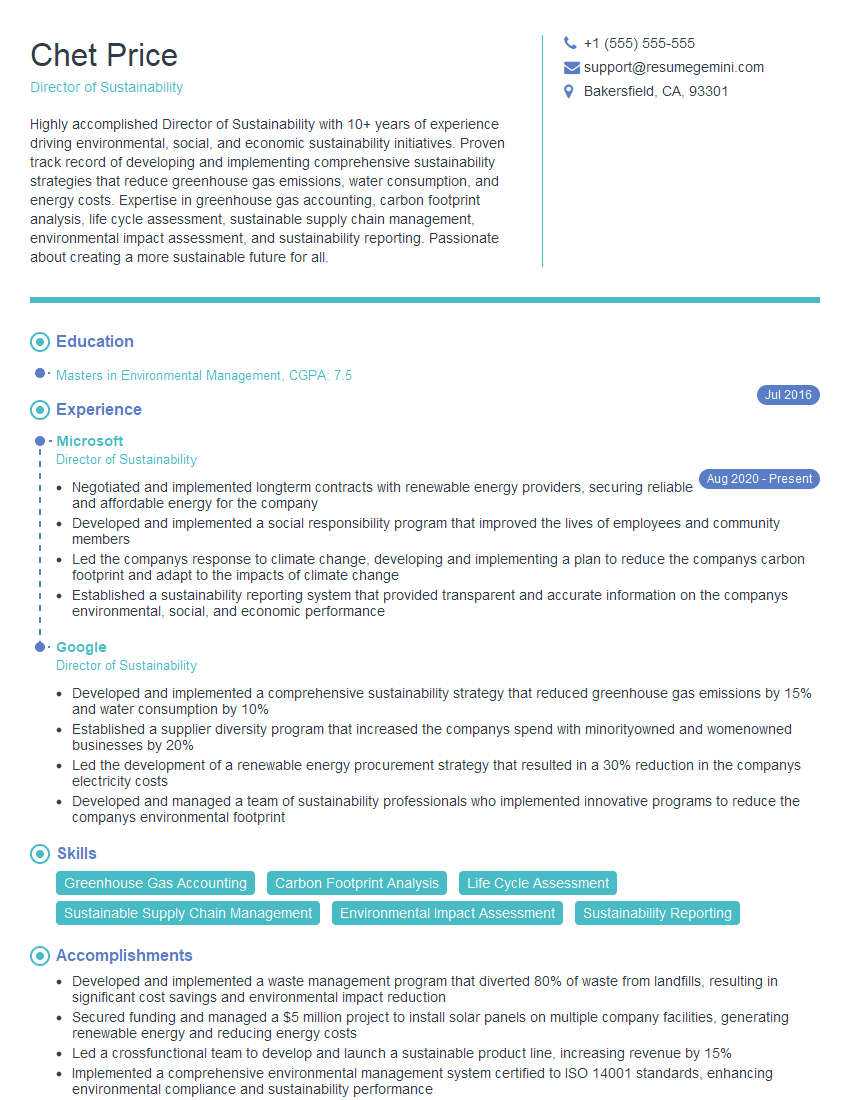
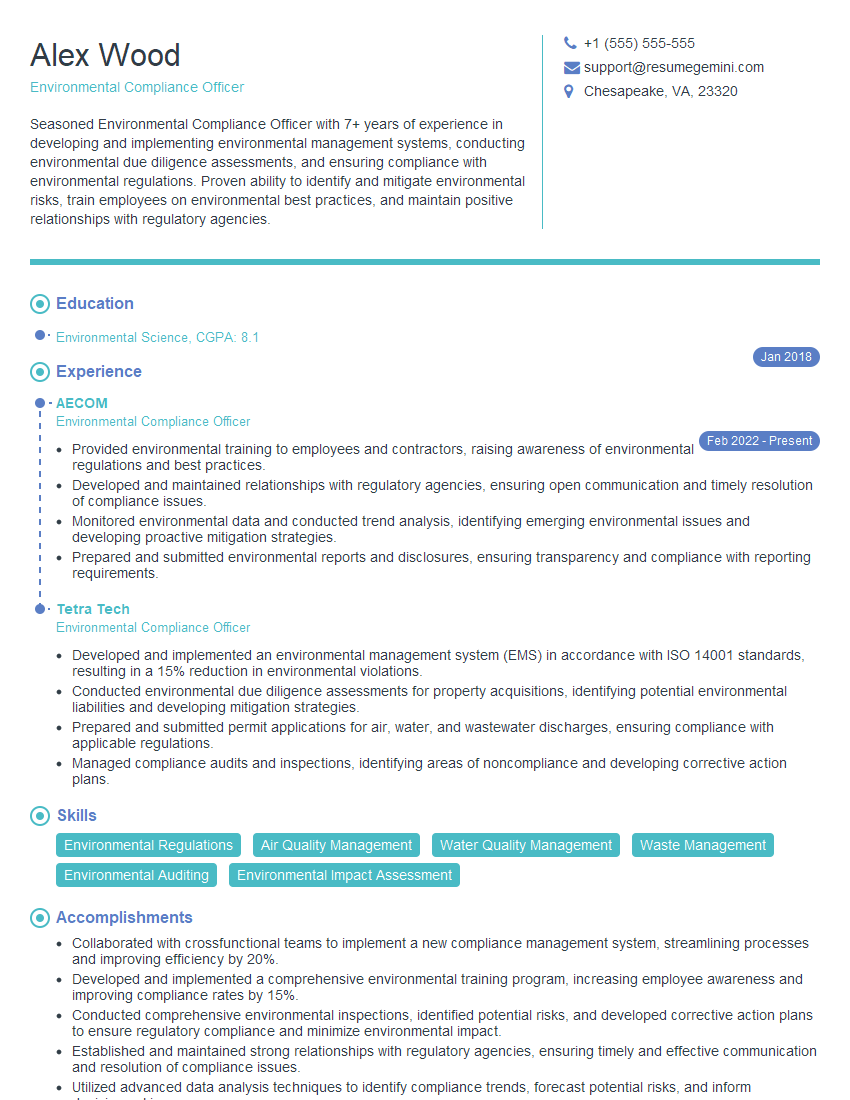
Mastering Environmental Accounting and Reporting opens doors to exciting and impactful careers within sustainability and corporate social responsibility. Proficiency in this field demonstrates a commitment to ethical business practices and significantly enhances your marketability. To maximize your job prospects, creating a strong, ATS-friendly resume is crucial. ResumeGemini is a trusted resource that can help you craft a compelling resume tailored to showcase your skills and experience effectively. Examples of resumes specifically designed for Environmental Accounting and Reporting professionals are available to help you get started. Invest time in crafting a professional resume – it’s your first impression on potential employers.

Explore more articles
Users Rating of Our Blogs
Share Your Experience
We value your feedback! Please rate our content and share your thoughts (optional).
What Readers Say About Our Blog
To the interviewgemini.com Webmaster.
Very helpful and content specific questions to help prepare me for my interview!
Thank you
To the interviewgemini.com Webmaster.
This was kind of a unique content I found around the specialized skills. Very helpful questions and good detailed answers.
Very Helpful blog, thank you Interviewgemini team.