Unlock your full potential by mastering the most common Environmental Compliance and Permitting interview questions. This blog offers a deep dive into the critical topics, ensuring you’re not only prepared to answer but to excel. With these insights, you’ll approach your interview with clarity and confidence.
Questions Asked in Environmental Compliance and Permitting Interview
Q 1. Explain the difference between a permit and a license in environmental compliance.
While both permits and licenses grant authorization to conduct specific activities, they differ significantly in their scope and purpose within environmental compliance. A permit is generally required for activities that have the potential to impact the environment, often involving a detailed review and approval process. Permits often include specific conditions or limitations to minimize environmental harm. Think of it as a detailed agreement outlining the rules for an activity with environmental consequences. A license, on the other hand, usually demonstrates competence or authorization to perform an activity but doesn’t necessarily involve an extensive environmental review. It might be more about demonstrating qualifications rather than environmental protection. For example, a company might need a permit to discharge wastewater into a river, detailing the permitted pollutants and limits, while a license might be needed to operate specific environmental monitoring equipment.
- Permit Example: A National Pollutant Discharge Elimination System (NPDES) permit under the Clean Water Act.
- License Example: A license to operate a hazardous waste treatment facility, demonstrating the facility meets specific safety and operational standards.
Q 2. Describe your experience with NEPA (National Environmental Policy Act) compliance.
My experience with NEPA (National Environmental Policy Act) compliance is extensive. I’ve been involved in numerous projects requiring NEPA review, ranging from small-scale projects with Categorical Exclusions to large-scale undertakings requiring Environmental Impact Statements (EIS). I have a strong understanding of the NEPA process, including the different levels of review (Categorical Exclusion, Environmental Assessment, Environmental Impact Statement), the preparation of environmental documents, and the interaction with federal agencies like the Environmental Protection Agency (EPA) and the Army Corps of Engineers. For instance, I worked on a project involving the construction of a new highway where we had to conduct a thorough environmental assessment, evaluating potential impacts on wildlife habitats, water quality, and air quality. This involved extensive field studies, stakeholder engagement, and the preparation of a comprehensive Environmental Assessment document that ultimately led to a Finding of No Significant Impact (FONSI).
Q 3. How familiar are you with the Clean Water Act (CWA) and its permitting process?
I’m very familiar with the Clean Water Act (CWA) and its permitting process. The CWA regulates the discharge of pollutants into waters of the United States. The cornerstone of the CWA’s permitting program is the National Pollutant Discharge Elimination System (NPDES) permit. I have significant experience in assisting clients with obtaining and complying with NPDES permits, including the preparation of permit applications, monitoring reports, and compliance evaluations. This includes understanding the different permit types (e.g., individual permits, general permits, stormwater permits) and navigating the complexities of water quality standards, effluent limitations, and monitoring requirements. I’ve worked on projects ranging from industrial discharges to municipal wastewater treatment plants, and possess a detailed understanding of the relevant regulations and enforcement mechanisms.
For example, I recently assisted a manufacturing facility in obtaining a renewed NPDES permit. This involved conducting a comprehensive discharge monitoring report analysis, ensuring compliance with effluent limitations, and addressing any permit conditions.
Q 4. Explain the process for obtaining an air quality permit.
The process for obtaining an air quality permit varies depending on the location and the type of emission source. Generally, it involves several key steps:
- Identify applicable regulations: Determine which federal, state, and local air quality regulations apply to your specific emission source.
- Prepare a permit application: Gather all necessary information, including emission estimates, control technology descriptions, and other relevant data. This often requires detailed engineering calculations and air dispersion modeling.
- Submit the application: Submit the completed application to the relevant permitting authority (often a state environmental agency or the EPA).
- Permit review and public comment: The permitting authority reviews the application, and in many cases, a public comment period is required.
- Permit issuance or denial: Based on the review, the permitting authority will issue the permit, deny the application, or request additional information. Permits usually contain specific conditions to minimize environmental impacts.
- Compliance monitoring and reporting: Once the permit is issued, the facility must comply with all permit conditions and regularly submit monitoring reports.
Obtaining an air permit can be a complex and time-consuming process, requiring significant expertise in air quality regulations, modeling, and permitting procedures. A common example is a Title V permit under the Clean Air Act, required for major stationary sources of air pollutants.
Q 5. What are the key components of an environmental management system (EMS)?
Key components of an effective Environmental Management System (EMS) are typically aligned with ISO 14001 standards. These include:
- Environmental Policy: A formal statement of the organization’s commitment to environmental protection and continuous improvement.
- Planning: Identifying environmental aspects (potential environmental impacts from an organization’s activities) and impacts, establishing environmental objectives and targets, and developing programs to meet those targets.
- Implementation and Operation: Implementing the planned programs, training employees, managing resources, and establishing operational controls.
- Monitoring and Measurement: Regularly monitoring and measuring environmental performance, tracking progress against objectives and targets, and identifying areas for improvement.
- Review: Conducting regular management reviews to assess the effectiveness of the EMS and make necessary improvements.
- Continual Improvement: Continuously improving the EMS’s effectiveness, using data analysis and incorporating lessons learned to enhance its performance.
An EMS provides a structured approach to managing environmental risks and achieving environmental objectives. It helps organizations comply with regulations, improve efficiency, reduce costs, and enhance their environmental reputation.
Q 6. Describe your experience with environmental audits and inspections.
I have extensive experience conducting and participating in environmental audits and inspections. My experience ranges from internal audits to regulatory inspections, across various industries including manufacturing, construction, and waste management. I’m proficient in using checklists, conducting interviews, reviewing records, and identifying areas of non-compliance. During audits, I focus on verifying the effectiveness of environmental controls, checking compliance with permits and regulations, and assessing the overall environmental performance of the facility. For regulatory inspections, I have experience working with inspectors from various agencies, ensuring transparency and clear communication throughout the inspection process.
For example, I recently conducted an internal environmental audit for a manufacturing facility, identifying several areas for improvement in their waste management practices and spill prevention procedures. This resulted in a corrective action plan to address these deficiencies and prevent future environmental incidents.
Q 7. How do you ensure compliance with environmental regulations in a dynamic regulatory environment?
Ensuring compliance in a dynamic regulatory environment requires a proactive and adaptable approach. My strategy involves:
- Staying informed: I actively monitor changes in environmental regulations, utilizing subscriptions to relevant publications, attending industry conferences, and engaging with regulatory agencies.
- Maintaining updated internal procedures and training: We revise our internal procedures and training programs to reflect changes in environmental regulations.
- Regular environmental audits and inspections: Conducting internal audits and inspections regularly helps identify potential compliance issues before they escalate.
- Utilizing environmental information systems and software: We use specialized software to track permits, compliance data, and regulatory updates, enabling proactive compliance management.
- Collaboration and communication: We maintain open lines of communication with relevant regulatory agencies to address any emerging issues or clarifications promptly.
- Continuous improvement: We view compliance not merely as avoiding penalties, but as an opportunity for ongoing improvement, reducing environmental impacts and boosting overall operational efficiency. This often involves data-driven decision-making.
By implementing these measures, we can ensure our clients and our own operations remain compliant and environmentally responsible even in the face of evolving regulations.
Q 8. Explain your understanding of environmental risk assessment and management.
Environmental risk assessment and management is a systematic process used to identify, analyze, and control environmental hazards associated with a project or activity. It involves evaluating potential impacts on various environmental components like air, water, soil, and biodiversity. The goal is to minimize risks and ensure compliance with environmental regulations.
The process typically follows these steps:
- Hazard Identification: Identifying potential environmental hazards associated with the activity (e.g., air emissions from a factory, wastewater discharge from a plant, soil contamination from a spill).
- Risk Analysis: Assessing the likelihood and consequences of each hazard. This often involves considering factors like the toxicity of pollutants, exposure pathways, and vulnerable populations.
- Risk Evaluation: Comparing the level of risk to acceptable thresholds (often set by regulations or company policies). This determines whether the risk is acceptable or requires management.
- Risk Control: Implementing measures to reduce or eliminate the risks. This could involve using cleaner technologies, implementing pollution control equipment, developing emergency response plans, or changing operating procedures.
- Monitoring and Review: Regularly monitoring the effectiveness of risk control measures and reviewing the entire assessment process periodically to adapt to changing conditions or new information.
Example: A construction project near a wetland would require an environmental risk assessment to evaluate the potential impacts of soil erosion, sediment runoff, and habitat disruption. The assessment would identify these hazards, analyze their probability and consequences, and recommend mitigation measures such as implementing erosion and sediment control practices.
Q 9. How do you handle non-compliance situations?
Handling non-compliance situations requires a prompt, thorough, and documented response. The priority is to immediately correct the violation, minimize further environmental damage, and prevent future occurrences. My approach involves:
- Immediate Corrective Action: Identify the root cause of the non-compliance and take immediate steps to rectify the issue. This might involve shutting down equipment, implementing temporary controls, or cleaning up a spill.
- Internal Investigation: Conduct a thorough investigation to understand why the non-compliance occurred. This may involve interviews with staff, reviewing operational records, and identifying weaknesses in procedures or training.
- Reporting to Regulatory Agencies: Report the non-compliance to the relevant environmental authorities as required by law. This often involves submitting a written report detailing the incident, corrective actions, and preventative measures.
- Corrective Action Plan: Develop and implement a comprehensive corrective action plan (CAP) to prevent future occurrences. This plan should address the root causes identified during the investigation and include specific actions, timelines, and responsible parties.
- Documentation: Meticulously document all aspects of the non-compliance event, investigation, corrective actions, and preventative measures. This documentation is critical for demonstrating compliance and for potential future audits.
Example: If a facility exceeds its permitted air emission limits, I would immediately reduce emissions, investigate the cause (e.g., equipment malfunction, process error), report the exceedance to the EPA, develop a CAP including equipment repairs and operator retraining, and implement enhanced monitoring to prevent future exceedances.
Q 10. Describe your experience with environmental remediation projects.
My experience in environmental remediation encompasses various projects, ranging from small-scale soil contamination cleanups to large-scale hazardous waste site remediation. I have been involved in all phases of projects, from initial site assessments and remedial investigations to the implementation of remedial actions and long-term monitoring.
I’m proficient in various remediation techniques, including:
- Soil Vapor Extraction (SVE): Removing volatile organic compounds (VOCs) from soil using vacuum extraction.
- Pump and Treat: Extracting groundwater contaminated with dissolved pollutants and treating it before discharge.
- Bioremediation: Using microorganisms to break down contaminants in soil or water.
- Phytoremediation: Utilizing plants to remove or neutralize contaminants.
Example: I worked on a project where a former industrial site was contaminated with heavy metals. My role involved conducting a site assessment to determine the extent of contamination, developing a remediation plan that included excavation and off-site disposal of contaminated soil, and overseeing the implementation of the plan while ensuring compliance with all applicable regulations. Post-remediation monitoring was also conducted to verify the effectiveness of the remediation actions.
Q 11. What is your experience with environmental monitoring and reporting?
Environmental monitoring and reporting is a crucial part of ensuring environmental compliance. It involves collecting data on environmental parameters (air quality, water quality, noise levels, etc.), analyzing that data, and reporting the results to regulatory agencies or stakeholders. My experience includes designing monitoring programs, selecting appropriate sampling methods and analytical techniques, and preparing comprehensive reports.
I am familiar with various monitoring technologies and techniques, including:
- Water quality monitoring: Using sensors and laboratory analysis to measure parameters such as pH, dissolved oxygen, and various pollutants.
- Air quality monitoring: Employing sensors and samplers to measure concentrations of pollutants like particulate matter, ozone, and sulfur dioxide.
- Soil and sediment sampling: Collecting samples for laboratory analysis to determine the presence and concentrations of contaminants.
- Noise monitoring: Measuring noise levels using sound level meters to ensure compliance with noise regulations.
Example: I designed a comprehensive environmental monitoring program for a manufacturing facility, which included regular sampling of wastewater discharge, ambient air quality monitoring, and periodic soil sampling around the facility. The data collected were used to generate regular reports to the regulatory authorities, demonstrating compliance with permit conditions and identifying potential issues early on.
Q 12. How familiar are you with various environmental impact assessment methodologies?
I am familiar with various environmental impact assessment (EIA) methodologies, including those used for both strategic and project-level assessments. These methodologies vary depending on the project’s nature and scale, the relevant legislation, and the specific environmental concerns involved.
Common methodologies include:
- Baseline Studies: Detailed descriptions of the existing environmental conditions in the area affected by the project.
- Impact Prediction: Utilizing models and expert judgment to predict the potential impacts of the project on different environmental components.
- Mitigation Measures: Identifying and evaluating measures to avoid, minimize, or compensate for any significant adverse impacts.
- Impact Assessment Matrix: A structured table to organize and analyze the potential impacts and their significance.
- Life Cycle Assessment (LCA): Analyzing the environmental impacts of a product or activity throughout its entire life cycle, from raw material extraction to disposal.
Example: In assessing the environmental impacts of a proposed highway construction project, I would use a combination of methodologies, including baseline studies to characterize the existing ecosystem, hydrological modeling to predict changes in water flow, and habitat suitability models to assess potential impacts on wildlife. The EIA report would also identify and evaluate mitigation measures such as culvert design to maintain stream connectivity and habitat restoration in impacted areas.
Q 13. Explain your understanding of environmental liability and insurance.
Environmental liability refers to the legal responsibility of an entity for environmental damage or pollution. This can stem from various activities, including improper waste disposal, accidental spills, or non-compliance with environmental regulations. Environmental insurance is designed to cover potential costs associated with environmental liability claims, including cleanup costs, legal fees, and compensation to third parties.
Understanding environmental liability is critical for risk management. It’s essential to:
- Identify potential sources of liability: This includes assessing the risks associated with various operations and identifying potential pollution sources.
- Implement preventative measures: Implementing robust environmental management systems to minimize risks and prevent accidents or violations.
- Obtain appropriate insurance coverage: Securing insurance policies that adequately cover potential liabilities.
- Maintain accurate records: Keeping detailed records of environmental activities and compliance efforts.
Example: A company that operates a chemical plant faces significant environmental liability if there is an accidental release of hazardous chemicals. Environmental insurance can help mitigate the financial burden associated with cleanup and potential legal actions. Proper risk management includes careful handling of chemicals, robust emergency response plans, and comprehensive environmental liability insurance.
Q 14. How do you stay updated on changes in environmental regulations?
Staying updated on changes in environmental regulations is crucial for compliance. My approach involves:
- Subscription to Regulatory Updates: Subscribing to newsletters, journals, and online resources from relevant environmental agencies (e.g., EPA, state environmental agencies).
- Professional Networks: Actively participating in professional organizations and attending conferences and workshops to learn about the latest developments and best practices.
- Legal Databases: Utilizing legal databases to track changes in legislation and case law relevant to environmental compliance.
- Regulatory Agency Websites: Regularly reviewing the websites of relevant regulatory agencies for updates on new rules, guidance documents, and enforcement actions.
- Industry Publications: Reading industry publications and news sources covering environmental regulations and compliance issues.
Example: I regularly check the EPA website for updates on Clean Air Act regulations and the changes in permitting requirements for industrial facilities. Participation in professional organizations such as the Association of Environmental Professionals (AEP) provides networking opportunities and access to the latest information. This ensures my knowledge stays current, allowing for proactive compliance with the ever-evolving regulatory landscape.
Q 15. Describe your experience with environmental due diligence.
Environmental due diligence is the process of identifying and assessing potential environmental liabilities associated with a property or business transaction. It’s crucial for minimizing risk and ensuring compliance. My experience encompasses conducting Phase I, II, and III Environmental Site Assessments (ESAs) for various clients, including real estate developers, corporations, and private individuals. This involves reviewing historical records, conducting site inspections, and analyzing environmental data to identify potential contamination, such as asbestos, lead paint, or petroleum hydrocarbons. I’ve successfully identified and mitigated numerous environmental risks, leading to smoother transactions and avoidance of costly remediation efforts. For example, during a recent due diligence project for a large industrial site, I discovered evidence of past hazardous waste disposal. This discovery allowed the client to negotiate a reduced purchase price and secure funding for the necessary remediation, avoiding significant financial penalties down the line.
Career Expert Tips:
- Ace those interviews! Prepare effectively by reviewing the Top 50 Most Common Interview Questions on ResumeGemini.
- Navigate your job search with confidence! Explore a wide range of Career Tips on ResumeGemini. Learn about common challenges and recommendations to overcome them.
- Craft the perfect resume! Master the Art of Resume Writing with ResumeGemini’s guide. Showcase your unique qualifications and achievements effectively.
- Don’t miss out on holiday savings! Build your dream resume with ResumeGemini’s ATS optimized templates.
Q 16. How would you manage conflicting environmental regulations from different agencies?
Managing conflicting environmental regulations from different agencies requires a systematic and collaborative approach. It’s like navigating a complex maze where each agency has its own set of rules. My strategy involves:
- Identifying all applicable regulations: This includes federal, state, and local laws, permits, and guidelines relevant to the project or facility. Thorough research and consultation with various agencies are critical.
- Analyzing the regulations for conflicts: This involves comparing the requirements of each agency to pinpoint discrepancies or overlaps. For instance, one agency might have stricter emission limits than another.
- Developing a compliance strategy: This focuses on meeting the most stringent requirements while engaging in open communication with all relevant agencies. This may involve seeking clarification, proposing alternative solutions, or seeking waivers where appropriate.
- Maintaining meticulous documentation: Detailed records of communication, compliance measures, and any deviations from regulations are crucial for demonstrating compliance and defending against potential enforcement actions.
For example, I once worked on a project where a state water quality permit conflicted with federal Clean Water Act requirements. By collaborating with both agencies, we developed a comprehensive plan that satisfied all regulatory requirements and minimized environmental impact.
Q 17. What is your experience with environmental data management and analysis?
My experience with environmental data management and analysis is extensive. It’s like being a detective, piecing together clues from various sources to form a complete picture. I’m proficient in using various software and techniques to collect, process, and interpret environmental data. This includes utilizing Geographic Information Systems (GIS) software to visualize spatial data like contamination plumes, using statistical software to analyze water quality data and identify trends, and managing large datasets through database systems. I’ve successfully used this expertise to support environmental impact assessments, regulatory reporting, and compliance monitoring. For instance, I developed a custom GIS database to track soil contamination levels across a large Superfund site, allowing for efficient monitoring of remediation efforts and informed decision-making.
Q 18. Describe a time you had to resolve a complex environmental compliance issue.
During a project involving a manufacturing facility, we discovered an exceedance of permitted discharge limits for a specific pollutant. The initial reaction was panic, but through systematic problem-solving, we resolved the issue.
- Root Cause Analysis: We conducted a thorough investigation to identify the source of the exceedance. This involved reviewing operational records, inspecting equipment, and conducting laboratory analysis of wastewater samples. The root cause was pinpointed to a faulty valve on a treatment system.
- Corrective Actions: The faulty valve was immediately replaced, and the wastewater treatment system underwent comprehensive maintenance and calibration.
- Reporting and Communication: We promptly reported the exceedance and implemented corrective actions to the regulatory agency. Transparent communication was key to avoiding penalties.
- Preventative Measures: To avoid future incidents, we implemented a robust preventative maintenance program for the wastewater treatment system, including regular inspections, testing, and operator training.
This experience highlighted the importance of proactive monitoring, thorough investigations, and transparent communication with regulatory agencies. Successfully resolving this complex issue minimized environmental damage and avoided potentially significant fines.
Q 19. What software or tools do you use for environmental compliance management?
I utilize a variety of software and tools for environmental compliance management. These tools are crucial for streamlining workflows and ensuring accurate record-keeping. Some key examples include:
- Environmental data management software: This type of software helps to store, organize, and analyze environmental data efficiently. Examples include EPA’s Envirofacts and specialized environmental databases.
- GIS software (e.g., ArcGIS): GIS is essential for visualizing spatial data, creating maps showing contamination plumes, and tracking remediation progress.
- Statistical software (e.g., R, SPSS): These tools are used to analyze environmental data, identify trends, and perform statistical modeling.
- Permitting and compliance software: These platforms help to manage permits, track deadlines, and ensure compliance with regulatory requirements.
Choosing the right tools depends on the specific needs of the project or organization. I adapt my tool selection based on the specific challenges and regulatory requirements of each situation.
Q 20. How do you communicate complex environmental information to non-technical audiences?
Communicating complex environmental information to non-technical audiences requires simplifying the language and using relatable analogies. It’s about bridging the gap between technical expertise and general understanding. My approach involves:
- Using plain language: Avoid technical jargon and complex terminology. If technical terms are necessary, define them clearly.
- Visual aids: Use charts, graphs, and diagrams to present data in a visually appealing and easily understandable way.
- Real-world examples: Relate environmental concepts to everyday life experiences to enhance understanding.
- Storytelling: Frame information within a narrative to engage the audience and make the information memorable.
- Active listening and feedback: Ensure the audience understands the information by actively listening and addressing their questions and concerns.
For example, when explaining groundwater contamination to a community group, I might use an analogy of a sponge absorbing a spilled drink. This helps to illustrate the movement of contaminants and the potential impacts on water resources.
Q 21. Explain your understanding of the different types of environmental permits.
Environmental permits are authorizations issued by government agencies allowing specific activities that may impact the environment. The types of permits vary greatly depending on the activity and the specific regulations. Some common examples include:
- Air permits: Authorize emissions of air pollutants from industrial facilities, power plants, and other sources. These often involve limits on specific pollutants and require monitoring and reporting.
- Water discharge permits (NPDES permits): Regulate the discharge of wastewater into surface waters. They set limits on pollutants and require regular monitoring and reporting.
- Solid waste permits: Govern the handling, storage, treatment, and disposal of solid and hazardous waste.
- Stormwater permits: Manage stormwater runoff from construction sites and industrial facilities to prevent water pollution.
- Wastewater permits: Regulate discharges from municipal and industrial wastewater treatment plants.
- Drilling permits: Authorize exploration and extraction of oil and gas, often including provisions to mitigate environmental impacts.
The specific requirements for each permit vary based on factors such as the location, type of activity, and potential environmental impacts. Obtaining the correct permits is crucial for avoiding legal issues and protecting the environment.
Q 22. How do you ensure the accuracy and completeness of environmental reports?
Ensuring accurate and complete environmental reports is paramount for compliance and responsible environmental stewardship. It’s a multi-step process involving rigorous data collection, meticulous analysis, and thorough quality control.
- Data Validation: I start by verifying the source and reliability of all data. This includes cross-referencing measurements, checking for inconsistencies, and confirming the accuracy of equipment calibration records. For example, if we’re analyzing water samples, I’d ensure the chain of custody is unbroken and that the lab used for testing is accredited.
- Quality Assurance/Quality Control (QA/QC): Implementing a robust QA/QC program is essential. This involves conducting blind sample analysis, running duplicate samples, and comparing results against established quality control limits. Any outliers are investigated to determine their cause.
- Peer Review: Before finalizing a report, I always encourage a peer review. A fresh set of eyes can identify potential errors or omissions that I may have overlooked. This collaborative approach strengthens the report’s credibility.
- Documentation: Maintaining thorough documentation throughout the entire process is crucial. This includes detailed method descriptions, raw data spreadsheets, calculations, and any corrective actions taken. Comprehensive documentation allows for easy traceability and aids in audits or investigations.
Ultimately, the goal is to produce a report that is not only technically sound but also clearly written and easily understandable to a non-technical audience. This ensures transparency and accountability.
Q 23. Describe your experience with environmental sampling and testing.
My experience with environmental sampling and testing spans diverse media, including water, soil, and air. I’m proficient in various sampling methodologies, adhering to strict quality assurance and quality control (QA/QC) protocols.
- Water Sampling: I’ve conducted numerous water quality assessments, employing techniques like grab sampling, composite sampling, and continuous monitoring for parameters such as pH, dissolved oxygen, turbidity, and various pollutants. I understand the importance of selecting appropriate sampling locations and depths based on the specific objectives of the assessment.
- Soil Sampling: I’m experienced in collecting soil samples for various analyses, including contaminant identification and risk assessments. This involves understanding different sampling strategies, such as grid sampling or stratified random sampling, depending on the site conditions and assessment goals. I’ve worked extensively with soil borings and handling of potentially contaminated materials.
- Air Sampling: I have experience with air quality monitoring, including using both passive and active sampling methods to measure gaseous and particulate pollutants. Understanding the implications of wind direction, meteorology, and sampling duration is crucial for accurate results.
- Data Analysis and Interpretation: My skills extend beyond sample collection. I am proficient in analyzing lab results, interpreting data, and preparing technical reports, including statistical analysis where appropriate. For example, I can calculate averages, standard deviations, and conduct trend analysis to identify potential problems.
My experience ensures that sampling plans are meticulously designed, executed, and interpreted accurately, providing reliable data for informed decision-making.
Q 24. What is your experience with environmental incident response and reporting?
Responding effectively to environmental incidents is critical for minimizing environmental damage, preventing further contamination, and ensuring regulatory compliance. My experience covers the full spectrum of incident response, from initial assessment to final remediation.
- Incident Assessment: The first step is a rapid assessment to determine the extent and nature of the incident, identifying the affected area and potential impacts. This often involves coordinating with emergency responders and regulatory agencies.
- Containment and Remediation: Once the extent of the incident is understood, containment and remediation measures are implemented to prevent further spread of contamination. This may involve deploying booms to contain oil spills, using absorbent materials to clean up chemical spills, or excavating contaminated soil.
- Reporting and Documentation: Detailed records of the incident, including the cause, actions taken, and ongoing monitoring, are maintained. This documentation is essential for regulatory reporting and future incident prevention. I am experienced in preparing reports for agencies like the EPA or state environmental departments.
- Communication: Effective communication is vital throughout the incident response process. This involves keeping stakeholders informed, including regulatory agencies, the public, and affected parties. Transparency is key to building trust and managing expectations.
I have personally managed several incidents, ranging from minor spills to larger releases, ensuring all actions were taken within the framework of applicable laws and regulations. For instance, I once successfully managed a chemical spill at a manufacturing plant, limiting environmental damage and ensuring swift compliance with the required reporting protocols.
Q 25. How do you prioritize environmental compliance tasks in a busy work environment?
Prioritizing environmental compliance tasks in a fast-paced environment requires a structured approach. I use a combination of techniques to effectively manage workload and ensure timely completion of critical tasks.
- Risk-Based Prioritization: I prioritize tasks based on their potential environmental impact and regulatory deadlines. High-risk, imminent deadlines take precedence over lower-risk tasks with more flexible timelines. For example, preparing for an upcoming permit renewal would take priority over a less urgent data analysis task.
- Regulatory Calendar: Maintaining a comprehensive regulatory calendar is crucial. This calendar tracks all upcoming deadlines, allowing me to proactively schedule tasks and prevent last-minute rushes. This helps anticipate and prepare for upcoming inspections or reporting requirements.
- Project Management Tools: I utilize project management software or tools to track progress, assign responsibilities, and manage deadlines effectively. This helps to maintain organization and accountability, even in complex projects involving multiple stakeholders.
- Regular Reviews and Adjustments: I regularly review my task list and make adjustments as needed. This allows for flexibility to accommodate unforeseen events or shifting priorities. This is particularly important during peak seasons or in response to unexpected incidents.
This multi-pronged approach ensures that critical environmental compliance tasks are completed on time and with the necessary attention to detail, mitigating potential risks and penalties.
Q 26. Describe your experience with stakeholder engagement related to environmental compliance.
Stakeholder engagement is crucial for successful environmental compliance. It involves fostering open communication and collaboration with various parties, including regulatory agencies, community members, and internal teams.
- Regulatory Agency Interactions: I’m adept at communicating with regulatory agencies, ensuring clear and accurate reporting and responding proactively to their inquiries. Building positive relationships with these agencies is essential for navigating compliance complexities and avoiding potential conflicts.
- Community Engagement: I’ve participated in community meetings, public forums, and outreach events to address environmental concerns and keep the public informed. Transparency and active listening are paramount in building trust and ensuring community acceptance of environmental projects.
- Internal Stakeholder Communication: Effective communication within the organization is essential. I work to ensure all relevant teams (operations, management, legal) are aware of environmental compliance requirements and responsibilities.
- Conflict Resolution: Sometimes, conflicting interests arise between stakeholders. My experience helps me mediate these disagreements, finding common ground and fostering collaboration to achieve mutually agreeable solutions.
For example, during a recent project involving a proposed wastewater treatment upgrade, I effectively engaged with the local community to address their concerns about potential environmental impacts, ultimately securing their support for the project.
Q 27. How familiar are you with the Resource Conservation and Recovery Act (RCRA)?
The Resource Conservation and Recovery Act (RCRA) is a landmark environmental law in the United States governing the generation, transportation, treatment, storage, and disposal of hazardous and non-hazardous waste. I have an extensive understanding of its key provisions.
- Hazardous Waste Management: RCRA establishes a cradle-to-grave system for hazardous waste, requiring generators to properly manage their waste from generation to final disposal. This includes procedures for identifying hazardous waste, obtaining permits for treatment, storage, and disposal facilities, and ensuring compliance with stringent handling requirements.
- Non-Hazardous Waste Management: RCRA also addresses the management of non-hazardous waste, setting standards for solid waste disposal facilities and promoting waste reduction and recycling.
- Underground Storage Tanks (USTs): RCRA regulates USTs, requiring owners and operators to comply with specific leak detection and prevention measures to protect groundwater resources.
- Corrective Action: If a release of hazardous waste occurs, RCRA mandates corrective actions to clean up the contamination and restore the environment.
My experience includes working with facilities subject to RCRA regulations, assisting them in complying with permit requirements, developing waste management plans, and conducting audits to identify and address potential compliance gaps.
Q 28. Explain your understanding of the Comprehensive Environmental Response, Compensation, and Liability Act (CERCLA).
The Comprehensive Environmental Response, Compensation, and Liability Act (CERCLA), also known as Superfund, addresses the cleanup of hazardous waste sites that pose a threat to human health and the environment. My understanding of CERCLA extends to its key components.
- Site Identification and Assessment: CERCLA establishes a process for identifying and assessing potentially hazardous waste sites, using the Hazard Ranking System (HRS) to prioritize sites for cleanup.
- Remediation: The act provides for the cleanup of hazardous waste sites through various remediation technologies, depending on the nature and extent of contamination. This can include excavation, in-situ treatment, and containment measures.
- Liability: CERCLA imposes strict liability on potentially responsible parties (PRPs) for the costs of cleanup. This means that parties involved in the generation, transportation, or disposal of hazardous substances can be held liable, even if they didn’t directly cause the contamination.
- National Priorities List (NPL): The NPL is a list of the nation’s most contaminated hazardous waste sites that are eligible for federal Superfund cleanup. Understanding the criteria for inclusion on the NPL is important for assessing risk and compliance.
My work has involved participating in CERCLA-related projects, assisting with site assessments, and reviewing remediation plans. I understand the complexities of CERCLA liability and the processes involved in negotiating cleanup agreements with PRPs.
Key Topics to Learn for Your Environmental Compliance and Permitting Interview
Ace your interview by mastering these essential areas. Remember, practical application and problem-solving skills are key!
- Regulatory Frameworks: Understand the intricacies of federal, state, and local environmental regulations (e.g., Clean Water Act, Clean Air Act, RCRA). Be prepared to discuss your experience navigating these complex legal landscapes.
- Permitting Processes: Familiarize yourself with the various permit types (e.g., NPDES, air permits, solid waste permits), the application process, and common challenges encountered during permit acquisition and compliance.
- Environmental Auditing and Compliance Monitoring: Discuss methods for conducting environmental audits, identifying compliance gaps, and implementing corrective actions. Showcase your understanding of data analysis and reporting related to environmental compliance.
- Environmental Impact Assessments (EIAs): Understand the principles of EIAs, their purpose, and how they inform decision-making in environmental projects. Be ready to discuss your experience in evaluating potential environmental impacts.
- Pollution Prevention and Control: Demonstrate your knowledge of best management practices (BMPs) and technologies for preventing and mitigating pollution across various environmental media (air, water, soil).
- Environmental Remediation: Be prepared to discuss different remediation techniques and technologies for contaminated sites. Understanding site assessments and risk management is crucial.
- Stakeholder Engagement and Communication: Highlight your experience in effectively communicating complex environmental information to diverse audiences, including regulators, clients, and the public.
Next Steps: Launch Your Environmental Career
Mastering Environmental Compliance and Permitting opens doors to exciting and impactful careers. To significantly boost your job prospects, focus on creating a compelling, ATS-friendly resume that showcases your skills and experience effectively. ResumeGemini can help you build a professional resume that stands out. They provide excellent examples specifically tailored for Environmental Compliance and Permitting professionals, giving you a head start in your job search. Invest time in crafting a strong resume – it’s your first impression!
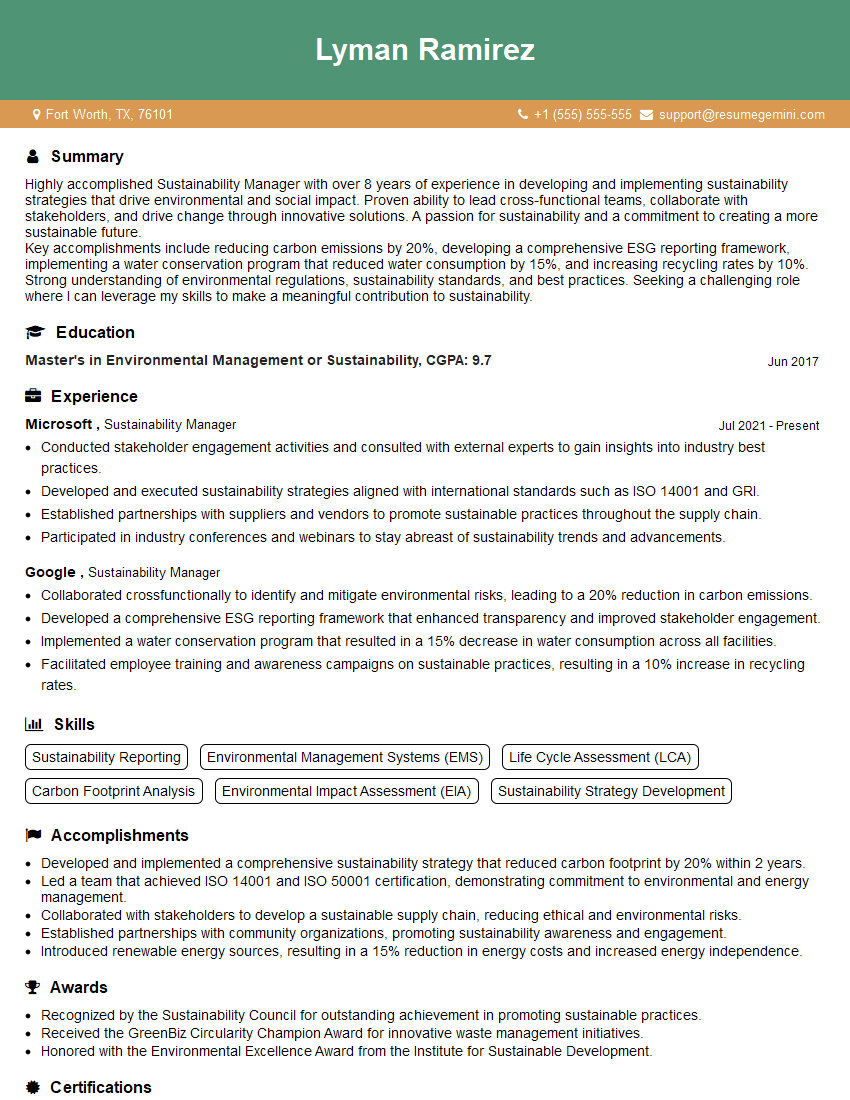
Sustainability Manager Resume Sample
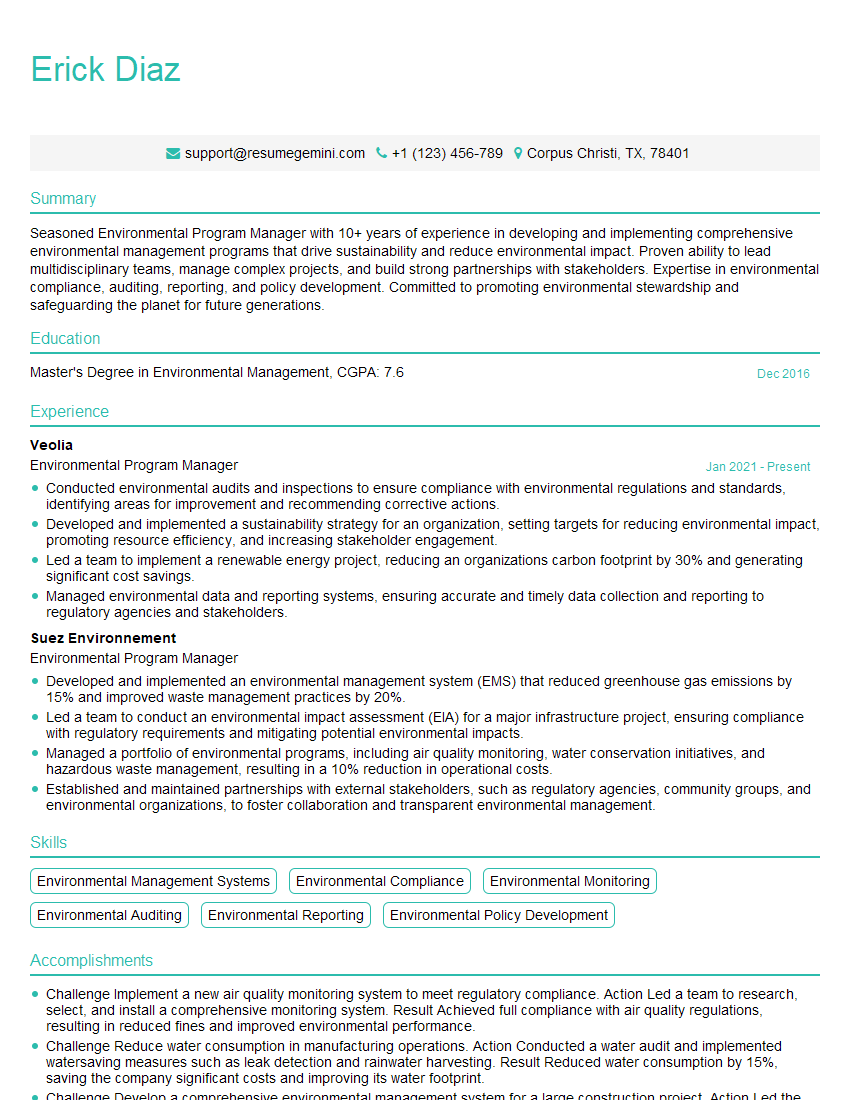
Environmental Program Manager Resume Sample
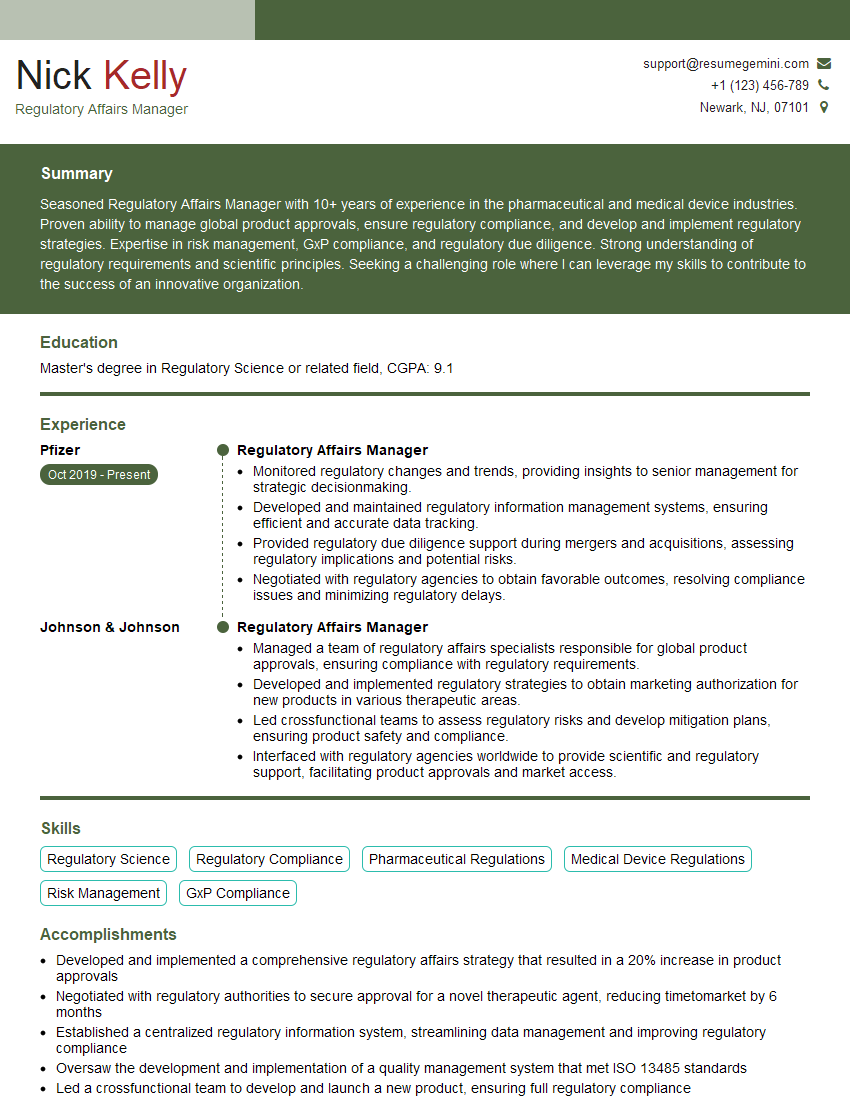
Regulatory Affairs Manager Resume Sample
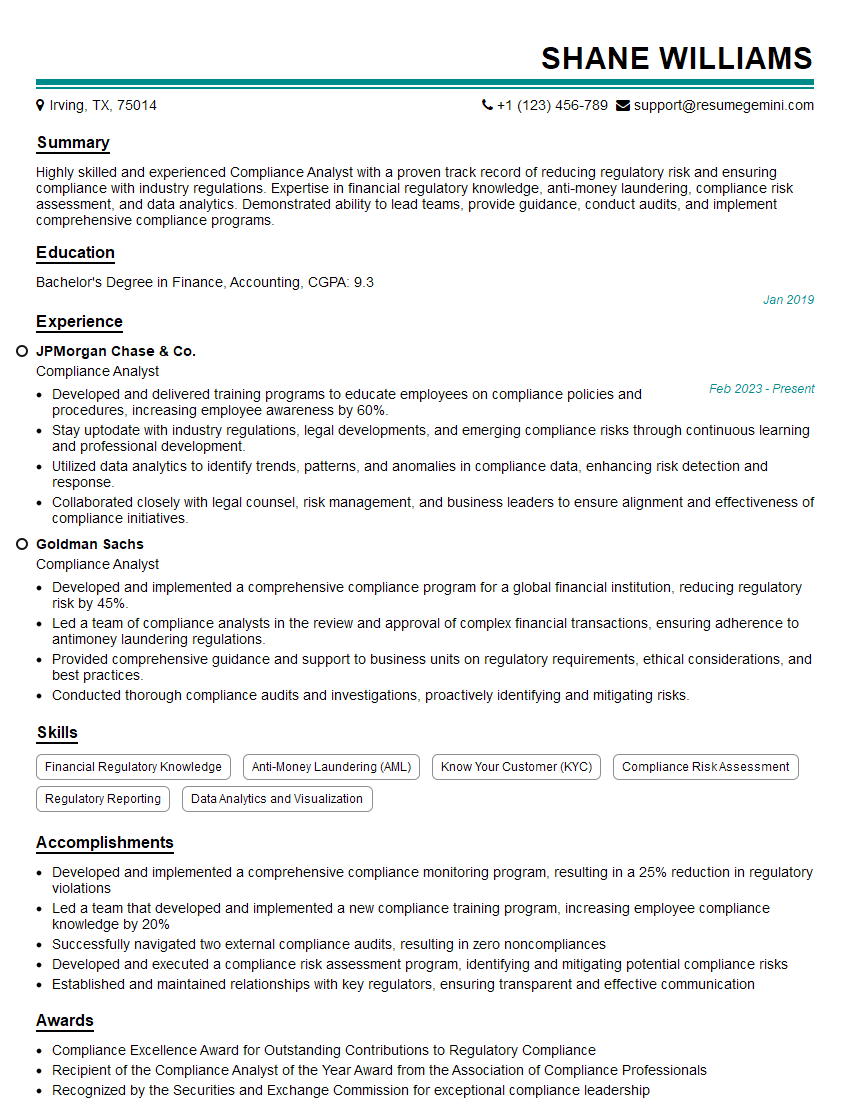
Compliance Analyst Resume Sample
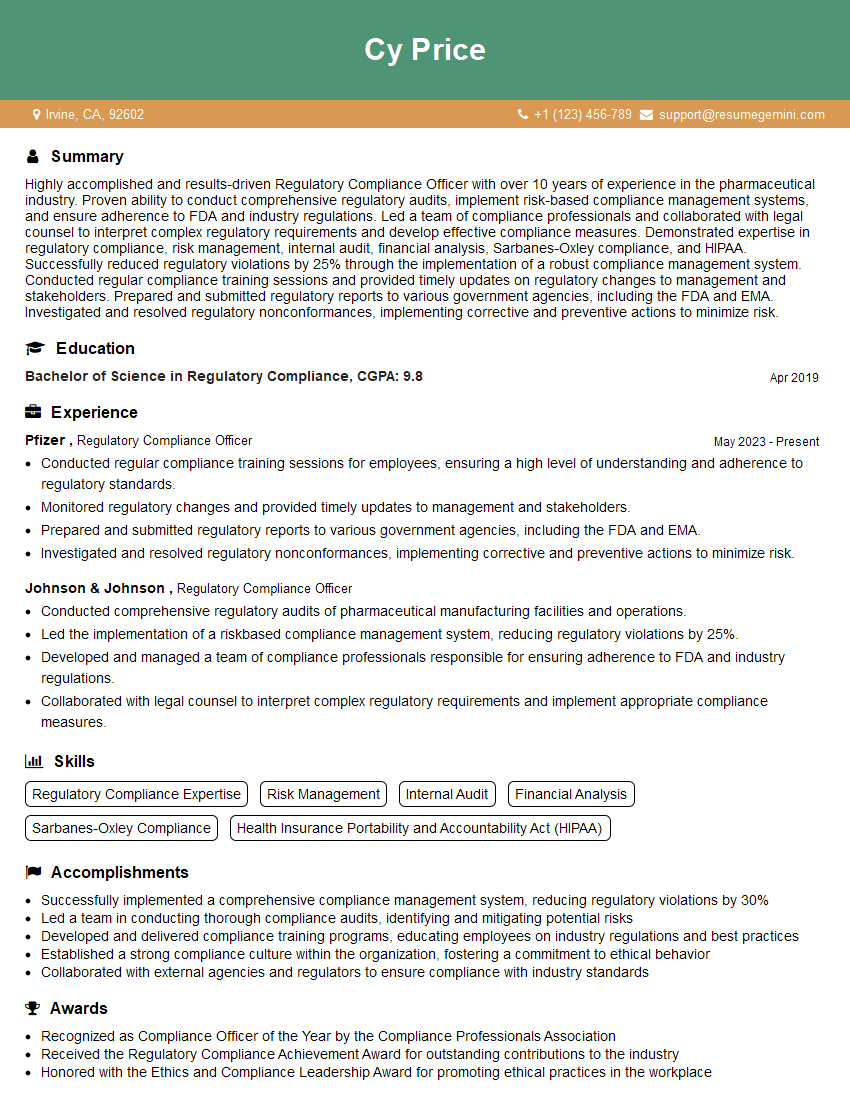
Regulatory Compliance Officer Resume Sample
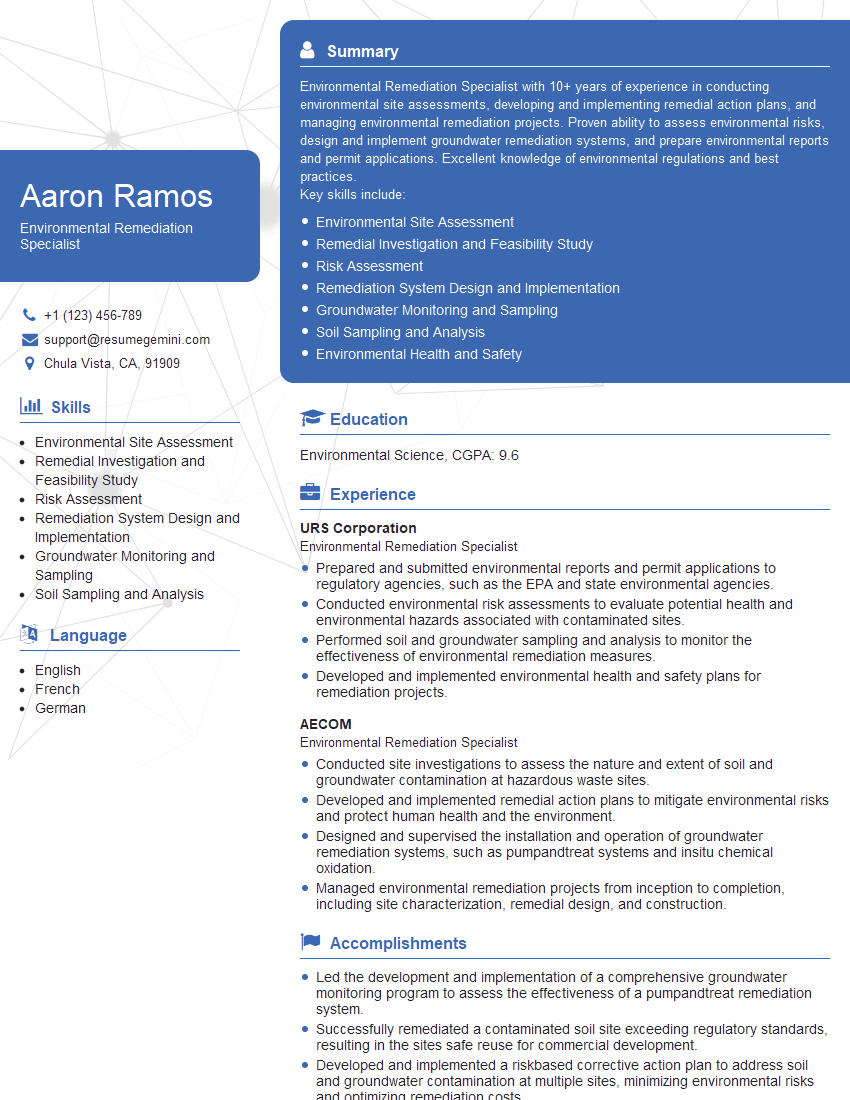
Environmental Remediation Specialist Resume Sample
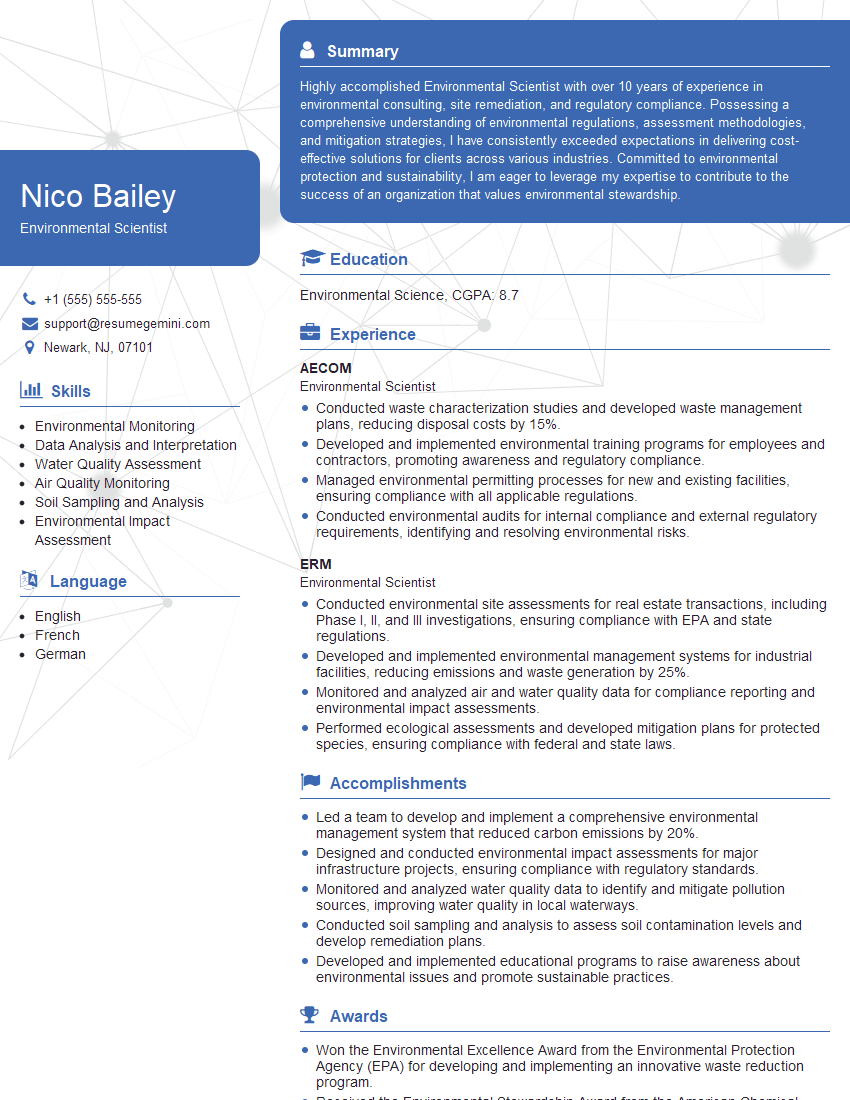
Environmental Scientist Resume Sample
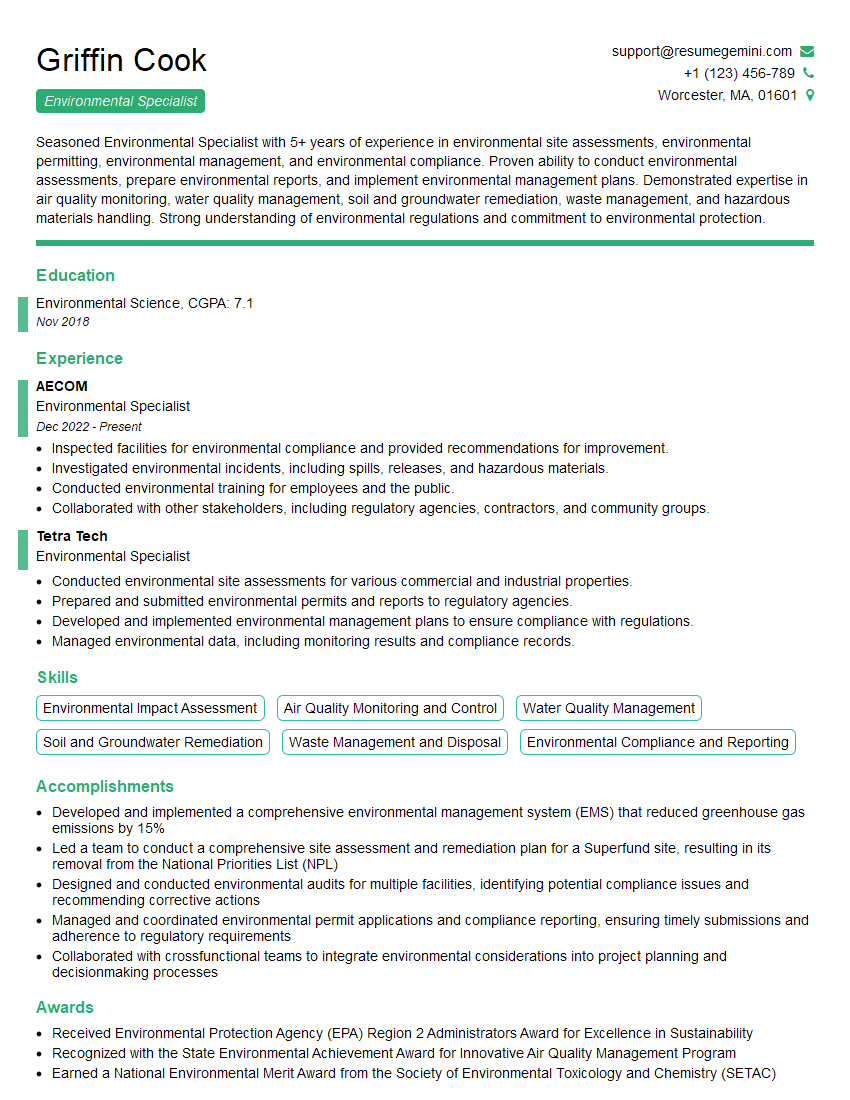
Environmental Specialist Resume Sample

Sustainability Consultant Resume Sample
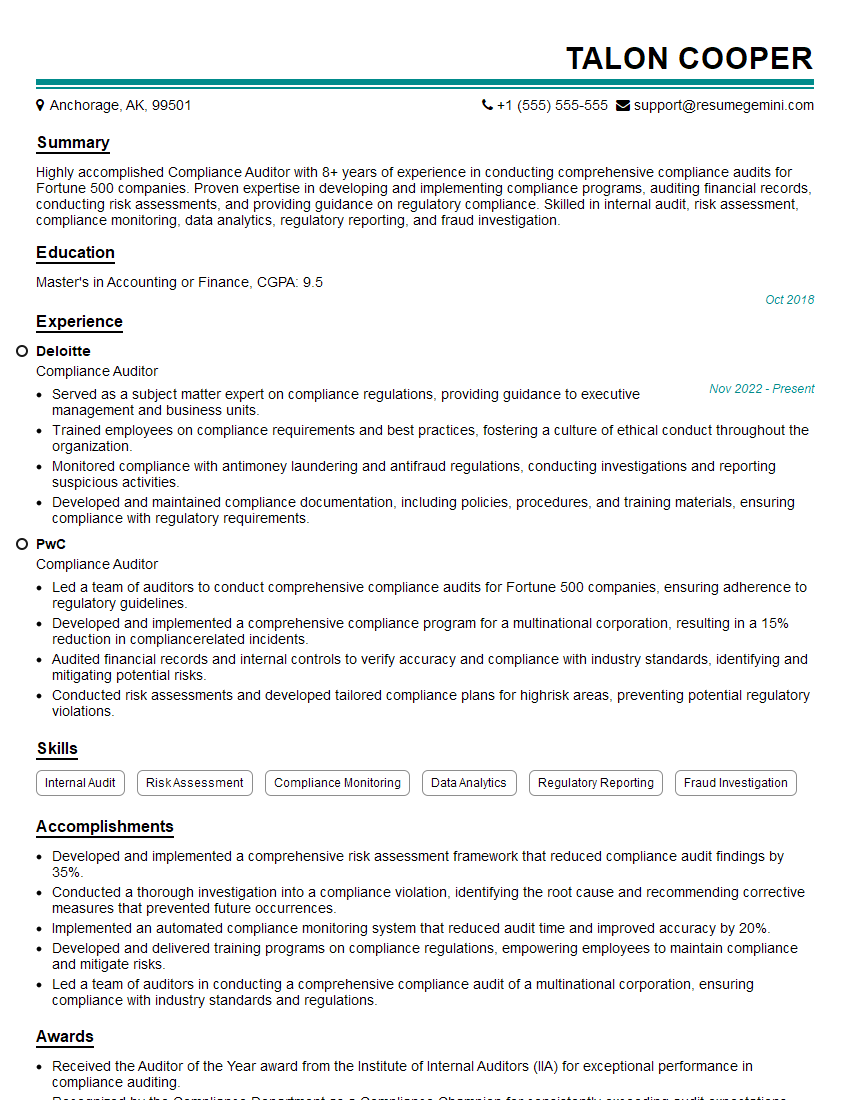
Compliance Auditor Resume Sample
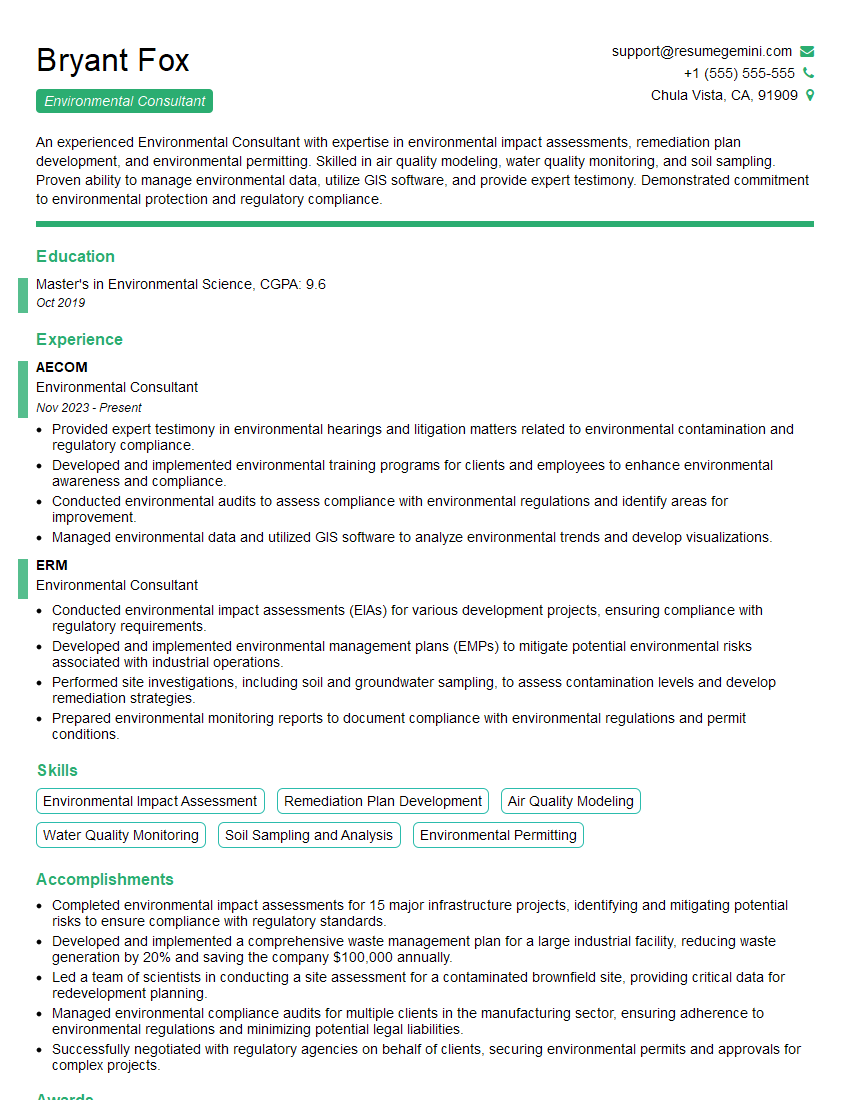
Environmental Consultant Resume Sample
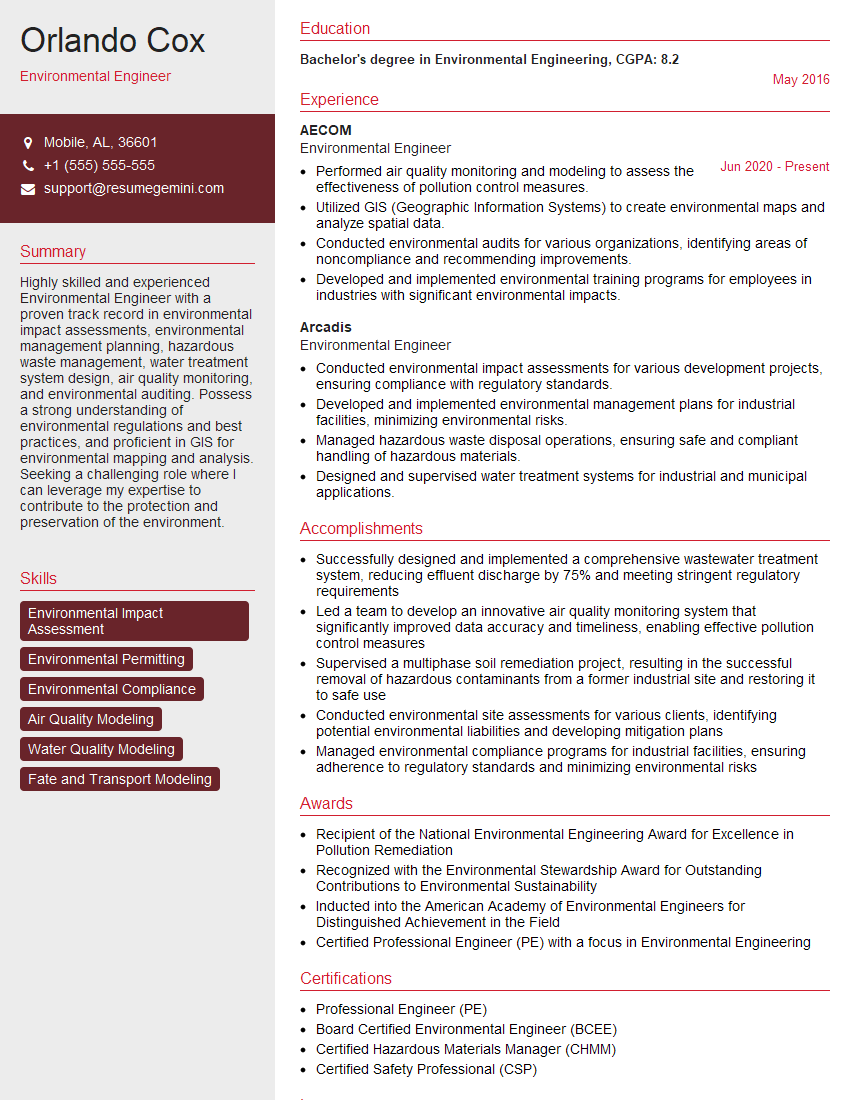
Environmental Engineer Resume Sample
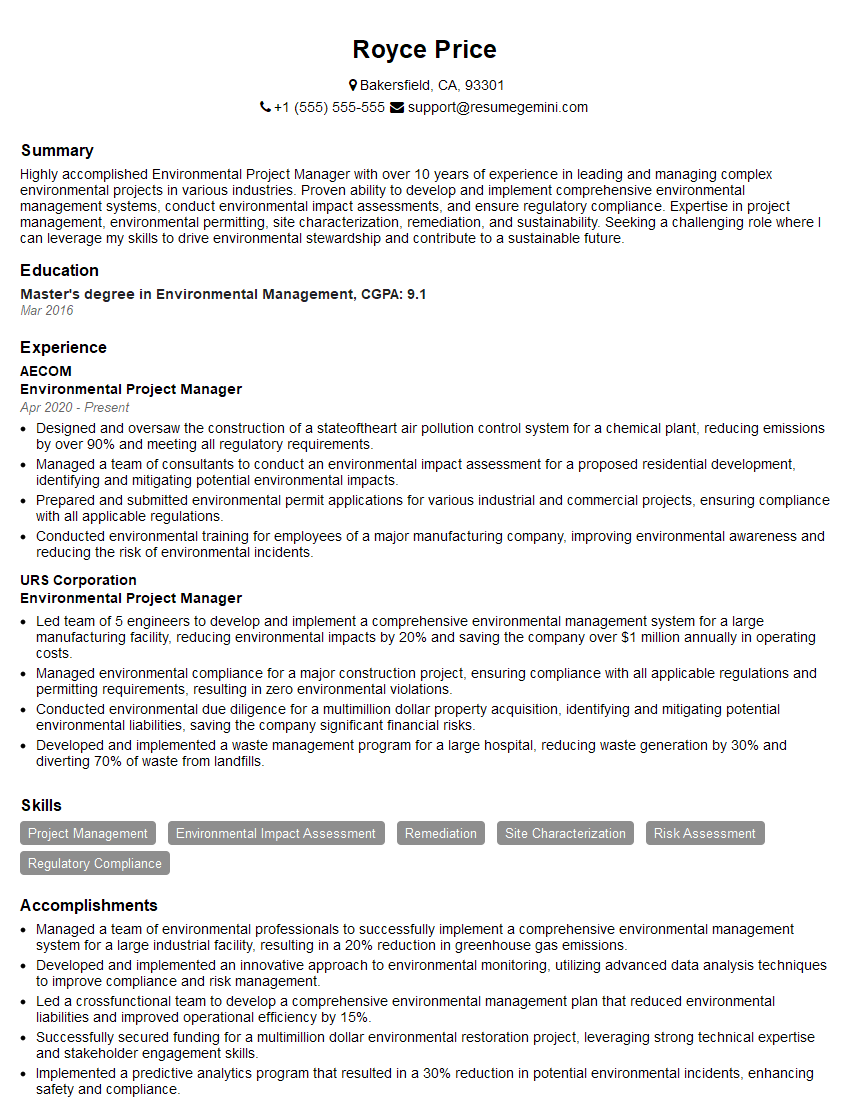
Environmental Project Manager Resume Sample
- Sustainability Manager
- Environmental Program Manager
- Regulatory Affairs Manager
- Compliance Analyst
- Regulatory Compliance Officer
- Environmental Remediation Specialist
- Environmental Scientist
- Environmental Specialist
- Sustainability Consultant
- Compliance Auditor
- Environmental Consultant
- Environmental Engineer
- Environmental Project Manager
Explore more articles
Users Rating of Our Blogs
Share Your Experience
We value your feedback! Please rate our content and share your thoughts (optional).
What Readers Say About Our Blog
To the interviewgemini.com Webmaster.
Very helpful and content specific questions to help prepare me for my interview!
Thank you
To the interviewgemini.com Webmaster.
This was kind of a unique content I found around the specialized skills. Very helpful questions and good detailed answers.
Very Helpful blog, thank you Interviewgemini team.