Unlock your full potential by mastering the most common Environmental Regulation and Compliance interview questions. This blog offers a deep dive into the critical topics, ensuring you’re not only prepared to answer but to excel. With these insights, you’ll approach your interview with clarity and confidence.
Questions Asked in Environmental Regulation and Compliance Interview
Q 1. Explain your understanding of the Clean Air Act.
The Clean Air Act (CAA) is a comprehensive federal law in the United States designed to control air pollution. It sets national ambient air quality standards (NAAQS) for criteria pollutants – substances known to be harmful to human health and the environment, such as ozone, particulate matter, carbon monoxide, sulfur dioxide, nitrogen dioxide, and lead. The CAA doesn’t just set standards; it also empowers the Environmental Protection Agency (EPA) to regulate emissions from various sources, including stationary sources (like power plants and factories) and mobile sources (like cars and trucks).
The Act operates through a system of permits, emission limits, and enforcement mechanisms. For example, major stationary sources must obtain permits demonstrating compliance with emission limits tailored to their specific operations. The EPA uses various strategies, including technological standards (like requiring the installation of scrubbers), market-based mechanisms (like emissions trading programs), and penalties for non-compliance, to achieve the NAAQS.
One crucial aspect is the designation of non-attainment areas – regions that fail to meet the NAAQS. These areas face stricter regulations and require state implementation plans (SIPs) outlining strategies to achieve attainment. In my experience, working with companies in non-attainment areas often involves navigating complex SIP requirements and demonstrating progress toward attainment goals.
Q 2. Describe your experience with environmental impact assessments (EIAs).
Environmental Impact Assessments (EIAs) are crucial for evaluating the potential environmental consequences of proposed projects. My experience involves conducting EIAs for a range of projects, from infrastructure development (roads, pipelines) to industrial facilities and even smaller-scale developments. The process typically involves identifying potential impacts, assessing their significance, and proposing mitigation measures.
A key part of my role is stakeholder engagement. EIAs are not simply technical exercises; they require collaboration with various stakeholders, including community members, government agencies, and other impacted parties. For instance, while conducting an EIA for a proposed wind farm, I facilitated public forums to address community concerns about noise and visual impacts. This led to adjustments in the project design to minimize negative effects and increase community acceptance.
The EIA process usually follows a structured approach: scoping (defining the assessment’s boundaries), baseline data collection, impact prediction and assessment (using various modelling techniques), mitigation planning, and reporting. The final EIA report provides a comprehensive overview of potential environmental impacts and recommendations for minimizing negative consequences. I’ve frequently used software such as ArcGIS for spatial analysis and modelling during this process.
Q 3. How familiar are you with ISO 14001 environmental management systems?
ISO 14001 is an internationally recognized standard that specifies requirements for an environmental management system (EMS). An EMS is a framework that helps organizations manage their environmental responsibilities, improve environmental performance, and achieve environmental objectives. My familiarity with ISO 14001 is extensive; I have been involved in helping numerous organizations implement and maintain ISO 14001-compliant EMSs.
Implementing ISO 14001 involves a structured approach: defining environmental aspects and impacts, setting environmental objectives and targets, developing procedures and processes, and conducting regular internal audits to ensure the EMS’s effectiveness. For example, I’ve assisted a manufacturing company in implementing an EMS by identifying their significant environmental aspects (e.g., wastewater discharge, energy consumption), setting targets for reducing their emissions and water usage, and documenting their processes. This resulted in a significant reduction in their environmental footprint and improved compliance with environmental regulations.
Beyond implementation, I also have experience in conducting ISO 14001 audits, both internal and external, to verify compliance with the standard. This often involves reviewing documentation, conducting on-site inspections, and interviewing personnel to assess the effectiveness of the EMS.
Q 4. What is your experience with environmental audits and reporting?
Environmental audits and reporting are essential for assessing environmental performance and demonstrating compliance. My experience encompasses various types of environmental audits, including compliance audits (checking adherence to specific regulations), management system audits (evaluating the effectiveness of an EMS), and environmental due diligence audits (assessing environmental risks associated with a property or business transaction).
The audit process usually involves planning, data collection (including reviewing records, conducting site inspections, and interviewing personnel), analysis, and reporting. A typical environmental audit report will highlight areas of compliance and non-compliance, identify potential risks, and recommend corrective actions. I’ve utilized various software tools to manage audit data and generate reports.
Reporting is equally critical. It involves communicating environmental performance to stakeholders, both internal and external. This includes preparing regular environmental reports, sustainability reports, and compliance reports for regulatory agencies. Effective environmental reporting requires clear communication and the ability to present complex data in an accessible format. For example, I’ve developed visually appealing dashboards to track key environmental performance indicators (KPIs) and communicate progress towards environmental goals.
Q 5. Explain the process of obtaining environmental permits.
Obtaining environmental permits is a complex process that varies depending on the type of activity and the applicable regulations. Generally, it involves identifying the relevant permits required, preparing and submitting a permit application, undergoing a review process by the regulatory agency, and potentially addressing any deficiencies identified during the review. Each permit application typically requires detailed information about the proposed activity, including its potential environmental impacts and proposed mitigation measures.
For instance, obtaining a wastewater discharge permit requires detailed information about the wastewater characteristics, the proposed treatment system, and the receiving water body. The regulatory agency will review the application to ensure that the proposed activity complies with relevant standards and regulations. The process may involve public consultation and environmental impact assessments. Throughout this process, it’s important to keep meticulous records and accurately track communication with the regulatory agency.
After the permit is granted, it’s crucial to maintain compliance with its conditions. Non-compliance can result in penalties, permit revocation, or even legal action. Effective permit management involves keeping accurate records, monitoring operations, and conducting regular self-audits to ensure ongoing compliance.
Q 6. How do you ensure compliance with environmental regulations?
Ensuring compliance with environmental regulations requires a proactive and multi-faceted approach. It begins with a thorough understanding of the applicable regulations and standards. This involves regularly monitoring changes in legislation and ensuring that all relevant regulations are incorporated into the organization’s environmental management system. A strong understanding of environmental laws, regulations, and best practices is paramount.
Next, robust environmental monitoring and auditing programs are crucial. These programs must be designed to identify potential non-compliance issues early on. Regular monitoring of emissions, discharges, and waste generation, along with periodic environmental audits, enables proactive identification and correction of any deviations from regulatory requirements. Any issues must be properly documented and addressed with a well-defined corrective action plan.
Training and education for employees are equally critical. Employees must be trained to understand their roles and responsibilities in ensuring environmental compliance. This includes awareness of environmental policies, procedures, and emergency response plans. Finally, maintaining open communication with regulatory agencies is essential. This proactive approach helps prevent potential conflicts and fosters collaboration to ensure ongoing environmental compliance.
Q 7. Describe your experience with waste management regulations.
Waste management regulations are designed to minimize the environmental impact of waste generation and disposal. My experience with these regulations includes working with various industries to develop and implement comprehensive waste management plans. These plans typically cover waste characterization, waste segregation, waste treatment, and waste disposal, all tailored to meet specific regulatory requirements and industry best practices.
Regulations often differentiate between various waste streams, such as hazardous waste, non-hazardous waste, and recyclable materials. Hazardous waste, in particular, is subject to strict regulations regarding its handling, storage, transportation, treatment, and disposal. For instance, I’ve worked with clients in the manufacturing sector to implement a robust hazardous waste management program, ensuring proper labeling, storage, and disposal in accordance with regulations like the Resource Conservation and Recovery Act (RCRA) in the US. This involved working with licensed hazardous waste transporters and disposal facilities.
Beyond hazardous waste, I have experience managing non-hazardous waste, such as municipal solid waste, and promoting waste minimization and recycling programs. This involves optimizing waste segregation strategies, implementing recycling programs, and working with waste management contractors to ensure responsible and environmentally sound waste disposal practices.
Q 8. How familiar are you with the National Environmental Policy Act (NEPA)?
The National Environmental Policy Act (NEPA) is the cornerstone of US environmental law. It doesn’t prescribe specific environmental standards, but rather mandates that federal agencies consider the environmental impacts of their actions before making decisions. Think of it as a procedural law, requiring an environmental assessment or environmental impact statement (EIS) for major federal projects.
My familiarity with NEPA is extensive. I understand the intricacies of the EIS process, including scoping, impact analysis, mitigation measures, and public involvement. I’ve reviewed countless NEPA documents, identifying potential environmental issues and ensuring compliance. For example, I worked on a project involving a proposed highway expansion where I helped the agency develop a thorough EIS, addressing concerns about habitat fragmentation and air quality. This involved collaborating with various experts, including biologists, air quality specialists, and social scientists.
Beyond the EIS process, I’m also knowledgeable about NEPA’s categorical exclusions and environmental assessments (EAs), which are used for projects with less significant environmental impacts. I can determine the appropriate NEPA pathway for a given project, ensuring efficiency and compliance.
Q 9. Explain your experience with remediation of contaminated sites.
Remediation of contaminated sites involves the cleanup of land or water affected by hazardous substances. This can range from small-scale spills to large-scale industrial contamination. My experience includes conducting site assessments, developing remediation plans, overseeing the implementation of cleanup activities, and monitoring post-remediation conditions. I’ve worked with various contaminants, including petroleum hydrocarbons, heavy metals, and chlorinated solvents.
For instance, I was involved in a project where a former manufacturing facility was contaminated with PCBs. My role involved coordinating the site investigation, sampling soil and groundwater, developing a remediation strategy that included excavation and off-site disposal, and subsequently managing the regulatory reporting to the relevant environmental agencies. We also implemented a robust monitoring program to verify the effectiveness of the remediation efforts and ensure long-term protection of human health and the environment.
I’m familiar with various remediation technologies, including phytoremediation (using plants to remove contaminants), bioremediation (using microorganisms), and thermal desorption. The choice of technology depends on the specific contaminants, site conditions, and cost considerations. Successful remediation requires a multidisciplinary approach, integrating engineering, science, and regulatory compliance.
Q 10. How do you handle environmental non-compliance issues?
Handling environmental non-compliance involves a systematic approach. First, I’d conduct a thorough investigation to determine the extent and cause of the non-compliance. This may involve reviewing permits, analyzing environmental data, and interviewing personnel. Next, I’d develop a corrective action plan to address the violation and prevent future occurrences. This plan might include immediate actions to mitigate the impact, along with long-term improvements to processes and procedures.
I also prioritize open communication with the relevant regulatory agencies. Early and transparent communication is crucial in resolving non-compliance issues effectively. For example, if a permit limit is exceeded, immediate reporting is critical, followed by a detailed explanation of the cause and the corrective actions taken. The goal is to demonstrate a commitment to compliance and prevent further penalties.
Finally, I would implement robust training programs to ensure staff understand environmental regulations and their responsibilities. Prevention is key, and a well-trained workforce minimizes the risk of future non-compliance.
Q 11. What is your experience with environmental monitoring and data analysis?
Environmental monitoring and data analysis are integral to ensuring environmental compliance. My experience includes designing monitoring programs, collecting samples, analyzing data, and interpreting results. I’m proficient in using various statistical software packages to analyze environmental data and identify trends. I’m also familiar with data management systems to effectively store and retrieve large datasets.
For example, I’ve managed groundwater monitoring programs at several industrial sites, assessing the effectiveness of remediation efforts. I used statistical methods to analyze groundwater data, identifying any potential exceedances of regulatory limits and recommending further actions. I’ve also utilized GIS software to visualize spatial data and assess the potential for contaminant migration.
Accurate data analysis is crucial for making informed decisions, ensuring compliance, and demonstrating environmental stewardship. My experience encompasses various environmental matrices (water, soil, air) and regulatory parameters.
Q 12. Describe your knowledge of air quality regulations.
Air quality regulations aim to protect public health and the environment from harmful air pollutants. My knowledge of these regulations is comprehensive, covering both federal and state requirements. I understand the Clean Air Act (CAA) and its various provisions, including National Ambient Air Quality Standards (NAAQS) and State Implementation Plans (SIPs).
I’m experienced in conducting air quality assessments, permit applications, and compliance monitoring. I understand the requirements for emissions monitoring, reporting, and recordkeeping, and I’m familiar with various air pollution control technologies, such as scrubbers and baghouses. For example, I assisted a manufacturing facility with obtaining an air quality permit, ensuring that their emissions complied with all applicable regulations. This involved developing an emission inventory, conducting dispersion modeling, and preparing a comprehensive permit application.
Air quality is dynamic, constantly influenced by weather patterns and emission sources. Successful management necessitates ongoing monitoring and adaptation.
Q 13. Describe your knowledge of water quality regulations.
Water quality regulations are designed to protect our water resources from pollution. My knowledge encompasses the Clean Water Act (CWA), which regulates discharges into surface waters, and the Safe Drinking Water Act (SDWA), which protects public drinking water supplies. I’m familiar with various water quality parameters, such as pH, dissolved oxygen, and various pollutants.
I have experience in conducting water quality assessments, developing stormwater management plans, and managing wastewater discharge permits. For instance, I assisted a construction project in developing a stormwater pollution prevention plan (SWPPP) that complied with CWA requirements. This included implementing best management practices (BMPs) to reduce erosion and runoff pollution. I understand the permitting process, reporting requirements, and potential penalties for non-compliance.
Protecting our water resources is paramount; my expertise allows for proactive compliance and effective mitigation of potential pollution.
Q 14. How do you prioritize environmental compliance tasks?
Prioritizing environmental compliance tasks requires a strategic approach. I typically use a risk-based approach, focusing on tasks with the highest potential environmental impact and regulatory consequences. This involves considering factors such as the severity of potential violations, the likelihood of occurrence, and the potential environmental and human health impacts.
I also consider regulatory deadlines and prioritize tasks that are critical for maintaining compliance. For example, permit renewals and regulatory reporting deadlines are often prioritized over less time-sensitive activities. I utilize project management tools and techniques to track progress, allocate resources effectively, and ensure timely completion of tasks.
Effective prioritization ensures that resources are used efficiently, and the most critical compliance tasks are addressed first, minimizing the risk of penalties and maximizing environmental protection.
Q 15. Explain your experience with environmental risk assessments.
Environmental risk assessments (ERAs) are systematic processes to identify, analyze, and evaluate potential environmental impacts associated with a project, activity, or facility. My experience involves conducting ERAs across diverse sectors, including industrial manufacturing, construction, and energy. This involves:
- Identifying potential hazards: This includes reviewing site-specific data, existing environmental reports, and conducting site visits to identify potential sources of pollution (air, water, soil) and other environmental risks, such as habitat disruption or greenhouse gas emissions.
- Analyzing potential impacts: Using various models and methodologies (e.g., fate and transport modeling), I assess the likelihood and severity of potential environmental impacts. This often entails evaluating exposure pathways and receptors (e.g., humans, ecosystems).
- Evaluating risks: I determine the overall risk by combining likelihood and severity of impacts. This helps prioritize risk mitigation measures.
- Developing risk mitigation strategies: Based on the risk assessment, I help develop practical and cost-effective strategies to reduce or eliminate risks. This might involve implementing pollution control technologies, changing operational procedures, or selecting alternative sites.
For instance, in a recent project involving a proposed pipeline, I led a team that identified potential risks associated with pipeline leaks, soil erosion during construction, and habitat fragmentation. Our assessment informed the project design, leading to the incorporation of leak detection systems, erosion control measures, and habitat restoration plans.
Career Expert Tips:
- Ace those interviews! Prepare effectively by reviewing the Top 50 Most Common Interview Questions on ResumeGemini.
- Navigate your job search with confidence! Explore a wide range of Career Tips on ResumeGemini. Learn about common challenges and recommendations to overcome them.
- Craft the perfect resume! Master the Art of Resume Writing with ResumeGemini’s guide. Showcase your unique qualifications and achievements effectively.
- Don’t miss out on holiday savings! Build your dream resume with ResumeGemini’s ATS optimized templates.
Q 16. Describe your knowledge of hazardous waste regulations.
My understanding of hazardous waste regulations is extensive, encompassing both federal and state-level requirements. I’m familiar with the Resource Conservation and Recovery Act (RCRA), its hazardous waste identification criteria (e.g., ignitability, corrosivity, reactivity, toxicity), and the generator, transporter, and treatment, storage, and disposal (TSD) facility responsibilities under the act. Specifically, I’m experienced in:
- Hazardous waste characterization: Identifying whether a waste stream qualifies as hazardous using the appropriate regulatory definitions and test methods.
- Manifest preparation and tracking: Ensuring accurate documentation of hazardous waste transportation according to RCRA regulations.
- Compliance auditing: Conducting regular audits to ensure that handling, storage, treatment, and disposal of hazardous waste are consistent with RCRA regulations and permits.
- Spill response planning and execution: Developing and implementing contingency plans for hazardous material releases and spills, ensuring compliance with federal and state regulations.
For example, I’ve assisted clients with obtaining permits for hazardous waste TSD facilities, ensuring compliance with all relevant regulations, and reducing their environmental liabilities. One client was facing potential penalties due to inadequate record-keeping; I implemented a new record-keeping system and helped them achieve compliance.
Q 17. What is your approach to stakeholder engagement on environmental issues?
My approach to stakeholder engagement is based on open communication, transparency, and mutual respect. I believe effective communication is crucial to addressing environmental issues collaboratively. My strategy involves:
- Identifying key stakeholders: This includes regulatory agencies, community members, indigenous groups (where applicable), and impacted businesses.
- Tailoring communication: I adapt my communication style to meet the needs and understanding of each stakeholder group. This often involves using clear, non-technical language.
- Actively listening: I carefully listen to stakeholder concerns and actively seek their input.
- Building trust: I emphasize transparency and honesty in my interactions, building trust among stakeholders.
- Collaborative problem-solving: I work with stakeholders to find solutions that address everyone’s concerns, finding a balance between environmental protection and economic development.
In a recent project involving a proposed wind farm, I facilitated workshops and meetings with local residents, addressing concerns about visual impact, noise pollution, and potential impacts on wildlife. This led to modifications in the project design and improved acceptance by the community.
Q 18. How do you stay up-to-date on changes in environmental regulations?
Staying current with ever-changing environmental regulations is paramount. My strategy involves a multi-pronged approach:
- Subscription to regulatory updates: I subscribe to newsletters and publications from relevant agencies (e.g., EPA, state environmental agencies).
- Professional development: I regularly attend conferences, webinars, and workshops to learn about new regulations and best practices.
- Networking with peers: I maintain a network of colleagues in the field, exchanging information and insights.
- Monitoring legal databases: I utilize legal databases to track changes in legislation and court decisions.
- Utilizing professional associations: Membership in organizations such as the Institute of Environmental Professionals provides access to resources and information.
This proactive approach ensures that my advice and actions always reflect the latest regulatory requirements.
Q 19. Explain your experience with environmental management systems (EMS).
Environmental Management Systems (EMS), such as ISO 14001, provide a structured framework for managing environmental aspects and impacts. My experience includes developing, implementing, and auditing EMS for various organizations. This involves:
- Environmental aspect identification: Identifying all environmental aspects of an organization’s operations and assessing their impacts.
- Setting environmental objectives and targets: Establishing measurable goals for environmental performance improvement.
- Developing and implementing environmental programs: Creating and implementing specific programs to address identified environmental risks and opportunities.
- Internal audits and management reviews: Conducting regular internal audits to monitor compliance and effectiveness of the EMS, and participating in management review meetings to evaluate progress and make improvements.
For example, I assisted a manufacturing facility in implementing an ISO 14001-compliant EMS, leading to significant reductions in energy consumption, waste generation, and greenhouse gas emissions. The implementation also enhanced their reputation and competitiveness.
Q 20. Describe your experience with environmental due diligence.
Environmental due diligence is a critical process to identify and assess potential environmental liabilities associated with a property or business transaction. My experience covers various aspects, including:
- Phase I Environmental Site Assessments (ESAs): Conducting thorough reviews of historical records and site reconnaissance to identify potential environmental concerns.
- Phase II ESAs: Overseeing and interpreting environmental sampling and testing to determine the extent of contamination, if any.
- Remediation strategies: Developing and implementing remediation strategies to address identified contamination, in compliance with applicable regulations.
- Liability assessment: Evaluating the potential environmental liabilities associated with a property or business and advising on risk management strategies.
I recently conducted due diligence for a real estate acquisition, uncovering historical industrial activity on the property. This led to a successful negotiation of purchase price reduction and allocation of funds for remediation, mitigating significant financial risk for my client.
Q 21. How do you ensure compliance with environmental reporting requirements?
Ensuring compliance with environmental reporting requirements involves understanding and adhering to various reporting regulations, including those mandated by the EPA, state environmental agencies, and other regulatory bodies. My approach includes:
- Identifying applicable reporting requirements: Determining the specific reports needed based on the nature of the operations and relevant permits.
- Data collection and analysis: Gathering and analyzing environmental monitoring data to accurately reflect actual performance against permit limits or regulatory requirements.
- Report preparation and submission: Preparing reports in accordance with specified formats and deadlines, using appropriate software and tools.
- Record-keeping: Maintaining comprehensive records of environmental data, reports, and permits.
- Auditing and verification: Conducting regular audits to ensure accuracy and completeness of reporting.
I’ve helped numerous companies navigate complex reporting requirements, avoiding potential penalties and ensuring they remain compliant. For example, I guided a manufacturing plant through the process of preparing and submitting their annual Toxic Release Inventory (TRI) report, ensuring accurate and timely completion.
Q 22. How familiar are you with the Resource Conservation and Recovery Act (RCRA)?
The Resource Conservation and Recovery Act (RCRA) is the cornerstone of federal environmental law regulating solid and hazardous waste. My familiarity extends to its comprehensive framework, encompassing cradle-to-grave management of hazardous waste, from generation and transportation to treatment, storage, and disposal. I’m deeply familiar with RCRA’s Subtitle C, governing hazardous waste, and Subtitle D, covering non-hazardous waste. This includes understanding the complexities of waste characterization, permitting requirements (e.g., Part A and Part B permits), compliance monitoring, and corrective action provisions for releases. I’m also well-versed in the regulations surrounding underground storage tanks (USTs) and the various reporting requirements under RCRA. For example, I’ve successfully guided several clients through the process of obtaining Part B permits, ensuring compliance with all applicable standards and minimizing environmental risks.
Furthermore, I understand the interplay between RCRA and other environmental regulations, such as the Comprehensive Environmental Response, Compensation, and Liability Act (CERCLA) in cases where hazardous waste sites require remediation. My expertise includes understanding the nuances of RCRA’s penalty structures and enforcement actions, making me well-equipped to advise companies on preventative strategies and corrective actions.
Q 23. Describe your experience with environmental litigation and enforcement.
My experience in environmental litigation and enforcement spans over [Number] years. I’ve been involved in numerous cases, ranging from administrative actions before the Environmental Protection Agency (EPA) to full-blown federal court litigation. My experience encompasses both representing regulated entities facing enforcement actions and assisting government agencies in their enforcement efforts.
For instance, I successfully negotiated a settlement for a client facing a significant penalty for violating Clean Water Act (CWA) permits. This involved thorough investigation of the alleged violations, careful analysis of the evidence, and strategic negotiation to achieve a favorable outcome, minimizing financial penalties and reputational damage. In another case, I aided the EPA in building a case against a company that illegally disposed of hazardous waste, resulting in a significant fine and mandated environmental remediation.
This experience has honed my skills in evidence gathering, legal research, and strategic negotiation, all critical for successfully navigating environmental disputes.
Q 24. Explain your experience with developing and implementing environmental policies.
I have extensive experience in developing and implementing environmental policies, both within private companies and in collaboration with government agencies. My approach is rooted in a thorough understanding of regulatory requirements, risk assessment, and stakeholder engagement.
In a previous role, I led the development of a comprehensive environmental management system (EMS) for a large manufacturing facility, aligning it with ISO 14001 standards. This involved conducting environmental audits, identifying areas for improvement, implementing corrective actions, and tracking progress against established goals. The result was a significant reduction in the company’s environmental footprint and improved compliance posture. This involved not only designing internal policies but also working closely with state and federal regulators to ensure alignment with all relevant rules.
In another example, I collaborated with a local government to develop a sustainable waste management plan that addressed issues of landfill capacity and recycling rates. This project required analyzing community needs, evaluating different technology options, and securing funding for the project’s implementation. This experience demonstrates my ability to translate complex environmental issues into practical, actionable policies that achieve measurable environmental outcomes.
Q 25. How would you address a discrepancy in environmental data?
Addressing discrepancies in environmental data requires a systematic and thorough approach. My first step is to carefully document the discrepancy, identifying the source of the data, the nature of the discrepancy, and the potential implications. This involves verifying the data’s accuracy through cross-referencing with other sources, reviewing the methodology used to collect the data, and examining potential sources of error, such as equipment malfunction or human error.
Once the discrepancy is confirmed, I would investigate the root cause, using data analysis techniques to identify patterns and anomalies. This might include statistical analysis to determine if the discrepancy is statistically significant or simply random variation. Depending on the nature of the data and the potential consequences of the discrepancy, I would engage in corrective actions. This could include collecting new data, refining the data collection methodology, or adjusting existing models to account for the discrepancy. Throughout this process, transparency and open communication are crucial. I would keep stakeholders informed of my findings and recommendations.
For example, if a discrepancy arose between self-reported emissions data and independently verified stack test results, I would thoroughly investigate the discrepancies, checking for data entry errors, instrument calibration issues, or incomplete reporting. The result would inform the proper corrective action, whether it be adjusting the self-monitoring protocol or implementing remedial actions to address exceedances.
Q 26. Describe a time you had to resolve a complex environmental compliance challenge.
During my time at [Previous Company], we faced a significant challenge regarding the remediation of a contaminated soil site. The site contained elevated levels of heavy metals, exceeding EPA cleanup standards, and a complex mixture of contaminants. The initial assessment underestimated the extent of contamination, leading to an inadequate remediation plan.
My role involved spearheading a thorough re-evaluation of the site, utilizing advanced soil sampling techniques and laboratory analysis to develop a more accurate assessment of the contamination. We engaged with multiple stakeholders – the EPA, local community groups, and the property owner – to ensure transparency and build consensus on a revised remediation strategy. This included navigating conflicting interests and concerns, and ensuring that our actions met both legal and community expectations.
The revised strategy involved a multi-phase approach incorporating soil excavation, bioremediation techniques, and long-term monitoring. The project was successfully completed on time and under budget, achieving the required remediation goals and leading to the site’s successful redevelopment. This experience highlighted my ability to manage complex technical challenges, work effectively under pressure, and navigate difficult regulatory and stakeholder relationships.
Q 27. What are your strengths in environmental regulation and compliance?
My strengths in environmental regulation and compliance are multifaceted. My technical expertise encompasses a deep understanding of environmental laws and regulations, including RCRA, CERCLA, the Clean Air Act (CAA), and the Clean Water Act (CWA). I possess strong analytical and problem-solving skills, allowing me to quickly identify and address potential compliance issues. I am proficient in conducting environmental audits, risk assessments, and developing comprehensive compliance programs.
Beyond my technical abilities, I excel in communication and stakeholder management. I can effectively communicate complex technical information to both technical and non-technical audiences, build strong working relationships with regulators, and navigate complex negotiations. My project management skills allow me to manage multiple projects simultaneously, prioritize tasks, and meet deadlines, even under pressure. My experience in developing and implementing environmental policies and my knowledge of environmental litigation and enforcement makes me a well-rounded professional prepared to effectively manage any environmental challenge.
Q 28. What are your salary expectations for this position?
My salary expectations for this position are between $[Lower Bound] and $[Upper Bound] per year. This range reflects my experience, expertise, and the responsibilities associated with this role. I am flexible and willing to discuss this further based on the specifics of the compensation package, including benefits and other considerations.
Key Topics to Learn for Environmental Regulation and Compliance Interview
- Environmental Laws and Regulations: Understanding key legislation like the Clean Air Act, Clean Water Act, and Resource Conservation and Recovery Act (RCRA). This includes knowing the scope, requirements, and enforcement mechanisms of these acts.
- Permitting and Licensing: Gain a firm grasp of the permitting process, including application preparation, compliance monitoring, and reporting requirements for various environmental permits (e.g., air, water, waste).
- Environmental Auditing and Compliance Monitoring: Familiarize yourself with auditing methodologies, environmental management systems (EMS) like ISO 14001, and the practical application of monitoring techniques to ensure regulatory compliance.
- Environmental Impact Assessments (EIAs): Understand the process of conducting EIAs, including identifying potential environmental impacts, developing mitigation strategies, and preparing comprehensive reports.
- Waste Management and Remediation: Learn about different waste streams, treatment methods, disposal practices, and remediation techniques for contaminated sites. This includes understanding relevant regulations and best practices.
- Pollution Prevention and Control: Explore strategies for minimizing pollution at the source, including implementing pollution control technologies and best management practices.
- Environmental Risk Assessment and Management: Develop your understanding of risk assessment methodologies and how to integrate risk management strategies into compliance programs.
- Enforcement and Penalties: Familiarize yourself with the consequences of non-compliance, including penalties, enforcement actions, and legal ramifications.
- Sustainability and Corporate Social Responsibility (CSR): Understand the growing importance of environmental sustainability in business operations and how it aligns with regulatory compliance.
- Data Analysis and Reporting: Develop skills in analyzing environmental data, preparing compliance reports, and presenting findings to stakeholders.
Next Steps
Mastering Environmental Regulation and Compliance opens doors to a rewarding career with significant impact. This expertise is highly sought after across various industries, offering excellent growth opportunities and competitive salaries. To maximize your job prospects, creating a strong, ATS-friendly resume is crucial. ResumeGemini is a trusted resource that can help you build a professional resume tailored to showcase your skills and experience effectively. We provide examples of resumes tailored to Environmental Regulation and Compliance to help you get started. Invest time in crafting a compelling resume—it’s your first impression on potential employers.
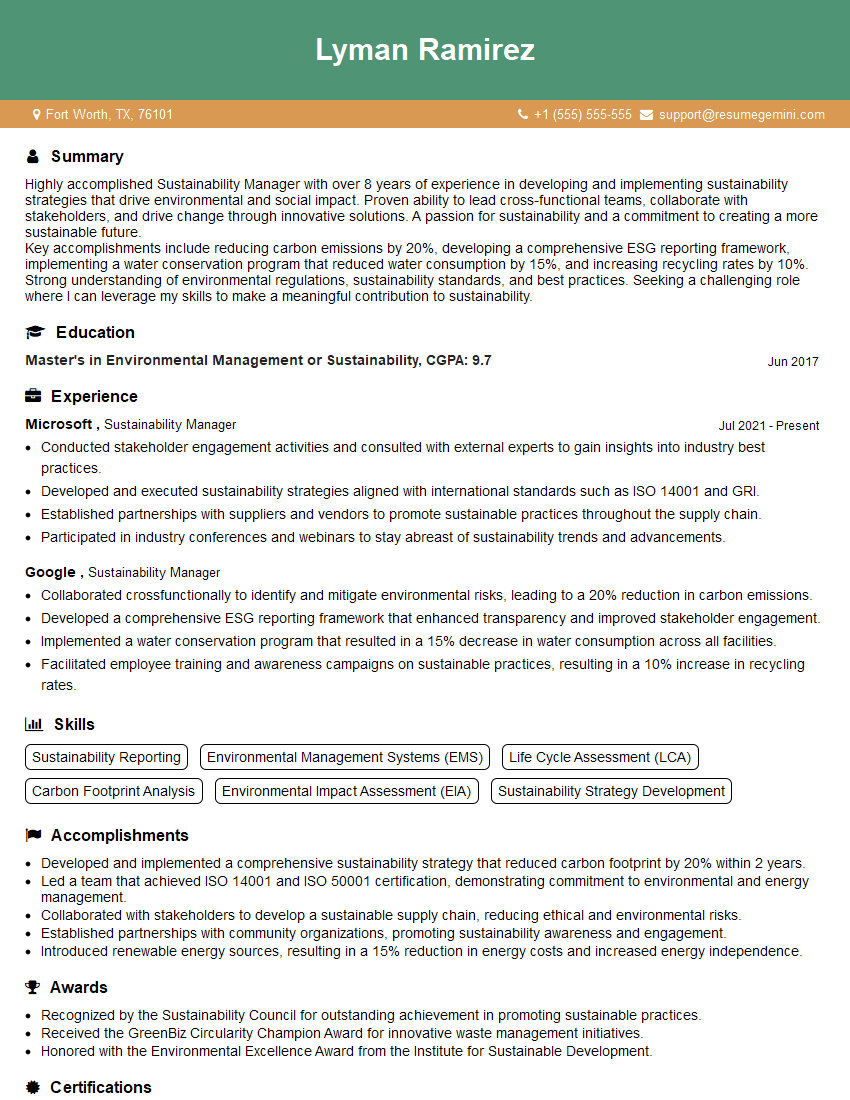
Sustainability Manager Resume Sample
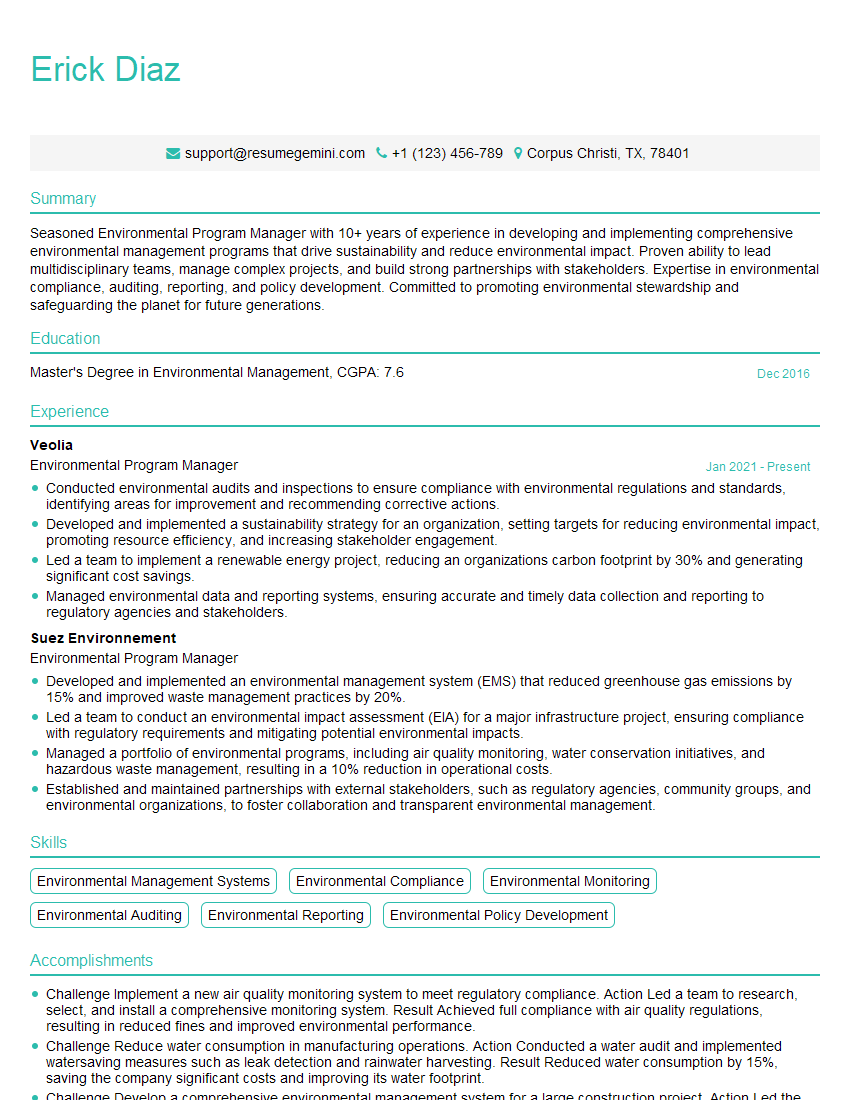
Environmental Program Manager Resume Sample
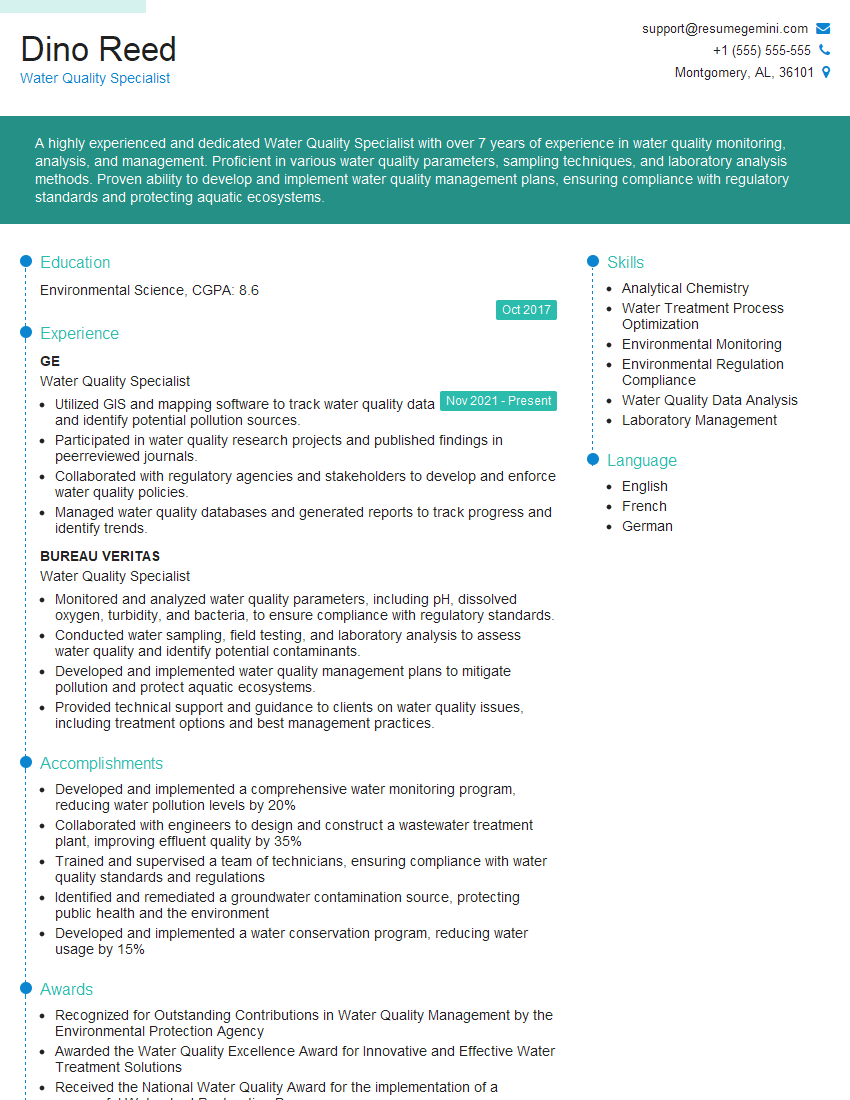
Water Quality Specialist Resume Sample
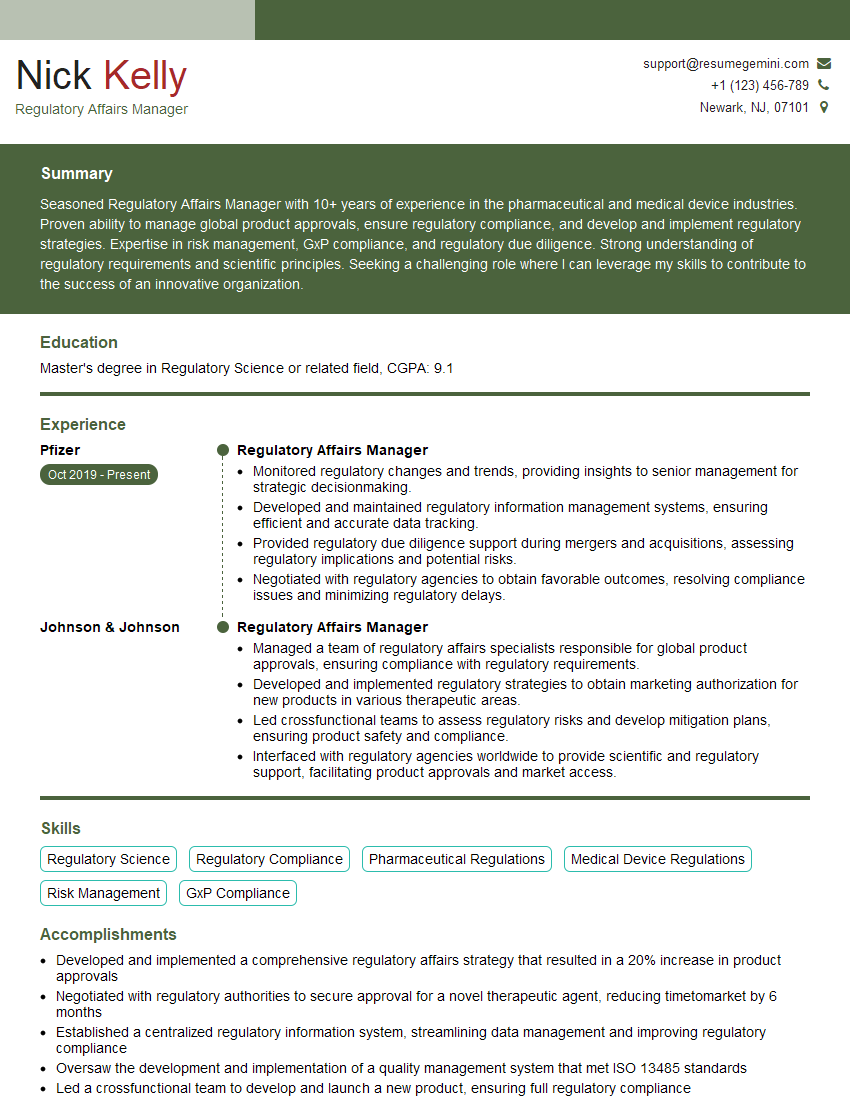
Regulatory Affairs Manager Resume Sample

Compliance Officer Resume Sample
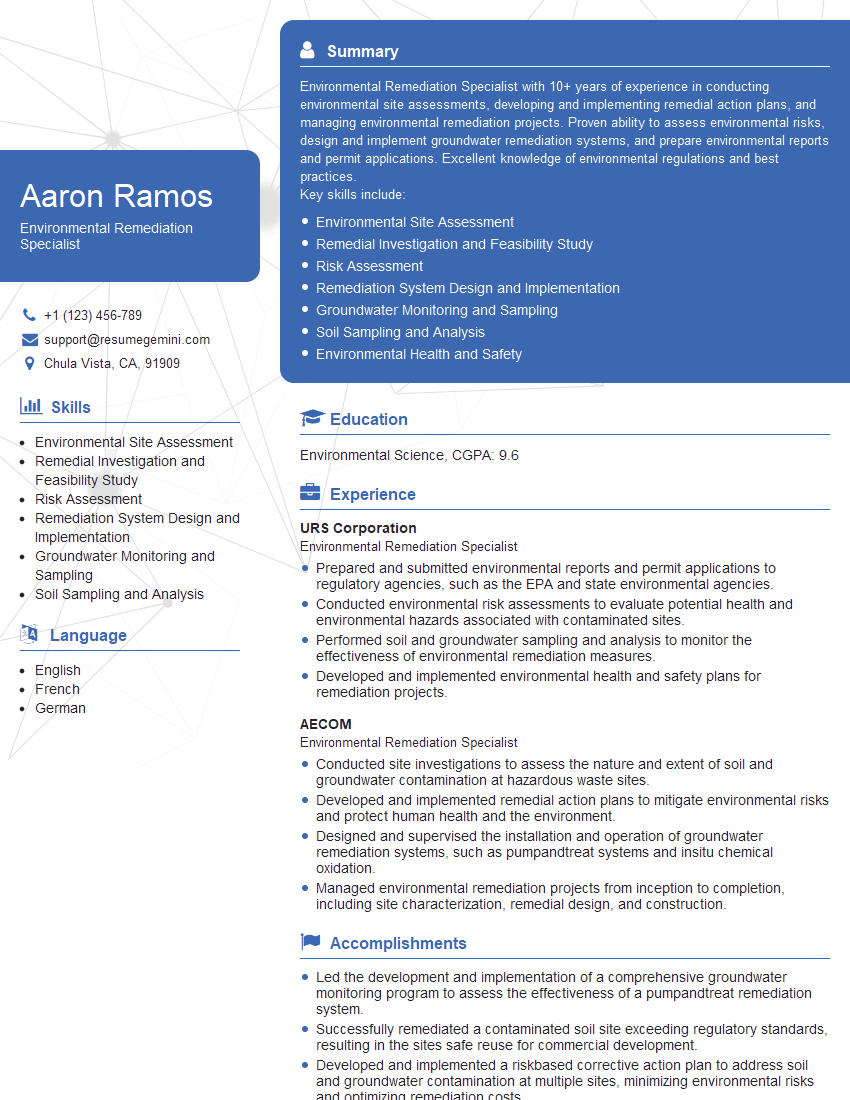
Environmental Remediation Specialist Resume Sample
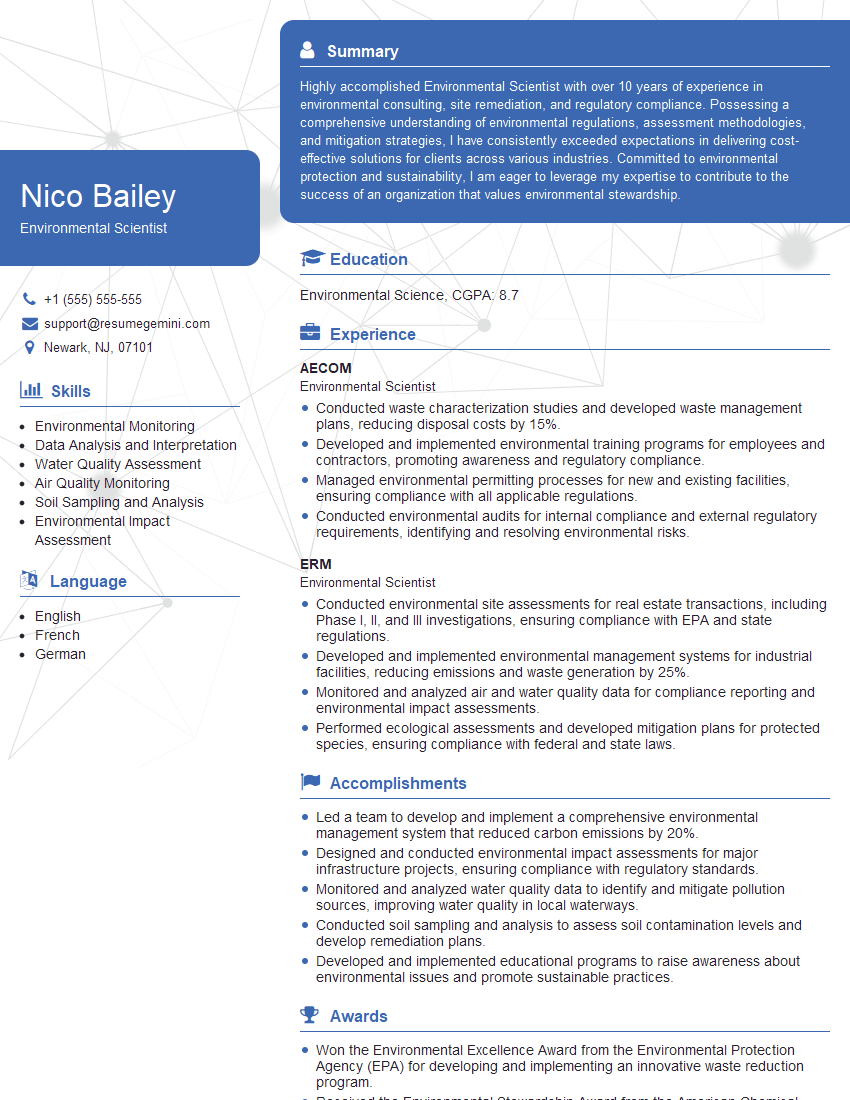
Environmental Scientist Resume Sample
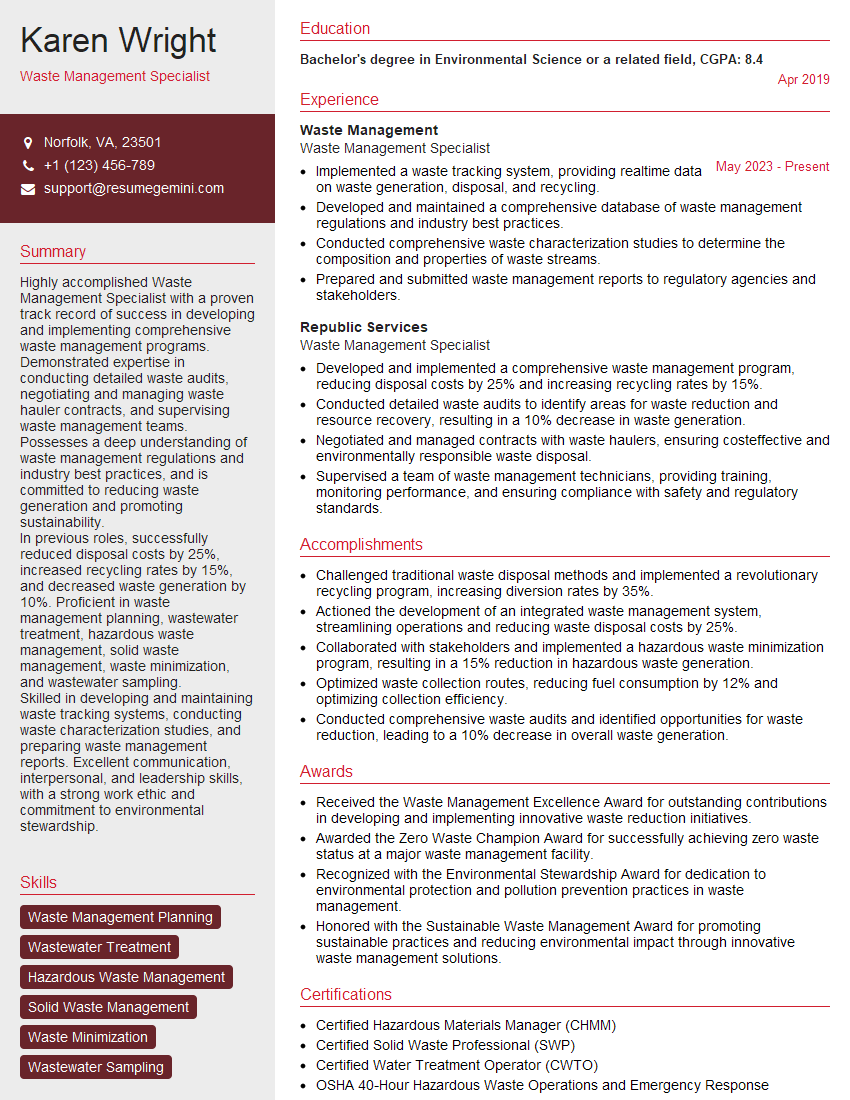
Waste Management Specialist Resume Sample

Sustainability Consultant Resume Sample
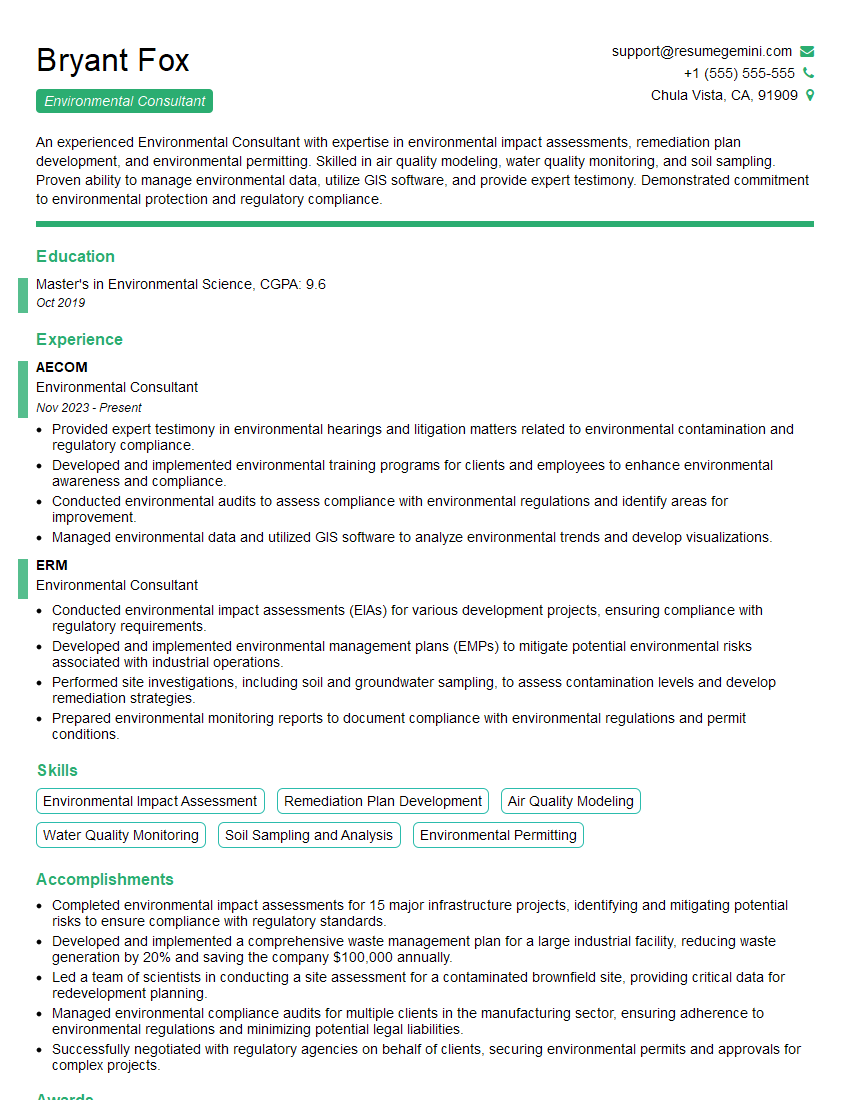
Environmental Consultant Resume Sample
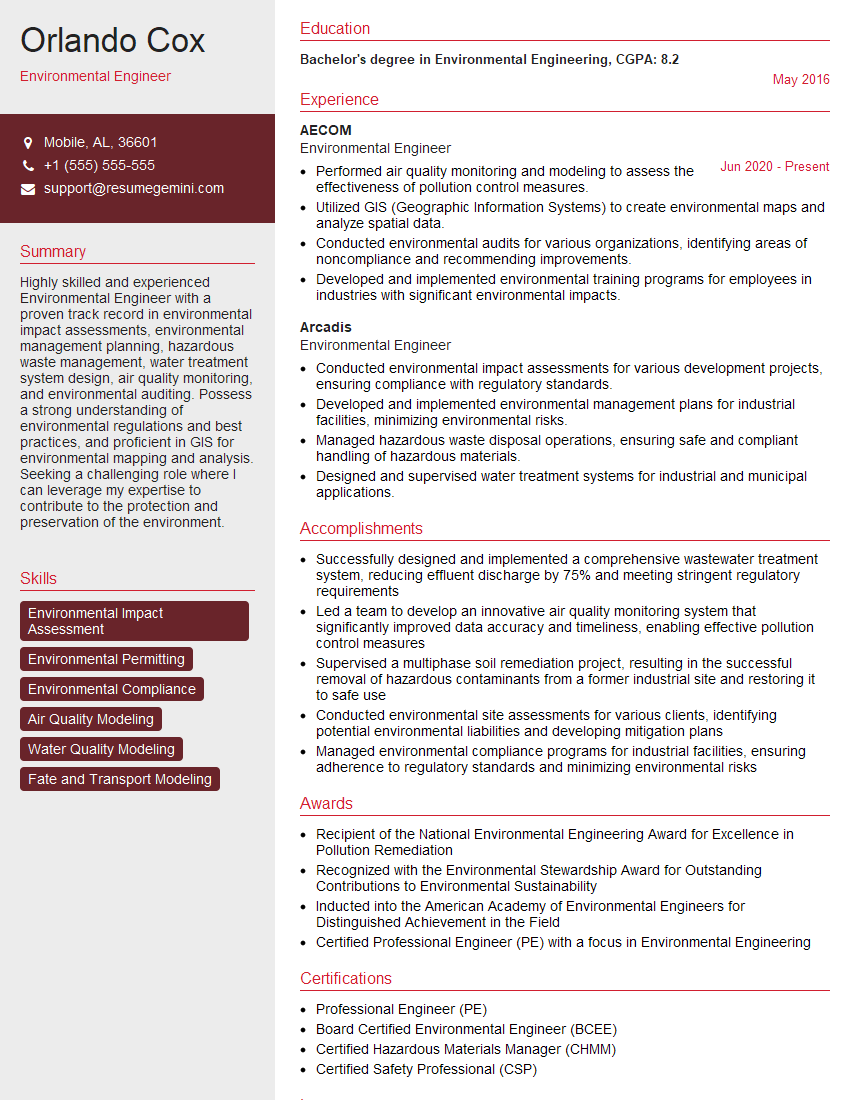
Environmental Engineer Resume Sample
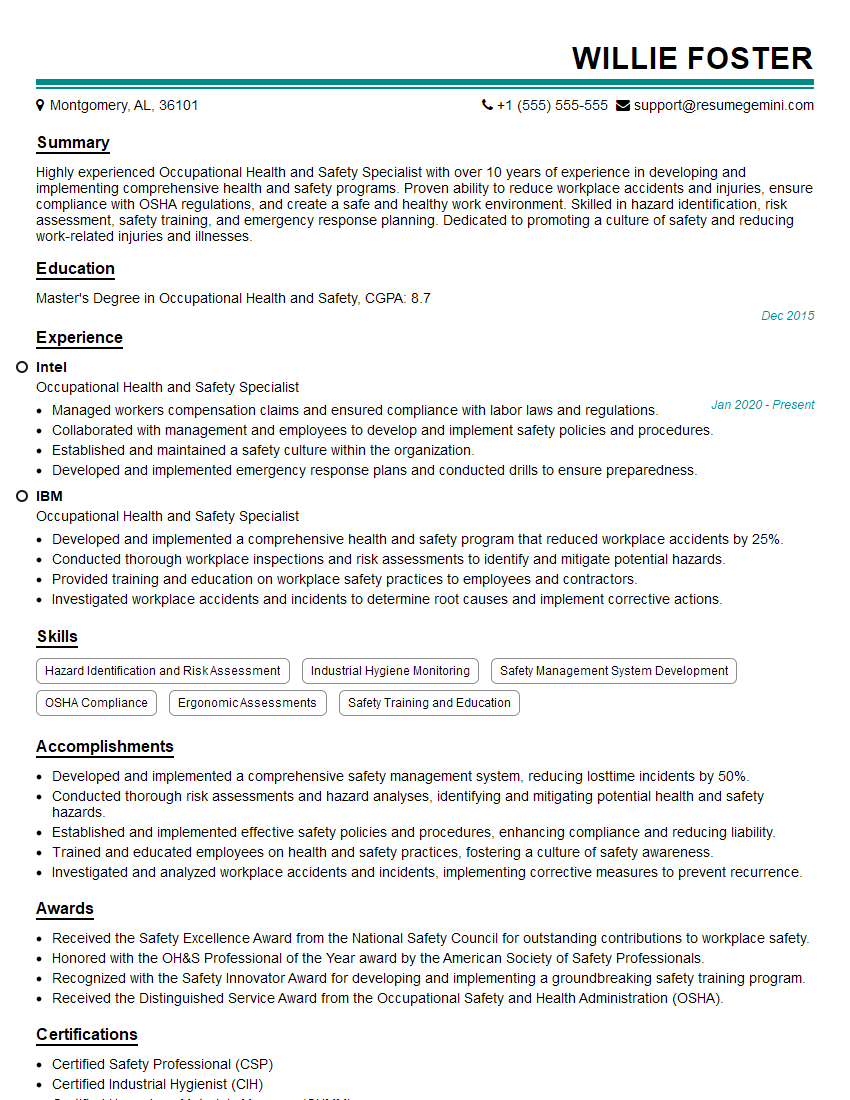
Occupational Health and Safety Specialist Resume Sample
- Sustainability Manager
- Environmental Program Manager
- Water Quality Specialist
- Regulatory Affairs Manager
- Compliance Officer
- Environmental Remediation Specialist
- Environmental Scientist
- Waste Management Specialist
- Sustainability Consultant
- Environmental Consultant
- Environmental Engineer
- Occupational Health and Safety Specialist
Explore more articles
Users Rating of Our Blogs
Share Your Experience
We value your feedback! Please rate our content and share your thoughts (optional).
What Readers Say About Our Blog
To the interviewgemini.com Webmaster.
Very helpful and content specific questions to help prepare me for my interview!
Thank you
To the interviewgemini.com Webmaster.
This was kind of a unique content I found around the specialized skills. Very helpful questions and good detailed answers.
Very Helpful blog, thank you Interviewgemini team.