The thought of an interview can be nerve-wracking, but the right preparation can make all the difference. Explore this comprehensive guide to Evaluations and Reporting interview questions and gain the confidence you need to showcase your abilities and secure the role.
Questions Asked in Evaluations and Reporting Interview
Q 1. Explain the difference between formative and summative evaluation.
Formative and summative evaluations are two key approaches in assessing the effectiveness of programs or initiatives. Think of them as two different snapshots taken at different points in the process. Formative evaluation is like a progress report – it happens during the program’s implementation. Its purpose is to identify strengths and weaknesses while there’s still time to make adjustments. It’s all about improvement and refinement. For example, during a new employee training program, formative evaluation might involve regular quizzes, feedback sessions, or observation of trainees’ performance to see what’s working and what needs tweaking before the program ends.
Summative evaluation, on the other hand, is the final assessment, delivered after the program or initiative is complete. It aims to determine the overall impact and effectiveness of the program. Think of it as the final grade. In the employee training example, summative evaluation might involve measuring employee productivity after the training, assessing knowledge retention through a comprehensive test, or surveying managers on employee improvement. This provides a conclusive picture of whether the training achieved its objectives.
Q 2. Describe your experience with different data collection methods (e.g., surveys, interviews, focus groups).
My experience encompasses a wide range of data collection methods, each chosen strategically depending on the evaluation context and research questions. I’ve extensively used surveys for gathering quantitative data from large populations, employing both closed-ended (e.g., multiple-choice, Likert scale) and open-ended questions to capture both breadth and depth of opinion. For instance, I used a survey to gauge customer satisfaction with a newly launched product, measuring aspects like ease of use and overall satisfaction.
Interviews are invaluable for in-depth qualitative data. I’ve conducted both structured interviews (following a pre-determined script) and semi-structured interviews (allowing for flexibility and follow-up questions), offering insights into individual experiences and perspectives. For example, in evaluating a community health program, I conducted interviews with participants to gain a nuanced understanding of their experiences and program impact.
Focus groups allow for interactive group discussions, ideal for exploring shared opinions and identifying common themes. I’ve facilitated numerous focus groups to understand diverse perspectives on a particular issue. For example, I facilitated a focus group with teachers to understand their perspectives on a new curriculum.
Q 3. How do you ensure the validity and reliability of your evaluation findings?
Ensuring the validity and reliability of evaluation findings is paramount. Validity refers to the accuracy of the findings – do they actually measure what they intend to measure? I address this through careful instrument design, using validated measures whenever possible, and employing triangulation (using multiple data sources to corroborate findings).
Reliability concerns the consistency of the findings – would similar results be obtained if the evaluation were repeated? I ensure reliability through rigorous data collection procedures, clear operational definitions, and appropriate statistical analyses. For example, I use pilot testing to refine instruments and identify potential problems before the main data collection begins. Additionally, I utilize inter-rater reliability checks when multiple evaluators are involved in data coding or interpretation, ensuring consistency in scoring and analysis.
Q 4. What are some common challenges in conducting program evaluations, and how have you overcome them?
Program evaluations often face challenges. One common issue is limited resources, including time, budget, and personnel. I overcome this by prioritizing key evaluation questions, focusing on the most critical aspects of the program, and employing efficient data collection methods. For example, I might choose a shorter, targeted survey rather than a more extensive one.
Another challenge is access to data. Gaining access to relevant data sources can be difficult due to privacy concerns, lack of cooperation from stakeholders, or incomplete data systems. I navigate this through strong communication with stakeholders, clearly articulating the need for data and addressing any concerns regarding confidentiality. I also explore alternative data sources when necessary.
Finally, bias can influence evaluation findings. I mitigate bias through careful study design, using blind data collection methods (where data collectors are unaware of the hypotheses), and employing rigorous statistical controls to account for confounding factors.
Q 5. How do you prioritize different evaluation criteria when resources are limited?
Prioritizing evaluation criteria with limited resources requires a strategic approach. I begin by clearly defining the program’s goals and objectives. Then, I identify the criteria most directly linked to these objectives, focusing on those that provide the most valuable information for decision-making. For example, if the primary goal is to improve student learning, I would prioritize measures directly assessing student learning outcomes over less directly relevant criteria.
I then conduct a cost-benefit analysis of each criterion, weighing the potential value of the information against the cost of obtaining it. This involves considering the time, resources, and effort required to collect and analyze data for each criterion. This allows me to focus on the most efficient and effective methods to address the most critical questions.
Finally, I use a participatory approach, involving key stakeholders in the prioritization process to ensure alignment and buy-in. This fosters collaboration and shared ownership of the evaluation process.
Q 6. Describe your experience using statistical software packages for data analysis (e.g., SPSS, R, SAS).
I’m proficient in several statistical software packages, including SPSS, R, and SAS. My expertise extends beyond basic data entry and descriptive statistics; I’m adept at using these tools for a range of analytical techniques. In SPSS, I frequently use techniques like ANOVA, regression analysis, and t-tests. In R, I’m skilled in data manipulation, visualization, and building more complex statistical models. SAS offers the functionality necessary for large-scale data management and analysis, which I utilize when working with extensive datasets.
For example, I recently used R to conduct a multilevel model analysis to investigate the impact of a school-based intervention program on student achievement, accounting for variations between schools and students within schools. My proficiency extends to choosing the most appropriate statistical methods depending on the research questions and data characteristics. I am very careful in interpreting the results and ensuring they reflect the actual complexities of the data rather than just statistical significances.
Q 7. How do you present complex evaluation data to a non-technical audience?
Presenting complex evaluation data to a non-technical audience requires clear, concise, and engaging communication. I avoid technical jargon and replace it with plain language. I use visuals extensively – charts, graphs, and infographics – to convey complex information in an accessible manner. For example, instead of presenting a table of regression coefficients, I might show a bar chart illustrating the relative impact of different factors.
I emphasize storytelling, weaving the data into a narrative that highlights key findings and their implications. I use real-world examples and analogies to illustrate abstract concepts. For instance, rather than explaining statistical significance, I might explain the finding using a relatable example such as: “The program resulted in a 20% increase in student test scores, which is equivalent to students learning approximately 2 months’ worth of material in addition to what they would normally learn.”
I also ensure the presentation is interactive, allowing for questions and discussion. This approach enhances understanding and allows me to address any audience concerns or clarifications needed.
Q 8. How do you determine the appropriate evaluation design for a given program or project?
Choosing the right evaluation design is crucial for obtaining valid and reliable results. It’s like choosing the right tool for a job – a hammer won’t work for screwing in a screw. The ideal design depends on several factors: the program’s goals, available resources, the timeframe, and the type of questions you need to answer.
For instance, if we want to assess the impact of a new literacy program on student reading scores, a quasi-experimental design comparing students in the program to a control group (who didn’t receive the program) might be appropriate. This allows us to make causal inferences. However, if we are exploring the experiences of participants in a community development project, a qualitative design using interviews and focus groups might be more suitable to understand the nuanced perspectives.
The process involves:
- Clearly defining the program’s objectives: What are we hoping to achieve?
- Identifying key questions: What do we need to know to evaluate the success of the program?
- Considering available resources: Time, budget, and personnel limitations will shape the feasible design.
- Selecting appropriate methods: Quantitative methods (e.g., surveys, statistical analysis) for measuring outcomes, or qualitative methods (e.g., interviews, focus groups) for in-depth understanding.
- Considering ethical implications: Ensuring participant privacy and informed consent.
Ultimately, the best evaluation design is one that is feasible, ethical, and provides the most relevant and reliable information to answer the evaluation questions.
Q 9. What are the key components of a well-structured evaluation report?
A well-structured evaluation report should tell a clear and compelling story about the program’s effectiveness. Think of it as a narrative arc with a beginning (introduction), middle (findings), and end (conclusions and recommendations).
- Executive Summary: A concise overview of the entire report, highlighting key findings and recommendations.
- Introduction: Sets the context, describes the program, and outlines the evaluation’s purpose, scope, and methodology.
- Methodology: Details the methods used to collect and analyze data, ensuring transparency and replicability. This includes the evaluation design, data collection instruments, and data analysis techniques.
- Findings: Presents the results of the evaluation in a clear and organized manner, using tables, charts, and graphs to visualize data. This section should separate descriptive findings from interpretations.
- Conclusions: Summarizes the key findings and answers the evaluation questions. This section links findings back to the program’s objectives.
- Recommendations: Provides practical suggestions based on the evaluation findings. These may include suggestions for program improvement, further research, or policy changes.
- Appendices: Includes supporting materials such as survey instruments, interview transcripts, and detailed data tables.
Using clear and concise language, avoiding jargon, and presenting data visually are crucial for making the report accessible to a diverse audience.
Q 10. How do you incorporate stakeholder feedback into the evaluation process?
Stakeholder feedback is essential for ensuring the evaluation is relevant, credible, and useful. It’s like building a house – you wouldn’t build it without considering the needs and input of those who will live in it. I actively involve stakeholders throughout the entire evaluation process.
This includes:
- Early engagement: Conducting initial meetings to understand their perspectives and expectations.
- Ongoing communication: Providing regular updates on the progress of the evaluation.
- Feedback mechanisms: Using surveys, interviews, or focus groups to gather their input on the evaluation methods and findings.
- Dissemination strategies: Sharing the evaluation report and findings in a format accessible to stakeholders.
- Addressing concerns: Responding to feedback and addressing any concerns or disagreements.
For example, in a recent evaluation of a community health program, I incorporated feedback from community leaders, program staff, and beneficiaries by conducting focus groups to ensure the evaluation captured diverse viewpoints and addressed community-specific concerns.
Q 11. Explain your experience with different types of evaluation frameworks (e.g., logic models, theory of change).
I have extensive experience using various evaluation frameworks, including logic models and theories of change. These frameworks provide a structured approach to understanding how programs are intended to work and how to measure their effectiveness.
Logic models map out the relationships between program activities, outputs, outcomes, and impacts. They are helpful in clarifying program theory and identifying key indicators for measuring success. For instance, a logic model for a job training program would link training activities (inputs) to job skills acquired (outputs), job placement (outcomes), and improved income (impact).
Theories of change are more elaborate narratives that describe the causal pathways through which a program is expected to achieve its intended effects. They are particularly useful for complex interventions with multiple intended outcomes. For instance, a theory of change for a community-based violence prevention program would outline the steps involved, including community engagement, education, and support services and how these steps relate to changes in community violence rates.
My experience includes using these frameworks to design evaluations, identify relevant data sources, and interpret evaluation results. I often combine both frameworks to gain a comprehensive understanding of program implementation and impact.
Q 12. How do you measure the impact of a program or intervention?
Measuring program impact requires a rigorous approach that goes beyond simply observing immediate outcomes. It’s about establishing a causal link between the program and the observed changes. This usually involves comparing outcomes for program participants with those of a comparable group who did not participate.
Methods include:
- Counterfactual analysis: Estimating what would have happened to the participants in the absence of the program, often using a control group.
- Statistical analysis: Using statistical techniques such as regression analysis to control for confounding factors and estimate the program’s effect.
- Qualitative methods: Gathering in-depth information on participants’ experiences to understand the mechanisms through which the program produced its effects.
- Longitudinal studies: Tracking participants over time to assess the long-term impact of the program.
For example, when evaluating a school-based mentoring program, I used a randomized controlled trial (RCT) design, assigning students randomly to either the mentoring program or a control group. By comparing the academic performance and social-emotional development of both groups, I could isolate the impact of the mentoring program.
Q 13. Describe your experience with qualitative data analysis techniques.
Qualitative data analysis techniques are crucial for understanding the nuances and complexities of human experiences and perspectives. It involves systematically analyzing textual or visual data like interview transcripts, focus group notes, or field observations to identify patterns, themes, and meanings.
My experience includes using various techniques such as:
- Thematic analysis: Identifying recurring patterns and themes within the data.
- Grounded theory: Developing theories or explanations based on the data.
- Narrative analysis: Analyzing stories and accounts to understand individual experiences.
- Content analysis: Systematically coding and categorizing data to quantify qualitative information.
For example, in a study of the impact of a new policy on healthcare access, I used thematic analysis of interview transcripts from healthcare providers and patients to identify key themes related to policy implementation and its effects on access to care.
Software like NVivo or Atlas.ti can assist in managing and analyzing large qualitative datasets. However, the process always necessitates careful reading, critical thinking, and a nuanced understanding of context.
Q 14. How do you handle conflicting data or findings in an evaluation?
Conflicting data or findings are common in evaluations, and handling them requires careful consideration and transparency. It’s not about dismissing contradictory information but rather exploring the reasons for the discrepancies and offering a nuanced interpretation.
My approach involves:
- Identifying the source of the conflict: Is it due to methodological limitations, differing perspectives, or inconsistencies in data collection?
- Examining the data quality: Assessing the reliability and validity of the data sources.
- Considering alternative explanations: Exploring possible reasons for the conflicting findings, such as contextual factors or unintended program effects.
- Triangulating data: Using multiple data sources to confirm or refute findings.
- Presenting a balanced perspective: Clearly presenting the conflicting findings and discussing the possible explanations in the evaluation report.
For example, in an evaluation of a community development project, I found conflicting data on participant satisfaction. While quantitative data from surveys indicated high levels of satisfaction, qualitative data from interviews revealed some concerns about program accessibility. I addressed these discrepancies by presenting both sets of data and offering a nuanced interpretation, highlighting the importance of accessibility improvements alongside the overall positive feedback.
Q 15. What ethical considerations are important in conducting evaluations?
Ethical considerations in evaluations are paramount to ensure fairness, accuracy, and respect for participants. They guide every step, from design to reporting. Key ethical principles include:
- Informed Consent: Participants must understand the purpose of the evaluation, their involvement, and how their data will be used. They should have the freedom to withdraw at any time without penalty.
- Confidentiality and Anonymity: Protecting the privacy of participants is crucial. This includes securely storing data, using codes instead of names, and avoiding any disclosure of identifying information in reports.
- Objectivity and Impartiality: Evaluations should be conducted without bias, striving for a neutral and factual assessment of the program or intervention being evaluated. This requires carefully considering potential sources of bias and implementing strategies to mitigate them.
- Beneficence and Non-maleficence: The evaluation should aim to benefit participants and avoid causing harm. This involves considering the potential impact of the evaluation process itself on participants and taking steps to minimize any negative consequences. For example, ensuring that participation does not lead to increased stress or feelings of vulnerability.
- Transparency and Honesty: The evaluation process should be transparent to all stakeholders. Results should be reported honestly and accurately, even if they are unexpected or unfavorable.
For instance, in an evaluation of a new educational program, ensuring informed consent would mean providing parents and students with clear information about the study’s purpose, methods, and data usage, alongside the option to opt-out at any point.
Career Expert Tips:
- Ace those interviews! Prepare effectively by reviewing the Top 50 Most Common Interview Questions on ResumeGemini.
- Navigate your job search with confidence! Explore a wide range of Career Tips on ResumeGemini. Learn about common challenges and recommendations to overcome them.
- Craft the perfect resume! Master the Art of Resume Writing with ResumeGemini’s guide. Showcase your unique qualifications and achievements effectively.
- Don’t miss out on holiday savings! Build your dream resume with ResumeGemini’s ATS optimized templates.
Q 16. How do you ensure the confidentiality and anonymity of participants in your evaluations?
Confidentiality and anonymity are crucial for building trust and ensuring honest responses. My approach involves several key strategies:
- Data Anonymization: I replace identifying information (names, addresses, etc.) with unique identification numbers or codes. This ensures that individual participants cannot be identified from the data.
- Secure Data Storage: Data is stored securely using password-protected files and encrypted databases, accessible only to authorized personnel. I often utilize cloud storage solutions with robust security features.
- Aggregated Reporting: Results are reported at the aggregate level, presenting overall trends and patterns rather than individual participant data. For example, instead of showing individual test scores, I’d report average scores or score distributions.
- Data Minimization: I collect only the necessary data to answer the evaluation questions, avoiding the collection of unnecessary personal information.
- Informed Consent Forms: Participants receive detailed informed consent forms explaining how their data will be protected and outlining their rights related to their data.
For example, in a survey on employee satisfaction, I would use unique identifiers instead of names and report overall satisfaction levels rather than individual responses.
Q 17. How do you manage your time and workload when working on multiple evaluations simultaneously?
Managing multiple evaluations simultaneously requires careful planning and prioritization. I use a combination of strategies to stay organized and meet deadlines:
- Project Prioritization: I use a matrix to prioritize projects based on urgency and importance. This helps me focus on the most critical tasks first.
- Detailed Project Plans: Each evaluation has a detailed project plan outlining tasks, timelines, and responsibilities. This plan is broken down into smaller, manageable steps.
- Time Blocking: I allocate specific time blocks for each evaluation, scheduling specific tasks during these blocks. This prevents multitasking and improves focus.
- Regular Check-ins: I have regular check-ins with stakeholders and team members to discuss progress, address issues, and ensure everyone is on track. This proactive approach helps identify potential delays early on.
- Utilizing Project Management Tools: I leverage project management software like Asana or Trello to track tasks, deadlines, and progress across all projects. This allows for central coordination and a bird’s eye view of all the moving parts.
Think of it like conducting multiple orchestras simultaneously – each requires a detailed score (project plan), precise timing (time blocking), and constant communication with the musicians (stakeholders).
Q 18. Describe your experience working with diverse teams and stakeholders.
I thrive in diverse team environments. My experience includes working with researchers, program managers, community representatives, and policymakers from various backgrounds and expertise levels. This experience has honed my abilities in:
- Communication: I adapt my communication style to effectively convey information across different audiences and ensure clear understanding.
- Collaboration: I actively contribute to a collaborative environment, valuing each team member’s input and expertise. I facilitate productive discussions, resolve conflicts constructively, and ensure everyone feels heard.
- Cultural Sensitivity: I recognize and respect cultural differences and tailor my approaches accordingly. This ensures that evaluations are culturally appropriate and equitable.
- Stakeholder Management: I manage expectations, communicate effectively with diverse stakeholders, and ensure their needs are considered throughout the evaluation process.
In one project, I worked with a team that included researchers, teachers, and parents to evaluate a new literacy program. The diverse perspectives enriched the evaluation, leading to a more comprehensive and insightful report.
Q 19. How do you stay up-to-date with the latest developments and best practices in evaluation?
Staying current in the field of evaluation is critical. I utilize several strategies to keep my knowledge up-to-date:
- Professional Development: I regularly attend conferences, workshops, and webinars focused on evaluation methods and best practices.
- Peer-Reviewed Journals: I read peer-reviewed journals and research publications in the field of program evaluation. This provides insights into the latest research and advancements.
- Professional Networks: I participate in professional networks and communities, engaging with other evaluators to share knowledge and learn from their experiences.
- Online Courses and Resources: I use online platforms offering courses and resources on various aspects of evaluation, such as data analysis techniques or specific evaluation methodologies.
- Mentorship: I seek mentorship from experienced evaluators, gaining their insights and guidance on best practices and emerging trends.
Just like a doctor keeps abreast of medical advancements, I continuously update my knowledge to improve the quality and relevance of my evaluations.
Q 20. How do you use data visualization techniques to enhance the communication of evaluation findings?
Data visualization is key to effectively communicating complex evaluation findings to a diverse audience. I use several techniques:
- Charts and Graphs: I use various chart types (bar charts, line graphs, pie charts, scatter plots) to visually represent key findings, depending on the nature of the data and the message I want to convey.
- Interactive Dashboards: For complex datasets, interactive dashboards allow stakeholders to explore the data dynamically, filtering and sorting information to gain deeper insights.
- Infographics: For a broader audience, infographics condense complex information into easily digestible visual summaries.
- Maps: When geographical data is involved, maps are effective in showing spatial patterns and distributions.
- Storytelling: I combine visualizations with compelling narratives to create a engaging and informative presentation of the findings.
For example, instead of just reporting percentages of student success, I might use a bar chart comparing the success rates of different intervention groups or a map to show geographical variations in program effectiveness.
Q 21. What software or tools do you use for data management and analysis?
My toolkit includes a variety of software and tools tailored to the specific needs of each evaluation. Some of the commonly used tools include:
- Statistical Software Packages: R and SPSS are powerful tools for data analysis, enabling complex statistical modeling and hypothesis testing.
#Example R code: t.test(group1, group2) - Spreadsheet Software: Microsoft Excel and Google Sheets are invaluable for data management, cleaning, and basic analysis. They are often used for initial data organization before moving to more sophisticated statistical analysis.
- Database Management Systems: SQL-based databases such as MySQL or PostgreSQL are used for storing and managing large datasets, particularly when working with longitudinal data or multiple datasets.
- Data Visualization Software: Tableau and Power BI are excellent for creating interactive dashboards and visualizations that effectively communicate evaluation findings.
- Project Management Software: Asana, Trello, and Monday.com are used for collaborative project management, ensuring effective workflow and communication among team members.
The specific tools I utilize depend on the complexity of the data and the requirements of the evaluation. My expertise lies in leveraging the appropriate tools to optimize both data management and analysis efficiency.
Q 22. Describe your experience with developing evaluation plans and proposals.
Developing evaluation plans and proposals is a crucial first step in any evaluation. It involves a systematic process of defining the evaluation’s purpose, scope, methodology, and resources. I start by clearly outlining the program’s goals and objectives, which serve as the foundation for identifying the key questions the evaluation needs to answer. This often involves collaborating closely with stakeholders to ensure alignment on expectations and priorities.
Next, I design the evaluation methodology, selecting the most appropriate approach based on the research questions and available resources. This could range from quantitative methods like surveys and statistical analysis to qualitative methods like interviews and focus groups, or a mixed-methods approach combining both. The plan also includes a detailed timeline, specifying key milestones and deliverables, and a budget outlining all anticipated costs.
For example, in evaluating a literacy program, I might propose a mixed-methods approach. Quantitative data could come from pre- and post-tests measuring reading comprehension, while qualitative data from teacher and student interviews would explore program effectiveness and challenges. The proposal would detail the sample size, data collection instruments, analysis techniques, and reporting format.
Q 23. How do you select appropriate evaluation indicators and metrics?
Selecting appropriate evaluation indicators and metrics is crucial for measuring the impact and effectiveness of a program. Indicators are qualitative or quantitative variables that show the extent to which a program is achieving its objectives. Metrics provide a way to measure those indicators. They should be SMART – Specific, Measurable, Achievable, Relevant, and Time-bound.
The process begins by identifying the program’s goals and objectives. For each objective, we identify relevant indicators. For example, if the objective is to improve student literacy, indicators might include reading comprehension scores, vocabulary size, and frequency of reading. Metrics then quantify these indicators, such as average reading comprehension scores, percentage of students achieving proficiency, or number of books read per month.
It’s vital to consider the data available and feasibility of collecting data for each indicator. Data collection methods should be aligned with the chosen metrics. For instance, if measuring student literacy, we might use standardized tests (metric: average score), teacher observations (metric: number of students actively participating), or student self-reports (metric: frequency of reading). The choice of indicators and metrics must align with the evaluation’s overall design and ensure that they directly measure the program’s intended impact.
Q 24. How do you ensure the sustainability of program impacts after an evaluation is completed?
Ensuring the sustainability of program impacts after an evaluation is crucial. It’s not enough to simply show positive results; we must build mechanisms to ensure those results endure. This requires a multi-faceted approach that considers several key elements.
First, the evaluation should identify factors contributing to the program’s success. This includes strong leadership, adequate funding, community support, and effective program implementation. The evaluation report should highlight these factors and recommend strategies for maintaining them. Second, we need to build capacity within the organization to continue implementing the program effectively. This might involve training staff, developing clear protocols, and establishing monitoring systems. Third, we need to engage stakeholders, including program staff, beneficiaries, and funders, to ensure continued commitment and support.
For example, if an evaluation shows a successful community health program, the report would detail the program’s strengths (e.g., strong community partnerships, effective outreach strategies). Recommendations would include strategies for securing ongoing funding, training community health workers, and developing a system for monitoring program outcomes. Building ownership among stakeholders ensures the long-term sustainability of the program’s positive impacts.
Q 25. What is your experience with cost-benefit analysis in program evaluation?
Cost-benefit analysis (CBA) is a powerful tool in program evaluation that assesses the economic efficiency of a program by comparing its costs and benefits. It’s a systematic approach that quantifies both monetary and non-monetary outcomes to determine whether the program’s benefits outweigh its costs.
In a CBA, I start by identifying all program costs, including direct costs (e.g., staff salaries, materials) and indirect costs (e.g., administrative overhead). Then, I identify and quantify the program’s benefits. This can involve estimating monetary benefits (e.g., increased income, reduced healthcare costs) and non-monetary benefits (e.g., improved health, increased quality of life). These benefits are often valued using various techniques, such as contingent valuation or hedonic pricing.
For instance, evaluating a job training program would involve calculating the costs of the training (instructor fees, materials, etc.). The benefits would include increased earnings of participants, reduced unemployment benefits paid by the government, and increased tax revenue. A CBA would compare the total benefits to the total costs to determine the program’s net economic value and its cost-effectiveness.
Q 26. How do you address limitations and biases in your evaluation findings?
Addressing limitations and biases in evaluation findings is critical for maintaining the integrity and credibility of the evaluation. Acknowledging these limitations strengthens the report’s value and prevents overgeneralization of findings.
I begin by carefully documenting any methodological limitations during the evaluation design and implementation phases. These limitations might include sample size, response rates, data collection methods, or potential biases in the data. I also discuss any contextual factors that might influence the results. For example, an evaluation might be impacted by external events or unanticipated changes in the program.
Furthermore, I use rigorous data analysis techniques to minimize bias. This might include using statistical controls to account for confounding variables or employing triangulation—using multiple data sources and methods—to ensure the validity of the findings. The final report transparently discusses these limitations and biases, explaining their potential impact on the results and offering caveats where necessary.
Q 27. Describe a time when you had to make a difficult decision regarding the scope or methodology of an evaluation.
In one evaluation of a rural development program, we faced a significant challenge regarding the scope. Initially, the stakeholders wanted a comprehensive evaluation covering multiple program components across several districts. However, budget and time constraints made this unrealistic. We had to make a difficult decision to narrow the scope.
After careful deliberation with stakeholders, we decided to focus the evaluation on one key program component – agricultural training – in a single representative district. This allowed for a more in-depth, rigorous analysis within the available resources. We presented the rationale for this decision transparently to stakeholders, emphasizing that the findings, while specific, would still provide valuable insights applicable to other components and districts. This compromise preserved the evaluation’s quality and ensured we could deliver meaningful results within the available constraints.
Q 28. How do you handle unexpected challenges or delays during an evaluation?
Unexpected challenges and delays are inevitable in evaluations. My approach involves proactive planning and a flexible mindset. First, I build buffer time into the evaluation timeline to account for unforeseen circumstances. Second, I establish clear communication channels with stakeholders to keep them informed of any progress and potential issues.
If unexpected challenges arise, I work collaboratively with the team to develop contingency plans. For example, if data collection is delayed due to logistical problems, we might adjust the timeline or explore alternative data collection methods. If a key staff member leaves the project, we would quickly identify a replacement and ensure a smooth handover. Open communication with stakeholders is vital. Transparency regarding the challenges, along with proposed solutions, maintains trust and ensures project success despite unforeseen setbacks.
Key Topics to Learn for Evaluations and Reporting Interview
- Data Analysis & Interpretation: Understanding various data types, applying statistical methods to extract meaningful insights, and effectively visualizing findings for clear communication.
- Performance Measurement & Metrics: Defining key performance indicators (KPIs), selecting appropriate metrics for different contexts, and analyzing trends to identify areas for improvement.
- Report Writing & Presentation: Structuring reports logically, using clear and concise language, creating visually appealing presentations, and tailoring communication to different audiences (technical vs. non-technical).
- Evaluation Methodologies: Familiarizing yourself with different evaluation frameworks (e.g., qualitative vs. quantitative, formative vs. summative) and their appropriate applications.
- Data Visualization Techniques: Mastering the use of charts, graphs, and dashboards to effectively communicate complex data and insights to stakeholders.
- Software Proficiency: Demonstrating competence with relevant software tools such as spreadsheet programs (Excel, Google Sheets), data visualization software (Tableau, Power BI), and potentially statistical packages (R, SPSS).
- Problem-Solving & Critical Thinking: Highlighting your ability to identify problems, analyze data to find solutions, and communicate your findings and recommendations effectively.
- Communication & Collaboration: Emphasizing skills in working effectively with teams, communicating complex information clearly, and actively listening to feedback.
Next Steps
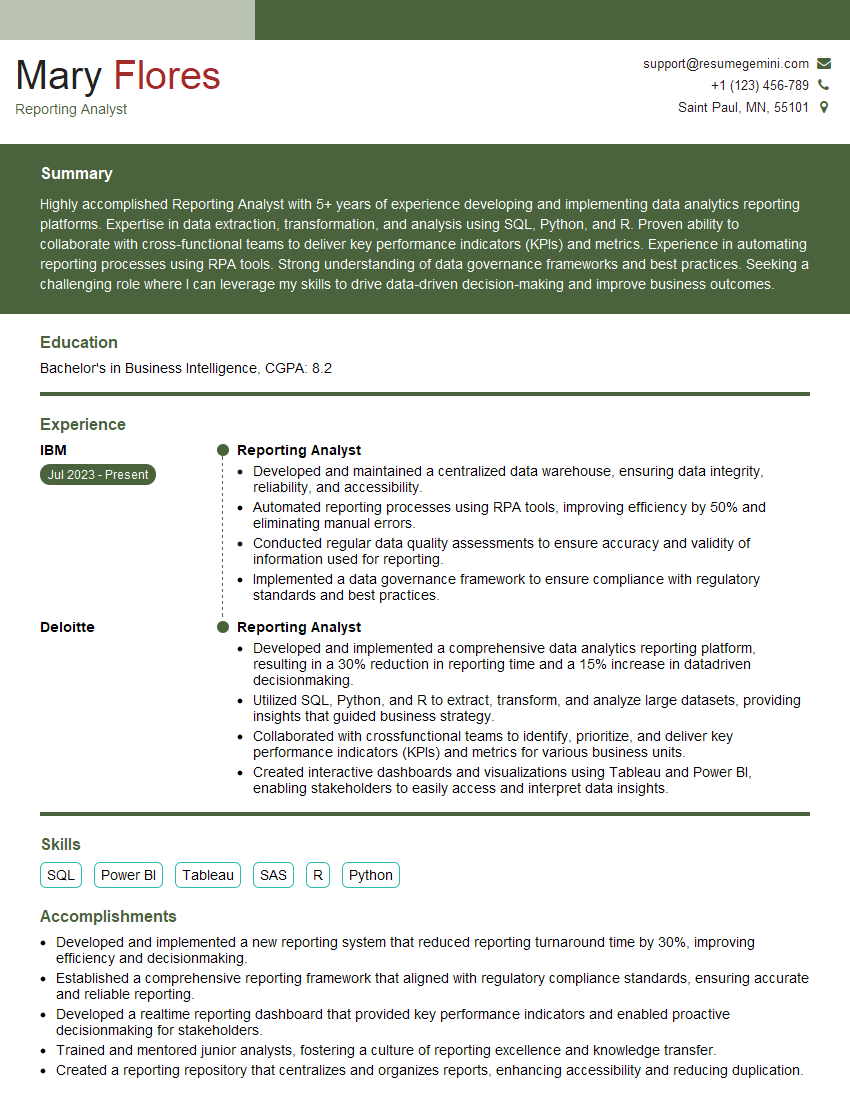
Mastering Evaluations and Reporting is crucial for career advancement in numerous fields. Strong analytical and communication skills are highly sought after, opening doors to leadership roles and increased responsibility. To significantly boost your job prospects, invest time in crafting an ATS-friendly resume that showcases your abilities effectively. ResumeGemini is a trusted resource to help you build a professional and impactful resume. Examples of resumes tailored specifically to Evaluations and Reporting are available to guide you through the process. Take the next step towards your dream job – build a resume that highlights your skills and gets you noticed!
Explore more articles
Users Rating of Our Blogs
Share Your Experience
We value your feedback! Please rate our content and share your thoughts (optional).
What Readers Say About Our Blog
To the interviewgemini.com Webmaster.
Very helpful and content specific questions to help prepare me for my interview!
Thank you
To the interviewgemini.com Webmaster.
This was kind of a unique content I found around the specialized skills. Very helpful questions and good detailed answers.
Very Helpful blog, thank you Interviewgemini team.