Are you ready to stand out in your next interview? Understanding and preparing for Experience in science museum or aquarium education interview questions is a game-changer. In this blog, we’ve compiled key questions and expert advice to help you showcase your skills with confidence and precision. Let’s get started on your journey to acing the interview.
Questions Asked in Experience in science museum or aquarium education Interview
Q 1. Describe your experience designing engaging educational programs for diverse audiences.
Designing engaging educational programs for diverse audiences requires a multifaceted approach that considers learning styles, cultural backgrounds, and age ranges. It’s not simply about presenting information; it’s about creating experiences that resonate with each individual.
- Understanding your audience: Before designing a program, thorough audience research is crucial. This involves identifying the age range, prior knowledge, learning preferences (visual, auditory, kinesthetic), and cultural backgrounds of the target group. For example, a program for young children would involve hands-on activities and storytelling, while a program for adults might incorporate more complex concepts and discussions.
- Diverse learning modalities: I incorporate a variety of learning styles into my programs. This might include interactive exhibits, hands-on experiments, storytelling, games, multimedia presentations, and group discussions. For example, when teaching about the ocean’s food web, I would incorporate a tactile representation of the food web using felt cutouts, a short video showing ocean life, and a group discussion about the impact of human activity on the food web.
- Culturally responsive teaching: It’s vital to ensure that the content and delivery of the programs are culturally sensitive and inclusive. This might involve using diverse examples and stories, employing inclusive language, and collaborating with community members to ensure the programs resonate with the target audience.
- Assessment and feedback: I always incorporate formative and summative assessment to gauge the effectiveness of the programs. This involves gathering feedback from participants through surveys, observations, and informal conversations.
Q 2. How do you assess the effectiveness of educational exhibits or programs?
Assessing the effectiveness of educational exhibits or programs is critical for continuous improvement. I utilize a combination of quantitative and qualitative methods to gather comprehensive data.
- Pre- and post-tests: These help measure changes in knowledge and understanding before and after exposure to the exhibit or program. For example, a pre-test might assess knowledge of marine ecosystems before visiting the aquarium exhibit, and a post-test would assess their understanding after visiting.
- Observations: Observing visitor interactions with exhibits or their participation in programs provides invaluable insights into their engagement levels and learning experiences. I pay attention to which aspects they find engaging and which ones might need improvement.
- Visitor surveys and feedback forms: These provide direct feedback on their satisfaction, learning experiences, and suggestions for improvement. Open-ended questions are especially helpful in understanding visitor perspectives.
- Data analytics (if applicable): Many museums and aquariums use technology to track visitor traffic patterns, dwell times at exhibits, and other metrics that offer insights into visitor engagement.
- Focus groups: Conducting focus groups with visitors allows for deeper discussions and a better understanding of their experiences.
By combining these methods, I get a well-rounded picture of the success and areas for improvement in my programs. This iterative process ensures that our exhibits and programs remain relevant and impactful.
Q 3. Explain your approach to developing age-appropriate curriculum for science museum exhibits.
Developing age-appropriate curriculum is crucial for effective science education. I follow a developmental approach, tailoring content and activities to match the cognitive, social, and emotional capabilities of different age groups.
- Early childhood (preschool-kindergarten): At this stage, learning is primarily hands-on and exploratory. Programs focus on simple concepts through play-based activities, sensory exploration, and storytelling. For example, we might use tactile materials to explore different textures of rocks or create a miniature ecosystem in a terrarium.
- Elementary school (grades 1-5): Curricula begin to introduce more complex concepts, using age-appropriate language and visual aids. Inquiry-based learning activities, such as simple experiments and guided explorations, are encouraged. For instance, a program on the water cycle might involve building a model and observing condensation.
- Middle school (grades 6-8): Programs at this level introduce more abstract concepts and encourage critical thinking. Students can engage in more complex experiments, research projects, and discussions of scientific concepts. A program about genetics might involve exploring Mendelian inheritance through simulations and comparing different genetic traits.
- High school (grades 9-12): Curricula can delve into more specialized areas of science, including advanced concepts, research methods, and ethical considerations. Students may participate in more independent research projects or specialized workshops.
Throughout all age groups, accessibility and inclusivity are paramount. I always consider varying learning styles and provide multiple ways for students to engage with the material.
Q 4. What strategies do you use to manage large groups of visitors during educational programs?
Managing large groups of visitors requires careful planning and execution. The key is proactive strategies that minimize chaos and maximize engagement.
- Pre-program organization: Dividing larger groups into smaller, manageable teams with designated leaders or facilitators allows for more personalized attention. Clear instructions and a detailed schedule are crucial to keep everyone on track.
- Visual aids and signage: Clear signage and visual cues (e.g., color-coded groups, numbered stations) help visitors navigate the space and understand the program flow.
- Engaging activities: Interactive activities and games keep visitors engaged and focused. Incorporating breaks can prevent fatigue and maintain interest.
- Designated areas: Establishing specific areas for different activities helps control the flow of visitors and prevents overcrowding. For example, specific areas can be designated for experiments or group discussions.
- Trained staff: Having enough trained staff to support the program is essential. Staff members can assist with managing groups, answering questions, and ensuring safety.
The goal is to create a structured yet dynamic environment where visitors feel comfortable, informed, and engaged. This involves constant communication and adaptability to any unforeseen circumstance.
Q 5. How would you handle a challenging visitor interaction or a disruptive situation during a program?
Handling challenging visitor interactions requires a calm, patient, and professional approach. My strategy focuses on de-escalation and finding solutions.
- Active listening: The first step is to listen attentively to the visitor’s concerns or complaints, showing empathy and understanding. I try to see things from their perspective.
- Calm and respectful communication: Maintaining a calm and respectful tone helps de-escalate the situation. I avoid getting defensive or argumentative.
- Problem-solving: Collaboratively work towards a solution. I offer alternatives or compromises to address their concerns. For example, if a visitor is unhappy with an exhibit, I might offer an alternative activity or explain the scientific principles behind the design.
- Seeking assistance if needed: If the situation escalates beyond my ability to handle it, I immediately seek help from security or my supervisor.
- Post-incident review: After resolving the situation, I reflect on the incident to understand what could have been done differently to prevent similar occurrences in the future.
Addressing disruptive situations may require immediate intervention to ensure safety and prevent disruption to others. This might involve redirecting disruptive behavior, providing alternative activities, or asking the visitor to leave the program if necessary.
Q 6. Describe your experience with incorporating technology into science education.
Technology plays a crucial role in enhancing science education. I incorporate various technologies to create engaging and interactive learning experiences.
- Interactive exhibits: Touchscreen displays, augmented reality (AR) applications, and virtual reality (VR) experiences can bring scientific concepts to life. For example, an AR app could overlay information about marine animals onto a live aquarium display, allowing visitors to learn more about the animals’ characteristics and behavior.
- Multimedia presentations: Videos, animations, and interactive simulations can effectively communicate complex scientific concepts in a visually appealing manner. These can be especially helpful in engaging a wide range of learners.
- Data collection and analysis tools: Technology can be used to collect data from visitors during programs or exhibits, allowing for detailed analysis of program effectiveness. This can be used to inform future improvements.
- Online resources: Providing access to online resources, such as virtual tours, educational games, or interactive simulations, extends the learning experience beyond the museum or aquarium setting.
However, it’s crucial to ensure that technology enhances the learning experience rather than overwhelming it. I emphasize the integration of technology to support learning goals, not replace human interaction.
Q 7. How do you ensure accessibility and inclusivity in your educational programs?
Ensuring accessibility and inclusivity is fundamental to creating meaningful educational experiences for all visitors. This involves proactively anticipating and addressing potential barriers to participation.
- Accessibility features: I design programs and exhibits that are accessible to visitors with disabilities, including those with visual, auditory, motor, or cognitive impairments. This might include providing audio descriptions for exhibits, braille and large print materials, sign language interpretation, and wheelchair-accessible facilities.
- Diverse representations: I ensure that educational materials and programs feature diverse representation in terms of gender, ethnicity, and ability. This helps create a sense of belonging and inclusivity for all visitors.
- Universal design principles: I adhere to universal design principles, designing programs and exhibits that are usable and accessible to everyone, regardless of their abilities or backgrounds.
- Cultural sensitivity: I ensure that materials and programs are culturally sensitive and avoid perpetuating stereotypes. This includes providing context for scientific concepts and avoiding culturally insensitive language or images.
- Collaboration with community organizations: I work with community organizations representing diverse populations to ensure that programs are relevant and accessible to all members of the community. This can involve seeking input from community members in the development of the programs.
Creating an inclusive environment involves more than just meeting minimum accessibility standards; it’s about actively seeking ways to make our programs engaging and meaningful for everyone.
Q 8. What are your preferred methods for evaluating visitor learning and engagement?
Evaluating visitor learning and engagement in a science museum or aquarium setting requires a multifaceted approach. We can’t simply assume understanding; we need robust methods to measure it. My preferred methods combine quantitative and qualitative data collection techniques.
Pre- and post-visit assessments: These can be simple questionnaires or more involved tests to gauge knowledge gain. For example, a pre-visit question might ask about prior knowledge of ocean currents, and a post-visit question would assess understanding after interacting with an exhibit on the topic. The difference shows learning impact.
Observation and informal interviews: Spending time observing visitors interacting with exhibits reveals crucial insights into engagement levels. I’d look for things like how long they spend at an exhibit, whether they use interactive elements, and their facial expressions. Informal chats – “What did you think of that?” – provide valuable qualitative data.
Focus groups: These are valuable for getting detailed feedback on specific exhibits or educational programs. By facilitating discussions, I can uncover deeper understandings of what resonated and what didn’t.
Visitor surveys: Distributed at the exit, these provide a broad overview of satisfaction and learning experience. They offer a larger sample size compared to interviews but lack the depth of qualitative methods.
Technology-based data collection: Many modern exhibits incorporate technology that tracks visitor interactions – touchscreens, interactive displays, etc. This data provides precise metrics on usage and can inform improvements to the exhibit design.
By combining these methods, I obtain a comprehensive understanding of visitor learning and engagement, allowing for data-driven improvements to exhibits and educational programs.
Q 9. Describe your experience working with volunteers or interns in an educational setting.
I have extensive experience mentoring volunteers and interns in museum and aquarium settings. My approach prioritizes training, support, and empowerment. I begin by clearly defining roles and responsibilities. For example, interns might be assigned to assist with educational programs, while volunteers might focus on visitor services or exhibit maintenance.
Thorough training is paramount. This involves instruction on museum procedures, safety guidelines, educational materials, and relevant scientific concepts. I create structured training programs using a mix of lectures, demonstrations, and hands-on activities to ensure everyone is comfortable and confident in their roles.
Ongoing support is critical. Regular check-ins, feedback sessions, and opportunities for professional development are key to fostering a positive and productive experience. For instance, I might organize workshops on effective communication or public speaking. I encourage interns and volunteers to take initiative and ownership of their projects.
Finally, I empower them to contribute meaningfully. I incorporate their ideas and suggestions into program development and even involve them in research projects, where appropriate, allowing them to develop valuable skills and experience.
Q 10. How do you stay up-to-date with current research and advancements in science education?
Staying current in science education requires consistent effort. I employ a variety of strategies to ensure my knowledge remains relevant and impactful.
Professional development workshops and conferences: Attending these events exposes me to cutting-edge research, innovative teaching strategies, and best practices from across the field.
Peer-reviewed journals and publications: I regularly review journals like the *Journal of Research in Science Teaching* and *Science Education* to stay informed about the latest research findings and educational theories.
Online resources and professional organizations: Organizations like the Association of Science-Technology Centers (ASTC) provide valuable resources, webinars, and networking opportunities. I actively participate in online forums and communities to engage with other professionals.
Collaboration with researchers and educators: Building relationships with researchers and educators from universities and other institutions provides opportunities for knowledge sharing and collaboration on innovative educational initiatives.
Continuous learning is vital to remain effective and adapt to evolving educational needs. I view professional development as an ongoing commitment, not just a one-time activity.
Q 11. How do you adapt your teaching style to cater to different learning styles?
Catering to diverse learning styles is crucial for effective science education. My approach recognizes that individuals learn in different ways and that a single method doesn’t suit everyone. I employ a variety of strategies to maximize accessibility and engagement.
Visual learners: I utilize visual aids extensively – diagrams, charts, videos, and interactive displays. For example, when teaching about the water cycle, I’d use a visually appealing diagram and possibly a short animated video.
Auditory learners: I incorporate discussions, lectures, and audio components. I might use audio guides for exhibits or engage in interactive Q&A sessions.
Kinesthetic learners: I prioritize hands-on activities, experiments, and interactive exhibits. Building models, dissecting specimens (where appropriate), or using touch-screen technology are effective engagement tools.
Differentiation: I tailor the complexity and pace of activities to suit various age groups and learning levels. I offer varied learning materials – simple explanations alongside more detailed texts.
By using diverse teaching methods, I create a learning environment that is inclusive and allows all visitors to engage meaningfully with the material, regardless of their preferred learning style.
Q 12. Explain your understanding of informal science education principles.
Informal science education differs significantly from formal classroom settings. It emphasizes experiential learning, relevance, and engagement. Key principles include:
Experiential learning: Learning through direct experience, rather than passive reception of information. Visitors actively interact with exhibits, conduct experiments, and make discoveries.
Relevance and context: Connecting scientific concepts to visitors’ lives and interests. For instance, explaining the importance of water conservation by linking it to local water sources.
Inquiry-based learning: Encouraging questions, exploration, and discovery. Exhibits are designed to stimulate curiosity and foster a sense of wonder.
Engagement and motivation: Creating a fun and stimulating environment that captures visitors’ attention and encourages participation. Interactive displays, games, and hands-on activities are crucial.
Accessibility and inclusivity: Designing exhibits and programs that are accessible to all visitors, regardless of age, background, or ability.
Informal science education acknowledges that learning happens beyond the classroom, in engaging and memorable ways. The focus is on sparking interest, fostering curiosity, and empowering individuals to explore the wonders of science.
Q 13. How do you balance educational content with entertainment and visitor engagement?
Balancing educational content with entertainment and engagement is crucial for success in informal science education. It’s about creating a learning experience that’s both informative and enjoyable. My approach involves a few key strategies:
Storytelling: Weaving scientific concepts into engaging narratives captures visitors’ attention and makes information more memorable. For example, the story of a particular animal’s adaptation to its environment can be far more engaging than just a list of facts.
Interactive exhibits: Hands-on activities, games, and simulations make learning fun and interactive. Visitors are actively involved in the learning process, leading to better knowledge retention.
Multi-sensory experiences: Incorporating different senses – sight, sound, touch – creates a richer and more engaging experience. For instance, incorporating soundscapes of a rainforest into an exhibit about biodiversity.
Humor and playfulness: A light-hearted approach can make learning more enjoyable and accessible, particularly for younger audiences. Using playful language or incorporating humor into exhibits can increase visitor engagement.
Relevance and connection: Linking scientific concepts to everyday life and visitors’ interests makes the material more relatable and meaningful. For example, demonstrating how a scientific principle applies to a common household item.
By creatively integrating entertainment elements, I ensure that learning is enjoyable, memorable, and impactful. The goal isn’t just to convey facts but to inspire curiosity and a lifelong love of science.
Q 14. What experience do you have with developing and managing budgets for educational programs?
I have significant experience in developing and managing budgets for educational programs. This involves careful planning, resource allocation, and financial tracking. My approach is systematic and data-driven.
Needs assessment and program design: I begin by clearly defining program goals and objectives and outlining the necessary resources – personnel, materials, technology, etc. This informs the initial budget proposal.
Cost estimation and budgeting: I create detailed budget spreadsheets, including anticipated costs for each component of the program. I research vendor pricing, explore grant opportunities, and identify potential cost savings.
Fundraising and grant writing: I actively seek funding from diverse sources – grants, sponsorships, and donations – to secure the necessary resources for program implementation.
Financial tracking and reporting: I meticulously track program expenses and revenue. I prepare regular financial reports to monitor budget adherence and identify any potential issues.
Evaluation and refinement: Following program completion, I evaluate its effectiveness and assess the budget’s efficiency. This informs future budget development and program refinement.
I am adept at managing budgets responsibly and effectively, ensuring that educational programs are implemented within the allocated resources and achieve their intended impact.
Q 15. Describe your experience collaborating with other museum staff or external partners.
Collaboration is the cornerstone of successful museum education. At the [Museum Name] Aquarium, I regularly partnered with exhibit designers, curators, and marketing teams to develop cohesive educational programs. For example, when designing a new program on ocean conservation, I collaborated with the exhibit designers to ensure the program’s activities complemented the new coral reef exhibit. I also worked extensively with external partners, such as local schools and environmental organizations. This involved coordinating field trips, developing joint educational materials, and sharing expertise. One successful collaboration involved partnering with a local university’s marine biology department to develop a teacher training workshop on using the aquarium as an educational resource. This synergistic approach leveraged each partner’s strengths to create a richer learning experience for teachers and their students.
Career Expert Tips:
- Ace those interviews! Prepare effectively by reviewing the Top 50 Most Common Interview Questions on ResumeGemini.
- Navigate your job search with confidence! Explore a wide range of Career Tips on ResumeGemini. Learn about common challenges and recommendations to overcome them.
- Craft the perfect resume! Master the Art of Resume Writing with ResumeGemini’s guide. Showcase your unique qualifications and achievements effectively.
- Don’t miss out on holiday savings! Build your dream resume with ResumeGemini’s ATS optimized templates.
Q 16. How do you integrate safety procedures into your educational programs?
Safety is paramount in any educational setting, especially in an aquarium environment. We integrate safety procedures into every aspect of our programs, starting with thorough staff training. This training covers topics such as emergency response, animal safety protocols, and the safe handling of materials. For example, staff members are trained in CPR and First Aid, and know exactly how to respond to various scenarios. Our programs themselves incorporate age-appropriate safety guidelines. For younger children, we emphasize rules like keeping hands to themselves around exhibits and following instructions closely. For older students, we might discuss the responsible use of lab equipment if the program involves hands-on activities. Clear signage and visual cues are also used to remind visitors of safety rules, and emergency procedures are clearly posted and practiced regularly. We meticulously assess potential hazards for each program and implement mitigation strategies.
Q 17. How do you create and maintain an engaging and interactive learning environment?
Creating an engaging and interactive learning environment involves careful consideration of various factors. We strive to make learning active and memorable, rather than passive. This includes incorporating elements like hands-on activities, games, and interactive displays. For instance, in our program about marine ecosystems, students participated in a simulated tide pool exploration, touching replica sea stars and anemones and identifying different organisms. We also utilize technology, like interactive kiosks and augmented reality apps, to enhance learning. We regularly evaluate and update our programs based on visitor feedback and educational research to maintain relevance and appeal. The layout of the learning space is also crucial; we aim for spaces that are well-lit, spacious, and arranged to facilitate interaction and exploration. Regular staff training on facilitating engaging discussions and fostering a welcoming atmosphere further enhances the learning experience.
Q 18. Explain your experience in utilizing various educational tools and resources (e.g., hands-on activities, digital resources).
My experience encompasses a wide range of educational tools and resources. I’m proficient in designing and implementing hands-on activities, such as building miniature ecosystems, dissecting preserved specimens (under strict guidelines and with appropriate safety protocols), and conducting simple experiments to illustrate scientific principles. I also leverage digital resources, including interactive simulations, online games, and educational videos. For example, we use an interactive simulation to teach students about ocean currents. Furthermore, I’m comfortable utilizing various presentation techniques, from traditional lectures to storytelling and guided inquiry-based learning. In addition to these, I’m adept at creating and utilizing educational materials such as worksheets, activity booklets, and take-home projects that extend learning beyond the classroom setting.
Q 19. What are your strategies for handling unexpected events or challenges during educational programs?
Unexpected events are inevitable, so having a plan is crucial. Our approach involves a combination of proactive planning and reactive problem-solving. Before each program, we identify potential challenges and develop contingency plans. For instance, if a scheduled animal encounter is cancelled due to animal health, we have alternative activities prepared to maintain the program’s flow. During programs, we actively monitor the situation, addressing issues immediately. If a student has a question outside the scope of the planned lesson, I use it as an opportunity to engage the entire group in a broader discussion. If a technical issue arises, such as a malfunctioning projector, I have backup resources ready. Effective communication is essential; we ensure that all staff and participants understand our emergency procedures, and we maintain clear communication channels. Above all, flexibility and a positive attitude are key to handling unforeseen events smoothly.
Q 20. Describe your experience with curriculum alignment to state or national educational standards.
Curriculum alignment is a crucial aspect of our work. We ensure our programs align with state and national science education standards, such as the Next Generation Science Standards (NGSS). This alignment ensures our programs support what students are learning in school, reinforcing concepts and providing hands-on experiences. For example, when designing a program on the water cycle, I carefully selected activities to address specific learning objectives related to NGSS performance expectations. We regularly review and update our programs to reflect the latest standards and best practices in science education. This involves reviewing the current standards, analyzing the content of our programs, and making necessary revisions to ensure they are current and relevant to the educational goals.
Q 21. How do you measure the success of an educational program?
Measuring the success of an educational program involves a multi-faceted approach. We use pre- and post-program assessments to gauge changes in knowledge and understanding. We also collect feedback from participants through surveys and informal conversations. This feedback allows us to identify areas where the program excelled and areas where improvements are needed. Attendance figures provide a basic measure of program popularity. Finally, we analyze the overall impact of the program on visitor knowledge, attitudes, and behaviors. For instance, if our program aimed to increase awareness of ocean conservation, we might track subsequent visitor engagement with related exhibits or participation in conservation activities. This comprehensive approach allows for a detailed understanding of program effectiveness and guides future program development.
Q 22. What experience do you have with grant writing or fundraising for educational initiatives?
Throughout my career, I’ve been actively involved in securing funding for science education initiatives. This has included writing grant proposals for a variety of funders, from local foundations to national science agencies. For example, at the City Aquarium, I successfully secured a $50,000 grant from the National Science Foundation to develop a new interactive exhibit on marine ecosystems. My grant proposals typically focus on a clear articulation of the project’s goals, a detailed budget, and a compelling narrative demonstrating the project’s impact. I’m proficient in researching potential funding sources, tailoring proposals to meet specific funder requirements, and managing the grant administration process, including reporting and budget oversight. I also have experience in cultivating relationships with potential donors and conducting fundraising events.
Q 23. Describe your experience with developing educational materials (e.g., brochures, presentations).
Developing engaging educational materials is a crucial part of my role. I have extensive experience creating a wide range of materials, including brochures, interactive presentations, hands-on activity guides, and digital resources. For instance, I designed a series of bilingual brochures for the museum’s traveling exhibits, incorporating visually appealing graphics and concise, age-appropriate text. For a presentation on the life cycle of butterflies, I utilized interactive elements like quizzes and short videos to keep the audience engaged. My approach always prioritizes clear communication, visual appeal, and accessibility to diverse learning styles. I use a variety of software, including Adobe Creative Suite and PowerPoint, to develop high-quality materials.
Q 24. How do you ensure the accuracy and up-to-date nature of the scientific information presented in your programs?
Maintaining the accuracy and currency of scientific information is paramount. We employ a rigorous process that involves several key steps. First, all educational materials are reviewed by subject matter experts, often including scientists from affiliated universities or research institutions. Secondly, we regularly update our materials to reflect the latest scientific findings, often referencing peer-reviewed publications and reputable scientific organizations. Thirdly, we employ a system of internal review and feedback, involving educators and program staff to identify any inaccuracies or areas needing improvement. This multi-layered approach ensures that the information we present is both accurate and reflects current understanding. For example, when new research emerged on coral bleaching, we promptly updated our coral reef exhibit signage and educational programs.
Q 25. How familiar are you with relevant safety regulations and protocols in museum/aquarium settings?
Safety is my top priority. I’m very familiar with all relevant safety regulations and protocols for museum and aquarium settings. This includes emergency procedures, chemical handling protocols, animal safety guidelines (in aquarium settings), and visitor safety measures. I’ve completed numerous safety training courses and have a thorough understanding of OSHA standards and other relevant regulations. I regularly conduct safety audits and participate in developing and implementing safety plans for exhibits and programs. For instance, I played a key role in developing a comprehensive safety plan for a new interactive exhibit, ensuring that all potential hazards were addressed and appropriate safety measures were in place.
Q 26. What experience do you have with marketing and promoting educational programs?
Marketing and promoting educational programs is crucial for maximizing their reach and impact. I’ve utilized a variety of strategies, including social media marketing, email campaigns, partnerships with local schools and community organizations, and public relations efforts. For example, I developed a successful social media campaign promoting a series of summer camps, utilizing engaging visuals and targeted advertising. I also collaborated with local schools to offer field trips to the museum, generating significant interest and attendance. My approach focuses on understanding the target audience and tailoring marketing messages to effectively communicate the value and benefits of our programs.
Q 27. Describe your experience with assessment and evaluation methodologies in informal learning settings.
Assessment and evaluation in informal learning environments require different methodologies compared to traditional classroom settings. I use a range of techniques, including pre- and post-program surveys, observations of visitor engagement, interviews with visitors, and analysis of program participation data. For instance, we used pre- and post-exhibit surveys to assess visitors’ understanding of a specific ecological concept before and after engaging with a new interactive exhibit. The data helped us evaluate the exhibit’s effectiveness and identify areas for improvement. I’m skilled in designing appropriate assessment tools, collecting and analyzing data, and reporting findings to stakeholders. My approach emphasizes formative evaluation, using data to improve program delivery and effectiveness throughout the program’s lifecycle.
Q 28. How do you adapt your communication style to engage visitors of various age groups and backgrounds?
Adapting my communication style to engage diverse audiences is essential. I believe in tailoring my approach based on age, background, and learning styles. For younger children, I use simple language, storytelling, and hands-on activities. With teenagers, I incorporate more complex concepts and encourage critical thinking. For adults, I often focus on current events and societal relevance. I also consider cultural backgrounds and adapt my language and presentation style accordingly. I might use visual aids or incorporate interactive elements to engage diverse learners. For example, I once developed a program on climate change that successfully engaged both young children and their parents by using age-appropriate language, visuals, and interactive games.
Key Topics to Learn for Experience in science museum or aquarium education Interview
- Educational Program Development & Implementation: Understanding the principles of designing engaging and effective educational programs for diverse audiences, including lesson planning, curriculum development, and assessment strategies.
- Exhibit Interpretation & Communication: Mastering techniques for conveying complex scientific concepts in a clear, concise, and engaging manner through various mediums (e.g., signage, presentations, guided tours). This includes adapting your communication style for different age groups and learning styles.
- Visitor Engagement & Interaction: Developing strategies to foster positive visitor experiences, manage crowds, and handle inquiries effectively. This involves understanding visitor behavior and tailoring interactions to maximize learning and enjoyment.
- Safety & Risk Management: Knowledge of safety protocols, emergency procedures, and risk assessment relevant to museum or aquarium environments, including animal handling (if applicable) and visitor safety.
- Diversity, Equity, Inclusion, and Accessibility (DEIA): Demonstrating awareness and understanding of DEIA principles in educational programming and exhibit design, ensuring inclusivity for all visitors.
- Teamwork & Collaboration: Highlighting your ability to work effectively within a team, collaborating with educators, curators, and other staff to achieve shared goals.
- Assessment & Evaluation: Understanding methods for evaluating program effectiveness, gathering visitor feedback, and using data to inform future improvements.
- Budget Management & Resource Allocation (if applicable): Demonstrating experience in managing budgets, procuring resources, and allocating funds effectively for educational programs or exhibits.
Next Steps
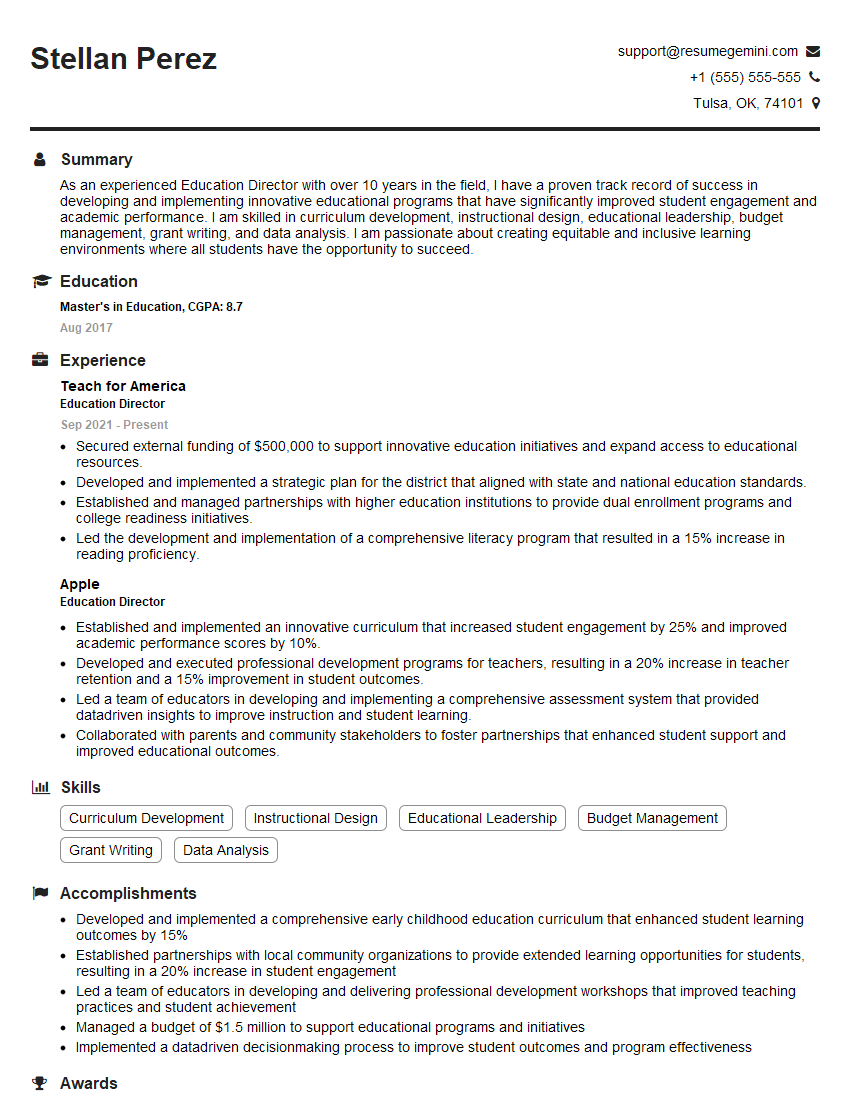
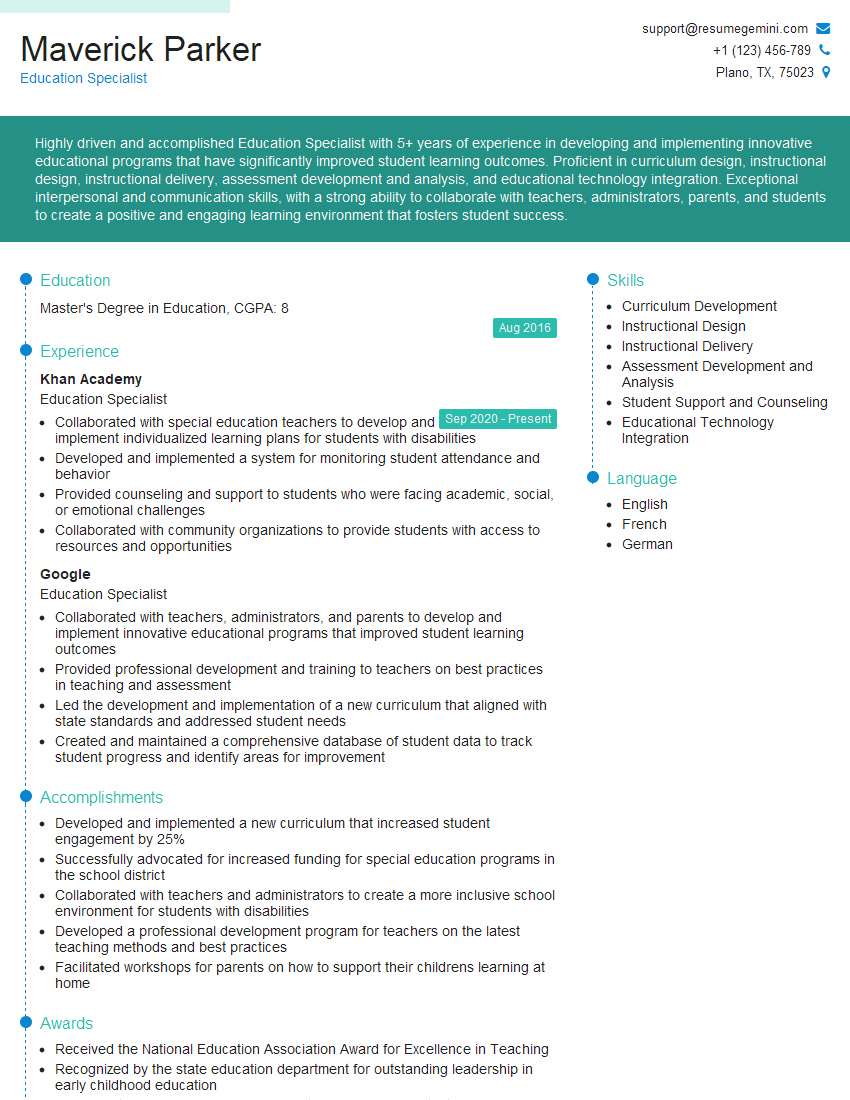
Mastering the key concepts of science museum or aquarium education significantly enhances your career prospects within this dynamic and rewarding field. It opens doors to diverse roles, from educator and exhibit developer to program coordinator and manager. To maximize your job search success, crafting an ATS-friendly resume is crucial. This ensures your qualifications are effectively communicated to potential employers. We strongly recommend using ResumeGemini, a trusted resource, to build a professional and impactful resume that highlights your skills and experience. Examples of resumes tailored to science museum and aquarium education experience are available to help you get started.


Explore more articles
Users Rating of Our Blogs
Share Your Experience
We value your feedback! Please rate our content and share your thoughts (optional).
What Readers Say About Our Blog
To the interviewgemini.com Webmaster.
Very helpful and content specific questions to help prepare me for my interview!
Thank you
To the interviewgemini.com Webmaster.
This was kind of a unique content I found around the specialized skills. Very helpful questions and good detailed answers.
Very Helpful blog, thank you Interviewgemini team.