The thought of an interview can be nerve-wracking, but the right preparation can make all the difference. Explore this comprehensive guide to Experience in Tailings Management and Water Treatment interview questions and gain the confidence you need to showcase your abilities and secure the role.
Questions Asked in Experience in Tailings Management and Water Treatment Interview
Q 1. Explain the different methods for tailings storage.
Tailings storage methods are crucial for safely managing the byproduct of mineral processing. The choice depends on factors like tailings characteristics (e.g., density, toxicity), climate, topography, and regulatory requirements. Common methods include:
- Thickened tailings disposal: Tailings are thickened to increase solids concentration, reducing water volume and land footprint. This often involves the use of large thickeners and then pumping the thickened slurry to storage. This is a relatively cost-effective method.
- Filtered tailings disposal: Further dewatering of thickened tailings using filter presses or belt filters results in a drier, more stable product. This reduces the risk of seepage and is preferred in areas with stricter environmental regulations or limited water resources. However, it is generally more expensive than thickening alone.
- Dry stacking: The most advanced option, this method involves significantly dewatering tailings to a nearly dry state before disposal. This dramatically minimizes the environmental impact but typically involves higher capital costs.
- Subaqueous tailings disposal: Tailings are discharged directly into a body of water, often a deep lake or ocean. This approach is becoming less common due to its potential environmental risks. Careful environmental impact assessments are crucial.
- Paste backfill: A more sustainable approach, paste backfill uses tailings mixed with binders to create a paste that is pumped into mined-out voids. This provides stability for the mine, recovers valuable space, and minimizes surface storage.
The selection of the optimal method involves a comprehensive risk assessment and feasibility study that considers all the environmental and economic factors. For instance, in arid regions, dry stacking might be preferred to minimize water usage, while in areas with high rainfall, a robust thickened tailings dam design with robust monitoring systems will be necessary.
Q 2. Describe your experience with tailings dam design and construction.
My experience spans the entire lifecycle of tailings dam design and construction, from initial geotechnical investigations to final commissioning. I’ve been involved in projects using various dam types, including upstream, downstream, and center-line designs.
In one project, we employed a sophisticated Finite Element Analysis (FEA) model to simulate dam stability under various hydrological and seismic conditions. This allowed us to optimize the dam design, minimizing the environmental footprint while ensuring long-term stability. We also incorporated advanced instrumentation – including inclinometers, piezometers, and settlement markers – to monitor dam performance and detect any signs of instability early on. This proactive monitoring approach is crucial for mitigating risks.
During construction, my role involved overseeing quality control, ensuring compliance with design specifications and safety regulations. This included rigorous testing of materials, regular inspections, and meticulous documentation. In another project, we implemented innovative construction techniques to minimize the environmental impact of the construction phase, such as using recycled materials and optimizing water usage.
Q 3. What are the key environmental considerations in tailings management?
Environmental considerations in tailings management are paramount. The key concerns include:
- Water quality: Tailings often contain heavy metals and other contaminants that can leach into surface and groundwater, impacting aquatic ecosystems and potentially human health. Effective water management strategies, including liners, drainage systems, and water treatment, are essential.
- Air quality: Dust generated from tailings storage facilities can cause respiratory problems and contaminate surrounding areas. Dust suppression techniques are necessary, including covering the tailings surface with vegetation or applying chemical suppressants.
- Soil and ecosystem impacts: Tailings can alter soil properties and disrupt surrounding ecosystems. Proper land reclamation and revegetation plans are crucial to minimize long-term impacts.
- Biodiversity: Tailings dams can fragment habitats and impact local biodiversity. Careful planning and mitigation measures are required to minimize these effects.
- Greenhouse gas emissions: The processes involved in tailings management, especially transportation and dewatering, can generate greenhouse gas emissions. Mitigation strategies should focus on reducing energy consumption and carbon footprint.
Environmental impact assessments are crucial in the planning and design phases, ensuring that the environmental risks are properly identified and mitigated. This involves engaging with stakeholders, adhering to regulations, and implementing best practices.
Q 4. How do you assess the risk of tailings dam failure?
Assessing the risk of tailings dam failure involves a multi-faceted approach combining engineering analysis, geotechnical investigations, and hydrological modeling. A robust risk assessment framework should incorporate:
- Geotechnical assessment: This involves analyzing the soil properties of the dam foundation and embankment to determine its stability under various loading conditions.
- Hydrological analysis: This assesses the potential for overtopping, seepage, and erosion due to rainfall, snowmelt, or other hydrological events.
- Seismic hazard assessment: In seismically active regions, the dam’s resistance to earthquake-induced forces must be evaluated.
- Instrumentation and monitoring: Regular monitoring of the dam’s performance using various instruments (e.g., inclinometers, piezometers) is essential to detect early warning signs of instability.
- Risk modeling and analysis: Probabilistic methods are used to quantify the likelihood of failure and its potential consequences.
The results of the risk assessment inform the development of a comprehensive risk management plan, including measures to mitigate potential hazards and emergency response protocols. Regular reviews and updates of the risk assessment are crucial to adapt to changing conditions and improve safety.
Q 5. What are the different water treatment technologies used in mining?
Water treatment technologies in mining vary depending on the specific contaminants present and the desired level of treatment. Common technologies include:
- Clarification: Techniques like sedimentation and coagulation/flocculation remove suspended solids from the water.
- Filtration: Various filter media (sand, gravel, activated carbon) are used to remove dissolved and particulate contaminants.
- Ion exchange: This process uses resins to remove specific ions, such as heavy metals, from the water.
- Reverse osmosis (RO): A membrane-based technology that removes a wide range of dissolved contaminants, including salts and organic compounds.
- Activated carbon adsorption: Activated carbon effectively adsorbs organic contaminants and some heavy metals.
- Chemical precipitation: Chemicals are added to precipitate dissolved metals, making them easier to remove.
The selection of appropriate technologies depends on a detailed water quality analysis and economic considerations. Often, a combination of technologies is used to achieve the required water quality standards.
Q 6. Explain your experience with water reuse and recycling in mining operations.
My experience with water reuse and recycling in mining operations has focused on developing and implementing sustainable water management strategies. In one project, we designed a closed-loop water system that recycled treated process water for dust suppression and mine dewatering. This significantly reduced the mine’s reliance on fresh water sources and minimized the environmental impact of water discharge.
We used a combination of clarification, filtration, and reverse osmosis to treat the process water, ensuring that it met the required quality standards for reuse. The system also incorporated advanced monitoring and control systems to optimize water usage and ensure the effective removal of contaminants. Another project focused on the reuse of tailings water after treatment to reduce demand on other water sources for industrial uses in the vicinity of the mine. We needed to adapt the technology to suit the variability of the water quality. This often involved using robust and flexible treatment processes.
The key to successful water reuse and recycling is a comprehensive understanding of water quality, the development of robust treatment technologies, and effective monitoring and control strategies. A lifecycle cost analysis is crucial to ensure that the benefits of water reuse outweigh the costs.
Q 7. Describe the regulatory framework for tailings management in your region.
(Note: The regulatory framework for tailings management varies significantly by region. The following is a generalized example and should not be considered legal advice. Consult relevant authorities for specific regulations in your area.)
In many jurisdictions, the regulatory framework for tailings management is comprehensive and focuses on preventing environmental harm and protecting human health. Key aspects typically include:
- Environmental permits: Mining operations require permits to construct and operate tailings storage facilities. These permits outline stringent requirements for dam design, construction, operation, and closure.
- Environmental impact assessments (EIAs): EIAs are mandatory before the commencement of any mining project. These assessments evaluate the potential environmental impacts of the proposed tailings management strategy.
- Water quality standards: Regulations specify limits on the concentration of various contaminants in water discharged from tailings storage facilities.
- Monitoring and reporting requirements: Operators are required to monitor the performance of their tailings storage facilities and regularly report their findings to regulatory agencies.
- Mine closure plans: Comprehensive plans are required outlining the measures to be taken to ensure the long-term stability and environmental integrity of the tailings storage facility after mine closure.
Enforcement of regulations is crucial to ensure compliance and protect the environment. Non-compliance can result in significant penalties, including fines, suspension of operations, and legal action.
Q 8. How do you monitor the environmental impact of tailings storage facilities?
Monitoring the environmental impact of tailings storage facilities (TSFs) is crucial for responsible mining. It involves a multi-faceted approach encompassing regular assessments of water quality, air quality, and the surrounding ecosystem. We employ a combination of techniques to achieve this.
Water Quality Monitoring: This includes regular sampling and analysis of surface water and groundwater for parameters like pH, dissolved metals (e.g., arsenic, lead, mercury), suspended solids, and total dissolved solids. We use this data to track potential leaching from the tailings and identify any exceedances of regulatory limits. For example, in a project I worked on in Chile, we implemented a comprehensive water quality monitoring program that included real-time sensors and automated data logging to provide immediate alerts of any anomalies.
Air Quality Monitoring: Particulate matter (PM) emissions from tailings, particularly during dry periods or construction, are a concern. We utilize dust monitoring stations and assess wind patterns to determine potential impacts on nearby communities and ecosystems. In one instance, we mitigated dust emissions by implementing dust suppression techniques like using water sprays and covering exposed tailings surfaces.
Ecological Monitoring: This involves assessing the impacts on biodiversity and overall ecosystem health. This may include monitoring plant and animal populations near the TSF, studying soil health, and examining benthic communities in nearby waterways. A project in Canada saw us employing ecological risk assessments to ensure that the TSF’s impact was minimal on nearby sensitive habitats.
Geotechnical Monitoring: This involves monitoring the stability of the dam itself, including slope stability, seepage rates, and surface deformation. This data allows us to predict potential problems and implement remedial measures before catastrophic events can occur.
Data from all these monitoring activities is regularly analyzed and reported to relevant regulatory authorities. This ensures transparency and facilitates proactive management decisions.
Q 9. What are the challenges in managing legacy tailings sites?
Managing legacy tailings sites presents unique challenges due to a lack of historical data, outdated design standards, and often unknown environmental conditions. These sites pose significant risks due to potential dam failures, water pollution, and long-term environmental liabilities.
Data Gaps: Information on the physical and chemical characteristics of the tailings, previous management practices, and the extent of environmental contamination may be limited or nonexistent, making risk assessment complex.
Uncertain Site Conditions: Aging infrastructure, such as dams and liners, may be compromised, leading to increased risks of failure and leakage. In situ conditions might have altered significantly since the site’s initial construction.
Regulatory Compliance: Meeting current environmental regulations is a significant challenge with legacy sites, as they often don’t meet modern standards. This often requires expensive remediation and monitoring measures.
Financial Liabilities: Remediation and long-term management of legacy tailings sites can be costly and require significant financial resources. Identifying responsible parties and securing funding for remedial works can be a major hurdle.
Addressing these challenges requires a phased approach, starting with thorough site characterization, followed by risk assessment, and then developing a remediation and long-term management plan that addresses both environmental and financial considerations. In my experience, engaging with stakeholders, including local communities and regulatory bodies, is paramount for successful legacy site management.
Q 10. How do you ensure the long-term stability of tailings dams?
Ensuring the long-term stability of tailings dams requires a comprehensive approach that begins at the design phase and continues throughout the operational life and closure of the facility.
Design & Construction: Tailings dam design must incorporate robust geotechnical engineering principles, considering factors like seismic activity, hydrological conditions, and the physical properties of the tailings material. This involves sophisticated modeling and simulation to predict dam behavior under various scenarios. Proper construction practices are critical to meet the design specifications.
Monitoring and Instrumentation: A comprehensive monitoring system is essential for real-time assessment of dam stability. This includes installing instruments to measure pore water pressure, seepage rates, surface deformation, and seismic activity. Regular inspections are also crucial.
Maintenance and Upgrading: Regular maintenance is required to address any issues or deterioration that may occur over time. This may include repairs to the dam structure, improvements to drainage systems, or implementation of additional monitoring instruments. In some cases, dam raising or upgrading may be necessary to meet evolving safety standards.
Risk Management: A strong risk management plan must address potential hazards, such as dam breaches, and outline mitigation strategies. This should include emergency response plans and communication protocols.
Closure Planning: Tailings dam closure planning needs to start early in the project lifecycle. It includes the design and implementation of post-closure monitoring, which will continue for decades after closure to ensure long-term environmental protection.
For example, in one project, we utilized advanced geotechnical instruments, including inclinometers and piezometers, to monitor the dam’s behavior in real-time. This allowed for early detection of any potential instability issues and proactive interventions, significantly reducing risk.
Q 11. Describe your experience with tailings water treatment.
My experience in tailings water treatment spans various technologies and applications. The goal is always to treat the water to meet regulatory discharge limits and reduce the environmental footprint. The specific approach depends heavily on the characteristics of the tailings water, such as the concentration of contaminants and water volume.
Thickening and Dewatering: This initial step reduces the volume of water to be treated. Techniques include settling ponds, thickeners, and filter presses. This reduces the overall treatment cost and environmental impact.
Chemical Treatment: Various chemical processes can be used to remove contaminants. This may include coagulation-flocculation to remove suspended solids, precipitation to remove dissolved metals, or neutralization to adjust pH. The selection of chemicals depends on the nature of contaminants present in the water.
Biological Treatment: Biological methods can be used to remove organic contaminants and reduce nutrient loads. This is often employed where the water contains high levels of organic matter.
Advanced Oxidation Processes (AOPs): AOPs such as ozonation or UV treatment are used for the removal of recalcitrant compounds that are not easily removed by conventional methods. These are typically used as polishing steps.
Evaporation Ponds: Evaporation ponds can be used as a final treatment step for concentrated brines. However, this is dependent on climate and requires careful management to avoid environmental issues.
I’ve been involved in projects using a combination of these technologies, tailored to the specific needs of each site. For instance, in one project, we implemented a multi-stage treatment process combining chemical precipitation, biological treatment, and reverse osmosis to achieve extremely low contaminant concentrations in the treated water before discharge.
Q 12. What are the key performance indicators (KPIs) for tailings management?
Key Performance Indicators (KPIs) for tailings management are crucial for tracking progress, ensuring compliance, and optimizing performance. These KPIs should cover environmental, safety, and operational aspects.
Environmental KPIs: These focus on minimizing the environmental impact. Examples include: water quality parameters (e.g., concentrations of dissolved metals, suspended solids), air quality parameters (e.g., PM10 concentrations), and ecological indicators (e.g., biodiversity indices).
Safety KPIs: These relate to the safety of personnel and the surrounding community. Examples include: number of safety incidents, frequency of dam inspections, and effectiveness of emergency response systems.
Operational KPIs: These track the efficiency and cost-effectiveness of tailings management operations. Examples include: tailings production rate, water recycling efficiency, and operating costs.
Compliance KPIs: These track compliance with regulations and permits. Examples include: number of regulatory violations, frequency of audits, and the timely submission of required reports.
Regular monitoring and reporting of these KPIs are essential for identifying areas for improvement and making data-driven decisions to optimize tailings management practices. The specific KPIs used may vary depending on the context of the project, local regulations, and company policies.
Q 13. How do you manage the risks associated with tailings seepage?
Managing the risks associated with tailings seepage is critical for protecting groundwater and surface water resources. This requires a multi-pronged approach.
Early Detection Systems: Installing a robust monitoring network, including piezometers, seepage meters, and groundwater monitoring wells, is crucial for detecting seepage at an early stage. Real-time monitoring systems allow for rapid response to any indications of increased seepage.
Geotechnical Investigations: Thorough geotechnical investigations are necessary to understand the subsurface conditions and identify potential seepage pathways. This can include drilling, geophysical surveys, and laboratory testing of soil and rock samples.
Remedial Measures: If seepage is detected, remediation measures may be required. These could include constructing cut-off walls, installing drainage systems, or grouting seepage pathways. The selection of the appropriate remedial method depends on the site-specific conditions and the extent of seepage.
Emergency Response Plans: A comprehensive emergency response plan should be in place to address any unexpected seepage events. This plan should outline procedures for containment, remediation, and communication to stakeholders.
Water Quality Monitoring: Continuous water quality monitoring of surface water and groundwater in the vicinity of the tailings storage facility is essential to track the impact of any seepage.
A proactive approach, combining effective monitoring and rapid response, is key to minimizing the risk of widespread contamination from tailings seepage. I’ve personally overseen several projects where early detection through comprehensive monitoring systems allowed for timely interventions, preventing significant environmental damage.
Q 14. Describe your experience with different types of tailings impoundments.
My experience encompasses various types of tailings impoundments, each with its own advantages and disadvantages.
Upstream Dams: These are relatively simple and inexpensive to construct, but they are less stable and have a higher risk of failure.
Downstream Dams: These are more stable than upstream dams, but they are more complex and expensive to build.
Centrifugal Dams: These dams are built using centrifugal force, creating a strong, stable structure. They are suitable for large tailings volumes but can be expensive.
Thickened Tailings Disposal: This method involves thickening the tailings slurry to reduce the water content before disposal. This reduces the volume of tailings needing storage, minimizing the environmental footprint and long-term management costs. It’s a more environmentally friendly method and is gaining popularity.
Dry Stacking: This method involves disposing of the tailings in a dry state. This method is suitable for materials with a low water content and minimizes the environmental impact related to water management but may require higher capital investment for dewatering.
The choice of impoundment type depends on several factors, including the characteristics of the tailings, site geology, climate, environmental regulations, and economic constraints. In my experience, the selection process involves a thorough assessment of risks and benefits for each option, ensuring a balance between safety, cost, and environmental protection.
Q 15. What are the best practices for tailings disposal?
Best practices for tailings disposal prioritize minimizing environmental impact and ensuring long-term stability. This involves a multifaceted approach encompassing site selection, design, construction, operation, and closure.
- Site Selection: Thorough geological and hydrological assessments are crucial to identify sites with low permeability and minimal risk of water contamination or slope instability. For example, avoiding areas with high groundwater tables or seismic activity is paramount.
- Design and Construction: Tailings dams should be designed using sound engineering principles, considering factors like seismic loading, erosion, and seepage. Modern designs often incorporate features like liner systems (geomembranes, compacted clay) to prevent leakage and advanced monitoring systems. The choice between dry stacking, paste backfill, or subaqueous disposal depends heavily on the tailings characteristics and site conditions.
- Operation and Monitoring: Regular monitoring of dam stability, water quality, and seepage is critical. This includes instrumentation such as piezometers, inclinometers, and surface displacement sensors. Early detection of potential issues allows for timely intervention, preventing catastrophic failures.
- Closure and Reclamation: A comprehensive closure plan should be developed and implemented, addressing long-term stability, water management, and environmental rehabilitation. This may involve water management strategies like water recycling or evaporation ponds, as well as revegetation and landscaping to restore the site.
For instance, in one project I worked on, we implemented a multi-layered liner system for a tailings dam in a seismically active region. This, coupled with advanced monitoring technology, significantly reduced the risk of failure and environmental contamination.
Career Expert Tips:
- Ace those interviews! Prepare effectively by reviewing the Top 50 Most Common Interview Questions on ResumeGemini.
- Navigate your job search with confidence! Explore a wide range of Career Tips on ResumeGemini. Learn about common challenges and recommendations to overcome them.
- Craft the perfect resume! Master the Art of Resume Writing with ResumeGemini’s guide. Showcase your unique qualifications and achievements effectively.
- Don’t miss out on holiday savings! Build your dream resume with ResumeGemini’s ATS optimized templates.
Q 16. Explain your experience with groundwater monitoring near tailings facilities.
My experience with groundwater monitoring near tailings facilities spans over 15 years, including projects across various geological settings. Effective groundwater monitoring is essential for detecting potential contamination from tailings. This typically involves establishing a network of monitoring wells upgradient, downgradient, and within the tailings impoundment area.
The monitoring program includes regular sampling and analysis of groundwater for a range of parameters such as pH, dissolved metals (e.g., arsenic, lead, heavy metals), and sulphate. Data analysis is crucial, utilizing statistical methods to identify trends and anomalies. We use specialized software to create contour maps showing the spatial distribution of contaminants. This allows us to track the plume movement and evaluate the effectiveness of containment measures.
In one project, we discovered an unexpected increase in arsenic levels downgradient of the tailings facility. Through analysis of monitoring data, we were able to determine the source of contamination and implement a remediation strategy that successfully reduced arsenic levels to below regulatory limits.
Q 17. How do you address water quality issues related to tailings?
Addressing water quality issues related to tailings requires a comprehensive approach, focusing on prevention, containment, and remediation.
- Prevention: Minimizing water infiltration into the tailings impoundment is key. This can be achieved through proper dam design and construction, using liner systems, and implementing effective water management practices.
- Containment: For existing facilities, measures such as creating interception trenches or constructing cut-off walls can help contain the contaminated water.
- Remediation: Water treatment is often necessary to remove contaminants before discharge. Techniques can range from simple neutralization to advanced processes like reverse osmosis or ion exchange.
A crucial aspect is understanding the specific contaminants present in the water and selecting appropriate treatment methods based on their concentration and properties. In one project, we used a combination of chemical precipitation and activated carbon filtration to remove heavy metals and dissolved organic compounds from mine water. This significantly improved water quality, allowing safe discharge.
Q 18. What are the different types of water treatment processes used for mine water?
Various water treatment processes are employed for mine water, depending on the specific contaminants and the desired level of treatment. These processes can be categorized broadly as physical, chemical, and biological.
- Physical Processes: These include sedimentation, filtration (sand filtration, membrane filtration), and air stripping. Sedimentation removes suspended solids, filtration removes finer particles, and air stripping removes volatile organic compounds.
- Chemical Processes: Chemical precipitation, oxidation, and coagulation-flocculation are commonly used to remove dissolved metals and other contaminants. Reverse osmosis (RO) and ion exchange (IX) are advanced processes capable of removing a wide range of dissolved contaminants.
- Biological Processes: Bioremediation utilizes microorganisms to break down organic contaminants. This can be an effective and cost-effective solution for certain types of mine water contamination.
The selection of the most appropriate treatment process is determined by a site-specific assessment, taking into account factors like cost, efficiency, and regulatory requirements.
Q 19. Describe your experience with the design and operation of water treatment plants.
My experience encompasses all stages of water treatment plant design and operation, from conceptual design and feasibility studies to detailed engineering, construction oversight, and commissioning. I’ve been involved in projects ranging from small-scale treatment plants for individual mines to large-scale facilities treating water for multiple operations.
The design phase includes detailed hydraulic modeling, process design, equipment selection, and the development of operational procedures. During construction, I oversee the quality of materials and workmanship, ensuring that the plant meets the design specifications. After commissioning, I’m involved in optimizing plant operation, ensuring efficient performance, and addressing any operational challenges that might arise. I’ve also participated in life-cycle cost analyses, ensuring the plant’s long-term sustainability.
For example, in one project, we used advanced modeling techniques to optimize the design of a reverse osmosis plant, reducing energy consumption and overall operational costs significantly.
Q 20. How do you ensure the compliance of tailings management operations with environmental regulations?
Ensuring compliance with environmental regulations for tailings management requires a proactive approach that integrates compliance considerations into every stage of the operation, from planning to closure.
- Regulatory Monitoring: Maintaining detailed records of all activities, including monitoring data, is crucial. Regular audits ensure compliance with all relevant permits and regulations.
- Permitting and Approvals: Obtaining the necessary environmental permits and approvals is essential before initiating any tailings management activity. Applications should be comprehensive and address all potential environmental impacts.
- Stakeholder Engagement: Open communication and engagement with local communities, regulatory agencies, and other stakeholders are crucial. Addressing concerns and proactively mitigating potential impacts builds trust and ensures smoother operations.
- Contingency Planning: Developing comprehensive contingency plans for various scenarios, including accidents or unexpected events, is crucial to minimize environmental damage and ensure a swift response.
Regular internal and external audits help identify potential compliance gaps and ensure timely corrective actions. This proactive approach helps maintain a strong compliance record and minimize environmental risks.
Q 21. What are the economic considerations in tailings management?
Economic considerations in tailings management are significant, impacting both the initial capital investment and the long-term operational costs.
- Capital Costs: These include land acquisition, dam construction, water treatment infrastructure, and monitoring equipment. The choice of tailings management method significantly impacts capital costs, with dry stacking generally being less expensive than wet tailings storage.
- Operational Costs: These include ongoing maintenance of dams and water management systems, water treatment, and environmental monitoring. Efficient operation and optimized water management strategies can help reduce operational costs.
- Closure Costs: Planning for closure is essential, as it represents a substantial final expenditure. The complexity and cost of closure depend heavily on the chosen management strategy and the condition of the facility at closure.
- Liability and Risk Management: The potential for environmental liabilities and associated costs needs to be carefully assessed and factored into the overall economic analysis. Investing in robust design, construction, and monitoring can significantly reduce these risks.
A thorough life-cycle cost analysis is essential for making informed decisions. This analysis should compare different tailings management options, considering both short-term and long-term costs, and risks. This can help identify the most economically viable and environmentally responsible approach.
Q 22. How do you manage the social impacts of tailings storage facilities?
Managing the social impacts of tailings storage facilities (TSFs) requires a proactive and comprehensive approach that prioritizes transparent communication and community engagement. It’s not just about avoiding negative impacts; it’s about actively contributing to the well-being of nearby communities.
- Community Consultation and Engagement: Regular, meaningful dialogue with affected communities is crucial. This includes holding public forums, conducting surveys, and establishing community liaison committees to address concerns and incorporate local knowledge into TSF management plans. For example, in one project, we held bi-monthly meetings with local residents, allowing them to voice concerns about dust, noise, and water quality, leading to the implementation of dust suppression measures and a robust water monitoring program.
- Transparency and Information Sharing: Openly sharing information about TSF design, operation, monitoring, and closure plans is essential to build trust. This could involve creating accessible reports, utilizing online platforms, and providing training sessions to educate the public about TSF safety and environmental management. A visual representation of the monitoring data, easily understandable by the public, proved invaluable in one of my projects.
- Economic Development and Employment: TSFs can create job opportunities in local communities, leading to positive economic impacts. Strategies for maximizing local employment during construction and operational phases should be proactively implemented. In a project in South America, we prioritized local contractors and workers for construction and maintenance activities.
- Addressing Concerns about Health and Safety: Thoroughly addressing concerns about potential health impacts, such as air and water quality, is crucial. This includes rigorous monitoring, compliance with regulatory standards, and, where necessary, implementing mitigation measures to address any concerns.
Ultimately, successful social impact management for TSFs hinges on establishing a strong relationship of trust between the mining company, the regulatory bodies, and the affected communities.
Q 23. What are the different methods for closure of tailings storage facilities?
Tailings storage facility (TSF) closure methods aim to permanently stabilize the tailings and minimize long-term environmental risks. The optimal method depends on several factors, including the tailings characteristics, climate, and regulatory requirements. The selection process is often complex, incorporating advanced modeling and risk assessments.
- Subaerial Closure: This method involves dewatering the tailings, followed by shaping, compaction, and capping to create a stable, dry landform. It’s often suitable for smaller TSFs or those located in arid climates. However, it requires effective dewatering and careful management of potential erosion.
- Subaqueous Closure: This involves raising the water level in the TSF to submerge the tailings completely, forming an underwater mound. This method often requires an engineered perimeter, is suitable for tailings with high water content, and minimizes the risk of wind erosion. However, it requires monitoring of water quality and seepage.
- Dry Stacking: This involves depositing thickened tailings directly onto a prepared area, often using a stacking system. It’s suitable for tailings with low water content, and can minimize the land area required. However, it can require more energy for thickening and may still result in wind erosion issues.
- Combination Methods: Often, a combination of methods is used to optimize closure effectiveness and minimize costs. For example, a phased closure, combining dry stacking and subaqueous methods, was employed in one of my projects to accommodate variable tailings characteristics.
Regardless of the method chosen, rigorous monitoring and long-term management are essential after closure to ensure the stability and environmental integrity of the TSF.
Q 24. Explain your experience with risk assessment and management in tailings management.
Risk assessment and management are paramount in tailings management. We utilize a systematic, multi-disciplinary approach combining quantitative and qualitative methods to identify, analyze, and mitigate potential hazards.
- Hazard Identification: This stage involves identifying all potential hazards associated with the TSF, including dam failures, seepage, erosion, and environmental impacts. We employ techniques like HAZOP (Hazard and Operability Study) and FMEA (Failure Mode and Effects Analysis) to comprehensively address potential issues.
- Risk Analysis: Once hazards are identified, we analyze their likelihood and potential consequences using techniques like quantitative risk assessment (QRA) and event tree analysis. This allows us to prioritize risks based on their severity and probability.
- Risk Mitigation: Based on the risk analysis, we develop and implement mitigation strategies. These can range from engineering controls (e.g., improved dam design, enhanced monitoring systems), administrative controls (e.g., improved operating procedures, stricter safety protocols), to emergency response plans to address potential catastrophic events. The mitigation measures have to be cost-effective and practical, always focusing on minimizing the probability and consequences of potential failures.
- Monitoring and Review: Continuous monitoring of the TSF is critical. We use a combination of remote sensing, geotechnical instrumentation, and water quality monitoring to track the performance of the TSF and promptly detect any anomalies. Regular reviews and updates of the risk assessment are also crucial to adapt to changing conditions.
In one project, we identified a potential seepage pathway through the dam foundation during the risk assessment phase. This led to the implementation of a grouting program, significantly reducing the risk of dam failure.
Q 25. Describe your experience with the development and implementation of tailings management plans.
Developing and implementing a tailings management plan (TMP) is a complex, multi-stage process requiring close collaboration among engineers, environmental scientists, geologists, and regulatory agencies. The plan needs to adhere to best practices and comply with relevant regulations.
- Feasibility Studies: These assess different options for tailings management, considering factors such as cost, environmental impact, and long-term risks. This may include various TSF designs or alternative tailings management strategies.
- Design and Engineering: Based on the feasibility study, the TSF design is developed, incorporating engineering controls to ensure its stability and safety. This incorporates sophisticated geotechnical and hydrological modeling to predict the long-term behaviour of the TSF.
- Construction and Commissioning: The TSF is constructed according to the approved design. Rigorous quality control is essential throughout the construction phase. Monitoring systems are installed to track the TSF performance.
- Operation and Maintenance: Routine monitoring, maintenance, and operational procedures are crucial to ensure the TSF operates safely and efficiently. The TMP outlines clear protocols for managing water quality, dealing with emergencies, and ensuring the safety of workers.
- Closure Planning: The TMP includes a detailed closure plan, specifying the method to be used and the steps involved in achieving long-term stability and environmental protection. This typically is reviewed and updated regularly.
I’ve been involved in the development of several TMPs, ensuring they are compliant with international best practices like the Global Industry Standard on Tailings Management (GISTM). In one case, we used innovative technologies, such as advanced sensors and data analytics, to enhance monitoring and improve the safety and efficiency of operations.
Q 26. How do you ensure the safety of workers involved in tailings management operations?
Ensuring worker safety in tailings management operations requires a multi-faceted approach incorporating engineering controls, administrative controls, and personal protective equipment (PPE).
- Engineering Controls: These involve designing and implementing measures to eliminate or reduce hazards at their source. Examples include installing guardrails, implementing effective dust suppression systems, and ensuring safe access roads around the TSF.
- Administrative Controls: These include developing and enforcing safety procedures, providing regular safety training, implementing permit-to-work systems, and conducting regular safety inspections. Detailed risk assessments are crucial for identifying and mitigating hazards.
- Personal Protective Equipment (PPE): Providing appropriate PPE, such as safety helmets, high-visibility clothing, respirators, and safety boots, is essential. Regular inspections of PPE are necessary to guarantee its functionality.
- Emergency Response Plans: A comprehensive emergency response plan is crucial, specifying procedures to follow in case of accidents or emergencies. Regular drills and simulations keep workers prepared.
- Health Monitoring: Regular health monitoring of workers, including dust and noise level checks, is crucial. Early detection and mitigation of health issues prevent severe risks.
A strong safety culture, where safety is prioritized over production, is fundamental. In my experience, regular safety meetings, open communication, and effective reporting of incidents significantly improve worker safety. We also use innovative techniques like near-miss reporting and root-cause analysis to prevent future incidents.
Q 27. What are the latest advancements in tailings management technology?
Recent advancements in tailings management technology significantly improve safety, environmental performance, and efficiency.
- Improved Dam Designs: Innovations in dam design, including the use of geosynthetics, improved filter designs, and more robust construction methods, enhance TSF stability and reduce the risk of failure.
- Advanced Monitoring Technologies: The use of remote sensing (drones, satellite imagery), advanced instrumentation (fiber optic sensors, ground-penetrating radar), and data analytics provides real-time monitoring of TSF performance, enabling early detection of potential problems.
- Thickening and Dewatering Technologies: Advanced technologies for thickening and dewatering tailings reduce water content, reducing the volume of tailings requiring storage and minimizing the environmental footprint.
- Tailings Filtration and Paste Technology: Paste backfilling and filter press technology minimizes tailings water content and allows for the creation of stable, self-supporting tailings deposits.
- Automated Systems: Automation is improving efficiency and reducing human error in tailings management operations. Automated systems can control water levels, manage slurry transport, and provide real-time monitoring data.
The integration of these advanced technologies leads to safer, more sustainable, and economically viable tailings management strategies.
Q 28. How do you integrate sustainability principles into tailings management practices?
Integrating sustainability principles into tailings management practices requires a holistic approach that considers the environmental, social, and economic dimensions. It’s not just about minimizing environmental impacts; it’s about creating a responsible and resilient tailings management system.
- Minimizing Water Use: Employing water-efficient technologies like thickening and dewatering systems, and implementing water recycling strategies, significantly reduces water consumption.
- Reducing Greenhouse Gas Emissions: Optimizing energy use in tailings management processes, such as utilizing renewable energy sources, reduces greenhouse gas emissions. This could include utilizing solar or wind energy for the operation of pumps or other equipment.
- Protecting Biodiversity: Implementing measures to protect and restore biodiversity in and around the TSF, including revegetation and habitat restoration initiatives. We collaborate with local communities to create local habitats and protect existing flora and fauna.
- Waste Minimization and Resource Recovery: Exploring opportunities for resource recovery from tailings, such as recovering valuable minerals or using tailings as construction materials. This adds value while minimizing waste.
- Long-Term Monitoring and Stewardship: Implementing long-term monitoring plans to assess the long-term environmental performance of the TSF and ensuring responsibility for post-closure management. This can extend to establishing trust funds or other mechanisms to ensure environmental protection well into the future.
By adopting these sustainable practices, we can ensure that tailings management does not just meet environmental regulations, but contributes to a more sustainable future for communities and the environment.
Key Topics to Learn for Experience in Tailings Management and Water Treatment Interview
- Tailings Dam Design and Construction: Understanding different dam types, stability analysis, and geotechnical considerations.
- Tailings Management Strategies: Practical application of various strategies like dry stacking, thickeners, and filtration for efficient tailings disposal and minimizing environmental impact.
- Water Treatment Technologies: Explore different methods used for treating water contaminated by tailings, including chemical precipitation, reverse osmosis, and ion exchange.
- Environmental Regulations and Compliance: Familiarity with relevant environmental laws and regulations pertaining to tailings management and water discharge.
- Risk Assessment and Management: Understanding and applying risk assessment methodologies to identify and mitigate potential hazards associated with tailings storage facilities.
- Closure Planning and Reclamation: Developing plans for the safe and environmentally responsible closure and reclamation of tailings storage facilities.
- Water Balance and Monitoring: Analyzing water inflow, outflow, and evaporation within tailings storage facilities to optimize water management practices.
- Data Analysis and Reporting: Using data analysis techniques to monitor performance, identify trends, and inform decision-making in tailings management and water treatment.
- Sustainable Tailings Management Practices: Exploring and understanding the principles of sustainable tailings management, including resource recovery and minimizing environmental footprint.
- Problem-Solving and Decision-Making in Challenging Scenarios: Developing the ability to analyze complex situations, identify root causes, and propose effective solutions.
Next Steps
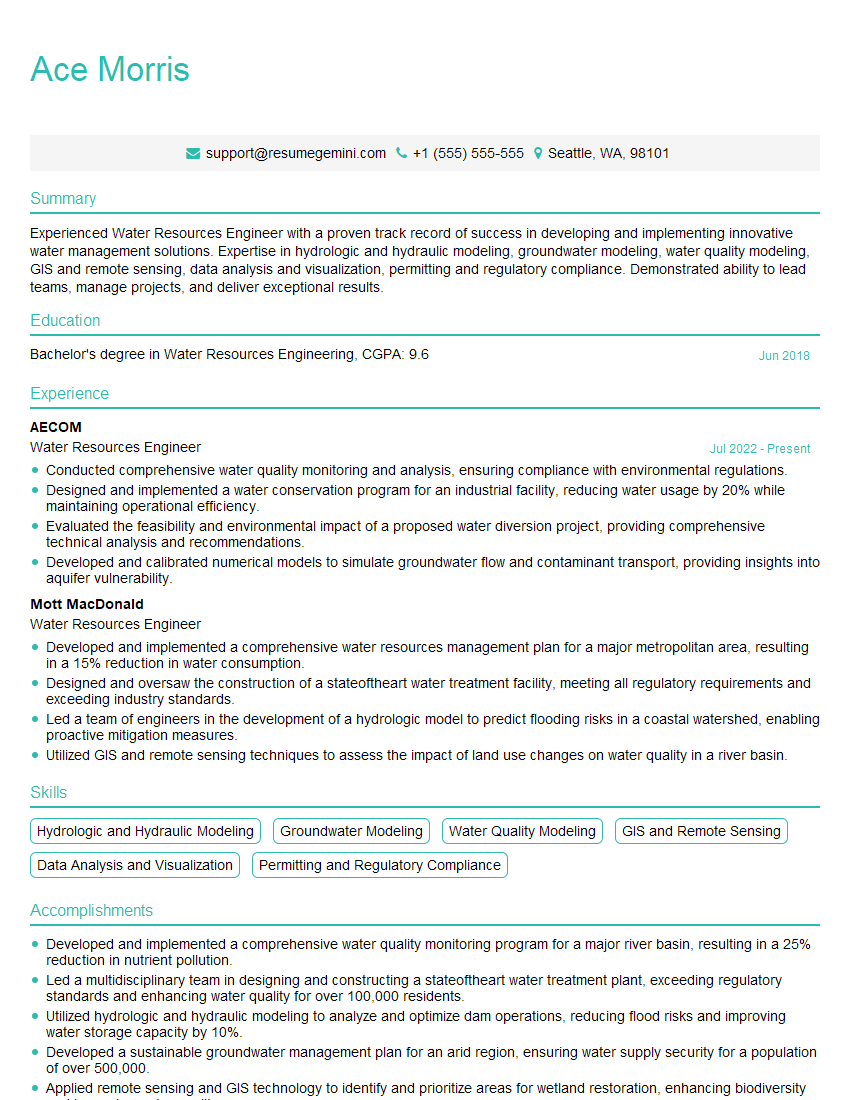
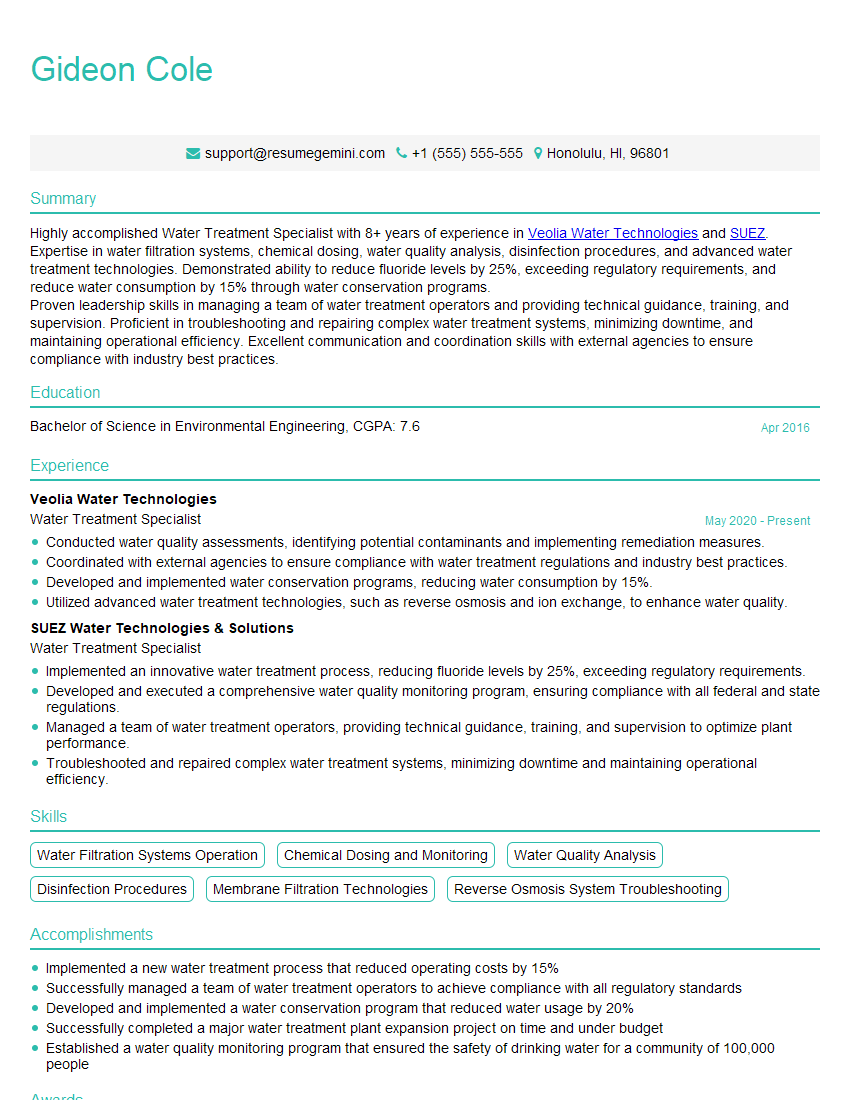
Mastering Tailings Management and Water Treatment is crucial for a successful and impactful career in the mining and environmental sectors. Demonstrating expertise in these areas significantly enhances your job prospects and opens doors to leadership roles. To make a strong impression on potential employers, it’s vital to present your skills and experience effectively. Creating an ATS-friendly resume is essential for getting your application noticed by recruiters. We highly recommend using ResumeGemini to build a professional and impactful resume that highlights your qualifications. ResumeGemini provides tools and examples specifically tailored for professionals with experience in Tailings Management and Water Treatment, helping you craft a compelling narrative that showcases your unique value. Examples of resumes tailored to this field are available.
Explore more articles
Users Rating of Our Blogs
Share Your Experience
We value your feedback! Please rate our content and share your thoughts (optional).
What Readers Say About Our Blog
To the interviewgemini.com Webmaster.
Very helpful and content specific questions to help prepare me for my interview!
Thank you
To the interviewgemini.com Webmaster.
This was kind of a unique content I found around the specialized skills. Very helpful questions and good detailed answers.
Very Helpful blog, thank you Interviewgemini team.