Are you ready to stand out in your next interview? Understanding and preparing for Experience in using electrical test equipment interview questions is a game-changer. In this blog, we’ve compiled key questions and expert advice to help you showcase your skills with confidence and precision. Let’s get started on your journey to acing the interview.
Questions Asked in Experience in using electrical test equipment Interview
Q 1. Describe your experience using oscilloscopes.
Oscilloscopes are indispensable tools for analyzing waveforms, allowing me to visualize voltage and current changes over time. My experience spans various models, from basic dual-channel oscilloscopes to more advanced mixed-signal oscilloscopes with capabilities like serial decoding. I’m proficient in using them to measure parameters like amplitude, frequency, period, rise time, and phase shift. For example, while troubleshooting a power supply, I used an oscilloscope to identify the presence of ripple voltage and measure its frequency to pinpoint the source of the problem – a faulty capacitor. In another instance, I used a high-bandwidth oscilloscope to analyze a fast digital signal and identify timing issues between different logic gates.
I’m comfortable with various triggering modes, including edge triggering, pulse triggering, and slope triggering, and understand how to effectively use probes to minimize signal interference and accurately measure signals. Analyzing complex waveforms involving multiple signals requires careful adjustment of settings such as timebase, vertical scale, and trigger levels. This often includes using math functions within the oscilloscope to perform calculations like differentiation and integration.
Q 2. Explain the difference between AC and DC current.
The key difference between AC and DC current lies in the direction of electron flow. DC (Direct Current) flows in a single direction, consistently from positive to negative. Think of a battery; it provides a constant flow of electrons. AC (Alternating Current), on the other hand, periodically reverses its direction. The electrons oscillate back and forth. This is how power is delivered to most homes and businesses. A common analogy is a pendulum swinging back and forth for AC, and a ball rolling downhill for DC.
This difference impacts how the current behaves in circuits and the types of components needed. DC circuits typically use resistors, capacitors, and inductors in relatively simple configurations. AC circuits, however, often involve more complex components like transformers, which rely on the changing magnetic field created by the alternating current.
Q 3. How do you troubleshoot a faulty circuit using a multimeter?
Troubleshooting a faulty circuit with a multimeter involves a systematic approach. I start by visually inspecting the circuit for obvious issues like loose connections or burnt components. Then, I use the multimeter to systematically check different parts of the circuit. For example, if a section of the circuit isn’t working, I would start by checking for voltage at the input and output of that section.
- Voltage Measurement: I use the voltage setting to check if the correct voltage is present at various points in the circuit. This helps to identify broken connections or components.
- Continuity Test: This checks if there is a complete path for current to flow between two points. If a connection is broken, the multimeter will indicate an open circuit.
- Resistance Measurement: I use this function to check the resistance of individual components like resistors to see if they are within the expected range. An abnormally low or high resistance indicates a faulty component.
Documenting measurements at each step is crucial for efficient troubleshooting. By comparing the measured values with the expected values (from schematics or datasheets), I can pinpoint the faulty component or section of the circuit and make appropriate repairs. For instance, if a resistor is reading 0 ohms, it indicates a short circuit which needs immediate attention and replacement.
Q 4. What safety precautions do you take when working with high-voltage equipment?
Safety is paramount when working with high-voltage equipment. I always follow these precautions:
- Lockout/Tagout Procedures: Before working on any high-voltage equipment, I ensure it is completely de-energized using lockout/tagout procedures. This is to prevent accidental energization during maintenance or testing.
- Personal Protective Equipment (PPE): I always wear appropriate PPE, including insulated gloves, safety glasses, and safety shoes. The level of PPE depends on the voltage level.
- Insulated Tools: I use only properly insulated tools rated for the voltage level I’m working with.
- Awareness of Surroundings: I maintain awareness of my surroundings to avoid contact with other energized equipment or conductive materials.
- Proper Training and Certification: I ensure I’m properly trained and certified to work on equipment of the voltage level involved.
Double-checking the voltage with a non-contact voltage detector is another important step before touching any component. Always treat high-voltage equipment as potentially lethal – safety procedures are not suggestions, but critical actions.
Q 5. Describe your experience with calibration procedures for electrical test equipment.
Calibration of electrical test equipment is essential for accurate measurements. My experience includes calibrating various types of equipment, including multimeters, oscilloscopes, and function generators. Calibration procedures typically involve comparing the equipment’s readings against known standards using certified calibration equipment.
I’m familiar with various calibration techniques and understand the importance of traceability to national or international standards. Calibration involves adjusting the equipment to meet specified tolerances. Accurate calibration records are meticulously maintained, including dates, results, and any adjustments made. In my previous role, I was responsible for managing the calibration schedule for our lab’s test equipment, ensuring all equipment was calibrated according to the manufacturer’s recommendations and within the required frequency to ensure data integrity.
Failing to regularly calibrate equipment can lead to inaccurate measurements and potentially costly errors in design, manufacturing, or testing. The frequency of calibration often depends on equipment type and usage frequency.
Q 6. How do you interpret a circuit diagram?
Interpreting circuit diagrams involves understanding the symbols used to represent different components, their interconnections, and the overall flow of current and signals. I start by identifying the power source, the input, and the output of the circuit. Then, I trace the path of the current or signal flow through the various components. The circuit diagram also specifies the values of components like resistors, capacitors, and inductors.
Understanding the different types of circuit diagrams (schematic, block diagram, wiring diagram) is crucial. Schematics are the most common and show the ideal circuit components and connections, while wiring diagrams show physical layout. Familiarity with standard symbols like resistors, capacitors, inductors, transistors, integrated circuits, and logic gates is essential. For example, I can easily identify a transistor’s base, emitter, and collector from its symbol in the diagram. More complex circuits require a deeper understanding of circuit theory to predict behavior, but basic circuits can be analyzed qualitatively via simple tracing.
Q 7. What are the common types of electrical test equipment you’ve used?
Throughout my career, I’ve extensively used a wide range of electrical test equipment, including:
- Multimeters (Digital and Analog): For measuring voltage, current, resistance, and continuity.
- Oscilloscopes (Dual-channel, Mixed-signal): For analyzing waveforms and measuring signal parameters.
- Function Generators: For generating various waveforms for testing and debugging circuits.
- Power Supplies (DC and AC): For supplying power to circuits during testing.
- Logic Analyzers: For analyzing digital signals and troubleshooting digital circuits.
- Signal Generators: Used for generating various signals for testing communication circuits.
- Spectrum Analyzers: To analyze frequency content of signals.
My experience with this diverse set of equipment allows me to effectively troubleshoot and analyze a broad range of electrical systems and circuits.
Q 8. Explain the function of a signal generator.
A signal generator is an electronic instrument that produces various types of electrical signals, such as sine waves, square waves, triangles waves, and pulses. These signals are used to test the response of circuits and systems. Think of it as a versatile tool that allows us to ‘poke’ a circuit with different electrical signals and observe how it reacts.
For instance, in testing an amplifier, we might use a signal generator to input a sine wave of a specific frequency and amplitude. We then observe the output of the amplifier to determine its gain, frequency response, and distortion characteristics. The signal generator’s ability to precisely control the frequency, amplitude, and waveform is crucial for accurate testing. Different signal generators offer various functionalities, including modulation capabilities (like AM or FM) and sweep functions to automatically vary the frequency over a specified range.
Q 9. How do you use a logic analyzer?
A logic analyzer is a sophisticated piece of test equipment used to capture and display digital signals. Unlike an oscilloscope which shows analog waveforms, a logic analyzer displays the logic states (high or low, typically represented as 1 or 0) of multiple digital signals simultaneously. This is invaluable for debugging digital circuits and systems.
To use a logic analyzer, you first connect its probes to the various digital signals you want to analyze within your circuit. Then, you trigger the analyzer to start capturing data, either by a specific event or a time-based trigger. The captured data is then displayed as a timing diagram, showing the logic state of each signal over time. This allows you to see the sequence of events, identify timing errors, and analyze data flow. For example, if a microcontroller isn’t responding correctly, you can use a logic analyzer to examine the communication signals between it and other peripherals, pinpointing the problem quickly.
Many modern logic analyzers offer advanced features like decoding of various protocols (like I2C, SPI, UART) which allows you to visualize the data being transmitted in a human-readable format rather than just binary.
Q 10. What is impedance and how is it measured?
Impedance is the measure of opposition to the flow of alternating current (AC). It’s a complex quantity that combines resistance and reactance. Resistance is the opposition to current flow that dissipates energy as heat, while reactance is the opposition to current flow that stores energy (in the electric or magnetic field). In simple terms, it’s like friction in a pipe system. Resistance is like friction from the roughness of the pipe’s walls, while reactance is like the inertia of the water itself resisting changes in flow.
Impedance is measured using an impedance analyzer. This instrument applies a known AC signal to the device under test (DUT) and measures the resulting current and voltage. Using Ohm’s Law in a modified form, it then calculates the impedance (Z) as Z = V/I, where V is the voltage and I is the current. However, since impedance is a complex number, the phase difference between the voltage and current is also measured to determine the reactive component. The impedance analyzer displays the magnitude and phase angle of the impedance, often in polar coordinates (magnitude, angle) or rectangular coordinates (real part, imaginary part). These measurements are critical for characterizing components like capacitors, inductors, and complex circuits across a range of frequencies.
Q 11. Describe your experience with automated test equipment (ATE).
I have extensive experience with Automated Test Equipment (ATE), primarily using systems from National Instruments and Teradyne. My experience ranges from programming and configuring ATE systems to troubleshoot hardware and software issues and designing test programs. In one project, I was responsible for developing an ATE system to test high-speed digital communication interfaces on a new line of network routers. This involved designing the test fixture, writing test programs using LabVIEW, and integrating various instruments, including digital multimeters, oscilloscopes, and signal generators.
A key challenge was ensuring high throughput and minimizing test time. I addressed this by optimizing the test program, implementing parallel testing techniques where possible, and automating the handling and loading of the devices under test. I also developed a comprehensive fault-diagnosis system that would accurately identify the failed components, which significantly reduced the time spent on debugging. My work resulted in a significant increase in production efficiency and a reduction in test costs.
Q 12. How do you handle unexpected test results?
Handling unexpected test results requires a systematic approach. First, I always double-check the test setup and the calibration of the test equipment to rule out any instrument errors. I then meticulously review the test procedure to ensure it was followed correctly. This often involves verifying the correct connections, settings, and parameters. If the problem still persists, I investigate potential sources of error in the device under test (DUT).
This might involve comparing the test results to specifications, examining the DUT for any physical damage or anomalies, and comparing the results with data from similar tests. For example, if a power supply was failing to meet its voltage specification, I would use a power analyzer to carefully measure the input and output currents and voltages, looking for signs of internal shorts or other problems. Documentation is key. I meticulously document every step, from the initial observation of the unexpected results to the final resolution of the issue, which is crucial for preventing future occurrences.
Q 13. What are some common sources of error in electrical testing?
Several sources contribute to errors in electrical testing. One common source is inaccurate calibration of test equipment. Instruments drift over time, so regular calibration is vital. Another is incorrect probe connections, which can lead to false readings or damage to the DUT. Environmental factors such as temperature and humidity can also influence test results, particularly for sensitive components. Finally, human error, such as misinterpreting readings or incorrectly following procedures, can introduce significant errors.
Another significant source of error is parasitic effects within the test setup. These are unwanted electrical phenomena that can interfere with accurate measurements. For example, stray capacitance or inductance in the cables and connections can affect high-frequency measurements. Understanding and minimizing these parasitic effects through proper shielding and grounding techniques is essential for obtaining reliable results.
Q 14. Explain your understanding of grounding and safety.
Grounding is the connection of a circuit or equipment to the earth, providing a low-impedance path for fault currents. This is critical for safety, as it helps prevent electric shock and equipment damage. Safety requires proper grounding, using appropriately rated equipment, and adherence to safety regulations. In any electrical testing environment, a properly implemented grounding system is paramount.
Poor grounding can lead to unpredictable behavior in circuits, incorrect measurements, and potential hazards. It’s essential to ensure that all equipment is properly grounded, and that the grounding system itself is adequately designed and maintained. For instance, in high-voltage testing, special precautions are necessary, including the use of insulated tools and appropriate personal protective equipment (PPE). Always follow established safety protocols and never compromise on safety when working with electricity.
Q 15. How familiar are you with different types of transducers?
Transducers are devices that convert one form of energy into another, often used to measure physical phenomena and convert them into electrical signals for measurement and analysis. My experience encompasses a wide range, including:
- Strain gauges: These are highly sensitive resistive elements whose resistance changes proportionally to the strain applied. I’ve used them extensively in structural testing to measure stress and strain in components under load. For instance, I used strain gauges to analyze the stress distribution on a bridge support during a load test, providing crucial data for structural integrity assessment.
- Thermocouples: These are essential for temperature measurement. I’ve worked with various types, from K-type for general purpose to specialized thermocouples for high-temperature applications. A recent project involved using thermocouples to monitor the temperature profile within a high-power electrical motor during operation to identify potential overheating issues.
- Accelerometers: These measure acceleration and are vital in vibration analysis. I’ve used them to diagnose imbalances in rotating machinery and identify resonant frequencies, leading to efficient troubleshooting and preventative maintenance. For example, I utilized accelerometers to pinpoint a bearing failure in a large industrial pump before it caused significant damage.
- Load cells: These measure force and weight. I’ve used load cells in testing applications ranging from simple weight measurement to complex load analysis in mechanical systems. I remember a project where precise load cell measurements were critical for calibrating a robotic arm’s force feedback system.
Understanding the operating principles, calibration techniques, and limitations of different transducer types is crucial for accurate and reliable measurements.
Career Expert Tips:
- Ace those interviews! Prepare effectively by reviewing the Top 50 Most Common Interview Questions on ResumeGemini.
- Navigate your job search with confidence! Explore a wide range of Career Tips on ResumeGemini. Learn about common challenges and recommendations to overcome them.
- Craft the perfect resume! Master the Art of Resume Writing with ResumeGemini’s guide. Showcase your unique qualifications and achievements effectively.
- Don’t miss out on holiday savings! Build your dream resume with ResumeGemini’s ATS optimized templates.
Q 16. What is your experience with data acquisition systems?
Data acquisition systems (DAS) are crucial for collecting, processing, and storing data from various sources. My experience involves using DAS for diverse applications, ranging from simple signal monitoring to complex, multi-channel measurements. I’m proficient in setting up and configuring DAS, selecting appropriate hardware (such as A/D converters and signal conditioning modules), and using software to control the system and analyze the collected data.
For instance, I worked on a project involving the monitoring of multiple parameters (temperature, pressure, vibration) in a large industrial process. I configured a DAS to simultaneously acquire data from several transducers, then used specialized software to visualize the data in real-time and identify potential anomalies. This allowed for proactive intervention and prevented costly downtime.
My experience extends to working with both hardware-based DAS and software-defined systems. I understand the importance of selecting a system that matches the specific application requirements in terms of sampling rate, resolution, and number of channels.
Q 17. Describe your experience with diagnosing and repairing electrical faults.
Diagnosing and repairing electrical faults requires a systematic and methodical approach. My experience involves using a range of troubleshooting techniques, starting with a thorough visual inspection and safety checks, to using specialized equipment for more complex issues.
- Visual Inspection: I always begin with a visual inspection to look for obvious signs of damage, such as loose connections, burned components, or physical damage to wiring or equipment.
- Multimeter Usage: I use multimeters extensively to measure voltage, current, and resistance. I’m proficient in using multimeters in both AC and DC modes and interpret the readings to identify faults in circuits.
- Oscilloscope Usage: Oscilloscope usage is essential for analyzing waveforms and identifying issues such as signal distortion, noise, and timing problems. I have experience using oscilloscopes to troubleshoot signal integrity issues in high-speed digital circuits.
- Specialized Equipment: For more complex issues, I utilize specialized equipment, such as insulation testers, clamp meters, and loop testers, based on the nature of the fault and the equipment in question.
I follow a structured troubleshooting process, starting with the simplest possible causes and progressively moving to more complex ones. Documentation of each step is critical for repeatability and problem-solving efficiency. A recent example involved troubleshooting an intermittent fault in a power supply unit. By systematically checking each component, and ultimately using an oscilloscope to identify a high-frequency noise issue, I was able to pinpoint the faulty component and implement a successful repair.
Q 18. How do you document your test procedures and results?
Thorough documentation is paramount in electrical testing. My documentation practices include:
- Test Plans: Before conducting any tests, I create a detailed test plan outlining the objectives, procedures, equipment to be used, and expected results. This ensures a clear, structured approach to testing.
- Detailed Test Procedures: Each step of the test procedure is meticulously documented, including equipment settings, measurement techniques, and any observations. This enables reproducibility of the tests.
- Data Recording: All measurement data is carefully recorded, including timestamps, unit labels, and relevant context. This data forms the basis for analysis and reporting.
- Test Reports: After completing the testing, I prepare comprehensive reports summarizing the findings, including any anomalies observed and recommendations for corrective actions.
- Software Tools: I utilize specialized software to manage test data, create reports, and track test results efficiently.
My documentation style prioritizes clarity and conciseness, enabling anyone reviewing the documentation to understand the testing process and its outcomes. I adhere to company standards and industry best practices for documentation.
Q 19. What software packages are you proficient in for data analysis?
Proficiency in data analysis software is crucial for effectively interpreting test results. I am proficient in several packages, including:
- MATLAB: I use MATLAB extensively for signal processing, data analysis, and creating visualizations. This is particularly useful for analyzing complex datasets from multiple sources.
- LabVIEW: My experience with LabVIEW includes designing and implementing data acquisition systems, performing automated testing, and developing custom data analysis tools.
- Microsoft Excel/Power BI: I utilize Excel and Power BI for data organization, basic statistical analysis, and creating informative reports for presentations.
My choice of software depends on the specific requirements of the project and the complexity of the data analysis required. For instance, I recently used MATLAB to perform FFT analysis on vibration data to identify resonance frequencies in a rotating machine. For simpler data, I would use Excel.
Q 20. How familiar are you with relevant safety standards (e.g., NEC, OSHA)?
Safety is my utmost priority. I’m familiar with and strictly adhere to relevant safety standards, including the National Electrical Code (NEC) and Occupational Safety and Health Administration (OSHA) regulations. My knowledge includes:
- Lockout/Tagout Procedures: I’m well-versed in lockout/tagout procedures to ensure equipment is safely de-energized before maintenance or testing.
- Personal Protective Equipment (PPE): I consistently utilize appropriate PPE, including safety glasses, insulated gloves, and safety footwear, depending on the task.
- Electrical Safety Regulations: I understand and follow all relevant electrical safety regulations, including working clearances, safe work practices, and emergency procedures.
- Hazard Identification and Risk Assessment: Before undertaking any electrical work, I conduct a thorough risk assessment to identify potential hazards and implement appropriate control measures.
Compliance with these standards is not merely a matter of regulation; it’s a fundamental aspect of ensuring my own safety and the safety of others. I regularly refresh my knowledge of these standards to remain up-to-date with any changes or updates.
Q 21. Explain your experience using spectrum analyzers.
Spectrum analyzers are essential for analyzing the frequency components of signals. My experience includes using spectrum analyzers to identify noise sources, analyze signal purity, and troubleshoot communication systems.
For example, I’ve used spectrum analyzers to identify interference in a communication system. By analyzing the frequency spectrum, I was able to pinpoint the source of the interference, which was a nearby radio transmitter operating on a frequency that overlapped with the communication system’s operating frequency. This allowed for adjustments to either the communication system or the radio transmitter’s frequency to resolve the issue.
I’m familiar with both standalone spectrum analyzers and software-defined radio (SDR) based spectrum analysis techniques. My skills extend to interpreting spectrum plots, identifying harmonics and spurious emissions, and using various measurement functions (like channel power measurements) on the spectrum analyzer. Understanding the concepts of frequency response, dynamic range, and noise floor is critical for accurate interpretation of the results.
Q 22. Describe your troubleshooting methodology for complex electrical systems.
My troubleshooting methodology for complex electrical systems follows a systematic approach, prioritizing safety and efficiency. I begin with a thorough visual inspection, looking for obvious signs of damage like burnt components, loose connections, or physical obstructions. This is crucial as a simple visual check can often pinpoint the problem quickly. Then, I utilize a structured process:
- Gather Information: Understand the system’s functionality, its expected behavior, and the nature of the malfunction. This includes reviewing schematics, documentation, and talking to users to understand the symptom.
- Isolate the Fault: Using multimeters, oscilloscopes, and other test equipment, I systematically check each component and subsystem to pinpoint the source of the problem. I often start by checking the most likely points of failure based on my experience and knowledge of the system.
- Test and Verify: Once I’ve identified a potential fault, I carefully test my theory using appropriate test equipment. For example, if I suspect a faulty capacitor, I’ll test its capacitance and ESR (Equivalent Series Resistance). I make sure to use the right settings on my equipment and take multiple readings to ensure accuracy.
- Repair or Replace: After verifying the fault, I’ll either repair the component if possible or replace it with a known good component.
- Retest and Verify: After making a repair or replacement, I retest the entire system to ensure the problem is fully resolved and there are no unforeseen consequences. This is important to avoid cascading failures.
For instance, during troubleshooting on a large industrial control system, I traced a system-wide failure to a single loose connection within a junction box. A simple visual check after initially focusing on more complex components saved hours of unnecessary testing.
Q 23. How do you ensure the accuracy and reliability of your test results?
Ensuring accuracy and reliability in test results is paramount. It involves a multi-faceted approach:
- Calibration: All test equipment, especially multimeters and oscilloscopes, needs regular calibration to ensure they provide accurate readings. I always check the calibration certificates and ensure they’re current. Out-of-calibration equipment can lead to incorrect diagnoses and potentially costly mistakes.
- Proper Technique: Accurate readings depend on the correct usage of test equipment. This includes understanding the limitations of the equipment, using appropriate probes and test leads, and properly grounding the system. Incorrect probing can damage the equipment or lead to inaccurate measurements.
- Multiple Readings: Taking multiple readings and comparing them helps to identify potential errors or inconsistencies in the measurements. This is particularly important when dealing with fluctuating signals or unstable systems.
- Controlled Environment: Testing should be done in a controlled environment that minimizes external interference. Factors like temperature, humidity, and electromagnetic interference can affect the accuracy of readings.
- Data Logging: Whenever possible, I use data loggers or software to record my measurements. This helps with analysis, troubleshooting, and documentation of repairs and prevents errors caused by note-taking.
For example, when measuring low-level signals, shielding the test leads and ensuring proper grounding is crucial to avoid picking up noise and obtaining accurate readings.
Q 24. Explain the difference between voltage, current, and resistance.
Voltage, current, and resistance are fundamental electrical quantities that are intrinsically linked:
- Voltage (V): Voltage is the electrical potential difference between two points in a circuit. It’s the ‘pressure’ that drives the current. Think of it like water pressure in a pipe; higher pressure means more water flow.
- Current (I): Current is the rate of flow of electrical charge. It’s measured in Amperes (A). In the water analogy, current is the amount of water flowing through the pipe.
- Resistance (R): Resistance is the opposition to the flow of current. It’s measured in Ohms (Ω). In our water analogy, resistance is the friction within the pipe; a narrower pipe offers more resistance to the water flow.
These three quantities are related by Ohm’s Law: V = I * R. This means that the voltage across a resistor is equal to the current flowing through it multiplied by its resistance. Understanding this relationship is fundamental to electrical troubleshooting.
Q 25. What are your experiences with different types of multimeters?
My experience encompasses a wide range of multimeters, from basic analog models to sophisticated digital multimeters (DMMs) with advanced features. I’ve worked with:
- Analog Multimeters: These provide a direct visual representation of the measured value through a needle movement. While less precise than DMMs, they’re simple to use and offer a good understanding of the magnitude of measurements. They’re useful in environments with high levels of electrical noise.
- Digital Multimeters (DMMs): These provide highly accurate digital readouts and typically offer a broader range of measurement functions, including AC/DC voltage and current, resistance, capacitance, frequency, and diode testing. I regularly use DMMs for precise measurements and troubleshooting various electronic circuits.
- Clamp Meters: These are incredibly useful for measuring current without having to disconnect wires. They’re essential for safely measuring high currents in power circuits.
- Multimeters with Data Logging Capabilities: These are invaluable for monitoring parameters over time and analyzing trends, which is crucial for identifying intermittent problems or long-term degradation.
The choice of multimeter depends entirely on the specific task. For instance, a clamp meter is ideal for quickly checking the current draw of a motor, while a DMM with capacitance measurement is necessary when troubleshooting a faulty capacitor.
Q 26. Describe your experience with power supply testing.
Power supply testing is a critical aspect of my work, requiring careful attention to safety. My experience covers various types of power supplies, including linear, switching, and regulated supplies. My approach involves:
- Visual Inspection: Checking for any physical damage, loose connections, or burn marks.
- Voltage and Current Measurement: Using a DMM to verify that the output voltage and current are within the specified limits under various load conditions. I carefully monitor for any voltage spikes or drops.
- Load Testing: Applying different loads to the power supply to assess its stability and regulation under various conditions. A programmable electronic load is particularly useful for this purpose.
- Ripple and Noise Measurement: Using an oscilloscope to measure the ripple voltage and noise present in the output. Excessive ripple can indicate problems within the power supply circuitry.
- Efficiency Measurement: In some cases, measuring the efficiency of the power supply is important, particularly in high-power applications.
One instance involved troubleshooting a server’s power supply that was causing intermittent shutdowns. Through load testing and ripple measurement using an oscilloscope, I discovered excessive ripple leading to the failure. Replacing the faulty supply immediately resolved the problem.
Q 27. How do you ensure the proper maintenance and care of electrical test equipment?
Proper maintenance and care of electrical test equipment are crucial for ensuring accurate and reliable measurements. My routine includes:
- Regular Calibration: Following the manufacturer’s recommendations for calibration intervals. This ensures the equipment provides accurate readings.
- Cleanliness: Keeping the equipment clean and free from dust and debris, especially the probes and connectors. Accumulated dirt can lead to faulty connections.
- Proper Storage: Storing the equipment in a clean, dry, and temperature-controlled environment to prevent damage from moisture or extreme temperatures.
- Careful Handling: Handling the equipment carefully to avoid physical damage. This includes avoiding drops or impacts, and using protective cases during transportation.
- Regular Inspection: Regularly inspecting the equipment for any signs of damage, wear and tear, or malfunction. This allows for proactive maintenance.
- Battery Management: For battery-powered equipment, using the right batteries and replacing them promptly to avoid low battery affecting readings.
Ignoring these steps can lead to inaccurate measurements and, in the worst cases, damage to both the equipment and the circuits under test. It is often the small details, like proper storage, that significantly impact the lifespan and accuracy of equipment.
Q 28. What is your experience working with printed circuit boards (PCBs)?
My experience with printed circuit boards (PCBs) is extensive, covering both troubleshooting and testing. I’m proficient in using various techniques for PCB testing and repair:
- Visual Inspection: A careful visual inspection under magnification to identify any visible defects, such as shorts, open circuits, or damaged components.
- Multimeter Testing: Using a multimeter to measure voltage, current, and resistance at various points on the PCB to identify faulty components or traces.
- Continuity Testing: Using a multimeter’s continuity test function to verify the integrity of traces and connections.
- Component Testing: Testing individual components on the PCB, such as resistors, capacitors, and integrated circuits, using appropriate test methods.
- In-Circuit Testing: Using specialized in-circuit testers to perform automated testing of the PCB.
- Soldering and Desoldering: I possess the necessary skills for both soldering and desoldering components to repair or replace faulty ones. Precise and clean soldering is critical to avoid further issues.
A recent project involved troubleshooting a faulty PCB in a medical device. By employing a combination of visual inspection, continuity testing, and component testing, I successfully identified the faulty component, replaced it, and ensured the device’s functionality was restored.
Key Topics to Learn for Experience in using Electrical Test Equipment Interview
- Understanding Electrical Safety Procedures: Knowing and applying safe practices when working with electrical equipment is paramount. This includes lockout/tagout procedures, understanding potential hazards, and using appropriate personal protective equipment (PPE).
- Multimeter Operation and Interpretation: Mastering the use of multimeters (DMMs) for measuring voltage, current, resistance, and continuity is fundamental. Practice interpreting readings and identifying potential issues based on measurements.
- Oscilloscope Usage and Waveform Analysis: Learn to operate an oscilloscope to analyze waveforms, identify signal characteristics (frequency, amplitude, phase), and troubleshoot signal integrity problems.
- Specialized Test Equipment: Familiarize yourself with the operation and application of other common test equipment such as clamp meters, signal generators, power supplies, and logic analyzers, depending on the specific job requirements.
- Troubleshooting Techniques: Develop your systematic troubleshooting approach. Practice identifying the root cause of electrical faults using test equipment and your understanding of electrical principles.
- Calibration and Maintenance: Understand the importance of regular calibration and maintenance of test equipment to ensure accuracy and reliability of measurements. This includes understanding calibration certificates and procedures.
- Data Acquisition and Analysis: Learn how to collect data from test equipment, record it accurately, and analyze it to draw meaningful conclusions and support your findings.
- Practical Applications and Case Studies: Prepare examples from your experience where you successfully used electrical test equipment to diagnose and solve problems. Be ready to discuss the challenges encountered and the solutions implemented.
Next Steps
Mastering the use of electrical test equipment is crucial for career advancement in many electrical and electronic engineering roles. A strong understanding of these tools will significantly improve your problem-solving capabilities and make you a more valuable asset to any team. To highlight your skills effectively, create an ATS-friendly resume that clearly showcases your expertise. ResumeGemini is a trusted resource to help you build a professional and impactful resume that gets noticed. Examples of resumes tailored to experience in using electrical test equipment are available to guide you.
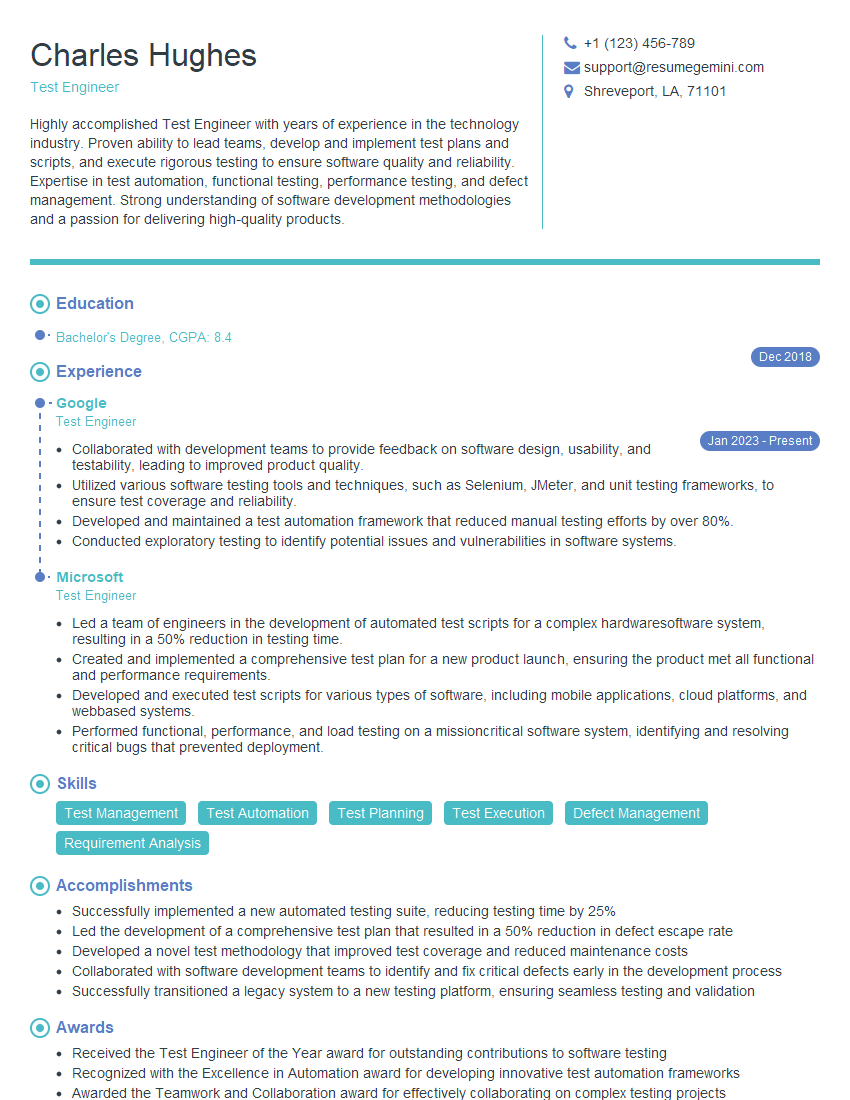
Test Engineer Resume Sample
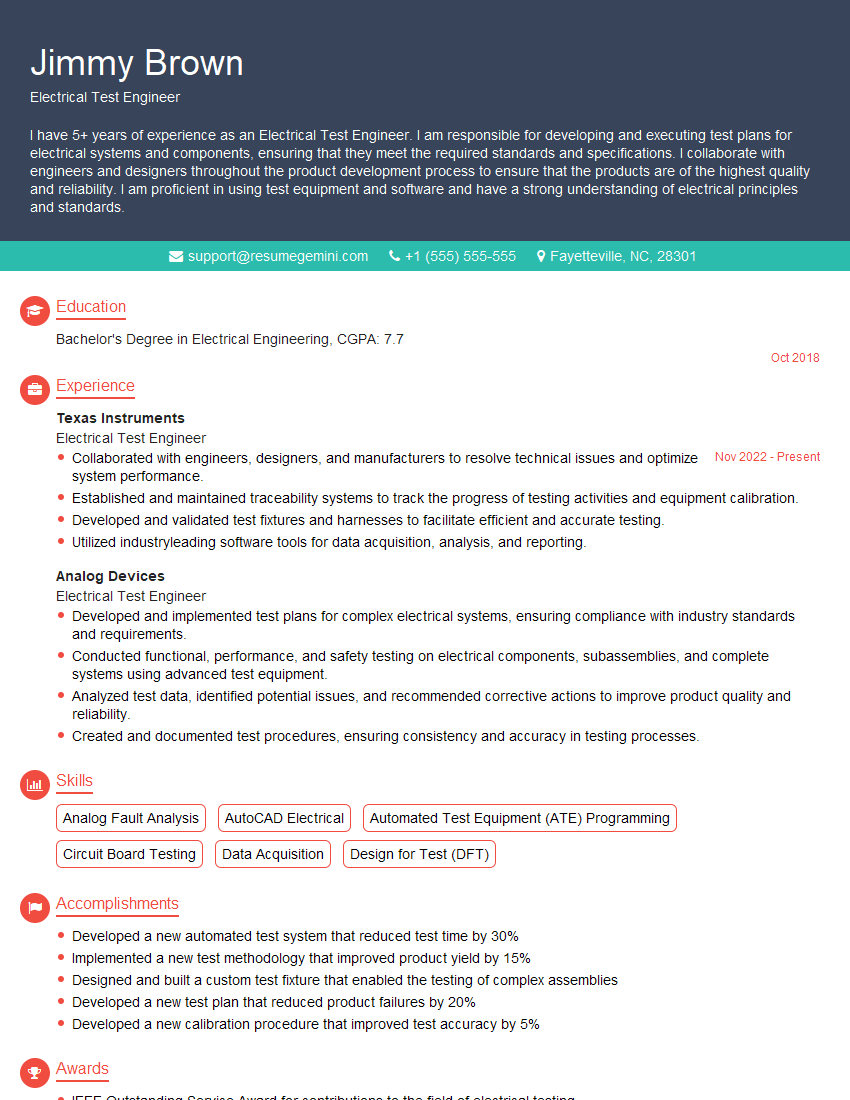
Electrical Test Engineer Resume Sample
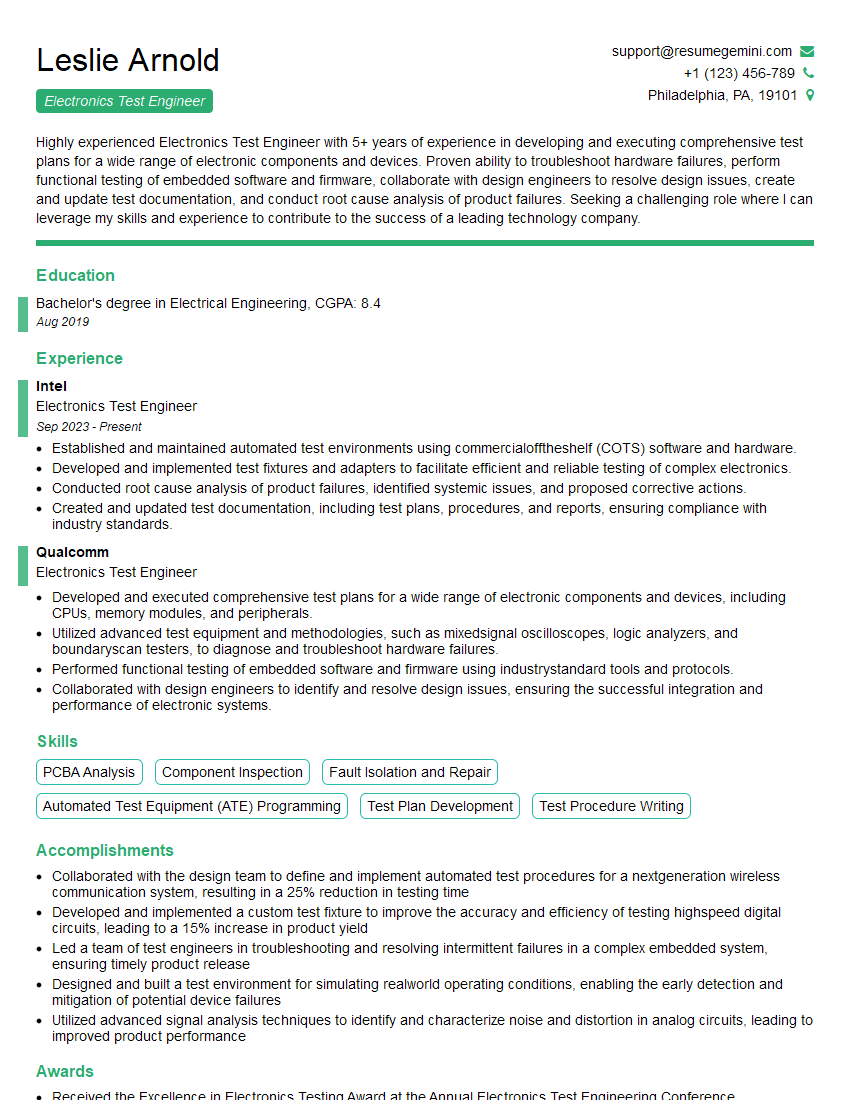
Electronics Test Engineer Resume Sample
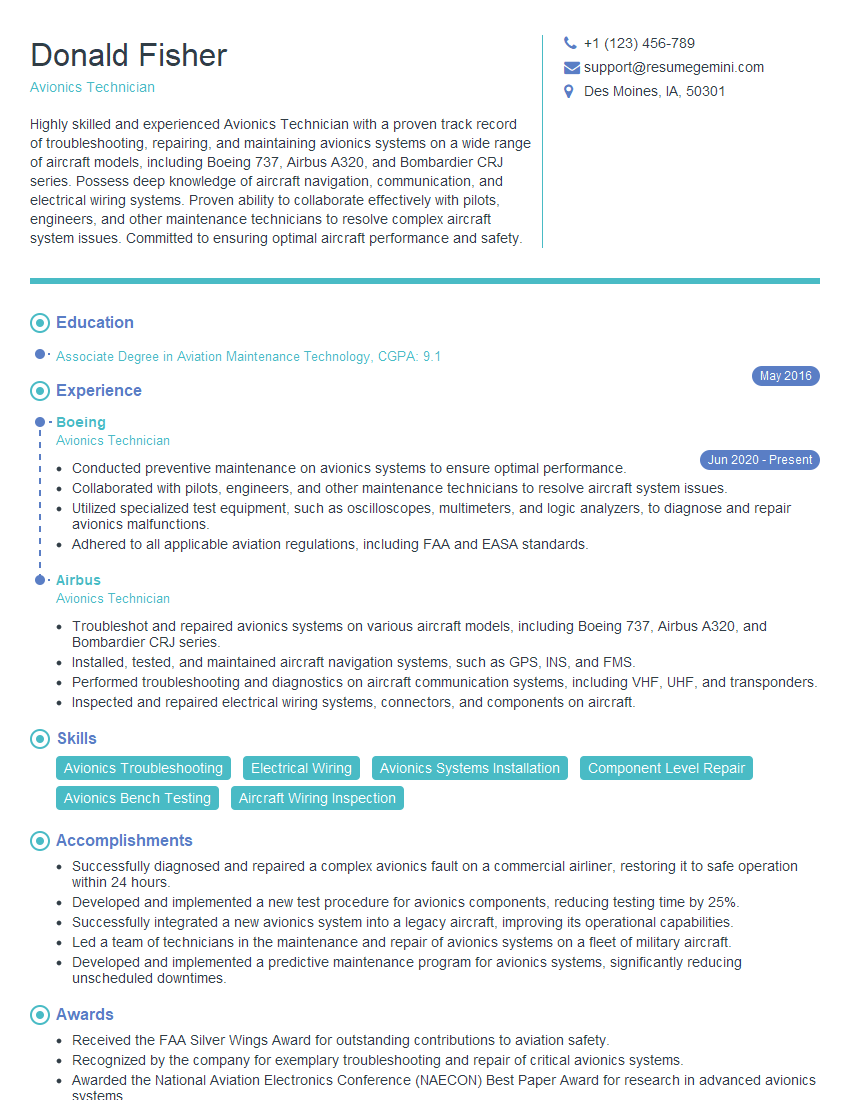
Avionics Technician Resume Sample
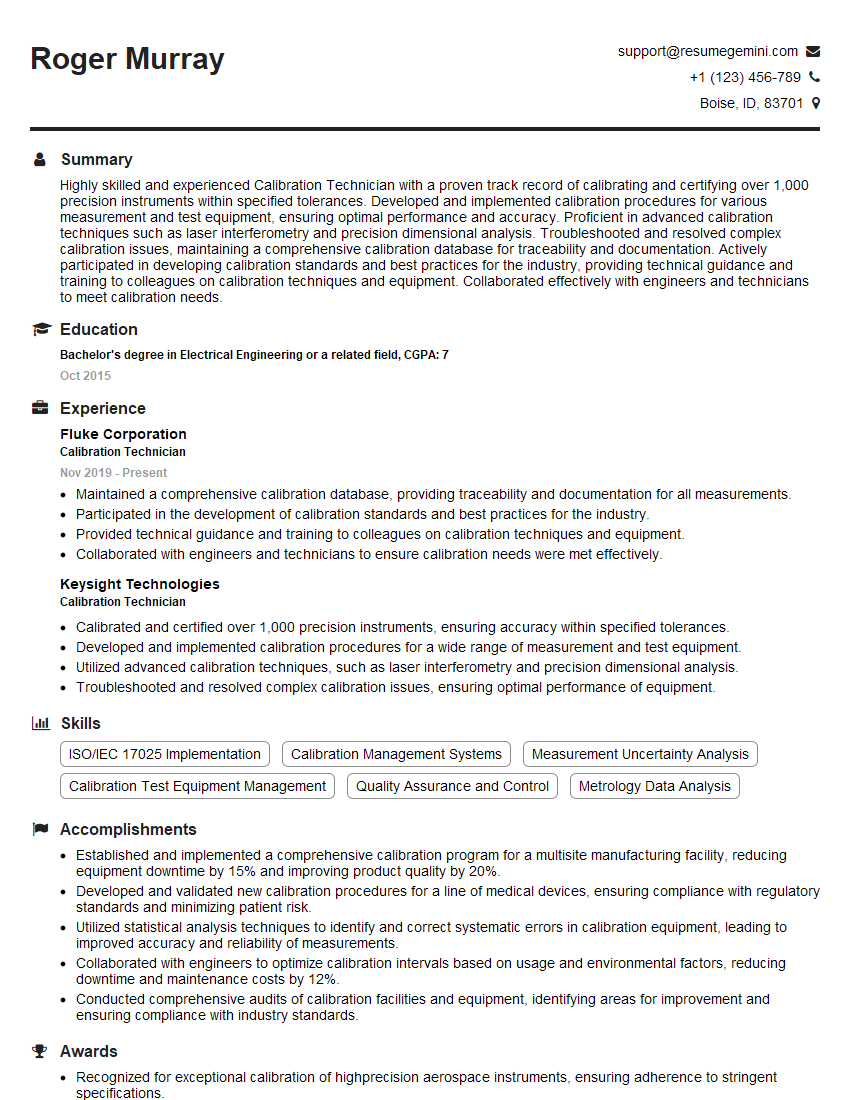
Calibration Technician Resume Sample
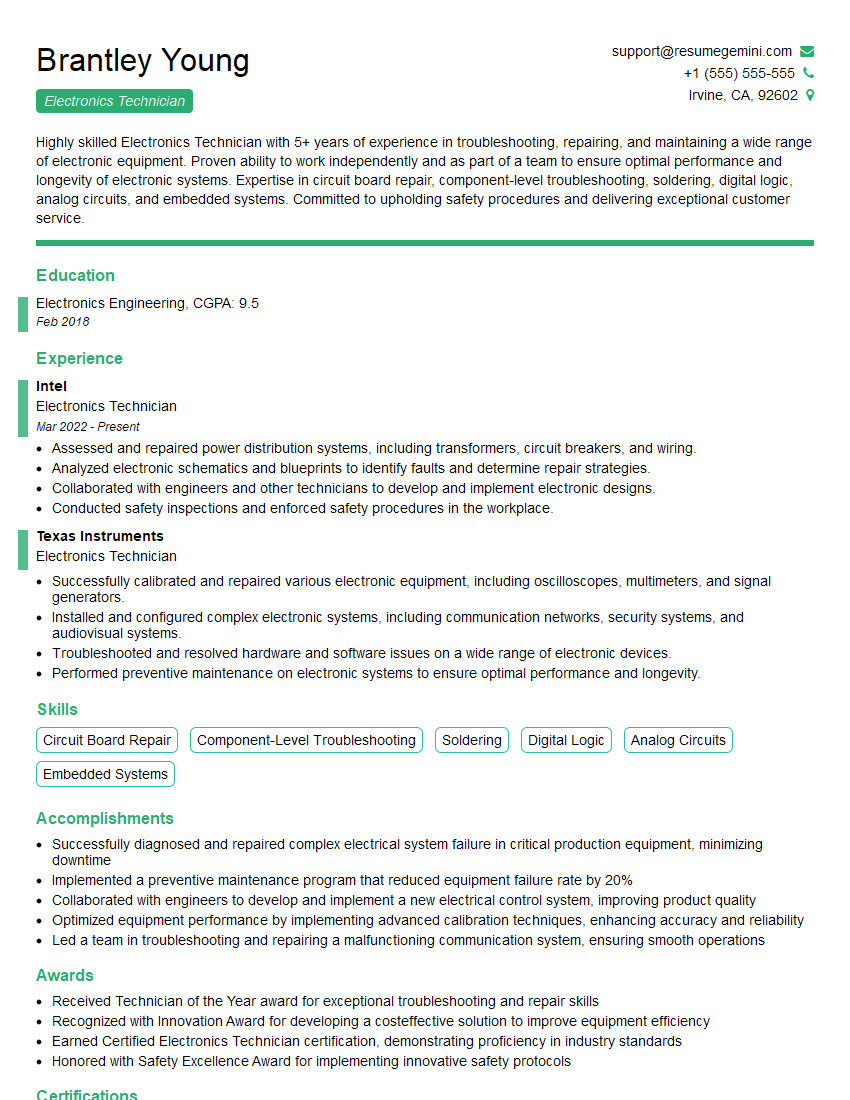
Electronics Technician Resume Sample
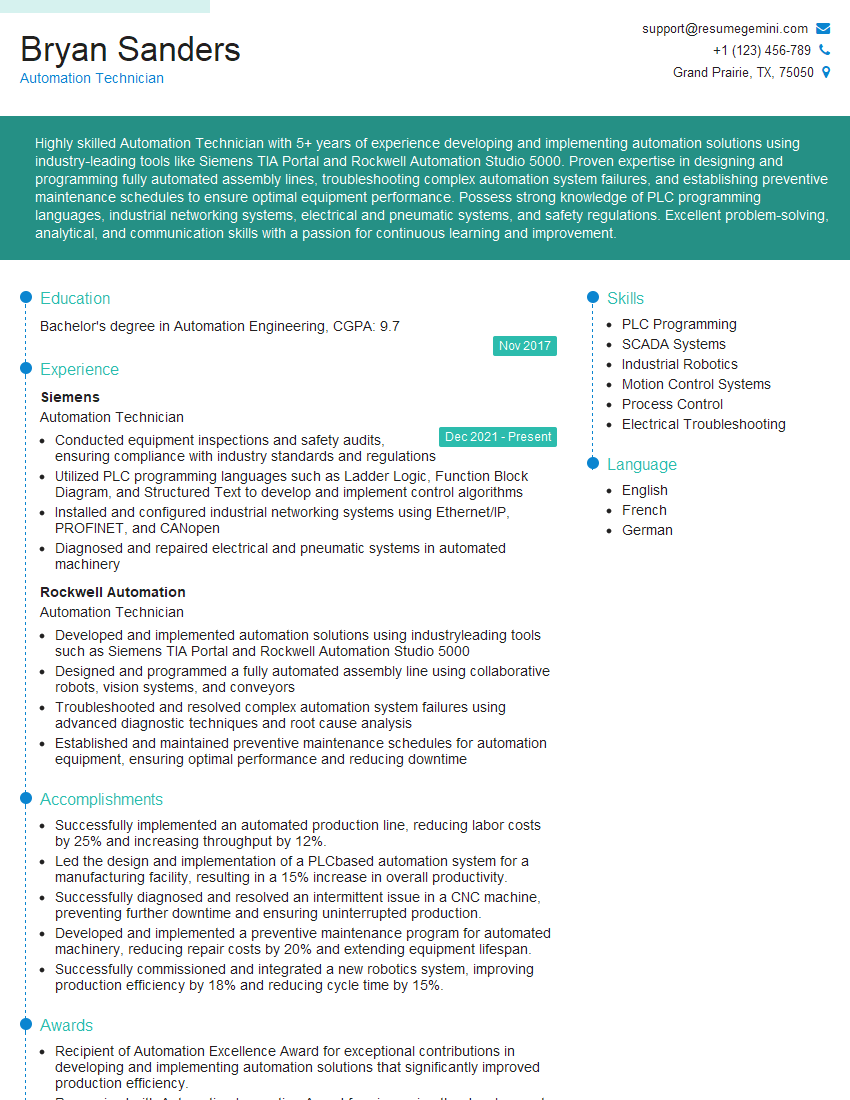
Automation Technician Resume Sample
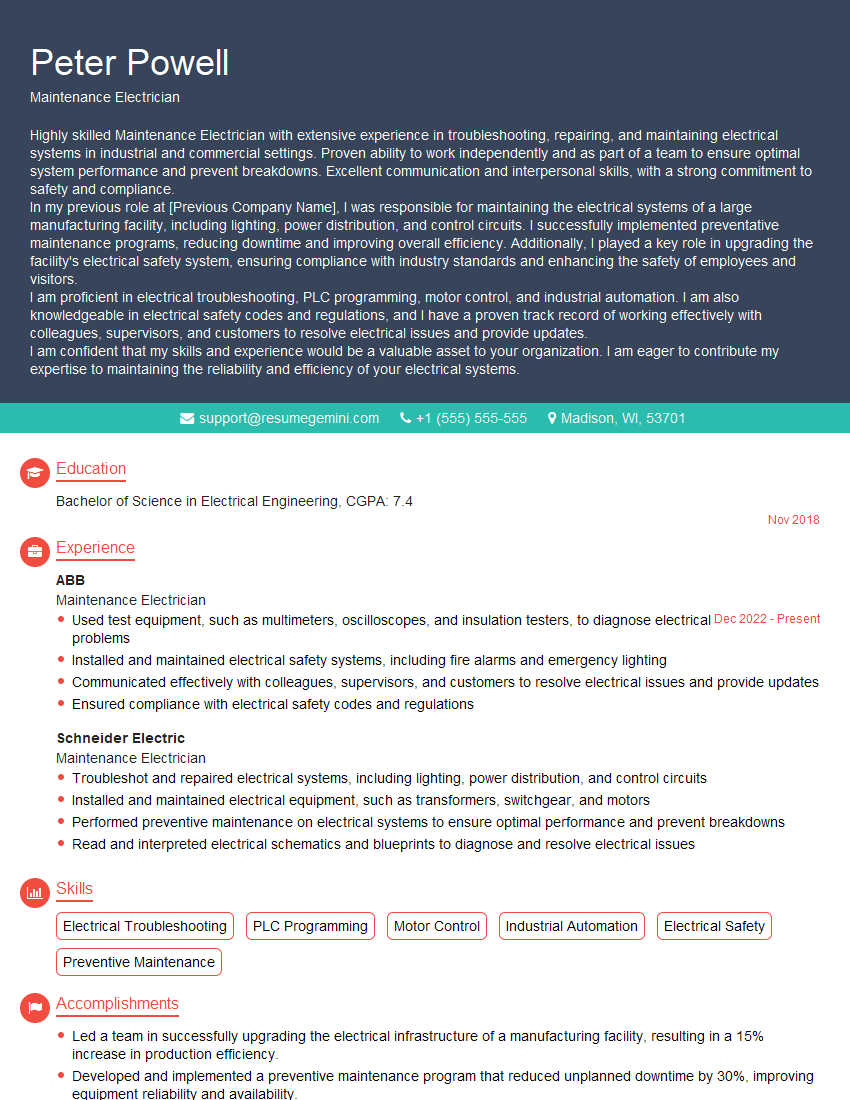
Maintenance Electrician Resume Sample
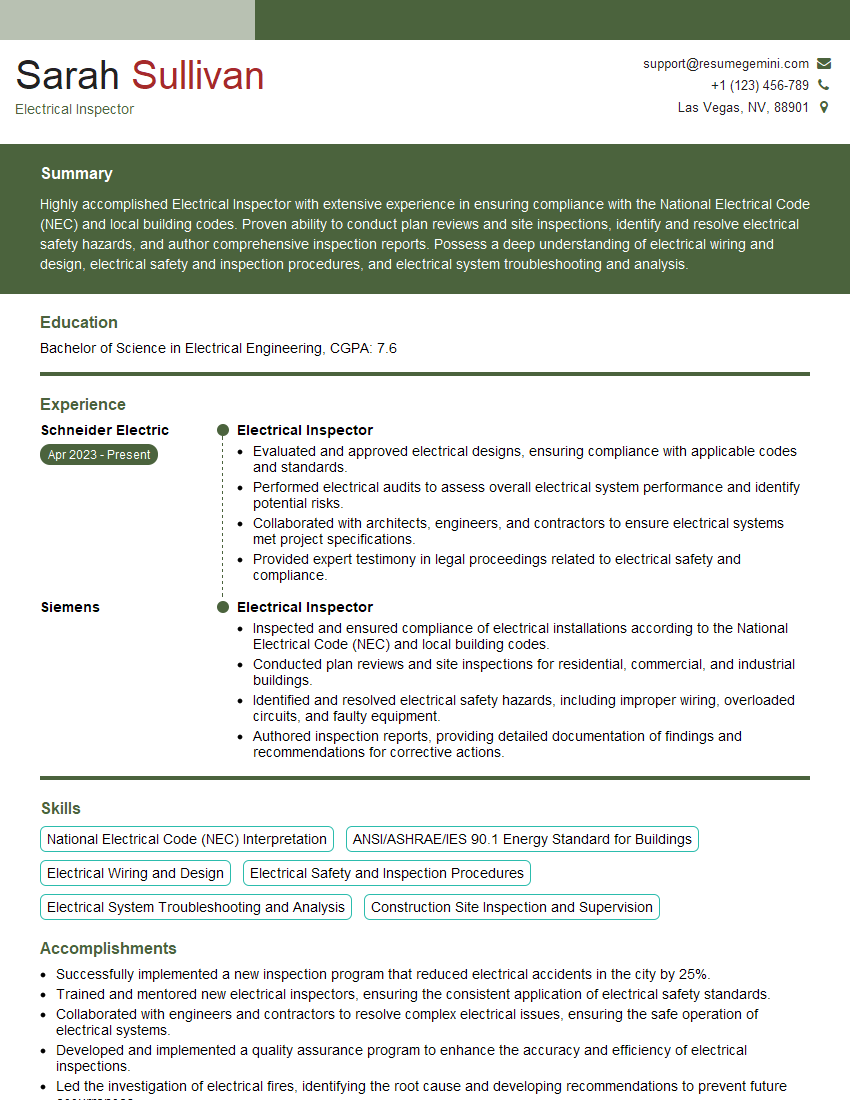
Electrical Inspector Resume Sample
Explore more articles
Users Rating of Our Blogs
Share Your Experience
We value your feedback! Please rate our content and share your thoughts (optional).
What Readers Say About Our Blog
To the interviewgemini.com Webmaster.
Very helpful and content specific questions to help prepare me for my interview!
Thank you
To the interviewgemini.com Webmaster.
This was kind of a unique content I found around the specialized skills. Very helpful questions and good detailed answers.
Very Helpful blog, thank you Interviewgemini team.