Every successful interview starts with knowing what to expect. In this blog, we’ll take you through the top Experience in working with hand tools interview questions, breaking them down with expert tips to help you deliver impactful answers. Step into your next interview fully prepared and ready to succeed.
Questions Asked in Experience in working with hand tools Interview
Q 1. What safety precautions do you take when using hand tools?
Safety is paramount when working with hand tools. My approach is multifaceted and always begins with a thorough assessment of the work area and the task at hand. This includes ensuring adequate lighting, a clear workspace free of clutter, and wearing appropriate personal protective equipment (PPE).
- Eye protection: Safety glasses are a must, protecting against flying debris and splinters. I often opt for full-face shields for more demanding tasks.
- Hearing protection: For power tools used in conjunction with hand tools (like a drill to pre-drill holes before chiseling), earplugs or muffs are essential to prevent hearing damage.
- Hand protection: Work gloves provide grip, protection from cuts, and reduce the risk of blisters. Choosing gloves appropriate for the task—leather for heavy work, nitrile for finer tasks—is crucial.
- Foot protection: Steel-toed boots prevent injuries from dropped objects.
- Proper Tool Use: Always use the right tool for the job, ensuring it’s in good condition and properly maintained. Never force a tool; this can lead to breakage and injury.
- Maintaining Awareness: I remain constantly vigilant of my surroundings, ensuring that no one is in the vicinity when using tools that might pose a risk, like a swinging mallet.
For example, during a recent project involving demolition, I ensured everyone wore safety glasses and hard hats before starting to dismantle a section of the structure with pry bars and hammers.
Q 2. Describe your experience with different types of saws (e.g., hand saw, circular saw, coping saw).
I’m proficient with a variety of saws, each suited for different applications. My experience ranges from delicate precision cuts to rougher, more aggressive ones.
- Hand Saw: This versatile tool is perfect for straight cuts in wood, offering good control and accuracy. I’ve used it countless times for framing, trim work, and intricate cuts where a power saw would be too cumbersome or risk damaging the surrounding material.
- Circular Saw: Ideal for quicker, more aggressive cuts, especially in larger pieces of wood or other materials. I always use a circular saw with a blade appropriate for the material and ensure the guard is properly functioning for safety. I’ve extensively used it for cutting sheet goods like plywood and making repetitive cuts quickly.
- Coping Saw: An invaluable tool for intricate, curved cuts, particularly in smaller projects. It allows for delicate control and precise shaping, which has been invaluable in my woodworking projects such as creating decorative moldings or fine joints.
The choice of saw depends heavily on the material, the desired cut, and the level of precision needed. I always prioritize safety by using the correct blade for the material and making sure the saw is properly maintained and sharp.
Q 3. How do you select the appropriate hand tool for a specific task?
Selecting the right hand tool is crucial for efficiency and safety. The process involves considering several key factors:
- Material: The type of material being worked on (wood, metal, plastic, etc.) dictates the appropriate tool. A chisel designed for wood is unsuitable for metal.
- Task: The specific task (cutting, shaping, fastening, etc.) will determine the best tool. For example, a plane is used for smoothing wood, while a saw is used for cutting.
- Size and Shape: The size and shape of the material and the desired cut will influence tool selection. A small chisel is ideal for detailed work, while a larger one is better for rough shaping.
- Tool Condition: A sharp, well-maintained tool is safer and more efficient than a dull or damaged one. I always inspect my tools before beginning any task and replace or sharpen as needed.
For instance, when installing a door jamb, I’d use a hand saw to cut the jamb to length, a chisel to remove any excess wood, and a mallet to tap the jamb into place. Each tool was selected based on its suitability for that specific part of the task.
Q 4. Explain the proper techniques for using a chisel and mallet.
Using a chisel and mallet correctly is essential for clean, precise cuts and to avoid injury. The technique involves a combination of controlled force and proper hand position.
- Preparation: Ensure the chisel is sharp and the surface is stable. Using a clamping system can help.
- Grip: Hold the chisel firmly, but not too tightly. Position your non-dominant hand behind the chisel to guide it and control its depth, creating a safe barrier should it slip.
- Striking: Strike the mallet squarely onto the chisel’s head, not at an angle. Avoid glancing blows, which can damage the chisel or cause it to slip.
- Control: Use gentle taps to start and increase force gradually as needed. Overly aggressive blows can result in chipping or breakage of the material.
- Technique: For paring cuts, use a rocking motion; for chopping cuts, use a direct strike.
I once used this technique to precisely shape a wooden frame; applying controlled mallet blows ensured a clean and accurate cut, avoiding any accidental damage.
Q 5. Describe your experience with different types of hammers (e.g., claw hammer, ball-peen hammer).
My experience encompasses several types of hammers, each with specific applications:
- Claw Hammer: This is my go-to hammer for general carpentry tasks, particularly driving nails and removing them with the claw. It’s a versatile tool I use daily.
- Ball-Peen Hammer: Used primarily for shaping metal, the rounded peen allows for precise striking and forming. I’ve utilized it extensively in metalworking projects requiring deformation or riveting.
- Other Hammer Types: I have experience with sledgehammers (for demolition), rubber mallets (for delicate work), and other specialized hammers as needed. The selection depends entirely on the task’s demands.
For example, I used a claw hammer to build a deck, while I employed a ball-peen hammer for shaping metal components during a recent project creating custom brackets.
Q 6. How do you sharpen hand tools?
Sharpening hand tools is a critical skill that significantly impacts efficiency and safety. A dull tool is dangerous because it requires more force, increasing the risk of slipping and injury. The sharpening method depends on the tool type.
- Files and Abrasives: For chisels and other tools with flat surfaces, I use files and abrasives (like sharpening stones) to achieve a sharp edge. This involves a consistent motion and ensuring a uniform angle along the entire edge.
- Sharpening Stones: These provide a more controlled sharpening process than files. I use a combination of coarse and fine stones, starting with the coarse to remove material and finishing with the fine for a smooth, keen edge.
- Honing Steel: A honing steel is used to maintain the sharpness of already sharpened tools. It realigns the edge and removes burrs.
- Specialized Tools: Some tools, like saws, require specialized jigs or guides for sharpening.
Regular sharpening keeps my tools in optimal condition. It is a skill honed through practice and attention to detail to maintain a safe and efficient work environment.
Q 7. What are the signs of a damaged or worn-out hand tool?
Recognizing damaged or worn-out hand tools is critical for safety and preventing accidents. Signs to look for include:
- Cracks or Breaks: Any cracks, chips, or breaks in the tool’s handle or head are a significant safety hazard and require immediate replacement.
- Bent or Warped Parts: Bent or warped handles or heads can affect the tool’s functionality and make it more difficult to control.
- Loose Parts: If any parts of the tool are loose or wobbly, it’s unsafe to use. This could lead to the tool failing or slipping during use.
- Excessive Wear: Excessive wear, especially on cutting edges, can impact the tool’s efficiency and increase the risk of injury. Dull tools demand more force and can be unpredictable.
- Rust or Corrosion: Rust or corrosion can weaken the tool’s structure and compromise its performance. This affects both strength and the sharpness of the blade.
I always thoroughly inspect my tools before each use. A damaged or worn tool is immediately removed from service and either repaired or replaced to maintain a safe working environment. Neglecting this can lead to injuries.
Q 8. How do you maintain and store hand tools?
Proper hand tool maintenance and storage are crucial for longevity, safety, and efficiency. It’s about more than just throwing tools in a box; it’s a system.
- Cleaning: After each use, wipe tools clean of sawdust, dirt, and debris. A wire brush is great for removing stubborn material from chisels and saws. For rust prevention, lightly oil metal parts with a light machine oil.
- Sharpening: Regularly sharpen blades (chisels, plane blades, saws) to maintain their effectiveness and prevent damage to the material being worked. Learning to hone and sharpen is a vital skill for any serious hand tool user.
- Storage: Store tools in a dry, organized place. Avoid damp environments to prevent rust. Consider using a tool chest or wall-mounted organizer to keep tools accessible and prevent damage from knocking against each other. Hanging tools (like saws and levels) keeps them from getting damaged and allows for easy selection.
- Protection: Protect delicate tool surfaces with sheaths or covers. For example, always keep saw blades sheathed to prevent cuts and maintain sharpness.
Think of it like this: a well-maintained tool is an extension of your skill. A dull, rusty tool is a hazard and an impediment to quality work.
Q 9. Explain the difference between various types of screwdrivers.
Screwdrivers come in a wide variety, categorized primarily by their tip shape and drive type. Each type is designed for a specific screw head.
- Tip Shape: Common tip shapes include Phillips (cross-shaped), slotted (flat-headed), Torx (six-pointed star), square, and Robertson (square-recessed).
- Drive Type: This refers to the mechanism that engages the screw head. Beyond the basic tip, we have variations like impact screwdrivers (designed for power tool use) and standard screwdrivers.
- Size and Length: Screwdrivers come in various sizes and lengths to match different screws. A too-small screwdriver will strip the screw head; a too-large one may not properly engage.
Example: A Phillips #2 screwdriver is designed for Phillips #2 screws. Using a slotted screwdriver on a Phillips screw will almost certainly damage both the screw and the screwdriver.
Choosing the right screwdriver is essential for efficient work and preventing damage. Always match the screwdriver to the screw’s head type and size.
Q 10. How do you handle different types of wood when working with hand tools?
Different wood types require different approaches when using hand tools. The hardness, grain pattern, and moisture content all affect the tool selection and technique.
- Hardwoods (e.g., oak, maple): These are dense and require sharper tools and more careful cuts. Blunt tools will easily chip or tear the wood. A sharp chisel and plane are essential.
- Softwoods (e.g., pine, fir): These are easier to work with, but can still be damaged by dull tools. Proper technique is still key to avoiding tear-out.
- Grain Direction: Always consider the grain direction when sawing, planing, or chiseling. Cutting with the grain is easier and produces cleaner results, minimizing tear-out and splintering. Cutting against the grain requires more skill and caution.
- Moisture Content: Dry wood is easier to work with than green (freshly cut) wood, which is more prone to splitting and tear-out. Use appropriate tools and techniques for the wood’s moisture content.
Understanding the properties of the wood is paramount for successful woodworking. Choosing the correct tools and working with the grain will prevent frustrating and potentially dangerous situations.
Q 11. Describe your experience working with measuring tools (e.g., tape measure, level, square).
Accurate measurements are the foundation of any successful woodworking project. I’ve extensively used tape measures, levels, and squares to ensure precision.
- Tape Measure: Essential for linear measurements. I prioritize using a sturdy tape measure with a locking mechanism to prevent accidental retraction. I always double-check measurements for accuracy.
- Level: Used to ensure surfaces are perfectly horizontal or vertical. I have experience using both torpedo levels (compact) and longer levels for larger projects, always verifying against a known plane surface before commencing any major work.
- Square: Used to ensure accurate 90-degree angles. I typically use a combination square for both marking and checking angles. This allows both precise measurements and angle confirmation during construction. A try square is excellent for smaller projects and more detailed work.
Example: When building a cabinet, I use the tape measure for all the initial cuts, then the square to ensure accurate joinery and right angles. The level is vital for setting the cabinet square and ensuring all the shelves are precisely level. I always take several measurements to confirm accuracy before committing to a cut.
Q 12. How do you ensure precision and accuracy when using hand tools?
Precision and accuracy are paramount in hand tool work. They hinge on several key factors:
- Sharp Tools: Dull tools require more force, leading to inaccuracies and potential damage. Regularly sharpening tools is non-negotiable.
- Proper Technique: Understanding the correct techniques for each tool (e.g., proper sawing technique, using a chisel with controlled pressure) is crucial for achieving accurate cuts and consistent results.
- Accurate Measurement: Always double-check measurements before making cuts or joinery. Using multiple measuring methods (e.g., measuring twice with a tape measure, and then using a square to verify angles) helps increase precision.
- Careful Work: A methodical and deliberate approach minimizes mistakes and ensures accuracy. Taking your time and focusing on the task at hand is key to minimizing errors.
- Using Jigs and Fixtures: For repetitive cuts or tasks, using jigs and fixtures ensures consistency and accuracy. These tools are aids to improve accuracy and prevent errors.
Precision isn’t just about numbers; it’s about creating something with integrity and skill.
Q 13. What are some common hand tool-related injuries, and how can they be prevented?
Hand tool use carries inherent risks. Common injuries include:
- Cuts: From sharp blades (chisels, saws, knives).
- Punctures: From nails, awls, or other pointed tools.
- Bruises and Contusions: From dropped tools or accidental impacts.
- Carpal Tunnel Syndrome or other repetitive strain injuries: From repeated hand movements.
Prevention Strategies:
- Always use appropriate safety equipment: Safety glasses, work gloves, and dust masks are essential.
- Keep tools sharp: Dull tools require more force, increasing the risk of injury.
- Maintain a clean workspace: A cluttered workspace increases the risk of accidents.
- Use tools correctly: Learn and follow proper techniques for each tool. Never rush.
- Take breaks: Avoid repetitive strain injuries by taking regular breaks.
- Be mindful of your posture: Good posture reduces strain and improves efficiency.
Safety isn’t an option; it’s a fundamental aspect of responsible hand tool use.
Q 14. Describe a time you had to troubleshoot a problem while using hand tools.
I once encountered a problem while mortising a joint. I was using a mallet and chisel to create the mortise, and the chisel kept slipping, resulting in an uneven and inaccurate cut.
Troubleshooting Steps:
- Identified the Problem: The chisel was slipping due to a combination of factors: the wood was slightly harder than anticipated and my grip was not firm enough.
- Analyzed the Cause: I realized that the chisel’s bevel wasn’t sharp enough to bite into the wood effectively.
- Developed Solutions: I considered several options: sharpening the chisel, using a different chisel (wider), or employing a different mortising technique (using a drill to pre-drill the hole).
- Implemented the Solution: I opted to sharpen the chisel, ensuring a precise bevel. This improved the chisel’s bite significantly. I also adjusted my grip for more control.
- Tested and Verified: After sharpening, I test-cut on a scrap piece to ensure the chisel was working correctly before returning to the project.
- Completed the Task: With the sharpened chisel and improved technique, I completed the mortise accurately and efficiently.
This experience reinforced the importance of tool maintenance and the need to adapt one’s approach when challenges arise. Sometimes, the solution isn’t about brute force, but about understanding the underlying problem and finding the most effective approach.
Q 15. How do you adapt your techniques when working with different materials (e.g., wood, metal, plastic)?
Adapting hand tool techniques to different materials hinges on understanding the material’s properties. Wood is relatively soft and can be shaped with a variety of techniques, from carving to planing. Metal, on the other hand, is much harder and requires stronger tools and more precise techniques. Plastics fall somewhere in between, with some being quite brittle while others are more flexible.
For example, when shaping wood, I might use a chisel and mallet for rough shaping and then follow up with a smoother plane for a fine finish. With metal, I’d likely employ files, rasps, and possibly a cold chisel, focusing on controlled pressure and avoiding sudden impacts to prevent damage to the workpiece or tool. Plastics require a different approach altogether, possibly using specialized cutters or even heat to shape the material. The key is to select tools appropriate for the material’s hardness, brittleness, and other relevant characteristics, and to adjust my force and technique accordingly. One mistake many beginners make is using too much force, which can lead to broken tools or damaged materials. A lighter touch, coupled with repeated passes, is often more effective.
Career Expert Tips:
- Ace those interviews! Prepare effectively by reviewing the Top 50 Most Common Interview Questions on ResumeGemini.
- Navigate your job search with confidence! Explore a wide range of Career Tips on ResumeGemini. Learn about common challenges and recommendations to overcome them.
- Craft the perfect resume! Master the Art of Resume Writing with ResumeGemini’s guide. Showcase your unique qualifications and achievements effectively.
- Don’t miss out on holiday savings! Build your dream resume with ResumeGemini’s ATS optimized templates.
Q 16. Explain your experience with specialized hand tools (e.g., router, plane, spokeshave).
I have extensive experience with specialized hand tools, including routers, planes, and spokeshaves. The router, a versatile tool, allows for precise shaping and intricate designs. I’ve used it extensively for creating decorative moldings, creating joints, and edge profiling in woodworking. My experience includes using various router bits, understanding their functionality and appropriate speeds, and ensuring safe operation.
Planes, such as smoothing planes and jack planes, are crucial for achieving smooth, flat surfaces on wood. I’m proficient in adjusting their depth of cut and sharpening the blades to maintain optimal performance. I’ve used them for everything from flattening warped boards to creating fine details.
The spokeshave, a specialized tool, is ideal for shaping curved surfaces in wood. My experience includes using it for creating chair legs, handles, and other curved components. I can adjust the depth of cut and angle of the blade to achieve the desired shape. In each case, proper sharpening and maintenance are key to efficiency and safety.
Q 17. What are your preferred brands of hand tools, and why?
My preferred brands often reflect a balance between quality, longevity, and price point. For woodworking, I favor Lie-Nielsen and Veritas tools for their exceptional craftsmanship and precision. They’re an investment, but their durability and performance make them worth it in the long run.
For more general-purpose hand tools, I appreciate the value offered by Stanley, especially their older models known for their sturdy construction. While newer models might have some compromises, the vintage Stanley tools are exceptional in terms of durability. Ultimately, the “best” brand is subjective and depends heavily on the specific task and budget.
Q 18. How do you assess the quality of a hand tool?
Assessing the quality of a hand tool involves a multifaceted approach. I first examine the materials: High-quality tools are typically made from high-carbon steel (for blades) or forged steel (for handles and bodies), offering superior strength and resistance to wear. The fit and finish are also crucial. A well-made tool will have tight tolerances, smooth surfaces, and no visible flaws in the metal or wood.
I also check the ergonomics. A comfortable grip and well-balanced design are essential for efficient and safe use. Finally, I assess the sharpness of the blade (if applicable). A sharp blade is more efficient and safer to use. A dull blade requires more force and can be dangerous. By carefully considering these factors, I can make an informed judgment about the quality and suitability of a hand tool.
Q 19. Describe your experience working with power tools in conjunction with hand tools.
Hand tools and power tools often complement each other. I frequently use power tools for initial shaping or rough cuts and then employ hand tools for refining the work, adding detail, and achieving a precise finish. For instance, I might use a bandsaw to roughly cut out a curved piece of wood, followed by a spokeshave and sandpaper to refine the shape and create a smooth, even surface.
This combination of power and precision allows for efficient workflow and a higher quality finished product. Power tools excel at removing large amounts of material quickly, whilst hand tools are precise and allow for more delicate control. Understanding the strengths of each tool type is critical to efficient and safe woodworking.
Q 20. How do you determine the appropriate force to apply when using a hand tool?
Determining appropriate force is a matter of feel and experience, coupled with an understanding of the tool and material. It’s not about brute strength; rather, it’s about applying controlled, consistent pressure. Too much force can damage the workpiece or break the tool; too little force will result in slow, inefficient work.
I often start with light pressure and gradually increase it as needed. I pay close attention to the tool’s behavior – the sound it makes, the resistance it encounters – to gauge if I’m applying the right amount of force. For example, when using a chisel, I’ll use gentle taps of a mallet to avoid splitting the wood. With a plane, I’ll adjust the depth of cut to control the amount of material removed with each pass. Experience allows for the development of a “feel” for what the correct force should be.
Q 21. Have you ever worked with antique or vintage hand tools?
Yes, I’ve had the opportunity to work with antique and vintage hand tools. Restoring and using these tools is rewarding, both for their historical significance and their often-superior craftsmanship. However, it requires careful attention. Older tools can be more challenging to use because they may require specialized sharpening techniques, and some parts might be worn or damaged.
Before using an antique hand tool, I thoroughly inspect it for damage and make any necessary repairs. Sharpening is often crucial. Understanding the tool’s history and intended use can also enhance the experience. Working with these tools connects me to the history of craftsmanship and the evolution of tool design.
Q 22. What is your experience with tool maintenance and repair?
Tool maintenance is crucial for both safety and efficiency. My approach involves regular cleaning, lubrication, and sharpening. Cleaning removes debris and prevents corrosion. I use appropriate lubricants like penetrating oil for hinges and moving parts, and specialized oils for specific tools. Sharpening is key for tools like chisels, planes, and saws, ensuring clean cuts and preventing damage. I also inspect tools for cracks, warping, or loose parts, immediately retiring any damaged tools to prevent accidents. For instance, a dull chisel is more likely to slip, causing injury, while a loose hammer head poses a serious risk of detachment during use. I also keep a detailed inventory of my tools, noting when maintenance was last performed and recording any repairs or replacements. This allows for proactive maintenance and efficient stock management.
Q 23. How do you ensure the safety of others when using hand tools in a shared workspace?
Safety in a shared workspace is paramount. I always start by ensuring the area is clear of obstacles and clutter to prevent trips and falls. Before using any tool, I inspect it for damage and ensure it’s in proper working order. While working, I maintain awareness of my surroundings, avoiding swinging tools near others. I clearly communicate my actions, for instance, calling out ‘Heads up!’ before making a swing with a hammer. I also adhere to company safety regulations and always utilize appropriate personal protective equipment (PPE) such as safety glasses, gloves, and hearing protection, depending on the task. Finally, I always properly store tools after use, preventing accidents and making sure the workspace remains clear and organized for others.
Q 24. Describe a time you had to improvise with hand tools to complete a task.
During a recent project, I needed to remove a stubborn screw from a piece of delicate antique furniture. My usual screwdriver was too bulky to fit in the tight space. Instead of abandoning the task, I improvised by using a smaller, less-powerful screwdriver and carefully applying leverage with a pair of pliers. I gradually worked the screw loose, taking extra care not to damage the surrounding wood. This required patience and precision, but my resourceful approach allowed me to complete the repair successfully without causing further damage. The key was recognizing the constraints of the situation and adapting my technique to overcome them. This highlights the importance of adaptability and problem-solving skills when working with hand tools.
Q 25. What are your preferred methods for organizing and storing your hand tools?
Organization is key for efficiency and safety. My preferred method is a combination of wall-mounted tool organizers and rolling tool chests. I categorize tools by function (e.g., measuring, cutting, fastening) and arrange them logically within these storage systems. Each tool has a designated place, making it easy to find and return after use. I utilize shadow boards for frequently used tools, providing a visual cue for correct placement. This system allows me to quickly locate the right tool, reduces the risk of misplacing tools, and keeps the workspace clean and uncluttered. For smaller tools, I use magnetic strips or clear plastic containers for better visibility and organization. This systematic approach prevents time loss and ensures safety.
Q 26. How do you keep up-to-date with new tools and techniques in your field?
Staying updated involves a multi-faceted approach. I subscribe to industry magazines and online publications focused on woodworking and hand tool technology. I actively participate in online forums and communities, exchanging knowledge and experiences with other professionals. I also attend workshops and seminars whenever possible to learn about new tools and techniques firsthand. Keeping up with evolving trends in materials and tool design is crucial for remaining competitive and ensuring I’m equipped to handle any project effectively and efficiently. In this ever-evolving field, continuous learning is essential.
Q 27. Describe your experience working with different types of fasteners (e.g., nails, screws, bolts).
My experience encompasses a wide range of fasteners. I’m proficient in using various types of nails, including finish nails, common nails, and brads, selecting the appropriate size and type for the material and application. With screws, I understand the differences between various head types (Phillips, slotted, etc.), and drive types, choosing the right screw for the job. I’m skilled in using different driving tools, from manual screwdrivers to power drills. Similarly, I’m experienced in working with bolts, nuts, and washers, understanding the importance of proper torque and the use of appropriate wrenches. I’m aware of the strengths and weaknesses of each fastener type and ensure the right choice is made for each project, considering factors like holding power, ease of installation, and aesthetics.
Q 28. Explain your experience with hand tool usage in various weather conditions.
Working in various weather conditions requires adaptation and careful planning. In hot weather, I take frequent breaks to stay hydrated and avoid overexertion. I also wear lighter clothing and utilize sunscreen. In cold weather, I layer my clothing to stay warm and wear appropriate gloves to maintain dexterity. Rain necessitates using waterproof covers to protect materials and tools from damage. In windy conditions, I take extra precautions to secure materials and avoid dropping tools. I always assess the conditions before starting work, and if the conditions are unsafe, I postpone the project until conditions improve. Safety is always my top priority.
Key Topics to Learn for Experience in working with hand tools Interview
- Safety Procedures: Understanding and adhering to safety regulations when using hand tools. This includes proper handling, storage, and maintenance to prevent accidents.
- Tool Selection & Usage: Knowing which tool is appropriate for a specific task and demonstrating proficiency in its use. This includes understanding the limitations of each tool.
- Maintenance & Care: Proper cleaning, sharpening, and storage of hand tools to ensure longevity and optimal performance. This demonstrates responsibility and attention to detail.
- Measuring & Marking Techniques: Accurate measurement and marking are crucial for precise work. Discuss your experience with rulers, tape measures, and marking tools.
- Problem-Solving with Hand Tools: Describe instances where you had to overcome challenges or troubleshoot issues while using hand tools. Highlight your resourcefulness and problem-solving skills.
- Types of Hand Tools & Their Applications: Demonstrate a broad understanding of various hand tools (e.g., hammers, screwdrivers, saws, wrenches) and their practical applications in different contexts.
- Working with Different Materials: Explain your experience working with various materials (wood, metal, plastic) and how tool selection and technique adapt accordingly.
Next Steps
Mastering the use of hand tools is a valuable skill highly sought after in many industries, opening doors to diverse career opportunities and increased earning potential. To maximize your job prospects, creating a professional and ATS-friendly resume is crucial. ResumeGemini can help you craft a compelling resume that highlights your experience and skills effectively. We offer examples of resumes tailored to showcasing experience with hand tools, providing you with a strong foundation for your job search. Use ResumeGemini to build a resume that gets noticed!

Maintenance Technician Resume Sample

Machinist Resume Sample
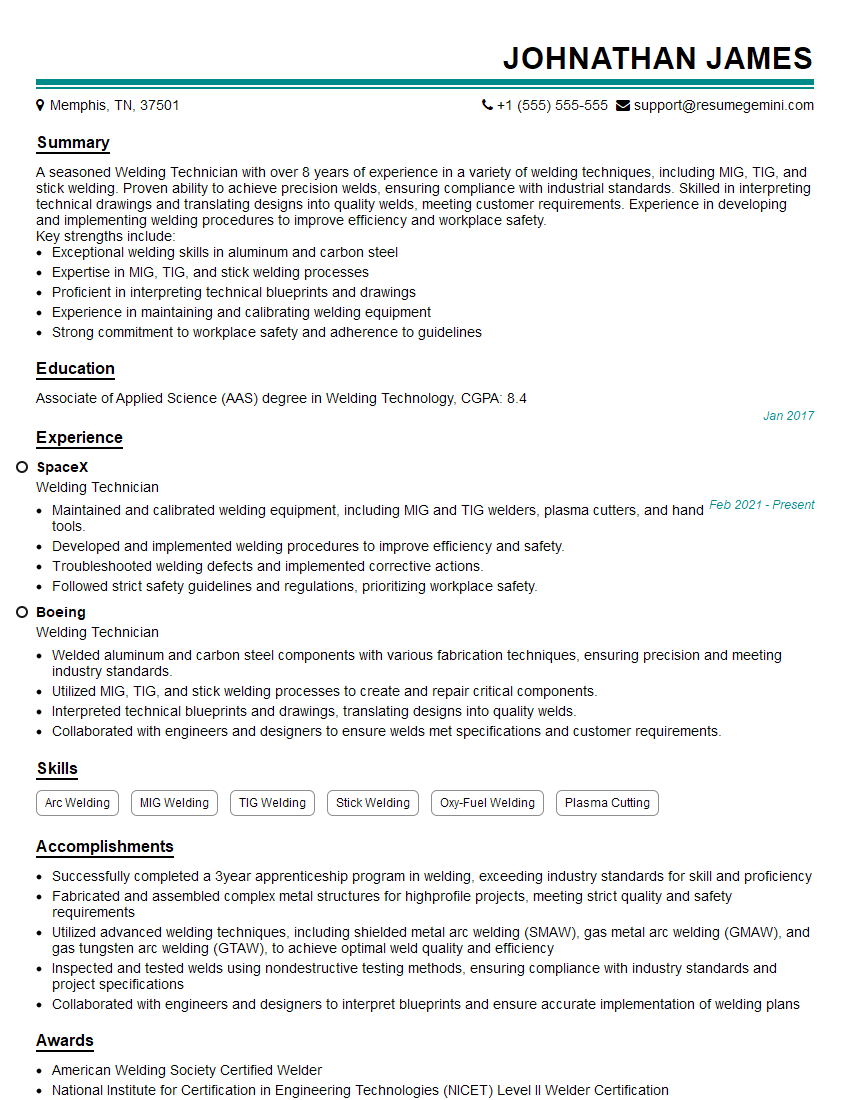
Welding Technician Resume Sample

Furniture Maker Resume Sample

Model Maker Resume Sample

Sculptor Resume Sample

Handyman Resume Sample
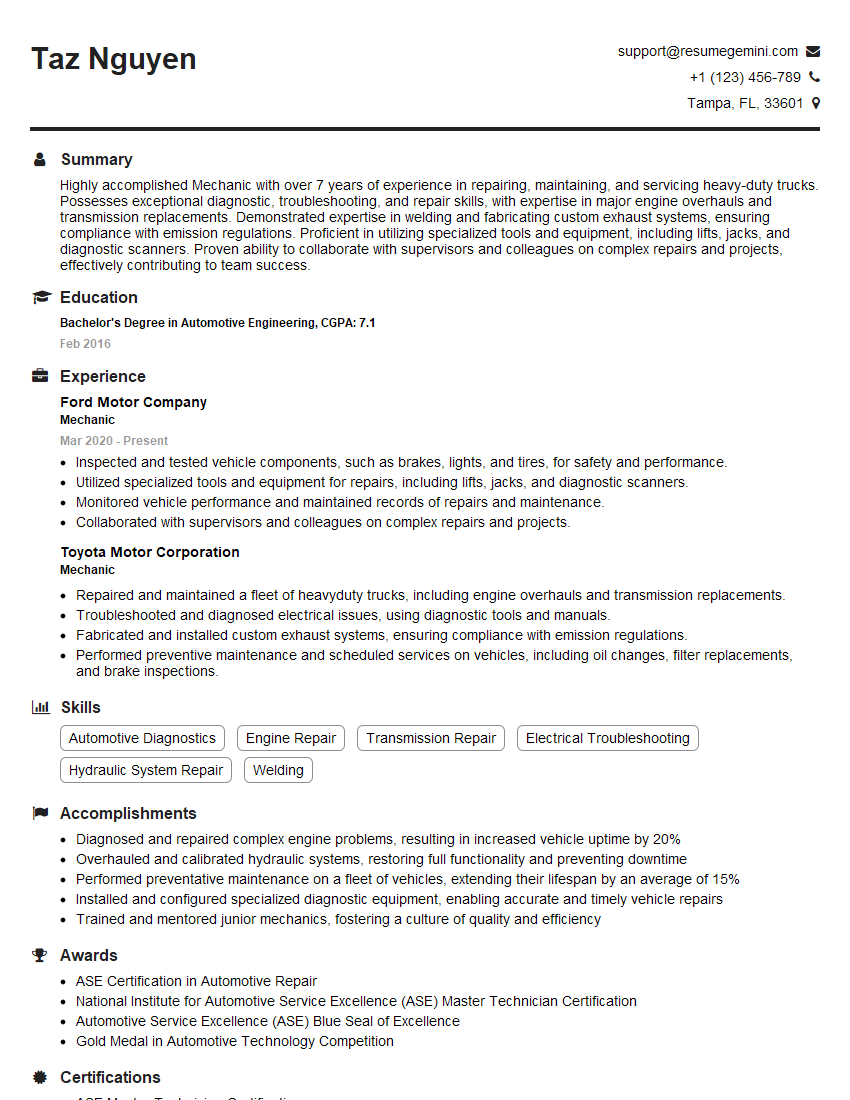
Mechanic Resume Sample

Cabinet Maker Resume Sample

Construction Worker Resume Sample

Shipwright Resume Sample

Woodworker Resume Sample

Carpenter Resume Sample

Electrician Resume Sample

Plumber Resume Sample

Millwright Resume Sample

Blacksmith Resume Sample

Joiner Resume Sample

Instrument Maker Resume Sample

Pattern Maker Resume Sample

Tool and Die Maker Resume Sample
Explore more articles
Users Rating of Our Blogs
Share Your Experience
We value your feedback! Please rate our content and share your thoughts (optional).
What Readers Say About Our Blog
To the interviewgemini.com Webmaster.
Very helpful and content specific questions to help prepare me for my interview!
Thank you
To the interviewgemini.com Webmaster.
This was kind of a unique content I found around the specialized skills. Very helpful questions and good detailed answers.
Very Helpful blog, thank you Interviewgemini team.