Unlock your full potential by mastering the most common Experience in working with volunteers and citizen scientists interview questions. This blog offers a deep dive into the critical topics, ensuring you’re not only prepared to answer but to excel. With these insights, you’ll approach your interview with clarity and confidence.
Questions Asked in Experience in working with volunteers and citizen scientists Interview
Q 1. Describe your experience in recruiting and selecting volunteers for a project.
Recruiting and selecting volunteers involves a multi-step process focused on finding individuals whose skills and motivations align with project needs. It starts with crafting a compelling volunteer description, highlighting the project’s impact and the rewarding aspects of participation. This description is crucial for attracting the right candidates. We then utilize various recruitment channels, such as online platforms (VolunteerMatch, Idealist), social media, partnerships with community organizations, and even local outreach events.
The selection process emphasizes evaluating applicants’ skills, experience, and commitment level. This often involves reviewing applications, conducting interviews (sometimes involving practical assessments for specific skills), and checking references. For instance, for a citizen science project involving bird identification, we’d assess applicants’ knowledge of ornithology and their comfort with data collection tools. Thorough screening ensures a good fit and minimizes training challenges later on. We also strive for diversity in our volunteer base, ensuring representation from various backgrounds and perspectives to enrich the project.
Q 2. How do you ensure effective communication with a large volunteer base?
Maintaining effective communication with a large volunteer base requires a multi-faceted strategy, leveraging various communication channels to reach everyone effectively. A centralized communication hub, perhaps a dedicated online forum or project management platform, is essential. This allows volunteers to access project updates, ask questions, share resources, and connect with one another. Regular newsletters, email updates, and announcements can keep everyone informed about important developments.
For time-sensitive information or urgent requests, we utilize email blasts or text messaging. We also regularly hold virtual or in-person meetings to foster a sense of community and allow for direct interaction. The key is to understand your volunteers’ preferred communication methods and tailor your approach accordingly. We also utilize feedback mechanisms, like surveys or informal feedback sessions, to ensure communication remains relevant and effective.
Q 3. Explain your process for training volunteers on specific tasks and responsibilities.
Volunteer training is paramount for project success and volunteer satisfaction. Our training programs are tailored to the specific tasks and responsibilities. We develop comprehensive training materials, including manuals, videos, and online modules. These materials are modular, allowing us to adapt training to different skill levels and time constraints. We offer a mix of online and in-person training sessions, to cater to varying learning styles and preferences.
Hands-on training is often integrated; for example, in a data entry project, volunteers would engage in guided practice sessions. We always include a Q&A session, and provide ongoing support through online resources, mentorship opportunities, and regular check-ins. We also track volunteer progress and provide feedback regularly. For instance, in a biodiversity monitoring project, we might check the accuracy of data collected by volunteers at regular intervals to offer support and ensure accuracy.
Q 4. What strategies do you use to retain volunteers over time?
Volunteer retention hinges on making sure volunteers feel appreciated, valued, and challenged. We create opportunities for growth and skill development through workshops, training, and advancement opportunities within the project. Recognition is vital; we regularly acknowledge volunteer contributions through thank-you notes, certificates of appreciation, or even small celebrations. We actively seek feedback to understand volunteers’ needs and concerns, and actively incorporate that feedback to improve the volunteer experience.
Providing clear communication and opportunities for social interaction within the volunteer team helps build camaraderie and a sense of community. For example, we might organize social events or team-building activities. Finally, we strive to match volunteer skills and interests to project tasks, ensuring the work remains engaging and meaningful. We’ve found that this tailored approach to volunteer engagement significantly contributes to long-term commitment.
Q 5. How do you handle conflicts or disagreements among volunteers?
Conflict resolution among volunteers is handled with a focus on mediation and restorative justice. We encourage open communication and provide a safe space for volunteers to express their concerns. A well-defined code of conduct helps establish guidelines for respectful interaction. When disagreements arise, we encourage the involved parties to communicate directly, and if necessary, we mediate the discussion. Our role is to facilitate a constructive dialogue, helping volunteers find common ground and solutions.
We focus on understanding the root cause of the conflict, rather than placing blame. If the conflict persists, we may need to intervene more directly, but the goal always remains to find a solution that respects all parties involved. In serious cases, we may have to adjust roles or responsibilities. However, we always aim to maintain a positive and inclusive environment.
Q 6. Describe your experience managing volunteer schedules and assignments.
Managing volunteer schedules and assignments requires careful organization and clear communication. We use project management software or spreadsheets to track volunteer availability, assign tasks, and monitor progress. This allows us to allocate tasks based on individual skills, preferences, and availability. We communicate schedules and assignments clearly to volunteers, often using both digital and in-person methods to ensure everyone is informed.
We build flexibility into the schedule to accommodate unforeseen circumstances or personal commitments. We actively seek volunteer feedback on workload and scheduling, making adjustments as needed to ensure a fair and manageable distribution of responsibilities. For example, we might use a sign-up sheet for tasks, or a scheduling tool that allows volunteers to indicate their availability.
Q 7. How do you assess the performance and impact of volunteers’ contributions?
Assessing the performance and impact of volunteers’ contributions involves a multifaceted approach. We regularly track key performance indicators (KPIs) relevant to the project’s goals. This could include data quality, the number of hours volunteered, or the completion rate of assigned tasks. We collect both quantitative and qualitative data, including feedback from supervisors and the volunteers themselves.
Regular progress reports and feedback sessions allow us to identify areas for improvement and celebrate successes. We also track the overall impact of volunteer contributions on the project’s objectives; for example, if a citizen science project is collecting data on invasive species, we can analyze the data collected by volunteers and quantify their contribution to the overall research effort. This data demonstrates the value of volunteer contributions and helps secure future funding and support.
Q 8. What methods do you use to recognize and appreciate volunteer contributions?
Recognizing and appreciating volunteer contributions is crucial for fostering a positive and productive environment. It’s not just about saying ‘thank you’; it’s about showing genuine gratitude and acknowledging the impact of their work. My approach is multifaceted, combining formal and informal methods.
Formal Recognition: This includes issuing certificates of appreciation, highlighting their contributions in newsletters or on our website, and nominating outstanding volunteers for awards within our organization or at community events. For example, during a large-scale bird count project, we awarded certificates to volunteers who logged over 100 bird sightings, acknowledging their dedication.
Informal Recognition: This involves regular verbal acknowledgment of their efforts during meetings or on-site, providing opportunities for social interaction and team building (like volunteer appreciation lunches or informal gatherings), and offering opportunities for skill development or leadership roles within the program. For instance, recognizing a volunteer’s expertise in data analysis by giving them a leadership role in training new volunteers.
Personalized Feedback: Providing individual feedback to volunteers on their specific contributions, highlighting their strengths, and offering constructive suggestions for improvement is vital. It makes them feel valued and demonstrates that their efforts are noticed and appreciated.
Q 9. Explain your experience working with citizen science data, including data entry and cleaning.
My experience with citizen science data spans various projects, from large-scale biodiversity surveys to environmental monitoring initiatives. Data entry and cleaning are critical steps in ensuring data quality.
Data Entry: I’ve utilized various methods, from manual entry into spreadsheets to using purpose-built online platforms designed for citizen science projects. These platforms often have features that aid in data validation and minimize errors during entry. We used a platform called Zooniverse for one project, which streamlined the data entry process significantly.
Data Cleaning: This involves identifying and correcting inconsistencies, errors, and outliers. This often involves using scripting languages like
Pythonwith packages such aspandasandnumpy. For example, we would use code like this to detect and handle missing values:import pandas as pd data = pd.read_csv('data.csv') data.fillna(method='ffill', inplace=True)Other techniques include visual inspection of data distributions (histograms, box plots) to identify outliers and applying data transformations to normalize the data.
In a project involving water quality monitoring, we employed a combination of manual and automated data cleaning methods to identify and address inconsistencies in water temperature and pH readings submitted by volunteers.
Q 10. How do you ensure the quality and accuracy of data collected by citizen scientists?
Ensuring data quality from citizen scientists requires a multi-pronged strategy that starts before data collection even begins.
Rigorous Training: Providing clear, comprehensive training on data collection methods, including standardized protocols, data entry procedures, and quality control checks is essential. This is crucial for ensuring consistency across different volunteers.
Data Validation: Implementing data validation checks within data entry systems, such as range checks and plausibility checks, can automatically flag potential errors. This minimizes manual review and ensures consistency.
Quality Control Measures: Implementing a system of data quality checks, such as double-data entry by different volunteers or having a dedicated quality control team review a sample of the data. This helps catch errors that might have slipped through the earlier stages.
Feedback Mechanisms: Providing immediate feedback to volunteers about potential errors in their data submissions and guidance on correcting them is vital. This helps volunteers improve their data collection techniques over time.
For example, in a butterfly monitoring program, we provided volunteers with detailed training and color-coded identification guides, implemented online data validation checks to ensure correct species entry, and had a dedicated team review 10% of the entries for quality assurance. This strategy reduced the error rate significantly.
Q 11. Describe your experience designing volunteer training materials and modules.
Designing effective volunteer training materials and modules requires a thorough understanding of the target audience and the project’s requirements. My approach involves a combination of:
Needs Assessment: Identifying the specific skills and knowledge volunteers need to successfully participate. This involves assessing their prior experience and the complexity of the tasks.
Modular Design: Breaking down the training into smaller, manageable modules, allowing volunteers to learn at their own pace and focus on specific aspects. This is crucial for diverse learning styles.
Multi-Modal Approach: Using a variety of training methods, including written materials, videos, interactive online modules, and in-person workshops. Combining different methods enhances engagement and caters to different learning preferences.
Testing and Iteration: Testing the training materials with a pilot group of volunteers to identify any areas for improvement before full implementation. This feedback loop is crucial for refining the training’s effectiveness.
For a bird identification training module, we developed a series of short videos demonstrating key identification features of different bird species, supplemented by a downloadable checklist and an interactive quiz to test understanding.
Q 12. How do you incorporate feedback from volunteers to improve program effectiveness?
Incorporating volunteer feedback is critical for improving program effectiveness. I use several strategies to gather and act upon feedback.
Regular Feedback Mechanisms: Establishing various feedback channels, including surveys, suggestion boxes, focus groups, and informal conversations, helps gather regular feedback from volunteers.
Actionable Feedback: Analyzing the feedback to identify recurring themes and areas for improvement. This helps prioritize changes based on the most pressing needs and concerns.
Transparency and Communication: Communicating the changes made based on volunteer feedback and demonstrating how their input has led to improvements. This fosters a sense of ownership and involvement.
Volunteer Involvement in Program Development: Involving volunteers in decision-making processes related to program design and implementation helps them feel valued and ensures their perspectives are considered from the outset.
For example, based on volunteer feedback about the complexity of a data entry form, we simplified it, resulting in a significant reduction in errors and improved data quality.
Q 13. What tools or technologies have you used to support volunteer management?
I’ve used a variety of tools and technologies to support volunteer management, selecting the most appropriate ones based on the project’s scale and complexity.
Volunteer Management Software: Software like VolunteerMatch or SignUpGenius helps with volunteer recruitment, scheduling, communication, and tracking volunteer hours. This streamlines the management process, especially for large-scale projects.
Project Management Tools: Tools like Trello or Asana are helpful for tracking tasks, assigning responsibilities, and managing workflows, ensuring volunteers are informed and engaged.
Communication Platforms: Utilizing platforms like Slack, email lists, or community forums facilitates effective communication and collaboration among volunteers and program staff.
Citizen Science Platforms: Platforms like Zooniverse or iNaturalist provide tools for data collection, management, and analysis, streamlining data handling and enabling collaboration among volunteers.
For a large-scale biodiversity survey, we used a combination of VolunteerMatch for recruitment and a custom-built database integrated with iNaturalist for data collection and management.
Q 14. Describe a time you had to adapt a volunteer program in response to unexpected challenges.
During a coastal cleanup project, an unexpected storm significantly impacted our planned activities. The initial plan involved a large-scale beach cleanup involving 100 volunteers. However, the storm caused significant flooding and made access to the beach impossible for several days.
Adaptation: Instead of canceling the event, we quickly adapted by:
Shifting Focus: We shifted the focus from beach cleanup to data collection of storm-related debris that had washed up inland along roadways and in nearby neighborhoods.
Restructuring Activities: We divided volunteers into smaller teams, assigning them specific areas to survey and collect data on the type and quantity of debris.
Communication: We immediately communicated the change of plan to all volunteers via email and text message, explaining the new objectives and procedures.
Safety Measures: We implemented additional safety measures to protect volunteers from potential hazards related to the storm’s aftermath (potential hazards from debris and flood waters).
This adaptation not only prevented the event from being a complete failure, but it also resulted in valuable data on the impact of the storm on the coastal environment.
Q 15. How do you measure the overall success of your volunteer program?
Measuring the success of a volunteer program goes beyond simply counting hours. It’s about assessing the impact on both the volunteers and the organization’s mission. We use a multi-faceted approach encompassing quantitative and qualitative data.
Quantitative Metrics: We track the number of volunteers, hours contributed, projects completed, and the tangible outcomes achieved (e.g., number of trees planted, pounds of food collected). We also measure volunteer retention rates – a high retention rate signifies a positive and rewarding experience.
Qualitative Metrics: We conduct regular volunteer surveys to gauge satisfaction, identify areas for improvement, and understand the volunteers’ perceived impact. We also analyze feedback from program beneficiaries and community partners to understand the overall value and effectiveness of the volunteer contributions. For instance, a post-project feedback survey might include questions about their experience, satisfaction with training, and their willingness to volunteer again.
Outcome-Based Evaluation: Ultimately, success is defined by whether we achieved our goals. Did we meet the targets set for the program? Did the volunteers achieve their personal goals (e.g., skill development, networking)? Did the project produce the desired positive impact on the community?
By combining quantitative and qualitative data, we gain a comprehensive understanding of our program’s effectiveness and identify areas for growth.
Career Expert Tips:
- Ace those interviews! Prepare effectively by reviewing the Top 50 Most Common Interview Questions on ResumeGemini.
- Navigate your job search with confidence! Explore a wide range of Career Tips on ResumeGemini. Learn about common challenges and recommendations to overcome them.
- Craft the perfect resume! Master the Art of Resume Writing with ResumeGemini’s guide. Showcase your unique qualifications and achievements effectively.
- Don’t miss out on holiday savings! Build your dream resume with ResumeGemini’s ATS optimized templates.
Q 16. How do you build and maintain strong relationships with community partners?
Building strong relationships with community partners is crucial for a successful volunteer program. It’s about creating a mutually beneficial collaboration where everyone feels valued and respected.
Regular Communication: We maintain consistent communication through regular meetings, email updates, and informal check-ins. This ensures transparency and keeps everyone informed about program progress and upcoming opportunities.
Shared Goals and Values: Partnering with organizations that share our values and mission ensures alignment and avoids conflicts. We clearly define roles, responsibilities, and expectations from the beginning.
Mutual Respect and Trust: We treat our partners as valued collaborators, actively seeking their input and feedback. Building trust takes time and consistent effort, demonstrated through reliable performance and open communication.
Joint Project Planning: Involving partners in the planning process ensures that volunteer efforts are relevant and effective. This also allows us to leverage their expertise and resources.
For example, we partnered with a local school to organize a community garden project. Regular meetings allowed us to align our volunteer efforts with their curriculum, ensuring students gained valuable hands-on experience while contributing to the community.
Q 17. What are your strategies for promoting volunteer opportunities within the community?
Promoting volunteer opportunities requires a multi-channel approach to reach diverse segments of the community. We leverage both traditional and digital methods.
Online Platforms: We utilize social media (Facebook, Instagram, Twitter), volunteer websites (e.g., VolunteerMatch), and our organization’s website to advertise opportunities. Engaging visuals and concise descriptions are key.
Community Events: We participate in local events, fairs, and festivals to promote our programs and engage directly with potential volunteers. This provides a face-to-face opportunity to answer questions and build relationships.
Partnerships: We collaborate with community organizations, schools, and businesses to reach their networks. Cross-promotion significantly expands our reach.
Public Relations: We work with local media outlets (newspapers, radio, television) to publicize our programs and highlight the positive impact of volunteers.
Targeted Outreach: We tailor our promotional strategies to specific demographics to increase relevance and engagement. For example, we might use different messaging and platforms to reach young adults versus senior citizens.
For instance, we ran a successful social media campaign showcasing the positive impact of our volunteers on a river cleanup project, resulting in a significant increase in volunteer sign-ups.
Q 18. How do you ensure the safety and well-being of volunteers during project activities?
Volunteer safety and well-being are paramount. We implement comprehensive measures to mitigate risks and ensure a safe and supportive environment.
Risk Assessment: Before each project, we conduct a thorough risk assessment to identify potential hazards (e.g., working with hazardous materials, exposure to extreme weather). We develop strategies to minimize these risks.
Training and Orientation: Volunteers receive comprehensive training on project-specific procedures, safety protocols, and emergency procedures. This includes training on appropriate safety gear usage and emergency response plans.
Supervision: Projects are adequately supervised by experienced staff or trained volunteer leaders. This ensures volunteers are guided and supported, and any safety concerns are promptly addressed.
Communication: Clear communication channels are established so volunteers can easily report concerns or incidents. We encourage open communication and a culture of safety.
First Aid and Emergency Procedures: First aid kits are readily available at project sites, and staff/leaders are trained in first aid and CPR. Emergency contact information is readily accessible.
For example, during a trail maintenance project, volunteers received training on proper tool use, safe work practices, and what to do in case of an injury or emergency.
Q 19. Describe your experience working with diverse volunteer populations.
My experience working with diverse volunteer populations has been incredibly enriching. I’ve learned the importance of inclusivity and creating an environment where everyone feels welcome and valued.
Inclusive Recruitment Strategies: We actively seek volunteers from diverse backgrounds and abilities, ensuring our recruitment materials and outreach efforts are inclusive and accessible.
Culturally Sensitive Communication: We tailor our communication to accommodate diverse cultural norms and preferences, considering language barriers and communication styles.
Accessible Program Design: We strive to make our volunteer programs accessible to people of all abilities, providing necessary accommodations and support.
Celebrating Diversity: We create opportunities to celebrate the diverse perspectives and experiences of our volunteers, fostering a sense of belonging and camaraderie.
For example, we organized a community mural project that involved volunteers from different age groups, ethnicities, and skill levels. This collaborative environment resulted in a stunning mural that truly reflected the community’s diversity.
Q 20. What ethical considerations are important when working with volunteers and citizen scientists?
Ethical considerations are crucial when working with volunteers and citizen scientists. Transparency, fairness, respect, and data integrity are paramount.
Informed Consent: Volunteers and citizen scientists should be fully informed about the project’s purpose, risks, and benefits before participating. They should provide informed consent.
Data Privacy and Security: We must protect the privacy and security of any data collected from volunteers, adhering to relevant data protection regulations and ethical guidelines.
Fair Compensation and Recognition: While many volunteers contribute their time freely, it’s important to acknowledge their contributions fairly. This includes providing recognition, training opportunities, and appropriate compensation for expenses.
Intellectual Property Rights: Clear agreements should be in place regarding intellectual property rights related to data collected or any creative outputs from volunteer activities.
Conflict of Interest Management: We must establish clear guidelines to manage potential conflicts of interest, ensuring transparency and objectivity.
For instance, before starting a citizen science project involving data collection, we ensure participants understand how their data will be used, stored, and protected, and obtain their informed consent.
Q 21. How do you handle situations where volunteers do not meet expectations?
When volunteers don’t meet expectations, it’s crucial to address the situation constructively and supportively. Open communication and a focus on problem-solving are key.
Private Conversation: Begin with a private conversation with the volunteer to understand the reasons for not meeting expectations. Listen actively and empathetically.
Clear Expectations: Reiterate the expectations and responsibilities of the role, clarifying any misunderstandings.
Provide Support and Training: If the issue stems from a lack of skill or knowledge, provide additional training, mentoring, or support to help the volunteer improve.
Adjust Roles and Responsibilities: If necessary, adjust the volunteer’s role or responsibilities to better match their skills and capabilities.
Open Communication: Maintain open communication, providing regular feedback and support. If the issues persist despite efforts to support the volunteer, it may be necessary to have a difficult conversation about ending the volunteer role.
For example, if a volunteer consistently misses deadlines, we would schedule a meeting to understand the reasons, provide additional training if needed, or adjust their responsibilities to better suit their availability.
Q 22. What is your experience with managing volunteer budgets and resources?
Managing volunteer budgets and resources requires a multifaceted approach combining meticulous planning, transparent communication, and efficient tracking. I’ve successfully managed budgets ranging from small, grant-funded projects to larger initiatives with multiple funding streams. My approach begins with a detailed budget proposal outlining anticipated expenses, including volunteer stipends (if applicable), materials, travel, and administrative costs. This proposal serves as a roadmap, guiding resource allocation throughout the project lifecycle.
For instance, in a recent biodiversity survey project, we secured funding for volunteer travel reimbursement and data analysis software. We meticulously tracked expenses using a spreadsheet, regularly reporting on budget adherence to the funding agency. This transparency ensured accountability and built trust with stakeholders. Furthermore, I explored cost-effective solutions, such as leveraging free online collaboration tools and partnering with local organizations for in-kind donations (e.g., use of office space, equipment). This ensured efficient resource utilization and maximized the project’s impact within budgetary constraints.
Q 23. How do you leverage volunteer contributions to achieve project goals?
Leveraging volunteer contributions effectively involves careful task delegation, comprehensive training, and robust communication. I begin by identifying tasks that are suitable for volunteer involvement, focusing on those that complement professional expertise while allowing volunteers to contribute their unique skills and passions. For example, in a community gardening project, volunteers excel at planting, weeding, and harvesting, tasks ideally suited for their skillsets. Expert botanists and I can focus on data collection and analysis.
I structure volunteer roles using a clear task breakdown, creating detailed instructions and training materials. Regular check-ins and feedback sessions ensure everyone is engaged and progressing towards shared goals. For example, using a project management platform such as Trello or Asana, volunteers can easily access tasks, communicate with team members, and track their progress. Recognizing and appreciating volunteers’ contributions is crucial – this may involve organizing team-building events, issuing certificates of participation, or highlighting their work in project reports. A sense of community and shared achievement significantly increases engagement and productivity.
Q 24. Describe your understanding of data privacy and security in the context of citizen science.
Data privacy and security are paramount in citizen science projects, as they often involve the collection of sensitive personal data. My understanding encompasses adhering to relevant regulations (e.g., GDPR, CCPA) and implementing robust security measures. Before initiating data collection, I develop a comprehensive privacy policy that clearly outlines how data will be collected, used, stored, and protected. This policy must be transparent and easily accessible to all participants.
To ensure data security, I employ practices such as data anonymization or pseudonymization wherever possible, minimizing the risk of identifying individual contributors. Sensitive data is encrypted both during transmission and at rest. We use secure cloud storage providers and implement access controls, limiting data access to authorized personnel only. Furthermore, I conduct regular security audits and updates to our data management systems, mitigating potential vulnerabilities. Open communication with participants regarding data handling practices builds trust and fosters confidence in the project’s integrity.
Q 25. What are some common challenges in managing citizen science projects, and how have you overcome them?
Common challenges in managing citizen science projects include maintaining volunteer engagement, ensuring data quality, and managing communication across geographically dispersed teams. One challenge I’ve faced is maintaining consistent volunteer participation over extended periods. To combat this, I’ve implemented strategies like incorporating gamification elements (e.g., leaderboards, badges), regular feedback and recognition, and incorporating opportunities for volunteer leadership and skill development.
Another common issue is ensuring data quality. Addressing this involves designing user-friendly data entry systems, providing clear instructions, and implementing quality control checks such as data validation and peer review. Finally, effective communication is paramount, particularly when working with geographically diverse groups. I use project management software and regular email newsletters to ensure everyone is informed of project updates, deadlines, and new developments. Establishing clear communication channels prevents misunderstandings and keeps the team engaged.
Q 26. How do you ensure the inclusion and accessibility of citizen science projects for diverse populations?
Ensuring inclusion and accessibility in citizen science is vital for building representative datasets and fostering community engagement. This requires proactively designing projects that are accessible to individuals from diverse backgrounds, regardless of age, ability, socioeconomic status, or digital literacy. My approach starts with needs assessment – identifying potential barriers to participation within the target communities.
For example, for a project involving visual observations, we might provide alternative methods for participants with visual impairments, such as audio descriptions or tactile materials. For those with limited digital access, we might offer alternative data submission methods, such as phone-based surveys or in-person data entry sessions. Furthermore, language support (multiple languages in materials) and culturally sensitive project designs are essential to broaden participation and increase the representativeness of findings. We always strive to create welcoming and inclusive environments where all participants feel valued and respected.
Q 27. Describe your experience with evaluating the impact of citizen science projects on scientific understanding and community engagement.
Evaluating the impact of citizen science projects involves assessing both scientific outcomes and community engagement. For scientific impact, I analyze the data collected to determine whether the project met its scientific objectives, considering data quality, novelty of findings, and the contribution to existing knowledge. We employ statistical analysis to evaluate the significance of results. For example, in a bird survey project, we might assess changes in bird populations over time and relate those changes to environmental factors. We then publish our findings in scientific journals and make our data publicly accessible.
For assessing community engagement, we use quantitative measures such as volunteer participation rates, survey feedback on satisfaction and learning outcomes, and qualitative methods, including interviews and focus groups, to capture participant experiences and feedback. The success of a citizen science project is measured not only by its scientific contribution but also by its ability to empower communities, foster stewardship, and build bridges between science and society. A robust evaluation plan that combines quantitative and qualitative methods provides a holistic understanding of project impact.
Key Topics to Learn for Experience in working with volunteers and citizen scientists Interview
- Volunteer Recruitment and Management: Understanding strategies for attracting, onboarding, and retaining volunteers; developing effective communication plans; managing volunteer expectations and addressing conflicts.
- Training and Development: Designing and delivering training programs tailored to volunteer skill levels and project needs; creating clear roles and responsibilities; providing ongoing support and feedback.
- Project Planning and Coordination: Defining project goals and timelines; assigning tasks and responsibilities; monitoring progress and adapting to changing circumstances; leveraging volunteer skills effectively.
- Data Management and Quality Control: Implementing systems for collecting, verifying, and storing data contributed by citizen scientists; establishing quality control procedures to ensure data accuracy and reliability; using appropriate data analysis techniques.
- Communication and Collaboration: Building strong relationships with volunteers and citizen scientists; fostering a collaborative and inclusive environment; using diverse communication channels to engage participants effectively.
- Ethical Considerations: Understanding the ethical implications of working with volunteers and citizen scientists; ensuring data privacy and security; promoting equitable participation and representation.
- Motivation and Engagement: Identifying and addressing challenges in maintaining volunteer motivation; implementing strategies to enhance engagement and participation; recognizing and celebrating volunteer contributions.
- Risk Management and Safety: Identifying and mitigating potential risks associated with volunteer activities; developing safety protocols and procedures; ensuring the well-being of volunteers and participants.
Next Steps
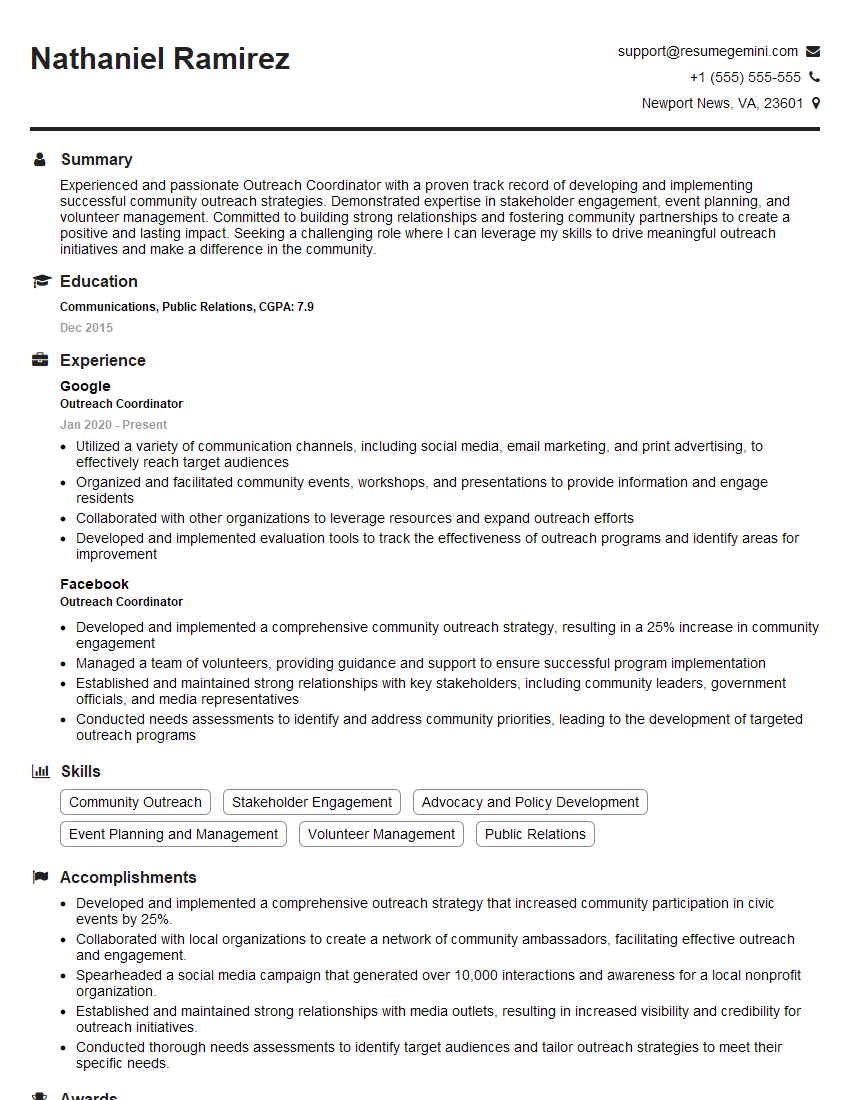
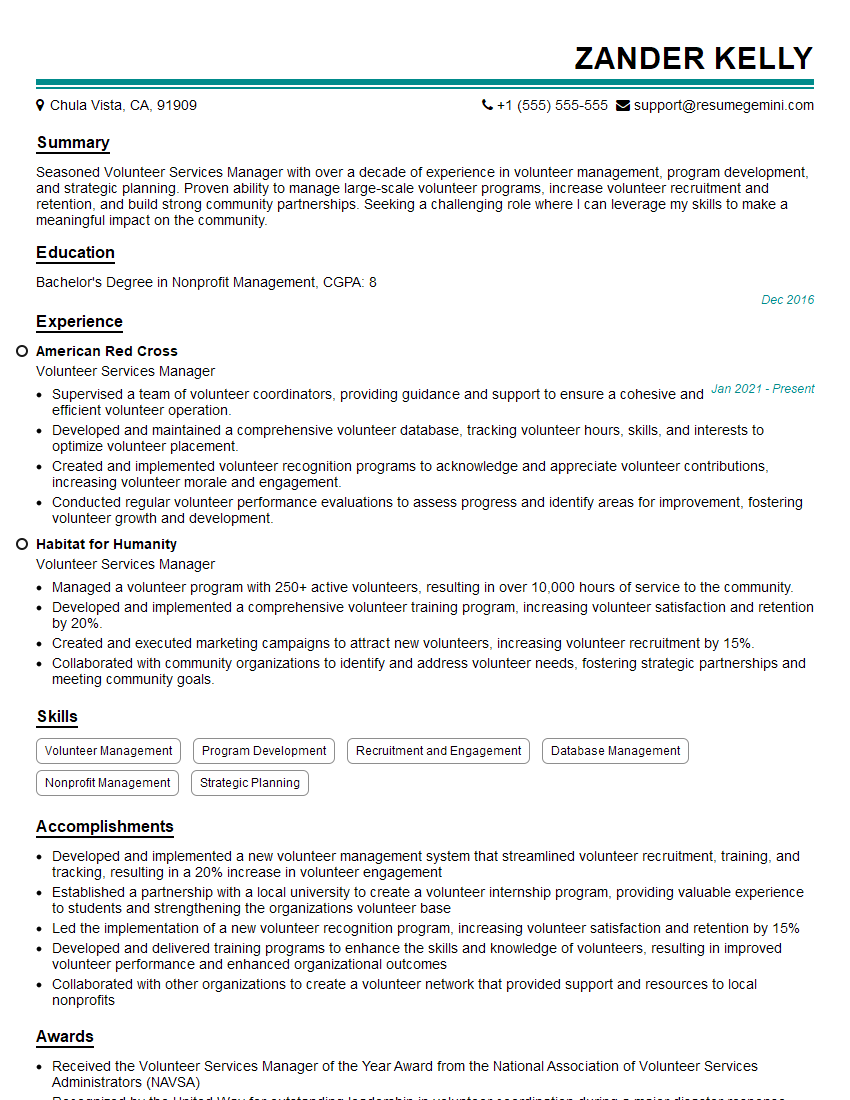
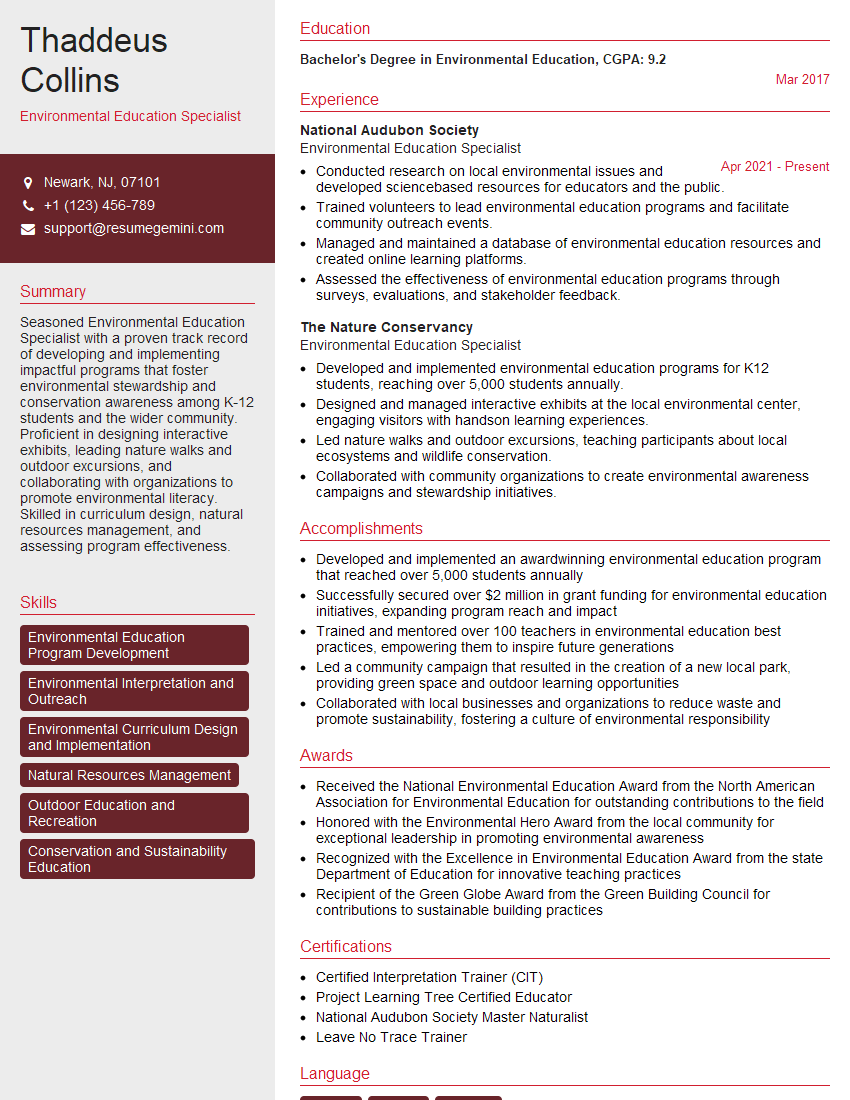
Mastering experience in working with volunteers and citizen scientists significantly enhances your career prospects in fields valuing community engagement, environmental stewardship, and collaborative research. A well-crafted resume is crucial for showcasing these skills to potential employers. Creating an ATS-friendly resume increases your chances of getting your application noticed. ResumeGemini is a trusted resource to help you build a professional and impactful resume that highlights your unique experiences. Examples of resumes tailored to showcase experience in working with volunteers and citizen scientists are available to guide you through this process.
Explore more articles
Users Rating of Our Blogs
Share Your Experience
We value your feedback! Please rate our content and share your thoughts (optional).
What Readers Say About Our Blog
To the interviewgemini.com Webmaster.
Very helpful and content specific questions to help prepare me for my interview!
Thank you
To the interviewgemini.com Webmaster.
This was kind of a unique content I found around the specialized skills. Very helpful questions and good detailed answers.
Very Helpful blog, thank you Interviewgemini team.