Cracking a skill-specific interview, like one for Experience with manual and computerized turning machines, requires understanding the nuances of the role. In this blog, we present the questions you’re most likely to encounter, along with insights into how to answer them effectively. Let’s ensure you’re ready to make a strong impression.
Questions Asked in Experience with manual and computerized turning machines Interview
Q 1. Explain the difference between manual and computerized turning machines.
The primary difference between manual and computerized turning machines lies in how they’re controlled. Manual turning machines, like engine lathes, rely entirely on the operator’s skill and hand movements to manipulate the cutting tools and workpiece. The operator directly controls the speed, feed rate, and depth of cut using hand wheels and levers. Computerized turning machines, primarily CNC (Computer Numerical Control) lathes, use a computer program to control these parameters. This program dictates the precise movements of the cutting tools, resulting in higher accuracy, repeatability, and efficiency.
Think of it like this: a manual lathe is like driving a car with a manual transmission – you’re in complete control, but it requires more skill and effort. A CNC lathe is like driving an automatic car – it simplifies the process and allows for more precise and consistent results.
Q 2. Describe your experience with various types of turning machines (e.g., engine lathe, turret lathe, CNC lathe).
My experience encompasses a wide range of turning machines. I’ve extensively worked with engine lathes, performing various tasks from simple cylindrical turning to more complex operations like threading and facing. I’m proficient with turret lathes, appreciating their ability to handle multiple tools simultaneously, significantly reducing cycle times for high-volume production. My most significant experience, however, lies with CNC lathes. I’ve worked with various models, from smaller benchtop lathes to larger, more sophisticated machines capable of handling complex part geometries and high-precision tolerances. I’m comfortable with both live tooling and bar-feeding systems on CNC lathes. For example, I once used a CNC lathe with live tooling to create a complex part with internal features which would have been near impossible with a manual machine.
Q 3. What types of materials have you worked with on turning machines?
Throughout my career, I’ve worked with a diverse array of materials on turning machines. This includes common metals like mild steel, stainless steel, aluminum, brass, and copper. I’ve also machined more challenging materials such as titanium alloys and various plastics, each requiring a tailored approach to cutting speeds, feeds, and tool selection. The choice of cutting tools and parameters depends heavily on the material’s hardness, machinability, and thermal properties. For instance, machining titanium requires specialized tooling and careful control of cutting parameters to prevent tool breakage and ensure surface finish quality.
Q 4. How do you ensure the accuracy and precision of parts produced on a turning machine?
Ensuring accuracy and precision in turned parts requires a multi-faceted approach. For manual machines, this starts with meticulous setup, using precision measuring tools like calipers, micrometers, and dial indicators to accurately set tool heights, offsets, and workpiece positioning. Regular tool sharpening and maintenance are crucial to maintaining consistent cutting performance. With CNC machines, the accuracy relies heavily on proper programming and machine calibration. This involves verifying the program’s accuracy through simulations and test runs, followed by regular machine maintenance and calibration procedures. Using tools like CMM (Coordinate Measuring Machine) for post-machining inspection helps ensure parts meet the specified tolerances.
Q 5. What are the common safety precautions you follow when operating turning machines?
Safety is paramount when operating turning machines. I always ensure proper machine guarding is in place to prevent accidental contact with rotating parts. I always wear appropriate personal protective equipment (PPE), including safety glasses, hearing protection, and machine-specific safety gear such as cut-resistant gloves. Before starting any operation, I inspect the machine for any damage or loose parts. I never operate a machine if I am unsure or feel unsafe and follow lockout/tagout procedures when performing maintenance or repairs. I also regularly clean the machine to prevent buildup of chips and debris, a potential safety hazard. Safe machining practices are second nature to me.
Q 6. Describe your experience with setting up and operating CNC turning machines.
My experience with setting up and operating CNC turning machines is extensive. I’m adept at interpreting engineering drawings and translating them into CNC programs. This includes selecting the appropriate cutting tools, determining optimal cutting parameters, and programming the machine’s movements using CAM (Computer-Aided Manufacturing) software. I am experienced in setting up and using workholding devices like chucks, collets, and fixtures to securely hold the workpiece. Regular maintenance tasks, like tool changes, machine cleaning, and monitoring coolant levels are integral to my workflow. A recent project involved programming a CNC lathe to create a complex part with tight tolerances; the entire process, from setup to final inspection, underscored my abilities.
Q 7. How do you program a CNC turning machine (G-code or other)?
I primarily use G-code to program CNC turning machines. G-code is a standardized numerical control programming language that dictates the machine’s movements. A typical G-code program will include commands to control the spindle speed (S), feed rate (F), tool selection (T), and various movements (G00 for rapid traverse, G01 for linear interpolation, G02 and G03 for circular interpolation). I use CAM software to generate the G-code based on the part’s 3D model and machining parameters. The software automatically calculates the toolpaths and generates the necessary G-code. Before executing the program on the machine, I always simulate it in the CAM software to ensure there are no collisions or errors. For example, a simple G-code command to perform a turning operation might look like this:
G01 X20.0 Z-10.0 F0.2This command moves the tool along a linear path, with X representing the X-axis position, Z the Z-axis position, and F the feed rate. I’m also familiar with other programming methods and post-processors, adapting to the specifics of different CNC machines and control systems.
Q 8. How do you troubleshoot common problems encountered during turning operations?
Troubleshooting turning operations starts with a systematic approach. I always begin by observing the problem: Is the part dimensionally incorrect? Is there excessive vibration? Is the surface finish poor? Then I check the most likely culprits.
- Tooling Issues: Dull or chipped cutting tools are a primary source of problems. I’d inspect the tool for wear, ensuring it’s sharp and properly secured in the holder. Incorrect tool geometry can also lead to poor finishes or dimensional inaccuracies. I might try a different tool or adjust the geometry if necessary.
- Machine Setup: Incorrect workpiece clamping can cause vibrations and dimensional errors. I’d meticulously check the clamping force and alignment of the workpiece. The machine’s spindle speed and feed rate settings are also crucial. If these are off, it can lead to poor surface finish, chatter, or even tool breakage. I’d verify these settings against the material being machined and the desired cut.
- Workpiece Material: The material’s properties play a significant role. If the material is too hard or brittle, it might lead to tool breakage. If it’s too soft, it could result in excessive wear or poor surface finish. Knowing the material’s characteristics is essential for selecting the correct tooling and cutting parameters. I’d refer to material data sheets if needed.
- Coolant Supply: Inadequate coolant can lead to excessive tool wear and heat build-up, which can warp the workpiece or damage the machine. I would check the coolant flow and nozzle placement. A clogged nozzle or low coolant level can easily be overlooked.
Once the problem is identified, I address it methodically, making sure to document the troubleshooting steps and results. For example, if I find a dull tool causing dimensional inaccuracies, I’d replace the tool, adjust the machine settings, and then carefully re-run the operation, checking the part dimensions at each stage.
Q 9. How do you measure and inspect parts produced on a turning machine?
Measuring and inspecting turned parts is critical for ensuring quality. My approach involves a combination of precision measuring tools and appropriate inspection techniques.
- Calipers and Micrometers: These are fundamental for measuring linear dimensions like diameter and length. I use vernier calipers for quick checks and micrometers for higher precision measurements, ensuring I’m correctly zeroing the instruments before each use. I’d repeat measurements several times to ensure accuracy.
- Dial Indicators: These are invaluable for checking roundness, runout, and parallelism. I might use a dial indicator on a magnetic base to measure runout on a shaft, ensuring consistent diameter across the whole length.
- Coordinate Measuring Machines (CMMs): For complex parts or high precision requirements, I’d use a CMM. These provide highly accurate 3D measurements and allow for thorough inspection of intricate features.
- Surface Roughness Measurement: To evaluate surface quality, I utilize surface roughness testers. This helps to assess whether the surface finish meets the specified requirements.
- Visual Inspection: A thorough visual inspection is always the first step. I look for any defects like scratches, burrs, or surface imperfections. A magnifying glass can often help identify subtle flaws.
Each measurement is documented and compared to the specifications on the part drawing. Any deviation outside the tolerance is carefully noted and investigated. For example, if a dimension consistently falls outside the tolerance, I might revisit the machining parameters or tooling to identify the root cause.
Q 10. What are your experiences with different cutting tools and their applications?
My experience encompasses a wide range of cutting tools, each suited to different materials and applications. The choice of tool depends on several factors such as material hardness, required surface finish, and the shape being machined.
- High-Speed Steel (HSS) Tools: These are general-purpose tools, cost-effective and suitable for less demanding applications and softer materials. I’ve used them extensively for general turning operations on mild steel.
- Carbide Inserts: These are significantly harder and more wear-resistant than HSS, ideal for machining tougher materials like stainless steel or cast iron. They offer longer tool life and higher machining speeds. I’ve had success using them on high-volume production runs.
- Ceramic Inserts: For extremely hard materials or demanding applications requiring very high surface speeds, I might choose ceramic inserts. They offer exceptional wear resistance but are more brittle than carbide.
- CBN (Cubic Boron Nitride) and PCD (Polycrystalline Diamond) Inserts: These are superabrasive tools used for machining very hard materials like hardened steel or ceramics. Their cost is significantly higher, but their ability to machine these materials makes them worthwhile in specific applications. I have used these in specialized machining situations requiring exceptional longevity and surface finish.
Selecting the appropriate tool is paramount. Using the wrong tool can lead to tool breakage, poor surface finish, or inaccurate dimensions. I always refer to the manufacturer’s recommendations and consider the material properties and cutting parameters when making a tool selection.
Q 11. Explain the concept of cutting speed, feed rate, and depth of cut.
Cutting speed, feed rate, and depth of cut are three fundamental parameters in turning operations. They directly influence productivity, surface finish, and tool life.
- Cutting Speed (V): This is the surface speed of the workpiece at the cutting point, measured in meters per minute (m/min) or feet per minute (fpm). A higher cutting speed generally leads to higher productivity but can also increase tool wear. The formula is often:
V = (π * D * N) / 1000(for metric units, where D is diameter in mm and N is spindle speed in RPM).- Feed Rate (f): This refers to how fast the tool advances into the workpiece with each revolution, measured in millimeters per revolution (mm/rev) or inches per revolution (in/rev). A higher feed rate increases material removal rate, but excessively high feed rates can lead to tool breakage and poor surface finish.
- Depth of Cut (d): This is the distance the tool removes from the workpiece in a single pass, measured in millimeters (mm) or inches (in). Increasing the depth of cut enhances the material removal rate but puts more stress on the tool and machine, potentially causing tool wear or chatter.
Finding the optimal balance between these three parameters is key to efficient and effective turning. For instance, a high cutting speed with a lower feed rate and depth of cut might be ideal for a high-precision finish. Conversely, a lower cutting speed with a higher feed rate and depth of cut may be more suitable for roughing operations focused on material removal speed.
Q 12. How do you select appropriate cutting parameters for different materials and operations?
Selecting the right cutting parameters requires careful consideration of the material being machined and the desired outcome. I often rely on several resources:
- Machinability Data: Manufacturer’s data sheets provide guidelines on recommended cutting speeds, feed rates, and depths of cut for different materials and tooling combinations. I frequently consult these resources.
- Experience and Judgment: Years of experience allow me to make informed decisions based on the material’s properties and the specific operation. For example, I know that harder materials require lower cutting speeds and lighter cuts compared to softer materials.
- Trial and Error (with caution): Sometimes, fine-tuning is needed. I might conduct small-scale trials to determine the optimal settings, carefully monitoring tool wear and surface finish. This approach is always done cautiously to prevent tool damage or part rejection.
- Cutting Fluid: Using an appropriate cutting fluid can significantly influence the achievable cutting parameters. A correctly chosen cutting fluid will help prevent heat buildup and improve tool life, thus allowing for higher cutting speeds and feed rates. This is especially critical when machining tougher materials.
For example, when machining stainless steel, I’d choose lower cutting speeds and feed rates compared to machining aluminum due to stainless steel’s higher hardness and tendency for work hardening. It’s a balance of efficiency and ensuring the quality and longevity of the tools.
Q 13. Describe your experience with using various types of tooling (e.g., single-point cutting tools, drills, reamers).
My experience includes using a variety of tooling beyond single-point cutting tools. Understanding the strengths and limitations of each is vital for effective machining.
- Single-Point Cutting Tools: These are the workhorses of turning, used for generating various shapes and surfaces. I’m proficient in selecting and utilizing different geometries (e.g., facing, turning, boring tools) depending on the specific requirements of the operation.
- Drills: These are employed for creating holes in the workpiece. I have experience with various types, from twist drills for general-purpose hole making to specialized drills for deep hole machining or specific material types. Selecting the correct drill size and speed is crucial for clean hole production without breakage.
- Reamers: Used to enlarge existing holes to precise dimensions and improve surface finish, reamers require careful handling to prevent damage or inaccuracies. I’ve worked with both hand-operated and machine-mounted reamers, understanding the need for stable support and appropriate speed control.
- Boring Tools: These create larger internal diameters, usually inside previously drilled holes or cast parts. Precision and stability are critical when using boring tools. I am well-versed in selecting appropriate tool sizes and feed rates to achieve the desired results.
Proper tool selection and handling significantly reduce downtime and reject rates. Using the wrong tool or incorrect technique can lead to breakage, inaccurate dimensions, or poor surface finish. For instance, selecting a reamer that is too large or forcing the reamer through the material can damage both the tool and the workpiece.
Q 14. How do you handle and prevent tool wear and breakage?
Tool wear and breakage are unavoidable but can be mitigated through careful management.
- Regular Tool Inspection: I always inspect the tools before and during operation, looking for signs of wear such as chipping, cracking, or excessive flank wear. Early detection of wear allows for timely replacement, preventing unexpected breakage and potential damage to the workpiece or machine.
- Appropriate Cutting Parameters: As mentioned, selecting correct cutting speeds, feed rates, and depths of cut is critical in extending tool life. Avoiding overly aggressive cutting conditions minimizes wear and tear on the tooling.
- Proper Tool Clamping: Ensure tools are securely clamped in their holders to prevent vibrations and tool deflection, which can lead to premature wear and breakage. This includes regular checks to ensure the tool is tightly secured and not loose.
- Coolant Selection and Application: Using the appropriate coolant enhances lubrication and heat dissipation, reducing tool wear and extending tool life. I carefully monitor coolant flow and nozzle placement to ensure effective cooling.
- Tool Storage: Tools should be stored properly to prevent damage. I ensure that tools are cleaned, stored in appropriate holders or cases and protected from rust or corrosion.
For example, I once experienced repeated tool breakage on a particular job. By carefully analyzing the cutting parameters and coolant usage, we identified a combination of excessive cutting speed and insufficient coolant flow as the cause. Adjusting these parameters immediately resolved the issue and significantly increased tool life.
Q 15. Describe your experience with different types of coolants and lubricants.
My experience encompasses a wide range of coolants and lubricants, each chosen based on the specific material being machined and the machining operation. For instance, soluble oil emulsions are frequently used for general-purpose turning due to their cost-effectiveness and relatively good cooling and lubricating properties. These are essentially water-based solutions with oil added for lubrication. I’ve also extensively worked with synthetic coolants, which offer superior performance in terms of reduced bacterial growth, better cooling, and improved surface finish. These are particularly useful when machining challenging materials like stainless steel or titanium, which are prone to generating excessive heat. For specific applications requiring extreme precision and minimal surface imperfections, I’ve used specialized coolants with extreme-pressure additives to reduce friction and prevent galling. Selecting the right coolant is critical – using an inappropriate coolant can lead to poor surface finish, increased tool wear, or even catastrophic machine failure.
For example, using a soluble oil coolant on a titanium alloy might lead to insufficient cooling, resulting in work hardening and tool breakage. Conversely, using a high-performance synthetic coolant on mild steel might be overkill and unnecessarily expensive.
Career Expert Tips:
- Ace those interviews! Prepare effectively by reviewing the Top 50 Most Common Interview Questions on ResumeGemini.
- Navigate your job search with confidence! Explore a wide range of Career Tips on ResumeGemini. Learn about common challenges and recommendations to overcome them.
- Craft the perfect resume! Master the Art of Resume Writing with ResumeGemini’s guide. Showcase your unique qualifications and achievements effectively.
- Don’t miss out on holiday savings! Build your dream resume with ResumeGemini’s ATS optimized templates.
Q 16. What is your experience with machine maintenance and preventative measures?
Machine maintenance is paramount to ensuring consistent output and preventing costly downtime. My routine includes regular inspections for signs of wear and tear on components such as bearings, spindles, and hydraulic systems. I meticulously follow the manufacturer’s recommended maintenance schedule, which often involves lubricating moving parts, checking for fluid leaks, and regularly cleaning the machine to prevent debris buildup. Preventative measures go beyond scheduled maintenance; I also pay close attention to the sounds and vibrations of the machine during operation. Any unusual sounds or vibrations often indicate a developing problem that can be addressed before it escalates into a major failure. A crucial part of my preventative maintenance is ensuring proper tooling – sharp tools are essential to minimizing stress on the machine and extending its lifespan.
For instance, during one job, I noticed a slight increase in vibration while running a particular turning operation. Investigating, I found a slight misalignment in the tailstock. Early detection and adjustment prevented a larger problem that could have potentially damaged the workpiece, tooling and the machine itself.
Q 17. How familiar are you with different types of clamping devices used in turning?
My experience with clamping devices covers a wide range of options, selected based on workpiece size, shape, and material. I’m proficient in using three-jaw chucks, which are versatile and ideal for holding cylindrical workpieces. Four-jaw chucks, offering independent jaw adjustment, are excellent for irregular shapes and allow precise alignment. I’ve also used collet chucks, particularly effective for smaller diameter workpieces, providing a very secure grip. For larger and more complex components, I’ve employed specialized clamping fixtures designed for specific applications. These custom fixtures ensure accurate and consistent workpiece positioning, which is critical for high-precision turning. In addition to the main clamping devices, I’m also familiar with various work-holding accessories, such as faceplates, mandrels, and steady rests.
Selecting the wrong clamping device can lead to inaccuracies in the final product and even cause damage to the workpiece or the machine. For example, using a three-jaw chuck on a non-cylindrical part could lead to an inaccurate machining.
Q 18. Describe your experience with working with blueprints and technical drawings.
Working with blueprints and technical drawings is a fundamental aspect of my job. I’m proficient in interpreting various drawing types, including orthographic projections, isometric views, and detailed sectional drawings. I can accurately identify dimensions, tolerances, surface finishes, and material specifications. My ability extends to understanding different annotation systems and symbols commonly used in engineering drawings. I use these drawings to plan the machining process, determine the necessary tooling, and ensure the final product conforms precisely to the design specifications. I’m comfortable working with both physical drawings and digital CAD files.
A recent project involved machining a complex component with intricate internal features. By carefully studying the sectional drawings and 3D models, I was able to devise a precise machining strategy that resulted in a flawless final product.
Q 19. How do you interpret technical specifications and tolerances?
Interpreting technical specifications and tolerances requires a keen eye for detail and a thorough understanding of metrology. Tolerances define the allowable deviation from the specified dimensions. For example, a tolerance of ±0.005 inches means the actual dimension can vary by up to 0.005 inches above or below the nominal dimension. Understanding these tolerances is vital for ensuring the part meets quality standards. I’m familiar with various tolerance designations, including unilateral, bilateral, and geometric tolerances. I use precision measuring instruments like micrometers, calipers, and dial indicators to verify that the machined parts fall within the specified tolerance range.
For instance, if a blueprint specifies a diameter of 1.000 inches ±0.002 inches, I use precision measurement tools to confirm that the actual diameter falls between 0.998 and 1.002 inches. Failure to adhere to these tolerances results in parts that are out of specification and may not function correctly.
Q 20. How do you ensure the quality of your work consistently meets the required standards?
Consistent quality is achieved through a multi-faceted approach. First and foremost, it starts with meticulous planning. This includes selecting the appropriate tooling, choosing the optimal machining parameters (speeds, feeds, and depths of cut), and ensuring proper setup and clamping of the workpiece. Throughout the machining process, I conduct regular in-process inspections using precision measuring instruments to verify that the part is conforming to the specifications. This allows me to detect and correct any deviations early on. Furthermore, I maintain a clean and organized workspace to minimize the risk of errors and damage to the workpiece. Regular tool maintenance and replacement also play a vital role. Using dull tools negatively impacts surface quality, introduces inaccuracies, and increases wear on the machine.
For example, during a large batch production run, I noticed a slight drift in a key dimension during mid-production. By identifying and addressing this early, I prevented the production of several non-conforming parts and ensured the entire batch met the required standards.
Q 21. Describe your experience with quality control procedures in a machining environment.
Quality control procedures are integral to my workflow. These procedures typically begin with a thorough inspection of raw materials to ensure they meet the required standards. During machining, regular in-process inspections are conducted to monitor the accuracy and quality of the work. Once the machining is complete, a final inspection is performed, involving the use of various precision measuring instruments to verify that the finished product conforms to the design specifications. This often includes checks for dimensional accuracy, surface finish, and overall quality. Defective parts are immediately identified and set aside to prevent them from entering the supply chain. Documentation of all inspections and quality checks is maintained for traceability and to facilitate continuous improvement.
In one instance, a statistical process control (SPC) chart revealed a gradual trend in the diameter of a machined part, exceeding its upper tolerance limit. By analyzing the chart and adjusting the machine settings, we were able to correct the issue promptly, preventing significant scrap and ensuring the consistent production of conforming parts.
Q 22. What is your experience with using CMM (Coordinate Measuring Machine)?
My experience with Coordinate Measuring Machines (CMMs) is extensive. I’ve utilized CMMs regularly throughout my career for quality control and inspection of turned parts. This includes both manual and automated CMM operation. I’m proficient in using various CMM software packages to program inspection routines, analyze measurement data, and generate reports. For example, I once used a Zeiss CMM to inspect a complex batch of turbine blades, identifying minute deviations in dimensions and surface finish that would have otherwise gone unnoticed. This prevented costly rework and ensured adherence to tight tolerances.
My experience encompasses various probing techniques, including touch-trigger and scanning probes, allowing me to accurately measure a wide range of features on turned parts, from simple diameters to intricate threads and complex geometries. I am also comfortable interpreting CMM reports and using the data to identify trends and suggest process improvements.
Q 23. How do you handle unexpected issues or malfunctions during machine operation?
Handling unexpected issues is a critical aspect of operating turning machines. My approach involves a systematic troubleshooting process. First, I ensure safety by immediately stopping the machine and securing the area. Then, I carefully analyze the issue. Is it a tooling problem, a material defect, a software glitch, or a machine malfunction? I consult the machine’s manual, error codes, and my experience to identify the root cause.
For instance, I once experienced a sudden power surge that caused a CNC lathe to malfunction. Following safety protocol, I first powered down the machine completely. Then, I checked the control panel for error codes and consulted the machine’s documentation, identifying a tripped circuit breaker as the cause. Once the breaker was reset and verified, the machine operated normally.
If the problem persists, I escalate it to my supervisor or maintenance team, providing them with all relevant information – error codes, operational parameters, and observations. I firmly believe in proactive communication to prevent downtime and ensure consistent production.
Q 24. Describe your experience with working in a team environment.
I thrive in team environments. I’ve been part of several successful teams where open communication and collaborative problem-solving were key to achieving production targets and maintaining quality. My approach is to actively participate in team discussions, contribute my expertise, and readily assist colleagues. I also believe in respecting diverse perspectives and collaborating to find the best solutions.
One specific example involves a project where we were struggling to meet a tight deadline for a large order of precision parts. As part of the team, I suggested optimizing the machining program by implementing a more efficient cutting strategy. This collaborative effort, involving the programmer and other operators, resulted in a significant reduction in cycle time and allowed us to meet the deadline without compromising quality.
Q 25. How do you stay updated on the latest technologies and advancements in turning machines?
Staying current with the latest advancements in turning machine technology is crucial for maintaining my skillset and ensuring I deliver optimal results. I utilize several methods to achieve this. I regularly read industry publications, such as trade journals and online resources. I also attend industry conferences and workshops, where I learn about new developments in CNC controls, cutting tools, and machine designs.
Furthermore, I actively participate in online forums and communities where experts share knowledge and discuss emerging trends. I also take advantage of manufacturer-provided training courses to enhance my expertise with specific machines and software. Keeping up with these advancements allows me to implement the most efficient techniques and adopt best practices, thus continuously improving my performance.
Q 26. What are your strengths and weaknesses as a turning machine operator?
My strengths include a deep understanding of turning processes, meticulous attention to detail, and proficiency in troubleshooting machine issues. I am a highly efficient and productive operator, consistently meeting or exceeding production targets. I am also a quick learner and readily adapt to new technologies and challenges.
One area I’m continuously working on is expanding my knowledge of advanced programming techniques within CNC lathes. While I’m proficient in basic programming, further development in this area would enable me to streamline processes further and improve efficiency. I am actively taking online courses to address this.
Q 27. Describe your experience with lean manufacturing principles.
My experience with lean manufacturing principles is significant. I understand and apply concepts such as 5S (Sort, Set in Order, Shine, Standardize, Sustain), Kaizen (continuous improvement), and waste reduction (reducing Muda). In my previous role, I actively participated in implementing lean manufacturing techniques within the turning department. This involved identifying and eliminating bottlenecks, reducing setup times, and optimizing material flow to improve overall efficiency.
For instance, I played a key role in implementing a 5S system for our tool storage area, resulting in improved organization, reduced search times, and a significant reduction in tool damage. This not only saved time but also minimized downtime due to missing or damaged tools. This experience instilled in me a strong appreciation for waste elimination and process optimization within a manufacturing setting.
Q 28. What are your salary expectations?
My salary expectations are commensurate with my experience and skills, and competitive within the industry. I am open to discussing a specific range after learning more about the position’s responsibilities and the company’s compensation structure.
Key Topics to Learn for Experience with Manual and Computerized Turning Machines Interview
- Machine Operation: Understanding the fundamental principles of both manual and CNC turning machines, including setup, operation, and safety procedures. This includes knowledge of different types of lathes and their capabilities.
- Tooling and Selection: Knowing how to select appropriate cutting tools, fixtures, and workholding devices for various materials and applications. Understanding tool geometry and its impact on surface finish and machining efficiency.
- Programming (CNC): For computerized machines, a strong grasp of G-code and CAD/CAM software is crucial. This includes the ability to interpret programs, troubleshoot errors, and potentially create simple programs.
- Material Properties: Familiarity with the characteristics of different materials (e.g., metals, plastics) commonly used in turning operations and how these affect machining parameters.
- Measurement and Quality Control: Proficiency in using various measuring instruments (calipers, micrometers) to ensure dimensional accuracy and adherence to tolerances. Understanding quality control processes and techniques.
- Troubleshooting and Maintenance: Ability to identify and resolve common problems encountered during operation, including tool wear, machine malfunctions, and material defects. Basic understanding of preventative maintenance procedures.
- Safety Procedures: Comprehensive knowledge of all safety regulations and practices related to operating turning machines, including the proper use of PPE (Personal Protective Equipment).
- Production Efficiency and Optimization: Understanding techniques to improve production efficiency, reduce waste, and optimize machining parameters for optimal results.
Next Steps
Mastering experience with manual and computerized turning machines significantly enhances your career prospects in manufacturing and related fields, opening doors to higher-paying roles and increased responsibility. A well-crafted resume is crucial in showcasing your skills and experience effectively to potential employers. Creating an ATS-friendly resume is essential to navigate applicant tracking systems and increase your chances of getting your application noticed. ResumeGemini is a valuable resource to help you build a professional and impactful resume, ensuring your qualifications stand out. Examples of resumes tailored to experience with manual and computerized turning machines are available to help you create the perfect application.
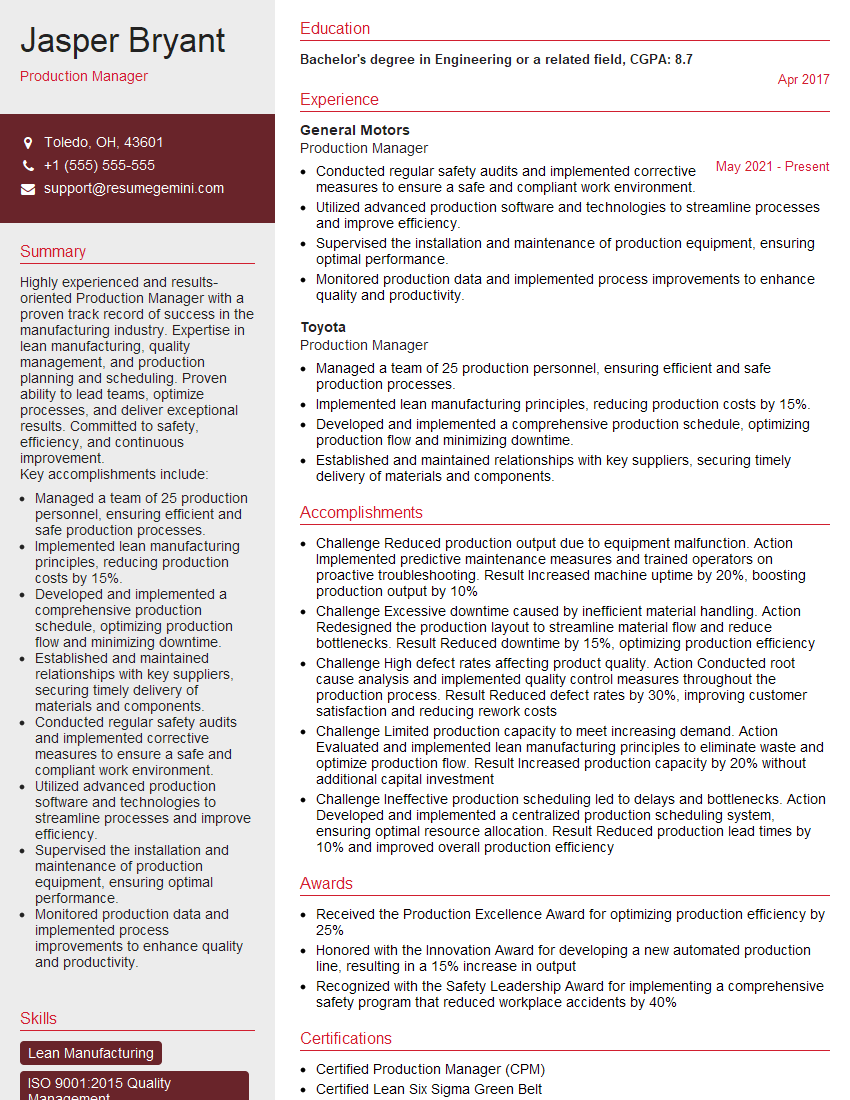
Production Manager Resume Sample

Manufacturing Engineer Resume Sample

Manufacturing Technician Resume Sample

Shop Foreman Resume Sample

Machine Shop Supervisor Resume Sample

Manufacturing Supervisor Resume Sample

Lathe Operator Resume Sample

Turning Machine Operator Resume Sample

Machinist Apprentice Resume Sample
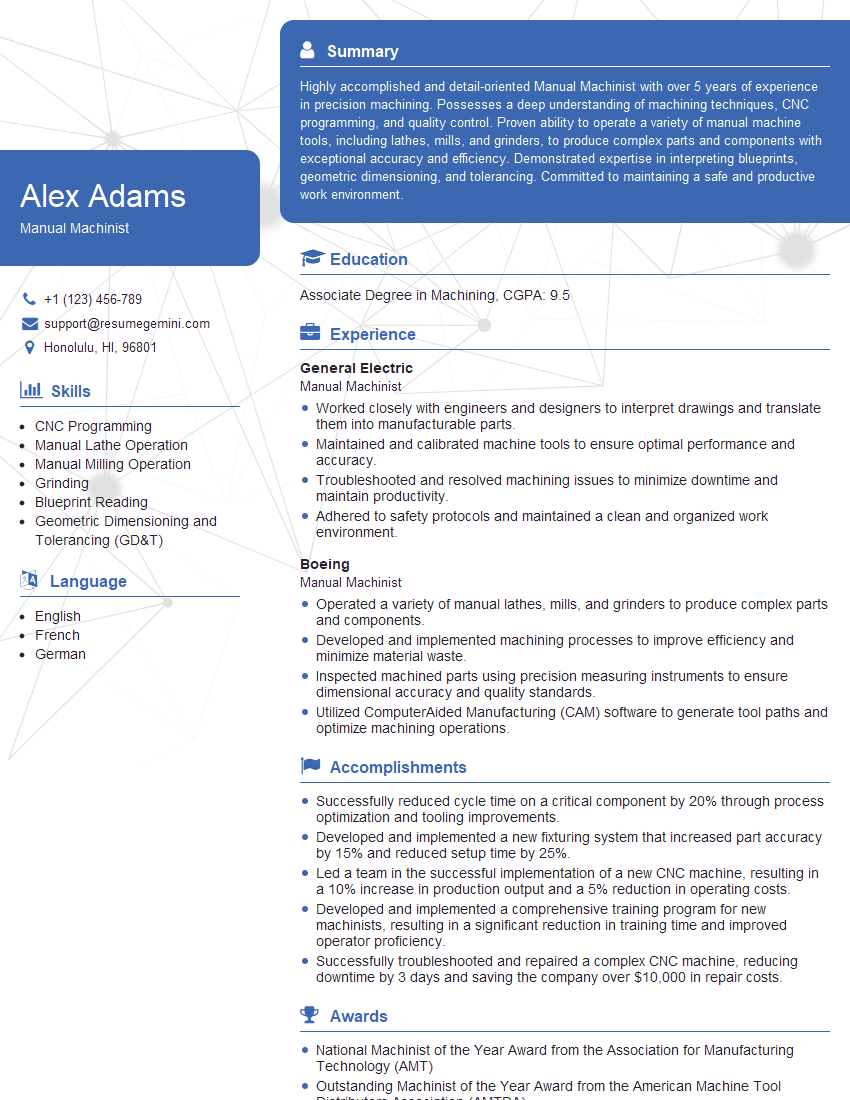
Manual Machinist Resume Sample
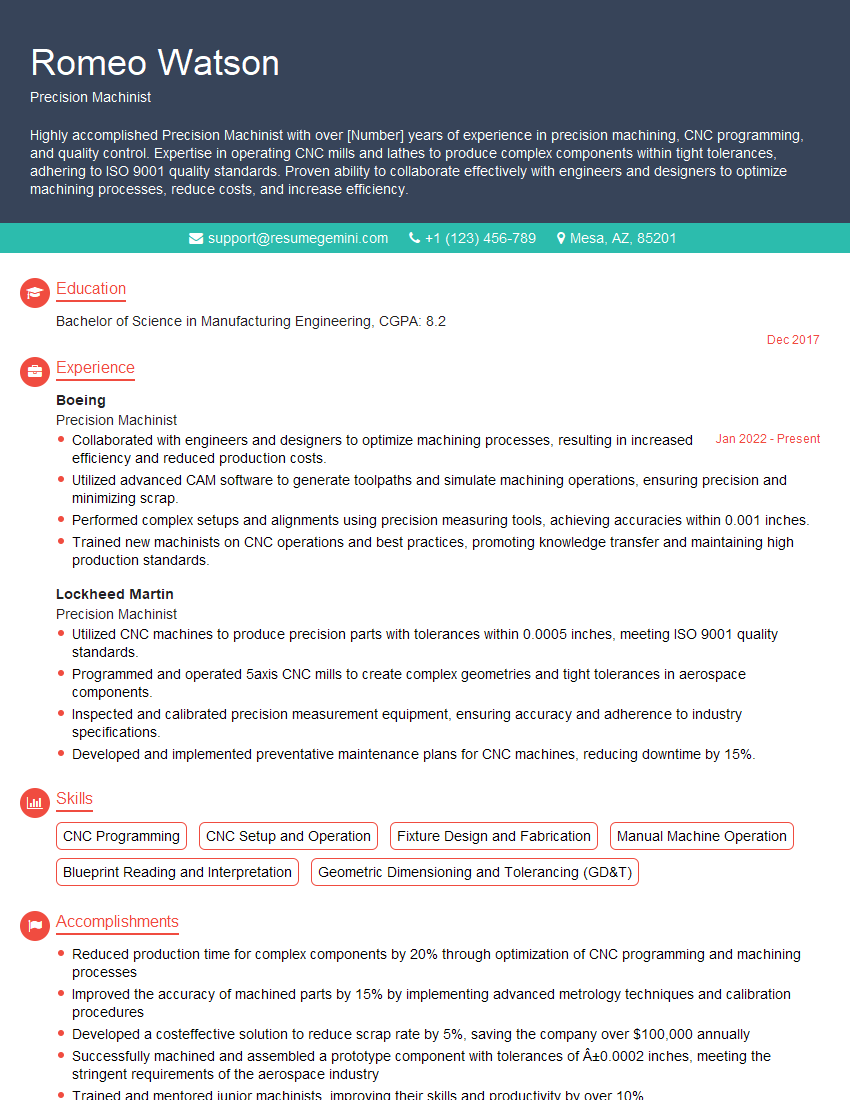
Precision Machinist Resume Sample
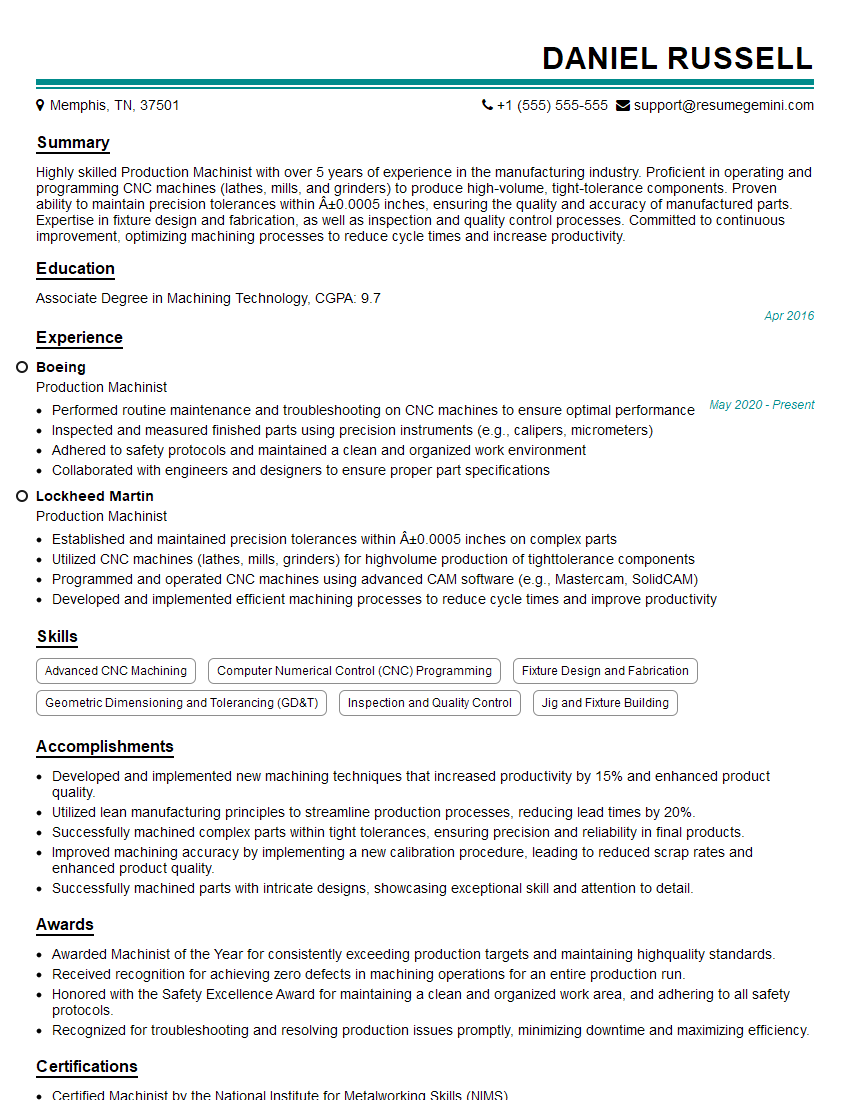
Production Machinist Resume Sample

Tool and Die Maker Resume Sample
Explore more articles
Users Rating of Our Blogs
Share Your Experience
We value your feedback! Please rate our content and share your thoughts (optional).
What Readers Say About Our Blog
To the interviewgemini.com Webmaster.
Very helpful and content specific questions to help prepare me for my interview!
Thank you
To the interviewgemini.com Webmaster.
This was kind of a unique content I found around the specialized skills. Very helpful questions and good detailed answers.
Very Helpful blog, thank you Interviewgemini team.