Preparation is the key to success in any interview. In this post, we’ll explore crucial Experience with order picking and packing interview questions and equip you with strategies to craft impactful answers. Whether you’re a beginner or a pro, these tips will elevate your preparation.
Questions Asked in Experience with order picking and packing Interview
Q 1. What experience do you have with different picking methods (e.g., batch picking, zone picking)?
My experience encompasses a variety of order picking methods, each optimized for different situations. Batch picking, for instance, is ideal for high-volume orders of similar items. Imagine picking all the blue widgets for 10 orders at once before moving to the red widgets. This minimizes travel time. I’ve successfully implemented this in environments with high order volumes and a limited SKU range. In contrast, zone picking divides the warehouse into zones, assigning pickers to specific areas. This is especially efficient in large warehouses with diverse product locations. Think of it like dividing a large field into smaller plots – each worker focuses on a single plot, maximizing efficiency. I’ve utilized zone picking in facilities with a wide range of SKUs and a larger physical space. I’m also proficient in single-order picking, where each picker handles one order from start to finish, which is often best for smaller operations or orders requiring high accuracy and personalized handling. The choice of picking method depends on factors like order volume, warehouse layout, and item variety. My experience allows me to adapt my picking strategy based on the specific needs of the operation.
Q 2. Describe your experience with RF scanners and warehouse management systems (WMS).
I’m highly proficient with RF scanners and Warehouse Management Systems (WMS). RF scanners significantly improve picking accuracy and efficiency by eliminating manual data entry. I’ve used various scanner models, including those with barcode and RFID capabilities. Imagine scanning each item as you pick it – the WMS instantly updates the order status, minimizing errors and speeding up the process. The WMS itself provides real-time order information, directing me to the correct locations and tracking every step of the picking process. I’m familiar with several WMS platforms, including [mention specific WMS systems you’ve used – e.g., Manhattan Associates, Blue Yonder], understanding their specific functionalities and reporting capabilities. My experience includes troubleshooting scanner malfunctions, understanding WMS error messages, and contributing to process improvement suggestions based on my observations of the system’s performance.
Q 3. How do you ensure accuracy during order picking and packing?
Accuracy is paramount in order picking and packing. My approach involves multiple layers of checks and balances. Firstly, I meticulously follow the picking list provided by the WMS, verifying each item against the order details before scanning. This visual check prevents picking the wrong item, even if the scanner reads correctly. Secondly, I regularly conduct a final verification against the packing slip before sealing the package. This cross-reference ensures the contents match the order. Thirdly, I utilize visual cues like color-coded labels or bin locations to aid in quick and accurate identification. For instance, a red label might signal fragile items needing extra care. Finally, I always double-check quantities, especially for items with similar appearances, and I report any discrepancies immediately to avoid future issues. Think of it like baking a cake – each step requires precision to ensure the final product is perfect.
Q 4. What is your experience with different packing materials and techniques?
My experience with packing materials and techniques is extensive. I’m familiar with various box sizes, fillers (e.g., bubble wrap, packing peanuts, air pillows), and tapes, selecting the appropriate materials based on item fragility and order size. For example, fragile items require more cushioning and potentially double-boxing for enhanced protection. I understand the importance of proper box sealing to prevent damage during transit. I’ve used various packing techniques including void fill optimization to minimize wasted space and reduce shipping costs while also preventing items from shifting during transit, ensuring safe and efficient delivery. Additionally, I’m proficient in creating custom packaging solutions for unusual or oversized items, optimizing the use of available materials to ensure efficiency and minimize waste. This involves understanding dimensional weight and its impact on shipping costs.
Q 5. How do you handle damaged or incorrect items during order picking?
Handling damaged or incorrect items requires a systematic approach. If I encounter a damaged item during picking, I immediately report it to my supervisor using the WMS system or other designated reporting methods, clearly documenting the damage and its location. For incorrect items, I follow the same reporting procedure, ensuring the WMS is updated to reflect the discrepancy. I never include damaged or incorrect items in orders. Depending on company policy, I might be involved in the return process or the replacement of the affected items. The key here is clear communication and proper documentation to avoid customer dissatisfaction and maintain inventory accuracy. Imagine it like a quality control checkpoint – every item needs to meet specific standards before proceeding to the next stage.
Q 6. How do you prioritize tasks when faced with multiple orders?
Prioritizing tasks with multiple orders depends on several factors. The WMS typically assigns priorities based on order deadlines, shipping methods (express orders have precedence), and order size. However, I also consider factors like item location to minimize travel time. I might group orders with similar item locations to streamline my picking route, reducing overall picking time. Think of it like optimizing a travel route – you’d combine errands that are geographically close together. I’m adept at using the WMS’s reporting features to identify potential bottlenecks and adjust my picking strategy accordingly, efficiently managing my workload and meeting deadlines.
Q 7. What is your experience with safety procedures in a warehouse environment?
Safety is my top priority in a warehouse environment. I adhere strictly to all company safety procedures, including the proper use of equipment like forklifts (if applicable), maintaining a clean and organized workspace, and following appropriate lifting techniques to prevent injuries. I’m familiar with emergency procedures, including evacuation routes and fire safety protocols. I also proactively identify and report potential hazards, such as spills, damaged equipment, or blocked walkways. Think of it like driving – safety practices become second nature, constantly ensuring everything is in place for a smooth and safe operation. My commitment to safety extends beyond personal safety, to ensuring the safety of my colleagues and the smooth operation of the warehouse.
Q 8. How do you maintain productivity throughout your shift?
Maintaining productivity throughout a shift in order picking and packing relies on a combination of efficient work habits, effective time management, and a proactive approach to challenges. It’s like running a marathon – you need a strategy to pace yourself and avoid burnout.
- Prioritization: I start by focusing on high-priority orders, often those with tight deadlines or special handling requirements. This ensures timely fulfillment and minimizes potential delays.
- Organized Workspace: A clutter-free workspace is crucial. I keep frequently used items within easy reach and maintain a system for organizing picked items to avoid unnecessary searching. Think of it like a well-stocked kitchen – everything has its place, making cooking (or order picking) much faster.
- Consistent Pacing: I avoid rushing, as this often leads to errors. Instead, I maintain a consistent pace that allows for accuracy without sacrificing speed. It’s about finding a sustainable rhythm.
- Proactive Problem Solving: If I encounter an issue like a missing item or a damaged product, I address it immediately rather than letting it disrupt my workflow. This prevents small problems from snowballing into major delays. Reporting issues promptly is key to maintaining overall efficiency.
- Breaks and Hydration: Regular short breaks are essential to prevent fatigue and maintain focus. Staying hydrated is crucial for energy levels and cognitive function.
Q 9. What is your experience with inventory management systems?
My experience with inventory management systems is extensive. I’m proficient in using both warehouse management systems (WMS) and enterprise resource planning (ERP) systems to manage inventory levels, track stock movements, and fulfill orders accurately.
- WMS experience: I’ve used systems like
WMS1andWMS2(replace with actual system names if you have experience with specific systems) to manage inventory in real-time, track picking locations, and generate picking lists. For example, I’ve used a WMS to optimize picking routes, minimizing travel time and maximizing efficiency. - ERP integration: I’m also familiar with how WMS integrates with ERP systems to provide a complete view of inventory across the supply chain. This includes understanding the flow of information from sales orders to inventory updates and shipment tracking.
- Data entry and accuracy: Accurate data entry is critical. I’m meticulous in ensuring that all inventory transactions are recorded correctly to maintain inventory accuracy and prevent stock discrepancies.
Q 10. How familiar are you with shipping labels and carrier requirements?
I’m very familiar with shipping labels and carrier requirements. This includes understanding various label formats, addressing guidelines, and the specific requirements of different carriers like UPS, FedEx, and USPS. It’s like knowing the different languages of the shipping world.
- Label Generation: I’m proficient in using shipping software to generate accurate and compliant shipping labels, including adding necessary information such as tracking numbers, recipient addresses, and weight/dimensions.
- Carrier Regulations: I understand the dimensional weight calculations, hazardous material regulations, and other specific requirements for different carriers. For example, I know the difference in packaging requirements for fragile items versus standard goods.
- Label Accuracy: I double-check all label information to ensure accuracy and prevent delays or misdeliveries. A simple typo can cause significant problems.
Q 11. Describe your experience with different types of packaging (e.g., boxes, envelopes, pallets).
I have extensive experience with various packaging materials, including boxes, envelopes, and pallets. Selecting the right packaging depends on the product’s fragility, size, and weight, as well as the shipping method. It’s like choosing the right clothes for a journey – you need appropriate protection for different conditions.
- Box selection: I’m adept at choosing appropriate sized boxes to minimize wasted space and provide adequate protection. This includes understanding different box types (e.g., corrugated cardboard, double-walled) and their strength properties.
- Envelope use: I know when envelopes are appropriate for smaller, lightweight items and understand the different types, such as padded envelopes for added protection.
- Pallet loading: I’m experienced in safely and efficiently loading pallets, ensuring stability and weight distribution for transport. This includes understanding proper stacking techniques to prevent damage.
- Packaging materials: I’m familiar with using various fillers (e.g., bubble wrap, packing peanuts) and protective materials to prevent damage during shipping.
Q 12. How do you handle discrepancies between order information and inventory?
When discrepancies arise between order information and inventory, my first step is to verify the information thoroughly. It’s crucial to identify the root cause before proceeding.
- Double-check order details: I cross-reference the order details (SKU, quantity, etc.) against the inventory system to pinpoint the discrepancy.
- Check for system errors: I look for potential errors in either the order management system or the inventory management system. For example, was there a data entry error or a stock update delay?
- Physical inventory count: If the discrepancy persists, I conduct a physical inventory count to confirm the actual stock level. This involves physically checking the location where the item should be stored.
- Notify supervisor: If the discrepancy cannot be resolved internally, I immediately notify my supervisor or relevant team members to initiate further investigation and problem-solving. This ensures transparency and timely resolution.
- Documentation: I maintain detailed records of all discrepancies, including the date, time, products involved, and the resolution taken. This aids in tracking trends and improving inventory management processes.
Q 13. What is your experience with weight limits and lifting procedures?
Weight limits and safe lifting procedures are paramount in order picking and packing to prevent injuries. I strictly adhere to company guidelines and best practices for manual handling.
- Weight limits: I’m aware of the company’s weight limits for manual lifting and utilize appropriate equipment (e.g., hand trucks, pallet jacks) when handling heavier items. I never attempt to lift anything beyond my capacity.
- Lifting techniques: I use proper lifting techniques to avoid strain and injury, such as bending my knees and keeping my back straight. This involves employing techniques learned in workplace safety training.
- Teamwork: For heavier items exceeding individual limits, I always work with a colleague to ensure safe and efficient handling. Teamwork makes the work lighter, literally!
- Reporting injuries: If an injury does occur, I promptly report it to my supervisor to ensure appropriate medical attention and incident reporting.
Q 14. Describe your experience with quality control procedures during packing.
Quality control is a critical part of the packing process. It ensures customer satisfaction and minimizes returns and complaints. My quality control procedures are meticulous and consistent.
- Item verification: I carefully check each item against the packing list to ensure the correct items and quantities are included. This includes verifying item condition for any damage.
- Packaging inspection: I inspect the packaging materials to ensure they are in good condition and suitable for the product. This means checking for tears, holes, or other damage.
- Secure packaging: I ensure the items are securely packed to prevent damage during shipping. This involves using appropriate fillers and packing techniques to prevent shifting or breakage.
- Label verification: I double-check the accuracy of the shipping labels, ensuring all information is correct before sealing the package. This is the final safeguard against errors.
- Random audits: I participate in random quality control audits to identify and address any areas for improvement in our packing procedures. This ensures continuous improvement in quality and efficiency.
Q 15. How do you handle rush orders or urgent requests?
Handling rush orders requires a systematic approach prioritizing speed without sacrificing accuracy. My strategy involves immediately assessing the order’s urgency and complexity. I then utilize prioritized task management techniques, such as focusing on the most critical components first – for instance, if the order involves fragile items, those would be packed with extra care initially, even if other items are waiting. I might also leverage quicker packing methods or re-allocate resources (if available) to expedite the process. Communication is key here; I’d proactively update the relevant team members and the customer on the order’s progress, managing expectations throughout.
For example, once I received a rush order for a high-value, fragile medical device. I immediately flagged it to my supervisor, secured additional packing materials, and utilized a faster shipping option to ensure on-time delivery. I communicated the plan and potential delays (if any) throughout the process to both my team and the customer, thereby preventing miscommunication and enhancing transparency.
Career Expert Tips:
- Ace those interviews! Prepare effectively by reviewing the Top 50 Most Common Interview Questions on ResumeGemini.
- Navigate your job search with confidence! Explore a wide range of Career Tips on ResumeGemini. Learn about common challenges and recommendations to overcome them.
- Craft the perfect resume! Master the Art of Resume Writing with ResumeGemini’s guide. Showcase your unique qualifications and achievements effectively.
- Don’t miss out on holiday savings! Build your dream resume with ResumeGemini’s ATS optimized templates.
Q 16. What is your experience with different types of warehouse equipment (e.g., forklifts, pallet jacks)?
My experience with warehouse equipment is extensive, encompassing various types including forklifts (both sit-down and stand-up), pallet jacks (both manual and electric), and order pickers. I’m certified to operate forklifts and possess a thorough understanding of their safe and efficient operation, including pre-shift inspections, load capacity limits, and maneuvering techniques in confined spaces. I’m also adept at using pallet jacks for moving heavier pallets and order pickers for efficient high-reach picking.
In a previous role, I regularly utilized forklifts to move large pallets of inventory, ensuring the safety of myself and others by adhering to strict safety protocols. For example, I routinely checked the forklift’s fluid levels, tires, and hydraulic systems before use, and always followed established traffic patterns within the warehouse. My experience with these machines allows for faster and more efficient movement of goods within the warehouse.
Q 17. Describe your experience with cycle counting or inventory audits.
Cycle counting and inventory audits are crucial for maintaining accurate stock levels. My experience involves participating in both scheduled and random cycle counts, identifying discrepancies, and documenting them accurately. I’m familiar with various counting methods, including using handheld scanners and inventory management software to record and track data. This process helps identify potential problems like theft, damage, or inaccurate recording, ensuring that the inventory data reflects the actual stock on hand. Inventory discrepancies are analyzed to identify root causes and develop solutions for prevention.
During a recent inventory audit, I discovered a significant discrepancy in the count of a particular product. By investigating, we uncovered a labeling error that led to incorrect stock placement. This was rectified by implementing a new, more detailed labeling system, preventing future errors.
Q 18. How do you stay organized and efficient in a fast-paced environment?
Maintaining organization and efficiency in a fast-paced environment requires a multifaceted approach. I employ several key strategies including prioritizing tasks based on urgency and importance, using efficient picking routes (e.g., batch picking), and utilizing technology such as warehouse management systems (WMS) to streamline workflows. Good time management, clear communication with colleagues, and proactive problem-solving are also critical. Staying organized helps prevent errors and reduces stress, enhancing overall productivity.
Imagine a scenario where multiple orders need to be fulfilled simultaneously. I would employ a batch picking strategy, grouping similar items together to minimize travel time within the warehouse, rather than picking individual items for each order separately. This dramatically increased my efficiency and reduced overall picking time.
Q 19. How familiar are you with shipping regulations and compliance requirements?
I’m well-versed in various shipping regulations and compliance requirements, including hazardous materials handling (HAZMAT), dangerous goods regulations, and international shipping standards. My knowledge extends to proper labeling, documentation, and packaging procedures to ensure safe and compliant shipping practices. Staying updated on changes in regulations is crucial for maintaining compliance and avoiding potential penalties. I frequently consult resources such as the Department of Transportation (DOT) website and other relevant industry publications to ensure my knowledge remains current.
For instance, when handling shipments of lithium batteries, I meticulously follow the specific packaging and labeling requirements outlined by the IATA Dangerous Goods Regulations to ensure safe transportation and adherence to international standards.
Q 20. What are some common challenges you face in order picking and packing and how do you overcome them?
Common challenges in order picking and packing include inaccurate order information, damaged goods, incorrect item location, and inadequate packing materials. To overcome these, I ensure I thoroughly verify order details before picking, meticulously inspect items for damage, utilize warehouse management systems for accurate location information, and proactively request additional packing materials when needed. Effective communication with colleagues and supervisors is vital for addressing unforeseen issues promptly. Moreover, continuous improvement and process optimization are key to mitigating recurring problems.
In one instance, I encountered an order with missing item information. Rather than proceeding blindly, I immediately contacted the order processing team to clarify the details, preventing a potential error and ensuring customer satisfaction. Proactive problem-solving is key to preventing similar issues in the future.
Q 21. How do you maintain a safe working environment for yourself and your colleagues?
Maintaining a safe working environment is paramount. This involves adhering to all safety regulations and procedures, including proper use of equipment, wearing appropriate personal protective equipment (PPE), and following established safety protocols. I actively participate in safety training and regularly inspect my workspace to identify and report potential hazards. Promoting a culture of safety among colleagues through open communication and teamwork is also essential. By fostering a culture of safety and accountability, we reduce the risk of accidents and create a more productive and harmonious work environment.
For example, I always ensure that walkways are clear of obstructions and report any spills or damaged equipment immediately to prevent accidents. I also actively encourage colleagues to report any safety concerns, fostering a culture of mutual safety awareness.
Q 22. Describe your experience with using barcode scanners and handheld devices.
My experience with barcode scanners and handheld devices is extensive. I’ve used various models, from basic scanners to sophisticated devices with integrated inventory management software. I’m proficient in using them for order picking, verifying inventory accuracy, and tracking packages throughout the entire fulfillment process. For instance, in my previous role at Acme Distribution, we used Zebra TC75x devices. These allowed me to quickly scan items, confirm their quantities against the order, and instantly identify any discrepancies. The software integrated directly with our warehouse management system (WMS), minimizing errors and speeding up the entire process. I’m also comfortable troubleshooting common technical issues like connectivity problems or scanner malfunctions. In one instance, I quickly identified a faulty scanner by recognizing a pattern of inconsistent readings, and replacing it prevented significant delays in order fulfillment.
Q 23. What is your experience with working with a team in a warehouse environment?
Teamwork is essential in a warehouse environment. I thrive in collaborative settings and have consistently demonstrated the ability to work effectively with diverse teams. At my previous role, we had a team of 10, and we relied heavily on communication and mutual support to meet our daily targets. We used a combination of formal communication channels like daily briefings and informal methods like quick check-ins to ensure everyone was on the same page. For example, we often helped each other out if someone fell behind on their tasks or if a specific skill was needed. This collaborative spirit helped us consistently exceed our daily quotas and maintain a high level of accuracy. My experience also includes coordinating with other departments, such as receiving and shipping, to streamline the entire order fulfillment process.
Q 24. How do you manage your time effectively to meet deadlines?
Effective time management is crucial in a fast-paced warehouse setting. My approach involves a combination of planning, prioritization, and flexibility. I start my day by reviewing my assigned orders, prioritizing them based on urgency and complexity. I use a combination of visual aids, like picking lists and kanban boards, to stay organized and track my progress. I break down large tasks into smaller, manageable steps to avoid feeling overwhelmed. For instance, I might dedicate a specific time block for order picking, another for packing, and ensure I have buffer time to handle unexpected issues or delays. If unforeseen circumstances arise, I am flexible enough to adjust my schedule and prioritize tasks accordingly. I always communicate any potential delays or challenges to my supervisor proactively to ensure transparency and prevent any negative impacts on deadlines.
Q 25. What steps do you take to prevent errors during order picking and packing?
Preventing errors in order picking and packing is paramount. My approach involves a multi-layered system of checks and balances. Firstly, I meticulously follow the order picking list, visually confirming the item and quantity before scanning. Secondly, I perform a double-check of the order against the packing slip before sealing the package. Thirdly, I visually inspect the packaged goods for any damage before sending it off. I also utilize the barcode scanning system to minimize manual data entry errors and ensure accuracy throughout the process. Furthermore, I maintain a clean and organized workspace to avoid mix-ups and streamline the workflow. If I encounter an item that doesn’t match the picking list, I immediately flag it and inform my supervisor. This systematic approach, combined with attention to detail, helps minimize errors and ensure customer satisfaction.
Q 26. How do you handle customer returns and damaged goods?
Handling customer returns and damaged goods is a standard part of the warehouse process. My approach involves careful documentation and adherence to established procedures. Upon receiving a return, I meticulously inspect the item for damage, noting its condition, and comparing it to the original order details. I carefully repackage the returned goods, ensuring they are protected from further damage during transit. If the damage is significant, I initiate the process for either a replacement or refund, following company policy and guidelines carefully. Accurate record-keeping is crucial here, to avoid disputes and maintain transparency. Proper disposal of damaged goods is another important aspect; I follow company protocols for discarding unusable items and ensuring compliance with all relevant regulations.
Q 27. Describe a time you had to adapt to a change in warehouse procedures or processes.
In my previous role, we transitioned from a manual picking system to a completely automated one using a Warehouse Management System (WMS). This required significant adaptation. Initially, there was a steep learning curve, as I had to familiarize myself with the new software, learn new picking procedures and adapt to the new workflow. I actively participated in the training sessions and sought additional support when needed. I proactively sought out help from colleagues who were more comfortable with the new system, and I spent extra time outside of work hours practicing the new processes. This proactive and collaborative approach enabled me to quickly become proficient with the new system, and I even helped train new employees. This experience demonstrated my adaptability and willingness to embrace change for process improvement.
Q 28. What are your salary expectations for this position?
Based on my experience and the requirements of this role, my salary expectations are in the range of [Insert Salary Range Here]. I am open to discussing this further, taking into consideration the complete compensation package.
Key Topics to Learn for Experience with Order Picking and Packing Interviews
- Order Picking Strategies: Understanding different picking methods (batch picking, zone picking, wave picking), their efficiency, and when to apply each one. Consider the impact of order volume and product location on picking strategy.
- Inventory Management Systems (IMS): Familiarity with using handheld scanners, warehouse management systems (WMS), and other technologies to locate and track items. Discuss your experience navigating IMS interfaces and troubleshooting common issues.
- Packing Procedures and Techniques: Describe your experience with various packing materials, methods (e.g., single-item, bundled, palletized), and the importance of efficient and damage-free packing. Highlight any experience with specialized packing for fragile or hazardous items.
- Safety Procedures and Regulations: Demonstrate understanding of workplace safety protocols, including proper lifting techniques, use of safety equipment, and adherence to company policies related to workplace hazards.
- Quality Control and Accuracy: Explain your approach to ensuring order accuracy and minimizing errors. Describe any methods you used to verify order contents before packaging and shipping.
- Productivity and Efficiency: Discuss strategies you’ve employed to optimize your picking and packing workflow, including organization, time management, and minimizing unnecessary movement. Quantify your achievements whenever possible (e.g., “Increased picking speed by 15%”).
- Teamwork and Collaboration: Highlight your experience working effectively within a team environment, communicating clearly with colleagues, and contributing to a positive and productive atmosphere.
- Problem-Solving and Adaptability: Discuss instances where you encountered challenges (e.g., missing items, damaged goods, unexpected order surges) and how you successfully resolved them. Showcase your ability to adapt to changing priorities and work under pressure.
Next Steps
Mastering order picking and packing skills is crucial for career advancement in logistics, warehousing, and distribution. A strong understanding of these processes demonstrates efficiency, reliability, and attention to detail – qualities highly valued by employers. To maximize your job prospects, focus on creating an ATS-friendly resume that highlights your key accomplishments and skills. ResumeGemini is a trusted resource to help you build a professional and impactful resume that will get noticed. We provide examples of resumes tailored to order picking and packing experience to help you get started.
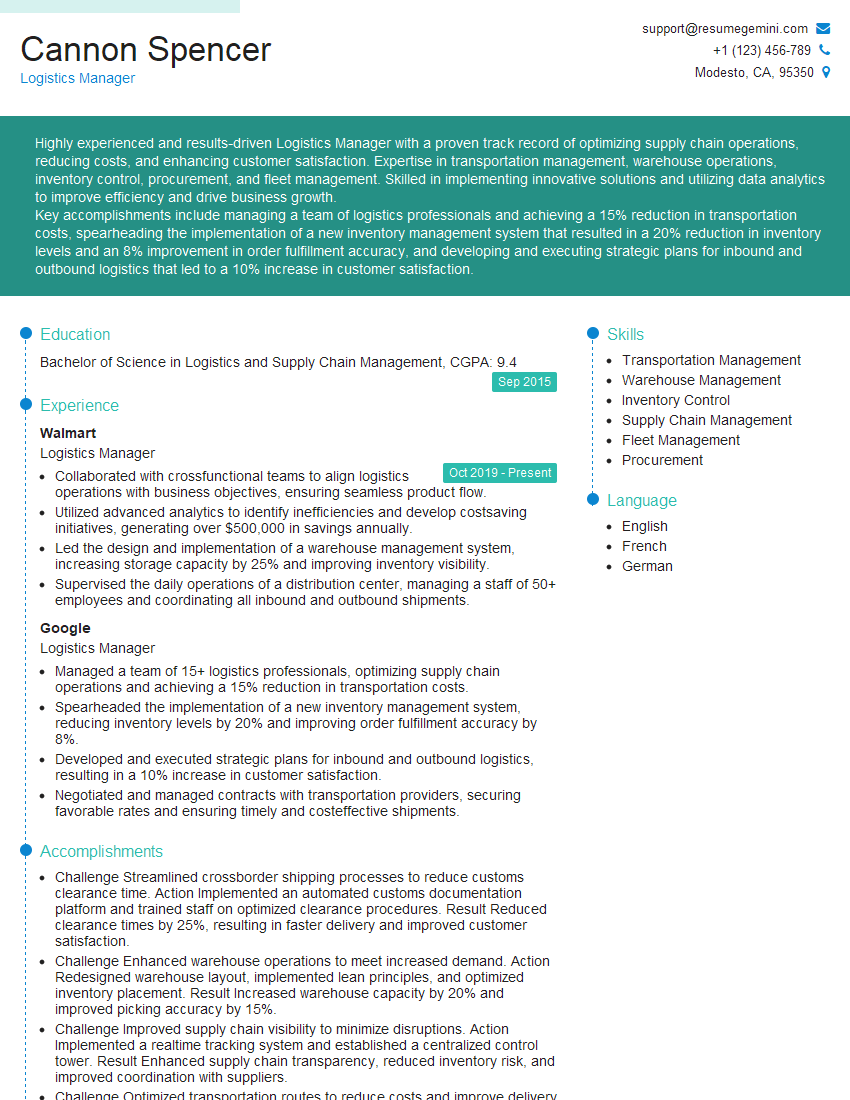
Logistics Manager Resume Sample
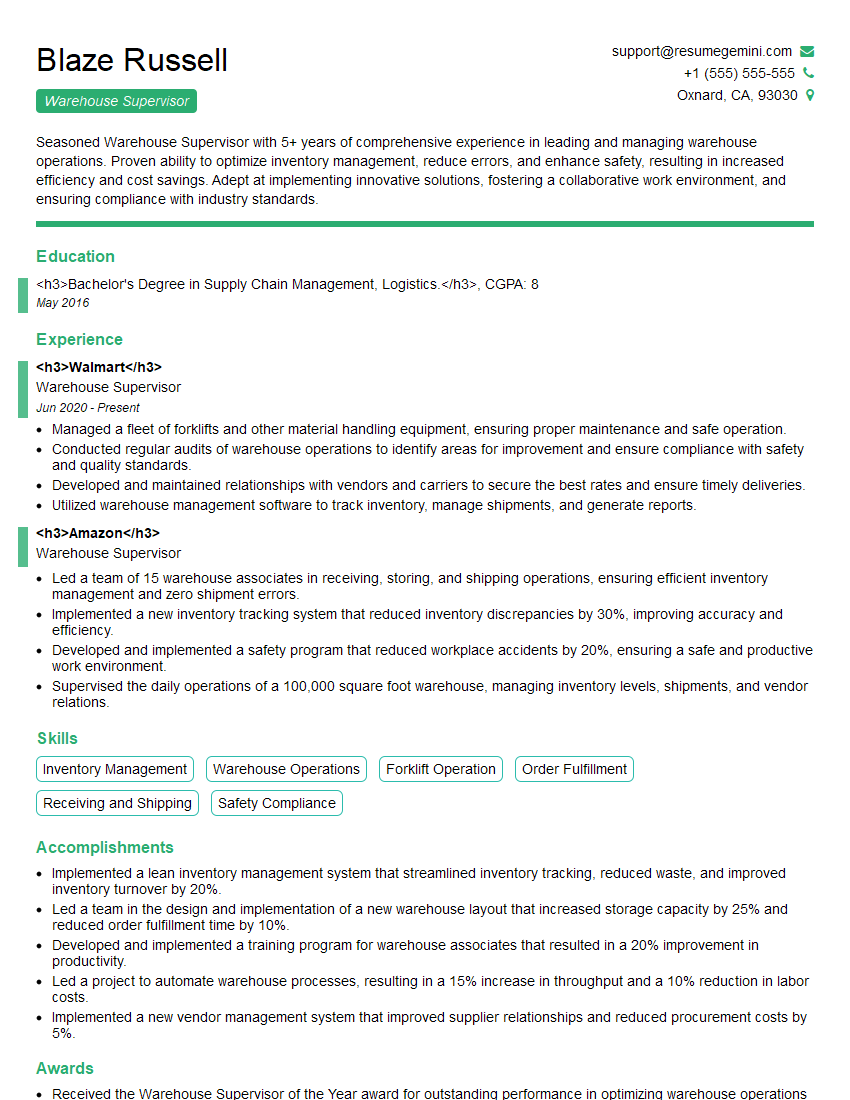
Warehouse Supervisor Resume Sample
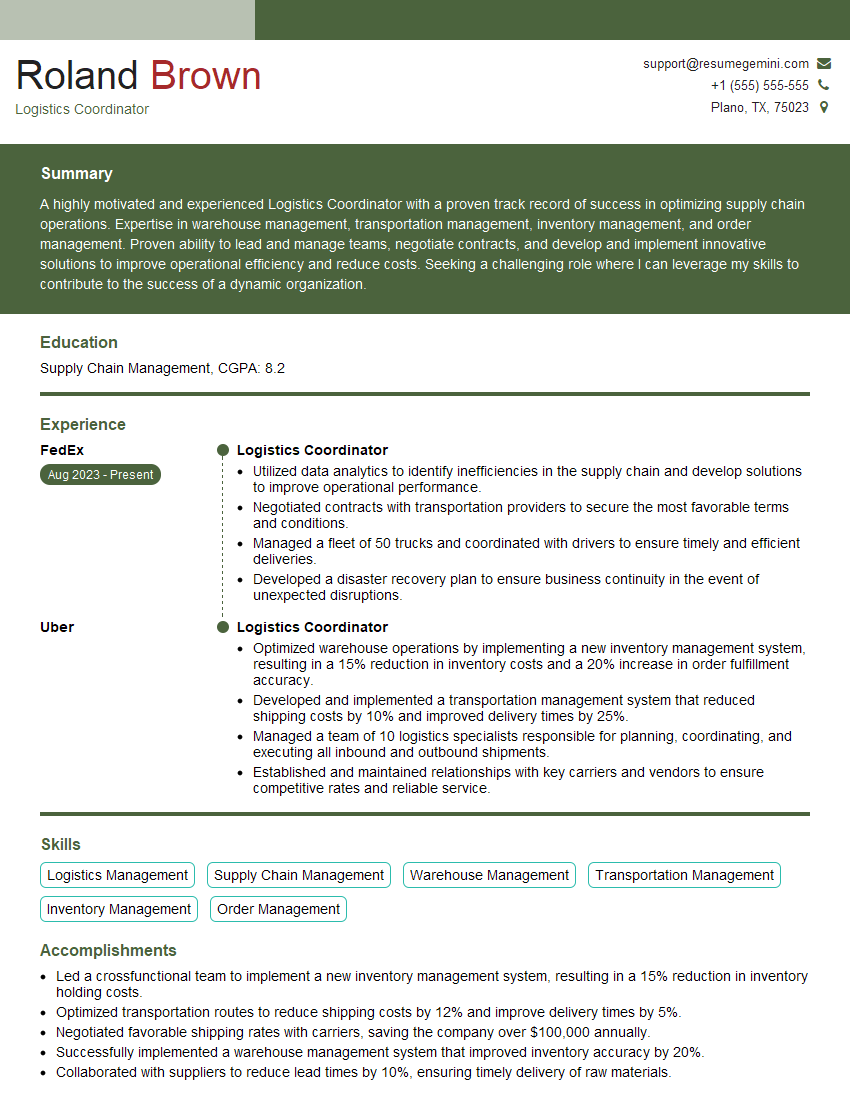
Logistics Coordinator Resume Sample
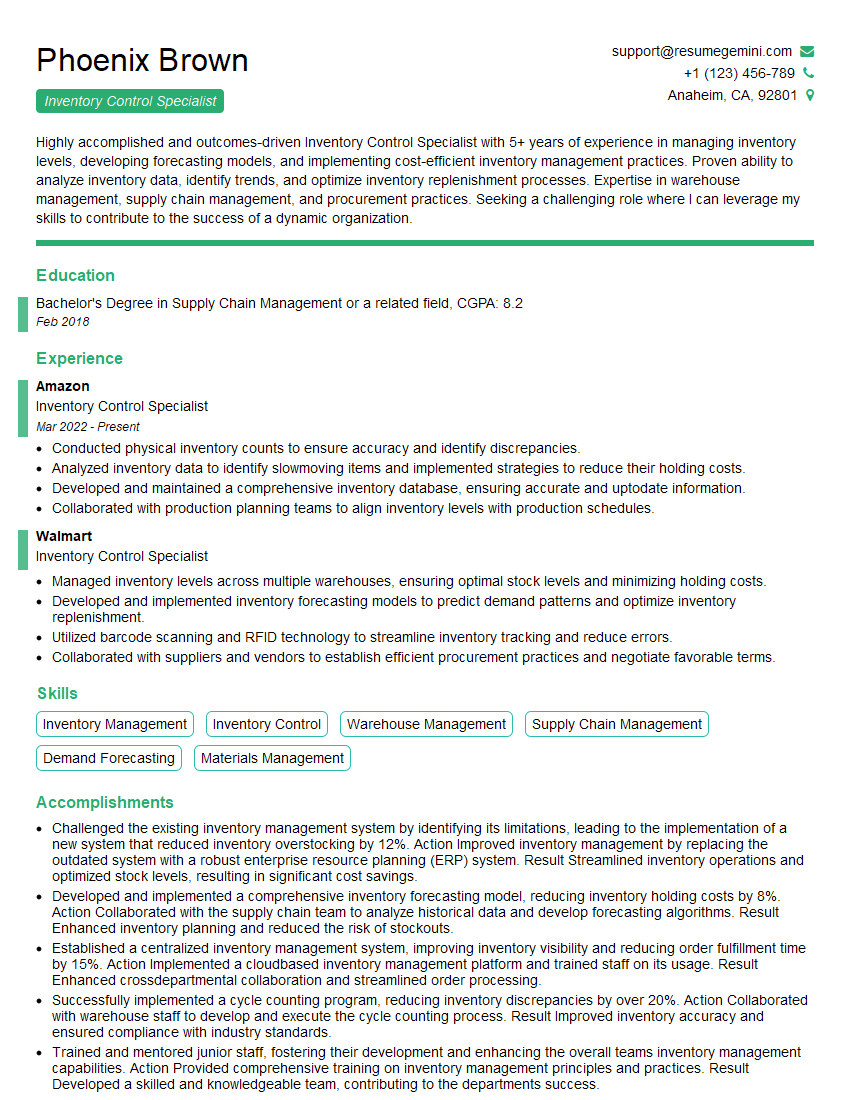
Inventory Control Specialist Resume Sample
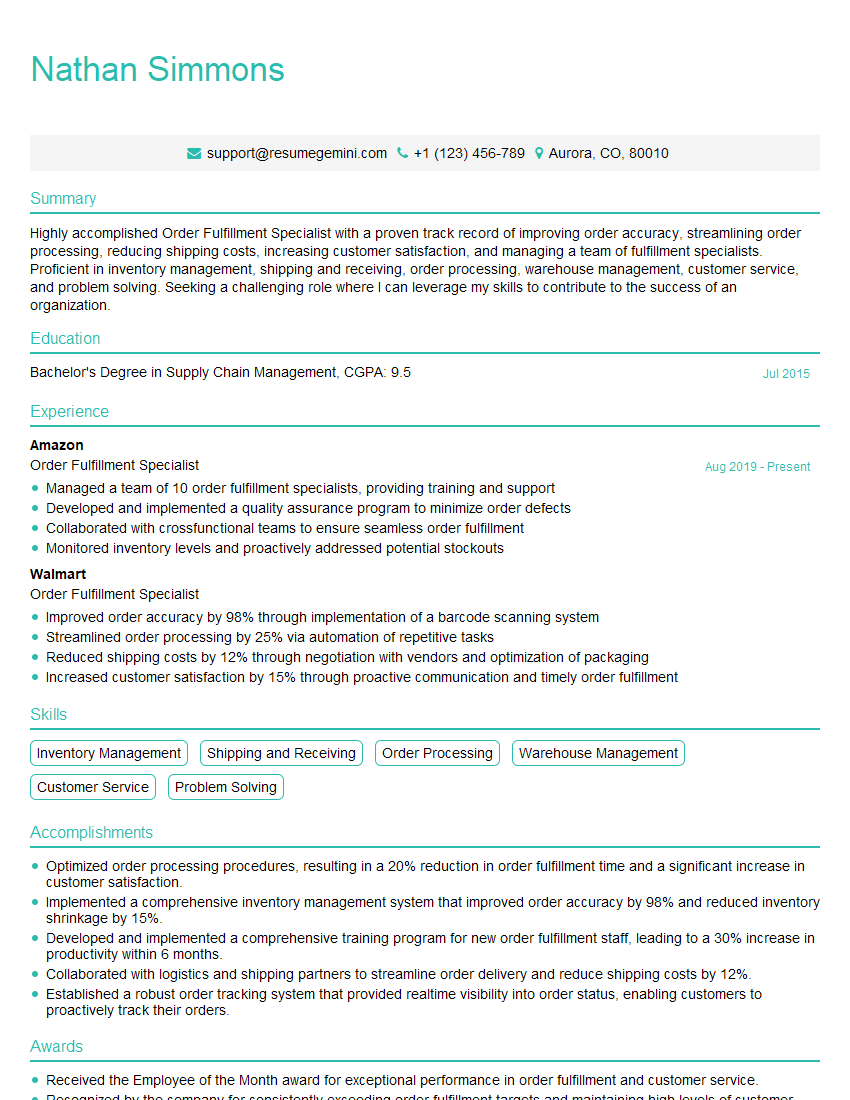
Order Fulfillment Specialist Resume Sample
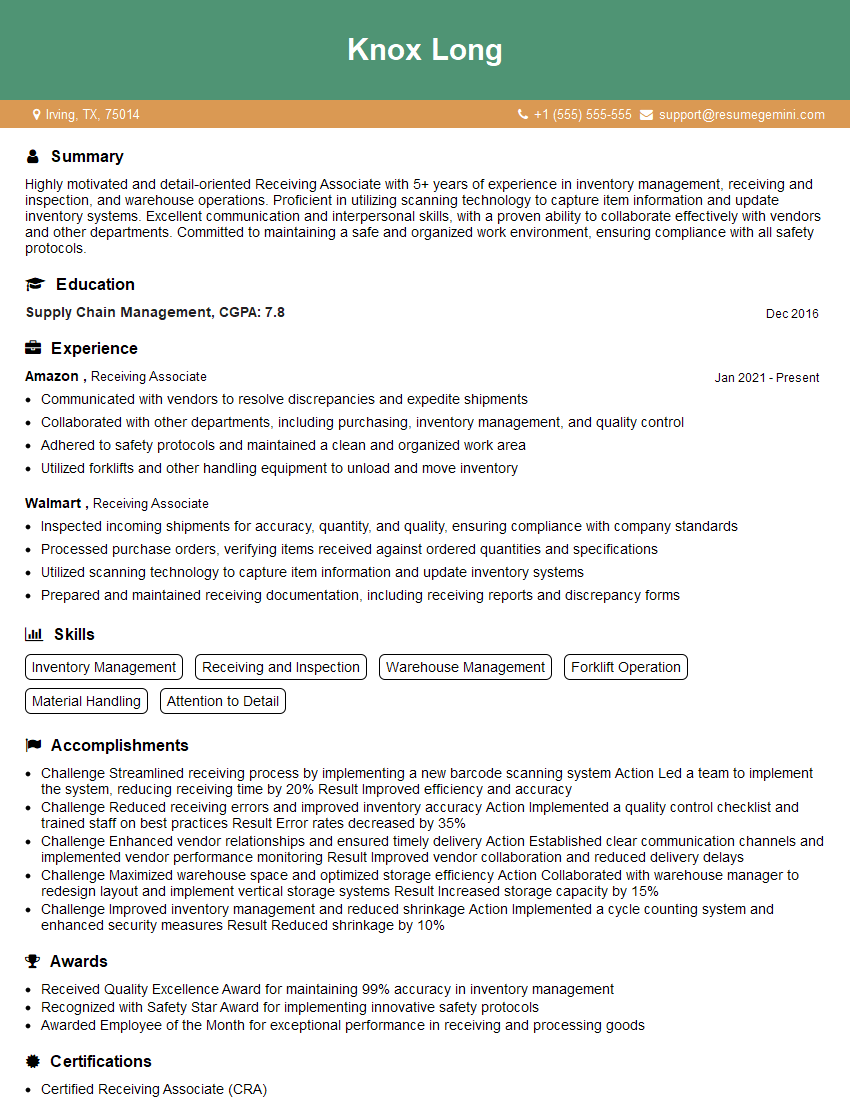
Receiving Associate Resume Sample

Shipping and Receiving Clerk Resume Sample
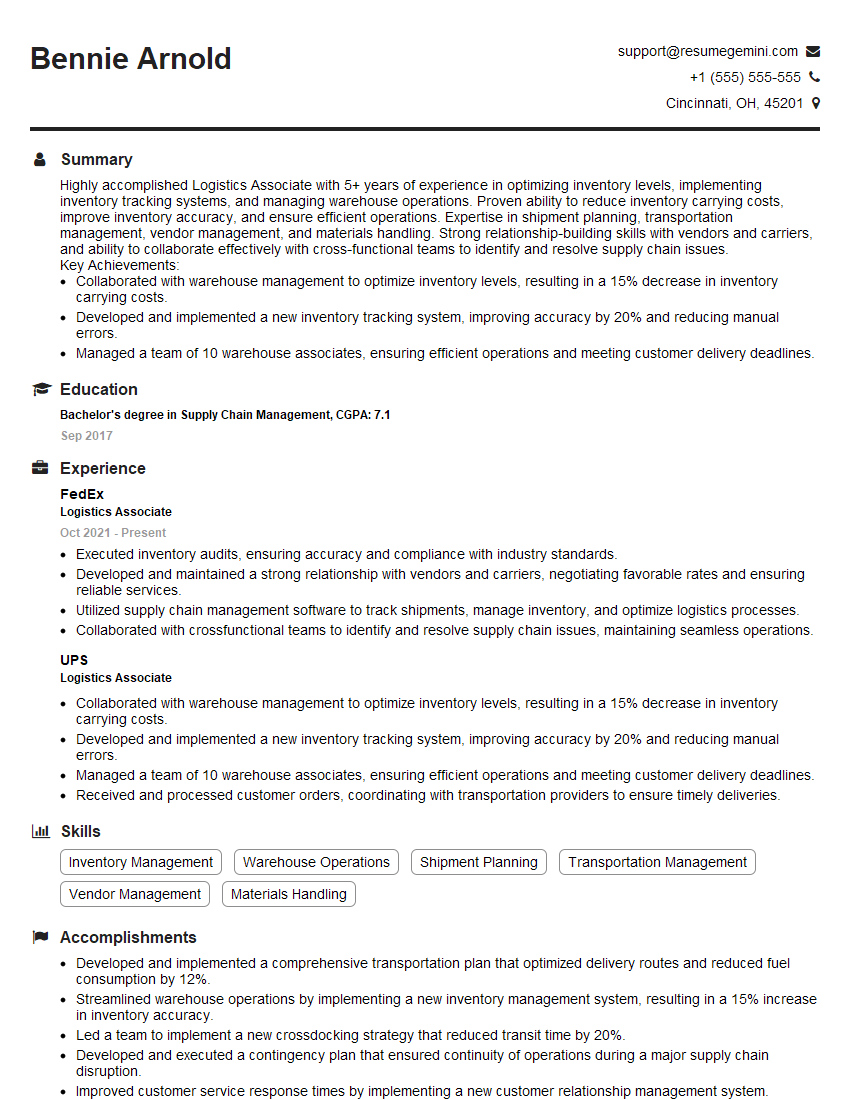
Logistics Associate Resume Sample
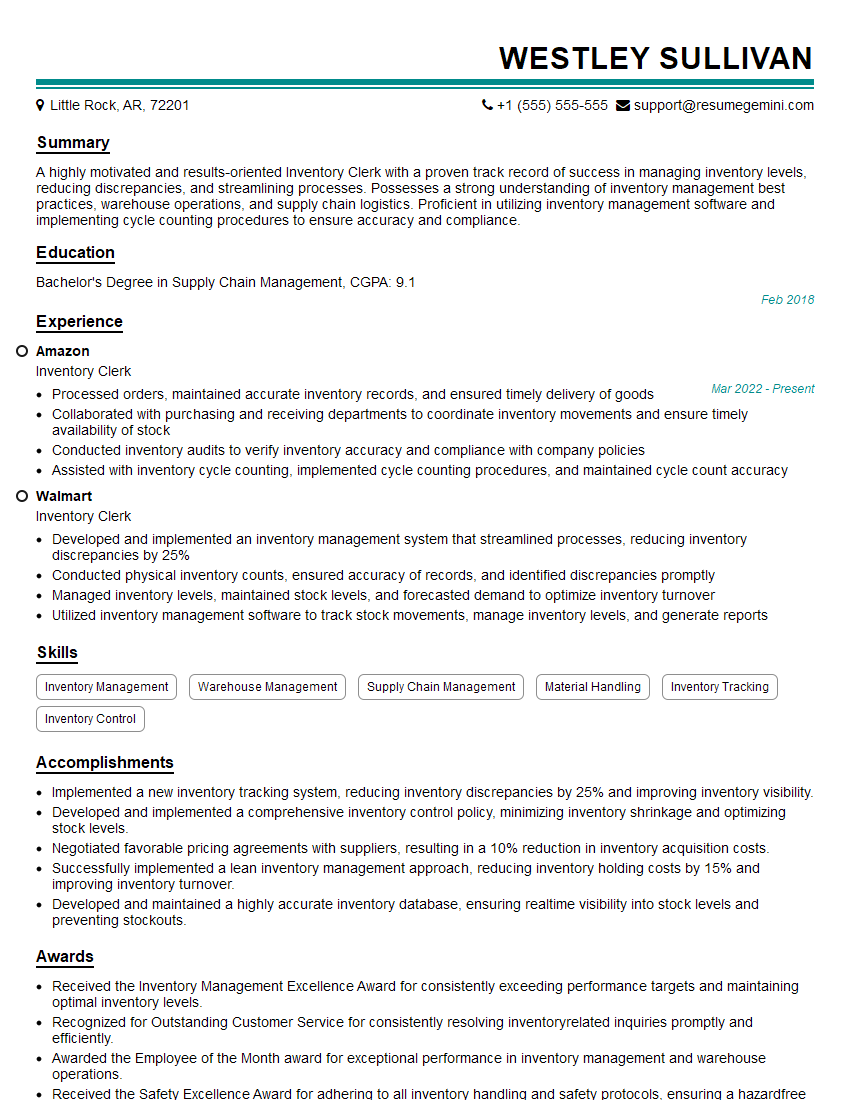
Inventory Clerk Resume Sample
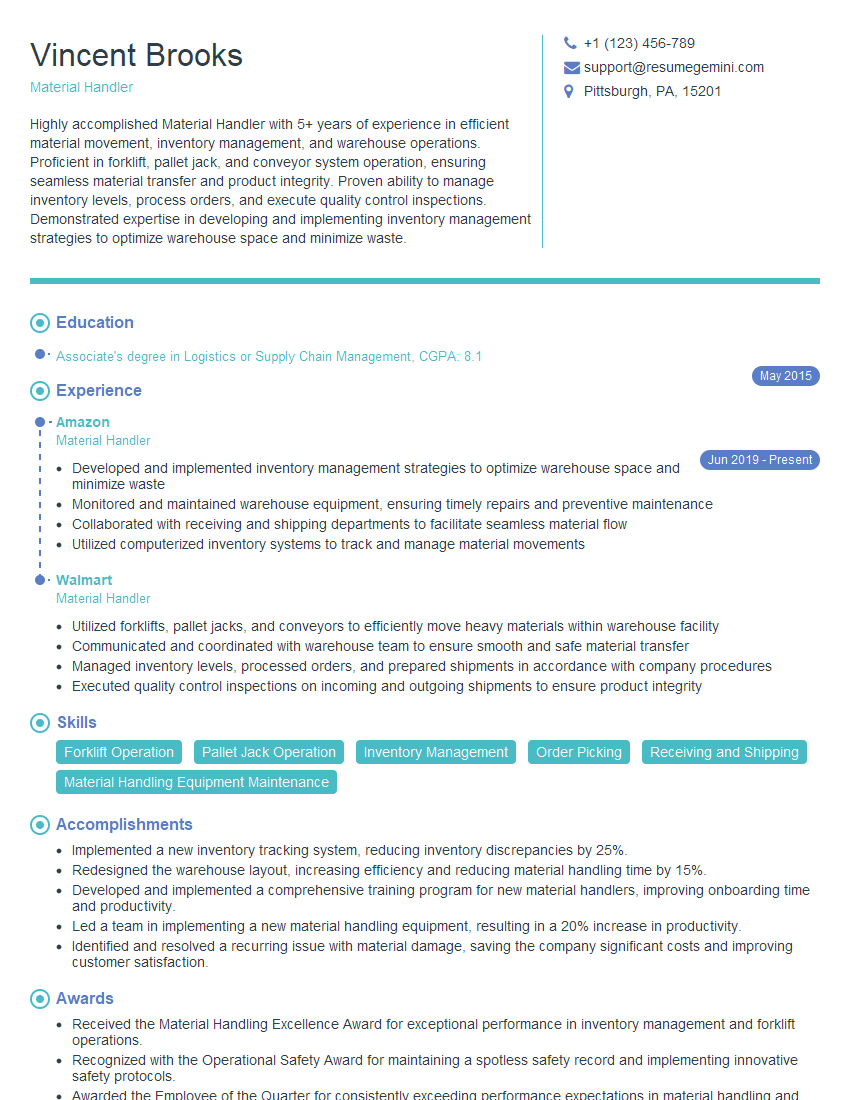
Material Handler Resume Sample
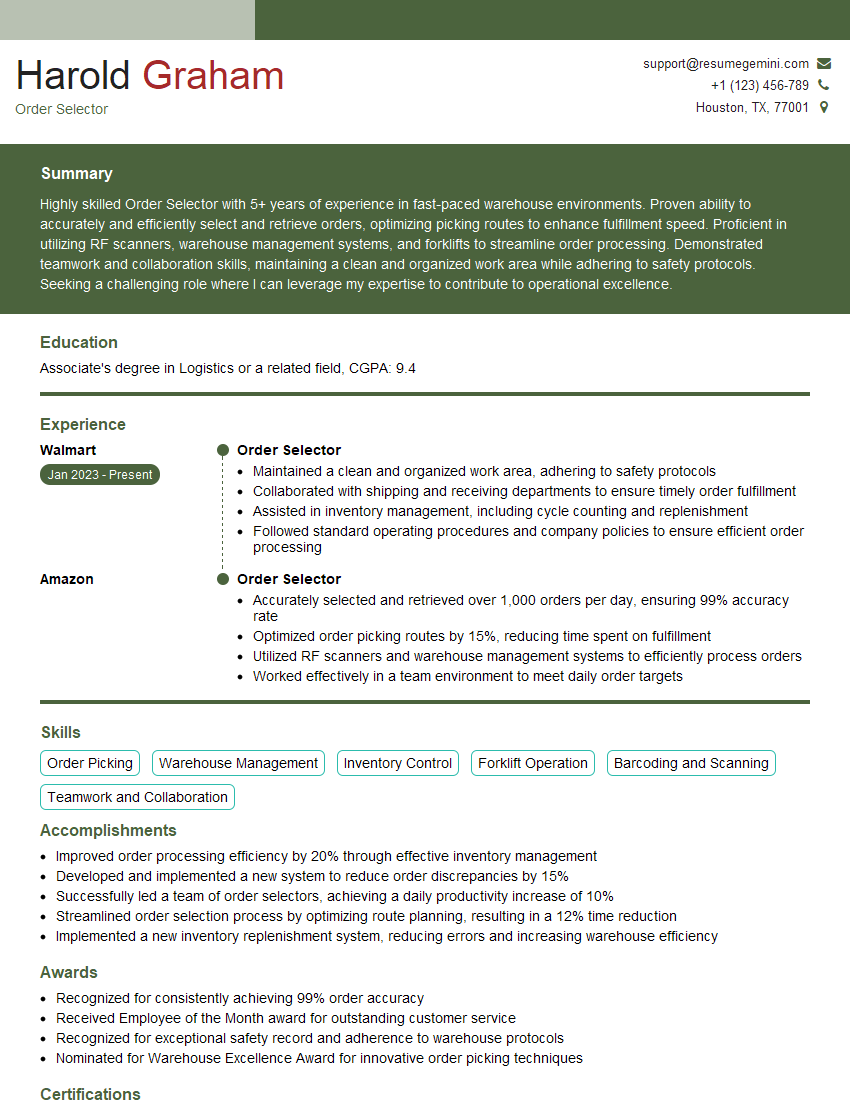
Order Selector Resume Sample
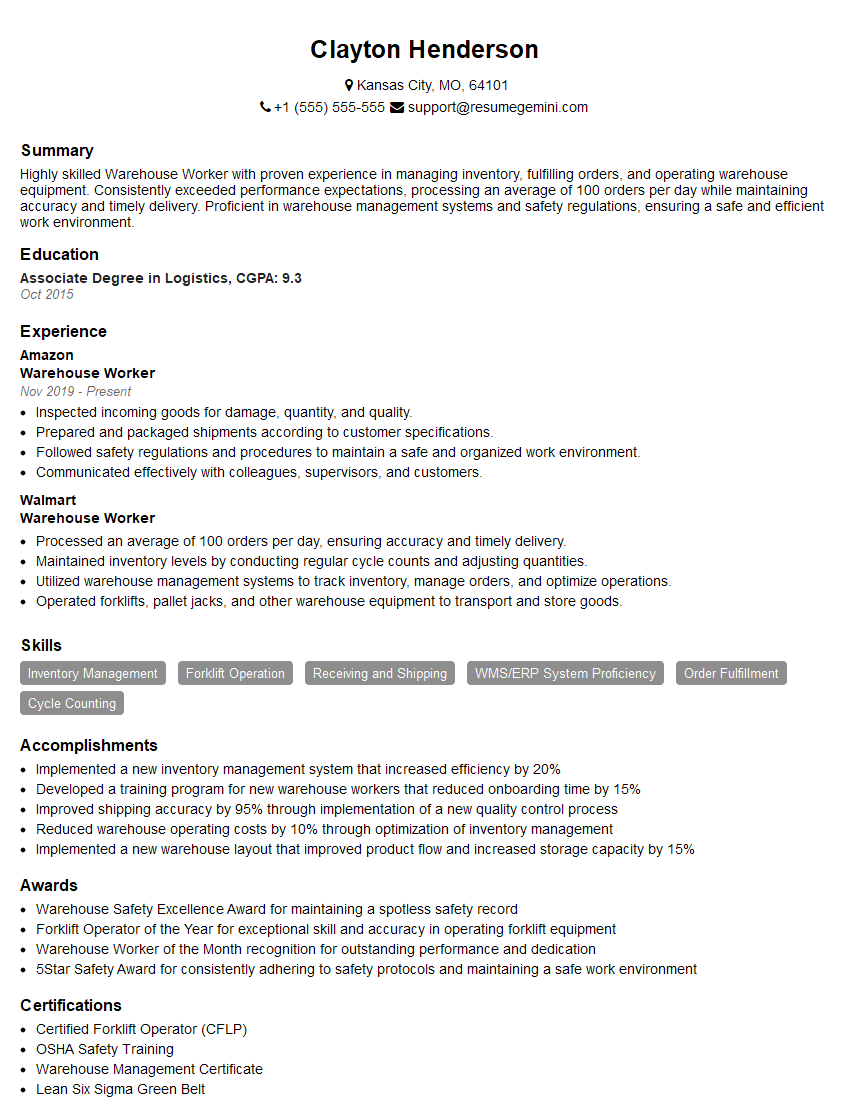
Warehouse Worker Resume Sample
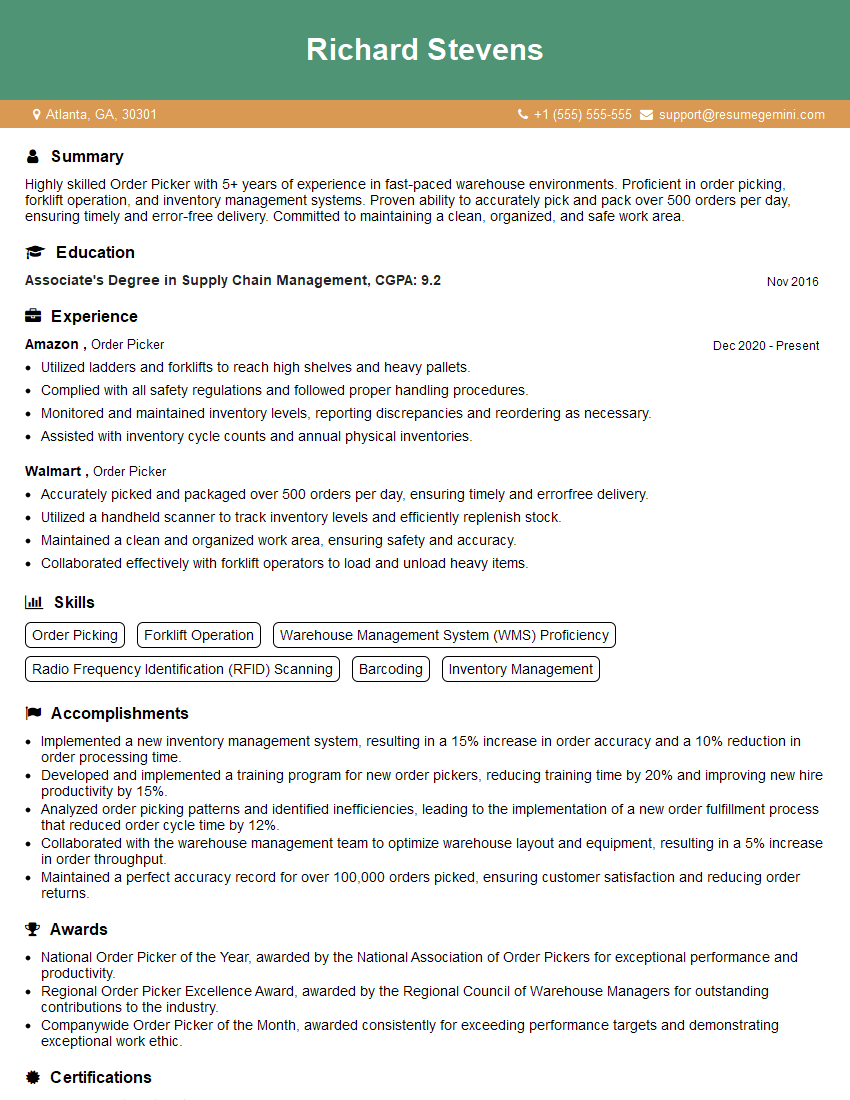
Order Picker Resume Sample
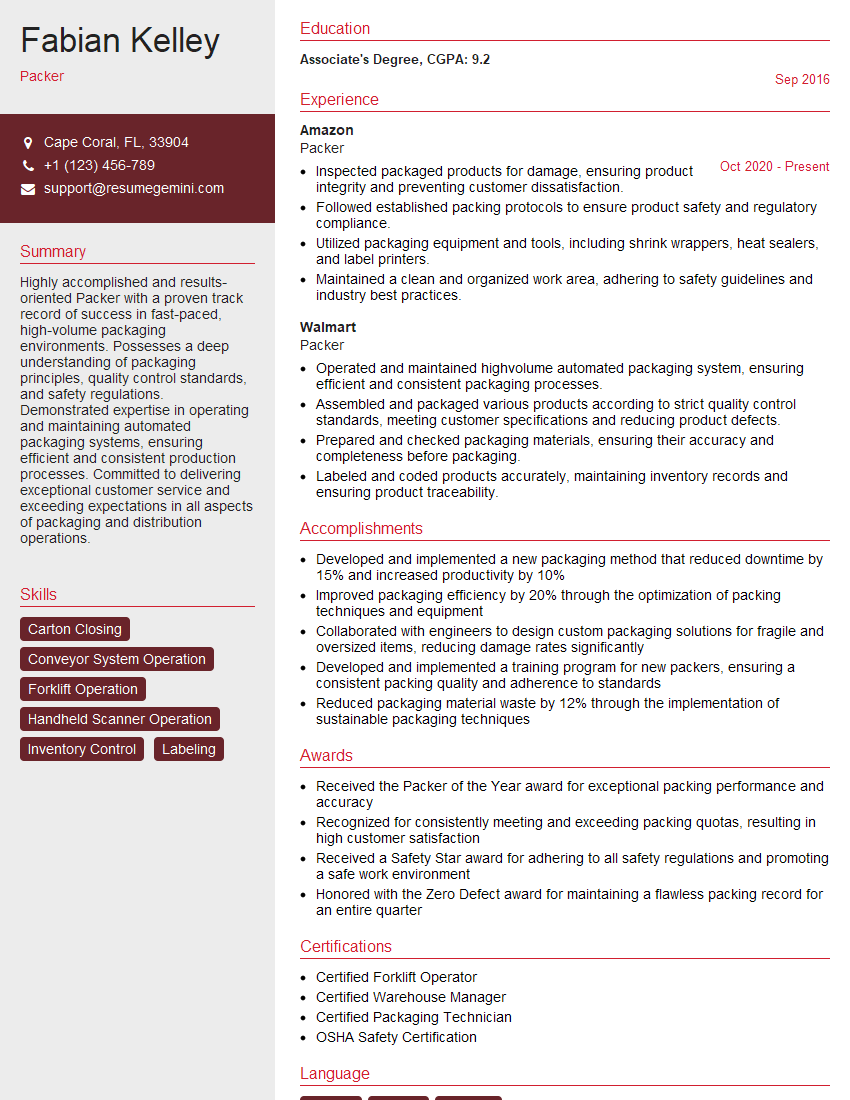
Packer Resume Sample
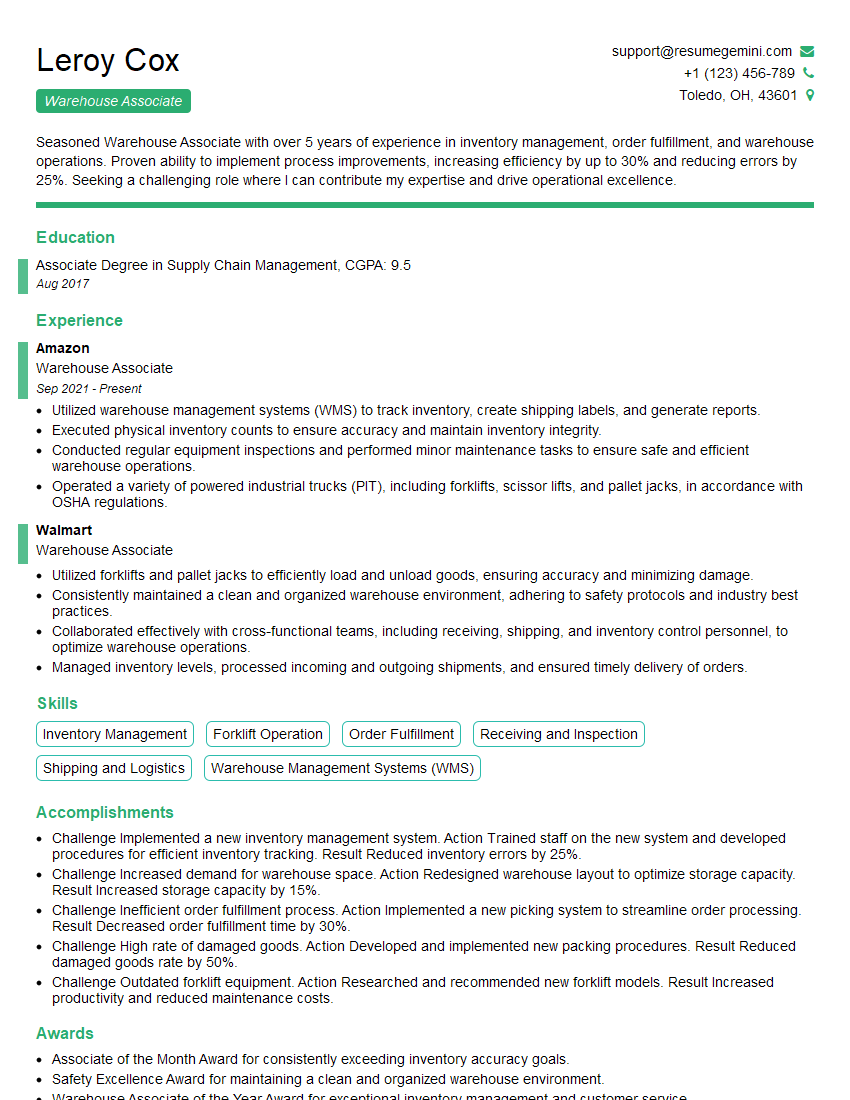
Warehouse Associate Resume Sample
Explore more articles
Users Rating of Our Blogs
Share Your Experience
We value your feedback! Please rate our content and share your thoughts (optional).
What Readers Say About Our Blog
To the interviewgemini.com Webmaster.
Very helpful and content specific questions to help prepare me for my interview!
Thank you
To the interviewgemini.com Webmaster.
This was kind of a unique content I found around the specialized skills. Very helpful questions and good detailed answers.
Very Helpful blog, thank you Interviewgemini team.