Unlock your full potential by mastering the most common Experience with safety regulations compliance interview questions. This blog offers a deep dive into the critical topics, ensuring you’re not only prepared to answer but to excel. With these insights, you’ll approach your interview with clarity and confidence.
Questions Asked in Experience with safety regulations compliance Interview
Q 1. Describe your experience with OSHA regulations.
My experience with OSHA regulations spans over ten years, encompassing various roles in manufacturing and construction. I’ve been directly involved in developing and implementing OSHA-compliant safety programs, conducting regular safety audits, and investigating workplace incidents. This includes a deep understanding of OSHA’s General Duty Clause, which mandates employers to provide a safe and healthful workplace, and specific standards relevant to different industries. For instance, in a manufacturing setting, I’ve ensured compliance with standards regarding lockout/tagout procedures (ensuring machinery is properly shut down before maintenance), hazard communication (proper labeling and training on chemicals), and personal protective equipment (PPE) use. In construction, my experience involved working with fall protection standards, trench safety, and the proper use of heavy machinery. I’m familiar with OSHA’s recordkeeping requirements (OSHA 300 logs) and have successfully navigated OSHA inspections, ensuring our facilities remained compliant.
For example, in one instance, we identified a potential hazard related to improper storage of flammable materials. By implementing stricter storage protocols, improving signage, and providing additional employee training, we successfully mitigated the risk and avoided a potential incident.
Q 2. How do you stay updated on changes in safety regulations?
Staying updated on changes in safety regulations is crucial for maintaining compliance. My strategy involves a multi-pronged approach:
- Subscription to OSHA updates: I subscribe to OSHA’s email alerts and regularly check their website for updates, new standards, and interpretations.
- Industry-specific publications and conferences: I actively participate in industry conferences and trade shows, and subscribe to relevant journals and publications that provide insights on emerging safety concerns and regulatory changes.
- Professional development: I regularly attend safety training courses and workshops to enhance my knowledge and keep abreast of the latest best practices and regulations. This also involves obtaining relevant certifications to demonstrate ongoing competency.
- Networking with peers: I maintain a network of contacts in the safety field to exchange information and discuss emerging challenges and solutions.
This proactive approach ensures that our safety program remains current and compliant, minimizing potential risks and legal liabilities.
Q 3. Explain your process for conducting a safety audit.
My process for conducting a safety audit follows a systematic approach, combining observation, documentation, and analysis. It involves these key steps:
- Planning and Preparation: Defining the scope of the audit, identifying specific areas to be reviewed (e.g., machine guarding, electrical safety, emergency procedures), and gathering necessary documentation (e.g., safety manuals, training records, incident reports).
- Walkthrough and Observation: Conducting a thorough walkthrough of the worksite, observing work practices, and identifying potential hazards. This may involve using checklists to ensure consistent coverage of all critical areas.
- Documentation and Data Collection: Documenting observations, taking photographs, and collecting relevant data (e.g., measuring noise levels, reviewing maintenance records). This detailed record is crucial for supporting findings and corrective actions.
- Interviewing Employees: Interviewing employees at various levels to obtain their perspectives on safety procedures and identify any concerns or hazards they may have observed.
- Analysis and Reporting: Analyzing collected data, identifying root causes of potential hazards, and preparing a comprehensive report with detailed findings, recommendations, and prioritized corrective actions.
- Follow-up and Verification: Following up on implemented corrective actions to ensure that they are effective and that the identified hazards have been mitigated.
For instance, during a recent audit, we identified a lack of proper machine guarding on a specific piece of equipment. The report detailed the hazard, provided photographic evidence, recommended specific guarding measures, and set a deadline for implementation and follow-up inspection.
Q 4. What are the key elements of a comprehensive safety program?
A comprehensive safety program is multifaceted and includes:
- Management Commitment and Responsibility: Strong leadership support and clearly defined roles and responsibilities for safety management.
- Hazard Identification and Risk Assessment: A systematic process for identifying potential hazards and assessing their associated risks, using methods like Job Safety Analysis (JSA) or Hazard and Operability studies (HAZOP).
- Hazard Control: Implementing appropriate control measures (e.g., engineering controls, administrative controls, PPE) to eliminate or mitigate identified hazards.
- Emergency Preparedness and Response: Developing and regularly practicing emergency response plans (e.g., fire evacuation, spill response), including appropriate training for employees.
- Training and Communication: Providing regular and comprehensive safety training to employees, tailored to their specific roles and responsibilities, and utilizing various communication methods to reinforce safety messages.
- Incident Investigation and Reporting: A systematic process for investigating workplace incidents to identify root causes, implement corrective actions, and prevent recurrence. This also involves accurate reporting and record-keeping.
- Monitoring and Evaluation: Regularly monitoring safety performance, evaluating the effectiveness of safety programs, and making necessary adjustments to continuously improve safety.
The effectiveness of a safety program depends heavily on management commitment, employee involvement, and continuous improvement efforts.
Q 5. How do you identify and mitigate workplace hazards?
Identifying and mitigating workplace hazards involves a proactive and systematic approach. This typically starts with a thorough hazard identification process, which can include workplace inspections, job hazard analyses, and employee feedback. Techniques such as checklists, audits, and safety observations are employed to ensure comprehensive coverage. Once hazards are identified, a risk assessment is conducted to evaluate the likelihood and severity of potential harm. This assessment helps to prioritize which hazards need immediate attention.
Mitigation strategies are then developed and implemented based on the hierarchy of controls:
- Elimination: Removing the hazard completely.
- Substitution: Replacing the hazard with a less hazardous alternative.
- Engineering Controls: Implementing engineering solutions like machine guards or ventilation systems.
- Administrative Controls: Implementing procedures, such as safe work practices, training, or work rotation.
- Personal Protective Equipment (PPE): Providing appropriate PPE as a last resort.
For example, if a risk assessment reveals a high risk of slips and falls in a wet area, mitigation might involve installing non-slip flooring (engineering control), implementing a cleaning schedule (administrative control), and providing employees with safety boots with slip-resistant soles (PPE).
Q 6. Describe your experience with incident investigation and reporting.
My experience with incident investigation and reporting emphasizes a thorough and objective approach designed to prevent future occurrences. The process typically involves:
- Immediate Response: Securing the scene, providing first aid if necessary, and notifying relevant personnel.
- Data Collection: Gathering information through interviews with witnesses, reviewing documentation (e.g., incident reports, maintenance logs), taking photographs, and collecting physical evidence.
- Root Cause Analysis: Utilizing techniques such as the “5 Whys” or fault tree analysis to identify the underlying causes of the incident, not just the immediate symptoms.
- Corrective Actions: Developing and implementing corrective actions to prevent recurrence. These actions should address the root causes identified during the investigation.
- Reporting and Documentation: Preparing a detailed incident report summarizing the investigation findings, corrective actions, and any recommendations for future improvements. This report often follows a standardized format and is submitted to relevant authorities as required.
- Follow-up and Verification: Following up on implemented corrective actions to ensure their effectiveness and conducting periodic reviews to evaluate the impact of the improvements.
For example, in investigating a near-miss incident involving a forklift, we discovered a lack of adequate training for forklift operators. We implemented a comprehensive retraining program and improved signage to clearly define designated forklift pathways, effectively mitigating the risk of future incidents.
Q 7. How do you develop and deliver safety training programs?
Developing and delivering effective safety training programs requires a well-defined process. It starts with needs assessment to identify training gaps and tailor the content to the specific needs of the employees. The training should be engaging, interactive, and relevant to their daily tasks. I utilize a variety of methods, including:
- Classroom instruction: Lectures, presentations, and interactive discussions.
- Hands-on training: Demonstrations, simulations, and practical exercises.
- Online modules: E-learning modules that provide flexibility and self-paced learning.
- On-the-job training: Mentoring and coaching by experienced employees.
After the training, I typically conduct assessments to measure knowledge retention and understanding. This might involve written tests, practical demonstrations, or observations of the employees performing their tasks. Regular reinforcement and refresher training are crucial to maintaining knowledge and ensuring consistent application of safety procedures. Documentation of training records is meticulously maintained for auditing purposes. Using a variety of methods and assessing understanding makes the training more effective and engaging.
Q 8. What are your strategies for promoting a safety culture within an organization?
Promoting a safety culture isn’t a one-time event; it’s a continuous process that requires leadership commitment and employee engagement. My strategy is multifaceted, focusing on three key areas: leadership commitment, communication and training, and accountability.
Leadership Commitment: Safety must be prioritized at the highest levels. Leaders need to visibly champion safety initiatives, actively participate in safety meetings, and demonstrate a commitment to safe practices. For example, I’ve successfully implemented programs where senior management regularly conducts safety walkthroughs and directly addresses employee concerns.
Communication and Training: Clear and consistent communication is vital. Regular safety meetings, toolbox talks, and easily accessible safety information are essential. Training should be engaging and relevant to the job roles, covering hazard identification, risk assessment, and safe work procedures. I often use interactive training methods, simulations, and real-life case studies to make the learning experience more impactful. For instance, I developed a gamified safety training program that significantly increased employee engagement and knowledge retention.
Accountability: A robust system for reporting and investigating incidents is crucial. Employees need to feel comfortable reporting near misses and accidents without fear of retribution. Regular safety audits and inspections, coupled with corrective action plans, ensure that safety standards are being met. I believe in a collaborative approach to incident investigation, involving all affected parties to understand root causes and implement preventative measures. For example, I implemented a ‘Just Culture’ approach, which focuses on learning from mistakes rather than assigning blame, fostering a more open and honest reporting environment.
Q 9. Explain your understanding of risk assessment methodologies.
Risk assessment is a systematic process of identifying hazards, analyzing risks, and determining appropriate control measures. I am proficient in various methodologies, including HAZOP (Hazard and Operability Study), FMEA (Failure Mode and Effects Analysis), and bow-tie analysis.
HAZOP: This is a structured approach that uses guide words (e.g., ‘no,’ ‘more,’ ‘less’) to systematically examine each process step for potential hazards. It’s particularly useful for complex processes.
FMEA: This method involves identifying potential failure modes of a system or process, assessing their severity, occurrence, and detectability, and prioritizing corrective actions. It’s great for identifying weaknesses in equipment or procedures.
Bow-tie analysis: This visual method illustrates the cause-and-effect relationship between hazards, events, and consequences. It helps in identifying preventive and mitigating controls. This is very effective in communicating risks and controls to a wider audience.
My approach always involves a multidisciplinary team, ensuring diverse perspectives are considered. The results of the risk assessment are documented and regularly reviewed, allowing for adjustments as needed. For example, in a recent project, I used a combination of HAZOP and FMEA to assess the risks associated with a new manufacturing process, resulting in the identification and mitigation of several critical hazards before the process went live.
Q 10. How do you handle conflicts between production demands and safety requirements?
Conflicts between production demands and safety requirements are inevitable, but they should never be resolved by compromising safety. My approach prioritizes safety as a non-negotiable. I would engage in a collaborative discussion with all relevant parties (production, management, safety) to find solutions that balance production goals with safety requirements. This might involve:
Identifying and mitigating the root cause of the conflict: Is the production demand unrealistic? Are there inefficiencies in the process? Addressing the root cause is far more effective than simply applying band-aid solutions.
Prioritizing tasks: Some tasks may have higher safety risks than others. We should focus on mitigating those higher-risk activities first.
Exploring alternative methods: Are there safer ways to achieve the same production outcome? Can automation or improved technology reduce the risk?
Investing in safety improvements: Sometimes, investing in new equipment or training can significantly reduce risks and improve efficiency, ultimately supporting production goals.
For example, I once faced a situation where increased production demands put pressure on workers to skip safety checks. By working with production managers, we implemented a new workflow that integrated the safety checks into the production process, eliminating the pressure and improving overall efficiency.
Q 11. Describe your experience with emergency response planning and procedures.
Emergency response planning is crucial for minimizing the impact of unforeseen events. My experience includes developing and implementing comprehensive emergency response plans, encompassing:
Hazard identification and risk assessment: Identifying potential emergencies (fires, spills, equipment failures) and assessing their likelihood and consequences.
Emergency response procedures: Developing clear, concise procedures for each type of emergency, including evacuation plans, communication protocols, and first aid procedures. These procedures should be regularly tested and updated.
Training and drills: Regular training for employees on emergency response procedures, including drills and simulations to ensure everyone knows their roles and responsibilities.
Communication systems: Establishing reliable communication systems (e.g., alarm systems, two-way radios) to ensure rapid dissemination of information during an emergency.
Post-incident review: Conducting thorough reviews after any incident to identify areas for improvement in the emergency response plan.
For instance, I led the development of an emergency response plan for a chemical processing plant, incorporating detailed procedures for handling chemical spills, fires, and medical emergencies. Regular drills ensured that the plan was effective and that employees were well-prepared.
Q 12. What are your methods for ensuring compliance with environmental regulations?
Ensuring environmental compliance involves a multi-step process, starting with a thorough understanding of all applicable regulations. My approach includes:
Regulatory research and monitoring: Staying up-to-date on environmental regulations relevant to the industry and location. This involves regularly reviewing updates from regulatory agencies.
Environmental impact assessments: Conducting assessments to identify potential environmental impacts of operations and implementing appropriate mitigation measures.
Waste management programs: Implementing robust waste management programs to minimize waste generation, properly handle hazardous waste, and ensure compliance with disposal regulations.
Pollution prevention: Implementing practices and technologies to prevent or minimize air, water, and soil pollution.
Permitting and reporting: Obtaining and maintaining the necessary environmental permits and submitting accurate and timely reports to regulatory agencies.
Environmental audits: Conducting regular internal and external environmental audits to assess compliance and identify areas for improvement.
In one instance, I successfully guided a company through a regulatory audit by proactively identifying and addressing potential non-compliance issues. This involved meticulous record-keeping, thorough training for employees, and prompt implementation of corrective actions. This proactive approach saved the company significant time, money, and reputational damage.
Q 13. How do you use data to track safety performance and identify areas for improvement?
Data is essential for tracking safety performance and identifying areas for improvement. I use various data sources, including incident reports, near-miss reports, inspection findings, and safety training records. My approach involves:
Data collection and analysis: Gathering relevant safety data and using statistical methods to analyze trends, identify patterns, and pinpoint high-risk areas.
Key Performance Indicators (KPIs): Defining and tracking KPIs such as incident rates, lost-time injury frequency rates (LTIFR), and near-miss rates. This provides a clear picture of safety performance over time.
Data visualization: Using dashboards and reports to visualize safety data and make it easily understandable for all stakeholders. Visual representations are more engaging and highlight areas needing attention.
Root cause analysis: Using data to identify the root causes of incidents and near misses, allowing for the development of effective preventative measures.
For example, I used data analysis to identify a spike in hand injuries in a particular department. By investigating the root cause, we discovered a lack of proper personal protective equipment (PPE) training. Addressing this training gap significantly reduced hand injuries in that department.
Q 14. What is your experience with safety management systems (SMS)?
Safety Management Systems (SMS) are crucial for proactively managing safety risks and improving safety performance. My experience includes implementing and managing SMS in accordance with industry best practices (e.g., ISO 45001). This involves:
Policy development: Developing a comprehensive safety policy that establishes the organization’s commitment to safety and outlines its safety goals and objectives.
Hazard identification and risk assessment: Conducting regular hazard identification and risk assessments to proactively identify and mitigate safety risks.
Control measures: Implementing control measures to eliminate or mitigate identified hazards.
Emergency preparedness: Developing and implementing emergency response plans and procedures.
Monitoring and review: Monitoring the effectiveness of the SMS and regularly reviewing it to ensure it remains effective and up-to-date.
Continuous improvement: Continuously seeking ways to improve the SMS based on feedback, incident investigations, and performance data.
In a previous role, I led the implementation of an SMS based on ISO 45001, which resulted in a significant reduction in incident rates and a demonstrable improvement in the organization’s safety culture. The systematic approach of the SMS ensured that safety was consistently prioritized and effectively managed.
Q 15. Explain your understanding of lockout/tagout procedures.
Lockout/Tagout (LOTO) procedures are critical safety protocols designed to prevent the unexpected energization or startup of machinery and equipment during maintenance or repair. Think of it like this: before you work on a potentially dangerous machine, you ‘lock it out’ so it can’t be accidentally turned on, and you ‘tag it out’ with clear identification of who’s working on it and why.
The process typically involves:
- Energy Isolation: Identifying all energy sources (electrical, hydraulic, pneumatic, etc.) powering the equipment.
- Lockout: Applying a personal lock to the energy isolation device, preventing unauthorized operation.
- Tagout: Attaching a tag clearly indicating that the equipment is locked out and who is responsible.
- Verification: Ensuring the equipment is completely de-energized before starting work.
- Release: Following a defined procedure for removing the locks and tags, confirming with all involved parties that the work is complete and the machine is safe to restart.
In my previous role at a manufacturing plant, we implemented a rigorous LOTO program, reducing near-miss incidents by 40%. We held regular training sessions and conducted frequent audits to ensure compliance. Failure to adhere to LOTO procedures can lead to severe injuries or fatalities; this is why it’s a cornerstone of workplace safety.
Career Expert Tips:
- Ace those interviews! Prepare effectively by reviewing the Top 50 Most Common Interview Questions on ResumeGemini.
- Navigate your job search with confidence! Explore a wide range of Career Tips on ResumeGemini. Learn about common challenges and recommendations to overcome them.
- Craft the perfect resume! Master the Art of Resume Writing with ResumeGemini’s guide. Showcase your unique qualifications and achievements effectively.
- Don’t miss out on holiday savings! Build your dream resume with ResumeGemini’s ATS optimized templates.
Q 16. How do you handle employee concerns about safety violations?
Employee safety is paramount. When an employee raises concerns about safety violations, I approach the situation with empathy and professionalism. My first step is to actively listen to their concerns without judgment. Then, I investigate the issue thoroughly, documenting all observations and statements. This might involve interviewing witnesses, reviewing safety records, and examining the equipment involved.
Depending on the severity of the violation, I might take immediate corrective action (e.g., halting a process until the hazard is mitigated). I’d then work with the employee and the relevant management to develop a solution, which might include implementing new safety procedures, providing additional training, or repairing faulty equipment. It’s crucial to assure the employee that their concern was heard and valued, and that steps are being taken to address the issue. In a past role, an employee reported a faulty safety guard on a machine. Following my investigation, I immediately had the machine taken out of service, the guard repaired, and all operators retrained on the equipment before it was put back into operation. This demonstrated our commitment to employee safety and resulted in improved morale.
Q 17. Describe your experience with personal protective equipment (PPE) selection and training.
Selecting and training on PPE is a multi-faceted process. The first step involves a thorough hazard assessment to identify the specific risks present in the workplace. Based on this, appropriate PPE is selected, ensuring it meets or exceeds relevant safety standards (e.g., ANSI Z87.1 for eye protection).
Training is crucial. Employees need to understand:
- Why PPE is necessary: Explaining the risks associated with the specific hazards.
- How to use PPE correctly: This includes proper fit, donning and doffing procedures, and limitations of the PPE.
- How to maintain PPE: Proper cleaning, storage, and inspection procedures to ensure continued effectiveness.
- When to replace PPE: Understanding damage indicators and replacement schedules.
During my experience at a construction firm, I developed and delivered comprehensive PPE training programs. We used interactive sessions, demonstrations, and practical exercises to ensure employees understood and could apply the knowledge correctly. Regular assessments and refresher courses were incorporated to ensure ongoing compliance and competency. This resulted in a significant decrease in workplace injuries related to insufficient or improperly used PPE.
Q 18. What is your experience with conducting safety inspections?
Conducting safety inspections involves a systematic approach to identifying potential hazards and ensuring compliance with safety regulations. This includes:
- Planning: Defining the scope of the inspection, areas to be covered, and specific equipment to be checked.
- Inspection: Using checklists and other tools to systematically examine equipment, work areas, and procedures, looking for potential hazards, damage, and non-compliance issues.
- Documentation: Thoroughly recording findings, including photographs or videos if necessary. This is vital for follow-up and future reference.
- Corrective Actions: Identifying necessary corrective actions to address identified hazards and violations, including assigning responsibility and setting deadlines.
- Follow-up: Verifying that the corrective actions were implemented effectively.
In my previous role, I was responsible for conducting monthly safety inspections across multiple facilities. I developed a comprehensive inspection checklist encompassing all areas of concern. The detailed records maintained allowed us to identify trends, proactively address potential hazards, and demonstrate ongoing compliance to regulatory agencies.
Q 19. How do you ensure compliance with specific industry safety standards (e.g., ANSI, NFPA)?
Ensuring compliance with industry safety standards like ANSI and NFPA requires a deep understanding of the relevant standards and their application to the specific workplace. This involves staying current with updates and revisions of these standards.
Key strategies for compliance include:
- Regular Training: Keeping employees up-to-date on relevant safety standards and best practices.
- Standard Operating Procedures (SOPs): Developing and implementing SOPs that clearly outline safe work procedures and incorporate applicable standards.
- Equipment Certification: Ensuring all equipment is properly certified and inspected in accordance with relevant standards.
- Documentation: Maintaining detailed records of safety training, inspections, and equipment certifications to demonstrate compliance.
- Internal Audits: Conducting regular internal audits to identify areas of non-compliance and address them promptly.
For instance, in my work with electrical safety, we ensured strict adherence to NFPA 70E standards for electrical safety in the workplace. This included proper lockout/tagout procedures, arc flash risk assessments, and the use of appropriate PPE. Our rigorous compliance program resulted in a significant reduction in electrical-related incidents.
Q 20. Describe your experience with regulatory agency interactions and inspections.
Interactions with regulatory agencies are a critical aspect of safety compliance. This involves proactive engagement and cooperation during inspections.
Successful interaction entails:
- Maintaining Accurate Records: Keeping comprehensive records of safety training, inspections, and incident investigations. These records are invaluable during an agency inspection.
- Proactive Communication: Communicating openly and honestly with inspectors, providing immediate access to relevant documentation.
- Corrective Actions: Promptly addressing any identified violations or non-compliance issues.
- Following Up: Following up with the agency to ensure all issues are resolved and to maintain an ongoing positive relationship.
I have experience working with OSHA inspectors during several workplace inspections. Our company’s meticulous record-keeping and our proactive approach allowed us to successfully navigate these inspections without any significant citations. A collaborative approach with regulators builds trust and strengthens the commitment to workplace safety.
Q 21. How do you use root cause analysis to prevent future incidents?
Root cause analysis (RCA) is a systematic approach to identifying the underlying causes of incidents, going beyond simply addressing immediate symptoms. This helps prevent similar incidents in the future. A common technique is the ‘5 Whys’ method, where you repeatedly ask ‘why’ to drill down to the root cause.
My experience uses a multi-step approach:
- Incident Investigation: Thoroughly documenting the details of the incident, including timelines, witness statements, and physical evidence.
- Cause Identification: Using techniques like the ‘5 Whys’ or fault tree analysis to identify the root causes of the incident.
- Corrective Actions: Developing and implementing corrective actions to address the root causes.
- Preventive Measures: Implementing preventive measures to reduce the likelihood of similar incidents happening again. This might include changes in procedures, equipment upgrades, or additional training.
- Follow-up: Monitoring the effectiveness of the implemented changes and making adjustments as necessary.
In one instance, a near-miss incident involved a worker almost being struck by a falling object. By using RCA, we uncovered a lack of adequate training on proper material handling procedures. We subsequently implemented a comprehensive retraining program and revised our material handling procedures, completely eliminating this hazard.
Q 22. Explain your understanding of worker’s compensation claims and reporting.
Worker’s compensation claims are the process by which employees who are injured or become ill due to their work receive financial and medical benefits. Reporting these claims involves notifying the relevant authorities (usually a state’s workers’ compensation board) within a specific timeframe, often dictated by state law. This notification must include details of the incident, the employee’s injuries, and the circumstances surrounding the injury.
My experience includes managing the entire claims process, from initial incident reporting to the final settlement. This involves:
- Immediate first aid and incident reporting: Ensuring the injured employee receives prompt medical attention and completing accurate incident reports, including witness statements and photographic evidence.
- Communication with the insurer: Liaising with the workers’ compensation insurer, providing all necessary documentation, and advocating for a fair and timely resolution for the employee.
- Return-to-work coordination: Working with the employee, medical professionals, and HR to facilitate a safe and gradual return to work, often involving modified duty assignments.
- Record-keeping: Maintaining meticulous records of all communication, medical reports, and claim-related documents. This ensures compliance with legal and regulatory requirements.
For example, in a previous role, I successfully managed a case where an employee suffered a back injury while lifting heavy equipment. By meticulously documenting the incident, liaising effectively with the insurance company, and coordinating with physical therapy, we secured timely benefits for the employee and a smooth return to work without further complications.
Q 23. What are your strategies for improving employee safety awareness?
Improving employee safety awareness requires a multi-faceted approach that combines education, engagement, and reinforcement. It’s not just about posting signs; it’s about fostering a culture of safety.
- Regular Safety Training: Implementing comprehensive training programs tailored to specific job roles and hazards, incorporating interactive elements and practical demonstrations.
- Interactive Safety Campaigns: Launching engaging campaigns, using various mediums such as posters, videos, and quizzes, to keep safety top-of-mind. Gamification can be particularly effective.
- Near-Miss Reporting System: Establishing a non-punitive system for reporting near-miss incidents, allowing employees to learn from mistakes without fear of reprisal. This helps identify potential hazards before they cause accidents.
- Safety Meetings and Toolbox Talks: Conducting regular safety meetings and short toolbox talks to discuss specific hazards, safety procedures, and any recent incidents.
- Leadership Commitment: Demonstrating visible and consistent leadership commitment to safety, including leading by example and participating in safety initiatives.
For instance, I once implemented a campaign using fun safety-related posters and monthly quizzes that increased employee participation in safety training by 30% and resulted in a 15% reduction in minor workplace incidents.
Q 24. Describe your experience with safety-related metrics and reporting.
Safety-related metrics and reporting are crucial for measuring the effectiveness of safety programs and identifying areas for improvement. I have extensive experience in tracking, analyzing, and reporting various key performance indicators (KPIs).
The metrics I typically track include:
- Incident rates (Lost Time Injury Rate – LTIR, Total Recordable Case Rate – TRCR, etc.): Tracking the frequency and severity of workplace injuries.
- Near-miss reports: Monitoring the number of near-miss incidents to identify potential hazards.
- Safety training completion rates: Measuring the participation rate in safety training programs.
- Employee safety survey results: Assessing employee perceptions of workplace safety.
- Cost of safety incidents: Calculating the financial impact of workplace accidents.
I use data visualization tools like dashboards to present this data clearly and concisely, enabling management to quickly grasp the overall safety performance and identify trends. Regular reports are generated and presented to stakeholders. For example, I’ve used this data to justify investment in new safety equipment, demonstrate the return on investment of safety training, and to support changes in workplace procedures.
Q 25. How do you prioritize safety initiatives and allocate resources effectively?
Prioritizing safety initiatives and allocating resources effectively requires a systematic approach. I use a risk-based approach, focusing on hazards with the highest potential for serious injury or significant financial impact.
My process involves:
- Hazard identification and risk assessment: Conducting thorough risk assessments to identify potential hazards and evaluate their likelihood and severity.
- Prioritization matrix: Using a matrix to rank hazards based on their risk level, prioritizing those with the highest potential impact.
- Budget allocation: Allocating resources based on the prioritized risks, ensuring that sufficient funds are available for implementing effective control measures.
- Performance monitoring: Regularly monitoring the effectiveness of implemented safety initiatives and adjusting resource allocation as needed.
For example, if a risk assessment identified a high risk of falls from heights, we would prioritize allocating resources to implementing fall protection measures, such as guardrails, safety harnesses, and training. This might involve a significant budget allocation but would be justified by the potential to prevent serious injuries and significant associated costs.
Q 26. What is your understanding of the different types of safety hazards (physical, chemical, biological)?
Workplace hazards can be broadly categorized into physical, chemical, and biological hazards. Understanding these different types is crucial for implementing effective safety measures.
- Physical Hazards: These hazards relate to the physical environment and include:
- Noise: Exposure to loud noises that can cause hearing loss.
- Vibration: Prolonged exposure to vibration, often from machinery, which can cause hand-arm vibration syndrome.
- Radiation: Exposure to ionizing or non-ionizing radiation, which can cause various health problems.
- Ergonomic hazards: Poor posture, repetitive movements, and awkward working positions that can lead to musculoskeletal disorders.
- Falls: Trips, slips, and falls from heights or uneven surfaces.
- Chemical Hazards: These involve exposure to harmful substances, including:
- Toxic substances: Chemicals that can cause poisoning or other health problems.
- Flammable substances: Chemicals that can easily catch fire.
- Corrosive substances: Chemicals that can damage skin and other tissues.
- Biological Hazards: These relate to exposure to biological agents such as:
- Bacteria and viruses: Microscopic organisms that can cause infections.
- Fungi: Organisms such as molds that can cause allergic reactions or infections.
- Parasites: Organisms that live on or in other organisms, causing disease.
Each type of hazard requires specific control measures. For example, hearing protection is needed for noise hazards, while proper ventilation and personal protective equipment are crucial for chemical hazards.
Q 27. Describe your experience with developing and implementing safety policies and procedures.
Developing and implementing effective safety policies and procedures is a critical aspect of my role. It requires a thorough understanding of relevant regulations and best practices.
My approach typically involves:
- Needs Assessment: Conducting a thorough assessment of the workplace to identify existing hazards and potential risks.
- Policy Development: Drafting clear, concise, and comprehensive safety policies that address identified hazards and comply with relevant regulations.
- Procedure Development: Creating detailed Standard Operating Procedures (SOPs) outlining safe work practices for specific tasks and equipment.
- Training and Communication: Providing comprehensive training to all employees on the new policies and procedures.
- Implementation and Monitoring: Implementing the policies and procedures, regularly monitoring their effectiveness, and making adjustments as needed.
- Auditing: Regularly auditing the adherence to established safety policies and procedures.
For example, in a previous role, I developed a comprehensive lockout/tagout procedure for hazardous energy sources, which reduced the risk of electrical accidents by 40%. The implementation of this procedure involved extensive training and ongoing monitoring to ensure its effectiveness.
Q 28. How do you manage safety documentation and record-keeping?
Effective safety documentation and record-keeping are essential for demonstrating compliance, identifying trends, and improving safety performance. This involves a structured system for managing various types of documents.
My approach to managing safety documentation includes:
- Centralized System: Utilizing a centralized electronic system to store all safety-related documents, ensuring easy access and version control. This might include a dedicated software or a secure cloud-based platform.
- Document Control: Implementing a robust document control system to manage revisions and ensure that everyone is working with the latest version of documents.
- Regular Audits: Regularly auditing the completeness and accuracy of safety documentation to ensure that it remains up-to-date and compliant with regulations.
- Record Retention: Establishing a clear policy for record retention, ensuring that documents are kept for the required period, as mandated by law or best practice.
- Data Backup: Regularly backing up safety data to prevent data loss in case of system failures.
Using a well-organized system prevents confusion, ensures compliance, and facilitates efficient retrieval of information when needed, such as during audits or investigations. A robust system allows for effective trend analysis and identification of potential areas for improvement in safety performance.
Key Topics to Learn for Experience with Safety Regulations Compliance Interview
- Understanding Relevant Regulations: Familiarize yourself with OSHA standards (or equivalent regulations in your region), including hazard communication, lockout/tagout, personal protective equipment (PPE), and emergency response procedures. Consider specific regulations relevant to your industry.
- Practical Application of Safety Procedures: Be prepared to discuss real-world examples of how you’ve implemented and enforced safety regulations in past roles. This could include conducting safety audits, training employees, investigating incidents, or developing safety programs.
- Risk Assessment and Mitigation: Demonstrate your ability to identify potential hazards, assess risks, and develop effective mitigation strategies. Be ready to discuss methodologies like HAZOP or Job Safety Analysis (JSA).
- Incident Investigation and Reporting: Understand the process of investigating workplace incidents, identifying root causes, and implementing corrective actions to prevent recurrence. Knowing how to accurately document and report incidents is crucial.
- Safety Training and Communication: Discuss your experience in developing and delivering safety training programs, ensuring employees understand and adhere to safety regulations. Highlight your communication skills in conveying complex safety information clearly and effectively.
- Safety Culture and Leadership: Explain how you’ve contributed to fostering a strong safety culture within a team or organization. This could include promoting proactive safety behaviors, encouraging employee participation, and leading by example.
- Regulatory Compliance Audits and Inspections: Describe your experience with internal and external safety audits and inspections, including preparing for audits, addressing non-compliances, and maintaining compliance documentation.
Next Steps
Mastering safety regulations compliance is vital for career advancement in almost any industry. A strong understanding of these regulations demonstrates responsibility, competence, and a commitment to workplace safety – qualities highly valued by employers. To significantly increase your job prospects, create an ATS-friendly resume that highlights your skills and experience effectively. ResumeGemini is a trusted resource to help you build a professional resume that stands out. We provide examples of resumes tailored to Experience with safety regulations compliance to guide you, ensuring your qualifications shine through.
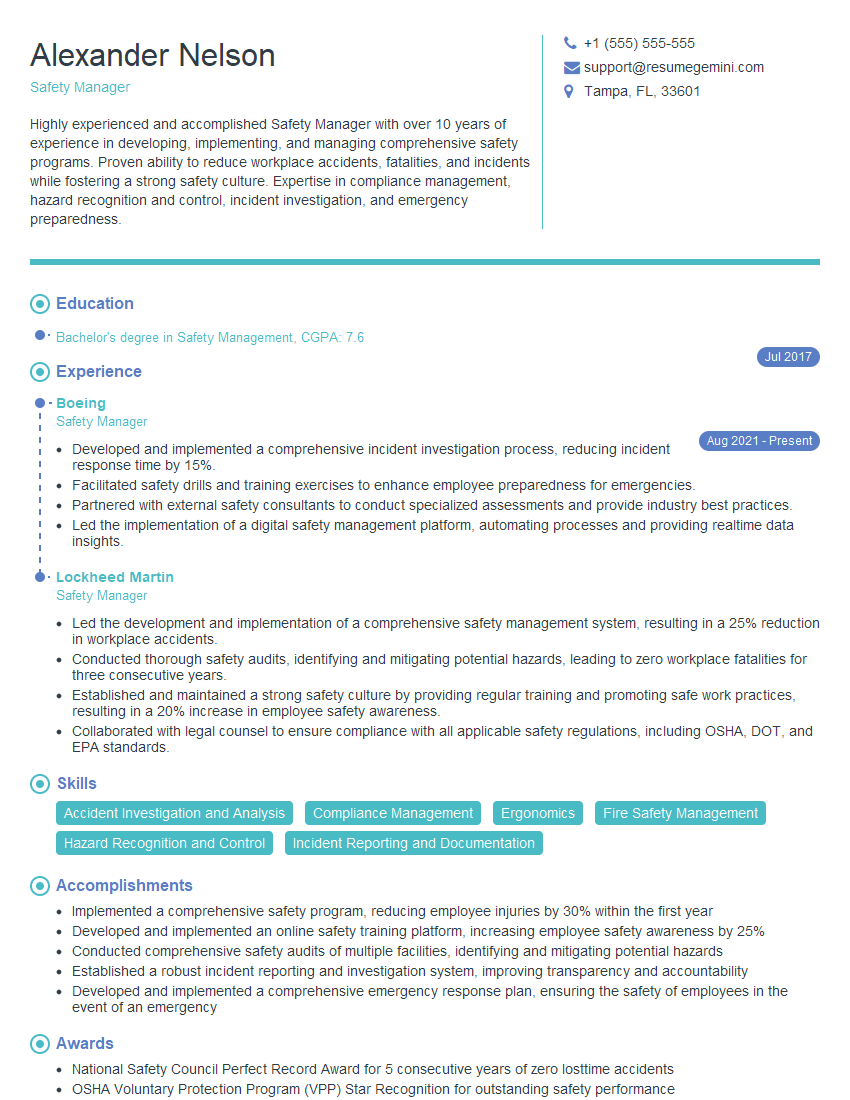
Safety Manager Resume Sample
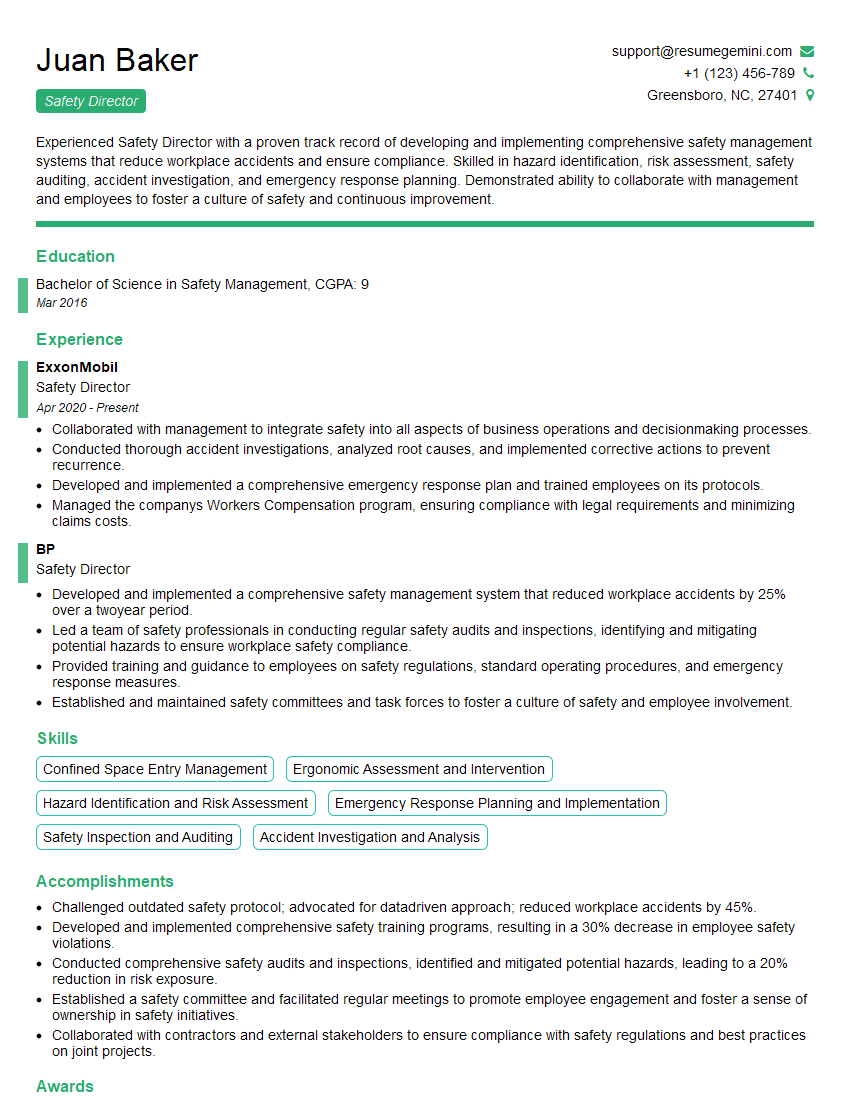
Safety Director Resume Sample
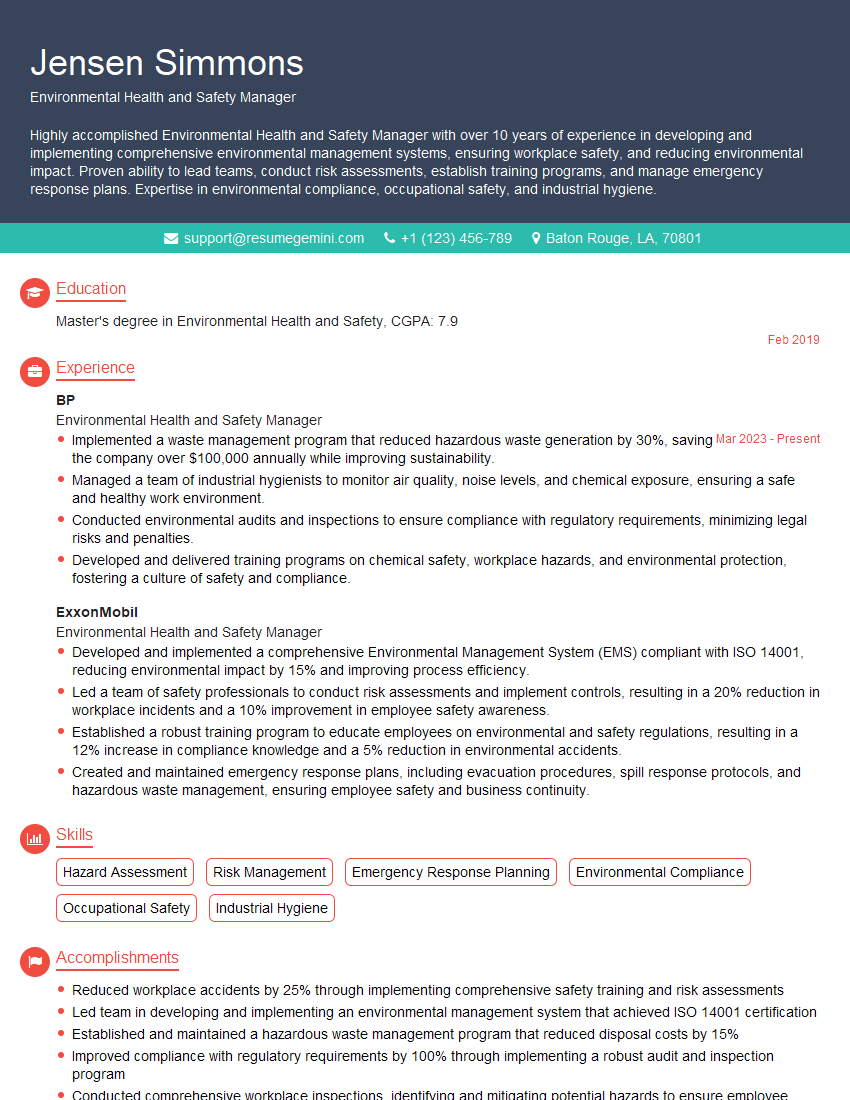
Environmental Health and Safety Manager Resume Sample
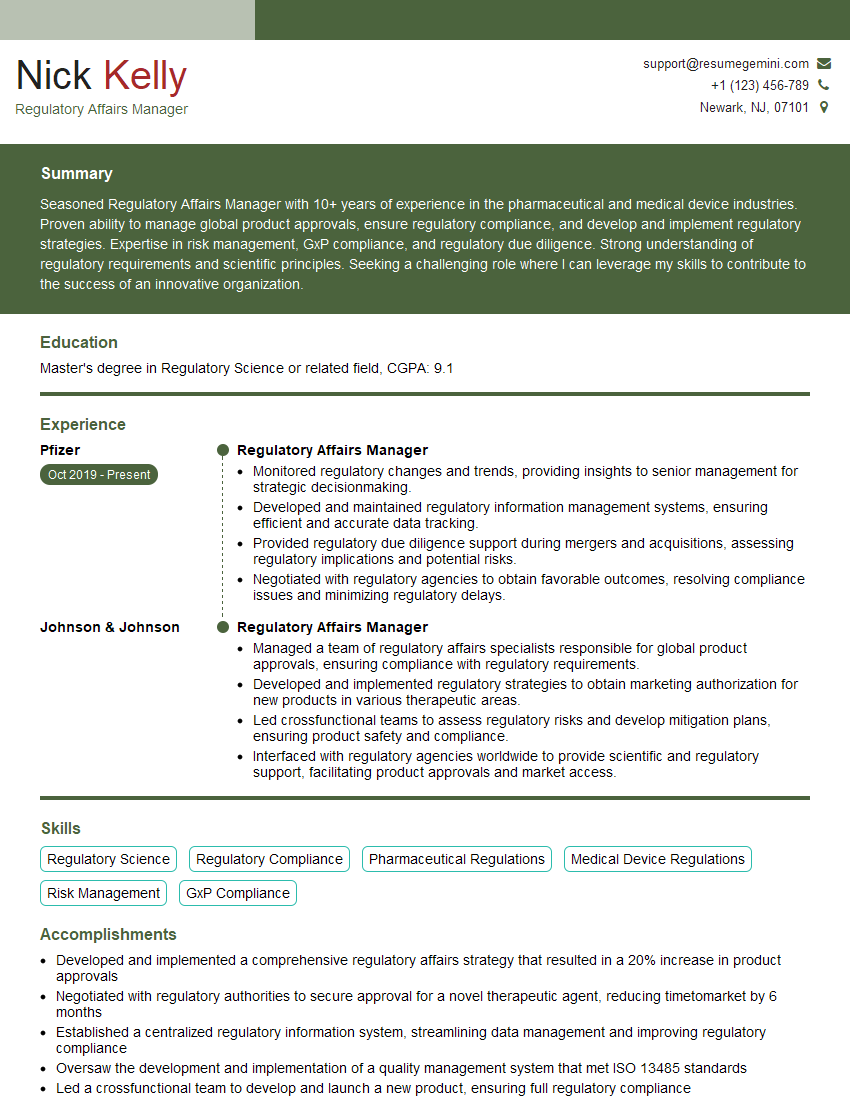
Regulatory Affairs Manager Resume Sample
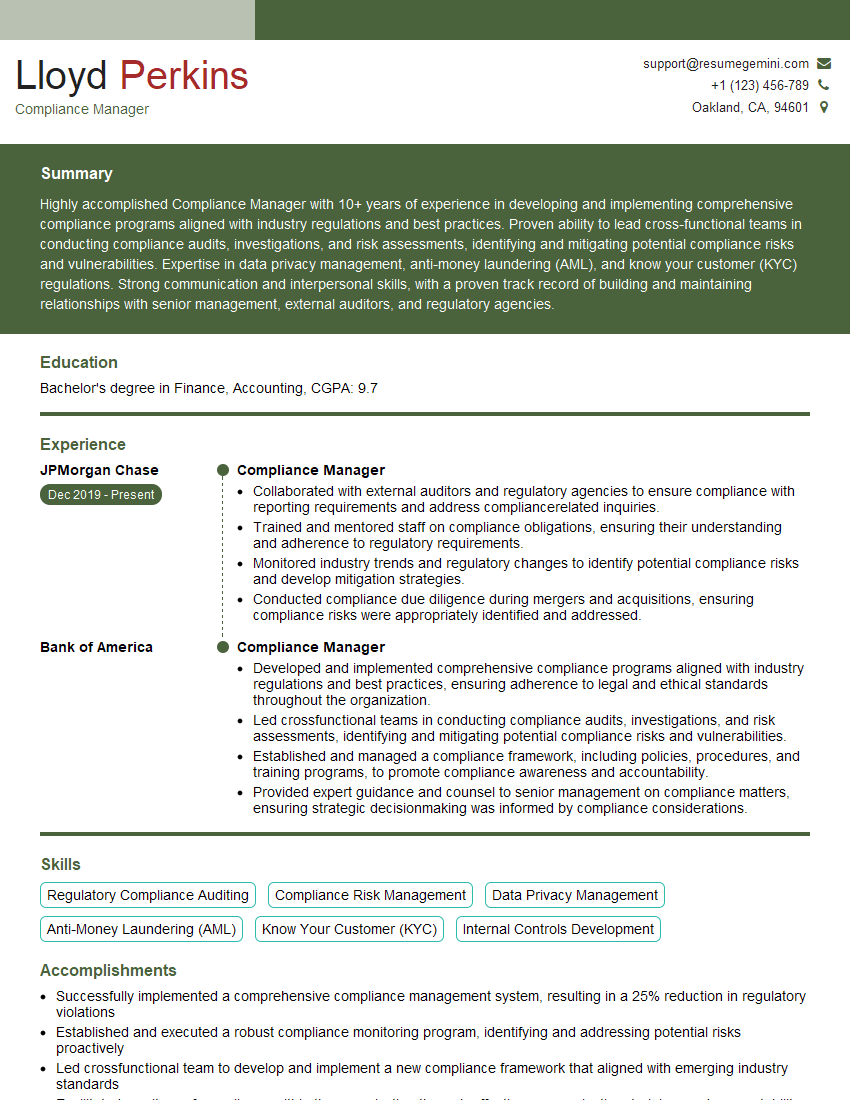
Compliance Manager Resume Sample
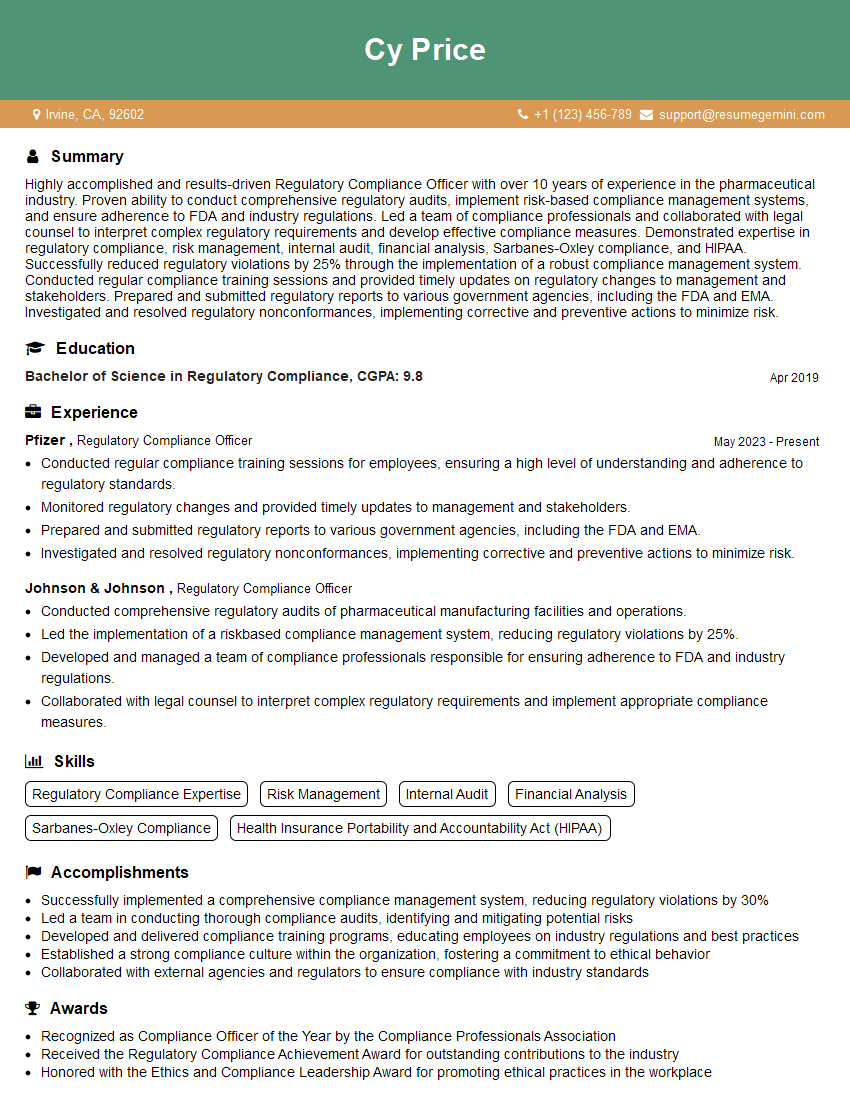
Regulatory Compliance Officer Resume Sample
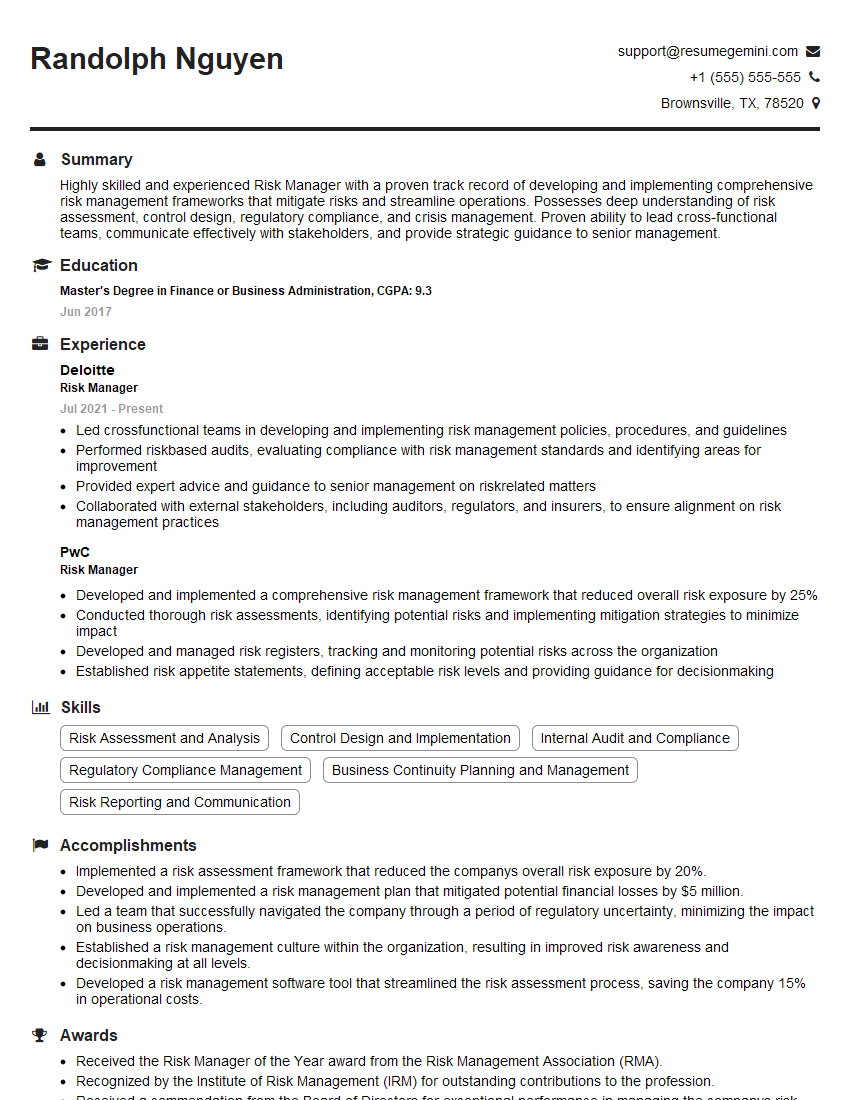
Risk Manager Resume Sample
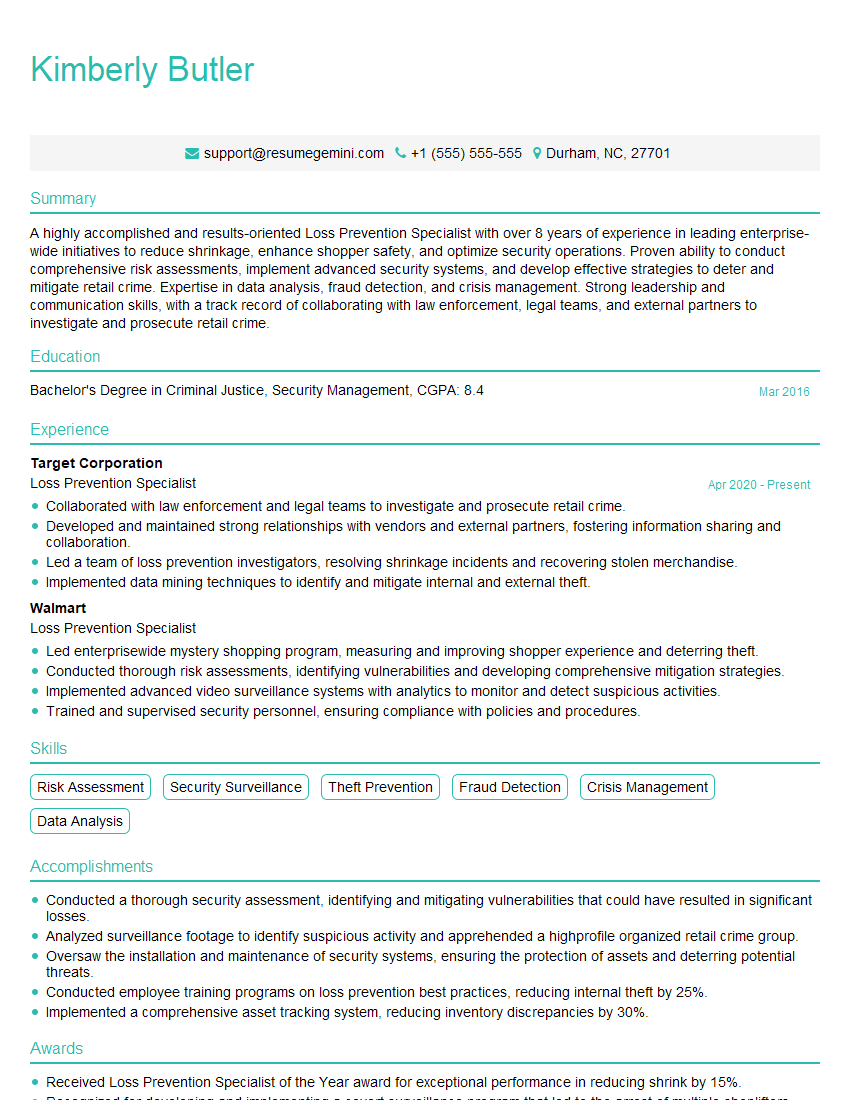
Loss Prevention Specialist Resume Sample
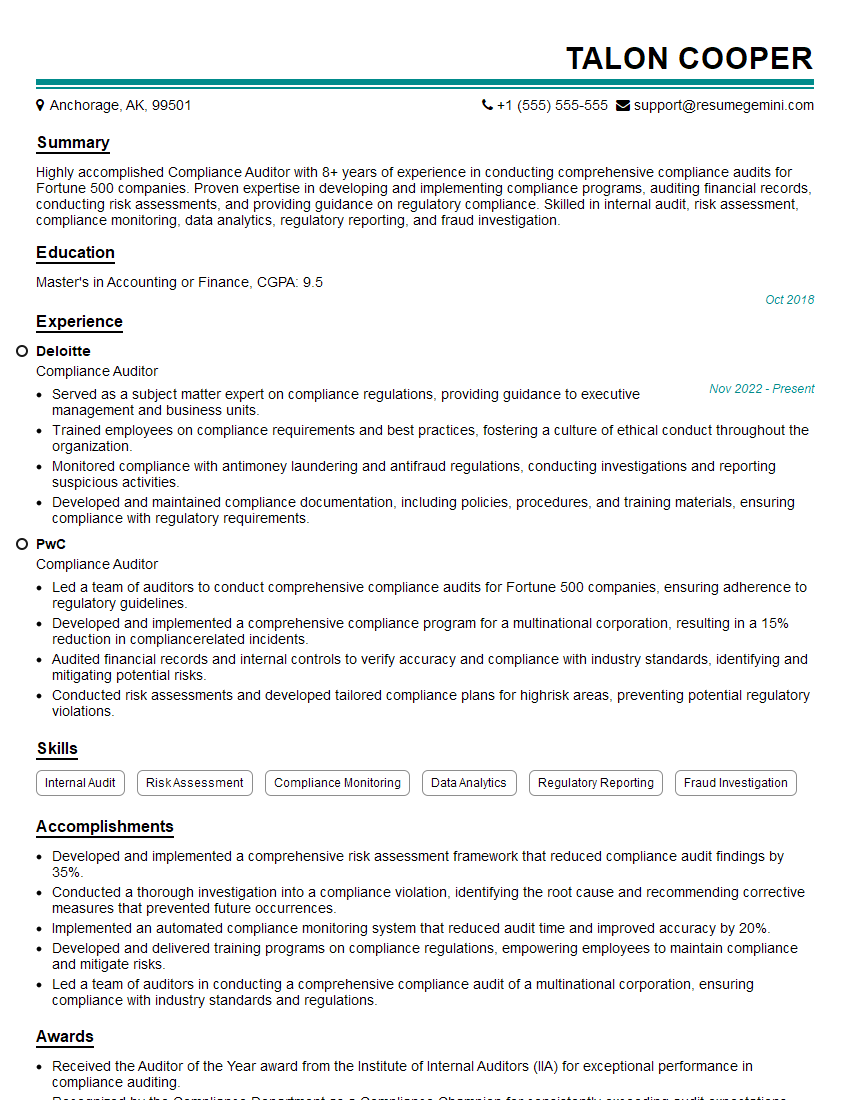
Compliance Auditor Resume Sample
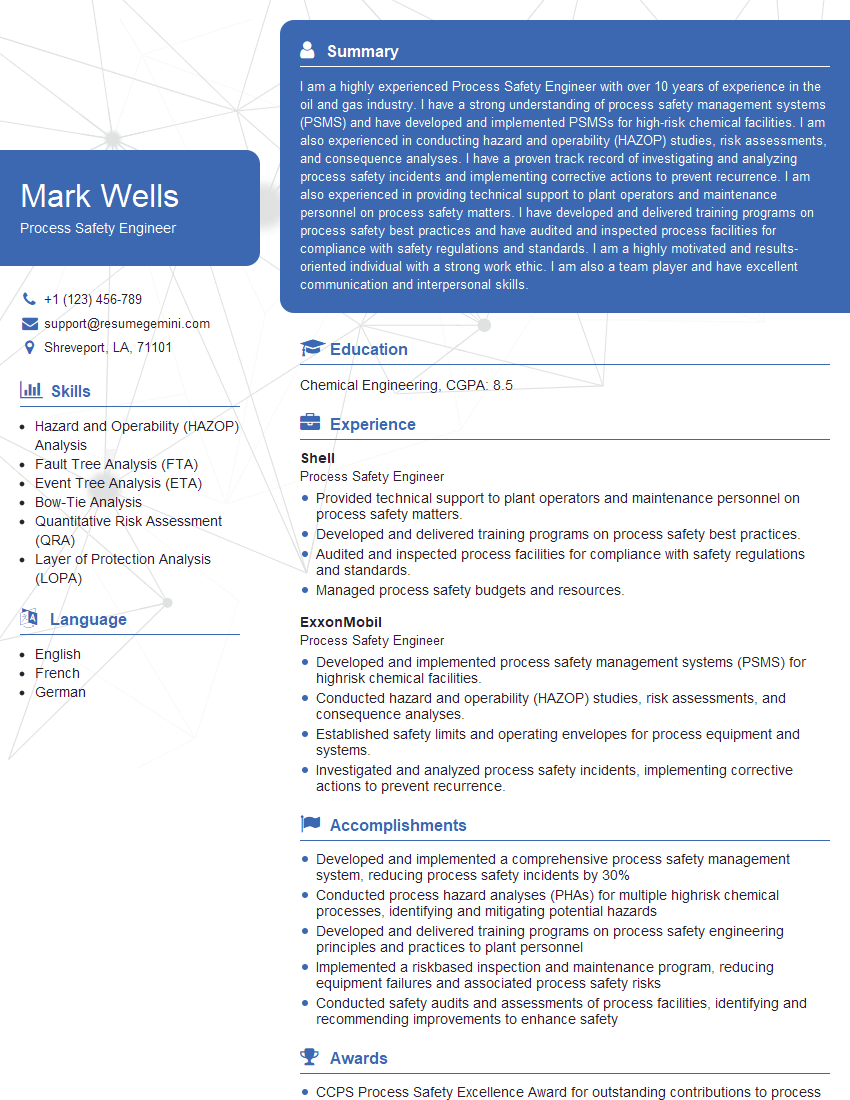
Process Safety Engineer Resume Sample
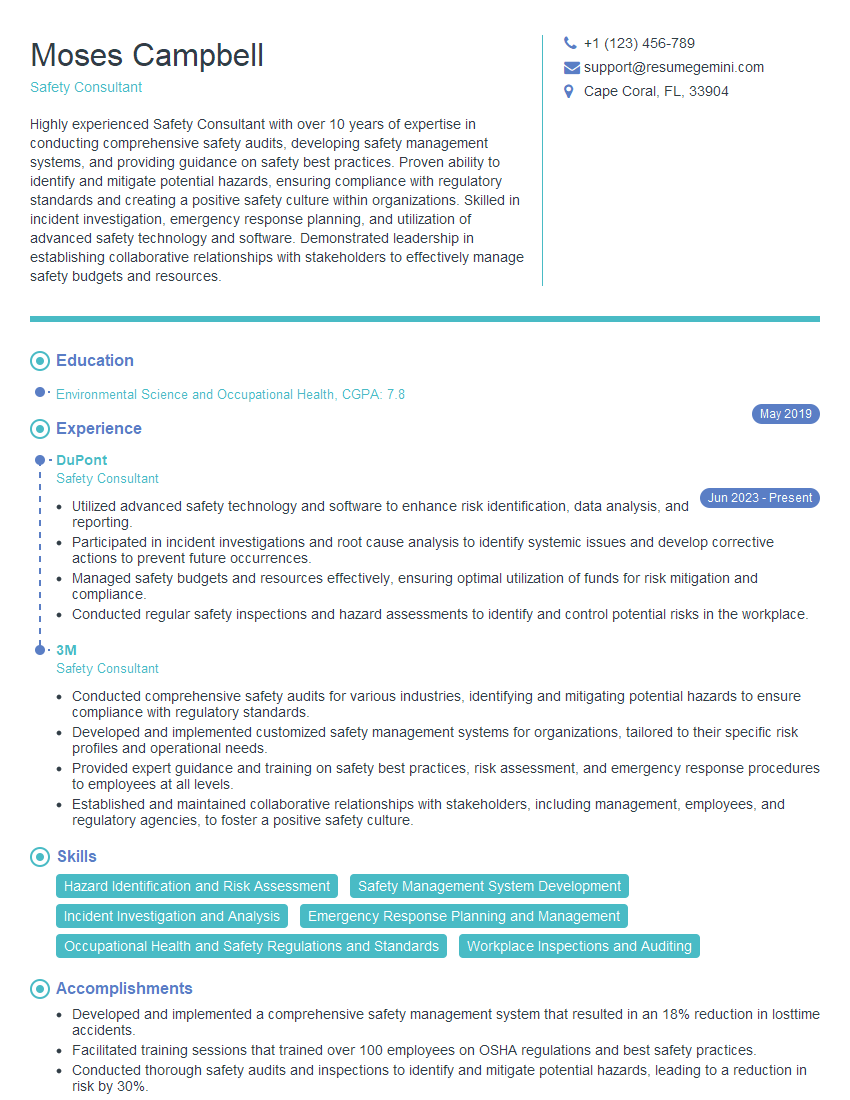
Safety Consultant Resume Sample
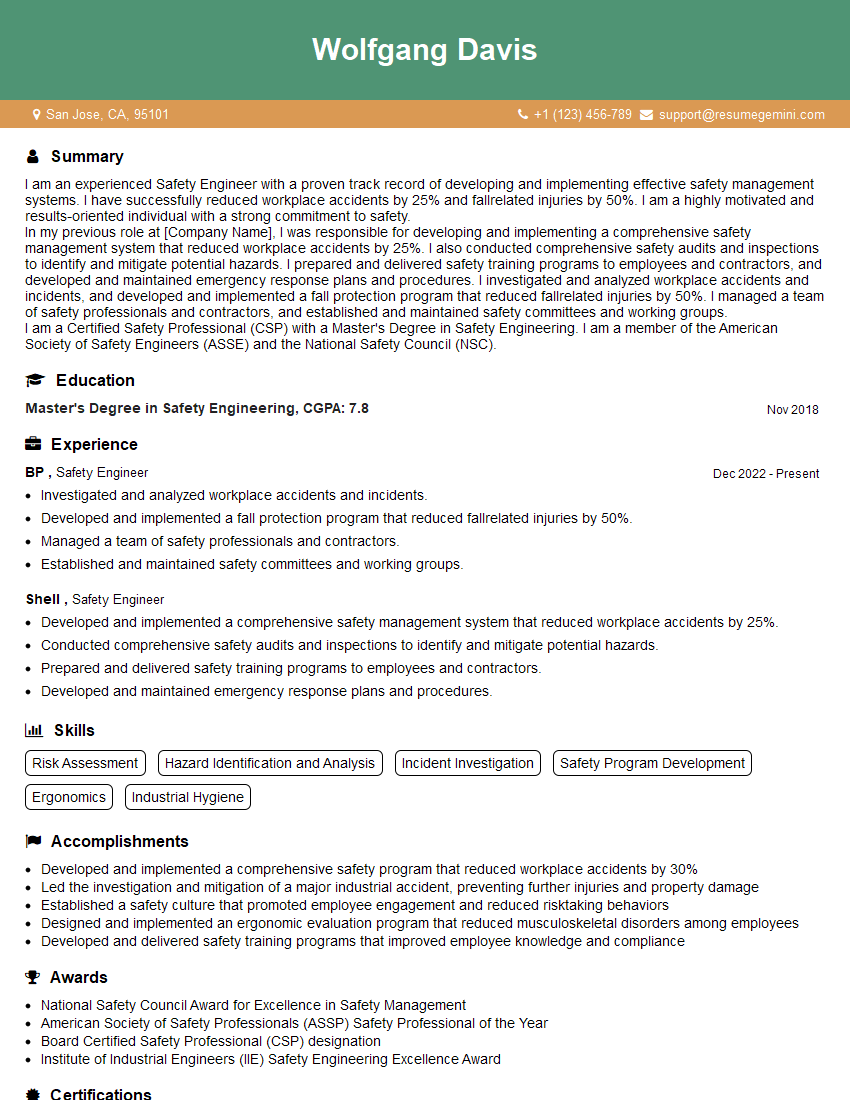
Safety Engineer Resume Sample
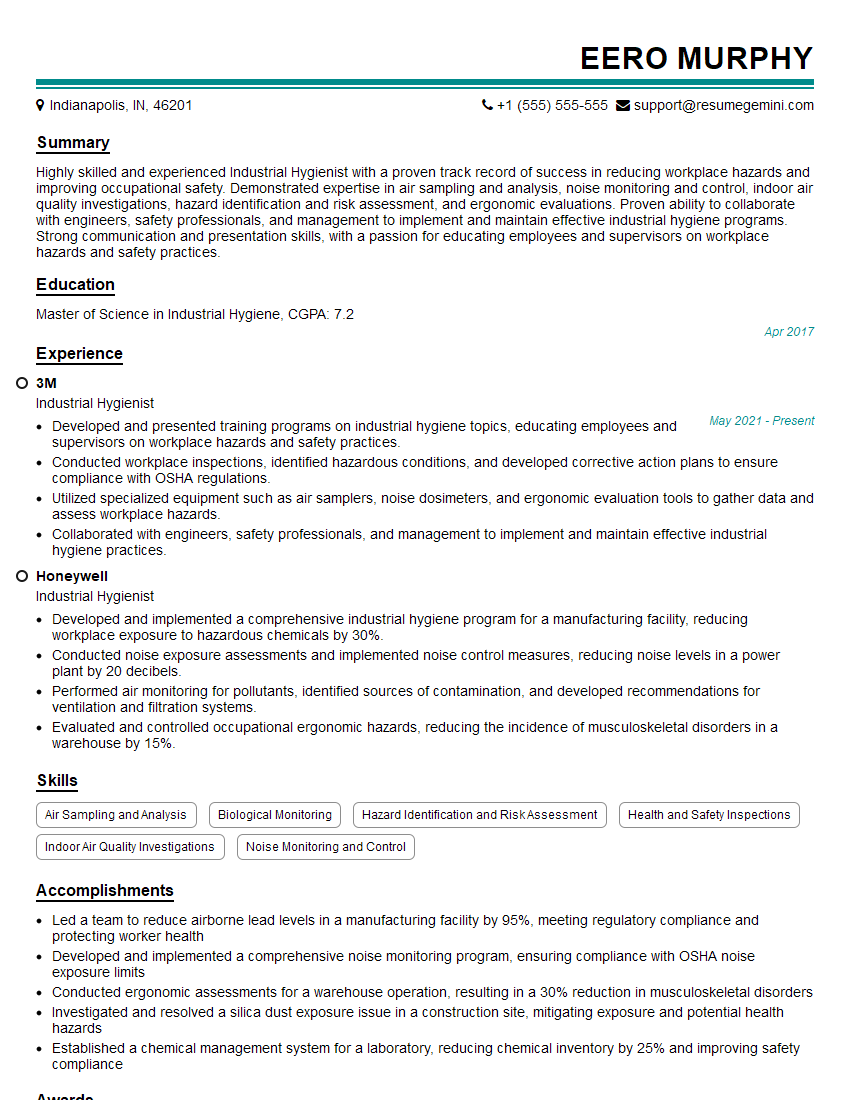
Industrial Hygienist Resume Sample
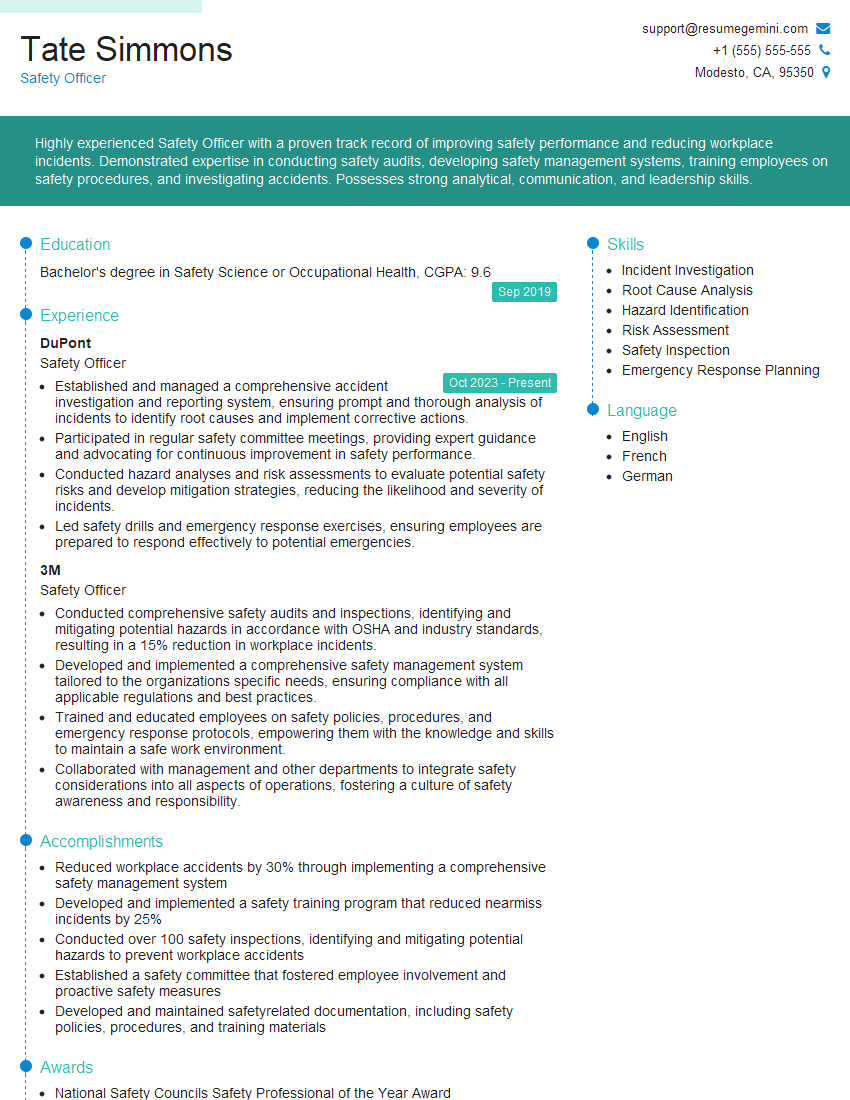
Safety Officer Resume Sample
Explore more articles
Users Rating of Our Blogs
Share Your Experience
We value your feedback! Please rate our content and share your thoughts (optional).
What Readers Say About Our Blog
To the interviewgemini.com Webmaster.
Very helpful and content specific questions to help prepare me for my interview!
Thank you
To the interviewgemini.com Webmaster.
This was kind of a unique content I found around the specialized skills. Very helpful questions and good detailed answers.
Very Helpful blog, thank you Interviewgemini team.