Feeling uncertain about what to expect in your upcoming interview? We’ve got you covered! This blog highlights the most important Experience with Texturing and Decorative Drywall Finishes interview questions and provides actionable advice to help you stand out as the ideal candidate. Let’s pave the way for your success.
Questions Asked in Experience with Texturing and Decorative Drywall Finishes Interview
Q 1. Describe your experience with various drywall texturing techniques (e.g., knockdown, orange peel, skip trowel).
My experience encompasses a wide range of drywall texturing techniques, each offering a unique aesthetic. Knockdown texture, for instance, involves applying a thick coat of mud and then lightly scraping it with a knockdown knife to create a subtle, textured surface. Think of it like lightly combing through a freshly applied layer of frosting. This technique is popular for its clean, contemporary look. Orange peel texture, on the other hand, is created using a hopper gun, resulting in a more heavily textured, speckled finish—like the skin of an orange, as the name suggests. It’s often used for its ability to hide minor wall imperfections. Finally, the skip trowel technique produces a more dramatic, heavily textured look by using a trowel to create irregular patterns in the mud, almost like a series of intentional ‘skip marks.’ This option adds a lot of visual character to a room. I’ve successfully executed all three on numerous projects, adapting the texture to the client’s design preferences and the room’s purpose.
Q 2. What types of tools and equipment are you proficient with in drywall finishing?
My tool proficiency extends to the full spectrum of drywall finishing equipment. This includes various sizes of putty knives for applying and smoothing mud, hoppe guns for spray texturing (especially for orange peel), knockdown knives for creating the characteristic knockdown texture, trowels for skip trowel and other heavier textures, sanding tools (both hand-held and power sanders) for achieving smooth surfaces between coats, and mixing equipment for preparing the mud to the correct consistency. Beyond the tools, I’m experienced in using safety gear like respirators and safety glasses, ensuring both my own safety and the quality of my work.
Q 3. Explain the process of preparing a wall surface for texturing.
Preparing the wall is crucial for a flawless finish. It’s akin to prepping a canvas before painting. The process begins with a thorough cleaning of the wall to remove any dust, debris, or loose particles. Any significant imperfections, such as large holes or cracks, need to be repaired using drywall compound and allowed to dry completely. Next, I apply a primer coat. This helps ensure the texture adheres properly and provides a uniform base. Finally, I perform a light sanding to achieve a smooth, level surface ready for texturing. Skipping this step will result in an uneven texture that will show through the final finish.
Q 4. How do you ensure a smooth and even finish when applying drywall texture?
Achieving a smooth and even finish relies on several key factors. First, the consistency of the mud is paramount. It needs to be mixed to the correct consistency, not too thick or too thin, to ensure even application. Second, the application technique is vital. I apply the texture in consistent, overlapping passes, avoiding buildup in certain areas. Third, consistent pressure is essential, whether using a hopper gun or a hand tool. Finally, multiple thin coats are almost always preferred to one thick coat. This allows for proper drying and helps prevent cracking. Regularly checking for consistency and making adjustments as needed is essential for a professional finish.
Q 5. Describe your experience with different types of drywall mud and their applications.
My experience encompasses various drywall mud types, each serving a different purpose. All-purpose mud is a common choice for general repairs and texturing; it offers good workability and drying time. Lightweight mud is preferred for larger areas because it reduces strain, and it dries quicker. Taping mud is specially formulated for taping seams, offering excellent adhesion and a smooth finish. The choice of mud is influenced by the project’s specific needs and my experience allows me to select the right mud for optimal performance. For instance, lightweight mud may be suitable for large, textured areas to minimize weight and reduce drying time, while taping mud is crucial for ensuring smooth and durable joints before texturing.
Q 6. How do you address common issues like cracking or imperfections in drywall texture?
Addressing cracking or imperfections requires a systematic approach. Minor cracks can often be repaired by simply applying a thin layer of mud over the affected area, followed by sanding to blend it seamlessly. For more significant cracks or imperfections, I may need to remove the damaged section of the drywall, repair it, and then retexture the area to match the surrounding surface. The key is to ensure a proper repair and then to carefully blend the repair work with the existing texture to make it invisible. This involves precise application of mud and careful attention to detail in feathering and blending.
Q 7. What safety precautions do you take when working with drywall materials and tools?
Safety is paramount. I always wear appropriate personal protective equipment (PPE), including safety glasses to protect my eyes from flying debris, a dust mask or respirator to prevent inhaling drywall dust, and gloves to protect my hands from irritation or chemical reactions. I ensure proper ventilation in the workspace, especially when using spray equipment or working with drying compounds that may release fumes. I also use proper lifting techniques to avoid injury when handling heavy materials like drywall sheets and buckets of mud. Finally, I maintain a clean and organized workspace to prevent accidents and ensure efficient workflow.
Q 8. Explain your experience with different types of decorative finishes beyond standard texturing.
My experience extends beyond the standard orange peel and knockdown textures. I’m proficient in a wide range of decorative finishes, including Venetian plaster, which involves applying multiple layers of plaster to create a luxurious, marble-like effect. I’ve also worked extensively with techniques like stucco, achieving various finishes from smooth to heavily textured, and rag rolling, which uses a damp rag to create unique patterns on the wall. Additionally, I’m skilled in creating Spanish Lace effects, and more contemporary finishes such as using metallic paints for a shimmering wall effect, or employing specialized tools to achieve specific patterns. Each technique demands a precise approach, and understanding the properties of each material is critical for achieving the desired aesthetic and durability.
- Venetian Plaster: Requires careful layering and polishing to achieve the desired depth and sheen.
- Stucco: The texture and finish depend heavily on the type of stucco used and the application technique.
- Rag Rolling: The pattern achieved depends on the type of rag, the amount of paint on the rag, and the pressure applied.
Q 9. How do you estimate the time and materials needed for a drywall finishing project?
Estimating time and materials is crucial for project success. I begin by carefully reviewing the blueprints or measurements of the project area, noting any complexities like intricate designs or hard-to-reach places. Then, I consider the chosen finish – a simple knockdown texture is quicker than Venetian plaster. For material estimation, I calculate the square footage of the walls, adding a 10-15% buffer for waste and unforeseen issues. The type of drywall also influences the estimate; fire-resistant drywall, for example, is often denser and requires more time for preparation and finishing. I factor in the type and number of coats of primer and paint. For example, a dark color might need more coats than a light one. Once I have material quantities, I estimate the labor hours needed based on my experience and the complexity of the work. I then use this to create a detailed and transparent cost estimate for the client.
Q 10. Describe your experience working with different types of drywall (e.g., standard, fire-resistant).
I have extensive experience with various drywall types. Standard drywall is the most common and presents no significant challenges. However, working with fire-resistant drywall requires a different approach because it’s denser and less forgiving. Proper preparation, including careful taping and mudding, is essential to prevent cracking. I’ve also worked with moisture-resistant drywall in bathrooms and other high-humidity areas, understanding the importance of proper sealing and ventilation to prevent mold growth. In one project involving a high-security facility, I worked with specialized drywall containing embedded metal mesh for added strength and security. Each type demands a nuanced understanding to achieve the best results and ensure the longevity of the finished product.
Q 11. How do you handle unexpected issues or changes during a drywall finishing project?
Unexpected issues happen; that’s part of the job. My approach focuses on proactive problem-solving. If I discover damaged drywall during preparation, I immediately document it, discuss solutions with the client, and make necessary repairs. If color matching proves difficult, I consult color charts and use test patches to ensure accuracy. Changes in the project scope are addressed through clear communication with the client, creating revised estimates and timelines. A recent project involved discovering water damage behind a wall – I promptly halted work, informed the client, and collaborated with other specialists to rectify the underlying problem before proceeding with the finishing. Open communication is key to mitigating disruption and maintaining client satisfaction.
Q 12. What are your preferred methods for cleaning up after a drywall finishing job?
Thorough cleanup is essential for professionalism and maintaining a safe work environment. My process involves removing all debris – including drywall dust, excess mud, and paint scraps – using appropriate tools like shop vacuums with HEPA filters (crucial for fine drywall dust), and brushes. I protect the floors using drop cloths and carefully clean up any spills immediately. All tools and equipment are cleaned and stored properly. At the end of each workday, I conduct a final sweep and ensure the work area is left tidy and safe. Maintaining a clean worksite not only ensures a professional finish but also minimizes the risk of accidents and dust-related health issues.
Q 13. Explain your experience with color matching and paint application on textured walls.
Color matching on textured walls requires extra care. The texture itself can affect how the color appears, so I always create test patches on the wall itself to ensure accurate color representation. I use high-quality paints designed for optimal adhesion and coverage on textured surfaces. I’m proficient in using various paint application techniques, from rollers and brushes to airless sprayers, tailoring the method to the specific texture and desired finish. I have a keen eye for color and understand how different lighting conditions can alter the perceived hue. On a recent project with a complex Venetian plaster finish, I meticulously created test patches under various lighting conditions to guarantee a consistent, visually appealing color throughout the room.
Q 14. How do you ensure the longevity and durability of your drywall finishing work?
Durability and longevity are paramount. I achieve this through meticulous preparation, using high-quality materials, and employing the correct techniques for each finish. Proper taping and mudding techniques minimize the risk of cracking. I carefully select primers and paints that are designed to resist moisture and wear. For areas prone to impact, I might recommend additional protective coatings. With high-traffic areas, I suggest durable finishes like stucco or textured paints that can withstand more wear and tear. Finally, I always advise clients on proper maintenance, such as avoiding harsh cleaning chemicals and gently cleaning walls as needed. By combining quality workmanship with client education, I ensure my work stands the test of time.
Q 15. What are your strengths and weaknesses as a drywall finisher?
My greatest strength lies in my meticulous attention to detail and my ability to achieve consistently high-quality finishes. I’m adept at a wide range of techniques, from Venetian plaster to textured coatings, and I’m always striving for perfection. I’m also a highly efficient worker and possess excellent problem-solving skills. I can quickly assess a situation, identify the root cause of any issues, and implement effective solutions. For example, I once identified a batch of improperly mixed mud that was causing inconsistent texture. I immediately flagged it, preventing a larger scale problem. My weakness is that I sometimes focus too intensely on detail, potentially slowing down project timelines. However, I’m actively working to improve my time management through better planning and prioritization. I find a detailed project schedule and clear communication with the project manager to be highly effective.
Career Expert Tips:
- Ace those interviews! Prepare effectively by reviewing the Top 50 Most Common Interview Questions on ResumeGemini.
- Navigate your job search with confidence! Explore a wide range of Career Tips on ResumeGemini. Learn about common challenges and recommendations to overcome them.
- Craft the perfect resume! Master the Art of Resume Writing with ResumeGemini’s guide. Showcase your unique qualifications and achievements effectively.
- Don’t miss out on holiday savings! Build your dream resume with ResumeGemini’s ATS optimized templates.
Q 16. Describe a time you had to troubleshoot a problem during a drywall finishing project.
During a recent project involving a complex Venetian plaster application, we encountered unexpected cracking in the final coat. Initial inspection suggested poor substrate preparation. However, after careful investigation, I discovered the problem was due to inconsistent humidity levels within the room. The rapid drying caused stress on the plaster, leading to cracks. To troubleshoot, I implemented several strategies: First, we introduced humidity control measures, using dehumidifiers to maintain a consistent environment. Second, we applied a bonding primer to enhance adhesion. Third, we applied the plaster in thinner coats, allowing each layer to dry properly before proceeding. This methodical approach solved the problem, and we were able to complete the project to the client’s satisfaction. It taught me the crucial importance of environmental control in decorative finishing.
Q 17. How do you maintain consistent quality across different projects?
Maintaining consistent quality across different projects hinges on several key factors. First, thorough preparation is paramount. This involves carefully reviewing the project specifications, ensuring I understand the client’s vision, and preparing the surfaces meticulously. Second, I utilize standardized processes for each technique, ensuring consistency in the application of materials, and tools. For instance, I always maintain consistent trowel pressure and angle when applying Venetian plaster. Third, I employ regular quality checks throughout the process—from substrate inspection to final finishing—to identify and address any issues promptly. Fourth, I maintain a well-organized toolbox with calibrated tools and high-quality materials, such as premium drywall compound, to minimize potential issues. Finally, regular calibration and maintenance of my equipment is critical to ensuring quality and efficiency.
Q 18. How do you manage your time effectively when working on multiple projects?
Managing time effectively on multiple projects requires careful planning and prioritization. I begin by meticulously reviewing each project’s scope, timeline, and dependencies. Then, I create a detailed schedule that outlines tasks, deadlines, and resource allocation for each project. I use a digital project management tool to track progress, identify potential bottlenecks, and adapt my schedule as needed. Effective communication is crucial; I maintain open lines of communication with clients and project managers to address any issues promptly and keep everyone informed of progress. This proactive approach prevents delays and ensures timely project completion. I also prioritize tasks based on urgency and importance, focusing on critical path activities first. For example, I might prioritize completing the taping and mudding stage before starting on the finishing layers.
Q 19. What are your salary expectations for this position?
My salary expectations for this position are commensurate with my experience, skills, and the market rate for experienced drywall finishers specializing in decorative finishes. I am open to discussing this further based on the specific details of the role and company benefits package.
Q 20. How do you stay updated on the latest techniques and trends in drywall finishing?
Staying updated in this field is crucial. I regularly attend industry conferences and workshops to learn about new techniques and materials. I subscribe to relevant trade publications and online forums, keeping abreast of the latest trends and innovations. I also actively seek mentorship opportunities with experienced professionals in the field, learning from their expertise and best practices. Hands-on experimentation with new materials and techniques is also critical to staying ahead of the curve. For example, I recently experimented with a new type of bio-based drywall compound that offers enhanced sustainability and performance.
Q 21. Are you comfortable working at heights?
Yes, I am comfortable working at heights and possess the necessary safety training and experience. I always adhere to all safety regulations and utilize appropriate safety equipment, such as harnesses and fall protection systems, when working at elevated positions. Safety is my top priority.
Q 22. What is your experience with different types of joint compound?
My experience encompasses a wide range of joint compounds, each suited for specific applications. All-purpose compounds are my workhorse—great for general taping and finishing. However, I’m also proficient with lightweight compounds for faster drying times on larger projects, and high-strength compounds for areas requiring extra durability, like high-traffic hallways or areas prone to impact. I understand the differences in their setting times, sandability, and the appropriate application techniques for each. For instance, lightweight compounds are easier to apply but require more coats for a smooth finish, whereas high-strength compounds might necessitate more effort during sanding, but provide superior longevity. I meticulously select the right compound based on the project’s specific needs and environmental conditions.
- All-Purpose Compound: Versatile and suitable for most applications.
- Lightweight Compound: Faster drying, ideal for large areas, but may require more coats.
- High-Strength Compound: Increased durability for high-traffic or impact-prone zones.
Q 23. Describe your experience working with various substrates (e.g., concrete, wood).
Working with diverse substrates is a crucial aspect of my expertise. I’ve successfully applied drywall finishes to concrete, wood, and even metal studs. Each substrate demands a tailored approach. Concrete, for example, often requires a primer to ensure proper adhesion of the compound, preventing peeling or cracking. With wood, I focus on ensuring the surface is smooth and clean to prevent imperfections from showing through the finish. Metal studs, particularly in colder climates, require extra attention to mitigate the risk of condensation and potential mold growth. My experience allows me to identify potential challenges specific to each substrate and apply appropriate preparation methods, ensuring the longevity and quality of the final finish.
For example, on a recent project involving a concrete basement, I used a specialized bonding primer before applying the joint compound, and the results were flawless, preventing any issues with adhesion. On a project with older wooden framing, I meticulously addressed any gaps or inconsistencies in the substrate before proceeding with the drywall work.
Q 24. How do you ensure proper ventilation while applying drywall texture?
Proper ventilation is paramount during drywall texturing and finishing, especially when using products that release volatile organic compounds (VOCs). I always ensure adequate airflow, which minimizes the risk of breathing problems and ensures even drying of the compound. This is achieved through several methods, such as opening windows and doors, using exhaust fans, or employing specialized ventilation equipment on larger projects. If using spray equipment, a well-ventilated area is essential, and sometimes respirators are necessary depending on the product being used. In some instances, I will even schedule the work to align with the weather conditions, choosing cooler and less humid days to help with drying and reduce the presence of VOCs.
Ignoring proper ventilation can result in poor adhesion of the compound, uneven drying, potential respiratory issues for the workers and occupants, and even the creation of a hazardous work environment. A proper ventilation plan is an essential part of my planning for any project.
Q 25. What is your understanding of building codes related to drywall finishing?
I have a solid understanding of building codes related to drywall finishing. This includes fire-resistance ratings, requirements for joint treatment and taping, and accessibility standards. My work consistently adheres to local and national codes to ensure structural integrity, fire safety, and compliance with all regulations. I’m familiar with the importance of using appropriate fire-rated materials in designated areas and understand the implications of any deviations from prescribed methods. Staying current with these regulations is vital, and I regularly review updated codes and best practices. I also know to contact the building inspector when I’m unsure about a specific requirement or technique.
For instance, understanding the fire-rated requirements for a particular wall section allows me to use the correct type of drywall and appropriate installation techniques to meet those standards.
Q 26. Describe your experience working in a team environment.
I thrive in team environments. My experience working on numerous projects has honed my collaborative skills. I’m adept at communicating effectively with other tradespeople, such as electricians and plumbers, ensuring a smooth workflow and minimizing potential conflicts. I’m always willing to assist my teammates, share my expertise, and contribute to a positive and productive atmosphere. I value constructive feedback and actively participate in problem-solving as a team. A recent example involved coordinating with a painting team to ensure the perfect surface for their work after completing the drywall finishing.
Clear communication and efficient coordination are key to successful teamwork, and I make it a point to actively foster these elements on every project.
Q 27. How do you handle difficult clients or supervisors?
Handling difficult clients or supervisors requires a calm and professional approach. I prioritize active listening and understanding their concerns before addressing them. I strive to maintain a clear and respectful communication style, providing solutions and managing expectations effectively. If a conflict arises, I try to find common ground and a mutually agreeable resolution. Documentation is crucial in such instances, ensuring a clear record of events and decisions. If necessary, I escalate issues to management while maintaining professionalism and courtesy. I believe that even difficult situations can be navigated constructively with patience and tact.
For example, I once had a client who was initially unhappy with the texture. By carefully explaining the process and showing them examples of how different techniques yield different results, I was able to address their concerns, and they were ultimately pleased with the final result.
Q 28. What are your long-term career goals in the drywall finishing industry?
My long-term career goals include continued growth within the drywall finishing industry. I aim to expand my knowledge of advanced techniques, such as Venetian plaster and other decorative finishes. I am also interested in potentially gaining supervisory experience and mentoring other professionals. Ultimately, I envision myself as a skilled and respected expert in the field, known for high-quality workmanship and commitment to exceeding client expectations. I’m keen to continue learning and mastering new techniques to stay at the forefront of this industry.
Key Topics to Learn for Experience with Texturing and Decorative Drywall Finishes Interview
- Types of Drywall Textures: Understand the characteristics and application methods of various textures, including knockdown, orange peel, skip trowel, and more. Be prepared to discuss the tools and techniques used for each.
- Material Selection and Preparation: Discuss the importance of choosing the right drywall compound, primers, and paints for different textures and surfaces. Explain how surface preparation impacts the final finish.
- Application Techniques: Detail your proficiency in applying various textures using different tools (e.g., hopper gun, trowel, rollers). Be ready to explain your process, from mixing the compound to achieving a consistent finish.
- Troubleshooting and Problem Solving: Describe your experience in identifying and resolving common issues like uneven texture, air bubbles, or cracking. Highlight your ability to adapt your techniques to different situations.
- Safety Procedures and Regulations: Demonstrate your knowledge of relevant safety regulations and practices related to drywall finishing, including proper ventilation, personal protective equipment (PPE), and waste disposal.
- Decorative Finishes: Discuss your experience with specialized finishes such as Venetian plaster, metallic finishes, or other decorative techniques. Explain the unique challenges and skills involved.
- Project Management and Estimation: Describe your experience with estimating materials, scheduling, and managing projects involving textured drywall finishes. Highlight your ability to work efficiently and within budget.
Next Steps
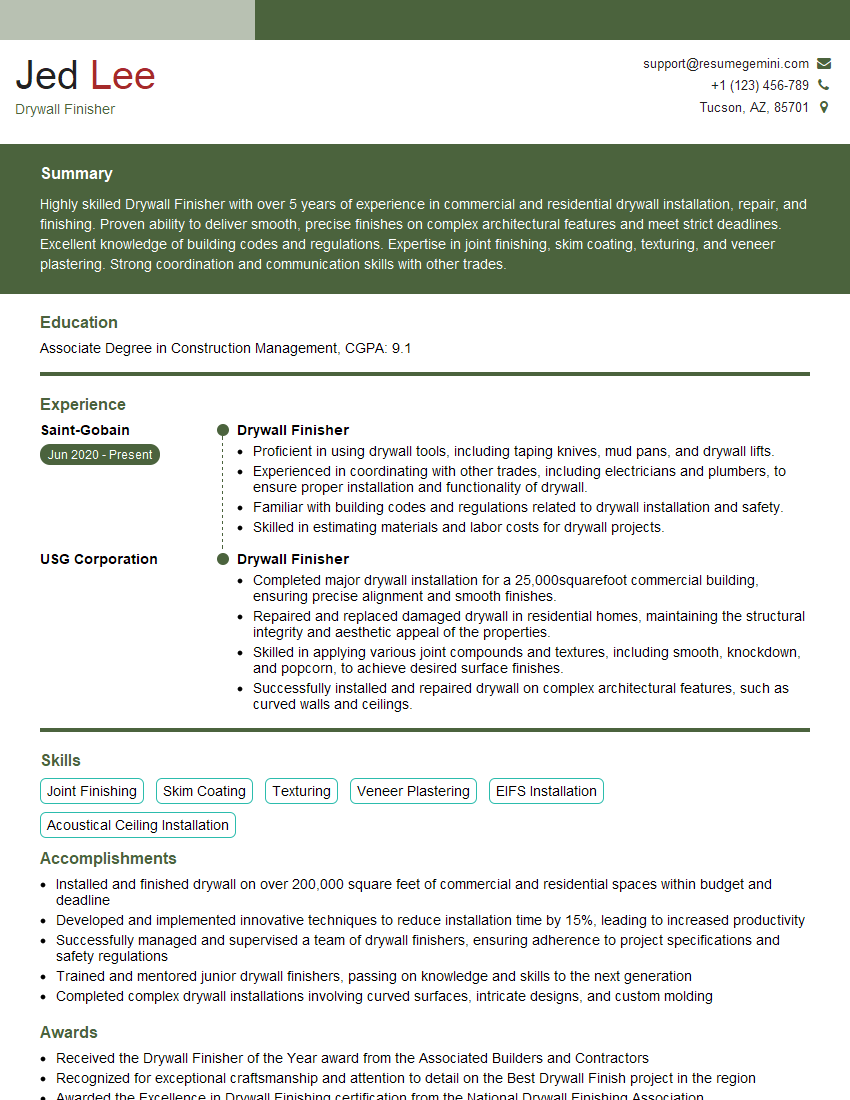
Mastering texturing and decorative drywall finishes significantly enhances your value to any construction or renovation team. A strong understanding of these techniques opens doors to higher-paying positions and more challenging projects. To maximize your job prospects, crafting a professional, ATS-friendly resume is crucial. ResumeGemini is a trusted resource that can help you build a compelling resume showcasing your skills and experience. Examples of resumes tailored to highlight expertise in texturing and decorative drywall finishes are available to guide you. Invest time in creating a standout resume to present yourself effectively to potential employers.
Explore more articles
Users Rating of Our Blogs
Share Your Experience
We value your feedback! Please rate our content and share your thoughts (optional).
What Readers Say About Our Blog
To the interviewgemini.com Webmaster.
Very helpful and content specific questions to help prepare me for my interview!
Thank you
To the interviewgemini.com Webmaster.
This was kind of a unique content I found around the specialized skills. Very helpful questions and good detailed answers.
Very Helpful blog, thank you Interviewgemini team.