Every successful interview starts with knowing what to expect. In this blog, we’ll take you through the top Experience with various types of turning machines interview questions, breaking them down with expert tips to help you deliver impactful answers. Step into your next interview fully prepared and ready to succeed.
Questions Asked in Experience with various types of turning machines Interview
Q 1. Explain the difference between a CNC lathe and a manual lathe.
The core difference between a CNC lathe and a manual lathe lies in how they’re controlled. A manual lathe relies entirely on the operator’s skill and physical manipulation of levers, handwheels, and other controls to precisely position and move the cutting tool. Think of it like driving a car with a manual transmission – every movement is directly controlled by the person behind the wheel. This requires significant training and experience to achieve consistent accuracy and surface finish.
In contrast, a CNC (Computer Numerical Control) lathe uses a computer program to control the movement of the cutting tool. The operator inputs the desired dimensions and tolerances into the CNC program, and the machine automatically executes the programmed movements with far greater precision and repeatability than a manual lathe. It’s akin to driving an automatic car; the computer handles much of the complex control mechanisms. This allows for complex part geometries and higher production rates.
Essentially, a manual lathe is more versatile for smaller jobs and one-off parts where customization is key. CNC lathes excel in mass production, intricate designs, and maintaining tight tolerances consistently across multiple parts.
Q 2. Describe your experience with various types of turning machines (e.g., engine lathe, turret lathe, CNC lathe).
My experience spans a wide range of turning machines. I’ve extensively used engine lathes for general-purpose turning, particularly on larger diameter workpieces requiring significant material removal. I’m proficient in setting up, operating, and maintaining these machines, including aspects like selecting appropriate tooling, setting speeds and feeds, and performing basic maintenance tasks.
I’ve also worked extensively with turret lathes, appreciating their efficiency in high-volume production environments. These machines offer multiple tool stations, allowing for numerous operations to be completed without manual tool changes. This significantly increases production speed. My experience includes programming and optimizing turret lathe operations to maximize efficiency and reduce cycle times. For example, I once significantly reduced the production time of a specific part by rearranging the tool positions in the turret, optimizing the tool paths, and improving the cutting parameters.
Finally, I have a strong background in operating and programming CNC lathes. My expertise includes creating and modifying CNC programs using various CAM software packages. I’m comfortable with G-code programming and troubleshooting CNC machine issues such as tool offsets, coordinate system setups, and machine diagnostics. A recent project involved programming a complex part requiring multiple passes and intricate internal features on a CNC lathe, which I successfully completed within the specified tolerances and timelines.
Q 3. What are the different types of cutting tools used in turning operations?
Turning operations utilize a variety of cutting tools, each designed for specific applications and materials. These include:
- Single-point cutting tools: These are the most common type, featuring a single cutting edge for generating cylindrical surfaces. They come in various shapes and geometries (e.g., round, square, triangular) depending on the application.
- Grooving tools: These tools are specifically designed to create grooves, slots, or recesses in a workpiece.
- Facing tools: Used to create flat surfaces perpendicular to the axis of rotation.
- Parting tools: Designed for cutting off finished parts from the workpiece.
- Threading tools: Specifically for creating internal and external threads. These come in various styles (e.g., die heads, single point threading tools).
The choice of cutting tool largely depends on factors like the material being machined, the required surface finish, and the specific operation being performed.
Q 4. How do you select the appropriate cutting tool for a specific material and operation?
Selecting the right cutting tool is crucial for efficiency and part quality. The process involves considering several factors:
- Material Properties: Hardness, toughness, machinability, and thermal conductivity of the workpiece material heavily influence tool selection. For instance, harder materials like hardened steel require stronger, more wear-resistant tools like carbide inserts. Softer materials such as aluminum can be machined with high-speed steel tools.
- Operation Type: Different operations like turning, facing, grooving, and threading require specific tool geometries. A facing tool won’t be suitable for creating a deep groove, and vice-versa.
- Desired Surface Finish: The required surface finish dictates the tool’s sharpness and surface condition. A fine finish demands a sharper tool with a higher surface quality.
- Cutting Speed and Feed: The selected tool must be capable of handling the chosen speed and feed rates without premature failure.
Choosing the incorrect tool can lead to broken tools, poor surface finishes, increased machining times, and reduced tool life. I always consult machinability data charts and manufacturer’s recommendations to ensure the correct tool is selected for each specific task.
Q 5. Explain the concept of speed and feed in turning.
Speed in turning refers to the rotational speed of the workpiece, measured in revolutions per minute (RPM). It determines how fast the material is being removed. Feed refers to the rate at which the cutting tool advances along the workpiece, usually measured in millimeters or inches per revolution (mm/rev or in/rev). It controls the depth of cut in each rotation.
A good analogy is a pencil sharpener. Speed is how fast the pencil spins, and feed is how quickly the blade moves towards the pencil’s tip. Finding the right balance between speed and feed is crucial for achieving a quality finish while minimizing tool wear and preventing damage to the machine.
Q 6. How do you calculate the optimal speed and feed for a given material and cutting tool?
Calculating optimal speed and feed is a critical part of turning. It’s not a simple formula, but rather a process that involves several factors and often involves iterative refinement based on experience and observation.
The process generally involves:
- Consulting Machinability Data: Refer to manufacturer’s data sheets or handbooks providing recommended cutting speeds and feeds for various materials and tool materials. These often provide cutting speed (V) in meters per minute (m/min) or feet per minute (fpm).
- Calculating RPM: The workpiece speed (N) in RPM is calculated using the formula:
N = (1000 * V) / (π * D), where V is the cutting speed, and D is the workpiece diameter in millimeters. - Determining Feed Rate: The feed rate (f) is determined based on the desired surface finish and material removal rate. Higher feed rates lead to faster material removal but can also increase tool wear and reduce surface finish quality.
- Trial Runs and Adjustments: After initial calculations, trial runs are essential to fine-tune the speed and feed based on actual machine performance and observed results. Adjustments are often necessary to optimize the process and minimize tool wear.
Software packages and CNC controllers often have built-in calculators or databases that assist in determining optimal cutting parameters, simplifying this process further.
Q 7. Describe your experience with different cutting fluids and their applications.
Cutting fluids, also known as coolants or lubricants, play a vital role in turning operations. They serve multiple purposes:
- Cooling: They reduce the heat generated during cutting, preventing tool wear, workpiece damage, and thermal distortion.
- Lubrication: They reduce friction between the tool and workpiece, improving tool life and reducing power consumption.
- Chip Removal: They help to flush away chips from the cutting zone, preventing chip build-up and improving surface finish.
Different cutting fluids are suited for different materials and operations. I’ve worked with various types, including:
- Water-based fluids (emulsions): These are cost-effective and widely used for general-purpose turning.
- Oil-based fluids (soluble oils): Offer better lubrication and cooling properties than water-based fluids, particularly for difficult-to-machine materials.
- Synthetic fluids: Provide excellent lubrication and cooling with improved environmental friendliness compared to traditional oils.
The selection of cutting fluid is a crucial decision impacting not only the efficiency of the machining process but also the quality of the final product and the machine’s longevity. Choosing the right fluid involves considering factors like the material being machined, the cutting speed, and environmental concerns.
Q 8. How do you set up and operate a CNC lathe?
Setting up and operating a CNC lathe involves a methodical approach combining machine familiarity and precise programming. First, you need to ensure the machine is properly powered and lubricated. Then, you securely mount the workpiece using appropriate workholding devices – chucks, collets, faceplates – depending on the part’s geometry and material. Next, you load the CNC program, typically written in G-code, which dictates the cutting operations. This program specifies toolpaths, speeds, feeds, and depths of cut. Before starting the machine, a tool offset is crucial; it’s like zeroing the machine’s coordinate system to the exact tip of the cutting tool. Finally, you initiate the program and monitor the machine’s operation, observing for any anomalies like unusual vibrations or excessive tool wear. Regular checks of tool condition and workpiece stability are essential throughout the process. For example, I once had to adjust the tailstock center slightly for optimal workpiece support during a long, slender part turning operation. This slight adjustment prevented chatter and improved the final accuracy dramatically.
Q 9. Explain the process of programming a CNC lathe using G-code.
Programming a CNC lathe using G-code involves creating a set of instructions that guide the machine’s movements. This is typically done using specialized software, CAM (Computer-Aided Manufacturing) software. You start by creating a 3D model of your part. The CAM software then translates this model into a sequence of G-code commands. These commands define the toolpaths (where the tool moves), spindle speeds (how fast it rotates), feed rates (how fast the tool moves along the path), and depths of cut.
A basic example involves a simple facing operation: G00 X0.0 Z0.0 ; Rapid traverse to starting point G01 X2.0 Z-1.0 F0.1 ; Linear interpolation to face, with feed rate of 0.1 mm/rev G00 Z1.0 ; Rapid retract This code first rapidly positions the tool, then performs the facing operation, and finally retracts. More complex parts require more intricate G-code incorporating functions like threading (G92), turning (G01 with X and Z coordinates), and other specialized commands depending on the machine’s capabilities and desired finish. Error-checking your G-code before running it on the machine is crucial to prevent costly mistakes or damage.
Q 10. How do you troubleshoot common problems encountered during turning operations?
Troubleshooting CNC lathe problems requires a systematic approach. Common issues include tool breakage, inaccurate dimensions, surface finish problems, and machine malfunctions. Firstly, carefully examine the workpiece and the tool. Tool breakage might indicate incorrect speeds/feeds, dull tools, or improper workholding. Inaccurate dimensions could point to errors in the G-code, incorrect tool offsets, or machine misalignment. Poor surface finish may be caused by worn tools, incorrect cutting parameters, or insufficient lubrication. For machine malfunctions, checking the coolant system, lubrication, and electrical connections is essential. For example, I once encountered a recurring dimensional inaccuracy. By carefully analyzing the G-code and performing a machine calibration, I discovered a slight misalignment in the X-axis, which was corrected through machine adjustment. Always document troubleshooting steps and solutions to avoid repeating mistakes.
Q 11. What are the safety precautions you take while operating turning machines?
Safety is paramount when operating turning machines. This begins with proper training and adherence to safety regulations. Always wear appropriate personal protective equipment (PPE), including safety glasses, hearing protection, and machine-specific safety gear. Before starting any operation, ensure that all guards are in place and functioning correctly. Never reach into the machine while it’s running. Securely clamp the workpiece and ensure it’s properly balanced to prevent vibration. Regularly inspect the machine for any signs of wear or damage, and immediately report any issues. Properly dispose of cutting fluids and chips. I always conduct a thorough safety check before each operation, and I enforce strict adherence to safety procedures among my team members. This proactive approach has helped avoid potential accidents and ensures a safe working environment.
Q 12. Describe your experience with different types of workholding devices.
My experience encompasses various workholding devices, each suitable for different applications. Three-jaw chucks are versatile for general-purpose work, providing a quick and reliable clamping system for cylindrical parts. Collets offer precise clamping for smaller diameter parts and are ideal for high-precision work. Faceplates are useful for irregular-shaped workpieces. I’ve also worked with live centers for supporting long slender parts, preventing deflection during machining. The choice of workholding device depends on part geometry, material, and the desired accuracy. For example, when machining delicate parts made from soft materials like brass, I would use a collet to avoid marring the surface. For large, complex parts, I’ve utilized custom-designed fixtures to ensure proper alignment and support.
Q 13. How do you measure the accuracy of turned parts?
Measuring the accuracy of turned parts relies on using precision measuring instruments. Calipers are commonly used for quick measurements of diameters and lengths. Micrometers provide higher accuracy for more precise dimensional checks. Dial indicators can measure runout and concentricity. For complex parts, coordinate measuring machines (CMMs) provide highly accurate, three-dimensional measurements. Additionally, checking for surface finish using surface roughness testers ensures the part meets the required standards. Regular calibration of these measuring instruments is critical for maintaining accuracy and reliability. I regularly use a combination of these instruments to ensure quality and adherence to tolerances, depending on the part’s specifications and the level of precision required.
Q 14. What quality control measures do you implement during the turning process?
Implementing quality control measures throughout the turning process is critical. This starts with verifying the raw material’s quality before machining. Regular inspection of cutting tools for wear and tear is essential. In-process checks during the machining cycle help detect deviations early. Dimensional checks of the finished parts using the measuring instruments are crucial. Statistical Process Control (SPC) techniques can be employed to track key process parameters and identify trends. Documentation of all process parameters, including tool wear, speeds and feeds, and inspection results, is essential for traceability and continuous improvement. For instance, we employ a first-off inspection of every batch to verify dimensional accuracy and surface finish, and we regularly analyze our data to identify areas for process optimization and prevent defects.
Q 15. Explain your experience with different types of lathe chucks.
My experience encompasses a wide range of lathe chucks, each suited for specific applications and workpiece characteristics. I’m proficient with three-jaw chucks, which are versatile and excellent for general-purpose turning, offering a quick setup for various diameters. Their self-centering action is ideal for round stock. I’ve also extensively used four-jaw independent chucks, providing precise control over each jaw for gripping irregular or square shapes. This is crucial for machining parts requiring extremely high accuracy and alignment, such as those with keyways or off-center features. Finally, I’m experienced with power chucks, which offer quicker and more repeatable chucking cycles. I’ve found these extremely efficient for high-volume production runs.
For example, when working with delicate parts, a soft-jaw chuck is preferred to prevent damage. Conversely, for extremely rugged materials like hardened steel, robust jaws and a more powerful chuck are essential. The selection of the right chuck type is paramount to efficient and safe machining.
Career Expert Tips:
- Ace those interviews! Prepare effectively by reviewing the Top 50 Most Common Interview Questions on ResumeGemini.
- Navigate your job search with confidence! Explore a wide range of Career Tips on ResumeGemini. Learn about common challenges and recommendations to overcome them.
- Craft the perfect resume! Master the Art of Resume Writing with ResumeGemini’s guide. Showcase your unique qualifications and achievements effectively.
- Don’t miss out on holiday savings! Build your dream resume with ResumeGemini’s ATS optimized templates.
Q 16. How do you handle material defects during turning operations?
Material defects are a common challenge in turning operations. My approach involves a multi-step process, starting with a thorough visual inspection of the raw material before machining. I look for cracks, pits, inclusions, and any other irregularities that might affect the final product. If a defect is detected, I assess its severity and location. Small, superficial defects might be addressed by careful machining, perhaps by selecting a different cutting path to avoid the affected area. However, significant defects that compromise the structural integrity of the workpiece necessitate rejecting the material entirely.
During the turning process, I’m attentive to unusual sounds or vibrations from the machine, which can indicate a hidden flaw. A sudden increase in cutting force or changes in surface finish are also red flags. If a defect is discovered during machining, I stop the process immediately to prevent further damage to the machine or the operator. I then carefully document the defect and determine the next course of action, often involving collaboration with quality control to assess the root cause and prevent future occurrences.
Q 17. Describe your experience with different types of turning operations (e.g., facing, turning, boring).
My experience in turning operations is extensive and covers a wide range of processes, including facing, turning, and boring. Facing is used to create a flat, perpendicular surface on the end of a workpiece. I regularly perform facing operations to prepare workpieces for subsequent operations or to create precise reference surfaces. Turning involves removing material from the cylindrical surface of a workpiece to create a specific diameter or shape. This is perhaps the most fundamental turning operation, and I’m experienced in various turning techniques, including roughing and finishing cuts.
Boring, on the other hand, is used to enlarge existing holes or to create precise internal diameters. I’ve handled boring operations on both large and small parts, employing different tooling and techniques based on the material and required tolerance. The selection of the proper tooling and cutting parameters are critical in achieving the desired surface finish and dimensional accuracy for each type of operation. For example, different cutting speeds and feeds are used for roughing cuts compared to finishing cuts. Each operation requires a skilled understanding of the machine’s capabilities and the material properties.
Q 18. How do you ensure the dimensional accuracy of turned parts?
Ensuring dimensional accuracy is paramount in turning. I achieve this through a combination of careful setup, precise machining techniques, and regular monitoring. The process begins with accurately setting up the workpiece in the chuck and aligning it with the machine’s axis of rotation. I use dial indicators and other precision measuring tools to ensure proper alignment. Throughout the turning process, I monitor the cutting parameters – speed, feed, and depth of cut – to minimize errors. Regularly checking the workpiece’s dimensions with precision measuring instruments like micrometers and calipers is crucial. This allows for adjustments to be made during the operation to maintain tolerance.
Post-machining, a final inspection is conducted to verify the dimensions conform to the specifications. I utilize CMM (Coordinate Measuring Machine) for high-precision parts requiring absolute accuracy. By rigorously following this process, I’m able to consistently produce parts that meet or exceed the required dimensional accuracy.
Q 19. What are the different types of lathe attachments and their uses?
Lathe attachments significantly enhance the capabilities of a turning machine. I’ve worked with various attachments, including tailstock centers, which support long workpieces during turning, preventing deflection and chatter. Live centers allow for rotating the workpiece between centers, enabling continuous turning of longer parts. Steady rests provide additional support to prevent vibration and deflection in long, slender workpieces.
Turning tools such as boring bars and facing tools expand the range of operations possible. A taper attachment enables the creation of tapered components with high precision. A power cross feed allows for automatic feed movement during turning, making it incredibly useful for repetitive tasks. Each attachment has its specific purpose and enhances the versatility and productivity of the turning machine, enabling the creation of complex geometries and improving the overall efficiency of the machining process.
Q 20. How do you maintain and care for turning machines?
Proper maintenance and care are essential for the longevity and performance of turning machines. My routine includes regular cleaning and lubrication of all moving parts. I inspect the machine for wear and tear and replace worn components promptly. The cutting tools are checked for sharpness and damage before each use. Regular checks of the coolant system ensure optimal cooling and lubrication during operation. The machine’s bed and ways are kept clean and lubricated to prevent friction and ensure smooth movement.
I also perform periodic calibration checks on the machine’s components to ensure accuracy. A thorough inspection of the electrical system, including wiring and safety devices, is also a part of my maintenance regimen. Following the manufacturer’s recommendations for lubrication and scheduled maintenance is crucial. This proactive approach minimizes downtime and extends the machine’s lifespan. Record-keeping helps to track maintenance activities and predict potential issues before they occur.
Q 21. Explain your experience with different types of materials used in turning (e.g., steel, aluminum, brass).
My experience spans a variety of materials used in turning, including steel, aluminum, and brass, each requiring different machining techniques. Steel, known for its high strength and durability, requires sharper tools and careful consideration of cutting speeds and feeds to avoid tool breakage and excessive heat generation. Different grades of steel necessitate adjustments in cutting parameters depending on their hardness and composition.
Aluminum, being softer and more ductile, allows for higher cutting speeds and feeds, improving machining efficiency. However, its tendency to work-harden necessitates using sharp tools and proper chip control to avoid surface damage. Brass, on the other hand, is relatively easy to machine but tends to produce long, continuous chips, potentially wrapping around the tool and causing problems. Therefore, efficient chip-breaking strategies are often employed. Understanding the unique properties of each material and adapting the turning process accordingly is critical to producing high-quality parts efficiently and safely.
Q 22. Describe your experience with automated turning systems.
My experience with automated turning systems spans over ten years, encompassing various CNC lathe models and control systems. I’ve worked extensively with both single-spindle and multi-spindle automated lathes, including those equipped with robotic loading and unloading systems. This experience includes programming, operating, maintaining, and troubleshooting these complex machines. For instance, I was instrumental in optimizing a multi-spindle lathe production line in my previous role, reducing cycle time by 15% through careful programming and process analysis. This involved fine-tuning the cutting parameters, optimizing tool paths, and implementing efficient workpiece handling strategies. I’m familiar with various automation features like bar feeders, part conveyors, and automatic gauging systems, and I understand the importance of integrating these components for seamless and efficient operation.
- Programming and optimizing CNC lathe programs for various parts and materials.
- Implementing and maintaining automated loading and unloading systems.
- Troubleshooting and resolving automation-related issues, minimizing downtime.
- Improving overall equipment effectiveness (OEE) through automation optimization.
Q 23. How do you interpret engineering drawings related to turning operations?
Interpreting engineering drawings for turning operations requires a keen eye for detail and a thorough understanding of manufacturing processes. I start by identifying the material specifications, dimensions, tolerances, and surface finish requirements. I then analyze the view projections, sectional drawings, and detailed annotations to understand the geometry of the part and the features to be machined. I pay close attention to critical dimensions and tolerances, ensuring they are achievable with the available turning equipment. For example, I’ll look for features like concentricity, runout, and surface roughness specifications to determine the appropriate machining strategies and tooling. I’ll also consider the drawing’s notes about material removal rates, cutting speeds, and feeds, adapting these to the specific machine and tooling at hand. This process helps me translate the drawing’s information into a precise and efficient machining plan.
Consider a drawing specifying a shaft with multiple diameters and shoulders. I’d first identify the stock material, then analyze the dimensions to determine the necessary cutting tools and sequence of operations. The tolerances would dictate my machining strategy, ensuring the final part meets all specifications. Finally, the surface finish requirements would inform my choice of cutting parameters and possibly surface finishing operations.
Q 24. What software packages are you proficient in for programming CNC lathes?
I’m proficient in several software packages for programming CNC lathes. My expertise includes Fanuc, Siemens, and Haas control systems. I’m experienced in using both conversational programming (using simple commands) and G-code programming (using a more advanced and precise coding language). I’m also comfortable using CAM software such as Mastercam and Fusion 360 to generate optimized G-code toolpaths from CAD models. I can translate engineering drawings and 3D models into efficient CNC programs. In my previous role, I used Mastercam to generate optimized toolpaths for complex parts, resulting in reduced machining time and improved surface finish. I understand how to use these programs to simulate the machining process before executing it on the actual lathe, ensuring accuracy and preventing costly errors.
For example, G01 X20.0 Z-10.0 F0.5 is a G-code command that moves the tool linearly to the X=20.0 and Z=-10.0 coordinates at a feed rate of 0.5 mm/rev. This simple command illustrates my understanding of G-code fundamentals and ability to read and modify CNC programs.
Q 25. Describe your experience with using measuring tools (e.g., calipers, micrometers).
Accurate measurements are critical in machining. I’m highly proficient in using various measuring tools, including vernier calipers, micrometers, dial indicators, and height gauges. I understand the principles of measurement, including reading scales, interpreting tolerances, and ensuring proper tool usage. I regularly check calibration to maintain accuracy, and I am meticulous in my measurements. For instance, I’ve used micrometers to measure critical dimensions of parts to within 0.001 inches, ensuring they meet tight tolerances. My experience includes using dial indicators for checking concentricity and runout, crucial for producing high-quality parts. I’m also experienced in using optical comparators for complex geometric measurements and surface finish inspection.
For example, when inspecting a turned shaft for diameter, I would use a micrometer to measure at multiple points along the shaft’s length to identify any variations and ensure it’s within the specified tolerance. This ensures the part meets the specified quality standards.
Q 26. How do you perform preventative maintenance on turning machines?
Preventative maintenance is essential for extending the lifespan of turning machines and preventing costly downtime. My preventative maintenance routine includes regular inspection of all components, including the spindle, bearings, coolant system, hydraulic system (if applicable), and electrical components. I meticulously check for wear and tear, leaks, loose connections, and unusual noises. I lubricate moving parts as needed, following the manufacturer’s recommendations. I also regularly clean the machine to remove chips and debris, preventing damage to components. I maintain detailed records of all maintenance activities, including dates, tasks performed, and any findings. This proactive approach ensures optimal performance and avoids unexpected breakdowns.
For instance, I’d regularly check the coolant level and quality, ensuring it is clean and properly lubricated to prevent overheating and maintain optimal cutting conditions. This includes regular filter changes and cleaning of the coolant tank.
Q 27. Explain your experience with troubleshooting complex turning machine issues.
Troubleshooting complex turning machine issues requires a systematic approach and a deep understanding of the machine’s mechanics and electronics. I approach troubleshooting by first identifying the symptoms of the problem, then systematically checking various components to pinpoint the root cause. I use diagnostic tools such as multimeters and oscilloscopes to check electrical signals and identify faulty components. I rely on my knowledge of hydraulics and pneumatics (if applicable) to diagnose and fix pressure-related issues. I also consult the machine’s manuals and troubleshoot guides for specific error codes and common problems. I’m experienced in dealing with issues such as spindle malfunctions, coolant system failures, programming errors, and tool wear. I’m adept at using a combination of diagnostic tools, technical documentation, and experience to efficiently resolve complex problems, minimizing downtime.
For example, if the machine displayed an error code indicating a spindle motor problem, I would first check the motor’s power supply, then test the motor windings for continuity and insulation resistance using a multimeter. I might also check the motor’s control circuitry and connections to identify any problems. If necessary, I would consult the machine’s manual for specific troubleshooting steps related to that error code.
Key Topics to Learn for Experience with Various Types of Turning Machines Interview
- Machine Types and Capabilities: Understanding the differences between lathes (e.g., engine lathes, CNC lathes, Swiss-type lathes), their functionalities, and limitations. This includes knowledge of chucking, tooling, and workholding methods.
- Cutting Tools and Geometry: Familiarize yourself with various cutting tool materials (carbides, ceramics, etc.), geometries (e.g., rake angle, relief angle), and their impact on surface finish, cutting speed, and tool life. Be prepared to discuss tool selection based on material properties and machining parameters.
- Programming and Setup (CNC Lathes): If relevant to your experience, demonstrate your knowledge of CNC lathe programming (G-code or CAM software), machine setup procedures, including tool offsetting and work coordinate systems. Be ready to discuss troubleshooting common programming errors.
- Machining Processes and Parameters: Understand the relationship between cutting speed, feed rate, depth of cut, and their effect on surface finish, accuracy, and tool wear. Be prepared to discuss optimizing these parameters for different materials and applications.
- Safety Procedures and Practices: Highlight your commitment to safety by detailing your knowledge of proper machine operation, tooling handling, and safety precautions (e.g., machine guarding, personal protective equipment).
- Quality Control and Inspection: Demonstrate your understanding of measuring techniques used to ensure dimensional accuracy (e.g., calipers, micrometers) and surface finish quality (e.g., roughness measurement). Discuss your experience with quality control procedures and documentation.
- Troubleshooting and Problem Solving: Be ready to discuss your experience in identifying and resolving common machining problems, such as tool breakage, chatter, dimensional inaccuracies, and surface defects. Showcase your analytical and problem-solving skills.
- Material Selection and Properties: Demonstrate your understanding of different workpiece materials (e.g., steel, aluminum, plastics) and their machinability characteristics. Discuss how material properties influence machining parameters and tool selection.
Next Steps
Mastering experience with various types of turning machines significantly enhances your marketability and opens doors to exciting career opportunities in manufacturing and engineering. Building a strong, ATS-friendly resume is crucial for maximizing your job prospects. ResumeGemini is a trusted resource to help you create a professional and impactful resume that highlights your skills and experience effectively. Examples of resumes tailored to experience with various types of turning machines are available to guide you. Invest time in crafting a compelling resume – it’s your first impression with potential employers.

Operations Manager Resume Sample
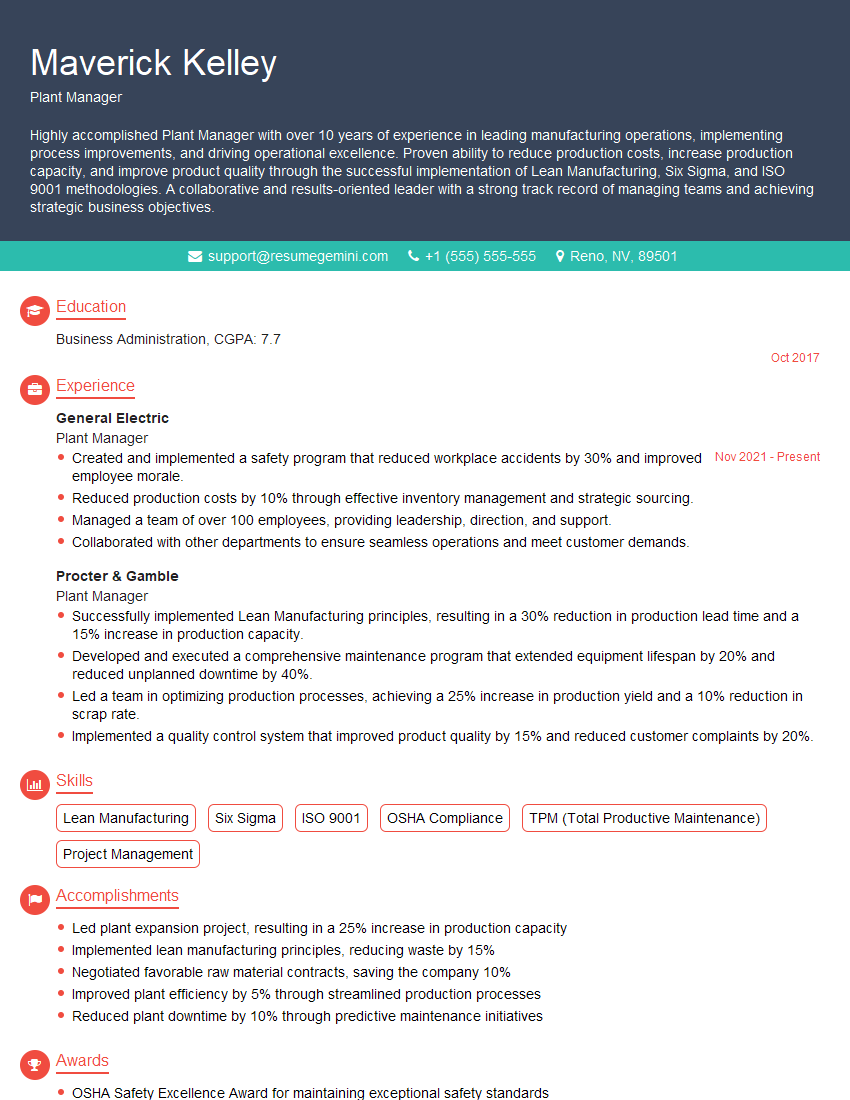
Plant Manager Resume Sample
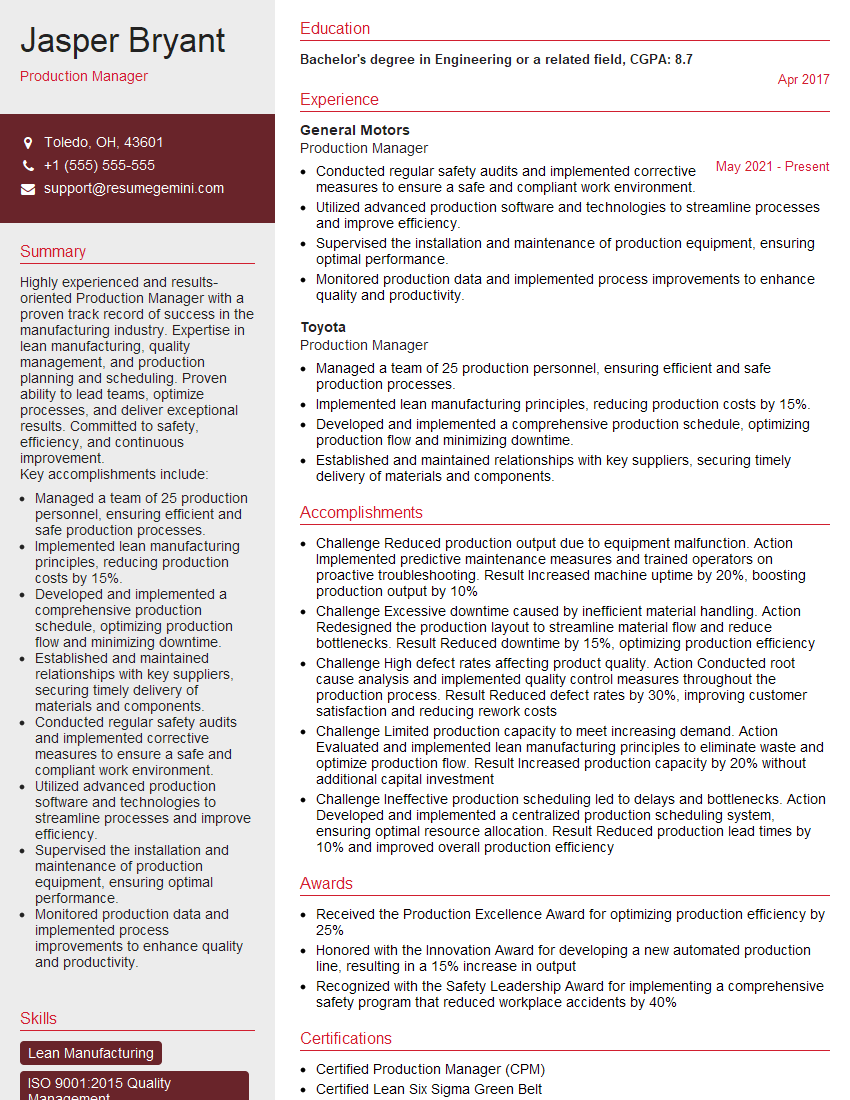
Production Manager Resume Sample

Quality Assurance Manager Resume Sample

Production Supervisor Resume Sample

Engineering Manager Resume Sample

Technical Trainer Resume Sample

Process Engineer Resume Sample

Automation Engineer Resume Sample

Maintenance Technician Resume Sample

Manufacturing Engineer Resume Sample

Robotics Technician Resume Sample

Manufacturing Technician Resume Sample

Machinist Resume Sample

Manufacturing Supervisor Resume Sample

Lathe Operator Resume Sample

Turning Machine Operator Resume Sample

Tool and Die Maker Resume Sample

Quality Control Inspector Resume Sample
- Operations Manager
- Plant Manager
- Production Manager
- Quality Assurance Manager
- Production Supervisor
- Engineering Manager
- Technical Trainer
- Process Engineer
- Automation Engineer
- Maintenance Technician
- Manufacturing Engineer
- Robotics Technician
- Manufacturing Technician
- Machinist
- Manufacturing Supervisor
- Lathe Operator
- Turning Machine Operator
- Tool and Die Maker
- Quality Control Inspector
Explore more articles
Users Rating of Our Blogs
Share Your Experience
We value your feedback! Please rate our content and share your thoughts (optional).
What Readers Say About Our Blog
To the interviewgemini.com Webmaster.
Very helpful and content specific questions to help prepare me for my interview!
Thank you
To the interviewgemini.com Webmaster.
This was kind of a unique content I found around the specialized skills. Very helpful questions and good detailed answers.
Very Helpful blog, thank you Interviewgemini team.