Interviews are more than just a Q&A session—they’re a chance to prove your worth. This blog dives into essential Experience with yard management interview questions and expert tips to help you align your answers with what hiring managers are looking for. Start preparing to shine!
Questions Asked in Experience with yard management Interview
Q 1. Describe your experience managing yard space optimization.
Yard space optimization is crucial for efficient operations. My approach involves a multi-pronged strategy focusing on maximizing space utilization, minimizing wasted movements, and strategically allocating areas based on equipment type and frequency of access. This begins with a detailed site survey, analyzing traffic patterns, equipment dimensions, and storage needs. I then implement a system of clearly defined zones – perhaps a designated area for high-turnover containers, another for long-term storage, and a staging area for outgoing shipments. This zoning helps streamline workflow and prevent congestion. We also utilize advanced technologies such as yard management systems (YMS) with real-time location tracking to optimize space allocation dynamically. For example, in a previous role, I implemented a YMS that reduced our yard space needs by 15% by optimizing the placement of containers based on predicted departure times. We also used a ‘first-in, first-out’ (FIFO) system to improve inventory flow, reducing storage times and costs.
Q 2. How do you ensure the safety of personnel and equipment within the yard?
Safety is paramount. My approach integrates several layers of protection. Firstly, we implement a robust safety training program, covering all aspects of yard operations, from safe equipment operation to hazard identification and emergency response procedures. Secondly, we maintain a well-lit and clearly marked yard, with designated pedestrian walkways and traffic routes to minimize collisions between personnel and equipment. We employ regular equipment inspections to ensure all vehicles and machinery are in safe working condition. Furthermore, we enforce the use of personal protective equipment (PPE), such as high-visibility vests and safety helmets. Speed limits are implemented, and blind spots are addressed with the use of mirrors and cameras. Regular safety audits are conducted, identifying potential hazards and rectifying them proactively. For instance, in a previous role, we implemented a system of safety spot checks, reducing workplace accidents by 20%. We also installed improved lighting, improving night visibility and worker safety.
Q 3. Explain your process for tracking and managing yard inventory.
Tracking and managing yard inventory relies heavily on technology. We primarily use a YMS that provides real-time visibility into the location and status of every item in the yard. This system integrates with our warehouse management system (WMS) for seamless data flow. Barcodes or RFID tags are used to identify each item, enabling precise tracking from the moment it arrives until it leaves the yard. The system automatically generates reports on inventory levels, highlighting potential shortages or excesses. Regular stock takes are conducted to verify the system’s accuracy. We also use reporting capabilities of the YMS to analyze inventory movement patterns, identifying areas for optimization. For example, we might identify slow-moving items that could be relocated to a less expensive storage area. This approach minimizes storage costs and improves overall yard efficiency. We also employ regular cycle counting to minimise discrepancies between physical inventory and the system’s records.
Q 4. What strategies do you use to improve yard efficiency and throughput?
Improving yard efficiency and throughput requires a holistic approach. This starts with optimized yard layout and workflow, as discussed earlier. Technology plays a vital role; a YMS facilitates efficient gate management, optimizing truck arrival and departure times. Real-time location tracking eliminates searching for items, saving time and labor. We also implement lean principles, identifying and eliminating waste in all processes. This could include streamlining receiving and dispatch procedures, reducing unnecessary movements, or improving equipment utilization. Investing in advanced equipment, such as automated guided vehicles (AGVs) or reach stackers, can significantly boost productivity. Regular training for staff to improve their skills in equipment operation and workflow procedures is crucial. Data analysis from our YMS helps identify bottlenecks and areas for improvement, allowing us to implement targeted solutions. For example, we once identified a bottleneck in the loading process by analyzing wait times and implemented a new scheduling system to reduce delays by 15%.
Q 5. How do you handle unexpected delays or disruptions in yard operations?
Handling unexpected delays requires a flexible and proactive approach. We have established contingency plans for various scenarios, such as equipment breakdowns, severe weather, or traffic congestion. Real-time communication is crucial; our YMS provides alerts for any disruptions, enabling immediate response. We use our YMS’s reporting capabilities to quickly identify the impact of delays and adjust our operations accordingly. For example, if a key piece of equipment breaks down, we’ll immediately assess the impact and re-allocate tasks to available resources. This might include prioritizing urgent shipments or re-routing traffic to minimize disruption. Open communication with all stakeholders, including drivers, customers, and internal teams, is vital to keep everyone informed and manage expectations. Post-incident reviews help us identify areas for improvement in our contingency plans and prevent similar disruptions in the future.
Q 6. Describe your experience with yard maintenance and equipment upkeep.
Yard maintenance and equipment upkeep are non-negotiable for safety and efficiency. We have a dedicated team responsible for regular inspections and preventative maintenance of all equipment and infrastructure. A robust preventative maintenance schedule helps prevent breakdowns and extends the lifespan of our assets. This includes regular checks of lighting, pavement, drainage systems, and fencing. Equipment is serviced regularly according to manufacturer recommendations, and any necessary repairs are carried out promptly. We maintain detailed records of all maintenance activities, using this data to optimize maintenance schedules and reduce downtime. Regular safety checks ensure all equipment is in compliance with safety regulations. For example, we conduct monthly inspections of our forklifts and other heavy machinery, ensuring their brakes, hydraulic systems, and safety features are functioning correctly. We prioritize proactive maintenance to prevent unexpected downtime, thereby minimizing disruption to operations.
Q 7. How do you manage driver check-in and check-out procedures?
Efficient driver check-in and check-out procedures are essential for smooth yard operations. We use a combination of technology and standardized processes. Drivers typically check in at a designated gate using a pre-assigned ID or license plate recognition system integrated into our YMS. This automatically registers their arrival time and assigns them a designated drop-off/pick-up location. Paperwork is minimized through electronic documentation and digital signatures. Upon completion of their tasks, they check out through the same system, automatically recording their departure time and any relevant information. Clear signage and instructions throughout the yard minimize confusion. We strive to make the check-in/check-out process quick and efficient, minimizing wait times for drivers. Regular feedback from drivers is sought to identify areas for improvement, and we aim to provide a positive experience to foster good relationships with our carriers. Real-time tracking of vehicles through the system allows us to monitor their activity in the yard and proactively address potential delays or issues.
Q 8. What software or systems have you used to manage yard operations?
Throughout my career, I’ve utilized various software and systems for yard management, each tailored to specific operational needs. For example, in my previous role at Acme Logistics, we relied heavily on a Transportation Management System (TMS) integrated with a Yard Management System (YMS). This system, a proprietary solution from a leading logistics technology provider, allowed for real-time tracking of inbound and outbound trailers, automated gate assignments, and optimized yard space utilization. It featured a user-friendly interface with detailed dashboards for monitoring key performance indicators (KPIs). In another role at Beta Distribution, we used a more modular approach, integrating separate software for gate management (with barcode scanning and license plate recognition), yard inventory (leveraging RFID technology), and appointment scheduling. This demonstrated adaptability to different organizational structures and technological preferences. Choosing the right system depends critically on the size and complexity of the yard, the integration needs with existing enterprise systems, and the budget.
Q 9. Explain your experience with yard security protocols and procedures.
Yard security is paramount. My experience encompasses a multi-layered approach. This starts with physical security measures like perimeter fencing, access-controlled gates with electronic badging, and 24/7 surveillance via CCTV cameras integrated with a video management system. Beyond physical security, we implement robust procedural controls such as stringent driver identification checks (including photo ID verification), detailed gate logs, and regular security audits. For example, at Gamma Shipping, I implemented a system of random inspections to ensure compliance with security protocols. We also trained all yard personnel on security awareness, including reporting suspicious activity and handling potential security breaches. Data security is equally crucial; access to the YMS and related systems is controlled through role-based permissions, limiting access to sensitive information only to authorized personnel.
Q 10. How do you prioritize tasks and manage workload in a busy yard environment?
Prioritization in a busy yard is all about efficiency and minimizing delays. I utilize a combination of techniques including Kanban boards (visualizing workflows and bottlenecks), prioritizing tasks based on urgency and impact (using a matrix), and leveraging the capabilities of the YMS to optimize schedules and resource allocation. For instance, I’d prioritize high-priority shipments with tight deadlines, considering factors like delivery windows and potential penalties for late delivery. Similarly, I ensure equipment maintenance is scheduled proactively to minimize downtime. Regular communication with drivers and yard personnel is also vital to anticipate and address potential issues promptly. This might involve adjusting the schedule to accommodate unforeseen delays or assigning resources effectively to address unexpected congestion.
Q 11. Describe your experience with different types of yard equipment.
My experience covers a range of yard equipment, including forklifts (various capacities and types, such as reach trucks and counterbalance trucks), yard tractors (both diesel and electric), and specialized equipment such as container handlers and side loaders. I’m familiar with the operational characteristics and safety protocols associated with each type. I understand the importance of regular maintenance to ensure equipment reliability and prevent breakdowns. This involves scheduling preventative maintenance, tracking maintenance records, and working with maintenance personnel to address any repairs promptly. In addition, I’m well-versed in safe operating procedures, including pre-operation checks, load securing, and operator training, to ensure the safety of both personnel and equipment.
Q 12. How do you handle conflicts between drivers or other yard personnel?
Conflict resolution is a crucial part of yard management. My approach is to address conflicts promptly and fairly, using a structured, calm approach. I typically begin by actively listening to all parties involved, understanding their perspectives without judgment. Then, I work collaboratively to identify the root cause of the conflict. For example, if a dispute arises over trailer placement, I would review the yard plan, the scheduling system, and the relevant communication logs. Once the root cause is identified, we work together to find a mutually agreeable solution, which may involve adjusting the yard plan, modifying the schedule, or clarifying procedures. If the conflict involves serious safety violations or involves harassment, I would follow the company’s disciplinary procedures, involving HR as needed.
Q 13. What metrics do you use to track the performance of yard operations?
Tracking yard performance relies on several key metrics. These include dwell time (the time a trailer spends in the yard), gate throughput (the number of trailers processed per hour), yard utilization (the percentage of yard space occupied), on-time delivery rate, and equipment utilization (the percentage of time equipment is actively used). We also track safety incidents and near misses to identify areas for improvement. These metrics are closely monitored through the YMS, providing real-time data and historical trends. Analyzing these metrics helps identify bottlenecks, assess efficiency improvements, and demonstrate the overall performance of the yard operation. Regular reporting of these KPIs to management enables data-driven decision-making and performance improvement.
Q 14. How do you ensure compliance with relevant regulations and safety standards?
Compliance is vital. My approach includes staying updated on all relevant regulations (e.g., environmental regulations, safety standards like OSHA, and transportation regulations like DOT), implementing procedures to ensure compliance, and conducting regular audits to check for compliance gaps. This involves providing regular training to all yard personnel on safety and regulatory compliance, and ensuring that all equipment is properly maintained and inspected. We utilize checklists and documented procedures to ensure consistency. Further, we maintain accurate records of inspections, maintenance, and training to demonstrate our compliance to regulatory bodies during inspections. Proactive compliance, not just reactive compliance is key.
Q 15. Describe your experience with managing different types of cargo.
Managing diverse cargo types is a core competency in yard management. My experience encompasses handling everything from standard shipping containers and oversized equipment to hazardous materials and temperature-sensitive goods. Each cargo type demands a unique approach to storage, handling, and security. For example, refrigerated containers require precise temperature monitoring and placement to prevent spoilage, while hazardous materials necessitate strict adherence to safety regulations and segregation from other cargo. I’ve worked with various cargo classification systems (like the IMDG Code for hazardous materials) to ensure compliance and efficient yard operations. I’m also experienced in using yard management systems (YMS) to track the location and status of different cargo types in real-time, improving visibility and control across the yard.
In one instance, we received a shipment of oversized wind turbine components. This required careful planning of the yard layout, securing appropriate heavy-lift equipment, and coordinating with specialized trucking companies for delivery and placement to minimize risks and prevent damage. Successful handling of such diverse cargo necessitates a flexible, adaptable approach, along with robust safety protocols tailored to each specific commodity.
Career Expert Tips:
- Ace those interviews! Prepare effectively by reviewing the Top 50 Most Common Interview Questions on ResumeGemini.
- Navigate your job search with confidence! Explore a wide range of Career Tips on ResumeGemini. Learn about common challenges and recommendations to overcome them.
- Craft the perfect resume! Master the Art of Resume Writing with ResumeGemini’s guide. Showcase your unique qualifications and achievements effectively.
- Don’t miss out on holiday savings! Build your dream resume with ResumeGemini’s ATS optimized templates.
Q 16. How do you handle damaged goods or equipment within the yard?
Handling damaged goods or equipment requires a systematic approach that prioritizes safety, documentation, and minimizing further loss. The first step involves securing the damaged area to prevent accidents, followed by a thorough assessment of the extent of the damage. Detailed photographic documentation and a complete inventory of damaged items are crucial for insurance claims and internal investigations. Depending on the nature of the damage and the type of goods, different actions might be taken – some items can be repaired, others may require disposal, and others may be salvaged.
For example, if a container sustains damage during transport, I’d initiate a thorough inspection, documenting all visible damage with photographs and written notes. I would then engage the relevant carrier or insurance provider to initiate a claims process. For damaged equipment, I’d assess the repairability, potentially arranging for on-site repairs if cost-effective. If the damage is beyond repair, I’d follow established disposal procedures in accordance with local regulations. Maintaining accurate records of the damage, repairs, disposal, and any related costs is vital for budget control and accountability.
Q 17. Explain your experience with yard layout and design optimization.
Yard layout and design optimization are critical for maximizing efficiency and safety. My experience includes working with various yard designs, from simple layouts to complex ones involving multiple loading docks, storage areas, and specialized zones for different cargo types. I’ve used both manual methods and sophisticated software tools to analyze workflow, optimize traffic flow, and minimize congestion. Key considerations include factors like traffic patterns, proximity to loading docks, storage capacity needs, and safety regulations.
For instance, in one project, we redesigned a yard to accommodate an increase in container volume. By analyzing the existing workflow using a YMS, we identified bottlenecks and created a new layout that incorporated additional storage space, reorganized traffic flow, and implemented a more efficient gate system. This resulted in a significant reduction in turnaround times and improved overall yard efficiency. These optimizations frequently involve using simulations and data analysis to evaluate different layout options before implementation to minimise disruption and ensure optimal results.
Q 18. How do you communicate effectively with drivers, warehouse personnel, and management?
Effective communication is the cornerstone of successful yard management. I utilize various communication channels tailored to the audience and the situation. With drivers, clear and concise instructions regarding gate procedures, parking locations, and loading/unloading procedures are paramount. I use two-way radios, mobile apps, and pre-arrival notifications to ensure timely and accurate communication. With warehouse personnel, I coordinate through established communication systems, ensuring seamless transfer of goods and information. For management, I provide regular reports on key performance indicators (KPIs) such as gate throughput, yard occupancy, and equipment utilization.
I believe in fostering open and transparent communication to resolve issues promptly and prevent misunderstandings. Active listening and empathetic communication are key to building trust and strong working relationships across all teams. Regular team meetings and feedback sessions further enhance communication and collaborative problem-solving.
Q 19. Describe your experience with implementing new yard procedures or technologies.
Implementing new yard procedures or technologies requires a phased approach that prioritizes training, testing, and continuous improvement. I have experience implementing various technologies such as YMS, RFID tracking systems, and automated gate systems. The implementation process typically starts with a thorough needs assessment to identify areas for improvement. Then, a detailed plan is developed, including timelines, resource allocation, and risk mitigation strategies. Thorough testing and pilot programs are essential to identify potential issues and refine procedures before full-scale deployment.
For example, we implemented an RFID tracking system to improve the accuracy of inventory tracking. This involved extensive training for yard personnel, data migration from the legacy system, and testing to ensure seamless integration with the existing YMS. Post-implementation, we monitored the system’s performance and made adjustments as needed to maximize efficiency and accuracy. This iterative approach ensures a smooth transition and minimizes disruptions to daily operations.
Q 20. How do you train and supervise yard personnel?
Training and supervising yard personnel involves a multifaceted approach that emphasizes safety, efficiency, and continuous skill development. I develop training programs that cover topics such as safe operating procedures, equipment handling, emergency response protocols, and the use of yard management systems. Regular safety meetings and refresher training sessions are also implemented to maintain proficiency and update personnel on any changes in procedures or regulations. Supervision entails regular site inspections, performance evaluations, and ongoing feedback to ensure adherence to safety standards and operational best practices.
I employ a mentoring approach to foster a positive and supportive working environment. I emphasize teamwork and collaboration, encouraging personnel to share ideas and actively participate in improving operational processes. Providing opportunities for professional development and skill enhancement strengthens employee morale and improves overall productivity.
Q 21. What is your experience with managing yard budgets and resources?
Managing yard budgets and resources demands a keen understanding of cost drivers and effective resource allocation. I develop and manage budgets that encompass labor costs, equipment maintenance, utility expenses, and other operational costs. Regular budget monitoring and variance analysis are crucial to identify potential cost overruns and ensure adherence to the budget. Resource allocation involves optimizing equipment utilization, staffing levels, and material purchasing to achieve operational efficiency while minimizing expenses.
For example, I analyzed fuel consumption data for our yard equipment and implemented a preventative maintenance program to improve fuel efficiency and reduce maintenance costs. This involved training operators on fuel-efficient driving techniques and implementing a regular equipment inspection schedule. Through careful resource management and cost control measures, I consistently strive to optimize operational efficiency and maintain cost-effectiveness.
Q 22. How do you handle emergency situations within the yard?
Emergency situations in a yard can range from equipment malfunctions to medical emergencies or even security breaches. My approach is based on a well-defined emergency response plan, regularly reviewed and practiced. This plan outlines clear roles and responsibilities for all personnel.
For instance, if a forklift malfunctions, the driver immediately follows established protocol: shutting down the machine, reporting the incident, and securing the area to prevent further accidents. Our plan includes designated personnel trained in first aid to handle medical emergencies, and a direct line to emergency services. Security breaches are handled with immediate notification to security personnel and potentially local law enforcement, depending on the severity. Regular drills and training ensure everyone is prepared and comfortable with the procedures.
The key is proactive planning and consistent training. We don’t just react to emergencies; we anticipate them and are prepared to handle them effectively and safely.
Q 23. Describe your experience with waste management and environmental practices in the yard.
Waste management and environmental practices are critical aspects of responsible yard operation. We adhere strictly to all local and national regulations regarding waste disposal. This includes proper segregation of different waste types—hazardous materials, recyclables, general waste—and using licensed haulers for disposal.
We implement a robust recycling program, reducing our environmental impact by diverting materials from landfills. Regular inspections ensure compliance with environmental regulations. Documentation is meticulously maintained to track waste generation, disposal methods, and recycling efforts. This data enables us to identify areas for improvement and demonstrate our commitment to sustainability. For example, we recently implemented a new system for tracking and managing used oil, reducing potential environmental contamination risks significantly.
Q 24. What are your strategies for preventing accidents and injuries in the yard?
Preventing accidents and injuries requires a multi-faceted approach focused on both proactive measures and reactive responses. Proactive strategies include rigorous safety training for all personnel, emphasizing safe operating procedures for equipment and adherence to traffic regulations within the yard.
We conduct regular safety inspections to identify and address potential hazards. This includes checking equipment for wear and tear, ensuring proper lighting, and maintaining clear pathways. We also use safety signage and color-coding to make potential hazards more visible. A robust reporting system allows employees to report near misses and unsafe conditions without fear of reprisal. This helps us identify systemic issues and address them proactively. Reactive strategies include thorough investigation of accidents to determine root causes and implement corrective actions to prevent recurrence. Finally, we use safety metrics to monitor our performance and identify areas for improvement.
Q 25. How do you use data analysis to improve yard performance?
Data analysis is invaluable for optimizing yard performance. We collect data on various aspects of yard operations, including dwell times, equipment utilization, throughput rates, and transportation costs. This data is then analyzed to identify bottlenecks, inefficiencies, and areas for improvement. For example, analyzing dwell times helps us pinpoint reasons for delays and implement solutions, such as optimizing gate procedures or improving truck scheduling.
We use data visualization tools to present this data in a clear and understandable way, allowing us to easily identify trends and patterns. This data-driven approach helps us make informed decisions regarding resource allocation, improving efficiency and reducing operational costs. We might identify, for example, that a particular type of shipment is consistently experiencing longer loading times, leading us to investigate the cause and potentially redesign the workflow for that type of goods.
Q 26. Describe a time you had to solve a complex problem related to yard operations.
In one instance, we experienced a significant backlog of inbound shipments due to an unexpected surge in demand and a simultaneous failure of our yard management system. This resulted in chaos and delays. My approach involved a three-step solution.
First, I implemented a temporary manual system for tracking shipments, ensuring clear communication between all parties. Second, I coordinated with IT to prioritize the repair of the system, utilizing backup systems in the interim. Finally, I collaborated with our transportation partners to optimize the delivery schedule, prioritizing high-priority shipments. Within 48 hours, we had the system restored and the backlog significantly reduced, minimizing disruption to our operations. This experience underscored the importance of having backup plans, strong communication systems, and a flexible approach to problem-solving in a fast-paced environment.
Q 27. How do you manage the flow of inbound and outbound shipments?
Managing inbound and outbound shipments requires a systematic approach that balances efficiency with safety. We use a combination of advanced technology and well-defined processes.
For inbound shipments, we employ a pre-arrival notification system to ensure timely processing. This allows us to allocate space and resources efficiently. Upon arrival, shipments are checked against the manifest, scanned, and directed to their designated locations. For outbound shipments, we use a similar system, prioritizing orders based on delivery schedules and transportation constraints. We optimize truck loading to maximize space utilization and minimize transportation costs. The key is real-time tracking and visibility—knowing where each shipment is at every stage of the process, enhancing transparency and efficiency.
Q 28. What are your expectations for a successful yard operation?
My expectations for a successful yard operation go beyond simply moving goods; they encompass safety, efficiency, and sustainability. A successful operation prioritizes the safety of personnel and equipment, minimizing accidents and injuries. It operates efficiently, minimizing dwell times, and optimizing resource utilization.
Furthermore, it maintains high levels of accuracy and transparency in tracking and reporting. Finally, a successful yard operation demonstrates a commitment to environmental stewardship through responsible waste management and sustainable practices. A key metric for me is minimizing delays, maximizing throughput, and ensuring a seamless flow of goods – all while maintaining the highest safety standards.
Key Topics to Learn for Yard Management Interviews
- Yard Layout and Optimization: Understanding efficient space utilization, traffic flow design, and maximizing storage capacity. Practical application includes analyzing existing yard layouts and proposing improvements for better throughput.
- Inventory Management: Tracking and managing inventory levels, ensuring accurate counts, and minimizing discrepancies. This includes understanding different inventory management systems and their practical applications in a yard environment.
- Safety and Compliance: Implementing and adhering to safety regulations, maintaining a safe working environment, and understanding relevant industry standards and best practices. Practical applications include developing and implementing safety protocols and conducting regular safety audits.
- Equipment Maintenance and Management: Understanding the maintenance schedules and requirements for yard equipment (forklifts, loaders, etc.), and optimizing their use to minimize downtime and maximize efficiency. This includes understanding preventative maintenance and troubleshooting techniques.
- Yard Staffing and Supervision: Managing and supervising yard personnel, assigning tasks effectively, and ensuring smooth workflow coordination. This involves understanding team dynamics and effective communication strategies.
- Technology in Yard Management: Familiarity with yard management systems (YMS), warehouse management systems (WMS), and other relevant technologies used to optimize yard operations. Practical application includes learning how to utilize data from these systems for improved decision-making.
- Problem-Solving and Decision-Making: Addressing operational challenges, resolving conflicts, and making data-driven decisions to improve efficiency and productivity. This includes scenario-based problem-solving and quick decision-making in high-pressure situations.
Next Steps
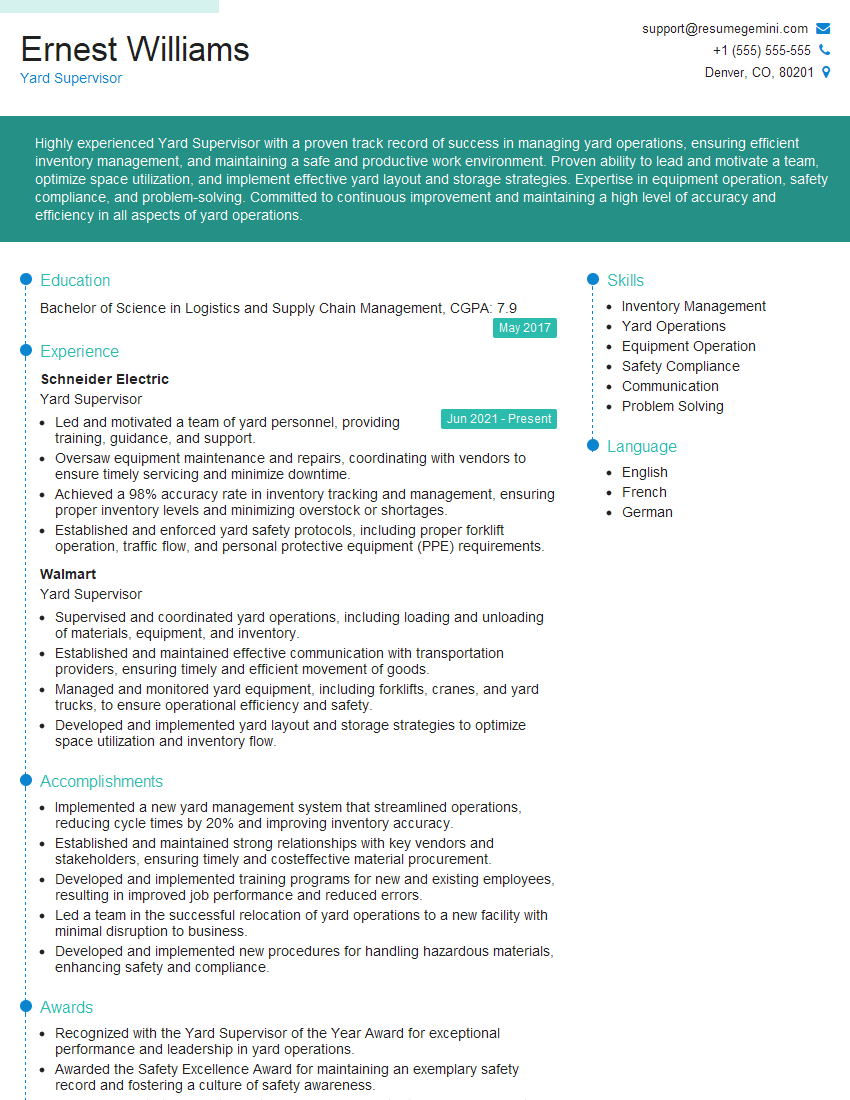
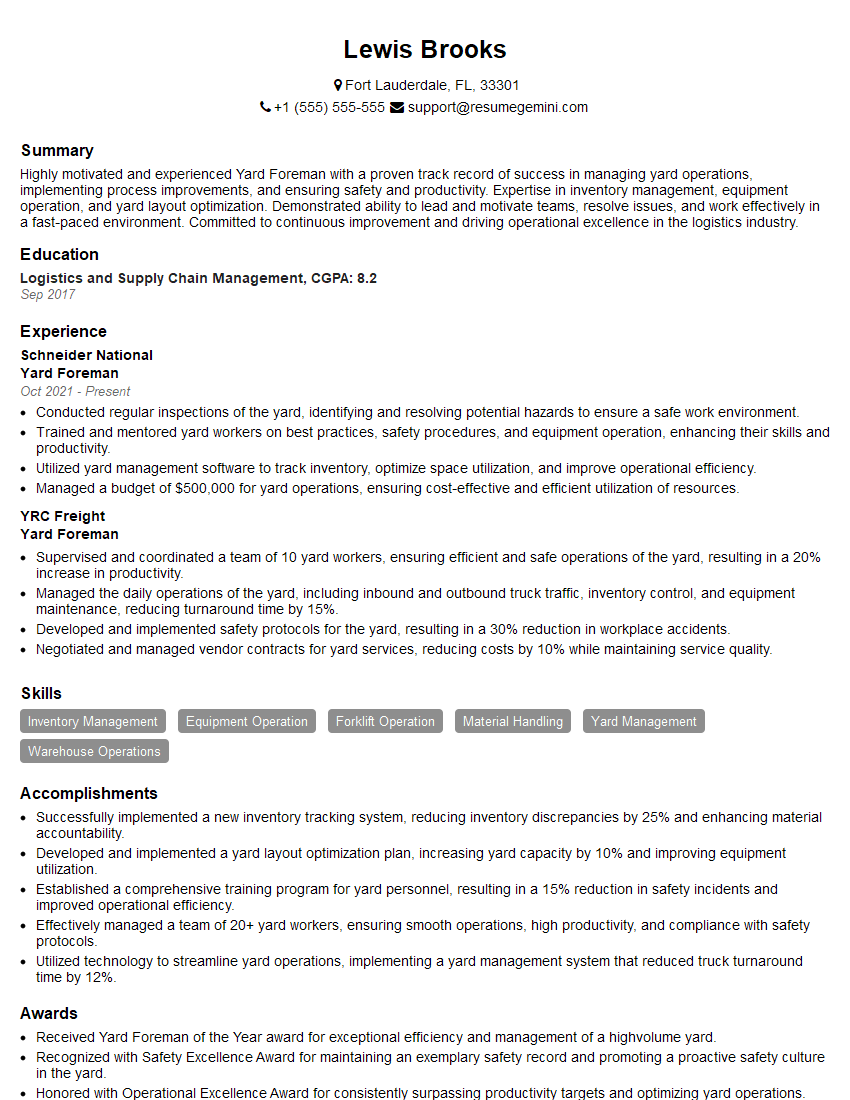
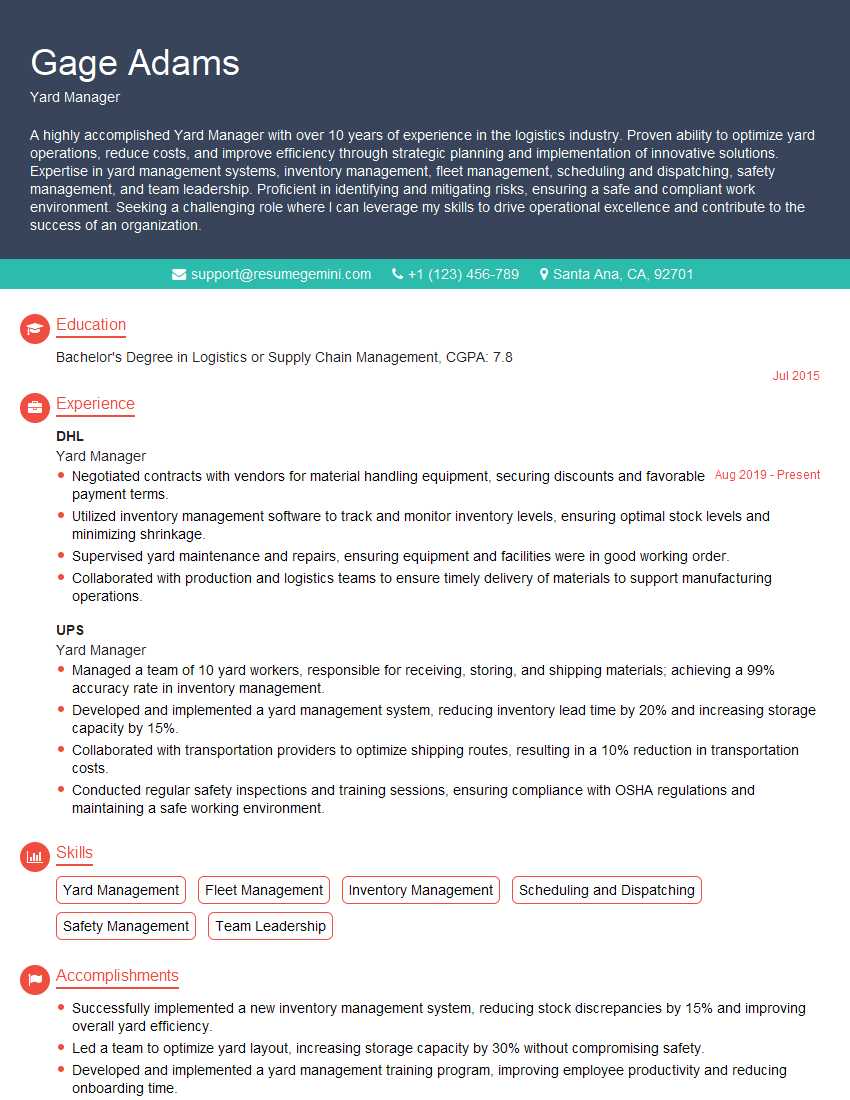
Mastering yard management principles significantly enhances your career prospects in logistics, supply chain, and operations. A strong understanding of these concepts positions you for leadership roles and higher earning potential. To maximize your job search success, create an ATS-friendly resume that highlights your skills and experience effectively. ResumeGemini is a trusted resource that can help you build a professional and impactful resume. We provide examples of resumes tailored to yard management experience to guide you through the process.
Explore more articles
Users Rating of Our Blogs
Share Your Experience
We value your feedback! Please rate our content and share your thoughts (optional).
What Readers Say About Our Blog
To the interviewgemini.com Webmaster.
Very helpful and content specific questions to help prepare me for my interview!
Thank you
To the interviewgemini.com Webmaster.
This was kind of a unique content I found around the specialized skills. Very helpful questions and good detailed answers.
Very Helpful blog, thank you Interviewgemini team.