Interviews are opportunities to demonstrate your expertise, and this guide is here to help you shine. Explore the essential Exposure and Response Prevention interview questions that employers frequently ask, paired with strategies for crafting responses that set you apart from the competition.
Questions Asked in Exposure and Response Prevention Interview
Q 1. Describe the core principles of Exposure and Response Prevention (ERP) therapy.
Exposure and Response Prevention (ERP) is the gold standard treatment for obsessive-compulsive disorder (OCD) and related anxiety disorders. Its core principle lies in the systematic confrontation of feared stimuli (exposure) while actively resisting the urge to engage in compulsive behaviors or safety rituals (response prevention). This process breaks the negative reinforcement cycle that maintains the disorder. By facing fears without resorting to avoidance or compulsions, individuals learn that their anxieties are manageable and that feared outcomes don’t materialize.
Essentially, ERP helps clients to:
- Identify and understand their obsessions and compulsions.
- Gradually expose themselves to feared situations or thoughts.
- Resist the urge to perform compulsions or engage in avoidance behaviors.
- Learn to manage anxiety and tolerate discomfort.
- Develop coping skills to manage future anxiety.
Q 2. Explain the difference between in-vivo and imaginal exposure.
Both in-vivo and imaginal exposure are crucial components of ERP, but they differ in how the feared stimuli are presented.
- In-vivo exposure involves direct, real-life exposure to the feared situation or object. For example, a person with a fear of contamination might touch a doorknob in a public restroom without washing their hands excessively afterward. The experience is more intense and often leads to faster progress for some but may not be suitable for everyone.
- Imaginal exposure involves vividly imagining the feared situation or thought. This is particularly useful when in-vivo exposure is impractical, dangerous, or excessively anxiety-provoking. For instance, a person with intrusive thoughts about harming a loved one might use imaginal exposure to repeatedly visualize these thoughts without engaging in any safety behaviors.
Often, a combination of both in-vivo and imaginal exposure is used to maximize therapeutic benefit, tailoring the approach to the client’s specific needs and anxiety levels.
Q 3. How do you assess a client’s readiness for ERP therapy?
Assessing a client’s readiness for ERP involves a thorough evaluation of several factors:
- Motivation and commitment: Clients need to understand the principles of ERP and be actively committed to the process. This often involves collaboratively setting realistic goals.
- Understanding of the disorder: Clients should understand the relationship between their obsessions, compulsions, and anxiety. Educational components are frequently integrated into the initial sessions.
- Anxiety management skills: Clients benefit from having some basic coping skills to manage the anxiety that will arise during exposure. Relaxation techniques or mindfulness practices might be introduced.
- Realistic expectations: It’s crucial to set realistic expectations regarding treatment duration and potential setbacks. ERP is effective but requires effort and persistence.
- Supportive environment: A supportive home environment and understanding from significant others are valuable for successful ERP.
If a client lacks readiness in any of these areas, we would focus on building these foundations before starting full-fledged ERP.
Q 4. What are the common challenges encountered during ERP therapy and how do you address them?
Common challenges in ERP include:
- High anxiety levels during exposure: This is expected, and managing this anxiety is part of the process. We use coping skills and gradual exposure to help clients tolerate the discomfort.
- Avoidance and safety behaviors: Clients may try to avoid exposure or engage in safety behaviors. We collaboratively work to identify and address these behaviors.
- Relapse prevention: Relapse is possible, particularly during stressful periods. We develop relapse prevention plans to equip clients with strategies for managing future anxiety.
- Client resistance: Clients may resist certain exposures. This is addressed through collaborative goal setting and motivational interviewing techniques.
- Comorbid conditions: Other conditions like depression or substance abuse can significantly affect ERP progress. Integrating treatment for these issues is often necessary.
We address these challenges by utilizing various techniques such as psychoeducation, motivational interviewing, coping skills training, and adjusting the exposure hierarchy based on the client’s progress and response.
Q 5. How do you tailor ERP treatment to different anxiety disorders (e.g., OCD, PTSD, phobias)?
While the core principles of ERP remain consistent across anxiety disorders, the specific content of exposures and the therapeutic approach are tailored to the individual diagnosis:
- OCD: Exposures target obsessions (e.g., contamination, harm, symmetry) and involve preventing compulsive rituals (e.g., excessive handwashing, checking, ordering).
- PTSD: Exposures focus on trauma-related memories, thoughts, feelings, and situations. This might involve imaginal exposure to trauma memories or in-vivo exposure to trauma-related stimuli.
- Phobias: Exposures involve gradual exposure to the feared object or situation (e.g., spiders, heights, flying). The hierarchy is structured to gradually increase the intensity of the feared stimulus.
For instance, an ERP program for a specific phobia might start with looking at pictures of spiders and progress to touching a plastic spider, then a real spider in a container, eventually leading to handling a spider.
Q 6. Describe your approach to creating an exposure hierarchy.
Creating an exposure hierarchy is a collaborative process between the therapist and client. It involves:
- Identifying feared situations or thoughts: The client lists all situations or thoughts that trigger anxiety.
- Rating anxiety levels: Each item is rated on a subjective units of distress (SUDS) scale (0-100), reflecting the level of anxiety it provokes.
- Ordering items: Items are ordered from least to most anxiety-provoking, creating a graded hierarchy.
- Refinement: The hierarchy is reviewed and refined based on the client’s progress and feedback. Items might be added, removed, or rearranged.
The hierarchy should be individualized and relevant to the client’s specific fears and challenges. The goal is to create a manageable and progressive pathway to confront the feared stimuli.
Q 7. How do you measure treatment progress in ERP?
Treatment progress in ERP is measured through several methods:
- Self-reported anxiety levels: Clients regularly rate their anxiety levels using SUDS scales before, during, and after exposures.
- Behavioral measures: We track the frequency and intensity of compulsive behaviors or avoidance strategies.
- Client self-report: Clients provide feedback on their progress, including their overall level of distress and functional impairment.
- Functional assessment: This helps determine how the client is functioning in their daily lives and whether their anxiety is impacting their occupational, social, or personal activities.
Regular monitoring of these measures allows us to track progress, identify challenges, and make adjustments to the treatment plan as needed. Consistent decreases in anxiety levels and compulsive behaviors indicate positive treatment progress.
Q 8. What are the ethical considerations involved in conducting ERP therapy?
Ethical considerations in ERP therapy are paramount. The core principle is informed consent. Clients must fully understand the nature of the treatment, including its intensity, potential discomfort, and the commitment required. This involves explaining the process of exposure and response prevention in clear, non-technical terms, ensuring they understand the rationale behind confronting their fears and resisting compulsive behaviors.
Confidentiality is another critical aspect. All information shared during therapy must be protected, adhering to relevant professional guidelines and legal regulations. There may be exceptions, such as instances of mandated reporting for child abuse or imminent harm to self or others. It’s crucial to clearly establish these boundaries upfront.
Furthermore, therapists must be mindful of the potential for iatrogenic harm – causing unintended negative consequences. This necessitates careful assessment of a client’s readiness for ERP and a tailored approach. For example, pushing a client too hard too soon might lead to increased anxiety and treatment dropout. Maintaining a therapeutic alliance built on trust and respect is crucial to mitigate this risk. We must also regularly monitor a patient’s well-being and adjust the treatment plan accordingly.
Q 9. How do you handle client resistance during ERP sessions?
Client resistance is common in ERP, as it challenges deeply ingrained avoidance patterns. Handling this requires a collaborative and empathetic approach. It’s not about forcing the client but about understanding the source of their resistance. Often, this stems from fear of the anxiety itself or a lack of confidence in their ability to cope.
I start by validating their feelings, acknowledging the difficulty of facing feared situations. We collaboratively explore their concerns, addressing them with compassion and reassurance. This might involve adjusting the hierarchy of feared situations, making exposures more gradual, or employing different exposure techniques (e.g., imaginal exposure before in-vivo).
We might use motivational interviewing techniques to help clients identify their own reasons for wanting to improve and to build their motivation for change. Sometimes, focusing on small, achievable steps rather than large, overwhelming ones can foster a sense of accomplishment and build momentum. Setting realistic goals together and regularly reviewing progress helps in maintaining engagement and commitment.
Q 10. Explain the role of psychoeducation in ERP therapy.
Psychoeducation is fundamental in ERP. It equips clients with a comprehensive understanding of their anxiety disorder, specifically how their thoughts, feelings, and behaviors interact. This involves explaining the cognitive model of anxiety, highlighting how avoidance maintains the cycle of fear and anxiety.
For example, in OCD, I explain how compulsions temporarily reduce anxiety but ultimately reinforce the obsessive thoughts. With specific phobias, I clarify the difference between fear and danger, emphasizing that the feared stimulus rarely poses a real threat. I explain the concept of habituation – how anxiety naturally decreases with repeated exposure. This helps shift the client’s perspective from avoidance to gradual exposure.
Providing psychoeducation empowers clients to become active participants in their treatment. It fosters a better understanding of the therapeutic process, enhancing their collaboration and commitment to the ERP exercises. This improved self-understanding often reduces resistance and promotes better treatment outcomes.
Q 11. How do you collaborate with other professionals (e.g., psychiatrists, physicians) in the treatment of clients using ERP?
Collaboration with other professionals is vital, especially for clients with complex or comorbid conditions. If a client is on medication, I work closely with their psychiatrist to monitor its effectiveness and make adjustments as needed. ERP is not a replacement for medication but a complementary treatment.
Similarly, if physical health concerns might impact their participation in ERP, consultation with a physician is crucial to ensure safety and to adjust the treatment plan accordingly. Communication with other therapists or specialists involved in the client’s care ensures a holistic approach and avoids contradictory interventions.
Regular meetings, shared case notes, and joint treatment planning sessions promote a coordinated care approach, ultimately optimizing the client’s overall well-being and treatment success. Open communication and transparency are essential to effective collaboration.
Q 12. Describe a case where ERP therapy was particularly effective. What were the key factors contributing to success?
I recall a client with a severe fear of contamination. They avoided public restrooms, meticulously cleaned their home, and experienced significant distress. After thorough assessment and psychoeducation, we developed a carefully structured exposure hierarchy, starting with relatively mild situations (e.g., touching a doorknob after washing hands).
Each session focused on gradual exposure, using prolonged exposure and response prevention. The client was encouraged to tolerate the anxiety without engaging in compulsive cleaning rituals. Over several weeks, we systematically worked our way up the hierarchy. Key to their success was their active participation, their strong commitment, and the gradual build-up of confidence as they successfully confronted their fears. The therapeutic alliance was strong, marked by trust and mutual respect.
Regular reinforcement of their progress and coping skills helped maintain momentum and address setbacks. Their consistent effort led to a significant reduction in anxiety and avoidance behaviors, enabling them to participate more fully in life.
Q 13. Describe a case where ERP therapy was less effective. What were the challenges, and what adjustments did you make?
In one case, a client with social anxiety showed less improvement than anticipated with standard ERP. While they initially engaged well, they struggled to maintain progress, frequently relapsing into avoidance behaviors. This indicated that simply exposing them to social situations might not be sufficient.
We discovered a co-occurring issue with low self-esteem and negative self-beliefs significantly hindering their progress. We adapted the treatment plan by integrating cognitive restructuring techniques, addressing their underlying negative thought patterns and empowering them with self-compassionate self-talk. This helped them develop coping strategies beyond exposure and response prevention, creating a more holistic and effective treatment approach.
We also adjusted the pacing of the exposures, making them less intense, and providing more support and encouragement during sessions. Regular feedback sessions helped us identify and tackle the obstacles hindering their progress. Although progress was slower than initially hoped, the combination of ERP and cognitive restructuring proved much more effective, ultimately leading to significant improvement.
Q 14. What are the limitations of ERP therapy?
ERP, while highly effective for many anxiety disorders, does have limitations. It can be challenging for clients with severe cognitive impairment or limited insight into their condition. Additionally, some individuals might find the intensity of the treatment overwhelming, leading to treatment dropout.
ERP is also time-consuming and requires significant commitment from both the client and the therapist. It might not be the most appropriate treatment for individuals with comorbid conditions that severely impair their ability to engage in the therapeutic process. Furthermore, the effectiveness of ERP can vary depending on factors such as the severity of the disorder, the client’s motivation, and the therapist’s skill and experience.
Finally, it’s crucial to acknowledge that ERP is not a magic bullet. While it addresses the behavioral and cognitive components of anxiety, it might not fully address underlying psychological or emotional issues contributing to the problem. In such cases, integrated treatment approaches involving other therapeutic modalities might be necessary.
Q 15. How do you differentiate ERP from other anxiety treatment approaches (e.g., CBT, relaxation techniques)?
Exposure and Response Prevention (ERP) is a highly effective treatment for obsessive-compulsive disorder (OCD) and related anxiety disorders. While it shares some similarities with other approaches like Cognitive Behavioral Therapy (CBT) and relaxation techniques, key differences set it apart. Unlike CBT, which primarily focuses on challenging and changing negative thoughts, ERP directly targets the avoidance behaviors and compulsive rituals that maintain anxiety. Relaxation techniques, while helpful in managing anxiety symptoms, don’t address the underlying mechanisms of OCD. ERP’s core is the systematic and repeated exposure to feared situations or obsessive thoughts (exposure) while actively resisting the urge to engage in compulsive behaviors (response prevention). This process helps break the cycle of anxiety, avoidance, and compulsion.
For example, imagine someone with a fear of contamination. CBT might help them identify and challenge irrational thoughts about germs. Relaxation techniques might help them manage the anxiety they feel when encountering something potentially dirty. ERP, however, would involve repeatedly touching something they perceive as contaminated (exposure) and actively resisting the urge to wash their hands excessively (response prevention). The repeated exposure, without engaging in the ritual, gradually reduces the anxiety associated with the feared stimulus.
Career Expert Tips:
- Ace those interviews! Prepare effectively by reviewing the Top 50 Most Common Interview Questions on ResumeGemini.
- Navigate your job search with confidence! Explore a wide range of Career Tips on ResumeGemini. Learn about common challenges and recommendations to overcome them.
- Craft the perfect resume! Master the Art of Resume Writing with ResumeGemini’s guide. Showcase your unique qualifications and achievements effectively.
- Don’t miss out on holiday savings! Build your dream resume with ResumeGemini’s ATS optimized templates.
Q 16. What are the potential risks associated with ERP therapy, and how do you mitigate them?
While ERP is highly effective, potential risks exist, primarily related to the intensity of the therapeutic process. Clients might experience temporary increases in anxiety during exposure exercises. This is normal and expected; it highlights the disruption of the avoidance-compulsion cycle. However, careful monitoring and management are crucial. Other potential risks include feeling overwhelmed, experiencing a panic attack, or exacerbating existing emotional distress.
To mitigate these risks, I use a collaborative approach. We carefully develop a hierarchy of feared situations, starting with less anxiety-provoking ones. Sessions are paced according to the client’s tolerance level, and safety plans are implemented. I emphasize psychoeducation to help clients understand the process and normalize the temporary increase in anxiety. Regular check-ins and the option to adjust the exposure plan at any time are also critical. Furthermore, clear communication, building a strong therapeutic alliance, and having a collaborative treatment planning process helps ensure the client feels safe and supported throughout therapy.
Q 17. How do you address comorbid conditions when using ERP?
Comorbid conditions, such as depression, anxiety disorders other than OCD, or substance use disorders, are common. Addressing them is essential for successful ERP implementation. A multi-modal approach might be necessary. For instance, if a client presents with significant depression alongside OCD, we might integrate ERP with techniques from Cognitive Behavioral Therapy (CBT) that target depressive symptoms. Similarly, if substance use interferes with treatment adherence, collaborating with a substance abuse specialist would be vital.
A crucial aspect is carefully assessing the client’s overall clinical presentation to determine the most appropriate treatment sequence. Sometimes, it might be necessary to address the most acute issue first before focusing on ERP. The goal is a personalized treatment plan that targets all significant mental health conditions effectively. This collaborative, multi-disciplinary approach maximizes the chance of successful outcomes.
Q 18. How do you work with clients who have difficulty tolerating distress?
Many clients struggle with distress tolerance initially. Working with these individuals requires a gradual and carefully paced approach. We begin with psychoeducation, explaining the process of habituation and the importance of exposure without immediate escape. We also incorporate relaxation and coping skills training to help clients manage their anxiety during exposures. The hierarchy of exposures is crafted meticulously, with initial exposures being relatively low in intensity. This allows for a sense of accomplishment and gradual building of confidence.
Furthermore, I might utilize techniques like mindfulness to help clients focus on the present moment during exposures rather than getting overwhelmed by catastrophic thinking. We also work on developing distress tolerance skills, such as accepting difficult emotions without resorting to avoidance or compulsion. This might involve utilizing techniques from Dialectical Behavior Therapy (DBT). The ultimate aim is to help the client develop the skills and resilience to endure and process discomfort without engaging in maladaptive behaviors.
Q 19. Describe your experience with different types of exposure (e.g., interoceptive, situational, imaginal).
My experience encompasses various exposure types. Situational exposure involves facing feared situations directly in real life, like going into a crowded room for someone with social anxiety. Imaginal exposure uses vivid imagery to create exposure in a safer, controlled environment, such as imagining a feared social interaction. Interoceptive exposure focuses on inducing physical sensations associated with anxiety, like rapid heart rate or shortness of breath, and learning to tolerate these sensations without resorting to avoidance or compulsion. For example, a client with panic disorder might engage in interoceptive exposure by deliberately inducing a rapid heart rate through exercise and then practicing relaxation techniques to manage the resultant anxiety without panic behaviors.
The choice of exposure type depends on the client’s specific needs and the nature of their anxiety. Often, a combination of exposure types provides the most comprehensive treatment. Careful planning and a collaborative relationship with the client are key to creating a tailored and effective exposure plan.
Q 20. Explain the concept of response prevention and its importance in ERP.
Response prevention is the crucial component of ERP that distinguishes it from other treatments. It involves actively resisting or preventing compulsive behaviors or rituals that provide temporary relief from anxiety. In the context of OCD, compulsive behaviors are often avoidance actions or rituals that provide short-term relief but ultimately reinforce the fear and anxiety, perpetuating the cycle of OCD. Response prevention breaks this cycle by preventing the individual from performing these actions. By preventing the escape from discomfort, the individual learns that the feared outcome (e.g., contamination, harm) does not actually occur, and their anxiety naturally decreases over time through habituation.
For instance, if a client with a fear of contamination washes their hands excessively, response prevention would involve gradually decreasing the frequency and duration of handwashing, even if it increases anxiety temporarily. The eventual reduction of anxiety demonstrates that the feared consequence of not washing never materializes.
Q 21. How do you maintain client motivation throughout the ERP process?
Maintaining client motivation is paramount in ERP, as it’s a demanding therapy. This requires a strong therapeutic alliance built on mutual respect and trust. I regularly discuss progress, setbacks, and challenges with the client. We collaboratively set realistic goals, breaking down the treatment into smaller, manageable steps to achieve a sense of accomplishment. Regular positive reinforcement, feedback and highlighting the progress made, even if small, are critical for maintaining momentum. The collaborative process ensures the client feels empowered, informed and in control of their treatment.
Furthermore, I regularly review the rationale behind the ERP process, emphasizing its effectiveness and the long-term benefits. Open communication channels, exploring and addressing any resistance or concerns, are essential, alongside utilizing motivational interviewing techniques when necessary. Flexibility is also key – adjusting the exposure plan based on the client’s feedback and progress. This adaptability keeps the client engaged and feeling supported throughout the process.
Q 22. How do you adapt ERP for different age groups (e.g., children, adolescents, adults)?
Adapting Exposure and Response Prevention (ERP) for different age groups requires a nuanced understanding of developmental stages and communication styles. While the core principles of ERP – gradually exposing individuals to feared stimuli and preventing avoidance or compulsive responses – remain consistent, the implementation varies significantly.
- Children (Preschool – Early Elementary): ERP with young children often employs play therapy techniques, incorporating imaginative scenarios and games to facilitate exposure. For instance, if a child fears dogs, we might start with reading books about dogs, then looking at pictures, progressing to observing dogs from a distance, and finally, brief, supervised interactions. Positive reinforcement and rewarding brave behavior are crucial.
- Adolescents: Teenagers benefit from collaborative goal-setting and increased autonomy in the therapeutic process. We might use technology to create exposure hierarchies or employ role-playing to simulate real-life scenarios. Understanding the social context of their anxieties is vital, as peer influence plays a significant role.
- Adults: Adult clients generally participate more actively in the development of their exposure hierarchies and treatment plans. The focus is often on identifying the underlying cognitive distortions maintaining their anxiety and challenging those beliefs through cognitive restructuring techniques integrated with ERP.
Regardless of age, building rapport, creating a safe therapeutic environment, and tailoring the pace and intensity of exposure to the individual’s capacity are paramount for successful ERP implementation.
Q 23. What are some common misconceptions about ERP therapy?
Several common misconceptions surround ERP therapy. One is that it involves forcing clients into extremely frightening situations immediately. In reality, ERP is a gradual process, carefully building tolerance through a personalized exposure hierarchy. It’s not about ‘toughing it out’ but about learning to manage anxiety through controlled exposure.
Another misconception is that ERP is only for specific anxiety disorders like OCD. While highly effective for OCD, ERP principles are adaptable to a range of anxiety-related conditions, including phobias, panic disorder, and PTSD. The exposures are tailored to the specific triggers and avoidance behaviors relevant to the individual’s diagnosis.
Finally, some believe that avoiding feared situations is a sign of weakness. However, avoidance is a learned behavior that reinforces anxiety. ERP helps clients understand and overcome this avoidance pattern, demonstrating that anxiety diminishes with repeated exposure.
Q 24. How do you assess the severity of a client’s anxiety symptoms before initiating ERP?
Assessing the severity of a client’s anxiety symptoms is a crucial first step in ERP. This involves a multi-faceted approach:
- Clinical Interviews: Detailed interviews help understand the nature, frequency, intensity, and duration of anxiety symptoms, including triggers, avoidance behaviors, and the impact on daily functioning.
- Self-Report Measures: Standardized questionnaires such as the Yale-Brown Obsessive Compulsive Scale (Y-BOCS) for OCD or the Beck Anxiety Inventory (BAI) provide quantitative data on symptom severity, allowing for objective monitoring of progress.
- Behavioral Observation: Observing the client’s behavior during sessions provides valuable insights into their anxiety responses and coping mechanisms. This might involve observing avoidance behaviors or measuring physiological responses like heart rate.
By combining these assessment methods, we obtain a comprehensive picture of the client’s anxiety, allowing for a tailored ERP treatment plan that addresses the specific challenges they face.
Q 25. Describe your experience using different ERP techniques or variations.
My experience encompasses various ERP techniques and variations, adapting them to suit individual client needs. For example, I frequently use in vivo exposure (direct exposure to feared stimuli in real-life settings), which is highly effective but requires careful planning and a strong therapeutic alliance. In vivo exposure might involve a client with social anxiety gradually engaging in increasingly challenging social interactions.
I also utilize imaginal exposure, where clients imagine feared situations, and interoceptive exposure, focusing on bodily sensations associated with anxiety (e.g., rapid heartbeat). The choice of technique depends on factors such as the nature of the anxiety, the client’s comfort level, and the feasibility of in vivo exposure. For clients with OCD, I commonly incorporate ritual prevention alongside exposure exercises.
I’ve found that integrating cognitive restructuring techniques into ERP enhances its efficacy. By challenging maladaptive thoughts and beliefs that fuel anxiety, clients gain a more balanced perspective, making exposure exercises less daunting and more successful.
Q 26. What is your approach to relapse prevention in ERP?
Relapse prevention in ERP is crucial for long-term success. This involves equipping clients with the skills and strategies to manage anxiety independently, reducing the likelihood of a return to avoidance and compulsive behaviors.
- Relapse Prevention Planning: We collaboratively develop a relapse prevention plan that identifies potential triggers and high-risk situations. This plan outlines coping strategies, such as relaxation techniques, cognitive restructuring, and seeking support from the therapist or support network.
- Boosters Sessions: Scheduling booster sessions after the completion of the main ERP program provides an opportunity to address any emerging challenges, reinforce learned skills, and maintain progress. This proactive approach significantly reduces the risk of relapse.
- Self-Monitoring: Clients are encouraged to monitor their anxiety levels and identify early warning signs of relapse. This self-awareness is critical for timely intervention and prevention of a full relapse.
- Building a Support System: Encouraging clients to involve their support network and share their progress and challenges promotes accountability and provides a crucial source of encouragement.
The goal is to empower clients to manage their anxiety independently and confidently navigate future challenges, ensuring long-term recovery.
Q 27. How do you ensure cultural sensitivity in your application of ERP therapy?
Cultural sensitivity is paramount in ERP therapy. Understanding a client’s cultural background, beliefs, and values is essential to tailoring the therapy effectively and respectfully. For example, certain cultural norms might influence the expression of anxiety or the acceptability of certain therapeutic techniques.
I actively incorporate cultural considerations into all aspects of treatment, from building rapport and understanding the client’s worldview to selecting relevant exposure scenarios and ensuring that therapeutic materials are culturally appropriate. This might involve adapting exposure hierarchies to be relevant to the client’s cultural context or finding ways to incorporate cultural practices that can support the therapeutic process.
Collaboration with cultural consultants or specialists can provide valuable insights and resources to ensure culturally sensitive and effective treatment.
Q 28. How do you document progress and outcomes in ERP therapy?
Accurate and thorough documentation is vital in ERP therapy. This involves a multi-pronged approach:
- Session Notes: Detailed session notes document the client’s progress, including specific exposures undertaken, anxiety levels, responses to exposure, and any coping strategies used. Changes in symptoms, homework completion, and client feedback are also recorded.
- Outcome Measures: Regular administration of standardized measures like the Y-BOCS or BAI allows for objective tracking of symptom severity and treatment response over time.
- Treatment Plan: A comprehensive treatment plan is developed collaboratively with the client, outlining the goals of therapy, the planned exposures, and the frequency of sessions. This serves as a roadmap for treatment and facilitates consistent progress monitoring.
- Progress Reports: Regular progress reports summarize the client’s progress, including any significant changes, challenges faced, and adjustments made to the treatment plan. These reports are essential for communication with referral sources and other healthcare providers.
Thorough documentation ensures accountability, supports informed decision-making, and allows for the evaluation of treatment efficacy.
Key Topics to Learn for Exposure and Response Prevention Interview
- Fundamentals of ERP: Understanding the theoretical underpinnings of Exposure and Response Prevention, including the cognitive-behavioral model of anxiety and its application to OCD and related disorders.
- Exposure Hierarchy Development: Learn the process of collaboratively creating a personalized hierarchy of feared situations and stimuli, graded from least to most anxiety-provoking.
- Response Prevention Techniques: Mastering various techniques for preventing compulsive behaviors and rituals, and understanding the rationale behind their implementation.
- Practical Application in Diverse Settings: Explore case studies and scenarios demonstrating the application of ERP across various anxiety disorders and populations (e.g., children, adults, specific phobias).
- Measuring Treatment Progress: Familiarize yourself with methods for assessing treatment progress, including subjective and objective measures of anxiety and compulsive behavior.
- Addressing Relapse Prevention: Understanding strategies to maintain gains achieved through ERP and anticipate potential challenges during and after treatment.
- Ethical Considerations in ERP: Grasping ethical considerations related to informed consent, client autonomy, and the therapist’s role in the therapeutic process.
- Collaboration and Communication: Understanding the importance of building a strong therapeutic alliance and effective communication strategies with clients undergoing ERP.
- Adapting ERP for Different Clients: Exploring strategies for tailoring ERP to meet the unique needs of individuals with varying levels of severity, comorbid conditions, and cultural backgrounds.
- Integration with other Therapies: Understanding how ERP can be integrated with other therapeutic approaches for optimal outcomes.
Next Steps
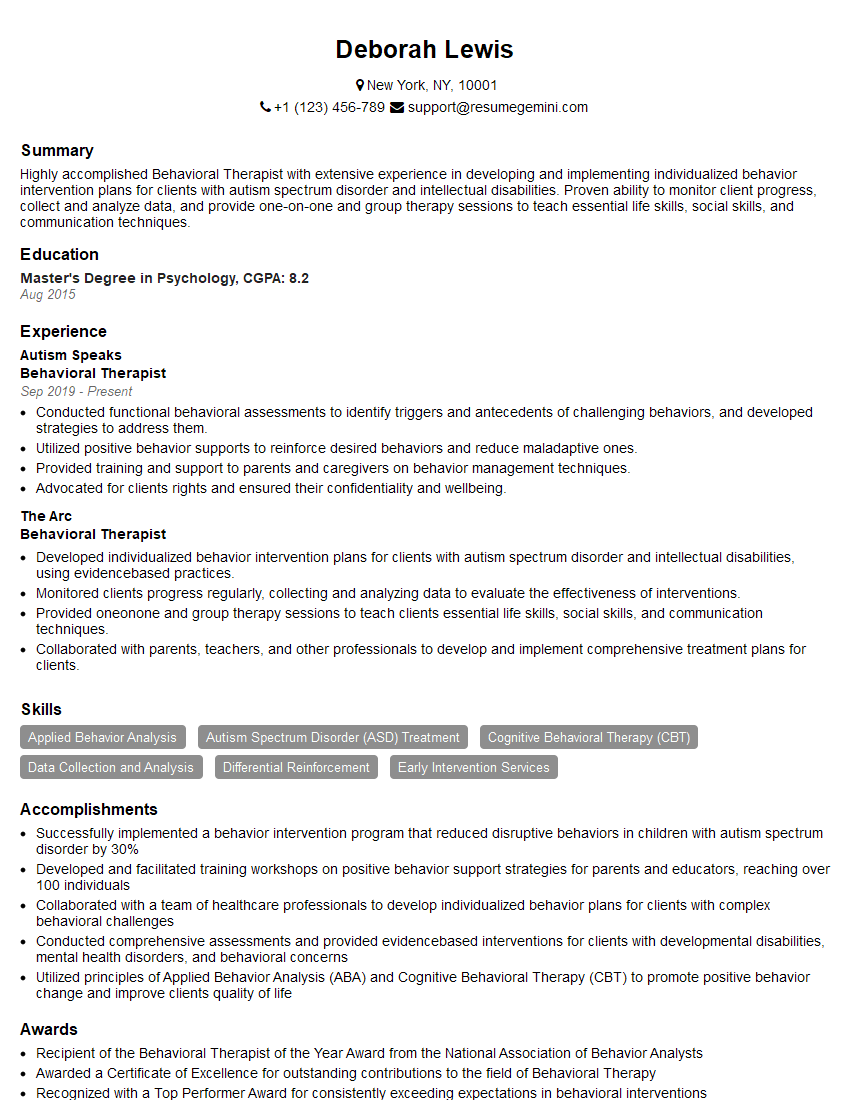
Mastering Exposure and Response Prevention is crucial for career advancement in mental health professions. A strong understanding of ERP principles and their practical application significantly enhances your marketability and positions you as a skilled and sought-after clinician. To maximize your job prospects, creating an ATS-friendly resume is essential. ResumeGemini is a trusted resource to help you build a professional and impactful resume that highlights your expertise in Exposure and Response Prevention. Examples of resumes tailored to Exposure and Response Prevention are provided to help guide you in showcasing your skills and experience effectively. Take this opportunity to elevate your resume and confidently present yourself to potential employers.
Explore more articles
Users Rating of Our Blogs
Share Your Experience
We value your feedback! Please rate our content and share your thoughts (optional).
What Readers Say About Our Blog
To the interviewgemini.com Webmaster.
Very helpful and content specific questions to help prepare me for my interview!
Thank you
To the interviewgemini.com Webmaster.
This was kind of a unique content I found around the specialized skills. Very helpful questions and good detailed answers.
Very Helpful blog, thank you Interviewgemini team.