Are you ready to stand out in your next interview? Understanding and preparing for Exterior Carpentry interview questions is a game-changer. In this blog, we’ve compiled key questions and expert advice to help you showcase your skills with confidence and precision. Let’s get started on your journey to acing the interview.
Questions Asked in Exterior Carpentry Interview
Q 1. What types of wood are best suited for exterior applications and why?
Choosing the right wood for exterior applications is crucial for longevity and aesthetics. The best choices are those naturally resistant to rot, decay, and insect infestation. Durability is key, as these materials will be exposed to the elements.
- Cedar: Known for its beautiful reddish hue, natural resistance to rot and insects, and pleasant aroma. It’s relatively easy to work with but can be more expensive than some other options. I often recommend it for siding, decking, and fencing.
- Redwood: Similar to cedar in its resistance properties and rich color, redwood is exceptionally durable and can withstand harsh weather conditions. It’s a premium choice often used in high-end projects.
- Pressure-Treated Lumber: This isn’t a naturally rot-resistant wood, but the pressure-treatment process forces preservatives deep into the wood, making it resistant to decay and insect damage. It’s a cost-effective choice for applications like decks and fences where durability is paramount but aesthetics aren’t the primary concern. I often specify different pressure treatments depending on the ground contact of the wood.
- Cypress: Another excellent choice known for its durability and resistance to rot and insects. It’s a bit more expensive than pressure-treated lumber but offers superior aesthetics and longevity.
The choice ultimately depends on the budget, desired aesthetic, and specific application. For example, I might use cedar for a high-end custom home siding project, but pressure-treated lumber for a more budget-friendly deck.
Q 2. Describe your experience with different siding materials (e.g., vinyl, wood, fiber cement).
My experience encompasses a wide range of siding materials. Each has its strengths and weaknesses, and the best choice depends on the project’s specific requirements and the client’s preferences.
- Wood Siding: Offers a classic, natural look and can last for decades with proper maintenance. However, it requires regular painting or staining and is susceptible to rot and insect damage if not properly treated and maintained. I’ve worked extensively with various wood species, including cedar, redwood, and clapboard.
- Vinyl Siding: A low-maintenance, cost-effective option that’s resistant to rot, insects, and moisture. It comes in a variety of colors and styles, but it can be less aesthetically pleasing than wood and may not hold up as well in extreme temperature fluctuations. I’ve successfully installed vinyl siding on many projects where budget was a major factor.
- Fiber Cement Siding: This material combines the durability of cement with the versatility of wood. It’s incredibly durable, resistant to fire, insects, and rot, and requires minimal maintenance. While more expensive than vinyl, it offers a superior long-term value and a more realistic wood-like appearance. I particularly appreciate its performance in high-wind or harsh weather conditions.
I always discuss the pros and cons of each material with my clients to ensure we choose the best option for their needs and budget. For instance, a client wanting a low-maintenance option might opt for fiber cement, while a client looking for a traditional look might choose wood siding, understanding the increased maintenance required.
Q 3. How do you ensure proper flashing and sealing around windows and doors to prevent water damage?
Proper flashing and sealing around windows and doors is critical to prevent water damage and ensure the building’s longevity. Neglecting this step can lead to costly repairs down the road, including rot, mold, and structural issues. My process involves several key steps:
- Install flashing: This is a thin, waterproof material installed to divert water away from the opening. I use a variety of flashing materials, such as aluminum, galvanized steel, or rubberized asphalt, depending on the specific application and building code requirements. The flashing needs to be installed properly overlapping each layer to prevent water penetration.
- Caulk and seal: After the flashing is installed, I carefully caulk all gaps and seams between the window/door frame and the surrounding structure. I use high-quality, weather-resistant caulk designed for exterior use. I meticulously work the caulk into all joints, ensuring a complete and durable seal.
- Siding installation: The siding is then installed, overlapping the flashing and ensuring a watertight seal. I carefully check all joints and seal any gaps to maintain the integrity of the waterproof barrier.
- Inspection: Finally, I thoroughly inspect my work to ensure there are no gaps or areas where water could penetrate. This is crucial in ensuring a durable and long lasting construction.
Think of flashing and sealing as creating a series of dams and barriers to prevent water from entering the building. Each step is essential for a successful and watertight installation.
Q 4. Explain your process for installing exterior trim and molding.
Installing exterior trim and molding is both an art and a science. It requires precision and attention to detail to create a beautiful and long-lasting finish. My process typically involves:
- Preparation: This includes ensuring the substrate is clean, dry, and properly prepared. Any imperfections should be addressed before proceeding.
- Measurement and Cutting: Accurate measurement and precise cuts are essential. I use a variety of tools, including miter saws and hand saws, depending on the complexity of the cuts. I always double-check my measurements to avoid mistakes.
- Installation: I use a combination of nails, screws, and construction adhesive for secure installation. The choice of fastener depends on the type of wood and the overall design. I ensure proper alignment and spacing between pieces.
- Caulking and Sealing: All joints and gaps are carefully caulked and sealed to prevent water penetration. I use exterior-grade caulk that matches the color of the trim.
- Finishing: Once everything is securely in place, I sand down any imperfections and apply a finishing coat of paint or stain, ensuring a consistent and professional look. I often use a primer before the final finish coat to enhance adhesion and longevity.
The key to successful trim and molding installation is precision and attention to detail. I always aim for a clean, crisp look that enhances the overall aesthetic of the building. Paying close attention during each step contributes to a high-quality, long lasting exterior finish.
Q 5. What are the common issues encountered when working with decks and how do you address them?
Decks present several common issues, many stemming from inadequate planning, material selection, or installation. Addressing these issues proactively is essential for a safe and long-lasting deck.
- Rot and Decay: Using improperly treated lumber or neglecting proper drainage can lead to rot and decay. I always specify pressure-treated lumber for ground-contact applications and ensure proper drainage to prevent water accumulation.
- Insect Infestation: Termites and other insects can weaken the structural integrity of a deck. Using insect-resistant wood or applying preventative treatments can mitigate this risk.
- Improper Fastening: Using the wrong fasteners or improper fastening techniques can lead to loose boards or structural failure. I meticulously use the correct fasteners and ensure they are driven at the proper depth.
- Uneven Surfaces: Proper preparation of the site is crucial for preventing uneven surfaces. A level and stable foundation is crucial for a safe and durable deck.
- Water Damage: Proper drainage, flashing, and sealing are essential to prevent water damage. I pay particular attention to these details to protect the deck’s structural integrity.
To address these issues, I emphasize thorough planning, proper material selection, and meticulous installation techniques. Regular inspections and maintenance are also essential for extending the lifespan of the deck.
Q 6. Describe your experience with different roofing materials and installation techniques.
My experience with roofing materials includes asphalt shingles, tile, metal, and wood shakes. Each material has its advantages and disadvantages, making material selection dependent on budget, climate, and aesthetic preferences.
- Asphalt Shingles: The most common roofing material, offering affordability and ease of installation. They come in a wide variety of colors and styles, but they have a shorter lifespan compared to other options. I use high-quality shingles and follow manufacturer recommendations for proper installation.
- Tile Roofing: A durable and aesthetically pleasing option, especially in warmer climates. Tile roofs are highly resistant to fire and weather but are more expensive and require specialized installation techniques.
- Metal Roofing: Highly durable, long-lasting, and energy-efficient, metal roofing is becoming increasingly popular. It’s resistant to fire, wind, and insects but can be more expensive than asphalt shingles and requires specialized installation techniques.
- Wood Shakes: Offer a rustic and natural look, but they require more maintenance than other materials and are susceptible to fire damage. Their installation requires attention to detail to ensure proper ventilation and prevent moisture buildup.
Regardless of the material chosen, proper underlayment, flashing, and ventilation are crucial for a long-lasting roof. I always prioritize proper installation techniques to prevent leaks and ensure the roof’s structural integrity.
Q 7. How do you calculate the amount of material needed for a project?
Accurately calculating material needs is essential for efficient project management and cost control. My approach involves a multi-step process:
- Detailed Measurements: I begin with precise measurements of the area to be covered. This often involves taking multiple measurements and cross-checking for accuracy.
- Material Waste Factor: I always account for material waste. This factor varies depending on the material and the complexity of the project. For example, I might add 10% waste for standard lumber cuts but up to 20% for intricate cuts.
- Overage: I always add a small percentage of overage to account for unexpected issues or mistakes. This minimizes the risk of running out of materials mid-project.
- Manufacturer Specifications: I consult manufacturer’s specifications for exact coverage rates. These specifications can vary depending on the material type and the intended application.
- Software and Technology: For larger projects, I utilize specialized software to calculate material requirements and generate detailed cut lists. This enhances accuracy and efficiency.
For example, when calculating the amount of siding needed, I’ll measure the perimeter of the house, account for windows and doors, and then add the waste and overage factors before ordering. Accurate material calculation is critical for efficient and cost-effective project completion.
Q 8. What safety measures do you take when working at heights?
Working at heights is inherently risky, so safety is paramount. My approach is layered, incorporating multiple safeguards. First, I always assess the worksite before starting, identifying potential hazards like uneven surfaces, overhead obstructions, and weather conditions. Then, I select the appropriate fall protection system, often a full-body harness and a lifeline anchored to a secure point. For instance, on a recent porch roof repair, I used a properly anchored lifeline system, ensuring a continuous connection to a secure point above. This was crucial given the steep pitch of the roof. I also rigorously inspect all equipment before each use, ensuring everything is in top condition. Finally, I strictly adhere to all company safety protocols and actively participate in any safety training offered, especially regarding working at heights.
Beyond the equipment, communication is key. I always inform my team of my actions and any potential risks. We work as a team, double-checking each other’s safety measures. A buddy system is vital for accountability.
Q 9. How do you handle unexpected problems or changes during a project?
Unexpected problems are part and parcel of exterior carpentry. My approach is proactive, emphasizing thorough planning upfront to minimize surprises. This includes carefully reviewing blueprints, discussing the project in detail with the client, and anticipating potential challenges. However, when the unexpected arises—a rotten beam discovered mid-project, for example—I use a structured problem-solving method.
- Assess the Situation: I first thoroughly examine the problem, determining its scope and impact on the overall project.
- Develop Solutions: I brainstorm multiple solutions, weighing the pros and cons of each. For instance, if a beam is rotten, I might consider repair, replacement, or an alternative design.
- Communicate the Issue: I immediately discuss the problem with the client, presenting the different solutions and their implications, both cost and time-wise. Transparency is essential.
- Implement the Solution: Once the client approves a solution, I execute it efficiently and meticulously, documenting all changes.
In the rotten beam scenario, we opted for a replacement. The client was kept informed throughout, which ensured satisfaction. Flexibility and clear communication are key to navigating such challenges.
Q 10. What are your experience with different types of fasteners for exterior applications?
My experience with exterior fasteners is extensive. The choice of fastener depends heavily on the material, application, and environmental conditions. For example:
- Galvanized nails: These are economical and suitable for many general applications but may not be ideal for long-term exposure in harsh weather.
- Hot-dipped galvanized nails and screws: Offer superior corrosion resistance, essential in coastal areas or high-humidity environments.
- Stainless steel fasteners: Provide the best corrosion protection, suitable for projects requiring extreme durability and longevity. I frequently use stainless steel screws in deck construction.
- Exterior-grade wood screws: Offer strong holding power and a clean finish. They are ideal for joining various wood components. I often prefer them for trim work.
- Structural screws: Designed for heavy-duty applications, providing superior strength and holding power compared to nails. These are vital for framing components that require significant load-bearing capacity.
Beyond the type of fastener, proper installation is crucial. Using the right size, length, and driving technique prevents damage to the wood and ensures the connection’s longevity.
Q 11. Explain your experience with blueprint reading and understanding construction drawings.
Blueprint reading is fundamental to my work. I’m proficient in interpreting architectural and structural drawings, including understanding scales, elevations, sections, and details. This allows me to visualize the project’s components and their relationships. I can understand specifications for materials, dimensions, and construction methods.
For example, I recently worked on a project with complex roof details. By carefully studying the elevation drawings and sections, I accurately interpreted the various angles and the placement of rafters and sheathing. This understanding is crucial to construct a structurally sound and aesthetically pleasing roof. Familiarity with symbols and notations, like those indicating different wood types or fastener sizes, is just as important.
I’m comfortable with both digital and traditional blueprints and often use software to assist with measurements and visualization. This helps ensure accuracy and minimize potential errors.
Q 12. How do you ensure the proper alignment and squareness of framing members?
Ensuring proper alignment and squareness of framing members is critical for a structurally sound building. This process begins with careful layout using measuring tools and a level. I employ several methods:
- Precise Measurement: I always double-check measurements before cutting and assembling framing components to minimize errors.
- Square and Level: I use a speed square and level constantly to ensure that members are properly aligned and at 90-degree angles. For example, when installing wall studs, I ensure each stud is plumb and square to the top and bottom plates.
- Plumb Bob: A plumb bob is very useful in verifying vertical alignment, especially for taller structures.
- Framing Square: A framing square is crucial for laying out accurate cuts and checking angles.
- Diagonal Measurement: To check for squareness, I measure the diagonals of rectangular frames. Equal diagonals indicate a perfectly square frame.
Any deviations are immediately addressed. Maintaining squareness and plumbness throughout the framing process is vital to avoid future problems and ensures the building’s structural integrity.
Q 13. What are your preferred methods for preventing wood rot and insect infestation?
Preventing wood rot and insect infestation is a crucial aspect of exterior carpentry, impacting the longevity and structural integrity of the building. My approach involves a combination of preventative measures:
- Properly treated lumber: I always specify and use pressure-treated lumber for applications susceptible to moisture, such as foundation framing, decks, and ground-contact elements. The treatment protects against rot and insect damage.
- Proper flashing and sealing: Correct installation of flashing around windows, doors, and other openings is critical to prevent water intrusion. Caulking and sealants are used to close any gaps or cracks that could allow moisture to penetrate.
- Proper ventilation: Adequate ventilation is essential to prevent moisture buildup, particularly in attics and crawl spaces. This helps maintain a dry environment, reducing the risk of rot and mold growth.
- Insect repellent treatment: In areas prone to insect infestation, I utilize insect repellent treatments during construction. This can involve borate treatments or other approved methods.
- Regular inspection and maintenance: Finally, regular inspections of the finished product allow for early detection of any signs of rot or insect activity, allowing for timely intervention and preventing extensive damage.
These preventive measures, along with proper design and construction techniques, ensure the long-term durability and resilience of the structure.
Q 14. What is your experience with different types of exterior doors and their installation?
My experience encompasses a wide range of exterior doors, from standard solid-core doors to more complex insulated and custom-designed units. The installation process varies depending on the door type and the existing structure but generally involves these steps:
- Precise Measurement and Preparation: Accurate measurements of the door opening are crucial. The opening must be properly sized and squared for a precise fit.
- Framing: For new installations, the door frame must be properly installed, level, plumb, and square.
- Door Installation: The door is then carefully hung in the frame, ensuring proper alignment and clearance. Shims are often used to achieve a perfect fit.
- Weatherstripping: Appropriate weatherstripping is applied to ensure a tight seal, preventing drafts and water infiltration. This is vital for energy efficiency.
- Hardware Installation: This includes hinges, handles, and locks, all installed securely and correctly.
- Finishing: The final step involves finishing touches such as caulking, painting, or staining to protect the door and enhance its appearance.
I’ve worked with various door materials including wood, fiberglass, and steel, each requiring slightly different techniques. Understanding the specific requirements of each material is key to a successful installation. I also have experience installing different types of door hardware, ensuring compatibility and functionality.
Q 15. Describe your experience with installing and repairing fences.
Fence installation and repair is a cornerstone of exterior carpentry, requiring a blend of precision and structural understanding. My experience encompasses a wide range of fence types, from simple picket fences to complex post-and-rail designs. The process typically begins with a thorough site assessment to determine the appropriate materials, post spacing, and overall design. I carefully consider factors such as soil conditions, local building codes, and the client’s aesthetic preferences.
For installation, I start by digging precisely spaced post holes, ensuring sufficient depth for stability. Concrete is then used to set the posts, ensuring they are plumb and level. Next, the rails are attached, followed by the fencing itself. Proper alignment and tension are crucial for a durable, aesthetically pleasing result. Repair work often involves replacing damaged sections, resetting posts that have shifted, or addressing rot or insect damage. This requires careful assessment of the damage and strategic replacement using matching materials. I’ve tackled numerous projects, from repairing a single damaged section of a wood fence to completely rebuilding a large section of chain link.
For example, I once worked on a project where a significant section of a cedar fence had been damaged by a storm. My team and I meticulously assessed the damage, carefully removed the damaged sections, and replaced them with new cedar planks, ensuring a seamless match in both color and grain. The result was a fence that looked as good as new, and stood up to future storms.
Career Expert Tips:
- Ace those interviews! Prepare effectively by reviewing the Top 50 Most Common Interview Questions on ResumeGemini.
- Navigate your job search with confidence! Explore a wide range of Career Tips on ResumeGemini. Learn about common challenges and recommendations to overcome them.
- Craft the perfect resume! Master the Art of Resume Writing with ResumeGemini’s guide. Showcase your unique qualifications and achievements effectively.
- Don’t miss out on holiday savings! Build your dream resume with ResumeGemini’s ATS optimized templates.
Q 16. Explain your process for installing and sealing window and door casings.
Installing and sealing window and door casings is a detail-oriented process that significantly impacts a building’s curb appeal and weather resistance. It requires a keen eye for precision and a thorough understanding of material properties.
My process typically begins with careful measurement and cutting of the casing material, ensuring a precise fit around the window or door frame. I typically use a miter saw for accurate cuts, paying close attention to the angles to create clean, tight joints. The casing is then securely fastened using appropriate nails or screws, ensuring that the casing is plumb, level, and perfectly aligned. Next, I carefully caulk all joints to prevent water intrusion. This is a critical step, as gaps can lead to drafts and water damage. Finally, I apply a high-quality primer and paint or stain, matching the existing exterior finish. For stain, I often apply multiple coats to achieve even color and protection.
For example, I once worked on a historic home restoration. The original window casings were beyond repair. I carefully recreated them using period-appropriate materials and techniques, meticulously matching the profiles and detailing to preserve the home’s historical character. The attention to detail ensured that the project was not only visually stunning but also structurally sound.
Q 17. How do you handle issues related to moisture control in exterior carpentry?
Moisture control is paramount in exterior carpentry, as water damage can lead to rot, mold, and structural compromise. My approach is proactive and multifaceted, beginning with proper material selection. I favor pressure-treated lumber and other moisture-resistant materials wherever possible. Proper flashing and sealing are also essential. Flashing, thin strips of metal used to divert water away from vulnerable areas, is crucial around windows, doors, and other openings. Effective caulking prevents water from penetrating joints between materials.
Furthermore, I pay close attention to grading and drainage around the building. Proper grading ensures that water flows away from the foundation, reducing the risk of moisture buildup. I also understand the importance of ventilation to prevent the build-up of moisture within walls and roofs, such as proper soffit and fascia ventilation. If signs of existing moisture damage are present, I carefully assess the extent of the damage and implement appropriate repair measures, which may involve replacing damaged materials and treating affected areas with a mildewcide.
For instance, on one project, I noticed poor drainage leading to water pooling around the base of the house. I resolved the issue by re-grading the area and installing drainage channels to divert water away from the foundation. This simple intervention prevented significant future damage.
Q 18. What are your experience with various types of exterior paints and stains?
My experience with exterior paints and stains is extensive, covering various types and applications. I am familiar with oil-based, latex, and acrylic paints, as well as oil-based and water-based stains. The choice of material depends on several factors including the type of wood, the desired finish, the climate, and the client’s budget. Oil-based paints and stains offer superior durability and water resistance but have a stronger odor and longer drying time. Latex and acrylic paints are more environmentally friendly, dry faster, and are easier to clean up.
Stains penetrate the wood, allowing the wood grain to show through, while paints create a solid, opaque finish. I understand the importance of proper surface preparation, including cleaning, sanding, and priming, to ensure optimal adhesion and a long-lasting finish. I also know how to apply multiple coats of paint or stain, allowing sufficient drying time between coats for a professional result. I’m experienced in selecting the right pigments and tinting paints to achieve specific color matches for a cohesive aesthetic.
For example, recently, I used a high-quality marine-grade paint on a seaside home to provide superior protection from the harsh salt-air environment. Choosing the correct paint type was crucial to ensure a lasting finish.
Q 19. Explain your knowledge of building codes and regulations related to exterior carpentry.
Building codes and regulations are crucial to ensure the safety and structural integrity of any exterior carpentry project. My understanding encompasses local, state, and sometimes national regulations related to building materials, construction techniques, and safety standards. I am familiar with regulations concerning the use of pressure-treated lumber, the proper installation of railings and decks, and requirements for accessibility ramps. I ensure all my work complies with these regulations, meticulously reviewing plans and specifications before commencing any project. I understand the importance of obtaining necessary permits and inspections.
For example, I’m thoroughly familiar with the International Building Code (IBC) sections addressing exterior walls, decks, and fences, which often dictate specific requirements on materials, fasteners, and construction methods. I also stay up to date on any changes or updates to these codes through professional development and industry publications. Non-compliance can lead to costly delays and even legal issues, therefore it is paramount to maintain a working knowledge of all relevant building codes.
Q 20. How do you manage your time and prioritize tasks on a construction site?
Time management on a construction site is crucial. My approach involves careful planning, prioritization, and effective communication. Before starting a project, I create a detailed schedule outlining the tasks, timelines, and resources required. This schedule considers potential delays and contingencies. I prioritize tasks based on their dependencies and critical path, focusing on those that will impact subsequent phases of the project. I communicate the schedule and any changes to the team and clients clearly. I’m proficient in using project management software and tools to track progress, identify potential problems early on, and adjust the schedule as needed.
On-site, I maintain a flexible approach, recognizing that unforeseen issues may arise. I efficiently adapt the schedule to accommodate those issues while ensuring the overall project timeline remains as close as possible to the original plan. This includes effective delegation of tasks and regular check-ins with the team. Maintaining clear lines of communication minimizes conflict and ensures that everyone is working efficiently toward the same goal.
Q 21. Describe your experience with using power tools and hand tools commonly used in exterior carpentry.
My experience with power tools and hand tools used in exterior carpentry is extensive and includes a variety of saws (circular, miter, reciprocating), drills, routers, nail guns, planers, sanders, and various hand tools, including chisels, levels, squares, measuring tapes, and hand saws. I am proficient in safely and effectively operating all of these tools and understand the importance of regular maintenance to ensure optimal performance and safety. Safety is my top priority and I adhere to all safety regulations when using any power tool.
I understand the different applications of each tool and choose the most appropriate tool for each task. For example, I would use a miter saw for precise cuts on window casings, a circular saw for rough cuts on lumber, and a hand plane for fine adjustments to achieve a perfectly smooth finish. My expertise enables me to create precise, high-quality results efficiently.
Q 22. How do you ensure the structural integrity of exterior components?
Ensuring structural integrity in exterior carpentry is paramount. It’s about building a robust, long-lasting structure that can withstand the elements. This begins with proper planning and material selection. We need to consider factors like wind load, snow load, and potential seismic activity, varying depending on the location. For example, in areas prone to hurricanes, we’d use stronger fasteners and more robust sheathing.
The process involves several key steps: First, a thorough inspection of the existing structure – looking for rot, insect damage, or any weaknesses. Next, we use engineered lumber or pressure-treated wood where needed to guarantee durability. Proper flashing is crucial – it prevents water ingress that leads to rot. We employ the correct fasteners for each material – using longer screws for thicker wood, and appropriate nails or staples for siding. Finally, rigorous quality checks at each stage of construction ensure everything is correctly aligned and securely fastened. Think of it like building a house of cards: every piece needs to support the next.
- Proper flashing installation: Prevents water damage by directing water away from vulnerable areas.
- Correct fastener selection: Using the right screws, nails, or staples ensures a secure connection and prevents pull-through.
- Use of engineered lumber: Provides enhanced strength and resistance to rot and warping compared to standard lumber.
Q 23. What are some common problems encountered with different types of siding and how to fix them?
Different siding materials present unique challenges. For instance, wood siding is susceptible to rot, insect infestation, and warping if not properly treated and maintained. Repair involves replacing damaged sections, treating with wood preservative, and potentially re-caulking. Vinyl siding, while durable, can crack, fade, or become brittle over time, especially in extreme temperature fluctuations. Repairs often involve replacing damaged panels. Fiber cement siding, though very strong and fire-resistant, can be prone to cracking during installation if not handled carefully, demanding careful attention to detail during installation to avoid this.
Addressing these problems often requires a combination of techniques:
- Inspection: Carefully examining the siding for damage, noting the extent and cause.
- Material Selection: Choosing appropriate replacement materials that match existing siding.
- Repair Techniques: Utilizing methods such as patching, caulking, or replacing entire sections.
- Preventative Measures: Regularly cleaning and maintaining siding to extend its lifespan.
For example, if a section of wood siding is severely rotted, we’d cut it out, ensuring we remove all the affected area, and replace it with a piece of treated lumber, ensuring a tight fit and proper caulking. With vinyl, a single damaged panel can usually be replaced relatively easily.
Q 24. Explain your experience with installing gutters and downspouts.
I have extensive experience in gutter and downspout installation. It’s a crucial part of protecting a building’s exterior from water damage. The process starts with accurate measurements to ensure proper sizing and slope. Incorrect slope can lead to water pooling and damage. I always ensure gutters are securely attached to the fascia board using appropriate hangers, spaced correctly to prevent sagging. Downspouts need to be properly sized and secured, directing water away from the foundation.
I’ve worked on various projects, from small residential homes to larger commercial buildings, adapting my techniques as needed. For example, on a multi-story building, we’d need to consider the additional weight and potential for water pressure, using heavier-duty materials and more robust support systems. I’m proficient in different gutter materials, including aluminum, copper, and zinc, each having its own set of installation requirements. Beyond installation, I understand the importance of regular gutter cleaning to maintain efficiency and prevent blockages that could cause overflow and damage. This includes advising clients on preventative maintenance.
Q 25. How do you maintain quality control throughout a project?
Maintaining quality control is an ongoing process. It starts with a meticulous review of the project plans and specifications. This ensures we have a clear understanding of the scope of work and the client’s expectations. Throughout the project, I conduct regular inspections, comparing progress against the plans and identifying potential problems early. I use checklists for each stage of the construction, verifying material quality, proper installation techniques, and adherence to safety standards.
This system also includes a thorough final inspection before handover, ensuring everything meets the required standards and that any minor defects are addressed. Regular communication with the team ensures everyone is on the same page and any issues are addressed promptly. Documentation, including photographs and detailed records, ensures accountability and provides a clear history of the project. Think of it as building with a precision instrument, each step verified and documented to ensure accuracy and quality.
Q 26. How do you communicate effectively with supervisors, colleagues, and clients?
Effective communication is essential in this role. With supervisors, it’s about providing regular updates on progress, highlighting potential challenges, and seeking clarification when needed. Clear, concise reporting is key, using visual aids like photos whenever helpful. With colleagues, open and respectful communication is vital – ensuring teamwork, sharing expertise, and proactively addressing any issues before they escalate. With clients, it involves actively listening to their needs, explaining technical details in an easily understandable way, managing expectations, and keeping them informed throughout the project. Clear, consistent updates keep everyone informed and foster trust. For instance, I always schedule regular check-ins with clients so they can see the progress firsthand and voice any concerns.
Q 27. Describe your experience with working on both residential and commercial projects.
I have extensive experience working on both residential and commercial projects. Residential projects often involve smaller-scale work with a focus on individual client needs and aesthetics. This includes projects such as porch repairs, siding replacements, and window installations. Commercial projects, on the other hand, typically involve larger-scale work with a stronger emphasis on efficiency and meeting deadlines. These might include the installation of exterior cladding on large buildings, or the maintenance of extensive roofing systems. The scale of the work is different, but the fundamental principles of quality workmanship and attention to detail remain the same. For example, a residential project might involve intricate trim work, while a commercial project would focus on the efficient installation of large quantities of siding. Both require a thorough understanding of building codes and safety regulations.
Q 28. What are your salary expectations?
My salary expectations are commensurate with my experience and skills, and are in line with the industry standard for a skilled exterior carpenter with my qualifications and years of experience. I am open to discussing a specific salary range based on the details of the position and company benefits package.
Key Topics to Learn for Your Exterior Carpentry Interview
- Building Codes and Regulations: Understanding local and national building codes related to exterior carpentry, including safety regulations and permit requirements. Practical application: Explaining how you’d ensure compliance on a project.
- Material Selection and Estimation: Knowledge of various exterior materials (wood, siding, composite materials) and their appropriate applications. Practical application: Calculating material needs for a given project and justifying your choices based on budget and project requirements.
- Framing Techniques: Proficiency in different framing methods for walls, roofs, and decks, including proper bracing and structural integrity. Practical application: Describing your experience with different framing techniques and how you ensure structural soundness.
- Installation Techniques: Expertise in installing various exterior elements such as siding, windows, doors, trim, and flashing. Practical application: Detailing your experience with specific installation methods and troubleshooting common issues.
- Weatherproofing and Moisture Management: Understanding the importance of proper weatherproofing techniques to prevent water damage. Practical application: Explaining your approach to sealing, flashing, and ensuring proper drainage.
- Tools and Equipment: Familiarity with a range of hand and power tools commonly used in exterior carpentry. Practical application: Demonstrating knowledge of tool maintenance and safe operating procedures.
- Safety Procedures: Thorough understanding and adherence to safety regulations and best practices on job sites. Practical application: Describing your experience with fall protection, tool safety, and hazard identification.
- Problem-Solving and Troubleshooting: Ability to identify and resolve common construction issues on the job site. Practical application: Providing examples of how you’ve solved problems related to material defects, weather conditions, or design challenges.
- Blueprint Reading and Interpretation: Ability to accurately read and interpret architectural blueprints and construction drawings. Practical application: Describing your experience in understanding plans and translating them into practical construction steps.
Next Steps
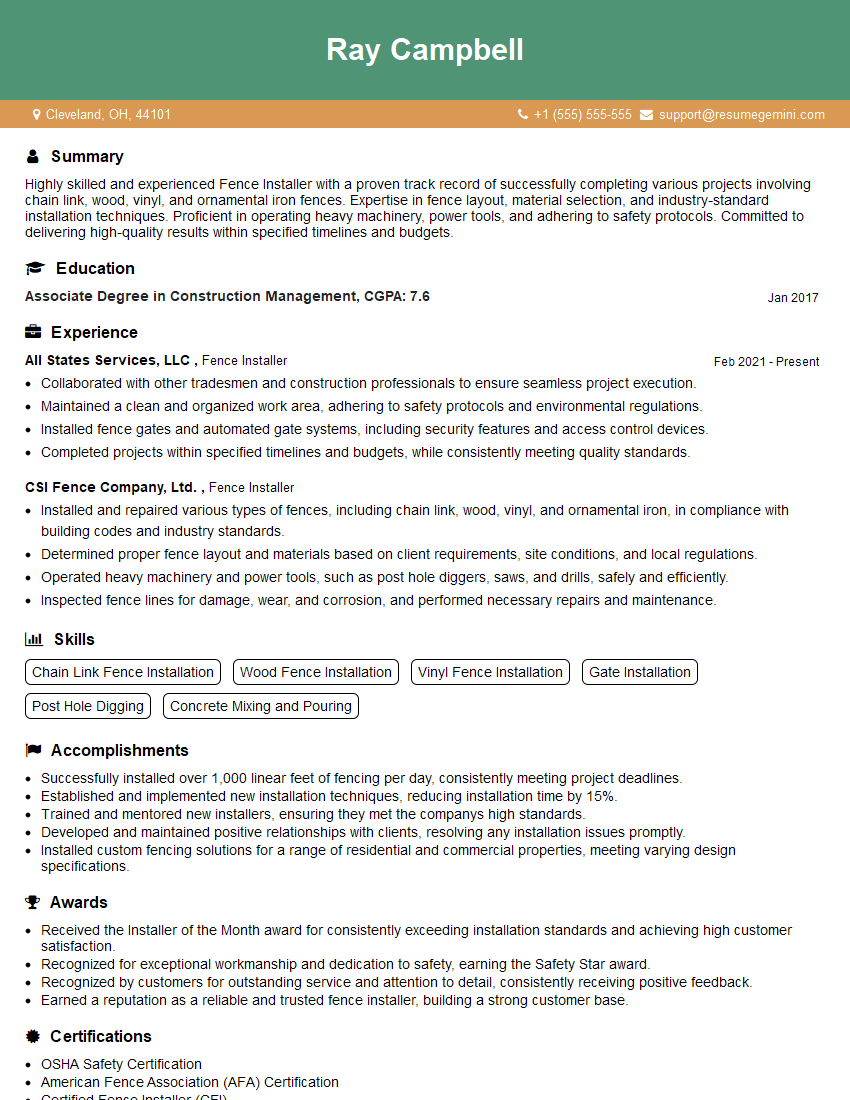
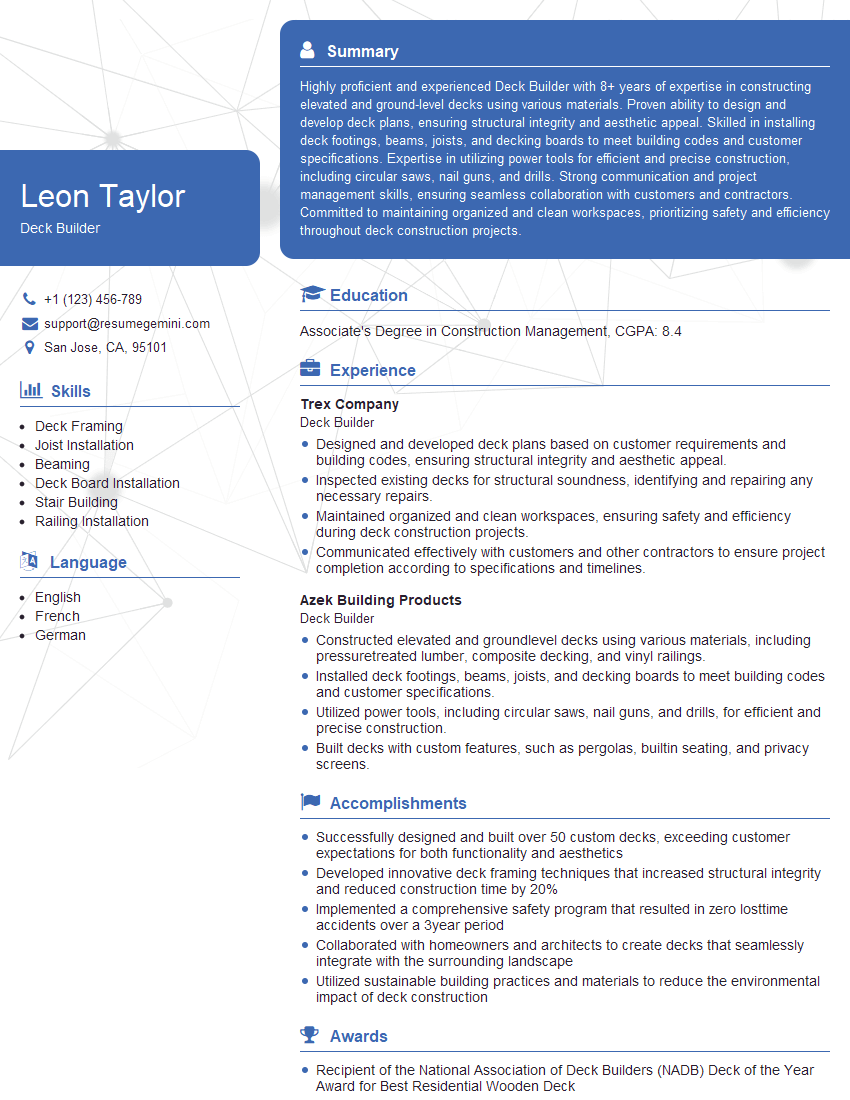
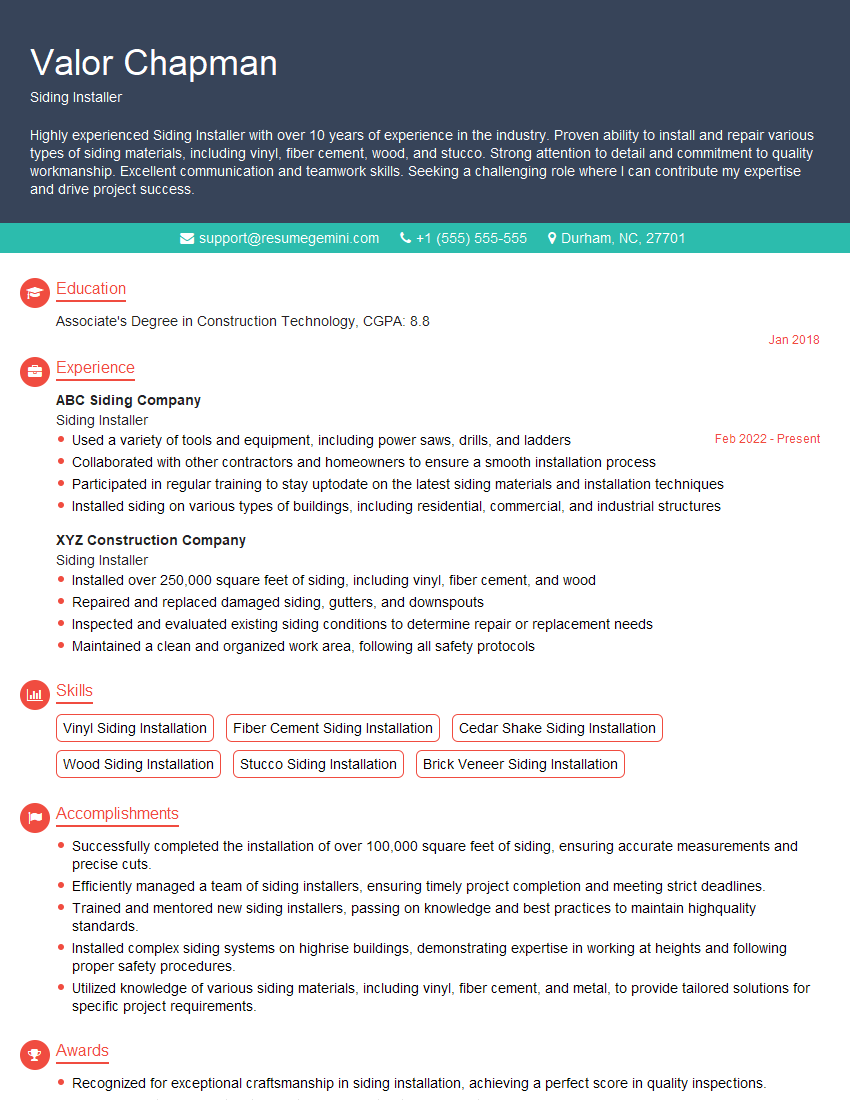
Mastering exterior carpentry opens doors to a rewarding and stable career with opportunities for advancement and specialization. To maximize your job prospects, create a resume that highlights your skills and experience effectively. An ATS-friendly resume is crucial for getting your application noticed by potential employers. ResumeGemini is a trusted resource that can help you build a professional, impactful resume. They offer examples specifically tailored to exterior carpentry roles, ensuring your application stands out. Take the next step in your career journey – create a winning resume today!
Explore more articles
Users Rating of Our Blogs
Share Your Experience
We value your feedback! Please rate our content and share your thoughts (optional).
What Readers Say About Our Blog
To the interviewgemini.com Webmaster.
Very helpful and content specific questions to help prepare me for my interview!
Thank you
To the interviewgemini.com Webmaster.
This was kind of a unique content I found around the specialized skills. Very helpful questions and good detailed answers.
Very Helpful blog, thank you Interviewgemini team.