Interviews are more than just a Q&A session—they’re a chance to prove your worth. This blog dives into essential Fiber Optic Splicer Certification interview questions and expert tips to help you align your answers with what hiring managers are looking for. Start preparing to shine!
Questions Asked in Fiber Optic Splicer Certification Interview
Q 1. Explain the difference between fusion splicing and mechanical splicing.
Fusion splicing and mechanical splicing are two distinct methods for joining optical fibers. Fusion splicing uses heat and pressure to permanently fuse two fiber ends together, creating a strong, low-loss connection. Think of it like welding two pieces of metal – the fibers become one. Mechanical splicing, on the other hand, uses a precisely aligned sleeve or connector to hold the fibers together. This is a bit like using a clamp to hold two pieces of wood together; it’s a faster process but generally offers higher insertion loss and lower reliability than fusion splicing.
In short: Fusion splicing is more precise and permanent, resulting in lower loss, but requires specialized equipment and more time. Mechanical splicing is faster and simpler, but offers a less reliable and potentially higher-loss connection, making it more suitable for temporary deployments or applications with less stringent performance requirements.
Q 2. Describe the process of preparing fiber optic cables for splicing.
Preparing fiber optic cables for splicing is a crucial step that directly impacts the quality and longevity of the splice. The process generally involves these key steps:
- Cable Stripping: Carefully remove the outer jacket and any layers of strength members or buffer coatings to expose the fiber, ensuring you avoid damaging the delicate glass fiber.
- Fiber Cleaning: Thoroughly clean the exposed fiber using a lint-free cloth or specialized fiber cleaning wipes. Contamination from dust or oils can significantly increase splice loss.
- Fiber Cleaving: Use a precision cleaver to create a perpendicular, flat end face on the fiber. This is critical to minimize light reflection and ensure efficient light transmission. A poorly cleaved fiber will result in high splice losses.
- Inspection: Before splicing, inspect the cleaved fiber end under a microscope to verify a clean, flat surface. Any imperfections can significantly degrade the splice quality. This inspection is vital for quality control.
Failing to properly prepare the fibers can lead to increased splice loss, poor signal quality, and even splice failures. Imagine trying to connect two electrical wires with frayed ends; you wouldn’t get a good connection. The same principle applies to fiber optics.
Q 3. What are the common causes of fiber optic cable damage?
Fiber optic cables, while robust, are susceptible to various forms of damage. Common causes include:
- Physical Damage: This is the most frequent cause, ranging from accidental cuts or abrasions during installation to bending beyond the minimum bend radius, which can weaken or break the fiber. Think of a glass rod; bending it too sharply will snap it.
- Environmental Factors: Extreme temperatures, humidity, and exposure to chemicals or UV radiation can degrade the cable’s protective layers and damage the fiber itself over time. The cable jacket acts like skin, protecting it from the elements.
- Rodent Damage: Rodents often chew on cables, leading to complete fiber breakage. This is a particularly problematic issue in certain geographical locations.
- Improper Handling: Careless handling during installation or maintenance can lead to micro-bends, scratches, or other damage that compromises signal transmission. Always treat the cables gently.
- Construction Activities: Excavation and other construction activities can accidentally sever or damage buried cables.
Identifying and preventing these causes is essential to maintaining the integrity of the fiber optic network.
Q 4. How do you test fiber optic cable continuity?
Testing fiber optic cable continuity involves verifying the physical path from one end to the other and measuring signal attenuation along the path. This is done using specialized test equipment. A common method uses an Optical Time-Domain Reflectometer (OTDR). The OTDR sends a light pulse down the fiber and measures the amount of light that is reflected back. Any breaks, splices, or connectors along the fiber will show up as distinct features on the OTDR trace. This provides information about the fiber’s physical continuity as well as an assessment of loss at various points along the cable.
Another method, more basic and used for simpler checks, involves using a visual fault locator (VFL) which emits light into the fiber and allows you to visually inspect for breaks or bends. However, VFLs provide only visual indication and don’t give quantitive measurements like OTDRs do. The choice of equipment depends on the level of detail required.
Q 5. What are the safety precautions when working with fiber optic cables?
Safety is paramount when working with fiber optic cables. Here are some crucial precautions:
- Eye Protection: Always wear appropriate eye protection to avoid exposure to potentially harmful laser light from testing equipment. Laser light can cause serious eye damage.
- Protective Clothing: Wear gloves to protect your hands from sharp edges or fibers.
- Grounding: Grounding equipment prevents static electricity buildup, which can damage sensitive fiber optic components.
- Proper Tools: Use only the right tools for the job to prevent accidental damage. Using wrong tools can cause damage to the fiber and pose personal safety risks.
- Awareness of Surroundings: Pay attention to your environment and be mindful of potential hazards such as overhead power lines or other obstacles.
- Following Manufacturer’s Instructions: Always adhere to manufacturer instructions for equipment use.
Ignoring these precautions can lead to serious injury or damage to expensive equipment.
Q 6. Explain the importance of proper fiber cleaving.
Proper fiber cleaving is crucial for achieving low-loss splices. A precisely cleaved fiber end, with a perfectly perpendicular and smooth surface, ensures optimal light coupling between the two fibers being joined. An improperly cleaved fiber, with a slanted, chipped, or dirty end face, introduces significant light scattering and reflection, resulting in increased signal loss. Imagine trying to perfectly join two pieces of glass – a rough edge would prevent a seamless connection.
To ensure proper cleaving, a high-quality cleaver is essential. It is important to follow the manufacturer’s instructions meticulously for optimal performance. A poor cleave is one of the most common causes of high splice loss in fiber optic networks.
Q 7. What tools and equipment are used in fiber optic splicing?
Fiber optic splicing requires specialized tools and equipment, including:
- Fiber Optic Cleaver: Used to create a precise and perpendicular cleave on the fiber end.
- Fiber Stripper: Used to remove the outer jacket and buffer layers from the fiber without damaging the glass core.
- Fusion Splicer: Used to fuse two fiber ends together using heat and pressure (for fusion splicing).
- Mechanical Splicer: Used to align and clamp fibers together within a protective sleeve (for mechanical splicing).
- Optical Power Meter (OPM): Measures the optical power of the signal.
- Optical Time-Domain Reflectometer (OTDR): Measures signal attenuation and identifies faults along the fiber.
- Visual Fault Locator (VFL): Used for visual inspection of fiber cables.
- Microscope: Used to inspect the fiber end faces before and after splicing.
- Fiber Cleaning Supplies: Lint-free wipes and cleaning solutions.
The specific tools needed will vary depending on the type of splicing (fusion or mechanical) and the specific application.
Q 8. How do you identify different types of fiber optic connectors?
Fiber optic connectors are identified primarily by their physical characteristics and the type of fiber they terminate. The most common types are easily distinguished by their end faces and ferrule sizes.
- SC (Subscriber Connector): A square connector with a push-pull latch mechanism. Very common in older networks and still widely used.
- FC (Ferrule Connector): A threaded connector providing a very secure and precise connection. Used in applications demanding high reliability.
- LC (Lucent Connector): A smaller, more compact connector with a latch mechanism. Increasingly popular due to its small size and high density capabilities.
- ST (Straight Tip): A bayonet-style connector. While less common now, it can still be found in older installations. Its push and twist mechanism is less reliable than others.
- MPO/MTP (Multi-fiber Push-on): These connectors allow for the connection of multiple fibers simultaneously, in arrays of 8, 12, or more, significantly increasing density.
Identifying the connector also involves checking the fiber type. Is it single-mode (typically yellow or aqua colored) or multi-mode (typically orange)? This is crucial for ensuring compatibility.
Q 9. What are the different types of fiber optic cable?
Fiber optic cables are categorized by several factors, primarily fiber type and cable construction.
- Fiber Type: This is the most important distinction.
- Single-mode fiber: Transmits a single light beam, ideal for long distances and high bandwidth applications. Typically has a smaller core diameter (around 9 microns).
- Multi-mode fiber: Transmits multiple light beams simultaneously, better suited for shorter distances and less demanding applications. Features a larger core diameter (typically 50 or 62.5 microns).
- Cable Construction: This refers to the materials and design surrounding the fiber(s) for protection and strength.
- Loose Tube: Fibers are housed in loose tubes filled with a gel, allowing for flexibility and protection from stress.
- Tight Buffer: Each fiber is individually coated with a plastic buffer. Simpler but less flexible than loose tube.
- Ribbon: Multiple fibers are arranged in a ribbon structure, useful for high-fiber-count cables.
Examples include armored cables for underground deployments, indoor/outdoor cables with different sheathing materials, and specialized cables for harsh environments.
Q 10. How do you troubleshoot a fiber optic cable fault?
Troubleshooting fiber optic cable faults involves a systematic approach. The first step is always safety – ensure the fiber is not energized (laser light can cause eye damage). Then, we can follow these steps:
- Visual Inspection: Carefully examine the cable for any obvious physical damage, such as cuts, bends, or crushed sections. Check connectors for dirt, scratches, or damage.
- Optical Power Meter (OPM): Use an OPM to measure the optical power levels at different points in the system. A significant drop in power indicates a fault.
- OTDR Testing: Use an OTDR to locate the fault precisely. It provides a visual representation of the fiber link, highlighting loss, reflections, and other anomalies. This is the most comprehensive approach.
- Connector Inspection: Use a microscope or connector inspection tool to carefully examine the end-faces of connectors for scratches, dirt, or misalignment. Cleaning the connectors is often sufficient to resolve the issue.
- Splice Inspection: If a splice is suspected, carefully inspect the fusion splice to see if it was properly done and is free of damage.
The key is to isolate the problem systematically, starting with the simplest checks and progressing to more complex testing if needed. Proper documentation of testing results is essential.
Q 11. Explain the concept of Optical Time Domain Reflectometry (OTDR).
Optical Time Domain Reflectometry (OTDR) is a crucial testing tool for fiber optic systems. It works by sending a short pulse of light into the fiber and analyzing the reflections that return. The time it takes for the reflections to come back, combined with the speed of light in the fiber, determines the distance to the fault or events along the fiber path.
Think of it like an ultrasound for fiber. It can detect:
- Splices: The OTDR will show a small drop in power at each splice point due to light loss.
- Fiber Breaks: A complete loss of signal will indicate a break.
- Bends: Excessive bends in the fiber can cause light loss and be detectable.
- Connectors: Similar to splices, connectors will also show some signal loss.
The OTDR trace displays the power levels over distance, showing the exact location of these events, allowing for efficient fault location and characterization.
Q 12. Describe the process of fusion splicing using a fusion splicer.
Fusion splicing is a precise method of joining two optical fibers together by melting their ends using an electric arc. Here’s a step-by-step process:
- Fiber Preparation: The fiber ends are carefully cleaved to create a perfectly perpendicular and smooth surface. A cleaver is used for this process, ensuring a precise and clean cut is achieved.
- Fiber Alignment: The cleaved fiber ends are then precisely aligned in the fusion splicer’s V-groove. The splicer uses cameras and sophisticated alignment algorithms to ensure perfect alignment.
- Fusion: An electric arc is generated between the fiber ends, melting them together to create a strong, permanent bond. This process takes place in a controlled environment within the splicer.
- Splice Verification: Once the fusion is complete, the splicer usually performs an automatic loss measurement and verification of the splice quality. A low loss value is indicative of a good splice.
- Coating Application (Optional): Some fusion splicers incorporate a protective coating application to the splice, further strengthening and protecting it.
The entire process is highly automated and controlled, minimizing human error and ensuring a reliable splice with minimal loss of optical signal.
Q 13. What are the different loss mechanisms in fiber optic systems?
Various mechanisms contribute to signal loss in fiber optic systems. These can be categorized as follows:
- Absorption Loss: The fiber itself absorbs some light due to the material’s properties. This loss is dependent on the wavelength of light used and temperature.
- Scattering Loss: Imperfections and irregularities in the fiber’s core material cause light to scatter in different directions, reducing the power reaching the receiver. This is also affected by wavelength and bends.
- Bending Loss: Excessive bending of the fiber can increase scattering and cause light to leak out of the core. Macrobends (large radius) and microbends (small radius) affect this differently.
- Splice Loss: Misalignment or imperfections in the splice result in power loss. This is a significant loss component, hence the need for precision splicing.
- Connector Loss: Similar to splice loss, poor connectorization introduces power loss due to misalignment, gaps, or contamination.
Understanding these loss mechanisms is crucial for designing and troubleshooting fiber optic systems.
Q 14. What is the significance of splice loss in fiber optic networks?
Splice loss is highly significant because it directly impacts the overall performance and reach of a fiber optic network. Even small losses at each splice accumulate over the length of the link. High splice loss can:
- Reduce signal strength: Leading to a weaker signal at the receiver, potentially causing errors or loss of data.
- Limit transmission distance: The available power budget may be exhausted earlier than expected, restricting the maximum distance over which data can be transmitted reliably.
- Increase signal degradation: Weakened signals are more susceptible to noise and interference, degrading signal quality further.
- Affect system design and costs: High splice losses may necessitate the use of more powerful optical transmitters or additional repeaters, increasing system complexity and cost.
Minimizing splice loss is achieved through proper fiber preparation, precise splicing techniques, and regular testing and maintenance. The goal is always to achieve low-loss splices (ideally less than 0.1dB) to maintain optimal network performance.
Q 15. How do you interpret OTDR results?
Interpreting OTDR (Optical Time Domain Reflectometer) results is crucial for assessing the quality of a fiber optic link. An OTDR sends light pulses down the fiber and measures the amount of light reflected back at different points. This reflection data is then displayed as a trace on a graph, showing various characteristics of the fiber.
The trace shows distance along the x-axis and power (dB) along the y-axis. Key features to interpret include:
- Events: These appear as sharp changes in the trace and indicate connections, splices, or faults. A good splice will show a small loss, while a bad splice will show a significant loss.
- Attenuation: The gradual decrease in power along the trace represents the fiber’s loss of signal strength due to absorption and scattering. A steeper slope indicates higher attenuation, potentially caused by poor fiber quality or bending.
- Reflections: These show as peaks in the trace and usually indicate a break or a significant discontinuity in the fiber.
For example, you might see a series of events representing several splices, each with a loss of approximately 0.1dB. This is acceptable. However, a large reflection followed by a significant drop in signal level points to a major problem. We use this data to pinpoint faults, assess splice quality, and confirm the overall health of the fiber optic network.
Career Expert Tips:
- Ace those interviews! Prepare effectively by reviewing the Top 50 Most Common Interview Questions on ResumeGemini.
- Navigate your job search with confidence! Explore a wide range of Career Tips on ResumeGemini. Learn about common challenges and recommendations to overcome them.
- Craft the perfect resume! Master the Art of Resume Writing with ResumeGemini’s guide. Showcase your unique qualifications and achievements effectively.
- Don’t miss out on holiday savings! Build your dream resume with ResumeGemini’s ATS optimized templates.
Q 16. How do you maintain proper records during fiber optic splicing?
Maintaining meticulous records during fiber optic splicing is paramount for traceability and troubleshooting. This involves documenting every step of the process. Think of it like a detailed recipe for your fiber optic connection – if something goes wrong, you’ll need to know exactly what ingredients you used and how you combined them.
My record-keeping includes:
- Job details: Date, time, location, project name, and technician’s identification.
- Fiber type and specifications: Manufacturer, type (single-mode, multi-mode), and core diameter.
- Splice details: Splice location, type (fusion or mechanical), splice loss measurement (dB), and OTDR trace reference number.
- Connector type and installation: Connector type (SC, LC, FC), insertion loss measurement, and any relevant notes.
- Photographs: Pictures of the splices and connector terminations are useful for visual reference.
- Equipment used: Serial numbers of the fusion splicer, OTDR, and other testing equipment.
All this information is typically entered into a standardized form, database, or software system, ensuring the information is readily accessible, easily searchable, and always reliable.
Q 17. What are the limitations of mechanical splicing?
Mechanical splicing, while simpler and often cheaper than fusion splicing, has several limitations. It uses a mechanical clamp or sleeve to join two fiber ends. The main limitations revolve around performance and longevity.
- Higher attenuation: Mechanical splices generally have higher insertion loss compared to fusion splices due to air gaps or imperfections between the fiber ends.
- Lower return loss: This means more signal is reflected back towards the source, which can degrade the signal quality.
- Sensitivity to environmental conditions: Mechanical splices are more susceptible to changes in temperature and humidity, potentially leading to increased attenuation or failures over time.
- Limited lifespan: Compared to fusion splices, mechanical splices often have a shorter lifespan due to the mechanical stress on the fibers. They are less robust, and the mechanical clamping may loosen or fail under stress.
- Difficult to inspect: Assessing the quality of a mechanical splice is more challenging visually than with a fusion splice.
In summary, although mechanical splicing offers a quick and less expensive alternative in specific situations, its limitations in terms of signal quality, reliability, and longevity often outweigh the advantages.
Q 18. Explain the concept of attenuation in fiber optics.
Attenuation in fiber optics refers to the loss of optical power as light travels through the fiber. Imagine it like water flowing down a pipe; some water is lost along the way through friction and leaks. Similarly, light signals weaken due to various factors within the fiber.
The main causes of attenuation are:
- Absorption: Certain materials in the fiber absorb light energy, converting it into heat.
- Scattering: Light bounces off imperfections or impurities within the fiber, causing it to deviate from its intended path.
- Bending losses: Sharp bends in the fiber can cause light to leak out.
Attenuation is usually measured in decibels per kilometer (dB/km) and is a critical parameter in designing and troubleshooting fiber optic systems. High attenuation can limit the transmission distance and requires amplification or regeneration to maintain signal strength. This is why it’s crucial to select fibers with low attenuation for long-distance transmissions.
Q 19. What are the benefits of fusion splicing over mechanical splicing?
Fusion splicing offers significant advantages over mechanical splicing, primarily due to its superior performance and reliability. Fusion splicing melts the ends of the fibers together, creating a permanent, homogenous connection. Mechanical splicing, on the other hand, uses a mechanical connector.
Here’s a comparison:
- Lower attenuation: Fusion splices offer significantly lower attenuation, resulting in better signal quality over longer distances.
- Higher return loss: Fusion splices minimize reflections, thus improving signal quality and reducing interference.
- Higher reliability: Fusion splices are more durable and less susceptible to environmental conditions, leading to a longer lifespan.
- Better repeatability: Fusion splices are consistently more reliable in terms of achieving minimal signal loss.
- Easier to inspect: The quality of a fusion splice can easily be inspected visually and with OTDR measurements.
In situations where high signal quality, reliability, and longevity are paramount, such as in telecommunications networks, fusion splicing is the preferred method. It’s an investment that pays off in the long run, minimizing maintenance and ensuring consistent network performance.
Q 20. How do you ensure the quality of a fiber optic splice?
Ensuring the quality of a fiber optic splice involves a multi-step process combining careful preparation, precise splicing techniques, and thorough testing.
Here’s the approach:
- Fiber preparation: Clean the fiber ends meticulously and cleave them to achieve a perfectly flat and perpendicular surface. Imperfect cleaves lead to increased losses.
- Accurate alignment: Precise alignment of the fiber cores is critical in both fusion and mechanical splicing. Microscopic alignment mechanisms help guarantee accurate core-to-core alignment.
- Splice process: The fusion splicing process involves using an electric arc to melt and fuse the fiber ends. It’s crucial to follow the manufacturer’s guidelines precisely to avoid damage or incomplete fusion. For mechanical splices, ensure the fibers are properly seated within the connector.
- Loss measurement: After splicing, measure the insertion loss using an optical power meter. Low insertion loss indicates a high-quality splice.
- OTDR testing: Use an OTDR to verify the splice quality and identify any reflections or significant attenuation. An OTDR trace should show a small, predictable loss at the splice point.
- Visual inspection: Visually inspect the splice to confirm its integrity. For fusion splices, a clear, smooth, and uniform fusion point is desired.
By adhering to these practices and using appropriate equipment, you can consistently create high-quality fiber optic splices, essential for a reliable fiber optic network.
Q 21. Describe different types of fiber optic connectors (e.g., SC, FC, LC).
Several types of fiber optic connectors are used, each with its own advantages and disadvantages. The choice depends on the application and system requirements.
Common connector types include:
- SC (Subscriber Connector): A push-pull connector known for its simplicity, reliability, and relatively low cost. It’s widely used in various applications.
- FC (Ferrule Connector): A bayonet-style connector offering excellent repeatability and high performance. It’s often found in high-precision applications.
- LC (Lucent Connector): A small, compact connector gaining popularity due to its high density and space-saving design. It’s frequently used in high-density applications like data centers.
- ST (Straight Tip): A push-pull connector with a bayonet-style locking mechanism. While once common, its popularity has declined with the rise of LC and SC.
- MT-RJ: A multi-fiber connector, typically featuring 2 fibers in a single connector.
The connectors are designed with different mechanical features (like push-pull or bayonet) and ferrule types (ceramic or plastic) for optimal performance and reliability. The selection depends on factors like application, cost, and the physical space constraints in the infrastructure where they are deployed.
Q 22. What is the difference between single-mode and multi-mode fiber?
The core difference between single-mode and multi-mode fiber lies in the size of the core and how light propagates through it. Think of it like this: a single-lane highway versus a multi-lane highway.
Single-mode fiber has a much smaller core diameter (around 8-10 microns) allowing only one mode (path) of light to travel. This results in significantly lower signal attenuation and better long-distance transmission capabilities. It’s ideal for long-haul telecommunications and high-bandwidth applications like internet backbone infrastructure.
Multi-mode fiber has a larger core diameter (around 50-100 microns), allowing multiple modes of light to travel simultaneously. This leads to higher signal attenuation and limits transmission distance. However, it’s less expensive and easier to work with, making it suitable for shorter-distance applications like local area networks (LANs) and building cabling.
- Single-mode: Smaller core, one mode of light, low attenuation, long distances.
- Multi-mode: Larger core, multiple modes of light, higher attenuation, shorter distances.
Q 23. Explain the importance of proper cable management.
Proper cable management is paramount in fiber optic installations for several critical reasons: it ensures signal integrity, improves network performance, simplifies troubleshooting, and enhances safety. Imagine a tangled ball of yarn – it’s difficult to find a specific strand, prone to damage, and inefficient to work with.
Improper cable management can lead to:
- Increased signal loss: Bending, kinking, or crushing fibers weakens the signal.
- Microbending: Repeated stress on fibers introduces tiny bends that reduce signal quality.
- Difficult troubleshooting: Untangled cables make it time-consuming and challenging to identify faulty connections or locate specific fibers.
- Safety hazards: Poorly managed cables can create tripping hazards and damage to other equipment.
Best practices include using cable trays, tie wraps, labels, and proper slack management to keep fibers organized, protected, and easily accessible.
Q 24. How do you handle different types of fiber optic cable terminations?
Handling various fiber optic cable terminations requires careful attention to detail and the use of appropriate tools and techniques. The type of termination (e.g., SC, FC, LC, ST) dictates the specific connectors and procedures.
My process typically involves:
- Identifying the connector type: Verify the type of connector needed based on the application and equipment.
- Preparing the fiber: This includes cleaning, cleaving, and polishing the fiber end to ensure a precise and smooth surface for optimal connection. Imperfect cleaves are a frequent cause of failure.
- Attaching the connector: Following the manufacturer’s instructions carefully, the connector is attached and secured. This often involves epoxy or heat-shrink tubing.
- Testing the connection: Once terminated, the connection is tested using an optical power meter and/or OTDR to verify proper insertion loss and identify any issues.
Different termination types have different advantages and are chosen depending on factors like density, cost, and robustness.
Q 25. What are the industry standards and best practices in fiber optic splicing?
Industry standards and best practices in fiber optic splicing are crucial to ensure reliable and efficient network performance. These standards focus on minimizing signal loss, maximizing splice strength, and ensuring long-term stability.
- TIA-568 and ISO/IEC standards: These provide guidelines for cabling infrastructure, including splicing techniques and testing procedures.
- Fusion splicing: This method uses heat and pressure to fuse fibers together, resulting in a strong and low-loss connection. It’s the preferred method for most applications.
- Mechanical splicing: This uses mechanical components to align and clamp fibers, offering a faster but sometimes higher-loss solution. It is usually for temporary applications or where fusion splicing isn’t possible.
- Cleanliness: Maintaining a clean work environment is critical to prevent contamination that can cause high losses.
- Proper fiber preparation: Precise cleaving and polishing of fiber ends is crucial for achieving low-loss splices.
- Testing and documentation: Thorough testing after each splice is essential to verify the connection quality and maintain documentation for future reference.
Q 26. How would you handle a situation where a splice has failed?
Handling a failed splice requires a systematic approach to identify the root cause and implement a solution. The steps involved include:
- Testing and identification: Utilize an OTDR (Optical Time Domain Reflectometer) to pinpoint the location and characteristics of the failure. This identifies the magnitude of loss and the exact location of the problem.
- Visual inspection: Carefully examine the splice for any visible damage, contamination, or misalignment.
- Re-splicing or replacement: Depending on the cause, either the splice is re-done with proper cleaning and alignment or the damaged section is cut out and replaced.
- Retesting: Once the repair or replacement is completed, the connection must be retested to verify that the problem has been resolved and to document the repair.
Careful documentation helps in preventing future issues, as the history of repair can reveal underlying problems like improper installation or equipment failure.
Q 27. What is your experience with different types of fusion splicers?
I have extensive experience with various fusion splicers, both manual and automated. My experience ranges from older models requiring more manual adjustment to the latest automated units with advanced features.
I’m familiar with splicers from major manufacturers such as Fujikura, Sumitomo, and Corning. My experience includes using both arc-discharge fusion splicers, which use a precise electrical arc to melt and fuse fiber ends, and other models with different heating mechanisms.
The selection of a specific splicer depends on several factors including fiber type (single-mode or multi-mode), the volume of splices needed and budget considerations. Automated splicers provide higher precision and efficiency for larger-scale projects, whereas manual splicers might be preferable for smaller jobs or when dealing with difficult access points.
Q 28. Describe a time you had to troubleshoot a complex fiber optic problem.
During a recent project involving a high-capacity long-haul fiber optic link, we experienced significant signal attenuation that wasn’t easily identifiable using standard testing methods. After careful testing and investigation using multiple OTDRs, we found a seemingly minor bend in the fiber within a cable tray, that was causing microbends affecting multiple wavelengths of light. The bend wasn’t visually obvious, but the OTDR clearly showed its location and impact.
The solution involved carefully rerouting a section of the cable to eliminate the bend, then performing a thorough visual inspection and testing. The rerouting was crucial in reducing signal loss and restoring the link to full functionality. This experience highlighted the importance of meticulous cable management and the use of multiple testing techniques when troubleshooting complex fiber optic problems. The seemingly small bend created an issue that would have been missed had we only used visual inspection.
Key Topics to Learn for Fiber Optic Splicer Certification Interview
- Fiber Optic Cable Types and Properties: Understanding different fiber types (single-mode, multi-mode), their characteristics, and applications is crucial. Be prepared to discuss the advantages and disadvantages of each.
- Splicing Techniques: Mastering fusion splicing and mechanical splicing methods, including their respective pros and cons, is essential. Practice explaining the steps involved in each process and troubleshooting common issues.
- Optical Loss and Measurement: Understand the concept of optical loss, its causes (e.g., bending, connector loss), and how to measure and minimize it using OTDRs and other testing equipment. Be ready to discuss different loss budgets.
- Fiber Optic Testing and Troubleshooting: Develop a strong understanding of various testing methods and equipment used to ensure the quality and performance of fiber optic networks. Practice diagnosing common faults and explaining your problem-solving approach.
- Safety Procedures and Regulations: Familiarize yourself with relevant safety regulations and best practices for handling fiber optic cables and equipment. Highlight your commitment to a safe work environment.
- Network Architecture and Design: Having a foundational understanding of fiber optic network topologies (e.g., star, ring) and design principles will demonstrate a broader understanding of the field.
- Practical Applications: Be ready to discuss real-world applications of fiber optic splicing in various industries (telecommunications, data centers, etc.) and how your skills contribute to network performance and reliability.
Next Steps
Mastering Fiber Optic Splicer Certification significantly enhances your career prospects, opening doors to higher-paying roles and specialized opportunities in a rapidly growing industry. To maximize your job search success, it’s vital to create a compelling, ATS-friendly resume that showcases your skills and experience effectively. ResumeGemini is a trusted resource that can help you craft a professional and impactful resume tailored to your specific needs. We provide examples of resumes specifically designed for Fiber Optic Splicer Certification candidates to help you present yourself in the best possible light. Invest time in creating a strong resume – it’s your first impression on potential employers.

Network Technician Resume Sample

Fiber Optic Technician Resume Sample
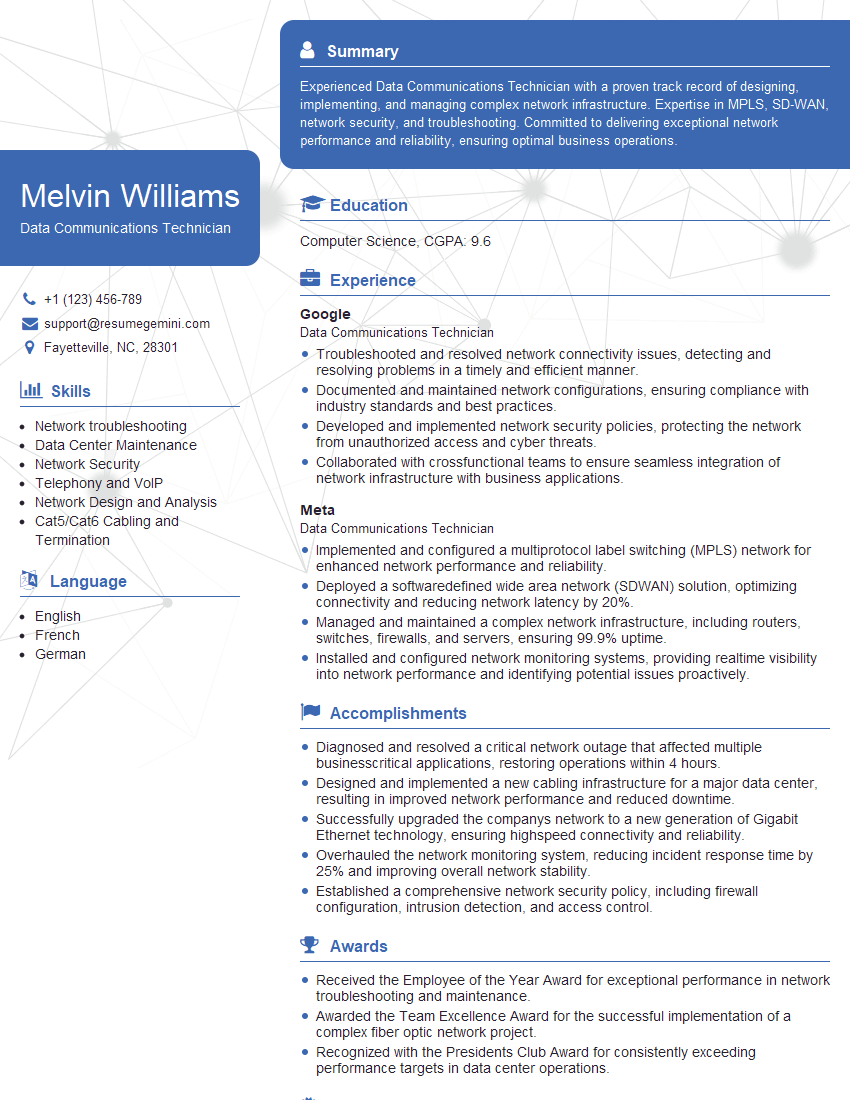
Data Communications Technician Resume Sample
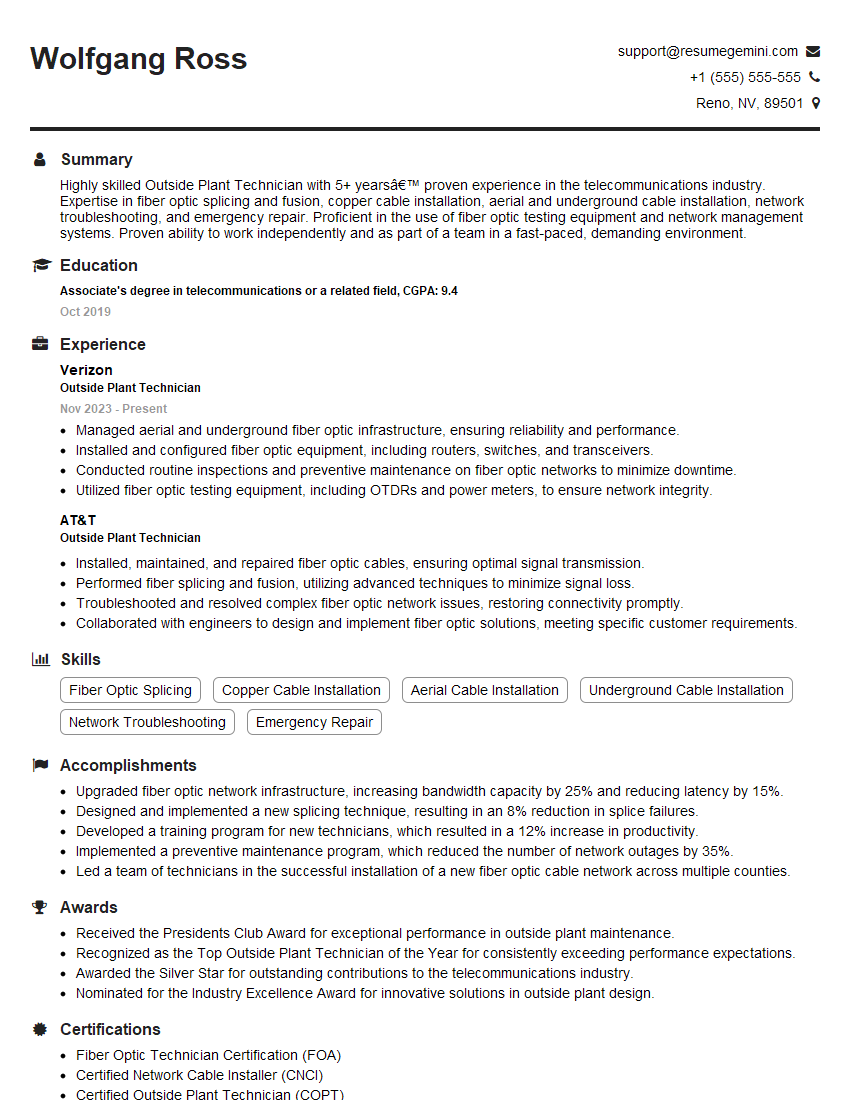
Outside Plant Technician Resume Sample
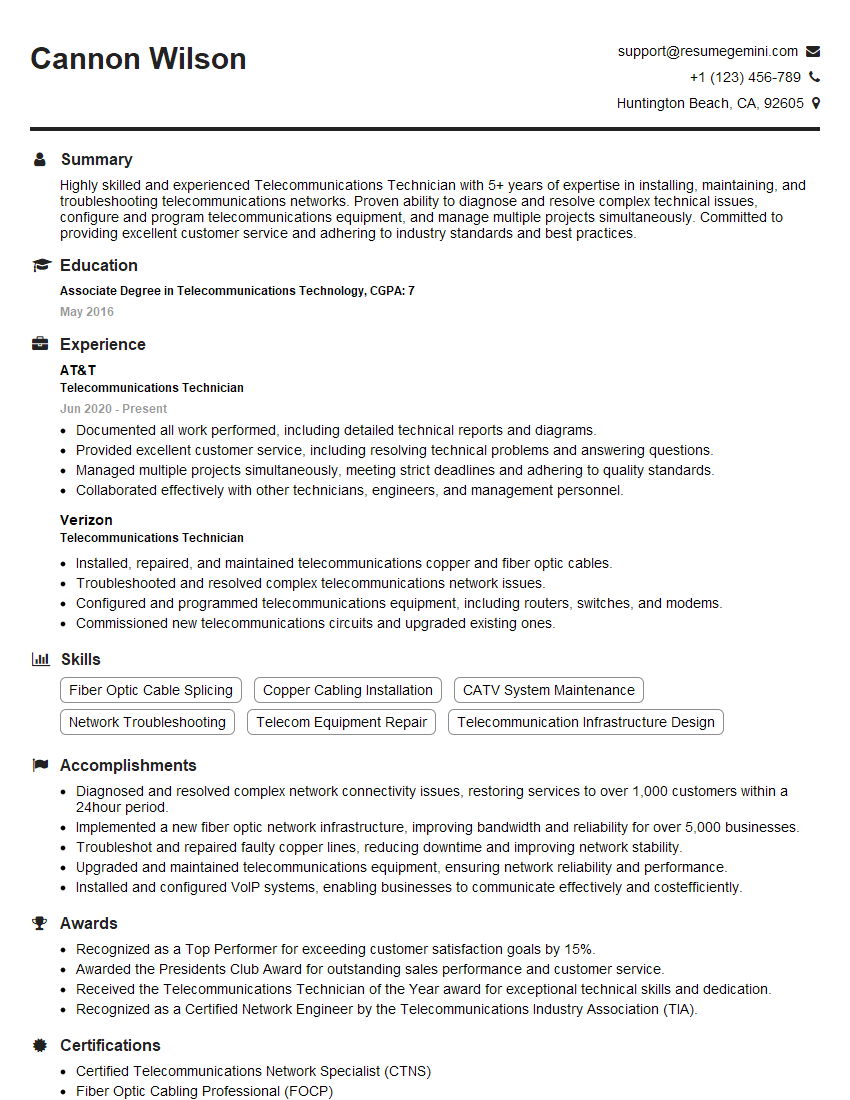
Telecommunications Technician Resume Sample

Cable Splicer Resume Sample
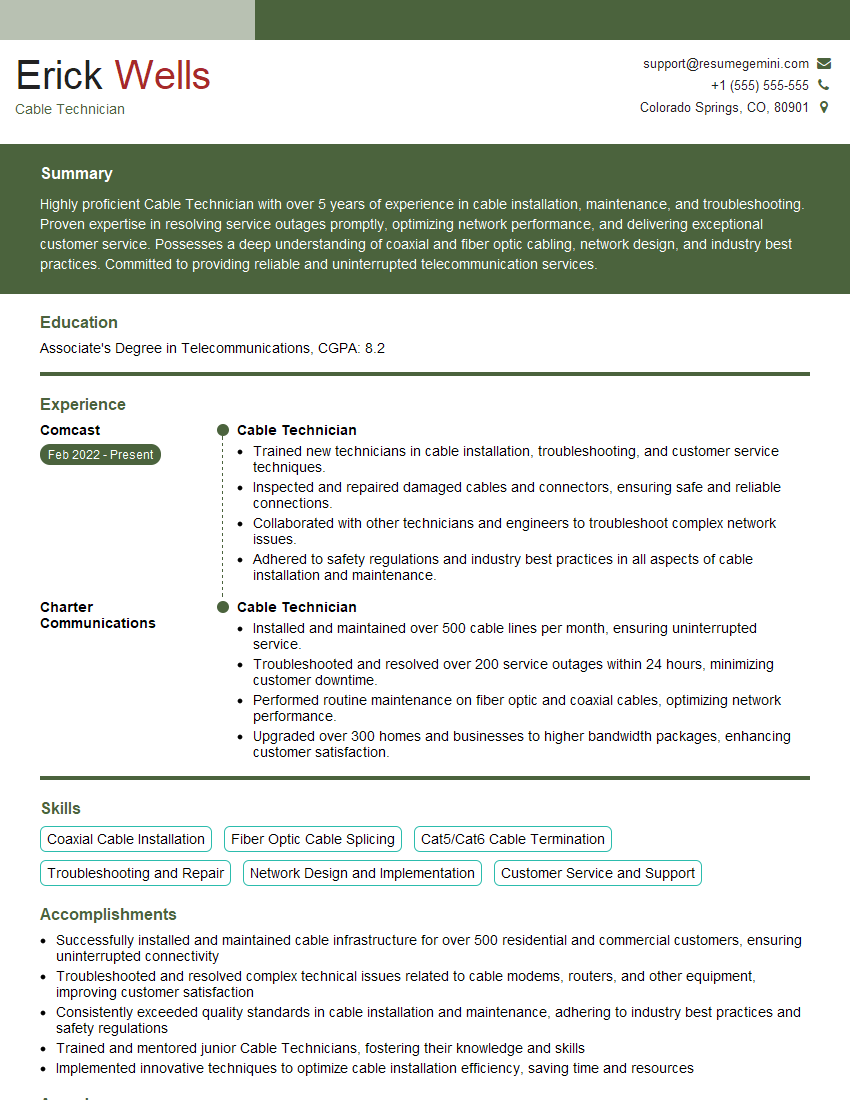
Cable Technician Resume Sample

Fiber Optic Splicer Resume Sample
Explore more articles
Users Rating of Our Blogs
Share Your Experience
We value your feedback! Please rate our content and share your thoughts (optional).
What Readers Say About Our Blog
To the interviewgemini.com Webmaster.
Very helpful and content specific questions to help prepare me for my interview!
Thank you
To the interviewgemini.com Webmaster.
This was kind of a unique content I found around the specialized skills. Very helpful questions and good detailed answers.
Very Helpful blog, thank you Interviewgemini team.