Every successful interview starts with knowing what to expect. In this blog, we’ll take you through the top Fire Alarm Installation interview questions, breaking them down with expert tips to help you deliver impactful answers. Step into your next interview fully prepared and ready to succeed.
Questions Asked in Fire Alarm Installation Interview
Q 1. Explain the different types of fire alarm systems.
Fire alarm systems are broadly categorized into two main types: conventional and addressable. Conventional systems utilize a simple circuit where all detectors and notification appliances are wired in series or parallel. If a single detector activates, the entire system sounds. Think of it like a single light switch controlling all the lights in a room. Addressable systems, on the other hand, provide individual identification for each device connected to the system. This allows for pinpoint location of a fire event, which is invaluable for quick response and efficient evacuation. Imagine a modern smart home system where each light can be controlled individually – that’s essentially what an addressable fire alarm system offers. Beyond these two core types, we also encounter wireless systems which use radio frequency signals instead of hardwiring, and hybrid systems that blend features of both conventional and addressable systems.
- Conventional: Simple, cost-effective, suitable for smaller buildings.
- Addressable: More sophisticated, provides precise location information, better for larger and complex structures.
- Wireless: Easy installation, suitable for retrofits and temporary structures.
- Hybrid: Combines the benefits of conventional and addressable systems.
Q 2. Describe the process of installing a conventional fire alarm system.
Installing a conventional fire alarm system is a multi-stage process requiring meticulous attention to detail and adherence to building codes. First, we develop a comprehensive system design based on the building’s layout, occupancy, and local regulations. This includes determining the number and placement of detectors, the type of notification appliances (horns, strobes, etc.), and the location of the fire alarm control panel. Next, we run the wiring, connecting all the detectors and notification appliances to the control panel. This often involves working with conduit, ensuring proper grounding and adhering to strict electrical safety codes. We then install the detectors and notification appliances, carefully testing their functionality throughout the process. Finally, we program the control panel, conduct thorough testing of the entire system, and provide documentation showing compliance with regulations. A critical aspect is ensuring all wiring is neatly organized and properly labeled for ease of future maintenance.
For instance, in a recent school installation, we had to carefully route the cabling through existing walls and ceilings to minimize disruption to the educational environment. We also prioritized accessibility during system maintenance by clearly labeling all components.
Q 3. How do you troubleshoot a malfunctioning fire alarm system?
Troubleshooting a malfunctioning fire alarm system is a systematic process that starts with identifying the nature of the problem. Does the entire system fail, or is it a single component? Are there specific error codes displayed on the control panel? We begin by examining the control panel for any error messages. These can often pinpoint the location of the problem. Next, we use specialized test equipment to systematically check the wiring and individual components, such as detectors and notification appliances. A common issue is a faulty detector. We would test its sensitivity and responsiveness. We might also inspect the wiring for breaks, shorts, or loose connections. Addressing any power supply issues is crucial. For instance, a low battery might trigger false alarms or system failures. If the problem isn’t easily identifiable, we may need to use more sophisticated diagnostic tools. Documenting every step of the troubleshooting process is essential for maintaining records and ensuring future maintenance is effective.
Q 4. What are the common causes of false alarms?
False alarms are a significant problem in fire alarm systems. Common causes include dust accumulation on smoke detectors, insects nesting inside detectors, cooking fumes triggering smoke detectors, and water vapor from showers or steam from appliances triggering heat detectors. Improper installation, such as loose wiring, can also lead to false alarms. Construction work, maintenance activities (like welding), or even simply a strong gust of wind can also trigger alarms. Regular cleaning and maintenance of the system can greatly reduce the frequency of false alarms. It’s also important to educate building occupants about potential triggers and how to address them appropriately. For example, in a kitchen, using a ventilation hood during cooking can significantly minimize the risk of triggering smoke detectors.
Q 5. What safety precautions do you take when installing fire alarm systems?
Safety is paramount during fire alarm system installation. We always follow strict safety protocols, including proper use of personal protective equipment (PPE) such as safety glasses, gloves, and hard hats. We work in accordance with the Occupational Safety and Health Administration (OSHA) regulations and use lockout/tagout procedures to prevent accidental energization of electrical circuits. We are aware of the potential hazards associated with working at heights and confined spaces and use appropriate safety harnesses and fall protection equipment when necessary. We thoroughly inspect the working area to identify and mitigate any potential hazards such as exposed wiring or sharp objects before starting any work. We also regularly communicate with building occupants, informing them about the installation work and ensuring their safety throughout the process.
Q 6. Explain the importance of regular fire alarm system testing and maintenance.
Regular testing and maintenance of fire alarm systems are critical for ensuring they function correctly when needed. This significantly reduces the likelihood of malfunctions and false alarms and ensures the safety of building occupants. Regular testing, ideally monthly, confirms that all detectors and notification appliances are in good working order. This involves checking the system’s responsiveness to simulated fire conditions and verifying that all components are functioning correctly. Preventive maintenance, typically done annually, includes inspecting and cleaning detectors, checking wiring connections, testing battery backup systems, and ensuring the control panel operates as designed. This ensures long-term reliability of the system and reduces the possibility of failures during a real fire event. A well-maintained system provides peace of mind and helps save lives and property.
Q 7. Describe your experience with different types of fire alarm detectors (smoke, heat, etc.).
I have extensive experience with various types of fire alarm detectors. Smoke detectors are the most common, further divided into ionization and photoelectric types. Ionization detectors are best for fast-flaming fires, while photoelectric detectors are more effective at detecting smoldering fires. Heat detectors respond to increases in temperature, categorized into fixed-temperature and rate-of-rise detectors. Fixed-temperature detectors activate when a predefined temperature is reached, whereas rate-of-rise detectors are sensitive to a rapid increase in temperature. Flame detectors sense the infrared or ultraviolet radiation emitted by flames and are often used in industrial settings. Each detector type has its strengths and weaknesses, and the selection depends on the specific application and fire hazards present. For instance, in a kitchen, we might opt for heat detectors to minimize false alarms from cooking, whereas in a bedroom, we would prioritize smoke detectors for early warning of smoldering fires. I’ve worked with various brands and models, always ensuring compliance with relevant codes and standards for optimal performance and safety.
Q 8. How do you ensure compliance with fire codes and regulations during installation?
Ensuring compliance with fire codes and regulations is paramount in fire alarm installations. This involves meticulous adherence to the specific codes governing the location, such as NFPA 72 (National Fire Alarm Code) in the US or equivalent standards in other regions. This isn’t just about following the rules; it’s about ensuring life safety.
- Thorough Site Survey: We begin with a detailed site survey to assess the building’s layout, occupancy type, and specific hazards. This informs the design and selection of appropriate components.
- Permitting and Inspections: We obtain all necessary permits from the local authorities and schedule inspections at various stages of the installation – before wiring, after device installation, and finally, before commissioning. These inspections ensure that the system meets the code requirements.
- Documentation: Comprehensive documentation is crucial. This includes design drawings, installation records, testing and inspection reports, and all other relevant paperwork to demonstrate compliance. This documentation serves as a permanent record for future maintenance and troubleshooting.
- Component Selection: We choose components that are listed and approved by recognized testing laboratories, like UL or FM, confirming that they meet the required safety and performance standards.
- Regular Training: Our team undergoes continuous training on the latest codes and best practices to stay up-to-date with industry changes and technological advancements.
For instance, in a high-rise building, specific requirements regarding system redundancy and communication protocols might need to be addressed differently than in a smaller residential structure. Our process ensures consistent compliance across all project types.
Q 9. What software or tools do you use for fire alarm system design and programming?
For fire alarm system design and programming, we utilize a range of sophisticated software and tools. The choice depends on the complexity of the system and client needs.
- AutoCAD: For detailed system drawings and blueprints, allowing us to visualize the system layout and component placement accurately before installation.
- Specialized Fire Alarm System Design Software: Programs like (Note: Specific software names are omitted to avoid biased endorsements; many reputable brands exist) allow us to model the entire system virtually, including device addresses, notification appliance circuits, and network configurations. This enables efficient programming and troubleshooting.
- Programming Software: Each fire alarm panel manufacturer provides specific programming software. This software allows us to configure the system’s logic, customize alarm responses, and integrate with other building systems.
- Testing and Monitoring Software: This software aids in testing, verifying, and monitoring the system’s performance. It allows us to track alarm events, identify potential issues, and maintain comprehensive system logs.
These tools work together seamlessly to create a fully functional and code-compliant system. For example, the design software helps us create a detailed wiring diagram, which is then used during the physical installation and final programming. This ensures accuracy and avoids costly errors.
Q 10. Explain the difference between addressable and conventional fire alarm systems.
Addressable and conventional fire alarm systems differ significantly in their architecture and capabilities. Think of it like the difference between individual phone lines and a modern IP-based phone system.
- Conventional Systems: These systems use simpler technology. Each device (smoke detector, heat detector, etc.) is wired to the control panel without a unique address. When a device triggers, the panel knows a device on a specific zone has activated but not which specific device. This limits diagnostic capabilities and troubleshooting efficiency.
- Addressable Systems: In addressable systems, each device is assigned a unique address on the network. When a device triggers, the control panel displays the exact location of the initiating device. This precise information allows for more efficient and targeted responses in emergencies, making system maintenance and fault finding much easier. These systems generally support more sophisticated features, such as pre-alarm notifications.
For instance, in a large office building, an addressable system pinpoints the source of an alarm, directing emergency personnel directly to the problem area. A conventional system might only indicate a problem in a particular section of the building, requiring a more time-consuming search.
Q 11. How do you handle a situation where a fire alarm system is not working correctly during an emergency?
A malfunctioning fire alarm system during an emergency is a critical situation demanding immediate action. Our procedures prioritize safety and efficient response.
- Immediate Assessment: We first assess the nature of the malfunction. Is it a total system failure, a partial failure, or a false alarm?
- Manual Evacuation: If the system is completely down or indicates a real fire, we immediately initiate manual evacuation procedures, using building communication systems and trained personnel to ensure everyone’s safety.
- Emergency Services: We contact emergency services (fire department) immediately to report the situation and provide them with necessary information about the building and the extent of the malfunction.
- Troubleshooting: After the emergency, our trained technicians immediately begin troubleshooting to identify the cause of the malfunction. This often involves checking power supply, wiring, device status, and control panel operations.
- Temporary Measures: Depending on the nature of the failure, we might implement temporary measures to restore partial functionality while permanent repairs are undertaken.
- Comprehensive Repair & Testing: Once the fault is identified, we execute the necessary repairs and conduct thorough testing to ensure the system’s complete restoration of functionality.
Our goal isn’t just to fix the system; it’s to restore a reliable life safety system and learn from the experience to prevent future malfunctions. Post-incident analysis is crucial in identifying systemic weaknesses and improving response protocols. This might involve enhancing system redundancy, improving maintenance schedules, or updating system components.
Q 12. Describe your experience with integrating fire alarm systems with other building management systems.
Integrating fire alarm systems with other building management systems (BMS) is a standard practice in modern buildings. This integration enhances overall building safety and efficiency.
- Protocols: We commonly use standard communication protocols like BACnet, Modbus, or proprietary protocols depending on the BMS and fire alarm panel in question.
- Data Exchange: Integration allows for the exchange of critical data between systems. For instance, the fire alarm system can trigger alarms within the BMS, activating other building systems such as elevator controls (sending elevators to the ground floor), lighting (activating emergency lighting), HVAC (shutting down or adjusting ventilation), and security systems (locking doors, activating cameras).
- Centralized Monitoring: The BMS provides a central location for monitoring the fire alarm system’s status and receiving event logs. This centralized view provides a holistic understanding of building operations.
- Remote Access and Control: Integration can enable remote access and monitoring of the fire alarm system, facilitating proactive maintenance and quicker response times.
A real-world example would be a large hospital. Integrating the fire alarm with the BMS ensures elevators will go to the lobby during a fire, lighting automatically illuminates emergency exits, and the HVAC systems adjust to contain smoke spread. This coordinated response significantly reduces risks and improves patient safety.
Q 13. What are the different types of fire alarm notification appliances?
Fire alarm notification appliances are the devices that alert building occupants of a fire. There’s a variety to ensure effective communication in diverse settings.
- Horns and Bells: These are the most common audible notification appliances. Horns provide a piercing, attention-grabbing sound while bells offer a more traditional approach.
- Speakers: These devices deliver pre-recorded voice messages or live announcements. This provides occupants with specific instructions, such as evacuation routes.
- Strobes (Visual Signals): Strobes provide a flashing visual signal, crucial for alerting people with hearing impairments.
- Combination Appliances: Many appliances combine audible and visual signals in one unit, suitable for various scenarios and accessibility requirements.
- Specialized Appliances: Depending on location, we may install appliances tailored for specific settings. For example, mass notification systems in very large buildings may utilize different strategies.
The selection of notification appliances considers factors like the building’s occupancy, environmental noise levels, and accessibility needs. For example, in a hospital, clear voice announcements are critical to guide patients and staff, while in a noisy factory, more powerful horns or strobes might be necessary.
Q 14. How do you test the functionality of a fire alarm system after installation?
Testing a fire alarm system after installation is a crucial step to confirm its proper functioning and compliance with regulations. This involves a multi-stage process.
- Visual Inspection: We start with a visual inspection of all devices and wiring to confirm correct installation and absence of physical damage.
- Functionality Testing: We test each device individually, activating smoke detectors (using appropriate test agents), heat detectors, and manual call points, to verify that signals reach the control panel correctly.
- System Testing: This involves activating various alarm zones and monitoring the response of all notification appliances (horns, bells, strobes) to ensure the whole system operates as designed.
- Control Panel Functionality: We test the control panel’s functionality, including its ability to record events, display alarm status, and perform other necessary operations.
- Documentation: All testing results are meticulously documented in a comprehensive report, including the date, time, specific devices tested, and the observed results. This report is provided to the client and serves as proof of compliance.
- Commissioning: We finalize the commissioning process to ensure the system is fully operational, meets the design specifications, and complies with all applicable codes and standards.
Thorough testing not only guarantees the system’s effectiveness but also reduces the risk of false alarms and enhances overall safety. Regular testing is essential to maintain a high level of preparedness and detect potential issues before they become significant problems.
Q 15. What is your experience with different types of fire alarm panels?
My experience encompasses a wide range of fire alarm panels, from conventional systems to sophisticated addressable and intelligent systems. I’ve worked extensively with manufacturers like Honeywell, Siemens, and Fire-Lite, gaining proficiency in their respective panel interfaces, programming software, and troubleshooting techniques. For instance, I’ve installed and programmed large-scale addressable systems using Honeywell’s Experion system, requiring detailed knowledge of network configurations, device addressing, and point mapping. I’m also familiar with conventional systems, understanding their limitations and applications, particularly in smaller buildings or where budget constraints are a factor. This diverse experience allows me to select the optimal panel type for any given project, considering factors like building size, complexity, and client needs.
Specifically, I’m adept at handling the nuances of different communication protocols, including proprietary protocols and open protocols like BACnet and Modbus. This understanding extends to the integration of fire alarm panels with other building management systems (BMS), ensuring seamless communication and centralized control.
Career Expert Tips:
- Ace those interviews! Prepare effectively by reviewing the Top 50 Most Common Interview Questions on ResumeGemini.
- Navigate your job search with confidence! Explore a wide range of Career Tips on ResumeGemini. Learn about common challenges and recommendations to overcome them.
- Craft the perfect resume! Master the Art of Resume Writing with ResumeGemini’s guide. Showcase your unique qualifications and achievements effectively.
- Don’t miss out on holiday savings! Build your dream resume with ResumeGemini’s ATS optimized templates.
Q 16. Explain your understanding of NFPA 72.
NFPA 72, the National Fire Alarm and Signaling Code, is the cornerstone of fire alarm system design, installation, and maintenance in the United States. It’s a comprehensive document outlining the requirements for ensuring a reliable and effective fire alarm system that protects life and property. My understanding of NFPA 72 is thorough and encompasses all its relevant sections, including notification appliances, system design, testing, and inspection procedures. I understand the crucial role this code plays in ensuring compliance and life safety.
For example, I meticulously follow NFPA 72’s stipulations regarding spacing and placement of smoke detectors, ensuring adequate coverage based on the occupancy type and building construction. I’m also proficient in designing systems that adhere to the code’s requirements for power supply redundancy (e.g., backup batteries and generators), ensuring continued operation during power failures. The code’s requirements on testing and inspections are fundamental to my work; I perform thorough testing after installation and regularly scheduled inspections to ensure continued system functionality and compliance.
Q 17. How do you document your work during fire alarm system installation?
Documentation is paramount in fire alarm installation. My process begins with a detailed as-built drawing, accurately reflecting the installed system’s layout, device locations, and wiring configurations. This drawing serves as a crucial reference for future maintenance and troubleshooting. I use industry-standard software to create these drawings, ensuring accuracy and clarity. Beyond the drawings, my documentation includes comprehensive system records, such as panel programming details, device specifications, and test results. Each step of the installation process is recorded, including date, time, and the personnel involved. This detailed approach is vital for compliance audits and ensures traceability of all work performed.
For example, I maintain a detailed log of all tests conducted, including the results of smoke detector sensitivity tests, system activation tests, and battery capacity tests. These records are meticulously stored both digitally and in physical files, adhering to best practices for record keeping.
Q 18. What are the common challenges you face during fire alarm installation?
Common challenges include coordinating with other trades during construction (e.g., electricians, drywallers), especially in retrofit projects where access to existing infrastructure is limited. Dealing with unexpected conditions in existing buildings, like hidden obstructions or outdated wiring, can significantly impact the project timeline and budget. Another common issue is ensuring proper coordination with the building’s fire marshal or authority having jurisdiction (AHJ) to ensure compliance with all local codes and regulations.
For instance, I once encountered a situation where unforeseen asbestos was discovered during a retrofit. This required immediate changes to the work plan and additional coordination with specialized abatement contractors, which delayed the project but ensured safety and compliance. Effective communication and proactive problem-solving are key to overcoming these challenges.
Q 19. Describe your experience with fire alarm system upgrades and retrofits.
I have extensive experience with both fire alarm system upgrades and retrofits. Upgrades often involve replacing outdated components with newer, more efficient technology, such as transitioning from conventional to addressable systems. Retrofits are more complex, requiring careful planning to integrate new systems into existing building infrastructure without disrupting operations. My approach always prioritizes minimizing disruption and ensuring minimal downtime.
For example, during an upgrade project, we seamlessly integrated a new addressable system into an existing building, gradually replacing components during off-peak hours to minimize disruption to the occupants. Careful planning and meticulous execution, including detailed phasing plans, were crucial to success.
Q 20. How do you manage multiple fire alarm system installations simultaneously?
Managing multiple installations requires careful planning and organization. I utilize project management software to track progress, deadlines, and resource allocation across each project. This includes assigning specific team members to individual projects, coordinating material deliveries, and scheduling inspections. Effective communication is crucial, keeping all stakeholders informed of any changes or potential delays.
A key strategy is prioritizing tasks based on criticality and deadlines. For example, if one project involves a critical deadline, I’ll allocate more resources to that project while maintaining progress on other projects. Regular meetings with the team ensure everyone is aligned and problems are addressed proactively.
Q 21. How do you handle difficult clients or stakeholders?
Handling difficult clients or stakeholders requires patience, clear communication, and a commitment to finding mutually acceptable solutions. I always strive to understand their concerns, actively listen to their perspectives, and present options in a clear and concise manner. Building trust and rapport is essential.
For instance, I had a client who was initially hesitant about the cost of upgrading their system. By clearly explaining the long-term benefits, including improved safety and compliance, and presenting various budgetary options, I was able to address their concerns and secure their approval. Professionalism, patience, and a commitment to providing excellent service are vital in these situations.
Q 22. What is your experience with fire alarm system inspections?
Fire alarm system inspections are crucial for ensuring the life safety systems are functioning correctly and are compliant with all applicable codes and standards. My experience encompasses a wide range of inspection activities, from routine checks to comprehensive assessments following significant building modifications. This includes visually inspecting all components—devices, wiring, power supplies, control panels—for damage, corrosion, and proper installation. I meticulously test each component, verifying functionality and signal transmission. I also review system documentation, including blueprints and maintenance logs, to ensure compliance and identify potential issues. For example, during a recent inspection of a high-rise building, I discovered a faulty heat detector in a seldom-used stairwell. This would have compromised building safety. I documented this and advised immediate replacement, preventing a potentially disastrous scenario.
My inspections go beyond just identifying immediate failures. I also look for signs of wear and tear and make recommendations for preventative maintenance to extend the life of the system. This proactive approach helps building owners avoid costly emergency repairs and ensures consistent protection.
Q 23. Describe your understanding of fire alarm system schematics and drawings.
Fire alarm system schematics and drawings are essential blueprints for understanding the system’s architecture. They illustrate the interconnectedness of devices like smoke detectors, heat detectors, manual pull stations, and the fire alarm control panel. These drawings detail wiring pathways, device locations, and the system’s overall communication network. Understanding these schematics is critical for troubleshooting, maintenance, and future system expansions or modifications.
For instance, a schematic will clearly indicate the type of detector used in each zone, the wiring path to the control panel, and the specific address assigned to each device. This allows me to quickly trace a fault, identify the faulty component, and conduct the necessary repair or replacement efficiently. Without a proper schematic, troubleshooting becomes significantly more difficult and time-consuming. A good schematic is like a roadmap; it guides you through the system, pinpointing the location of any problem.
Q 24. What is your experience with different types of wiring used in fire alarm systems?
Fire alarm systems utilize various types of wiring, each chosen for its specific properties and suitability for the application. Common types include:
- Copper Conductors: The most prevalent type, offering excellent conductivity and durability. Different gauges (thickness) are used based on current carrying requirements and distances.
- Plenum-rated cables: These are specifically designed for use in air handling spaces (plenums) and have low smoke and flame spread characteristics. Their use is mandated in many jurisdictions for safety reasons.
- Fire-resistant cables: These cables maintain their integrity and conductivity even under extreme heat conditions, ensuring reliable signal transmission during a fire event.
- Low-voltage cable: This type is commonly used for connecting devices within the fire alarm system and generally has a smaller gauge than the higher voltage cabling.
Experience with each type is important for proper installation, ensuring compliance with codes and standards and promoting system longevity and reliability. Incorrect wiring selection can lead to system failures and may even create safety hazards.
Q 25. Explain the importance of grounding and bonding in fire alarm systems.
Grounding and bonding are absolutely critical for the safety and reliability of fire alarm systems. Grounding connects the system’s metallic components to the earth, providing a low-impedance path for fault currents. This prevents dangerous voltage buildup and protects against electrical shock. Bonding connects different metallic components within the system, equalizing their electrical potentials and minimizing the risk of voltage differences that could cause sparks or arcing, particularly important during a fire.
Proper grounding and bonding are essential for reducing the risk of electrical shock to maintenance personnel and occupants and for ensuring the system’s reliable operation during a fire. Lack of proper grounding could lead to system malfunctions, compromised signal integrity and potentially fatal consequences during an emergency.
An analogy would be grounding a lightning rod; it provides a safe path for the electrical surge to dissipate into the earth, preventing damage to the structure. Similarly, proper grounding and bonding in fire alarm systems protect the system and people.
Q 26. How do you stay up-to-date with the latest advancements in fire alarm technology?
Staying current in fire alarm technology is essential. I achieve this through a multi-pronged approach:
- Professional development courses and certifications: I regularly attend training sessions offered by industry leaders and manufacturers, ensuring I am updated on the newest codes, standards, and technologies. This includes staying certified in relevant codes such as NFPA 72.
- Industry publications and trade shows: I actively read industry journals, participate in online forums, and attend trade shows to learn about new products and best practices.
- Manufacturer training and documentation: I diligently study materials provided by manufacturers, including installation manuals, technical bulletins, and system specifications. This allows me to understand the nuances of different systems and their operational parameters.
- Networking with other professionals: Engaging with peers and industry experts allows me to share experiences and knowledge, gaining valuable insights and perspectives.
This continual learning ensures my proficiency and adaptation to advancements in fire alarm technology, keeping me on the cutting edge of safety standards and best practices.
Q 27. Describe a time you had to troubleshoot a complex fire alarm system problem.
I once encountered a complex problem in a large commercial building where a section of the fire alarm system would intermittently fail, displaying false alarms in a specific zone. The problem was sporadic and inconsistent, making it extremely difficult to pinpoint the cause. Initial inspections yielded no obvious issues like faulty detectors or wiring problems.
My troubleshooting involved a systematic approach:
- Thorough review of system documentation: I meticulously studied the schematics and maintenance logs, identifying any patterns or previous incidents in that specific zone.
- Signal tracing and testing: I used specialized equipment to trace the signal path, verifying the integrity of the wiring and connections from the detectors to the control panel.
- Environmental factors: I considered environmental factors, including potential interference from other electrical systems in the building.
- Testing under different conditions: I conducted tests at various times of the day and under different weather conditions to determine if external factors could be influencing the system’s behavior.
Eventually, I discovered that the problem stemmed from a subtle interference issue caused by a nearby radio transmitter that, under specific atmospheric conditions, disrupted the system’s signal. After implementing shielded cabling and rerouting the affected segment, the intermittent failures ceased. This case underscored the importance of a thorough and systematic approach to troubleshooting, considering all possibilities, and using a combination of technical skills and investigative acumen.
Key Topics to Learn for Fire Alarm Installation Interview
- National Electrical Code (NEC) Requirements: Understand the relevant NEC articles pertaining to fire alarm systems, including installation methods, wiring requirements, and testing procedures. This is foundational knowledge for any successful installation.
- System Design and Layout: Learn how to interpret blueprints and design efficient and compliant fire alarm systems based on building codes and occupancy types. Consider practical applications like choosing the right detectors for various environments (e.g., kitchens vs. offices).
- Types of Fire Alarm Devices: Become familiar with different types of smoke detectors (ionization, photoelectric, dual-sensor), heat detectors, manual pull stations, and notification appliances (horns, strobes). Understand their applications and limitations.
- Wiring and Cabling: Master the practical skills of running and terminating wiring for fire alarm systems, adhering to NEC standards for proper grounding and color-coding. Be ready to discuss troubleshooting common wiring issues.
- Testing and Inspection: Understand the importance of thorough testing and inspection procedures to ensure system functionality and compliance. Practice explaining different testing methods and documenting results.
- Troubleshooting and Diagnostics: Develop problem-solving skills to identify and resolve common malfunctions in fire alarm systems. Be prepared to discuss your approach to troubleshooting and fault-finding techniques.
- System Integration: Learn about integrating fire alarm systems with other building systems, such as security systems or HVAC controls. This demonstrates a broader understanding of building infrastructure.
- Safety Regulations and Practices: Demonstrate a comprehensive understanding of workplace safety regulations and practices related to fire alarm installation, highlighting your commitment to safe working procedures.
Next Steps
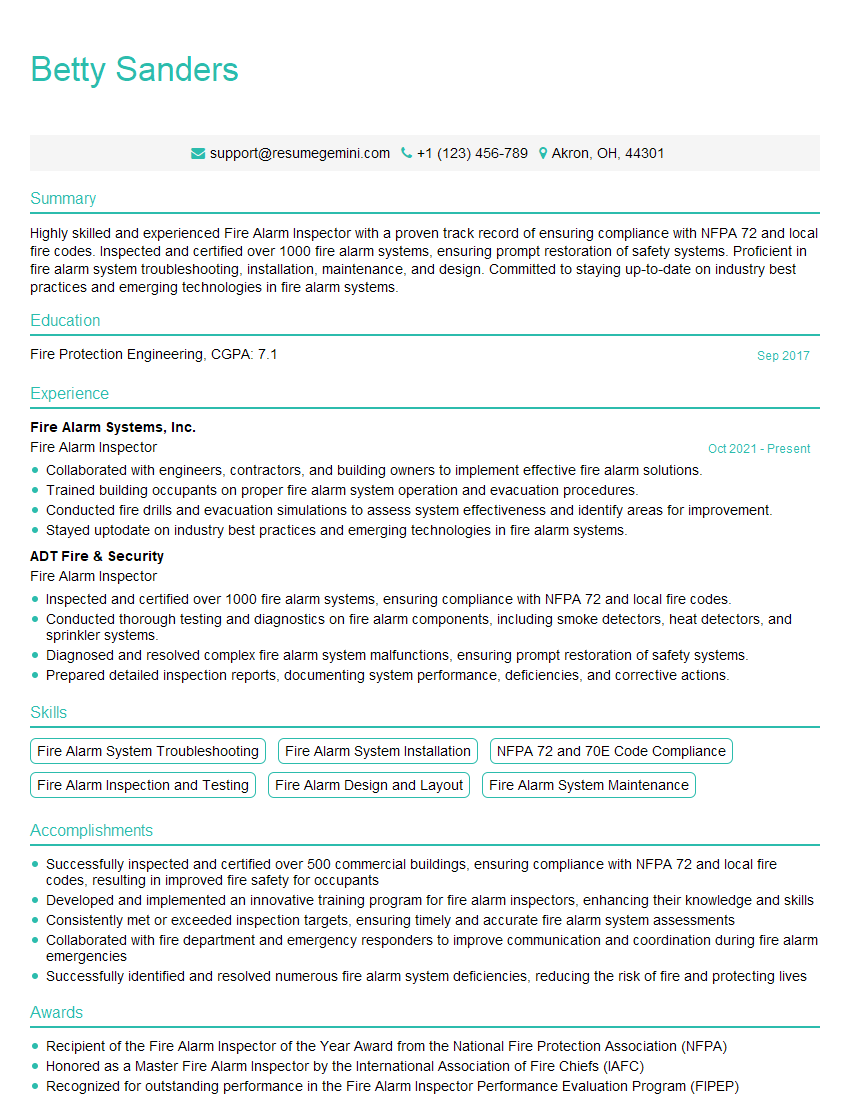
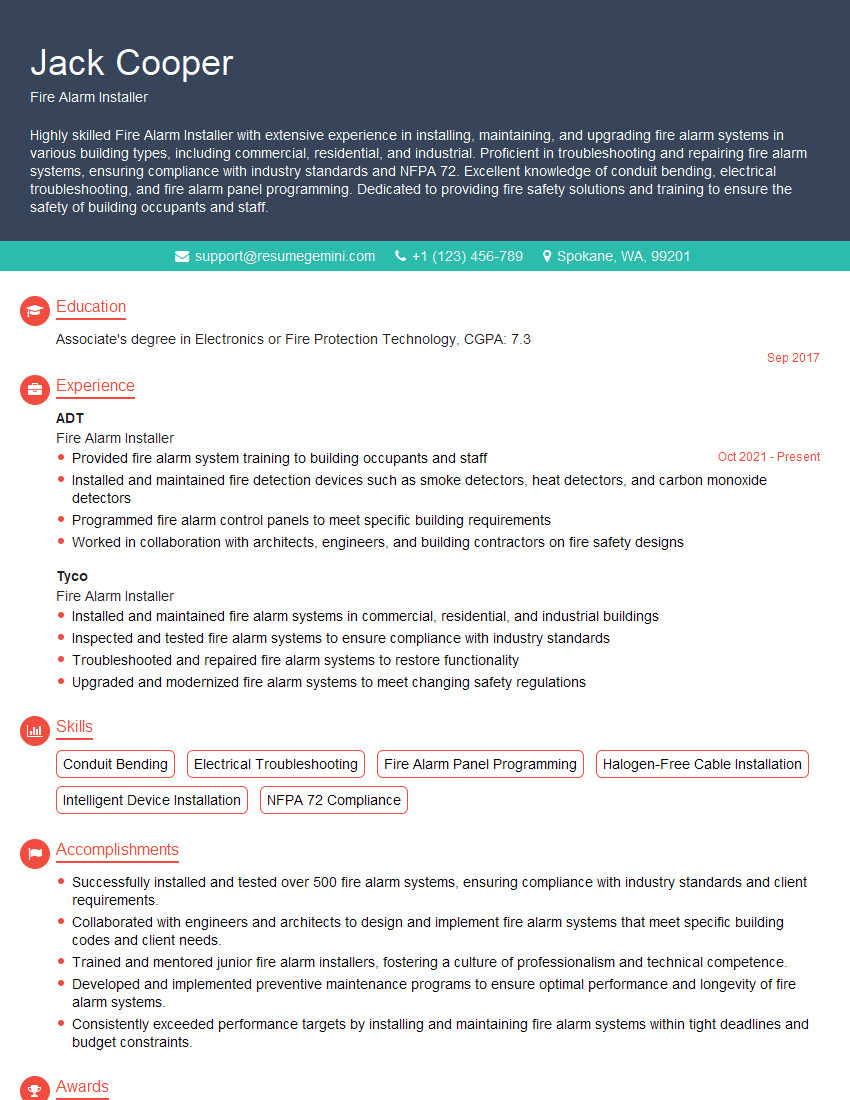
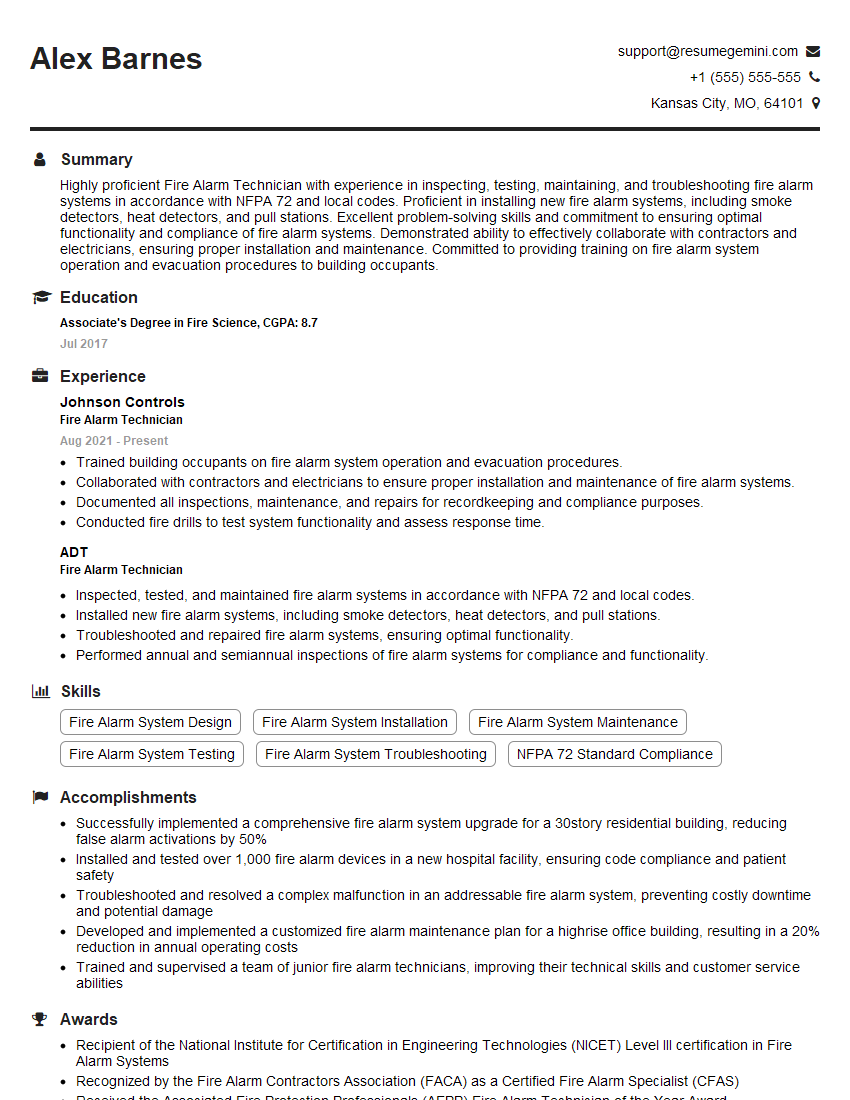
Mastering fire alarm installation opens doors to a rewarding career with excellent growth potential. This specialized skill is in high demand, leading to competitive salaries and opportunities for advancement. To maximize your job prospects, it’s crucial to create a resume that catches the eye of Applicant Tracking Systems (ATS) and recruiters. An ATS-friendly resume highlights your key skills and experience effectively, increasing your chances of landing an interview. ResumeGemini is a trusted resource that can help you build a professional and impactful resume tailored to the fire alarm installation industry. Examples of resumes specifically designed for this field are available to guide you.
Explore more articles
Users Rating of Our Blogs
Share Your Experience
We value your feedback! Please rate our content and share your thoughts (optional).
What Readers Say About Our Blog
To the interviewgemini.com Webmaster.
Very helpful and content specific questions to help prepare me for my interview!
Thank you
To the interviewgemini.com Webmaster.
This was kind of a unique content I found around the specialized skills. Very helpful questions and good detailed answers.
Very Helpful blog, thank you Interviewgemini team.