Are you ready to stand out in your next interview? Understanding and preparing for Fish Physiology and Ecology interview questions is a game-changer. In this blog, we’ve compiled key questions and expert advice to help you showcase your skills with confidence and precision. Let’s get started on your journey to acing the interview.
Questions Asked in Fish Physiology and Ecology Interview
Q 1. Explain the concept of osmoregulation in freshwater and saltwater fish.
Osmoregulation is the process by which fish maintain the balance of water and salts in their bodies, crucial for survival in their aquatic environment. This process differs dramatically between freshwater and saltwater fish due to the differing osmotic pressures.
Freshwater Fish: Freshwater fish live in a hypotonic environment – meaning the water around them has a lower salt concentration than their internal fluids. They constantly face the challenge of water influx. To counteract this, freshwater fish:
- Drink very little water: Minimizing water intake reduces the burden on their excretory system.
- Produce large volumes of dilute urine: This helps excrete excess water.
- Actively absorb salts through their gills: Specialized cells in their gills actively transport sodium and chloride ions from the water into their bloodstream.
Saltwater Fish: Saltwater fish live in a hypertonic environment – the surrounding water has a higher salt concentration than their internal fluids. Their primary challenge is water loss. To overcome this, saltwater fish:
- Drink large amounts of seawater: This provides essential water.
- Produce small volumes of concentrated urine: Conserving water is key.
- Actively excrete excess salts through their gills and kidneys: Specialized cells in their gills actively pump excess salts into the surrounding water. The kidneys also play a role in excreting salts.
Think of it like this: freshwater fish are constantly fighting against water entering their bodies, while saltwater fish are fighting against water leaving their bodies. Both scenarios require specialized physiological adaptations to maintain homeostasis.
Q 2. Describe the different types of fish reproduction strategies.
Fish reproduction is incredibly diverse, showcasing a range of strategies adapted to their specific environments and life histories. We can categorize these strategies broadly:
- Oviparity: The most common strategy, involving the external fertilization of eggs. Eggs are laid in the water, and fertilization occurs externally. Examples include most bony fish (e.g., cod, salmon).
- Viviparity: Live birth. Fertilization is internal, and the embryos develop inside the mother’s body, receiving nourishment directly. Examples include some sharks and certain types of fish.
- Ovoviviparity: A middle ground. Eggs are fertilized internally, but the embryos develop within the mother’s body without direct nourishment from her. The young are then born live. Examples include some sharks and guppies.
Further complexity exists within these categories. Some species exhibit parental care, guarding eggs or young, while others simply release eggs and leave their fate to chance. Spawning behavior can also vary greatly, from mass spawning events to highly specific courtship rituals.
The reproductive strategy adopted by a fish species is heavily influenced by factors such as its habitat, feeding habits, and predation pressures. Understanding these strategies is essential for effective fisheries management and conservation efforts.
Q 3. Discuss the factors influencing fish population dynamics.
Fish population dynamics are governed by a complex interplay of factors, both biotic (living) and abiotic (non-living). Understanding these factors is crucial for managing fish stocks sustainably.
- Recruitment: The number of young fish that survive to reproductive age. Influenced by spawning success, larval survival, and juvenile growth.
- Growth and Mortality: Fish growth rates are affected by food availability, temperature, and competition. Mortality rates are influenced by predation, disease, and fishing pressure.
- Environmental Conditions: Water temperature, oxygen levels, salinity, and habitat availability all play significant roles. Changes in these factors can dramatically impact population size.
- Competition and Predation: Competition for resources among different fish species or within the same species, as well as predation by other animals, shapes population dynamics.
- Fishing Pressure: The intensity of fishing activities significantly impacts fish populations, particularly if harvesting exceeds recruitment.
Consider, for instance, a cod population experiencing increased water temperatures due to climate change. This could lead to reduced oxygen levels, impacting growth and increasing mortality rates. Simultaneously, increased fishing pressure could further deplete the population, creating a complex, cascading effect on the ecosystem.
Q 4. What are the key indicators of fish health?
Assessing fish health involves examining a range of indicators, both physical and behavioral. These indicators can signal underlying problems, such as disease, pollution, or habitat degradation.
- Physical Indicators: These include external signs like lesions, fin damage, abnormal coloration, and emaciation. Internal examination might reveal organ damage or parasitic infestations.
- Behavioral Indicators: Changes in behavior, such as lethargy, erratic swimming patterns, or reduced feeding activity, can indicate underlying issues.
- Physiological Indicators: These are often measured in a laboratory setting and include parameters like blood chemistry (e.g., hematocrit, glucose levels), immune responses, and stress hormones (cortisol). These provide a deeper understanding of the fish’s physiological state.
- Parasite Loads: The presence and abundance of parasites can significantly affect fish health. Regular parasite checks are a valuable component of fish health assessments.
For example, observing unusually high numbers of fish with fin rot in a specific area could point to a water quality problem such as pollution or elevated ammonia levels. A combination of these indicators provides a comprehensive evaluation of fish health and assists in identifying potential threats.
Q 5. Explain the concept of trophic levels in aquatic ecosystems.
Trophic levels describe the position an organism occupies in a food chain or food web within an aquatic ecosystem. Energy flows through the ecosystem from one level to the next.
- Producers (Primary Producers): These are typically phytoplankton and macrophytes (aquatic plants) which convert sunlight into energy through photosynthesis. They form the base of the food web.
- Primary Consumers (Herbivores): These organisms feed on the producers. Examples include zooplankton and some species of fish.
- Secondary Consumers (Carnivores): These consume the primary consumers. Many fish species are secondary consumers, feeding on zooplankton or smaller fish.
- Tertiary Consumers (Top Predators): These are at the top of the food web, preying on secondary consumers. Examples include larger predatory fish, sharks, or marine mammals.
- Decomposers: Bacteria and fungi break down organic matter from all trophic levels, releasing nutrients back into the environment.
Imagine a simple food chain: Phytoplankton (producer) → Zooplankton (primary consumer) → Small fish (secondary consumer) → Large fish (tertiary consumer). Energy is transferred between each level, but some is lost as heat at each step. The structure of these trophic levels and the interactions between them are vital to the overall health and stability of the aquatic ecosystem.
Q 6. How do you assess fish stock abundance and distribution?
Assessing fish stock abundance and distribution requires a multifaceted approach combining various methods. The goal is to obtain a reliable estimate of the population size and its spatial distribution within a defined area.
- Acoustic Surveys: Using sonar technology to detect fish schools based on sound reflections. This provides a broad-scale assessment of abundance and distribution.
- Trawl Surveys: Dragging a net through the water to capture a sample of fish. This allows for species identification and size measurements, providing more detailed data but only covering a smaller area than acoustic surveys.
- Catch-per-unit-effort (CPUE): Monitoring the amount of fish caught per unit of fishing effort (e.g., hours fished, amount of bait used). This indirect method is useful for long-term monitoring but can be influenced by fishing gear efficiency and fish behavior.
- Mark-Recapture Studies: A method where a known number of fish are tagged and released. Later, a sample of fish is captured, and the proportion of tagged individuals is used to estimate the total population size.
- Environmental DNA (eDNA): Detecting the presence of fish species by analyzing DNA in water samples. This offers a non-invasive way to detect species presence and can provide early warning signs of species invasions or declines.
The choice of method depends on factors such as the target species, the size of the area being surveyed, the available resources, and the desired level of accuracy. Often, a combination of methods is used to obtain a more comprehensive and reliable assessment.
Q 7. Describe various methods for fish sampling and data collection.
Fish sampling and data collection utilize a variety of techniques, each with its strengths and limitations. The method chosen depends on the research question, the target species, and the environment.
- Passive Gear: This includes traps, fyke nets, and gill nets, which capture fish passively without actively pursuing them. These are useful for capturing a variety of species but can be selective, favoring certain sizes or species.
- Active Gear: This includes seines, trawls, and electrofishing. These methods actively target fish, often covering a larger area. Seines are used in shallow waters, trawls in deeper waters, and electrofishing in rivers and streams to stun fish temporarily for collection.
- Visual Censuses: Observations of fish using SCUBA diving or underwater cameras are often employed in studies of coral reefs or other visually rich environments. This method allows detailed observations of behavior and habitat use.
- Data Collection Techniques: Once fish are collected, data are gathered on various aspects. This may include species identification, length, weight, sex, age (using scales or otoliths), and the presence of parasites. Environmental data such as water temperature, salinity, and dissolved oxygen are also crucial.
For example, a study of the impact of dam construction on fish communities in a river might use electrofishing to sample fish upstream and downstream of the dam. The data collected would then be analyzed to compare species composition, abundance, and size structure between the two sites.
Q 8. What are the impacts of climate change on fish populations?
Climate change significantly impacts fish populations through several interconnected pathways. Rising water temperatures, for instance, can reduce dissolved oxygen levels, stressing fish and potentially leading to mass mortality events, particularly in already oxygen-depleted areas like stagnant ponds or deep ocean layers. Think of it like us humans – extreme heat makes it harder to breathe. For fish, this means less available oxygen to sustain their metabolic processes.
Ocean acidification, caused by increased absorption of atmospheric carbon dioxide, poses another major threat. This acidification interferes with the ability of many marine organisms, including shellfish and corals, to build and maintain their shells and skeletons. This impacts the entire food web, as these organisms are crucial prey species for many fish.
Changes in precipitation patterns lead to altered river flows, impacting the spawning grounds and habitats of many freshwater fish species. Too much or too little water can disrupt breeding cycles and juvenile development. We’ve seen examples of this with salmon populations in rivers experiencing severe droughts or floods.
Finally, climate change alters the distribution and abundance of prey species, affecting the food availability for fish. As water temperatures change, fish may be forced to migrate to find suitable habitats, potentially disrupting established ecosystems and impacting interspecies relationships. These migrations can also expose fish to new predators or competitors.
Q 9. Explain the principles of fisheries management.
Fisheries management aims to ensure the long-term sustainability of fish stocks and the health of aquatic ecosystems. This involves a multi-faceted approach encompassing several key principles:
- Stock Assessment: Regular monitoring of fish populations to determine their abundance, size structure, and reproductive capacity. This involves sophisticated statistical analyses of catch data and other biological information.
- Setting Catch Limits: Establishing scientifically-based limits on fishing effort and harvest to prevent overfishing. These limits are often set based on maximum sustainable yield (MSY) models, which aim to maximize the amount of fish that can be caught without compromising the long-term health of the population.
- Gear Restrictions: Implementing regulations on fishing gear to minimize bycatch (unintentional capture of non-target species) and habitat damage. For example, using larger mesh nets to allow smaller fish to escape.
- Habitat Protection: Protecting and restoring critical fish habitats, such as spawning grounds, nurseries, and feeding areas. This includes establishing marine protected areas (MPAs) and restoring degraded ecosystems.
- Enforcement and Compliance: Effective monitoring and enforcement of regulations to ensure compliance by fishers. This is crucial to the success of any fisheries management plan.
- Ecosystem-Based Management: A more holistic approach that considers the entire ecosystem, not just individual fish stocks. This includes accounting for interactions between species and the effects of environmental factors.
Consider the example of the Pacific halibut fishery. Through careful stock assessments and the implementation of catch limits and gear restrictions, this fishery has been successfully managed for decades, allowing for sustainable harvest while maintaining a healthy population.
Q 10. Discuss the challenges in aquaculture sustainability.
Aquaculture, while providing a vital source of protein, faces significant sustainability challenges:
- Environmental Impacts: Aquaculture can lead to water pollution from uneaten feed, fish waste, and chemicals used for disease control. This can damage surrounding ecosystems and harm wild fish populations. For example, intensive shrimp farming has been implicated in mangrove deforestation and water quality degradation.
- Disease Outbreaks: High stocking densities in aquaculture facilities can increase the risk of disease outbreaks, requiring the use of antibiotics and other treatments that can have detrimental effects on both farmed and wild fish populations. The overuse of antibiotics, particularly, contributes to the development of antibiotic-resistant bacteria.
- Escape of Farmed Fish: Farmed fish can escape from aquaculture facilities and interbreed with wild populations, potentially leading to genetic dilution and compromising the fitness of wild fish.
- Feed Production: Producing feed for aquaculture often requires large quantities of wild-caught fish, creating a conflict between aquaculture and wild fisheries. Sustainable feed alternatives are actively being researched, such as insect meal and algae.
- Social and Economic Issues: Aquaculture can have social and economic impacts, particularly in developing countries, where it can lead to displacement of communities and conflicts over resource use.
Addressing these challenges requires a transition towards more sustainable aquaculture practices, such as integrated multi-trophic aquaculture (IMTA), which aims to mimic natural ecosystems by integrating different species to reduce waste and enhance productivity.
Q 11. What are the major threats to fish biodiversity?
Fish biodiversity faces numerous threats, many intertwined and exacerbated by human activities:
- Habitat Loss and Degradation: Damming rivers, draining wetlands, and destroying coastal habitats are major drivers of fish biodiversity loss. This destroys critical spawning and nursery grounds and disrupts migration routes.
- Overfishing: Unsustainable fishing practices deplete fish stocks and can lead to the collapse of entire fisheries, impacting not only the targeted species but also the broader ecosystem.
- Pollution: Chemical, nutrient, and plastic pollution contaminates aquatic environments, harming fish and their habitats. Heavy metals and pesticides can accumulate in fish tissue, posing risks to human health as well.
- Invasive Species: The introduction of non-native species can outcompete native fish, leading to their decline or extinction. Invasive species can also introduce diseases or alter the structure of entire food webs.
- Climate Change: As previously discussed, climate change impacts fish populations through changes in temperature, oxygen levels, and habitat suitability, making them more susceptible to other threats.
The Amazon River basin, for instance, is experiencing dramatic biodiversity loss due to deforestation, damming, and pollution, impacting thousands of unique fish species.
Q 12. How do you analyze fish population data using statistical methods?
Analyzing fish population data often involves a range of statistical methods, depending on the specific research question and data available. Common approaches include:
- Descriptive Statistics: Calculating summary statistics such as mean, median, standard deviation, and range to describe the basic characteristics of the data. For example, we might calculate the average length and weight of fish caught in a particular area.
- Population Estimation: Using techniques such as mark-recapture methods to estimate the total population size of a given species. This involves marking a sample of fish, releasing them, and then recapturing a second sample to estimate the proportion of marked fish in the population.
- Regression Analysis: Analyzing the relationship between different variables, such as fish length and weight, or fish abundance and environmental factors. For example, we might use regression to model how fish abundance changes with water temperature.
- Time Series Analysis: Analyzing changes in fish populations over time to identify trends, seasonality, and other patterns. This can be useful for monitoring the effects of management interventions or environmental changes.
- Generalized Linear Models (GLMs): Analyzing count data, such as the number of fish caught in a particular area, accounting for factors such as fishing effort and environmental conditions. GLMs are particularly useful for handling data that are not normally distributed.
# Example R code for a simple linear regression: # model <- lm(fish_abundance ~ water_temperature, data = my_data) # summary(model)
The choice of statistical method depends on the specific research question and the nature of the data. Careful consideration of potential biases and limitations of the data and methods employed is essential for drawing accurate and reliable conclusions.
Q 13. Describe the role of fish in aquatic food webs.
Fish play a crucial role in aquatic food webs, occupying various trophic levels (feeding positions) depending on the species. They act as both predators and prey, influencing the abundance and distribution of other organisms.
- Primary Consumers (Herbivores): Some fish feed on plants and algae, transferring energy from the primary producers (plants) to higher trophic levels. Examples include many species of cyprinids (minnows and carp).
- Secondary Consumers (Carnivores): Many fish feed on other smaller animals, such as invertebrates or smaller fish, acting as important predators in the food web. Examples include trout and bass.
- Tertiary Consumers (Top Predators): Large predatory fish, such as sharks and tuna, occupy the top of the food web, regulating the populations of their prey species. They control the abundance of fish at lower trophic levels.
- Decomposers: Some fish species feed on detritus (dead organic matter), helping to recycle nutrients in the ecosystem.
The removal of a key fish species from a food web can have cascading effects throughout the ecosystem, altering the abundance of other species and potentially leading to instability. For example, the overfishing of large predatory fish can lead to an increase in the populations of their prey species, which can, in turn, overgraze their food sources.
Q 14. Explain the different types of fish respiratory systems.
Fish exhibit a variety of respiratory systems adapted to their specific environments. The most common type is:
- Gills: The vast majority of fish use gills for respiration. Gills are highly vascularized (rich in blood vessels) structures located on either side of the head. Water flows over the gills, and oxygen diffuses from the water into the blood. This process is highly efficient, allowing fish to extract a significant portion of the dissolved oxygen in the water. The efficiency is increased by countercurrent exchange, where the flow of water over the gills is opposite to the flow of blood within the gill filaments, maximizing the oxygen gradient.
- Lungs (in some species): Certain fish, particularly those living in environments with low oxygen levels (such as lungfish), have evolved lungs as a supplementary or primary respiratory organ. These lungs allow them to breathe atmospheric oxygen directly.
- Skin Respiration: Some fish, particularly small or those living in oxygen-poor environments, can absorb some oxygen directly through their skin. This is a less efficient method of respiration than gills but provides supplementary oxygen uptake.
- Intestine Respiration: A few specialized fish species can absorb oxygen through their intestine. This is a less common but effective respiratory adaptation for certain species living in hypoxic conditions (low oxygen). These species often gulp air at the surface, which is then processed for oxygen extraction in the intestine.
The specific respiratory system used by a fish is determined by its evolutionary history and the environmental conditions it inhabits. Fish living in well-oxygenated waters typically rely primarily on gills, while those inhabiting oxygen-poor environments might have evolved supplementary respiratory mechanisms to survive.
Q 15. Discuss the physiological adaptations of fish to different habitats.
Fish have evolved remarkable physiological adaptations to thrive in diverse habitats. These adaptations often revolve around osmoregulation (managing salt and water balance), respiration (oxygen uptake), and thermoregulation (managing body temperature).
- Osmoregulation: Freshwater fish face the challenge of water constantly entering their bodies due to osmosis. They compensate by producing large volumes of dilute urine and actively absorbing salts through their gills. Conversely, saltwater fish lose water to their surroundings. They drink seawater, actively excrete salts through their gills and kidneys, and produce small amounts of concentrated urine. Think of it like this: freshwater fish are constantly fighting against swelling up, while saltwater fish are fighting against drying out.
- Respiration: Different respiratory adaptations exist depending on oxygen availability. Some fish have highly efficient gills for extracting oxygen from water, while others, like lungfish, possess lungs for breathing air in oxygen-poor environments. Air-breathing fish are common in stagnant or oxygen-depleted waters.
- Thermoregulation: Most fish are ectothermic, meaning their body temperature is regulated by their environment. However, some larger, active species like tuna and some sharks exhibit regional endothermy, maintaining higher temperatures in certain body parts to optimize muscle function and hunting efficiency. This is analogous to how mammals use insulation to regulate temperature.
Consider the stark contrast between a salmon that migrates between freshwater and saltwater, requiring dramatic physiological shifts, and a cichlid adapted to a specific, stable lake environment.
Career Expert Tips:
- Ace those interviews! Prepare effectively by reviewing the Top 50 Most Common Interview Questions on ResumeGemini.
- Navigate your job search with confidence! Explore a wide range of Career Tips on ResumeGemini. Learn about common challenges and recommendations to overcome them.
- Craft the perfect resume! Master the Art of Resume Writing with ResumeGemini's guide. Showcase your unique qualifications and achievements effectively.
- Don't miss out on holiday savings! Build your dream resume with ResumeGemini's ATS optimized templates.
Q 16. What are the effects of pollution on fish physiology and behavior?
Pollution significantly impacts fish physiology and behavior. Pollutants like heavy metals, pesticides, and industrial chemicals can cause a range of problems.
- Physiological Effects: Heavy metals can accumulate in fish tissues, disrupting enzyme activity and organ function. Pesticides can interfere with endocrine systems, affecting reproduction and development. This can manifest as reduced growth rates, impaired reproduction, and increased susceptibility to disease. Think of it like the effects of toxins on the human body – only amplified due to the fish's direct exposure to water.
- Behavioral Effects: Pollutants can alter fish behavior, affecting their feeding, schooling, migration patterns, and avoidance responses. For instance, exposure to certain chemicals may reduce a fish's ability to detect predators or find food, impacting survival and reproduction. Imagine a fish becoming disoriented or less responsive to its environment.
The effects of pollution are often species-specific and depend on the type and concentration of pollutants, exposure duration, and the fish's overall health. This makes studying and mitigating the effects of pollution on fish populations challenging but crucial for maintaining healthy aquatic ecosystems. For example, monitoring fish populations in polluted areas can serve as a bioindicator of environmental health.
Q 17. Explain the concept of carrying capacity in fish populations.
Carrying capacity refers to the maximum population size of a fish species that a particular environment can sustainably support. It's determined by the availability of resources like food, oxygen, shelter, and the presence of limiting factors such as predators and diseases.
Imagine a pond: If the pond has plenty of food and space, the fish population can grow. But if the food runs out or the pond becomes overcrowded, the population will stop growing and potentially decline. The carrying capacity is that point where the environmental resources precisely balance the population growth.
Factors affecting carrying capacity are complex and interrelated. For example, an increase in nutrient input (eutrophication) might temporarily increase the carrying capacity, but it could also lead to oxygen depletion later on, potentially reducing it dramatically. Understanding carrying capacity is vital for sustainable fisheries management and aquaculture practices. It allows for setting appropriate catch limits and preventing overexploitation.
Q 18. How do you determine the optimal stocking density for aquaculture?
Determining optimal stocking density in aquaculture is critical for maximizing production while minimizing stress and disease. Too high a density leads to competition for resources, increased stress, and potential disease outbreaks. Too low a density means underutilization of the available space and resources.
The optimal density depends on many factors, including:
- Fish species: Different species have different space requirements and tolerance to crowding.
- Water quality: Adequate water flow, oxygen levels, and waste removal capacity are crucial.
- Tank size and design: Larger tanks with improved water circulation can support higher densities.
- Feeding regime: Appropriate feeding strategies help to manage waste and prevent competition.
- Growth stage: Stocking density often needs adjustments as fish grow.
A step-by-step approach to determining optimal stocking density involves:
- Research species-specific requirements: Literature review and expert consultation are important.
- Assess water quality parameters: Ensure sufficient oxygen and appropriate waste removal systems.
- Pilot studies: Conduct small-scale trials to assess growth and survival at different densities.
- Monitor fish health and behavior: Regular observation and data collection are key.
- Iterative adjustments: Based on observations, adjust stocking density to optimize production and fish welfare.
Careful management of stocking density ensures profitable aquaculture while prioritizing animal welfare.
Q 19. What are the ethical considerations in fisheries management?
Ethical considerations in fisheries management are paramount to ensuring the sustainability of fish stocks and preserving marine ecosystems. Key ethical considerations include:
- Sustainability: Fishing practices should ensure the long-term viability of fish populations. This includes implementing sustainable catch limits, protecting spawning grounds, and minimizing bycatch (unintentional capture of non-target species).
- Animal welfare: Fishing methods should minimize suffering and stress to fish. Reducing the use of destructive fishing gear and ensuring quick, humane deaths are crucial.
- Social justice: Fisheries management should consider the social and economic impacts on fishing communities. Ensuring equitable access to resources and supporting livelihoods is vital.
- Ecosystem health: Fisheries management needs to consider the wider impacts on marine ecosystems. Protecting biodiversity, habitat quality, and minimizing disruption to food webs are essential.
For example, the implementation of marine protected areas is an ethical approach that balances conservation goals with the needs of fishing communities. This involves creating areas where fishing is restricted or prohibited to allow fish populations to recover, ensuring a more sustainable long-term yield.
Q 20. Describe the different types of fish parasites and their impacts.
Fish are susceptible to a wide array of parasites, broadly classified as protozoans, helminths, and crustaceans. Each group poses unique challenges to fish health and survival.
- Protozoans: These single-celled organisms, such as Ichthyophthirius multifiliis (Ich), can cause significant mortality, especially in aquaculture settings. Ich manifests as white spots on the fish's body, leading to skin irritation and secondary infections.
- Helminths: These are multicellular worms, including nematodes, cestodes (tapeworms), and trematodes (flukes). They often infest the digestive tract, gills, or other organs, leading to malnutrition, impaired respiration, and reduced growth. For example, certain nematode infections can block the gut, preventing nutrient absorption.
- Crustaceans: These include copepods, isopods, and amphipods that attach to the fish's body, gills, or fins, causing irritation, damage, and secondary bacterial infections. Sea lice, a common crustacean parasite, infects salmonid fish, creating sores and impacting overall health.
The impact of parasites varies depending on the intensity of infection, the host's immune system, and environmental conditions. Heavy parasitic infestations can lead to significant fish mortality and economic losses in aquaculture, impacting both food security and livelihoods. Understanding the parasite lifecycle and the host-parasite interaction is crucial for developing effective control strategies.
Q 21. Explain the process of fish disease diagnosis and treatment.
Diagnosing and treating fish diseases requires a multi-faceted approach combining clinical observation, laboratory tests, and appropriate treatment strategies.
Diagnosis:
- Clinical Examination: Observing fish for external signs of disease, such as lesions, abnormal behavior, or unusual coloration is the first step.
- Necropsy: In cases of mortality, a necropsy (fish autopsy) helps identify internal abnormalities and potential pathogens.
- Laboratory Tests: Microscopy, parasitology, bacteriology, and virology tests may be necessary to pinpoint the specific causative agent.
Treatment: Treatment strategies depend on the identified disease and may involve:
- Medication: Antibiotics, antiparasitics, and antifungals are used to combat bacterial, parasitic, and fungal infections. The choice of medication and dosage depends on the identified pathogen and species of fish.
- Environmental Management: Improving water quality, controlling stocking density, and optimizing feeding strategies can prevent and treat certain diseases. Maintaining optimal water parameters, such as temperature and oxygen levels, is crucial.
- Quarantine: Isolating infected fish to prevent the spread of disease is essential, particularly in aquaculture settings.
Effective fish disease management requires a proactive approach emphasizing preventative measures such as maintaining good water quality, ensuring proper nutrition, and preventing stress. Early diagnosis and appropriate treatment are crucial to minimize losses and maintain healthy fish populations. For example, routine water quality testing and parasite monitoring in aquaculture can prevent major outbreaks.
Q 22. Discuss the role of genetics in fish conservation.
Genetics plays a crucial role in fish conservation by informing our understanding of population structure, genetic diversity, and adaptive capacity. Think of it like this: each fish population has its own unique genetic fingerprint. Understanding this fingerprint helps us identify distinct populations, assess their resilience to environmental changes, and even track the success of conservation efforts.
- Population Structure: Genetic analysis helps delineate distinct populations, crucial for managing them effectively. For instance, identifying genetically unique salmon populations in different river systems allows for targeted conservation strategies for each.
- Genetic Diversity: Low genetic diversity can make populations vulnerable to disease and environmental stress. Genetic monitoring programs track diversity levels, flagging populations at risk and guiding breeding programs to enhance resilience. For example, captive breeding programs for endangered fish species often prioritize genetic diversity to prevent inbreeding depression.
- Adaptive Capacity: Genetic variation provides the raw material for adaptation to changing conditions. Studying the genetic basis of traits like disease resistance or tolerance to warmer water temperatures can inform selective breeding or habitat management strategies. For example, identifying genes associated with thermal tolerance in coral reef fish could guide conservation efforts in a warming ocean.
In essence, genetics provides the fundamental scientific underpinning for effective and targeted fish conservation strategies, ensuring we protect not only the numbers, but also the evolutionary potential of fish populations.
Q 23. What are the benefits and challenges of using GIS in fisheries research?
Geographic Information Systems (GIS) are invaluable tools in fisheries research, offering powerful ways to visualize, analyze, and manage spatial data. Imagine GIS as a sophisticated map that goes far beyond just showing locations; it allows us to overlay different layers of information to understand complex ecological relationships.
- Benefits:
- Habitat Mapping: GIS allows precise mapping of fish habitats, including critical spawning grounds, nurseries, and feeding areas. This is essential for identifying and prioritizing areas for conservation or restoration.
- Species Distribution Modeling: By combining species occurrence data with environmental variables (water temperature, depth, salinity), GIS can predict species distributions, helping to anticipate the impacts of climate change or habitat alteration.
- Fisheries Management: GIS helps optimize fishing quotas and regulations by identifying areas of high fish density and minimizing conflicts between fishing activities and other marine uses.
- Challenges:
- Data Availability: Accurate and comprehensive data are essential for effective GIS analysis. Data gaps can limit the accuracy and reliability of results.
- Data Integration: Integrating data from different sources (e.g., remote sensing, field surveys, fishing logbooks) can be challenging and require significant effort.
- Technical Expertise: Effective use of GIS requires specialized skills and training. This can be a barrier for researchers with limited GIS experience.
Despite these challenges, the benefits of using GIS in fisheries research far outweigh the drawbacks, making it an indispensable tool for modern fisheries science.
Q 24. How do you assess the effectiveness of fish conservation measures?
Assessing the effectiveness of fish conservation measures requires a multi-faceted approach, combining quantitative and qualitative data to paint a complete picture. It’s like checking if your car is running well – you need to look at several indicators, not just one.
- Population Monitoring: Tracking changes in fish population size, age structure, and genetic diversity is essential. This might involve using techniques like mark-recapture studies, acoustic telemetry, or fisheries-independent surveys. The trends over time reveal whether conservation efforts are producing the desired impact.
- Habitat Assessment: Monitoring changes in habitat quality and extent is crucial. This could involve assessing water quality parameters, mapping habitat changes using remote sensing, or measuring the abundance of key habitat components.
- Fisheries Data Analysis: Analyzing fishing catch data can reveal trends in fish abundance and the effectiveness of fishing regulations. For example, analyzing catch per unit effort (CPUE) can show if fishing pressure has decreased as a result of implemented measures.
- Economic and Social Impacts: Evaluating the social and economic effects of conservation measures is essential for securing stakeholder support. This may include assessing changes in employment levels, fishing revenues, and community well-being.
A robust assessment combines these various indicators and uses appropriate statistical analysis to determine whether conservation actions are achieving their goals. It's an iterative process – monitoring, evaluating, and adapting based on the results.
Q 25. Explain the concept of habitat restoration for fish.
Habitat restoration for fish aims to recover degraded habitats to their natural state or to a condition that supports healthy fish populations. Think of it as giving fish a makeover to their homes.
- In-stream habitat restoration focuses on improving the physical structure of rivers and streams. This can involve removing dams or weirs to restore natural flow regimes, adding woody debris to create complexity, or planting riparian vegetation to provide shade and reduce erosion.
- Wetland restoration aims to revive degraded wetlands, which are essential spawning and nursery areas for many fish species. This might involve restoring hydrology, removing invasive species, or replanting native vegetation.
- Coastal habitat restoration focuses on restoring estuaries, salt marshes, and seagrass beds, all vital habitats for various fish life stages. This can involve controlling pollution, restoring shoreline areas, or removing artificial structures that impede natural processes.
Successful habitat restoration requires a thorough understanding of the ecological requirements of the target fish species and the factors that caused habitat degradation. It’s a multi-step process that often involves site assessments, detailed design plans, implementation, and long-term monitoring.
Q 26. Describe the different types of fishing gears and their selectivity.
Fishing gears vary greatly in their design and selectivity, meaning their ability to target specific fish species or sizes. Think of it like using different tools for different jobs.
- Gillnets: These are panels of netting that entangle fish by their gills. Selectivity depends on mesh size; larger mesh sizes catch larger fish, while smaller mesh sizes catch smaller fish. This can lead to unwanted bycatch of smaller or non-target species.
- Trawls: These are large cone-shaped nets towed behind boats to catch fish near the bottom or in the water column. They have low selectivity, often catching a wide range of species and sizes, including many non-target species.
- Longlines: These consist of a long main line with multiple baited hooks. Selectivity can be influenced by hook size and bait type, but it is generally higher than trawls.
- Traps or Pots: These are enclosed structures that fish enter and are unable to escape. They often have high selectivity, targeting specific species or sizes based on the size and design of the trap.
Gear selectivity is a crucial consideration in fisheries management, as poorly selective gears can lead to high bycatch and deplete non-target species. Therefore, regulations often focus on limiting the use of less-selective gear or promoting the development and adoption of more selective gear designs.
Q 27. What are the implications of bycatch in fisheries?
Bycatch, the unintentional capture of non-target species in fishing operations, has severe ecological and economic implications. It's like collateral damage in a battle.
- Ecological Impacts: Bycatch can significantly impact the populations of non-target species, particularly those with low reproductive rates or slow growth. It can disrupt food webs, reduce biodiversity, and endanger endangered species. For example, sea turtles, marine mammals, and seabirds are often caught as bycatch in various fisheries.
- Economic Impacts: Bycatch represents wasted resources and adds to fishing costs. Discarding bycatch at sea can lead to unnecessary mortality and waste of valuable resources. The economic losses from bycatch can be substantial, affecting the profitability of fisheries and impacting the livelihoods of fishing communities.
- Management Implications: Bycatch necessitates careful management strategies. This can involve gear modifications to reduce bycatch, spatial closures to protect sensitive habitats, or regulations limiting fishing effort in certain areas. Effective monitoring and enforcement are crucial to minimize bycatch.
Addressing bycatch requires a concerted effort from scientists, fisheries managers, and fishing communities to develop and implement sustainable fishing practices.
Q 28. Discuss the economic impacts of fisheries on coastal communities.
Fisheries have profound economic impacts on coastal communities, both positive and negative. They are often the backbone of local economies, but unsustainable practices can lead to devastating consequences.
- Positive Impacts:
- Employment: Fisheries provide direct employment to fishers, processors, and related industries, supporting the livelihoods of many coastal families.
- Revenue Generation: Fisheries contribute significantly to local and national economies through the sale of fish and seafood products.
- Food Security: Fish and seafood provide an important source of protein and nutrients for coastal populations.
- Negative Impacts:
- Overexploitation: Unsustainable fishing practices can lead to depletion of fish stocks, jeopardizing the long-term viability of fisheries and the economic stability of coastal communities.
- Habitat Degradation: Destructive fishing methods can damage crucial fish habitats, reducing fish populations and the economic benefits they provide.
- Environmental Damage: Pollution from fishing activities can harm marine ecosystems and negatively affect tourism and other coastal industries.
Sustainable fisheries management is critical to ensuring that the economic benefits of fisheries are maximized while protecting the health of marine ecosystems and the well-being of coastal communities. This involves balancing the needs of the fishing industry with the need to conserve fish stocks and protect biodiversity. Such a balance requires integrated management approaches that include ecological, social, and economic considerations.
Key Topics to Learn for Fish Physiology and Ecology Interview
- Osmoregulation and Ion Balance: Understanding how fish maintain internal water and salt balance in different environments (freshwater, saltwater, brackish). Consider the physiological mechanisms involved and their adaptations.
- Respiration and Gas Exchange: Explore the diverse respiratory strategies in fish (gills, lungs, skin) and their adaptations to oxygen availability. Analyze the impact of environmental factors on respiration.
- Fish Locomotion and Hydrodynamics: Examine the biomechanics of swimming, the role of body shape and fin structure, and how these relate to energy efficiency and predator-prey interactions.
- Fish Sensory Systems: Discuss the roles of vision, hearing, lateral line, and electroreception in fish behavior and ecology. Consider how these systems contribute to foraging, predator avoidance, and communication.
- Fish Reproduction and Life History Strategies: Explore the diverse reproductive strategies in fish (e.g., oviparity, viviparity) and their ecological implications. Analyze life history trade-offs and their influence on population dynamics.
- Fish Population Dynamics and Modeling: Understand the principles of population growth, regulation, and decline. Practice applying population models to assess the impact of environmental changes and management strategies.
- Fish Community Ecology: Explore the interactions between different fish species and their environment, including competition, predation, and symbiosis. Consider the role of habitat structure and environmental gradients in shaping community composition.
- Conservation Biology and Fisheries Management: Discuss the challenges facing fish populations and the application of ecological principles to conservation and sustainable fisheries management. Consider the impacts of climate change, pollution, and habitat loss.
- Experimental Design and Data Analysis: Familiarize yourself with common experimental approaches used in fish physiology and ecology research. Practice interpreting and presenting data using appropriate statistical methods.
Next Steps
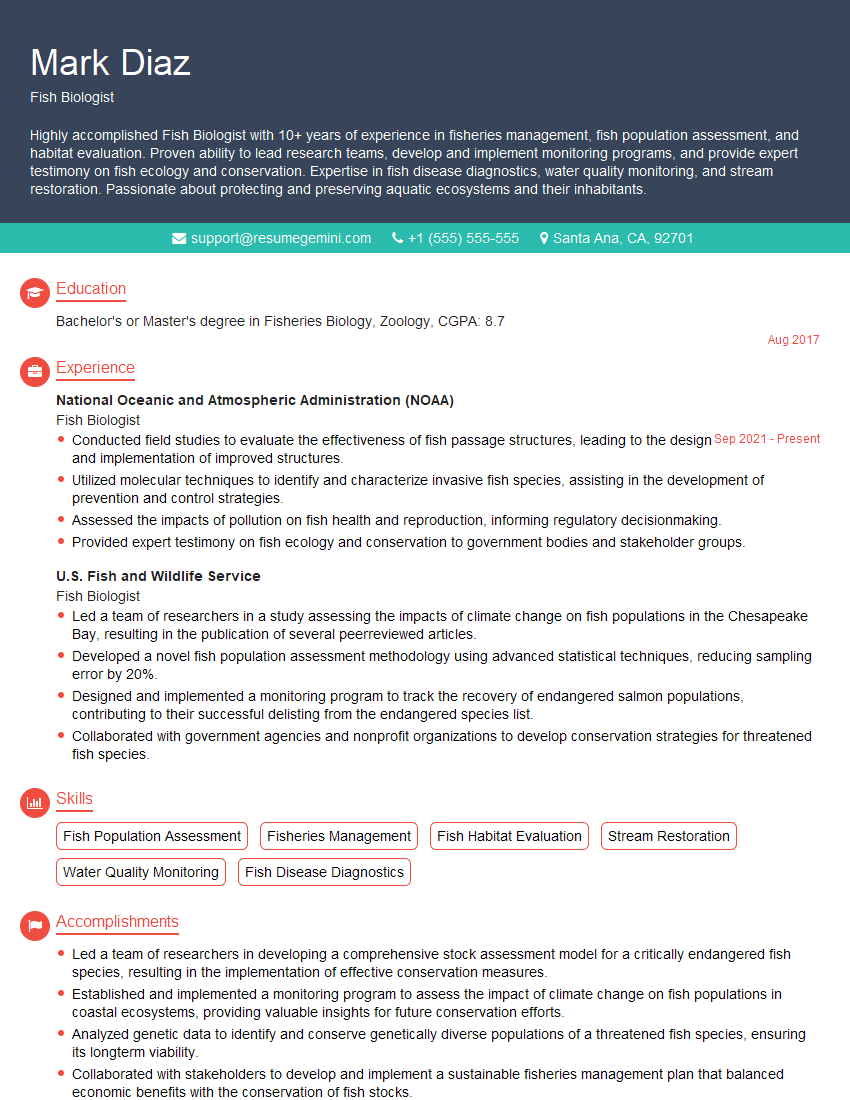
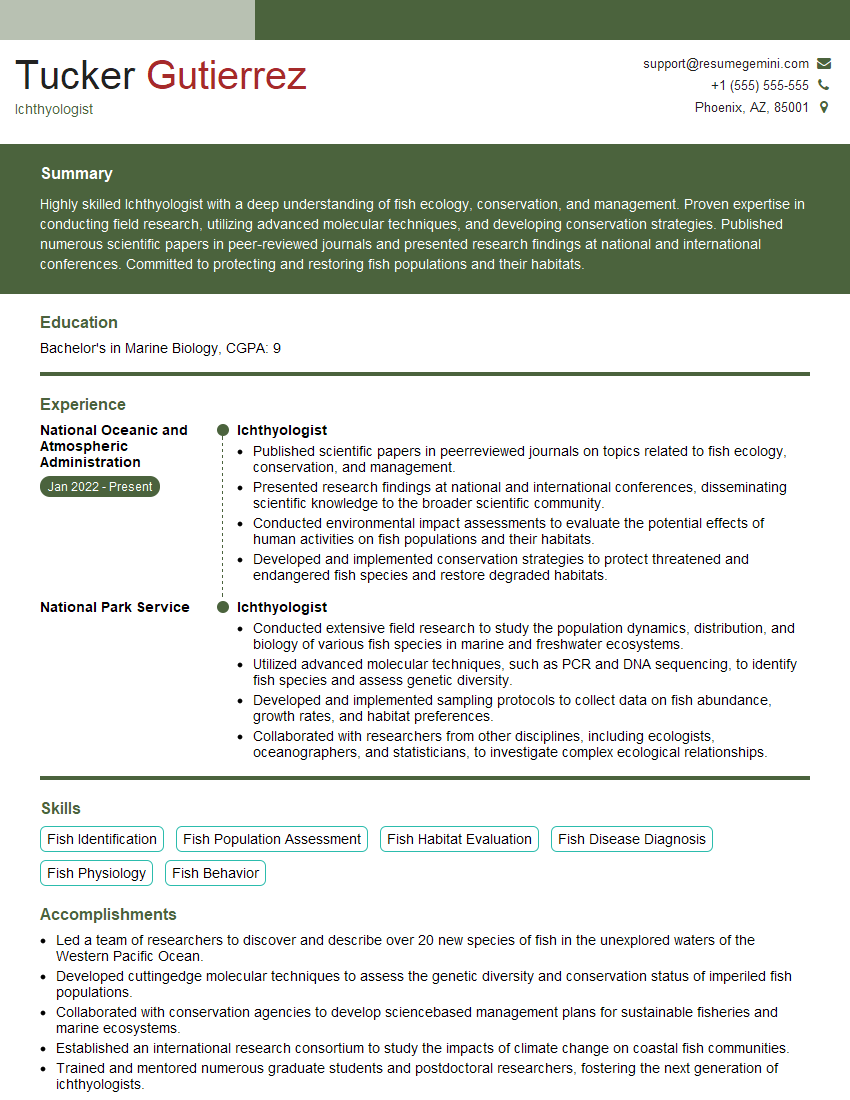
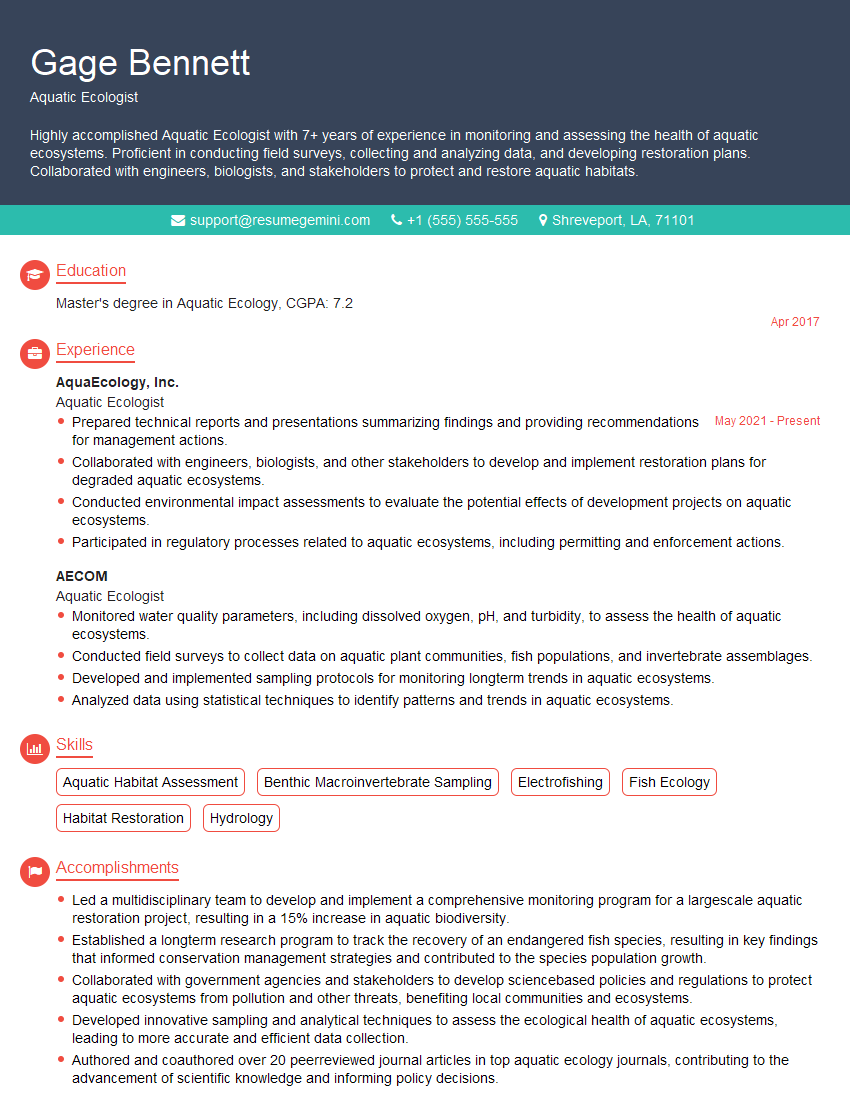
Mastering Fish Physiology and Ecology opens doors to exciting careers in research, conservation, aquaculture, and fisheries management. A strong understanding of these principles is crucial for showcasing your expertise and securing your dream position. To significantly increase your chances of landing an interview, create an ATS-friendly resume that effectively highlights your skills and experience. ResumeGemini is a trusted resource for building professional resumes, and we offer examples tailored to Fish Physiology and Ecology to help you get started. Invest time in crafting a compelling resume – it’s your first impression and a key step towards your successful career journey.
Explore more articles
Users Rating of Our Blogs
Share Your Experience
We value your feedback! Please rate our content and share your thoughts (optional).
What Readers Say About Our Blog
To the interviewgemini.com Webmaster.
Very helpful and content specific questions to help prepare me for my interview!
Thank you
To the interviewgemini.com Webmaster.
This was kind of a unique content I found around the specialized skills. Very helpful questions and good detailed answers.
Very Helpful blog, thank you Interviewgemini team.