Cracking a skill-specific interview, like one for Forest Soil Science and Conservation, requires understanding the nuances of the role. In this blog, we present the questions you’re most likely to encounter, along with insights into how to answer them effectively. Let’s ensure you’re ready to make a strong impression.
Questions Asked in Forest Soil Science and Conservation Interview
Q 1. Explain the impact of soil compaction on forest health.
Soil compaction, the process of soil particles being pressed together, significantly reduces pore space within the soil. This has cascading negative effects on forest health. Imagine squeezing a sponge – you reduce its ability to hold water. Similarly, compacted soil has reduced water infiltration, leading to increased runoff and decreased water availability for trees. This can cause drought stress, especially during dry periods.
Furthermore, compacted soil restricts root growth. Tree roots need space to expand and access nutrients and water. Compaction limits this, hindering nutrient uptake and overall tree growth. This weakens the trees, making them more susceptible to diseases, pests, and wind damage. Reduced root penetration also decreases the tree’s ability to anchor itself, increasing the risk of uprooting during storms. Finally, compacted soil reduces the activity of soil organisms, like earthworms and microbes, crucial for nutrient cycling and soil structure. These organisms struggle to thrive in dense, compacted soil, further impeding forest productivity and resilience.
Q 2. Describe different methods for assessing soil erosion in forested areas.
Assessing soil erosion in forested areas requires a multi-faceted approach. We can’t just look at the surface; we need to understand the processes driving erosion. One common method is using erosion pins. These are metal rods inserted into the soil at regular intervals. By measuring the amount of soil lost from around the pin over time, we can quantify erosion rates. This method is particularly useful for monitoring sheet and rill erosion (the gradual removal of soil in thin layers or small channels). Another valuable technique is sediment traps, which are strategically placed containers that collect sediment carried by runoff. Analyzing the collected sediment provides insights into the amount and type of soil being eroded. For a broader perspective, we can use remote sensing techniques, such as aerial photography or satellite imagery. These methods allow us to assess erosion over large areas and identify erosion hotspots.
The choice of method depends on factors like the scale of the study, the type of forest, and the available resources. For example, erosion pins might be suitable for a small-scale study, while remote sensing would be more appropriate for assessing regional-level erosion. Often, a combination of these methods is used to provide a comprehensive understanding of soil erosion dynamics.
Q 3. What are the key indicators of healthy forest soil?
Healthy forest soil is a complex ecosystem teeming with life and exhibiting a range of characteristics. Key indicators include:
- High organic matter content: This provides nutrients, improves water retention, and supports a diverse soil biota.
- Good soil structure: A well-structured soil with aggregates (clumps of soil particles) allows for adequate aeration and water infiltration.
- Abundant soil biodiversity: A rich community of microorganisms, earthworms, and other soil organisms indicates a healthy ecosystem.
- Adequate nutrient levels: Sufficient levels of essential nutrients like nitrogen, phosphorus, and potassium are vital for tree growth.
- Appropriate soil pH: The soil pH should be within the optimal range for the specific tree species and soil organisms.
- Minimal erosion: A healthy soil layer indicates minimal erosion, preserving its integrity and fertility.
Imagine a vibrant garden – that’s what a healthy forest soil should resemble, full of life and activity. Analyzing these indicators provides insights into the overall health and productivity of the forest ecosystem.
Q 4. How do you determine the appropriate reforestation techniques for a specific site?
Choosing the right reforestation techniques is crucial for successful forest regeneration. It’s not a one-size-fits-all approach. Site-specific factors significantly influence the choice of method. A thorough site assessment is the first step. This involves evaluating various parameters:
- Soil conditions: Soil texture, depth, drainage, nutrient content, and compaction level greatly impact tree establishment.
- Climate: Temperature, precipitation, and sunlight availability influence species selection and planting timing.
- Topography: Slope, aspect (direction the slope faces), and elevation affect microclimate and soil moisture.
- Existing vegetation: The presence of competing vegetation needs to be considered.
- Land use history: Past land use practices might have left behind soil degradation or contamination.
Based on this assessment, appropriate techniques can be selected. Options include direct seeding (scattering seeds directly onto the land), planting seedlings (planting nursery-grown saplings), or using containerized seedlings (seedlings grown in individual containers). The choice also depends on cost-effectiveness, labor availability, and the desired tree species. For example, direct seeding is cost-effective for large areas but may have lower success rates than planting seedlings. In degraded areas, soil improvement techniques might be needed before reforestation. Choosing the right approach requires a deep understanding of forest ecology and site-specific conditions. A poorly chosen technique can result in low survival rates and failure of reforestation efforts.
Q 5. Discuss the role of mycorrhizal fungi in forest ecosystem health.
Mycorrhizal fungi are essential components of healthy forest ecosystems. These fungi form symbiotic relationships with tree roots, extending the reach of the root system and enhancing nutrient uptake. Imagine the fungi as an extension of the tree’s roots, acting as a vast underground network. This network helps trees access water and nutrients, especially phosphorus and nitrogen, which might be otherwise inaccessible. The fungi receive carbohydrates from the tree in return, creating a mutually beneficial partnership.
Beyond nutrient exchange, mycorrhizal fungi enhance soil structure by binding soil particles together. This improves soil aggregation, aeration, and water infiltration. They also play a role in protecting trees from pathogens and improving their tolerance to stress. The intricate network of mycorrhizal fungi connecting different trees can even facilitate communication and resource sharing between trees within the forest, contributing to overall ecosystem resilience. Disrupting this crucial relationship through unsustainable forest management practices can severely compromise forest health and productivity. Maintaining healthy mycorrhizal networks is therefore crucial for sustainable forest management.
Q 6. Explain the principles of sustainable forest management.
Sustainable forest management (SFM) aims to balance ecological, economic, and social goals. It’s about ensuring that forests provide benefits for present and future generations without compromising their health or functionality. Key principles include:
- Maintaining biodiversity: Protecting the diversity of tree species, other plants, and animals within the forest.
- Conserving soil and water resources: Preventing soil erosion and maintaining water quality.
- Protecting ecosystem services: Recognizing and managing forests for their crucial roles in carbon sequestration, climate regulation, and watershed protection.
- Ensuring economic viability: Managing forests in a way that provides sustainable economic benefits to local communities.
- Promoting social equity: Ensuring that forest management benefits all stakeholders and respects the rights of local communities.
- Adapting to climate change: Implementing management strategies to help forests cope with the impacts of climate change.
SFM is not just about harvesting trees; it’s about managing the entire forest ecosystem in a responsible and sustainable manner. This requires long-term planning, careful monitoring, and adaptive management strategies to ensure the continued health and productivity of the forest.
Q 7. Describe different soil sampling techniques and their applications.
Several soil sampling techniques exist, each suited for different purposes and scales.
- Random sampling: This involves selecting sampling points randomly across the area. It’s suitable when the soil is relatively homogenous. Think of it as randomly throwing darts at a dartboard – you’re aiming for a representative sample, but there’s some variability.
- Systematic sampling: Sampling points are selected at regular intervals, creating a grid pattern. This provides a more even spatial coverage than random sampling and is good for detecting trends across the area.
- Stratified sampling: The area is divided into different strata (sub-areas with distinct characteristics), and samples are taken from each stratum. This is useful when dealing with heterogeneous soils where variations exist, such as different slope positions or vegetation types.
- Composite sampling: Multiple samples are collected from a specific area and combined into one sample. This reduces costs and effort but can mask variations within the area.
The choice of sampling technique depends on the study objectives, resources, and the nature of soil variability. For example, systematic sampling might be used to assess the overall soil nutrient status across a forest, while stratified sampling would be more suitable for characterizing soil properties across different terrain features. Proper sampling is critical to ensure that the collected data accurately reflects the soil conditions across the study area.
Q 8. How do you interpret soil texture analysis results?
Soil texture analysis determines the proportions of sand, silt, and clay particles in a soil sample. This is crucial because these proportions directly influence a soil’s physical properties like water holding capacity, drainage, aeration, and workability. We use the textural triangle to interpret the results. This triangle is a graphical tool where percentages of sand, silt, and clay are plotted to determine the soil textural class (e.g., sandy loam, clay loam, silty clay).
For example, a soil sample with 40% sand, 40% silt, and 20% clay would be classified as a loam. A soil with 70% sand, 15% silt, and 15% clay would be a sandy loam. Understanding the textural class helps predict how the soil will behave in various applications, such as forest management, where appropriate planting techniques, drainage management, and nutrient application strategies will all depend on soil texture. We also consider the soil structure (arrangement of soil particles) which affects porosity and water movement. The textural class, coupled with field observations, provides a more complete picture of soil characteristics.
Q 9. What are the major challenges to forest soil conservation?
Major challenges to forest soil conservation are multifaceted and interconnected. One primary challenge is deforestation and land conversion for agriculture or urban development. This leads to soil erosion, loss of organic matter, and reduced soil fertility. Another significant issue is unsustainable forest management practices, including clear-cutting without proper reforestation or inadequate consideration of soil health.
Furthermore, climate change exacerbates these challenges through increased frequency and intensity of extreme weather events like droughts and wildfires, which severely degrade soil structure and nutrient content. Pollution from atmospheric deposition (acid rain) and agricultural runoff can also acidify forest soils and contaminate them with heavy metals, harming soil biota and overall soil health. Finally, invasive species can alter soil properties, further impacting nutrient cycles and ecosystem stability. Addressing these challenges requires a multipronged approach involving sustainable forest management, improved land-use planning, climate change mitigation, and pollution control.
Q 10. Explain the relationship between forest soils and water quality.
Forest soils play a vital role in maintaining water quality. They act as a natural filter, preventing pollutants from entering surface and groundwater. The soil’s physical and chemical properties determine its filtering capacity. Healthy forest soils with high organic matter content and good structure have high water infiltration rates, reducing surface runoff and erosion that can transport sediment and pollutants.
The soil’s ability to retain nutrients also prevents their leaching into water bodies. For example, nitrate, a common pollutant from fertilizers, can be absorbed by soil microorganisms or held within the soil matrix, preventing it from contaminating streams and rivers. However, degraded forest soils, such as those compacted or lacking organic matter, are much less effective filters. They lead to increased runoff, greater erosion, and nutrient leaching, negatively impacting water quality. Understanding the relationship between forest soils and water quality is critical for sustainable forest management and watershed protection.
Q 11. Describe methods for assessing soil carbon sequestration potential.
Assessing soil carbon sequestration potential involves determining the capacity of a soil to store carbon. This is influenced by various factors, including soil type, climate, vegetation, and management practices. Several methods are used to assess this potential.
- Soil sampling and laboratory analysis: Soil samples are collected and analyzed to determine the amount of organic carbon already present in the soil. This provides a baseline measurement.
- Remote sensing: Satellite imagery and aerial photography can be used to estimate aboveground biomass, which is correlated with soil carbon stocks.
- Modeling: Computer models can simulate carbon dynamics in different scenarios. These models consider factors such as climate, vegetation type, and management practices to predict the potential for increased carbon storage.
- Field experiments: Manipulative experiments, such as changes in forest management practices, can measure the effect of these changes on soil carbon sequestration.
Combining these methods provides a comprehensive assessment of soil carbon sequestration potential, informing sustainable forest management practices to enhance carbon storage and mitigate climate change.
Q 12. How do you manage forest soils in areas prone to wildfires?
Managing forest soils in wildfire-prone areas requires a proactive approach focusing on prevention and post-fire rehabilitation. Prevention strategies include forest thinning to reduce fuel loads, creating firebreaks, and controlled burns under specific conditions to remove underbrush. These practices reduce the intensity and spread of wildfires, minimizing soil damage.
Post-fire soil management focuses on erosion control and rehabilitation. Erosion control techniques include planting vegetation, using mulches to protect exposed soil, and creating terraces or other erosion control structures. Rehabilitation focuses on restoring soil fertility, usually through adding compost or other organic amendments to improve soil structure and nutrient content. Careful monitoring of soil properties after a fire is also crucial to assess the long-term effects of the wildfire and guide appropriate management strategies.
Q 13. What are the implications of climate change on forest soil health?
Climate change significantly impacts forest soil health in several ways. Increased temperatures can accelerate decomposition rates, leading to a loss of soil organic matter and reduced soil fertility. Changes in precipitation patterns, including more frequent and intense droughts and floods, affect soil moisture and can lead to soil erosion, compaction, and reduced infiltration.
More frequent and intense wildfires further degrade soil health by burning organic matter, altering soil structure, and increasing erosion. Changes in the timing and amount of snowpack can affect soil moisture availability, especially in colder climates. In addition, altered temperature and moisture regimes can affect the activity and diversity of soil organisms, influencing nutrient cycling and soil health. These changes can disrupt the complex interactions within forest ecosystems, making forests less resilient to disturbances and impacting their overall health and productivity. Adapting forest management practices to mitigate these effects is crucial for maintaining healthy forest soils under a changing climate.
Q 14. Explain the different types of soil degradation and their causes.
Soil degradation refers to the decline in soil quality and functionality due to various natural or human-induced processes. Several types of degradation exist:
- Erosion: The detachment and transport of soil particles by wind or water. This is often exacerbated by deforestation, unsustainable agricultural practices, and extreme weather events.
- Nutrient depletion: The loss of essential plant nutrients from the soil due to excessive cropping, leaching, or erosion. This reduces soil fertility and productivity.
- Salinization: The accumulation of salts in the soil, reducing water availability for plants and impacting soil structure. Irrigation in arid and semi-arid regions can lead to salinization.
- Compaction: The reduction of soil porosity due to heavy machinery use or excessive grazing, reducing water infiltration and aeration.
- Acidification: The decrease in soil pH due to atmospheric deposition (acid rain) or excessive use of fertilizers. This affects nutrient availability and soil biota.
- Organic matter decline: The reduction of organic matter in the soil, leading to reduced water holding capacity, nutrient cycling, and soil structure stability.
Understanding the causes of each degradation type is critical for developing effective soil conservation strategies. Addressing these issues requires a holistic approach integrating sustainable land management practices and considering the specific context of each ecosystem.
Q 15. Describe methods for improving soil fertility in forests.
Improving forest soil fertility is crucial for healthy tree growth and overall ecosystem health. It involves a multifaceted approach focusing on nutrient replenishment and soil structure enhancement.
Nutrient addition: This can be achieved through various methods. For instance, adding organic amendments like compost or manure significantly improves soil organic matter, which in turn boosts nutrient availability. The type and quantity of amendment depend on the specific nutrient deficiencies identified through soil testing. We might add nitrogen-rich materials for nitrogen-poor soils, or phosphorus-rich materials where necessary.
Mycorrhizal inoculation: Mycorrhizal fungi form symbiotic relationships with tree roots, enhancing nutrient and water uptake. Inoculating seedlings or applying mycorrhizal spores to the soil can greatly improve nutrient acquisition, particularly for phosphorus and other micronutrients. I’ve seen dramatic improvements in young pine stands after successful inoculation.
Sustainable harvesting practices: Careful logging techniques minimize soil disturbance and nutrient loss. Leaving behind logging residues, such as branches and treetops, contributes to organic matter and nutrient cycling. This is a key aspect of sustainable forestry.
Cover cropping: Planting leguminous cover crops (like clover or alfalfa) can fix atmospheric nitrogen, enriching the soil and reducing the need for synthetic fertilizers. This is an environmentally friendly approach and also builds soil structure.
Ultimately, the best approach involves a site-specific assessment, considering the forest type, existing soil conditions, and management objectives. A holistic strategy combining these techniques often yields the best results.
Career Expert Tips:
- Ace those interviews! Prepare effectively by reviewing the Top 50 Most Common Interview Questions on ResumeGemini.
- Navigate your job search with confidence! Explore a wide range of Career Tips on ResumeGemini. Learn about common challenges and recommendations to overcome them.
- Craft the perfect resume! Master the Art of Resume Writing with ResumeGemini’s guide. Showcase your unique qualifications and achievements effectively.
- Don’t miss out on holiday savings! Build your dream resume with ResumeGemini’s ATS optimized templates.
Q 16. What are the benefits of using cover crops in forestry?
Cover crops in forestry offer numerous benefits, acting as a natural tool to improve soil health and overall forest productivity.
Improved soil structure: Cover crops with deep taproots help improve soil drainage and aeration. Their roots break up compacted soil, increasing water infiltration and reducing erosion. I’ve witnessed firsthand how cover crops helped restore soil structure in areas impacted by heavy logging.
Enhanced nutrient cycling: Leguminous cover crops fix atmospheric nitrogen, enriching the soil and providing a readily available source of nitrogen for trees. This natural fertilization reduces the dependence on synthetic fertilizers.
Erosion control: A dense cover of vegetation protects the soil surface from the erosive effects of wind and rain. This is crucial, particularly on slopes or in areas prone to heavy rainfall.
Weed suppression: Cover crops can effectively suppress the growth of unwanted weeds, reducing competition for resources with tree seedlings. This saves on herbicides and reduces the need for intensive weeding.
Increased soil organic matter: The decaying biomass of cover crops adds significant amounts of organic matter to the soil, improving water retention, nutrient holding capacity, and overall soil health. This organic matter build up is crucial for long-term sustainability.
Choosing appropriate cover crop species based on the site conditions is crucial for success. For instance, in dry climates, drought-tolerant cover crops would be more suitable.
Q 17. How do you monitor the effectiveness of soil conservation practices?
Monitoring the effectiveness of soil conservation practices is vital to ensure their efficacy and make necessary adjustments. This involves a combination of field observations and laboratory analyses.
Field measurements: Regular measurements of soil properties, such as infiltration rate, erosion levels, and soil moisture content, provide insights into the effectiveness of conservation practices. For example, we might measure erosion using sediment traps or observe changes in vegetation cover.
Laboratory analysis: Soil samples are collected and analyzed for various parameters, including organic matter content, nutrient levels, and soil texture. These analyses provide a quantitative assessment of soil health and the impact of conservation measures. Changes in organic matter levels, for example, indicate the effectiveness of measures aiming to increase soil carbon.
Remote sensing: Techniques like satellite imagery and aerial photography can be used to monitor changes in vegetation cover and soil erosion over large areas. This is especially helpful for assessing the impact of conservation measures across expansive forest landscapes.
Tree growth monitoring: Increased tree growth and improved overall forest health are indicators of successful soil conservation practices. We can measure tree height, diameter, and biomass to assess this.
Data collected from these monitoring efforts are used to evaluate the effectiveness of conservation strategies and inform adaptive management decisions, allowing for improvements in future projects.
Q 18. Explain the concept of soil biodiversity and its importance.
Soil biodiversity encompasses the vast array of organisms – from bacteria and fungi to insects and earthworms – inhabiting the soil. It’s a critical component of forest ecosystems, influencing various processes.
Nutrient cycling: Soil organisms play a key role in decomposing organic matter, releasing nutrients that are essential for tree growth. Bacteria and fungi are particularly important in this process. A diverse soil community is more resilient and efficient in nutrient cycling.
Soil structure improvement: Earthworms and other soil invertebrates create channels in the soil, improving aeration and water infiltration. Their burrowing activity enhances soil structure and helps reduce compaction.
Disease suppression: A healthy soil ecosystem can suppress plant diseases through competitive exclusion and antagonistic interactions among organisms. This reduces the reliance on chemical pesticides.
Carbon sequestration: Soil biodiversity enhances carbon storage in the soil, contributing to climate change mitigation. Healthy soils with a diverse community can sequester more carbon than degraded soils.
Maintaining high soil biodiversity is essential for forest health and resilience. Practices like minimizing soil disturbance, using organic amendments, and reducing pesticide use help conserve this biodiversity.
Q 19. What are the legal and regulatory frameworks related to forest soil conservation in your region?
(Note: This answer will vary significantly depending on the specific region. The following is a generalized example and should be replaced with details relevant to a particular jurisdiction.)
Legal and regulatory frameworks concerning forest soil conservation vary by region and country. Many jurisdictions have regulations concerning:
Sustainable forest management practices: These often include guidelines on logging intensity, erosion control measures, and the protection of sensitive soil areas.
Water quality protection: Regulations frequently address the impacts of forest management on water quality, including measures to reduce sediment runoff and nutrient pollution from forested areas.
Endangered species protection: Laws may protect certain plant and animal species that depend on healthy forest soils.
Environmental impact assessments: Forest management activities may require environmental impact assessments to evaluate potential effects on soil resources.
Specific regulations can be found through relevant governmental agencies and environmental departments. It’s essential to check the specific laws and regulations applicable to a particular region.
Q 20. How do you integrate soil science principles into forest management plans?
Integrating soil science principles into forest management plans is essential for sustainable forestry. This involves a systematic approach focusing on soil assessment, management prescriptions, and monitoring.
Soil assessment: A thorough assessment of soil properties, such as texture, organic matter content, nutrient levels, and drainage characteristics, provides a foundation for developing appropriate management strategies. This usually involves field surveys and laboratory analysis.
Site-specific prescriptions: Management practices, such as fertilization, harvesting methods, and reforestation strategies, should be tailored to the specific soil conditions of each site. For example, areas with poor drainage might require different logging techniques compared to well-drained areas.
Erosion control measures: Plans should incorporate measures to minimize soil erosion, including contour planting, buffer strips, and terracing, as appropriate for the terrain.
Sustainable harvesting: Harvesting techniques should minimize soil disturbance and nutrient loss. Reduced impact logging techniques, for instance, are often employed to lessen negative soil impacts.
Monitoring and adaptive management: Regular monitoring of soil conditions provides feedback on the effectiveness of management practices. This allows for adaptive adjustments in the plan to ensure its long-term success.
By integrating soil science principles, forest management plans can promote healthy forests, ensuring both ecological and economic sustainability.
Q 21. Describe the role of GIS in forest soil management.
Geographic Information Systems (GIS) play a crucial role in forest soil management by providing tools for spatial analysis and visualization.
Soil mapping: GIS enables the creation of detailed soil maps, overlaying soil properties with other environmental variables such as topography, vegetation, and hydrology. This helps identify areas with similar soil characteristics, facilitating targeted management strategies.
Spatial analysis: GIS allows for sophisticated spatial analysis, such as assessing the extent of soil erosion, identifying areas prone to landslides, or predicting the impact of climate change on soil conditions. This allows for proactive management planning.
Data integration: GIS integrates various datasets, including soil data, forest inventory data, and remotely sensed imagery, providing a comprehensive view of forest ecosystems. This integrated approach provides a much more complete understanding than any single data source could alone.
Decision support: GIS supports decision-making by visualizing the potential impact of different management options on soil resources. For instance, we can model the effect of different logging scenarios on soil erosion risk.
Monitoring and evaluation: GIS can be used to monitor changes in soil conditions over time, evaluate the effectiveness of conservation practices, and track progress towards management objectives. This allows for iterative adjustments to strategies as needed.
In essence, GIS provides a powerful platform for efficient and effective forest soil management, supporting evidence-based decisions and ensuring sustainable forest practices.
Q 22. Explain your experience with soil erosion modeling techniques.
Soil erosion modeling is crucial for predicting and mitigating soil loss in forests. I have extensive experience using various techniques, ranging from simple empirical models to complex physically-based simulations. Empirical models, like the Universal Soil Loss Equation (USLE) or its revised version (RUSLE), are relatively straightforward and use readily available data such as rainfall intensity, soil erodibility, and slope length to estimate soil erosion. However, their simplicity means they often lack the detail needed for specific situations. Physically-based models, such as the Water Erosion Prediction Project (WEPP) model, provide a more detailed representation of the erosion process by simulating hydrological processes, such as runoff generation and sediment transport. These models require more input data and computational power but offer greater accuracy and the ability to assess the impact of specific management practices.
In my previous role, I used RUSLE to assess erosion risk across a large forested watershed, identifying areas prone to significant soil loss. This analysis informed the development of a site-specific management plan that included the implementation of contour terraces and riparian buffer zones. For more detailed analysis of a smaller area experiencing severe gully erosion, I employed WEPP, enabling us to simulate the effectiveness of different erosion control measures, such as check dams and vegetative barriers, and select the most appropriate strategy.
Q 23. Discuss different methods for preventing soil nutrient loss in forests.
Preventing soil nutrient loss in forests is essential for maintaining forest health and productivity. Several methods can be employed, broadly categorized into strategies focused on reducing nutrient export and enhancing nutrient cycling.
- Minimizing Disturbance: Reducing the intensity and frequency of forest harvesting and road construction minimizes soil disturbance, thus lowering nutrient loss through erosion and leaching.
- Sustainable Harvesting Practices: Selective harvesting, which removes only specific trees, reduces overall soil disturbance compared to clear-cutting. Leaving behind residual trees and branches helps retain nutrients and protect the soil.
- Riparian Buffer Zones: Establishing vegetated buffer strips along streams and rivers intercepts runoff, reducing the transport of nutrients and sediment into waterways.
- Cover Cropping: Planting cover crops, particularly legumes, between harvests can improve soil structure, increase organic matter content, and fix atmospheric nitrogen, reducing the need for synthetic fertilizers.
- Nutrient Cycling Enhancement: Managing forest residues, like leaves and branches, by returning them to the forest floor promotes decomposition and nutrient cycling. This approach helps retain nutrients within the ecosystem rather than losing them to the atmosphere or waterways.
- Precision Forestry: Using techniques like GPS and GIS to map nutrient deficiencies within a forest allows for targeted fertilization, minimizing nutrient losses through over-application.
For example, in a project I worked on, implementing a combination of reduced-impact logging and riparian buffer zones significantly reduced nutrient loss in streams compared to conventional logging practices. The reduction in nutrient export improved water quality and downstream ecosystem health.
Q 24. How do you assess the suitability of a site for afforestation?
Assessing site suitability for afforestation involves a comprehensive evaluation of various factors to determine if a particular location is appropriate for tree planting. This evaluation requires an integrated approach considering climate, soil, topography, and biotic factors.
- Climate Assessment: Evaluating temperature, precipitation, frost frequency, and potential evapotranspiration helps determine if the site’s climate is suitable for the chosen tree species.
- Soil Analysis: This is crucial and includes assessing soil texture, depth, drainage, pH, nutrient content, and organic matter. Poor soil drainage, shallow soils, or extremely low nutrient levels can hinder tree growth.
- Topography: Slope steepness, aspect (direction the slope faces), and elevation influence soil water availability, erosion risk, and microclimate conditions. Steep slopes are generally less suitable due to increased erosion risk.
- Biotic Factors: Assessing existing vegetation, potential competition from weeds or other plants, and the presence of pests or diseases is vital. The presence of invasive species needs careful consideration.
I typically use a combination of field surveys, soil sampling, and remotely sensed data to assess site suitability. A detailed site assessment report is prepared, incorporating the results of the evaluation and recommending appropriate tree species, planting techniques, and management strategies for successful afforestation.
Q 25. What are the key factors influencing forest soil development?
Forest soil development, or pedogenesis, is a complex process influenced by a multitude of interacting factors over long timescales. These factors can be categorized as climate, organisms, relief (topography), parent material, and time (CLORPT).
- Climate: Temperature and precipitation directly influence rates of weathering, decomposition, and nutrient cycling. A warm, humid climate generally leads to faster soil development than a cold, dry climate.
- Organisms: Plants, animals, and microorganisms contribute significantly to soil formation through nutrient cycling, organic matter accumulation, and soil structure development. The type and diversity of organisms influence soil properties.
- Relief (Topography): Slope steepness, aspect, and elevation influence soil erosion, water movement, and the distribution of soil types. Steeper slopes experience more erosion, resulting in thinner soils.
- Parent Material: The underlying geological material significantly affects soil composition and properties. The mineral composition of the parent material determines the initial nutrient content and soil texture.
- Time: Soil development is a time-dependent process. Older soils are generally more developed than younger soils, exhibiting more pronounced soil horizons and well-defined profiles.
For instance, a well-drained soil on a gentle slope developed from a relatively rich parent material in a warm, humid climate will likely exhibit a deep profile with well-developed horizons, contrasting with a thin, poorly developed soil on a steep slope in a cold, dry climate, developed from a poor parent material.
Q 26. Describe your experience with remote sensing applications in forest soil monitoring.
Remote sensing technologies, such as satellite imagery and aerial photography, are invaluable tools for monitoring forest soil conditions over large areas. I have extensive experience using various remote sensing techniques for forest soil mapping, monitoring erosion, and assessing forest health. Data from multispectral sensors, like those on Landsat and Sentinel satellites, can be used to estimate vegetation indices (e.g., NDVI) which are correlated with soil organic matter content and forest productivity. Hyperspectral imagery offers even finer spectral resolution and can be used to identify specific soil minerals and assess soil moisture content. LiDAR (Light Detection and Ranging) data provides valuable information about canopy structure and topography, which influences soil erosion and water flow.
In a recent project, I used Sentinel-2 imagery to map soil erosion susceptibility across a large pine forest. By combining spectral indices with elevation data from a DEM, I generated a susceptibility map which highlighted areas at high risk of soil erosion. This information was then used to guide the implementation of targeted erosion control measures.
Q 27. How do you communicate complex soil science information to non-technical audiences?
Communicating complex soil science information to non-technical audiences requires clear, concise language and effective visual aids. I avoid jargon and technical terms whenever possible, using analogies and relatable examples to explain complex concepts. For instance, when explaining soil texture, I often use the analogy of sand, silt, and clay particles as different-sized marbles, making it easier for people to visualize the soil structure. Visual aids such as maps, charts, and photographs can significantly enhance understanding. I also focus on the practical implications of soil science, highlighting how soil health affects everyday life, such as food production and water quality.
When presenting to stakeholders, I tailor my communication style to the audience’s level of understanding and background. I actively encourage questions and use interactive elements, such as demonstrations or hands-on activities, to make the information more engaging and memorable. For example, when discussing soil erosion, I might use a simple demonstration to show how water runoff erodes different soil types. This approach enhances comprehension and encourages active participation.
Key Topics to Learn for Forest Soil Science and Conservation Interview
- Soil Formation and Classification: Understand the factors influencing soil development (parent material, climate, organisms, topography, time) and be familiar with common soil classification systems (e.g., USDA). Be prepared to discuss how these relate to forest ecosystems.
- Soil Physical Properties and Processes: Discuss soil texture, structure, porosity, water holding capacity, and their impact on forest growth and nutrient cycling. Consider practical applications like assessing soil drainage and compaction.
- Soil Chemical Properties and Processes: Understand soil pH, cation exchange capacity (CEC), nutrient availability (N, P, K, micronutrients), and their influence on forest health. Be ready to discuss soil testing methods and nutrient management strategies.
- Soil Biological Properties and Processes: Explain the roles of soil organisms (bacteria, fungi, fauna) in nutrient cycling, decomposition, and soil aggregation. Consider the impacts of forest management practices on soil biodiversity.
- Forest Soil Conservation Practices: Discuss erosion control techniques (e.g., contour plowing, cover cropping, terracing), sustainable forestry practices (e.g., selective logging, reforestation), and the impact of climate change on soil conservation.
- Soil and Water Interactions: Understand infiltration, runoff, leaching, and their effects on forest ecosystems and water quality. Be prepared to discuss the importance of maintaining healthy soil for water conservation.
- Data Analysis and Interpretation: Demonstrate your ability to interpret soil data (e.g., from soil tests, field observations) and draw meaningful conclusions relevant to forest management and conservation.
- Problem-Solving Approaches: Be prepared to discuss how you would approach common challenges in forest soil management, such as nutrient deficiencies, erosion problems, or impacts of forest disturbances.
Next Steps
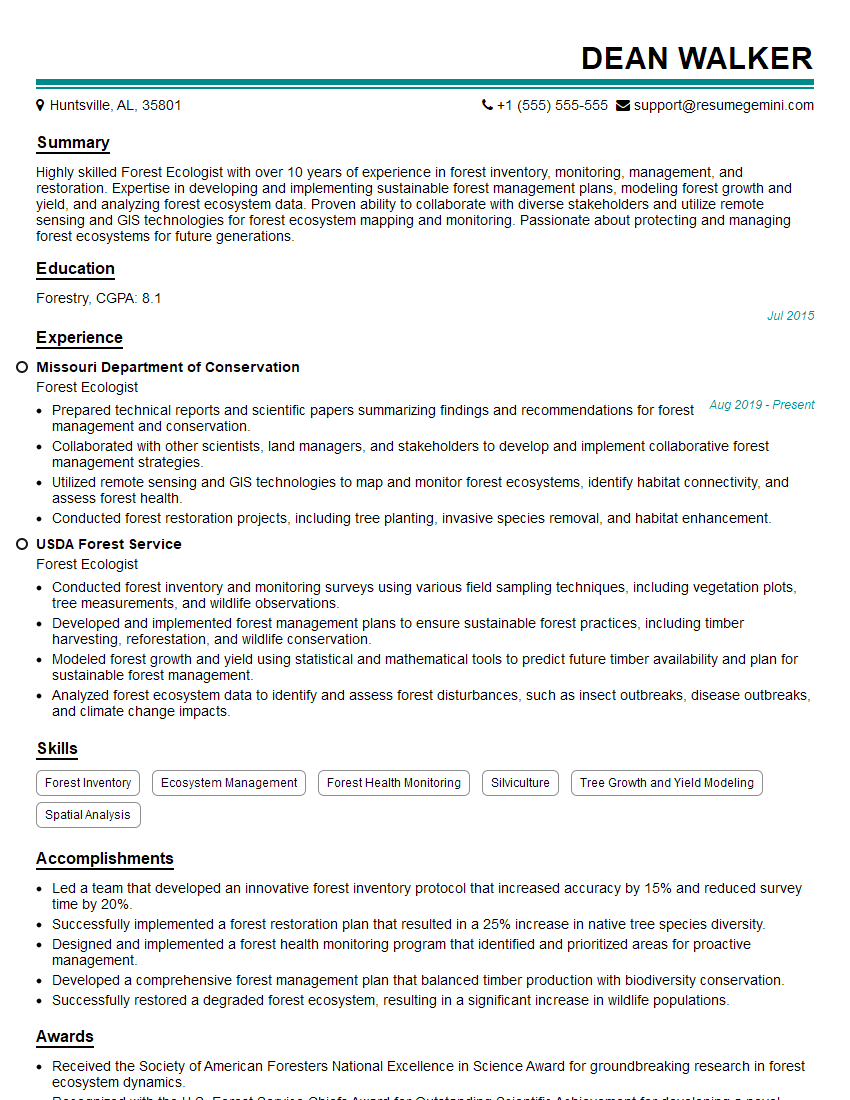
Mastering Forest Soil Science and Conservation opens doors to a rewarding career with significant impact on environmental sustainability. A strong understanding of these principles is highly valued by employers in research, management, and conservation roles. To significantly improve your job prospects, focus on crafting an ATS-friendly resume that highlights your skills and experience effectively. ResumeGemini is a trusted resource to help you build a professional and impactful resume. They provide examples of resumes tailored to Forest Soil Science and Conservation to guide you through the process. Take advantage of these resources to showcase your qualifications and land your dream job.





Explore more articles
Users Rating of Our Blogs
Share Your Experience
We value your feedback! Please rate our content and share your thoughts (optional).
What Readers Say About Our Blog
To the interviewgemini.com Webmaster.
Very helpful and content specific questions to help prepare me for my interview!
Thank you
To the interviewgemini.com Webmaster.
This was kind of a unique content I found around the specialized skills. Very helpful questions and good detailed answers.
Very Helpful blog, thank you Interviewgemini team.