The right preparation can turn an interview into an opportunity to showcase your expertise. This guide to Frameless Shower Enclosure Installation interview questions is your ultimate resource, providing key insights and tips to help you ace your responses and stand out as a top candidate.
Questions Asked in Frameless Shower Enclosure Installation Interview
Q 1. Describe the different types of frameless shower enclosures.
Frameless shower enclosures offer a sleek, modern look, and they come in several configurations. The main types are determined by the number and placement of the glass panels and the overall shape.
- Neo-Angle: These enclosures are ideal for corner installations, using two glass panels to create a 90-degree angle. They’re space-saving and commonly found in smaller bathrooms.
- Rectangle/Square: These are straightforward enclosures with three or four glass panels forming a rectangular or square shape. They offer flexibility for different bathroom layouts.
- Custom Shapes: For truly unique spaces, custom-shaped enclosures can be fabricated to fit any alcove or odd-shaped area. This requires precise measurements and skilled craftsmanship.
- Sliding Doors: These typically use two panels that slide past each other to open and close, saving space compared to hinged doors, especially in smaller bathrooms.
- Hinged Doors: These have one or more doors that swing inward or outward. They provide a more traditional look and are suitable for a wider range of bathroom layouts.
The choice depends on your bathroom’s dimensions, layout, and personal preference. For instance, a neo-angle enclosure is perfect for maximizing space in a small bathroom, whereas a custom enclosure might be necessary to fit an unusual alcove.
Q 2. Explain the process of measuring for a frameless shower enclosure.
Accurate measurements are crucial for a perfect fit. Improper measurements can lead to significant problems, including gaps, leaks, and the need for costly modifications. Here’s a step-by-step guide:
- Identify the Shower Area: Determine the exact location and dimensions of your shower area, paying close attention to any uneven walls or floors.
- Measure the Wall Heights: Measure the height of each wall section where the enclosure will be installed. Note any variations in height; this information is vital for customized enclosures.
- Measure the Width and Depth: Measure the width at multiple points along each wall section. It’s not uncommon for walls to be slightly out of plumb, impacting the final measurements. Measure depth accordingly, ensuring accuracy to account for any obstructions.
- Check for Obstructions: Identify any plumbing fixtures, electrical outlets, or other obstructions that might affect enclosure placement. Note the exact location and dimensions of these obstructions.
- Document Your Measurements: Record all measurements meticulously, including both the overall dimensions and any irregularities in the walls. Take multiple measurements to ensure accuracy; any discrepancies should be noted.
- Create a Detailed Sketch: Draw a sketch of the shower area, including the accurate dimensions, location of any obstructions, and the intended location of the shower enclosure. This provides a visual reference during installation.
Remember to always measure multiple times to double-check your work. It’s better to be thorough during the measurement phase than to face problems during installation.
Q 3. What types of glass are commonly used in frameless shower enclosures?
The most commonly used glass type for frameless shower enclosures is tempered safety glass. It is significantly stronger than annealed glass, making it ideal for wet environments and able to withstand considerable impact.
- Tempered Glass: This is the industry standard. If broken, it shatters into small, relatively harmless pieces, reducing the risk of serious injury. It’s often available in various thicknesses (e.g., 1/4 inch, 3/8 inch) depending on the enclosure size and requirements.
- Laminated Glass: Though less common, laminated glass is another safety option. It’s made of two layers of glass bonded with a PVB interlayer which holds the glass together even when broken, preventing sharp shards. While more expensive, it’s an excellent choice for families with children.
The thickness of the glass impacts the overall strength and aesthetic. Thicker glass provides more durability but can be slightly heavier.
Q 4. How do you ensure proper sealing and waterproofing of a frameless shower enclosure?
Proper sealing and waterproofing are crucial to prevent leaks and water damage. This involves careful attention to detail during installation.
- Silicone Sealant: A high-quality silicone sealant is essential. Apply a bead of sealant along all seams where the glass meets the wall or the base pan. Ensure the sealant completely fills the gap to prevent water penetration.
- Proper Glass Installation: The glass panels must be installed precisely and securely to create a tight seal. Any gaps or misalignments can lead to leaks.
- Water Testing: Once the enclosure is installed, thoroughly test it for leaks. Run the shower for an extended period and inspect all seams and joints for any signs of water penetration.
- Base Pan Sealing: The base pan must also be properly sealed to the walls and the enclosure. A waterproof membrane or sealant should be used to create a completely watertight seal at the base. This prevents water damage to the surrounding areas.
- Choosing Appropriate Sealant: Select a 100% silicone sealant specifically designed for wet areas, and ensure it’s compatible with the materials of the enclosure and the walls. Avoid using caulk, as it’s not as durable or waterproof in shower environments.
A thorough and meticulous approach to sealing is essential for long-term performance and preventing costly repairs down the line.
Q 5. What are the common challenges encountered during frameless shower enclosure installation?
Frameless shower enclosure installation presents several challenges, often related to the precision required and the nature of the materials.
- Uneven Walls: Out-of-plumb walls require careful shimming and precise measurements to ensure a flush, leak-free enclosure. This adds complexity and requires experience.
- Glass Handling: Tempered glass can be heavy and fragile. Safe handling and proper equipment are necessary to avoid breakage and injury.
- Precise Measurements: Inaccurate measurements can result in a poorly fitting enclosure. This requires meticulous attention to detail and multiple measurements.
- Difficult Installations: Unusual or awkward shower spaces demand considerable expertise in fitting the enclosure and potentially specialized fabrication techniques.
- Sealant Application: Improper sealant application is a common cause of leaks. This requires careful attention to detail and the use of high-quality sealant.
Addressing these challenges requires experience, precision tools, and adherence to safety protocols. A well-planned approach and attention to detail are vital for a successful installation.
Q 6. How do you handle different wall types during installation?
Different wall types demand different installation approaches. A successful installation depends on correctly addressing these variations:
- Tile Walls: Requires careful consideration during drilling to avoid cracking the tiles. Specialized drill bits and anchoring methods are needed for secure mounting.
- Drywall Walls: Use appropriate anchors designed for drywall to ensure the enclosure is securely fastened. These anchors provide the necessary support to hold the weight of the glass panels.
- Concrete Walls: May require specialized masonry bits and anchors for secure mounting. The added weight of the glass needs careful consideration in concrete wall construction.
- Glass Block Walls: Often require creative solutions to mount the shower enclosure securely and without damaging the glass blocks. This might involve custom-designed brackets or other creative approaches.
Choosing the correct fasteners and installation methods based on the wall type is crucial to the success and longevity of the enclosure. Improper anchoring can lead to instability and damage.
Q 7. What safety precautions are essential when working with glass?
Safety is paramount when working with glass. Here are essential precautions:
- Protective Gear: Always wear safety glasses, gloves, and closed-toe shoes. Glass shards can cause serious eye injuries and cuts.
- Proper Lifting Techniques: Use proper lifting techniques to handle glass sheets safely. Avoid twisting or dropping the glass.
- Use of Suction Cups: Use suction cups for precise and safe handling. This aids in maneuvering glass sheets during installation, minimizing the risk of breakage.
- Sharp Objects Avoidance: Keep sharp objects away from the glass during handling and installation to prevent accidental scratching or breakage.
- Work Area Preparation: Ensure the work area is clear of debris and adequately spaced to prevent accidental dropping or breakage of glass panels.
- Professional Assistance: If you’re uncomfortable or lack experience, don’t hesitate to seek assistance from a professional. Safety should always be the top priority.
Never compromise on safety. Following these precautions can prevent accidents and injuries.
Q 8. Describe your experience with different types of shower door hardware.
My experience with shower door hardware spans a wide range, encompassing various hinge types, handles, and sliding mechanisms. I’ve worked extensively with both standard and high-end hardware from different manufacturers. For hinges, I’m familiar with the differences between self-closing, adjustable, and concealed hinges, each with its own installation nuances and benefits. For example, concealed hinges offer a sleek, minimalist look but require precise alignment during installation, while adjustable hinges offer greater flexibility in compensating for minor imperfections in the glass or wall. Similarly, I’ve worked with various handle styles—from simple knobs to more elaborate bar handles—each requiring different mounting techniques. Understanding the specific features and limitations of each hardware type is crucial for a successful installation.
- Hinges: Self-closing, adjustable, concealed, offset
- Handles: Knobs, bar handles, D-handles, integrated handles
- Sliding Mechanisms: Top-mounted, bottom-mounted, bypass systems
Q 9. How do you address uneven walls or floors during installation?
Uneven walls or floors are common challenges in frameless shower enclosure installations. Ignoring these imperfections can lead to misaligned doors, leaks, and ultimately, an unsatisfactory installation. To address this, I use a combination of techniques. For minor imperfections, shims made of plastic or wood are strategically placed between the wall and the shower frame to achieve a level surface. For more significant discrepancies, I might need to use adjustable wall brackets or even custom-fabricated components to ensure stability and a proper seal. Precise measurements and careful adjustments are critical. Laser levels are invaluable for ensuring that the framework is perfectly plumb and level before the glass is installed. I always double-check my work at each stage to prevent problems from cascading through the installation process.
For uneven floors, adjustable shower bases or custom-fabricated thresholds can help to compensate for slopes. Sometimes, adding a leveling compound under the base is necessary to correct minor inconsistencies.
Q 10. What are the different types of clamps and fasteners used?
A variety of clamps and fasteners are essential for secure frameless shower door installations. The choice depends largely on the type of glass, frame material (if any), and the specific hardware being used. For instance, I commonly use:
- Glass Clamps: These are used to secure the glass panels to the wall or frame. They can be made of various materials, including stainless steel, brass, or zinc alloy. I often opt for stainless steel for its durability and corrosion resistance.
- Channel Clamps: These are especially useful when incorporating a sliding mechanism. They securely hold the glass within the track, ensuring smooth movement.
- Fasteners: This category includes screws, bolts, and rivets. The selection depends on the specific hardware and materials. Stainless steel fasteners are preferred to prevent corrosion in the often-humid shower environment. I sometimes use specialized fasteners designed for glass to prevent cracking or breakage.
Choosing the right clamps and fasteners is critical for a safe and long-lasting installation.
Q 11. Explain the process of installing a frameless shower door with hinges.
Installing a frameless shower door with hinges is a precise process that requires careful planning and execution. Here’s a step-by-step approach:
- Prepare the opening: Ensure the wall framing is sound and plumb. Clean the area thoroughly.
- Install the hinges: Affix the hinges to the glass panels and the wall according to the manufacturer’s instructions, using appropriate shims for any adjustments.
- Position the glass: Carefully position the glass panels into the hinges, ensuring proper alignment.
- Secure the glass: Tighten all fasteners, ensuring that the glass is held firmly in place. Do not overtighten, as this could crack the glass.
- Install handles: Attach the door handles. Some handles require drilling pilot holes in the glass.
- Seal the seams: Apply a high-quality silicone sealant around all glass-to-wall joints to prevent water leaks.
- Final inspection: Thoroughly inspect for leaks and proper door function.
Precision and attention to detail are critical throughout this process to ensure both aesthetics and functionality.
Q 12. How do you install a frameless shower door with a sliding mechanism?
Installing a frameless shower door with a sliding mechanism involves a slightly more complex procedure than hinge-based doors. Here’s the process:
- Prepare the opening and walls: Ensure the walls are perfectly plumb and level; any discrepancy will affect the sliding mechanism.
- Install the tracks: Securely mount the top and bottom tracks to the wall using appropriate fasteners. Precise alignment is crucial here to ensure smooth operation of the sliding doors.
- Install the rollers: Install the rollers on the bottom of the glass panels and ensure they align correctly with the bottom track.
- Position the glass panels: Carefully place the glass panels into the tracks, ensuring they slide smoothly.
- Secure the glass: Use clamps and fasteners to secure the glass panels within the tracks and to the walls.
- Install handles: Attach the handles as needed, ensuring easy grip and operation.
- Seal the seams: Apply a high-quality silicone sealant around the edges of the glass panels to prevent leaks.
- Final inspection: Check the sliding operation and seal for leaks.
Proper installation of the tracks and rollers is paramount for preventing jamming and ensuring smooth, quiet operation.
Q 13. How do you cut and shape glass for a custom frameless shower enclosure?
Cutting and shaping glass for a custom frameless shower enclosure requires specialized tools and expertise. This is not a DIY task. I use a specialized glass cutting machine, employing diamond-tipped wheels to create precise and smooth cuts. The process involves marking the glass precisely based on the measurements taken, then carefully guiding the glass through the cutting machine. After cutting, the edges are usually ground and polished to remove any sharp edges and ensure a safe, finished look. This process demands precision and experience to avoid chipping or cracking the glass. Safety glasses are always mandatory. For curved or shaped enclosures, more advanced techniques such as waterjet cutting may be necessary. This method allows for more intricate designs and ensures a smooth, high-quality finish.
Q 14. What are the different types of silicone sealants used in shower installation?
Various silicone sealants are used in shower installations, each with its own properties and applications. The selection depends on factors like moisture resistance, longevity, and mildew resistance. Some common choices include:
- 100% Silicone Sealant: This type is highly durable, waterproof, and flexible. It offers excellent adhesion and mildew resistance, making it a popular choice for sealing glass-to-wall joints. It’s crucial to choose a sealant specifically designed for wet areas.
- Acrylic Latex Caulk: This is generally less expensive but is not as durable or water-resistant as silicone. It’s not recommended for areas directly exposed to consistent moisture, such as in a shower.
- Specialty Sealants: Some sealants are specifically formulated for use with certain glass types or for applications requiring enhanced mildew resistance.
Choosing the right sealant is critical for preventing leaks and maintaining the longevity of the shower enclosure.
Q 15. How do you ensure the shower enclosure is level and plumb?
Ensuring a level and plumb shower enclosure is paramount for both aesthetics and functionality. A misaligned enclosure can lead to water leakage and structural issues. I achieve this through a meticulous process, starting with precise measurements of the shower base. I use a laser level to establish a perfectly horizontal datum line on the walls, marking the location for the shower enclosure’s base.
Next, I meticulously check the wall’s plumbness using a plumb bob and level. Any deviations are addressed before proceeding. For example, if a wall is slightly out of plumb, I might use shims to create a perfectly vertical surface for mounting the glass. During the installation of the glass panels, I frequently check for levelness and plumbness using levels and shims, making minute adjustments as needed to ensure a perfect alignment. This iterative process is key to achieving a professional-quality finish and preventing future problems. The entire process requires patience and attention to detail; rushing can lead to costly mistakes.
Career Expert Tips:
- Ace those interviews! Prepare effectively by reviewing the Top 50 Most Common Interview Questions on ResumeGemini.
- Navigate your job search with confidence! Explore a wide range of Career Tips on ResumeGemini. Learn about common challenges and recommendations to overcome them.
- Craft the perfect resume! Master the Art of Resume Writing with ResumeGemini’s guide. Showcase your unique qualifications and achievements effectively.
- Don’t miss out on holiday savings! Build your dream resume with ResumeGemini’s ATS optimized templates.
Q 16. Describe your experience working with different types of glass thicknesses.
I’ve worked extensively with various glass thicknesses, from 1/4 inch (6mm) to 3/8 inch (10mm), each requiring a nuanced approach. Thinner glass, while more economical, is more susceptible to flexing and requires more careful handling and support during installation. Thicker glass provides superior strength and stability, especially in larger enclosures, but it requires more robust hardware and a greater understanding of the structural stresses involved.
For example, I recently installed a frameless shower enclosure with 3/8 inch (10mm) glass in a large master bathroom. The increased weight and size necessitated the use of heavier-duty clamps and more robust support brackets to ensure the structural integrity of the enclosure. Conversely, a smaller shower enclosure in a guest bathroom used 1/4 inch (6mm) glass which proved sufficient, requiring less heavy-duty hardware. The selection of glass thickness directly impacts the hardware and installation process, and choosing the correct thickness is a crucial aspect of safe and efficient installation.
Q 17. How do you handle glass breakage during installation?
Glass breakage is a serious concern, and safety is my top priority. My first step is to immediately secure the area, preventing access to the broken glass. Safety glasses and gloves are always worn. I carefully collect all fragments, ensuring none remain lodged in the surrounding area. Detailed documentation of the incident, including photos and notes, is crucial for insurance claims or warranty issues. I then contact the client and schedule a replacement as promptly as possible, often utilizing the same supplier to maintain consistency in glass quality.
Prevention is key. I’m very careful during handling and installation, minimizing the potential for drops or impacts. I use appropriate tools, such as suction cups and soft padding, and work with a helper whenever lifting heavy glass panels to minimize the risk of accidents. It’s always better to take extra precautions than to deal with the aftermath of breakage.
Q 18. What tools and equipment are essential for frameless shower enclosure installation?
A successful frameless shower enclosure installation relies on the right tools and equipment. This includes a laser level for precise measurements and alignment, a plumb bob for checking verticality, various sizes of shims for adjusting uneven surfaces, a measuring tape, safety glasses, work gloves, and a quality drill with various drill bits for installing anchors and hardware.
- Clamps: Essential for securely holding glass panels during installation.
- Suction cups: Aid in safe and easy handling of glass panels.
- Silicone sealant and caulking gun: For watertight sealing.
- Glass drill and appropriate bits: For creating precise holes in the glass (if required).
- Channel locks and wrenches: For tightening hardware.
- Utility knife and razor blades: For trimming silicone sealant.
Beyond tools, a clean and organized work area is vital. Efficient space management minimizes the risk of damage to the glass and surrounding materials. Having all necessary materials at hand reduces interruptions and enhances efficiency.
Q 19. Explain your experience with different types of shower bases.
My experience encompasses various shower base types, including acrylic, cultured marble, and tile. Acrylic bases are lightweight, relatively inexpensive, and easy to install. They’re a popular choice for budget-conscious projects. Cultured marble bases offer a more luxurious appearance and are more durable than acrylic, but they can be more expensive and heavier. Tile bases provide the most design flexibility, allowing for a wide array of styles and aesthetics, but require more time and skill to install, demanding a precise setting to ensure water tightness.
The choice of shower base significantly impacts the installation process. For example, a tile base requires careful waterproofing before the glass enclosure installation to prevent water damage. Acrylic bases are simpler to install and align, while cultured marble bases require careful handling due to their weight and potential for breakage. Each base type demands a specific approach that optimizes the installation process for efficiency and longevity.
Q 20. What are the key differences between tempered and annealed glass?
The key difference between tempered and annealed glass lies in their strength and safety characteristics. Annealed glass is the standard, everyday type of glass. It’s relatively inexpensive but shatters into sharp, jagged pieces when broken. Tempered glass, on the other hand, undergoes a heat treatment process that significantly increases its strength. When tempered glass breaks, it fractures into small, relatively harmless, granular pieces, making it much safer for shower enclosures.
For shower enclosures, tempered glass is always the preferred choice due to its enhanced safety and durability. Its resistance to impact and thermal stress makes it ideal for withstanding the daily wear and tear of a shower environment. Using annealed glass in a shower enclosure is a serious safety hazard and is never acceptable in my professional practice.
Q 21. How do you ensure the structural integrity of the shower enclosure?
Structural integrity is ensured through a combination of factors, starting with the selection of appropriate glass thickness and hardware. Using high-quality, heavy-duty clamps and brackets designed for frameless shower enclosures is crucial. The correct installation of these components is equally vital, ensuring proper alignment and secure attachment to both the glass and the wall. I use silicone sealant to create a watertight seal between the glass panels and the walls, further enhancing the structural stability and preventing water ingress. Moreover, I always double-check the installation and alignment throughout the process. A final inspection ensures that the enclosure is securely mounted and perfectly plumb, resulting in a safe and durable shower space.
Neglecting these aspects can lead to a compromised enclosure, resulting in potential glass breakage, water damage and personal injury. Therefore, meticulous attention to detail in every step of the installation is of paramount importance.
Q 22. What are the common codes and regulations related to shower installation?
Shower installation is governed by a complex interplay of local, state, and sometimes even national building codes. These codes prioritize safety and accessibility. Key areas covered include water resistance, structural integrity, and accessibility requirements for people with disabilities. For example, the International Plumbing Code (IPC) dictates minimum slope requirements for shower pans to ensure proper drainage, preventing water damage. The Americans with Disabilities Act (ADA) mandates specific dimensions for shower stalls to ensure accessibility. Specific requirements vary by location, so it’s crucial to consult the relevant code books for the project’s jurisdiction before starting any work. This often involves checking with local building departments for permits and plan review. Ignoring these codes can lead to costly rework, permit denial, and even legal issues. I always begin each project by thoroughly reviewing the applicable codes and obtaining the necessary permits.
Q 23. How do you handle customer concerns or complaints during installation?
Handling customer concerns is paramount. My approach involves active listening, empathy, and clear communication. I start by letting the customer fully express their concerns without interruption. Then, I explain the situation clearly and professionally, using non-technical language where possible. For example, if a customer is worried about a small leak, I’ll carefully explain the cause (perhaps a slight imperfection in the sealant), the solution (re-application or minor adjustment), and the steps I’ll take to remedy it. I always aim to find a mutually acceptable solution, even if it means going the extra mile. If the issue is a significant defect, I’ll work with the supplier or manufacturer to resolve it quickly, keeping the customer informed every step of the way. Documenting all communications and solutions is crucial to avoid misunderstandings later on. I view every customer concern as an opportunity to improve my service and build trust.
Q 24. Describe your experience with troubleshooting common installation issues.
Troubleshooting is an integral part of this job. Common issues include leaks, misaligned doors, and glass imperfections. For leaks, I systematically check the shower pan for cracks, the sealant for gaps, and the drain for clogs. I often use a dye test to pinpoint the source of the leak. Misaligned doors usually stem from incorrect measurements or installation errors. In such cases, I carefully re-measure and adjust the hardware, sometimes needing to slightly adjust the frame (if present). Glass imperfections, such as chips or cracks, are usually handled through warranty claims with the glass supplier. I’ve dealt with everything from minor adjustments to more complex problems requiring significant problem-solving skills and sometimes even the replacement of components. My experience in diagnosing and resolving these problems effectively and efficiently is what sets me apart. Each problem becomes a learning experience, enriching my troubleshooting toolkit.
Q 25. How do you maintain a clean and organized worksite?
Maintaining a clean and organized worksite is not just about aesthetics; it’s about safety and efficiency. Before starting, I lay down drop cloths to protect the floor and surrounding areas from damage. Tools and materials are kept neatly organized in designated areas. Waste materials are disposed of properly and immediately. At the end of each day, the site is thoroughly cleaned, leaving the area as close to its original state as possible. This methodical approach prevents accidents, saves time searching for tools, and shows respect for the customer’s property. It’s all about projecting professionalism and minimizing disruption to the homeowner’s life.
Q 26. What is your experience with post-installation inspections?
Post-installation inspections are critical for ensuring the shower meets the required standards and the customer’s satisfaction. This involves a thorough check of all aspects of the installation, including water tightness, door operation, and overall aesthetics. I typically perform a final inspection myself, then I welcome the customer to perform a final walk-through with me. This often involves testing the shower’s functionality and addressing any last-minute questions or concerns. I often take photos of the completed installation as part of my documentation process. Any issues identified during this inspection are promptly addressed before final payment is received. This ensures the customer is happy and confident in the quality of the work.
Q 27. How do you estimate the time and materials required for a frameless shower installation?
Estimating time and materials requires careful planning and experience. I begin by thoroughly reviewing the project specifications, including the shower dimensions, glass type, and hardware selections. I then consult my pricing database for materials costs, factoring in any potential variations or additions. My experience allows me to accurately estimate labor hours based on the complexity of the installation. I consider factors like the size and type of the shower, any special features (e.g., niche, built-in seat), and potential challenges (e.g., difficult access, unusual plumbing configurations). I always add a contingency buffer for unforeseen issues. Detailed and accurate estimates are vital for transparent pricing and managing project timelines effectively.
Q 28. Describe your experience working independently and as part of a team.
I’m comfortable working both independently and collaboratively. When working independently, my self-reliance and meticulous attention to detail ensure project completion to a high standard. I’m disciplined and proactive in managing my time and resources effectively. As part of a team, I value clear communication, collaboration, and mutual respect. I readily share my expertise and work cooperatively to achieve common goals. In team projects, I’ve taken on the role of team lead on multiple occasions, successfully managing workflows, coordinating tasks, and ensuring everyone works efficiently and effectively towards a common objective. My adaptability and strong interpersonal skills make me an effective contributor in diverse team environments.
Key Topics to Learn for Frameless Shower Enclosure Installation Interview
- Measuring and Template Creation: Understanding accurate measurement techniques for shower spaces, including accounting for uneven walls and floors. Practical application includes creating precise templates for glass cutting and hardware placement.
- Glass Handling and Cutting: Safe handling procedures for different types of glass, understanding glass properties, and the techniques for precise cutting to avoid breakage. Practical application includes demonstrating knowledge of appropriate tools and safety measures.
- Hardware Selection and Installation: Familiarity with various types of shower door hardware (hinges, handles, clamps), their functionalities, and proper installation methods. Practical application includes understanding the importance of proper alignment and adjustments for watertight seals.
- Sealing and Water Resistance: Knowledge of different sealant types and their applications in creating a watertight seal around the shower enclosure. Practical application includes troubleshooting common leaks and understanding the importance of proper sealant application techniques.
- Troubleshooting and Problem Solving: Identifying and resolving common installation issues, such as misaligned doors, leaks, and hardware malfunctions. Practical application includes demonstrating a systematic approach to diagnosing and rectifying problems.
- Safety Procedures and Regulations: Adherence to safety regulations concerning glass handling, working at heights, and proper use of tools. Practical application includes outlining specific safety protocols and demonstrating awareness of relevant building codes.
- Understanding different types of Frameless Shower Enclosures: Familiarity with various designs, materials, and configurations of frameless shower enclosures (e.g., pivot doors, sliding doors, bypass doors). Practical application includes discussing the pros and cons of different options and their suitability for various spaces.
Next Steps
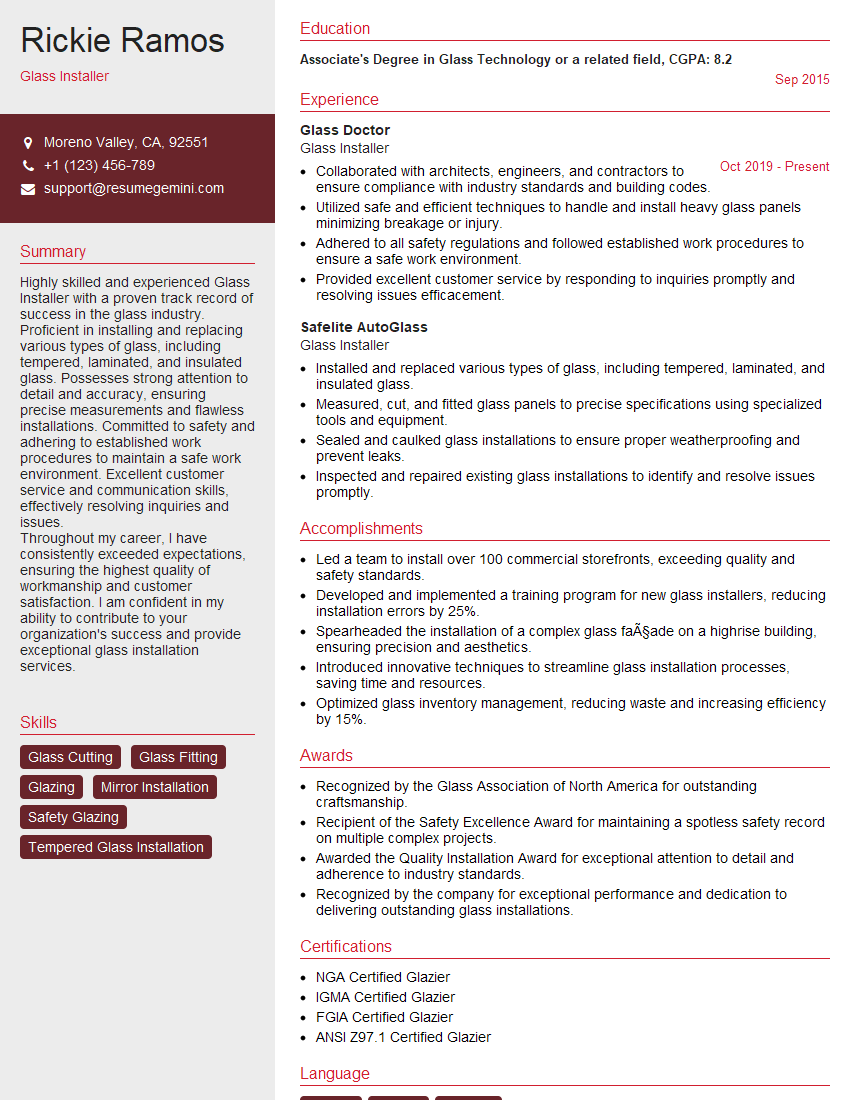
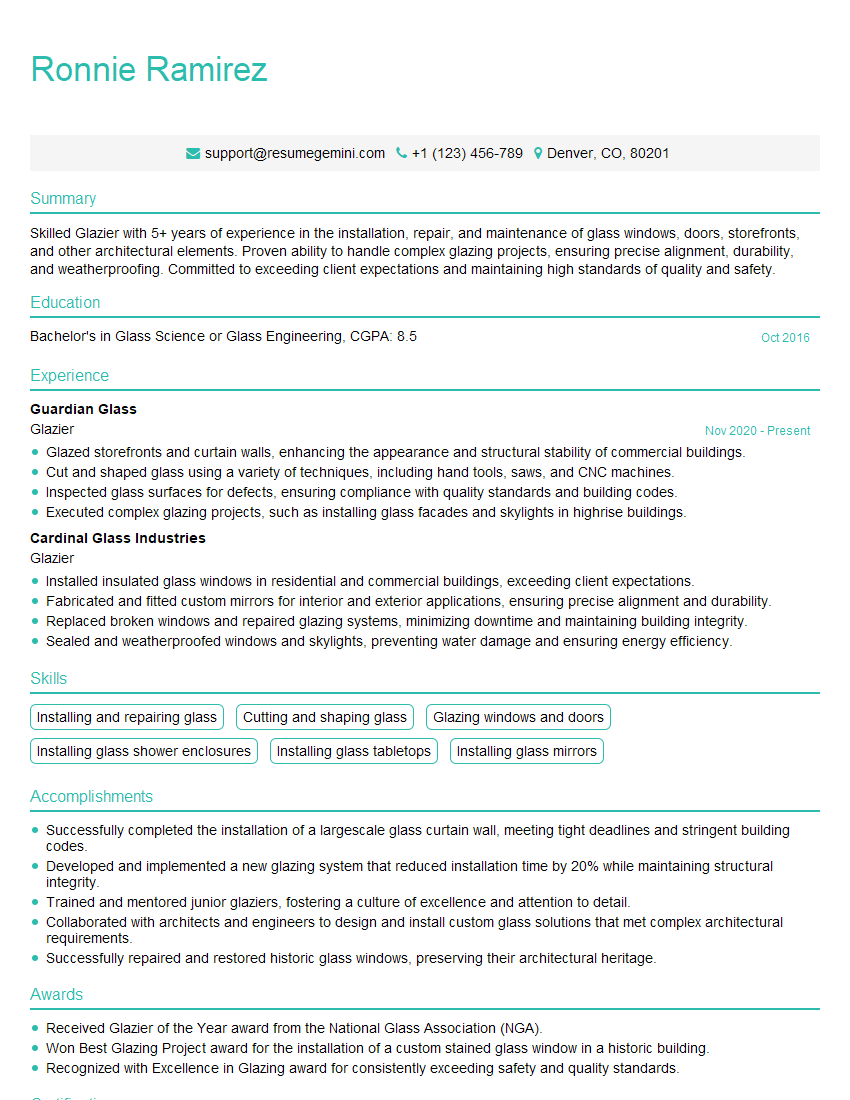
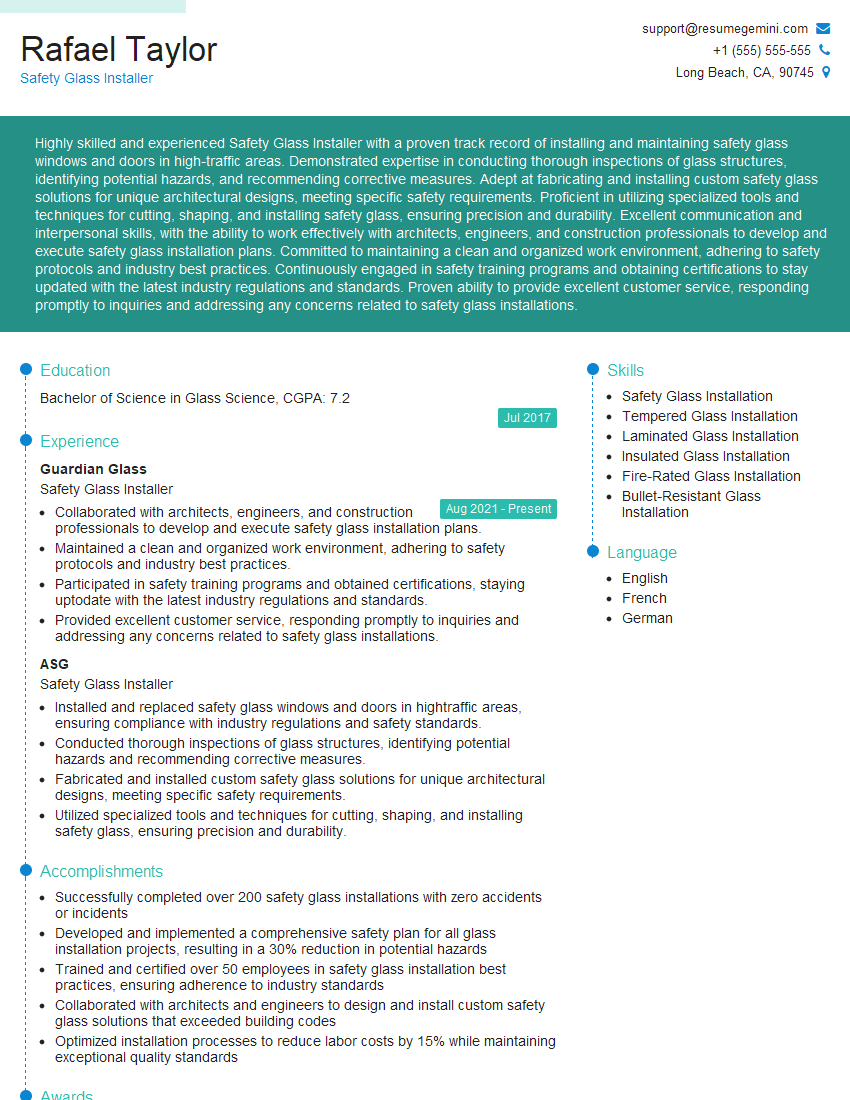
Mastering Frameless Shower Enclosure Installation opens doors to rewarding careers in construction, home renovation, and specialized contracting. A strong understanding of these techniques positions you for higher-paying roles and increased job security. To significantly boost your job prospects, create an ATS-friendly resume that highlights your skills and experience effectively. We strongly recommend using ResumeGemini to build a professional and impactful resume. ResumeGemini offers a user-friendly platform and provides examples of resumes tailored to Frameless Shower Enclosure Installation to help you showcase your expertise.
Explore more articles
Users Rating of Our Blogs
Share Your Experience
We value your feedback! Please rate our content and share your thoughts (optional).
What Readers Say About Our Blog
To the interviewgemini.com Webmaster.
Very helpful and content specific questions to help prepare me for my interview!
Thank you
To the interviewgemini.com Webmaster.
This was kind of a unique content I found around the specialized skills. Very helpful questions and good detailed answers.
Very Helpful blog, thank you Interviewgemini team.