Cracking a skill-specific interview, like one for Government Analytics, requires understanding the nuances of the role. In this blog, we present the questions you’re most likely to encounter, along with insights into how to answer them effectively. Let’s ensure you’re ready to make a strong impression.
Questions Asked in Government Analytics Interview
Q 1. Explain your experience with data cleaning and preprocessing techniques in a government context.
Data cleaning and preprocessing are crucial steps before any meaningful analysis of government data. Imagine trying to bake a cake with spoiled ingredients – the result would be disastrous! Similarly, inaccurate or incomplete data will lead to flawed conclusions. My experience encompasses a wide range of techniques, including:
Handling Missing Values: I’ve utilized various imputation methods like mean/median imputation for numerical data and mode imputation for categorical data, carefully considering the potential bias introduced by each. For instance, in analyzing census data, I used multiple imputation to handle missing income values, ensuring a more robust analysis compared to simple deletion.
Outlier Detection and Treatment: I use techniques like box plots and scatter plots to identify outliers, which are often errors or represent special cases. Decisions on how to handle them depend on the context. Sometimes they are corrected; other times they are removed or treated separately. For example, in analyzing crime data, unusually high crime rates in a specific area might be due to a data entry error or a temporary surge related to a specific event, warranting separate investigation.
Data Transformation: This involves converting data into a more suitable format. For instance, I’ve standardized variables (using z-scores) to ensure they have equal weight in statistical modeling, preventing variables with larger scales from dominating the analysis. In one project involving analyzing healthcare expenditures across different states, standardization prevented states with larger populations from skewing the results.
Data Consistency and De-duplication: Ensuring data consistency involves identifying and correcting inconsistencies in data formats and values across different sources. I utilize techniques like fuzzy matching and deduplication algorithms to identify and resolve these issues, improving the overall data quality and consistency. For example, in merging data from multiple government agencies, I had to handle variations in spelling and formatting of names and addresses.
Q 2. Describe your experience with different types of government datasets (e.g., structured, unstructured, semi-structured).
Government datasets are incredibly diverse. I’ve worked extensively with:
Structured Data: This is neatly organized in tables with rows and columns, like census data or crime statistics. I’m proficient in using relational databases (like SQL) and tools like Pandas in Python to manage and analyze such data. For example, I used SQL queries to extract specific information from a large crime database to analyze crime trends in different neighborhoods.
Unstructured Data: This includes text documents, social media posts, audio and video files. Analyzing this kind of data often involves natural language processing (NLP) techniques to extract valuable insights. For example, analyzing public comments on proposed government policies can reveal public sentiment and concerns.
Semi-structured Data: This lies between the two, like XML or JSON files. These often require specialized parsing techniques to extract useful information. For example, working with data from government websites that contain information in JSON format might require using JSON parsing libraries in Python to access the data efficiently.
Q 3. How do you ensure data privacy and security when working with sensitive government data?
Data privacy and security are paramount when working with government data. I adhere to strict protocols, including:
Data Minimization: I only collect and process the minimum amount of data necessary for the analysis. This minimizes the risk of breaches and ensures compliance with privacy regulations.
Data Anonymization and De-identification: I employ techniques to remove personally identifiable information (PII) like names, addresses, and social security numbers, to protect individual privacy. This might involve techniques like data masking or generalization.
Encryption: All sensitive data is encrypted both in transit and at rest, using industry-standard encryption algorithms. This protects the data from unauthorized access.
Access Control: I strictly adhere to access control policies, ensuring only authorized personnel with a need-to-know basis can access sensitive data. This often involves using role-based access control mechanisms.
Compliance with Regulations: I ensure that all work is compliant with relevant regulations, like HIPAA (for healthcare data) or GDPR (for European data). This includes proper documentation and audit trails to track data access and modifications.
Q 4. What statistical methods are you proficient in, and how have you applied them to government data analysis?
My statistical toolkit is quite extensive. I’m proficient in:
Descriptive Statistics: Calculating measures of central tendency (mean, median, mode), variability (standard deviation, variance), and visualizing data distributions to understand the basic characteristics of the data.
Inferential Statistics: Performing hypothesis testing (t-tests, ANOVA, Chi-square tests) and regression analysis (linear, logistic, multiple) to draw conclusions and make predictions from data. For example, I used regression analysis to model the relationship between various socioeconomic factors and health outcomes in a specific region.
Time Series Analysis: Analyzing data collected over time to identify trends and patterns. This is particularly useful in forecasting future events, like predicting future demand for public services based on past trends.
Causal Inference: Using techniques like randomized controlled trials and instrumental variables to assess causal relationships between variables. This can be invaluable for evaluating the effectiveness of government interventions.
I’ve applied these methods extensively in government projects, such as analyzing the effectiveness of public health campaigns, understanding factors contributing to unemployment, and predicting future budgetary needs.
Q 5. Explain your experience with data visualization tools and techniques for presenting findings to government stakeholders.
Effective communication of analytical findings is critical. I’m adept at using various data visualization tools and techniques:
Tools: I’m proficient in tools like Tableau, Power BI, and Python libraries such as Matplotlib and Seaborn.
Techniques: I select visualization types based on the data and audience. Bar charts and pie charts are good for showing proportions; line charts for trends; scatter plots for relationships; maps for geographical data. I always keep the visualization clear, concise, and easy to understand.
Tailoring to Audience: For technical audiences, I might include more details and technical jargon; for non-technical audiences, I focus on the key findings and use simple, clear language and visuals.
In a recent project, I used interactive dashboards in Tableau to present complex budget allocation data to government officials, allowing them to explore the data at their own pace and focus on aspects most relevant to them.
Q 6. How do you handle missing data in a government dataset?
Missing data is a common challenge in government datasets. The best approach depends on the extent and nature of the missing data. I employ several strategies:
Deletion: If the amount of missing data is small and randomly distributed, complete case analysis (deleting rows with missing values) might be appropriate, but this can lead to substantial loss of information if the missing data is not negligible.
Imputation: This involves filling in missing values with estimated values. Methods include mean/median/mode imputation (simple but can bias results), regression imputation (predicting missing values based on other variables), and multiple imputation (creating multiple plausible datasets to account for uncertainty in the imputed values). The choice depends on the type of data and the pattern of missingness.
Model-based approaches: Some statistical models (like multiple imputation) can handle missing data directly without the need for explicit imputation.
Analysis of Missing Data Patterns: Understanding the pattern of missingness (missing completely at random, missing at random, missing not at random) is crucial in selecting appropriate imputation techniques.
I always carefully document my choices and justify the chosen method based on the context and the potential impact on the results. For example, in a study on healthcare utilization, I used multiple imputation to handle missing income data, generating several plausible imputed datasets and analyzing the results across these datasets. This allowed me to quantify the uncertainty introduced by the missing data.
Q 7. Describe a time you had to explain complex analytical findings to a non-technical audience within a government setting.
During a project analyzing the effectiveness of a job training program, I had to present complex statistical results to a committee of non-technical policymakers. My initial report used regression coefficients and statistical significance levels, which were largely incomprehensible to them.
To overcome this, I shifted my approach. Instead of focusing on the statistical details, I focused on the overall findings. I used clear, concise language, avoiding jargon. I created simple visuals – bar charts comparing employment rates before and after the program, maps showing the program’s geographic impact, and a short video explaining the key findings using simple analogies.
I emphasized the practical implications of the findings, focusing on what the results meant for policy decisions. For example, instead of saying “the regression analysis showed a statistically significant positive effect,” I explained that “the program led to a 15% increase in employment rates among participants.” This approach helped the committee understand the significance of the work and make data-driven decisions.
Q 8. How do you prioritize competing analytical requests in a government environment?
Prioritizing competing analytical requests in government requires a structured approach that balances urgency, impact, and resource availability. I typically use a multi-criteria decision analysis (MCDA) framework. This involves defining key criteria such as:
- Urgency/Time Sensitivity: How quickly are the results needed? Are we addressing an immediate crisis or a long-term strategic goal?
- Strategic Alignment: How closely does the request align with the overarching goals and objectives of the government agency or department?
- Data Availability and Quality: Can the data needed for the analysis be readily accessed, and is its quality sufficient to produce reliable results?
- Resource Requirements: What level of staffing, computing resources, and specialized skills are needed to complete the analysis?
- Potential Impact: What is the potential benefit or cost savings that will result from the analysis?
Each criterion is scored, weighted according to its importance, and the requests are ranked based on the total weighted scores. This ensures transparency and allows for a rational justification for prioritization decisions. For instance, during a public health emergency, requests related to disease outbreak modeling would understandably take precedence over less urgent tasks. The process also allows for stakeholder input and iterative refinement, ensuring buy-in from relevant parties.
Q 9. What experience do you have with data warehousing or data lakes in the public sector?
My experience with data warehousing and data lakes in the public sector spans several projects. I’ve worked extensively with building and managing data warehouses using tools like Snowflake and AWS Redshift for agencies focused on social security and public safety. In one project, we migrated legacy data from disparate systems into a centralized data warehouse. This involved cleaning, transforming, and validating large volumes of data to ensure data quality and consistency. This improved reporting capabilities drastically by providing a single source of truth. We also leveraged data lakes (using AWS S3 and Hadoop ecosystem) for storing unstructured data like images, text from citizen surveys, and social media posts, particularly useful for sentiment analysis related to public policy. The data lake complemented the data warehouse by enabling exploration and experimentation before formalizing data into the warehouse for reporting.
Q 10. Describe your experience with specific government regulations related to data handling (e.g., HIPAA, GDPR).
I have extensive experience navigating data handling regulations, including HIPAA and GDPR equivalents within the US government context. For example, working with personally identifiable information (PII) requires strict adherence to regulations like the Privacy Act of 1974 and the Federal Information Security Modernization Act (FISMA). This includes:
- Data anonymization and de-identification techniques: Employing techniques to remove or mask PII while preserving data utility for analysis.
- Access control and authorization: Implementing robust security measures to restrict access to sensitive data based on roles and responsibilities. This involves managing user privileges through role-based access control (RBAC) systems.
- Data encryption both in transit and at rest: Employing encryption methods to protect sensitive data throughout its lifecycle.
- Data retention and disposal policies: Establishing clear guidelines for how long data is retained and how it’s securely disposed of to prevent breaches and maintain compliance.
Each project starts with a thorough data governance assessment to ensure that we understand the applicable regulations and incorporate appropriate security and privacy controls from the outset. For instance, I’ve collaborated with legal counsel to define acceptable data uses under specific regulations, shaping the project’s scope and methodology.
Q 11. How do you identify and address potential biases in government datasets?
Identifying and addressing bias in government datasets is crucial for ensuring fairness and equity in policy decisions. My approach involves a multi-step process:
- Data exploration and visualization: I begin by carefully examining the data for potential disparities across different demographic groups. This often involves creating visualizations to visually identify patterns or anomalies.
- Statistical testing for bias: I use statistical methods (like chi-squared tests or t-tests) to test for significant differences between groups and to quantify the extent of any observed bias.
- Bias mitigation techniques: Depending on the nature of the bias, I might employ various techniques such as re-weighting samples, creating synthetic data to balance underrepresented groups, or using algorithmic fairness methods (e.g., equal opportunity, demographic parity).
- Transparency and documentation: I document the entire bias detection and mitigation process thoroughly, including the methods used, the findings, and the decisions made.
For example, in a study on housing discrimination, I identified bias in the data reflecting loan applications. Through statistical analysis, I found significantly lower approval rates for minority applicants, even when controlling for credit scores and other relevant factors. This bias was addressed through data pre-processing and model adjustment to build a fairer predictive model.
Q 12. Explain your experience with predictive modeling techniques and their applications in government.
I have extensive experience applying predictive modeling techniques in government contexts. This includes using various algorithms like:
- Regression models (linear, logistic): For predicting continuous variables (e.g., crime rates) and binary outcomes (e.g., loan defaults).
- Classification models (decision trees, random forests, support vector machines): For classifying individuals into categories (e.g., risk assessment, fraud detection).
- Time series analysis (ARIMA, Prophet): For forecasting future trends (e.g., predicting budget needs, analyzing traffic patterns).
In one project, we used a logistic regression model to predict which individuals were most likely to re-offend after release from prison. This informed resource allocation for rehabilitation programs and improved public safety outcomes. The models are always rigorously validated, tested, and thoroughly documented with explainability prioritized to ensure understanding and trust in the predictive outcomes.
# Example Python code snippet for logistic regression from sklearn.linear_model import LogisticRegression # ... (Data preprocessing and feature engineering) ... model = LogisticRegression() model.fit(X_train, y_train) predictions = model.predict(X_test)Q 13. Describe your experience with performance measurement and evaluation in government programs.
Performance measurement and evaluation in government programs are critical for accountability and improving efficiency. My approach is based on establishing clear, measurable, achievable, relevant, and time-bound (SMART) goals at the outset of a program. This typically involves:
- Defining Key Performance Indicators (KPIs): Identifying relevant metrics that accurately reflect the program’s objectives. This might involve quantitative measures (e.g., number of participants served, cost per unit) and qualitative measures (e.g., client satisfaction surveys).
- Data collection and analysis: Establishing robust data collection systems to track KPIs over time. This often involves integrating data from different sources to gain a holistic view of program performance.
- Statistical analysis and reporting: Analyzing the collected data to assess program performance against established goals. This may involve comparing performance across different subgroups, conducting trend analyses, and performing cost-benefit analyses.
- Stakeholder engagement: Communicating findings clearly and transparently to stakeholders, including program managers, policymakers, and the public. This fosters transparency and promotes data-driven decision-making.
For instance, in a job training program, we measured success based on employment rates, wage increases, and client satisfaction scores. By analyzing these KPIs, we identified areas for improvement in the program’s design and implementation, leading to better outcomes.
Q 14. How familiar are you with different programming languages commonly used in government analytics (e.g., R, Python, SQL)?
I’m proficient in several programming languages commonly used in government analytics:
- SQL: For data extraction, transformation, and loading (ETL) processes and database management. I regularly use SQL to query large datasets from various government databases and relational data warehouses.
- Python: For data analysis, statistical modeling, machine learning, and data visualization. Python’s extensive libraries (like Pandas, Scikit-learn, Matplotlib) are essential for building sophisticated analytical models and creating insightful visualizations.
- R: For statistical computing and graphical representation. R is particularly useful for advanced statistical modeling and creating publication-quality graphics for reports and presentations.
My experience with these languages is not just about coding syntax; it’s also about crafting efficient, reproducible, and well-documented code to ensure collaboration, maintainability, and high-quality results. I always strive for clean and efficient code that other analysts can easily understand and build upon.
Q 15. Describe your experience with database management systems (e.g., PostgreSQL, MySQL, Oracle).
My experience with database management systems spans several years and encompasses a range of popular platforms. I’m proficient in PostgreSQL, particularly its advanced features like PostGIS for geospatial analysis, crucial for many government applications such as urban planning or emergency response mapping. I’ve also extensively utilized MySQL for its scalability and ease of use in managing large transactional datasets, often found in government record-keeping systems. Finally, my experience with Oracle includes working with complex data warehouses, vital for aggregating data from disparate government sources for comprehensive reporting and analysis. For instance, I used PostgreSQL to build a spatial database tracking infrastructure projects across a city, allowing for real-time monitoring and efficient resource allocation. With MySQL, I managed a national health registry, ensuring data integrity and secure access for authorized personnel. In another project, Oracle’s capabilities were critical in creating a comprehensive data warehouse for analyzing social welfare program effectiveness.
Career Expert Tips:
- Ace those interviews! Prepare effectively by reviewing the Top 50 Most Common Interview Questions on ResumeGemini.
- Navigate your job search with confidence! Explore a wide range of Career Tips on ResumeGemini. Learn about common challenges and recommendations to overcome them.
- Craft the perfect resume! Master the Art of Resume Writing with ResumeGemini’s guide. Showcase your unique qualifications and achievements effectively.
- Don’t miss out on holiday savings! Build your dream resume with ResumeGemini’s ATS optimized templates.
Q 16. What is your experience with using data to inform policy decisions?
Using data to inform policy decisions is at the heart of effective governance. My experience includes translating complex datasets into actionable insights that directly influence policy. For example, in one project, I analyzed crime statistics to identify high-risk areas. This analysis led to a reallocation of police resources, resulting in a demonstrable reduction in crime rates in those target zones. In another, I used demographic data to inform the equitable allocation of funding for social programs, optimizing resource distribution and improving service delivery. The key is not just presenting data but framing it clearly, highlighting trends, and offering potential policy options supported by evidence. Effective visualization is also crucial to communicate the findings to non-technical stakeholders, ensuring that policy decisions are driven by data-informed insights and not just assumptions.
Q 17. How do you evaluate the accuracy and reliability of government data sources?
Evaluating the accuracy and reliability of government data is paramount. My approach involves a multi-faceted strategy. First, I meticulously examine the data’s metadata, including source, collection methods, and any known limitations. Second, I check for data consistency and completeness, looking for missing values, outliers, and inconsistencies that could skew the analysis. Third, I cross-reference data with other reliable sources to validate findings. For instance, if analyzing unemployment figures, I would compare them to data from other reputable agencies or independent surveys. Finally, I use statistical methods to identify potential biases or errors. Understanding the limitations of the data is as important as the data itself, and transparently communicating those limitations is critical for building trust and ensuring responsible use of data for policymaking. This rigorous process ensures that the analyses are robust and the resulting recommendations are reliable and evidence-based.
Q 18. Describe your experience working with large datasets in a government setting.
Working with large datasets in government settings requires specialized skills and tools. I have extensive experience using tools like Hadoop and Spark for distributed data processing. This allowed me to analyze datasets containing millions of records efficiently, something impossible using traditional database systems. For example, I processed census data to identify underserved communities for targeted investment programs. Further, I employed techniques like data sampling and aggregation to manage the computational challenges posed by the sheer volume of data, ensuring that analyses were both efficient and accurate. I also utilized cloud computing platforms to store and manage the vast amounts of data involved, maximizing efficiency and minimizing storage costs. Working with such large datasets demands meticulous planning, robust data infrastructure, and a deep understanding of distributed computing principles.
Q 19. How do you ensure the reproducibility of your analytical work?
Reproducibility is vital for ensuring the transparency and validity of analytical work. I religiously document my entire workflow, from data acquisition and cleaning to analysis and visualization. This includes detailed scripts, code comments, and comprehensive reports. I use version control systems like Git to track changes and maintain a history of the project. Moreover, I strive to use open-source software and tools whenever possible to enhance the reproducibility of my work. Finally, I meticulously document all data transformations and analytical techniques, enabling others to independently reproduce my findings. This meticulous approach ensures that my work is transparent, verifiable, and can stand up to scrutiny.
Q 20. Explain your experience with using dashboards to track key government metrics.
I have extensive experience using dashboards to monitor key government metrics. I’ve used tools such as Tableau and Power BI to create interactive dashboards that display critical performance indicators (KPIs) in an easily digestible format. For instance, I developed a dashboard that tracks real-time traffic flow, allowing transportation authorities to quickly identify and address congestion points. Another example includes a dashboard monitoring public health metrics during a pandemic, providing valuable insights for public health officials to tailor interventions effectively. Effective dashboards are more than just visualizations; they are intuitive tools that inform decision-making, enabling timely interventions and strategic resource allocation. In each instance, the dashboards were designed with the specific needs and technical abilities of the end-users in mind.
Q 21. How do you contribute to a team environment in a government analytics setting?
In a government analytics setting, teamwork is essential. I actively contribute by sharing my expertise, mentoring junior analysts, and fostering a collaborative environment. I believe in open communication and regularly participate in team discussions, offering constructive feedback and actively listening to the perspectives of others. I understand the value of diverse skill sets and actively seek opportunities to leverage the strengths of my colleagues. For example, I collaborated with a GIS specialist to integrate geospatial data into our analyses, significantly enriching our findings. By working collaboratively and fostering a supportive environment, we are able to achieve more than any individual could accomplish alone. Effective teamwork translates to better insights, more efficient solutions, and ultimately, more effective policy outcomes.
Q 22. Describe a time you had to overcome a significant challenge in a government data analysis project.
One significant challenge I faced involved analyzing the effectiveness of a new city-wide traffic management system. The initial data was fragmented across multiple, disparate sources – some legacy systems with inconsistent data formats and others with missing fields. This made it nearly impossible to conduct a comprehensive analysis of the system’s impact on traffic flow, commute times, and accident rates.
To overcome this, I employed a multi-pronged approach. First, I collaborated with IT staff to create a standardized data schema, consolidating data from the various sources into a unified database. This involved significant data cleaning and transformation using tools like Python with Pandas and SQL. Then, I utilized data imputation techniques to fill in missing values, ensuring data integrity. Finally, I applied statistical analysis and visualization techniques to identify trends and correlations, ultimately demonstrating that while the new system showed initial promise, certain areas needed further optimization. The key takeaway here was proactive communication and collaboration to address data quality issues early in the process.
Q 23. How do you stay current with the latest trends and technologies in government analytics?
Staying current in government analytics requires a multifaceted strategy. I regularly attend webinars and conferences focused on government data science and public policy. Publications like the Journal of the American Statistical Association and publications from organizations like the National Academies of Sciences, Engineering, and Medicine provide crucial insights. Online resources, such as Coursera and edX, offer specialized courses in advanced analytics techniques relevant to government applications. I also actively engage with online communities and forums dedicated to government data analysis to participate in discussions and learn from others’ experiences. Following key thought leaders and organizations on social media platforms like LinkedIn is also valuable for accessing current trends and innovations. Finally, I always actively seek opportunities for professional development within my organization to leverage internal resources and training programs.
Q 24. Explain your experience with geospatial analysis in a government context.
I have extensive experience with geospatial analysis in a government context, primarily using GIS software like ArcGIS and QGIS. For instance, I was involved in a project assessing the impact of a proposed highway expansion on local communities. We used GIS to overlay demographic data (population density, income levels) with the proposed highway route and projected traffic patterns. This allowed us to visually identify potential areas of displacement or increased pollution and to inform decisions regarding mitigation strategies. Another example involved mapping crime hotspots within a city to optimize police patrol routes. This involved analyzing crime incident data, geographically tagging each incident, and then employing spatial analysis tools like kernel density estimation to pinpoint high-crime areas. This visual representation was crucial for resource allocation and informed evidence-based policing strategies. In both cases, the visual nature of geospatial analysis was vital in communicating complex information to non-technical stakeholders.
Q 25. How do you handle conflicting priorities or deadlines in a government analytics project?
Conflicting priorities and deadlines are common in government analytics. My approach is based on prioritization and clear communication. First, I clearly define the scope of each project, identifying key deliverables and dependencies. Then, I utilize project management techniques, such as creating Gantt charts, to visualize tasks and timelines. This aids in identifying potential conflicts early on. If conflicts arise, I initiate open and transparent discussions with stakeholders to collaboratively re-prioritize tasks, focusing on the highest-impact deliverables. This may involve adjusting timelines or negotiating scope changes. Transparency is crucial to maintaining buy-in from all parties involved. Sometimes, it means having difficult conversations about what is realistically achievable given the resources and time constraints. The ability to effectively communicate trade-offs and make data-driven decisions is essential in these situations.
Q 26. How familiar are you with cost-benefit analysis and its application to government programs?
Cost-benefit analysis (CBA) is a crucial tool for evaluating the economic viability of government programs. It involves systematically assessing the costs and benefits of a proposed program or policy, typically expressed in monetary terms. A comprehensive CBA considers both direct and indirect costs (e.g., implementation costs, maintenance, staff training) and benefits (e.g., improved public health, increased economic productivity, reduced crime rates). I have used CBA in several projects, including evaluating the cost-effectiveness of a new public transportation system and analyzing the potential return on investment for an energy efficiency program. The process typically involves identifying relevant costs and benefits, assigning monetary values to them (often challenging), and then using techniques like net present value (NPV) calculation to determine the overall economic impact. A well-executed CBA provides valuable data for decision-makers, helping them to allocate resources efficiently and make informed decisions based on sound financial principles.
Q 27. Describe your understanding of different types of government performance indicators (KPIs).
Government performance indicators (KPIs) are quantifiable metrics used to track progress toward specific goals. Different types of KPIs exist, each tailored to measure different aspects of performance. For instance, output KPIs measure the quantity of services or goods produced (e.g., number of permits issued, number of potholes repaired). outcome KPIs measure the impact of those services or goods on the population (e.g., reduction in traffic congestion, decrease in citizen complaints). efficiency KPIs measure how effectively resources are used (e.g., cost per permit issued, employee productivity). effectiveness KPIs measure how well the program is achieving its objectives (e.g., improvement in air quality, reduced wait times for services). Finally, equity KPIs measure whether the benefits of the program are distributed fairly across different segments of the population. Selecting the appropriate KPIs is crucial to accurately assess program effectiveness and achieve a balanced view of performance.
Q 28. How do you communicate the implications of your findings to decision-makers in a government setting?
Communicating findings to government decision-makers requires clarity, conciseness, and visual appeal. I avoid technical jargon and tailor my communication to the audience’s level of understanding. I present findings using a combination of clear and concise narratives, visually compelling charts and graphs, and easily digestible data summaries. For example, I might present key findings in a concise executive summary before diving into detailed analysis. Interactive dashboards allow decision-makers to explore data independently and gain a deeper understanding. Finally, I actively engage in discussions to answer questions, address concerns, and help the decision-makers understand the implications of the findings for policy and resource allocation. My goal is not just to present data but to translate it into actionable insights that inform evidence-based decision-making. Building a strong working relationship with stakeholders and actively seeking their feedback throughout the process is vital for successful communication.
Key Topics to Learn for Government Analytics Interview
- Data Governance and Compliance: Understanding data privacy regulations (e.g., HIPAA, GDPR) and their implications for analytical projects within the government sector. Practical application: Designing a data pipeline that ensures compliance with relevant regulations.
- Statistical Modeling and Forecasting: Applying statistical methods to analyze government data and predict future trends. Practical application: Forecasting budget needs based on historical spending patterns and demographic projections.
- Data Visualization and Communication: Effectively communicating complex analytical findings to non-technical stakeholders through compelling visualizations. Practical application: Creating dashboards that clearly present key performance indicators (KPIs) to government officials.
- Program Evaluation and Policy Analysis: Utilizing analytical techniques to evaluate the effectiveness of government programs and inform policy decisions. Practical application: Assessing the impact of a social welfare program on poverty reduction.
- Big Data Technologies and Cloud Computing: Familiarity with tools and technologies used to process and analyze large datasets within a government context (e.g., Hadoop, AWS, Azure). Practical application: Designing a scalable data solution for processing census data.
- Ethical Considerations in Data Analysis: Understanding potential biases in data and the ethical implications of using data for decision-making. Practical application: Identifying and mitigating biases in algorithms used for resource allocation.
- Data Mining and Predictive Modeling: Using advanced techniques to extract valuable insights from government data and build predictive models. Practical application: Developing a model to predict crime hotspots based on historical crime data and socio-economic factors.
Next Steps
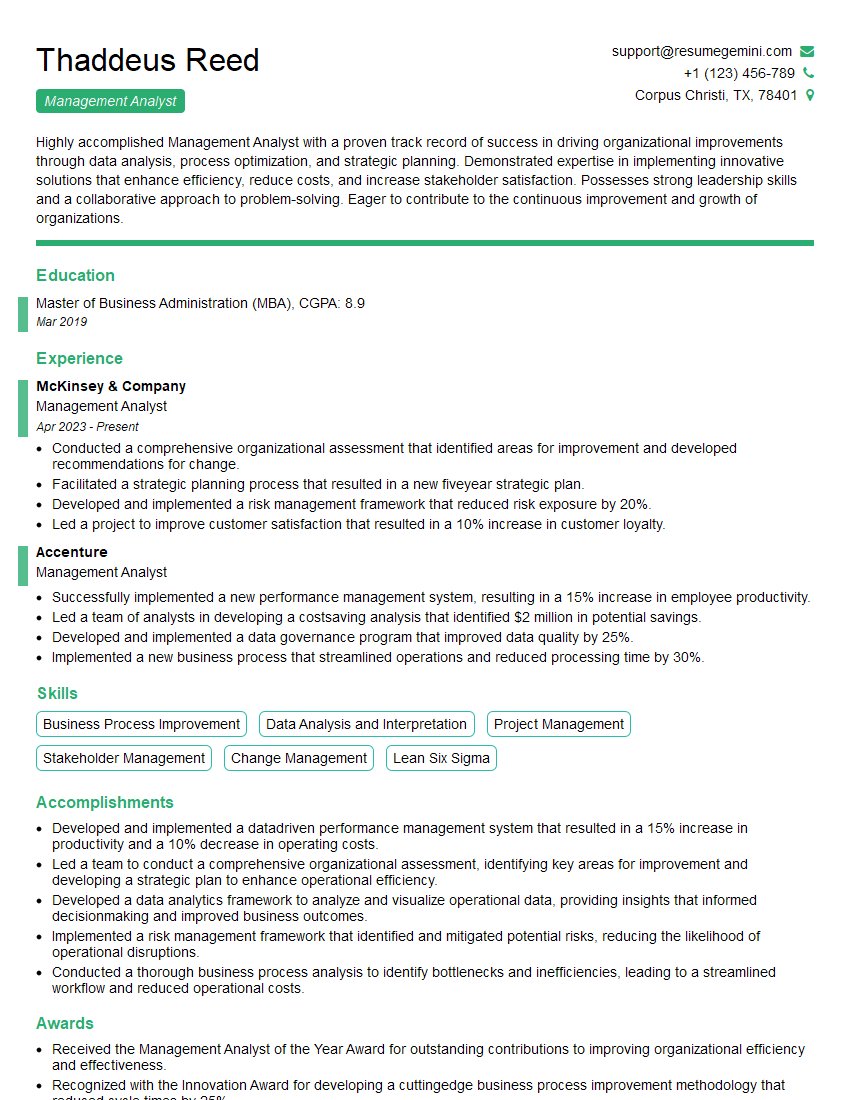
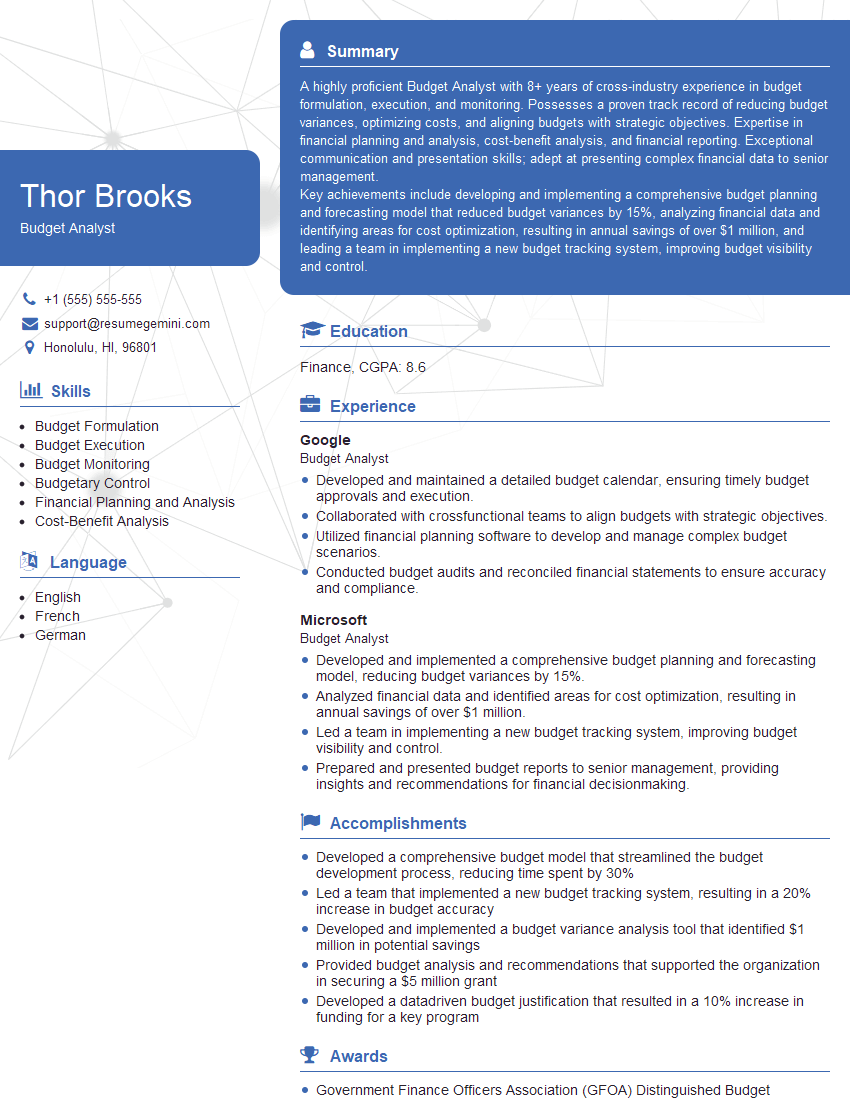
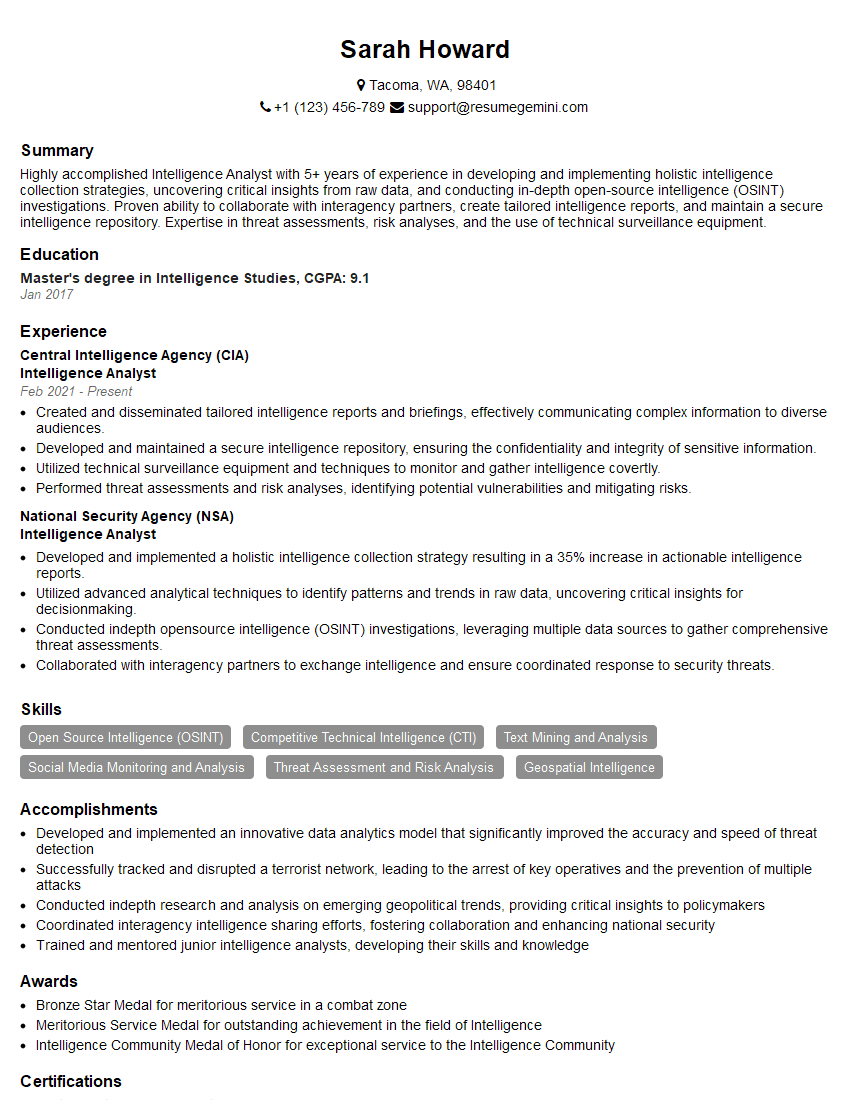
Mastering Government Analytics opens doors to impactful careers where you can directly contribute to policy and improve public services. To maximize your job prospects, it’s crucial to present your skills effectively. Creating an Applicant Tracking System (ATS)-friendly resume is paramount. ResumeGemini is a trusted resource to help you build a professional and impactful resume that gets noticed. We provide examples of resumes tailored specifically for Government Analytics roles to guide you. Invest time in crafting a strong resume – it’s your first impression and a key step towards securing your dream government analytics position.

Explore more articles
Users Rating of Our Blogs
Share Your Experience
We value your feedback! Please rate our content and share your thoughts (optional).
What Readers Say About Our Blog
To the interviewgemini.com Webmaster.
Very helpful and content specific questions to help prepare me for my interview!
Thank you
To the interviewgemini.com Webmaster.
This was kind of a unique content I found around the specialized skills. Very helpful questions and good detailed answers.
Very Helpful blog, thank you Interviewgemini team.