Are you ready to stand out in your next interview? Understanding and preparing for Grading and Excavating interview questions is a game-changer. In this blog, we’ve compiled key questions and expert advice to help you showcase your skills with confidence and precision. Let’s get started on your journey to acing the interview.
Questions Asked in Grading and Excavating Interview
Q 1. What types of grading equipment are you familiar with and what are their applications?
My experience encompasses a wide range of grading and excavation equipment. Understanding the strengths and weaknesses of each machine is crucial for efficient and safe project execution.
- Bulldozers: These are workhorses for moving large volumes of earth, ideal for rough grading, clearing land, and pushing material. Think of them as the ‘muscle’ of the operation. I’m proficient with both crawler and wheel bulldozers, selecting the appropriate type based on ground conditions and the project’s specific needs. For instance, crawler bulldozers excel in muddy or unstable terrain.
- Excavator (or Backhoe): These versatile machines are used for digging trenches, foundations, and other precise excavations. Their articulated arms allow for accurate placement of materials. Different sized excavators are utilized depending on project scale. I’ve worked with mini-excavators for tight residential spaces and larger excavators for commercial projects.
- Motor Graders: These are precision instruments for fine grading, creating smooth surfaces for roads, pavements, and other infrastructure. Imagine them as the ‘finishers,’ creating level surfaces ready for paving or building.
- Scrapers: These machines are highly effective for moving large quantities of soil over long distances, often used in large-scale earthmoving projects such as highway construction.
- Loaders (Wheel Loaders & Skid Steer Loaders): These are indispensable for loading and transporting excavated material. Wheel loaders are best for larger projects and longer distances, whereas skid steers excel in tight spaces.
Selecting the right equipment is a critical decision. It depends on factors like soil type, project size, site accessibility, and budget constraints. I always prioritize optimizing equipment selection for maximum efficiency and safety.
Q 2. Explain the process of site preparation for a residential construction project.
Site preparation for a residential project is a meticulous process involving several key steps. It’s like laying the foundation for a house – you wouldn’t start building without a strong base.
- Clearing and Grubbing: Removing vegetation, trees, and debris from the site. This is essential to create a clean working area.
- Rough Grading: Using heavy equipment like bulldozers, to level the site to the approximate grade. This removes high points and fills low points to provide a relatively even surface.
- Topsoil Stripping: Carefully removing the topsoil and setting it aside for later use in landscaping. Topsoil is valuable, so its preservation is important.
- Fine Grading: Using motor graders or smaller equipment to achieve precise elevations and slopes, following the engineer’s plans. This is where accuracy is paramount to ensure proper drainage and a level foundation.
- Compaction: Compacting the soil to the required density using rollers or other compaction equipment. This ensures stability and prevents settlement after construction.
- Utility Installation (if necessary): This often occurs concurrently with grading and involves installing water lines, sewer lines, electrical conduits, etc.
Throughout this entire process, meticulous adherence to safety protocols is essential, including proper signage, equipment maintenance, and worker training.
Q 3. Describe different soil types and their impact on excavation techniques.
Soil type significantly influences excavation techniques. Different soils have varying properties, impacting equipment selection, excavation methods, and overall project timelines and costs.
- Clay: This soil is cohesive and can be difficult to excavate, often requiring specialized equipment and techniques. It can be very sticky when wet, posing challenges for equipment operation.
- Sandy Soil: This is generally easier to excavate than clay, but can be prone to collapse, especially in trenches. Shoring or other support systems may be necessary.
- Silty Soil: This type of soil can be unstable when wet and prone to liquefaction (losing strength). Proper drainage and support are crucial.
- Rocky Soil: Requires specialized equipment like rock breakers or excavators with rock-breaking attachments. Excavation can be slow and expensive.
- Organic Soil: This type of soil is often unstable and compressible, requiring careful handling and potentially specialized dewatering techniques.
Understanding the soil’s characteristics—through soil testing and site investigation—is vital for planning an effective and safe excavation strategy. For example, I’ve encountered projects where unexpected rock formations required a change in excavation methods and equipment, adding extra time and cost to the project, highlighting the importance of thorough site analysis.
Q 4. How do you ensure site safety during excavation and grading operations?
Site safety is my utmost priority. Excavation and grading are inherently dangerous operations, so a comprehensive safety plan is crucial.
- Proper Training and Supervision: All personnel must be properly trained in safe operating procedures for the equipment they are using. Regular supervision is key to ensure compliance.
- Protective Equipment: Hard hats, safety glasses, high-visibility clothing, and appropriate personal protective equipment (PPE) must be worn at all times.
- Safe Excavation Practices: Following all OSHA regulations for trenching and excavation, including proper shoring, sloping, and benching techniques to prevent cave-ins. This involves understanding the soil type and selecting appropriate support systems.
- Traffic Control: Establishing clear traffic control measures to protect workers and the public from hazards near the excavation site.
- Emergency Procedures: Having a clear emergency plan in place, including communication protocols and procedures for dealing with accidents or injuries.
- Regular Inspections: Conducting daily inspections of the site and equipment to identify and address potential hazards before they become accidents.
A proactive safety approach is far more effective than reactive measures. It’s about creating a culture of safety on the job site, where everyone feels empowered to speak up and address potential hazards.
Q 5. What are the common challenges encountered during excavation and how do you address them?
Excavation projects often encounter unforeseen challenges. The ability to adapt and solve problems quickly is crucial for success.
- Unexpected Utilities: Encountering buried utilities (water, gas, electric, etc.) that are not indicated on plans requires immediate action to stop work and contact the utility companies. This can lead to delays and additional costs. We use utility locating services to minimize this risk.
- Unstable Soil Conditions: Unexpectedly unstable soil conditions might necessitate changes to excavation methods, requiring additional shoring or support systems. This can dramatically impact project timelines.
- Groundwater Issues: High water tables can make excavation difficult and require dewatering systems to lower the water level. This adds complexity and expense to the project.
- Rock Outcroppings: Unexpected rock formations require specialized equipment and techniques, adding to the project’s cost and duration.
Addressing these challenges requires careful planning, proactive risk assessment, and a flexible approach. In my experience, effective communication with the project team, engineers, and subcontractors is essential for efficient problem-solving. For example, we used specialized drilling equipment to bypass a large unexpected rock formation to prevent significant project delays.
Q 6. Explain your experience with different types of excavation methods (e.g., trenching, mass excavation).
I’ve extensive experience with various excavation methods, tailored to specific project needs and site conditions.
- Trenching: This involves digging narrow, deep trenches, typically for installing utilities like pipes and cables. I am proficient in using both hand tools and mechanized equipment like excavators and trenchers. Safety is paramount in trenching due to the risk of cave-ins; I always adhere strictly to OSHA regulations regarding shoring and sloping.
- Mass Excavation: This involves removing large volumes of earth, often for foundations or large-scale earthworks. This requires efficient planning and coordination, often involving multiple pieces of heavy equipment, such as bulldozers, excavators, and scrapers. I’ve managed mass excavation projects for large commercial buildings and infrastructure projects.
- Selective Excavation: This involves removing soil in a precise manner, often for specific purposes, such as removing contaminated soil or carefully excavating around existing structures. This requires careful planning and precise execution to minimize damage to surrounding areas.
My approach always prioritizes safety, efficiency, and minimizing environmental impact. For instance, in a recent mass excavation, we carefully managed the disposal of the excavated material, minimizing waste and environmental impact, which was a key client requirement.
Q 7. How do you read and interpret blueprints and grading plans?
Reading and interpreting blueprints and grading plans is a fundamental skill for any grading and excavation professional. It’s like reading a map for construction.
I am proficient in reading various types of drawings, including:
- Site Plans: These show the overall layout of the site, including existing features and proposed construction elements. Understanding these plans is essential for planning the excavation and grading operations.
- Grading Plans: These show the proposed elevations and slopes of the site, indicating cut and fill areas. These plans are critical for accurate grading and ensuring proper drainage.
- Utility Plans: These illustrate the location of underground utilities, such as water, sewer, gas, and electric lines. This is essential for safe and efficient excavation, preventing damage to these critical infrastructure elements.
I utilize various tools to aid in this process, including:
- Digital Measurement Tools: Laser levels, total stations, and GPS equipment for accurate measurements.
- CAD Software: Familiarity with CAD software allows me to visualize the plans in 3D, facilitating a better understanding of the project’s requirements.
Accurate interpretation of these plans is essential for preventing costly mistakes and ensuring the project’s success. Any discrepancies or ambiguities are always clarified with the engineers or project managers before starting work.
Q 8. What are your skills in operating heavy machinery like excavators, bulldozers, and graders?
I possess extensive experience operating a variety of heavy machinery, including excavators, bulldozers, and graders. My skills encompass proficient machine operation, understanding machine limitations, and safe operation in diverse terrain and weather conditions. I’m comfortable with different machine models and attachments. For instance, I’ve used excavators with various buckets – from narrow trenching buckets to wide, general-purpose buckets – adjusting my technique for optimal efficiency and precision based on the project requirements. With bulldozers, I have experience in both pushing and blade-angle adjustments for tasks ranging from land clearing to fine grading. My grader operation involves achieving precise grades and slopes, essential for road construction and site leveling. I’m adept at managing machine maintenance and performing basic troubleshooting.
For example, during a recent highway project, I used an excavator to precisely dig drainage ditches to the specified depth and width, ensuring proper drainage flow. On another project, I used a bulldozer to effectively level a large area for a new building site, managing the soil efficiently while minimizing waste.
Q 9. Describe your experience with GPS-guided excavation.
My experience with GPS-guided excavation is significant. I’m proficient in using GPS systems to achieve precise grading and excavation, working within tight tolerances. This technology minimizes errors and increases efficiency. I understand the different GPS systems and their capabilities, including real-time kinematic (RTK) GPS, which offers centimeter-level accuracy. This precision is crucial in projects requiring highly accurate excavations, such as trenching for utilities or building foundations. I can interpret and utilize data from GPS systems, and troubleshoot any issues that arise during operation.
For example, during a recent pipeline project, the use of GPS-guided excavation ensured that the trench was dug to the exact specifications, minimizing the risk of damaging the pipeline and ensuring the project stayed on schedule and within budget. The accuracy ensured proper pipeline depth and eliminated the need for significant manual rework.
Q 10. How do you manage and mitigate risks associated with underground utilities during excavation?
Managing and mitigating risks associated with underground utilities is paramount in excavation. Before any excavation begins, a thorough site survey and utility locating are crucial. This involves contacting utility companies to mark the locations of underground lines, pipes, and cables. I meticulously verify these markings and maintain a safety buffer zone around them. I’m trained in using various non-destructive locating techniques to help confirm utility locations before proceeding. Safe excavation practices, such as hand digging around marked utilities, using vacuum excavation in sensitive areas, and implementing shoring techniques where necessary, are strictly followed. Clear communication with the site team about utility locations and potential risks is essential.
In one instance, during a road widening project, we discovered an unmarked gas line unexpectedly. Our adherence to safety protocols, including hand excavation around the identified line, prevented a potentially hazardous situation. The project was temporarily halted until the gas line was safely relocated. This showcases the importance of thorough planning and vigilant risk management.
Q 11. Explain your understanding of soil compaction and its importance in grading.
Soil compaction is the process of increasing the density of soil by reducing air voids. It is essential in grading because proper compaction ensures stability, prevents settlement, and enhances the load-bearing capacity of the soil. Different soil types require different compaction methods and levels of compaction effort. Over-compaction can lead to issues like reduced drainage, while under-compaction results in instability and potential settling. I use various methods for soil compaction, such as using vibratory rollers, static rollers, and plate compactors, selecting the appropriate equipment based on soil type and project requirements. I understand the importance of performing compaction tests (like Proctor tests) to verify the level of compaction achieved.
For instance, during the construction of a parking lot, achieving proper soil compaction was crucial to prevent settling of the pavement and ensure its long-term stability. Using the correct compactor and conducting compaction tests ensured that the project met engineering standards.
Q 12. How do you handle unexpected subsurface conditions during excavation?
Handling unexpected subsurface conditions during excavation requires adaptability and sound judgment. Encountering unforeseen obstacles like rock, buried debris, or unexpected water conditions necessitates careful assessment and adaptation of the excavation plan. First, I would thoroughly document the unexpected condition, including type, location, and extent. Then I’d consult with the project engineer or supervisor to decide on the best course of action. This might involve modifying excavation techniques, using specialized equipment, or adjusting the design to accommodate the unexpected findings. Safety is paramount—ensuring that the situation is properly addressed before continuing work.
For example, on a recent project, we discovered a large boulder unexpectedly during excavation for a foundation. We used a specialized rock breaker attachment on the excavator to safely remove the obstacle before continuing with the excavation.
Q 13. Describe your experience with cut and fill calculations.
Cut and fill calculations are crucial for estimating the amount of earthwork required in a project. This involves determining the volume of material to be excavated (cut) and the volume of material to be placed (fill). I’m proficient in using various methods for cut and fill calculations, including manual methods using cross sections and more advanced techniques utilizing earthwork software. These calculations are vital for determining the project’s overall cost and schedule. Accurately assessing cut and fill volumes minimizes waste and ensures sufficient material for the fill operation.
A recent project involved creating a level platform for a new building. Accurate cut and fill calculations allowed us to optimize the earthmoving process, minimizing the need for extra material hauling and thereby saving time and money.
Q 14. What safety procedures do you follow when operating heavy machinery?
Safety is my top priority when operating heavy machinery. I always adhere to strict safety procedures, starting with pre-operation checks of the machinery to ensure it’s in safe working condition. This includes inspecting fluid levels, brakes, lights, and other safety features. I use appropriate personal protective equipment (PPE), including hard hats, safety glasses, and high-visibility clothing. I maintain a safe operating distance from other workers and equipment. Blind spots are carefully considered, and appropriate signaling is used to communicate with others on the site. I never operate machinery when tired or under the influence of drugs or alcohol. Regular machine maintenance and operator training are essential parts of ensuring safety.
For instance, before starting each work shift, I always conduct a thorough pre-start inspection checklist on the machine to ensure everything is functioning safely. This proactive approach helps prevent accidents and ensures a safe working environment for myself and my colleagues.
Q 15. How do you maintain and perform preventative maintenance on heavy equipment?
Preventative maintenance is the cornerstone of efficient and safe heavy equipment operation. It’s about proactively addressing potential issues before they lead to costly breakdowns and downtime. My approach involves a multi-pronged strategy focusing on regular inspections, scheduled servicing, and operator training.
- Daily Inspections: Every operator performs a pre-shift inspection, checking fluid levels (engine oil, hydraulic fluid, coolant), tire pressure, belts, hoses, and any signs of leaks or damage. Think of it like a car’s pre-drive check, but much more thorough. Any anomalies are immediately reported.
- Scheduled Maintenance: We adhere to a rigorous schedule based on manufacturer recommendations and operating hours. This involves more extensive checks, lubrication, filter replacements, and component adjustments. For example, we might have a 500-hour service for excavators, including a thorough hydraulic system check.
- Operator Training: Operators are trained not only on safe operation but also on recognizing early signs of equipment malfunction. They are empowered to report issues and understand the importance of their role in preventative maintenance. A well-trained operator can often identify a problem before it escalates.
- Record Keeping: Meticulous records are kept for every piece of equipment, documenting all maintenance activities, repairs, and any identified problems. This data allows us to identify trends, predict potential failures, and optimize maintenance schedules.
For instance, on a recent project, a daily inspection revealed a small hydraulic leak on a bulldozer. Addressing it immediately prevented a major hydraulic failure that could have resulted in days of downtime and significant repair costs.
Career Expert Tips:
- Ace those interviews! Prepare effectively by reviewing the Top 50 Most Common Interview Questions on ResumeGemini.
- Navigate your job search with confidence! Explore a wide range of Career Tips on ResumeGemini. Learn about common challenges and recommendations to overcome them.
- Craft the perfect resume! Master the Art of Resume Writing with ResumeGemini’s guide. Showcase your unique qualifications and achievements effectively.
- Don’t miss out on holiday savings! Build your dream resume with ResumeGemini’s ATS optimized templates.
Q 16. What is your experience with different types of surveying instruments and techniques?
My experience with surveying instruments and techniques is extensive, encompassing both traditional and modern methods. I’m proficient in using:
- Total Stations: These electronic instruments measure distances and angles with high precision, allowing for accurate data collection for grading and setting out. I’ve used them extensively in large-scale projects, ensuring accurate alignment and elevations.
- GPS Surveying (GNSS): I’m experienced in using GPS systems for both RTK (Real-Time Kinematic) and post-processed surveying. This is particularly useful in large sites where establishing a control network is challenging. The accuracy achieved with RTK is exceptional for precise grading.
- Leveling Instruments and Rods: These are essential for establishing benchmarks and determining elevations. I’m comfortable using both automatic and optical levels, understanding the importance of proper leveling procedures to minimize errors.
- Data Processing Software: I’m familiar with various software packages used for processing survey data, generating contour maps, and creating digital terrain models (DTMs). This ensures efficient analysis and visualization of the site.
In one project, the use of RTK GPS significantly sped up the process of setting out the foundation for a large building complex, saving both time and money compared to traditional methods.
Q 17. How do you ensure the accuracy of grading and leveling?
Ensuring the accuracy of grading and leveling is paramount. It relies on a combination of precise surveying, skilled operation, and diligent quality control. Here’s how I approach it:
- Accurate Benchmarking: Establishing a reliable network of benchmarks is the first step. These are points of known elevation, serving as references for all subsequent measurements. We use high-precision leveling instruments to establish these points.
- Precise Surveying: We utilize the appropriate surveying instruments (as discussed in the previous answer) to accurately determine elevations and plan the grading work. This information is then used to create a detailed plan.
- Skilled Operators: Experienced heavy equipment operators are crucial. They understand how to interpret the grading plan and operate the machines with precision, making adjustments as needed based on real-time observations.
- Regular Checks and Adjustments: Throughout the process, frequent checks are made using leveling instruments to ensure the grade matches the plan. Any deviations are corrected promptly.
- Quality Control: A dedicated quality control process is in place to verify the accuracy of the completed grading work. This might involve independent checks using laser scanners or another set of measurements, ensuring compliance with the specifications.
For example, on a road construction project, regular checks and adjustments ensured that the road’s grade met the required slope, preventing potential drainage problems and ensuring long-term stability.
Q 18. Describe your experience with erosion control measures during and after excavation.
Erosion control is vital to protect the environment and prevent damage to the surrounding area during and after excavation. Our approach involves a combination of preventative and reactive measures:
- Pre-Excavation Planning: We thoroughly assess the site’s soil conditions and potential erosion risks before starting work. This helps determine the most appropriate erosion control measures.
- Temporary Measures (During Excavation): This includes using silt fences, sediment basins, and straw bales to control runoff and prevent soil erosion. We also employ techniques like minimizing exposed soil surfaces and using temporary covers where necessary.
- Post-Excavation Measures: Once excavation is complete, we implement measures like seeding, mulching, and using erosion control blankets to stabilize the soil and promote vegetation growth. This helps prevent long-term erosion and soil degradation.
- Stormwater Management: We often incorporate stormwater management systems, such as swales and ditches, to control runoff and prevent erosion during and after rain events.
- Compliance with Regulations: We strictly adhere to all relevant environmental regulations and permits related to erosion control.
In one instance, we prevented significant soil erosion on a hillside excavation by implementing a series of terraced silt fences and using erosion control blankets, minimizing environmental impact.
Q 19. How do you manage a team of heavy equipment operators?
Managing a team of heavy equipment operators requires a blend of leadership, communication, and safety awareness. My approach centers on:
- Clear Communication: I ensure that all operators receive clear instructions regarding the work plan, safety procedures, and any specific requirements for the project. Regular briefings and open communication channels are crucial.
- Safety First: Safety is my top priority. I enforce strict adherence to safety protocols, including the use of personal protective equipment (PPE) and safe operating procedures. Regular safety meetings and toolbox talks are conducted.
- Training and Skill Development: I provide opportunities for operators to enhance their skills through training programs and on-the-job mentoring. Keeping operators up-to-date on best practices and new technologies is essential.
- Motivation and Teamwork: I foster a positive and collaborative work environment. Recognizing good work and addressing concerns promptly contribute to a motivated and productive team.
- Performance Monitoring: I monitor the performance of each operator, providing constructive feedback and addressing any performance issues promptly.
By fostering a culture of safety and teamwork, I have consistently achieved high productivity and minimized incidents on my projects.
Q 20. What is your experience with project scheduling and budgeting?
Project scheduling and budgeting are critical for successful project completion. My experience involves:
- Developing Detailed Schedules: I utilize project management software to create detailed schedules, breaking down the project into smaller tasks with defined durations and dependencies. This allows for effective tracking of progress.
- Budgeting and Cost Control: I work closely with estimators to develop a realistic budget, considering all aspects of the project, including equipment costs, labor, materials, and contingency plans. Regular cost tracking is essential to identify and address potential cost overruns.
- Risk Management: I identify and assess potential risks that could impact the schedule or budget, developing mitigation strategies to minimize their impact. This includes weather delays, equipment malfunctions, and material price fluctuations.
- Progress Monitoring and Reporting: I regularly monitor the project’s progress, comparing actual performance against the planned schedule and budget. Regular reports are prepared to keep stakeholders informed.
- Change Management: I have experience in managing changes to the scope, schedule, or budget, ensuring that all stakeholders are informed and agree on the impact of any changes.
For example, on a recent project, proactive risk management identified a potential delay due to material delivery issues. By proactively finding alternative suppliers, we successfully mitigated the risk and kept the project on schedule.
Q 21. Explain your experience with material handling and disposal.
Efficient material handling and disposal are essential for minimizing environmental impact and ensuring project efficiency. My experience involves:
- Planning and Logistics: Careful planning is crucial to ensure the efficient movement of materials to and from the site. This includes coordinating trucking, storage, and disposal.
- Equipment Selection: Choosing the right equipment for material handling, such as loaders, excavators, and dump trucks, is critical for optimizing efficiency and safety.
- Waste Management: We adhere to strict waste management protocols, separating materials for recycling, reuse, and proper disposal. We work closely with waste management companies to ensure compliance with regulations.
- Stockpile Management: Effective stockpile management is critical, ensuring that materials are stored correctly to prevent damage or loss. This also minimizes the risk of erosion or environmental contamination.
- Environmental Compliance: We ensure that all material handling and disposal activities comply with all relevant environmental regulations and permits.
On a recent project, implementing a robust waste management plan resulted in significant cost savings through recycling and reduced disposal fees, while also minimizing environmental impact.
Q 22. How do you ensure compliance with environmental regulations during excavation?
Ensuring environmental compliance during excavation is paramount. It involves a multi-faceted approach beginning even before the first shovel hits the ground. We start by conducting thorough site assessments to identify potential environmental concerns, such as the presence of wetlands, endangered species habitats, or contaminated soil. This assessment guides the development of a comprehensive Environmental Protection Plan (EPP).
The EPP details measures to mitigate environmental risks. This might include things like implementing erosion and sediment control measures (like silt fences and straw bales to prevent soil runoff), designating specific areas for equipment staging and waste disposal to minimize habitat disturbance, and implementing a system for managing hazardous materials that might be unearthed during excavation. We also work closely with relevant environmental agencies, obtaining necessary permits and adhering to all regulations related to soil disposal and remediation, if necessary. Regular monitoring and reporting of environmental impact throughout the project lifecycle are essential, allowing for timely corrective actions if any issues arise. For instance, if we unexpectedly uncover a protected species’ habitat, we immediately halt work in that area and consult with wildlife specialists and regulatory agencies to develop a safe and compliant solution, possibly involving relocation or habitat restoration.
Q 23. Describe your experience with working in confined spaces.
I have extensive experience working in confined spaces, adhering strictly to safety protocols. This includes thorough training on the recognition and avoidance of hazards specific to confined space entry, such as oxygen deficiency, toxic gas build-up, and engulfment. I’m proficient in using and inspecting atmospheric monitoring equipment, ensuring safe levels of oxygen and the absence of hazardous gases before entry. Proper ventilation is crucial, and I’m experienced in selecting and implementing appropriate ventilation systems for various confined spaces. Before every entry, a detailed risk assessment is undertaken and a permit-to-work system is always followed. This process documents the hazards present, the control measures employed, and the responsibilities of each team member. The use of appropriate Personal Protective Equipment (PPE), including harnesses and rescue equipment, is non-negotiable. I’ve personally overseen projects where confined space entry was necessary for utility work beneath roadways and within existing building structures. Each time, safety was our top priority, resulting in zero incidents.
Q 24. How do you handle conflict resolution on a construction site?
Conflict resolution on a construction site requires a proactive and collaborative approach. My strategy involves open communication and a focus on finding mutually beneficial solutions. I believe in addressing issues promptly and directly, ensuring everyone feels heard and understood. I start by actively listening to all parties involved, gathering their perspectives and understanding the root cause of the conflict. Then, I facilitate a discussion to find common ground, emphasizing the shared goal of completing the project successfully. This sometimes involves compromising, mediating between different viewpoints, or even escalating the issue to a higher authority if necessary, while maintaining professionalism and respect. For example, I once resolved a dispute between the excavation team and the concrete pouring crew regarding the timing of the foundation work. Through collaborative dialogue, we identified a revised schedule that satisfied both teams, ensuring the project remained on track.
Q 25. Describe a time you had to solve a challenging problem during excavation.
During a large-scale excavation for a new commercial building, we encountered an unexpected underground utility line – a high-pressure gas main – which wasn’t indicated on our blueprints. This posed a significant safety risk and threatened to derail the project schedule. My immediate response was to halt all work in the vicinity and call the emergency services for the gas company. Meanwhile, my team and I worked with the gas company representatives to safely isolate the affected section of the pipeline. We then collaborated with the project engineers to revise the excavation plan, carefully rerouting our work around the gas line. This involved detailed surveying and planning to ensure minimal disruption to the overall project timeline and budget. This problem highlighted the importance of thorough site surveys and the necessity for close collaboration with utility companies prior to commencing any excavation work.
Q 26. What is your proficiency in using construction software and related technologies?
I’m proficient in several construction software applications, including AutoCAD for design review and planning, and various project management software such as Primavera P6 for scheduling and resource allocation. My familiarity extends to 3D modeling software for visualizing excavation designs and potential challenges. I’m also comfortable utilizing GPS technology for site surveying and machine control. This technology ensures accurate grading and minimizes the need for rework. Furthermore, I’m adept at using data analysis tools to monitor project progress and identify areas for improvement. I am continually updating my knowledge and skills in new technologies relevant to the field, recognizing the evolving digital landscape of the construction industry.
Q 27. How do you communicate effectively with engineers, supervisors, and other team members?
Effective communication is fundamental to successful project execution. With engineers, my communication is precise and technical, focusing on details like specifications, tolerances, and potential challenges. With supervisors, I maintain regular updates on progress, highlighting any potential issues or delays proactively. With team members, my communication style is collaborative and supportive, fostering a positive and productive work environment. I encourage open dialogue, ensuring everyone feels comfortable expressing concerns or suggesting improvements. I use a combination of methods – daily toolbox talks, written reports, and one-on-one discussions – to ensure clear and timely communication. My aim is to build trust and mutual understanding amongst all stakeholders, facilitating a smooth workflow and preventing misunderstandings.
Q 28. Describe your experience with quality control and assurance in grading and excavation projects.
Quality control and assurance (QA/QC) are integral aspects of my approach to grading and excavation projects. This starts with meticulous planning and detailed specifications, ensuring that the project goals and standards are clearly defined from the outset. Throughout the project, regular inspections are conducted to verify that the work conforms to the specifications and drawings. This involves checking dimensions, levels, and the overall quality of the excavation and grading work. We use various surveying instruments to ensure accuracy, including laser levels and total stations. Documentation of all inspections, including any non-conformances and corrective actions, is essential. I’m also involved in the selection and training of personnel to ensure they have the skills and understanding to perform their tasks according to the highest standards. A rigorous QA/QC program minimizes errors, ensures safety, and ultimately contributes to a high-quality finished product that meets or exceeds client expectations.
Key Topics to Learn for Grading and Excavating Interview
- Site Surveying and Planning: Understanding blueprints, site assessments, and identifying potential challenges before excavation begins. Practical application includes using surveying equipment and interpreting topographical maps.
- Excavation Techniques: Mastering various excavation methods (e.g., trenching, mass excavation) and the appropriate machinery for different soil conditions. Consider the practical applications of safety regulations and environmental impact assessments.
- Grading Principles: Understanding grading plans, slope calculations, and achieving proper drainage. Practical application includes using grading equipment and ensuring compliance with local regulations.
- Earthmoving Equipment Operation & Maintenance: Familiarity with operating and maintaining various heavy equipment (e.g., excavators, bulldozers, graders). Consider the practical application of preventative maintenance and troubleshooting common equipment issues.
- Safety Procedures and Regulations: Deep understanding of OSHA regulations, safety protocols, and hazard mitigation techniques within the excavation and grading industry. Consider the practical application of risk assessment and incident reporting.
- Project Management & Cost Estimation: Ability to manage timelines, budgets, and resources effectively. Practical application includes creating project schedules and developing accurate cost estimates.
- Soil Mechanics and Properties: Understanding different soil types, their properties, and how they impact excavation and grading. Consider how this impacts equipment selection and project planning.
Next Steps
Mastering grading and excavating skills opens doors to a rewarding career with excellent growth potential in the construction industry. These in-demand skills are highly valued by employers, leading to competitive salaries and opportunities for advancement. To maximize your job prospects, creating a strong, ATS-friendly resume is crucial. ResumeGemini is a trusted resource that can help you build a professional resume that highlights your skills and experience effectively. Examples of resumes tailored to the grading and excavating field are available to guide you through the process.
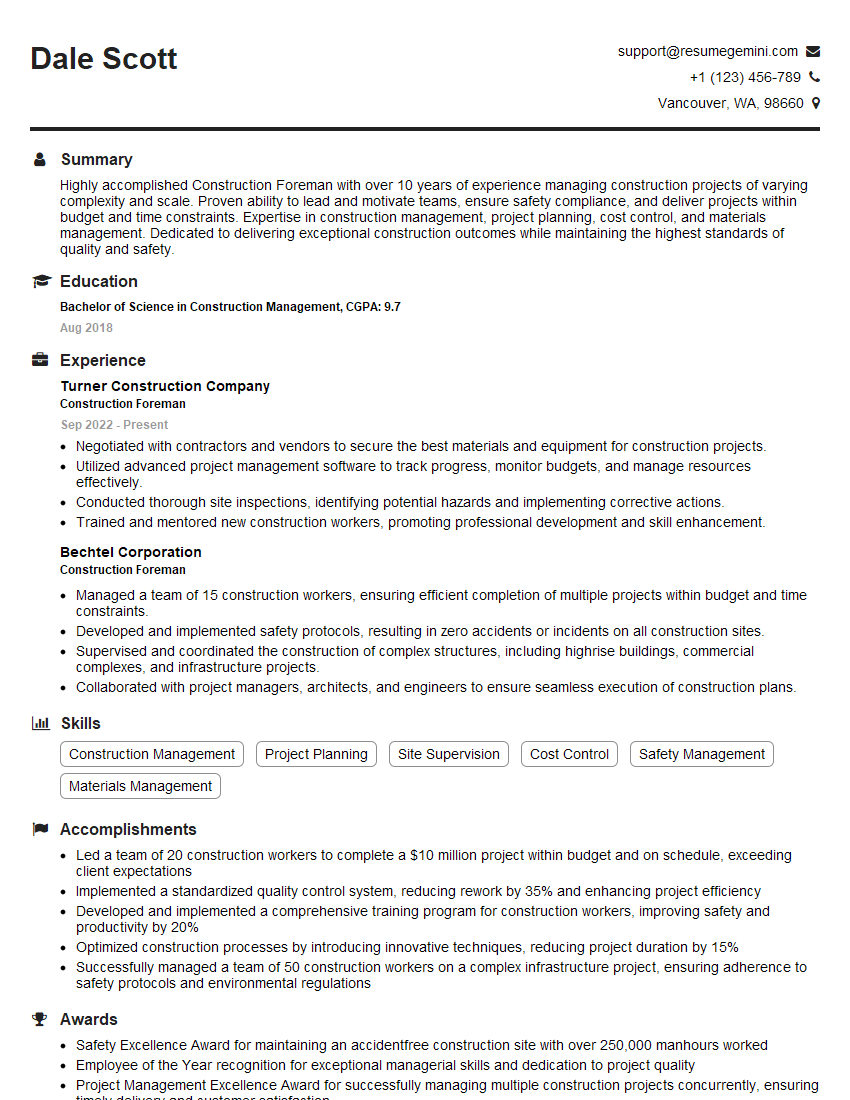
Construction Foreman Resume Sample
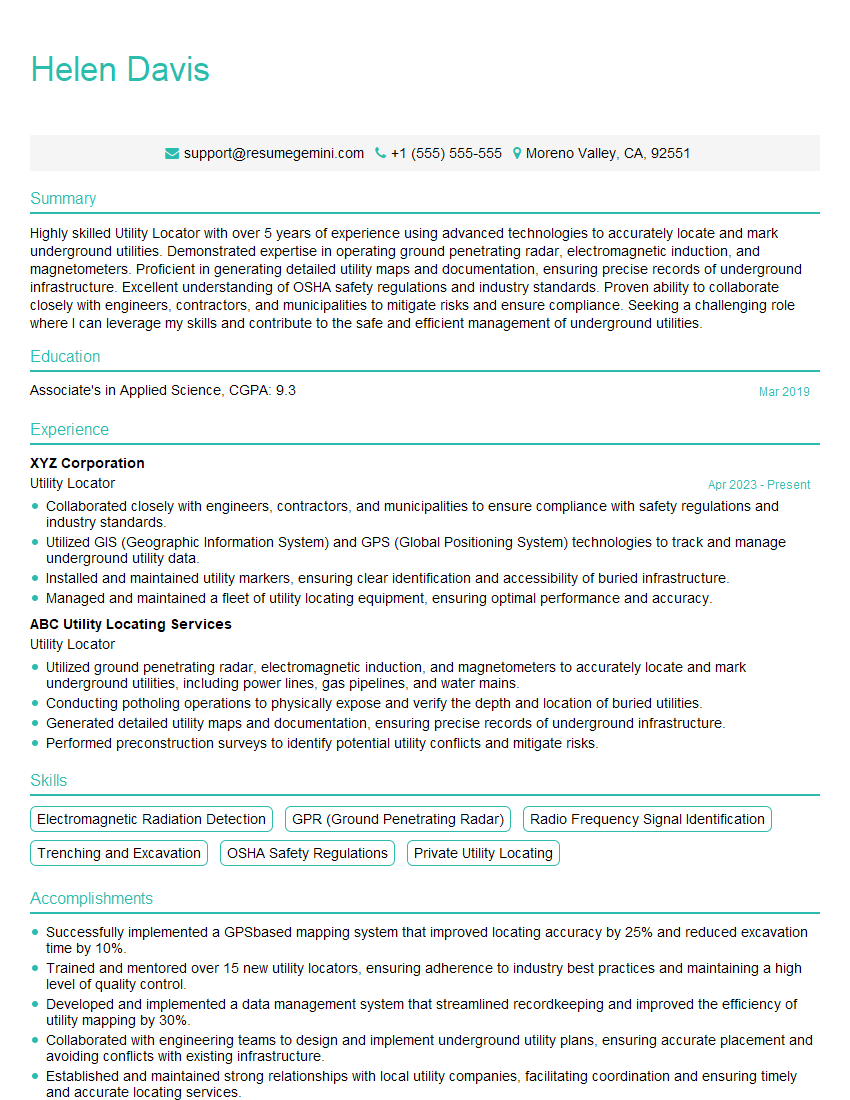
Utility Locator Resume Sample
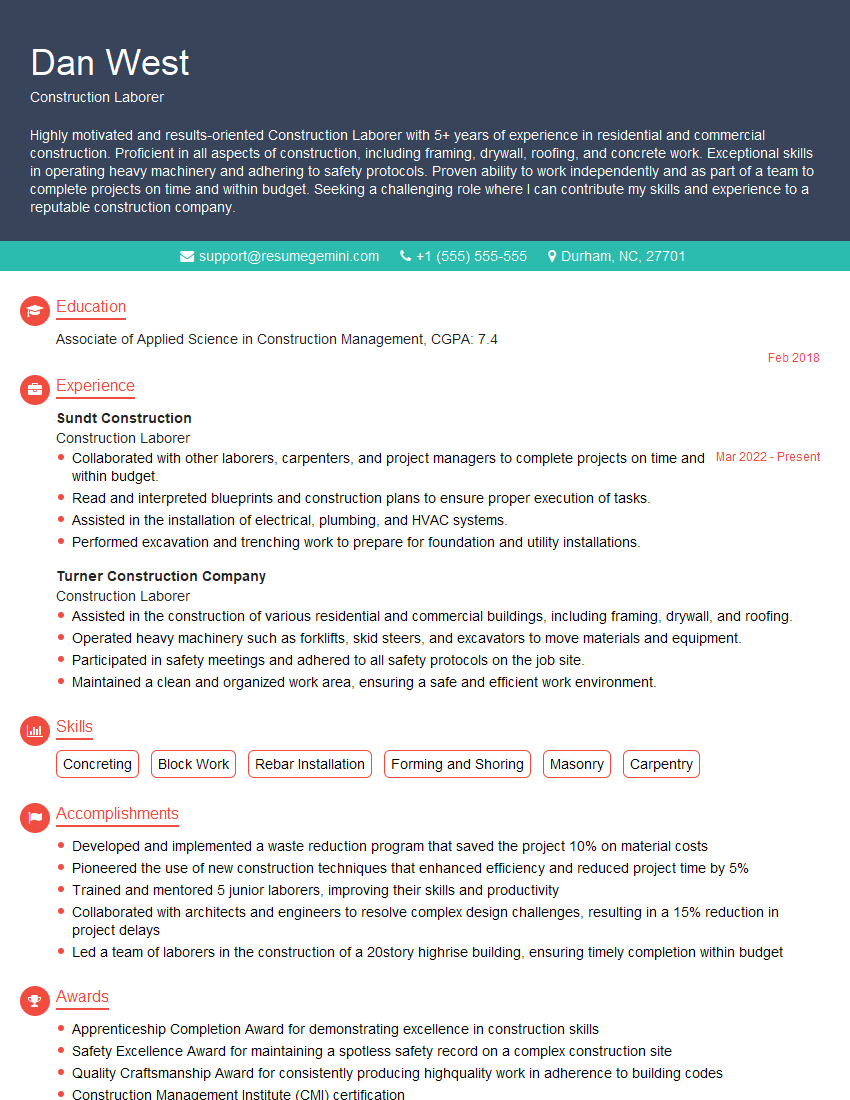
Construction Laborer Resume Sample

Heavy Equipment Operator Resume Sample

Backhoe Operator Resume Sample
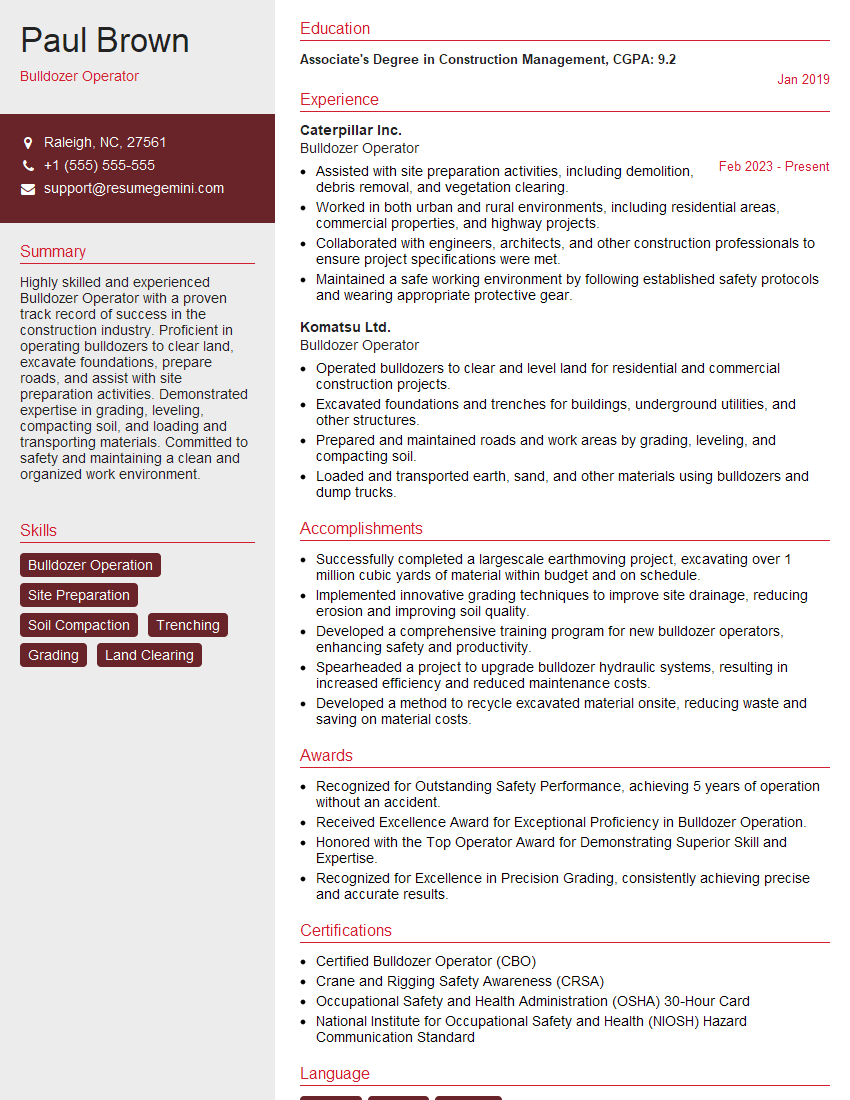
Bulldozer Operator Resume Sample
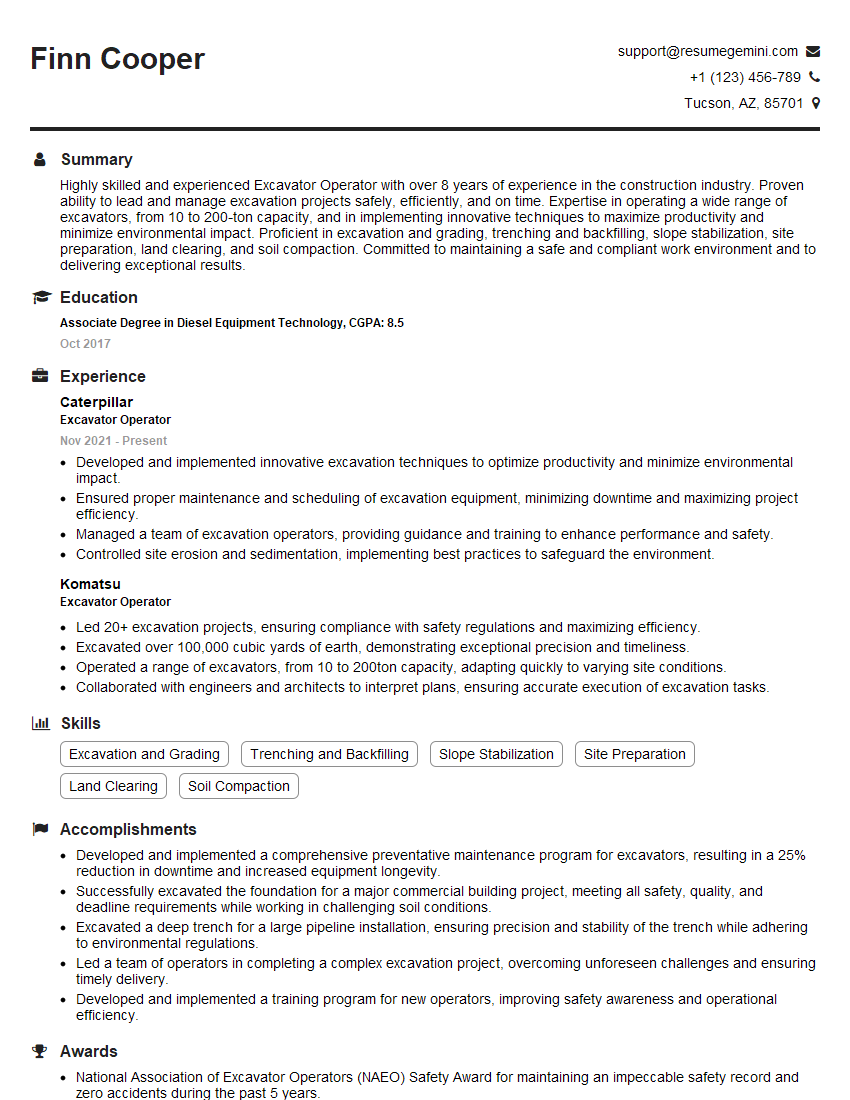
Excavator Operator Resume Sample

Grader Operator Resume Sample
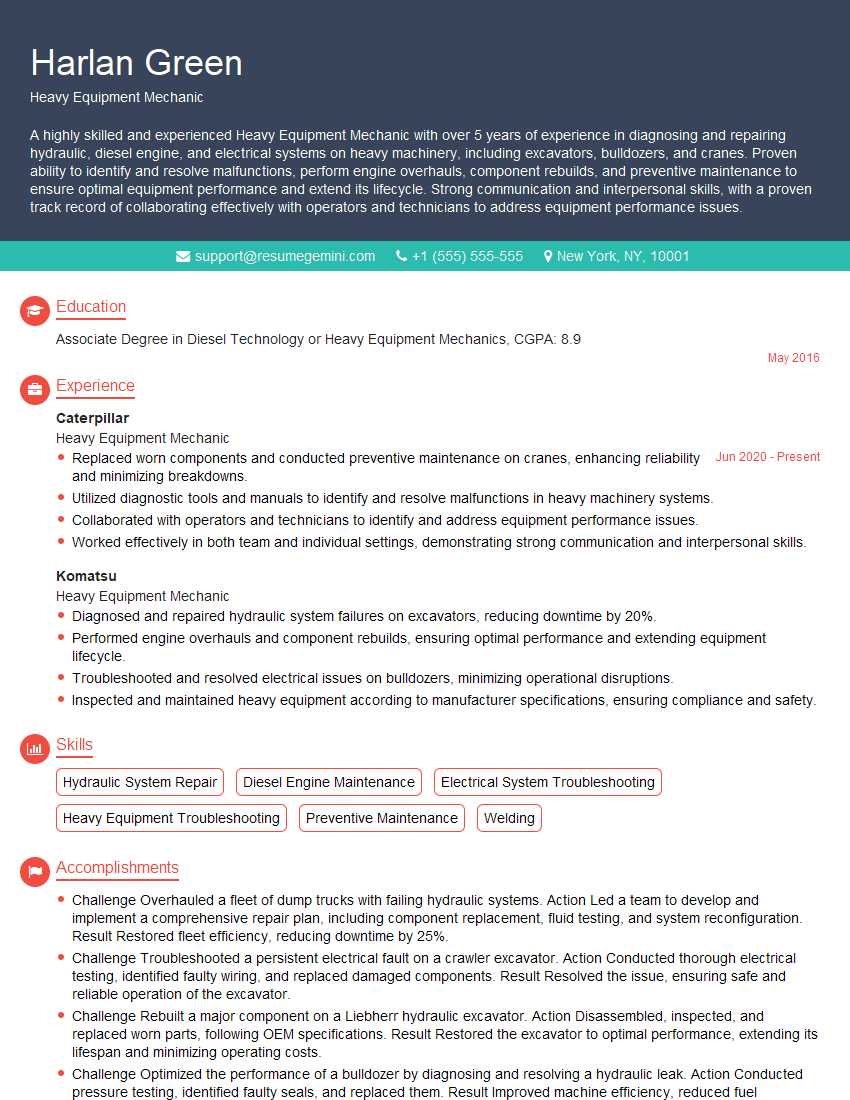
Heavy Equipment Mechanic Resume Sample
Explore more articles
Users Rating of Our Blogs
Share Your Experience
We value your feedback! Please rate our content and share your thoughts (optional).
What Readers Say About Our Blog
To the interviewgemini.com Webmaster.
Very helpful and content specific questions to help prepare me for my interview!
Thank you
To the interviewgemini.com Webmaster.
This was kind of a unique content I found around the specialized skills. Very helpful questions and good detailed answers.
Very Helpful blog, thank you Interviewgemini team.