The thought of an interview can be nerve-wracking, but the right preparation can make all the difference. Explore this comprehensive guide to Grammage Testing interview questions and gain the confidence you need to showcase your abilities and secure the role.
Questions Asked in Grammage Testing Interview
Q 1. Explain the principle behind grammage testing.
Grammage testing, also known as basis weight testing, determines the mass per unit area of paper or paperboard. Think of it like finding the density of a sheet – how much ‘stuff’ is packed into each square inch (or centimeter). The principle is straightforward: we measure the weight of a precisely defined area of the paper and then calculate the grammage based on that weight and area. This provides a crucial quality control metric, informing us about the paper’s thickness, strength, and overall quality.
Q 2. What are the different methods used for grammage testing?
Several methods exist for grammage testing, each with its own strengths and weaknesses:
- Using a Grammage Balance: This is the most common method. A calibrated balance measures the weight of a precisely cut sample (usually a specified area, like 100cm²). The grammage is then calculated by dividing the weight by the area. It’s simple, direct, and relatively inexpensive.
- Using a Grammage Meter (or Basis Weight Meter): These automated instruments measure grammage directly, often without needing a pre-cut sample. They use an optical or mechanical system to determine the paper’s weight per unit area. These are faster and often more precise, particularly for high-throughput applications.
- Using a Digital Scale and Ruler: A simple and cost-effective alternative is using a high precision digital scale and a ruler. The area is calculated manually (length x width) and the grammage is calculated similarly to the grammage balance method.
The choice of method depends on factors such as budget, throughput requirements, precision needed, and the type of paper being tested.
Q 3. Describe the procedure for calibrating a grammage testing instrument.
Calibrating a grammage testing instrument, whether a balance or a meter, is crucial for accurate measurements. Here’s a general procedure (specific instructions may vary depending on the instrument’s model):
- Check the Instrument’s Manual: Always refer to the manufacturer’s instructions for detailed calibration steps and recommended frequencies.
- Clean the Instrument: Ensure the instrument is clean and free from dust or debris that could affect the measurements.
- Use Calibration Weights: For balances, use certified calibration weights of known mass. For meters, the manufacturer will usually provide instructions on using their calibration standards.
- Follow Calibration Procedure: This usually involves placing the calibration weights (or standards) on the instrument and adjusting the instrument to display the correct values. Several readings should be taken to ensure repeatability and accuracy.
- Record Calibration Data: Document the calibration date, weights used, and any adjustments made. This is essential for maintaining traceability and complying with quality standards.
Regular calibration is critical for maintaining the accuracy of the grammage measurements and the reliability of the test results. Failure to calibrate regularly could lead to significant errors in the grammage readings, which will ultimately affect production and quality control decisions.
Q 4. What are the common sources of error in grammage testing?
Several factors can introduce errors into grammage testing:
- Improper Sample Preparation: Variations in the sample size, uneven cutting, or handling can lead to inaccurate results. Creasing or folding the paper can significantly affect the weight measurements.
- Environmental Conditions: Changes in temperature and humidity can influence the weight of the paper sample; for instance, higher humidity means more water absorbed by the sample, increasing its weight.
- Instrument Calibration: As mentioned, a poorly calibrated instrument will give inaccurate readings.
- Operator Error: Incorrect measurement technique, improper recording of data, or miscalculation can lead to errors.
- Sample Heterogeneity: If the paper itself is not uniformly distributed in density, samples taken from different areas might yield different results.
Minimizing these errors requires careful attention to detail, proper sample preparation, regular instrument calibration, and well-trained operators.
Q 5. How do you ensure the accuracy and precision of grammage measurements?
Ensuring accuracy and precision in grammage measurements requires a multifaceted approach:
- Proper Sample Selection: Choose representative samples from different parts of the paper reel or sheet to account for potential variations.
- Careful Sample Preparation: Use sharp tools to cut precise samples of the correct size. Handle the samples gently to avoid creases or damage.
- Regular Calibration: Calibrate the instrument according to the manufacturer’s instructions using certified weights or standards.
- Multiple Measurements: Take several measurements of each sample and calculate the average to reduce random errors.
- Environmental Control: Conduct tests in a controlled environment to minimize the influence of temperature and humidity.
- Operator Training: Properly train operators on the correct use of the equipment and procedures.
- Statistical Analysis: Use statistical methods to analyze the data and assess the precision and accuracy of the measurements.
By following these steps, you can significantly enhance the reliability of your grammage test results and ensure they accurately reflect the quality of the paper.
Q 6. What are the acceptable tolerances for grammage variations in different paper applications?
Acceptable grammage tolerances vary significantly depending on the paper application. There isn’t a universal standard. Tolerances are usually specified by the customer or industry standards for specific paper types.
- High-quality printing papers: May have very tight tolerances, with variations of only ± 2% or less.
- Packaging papers: Might allow for larger tolerances, perhaps ± 5% or more, because of less demanding visual quality.
- Newsprint: Tolerances are likely to be even larger, as the cost considerations outweigh the need for extremely tight control.
Always consult relevant specifications and standards for the specific application. These specifications will detail the exact tolerance range that is considered acceptable.
Q 7. How do you interpret grammage test results?
Interpreting grammage test results involves comparing the measured grammage to the target grammage and the specified tolerance. If the measured grammage falls within the acceptable tolerance range, the paper meets the quality standards. For instance, if the target grammage is 80 gsm (grams per square meter) with a tolerance of ±3 gsm, a grammage between 77 gsm and 83 gsm would be considered acceptable.
Results outside the tolerance indicate a potential problem in the manufacturing process. It could mean adjustments are needed to the paper machine settings, the pulp consistency, or other factors affecting the paper’s weight and density. Detailed analysis of the results, including the variation among samples, can pinpoint the source of the problem.
Grammage testing is a crucial part of quality control, allowing for prompt identification and correction of deviations from the required specifications, ultimately ensuring consistent product quality.
Q 8. Explain the importance of grammage testing in quality control.
Grammage testing, the measurement of paper weight per unit area (typically expressed in grams per square meter, g/m²), is paramount in quality control. It directly impacts product consistency, customer satisfaction, and ultimately, profitability. Think of it like baking a cake – if you don’t have the correct amount of ingredients, the final product won’t meet expectations. Similarly, incorrect grammage in paper production leads to issues with printability, strength, and overall quality. Consistent grammage ensures that the paper meets the specifications required for its intended use, whether it’s for printing high-resolution images, packaging delicate items, or creating durable documents.
Q 9. What are the implications of inaccurate grammage measurements?
Inaccurate grammage measurements have significant implications across the entire production chain. If the grammage is too low, the paper may be weak, tear easily, and be unsuitable for its intended application, leading to customer complaints and production stoppages. Conversely, if the grammage is too high, it could lead to increased production costs due to unnecessary material usage, as well as potential issues with processing equipment designed for specific grammage ranges. In printing, this can mean ink bleeding or poor image quality. Furthermore, inaccurate grammage measurements damage a company’s reputation for quality and reliability, making it hard to win and retain clients.
Q 10. How do you handle out-of-specification grammage results?
Handling out-of-specification grammage results requires a systematic approach. First, we verify the result through repeat measurements using different instruments and samples to rule out equipment malfunction or sampling error. If the discrepancy is confirmed, we investigate the root cause. This might involve examining the raw materials (pulp quality, moisture content), the manufacturing process (machine settings, production speed), and environmental conditions (temperature, humidity). Depending on the severity and cause, corrective actions might range from minor adjustments to machine settings to a complete overhaul of the production process. Thorough documentation of the entire process, including corrective actions and their effectiveness, is crucial for continuous improvement and preventing future occurrences. Non-conforming products may require reworking, downgrading, or disposal depending on company policy and the extent of the deviation.
Q 11. What are the different types of paper grammage testers?
There are several types of grammage testers, each with its own advantages and disadvantages. Common types include:
- Digital Grammage Testers: These instruments use digital sensors for precise measurement and often feature automatic calculations and data logging. They provide fast and accurate results.
- Analog Grammage Testers: These rely on mechanical mechanisms, often involving a balance and a precisely cut sample. They are generally more affordable but require manual calculations and are potentially less accurate.
- Portable Grammage Testers: Designed for on-site measurements, these are often smaller and lighter than laboratory instruments, sacrificing some precision for portability.
- Laboratory Grammage Testers: These are generally more sophisticated instruments, offering high precision and often automated features, ideal for quality control labs.
Q 12. What are the advantages and disadvantages of each grammage testing method?
The choice of grammage testing method depends on the required accuracy, budget, and testing environment.
- Digital Testers: Advantages include high accuracy, speed, and ease of use. Disadvantages may include higher initial cost and potential for electronic malfunctions.
- Analog Testers: Advantages include low cost and simplicity. Disadvantages include lower accuracy, slower measurement times, and potential for operator error.
- Portable Testers: Advantages include convenience and portability. Disadvantages include potentially lower accuracy compared to laboratory instruments.
- Laboratory Testers: Advantages include high accuracy, automation capabilities, and suitability for large sample sizes. Disadvantages include higher cost and less portability.
Q 13. How do environmental factors affect grammage measurements?
Environmental factors significantly influence grammage measurements. Temperature and humidity affect the moisture content of paper, altering its weight. High humidity can lead to increased moisture absorption, resulting in higher apparent grammage readings, while low humidity can cause the opposite effect. Temperature changes also slightly affect paper dimensions, which in turn impacts the area measurement in grammage calculation. To mitigate these effects, it’s essential to control the testing environment and use a climate-controlled room or employ temperature and humidity compensation features if available on the testing equipment. Proper sample conditioning before testing is crucial for obtaining accurate and reliable results.
Q 14. Describe your experience with different grammage testing instruments.
Throughout my career, I’ve worked extensively with various grammage testing instruments, from basic analog scales to sophisticated digital testers with built-in data analysis capabilities. My experience includes using both portable and laboratory-based instruments from different manufacturers, including [mention specific brands or models if comfortable, otherwise omit this section], allowing me to compare their performance and identify best practices for each. I’m proficient in calibrating and maintaining these instruments according to manufacturer specifications and regulatory standards. I’ve also developed expertise in troubleshooting equipment malfunctions and resolving issues related to inconsistent measurements. Furthermore, I have significant experience with data analysis from grammage testing, using statistical methods to identify trends, predict potential problems, and implement process improvements in paper manufacturing.
Q 15. What is the role of sample preparation in grammage testing?
Proper sample preparation is crucial for accurate grammage testing. It ensures the results represent the true material properties and aren’t skewed by external factors. This involves several key steps:
- Representative Sampling: Selecting samples that accurately reflect the entire batch. Imagine testing a roll of paper – you wouldn’t just take a sample from one end! We use statistical methods to ensure a representative selection from different areas of the production run.
- Conditioning: Bringing the samples to a standard temperature and humidity. This is crucial because moisture content significantly affects weight. We typically condition samples according to ISO 187 standards, ensuring consistency across tests.
- Handling and Storage: Avoiding damage or contamination to the samples. This involves using clean gloves, protecting samples from dust and moisture, and employing proper storage techniques to prevent changes in grammage before testing.
For instance, if we’re testing paper for a printing company, improper conditioning could lead to inaccurate grammage readings, resulting in incorrect ink absorption and print quality issues.
Career Expert Tips:
- Ace those interviews! Prepare effectively by reviewing the Top 50 Most Common Interview Questions on ResumeGemini.
- Navigate your job search with confidence! Explore a wide range of Career Tips on ResumeGemini. Learn about common challenges and recommendations to overcome them.
- Craft the perfect resume! Master the Art of Resume Writing with ResumeGemini’s guide. Showcase your unique qualifications and achievements effectively.
- Don’t miss out on holiday savings! Build your dream resume with ResumeGemini’s ATS optimized templates.
Q 16. How do you determine the appropriate number of samples for grammage testing?
Determining the appropriate sample size depends on factors such as the desired precision, material variability, and the cost of testing. A larger sample size generally leads to more precise results but increases testing time and expenses. Statistical methods help determine the optimal number. We often use:
- Statistical Process Control (SPC) Charts: To monitor grammage variation throughout the production process. These charts help us determine the inherent variability of the material, informing the sample size needed for a specified confidence level.
- Sample Size Calculations: Based on desired confidence intervals and acceptable error margins. We use formulas and software to calculate the minimum number of samples needed to meet these criteria.
For example, testing a highly consistent material like a standard grade of paper might require fewer samples compared to a highly variable material like handmade paper. The choice always involves balancing accuracy with practicality.
Q 17. How do you ensure the traceability of grammage measurements?
Traceability in grammage testing is essential to ensure the integrity and validity of the results. This involves a clear chain of custody from sample collection to final report. Key aspects include:
- Unique Sample Identification: Each sample is uniquely identified with a number or code, linked to its origin and testing parameters.
- Detailed Records: Maintaining comprehensive records of each step, including sample location, date and time of collection, conditioning details, testing equipment used, and operator information.
- Calibration Records: Ensuring the testing equipment is calibrated regularly and that calibration certificates are readily available. This is vital to proving the accuracy of our measurements.
- Data Management System: Utilizing a robust data management system to store and retrieve test data securely. This usually includes software for logging, tracking, and analyzing the results.
Think of it like a detective case: every piece of evidence needs a clear chain of custody to be admissible in court. Similarly, a traceable grammage test ensures the reliability of our findings.
Q 18. What are the relevant industry standards for grammage testing?
Several industry standards govern grammage testing, depending on the material being tested. Key standards include:
- ISO 536: This standard specifies methods for determining the mass per unit area (grammage) of paper, board, and pulp.
- TAPPI T 410 om-14: This TAPPI (Technical Association of the Pulp and Paper Industry) standard provides procedures for grammage determination in the paper and paperboard industry.
- ASTM D 646: This ASTM (American Society for Testing and Materials) standard covers similar testing methods for paper and paperboard.
Adherence to these standards ensures consistency and comparability of grammage test results across different laboratories and manufacturers. Using these established protocols ensures that everyone is ‘speaking the same language’ in quality control and compliance.
Q 19. How do you troubleshoot common problems encountered during grammage testing?
Troubleshooting grammage testing problems involves a systematic approach. Common issues and solutions include:
- Inconsistent Results: Check for proper sample preparation, equipment calibration, and operator technique. Retest samples to identify random error. Examine the SPC charts to determine if the variation is due to systematic issues in the production process.
- Equipment Malfunction: Regular calibration and maintenance of the grammage testing instrument are key. If problems persist, consult the equipment manual or contact the manufacturer for technical support.
- Sample Contamination: Ensure samples are handled and stored properly to prevent contamination. For example, water absorption from moisture in the air can alter the grammage.
- Incorrect Calculations: Double-check all calculations to avoid mathematical errors in reporting the grammage.
A methodical approach, careful attention to detail, and familiarity with the equipment are key to effective troubleshooting. I’ve found that regularly reviewing the standard operating procedures and maintaining detailed logs help minimize problems.
Q 20. Explain your experience with data analysis related to grammage testing.
My experience with grammage data analysis involves using various statistical methods to interpret test results. This includes:
- Descriptive Statistics: Calculating mean, median, standard deviation, and range to summarize the grammage data. This provides a basic understanding of the central tendency and variability of the grammage.
- Control Charts: Implementing SPC charts (like X-bar and R charts) to monitor grammage variation over time and identify any trends or patterns indicating potential issues in the manufacturing process.
- Hypothesis Testing: Utilizing statistical tests (t-tests, ANOVA) to compare grammage values between different batches, materials, or manufacturing processes.
- Regression Analysis: Investigating relationships between grammage and other process parameters (e.g., moisture content, machine speed). This can help optimize the manufacturing process for consistent grammage.
For example, I once used regression analysis to identify a correlation between machine speed and grammage variation in a paper production line. This analysis led to adjustments in the machine settings, resulting in a significant reduction in grammage variability and improved product quality.
Q 21. How do you report grammage test results?
Grammage test results are reported in a clear, concise, and standardized format. This typically includes:
- Identification Information: Sample identification number, material type, date of testing, and testing laboratory.
- Testing Method: Reference to the specific standard (e.g., ISO 536) used for testing.
- Grammage Values: Mean grammage, standard deviation, and range of the measured grammage values.
- Number of Samples Tested: Clearly stating how many samples were used in the determination.
- Calibration Data: Reference to the calibration of the testing instruments.
- Analyst’s Signature and Date: To ensure accountability.
The report is often presented in a tabular format, making it easy to read and interpret. This standardized format ensures clarity and helps to avoid miscommunication about the results of the testing.
Q 22. Describe your experience working with different types of paper.
My experience encompasses a wide range of paper types, from lightweight printing papers like those used for brochures and flyers (typically around 60-100 gsm) to heavier-weight board stocks used in packaging (often exceeding 300 gsm). I’ve worked extensively with coated papers, uncoated papers, recycled papers, and specialty papers like those with textured surfaces or specific color characteristics. Each paper type presents unique challenges in grammage testing due to variations in fiber composition, density, and surface treatments. For instance, coated papers require extra care to avoid damaging the delicate coating during sample preparation. Understanding these variations is critical for obtaining accurate and reliable results.
I’ve also worked with different paper formats – rolls, sheets, and even unusual shapes – requiring adaptation of standard testing procedures to ensure accurate measurements regardless of the presentation of the material. This adaptable approach has been key to my success across various projects.
Q 23. How do you maintain grammage testing equipment?
Maintaining grammage testing equipment is crucial for ensuring accurate and reliable results. This involves a multi-faceted approach.
- Regular Calibration: We use certified weights and regularly calibrate our scales to maintain their accuracy, following the manufacturer’s guidelines and maintaining meticulous calibration logs.
- Cleaning and Maintenance: The scales and any associated cutting tools are cleaned regularly to prevent dust and debris from affecting measurements. This involves gentle cleaning with appropriate solvents and ensuring that all components are properly dried before use.
- Preventive Maintenance: We perform scheduled preventative maintenance checks, such as inspecting the weighing mechanism for wear and tear, checking for any loose connections, and ensuring the smooth operation of all moving parts. This proactive approach helps prevent unexpected downtime and ensures the longevity of the equipment.
- Proper Storage: When not in use, the equipment is stored in a clean, dry environment, protected from extreme temperatures and humidity, which can affect calibration and performance.
Documentation of all maintenance activities is crucial for traceability and compliance with quality standards.
Q 24. What are the safety precautions you take during grammage testing?
Safety is paramount during grammage testing. We adhere to a strict set of safety protocols:
- Sharp Objects: When using cutting instruments to obtain samples, we always use appropriate safety precautions, including wearing cut-resistant gloves and using sharp cutting tools carefully to minimize the risk of injury.
- Electrical Safety: If the equipment uses electricity, we ensure that all electrical connections are secure and the equipment is properly grounded to avoid electric shock. We also follow all relevant electrical safety regulations.
- Proper Handling of Materials: Depending on the paper type, there might be specific safety requirements for handling, such as wearing appropriate personal protective equipment (PPE) if dealing with chemicals or potentially irritating materials.
- Ergonomics: We maintain proper posture and utilize ergonomic work practices to prevent strain and fatigue during prolonged testing sessions.
We also regularly review safety procedures and conduct safety training to ensure everyone is aware of and adheres to these protocols.
Q 25. How do you ensure the integrity of the grammage testing process?
Ensuring the integrity of the grammage testing process involves several key steps:
- Representative Sampling: It’s crucial to obtain representative samples from the paper roll or stack. We use statistically sound sampling techniques to ensure that the tested samples accurately reflect the overall grammage of the entire batch.
- Accurate Weighing: We use calibrated scales and follow precise weighing procedures to minimize errors. This includes accounting for the weight of any containers used and ensuring the samples are properly conditioned (adjusted to standard temperature and humidity) before weighing.
- Precise Measurement of Area: Accurate determination of the sample area is vital. We use precise measuring tools and appropriate techniques to measure the dimensions of the sample accurately, ensuring consistency and minimizing measurement error.
- Standard Operating Procedures (SOPs): We strictly adhere to standardized operating procedures that detail each step of the testing process. This ensures consistency across all tests and helps prevent variations in results.
- Quality Control: We regularly perform quality control checks, including regular calibration of our equipment and running control samples to verify the accuracy of the testing process.
By consistently following these steps, we ensure the reliability and validity of our grammage testing results.
Q 26. Explain your experience in implementing grammage testing procedures.
I’ve been involved in implementing grammage testing procedures in various settings, from small-scale quality control labs to larger production facilities. My role typically involves:
- Developing and Implementing SOPs: I’ve created and implemented detailed SOPs that outline the entire grammage testing process, from sample preparation to data analysis and reporting. These SOPs are designed to be clear, concise, and easy to follow by all personnel involved.
- Training Personnel: I’ve trained laboratory technicians and quality control personnel on the proper techniques for grammage testing, ensuring consistent application of procedures across the team.
- Equipment Selection and Procurement: I’ve assisted in selecting and procuring appropriate grammage testing equipment, taking into consideration factors like accuracy, precision, and budget constraints.
- Data Management: I’ve implemented robust data management systems to track and analyze grammage testing results, allowing for efficient identification of trends and potential problems.
- Process Optimization: I’ve worked on optimizing grammage testing procedures to increase efficiency, reduce costs, and improve accuracy.
Throughout these implementations, I’ve consistently focused on ensuring compliance with relevant industry standards and regulations.
Q 27. How do you stay updated with the latest advancements in grammage testing technology?
Staying updated in the field of grammage testing requires a multi-pronged approach.
- Industry Publications: I regularly read industry publications and journals to stay abreast of the latest advancements in testing techniques and technologies.
- Conferences and Workshops: Attending relevant conferences and workshops allows for networking with other professionals and learning about the latest innovations firsthand.
- Manufacturer Websites and Training: I keep informed about new equipment releases and software updates from manufacturers, often participating in their training programs.
- Professional Organizations: Membership in relevant professional organizations provides access to resources, networking opportunities, and updates on industry best practices.
- Online Resources: I utilize online resources, such as reputable websites and online forums, to stay informed about emerging trends and developments in the field.
This commitment to continuous learning is essential for maintaining a high level of expertise in grammage testing.
Q 28. Describe a situation where you had to solve a problem related to grammage testing.
During a large-scale packaging project, we experienced inconsistencies in grammage readings for a specific cardboard stock. The initial results were significantly lower than the expected value, potentially impacting the structural integrity of the packaging.
To troubleshoot this, I systematically investigated all possible sources of error:
- Equipment Calibration: We re-calibrated our scales and verified their accuracy using certified weights.
- Sample Preparation: We reviewed our sample preparation procedures, paying close attention to the method of cutting and handling samples to ensure consistency. We discovered that slight variations in cutting techniques were leading to inconsistencies in the area measured for the grammage calculation.
- Environmental Factors: We checked the temperature and humidity levels in the laboratory to confirm they were within the acceptable range for testing.
- Supplier Communication: We contacted the paper supplier to inquire about any potential variations in the production process of this specific cardboard stock.
By meticulously analyzing each step of the process, we identified the issue as inconsistent sample preparation and implemented a revised, standardized method for cutting and handling samples. This corrected the discrepancies in the grammage readings and ensured the integrity of the project. This situation highlighted the importance of rigorous attention to detail and methodical troubleshooting when faced with unexpected results in grammage testing.
Key Topics to Learn for Grammage Testing Interview
- Understanding Grammage: Defining grammage, its units (gsm), and its significance in various industries (paper, textiles, etc.).
- Measurement Techniques: Exploring different methods for grammage testing, including hand-held devices, laboratory instruments, and their respective accuracies and limitations.
- Calibration and Quality Control: Understanding the importance of calibration procedures, maintaining instrument accuracy, and interpreting test results to ensure quality control.
- Data Analysis and Interpretation: Learning to analyze grammage data, identify trends, and troubleshoot inconsistencies in test results. This includes understanding statistical methods relevant to grammage analysis.
- Practical Applications: Exploring real-world applications of grammage testing across different sectors, understanding how grammage impacts product quality, cost, and performance.
- Troubleshooting and Problem Solving: Developing skills to identify and resolve common issues encountered during grammage testing, such as instrument malfunctions or sample inconsistencies.
- Industry Standards and Regulations: Familiarizing yourself with relevant industry standards and regulations related to grammage testing and reporting procedures.
Next Steps
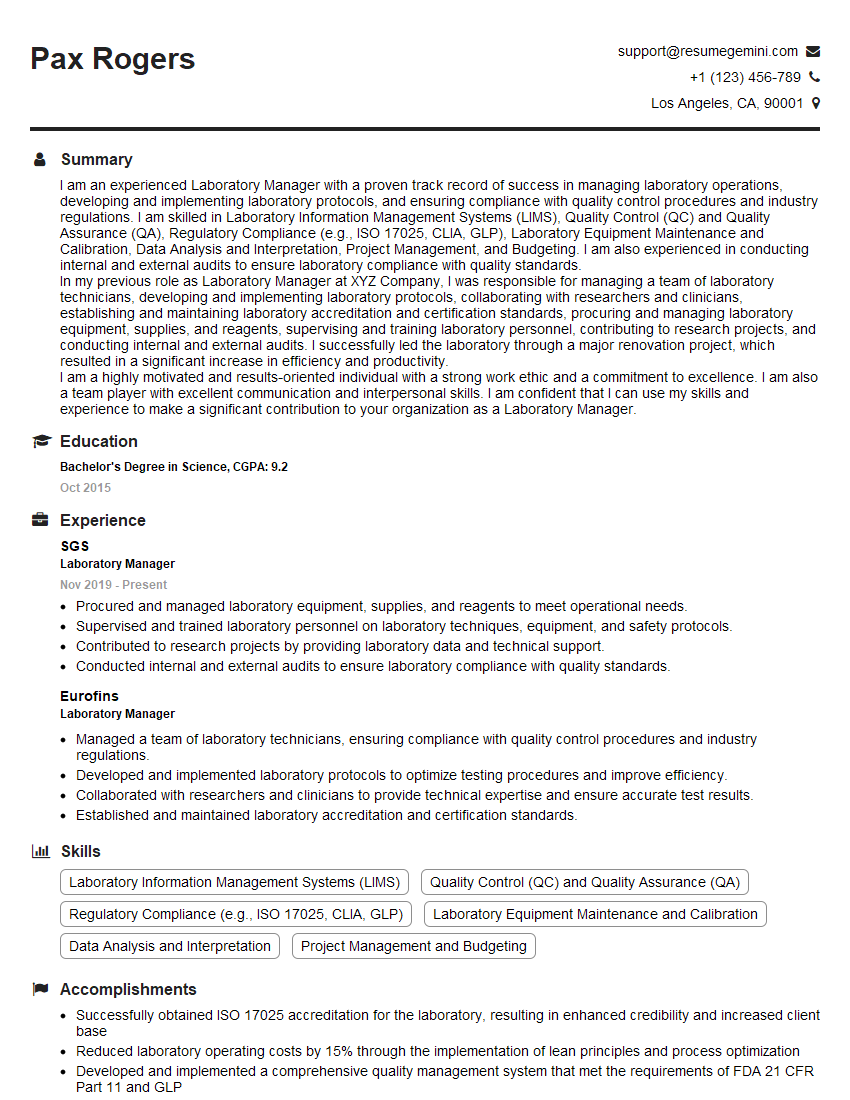
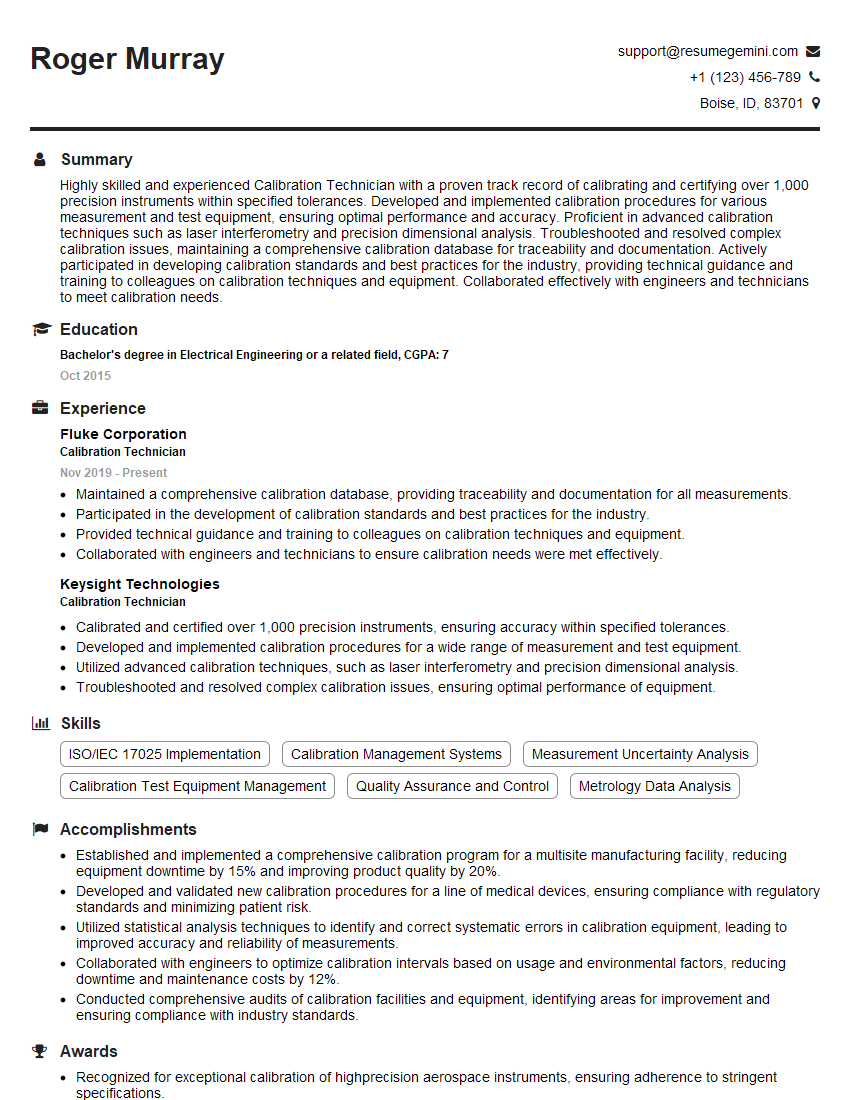
Mastering grammage testing opens doors to exciting opportunities in quality control, manufacturing, and research within diverse industries. A strong understanding of this critical skill significantly enhances your career prospects. To maximize your job search success, create an ATS-friendly resume that highlights your skills and experience effectively. ResumeGemini is a trusted resource that can help you build a professional and impactful resume. We provide examples of resumes tailored specifically to Grammage Testing to give you a head start. Take advantage of these resources to present yourself as the ideal candidate.




Explore more articles
Users Rating of Our Blogs
Share Your Experience
We value your feedback! Please rate our content and share your thoughts (optional).
What Readers Say About Our Blog
To the interviewgemini.com Webmaster.
Very helpful and content specific questions to help prepare me for my interview!
Thank you
To the interviewgemini.com Webmaster.
This was kind of a unique content I found around the specialized skills. Very helpful questions and good detailed answers.
Very Helpful blog, thank you Interviewgemini team.