Cracking a skill-specific interview, like one for Group Facilitation and Counseling, requires understanding the nuances of the role. In this blog, we present the questions you’re most likely to encounter, along with insights into how to answer them effectively. Let’s ensure you’re ready to make a strong impression.
Questions Asked in Group Facilitation and Counseling Interview
Q 1. Describe your experience designing and implementing a group therapy curriculum.
Designing and implementing a group therapy curriculum requires a structured approach that considers the target population’s needs, the therapeutic goals, and the chosen theoretical framework. I begin by defining clear learning objectives, aligned with the group’s purpose. For example, if the group focuses on anxiety management, objectives might include identifying personal triggers, practicing relaxation techniques, and developing coping mechanisms. Next, I develop a session-by-session plan, outlining activities, exercises, and discussions. This involves selecting evidence-based techniques – cognitive behavioral therapy (CBT), mindfulness practices, or psychodynamic approaches, depending on the group’s needs.
For a group focused on grief and loss, sessions might start with psychoeducation about the grieving process, followed by expressive arts activities like journaling or painting to facilitate emotional processing. Later sessions might focus on building support networks and developing strategies for coping with grief triggers. Finally, evaluation is critical. I incorporate feedback mechanisms throughout the curriculum, using pre- and post-session questionnaires or informal check-ins to assess progress and make adjustments as needed. This iterative process ensures the curriculum remains relevant and effective for the group.
Q 2. Explain your approach to managing disruptive behavior within a group setting.
Managing disruptive behavior in a group setting requires a proactive and sensitive approach. My strategy focuses on prevention, early intervention, and addressing the underlying cause of the disruption. Prevention begins with establishing clear group guidelines and norms at the outset, discussed collaboratively with group members. These guidelines address respectful communication, active listening, and appropriate behavior. Early intervention involves addressing minor disruptions promptly and privately, using gentle redirection or reminding the individual of the established norms. For example, if someone monopolizes the conversation, I might gently guide them back to the group by acknowledging their point and inviting others to share their perspectives.
If the disruptive behavior persists or escalates, I address it directly, but empathetically, in the group setting, exploring the reasons behind the behavior. This might involve exploring underlying anxieties or unmet needs. Sometimes, individual sessions may be needed to address deep-seated issues. Ultimately, the goal is to support the individual while upholding the group’s therapeutic space. Ignoring disruptive behavior undermines the group’s safety and progress. Conversely, harshly reprimanding a member can damage trust and create further disruptions. A balanced, understanding, yet firm approach is key.
Q 3. How do you handle conflicts between group members?
Conflict is inevitable in group settings, but it can also be a valuable opportunity for growth and learning. My approach to handling conflicts involves facilitating constructive dialogue and problem-solving rather than imposing solutions. I start by creating a safe space for expressing feelings, using active listening to understand each member’s perspective. This often involves using techniques like paraphrasing and reflecting feelings to ensure everyone feels heard and validated. Once all viewpoints are understood, I guide the members towards finding common ground and mutually acceptable solutions. This might involve brainstorming, compromise, and negotiation.
Sometimes, the conflict highlights a deeper underlying issue within the group dynamic. For instance, a conflict might reflect power imbalances or unresolved anxieties among group members. In such cases, I address the systemic issue rather than focusing solely on the immediate conflict. My role is less to mediate a resolution and more to facilitate a process where members can collaboratively reach understanding and resolution themselves, while I ensure the group’s safety and therapeutic process.
Q 4. What techniques do you use to build rapport and trust within a group?
Building rapport and trust is foundational to a successful group experience. I achieve this through several strategies. Firstly, creating a safe and confidential environment is paramount. This means clearly outlining ground rules regarding confidentiality (while acknowledging limitations), respect, and empathy from the outset. Secondly, I utilize structured icebreaker activities in the initial sessions to foster familiarity and connection among members. These might include simple self-introductions or collaborative activities that require interaction.
Furthermore, I actively demonstrate empathy and genuineness in my interactions with group members. This includes actively listening, validating their feelings, and mirroring their emotions (when appropriate). I model respectful communication, both in my interactions with the group and in how I respond to conflict. I also encourage members to share their experiences, vulnerabilities, and struggles, creating a sense of shared journey and mutual support. Finally, consistent attendance and reliability on my part reinforce trust and demonstrates my commitment to the group’s success.
Q 5. Describe your process for assessing group dynamics and member needs.
Assessing group dynamics and member needs is an ongoing process that starts even before the group begins. Initial assessments involve reviewing referrals, conducting individual interviews (if possible), and gathering relevant background information. Once the group starts, I observe group interactions, noting communication patterns, power dynamics, and any emerging cliques or conflicts. Nonverbal cues are also important indicators of group dynamics.
Member needs are assessed through direct observation, active listening during group sessions, and through individual check-ins when appropriate. I use tools like questionnaires or informal feedback sessions to understand individual goals and experiences. Throughout the group’s duration, I continuously monitor and adapt my facilitation style based on these observations. For example, if I notice a dominant member overshadowing others, I might introduce structured exercises that promote equal participation. This continuous assessment allows for timely adjustments to the group’s process, enhancing its effectiveness and meeting the diverse needs of the participants.
Q 6. How do you ensure confidentiality and ethical practices in a group setting?
Confidentiality and ethical practices are paramount in group therapy. From the first session, I clearly explain the limits of confidentiality, emphasizing what information will be kept confidential and what situations might necessitate disclosure (e.g., mandated reporting of child abuse or threats of harm). I obtain informed consent, ensuring all members understand the group’s purpose, structure, and ethical guidelines. Maintaining strict adherence to professional ethical codes is essential.
I create a culture of trust by emphasizing the importance of respecting each member’s privacy and by modeling respectful communication myself. This includes refraining from sharing personal information outside the group and avoiding gossiping or making judgements. I also create physical space that respects privacy, for example, ensuring physical distance and limited access to group discussions outside session times. Regularly reviewing and reinforcing ethical guidelines helps to reinforce the importance of these principles throughout the group’s duration.
Q 7. How do you adapt your facilitation style to different group needs and demographics?
Adapting my facilitation style to different group needs and demographics is crucial for effective group work. This involves understanding the specific cultural backgrounds, communication styles, and life experiences of the group members. For example, a group comprised primarily of adolescents would require a different approach than a group of older adults dealing with chronic illness. I might employ different communication styles, activities, and pacing based on the group’s age range, cultural background, or other specific factors.
With adolescents, I might use more interactive and creative activities, while with older adults I may provide more time for reflection and storytelling. When working with diverse cultural backgrounds, I adjust the language and approach to ensure understanding and inclusivity. I also tailor the group’s structure and activities based on the group’s stated goals and the identified needs of the members. Flexibility and responsiveness are key, allowing me to adapt my style to best suit the group’s dynamic and achieve its objectives.
Q 8. What are your strategies for promoting active participation from all group members?
Promoting active participation in a group setting is crucial for its success. My strategy involves creating a safe and inclusive environment where everyone feels comfortable contributing. This begins with establishing clear ground rules emphasizing respect, confidentiality, and active listening. I then use a variety of techniques to encourage participation.
- Round-robin introductions: A simple, yet effective way to get everyone talking and feeling heard from the start.
- Structured activities: Icebreakers, small group discussions, and role-playing can draw out quieter members and provide opportunities for diverse contributions.
- Open-ended questions: Instead of yes/no questions, I use prompts that encourage reflection and personal sharing, like “What are your initial thoughts on this topic?” or “Can you share an example from your own experience?”
- Non-verbal cues: I pay attention to body language and make sure to make eye contact with everyone, giving equal opportunities to speak.
- Positive reinforcement: Acknowledging and appreciating contributions, both big and small, builds confidence and encourages further participation.
- Addressing dominance: Gently redirecting overly dominant members, ensuring everyone has a chance to speak, and modeling respectful communication.
For example, in a group focusing on stress management, I might use a guided meditation followed by a small group discussion to encourage sharing of experiences and coping mechanisms. This approach facilitates a more comfortable and engaging atmosphere for even the most reserved individuals.
Q 9. How do you handle a member who is resistant to group participation?
Resistance to group participation can stem from various factors, including fear, shyness, past negative experiences, or mistrust. My approach is patient, empathetic, and individualized. I avoid pressure and instead focus on building rapport and trust.
- Understanding the resistance: I begin by attempting to understand the reason for the resistance through private conversation. Is it fear of judgment, discomfort with sharing, or something else?
- Respecting boundaries: I always respect a member’s decision not to participate at a particular moment. Pressure can be counterproductive.
- Gradual engagement: I might start with simple tasks, like answering a question or contributing to a brainstorming session, to ease them into the group dynamic.
- Pairing with a supportive member: If appropriate, I might pair the resistant member with a more outgoing individual to foster a sense of belonging and facilitate interaction.
- Creating a safe space: I consistently reinforce the group’s confidentiality and focus on the group norms of respect and empathy. I model this behavior myself.
- Private conversation: In some cases, a private conversation is helpful to build trust and address concerns. I might ask the resistant member if they have any issues that are preventing full participation.
For instance, if a member is consistently silent, I might privately check in with them, asking if they are comfortable, if there’s anything I can do to make them feel more included, and if they have any anxieties related to the group process. My aim is to support their participation, not force it.
Q 10. Describe your experience with different group therapy models (e.g., psychodynamic, cognitive-behavioral).
My experience encompasses various group therapy models, each offering unique perspectives and approaches.
- Psychodynamic Group Therapy: I’ve facilitated groups using a psychodynamic approach, focusing on exploring unconscious patterns, past experiences, and interpersonal dynamics. The emphasis is on understanding how past relationships and unresolved conflicts affect present behavior and relationships within the group. This approach often involves interpretation of transference and countertransference dynamics.
- Cognitive-Behavioral Group Therapy (CBT): In CBT groups, I’ve utilized techniques like cognitive restructuring and behavioral experiments to help members identify and challenge negative thought patterns and develop more adaptive coping mechanisms. The focus is on the present and how thoughts, feelings, and behaviors interact. I often incorporate homework assignments and skill-building exercises.
- Solution-Focused Brief Therapy (SFBT): I’ve also used solution-focused approaches in group settings, which emphasize identifying strengths, setting achievable goals, and collaboratively developing strategies to reach those goals. The focus is on future solutions rather than dwelling on the past.
In practice, I often integrate elements from different models depending on the group’s needs and the members’ presenting issues. For example, in a group dealing with anxiety, I might incorporate CBT techniques for managing anxiety symptoms while also using a psychodynamic lens to explore underlying emotional issues contributing to the anxiety.
Q 11. Explain your understanding of group development stages.
Understanding group development stages is crucial for effective facilitation. Tuckman’s stages – forming, storming, norming, performing, and adjourning – provide a useful framework, although the process is rarely linear.
- Forming: Members are cautious and polite, focusing on getting to know each other and establishing the group’s purpose. The facilitator’s role is to build trust and set ground rules.
- Storming: Conflict and tension emerge as members challenge the group’s structure, roles, and leadership. The facilitator helps navigate these conflicts, encouraging open communication and collaboration.
- Norming: The group establishes shared norms and expectations, fostering a sense of cohesion and collaboration. The facilitator helps reinforce positive behaviors and address any lingering conflicts.
- Performing: Members work effectively together, achieving the group’s goals, and displaying high levels of trust and interdependence. The facilitator acts as a supportive guide, facilitating the group’s productivity.
- Adjourning: The group disbands, with members experiencing a range of emotions from sadness to relief. The facilitator helps members process these feelings and celebrate their achievements.
Recognizing these stages allows me to adapt my facilitation style and anticipate potential challenges. For example, during the storming phase, I might use structured exercises to help members understand and resolve conflicts constructively. During the performing phase, I would focus on maintaining momentum and celebrating successes.
Q 12. How do you measure the effectiveness of your group facilitation?
Measuring the effectiveness of group facilitation involves a multifaceted approach, combining quantitative and qualitative data.
- Pre- and post-intervention assessments: Standardized questionnaires or scales can assess changes in members’ symptoms, attitudes, or behaviors. For instance, a depression inventory could be administered before and after the group to gauge improvements in mood and functioning.
- Process evaluations: Regular feedback sessions, both formal and informal, allow members to share their experiences and perspectives. This can provide valuable insights into the group’s dynamics and the effectiveness of the facilitation strategies.
- Observation and recording of group sessions: Observing member interactions and recording key themes and discussions provides a richer understanding of the group’s process.
- Member satisfaction surveys: These can measure satisfaction with the group’s overall structure, content, and the facilitator’s role. Open-ended questions can provide detailed feedback.
- Tracking attendance and engagement: Consistent attendance and active participation suggest engagement and satisfaction with the group.
Combining these methods allows for a comprehensive evaluation of the group’s effectiveness. For instance, a combination of pre- and post-intervention anxiety scores, member feedback on the helpfulness of specific exercises, and observations of group interactions can provide a holistic picture of success.
Q 13. How do you address countertransference in a group therapy setting?
Countertransference, the therapist’s unconscious emotional reactions to a client, can be particularly complex in a group setting. Addressing it requires self-awareness, supervision, and a commitment to maintaining professional boundaries.
- Self-reflection and supervision: Regular self-reflection and supervision are crucial to identify potential countertransference reactions. This involves examining my own emotional responses to members and exploring how these responses might be influencing my interactions.
- Maintaining professional boundaries: Clear boundaries are essential. This includes avoiding dual relationships, maintaining confidentiality, and refraining from becoming overly involved in members’ lives.
- Seeking consultation: If I identify a potential countertransference issue that I’m struggling to manage, I seek consultation from a colleague or supervisor.
- Focusing on the group process: Paying close attention to the group’s dynamics, focusing on group interactions, and facilitating healthy communication within the group can mitigate potential countertransference influences.
- Using supervision to understand personal reactions: I make use of supervision to understand why I may react in particular ways to some group members.
For example, if I find myself becoming overly protective of a particular member, I might reflect on this reaction in supervision to identify the possible source of my protective feelings and ensure that my actions remain appropriate and do not compromise the group’s overall functioning.
Q 14. What are your strategies for managing difficult group dynamics, such as power struggles or cliques?
Managing difficult group dynamics, such as power struggles or cliques, requires proactive and skillful intervention.
- Establishing clear group norms: From the beginning, establishing norms of respect, equality, and active listening can help prevent these dynamics from developing. This includes explicitly addressing behaviors such as interrupting or dominating conversations.
- Addressing power imbalances: If a power struggle emerges, I address it directly, using a collaborative and non-judgmental approach. This might involve facilitating a discussion about the power dynamic itself and encouraging the members involved to find ways to share leadership responsibilities more equally.
- Facilitating inclusive activities: Activities designed to promote interaction among all members, such as small group discussions or pair exercises, can help break down cliques and foster inclusivity.
- Modeling respectful communication: I consistently model respectful communication and conflict resolution skills, demonstrating how to address disagreements constructively.
- Private conversations: In some cases, private conversations with individual members are necessary to address specific concerns or behaviors that are contributing to the difficult dynamic. This allows for addressing these issues more directly and sensitively.
For example, if a clique is consistently excluding other members, I might facilitate a group discussion about the importance of inclusivity and encourage members to reflect on how their behavior is affecting others. I might also introduce activities designed to pair members from different subgroups and foster cross-group interaction.
Q 15. Describe a time you had to adapt your facilitation plan due to unexpected circumstances.
Adaptability is crucial in group facilitation. A rigid plan rarely survives contact with reality! For example, I was facilitating a group focused on stress management. We were midway through a relaxation exercise when a participant experienced a severe panic attack. My pre-planned agenda immediately became secondary.
My adaptation involved several steps: First, I prioritized the immediate needs of the participant, providing a safe and supportive space, and encouraging them to regulate their breathing. I then consulted with the group about whether they felt comfortable continuing the planned exercise or if they preferred a different direction. The group unanimously opted to shift focus, and we spent the remaining time discussing coping mechanisms for panic attacks, drawing on their collective experiences and knowledge. This unexpected turn actually enriched the group’s learning experience, emphasizing the importance of flexibility and peer support in managing crises.
This experience reinforced the importance of having alternative strategies ready. I now include contingency plans in my facilitation plans, anticipating potential disruptions and outlining alternative activities or approaches. This ensures I can navigate unforeseen circumstances smoothly and effectively, keeping the group engaged and safe.
Career Expert Tips:
- Ace those interviews! Prepare effectively by reviewing the Top 50 Most Common Interview Questions on ResumeGemini.
- Navigate your job search with confidence! Explore a wide range of Career Tips on ResumeGemini. Learn about common challenges and recommendations to overcome them.
- Craft the perfect resume! Master the Art of Resume Writing with ResumeGemini’s guide. Showcase your unique qualifications and achievements effectively.
- Don’t miss out on holiday savings! Build your dream resume with ResumeGemini’s ATS optimized templates.
Q 16. How do you incorporate cultural sensitivity into your group facilitation practice?
Cultural sensitivity is paramount in group facilitation. It’s about recognizing and respecting the diverse backgrounds, beliefs, and communication styles of participants. It’s not just about acknowledging differences; it’s about understanding how these differences might influence group dynamics and interaction.
- Pre-group assessment: I begin by gathering information about the participants’ cultural backgrounds, ensuring I understand any potential sensitivities or communication preferences.
- Language and communication: I strive to use inclusive language, avoiding jargon or expressions that might be unfamiliar or offensive. I adapt my communication style as needed to ensure everyone feels heard and understood.
- Group norms: We collaboratively establish ground rules that promote respect for diverse perspectives and experiences. This ensures that all participants feel safe expressing themselves.
- Cultural consultation: When working with groups from significantly different cultural backgrounds than my own, I seek guidance from cultural experts or community leaders to ensure my approach is culturally appropriate and sensitive.
For instance, in a group with participants from diverse religious backgrounds, I’d be mindful of incorporating activities and discussions that don’t inadvertently clash with their beliefs. This could involve choosing activities that avoid themes or symbols that may be religiously sensitive.
Q 17. What are your strategies for maintaining boundaries in a group therapy setting?
Maintaining boundaries in group therapy is crucial for both the facilitator and the participants. It involves establishing clear guidelines for behavior and interaction to create a safe and productive environment.
- Confidentiality: I clearly explain the limits of confidentiality, including situations where I might be legally obligated to report certain information. I emphasize that while group members are encouraged to share openly, they should avoid revealing highly sensitive or personally identifying information about themselves or others.
- Professional roles: I maintain a professional distance, avoiding dual relationships or personal disclosures that could compromise the therapeutic process. My role is to facilitate, not to become overly involved in participants’ personal lives.
- Time limits: Sessions are structured with defined start and end times, and I enforce these limits consistently to respect everyone’s time and ensure the group remains focused.
- Addressing boundary violations: If a boundary is violated, I address it immediately and directly, reminding the group of established guidelines. If necessary, I may need to address the issue with an individual participant privately.
Think of boundaries as the guardrails on a highway. They provide structure, safety, and prevent the group from veering off course and heading into potentially damaging territory.
Q 18. How do you ensure safety and a supportive environment within the group?
Creating a safe and supportive environment is fundamental to effective group therapy. This involves fostering trust, respect, and empathy among group members.
- Building rapport: I create a welcoming and inclusive atmosphere from the outset, encouraging members to get to know each other and build connections. This includes structured icebreaker activities to foster comfort and create positive expectations.
- Ground rules: We collaboratively establish ground rules that promote respect, confidentiality, and active listening. This involves open discussion and agreement from the group on how they will interact with each other.
- Active monitoring: I actively monitor group dynamics and intervene as needed to address any conflicts or problematic behaviors. This often involves redirecting conversations or helping group members communicate more effectively.
- Empathy and validation: I demonstrate empathy and validate participants’ feelings and experiences, creating a sense of safety and acceptance within the group. This shows that their feelings are recognized and respected.
Think of it like building a community: It takes time, effort, and consistent nurturing. The payoff is a strong, supportive network that strengthens the resilience and well-being of each participant.
Q 19. Describe your approach to crisis intervention within a group setting.
Crisis intervention in a group setting requires a swift and sensitive response. My approach involves a multi-stage process.
- Immediate stabilization: If a member experiences a crisis, my priority is to ensure their immediate safety and well-being. This might involve providing emotional support, helping them access resources, or contacting emergency services if necessary.
- Assessing the situation: I work to understand the nature of the crisis and its potential impact on the group. This involves careful observation, active listening, and engaging in a collaborative discussion with the group about their comfort level continuing the session.
- Group support: I encourage the group to offer support to the member experiencing the crisis, within their comfort level, promoting empathy and collective problem-solving. I carefully manage the response of the group, ensuring it’s appropriate and does not escalate the crisis.
- Follow-up: After the crisis has subsided, I provide additional support to the member and facilitate a discussion with the group to process the experience and address any lingering concerns.
It is vital to remember that not all crises require immediate termination of the group session. Sometimes, carefully managed group support can be extremely valuable.
Q 20. How do you manage the termination phase of group therapy?
The termination phase of group therapy is critical for successful integration of the therapeutic process. It’s not just about saying goodbye; it’s about facilitating a healthy transition.
- Preparation: I introduce the termination phase well in advance, giving participants sufficient time to process their feelings and prepare for the transition. This helps avoid the shock of abrupt closure.
- Review and integration: We review the group’s progress, celebrating successes and addressing any unfinished business. This may involve individual summaries of progress or group discussions on growth and change.
- Individual plans: I encourage members to develop plans for maintaining their progress after the group concludes. This might involve connecting them with additional support, resources, or self-help strategies.
- Saying goodbye: We create a space for thoughtful farewells, acknowledging the relationships formed and the impact of the group experience. This could involve sharing thoughts and feelings or writing letters to each other.
The termination phase should be as intentional and thoughtful as the group’s formation, ensuring a lasting, positive impact on participants’ lives.
Q 21. Explain your experience working with diverse populations in group therapy.
I have extensive experience working with diverse populations in group therapy. This has involved facilitating groups with individuals from different racial, ethnic, socioeconomic, religious, sexual orientation, gender identity, and ability backgrounds.
My approach is to prioritize inclusivity and cultural humility. I recognize that my own background shapes my understanding of the world, and I strive to continuously learn and adapt my approach to effectively serve individuals from various backgrounds. This is achieved by actively listening to each participant’s individual experience, creating a safe space for them to share their stories in their own way and adapting my style to better serve their needs.
One particularly memorable experience involved working with a group of refugees who had recently immigrated to the country. I recognized the need to create a group environment that addressed their unique trauma and adjustment challenges, whilst celebrating their resilience and strength. Using principles of trauma-informed care and cultural humility, I carefully guided the group in creating a safe space for sharing their stories, coping with grief and loss and rebuilding their lives.
Q 22. What are your strategies for fostering collaboration and teamwork in a group?
Fostering collaboration and teamwork in a group setting requires a multifaceted approach that prioritizes creating a safe and inclusive environment. My strategies focus on establishing clear group norms, promoting active listening, and encouraging diverse participation.
- Establishing Clear Norms: From the outset, I collaboratively establish ground rules with the group members, focusing on respectful communication, confidentiality, and active participation. This ensures everyone understands the expectations and feels comfortable contributing. For instance, we might agree to use ‘I’ statements and avoid interrupting each other.
- Promoting Active Listening: I model active listening and encourage group members to practice it as well. This involves paraphrasing, summarizing, and reflecting back what others have said to demonstrate understanding and validate their feelings. I might say, ‘So, if I understand correctly, you’re feeling frustrated because…’.
- Encouraging Diverse Participation: I employ various techniques to ensure all members have a chance to contribute. This includes using structured activities, such as brainstorming sessions or round-robin discussions, and actively inviting quieter members to share their perspectives. I’m also mindful of power dynamics and strive to create an equal playing field.
For example, in a leadership training group, I used a ‘think-pair-share’ activity to encourage collaboration on problem-solving tasks, allowing quieter participants to formulate their ideas with a partner before sharing them with the larger group. This significantly improved participation and fostered a collaborative environment.
Q 23. How do you assess the needs of a group and tailor your approach accordingly?
Assessing the needs of a group is crucial for tailoring an effective intervention. My approach involves a combination of pre-group assessment, initial group sessions, and ongoing observation.
- Pre-group Assessment: This involves gathering information before the group begins, possibly through questionnaires, interviews, or referral information. This helps me understand the members’ expectations, goals, and any potential challenges.
- Initial Group Sessions: The first few sessions are dedicated to building rapport, establishing group norms, and conducting needs assessments within the group context. I use open-ended questions, such as ‘What brought you to this group today?’ and actively listen to understand individual and collective needs.
- Ongoing Observation: Throughout the group’s process, I continuously observe member interactions, dynamics, and progress to adapt the facilitation accordingly. This might involve modifying activities, addressing conflicts, or adjusting the focus based on emerging themes.
For instance, in a grief support group, initial assessments revealed a wide range of coping mechanisms and stages of grief. Based on this, I structured sessions to include both individual sharing and group activities focused on emotional processing, coping skill-building, and mutual support, adapting the approach to address their diverse needs.
Q 24. Describe your experience with documentation and record-keeping in group therapy.
Documentation and record-keeping are paramount in group therapy, both ethically and practically. My approach adheres to HIPAA guidelines and relevant regulations, ensuring confidentiality and maintaining comprehensive records.
- Confidentiality: All documentation is stored securely, with access limited to authorized personnel. I use anonymized identifiers whenever possible in notes and reports.
- Content of Records: My notes typically include attendance, key themes discussed, significant events, member participation, and any interventions or decisions made. I also document any significant changes in group dynamics or individual member progress.
- Format and Storage: I use a secure electronic health record system (EHR) compliant with HIPAA regulations, allowing for easy access and efficient retrieval of information.
I have experience working with various EHR systems and adapt my documentation style according to each setting. Maintaining thorough records not only ensures compliance but also facilitates continuity of care and provides valuable data for evaluating the effectiveness of the group and informing future interventions.
Q 25. How do you promote ethical decision-making in a group setting?
Promoting ethical decision-making in a group setting requires a proactive and transparent approach. This involves clearly defining ethical boundaries, engaging in open discussions about ethical dilemmas, and modeling ethical behavior.
- Establish Ethical Guidelines: We discuss and collaboratively establish group norms that emphasize ethical principles, such as respect, confidentiality, and fairness.
- Address Ethical Dilemmas: If ethical dilemmas arise (e.g., a member discloses a plan to harm themselves or another), I guide the group through a structured process of ethical decision-making, involving careful consideration of all relevant factors and potential consequences.
- Model Ethical Behavior: I consistently demonstrate ethical behavior in my interactions with the group members, maintaining professional boundaries, respecting confidentiality, and ensuring fair and equitable treatment for everyone.
For example, in a substance abuse group, we explicitly discussed the ethical obligation to report potential harm to self or others, which fostered a culture of trust and responsible disclosure.
Q 26. How do you handle situations where members disclose sensitive information?
Handling sensitive disclosures requires sensitivity, skill, and adherence to ethical guidelines. My approach prioritizes validating the member’s experience, maintaining confidentiality, and ensuring their safety and well-being.
- Validation and Support: I begin by acknowledging the member’s courage in sharing their experience, expressing empathy, and validating their feelings.
- Confidentiality and Limits: I explain the limits of confidentiality, particularly regarding situations involving potential harm to self or others, and discuss mandated reporting requirements.
- Safety Planning: If the disclosure involves a risk of harm, I work with the member and potentially collaborate with relevant professionals to develop a safety plan.
For instance, if a member disclosed suicidal ideation, I would prioritize validating their feelings, explore the reasons behind their distress, and collaboratively develop a safety plan that may include contacting a crisis hotline or mental health professional. Maintaining confidentiality while ensuring safety is paramount.
Q 27. Describe your experience with co-facilitation.
Co-facilitation offers unique advantages, particularly in terms of providing diverse perspectives, reducing facilitator burnout, and offering enhanced support to group members. My experience with co-facilitation has been extremely positive.
- Shared Responsibility: Co-facilitation allows for a shared responsibility in leading the group, distributing the workload and preventing facilitator burnout.
- Diverse Perspectives: Having two facilitators with different backgrounds and expertise can offer a broader range of perspectives and approaches to address group dynamics and member needs.
- Enhanced Support: Two facilitators can provide more comprehensive support to group members, offering additional attention and addressing individual needs more effectively.
In a recent co-facilitation experience with a trauma support group, my colleague’s expertise in trauma-informed care complemented my facilitation skills, leading to a more effective and supportive group environment. The collaborative planning and in-session support strengthened the group’s cohesion and fostered a sense of security among members.
Q 28. What are your professional development goals related to group facilitation and counseling?
My professional development goals focus on enhancing my skills and knowledge in group facilitation and counseling, with a specific emphasis on trauma-informed care and culturally responsive practices.
- Trauma-Informed Care: I plan to pursue further training in trauma-informed approaches to group facilitation, expanding my understanding of the impact of trauma on group dynamics and developing more effective interventions for trauma survivors.
- Culturally Responsive Practices: I aim to deepen my understanding of cultural diversity and its impact on group processes, incorporating culturally responsive practices to ensure equitable access to services for diverse populations.
- Advanced Group Techniques: I plan to explore and implement advanced group techniques, such as psychodrama or narrative therapy, to enhance the depth and effectiveness of my interventions.
Continuous learning and professional development are vital for maintaining best practices and providing the highest quality care to group members. I am committed to staying current with research and emerging best practices in the field.
Key Topics to Learn for Group Facilitation and Counseling Interview
- Group Dynamics and Stages of Group Development: Understanding Tuckman’s stages (forming, storming, norming, performing, adjourning) and how to facilitate effective transitions between them. Practical application: Describe how you’d address conflict during the “storming” phase.
- Group Cohesion and Communication: Exploring techniques for building rapport, fostering open communication, and managing group interactions. Practical application: Explain your approach to ensuring all members participate equally in a discussion.
- Ethical Considerations in Group Counseling: Addressing confidentiality, boundaries, and potential power dynamics within the group setting. Practical application: Outline your process for handling a situation where a group member discloses sensitive information.
- Facilitative Leadership Styles: Exploring different leadership approaches (e.g., democratic, authoritarian, laissez-faire) and their appropriateness in various group contexts. Practical application: Explain when you might choose a more directive vs. collaborative approach.
- Intervention Strategies: Understanding various techniques for addressing specific group challenges, such as conflict resolution, managing disruptive behaviors, and promoting positive group interactions. Practical application: Describe how you would address a member who consistently dominates the group discussion.
- Assessment and Evaluation of Group Process: Developing strategies for monitoring group progress, evaluating outcomes, and adapting facilitation strategies as needed. Practical application: Describe how you’d measure the effectiveness of a group counseling session.
- Theoretical Frameworks: Familiarity with relevant theories such as psychodynamic, humanistic, cognitive-behavioral, and systems approaches to group counseling. Practical application: Explain how a specific theoretical framework informs your approach to group facilitation.
Next Steps
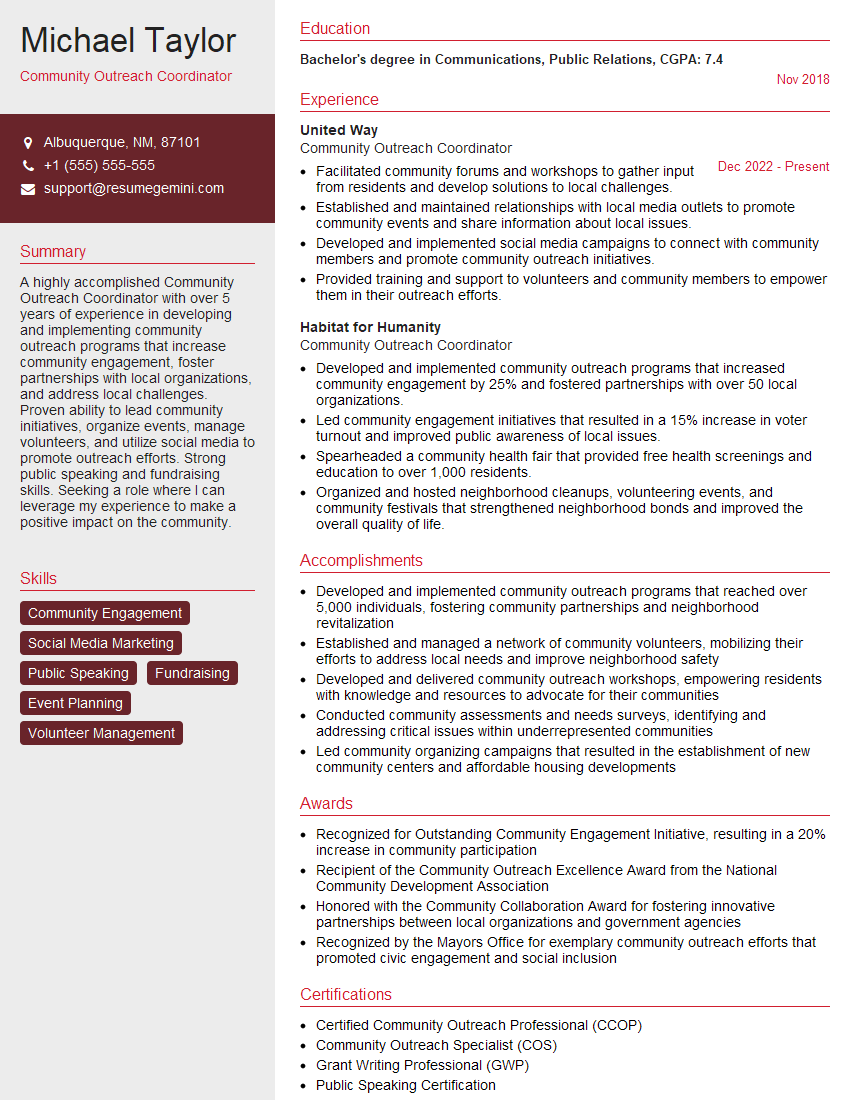
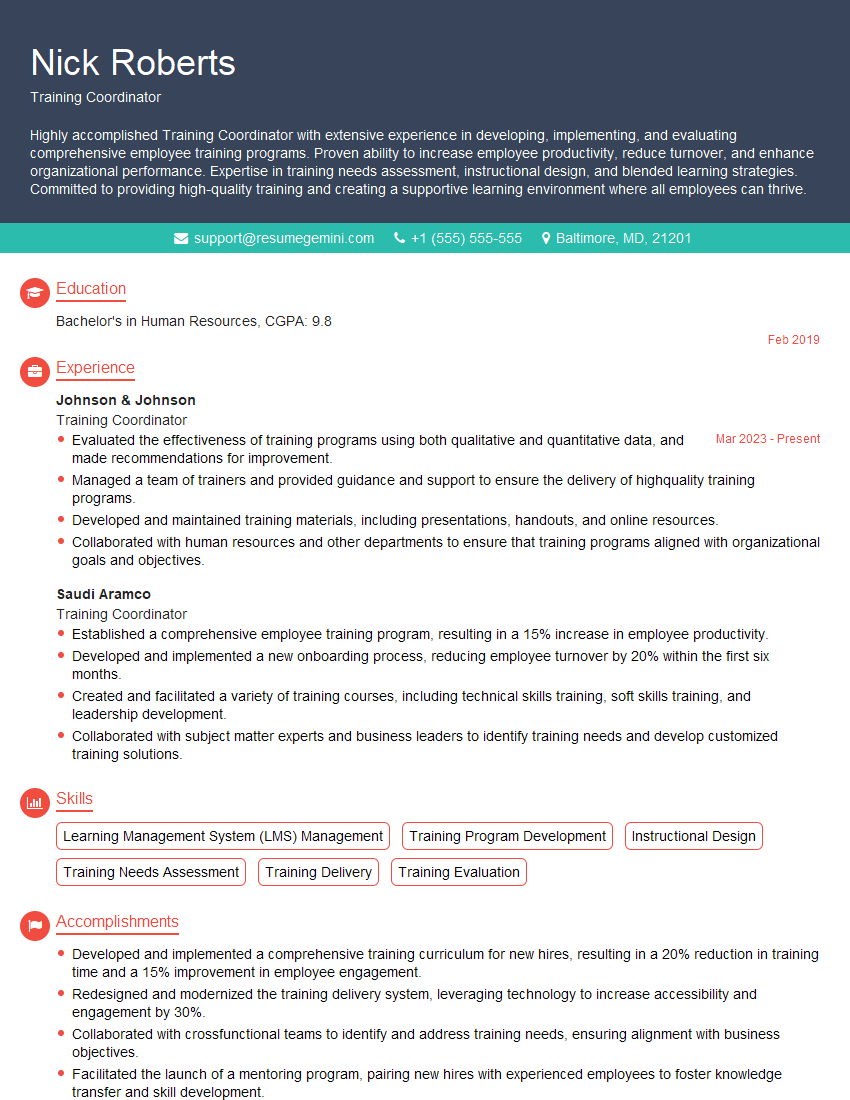
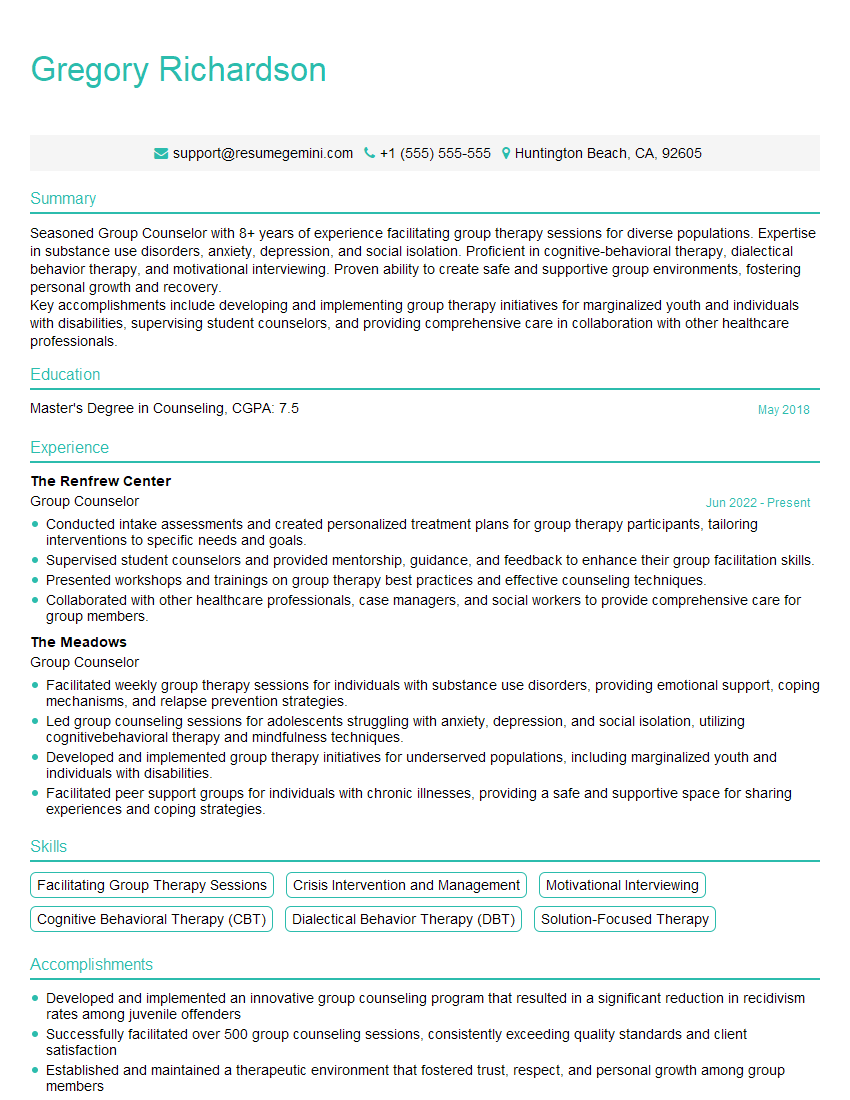
Mastering Group Facilitation and Counseling significantly enhances your career prospects in mental health, social work, education, and organizational development. A well-crafted resume is crucial for showcasing your skills and experience to potential employers. To increase your chances of getting noticed by Applicant Tracking Systems (ATS), focus on creating an ATS-friendly resume that highlights your key competencies and achievements. ResumeGemini is a trusted resource to help you build a professional and impactful resume tailored to your specific experience. Examples of resumes tailored to Group Facilitation and Counseling are available to guide you. Take the next step towards your dream career – build your best resume with ResumeGemini today!
Explore more articles
Users Rating of Our Blogs
Share Your Experience
We value your feedback! Please rate our content and share your thoughts (optional).
What Readers Say About Our Blog
To the interviewgemini.com Webmaster.
Very helpful and content specific questions to help prepare me for my interview!
Thank you
To the interviewgemini.com Webmaster.
This was kind of a unique content I found around the specialized skills. Very helpful questions and good detailed answers.
Very Helpful blog, thank you Interviewgemini team.