Interviews are more than just a Q&A session—they’re a chance to prove your worth. This blog dives into essential HVAC and Refrigeration Systems interview questions and expert tips to help you align your answers with what hiring managers are looking for. Start preparing to shine!
Questions Asked in HVAC and Refrigeration Systems Interview
Q 1. Explain the difference between a heat pump and an air conditioner.
While both heat pumps and air conditioners use refrigeration cycles to control temperature, their key difference lies in their functionality. An air conditioner only cools; it extracts heat from the indoor space and releases it outside. Think of it as a one-way street for heat. A heat pump, however, is a two-way street. It can both cool and heat. In cooling mode, it operates like an air conditioner. But in heating mode, it reverses the refrigeration cycle, extracting heat from the outside air (even on cold days) and transferring it indoors. This makes heat pumps highly energy-efficient, especially in areas with moderate climates.
Imagine your refrigerator: it’s essentially an air conditioner keeping your food cool. A heat pump is like having a refrigerator that can also warm things up by reversing its process, pulling heat from outside and releasing it into the room – a very clever application of the same technology!
Q 2. Describe the refrigeration cycle in detail.
The refrigeration cycle is a closed-loop process that moves refrigerant through four key stages to achieve cooling:
- Evaporation (or Expansion): The refrigerant, under low pressure, absorbs heat and vaporizes in the evaporator coil. This creates a cold environment, like in your refrigerator or the indoor coil of an AC unit.
- Compression: The compressor increases the pressure and temperature of the refrigerant vapor. Think of it like squeezing a balloon – the air inside becomes hotter and more pressurized.
- Condensation: The high-pressure, high-temperature refrigerant releases heat to the surroundings in the condenser coil (usually outdoors in an AC unit). This is why the outdoor unit of an air conditioner feels hot to the touch.
- Expansion: The refrigerant then passes through an expansion device (like a capillary tube or expansion valve), reducing its pressure and temperature, and the cycle repeats. This low-pressure, low-temperature refrigerant is then ready to absorb heat in the evaporator.
This continuous cycle of absorbing and releasing heat creates the cooling effect. Understanding this cycle is crucial for diagnosing and resolving HVAC issues.
Q 3. What are the common refrigerants used in HVAC systems, and what are their environmental impacts?
Common refrigerants used in HVAC systems include R-410A, R-134a, and R-32. The selection is driven by factors like efficiency and environmental impact. Older refrigerants like R-22 (HCFC) are being phased out due to their high Ozone Depletion Potential (ODP).
- R-410A (HFC): A blend with zero ODP but a high Global Warming Potential (GWP). While better than R-22, its GWP is still a concern.
- R-134a (HFC): Similar to R-410A in that it has zero ODP but a significant GWP.
- R-32 (HFC): Lower GWP than R-410A and R-134a, making it a more environmentally friendly option, although still possessing a GWP.
The industry is moving towards refrigerants with even lower GWPs, such as natural refrigerants like CO2 (R-744) and ammonia (R-717), which have significantly smaller environmental impacts, although they may require specialized system designs.
Q 4. How do you troubleshoot a system with low refrigerant?
Low refrigerant is a serious issue that needs prompt attention. Troubleshooting starts with a methodical approach:
- Check for leaks: Use electronic leak detectors to pinpoint any leaks in the system. Look for signs of oil or refrigerant staining around joints and components.
- Inspect the compressor: Check for unusual noises or overheating, which can indicate a compressor problem that may contribute to refrigerant loss. Overheating may be related to insufficient refrigerant or other issues.
- Pressure test: After identifying and repairing any leaks, use gauges to check system pressures. These pressures should fall within specified ranges depending on the system design and refrigerant. Deviations suggest further issues.
- Evacuate and recharge: Once leaks are repaired, the system should be thoroughly evacuated to remove any air or moisture. Then, the correct amount of refrigerant should be added, following manufacturer recommendations.
Remember, handling refrigerants requires specialized equipment and training. Always prioritize safety and adhere to proper handling procedures.
Q 5. Explain the function of a compressor in a refrigeration system.
The compressor is the heart of a refrigeration system. Its primary function is to raise the pressure and temperature of the refrigerant vapor. This pressurized refrigerant then moves to the condenser, where heat is released. Think of it like a pump pushing refrigerant through the system. Without adequate pressure, the refrigerant cannot efficiently release its heat to the environment.
The compressor’s efficiency is crucial for overall system performance. Inefficient compression translates to higher energy consumption and reduced cooling capacity. Various types of compressors exist – reciprocating, scroll, rotary – each with its own strengths and weaknesses.
Q 6. How do you diagnose and fix a malfunctioning condenser fan motor?
Diagnosing a malfunctioning condenser fan motor involves a systematic process:
- Check for power: Use a multimeter to verify power supply to the motor. A lack of power could indicate a blown fuse, tripped breaker, or faulty wiring.
- Inspect the motor: Look for obvious signs of damage like burnt wires or seized bearings. Listen carefully for unusual noises during operation – grinding or humming could signify problems.
- Test the capacitor (if applicable): The capacitor is often a crucial component. Use a capacitor tester to check its capacitance and ensure it’s within specifications. A faulty capacitor can prevent the motor from starting.
- Measure motor resistance: Use a multimeter to measure the winding resistance of the motor. Values outside the manufacturer’s specifications can indicate a winding fault.
- Check the fan blades: Ensure the fan blades aren’t obstructed and can spin freely. A restriction in airflow can overwork the motor and cause failure.
Repair usually involves replacing the faulty component. Always disconnect power before working on electrical components.
Q 7. What are the different types of expansion devices used in refrigeration systems?
Expansion devices regulate the flow of refrigerant, controlling its pressure and temperature before it enters the evaporator. The choice of expansion device impacts system efficiency and performance.
- Capillary Tube: A simple, inexpensive device consisting of a small-diameter tube. It’s suitable for smaller systems and relies on the pressure drop caused by friction within the tube to regulate flow.
- Thermostatic Expansion Valve (TXV): A more sophisticated device that uses a temperature sensor to regulate refrigerant flow. It maintains a constant superheat at the evaporator outlet, optimizing system efficiency.
- Electronic Expansion Valve (EEV): An electronically controlled valve that provides precise control over refrigerant flow. This allows for optimization of system performance under varying conditions.
The choice of expansion device depends on factors such as system size, refrigerant type, and desired performance characteristics.
Q 8. Describe the function of a evaporator coil.
The evaporator coil is the heart of the cooling process in an air conditioning or refrigeration system. Its primary function is to absorb heat from the air or the substance being cooled, causing a temperature drop. Think of it like a giant, cold sponge soaking up heat. Inside the coil, the refrigerant changes from a low-pressure, low-temperature liquid to a low-pressure, low-temperature vapor, absorbing heat in the process. This heat transfer is crucial because it’s what cools the air or product in contact with the coil.
In an air conditioner, warm air is blown across the evaporator coil. The refrigerant inside the coil absorbs the heat from this air, causing the air to cool down before it’s circulated back into the room. In a refrigerator, the evaporator coil is located inside the freezer compartment, directly absorbing heat from the items stored there.
Q 9. How do you calculate the tonnage of an air conditioning system?
Calculating the tonnage of an air conditioning system determines its cooling capacity. One ton of refrigeration is defined as the amount of heat required to melt one ton (2000 pounds) of ice in 24 hours. This translates to approximately 12,000 BTU/hr (British Thermal Units per hour).
The calculation itself involves determining the heat load of the space to be cooled. This heat load considers factors such as:
- Room dimensions: Larger rooms require more cooling power.
- Insulation levels: Poor insulation increases heat gain.
- Number of occupants: People generate heat.
- Appliances generating heat: Stoves, computers, etc.
- Climate conditions: Outside temperature and humidity significantly impact heat load.
Professionals use specialized software or manual calculation methods based on industry standards (like ASHRAE) to assess the heat load. Once the total heat load (in BTU/hr) is determined, you simply divide this value by 12,000 BTU/hr/ton to find the required tonnage. For example, a space with a 36,000 BTU/hr heat load would require a 3-ton air conditioning system (36,000 BTU/hr / 12,000 BTU/hr/ton = 3 tons).
Q 10. Explain the principles of psychrometrics.
Psychrometrics is the study of the physical and thermodynamic properties of moist air. It’s essentially a way to understand how temperature, humidity, and air pressure interact. Think of it as the science of air conditioning. Understanding psychrometrics is vital for designing and troubleshooting HVAC systems effectively.
Key properties considered in psychrometrics include:
- Dry-bulb temperature: The temperature of air measured by a regular thermometer.
- Wet-bulb temperature: The temperature air would reach if it were cooled to saturation (100% relative humidity) by the evaporation of water.
- Relative humidity: The ratio of the actual water vapor present in the air to the maximum amount of water vapor the air can hold at a given temperature.
- Dew point temperature: The temperature at which the air becomes saturated and condensation occurs.
- Enthalpy: The total heat content of the air.
Psychrometric charts are invaluable tools that graphically represent the relationships between these properties. They allow technicians to visualize and track changes in air properties as it moves through an HVAC system, facilitating efficient system design and problem diagnosis.
Q 11. What are the common causes of a frozen evaporator coil?
A frozen evaporator coil is a common problem with several potential causes:
- Restricted airflow: A dirty air filter, blocked registers, or frozen condensate drain line restricts airflow, causing the coil to get too cold and freeze.
- Low refrigerant charge: Insufficient refrigerant reduces the coil’s capacity to absorb heat, resulting in ice formation. The coil works harder to achieve the desired temperature, leading to freezing.
- Faulty expansion valve: A malfunctioning TXV (Thermostatic Expansion Valve) can overfeed liquid refrigerant into the evaporator, causing excessive cooling and freezing.
- Defective blower motor: A weak or malfunctioning blower motor can’t provide enough airflow, leading to the same issue as restricted airflow.
- Air leaks in the ductwork: Air leaks reduce the airflow across the evaporator, mirroring the effects of restricted airflow.
Diagnosing the cause requires systematic checks: Inspect the air filter, check airflow across the coil, test refrigerant pressure, and inspect the expansion valve. Often, a combination of factors contributes to the problem. For example, a slightly low refrigerant charge combined with a dirty air filter can easily lead to a frozen evaporator coil.
Q 12. How do you interpret a pressure-temperature chart?
A pressure-temperature chart, often called a refrigerant chart or P-T chart, displays the relationship between the pressure and temperature of a refrigerant at various states (liquid, vapor, or a mixture). This chart is essential for troubleshooting and charging refrigeration and air conditioning systems.
Interpreting the chart involves:
- Identifying the refrigerant: Charts are specific to each refrigerant type (R-22, R-410A, etc.).
- Locating the pressure and temperature: Measure the pressure and temperature at different points in the system (usually suction and discharge lines).
- Determining the refrigerant state: By plotting the measured pressure and temperature, you can see if the refrigerant is in its liquid, vapor, or superheated vapor state. This helps identify potential problems like insufficient charge or excessive superheat.
- Checking for subcooling and superheat: Proper subcooling and superheat values are critical for efficient system operation. The chart helps determine if these values are within the manufacturer’s recommended range.
For example, if the measured suction pressure and temperature fall outside the expected range on the chart, it might indicate a low refrigerant charge or a problem with the expansion valve. Conversely, if the discharge pressure is too high, it might point to a restriction in the system.
Q 13. What safety precautions should be taken when working with refrigerants?
Working with refrigerants requires strict adherence to safety precautions due to their potential health and environmental hazards. Many refrigerants are flammable, toxic, or contribute to ozone depletion or global warming.
Key safety measures include:
- Proper ventilation: Work in well-ventilated areas to prevent the buildup of refrigerant vapor.
- Personal Protective Equipment (PPE): Wear safety glasses, gloves, and respiratory protection, especially when handling refrigerants under pressure.
- Leak detection and repair: Use electronic leak detectors to identify leaks promptly and repair them according to proper procedures. Never attempt to repair a leak without the necessary training and equipment.
- Refrigerant recovery and recycling: Always recover and recycle refrigerants rather than venting them into the atmosphere. This is essential for environmental protection and compliance with regulations.
- Following manufacturer’s instructions: Always consult the equipment and refrigerant manufacturer’s instructions before working with any refrigerant.
- Emergency preparedness: Be aware of the potential hazards of the refrigerant you are using and have a plan in place for handling emergencies, including access to appropriate first aid and emergency contacts.
Ignoring these precautions can lead to serious health problems, environmental damage, and legal consequences.
Q 14. Explain the function of a TXV (Thermostatic Expansion Valve).
The Thermostatic Expansion Valve (TXV) is a crucial component in refrigeration and air conditioning systems. Its primary function is to regulate the flow of refrigerant into the evaporator, ensuring optimal cooling performance and preventing freezing.
It operates by sensing the superheat of the refrigerant vapor leaving the evaporator. Superheat is the temperature difference between the refrigerant vapor and the evaporator coil temperature. The TXV maintains a constant superheat value. If the superheat is too low (indicating insufficient refrigerant flow), the TXV opens to allow more refrigerant into the evaporator. Conversely, if the superheat is too high (indicating excessive refrigerant flow), the TXV closes to reduce the flow.
Think of the TXV as a smart valve that automatically adjusts the refrigerant flow based on the actual cooling demand. This precise control prevents excessive cooling that could cause freezing and optimizes the system’s efficiency. A malfunctioning TXV can lead to either insufficient cooling or freezing of the evaporator coil.
Q 15. What are the different types of air filters used in HVAC systems?
HVAC systems utilize various air filters to remove contaminants from the air, improving indoor air quality and protecting the system’s components. The choice of filter depends on factors like the environment, occupant needs, and system design.
- Fiberglass Filters: These are the most common and inexpensive, offering basic filtration. Think of them as a basic sieve, capturing larger dust particles. They’re best for situations requiring minimal filtration.
- Pleated Filters: These offer greater surface area than fiberglass filters, resulting in higher efficiency and longer lifespan. They’re like a more tightly woven sieve, catching smaller particles. They’re a good balance between cost and performance.
- HEPA (High-Efficiency Particulate Air) Filters: These are the heavy hitters, capturing at least 99.97% of particles 0.3 microns in size or larger. Imagine them as a super-fine mesh, capable of removing even microscopic pollutants. They’re essential for individuals with allergies or respiratory sensitivities.
- Electrostatic Filters: These filters use static electricity to attract and trap particles. Think of it like a magnet for dust – they’re quite effective and can last a long time. They’re a good option for high-efficiency filtration without the high cost of HEPA filters.
- Activated Carbon Filters: These filters absorb gases and odors. They’re like a sponge for unpleasant smells, effectively removing smoke, pet odors, and other airborne gases. They’re often used in conjunction with other filter types.
Choosing the right filter is crucial for maintaining optimal system performance and indoor air quality. A clogged filter restricts airflow, reducing efficiency and potentially damaging the system.
Career Expert Tips:
- Ace those interviews! Prepare effectively by reviewing the Top 50 Most Common Interview Questions on ResumeGemini.
- Navigate your job search with confidence! Explore a wide range of Career Tips on ResumeGemini. Learn about common challenges and recommendations to overcome them.
- Craft the perfect resume! Master the Art of Resume Writing with ResumeGemini’s guide. Showcase your unique qualifications and achievements effectively.
- Don’t miss out on holiday savings! Build your dream resume with ResumeGemini’s ATS optimized templates.
Q 16. How do you balance airflow in a duct system?
Airflow balancing in a duct system ensures that each room or zone receives the correct amount of air, leading to uniform temperatures and optimal system performance. It’s like dividing water fairly among different garden hoses – each needs enough but not too much. This process involves adjusting dampers within the ductwork to regulate airflow.
Balancing is typically done using a balancing instrument, such as a pressure gauge or flow hood. The process involves systematically adjusting dampers in each branch of the ductwork until the desired airflow is achieved in each zone. This often requires iterative adjustments and careful measurement. We’ll adjust dampers in one area, re-check all the flows, and make more adjustments until everything is perfectly balanced.
Several techniques are used, including:
- Static Pressure Measurement: Using a manometer to measure pressure drop across dampers and registers.
- Velocity Measurement: Employing a flow hood to measure the air velocity at supply registers.
Proper airflow balancing is critical for ensuring even heating and cooling, preventing uneven temperatures and improving system efficiency. A poorly balanced system leads to wasted energy, discomfort, and potential equipment damage. In homes, this might mean some rooms are freezing while others are too hot.
Q 17. What are the common causes of low airflow in an HVAC system?
Low airflow in an HVAC system can stem from several issues, significantly impacting system efficiency and comfort. It’s like a clogged artery reducing blood flow – the system can’t work properly.
- Clogged Air Filter: A dirty filter restricts airflow, the most common cause. Regular filter changes are crucial.
- Frozen Evaporator Coil: Inadequate airflow over the evaporator coil can cause ice buildup, restricting airflow. This often points to a refrigerant issue or insufficient airflow.
- Dirty Condenser Coil: A dirty condenser coil hinders heat transfer, reducing efficiency and potentially leading to low airflow. Regular cleaning is essential.
- Blocked Registers or Vents: Furniture, drapes, or other obstructions can block airflow.
- Duct Leaks or Restrictions: Leaks in the ductwork can lead to reduced airflow, as can constrictions or blockages within the duct system.
- Blower Motor Problems: A malfunctioning blower motor can reduce airflow. This might be due to worn bearings or a failing motor.
- Incorrectly Sized Ductwork: Ductwork that’s too small for the system’s capacity will restrict airflow.
Diagnosing the cause requires systematic checks and measurements. A professional technician will use specialized tools to identify the problem.
Q 18. Describe the different types of ductwork materials.
Ductwork materials play a vital role in system performance and longevity. The selection depends on factors such as cost, durability, and application. Imagine building a house – you wouldn’t use the same material for the foundation as for the roof.
- Sheet Metal: Galvanized steel is the most common material, offering durability and resistance to corrosion. It’s strong, easily formed into the desired shapes, and relatively inexpensive.
- Fiberglass Duct Board: A lightweight and flexible material ideal for tight spaces or renovations. It’s easier to install than sheet metal but less durable.
- Flexible Duct: Used for short runs or connections, but less efficient than rigid ducts due to increased friction and potential for leaks. These are convenient for quick fixes and reaching hard-to-reach areas.
- Rigid PVC: Used in high-humidity environments due to its resistance to corrosion and moisture. It’s more resistant to corrosion and can be suitable for certain outdoor applications.
The choice of material affects the system’s efficiency, noise levels, and longevity. Proper sealing and installation are crucial regardless of the chosen material to prevent leaks and air loss.
Q 19. Explain the importance of proper insulation in HVAC systems.
Proper insulation in HVAC systems is crucial for energy efficiency and optimal performance. It’s like wrapping a water pipe with insulation to prevent heat loss – it keeps things at the desired temperature.
Insulation minimizes heat transfer between the ductwork and the surrounding environment. In summer, this prevents cool air from warming as it travels through the ducts; in winter, it prevents warm air from cooling. This reduces energy consumption and improves the system’s overall efficiency.
Insulation also reduces condensation buildup in ducts, preventing moisture damage and mold growth. This is particularly important in areas with high humidity.
Common insulation materials include fiberglass, foam, and cellulose. The choice of insulation depends on factors such as the duct material, the climate, and the budget.
Ignoring insulation can lead to significant energy losses, increased operating costs, and reduced comfort. A well-insulated system operates more efficiently, saving energy and money.
Q 20. What are the common types of HVAC control systems?
HVAC control systems manage the operation of the system, ensuring proper temperatures and airflow. They’re the brains of the operation, deciding when to turn on, off, and at what speed.
- Thermostats: These are the simplest control systems, allowing users to set desired temperatures. The thermostat acts as the brain, directing the system’s response to temperature changes.
- Programmable Thermostats: These offer more sophisticated control, allowing users to schedule different temperatures for different times of the day or week. They are designed for efficiency and automation, saving money by adjusting the temperature based on a schedule.
- Smart Thermostats: These are even more advanced, integrating with home automation systems and offering features like geofencing and learning capabilities. These offer the highest level of convenience and energy savings.
- Building Management Systems (BMS): These are complex systems used in large buildings, allowing for centralized control of multiple HVAC units. These provide comprehensive control over large HVAC networks, ensuring optimal efficiency and climate control.
The choice of control system depends on the size and complexity of the HVAC system and the user’s needs and budget. More sophisticated systems offer greater control, automation, and energy efficiency.
Q 21. How do you troubleshoot a system with inconsistent temperature?
Inconsistent temperatures within a space are a common HVAC problem, signaling a variety of potential issues. It’s like a car with uneven tire pressure – it won’t drive smoothly.
Troubleshooting starts with a systematic approach:
- Check the Thermostat: Ensure it’s correctly calibrated, functioning properly, and positioned away from direct sunlight or drafts.
- Inspect the Air Filter: A clogged filter restricts airflow, leading to temperature inconsistencies.
- Verify Airflow: Check registers and vents for obstructions. Assess airflow using a flow hood or pressure gauge to balance the system if necessary.
- Examine Ductwork: Look for leaks or blockages in the ductwork, which can cause uneven heating or cooling.
- Inspect the Equipment: Check the evaporator and condenser coils for dirt and debris. Check the blower motor for proper operation.
- Consider Zoning Issues: If the system has zoning, check for proper damper operation and balancing.
- Assess Refrigerant Levels: Low refrigerant levels can cause poor cooling performance.
If the problem persists after these checks, professional assistance is necessary. A trained technician can use specialized tools to identify and rectify complex issues.
Q 22. Explain the concept of sensible and latent heat.
Sensible heat and latent heat are two ways heat energy can be transferred, both crucial in understanding HVAC systems. Sensible heat is the heat that causes a temperature change in a substance without changing its phase (solid, liquid, or gas). Think of heating a pot of water on the stove – the water’s temperature rises, but it remains water. This temperature change is directly measurable with a thermometer.
Latent heat, on the other hand, is the heat energy absorbed or released during a phase change at a constant temperature. The classic example is boiling water. Once the water reaches 100°C (212°F), adding more heat doesn’t raise the temperature; instead, it’s used to convert the liquid water into steam (a phase change from liquid to gas). This heat energy is not detectable by a simple thermometer but significantly impacts HVAC processes like humidification and dehumidification.
In HVAC systems, sensible heat is addressed by heating or cooling coils that change the air’s temperature. Latent heat is handled by components like dehumidifiers (removing moisture from the air) or humidifiers (adding moisture). A properly designed HVAC system accounts for both sensible and latent heat loads to maintain optimal indoor comfort and prevent issues such as condensation or excessive dryness.
Q 23. What are the different types of heat exchangers used in HVAC systems?
HVAC systems utilize various types of heat exchangers to transfer heat between two fluids or a fluid and air. The choice of heat exchanger depends on the application, capacity, and efficiency requirements.
- Plate Heat Exchangers: These are highly efficient and compact, consisting of thin plates with corrugated surfaces to increase heat transfer area. They are commonly used in smaller chillers and air conditioning systems.
- Shell and Tube Heat Exchangers: These consist of a shell containing a bundle of tubes. The fluid flows through the tubes, while another fluid flows around the tubes within the shell. They are robust and widely used in larger industrial and commercial HVAC applications, such as in chillers and boiler systems.
- Finned Tube Heat Exchangers: These are commonly found in air handling units (AHUs) and are used to transfer heat between air and a refrigerant or water. The fins increase the surface area for heat transfer.
- Coil Heat Exchangers: These involve coils of tubing through which fluid flows, surrounded by air. Different coil types (such as copper tube coils) are optimized for specific refrigerant types or water applications.
The selection of a heat exchanger involves careful consideration of factors like pressure drop, heat transfer rate, fouling potential, and cost.
Q 24. Describe your experience with different types of HVAC equipment (e.g., chillers, boilers, air handlers).
Throughout my career, I’ve worked extensively with various HVAC equipment. My experience includes the design, installation, commissioning, and maintenance of chillers (absorption and centrifugal), boilers (high-pressure steam and hot water), and air handlers (both single and multi-zone).
For instance, I was involved in a project that required the replacement of an aging absorption chiller in a large commercial building. This involved a thorough assessment of the existing system, selection of a suitable replacement chiller, coordination with contractors for installation, and meticulous commissioning to ensure optimal performance and efficiency. With boilers, I’ve worked on troubleshooting combustion issues, optimizing burner settings, and ensuring safe and efficient operation in compliance with relevant regulations.
Air handlers have presented diverse challenges. I’ve addressed issues ranging from balancing airflow to diagnosing and resolving issues related to motor failures, fan belts, and filter replacements. My experience includes working with Variable Refrigerant Flow (VRF) systems and their associated air handlers, requiring a strong understanding of system controls and refrigerant management.
Q 25. What are the energy efficiency standards for HVAC systems in your region?
(Note: Energy efficiency standards vary significantly by region and are frequently updated. This answer will provide a general framework. Please specify your region for a precise answer.)
In most regions, energy efficiency standards for HVAC systems are based on metrics such as SEER (Seasonal Energy Efficiency Ratio) for air conditioners and EER (Energy Efficiency Ratio) for refrigeration equipment. Higher SEER/EER ratings indicate better efficiency. Additionally, standards often address minimum insulation requirements for ductwork and building envelopes to minimize energy loss. Specific regulations might also cover things like refrigerant types (to minimize ozone depletion and global warming potential), and minimum requirements for controls and monitoring systems.
Compliance with these standards is usually enforced through building codes and inspections. Failure to meet these requirements can result in penalties or even rejection of the HVAC installation.
Q 26. Explain your understanding of building codes related to HVAC systems.
Building codes related to HVAC systems are crucial for ensuring safety, energy efficiency, and occupant comfort. These codes address various aspects of HVAC design, installation, and operation. Key areas covered include:
- Safety: Codes dictate requirements for proper ventilation, preventing the buildup of hazardous gases, and ensuring safe handling of refrigerants. They specify fire safety measures for equipment and ductwork.
- Energy Efficiency: Codes often mandate minimum efficiency standards for equipment and dictate requirements for insulation, air sealing, and controls to minimize energy waste.
- Air Quality: Codes stipulate standards for indoor air quality, including requirements for filtration, ventilation rates, and control of pollutants.
- Accessibility: Codes address accessibility for maintenance and repair, ensuring easy access to equipment and components.
Staying updated with the relevant building codes in a specific region is essential for any HVAC professional. Failure to comply with these codes can lead to legal issues and safety hazards.
Q 27. Describe a time you had to troubleshoot a complex HVAC problem. What was your approach?
One challenging situation involved a large commercial building experiencing inconsistent cooling in several zones. Initial diagnostics pointed towards issues with the chiller, but further investigation ruled this out. My approach was systematic:
- Data Collection: I meticulously gathered data on temperature variations across different zones, noting times of day when the discrepancies were most noticeable. I checked the chiller’s performance parameters, refrigerant pressures, and flow rates. I also inspected the air handling units, checking their fan speeds, filter conditions, and damper positions.
- Hypothesis Generation: Based on the data, I hypothesized that the problem might lie within the building’s control system, specifically in the sequence of operations or the settings for the various dampers.
- Testing and Verification: I carefully tested the control system logic, using building automation system (BAS) software to monitor and adjust damper settings. I simulated different scenarios to identify the root cause.
- Solution Implementation: It turned out that a software glitch in the BAS was causing incorrect damper commands, leading to uneven airflow distribution. The solution involved updating the control software and thoroughly testing the corrected system to ensure proper functionality.
This case highlights the importance of a systematic, data-driven approach to HVAC troubleshooting. It’s not just about replacing parts; it’s about understanding the entire system’s interaction and applying logic to pinpoint the problem’s root cause.
Key Topics to Learn for Your HVAC and Refrigeration Systems Interview
- Thermodynamics: Understanding fundamental principles like heat transfer (conduction, convection, radiation), enthalpy, and entropy is crucial for analyzing system performance and efficiency.
- Refrigerant Cycles: Master the principles of vapor-compression refrigeration cycles, including the four key components (compressor, condenser, expansion valve, evaporator) and their interactions. Be prepared to discuss different refrigerant types and their environmental impact.
- HVAC System Components: Familiarize yourself with the operation and maintenance of various components such as air handlers, chillers, boilers, pumps, and control systems. Understand their roles within the overall system.
- Troubleshooting and Diagnostics: Practice diagnosing common HVAC and refrigeration system malfunctions. Be ready to explain your approach to identifying problems and implementing effective solutions. This includes understanding pressure-temperature relationships and interpreting diagnostic readings.
- Safety Procedures: Demonstrate a thorough understanding of safety regulations and best practices related to handling refrigerants, electrical systems, and working at heights.
- Control Systems: Gain a working knowledge of various control systems, including programmable logic controllers (PLCs), sensors, and actuators. Be able to explain how these systems regulate and optimize system performance.
- Energy Efficiency: Discuss different methods for improving the energy efficiency of HVAC and refrigeration systems. This includes understanding building codes and energy-saving technologies.
- Practical Applications: Be prepared to discuss real-world applications of your knowledge, such as designing, installing, maintaining, or troubleshooting specific HVAC or refrigeration systems in different settings (residential, commercial, industrial).
Next Steps
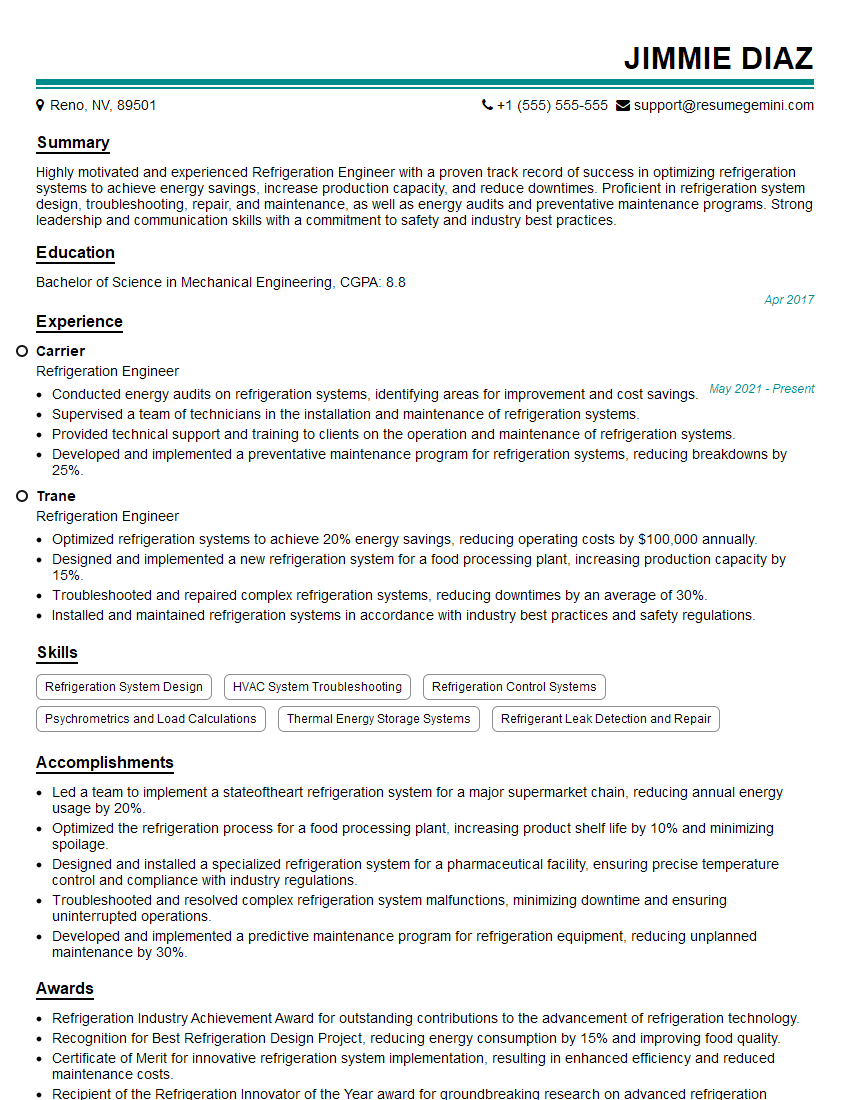
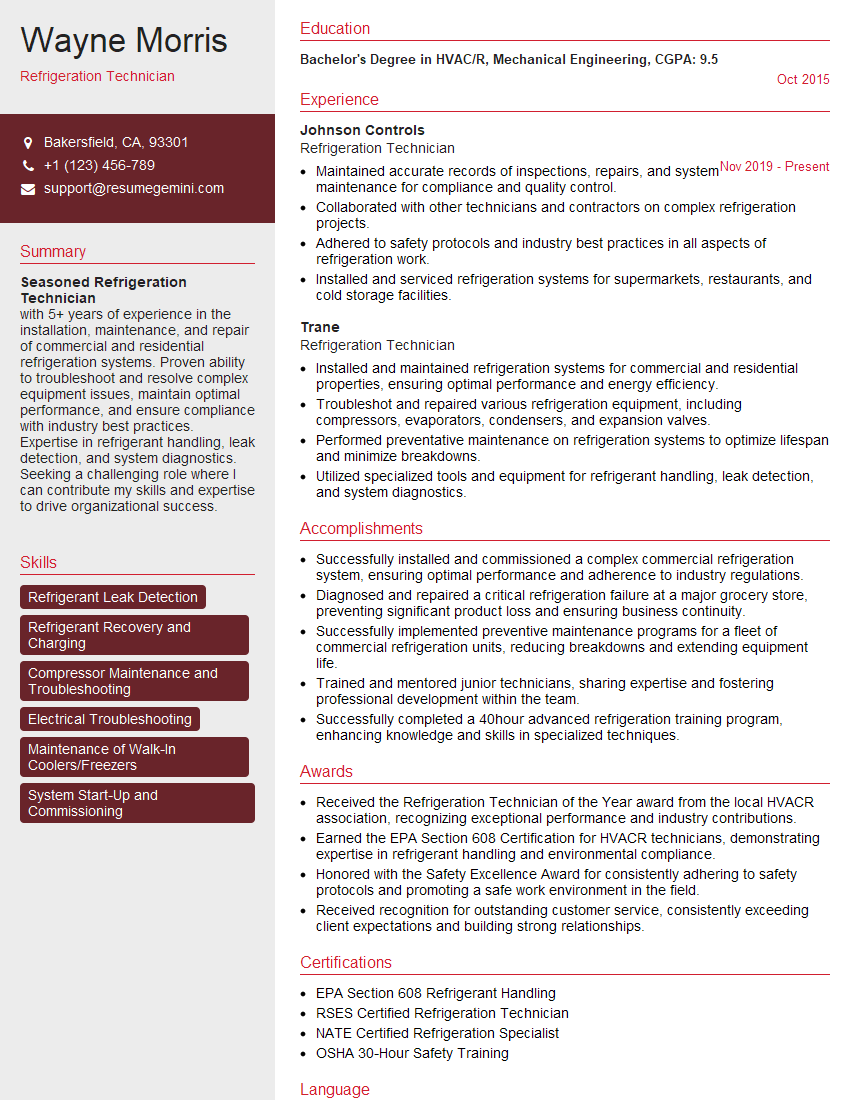
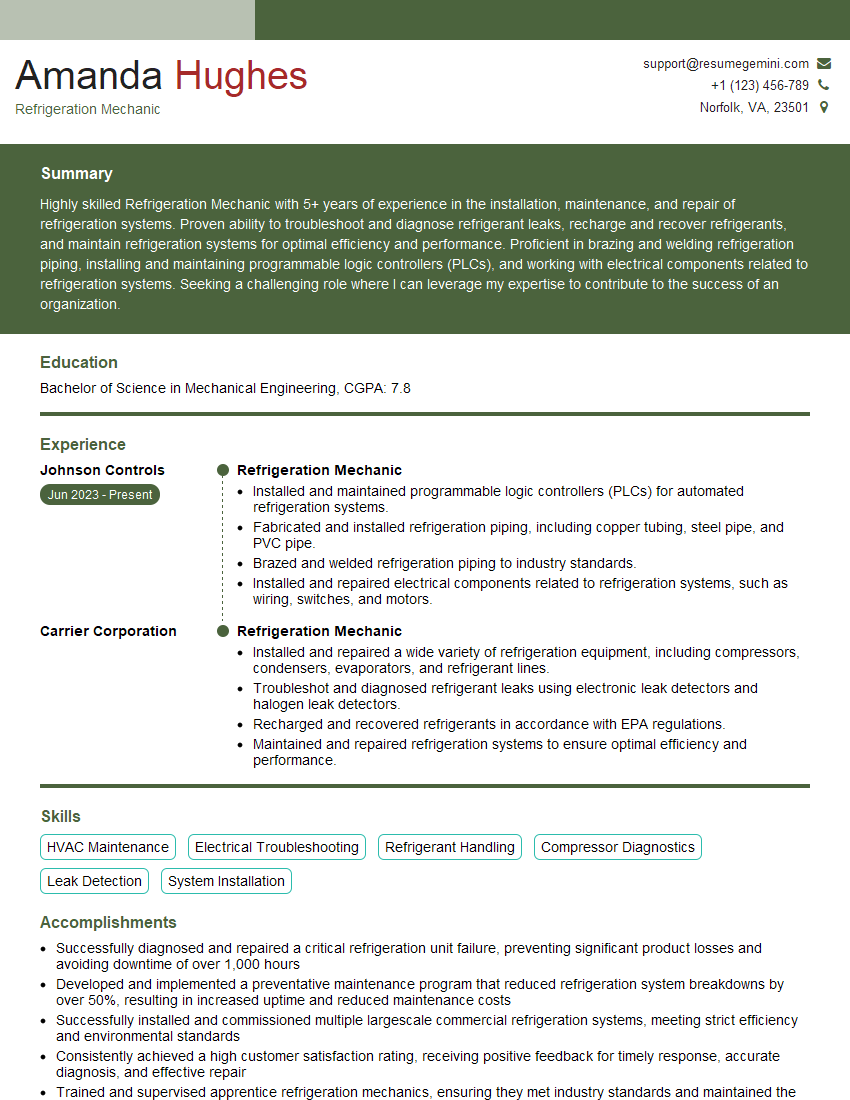
Mastering HVAC and Refrigeration Systems opens doors to exciting career opportunities and continuous professional growth. A strong understanding of these systems is highly valued in a competitive job market. To maximize your chances of landing your dream job, it’s essential to present your skills and experience effectively. Creating an ATS-friendly resume is key to getting your application noticed by recruiters and hiring managers. We highly recommend using ResumeGemini to build a professional and impactful resume that highlights your expertise in HVAC and Refrigeration Systems. ResumeGemini provides examples of resumes tailored to this specific field, ensuring your resume stands out from the competition.
Explore more articles
Users Rating of Our Blogs
Share Your Experience
We value your feedback! Please rate our content and share your thoughts (optional).
What Readers Say About Our Blog
To the interviewgemini.com Webmaster.
Very helpful and content specific questions to help prepare me for my interview!
Thank you
To the interviewgemini.com Webmaster.
This was kind of a unique content I found around the specialized skills. Very helpful questions and good detailed answers.
Very Helpful blog, thank you Interviewgemini team.