Interviews are opportunities to demonstrate your expertise, and this guide is here to help you shine. Explore the essential Industry-Academia Collaborations interview questions that employers frequently ask, paired with strategies for crafting responses that set you apart from the competition.
Questions Asked in Industry-Academia Collaborations Interview
Q 1. Describe your experience in negotiating research contracts between industry and academia.
Negotiating research contracts between industry and academia requires a delicate balance of protecting both parties’ interests. It’s like orchestrating a symphony where each instrument (university and company) has its own unique melody, yet together they create a harmonious piece. My experience involves carefully crafting agreements that clearly define intellectual property rights, responsibilities, deliverables, timelines, and funding mechanisms. I start by understanding each party’s goals – what are the university’s research priorities, and how does the industry partner’s needs align? This forms the basis for a mutually beneficial agreement.
For instance, I once negotiated a contract where a pharmaceutical company wanted to fund research on a novel drug delivery system. The university was keen to advance its research, but also wanted to retain rights to publish findings and potentially explore other applications of the technology. We structured the contract with clauses allowing for joint publications with appropriate attribution and separate licenses for different applications of the resulting IP. This required meticulous drafting to ensure clarity and avoid future disputes. This meticulous process ensured that both the university and the company felt secure and understood their commitments throughout the project. A key part of successful negotiation also lies in effective communication and conflict resolution, ensuring all parties are heard and understood.
Q 2. Explain the process of Intellectual Property (IP) management in Industry-Academia collaborations.
Intellectual Property (IP) management in Industry-Academia collaborations is crucial. It’s all about establishing clear ownership and usage rights from the outset to prevent future conflicts. The process typically involves defining IP ownership (who owns what, for example, patents, copyrights, and trade secrets), establishing licensing agreements for commercialization, and determining publication rights and data sharing arrangements. This often requires a thorough understanding of existing university IP policies and the industry partner’s business strategies.
For example, a university might own the initial invention, but a company might license the technology to develop and commercialize a product, paying royalties to the university. It’s critical to have clearly defined milestones for IP disclosures and inventorship determination. We usually establish Material Transfer Agreements (MTAs) to govern the movement and use of research materials. A well-defined IP management plan, documented within the research contract, is essential for a successful collaboration. This plan typically designates a dedicated IP manager from both sides to handle any IP-related questions or disputes.
Q 3. How would you manage conflicts of interest arising from Industry-Academia partnerships?
Conflicts of interest can arise in Industry-Academia partnerships, such as researchers having financial interests in the industry partner or industry influence impacting research objectivity. Proactive measures are essential to mitigate these risks. This begins with establishing clear conflict of interest policies at the beginning of the project and ensuring these policies are adhered to by all involved. This includes mandatory disclosure of any potential conflicts of interest to the university and industry partner. Independent ethical review boards can provide guidance and ensure transparency throughout the process.
For instance, if a researcher has a significant financial stake in a company collaborating with their university, this must be transparently disclosed. Possible solutions include recusal from specific aspects of the project or implementing mechanisms to ensure independent oversight of the research. In some cases, a third-party auditor can review the research process to ensure integrity and eliminate any bias. Open communication and adherence to established protocols are crucial to managing and resolving these conflicts constructively.
Q 4. What are the key legal considerations in Industry-Academia research agreements?
Legal considerations in Industry-Academia research agreements are paramount. These agreements are complex legal documents that need to be precise and comprehensive. Key aspects include defining intellectual property rights, confidentiality clauses to protect sensitive data, liability provisions to address potential damages, publication rights, and dispute resolution mechanisms. Compliance with relevant laws and regulations (e.g., data privacy, export controls) is crucial. It’s advisable to seek legal counsel specializing in technology transfer and intellectual property to ensure the contract is legally sound and protects both parties.
For example, a clause should clearly outline the responsibilities for data security, particularly sensitive personal data or confidential business information. Another important clause might address the process for resolving any disagreements that might arise between the parties, perhaps through mediation or arbitration. Often, there’s a process of review and approval from legal departments within both the academic institution and the industrial partner.
Q 5. Describe your experience in securing funding for Industry-Academia projects.
Securing funding for Industry-Academia projects requires a strategic approach. It often involves crafting compelling proposals that highlight the project’s innovation, potential impact, and the synergistic benefits of the collaboration. We typically explore various funding sources, including government grants (e.g., NSF, NIH), industry funding, and philanthropic organizations. A strong proposal demonstrates a clear articulation of the research plan, budget justification, and the expertise of the research team. Successful grant proposals carefully tailor the language and content to the specific funding agency’s priorities and guidelines.
For example, when seeking government grants, it’s crucial to align the research objectives with national priorities, such as addressing climate change or improving healthcare. When pursuing industry funding, the focus shifts to the potential commercial value of the research outcome and its benefit to the company. In both cases, developing strong relationships with funding agencies and industrial partners is crucial. A well-structured and compelling application is also usually accompanied by a strong letter of support from the industrial partner.
Q 6. How do you identify and evaluate potential industry partners for academic research?
Identifying and evaluating potential industry partners for academic research involves a multifaceted process. It begins with clearly defining the research goals and identifying industries where collaboration would be mutually beneficial. We usually conduct thorough due diligence on prospective partners, assessing their financial stability, research capabilities, and commitment to the project. Networking, attending industry events, and exploring existing university industry partnerships can be valuable tools. A clear understanding of the partner’s business model, their past collaborations and their commitment to supporting academic research is also essential.
For example, we might research a company’s track record in technology licensing or their ability to provide resources and expertise that complement the academic team’s strengths. A strong partnership requires alignment of interests and a shared vision for the project. Careful selection of partners ensures a productive and sustainable collaboration and maximizes the potential for successful outcomes.
Q 7. Explain your understanding of technology transfer and commercialization processes.
Technology transfer and commercialization are processes that bridge the gap between academic research discoveries and their practical applications in the marketplace. It involves protecting intellectual property through patents, copyrights, and trademarks, and then licensing or selling the technology to industry partners. This often requires navigating complex legal and regulatory frameworks, developing marketing strategies, and creating business plans for commercialization. A successful technology transfer office within a university plays a crucial role in guiding researchers and facilitating these processes.
For instance, a university might patent a novel material developed in its labs and then license the technology to a company that can manufacture and sell products using that material. The process involves negotiating licensing agreements, protecting trade secrets, and potentially establishing spin-off companies. Effective technology transfer requires a thorough understanding of market trends, competitive landscape, and regulatory requirements. This also necessitates fostering strong collaborations between researchers, industry partners, and legal and business professionals to effectively commercialize research outcomes.
Q 8. How do you measure the success of an Industry-Academia collaboration?
Measuring the success of an Industry-Academia collaboration is multifaceted and requires a holistic approach. It’s not simply about the number of publications or patents generated, but rather a balanced assessment of several key areas.
- Research Outcomes: This includes the quality and impact of published research, the number of patents filed and granted, and the successful completion of research milestones as defined in the collaboration agreement. For example, a successful collaboration might result in a groundbreaking publication in a top-tier journal, leading to further research and commercial applications.
- Economic Impact: Did the collaboration lead to new products, processes, or services? Did it generate revenue or create jobs? We might measure this through market analysis of products derived from the collaboration, or by tracking the creation of new spin-off companies.
- Knowledge Transfer: Did the collaboration effectively transfer knowledge and skills between academia and industry? This could be assessed through surveys of participating researchers and industry personnel, tracking the number of trainees who moved into industry roles, and measuring the improvement of industry processes based on academic research.
- Relationship Building: A strong, lasting relationship between the academic and industry partners is crucial for long-term success. This can be evaluated through qualitative assessments, such as feedback from partners on their level of satisfaction and intention to collaborate again.
Ultimately, success is measured by achieving the pre-defined goals and objectives outlined in the collaboration agreement, and by demonstrating a positive return on investment for all parties involved. A clear, measurable, achievable, relevant, and time-bound (SMART) framework for measuring success should be established from the outset.
Q 9. What are the ethical considerations in Industry-Academia research collaborations?
Ethical considerations in Industry-Academia collaborations are paramount. Transparency, intellectual property rights, conflict of interest, and data privacy are key concerns.
- Intellectual Property (IP): Clear agreements on ownership and licensing of IP generated during the collaboration are crucial. This needs to be clearly defined in contracts to prevent future disputes. For example, a well-defined IP agreement will specify which party owns the patents, and under what conditions those patents can be licensed.
- Conflict of Interest (COI): Researchers must disclose any potential conflicts of interest, such as financial ties to the industry partner, to ensure objectivity and prevent bias in the research. Institutions have policies and procedures to manage and mitigate COIs. Transparency is paramount here.
- Data Privacy and Security: Sensitive data must be handled responsibly and securely, complying with all relevant regulations such as GDPR or HIPAA. Data access and usage should be strictly controlled and documented.
- Publication Rights: Agreements on authorship and publication of research findings must be established upfront. All contributors should be appropriately acknowledged. Industry partners may have requirements regarding embargo periods or publication in specific venues.
- Authorship and Credit: All contributors should receive appropriate credit for their contributions. Clear guidelines should be established to prevent any disputes about authorship.
Ethical oversight committees and adherence to institutional guidelines are essential to ensuring ethical conduct throughout the collaboration. Regular ethical reviews help maintain integrity and build trust.
Q 10. Describe your experience in building and maintaining strong relationships with industry partners.
Building and maintaining strong relationships with industry partners requires a proactive and collaborative approach. It’s about mutual respect, trust, and clear communication.
In my experience, I’ve found that successful relationships are built on a foundation of shared goals and mutual benefit. I start by actively listening to the industry partner’s needs and challenges. I then tailor my research proposals to address those specific needs, demonstrating the potential for mutual gain. Regular communication, both formal (e.g., project meetings, progress reports) and informal (e.g., phone calls, emails), is essential to maintain momentum and address any emerging issues promptly. I prioritize transparency and open communication throughout the collaboration process. For instance, I proactively share research updates and preliminary findings, allowing for early feedback and adjustments. Furthermore, I actively engage in relationship-building activities, such as attending industry events, participating in workshops, and presenting research findings to industry audiences. Building personal connections fosters trust and ensures a smoother collaboration.
One successful partnership involved collaborating with a pharmaceutical company to develop a novel drug delivery system. By understanding their needs and challenges, we were able to develop a system that met their requirements while advancing fundamental research in drug delivery. This project, and many others, has shown the importance of long-term commitment and consistent effort in nurturing a successful industry-academia partnership.
Q 11. How do you facilitate communication and collaboration between academic researchers and industry representatives?
Facilitating communication and collaboration between academic researchers and industry representatives necessitates bridging the gap between distinct cultures and communication styles. Structured communication channels and well-defined roles are crucial.
- Regular Meetings: Scheduled meetings (both formal and informal) with clear agendas and minutes are vital for tracking progress and addressing issues. This could be weekly project updates, monthly progress reviews, or bi-annual strategy meetings.
- Dedicated Communication Channels: Establish designated communication channels (e.g., shared online platforms, project management software) to facilitate information sharing and collaboration. This centralized approach helps keep all stakeholders updated and reduces the risk of information getting lost.
- Joint Workshops and Training: Organizing joint workshops and training sessions can foster understanding and collaboration. This provides an opportunity for researchers and industry representatives to interact, share knowledge, and build relationships.
- Clearly Defined Roles and Responsibilities: Clearly defined roles and responsibilities for both academic and industry partners prevent ambiguity and conflict. This is often outlined in a detailed project plan and contract.
- Mentorship Programs: Mentorship programs can help bridge the gap between academic and industry perspectives. Experienced professionals can guide junior researchers, providing industry insights and career development opportunities.
Successful communication requires active listening, clear articulation of goals and expectations, and a commitment to transparency. It’s about creating a shared understanding and fostering a culture of collaboration.
Q 12. What are the challenges in managing Industry-Academia collaborations, and how would you overcome them?
Managing Industry-Academia collaborations presents several challenges, but many can be proactively addressed.
- Conflicting Priorities: Academic research often prioritizes publication and knowledge advancement, while industry focuses on commercial outcomes. Careful planning and negotiation can align these goals from the outset.
- Intellectual Property Disputes: Ambiguity around IP ownership can lead to conflict. Detailed agreements defining ownership and licensing rights are essential to prevent disputes.
- Communication Barriers: Differences in language and communication styles between academics and industry representatives can hinder collaboration. This requires proactive efforts to establish clear communication channels and build trust.
- Time Constraints: Academic schedules and industry timelines can differ significantly. Project planning needs to accommodate these variations, ensuring realistic deadlines and milestones.
- Confidentiality Concerns: Industry partners may have concerns about the confidentiality of sensitive data. Robust data protection measures, including access controls and NDAs, are crucial.
Overcoming these challenges requires proactive planning, clear communication, well-defined agreements, and a strong collaborative spirit. Regular monitoring of progress and prompt resolution of conflicts are essential for maintaining a healthy and productive partnership. Open communication, a shared understanding of goals, and a commitment to compromise will go a long way in fostering collaboration and avoiding these potential roadblocks.
Q 13. Describe your experience in developing and implementing strategic plans for Industry-Academia collaborations.
Developing and implementing strategic plans for Industry-Academia collaborations involves a structured, multi-stage process that ensures alignment of goals and resources.
I typically begin by identifying potential industry partners whose needs align with our academic expertise. This involves market research, networking, and attending industry events. Once potential partners are identified, we conduct a needs assessment to understand their challenges and opportunities. This involves detailed discussions and surveys. Based on this assessment, we develop a joint research agenda that aligns with the needs of the industry partner while contributing to the advancement of academic knowledge. This agenda will be highly specific, outlining research questions, methodologies, timelines, and deliverables. We then develop a comprehensive collaboration agreement that covers all aspects of the partnership, including intellectual property rights, data sharing, publication rights, and conflict of interest management. A clear project budget and resource allocation plan is critical. Finally, we establish a governance structure with clearly defined roles and responsibilities for all partners. Regular monitoring and evaluation are essential, with mechanisms for tracking progress, addressing challenges, and adapting the plan as needed. I regularly use SWOT analysis to assess the strengths, weaknesses, opportunities, and threats of the collaboration, adapting our strategy accordingly. For example, a recent collaboration with a renewable energy company involved a detailed market analysis, followed by the development of a research proposal aimed at improving the efficiency of their solar panel technology. This was followed by a clear IP agreement, ensuring protection of innovations while fostering mutual benefits.
Q 14. How do you ensure the confidentiality and security of sensitive data in Industry-Academia projects?
Ensuring the confidentiality and security of sensitive data in Industry-Academia projects necessitates a multi-layered approach that integrates technical and administrative safeguards.
- Data Access Control: Restrict data access to only authorized personnel using secure access credentials and role-based access control systems.
- Data Encryption: Encrypt data both in transit and at rest to protect against unauthorized access.
- Secure Data Storage: Store sensitive data in secure, encrypted storage environments, such as cloud storage services with robust security features.
- Non-Disclosure Agreements (NDAs): Utilize NDAs to legally protect confidential information shared between partners.
- Regular Security Audits: Conduct regular security audits to identify and address potential vulnerabilities.
- Data Backup and Recovery: Implement robust data backup and recovery mechanisms to mitigate against data loss.
- Compliance with Regulations: Ensure compliance with all relevant data privacy regulations, such as GDPR, HIPAA, or others, depending on the context of the data.
Open communication, training on data security protocols, and regular reviews of security measures are essential to maintaining data confidentiality and integrity. A strong culture of security awareness must be fostered among all participants.
Q 15. Explain your understanding of different models of Industry-Academia collaboration (e.g., joint ventures, licensing agreements).
Industry-Academia collaborations take many forms, each with its own strengths and weaknesses. Understanding these models is crucial for selecting the right approach for a specific project.
- Joint Ventures: This involves the creation of a new entity, jointly owned by the academic institution and the industry partner. This model fosters deep integration and shared risk/reward. For example, a university and a pharmaceutical company might form a joint venture to develop a new drug, sharing resources, intellectual property, and profits. This structure, while offering significant potential, requires a high degree of trust and commitment from both partners and careful legal structuring.
- Licensing Agreements: Here, the university licenses its intellectual property (e.g., a patent or software) to the industry partner, who then commercializes it. The university receives royalties in return. This is a relatively low-risk approach for the university, but it limits its involvement in the commercialization process and potential profits. A classic example would be a university licensing its patented cancer-detecting technology to a medical device company for manufacturing and distribution.
- Contract Research: The industry partner funds research conducted by the university. This model is straightforward, with clearly defined deliverables and timelines. A company might contract a university lab to test the efficacy of a new material under various conditions. This limits the industry partner’s influence on the research direction but provides defined outcomes.
- Consultancy Agreements: University faculty or researchers provide expertise to the industry partner on a project-by-project basis. This is typically short-term and focused on specific problems. A food processing company might consult a food scientist from a university to improve the shelf-life of a new product. This allows the industry to quickly tap into specialized knowledge.
The choice of model depends on factors such as the nature of the project, the level of risk each partner is willing to accept, and the desired level of control over the outcome.
Career Expert Tips:
- Ace those interviews! Prepare effectively by reviewing the Top 50 Most Common Interview Questions on ResumeGemini.
- Navigate your job search with confidence! Explore a wide range of Career Tips on ResumeGemini. Learn about common challenges and recommendations to overcome them.
- Craft the perfect resume! Master the Art of Resume Writing with ResumeGemini’s guide. Showcase your unique qualifications and achievements effectively.
- Don’t miss out on holiday savings! Build your dream resume with ResumeGemini’s ATS optimized templates.
Q 16. How do you manage competing demands and priorities within an Industry-Academia project?
Managing competing demands and priorities in Industry-Academia projects requires a structured approach. Think of it like conducting an orchestra – each instrument (partner, research objective, timeline constraint) needs to be carefully balanced to create a harmonious whole.
- Clearly Defined Scope and Objectives: Starting with a comprehensive project plan, detailing specific deliverables, timelines, and responsibilities from the outset. This document should be jointly agreed upon and regularly reviewed.
- Regular Communication and Meetings: Establishing a clear communication protocol, including regular meetings between project team members from both the university and industry partner. This fosters transparency and allows for proactive problem-solving.
- Prioritization Matrix: Employing a matrix to rank and prioritize tasks based on urgency and importance, ensuring that critical path activities get sufficient attention and resources. This requires understanding the different priorities of both partners.
- Conflict Resolution Mechanisms: Establishing a predetermined procedure for resolving disagreements or conflicts that might arise between partners. This could involve a designated point of contact or a conflict resolution committee.
For instance, in a project developing a new energy-efficient material, the industry might prioritize rapid commercialization, while the university might focus on the publication of research findings. A well-defined project plan and open communication can help balance these competing goals.
Q 17. How do you foster a culture of innovation and collaboration within an Industry-Academia partnership?
Fostering a culture of innovation and collaboration requires creating an environment that encourages open communication, knowledge sharing, and mutual respect. It’s about building a team, not just a partnership.
- Joint Workshops and Training: Organizing workshops and training sessions that bring together researchers and industry professionals to share knowledge and best practices. This can improve the collaborative work environment and allow for cross-pollination of ideas.
- Cross-Functional Teams: Establishing cross-functional teams that include members from both the university and the industry partner. This promotes a sense of shared ownership and facilitates collaboration.
- Intellectual Property Management Policies: Establishing clear intellectual property policies that are mutually beneficial to both partners. This is crucial in building trust and avoiding future disputes. This can be a sensitive area so careful drafting and clear communication are key.
- Incentivizing Collaboration: Rewarding individuals and teams for collaborative achievements. This can take various forms, such as bonuses, publications, or recognition within the organization.
For example, establishing a shared online platform for knowledge sharing, or implementing a system for recognizing and rewarding cross-partner contributions significantly supports this cultural shift.
Q 18. What are some best practices for managing risk in Industry-Academia collaborations?
Risk management in Industry-Academia collaborations is crucial to ensure the success and longevity of the partnership. Identifying and mitigating potential risks early on prevents major problems later.
- Risk Assessment: Conducting a thorough risk assessment at the beginning of the project, identifying potential risks related to technology, intellectual property, funding, personnel, and regulatory issues. This can be facilitated with a structured workshop involving both partners.
- Contingency Planning: Developing contingency plans for identified risks, specifying actions to take in the event of unforeseen circumstances. For example, what happens if funding is delayed or a key researcher leaves the project?
- Intellectual Property Protection: Establishing clear agreements regarding intellectual property rights and ownership to prevent disputes. This includes patents, copyrights, and trade secrets. This requires expertise from IP lawyers and careful wording in the agreement.
- Insurance and Indemnification: Considering appropriate insurance coverage to protect against potential losses or liabilities. This could include liability insurance or research misconduct insurance. The cost and extent of this coverage will be a subject of negotiation.
For instance, in a project involving the development of a new medical device, risks related to regulatory approvals and clinical trials should be meticulously assessed and mitigated through careful planning and collaboration with regulatory agencies.
Q 19. Describe your experience in reporting on the progress and outcomes of Industry-Academia projects.
Reporting on the progress and outcomes of Industry-Academia projects requires a structured and transparent approach. The goal is to demonstrate value to both partners and potentially stakeholders.
- Regular Progress Reports: Producing regular progress reports that outline key achievements, challenges encountered, and plans for addressing those challenges. These reports should be tailored to the audience (e.g., a technical report for the research team, a summary report for senior management).
- Data Visualization: Using charts, graphs, and other visual aids to effectively communicate complex data and findings. This makes it easier to understand progress and identify trends.
- Milestone-Based Reporting: Structuring reports around key milestones defined in the project plan. This provides clear benchmarks against which progress can be measured.
- Dissemination of Results: Sharing research findings through publications, presentations, and other dissemination channels. This helps to build reputation and generate impact.
I have extensive experience in this area, preparing reports that incorporate both quantitative (e.g., experimental results) and qualitative (e.g., collaborative feedback) data. My reports always strive to be concise, accurate, and readily understandable by both technical and non-technical audiences. I’ve utilized diverse reporting tools like dashboards, presentations, and formal research reports.
Q 20. How do you ensure alignment of interests between academic and industry partners?
Ensuring alignment of interests between academic and industry partners is paramount for a successful collaboration. It’s about finding common ground and establishing shared goals.
- Clearly Defined Metrics: Establishing clear and measurable metrics for success that align with the goals of both partners. This ensures everyone is working towards the same outcome. For example, a joint metric could be the number of patents filed, while a university might prioritize publications while the industry partner prioritizes commercialization.
- Shared Decision-Making Processes: Establishing a decision-making process that involves both partners. This ensures that both perspectives are considered and that decisions are made in a collaborative manner.
- Open and Honest Communication: Fostering open and honest communication between partners. This helps to build trust and address potential conflicts early on.
- Mutual Respect for Different Priorities: Recognizing and respecting the differing priorities and objectives of academic and industry partners. Academic partners may prioritize research breakthroughs and publications, while industry partners may prioritize commercialization and profitability.
Negotiating these differences proactively and building a strong, trusting relationship are crucial. A clear understanding of each partner’s motivations and a well-defined agreement can address the potential for misalignment of goals.
Q 21. What are the key elements of a successful Industry-Academia partnership agreement?
A successful Industry-Academia partnership agreement needs to be comprehensive, clear, and legally sound. It’s the roadmap for the collaboration.
- Project Scope and Objectives: A detailed description of the project, including specific goals, deliverables, and timelines.
- Intellectual Property Rights: Clear definitions of ownership and licensing rights for intellectual property created during the collaboration. This should carefully delineate who owns what and under what conditions.
- Funding and Resources: Details of funding contributions from each partner, including budgets, payment schedules, and reporting requirements.
- Data Sharing and Confidentiality: Agreements regarding the sharing and protection of confidential information and research data.
- Publication and Dissemination Rights: Clear guidelines on the publication and dissemination of research findings. This might specify who has the right to publish first or in what journals.
- Dispute Resolution: A mechanism for resolving disputes or conflicts that may arise during the collaboration. This may involve mediation or arbitration.
- Termination Clause: A clause outlining the conditions under which the partnership may be terminated.
The agreement should be reviewed and signed by legal counsel for both partners to ensure compliance with relevant laws and regulations. A well-drafted agreement is a crucial foundation for a successful, long-lasting collaboration.
Q 22. How do you navigate differences in organizational culture between academia and industry?
Navigating the cultural differences between academia and industry in collaborations requires a nuanced understanding of each environment’s priorities and communication styles. Academia often prioritizes long-term research, intellectual freedom, and publication; industry focuses on short-term deliverables, profitability, and intellectual property protection.
My approach involves proactive communication and establishing clear expectations from the outset. This includes:
- Establishing a shared vision and goals: Clearly defining the project’s objectives and aligning them with both the academic institution’s research priorities and the industry partner’s business needs.
- Developing a collaborative culture: Fostering open communication channels, regular meetings, and opportunities for informal interaction to build trust and rapport between team members from both sides.
- Understanding different communication styles: Recognizing that academic communication might be more detailed and theoretical, while industry communication tends to be more concise and results-oriented. Adapting my communication style accordingly is crucial.
- Respecting different timelines and priorities: Acknowledging that research timelines in academia are often longer than product development cycles in industry. Establishing realistic milestones and timelines that accommodate both perspectives is essential.
For instance, in a past collaboration, we addressed the differing publication timelines by agreeing on a phased approach. The industry partner received early access to results for internal use while allowing for academic publication following a pre-agreed embargo period.
Q 23. Describe your experience in developing and implementing a knowledge transfer plan.
Developing and implementing a knowledge transfer plan is critical for successful Industry-Academia partnerships. It ensures that research findings translate into practical applications and that both partners benefit from the collaboration.
In a recent project involving the development of a new biomaterial, our plan included:
- Identifying key knowledge areas: We pinpointed specific research outputs (e.g., publications, patents, prototypes) crucial for transferring knowledge to the industry partner.
- Developing a dissemination strategy: This involved joint workshops, technical reports, and training sessions tailored to the industry partner’s needs and personnel.
- Establishing intellectual property rights: A clear agreement on ownership and licensing of intellectual property was established upfront, preventing future disputes.
- Monitoring and evaluation: We tracked the adoption and utilization of the transferred knowledge by the industry partner through regular feedback sessions and performance metrics.
The success of this plan was evident in the rapid commercialization of the biomaterial, resulting in a significant return on investment for both the university and the industry partner.
Q 24. How do you utilize data analytics to assess the effectiveness of Industry-Academia partnerships?
Data analytics play a crucial role in evaluating the effectiveness of Industry-Academia partnerships. By tracking key metrics, we can measure the impact of the collaboration and identify areas for improvement.
We utilize data analytics in several ways:
- Quantifying research outputs: Tracking the number of publications, patents, and prototypes generated from the collaboration.
- Measuring knowledge transfer: Assessing the extent to which research findings have been implemented and utilized by the industry partner (e.g., through surveys, case studies, and sales data).
- Evaluating economic impact: Analyzing the financial benefits generated by the collaboration, including revenue generated, new jobs created, and cost savings.
- Assessing societal impact: Measuring the broader societal benefits of the collaboration, such as improved healthcare outcomes, environmental protection, or economic development.
For example, we used regression analysis to correlate research outputs with the commercial success of a new product developed through an industry-academia collaboration, demonstrating a clear return on investment.
Q 25. Explain your experience in identifying and mitigating potential regulatory hurdles in Industry-Academia research.
Identifying and mitigating regulatory hurdles in Industry-Academia research is crucial for successful collaboration. This involves understanding regulations related to intellectual property, data privacy, research ethics, and industry-specific compliance requirements.
My approach includes:
- Proactive risk assessment: Identifying potential regulatory challenges early in the project lifecycle through thorough due diligence and legal consultation.
- Developing a compliance plan: Creating a comprehensive plan to address identified regulatory requirements, including data security protocols, ethical review board approvals, and patent applications.
- Engaging with regulatory bodies: Proactively communicating with relevant agencies to clarify any uncertainties or seek guidance.
- Building strong legal frameworks: Developing well-defined contracts and agreements that outline intellectual property rights, data sharing protocols, and liability provisions.
In one instance, we successfully navigated complex FDA regulations for a medical device developed through a collaboration by engaging early with regulatory experts and incorporating their feedback into the design and development process.
Q 26. How would you handle a situation where a conflict arises between the interests of the academic institution and the industry partner?
Conflicts of interest between academic institutions and industry partners are inevitable. Addressing them effectively requires a collaborative and transparent approach.
My strategy involves:
- Open communication: Creating a safe space for both parties to openly discuss their concerns and perspectives.
- Mediation: Facilitating discussions to identify common ground and find mutually acceptable solutions.
- Prioritizing ethical considerations: Ensuring that decisions prioritize ethical research practices and societal benefits.
- Referring to established protocols: Referring to pre-agreed conflict resolution mechanisms outlined in the collaboration agreement.
In a past disagreement concerning the publication of research findings, we used a collaborative approach, modifying the publication to respect both the university’s need for academic dissemination and the industry partner’s confidentiality concerns. We achieved this by implementing an embargo period before public release of sensitive data.
Q 27. Describe your experience in building and sustaining long-term Industry-Academia collaborations.
Building and sustaining long-term Industry-Academia collaborations requires nurturing trust, mutual respect, and a shared commitment to success.
My approach involves:
- Establishing strong foundational relationships: Cultivating personal relationships and trust between key personnel from both institutions.
- Regular communication and feedback: Maintaining consistent communication and proactively addressing challenges.
- Celebrating successes: Recognizing and celebrating milestones achieved collaboratively to reinforce the value of the partnership.
- Adapting to evolving needs: Recognizing that the needs and priorities of both partners can change over time and adapting the collaboration accordingly.
- Formalizing the relationship: Creating a structured agreement that outlines roles, responsibilities, and expectations.
A long-standing collaboration I’ve been involved in has lasted over a decade. This longevity is a testament to the strong relationships we have built, the open communication we maintain, and our shared commitment to innovative research and practical application.
Q 28. How do you adapt your communication style to effectively interact with diverse stakeholders in Industry-Academia settings?
Effective communication is paramount in Industry-Academia collaborations, involving diverse stakeholders with varying backgrounds and expectations (scientists, engineers, business managers, legal counsel).
My approach to adapting communication styles includes:
- Audience awareness: Tailoring my language and approach to the specific audience. I utilize technical language with scientists, but employ clearer, less technical language with business managers.
- Active listening: Carefully listening to understand different perspectives and concerns.
- Visual aids: Using charts, graphs, and other visual aids to convey complex information effectively.
- Clear and concise messaging: Avoiding jargon and simplifying complex concepts where necessary.
- Multiple communication channels: Utilizing a mix of formal (reports, presentations) and informal (meetings, emails) communication methods.
For example, when presenting research findings to a board of directors, I use concise visuals and focus on the business implications of the research, unlike a more detailed scientific presentation for my academic peers.
Key Topics to Learn for Industry-Academia Collaborations Interview
- Understanding the Landscape: Defining Industry-Academia Partnerships, exploring different models (e.g., joint research projects, technology transfer, consulting agreements), and identifying key players and stakeholders.
- Project Management in Collaborative Settings: Managing timelines, budgets, and resources effectively across diverse organizational structures. This includes navigating differing priorities and communication styles between academic and industry partners.
- Intellectual Property Rights (IPR): Understanding the legal and ethical considerations surrounding IP ownership, licensing, and commercialization in collaborative projects. This includes navigating issues of confidentiality and data sharing.
- Funding Mechanisms: Exploring various funding sources for Industry-Academia collaborations (e.g., grants, contracts, industry sponsorships), and understanding the grant proposal writing process.
- Communication and Collaboration Skills: Effectively communicating complex technical information to both academic and industry audiences, building and maintaining strong working relationships across organizational boundaries, and actively participating in collaborative teams.
- Risk Management and Mitigation: Identifying and assessing potential risks associated with collaborative projects (e.g., technical challenges, delays, ethical concerns), and developing strategies to mitigate those risks.
- Measuring Success: Defining key performance indicators (KPIs) for Industry-Academia collaborations, tracking progress towards goals, and evaluating the overall impact of the partnership. This could include quantifiable metrics and qualitative assessments.
- Ethical Considerations: Understanding responsible conduct of research, conflict of interest policies, and data privacy regulations within the context of Industry-Academia partnerships.
Next Steps
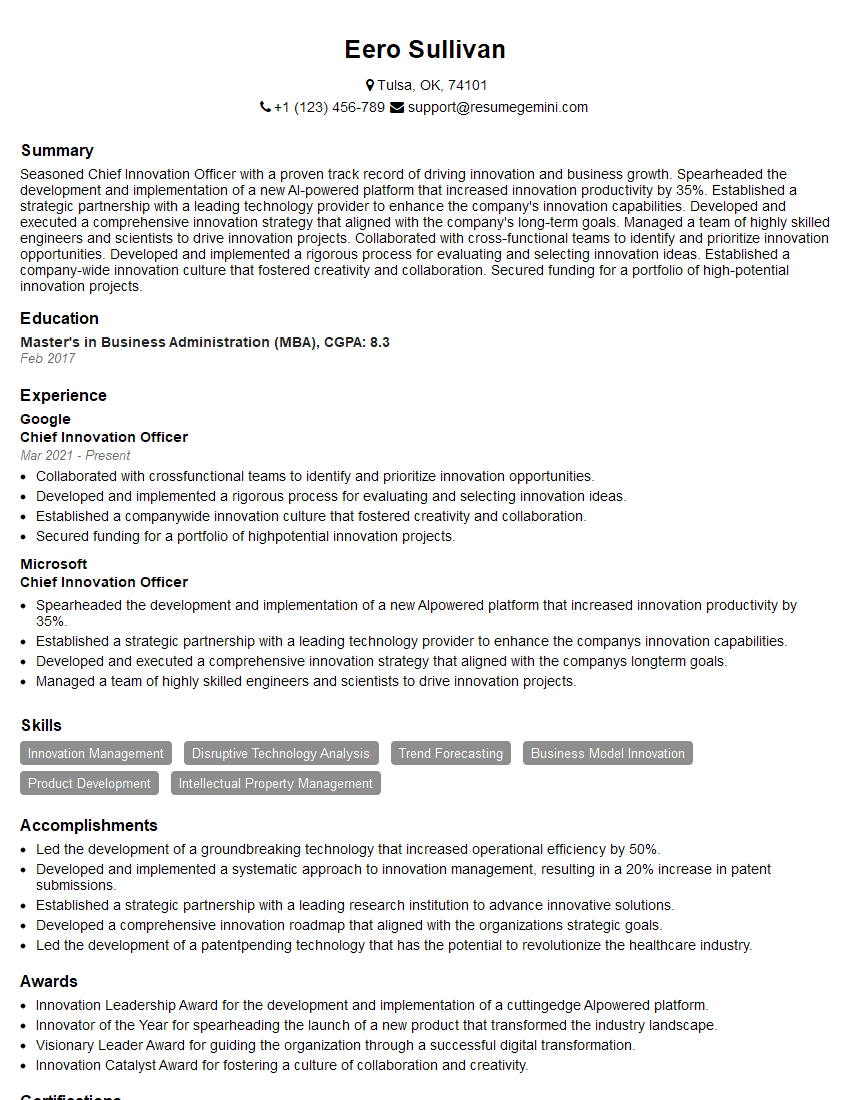
Mastering Industry-Academia Collaborations is crucial for career advancement, opening doors to exciting and impactful roles bridging the gap between research and practical application. To maximize your job prospects, it’s vital to craft an ATS-friendly resume that showcases your relevant skills and experience effectively. ResumeGemini is a trusted resource to help you build a professional and compelling resume that stands out from the competition. Examples of resumes tailored to highlight experience in Industry-Academia Collaborations are available to guide you through the process.
Explore more articles
Users Rating of Our Blogs
Share Your Experience
We value your feedback! Please rate our content and share your thoughts (optional).
What Readers Say About Our Blog
To the interviewgemini.com Webmaster.
Very helpful and content specific questions to help prepare me for my interview!
Thank you
To the interviewgemini.com Webmaster.
This was kind of a unique content I found around the specialized skills. Very helpful questions and good detailed answers.
Very Helpful blog, thank you Interviewgemini team.