The thought of an interview can be nerve-wracking, but the right preparation can make all the difference. Explore this comprehensive guide to International Fisheries Development interview questions and gain the confidence you need to showcase your abilities and secure the role.
Questions Asked in International Fisheries Development Interview
Q 1. Explain the concept of Maximum Sustainable Yield (MSY) and its limitations.
Maximum Sustainable Yield (MSY) is the largest average catch that can be taken from a stock or stock complex on a continuing basis. Imagine a bank account: MSY is like the maximum amount you can withdraw each year without depleting your principal. It’s a cornerstone of fisheries management, aiming to balance harvesting with the stock’s ability to replenish itself. The calculation involves understanding the stock’s growth rate and carrying capacity (the maximum population size the environment can support).
However, MSY has significant limitations. It’s based on simplified models that often ignore crucial factors like:
- Environmental variability: Fluctuations in temperature, prey availability, and disease can drastically impact a fish stock’s ability to recover from fishing pressure.
- Ecosystem interactions: MSY often focuses solely on a target species, neglecting its role within the broader ecosystem. Overfishing one species can have cascading effects on others.
- Uncertainty in stock assessments: Estimating population size and growth rate is inherently challenging, leading to potential errors in MSY calculations.
- Bycatch: Non-target species caught incidentally can significantly impact biodiversity, often exceeding the effects on the target species.
For example, focusing solely on MSY of cod in the North Atlantic led to overfishing and ecosystem collapse, impacting numerous other species. Modern fisheries management increasingly shifts from MSY to more precautionary approaches that incorporate these limitations.
Q 2. Describe different fishing gear types and their environmental impacts.
Fishing gear varies significantly, each with its own environmental impact. Some common types include:
- Gillnets: These nets are suspended in the water column, capturing fish by their gills. They can lead to significant bycatch, including marine mammals, sea turtles, and seabirds.
- Trawls: Large nets dragged along the seabed or through the water column. Bottom trawling causes habitat destruction and high bycatch rates.
- Longlines: Long lines with baited hooks, effective for catching pelagic species (those living in open water). While generally more selective than trawls, they still pose risks to seabirds and marine mammals.
- Purse seines: Large nets used to encircle schools of fish. Although relatively selective, they can lead to incidental capture of non-target species if not deployed carefully.
The environmental impact depends not only on the gear type but also on fishing practices. For instance, poorly managed bottom trawling can devastate benthic habitats, while using gear with appropriate bycatch reduction devices (BRDs) can mitigate the impact of gillnets and longlines. Sustainable fisheries emphasize the use of selective gear and responsible fishing practices to minimize environmental harm.
Q 3. What are the key challenges in managing transboundary fish stocks?
Managing transboundary fish stocks—those that migrate across national boundaries—presents unique challenges. Imagine trying to manage a shared bank account with multiple individuals having differing financial goals. The key difficulties include:
- Coordination among nations: Requires international cooperation and agreement on management measures. Differing economic priorities, political systems, and levels of enforcement capacity can hinder consensus.
- Data sharing and scientific collaboration: Requires transparent data sharing among countries to conduct accurate stock assessments and develop effective management strategies. Lack of data or mistrust can impede progress.
- Enforcement: Difficult to monitor and enforce agreements across international waters. Illegal, unreported, and unregulated (IUU) fishing remains a significant problem.
- Equity and fairness: Distributing the benefits (e.g., fishing quotas) fairly among countries sharing the resource is crucial to prevent conflicts.
Examples include the management of tuna stocks in the Indian Ocean or the Pacific salmon populations that cross borders in North America. Successful management hinges on building strong international partnerships, using science-based approaches, and addressing the interests of all stakeholders.
Q 4. Discuss the role of aquaculture in food security and its potential environmental impacts.
Aquaculture, or fish farming, plays a crucial role in global food security, providing a significant portion of the seafood consumed worldwide. It helps alleviate pressure on wild fish stocks and provides a valuable source of protein, particularly in developing nations. However, its rapid expansion has raised significant environmental concerns.
Potential environmental impacts include:
- Habitat destruction: Conversion of mangroves and other coastal habitats for aquaculture ponds.
- Water pollution: Discharge of uneaten feed, fish waste, and antibiotics can pollute surrounding waters, harming aquatic ecosystems.
- Escapes of farmed fish: Farmed fish can escape and interbreed with wild populations, potentially compromising genetic diversity and disease resistance.
- Disease outbreaks: High densities of fish in aquaculture facilities can increase the risk of disease outbreaks, which may spread to wild populations.
Sustainable aquaculture practices aim to mitigate these impacts through responsible site selection, environmentally friendly feed, integrated multi-trophic aquaculture (IMTA) systems, and effective waste management. Certification programs and eco-labeling schemes provide consumers with information about sustainably produced seafood.
Q 5. Explain the concept of ecosystem-based fisheries management.
Ecosystem-based fisheries management (EBFM) shifts from a focus on single species to managing the entire marine ecosystem. Instead of just considering the target fish, it considers the intricate relationships between all species and their habitats. Imagine managing a forest by focusing on just one tree species – you’d miss the impact on other plants, animals, and the soil itself. EBFM adopts a holistic approach.
Key aspects of EBFM include:
- Considering ecological interactions: Understanding the relationships between predator and prey, competition, and habitat use.
- Maintaining biodiversity: Protecting the diversity of species and habitats.
- Managing bycatch: Minimizing the incidental capture of non-target species.
- Protecting habitats: Conserving essential habitats like spawning grounds and nurseries.
- Adaptive management: Continuously monitoring and adjusting management strategies based on new information.
EBFM necessitates a more integrated and collaborative approach, involving scientists, fishermen, managers, and other stakeholders to develop and implement effective strategies. It acknowledges the complexity of marine ecosystems and aims for long-term sustainability.
Q 6. How do you assess the health of a fish stock?
Assessing the health of a fish stock involves a multi-faceted approach, combining various data sources and analytical techniques. The process typically includes:
- Stock assessments: Estimating the abundance, biomass, and productivity of the fish stock using various methods, including acoustic surveys, catch data, and scientific trawls.
- Age and growth studies: Determining the age structure and growth rates of fish to understand their life history and productivity.
- Reproductive biology studies: Evaluating the reproductive potential of the stock, assessing factors influencing recruitment (the addition of young fish to the population).
- Monitoring environmental conditions: Tracking changes in water temperature, salinity, and other environmental factors that may impact the stock’s health and distribution.
- Assessing fishing mortality: Estimating the proportion of fish stock removed by fishing, accounting for both target and bycatch species.
The results from these assessments are then used to calculate indicators like spawning stock biomass (SSB) relative to its target level and fishing mortality relative to its reference point, helping us determine the stock’s health and sustainability.
Q 7. What are the main indicators of sustainable fisheries?
Sustainable fisheries are characterized by several key indicators, aiming to ensure that fish stocks are healthy, ecosystems are protected, and fishing practices are responsible. These include:
- Spawning stock biomass (SSB) above biologically safe levels: Ensuring enough mature fish are present to maintain the population.
- Fishing mortality below sustainable levels: Avoiding overfishing and allowing the stock to replenish.
- Low bycatch rates: Minimizing the incidental capture of non-target species.
- Healthy ecosystem structure and function: Maintaining the biodiversity and ecological integrity of the fishing grounds.
- Compliance with regulations: Effective enforcement of fishing regulations and reduction of illegal fishing.
- Social and economic sustainability: Ensuring that fishing provides a viable livelihood for fishing communities and contributes to food security without depleting the resource.
These indicators are often combined into a more holistic assessment of sustainability. Certifications, such as Marine Stewardship Council (MSC) certification, assess fisheries against these indicators to provide consumers with assurances about the sustainability of their seafood choices.
Q 8. Describe different approaches to fisheries certification and traceability.
Fisheries certification and traceability are crucial for ensuring sustainable and responsible fishing practices. They provide consumers with information about the origin and handling of seafood products, helping them make informed choices. Different approaches exist, focusing on various aspects of the supply chain.
- Eco-labels: These certifications, such as the Marine Stewardship Council (MSC) and Aquaculture Stewardship Council (ASC) certifications, assess entire fisheries or aquaculture operations against rigorous sustainability standards. They verify responsible fishing practices, stock health, and environmental impact. Think of it like a ‘Good Housekeeping Seal of Approval’ for seafood.
- Traceability Systems: These systems use technology, such as blockchain or RFID tagging, to track seafood from catch to consumer. This allows for greater transparency and accountability, enabling consumers and regulators to identify the source of the product and verify its legality and sustainability. Imagine scanning a QR code on a fish package to see its journey from the ocean to your plate.
- Individual Vessel Certifications: Some certifications focus on individual fishing vessels, assessing their compliance with regulations and best practices. This approach provides a granular level of scrutiny and helps to identify and address issues within specific operations.
- Chain of Custody Certification: This focuses on verifying that seafood products maintain their certified status throughout the supply chain, from harvesting to processing and distribution. This ensures that the claims made by the initial certification are accurate at each stage.
The choice of approach often depends on the specific goals, the scale of the operation, and the available resources. A combination of approaches is often the most effective way to ensure both sustainability and traceability.
Q 9. What are the key elements of a successful fisheries co-management plan?
Successful fisheries co-management plans require a collaborative approach between government agencies and fishing communities. The key elements include:
- Clearly Defined Objectives: The plan must specify clear goals, such as maintaining stock levels, protecting biodiversity, or improving the economic viability of the fishery.
- Shared Decision-Making: Both government and fishing communities must be actively involved in the decision-making process, ensuring that the plan reflects the needs and concerns of all stakeholders. This often involves joint committees or working groups.
- Equitable Benefit Sharing: The benefits and costs of the co-management plan should be fairly distributed among all participants. This may involve revenue sharing, access rights, or other mechanisms.
- Effective Monitoring and Enforcement: A system for monitoring compliance with the plan’s provisions and enforcing regulations is essential. This often involves participation from both government and community members.
- Adaptive Management: The plan should be flexible and adaptable to changing circumstances, such as environmental changes or shifts in market demand. Regular reviews and adjustments are necessary.
- Capacity Building: Providing training and resources to fishing communities to enable effective participation in the co-management process is crucial. This may include training in data collection, conflict resolution, and management techniques.
A successful co-management plan in the Alaskan salmon fishery, for example, demonstrates how this approach can lead to both sustainable resource management and strong community involvement.
Q 10. Discuss the impact of climate change on fisheries resources.
Climate change is significantly impacting fisheries resources globally, posing a substantial threat to marine ecosystems and the livelihoods that depend on them. The effects are multifaceted:
- Ocean Warming: Rising ocean temperatures cause shifts in species distribution, as fish and other marine organisms migrate to cooler waters. This can lead to changes in species composition and disrupt established food webs.
- Ocean Acidification: Increased absorption of carbon dioxide by the oceans reduces the pH level, making it harder for shell-forming organisms like corals, shellfish, and plankton to build and maintain their shells. This has cascading effects throughout the food chain.
- Sea Level Rise: Rising sea levels can inundate coastal habitats such as mangroves and salt marshes, which serve as important nursery grounds for many fish species.
- Changes in Currents and Upwelling: Alterations in ocean currents and upwelling patterns can affect nutrient distribution and the productivity of marine ecosystems.
- Increased Frequency and Intensity of Extreme Weather Events: More frequent and intense storms, hurricanes, and heatwaves can damage coastal habitats and disrupt fish populations.
These changes have profound implications for fisheries productivity, leading to decreased catches, shifts in species abundance, and economic losses for fishing communities. Understanding and adapting to these changes is crucial for sustainable fisheries management in the future.
Q 11. How can bycatch be minimized?
Bycatch, the unintentional capture of non-target species, is a significant problem in fisheries. Minimizing bycatch requires a multi-pronged approach:
- Improved Fishing Gear: Using selective fishing gear, such as modified nets or hooks, can reduce the capture of non-target species. Turtle excluder devices (TEDs) in shrimp trawls, for instance, are a prime example.
- Fishing Techniques: Employing fishing techniques that minimize habitat disturbance can also reduce bycatch. This includes avoiding fishing in sensitive areas or during critical life stages of non-target species.
- Spatial and Temporal Management: Closing certain areas or seasons to fishing can protect vulnerable species or habitats during critical periods.
- Fishing Depth Restrictions: Restricting fishing depth can minimize the impact on deep-sea species, which are often slow-growing and vulnerable.
- Bycatch Reporting and Monitoring: Accurate reporting and monitoring of bycatch are essential for assessing the effectiveness of management measures and identifying areas needing improvement. This data is crucial for science-based management decisions.
- Technological Advancements: Utilizing technologies like sonar and underwater cameras to better understand the marine environment and avoid sensitive areas can further minimize bycatch.
A comprehensive approach integrating these strategies is necessary to significantly reduce bycatch and protect marine biodiversity.
Q 12. Explain the role of international organizations in fisheries management.
International organizations play a vital role in fisheries management by providing a framework for cooperation and coordination among nations. These organizations:
- Develop international agreements and treaties: Organizations like the Food and Agriculture Organization of the United Nations (FAO) help countries negotiate and implement agreements on issues such as stock assessment, fishing quotas, and combating illegal, unreported, and unregulated (IUU) fishing.
- Provide technical assistance and capacity building: They offer support to developing countries in areas such as stock assessment, fisheries management planning, and enforcement.
- Facilitate data sharing and scientific collaboration: International organizations promote the collection, analysis, and sharing of fisheries data, enabling a more informed understanding of fish stocks and ecosystems.
- Promote sustainable fisheries practices: They work to encourage the adoption of sustainable fisheries management practices and promote responsible aquaculture.
- Combat IUU fishing: They coordinate efforts to combat IUU fishing, a major threat to global fish stocks.
The FAO, in particular, serves as a central hub for international cooperation on fisheries, providing technical guidance, setting standards, and facilitating collaboration among countries.
Q 13. What are the main legal frameworks governing international fisheries?
The main legal frameworks governing international fisheries are complex and multifaceted, varying depending on the specific region and species involved. Key components include:
- The United Nations Convention on the Law of the Sea (UNCLOS): This treaty establishes a framework for national jurisdiction over marine resources, including fisheries, defining coastal state rights and responsibilities.
- Regional Fisheries Management Organizations (RFMOs): These organizations are established by agreement among coastal states and manage fish stocks in specific regions. They set fishing quotas, establish fishing regulations, and combat IUU fishing.
- Bilateral and Multilateral Agreements: Countries often enter into bilateral or multilateral agreements to manage shared fish stocks or address specific fisheries issues.
- National Laws and Regulations: Each country has its own laws and regulations governing fisheries within its jurisdiction. These may address issues such as licensing, gear restrictions, and catch limits.
These legal frameworks aim to ensure the sustainable use of fish stocks and prevent overfishing. Enforcement, however, remains a significant challenge, especially in combating IUU fishing.
Q 14. Discuss the economic aspects of fisheries management, including valuation methods.
Fisheries management involves significant economic considerations, requiring careful assessment of both the costs and benefits of different management strategies. Valuation methods are crucial for understanding the economic impact of fisheries decisions.
- Market-Based Valuation: This approach uses market prices to estimate the economic value of fish catches. This is straightforward for commercially important species but doesn’t capture the value of non-market benefits.
- Contingent Valuation: This technique uses surveys to elicit consumers’ willingness to pay for various levels of fisheries conservation. It’s particularly useful for assessing non-market benefits like biodiversity or recreational fishing.
- Travel Cost Method: This method estimates the economic value of recreational fisheries by considering the costs people incur to access fishing grounds. It’s frequently used for assessing the value of recreational fishing activities.
- Production Function Approach: This approach focuses on the economic output of the fishery, considering factors such as labor, capital, and resources used in fishing operations.
- Ecosystem Services Valuation: This broader approach considers the economic value of the various ecosystem services provided by marine ecosystems, including fisheries, such as carbon sequestration, nutrient cycling, and coastal protection.
Choosing the appropriate valuation method depends on the specific objectives and the available data. Effective fisheries management requires a comprehensive economic analysis that considers both the market and non-market values of fisheries resources. Ignoring the economic dimensions can lead to unsustainable fishing practices and ultimately, damage to both the environment and the economy.
Q 15. How can you ensure data accuracy and reliability in fisheries assessments?
Ensuring data accuracy and reliability in fisheries assessments is crucial for effective management. It’s like building a house – you need a strong foundation. We achieve this through a multi-pronged approach:
Standardized Data Collection: Implementing consistent methods across all data collection points, using standardized protocols and trained personnel. This minimizes inconsistencies and errors. For example, using a specific fish measuring board and recording form ensures consistent length measurements.
Data Validation and Quality Control: Implementing rigorous checks at every stage, from initial data entry to final analysis. This can involve range checks (are the data within biologically realistic limits?), consistency checks (do different data sources show similar trends?), and plausibility checks. Think of this as proofreading your work before submitting it.
Multiple Data Sources: Relying on diverse data sources, such as catch records from fishing vessels, scientific surveys, and market data, to cross-validate findings and reduce bias. Imagine having multiple witnesses to the same event – their combined accounts are more reliable.
Statistical Modeling and Analysis: Employing appropriate statistical techniques to account for uncertainty and variability in the data. This helps to quantify the reliability of our estimates and understand the range of possible outcomes.
Transparency and Peer Review: Making data and methodologies publicly available and subject to peer review to ensure transparency and identify potential biases or errors. This is akin to open-source software – collaborative review leads to better results.
Career Expert Tips:
- Ace those interviews! Prepare effectively by reviewing the Top 50 Most Common Interview Questions on ResumeGemini.
- Navigate your job search with confidence! Explore a wide range of Career Tips on ResumeGemini. Learn about common challenges and recommendations to overcome them.
- Craft the perfect resume! Master the Art of Resume Writing with ResumeGemini’s guide. Showcase your unique qualifications and achievements effectively.
- Don’t miss out on holiday savings! Build your dream resume with ResumeGemini’s ATS optimized templates.
Q 16. Describe different methods for assessing fishing effort.
Assessing fishing effort – essentially, how much fishing is happening – is complex. Different methods exist, each with its strengths and weaknesses:
Number of Vessels and Days at Sea: A simple, but often imprecise measure. It counts the number of fishing vessels operating and the number of days they spend fishing. This is like counting cars on a highway – it gives a general sense of traffic, but doesn’t tell you about individual vehicle speed or efficiency.
Gear Type and Capacity: This considers the type of fishing gear (e.g., trawls, longlines) and its capacity (e.g., the size of the net, the number of hooks). A larger trawler will have a higher fishing capacity than a smaller one, even if both fish the same number of days.
Fuel Consumption: A proxy for effort, correlating fuel use with the amount of fishing done. This is better suited for motorized vessels and provides a more quantitative measure.
Catch per Unit Effort (CPUE): A widely used method that compares the amount of fish caught to the effort exerted. A decreasing CPUE might suggest that fish stocks are declining. It’s like tracking the efficiency of a hunter – fewer animals per hour spent hunting might indicate reduced prey population.
Power and Engine Size: Modern assessment includes power and engine size of vessels as a more accurate indicator of capacity and fishing power.
Q 17. What are the social and economic impacts of fisheries closures?
Fisheries closures, while necessary for stock recovery, have significant social and economic impacts. Imagine a bustling town suddenly losing its main industry.
Economic Impacts: Job losses in fishing, processing, and related industries are common. Reduced incomes lead to decreased spending in local communities, potentially impacting other businesses. Think of the ripple effect.
Social Impacts: Loss of livelihoods can lead to social unrest, migration, and increased poverty. Traditional fishing communities often rely heavily on fishing for their cultural identity and social cohesion. This disruption can be deeply felt.
Mitigation Strategies: Effective management requires mitigation strategies such as providing alternative livelihoods (e.g., aquaculture, tourism), providing social safety nets (e.g., unemployment benefits), and engaging communities in the decision-making process. This ensures that the burden is shared and that recovery efforts are aligned with local needs.
Q 18. How can you promote sustainable fishing practices among fishers?
Promoting sustainable fishing practices requires a multifaceted approach, combining education, incentives, and enforcement:
Education and Awareness: Educating fishers about sustainable fishing techniques, the importance of stock conservation, and the long-term benefits of responsible fishing. This might involve workshops, training programs, and community outreach initiatives.
Incentive Programs: Providing economic incentives for adopting sustainable practices, such as certification programs (e.g., Marine Stewardship Council certification) that command premium prices. Think of it as rewarding good behavior.
Community-Based Management: Empowering local communities to manage their own fisheries. This fosters a sense of ownership and responsibility.
Technological Advancements: Introducing selective fishing gear that minimizes bycatch (unintentional capture of non-target species) and reduces environmental impact. This includes innovations such as turtle excluder devices (TEDs) for shrimp trawls.
Enforcement and Monitoring: Strict enforcement of fishing regulations to deter illegal and unsustainable practices. This includes regular patrols, inspections, and penalties for violations.
Q 19. What are the challenges in implementing fisheries regulations?
Implementing fisheries regulations presents numerous challenges:
Enforcement Difficulties: Monitoring vast ocean areas is challenging, making it difficult to enforce regulations effectively. Think of policing a huge, mostly unseen area.
Illegal, Unreported, and Unregulated (IUU) Fishing: IUU fishing undermines sustainable management efforts, as it often involves illegal gear, overfishing, and lack of accountability.
Data Scarcity: Lack of reliable data on fish stocks, fishing effort, and other relevant factors can hinder the development and implementation of effective regulations.
Political and Economic Pressures: Political and economic interests can interfere with the implementation of regulations, particularly when they clash with powerful industries.
Lack of Cooperation: Effective fisheries management often requires international cooperation, which can be difficult to achieve due to conflicting national interests.
Q 20. How do you monitor and evaluate the effectiveness of fisheries management strategies?
Monitoring and evaluating the effectiveness of fisheries management strategies is essential for adaptive management. This involves:
Stock Assessments: Regularly assessing fish stock abundance and trends using scientific surveys and catch data. This helps to determine whether management measures are achieving their objectives.
Monitoring Fishing Effort: Tracking fishing effort to ensure that it is consistent with management targets. This might involve vessel monitoring systems (VMS) and catch reporting requirements.
Economic Analysis: Assessing the economic impacts of management strategies on fishing communities and related industries. This helps to evaluate the costs and benefits of different approaches.
Social Impact Assessments: Evaluating the social impacts of management strategies on communities, including their livelihoods, well-being, and cultural practices.
Adaptive Management: Using monitoring data to adjust management strategies as needed. This iterative approach allows for flexible responses to changing conditions and new information.
Q 21. Explain the concept of fishing rights and their allocation.
Fishing rights represent the legal entitlement to harvest fish from a particular area or stock. Allocation mechanisms determine who gets these rights. Think of it as dividing up a shared resource.
Individual Transferable Quotas (ITQs): This system allocates fishing rights to individuals or companies in the form of quotas, which can be bought and sold. This promotes efficiency and allows for flexible management.
Community-Based Management: Local communities are given the right to manage fisheries within their traditional fishing grounds. This fosters local stewardship and supports community development.
National Jurisdiction: Coastal states have sovereign rights over their Exclusive Economic Zones (EEZs), granting them primary control over fisheries within those areas. International agreements often regulate fisheries in areas beyond national jurisdiction.
Auctioning of Rights: Rights are sold through competitive bidding. This mechanism can generate revenue for conservation efforts.
Allocation Criteria: Various factors may determine how fishing rights are allocated, including historical fishing practices, economic efficiency, social equity, and conservation needs. Striking the balance between these factors is key to fair and effective management.
Q 22. Describe different approaches to managing fisheries conflicts.
Fisheries conflicts arise from competing interests over limited resources. Managing these conflicts requires a multifaceted approach. Key strategies include:
- Negotiation and Mediation: Facilitating dialogue between stakeholders (fishermen, government agencies, conservation groups) to find mutually acceptable solutions. This often involves identifying shared interests and addressing underlying concerns.
- Co-management: Sharing decision-making power between government and local communities. This empowers local communities to manage their resources sustainably and reduces the likelihood of conflict.
- Allocation Schemes: Implementing clear and equitable systems for allocating fishing rights, quotas, or access to fishing grounds. This might involve individual transferable quotas (ITQs), territorial user rights in fisheries (TURFs), or other methods designed to reduce competition.
- Enforcement and Compliance: Establishing robust monitoring, control, and surveillance systems to prevent illegal fishing and ensure compliance with regulations. This includes things like vessel monitoring systems (VMS) and regular patrols.
- Conflict Resolution Mechanisms: Establishing formal mechanisms for resolving disputes, including mediation, arbitration, or legal processes. This provides a structured way to handle disagreements peacefully.
For example, in the case of overlapping fishing grounds between two countries, a successful approach might involve a combination of negotiated agreements on fishing quotas, joint patrols to monitor compliance, and a framework for resolving disputes through diplomacy.
Q 23. How can technology be used to improve fisheries management?
Technology plays a vital role in modern fisheries management. Several applications significantly improve efficiency and sustainability:
- Remote Sensing: Satellites and aerial surveys provide data on fish stocks, habitat conditions, and illegal fishing activity. This allows for more effective monitoring of vast ocean areas.
- Vessel Monitoring Systems (VMS): These systems track the location and activities of fishing vessels in real-time, enhancing enforcement and combating IUU fishing. Data from VMS can be analyzed to identify patterns of illegal activity.
- Acoustic Technology: Sonar and other acoustic methods assess fish abundance and distribution. This provides crucial information for setting catch limits and managing fisheries sustainably.
- Data Management and Analysis: Software and databases are crucial for collecting, storing, and analyzing fisheries data from various sources. This facilitates better informed decision-making.
- Genetic Analysis: DNA analysis can help identify different fish species, track fish movement and migration patterns, and combat illegal trade in endangered species.
- Artificial Intelligence (AI) and Machine Learning: AI can analyze vast datasets to identify patterns, predict fish stocks, and optimize management strategies.
For instance, the use of VMS has drastically reduced IUU fishing in some regions by providing real-time data on vessel movements, allowing authorities to quickly respond to suspicious activity.
Q 24. What are the key issues related to illegal, unreported, and unregulated (IUU) fishing?
Illegal, unreported, and unregulated (IUU) fishing poses a significant threat to the sustainability of global fisheries. Key issues include:
- Depletion of Fish Stocks: IUU fishing removes fish from the ocean without any management controls, leading to overfishing and stock collapse. This undermines the long-term viability of fisheries.
- Economic Losses: IUU fishing undermines legitimate fishing operations, causing economic losses to law-abiding fishers and coastal communities. It also deprives governments of revenue from legal fishing activities.
- Environmental Damage: IUU fishing often employs destructive fishing practices like blast fishing or bottom trawling, which damage sensitive marine habitats and ecosystems.
- Social Impacts: IUU fishing can exacerbate existing social inequalities, particularly in developing countries where it undermines livelihoods and food security.
- Difficulty in Enforcement: The vastness of the ocean and the challenges in monitoring fishing activity make enforcement of regulations difficult. This allows IUU fishing to persist.
For example, the impact of IUU fishing on bluefin tuna populations has significantly impacted the livelihoods of legal fishers dependent on sustainable tuna fisheries and has severely depleted a valuable global resource.
Q 25. Discuss the role of market-based instruments in promoting sustainable fisheries.
Market-based instruments (MBIs) provide economic incentives to promote sustainable fisheries. These include:
- Individual Transferable Quotas (ITQs): ITQs allocate fishing rights to individual fishers, who can then buy, sell, or lease these quotas. This creates a market for fishing rights, incentivizing efficient fishing and conservation.
- Taxes and Fees: Governments can impose taxes or fees on fishing activities, increasing the cost of overfishing and encouraging more sustainable practices. The revenue generated can also fund fisheries management.
- Payments for Ecosystem Services (PES): Fishermen can be compensated for adopting sustainable practices that benefit the environment, such as reducing bycatch or protecting marine habitats. This creates financial incentives for conservation.
- Eco-labeling and Certification: Consumers can choose to buy seafood from sustainably managed fisheries, creating market demand for eco-friendly products. This encourages responsible fishing practices.
For example, the success of ITQ systems in Iceland and New Zealand demonstrates how MBIs can lead to improved fish stock management and economic benefits for fishers. However, careful design and implementation are crucial to avoid negative equity and social consequences.
Q 26. What are the principles of responsible aquaculture?
Responsible aquaculture, also known as sustainable aquaculture, prioritizes environmental protection, social equity, and economic viability. Key principles include:
- Minimizing Environmental Impact: Reducing the use of chemicals, antibiotics, and pesticides; minimizing water pollution and waste; and using sustainable feed sources.
- Protecting Biodiversity: Preventing the escape of farmed fish into wild populations; minimizing impacts on wild fish stocks; and avoiding the destruction of important habitats.
- Promoting Social Equity: Ensuring fair labor practices; promoting economic opportunities for local communities; and respecting the rights of indigenous people.
- Ensuring Economic Viability: Implementing efficient and profitable farming practices; managing production costs; and creating access to markets for farmed products.
- Transparency and Traceability: Maintaining accurate records of production processes, ensuring traceability of products, and fostering transparency in supply chains.
For instance, recirculating aquaculture systems (RAS) minimize water usage and pollution, while integrated multi-trophic aquaculture (IMTA) integrates different species to create a more sustainable and balanced ecosystem.
Q 27. How can you promote gender equality in the fisheries sector?
Promoting gender equality in the fisheries sector requires addressing systemic inequalities that limit women’s participation and opportunities. Key strategies include:
- Legal and Policy Reform: Ensuring that laws and policies promote equal access to resources and opportunities for women, including fishing licenses, credit, and training.
- Access to Resources and Technologies: Providing women with access to credit, training, and new technologies to improve their productivity and income generation.
- Capacity Building and Education: Providing training and education opportunities to enhance women’s skills and knowledge in areas such as fisheries management, business development, and technology.
- Empowerment and Leadership: Supporting women’s participation in decision-making processes at all levels, from community-based management to national policy-making.
- Challenging Social Norms: Addressing gender stereotypes and societal norms that limit women’s participation in the fisheries sector.
Examples of successful initiatives include programs that provide women with training in boat maintenance or business management, creating opportunities for women to participate in value-added processing of fish products.
Q 28. Describe your experience with fisheries data analysis and interpretation.
My experience with fisheries data analysis and interpretation spans over [Number] years, encompassing a wide range of projects. I’m proficient in using various statistical software packages, including [List Software – e.g., R, SPSS, SAS], to analyze diverse datasets, such as catch statistics, stock assessments, and socio-economic data related to fishing communities.
A recent project involved analyzing catch data from [Specific Region/Fishery] to assess the impact of different fishing gear on bycatch rates. Using [Statistical Method – e.g., generalized linear models], I identified significant differences in bycatch across gear types, providing evidence to inform gear regulations and improve fisheries management. I have also worked on developing spatial models to map fish distribution and predict stock abundance under different climate change scenarios. This involved employing [Specific Techniques – e.g., GIS software and spatial statistical methods] to integrate various data sources, including satellite imagery and acoustic surveys.
My expertise extends to interpreting complex statistical outputs, communicating findings effectively to both technical and non-technical audiences, and formulating data-driven recommendations for policymakers and fisheries managers. I am particularly interested in using data to understand the socio-economic impacts of fisheries management decisions and to ensure that policy decisions are both environmentally sustainable and socially just.
Key Topics to Learn for International Fisheries Development Interview
- Sustainable Fisheries Management: Understanding ecosystem-based approaches, catch limits, and stock assessments. Consider the role of international agreements and regulations.
- Fisheries Governance and Policy: Analyzing the role of international organizations (e.g., FAO) in shaping fisheries policy. Explore the challenges of implementing and enforcing regulations across different jurisdictions.
- Aquaculture and its role in food security: Examine sustainable aquaculture practices and their impact on wild fish stocks. Discuss the environmental and social considerations of aquaculture development.
- Illegal, Unreported, and Unregulated (IUU) Fishing: Understand the scale of IUU fishing and its impact on fish stocks and economies. Explore strategies for combating IUU fishing, including traceability and technology.
- Climate Change and its impact on fisheries: Analyze how climate change affects fish populations, distribution, and habitats. Explore adaptation and mitigation strategies for fisheries in the face of climate change.
- Fisheries Economics and Trade: Understanding market dynamics, value chains, and the economic benefits and costs of fisheries development. Analyze trade agreements and their impact on international fisheries.
- Community-Based Fisheries Management (CBFM): Explore the principles and practical applications of CBFM. Discuss its role in ensuring social equity and resource sustainability.
- Data Analysis and Modeling in Fisheries: Understanding the use of data and statistical models in fisheries stock assessment and management. Develop your problem-solving skills using real-world fisheries data.
Next Steps
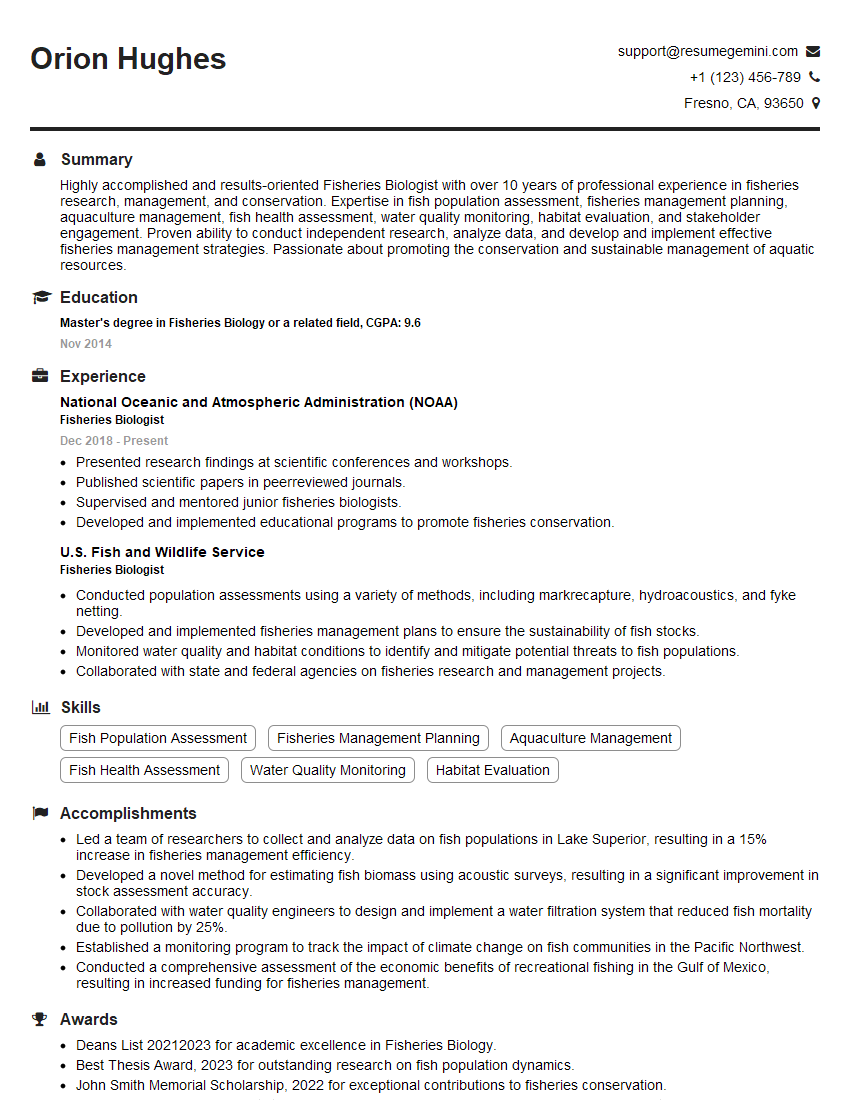
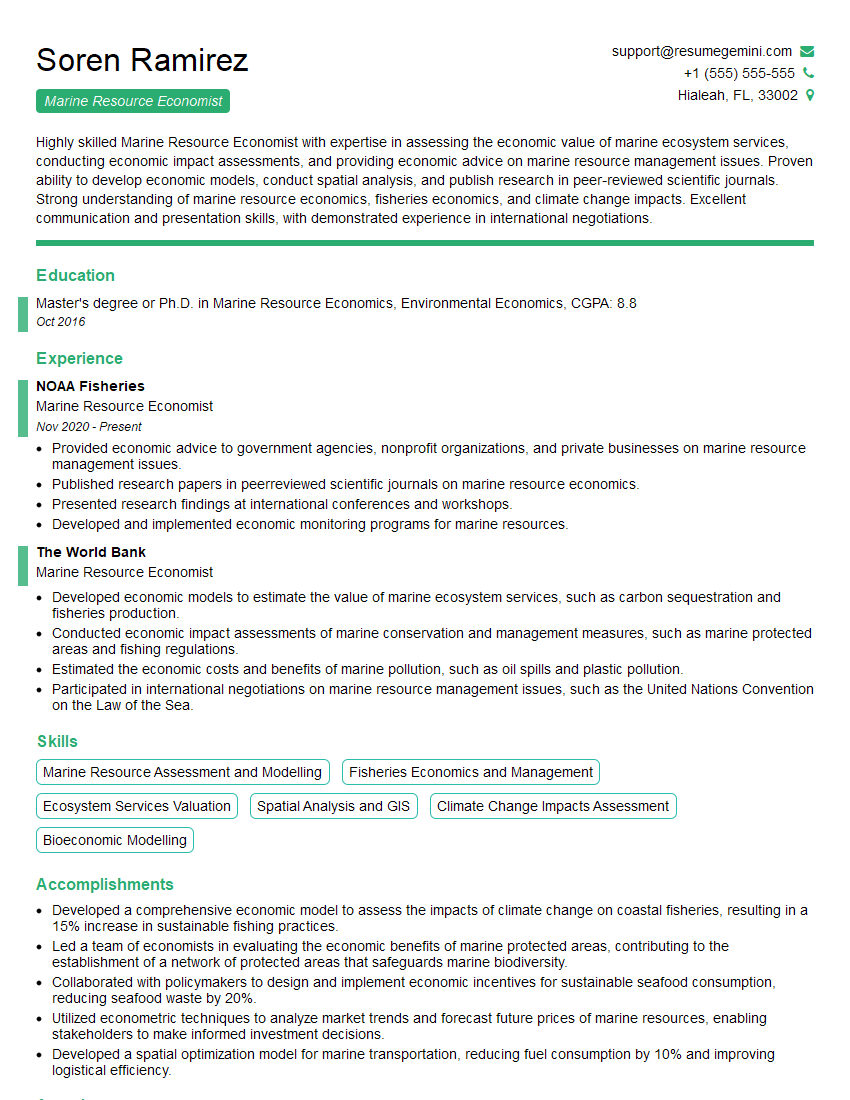
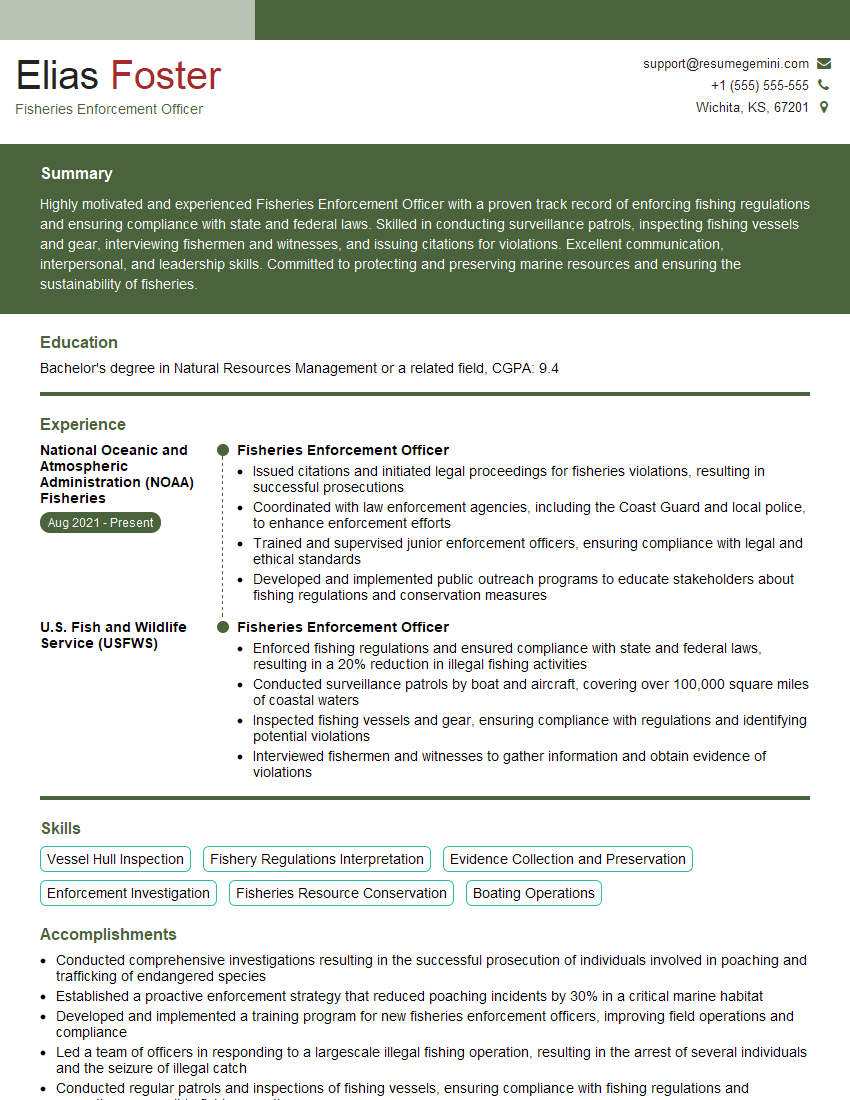
Mastering International Fisheries Development opens doors to a rewarding career contributing to global food security and environmental sustainability. Your expertise in sustainable practices, policy, and resource management will be highly valued. To maximize your job prospects, creating a strong, ATS-friendly resume is crucial. We encourage you to leverage ResumeGemini, a trusted resource, to build a professional and impactful resume that showcases your skills and experience effectively. Examples of resumes tailored to International Fisheries Development are available to guide you in this process.
Explore more articles
Users Rating of Our Blogs
Share Your Experience
We value your feedback! Please rate our content and share your thoughts (optional).
What Readers Say About Our Blog
To the interviewgemini.com Webmaster.
Very helpful and content specific questions to help prepare me for my interview!
Thank you
To the interviewgemini.com Webmaster.
This was kind of a unique content I found around the specialized skills. Very helpful questions and good detailed answers.
Very Helpful blog, thank you Interviewgemini team.