Interviews are more than just a Q&A session—they’re a chance to prove your worth. This blog dives into essential Internship or Clinical Experience interview questions and expert tips to help you align your answers with what hiring managers are looking for. Start preparing to shine!
Questions Asked in Internship or Clinical Experience Interview
Q 1. Describe your experience with patient care.
My patient care experience encompasses a wide range of activities, from assisting physicians with examinations and procedures to providing direct patient support. During my internship at [Hospital Name], I gained proficiency in taking vital signs, documenting patient information accurately in electronic health records (EHRs), and communicating effectively with patients and their families. For instance, I assisted a patient with mobility issues, helping them move more comfortably and safely, which not only improved their physical comfort but also boosted their emotional well-being. This experience highlighted the importance of empathy and careful communication in patient care. Furthermore, I participated in patient education initiatives, explaining post-operative care instructions to patients and answering their questions with clear and concise language. This involved adapting my communication style based on the patient’s understanding and comfort level.
Q 2. Explain your role in a specific clinical project.
In a clinical research project focused on the efficacy of a new wound-healing ointment, my role was primarily data collection and analysis. I was responsible for meticulously documenting patient progress, including wound size measurements (using digital calipers for accuracy) and photographs. I then input this data into a secure, HIPAA-compliant database. My contributions were crucial for ensuring the data’s integrity and reliability, forming the foundation for the project’s statistical analysis. This project required careful attention to detail and adherence to strict protocols to maintain data validity. For instance, I developed a standardized procedure for taking wound measurements to minimize variability between assessments, which helped reduce potential errors and improve data accuracy. This involved creating a checklist to ensure consistent methodology and using precise measurement tools.
Q 3. How did you handle a challenging situation during your internship?
During my internship, I faced a challenging situation when a patient became unexpectedly agitated and distressed. My immediate response was to remain calm and assess the situation. I prioritized the patient’s safety and comfort while attempting to understand the source of their distress. Through gentle communication and active listening, I discovered they were experiencing anxiety about their upcoming surgery. By providing reassurance and answering their questions patiently, I helped alleviate their anxiety and improve their overall emotional state. This situation taught me the significance of empathy, clear communication, and quick thinking in handling stressful situations in the clinical setting. I also learned the importance of seeking assistance from senior staff when needed, which I did after calming the patient, to ensure ongoing support and optimal patient care.
Q 4. What software or tools did you utilize during your internship?
Throughout my internship, I utilized several software and tools integral to modern healthcare. The primary tool was the hospital’s electronic health record (EHR) system, [System Name], which I used for patient data entry, documentation, and retrieval. I also became proficient in using [Name of Medical Imaging Software] for viewing and analyzing medical images, such as X-rays and MRIs. Additionally, I used statistical software, [Name of Statistical Software, e.g., SPSS], for basic data analysis in the clinical research project mentioned earlier. Finally, I became familiar with various communication platforms for secure messaging with healthcare professionals. Proficiency in these technologies proved invaluable in streamlining workflows and providing efficient patient care.
Q 5. Describe a time you had to work independently on a task.
I was tasked with independently creating a patient education pamphlet on post-operative care for a specific surgical procedure. This required me to research the relevant information, summarize it concisely, and present it in an easily understandable format. I leveraged my medical knowledge and utilized online resources, medical textbooks, and hospital protocols to gather accurate and reliable information. The process demanded meticulous attention to detail and a focus on effective communication strategies to ensure the pamphlet was both informative and user-friendly. This independent project helped me develop my research, writing, and organizational skills. The final product was reviewed and approved by the supervising physician, further highlighting the effectiveness and accuracy of my work.
Q 6. How did you contribute to your team’s success?
My contribution to the team’s success stemmed from my consistent reliability and proactive approach. I consistently completed my assigned tasks efficiently and accurately, ensuring the smooth flow of work within the team. For example, during a particularly busy period, I proactively offered assistance to colleagues with their tasks, demonstrating my commitment to teamwork and helping to alleviate pressure on the entire team. Furthermore, my meticulous data collection and analysis in the clinical research project were crucial for the project’s successful completion and the resulting publication. This emphasizes my dedication to quality and accuracy, which ultimately benefits the entire healthcare team.
Q 7. What technical skills did you develop during your internship?
My internship significantly enhanced my technical skills in several areas. I developed proficiency in using EHR systems and medical imaging software, essential for modern healthcare practices. I also gained valuable experience in utilizing statistical software for data analysis. Moreover, I honed my skills in medical documentation, ensuring accurate and complete recording of patient information. This hands-on experience translated into a stronger understanding of clinical workflow and data management. Finally, my understanding of HIPAA regulations and patient privacy protocols grew significantly. This well-rounded skillset prepares me for a successful career in healthcare.
Q 8. What were your key responsibilities in your previous internship?
During my internship at [Hospital/Company Name], my key responsibilities revolved around assisting the [Department Name] team with [Specific tasks, e.g., patient care, data entry, research]. This involved a multifaceted approach encompassing both direct patient interaction and behind-the-scenes support.
- Patient Care: I assisted nurses and doctors in various aspects of patient care, including taking vital signs, documenting patient information, and providing emotional support. For example, I helped a patient who was anxious about a procedure by calmly explaining the steps involved and reassuring them.
- Data Entry & Management: I was responsible for accurately entering patient data into the electronic health record system, ensuring data integrity and confidentiality. I learned to navigate complex medical terminology and coding systems to ensure accuracy.
- Research Support: I assisted in a research project focused on [Research Topic], which involved tasks such as data collection, literature reviews, and assisting with data analysis. This experience honed my research skills and allowed me to contribute to a meaningful study.
The collaborative nature of the internship allowed me to learn from experienced professionals and contribute meaningfully to the team’s goals. My performance was consistently praised for its accuracy and attention to detail.
Q 9. Describe a time you failed and what you learned from it.
One instance where I encountered a setback was during my involvement in a large-scale data analysis project. I initially misinterpreted a crucial dataset parameter, leading to flawed preliminary results. This error caused a delay in the project timeline and required additional effort to correct.
However, this mistake proved invaluable. I learned the critical importance of meticulous data validation and double-checking my work before drawing conclusions. I implemented a more robust system for data verification using cross-referencing and independent data checks. This experience reinforced the need for thoroughness and attention to detail, skills essential for accurate data analysis and interpretation in a clinical setting.
Q 10. How do you handle constructive criticism?
I view constructive criticism as a valuable opportunity for professional growth. I approach it with a proactive and receptive attitude. I actively listen to the feedback, ask clarifying questions if needed, and reflect on how I can improve.
For instance, if I receive feedback about my communication skills, I would seek to improve by practicing active listening techniques, structuring my communications more clearly, and seeking feedback on my communication style from colleagues. I see feedback not as personal criticism, but as a tool to enhance my performance and refine my skills. I document the feedback and create a plan to address the points raised, tracking my progress over time.
Q 11. How do you prioritize tasks when you’re overloaded?
When faced with an overwhelming workload, I utilize a prioritization system based on urgency and importance. I employ the Eisenhower Matrix (Urgent/Important), categorizing tasks into four quadrants: Do, Decide, Delegate, and Delete.
Do: Tasks that are both urgent and important receive immediate attention. Decide: Tasks that are important but not urgent are scheduled for completion. Delegate: Tasks that are urgent but not necessarily important are delegated to others if possible. Delete: Tasks that are neither urgent nor important are eliminated to free up time and resources. This method ensures that I focus my energy on the most impactful tasks while efficiently managing less critical responsibilities. I also leverage project management tools to visualize timelines and track progress.
Q 12. Describe your experience with data analysis and interpretation.
My experience with data analysis and interpretation involves proficiency in [List software, e.g., Excel, SPSS, R]. I’m comfortable with descriptive statistics, including calculating means, medians, and standard deviations. I have experience visualizing data through various charts and graphs, and I can interpret the results to draw meaningful conclusions.
In my internship, I analyzed patient data to identify trends in [Specific metric, e.g., recovery times, medication adherence]. I used statistical methods to determine correlations and statistically significant differences between groups. For example, I analyzed patient demographics and their response to a new treatment, presenting my findings in a clear and concise report. This involved cleaning, transforming, and analyzing the data using statistical software and presenting the findings through graphs and tables to communicate the results to the team effectively. My focus is always on ensuring the validity and reliability of the analysis.
Q 13. Explain your understanding of HIPAA regulations (if applicable).
HIPAA, the Health Insurance Portability and Accountability Act, is a US federal law designed to protect the privacy and security of patients’ health information. It establishes national standards for the protection of sensitive patient data. Key components include the Privacy Rule, Security Rule, and Breach Notification Rule.
- Privacy Rule: This protects the confidentiality of Protected Health Information (PHI), which includes demographic data, medical history, and insurance information. It dictates how this information can be used, disclosed, and protected.
- Security Rule: This mandates administrative, physical, and technical safeguards to protect electronic PHI from unauthorized access, use, disclosure, disruption, modification, or destruction.
- Breach Notification Rule: This requires covered entities to notify individuals and authorities in case of a data breach involving unsecured PHI.
During my internship, I strictly adhered to HIPAA regulations, understanding that violating these rules can result in severe penalties. I ensured all patient interactions and data handling followed established protocols, emphasizing confidentiality and security.
Q 14. How do you manage your time effectively?
Effective time management is crucial in a fast-paced clinical setting. I utilize a combination of strategies to manage my time effectively.
- Planning & Prioritization: I start each day by creating a prioritized to-do list, focusing on the most important and urgent tasks first. This helps me to stay focused and avoid feeling overwhelmed.
- Time Blocking: I allocate specific time blocks for particular tasks. This helps me to avoid task-switching and stay on track.
- Delegation: When appropriate, I delegate tasks to others to maximize efficiency and ensure that work is completed effectively.
- Regular Breaks: I incorporate short breaks throughout the day to avoid burnout and maintain focus.
- Technology: I use digital calendars and task management tools to stay organized and track my progress.
Regular review and adjustment of my time management strategies are vital in ensuring ongoing efficiency and productivity. I continuously strive to optimize my workflow to improve my time management skills and achieve optimal results.
Q 15. How do you stay organized in a fast-paced environment?
In a fast-paced clinical or internship environment, organization is paramount. I utilize a multifaceted approach encompassing both digital and analog strategies. Think of it like conducting a well-orchestrated symphony – each instrument (task) needs its place and time to shine.
Digital Tools: I rely heavily on project management software like Asana or Trello to create task lists, set deadlines, and track progress visually. This allows for a bird’s-eye view of all ongoing projects and ensures nothing slips through the cracks.
Time Blocking: I meticulously allocate specific time slots in my day for particular tasks. This prevents multitasking, a notorious productivity killer. For instance, I might dedicate two hours in the morning to reviewing patient charts and one hour in the afternoon to data entry.
Prioritization Matrix: I use a prioritization matrix (like the Eisenhower Matrix – Urgent/Important) to categorize tasks based on their urgency and importance. This helps me focus on high-impact activities first, ensuring efficient time management.
Regular Review and Adjustment: I regularly review my schedule and adjust it as needed. Unexpected events are common in clinical settings; flexibility is key. I treat my schedule as a living document, adapting it to accommodate unforeseen circumstances.
Career Expert Tips:
- Ace those interviews! Prepare effectively by reviewing the Top 50 Most Common Interview Questions on ResumeGemini.
- Navigate your job search with confidence! Explore a wide range of Career Tips on ResumeGemini. Learn about common challenges and recommendations to overcome them.
- Craft the perfect resume! Master the Art of Resume Writing with ResumeGemini’s guide. Showcase your unique qualifications and achievements effectively.
- Don’t miss out on holiday savings! Build your dream resume with ResumeGemini’s ATS optimized templates.
Q 16. Describe a time you had to adapt to a change in your internship.
During my previous internship at County General Hospital, the software used for patient record management underwent a significant change midway through my placement. Initially, I felt overwhelmed by the new system’s unfamiliar interface and workflow. It was like learning a new language overnight!
To adapt, I proactively sought training from the IT department and collaborated with experienced colleagues who were already familiar with the new software. I also utilized online tutorials and practiced consistently outside of work hours. I viewed this challenge as an opportunity for professional development, ultimately improving my technical skills and demonstrating adaptability.
This experience highlighted the importance of continuous learning and proactive problem-solving in dynamic work environments. I learned that embracing change and actively seeking support can lead to positive outcomes, even when faced with significant disruptions.
Q 17. How do you handle conflict with colleagues?
Conflict is inevitable in any collaborative setting, especially in high-pressure environments like clinical rotations. My approach focuses on open communication, empathy, and finding mutually agreeable solutions.
Active Listening: I prioritize understanding the other person’s perspective before formulating my response. This often involves carefully listening to their concerns without interruption.
Clear and Respectful Communication: I articulate my concerns clearly and respectfully, focusing on the issue at hand, not personal attacks. I use ‘I’ statements to express my feelings and avoid accusatory language.
Collaborative Problem Solving: Once we understand each other’s viewpoints, I work collaboratively to identify solutions that address everyone’s concerns. The goal is a win-win scenario where everyone feels heard and respected.
Seeking Mediation if Necessary: If the conflict remains unresolved, I am comfortable seeking mediation from a supervisor or mentor to facilitate a constructive resolution.
Q 18. What are your strengths and weaknesses as an intern?
My strengths as an intern include strong analytical skills, a proactive approach to problem-solving, and excellent communication abilities. I’m also a quick learner, capable of adapting to new technologies and procedures rapidly. For example, during my last rotation, I independently learned a new diagnostic tool, improving the efficiency of the team’s workflow.
My weakness, however, is occasionally over-committing myself. I’m driven to achieve high standards, which can sometimes lead to taking on too much at once. To mitigate this, I am working on refining my time management skills, using prioritization techniques to better allocate my time and energy. I also practice setting realistic goals and delegating tasks when appropriate.
Q 19. What are your salary expectations?
My salary expectations are in line with the market rate for interns with my experience and skillset in this specific field. I am open to discussing this further and would welcome the opportunity to learn more about the compensation package.
Q 20. Why are you interested in this specific internship?
I’m particularly interested in this internship because of [Company/Organization Name]’s commitment to [mention specific company value or project aligning with your interests, e.g., innovative research, community outreach, patient-centered care]. My coursework in [mention relevant coursework] has prepared me well for the challenges of this role, and I’m eager to apply my theoretical knowledge in a real-world setting. The opportunity to work alongside experienced professionals in this field and contribute to [mention specific project or aspect of the internship] is incredibly exciting.
Q 21. What are your long-term career goals?
My long-term career goal is to become a [mention your desired profession, e.g., licensed physician, registered nurse, medical researcher]. I envision myself contributing to advancements in [mention area of interest within your profession, e.g., cardiovascular health, cancer research, geriatric care] through [mention your approach, e.g., clinical practice, research, advocacy]. This internship represents a crucial step toward achieving this ambitious but attainable goal.
Q 22. How do you approach problem-solving in a clinical setting?
In a clinical setting, problem-solving involves a systematic approach prioritizing patient safety and well-being. I follow a structured process:
- Identify the problem: Clearly define the issue, gathering all relevant information through observation, patient history, and consultation with colleagues. For instance, if a patient’s blood pressure is unexpectedly high, I wouldn’t jump to conclusions, but instead, investigate recent medication changes, stress levels, or underlying conditions.
- Gather information: This step involves reviewing the patient’s chart, lab results, and any other pertinent data. In the blood pressure example, I’d check their recent blood work for kidney function or other indicators.
- Develop potential solutions: Brainstorm several possible solutions, considering their potential benefits and risks. In this scenario, potential solutions might include adjusting medication, recommending lifestyle changes, or ordering further tests.
- Evaluate solutions and choose the best option: This requires critical thinking and considering factors like urgency, patient preferences, and resource availability. The best course of action might be to consult with the supervising physician.
- Implement the solution and monitor results: Carefully execute the chosen solution, closely monitoring the patient’s response. I would monitor the patient’s blood pressure after any medication adjustment, for example, and document the results.
- Evaluate effectiveness and adjust as needed: Assess if the solution achieved its intended outcome. If not, revise the approach based on new information or feedback.
This structured method helps ensure thoroughness, minimizes errors, and enhances patient care.
Q 23. Describe your experience with medical equipment (if applicable).
During my clinical experience, I gained proficiency with various medical equipment, including:
- Electrocardiogram (ECG) machine: I’ve learned to apply the electrodes correctly, interpret basic ECG rhythms, and identify potential abnormalities. I assisted in performing ECGs on patients, ensuring accurate placement and data capture.
- Blood pressure monitor: I’m proficient in using both manual and automated sphygmomanometers, understanding proper cuff placement and accurate readings. I always double-check readings to minimize errors and ensure patient comfort.
- Thermometer (digital and temporal): I’m experienced in using various thermometers to accurately measure body temperature, understanding the differences in measurement sites and techniques. Accuracy and patient comfort were my priority.
- Pulse oximeter: I’m adept at using pulse oximeters to measure oxygen saturation and heart rate, and I understand how to interpret these readings in the context of a patient’s overall condition.
My training emphasized meticulous attention to detail, proper equipment handling, and adherence to safety protocols for each device. I always prioritize patient safety and accurate readings in using any medical equipment.
Q 24. How do you ensure patient confidentiality?
Patient confidentiality is paramount. I adhere strictly to HIPAA regulations and institutional policies regarding the protection of Protected Health Information (PHI). This includes:
- Accessing only necessary information: I only access patient records when it’s directly related to my clinical responsibilities.
- Secure storage and disposal of information: I ensure all patient data, both electronic and paper, is handled securely and disposed of properly according to the institution’s guidelines.
- Maintaining conversation privacy: I avoid discussing patient information in public areas or with unauthorized individuals.
- Using secure electronic systems: I utilize password-protected computer systems and ensure that I log out of any systems immediately after use.
- Reporting breaches immediately: Any potential breach of confidentiality is reported immediately to the appropriate authorities.
Essentially, I treat all patient information with the utmost discretion and respect, understanding the potential harm that unauthorized disclosure can cause.
Q 25. What is your experience with electronic health records (EHRs)?
I have extensive experience working with electronic health records (EHRs), specifically [Name of EHR system, e.g., Epic]. I am proficient in:
- Charting: Accurately documenting patient information, including vital signs, assessment findings, interventions, and responses to treatment, ensuring completeness and clarity.
- Medication reconciliation: Verifying the accuracy of a patient’s medication list, comparing it to prescriptions and identifying potential discrepancies or interactions.
- Order entry: Entering and verifying medical orders from physicians, ensuring accuracy and completeness.
- Reporting and data analysis: Using the EHR system to generate reports and analyze data to track key metrics and trends. For example, I’ve used EHR data to track patient outcomes post-surgical procedures.
My experience with EHRs extends beyond basic data entry; I understand the importance of data accuracy and how the information affects the quality of patient care. I’m comfortable navigating complex EHR systems and using them efficiently and effectively.
Q 26. Describe your experience with collaborating with different healthcare professionals.
Collaboration is essential in healthcare. During my clinical experiences, I’ve worked closely with a variety of healthcare professionals, including physicians, nurses, pharmacists, and physical therapists. I’ve learned the importance of:
- Effective communication: Clearly and concisely communicating information, actively listening to others’ perspectives, and using appropriate channels (verbal, written, electronic).
- Respectful interaction: Valuing the expertise of all team members and acknowledging their contributions.
- Shared decision-making: Collaboratively developing and implementing care plans, considering different viewpoints and making evidence-based decisions.
- Conflict resolution: Addressing disagreements professionally and constructively, finding common ground and solutions.
For example, during a patient’s post-operative care, I collaborated closely with the nurses to monitor vital signs, the physical therapist to coordinate rehabilitation exercises, and the physician to ensure that the treatment plan was progressing effectively. This teamwork was critical to the patient’s successful recovery.
Q 27. How do you handle stress and pressure in a clinical environment?
Clinical settings can be stressful. I employ several strategies to manage stress and pressure effectively:
- Prioritization and time management: I prioritize tasks, create realistic schedules, and delegate when appropriate. This prevents feeling overwhelmed.
- Mindfulness and self-care: I incorporate techniques like deep breathing or short mindfulness exercises to reduce anxiety and enhance focus. Prioritizing sleep and maintaining a healthy lifestyle are crucial as well.
- Effective communication: Openly communicating my concerns and challenges with my supervisor or colleagues can provide support and guidance. It’s also important to communicate needs to the patient when appropriate.
- Seeking support: Utilizing institutional resources, such as mentoring programs or employee assistance programs, if needed.
I believe that proactively managing stress improves not only my personal well-being but also the quality of my work and patient interactions. Recognizing my limits and seeking help when needed are important aspects of my approach.
Q 28. What are your expectations for this internship?
My expectations for this internship are threefold:
- Skill development: I aim to enhance my existing clinical skills and gain proficiency in new areas, including [mention specific skills or areas]. I’m eager to contribute actively to the team and expand my practical experience.
- Mentorship and learning: I’m seeking a supportive learning environment where I can learn from experienced professionals, receive regular feedback, and gain valuable insights into the field. Opportunities for mentorship are key to my growth.
- Meaningful contribution: I want to make a positive impact on patient care and contribute to the overall success of the team. I am dedicated to providing high-quality care and learning from every experience.
Ultimately, I hope this internship will be a mutually beneficial experience, allowing me to grow professionally while contributing to the success of your team.
Key Topics to Learn for Internship or Clinical Experience Interview
- Understanding the Role: Thoroughly research the specific internship or clinical experience you’re applying for. Understand its goals, responsibilities, and how it contributes to the larger organization.
- Relevant Skills and Experiences: Identify and articulate your skills and past experiences (academic projects, volunteer work, etc.) that align with the requirements of the role. Prepare examples demonstrating your abilities.
- Teamwork and Collaboration: Highlight instances where you worked effectively in a team setting, showcasing your communication, collaboration, and conflict-resolution skills. Many roles involve teamwork, so this is crucial.
- Problem-Solving and Critical Thinking: Prepare examples illustrating your ability to identify problems, analyze situations, and develop effective solutions. Describe your approach to problem-solving, even if the outcome wasn’t perfect – the process is key.
- Professionalism and Ethics: Demonstrate your understanding of professional conduct, ethical considerations, and the importance of adhering to guidelines within a clinical or professional setting.
- Adaptability and Learning Agility: Discuss situations where you had to adapt to new challenges or quickly learn new skills. Show your willingness to embrace change and continuous learning.
- Communication Skills: Prepare examples demonstrating your ability to communicate effectively, both verbally and in writing, with colleagues, patients (if applicable), and supervisors.
- Time Management and Organization: Highlight your skills in prioritizing tasks, managing your time effectively, and working efficiently under pressure.
Next Steps
Mastering the art of presenting your Internship or Clinical Experience is vital for career advancement. A strong foundation in these key areas will significantly enhance your interview performance and open doors to exciting opportunities. To maximize your chances of success, creating an ATS-friendly resume is essential. This ensures your application gets noticed by recruiters and hiring managers. We strongly recommend using ResumeGemini to build a professional and impactful resume. ResumeGemini provides a streamlined process and offers examples of resumes tailored to Internship or Clinical Experience, giving you a head start in crafting a compelling application.
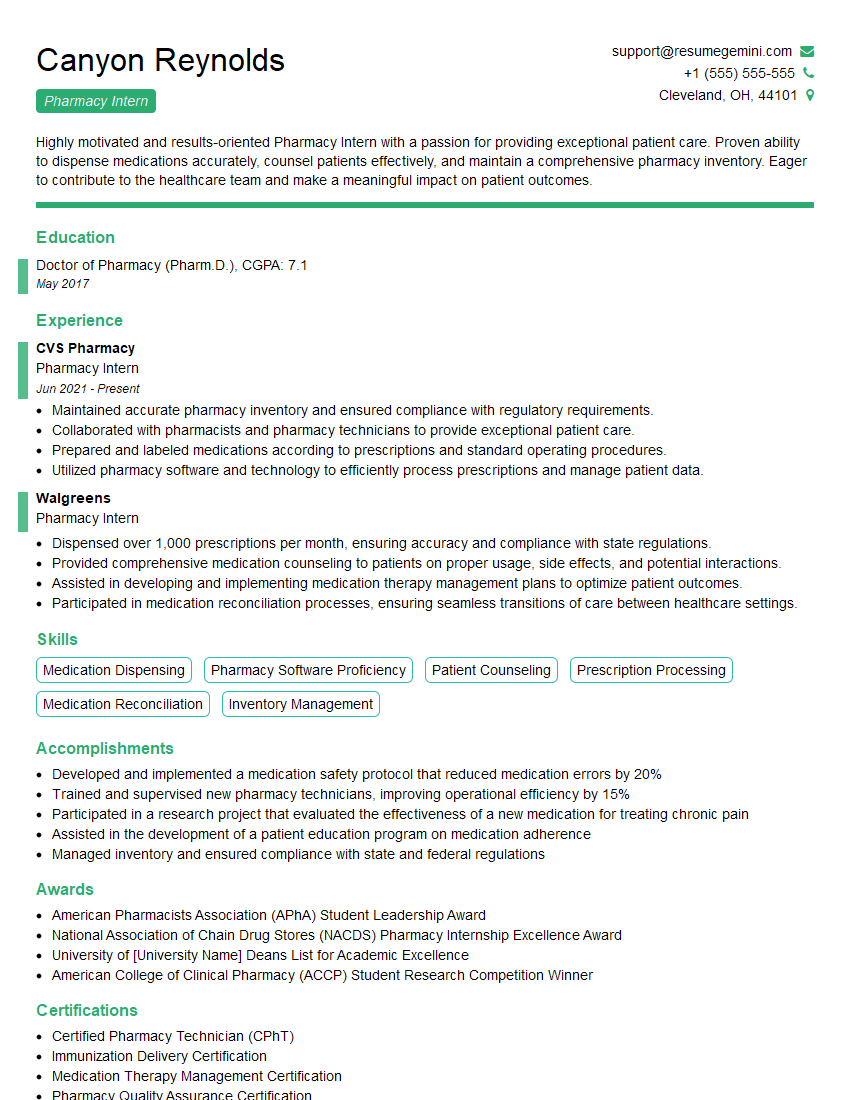
Explore more articles
Users Rating of Our Blogs
Share Your Experience
We value your feedback! Please rate our content and share your thoughts (optional).
What Readers Say About Our Blog
To the interviewgemini.com Webmaster.
Very helpful and content specific questions to help prepare me for my interview!
Thank you
To the interviewgemini.com Webmaster.
This was kind of a unique content I found around the specialized skills. Very helpful questions and good detailed answers.
Very Helpful blog, thank you Interviewgemini team.