Cracking a skill-specific interview, like one for Knowledge of Insulation and Moisture Control, requires understanding the nuances of the role. In this blog, we present the questions you’re most likely to encounter, along with insights into how to answer them effectively. Let’s ensure you’re ready to make a strong impression.
Questions Asked in Knowledge of Insulation and Moisture Control Interview
Q 1. Explain the different types of insulation and their R-values.
Insulation materials are categorized by their composition and performance. The R-value, or thermal resistance, indicates a material’s ability to resist heat flow. Higher R-values mean better insulation.
- Fiberglass: A common and cost-effective choice, available in batts, rolls, and loose-fill forms. R-values vary depending on thickness; a typical 6-inch batt might have an R-19 value.
- Cellulose: Made from recycled paper, it’s a loose-fill insulation known for its good insulating properties and sustainability. R-values are also thickness-dependent, often achieving around R-3.8 per inch.
- Mineral Wool (Rock Wool and Glass Wool): These are excellent sound insulators as well as thermal insulators. Rock wool is more fire-resistant. R-values are comparable to fiberglass, depending on thickness and density.
- Spray Foam: This versatile insulation expands to fill cavities, providing excellent air sealing and high R-values (up to R-7 per inch for closed-cell, slightly less for open-cell). It is extremely effective for preventing air infiltration.
- Polyisocyanurate (Polyiso): A rigid foam insulation with a high R-value per inch (typically around R-6 or R-8), often used in roofing and wall applications. Its high performance often means less material is needed compared to other types.
- Expanded Polystyrene (EPS) and Extruded Polystyrene (XPS): These rigid foam boards are relatively inexpensive and easy to install. EPS has lower R-values than XPS, typically around R-4 per inch for EPS and around R-5 per inch for XPS.
Remember that the total R-value for a wall or roof assembly is the sum of the R-values of all its components (insulation, sheathing, etc.).
Q 2. Describe the principles of heat transfer and how insulation affects it.
Heat transfer occurs through three primary mechanisms: conduction, convection, and radiation.
- Conduction: Heat flows directly through a material. Insulation slows this down due to its low thermal conductivity.
- Convection: Heat is transferred by the movement of fluids (air or water). Insulation reduces convection by creating air pockets and preventing air movement.
- Radiation: Heat is transferred as electromagnetic waves. Reflective insulation can help minimize radiative heat transfer.
Insulation works by resisting all three mechanisms. It reduces heat flow from warmer to cooler areas, thus improving energy efficiency in buildings. For example, imagine a hot coffee mug: the insulating mug prevents the heat from quickly conducting through the mug’s material to your hand, reducing the convective and radiative heat transfer to you.
Q 3. What are the common causes of moisture problems in buildings?
Moisture problems in buildings stem from several sources:
- Water Intrusion: Leaks in roofs, walls, or foundations, or from improperly sealed windows and doors.
- Air Leakage: Uncontrolled air movement carries moisture vapor into wall cavities and attics, especially in cold climates. Air exchange, driven by pressure differentials, can cause significant humidity issues.
- Lack of Ventilation: Insufficient ventilation in bathrooms, kitchens, and attics can allow moisture from showers, cooking, and other sources to accumulate.
- High Humidity Levels: High indoor humidity levels lead to condensation on cold surfaces (like windows or pipes).
- Ground Moisture: Rising dampness from the ground can affect basements and crawl spaces. Poor drainage around the foundation plays a significant role.
- Construction Defects: Improperly installed windows, lack of flashing around doors and windows, or insufficient air sealing during construction.
These factors often work in conjunction; for instance, a leak could saturate insulation while insufficient ventilation promotes moisture buildup.
Q 4. How do you identify and assess moisture damage?
Identifying and assessing moisture damage requires a multi-pronged approach:
- Visual Inspection: Look for signs of water stains, mold growth, bubbling paint, warped wood, and damaged drywall.
- Moisture Meters: These devices measure the moisture content of building materials, providing quantitative data on the extent of damage.
- Thermal Imaging: Infrared cameras detect temperature differences, which can reveal hidden moisture problems.
- Laboratory Testing: For serious cases, samples of materials can be tested in a laboratory to determine the type and extent of microbial growth.
For example, in a basement, you may visually see discoloration, use a moisture meter to quantify the moisture content in the drywall, and use thermal imaging to detect any hidden areas of water penetration.
Q 5. Explain different methods for controlling moisture in buildings.
Moisture control strategies involve preventing water entry and managing moisture within the building envelope:
- Proper Drainage: Ensure adequate grading around the foundation to divert water away from the building.
- Effective Flashing: Install flashing correctly around windows, doors, and other penetrations in the roof and walls to prevent water intrusion.
- Air Sealing: Seal gaps and cracks in the building envelope to prevent air leakage and moisture intrusion. Caulk, sealants, and spray foam are commonly used.
- Ventilation: Provide adequate ventilation in attics, crawl spaces, and bathrooms to control moisture buildup. Exhaust fans are crucial in humid areas.
- Vapor Barriers: Install vapor barriers on the warm side of insulation to prevent moisture vapor from migrating into the wall cavities or attic. See question 7 for more detail.
- Dehumidification: Use dehumidifiers in basements and other areas prone to high humidity.
- Moisture-Resistant Materials: Use materials that are less susceptible to moisture damage, like treated lumber and moisture-resistant drywall.
A comprehensive strategy usually integrates several of these approaches for optimal effectiveness.
Q 6. What are the building codes and standards related to insulation and moisture control?
Building codes and standards related to insulation and moisture control vary by location (e.g., International Building Code (IBC), local building codes). However, common themes include:
- Prescribed R-values: Codes typically specify minimum R-values for insulation in walls, roofs, and floors based on climate zone.
- Moisture Control Requirements: Codes address water resistance in exterior walls, roofing systems, and foundation construction, often mandating flashing, drainage, and vapor retarders.
- Ventilation Requirements: Codes often mandate specific ventilation rates for attics, crawl spaces, and bathrooms to mitigate moisture accumulation.
- Air Leakage Standards: Many codes are increasingly focusing on air sealing requirements to minimize energy loss and moisture problems.
- Fire Safety: Insulation materials must meet fire safety standards, especially in certain locations.
It’s critical to consult the relevant building codes for a specific project location to ensure compliance. Non-compliance can lead to building code violations, safety issues, and warranty problems.
Q 7. Describe the importance of vapor barriers and their proper installation.
Vapor barriers are designed to control the flow of moisture vapor through building assemblies. They are crucial for preventing condensation within wall cavities and attics, which can lead to mold and rot. It’s important to understand that a vapor barrier is not a waterproof membrane. Its primary purpose is to control the movement of water vapor.
- Location: Vapor barriers should be installed on the warm side of the insulation. In cold climates, this is typically the interior side of the exterior wall; in hot climates, it might be on the exterior side.
- Material Types: Common vapor barriers include polyethylene sheeting, foil-faced insulation, and certain types of drywall. The selection depends on the specific climate and building design.
- Seams and Penetrations: Seams and penetrations must be carefully sealed to prevent vapor leakage; overlaps should be taped using appropriate methods.
- Proper Installation: Incorrectly installed vapor barriers can be worse than none at all, potentially trapping moisture within the building assembly. The barrier must be continuous and well-sealed, without gaps or tears.
Imagine a vapor barrier as a one-way valve controlling the direction of water vapor. In cold climates, you don’t want moisture from the interior (warm side) entering the wall cavity, where it could condense.
Q 8. What are the different types of air barriers and their functions?
Air barriers are crucial components of building envelopes, preventing uncontrolled air leakage. Their primary function is to minimize drafts, improve energy efficiency, and control moisture movement. Different types offer varying performance characteristics and application methods.
- Continuous Air Barriers: These form a continuous layer across the entire building envelope, minimizing air leaks. Examples include spray-applied polyurethane foam, liquid-applied membranes, and polyethylene films. Think of them as a tight-fitting skin preventing air from entering or exiting.
- Discontinuous Air Barriers: These incorporate individual components like caulking, weatherstripping, and gaskets around windows and doors. They are easier to install in some cases but require meticulous attention to detail to prevent significant air leaks. These address gaps, like sealing around a window frame.
- Hybrid Systems: Many buildings employ a combination of continuous and discontinuous barriers, integrating both systems to achieve maximum air-tightness. A common example is using a continuous membrane along the walls supplemented with caulking at penetrations.
Choosing the right air barrier depends on factors such as building type, climate, budget, and construction methods. For instance, a high-performance building in a cold climate may benefit from a spray-applied foam barrier, offering both air and thermal insulation.
Q 9. How do you determine the appropriate insulation thickness for a given climate?
Determining appropriate insulation thickness involves considering climate zone, building orientation, desired energy efficiency level, and the type of insulation being used. We use climate data to identify the average annual heating and cooling loads, which dictate the R-value (resistance to heat flow) requirement. Higher R-values mean thicker insulation, needed for colder climates.
For example, a home in Alaska will require significantly thicker insulation than one in Florida. We often consult building codes and energy modeling software to ensure the calculation meets standards and predicts optimum performance. The software considers factors like window size, wall construction, and roof design, providing a precise R-value needed for each component of the building. Once the required R-value is known, it’s converted to thickness based on the insulation’s R-value per inch.
It’s crucial to remember that choosing the right insulation thickness can significantly reduce your energy bills and carbon footprint, making energy modelling a worthwhile investment for optimal performance.
Q 10. Explain the concept of thermal bridging and how to mitigate it.
Thermal bridging occurs when heat flows easily through a building component with higher thermal conductivity than the surrounding insulation, effectively creating a path of least resistance for heat transfer. These ‘bridges’ can significantly reduce the overall energy efficiency of a building.
Imagine a metal stud in a wall with insulation. The metal conducts heat far more readily than the insulation, so heat escapes easily through the stud. This reduces the overall effectiveness of the insulation. To mitigate thermal bridging:
- Use thermally broken materials: Materials with low thermal conductivity, such as fiberglass batt insulation or continuous insulation systems, will break the thermal bridge.
- Increase insulation depth: Increasing the insulation around the bridging element will minimize its impact. Think of adding more insulation around that metal stud to lessen the heat transfer.
- Insulate the thermal bridge directly: This might involve using spray foam insulation to fill gaps around studs or using insulation specifically designed to fit around pipes or ducts.
- Employ continuous insulation: Applying insulation across the entire exterior wall surface minimizes thermal bridging. Think of a full wrap of insulation rather than just filling gaps within the wall framing.
Properly addressing thermal bridging is critical for energy efficiency and minimizing heating and cooling costs.
Q 11. Describe the difference between permeable and impermeable membranes.
Permeable and impermeable membranes are crucial for moisture control in building envelopes. The key difference lies in their ability to allow water vapor to pass through.
- Permeable membranes (also called vapor-permeable or breathable membranes): These allow water vapor to pass through but resist liquid water penetration. They’re often used in wall assemblies to allow moisture to escape from within the wall system, preventing mold growth. Think of them like a breathable fabric; they let water vapor out but keep liquid water out.
- Impermeable membranes (also called vapor-retarder or vapor barrier): These don’t allow water vapor to pass through, acting as a barrier to prevent moisture from entering the wall cavity. They’re used strategically in climates with high interior humidity, preventing moisture from damaging the insulation and framing. Think of them as a plastic sheet which does not allow any vapor to pass through.
Choosing the right type depends on the climate and the specific wall assembly design. In cold, dry climates, a vapor-permeable membrane might be ideal, while in humid climates, a vapor retarder might be more suitable for preventing moisture damage in the wall cavity.
Q 12. How do you assess the effectiveness of existing insulation?
Assessing existing insulation involves a combination of visual inspection, thermal imaging, and potentially more detailed testing.
- Visual Inspection: Checking for gaps, holes, or signs of damage or deterioration in the insulation is a good first step.
- Thermal Imaging: This non-invasive technique uses infrared cameras to identify areas of heat loss, highlighting areas where insulation is insufficient or compromised. Cold spots on the thermal image indicate areas with poor insulation.
- Thermographic Surveys: Provides quantitative data on heat loss through the building envelope and help to pinpoint specific areas needing remediation.
- Invasive Methods: In some cases, more invasive methods like drilling core samples might be necessary to determine the type and thickness of insulation present, or check its R-value.
Using these combined approaches provides a comprehensive assessment of the insulation’s effectiveness and helps identify any issues requiring attention. For instance, an infrared camera can reveal insufficient insulation around windows or doors, leading to targeted improvements.
Q 13. What are the common problems associated with improper insulation installation?
Improper insulation installation can lead to several problems, significantly impacting building performance and occupant comfort:
- Heat Loss/Gain: Gaps and inconsistencies in insulation lead to increased energy consumption due to excessive heat loss in winter and heat gain in summer.
- Moisture Problems: Inadequate or improperly installed insulation can trap moisture within the wall cavity, leading to mold, mildew, rot, and structural damage. Incorrectly installed vapor barriers contribute to this issue greatly.
- Reduced Air Quality: Poor insulation can lead to air infiltration, bringing in allergens, pollutants, and drafts, affecting indoor air quality.
- Condensation: Improper insulation can create conditions for condensation to occur within wall cavities, leading to mold and mildew growth. Incorrect vapor barrier installation is a primary cause.
- Pest Infestation: Gaps and voids in the insulation can provide habitats for pests.
- Fire Hazards: Certain types of insulation, if improperly installed, can contribute to fire hazards.
Proper planning and careful execution are crucial for successful insulation installation. Always follow manufacturer’s instructions and consult with experienced installers to avoid these problems. For example, improper installation of spray foam can lead to insufficient coverage and therefore ineffective insulation.
Q 14. Explain how insulation affects indoor air quality.
Insulation plays a significant role in affecting indoor air quality (IAQ). Proper insulation contributes to better IAQ, while insufficient or improperly installed insulation can negatively impact it.
Positive Impacts:
- Reduced Air Infiltration: Effective insulation creates an airtight building envelope, minimizing the entry of outdoor pollutants, allergens (pollen, dust mites), and moisture.
- Improved Thermal Comfort: Proper insulation maintains stable indoor temperatures, reducing the need for excessive ventilation that can bring in outdoor pollutants. Consistent temperature also helps prevent condensation, which can encourage mold growth.
Negative Impacts:
- Increased Moisture: Poor insulation can trap moisture, leading to mold and mildew growth, releasing harmful spores into the indoor air.
- Air Leakage: Gaps in the insulation allow air infiltration, bringing in unwanted pollutants and allergens.
- Off-gassing: Some insulation materials may release volatile organic compounds (VOCs) into the indoor air during and after installation. Opting for low-VOC or VOC-free options mitigates this issue.
Therefore, choosing high-quality insulation, proper installation, and ventilation strategies are essential to ensuring good indoor air quality. When selecting insulation, always check for low VOC certifications.
Q 15. How do you address condensation issues in buildings?
Condensation in buildings occurs when warm, moist air comes into contact with a cold surface, causing the moisture to condense into liquid water. Addressing this requires a multi-pronged approach focusing on reducing moisture levels and increasing surface temperatures.
- Improve Ventilation: Proper ventilation removes moisture-laden air, preventing it from accumulating and condensing. This might involve installing exhaust fans in bathrooms and kitchens, ensuring attic and crawl space ventilation, and using balanced mechanical ventilation systems.
- Increase Insulation: Adding insulation to exterior walls, roofs, and floors raises the temperature of interior surfaces, reducing the temperature difference between the air and the surface and thus minimizing condensation. The type of insulation (e.g., fiberglass, cellulose, spray foam) should be selected based on the specific application and climate.
- Air Sealing: Sealing air leaks prevents warm, moist air from migrating to colder areas where it can condense. This involves sealing gaps around windows, doors, and penetrations in the building envelope.
- Vapor Barriers: Vapor barriers, placed on the warm side of the insulation, prevent moisture from migrating into the wall cavity. The correct placement is crucial to avoid trapping moisture within the wall assembly. This is highly dependent on climate; a vapor barrier may be needed in cold climates, but not as much in humid ones.
- Dehumidification: In humid climates, dehumidifiers can significantly reduce the amount of moisture in the air, reducing condensation risk. This is particularly effective in basements or crawl spaces.
For example, I once worked on a project where condensation was causing mold growth in a basement. By combining improved ventilation with a dehumidifier and thorough air sealing, we were able to effectively eliminate the problem.
Career Expert Tips:
- Ace those interviews! Prepare effectively by reviewing the Top 50 Most Common Interview Questions on ResumeGemini.
- Navigate your job search with confidence! Explore a wide range of Career Tips on ResumeGemini. Learn about common challenges and recommendations to overcome them.
- Craft the perfect resume! Master the Art of Resume Writing with ResumeGemini’s guide. Showcase your unique qualifications and achievements effectively.
- Don’t miss out on holiday savings! Build your dream resume with ResumeGemini’s ATS optimized templates.
Q 16. Describe the process of conducting a moisture survey.
A moisture survey is a systematic investigation to identify and quantify moisture problems in a building. It involves a combination of visual inspections, non-destructive testing, and, in some cases, destructive testing.
- Visual Inspection: This involves a thorough examination of the building’s structure, looking for signs of moisture damage, such as discoloration, mold growth, water stains, or bubbling paint. I pay close attention to areas prone to leaks like roofs, windows, and foundations.
- Non-Destructive Testing: Several methods are employed here. Moisture meters (discussed in the next question) are used to measure moisture content in various materials. Thermography can detect temperature differences indicating hidden moisture. Leak detection tools such as dye testing or pressure testing may be utilized.
- Destructive Testing: In some cases, small holes may need to be drilled to obtain samples for laboratory testing, particularly for determining the type and extent of microbial growth. This is done judiciously, and only when necessary.
- Data Analysis and Reporting: All data collected, including observations, measurements, and test results, are compiled into a comprehensive report. This report outlines the findings, identifies the sources of moisture intrusion, and recommends appropriate remediation strategies.
During a recent survey, we used a combination of moisture meters and thermography to locate a hidden leak in a cathedral ceiling. The thermography revealed a cold spot, and subsequent moisture meter readings confirmed the presence of elevated moisture content, pinpointing the location for repair.
Q 17. What are the different types of moisture meters and their applications?
Several types of moisture meters exist, each with specific applications:
- Pin-Type Meters: These meters use pins that are inserted into the material to measure the electrical resistance, which correlates to moisture content. They’re suitable for wood and many building materials but can cause minor damage. I often use these for assessing wood framing for rot.
- Pinless Meters: These meters use electromagnetic waves to measure moisture content without damaging the surface. They are less accurate than pin-type meters but are non-destructive and suitable for various materials, including drywall and concrete. Great for quick surface checks.
- Hygrometers: These meters measure the relative humidity of the air, which can indicate potential moisture problems. They are valuable for assessing overall humidity levels in a space.
- Surface Meters: These meters measure the surface moisture level, making them useful for determining the extent of surface wetting.
The choice of moisture meter depends on the material being tested, the desired accuracy, and the level of invasiveness acceptable. For example, when evaluating a historic building, pinless meters are preferred due to their non-destructive nature.
Q 18. Explain the different types of remediation techniques for moisture damage.
Remediation techniques for moisture damage vary depending on the source and extent of the problem. They generally fall into these categories:
- Drying: This involves removing excess moisture from affected materials. Methods include using dehumidifiers, air movers, and in some cases, specialized drying systems. This is the most common approach.
- Repair and Replacement: Damaged materials, like rotted wood or moldy drywall, must be repaired or replaced. This involves removing the damaged components and installing new ones, ensuring proper moisture control measures are in place to prevent recurrence.
- Leak Repair: Identifying and repairing the source of the leak is crucial. This can involve roof repairs, plumbing fixes, or sealing cracks in the foundation.
- Mold Remediation: Professional mold remediation is required when significant mold growth is present. This involves removing the mold, cleaning the affected areas, and potentially using antimicrobial treatments. Safety precautions are paramount in this area.
- Vapor Barrier Installation or Repair: If the issue stems from vapor diffusion, installing or repairing the vapor barrier might be necessary.
A recent case involved water damage from a burst pipe. We employed drying techniques using dehumidifiers and air movers, then repaired the plumbing and replaced the damaged drywall and insulation. The entire process was followed by a thorough inspection to ensure that no moisture remained.
Q 19. Describe your experience with different insulation materials (e.g., fiberglass, cellulose, spray foam).
I have extensive experience with various insulation materials, each with its own advantages and disadvantages:
- Fiberglass: Common, relatively inexpensive, and widely available. Good thermal performance but can be itchy and irritating to handle, requiring proper personal protective equipment (PPE).
- Cellulose: Made from recycled paper, it offers excellent thermal and acoustic insulation properties. It’s also a good fire retardant and can be blown into existing wall cavities. It’s a bit more expensive than fiberglass.
- Spray Foam: Offers superior air sealing and thermal performance compared to other insulation types. It’s expensive but ideal for filling irregular spaces and creating an airtight building envelope. Specialized training and equipment are required for its application. There are open-cell and closed-cell versions; the latter is better for moisture control.
The best choice depends on the project’s specific needs and budget. For example, in a retrofit project where air sealing is critical, spray foam might be preferred. For new construction, where large volumes need to be insulated, cellulose might be a more cost-effective option.
Q 20. How do you ensure proper ventilation to control moisture?
Proper ventilation is crucial for controlling moisture by preventing the buildup of humidity and allowing moisture to escape. Several strategies ensure adequate ventilation:
- Attic Ventilation: Attics need both soffit vents (low-level intake) and ridge vents (high-level exhaust) to create natural airflow. This prevents moisture buildup, reducing the risk of condensation and ice dam formation.
- Crawl Space Ventilation: Crawl spaces benefit from vents on opposite sides to allow for cross-ventilation. This can reduce humidity and help prevent ground moisture from entering the home.
- Bathroom and Kitchen Exhaust Fans: These fans remove moisture-laden air from these high-humidity areas, preventing it from condensing on walls and ceilings. I always recommend using fans rated for the room’s size and that they vent directly to the exterior.
- Whole-House Ventilation: Systems like heat recovery ventilators (HRVs) or energy recovery ventilators (ERVs) provide continuous, balanced ventilation, removing stale, moist air and replacing it with fresh air, without significant energy loss. These are especially useful in airtight homes.
I once encountered a mold problem in a bathroom caused by inadequate exhaust fan capacity. Replacing the fan with a more powerful unit, combined with sealing air leaks around the shower, effectively resolved the issue.
Q 21. What safety precautions are essential when working with insulation materials?
Safety is paramount when working with insulation materials. Precautions include:
- Respiratory Protection: Many insulation materials, like fiberglass and cellulose, can irritate the lungs. Wear a NIOSH-approved respirator with the appropriate filter for the material being used.
- Eye Protection: Wear safety glasses to protect eyes from flying particles.
- Skin Protection: Wear long sleeves, long pants, and gloves to protect skin from irritation or cuts from sharp materials.
- Hearing Protection: Some insulation installation processes, such as using power tools, can create significant noise levels, necessitating the use of hearing protection.
- Fall Protection: When working at heights, always use proper fall protection equipment, such as harnesses and safety lines.
- Proper Handling and Disposal: Follow manufacturer’s instructions for handling and disposal of insulation materials to avoid environmental contamination.
Ignoring these precautions can lead to serious health problems and injuries. Always prioritize safety by using the correct PPE and following safe working practices.
Q 22. What are the long-term effects of inadequate insulation and moisture control?
Inadequate insulation and moisture control lead to a cascade of long-term problems, impacting both building performance and occupant health. Think of a building envelope as a carefully balanced system; disrupting this balance has far-reaching consequences.
Energy Inefficiency: Poor insulation leads to significant heat loss in winter and heat gain in summer, drastically increasing energy consumption and utility bills. This translates to higher operational costs for building owners and contributes to a larger carbon footprint.
Mold and Mildew Growth: Moisture intrusion, whether from leaks, condensation, or inadequate vapor barriers, creates ideal conditions for mold and mildew growth. This poses significant health risks to occupants, triggering allergies, respiratory problems, and other illnesses. The remediation of mold infestations can be extremely costly and time-consuming.
Structural Damage: Excess moisture weakens building materials, leading to rot, decay, and structural damage. This can affect framing, sheathing, and even foundation components, requiring expensive repairs or, in severe cases, complete rebuilding.
Reduced Indoor Air Quality (IAQ): Moisture problems often lead to a buildup of volatile organic compounds (VOCs) and other pollutants, negatively impacting indoor air quality. Poor IAQ can lead to a variety of health issues and reduce occupant comfort.
Reduced Property Value: Buildings with known insulation and moisture control issues have significantly lower market values. Potential buyers are understandably hesitant to invest in properties with potential health and structural problems.
Q 23. Describe your experience with thermal imaging and its application in diagnosing insulation problems.
Thermal imaging is an indispensable tool in my work. It allows me to visualize temperature differences on building surfaces, revealing areas of heat loss or gain that might be invisible to the naked eye. Imagine it like having X-ray vision for insulation problems.
I use a thermal camera to scan building exteriors and interiors, focusing on walls, roofs, and windows. The camera produces an image where different temperatures are represented by different colors; cooler areas appear darker, indicating potential insulation deficiencies, while warmer areas show heat escaping. For example, a consistently warmer area on an exterior wall suggests inadequate insulation in that specific zone.
This data helps me pinpoint the exact location of insulation problems, enabling targeted repairs and reducing unnecessary demolition or invasive investigations. I’ve used thermal imaging to identify gaps in insulation around windows and doors, inadequate attic insulation, and even moisture intrusion behind walls. The results are then integrated into comprehensive reports, providing clear visual evidence for clients.
Q 24. How do you interpret building plans to determine insulation requirements?
Interpreting building plans to determine insulation requirements is crucial for proper design and efficient energy performance. I carefully examine the plans for several key aspects.
Climate Zone: I start by determining the building’s location and the corresponding climate zone. This dictates the necessary R-value (resistance to heat flow) requirements for insulation materials based on local building codes and energy efficiency standards. Different climate zones demand different levels of insulation to ensure adequate thermal performance.
Construction Details: The plans provide information on wall types, roof structures, and framing details, which influence the type and placement of insulation. For example, a cavity wall requires different insulation than a solid wall.
Building Envelope Components: I look at the specifications for windows, doors, and other building envelope components. This information is critical to coordinate insulation strategies, considering thermal bridging (heat transfer through more conductive materials), and improving overall building airtightness.
Local Codes and Regulations: I always refer to local building codes and energy efficiency regulations, ensuring that the insulation design meets all compliance requirements. These regulations frequently specify minimum R-values for various building components.
By combining these factors, I develop an insulation design that satisfies both energy performance and regulatory needs. This process is iterative, often involving discussions with architects, engineers, and contractors.
Q 25. Explain your understanding of building pressurization and its impact on moisture control.
Building pressurization refers to the balance of air pressure within a building relative to the outside environment. Proper pressurization is critical for effective moisture control.
A properly sealed and balanced building minimizes air leakage. This is crucial for two main reasons:
Prevention of Moisture Intrusion: Air leakage can draw moisture into the building envelope. Infiltration can bring humid outside air into the building, contributing to condensation problems. Exfiltration can draw moisture out of the building, creating pressure differentials that pull moisture from building materials.
Improved Ventilation: Controlled pressurization allows for the implementation of effective ventilation systems to remove excess moisture, preventing humidity buildup.
In practice, maintaining a slight positive pressure inside the building (positive pressurization) is often preferred, creating an outward pressure that helps prevent water infiltration. However, the optimal approach depends on various factors, including climate conditions and the specific building design. A proper building envelope needs to be well-sealed and have a balanced ventilation strategy for effective moisture control. Achieving this typically involves using airtight construction techniques, appropriate vapor barriers, and a well-designed ventilation system.
Q 26. Describe a challenging project involving insulation or moisture control and how you overcame it.
One challenging project involved a historic building with severe moisture problems and deteriorated insulation. The building’s age and unique construction presented several obstacles. The existing insulation was inadequate, with significant gaps and water damage throughout the walls and roof.
My approach involved a multi-stage process. First, a thorough assessment was conducted using thermal imaging, moisture meters, and visual inspection to identify the extent of the damage and pinpoint the sources of moisture intrusion. This revealed significant water damage hidden behind the walls and several areas where the vapor barrier was compromised.
Next, I developed a remediation plan, which included careful removal of damaged insulation and water-damaged materials. We replaced the damaged sections of the vapor barrier, ensuring an airtight seal to prevent further moisture intrusion. New high-performance insulation was installed, addressing the specific thermal requirements of the building, as well as ensuring compatibility with the building’s historical features.
Finally, the project involved implementing a carefully designed ventilation system to maintain appropriate indoor humidity levels, preventing future moisture-related problems. The outcome was a significant improvement in the building’s thermal performance, indoor air quality, and overall structural integrity. This project highlighted the importance of a holistic approach to insulation and moisture control, combining careful assessment with strategic remediation and preventative measures.
Q 27. What software or tools do you use to design or analyze insulation systems?
I utilize a variety of software and tools to design and analyze insulation systems. My toolkit includes:
Building Information Modeling (BIM) software: Software like Revit allows me to model the building and its components, including the insulation system, enabling accurate calculations and visualization of the design.
Energy modeling software: Programs like EnergyPlus help me simulate the building’s energy performance, evaluating the effectiveness of different insulation strategies and optimizing the design for energy efficiency.
Thermal simulation software: Specific software enables detailed thermal analysis, helping predict temperature profiles within the building envelope and identify potential thermal bridging issues.
Spreadsheet software: Spreadsheets are useful for organizing data, performing calculations, and creating reports related to insulation material properties, R-values, and cost estimations.
Specialized Moisture Analysis Software: This software helps simulate moisture transport within building components, aiding in the design and optimization of vapor barriers and ventilation strategies.
Besides software, I use specialized tools such as thermal cameras, moisture meters, and various diagnostic equipment, facilitating accurate field measurements and assessment.
Q 28. Explain your understanding of the principles of building envelope performance.
The building envelope is the skin of the building, acting as a barrier between the interior and exterior environments. Understanding its performance is essential for creating comfortable, energy-efficient, and durable buildings. Think of it as a well-designed suit of armor protecting the building’s interior from the elements.
The principles of building envelope performance encompass several key elements:
Airtightness: Minimizing air leakage is crucial for controlling moisture, energy loss, and indoor air quality. This involves careful sealing of joints and penetrations through the envelope.
Thermal Performance: This addresses the building’s ability to resist heat flow. Achieving optimal thermal performance requires proper insulation, minimizing thermal bridging (conductive paths through the envelope), and selecting appropriate window and door systems.
Moisture Management: Controlling moisture is critical to prevent mold growth and structural damage. This involves using vapor barriers strategically, implementing effective drainage systems, and designing for adequate ventilation.
Durability: The building envelope needs to withstand the effects of weather, time, and environmental exposure. This requires using high-quality materials and construction techniques that resist weathering and degradation.
Sustainability: Designing the building envelope with sustainable materials and construction practices reduces environmental impact and enhances the building’s long-term performance.
Effective building envelope design considers the interdependencies between these factors. For example, a highly airtight building needs a properly designed ventilation system to prevent moisture buildup. Understanding these interactions is crucial for achieving holistic building performance.
Key Topics to Learn for Knowledge of Insulation and Moisture Control Interview
- Insulation Principles: Understanding R-values, U-values, thermal bridging, and the impact of different insulation materials (fiberglass, cellulose, foam, etc.) on energy efficiency and building performance.
- Moisture Control Strategies: Analyzing vapor barriers, vapor retarders, and their proper application to prevent condensation, mold growth, and structural damage. Understanding the principles of air sealing and its role in moisture control.
- Building Envelope Systems: Knowledge of how insulation and moisture control measures integrate within walls, roofs, and foundations. Understanding different construction methods and their implications for thermal performance and moisture management.
- Building Codes and Standards: Familiarity with relevant building codes and standards related to insulation and moisture control, including energy efficiency requirements.
- Practical Application: Troubleshooting common insulation and moisture-related problems in buildings, such as condensation, water intrusion, and thermal discomfort. Describing solutions and preventative measures.
- Material Selection: Understanding the properties and applications of various insulation and moisture control materials, considering factors like cost, durability, environmental impact, and thermal performance.
- Energy Modeling and Simulation: Experience using software or techniques to model building energy performance and assess the impact of different insulation and moisture control strategies.
- Health and Safety: Awareness of safety precautions and best practices related to handling insulation materials and working in confined spaces.
Next Steps
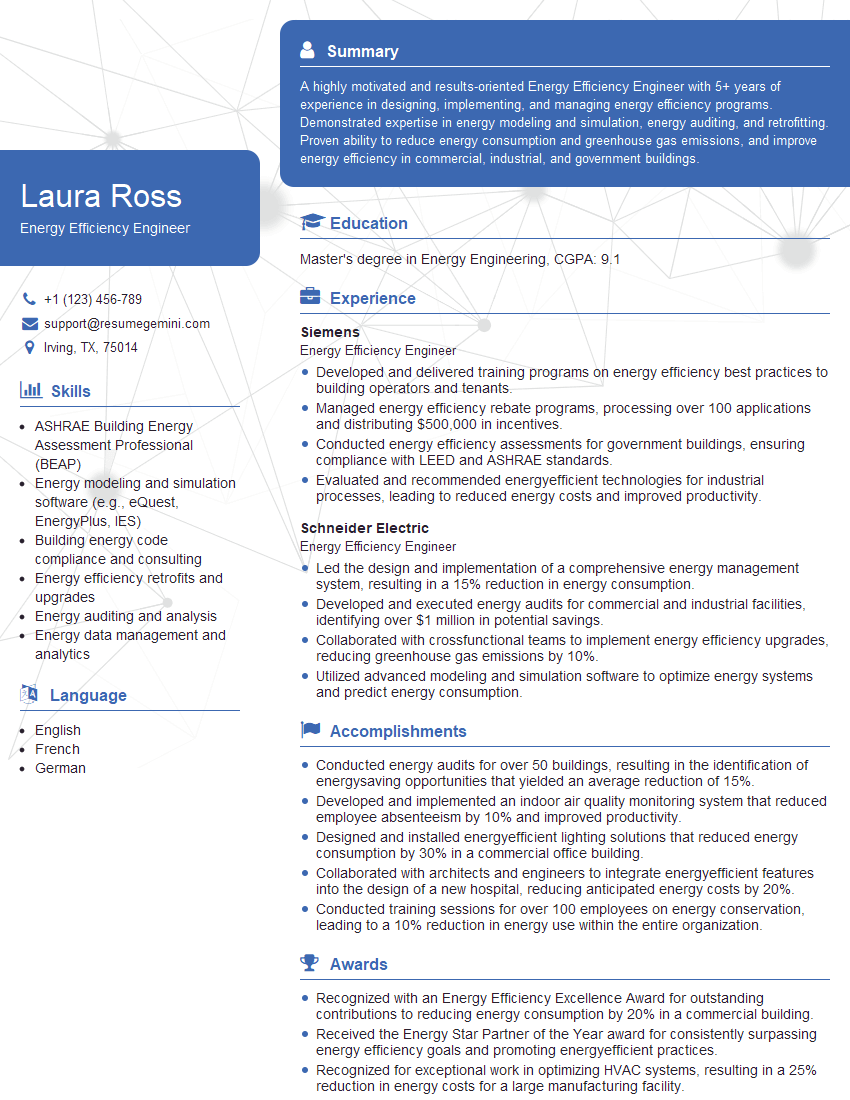
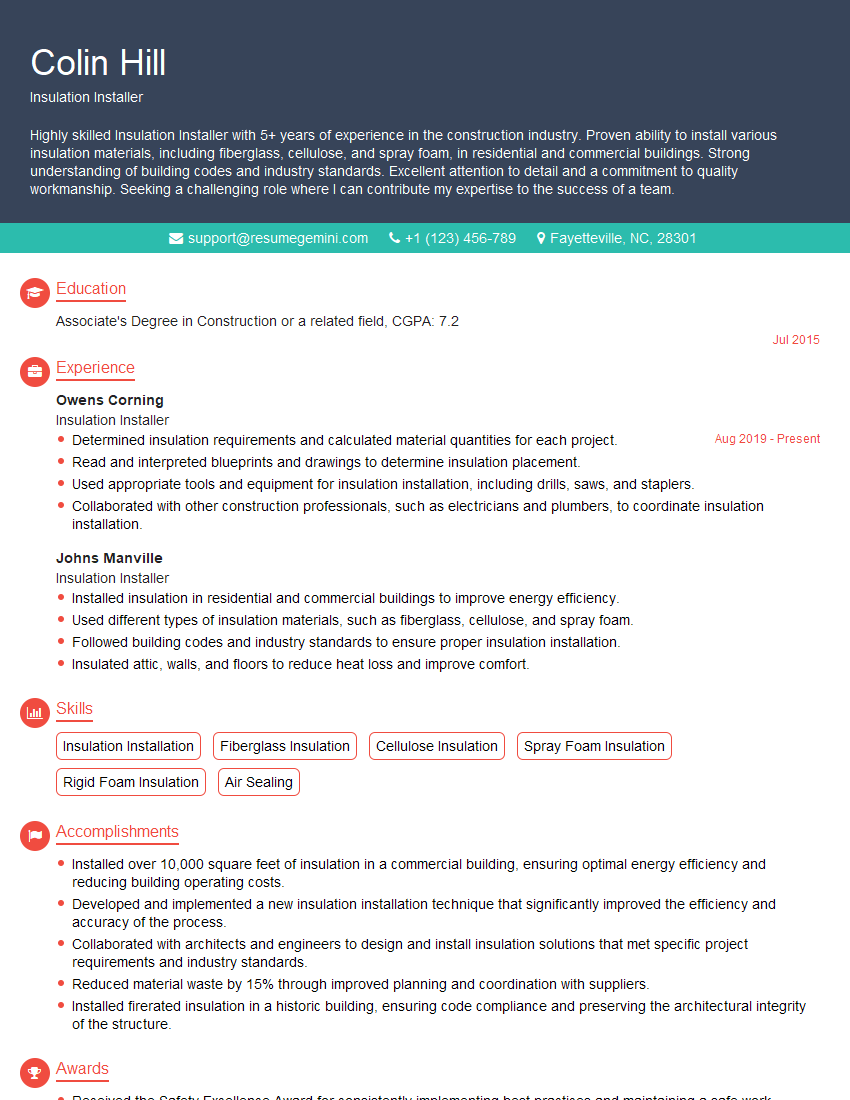
Mastering knowledge of insulation and moisture control is crucial for career advancement in the construction, engineering, and energy efficiency sectors. A strong understanding of these principles opens doors to specialized roles and higher earning potential. To maximize your job prospects, it’s essential to create a resume that effectively highlights your skills and experience. Building an ATS-friendly resume is key to getting noticed by potential employers. We recommend using ResumeGemini, a trusted resource, to build a professional and impactful resume tailored to the specific requirements of the job market. Examples of resumes specifically crafted for candidates with expertise in Knowledge of Insulation and Moisture Control are available for your review.

Explore more articles
Users Rating of Our Blogs
Share Your Experience
We value your feedback! Please rate our content and share your thoughts (optional).
What Readers Say About Our Blog
To the interviewgemini.com Webmaster.
Very helpful and content specific questions to help prepare me for my interview!
Thank you
To the interviewgemini.com Webmaster.
This was kind of a unique content I found around the specialized skills. Very helpful questions and good detailed answers.
Very Helpful blog, thank you Interviewgemini team.