Every successful interview starts with knowing what to expect. In this blog, we’ll take you through the top Knowledge of Research Ethics and Compliance Regulations interview questions, breaking them down with expert tips to help you deliver impactful answers. Step into your next interview fully prepared and ready to succeed.
Questions Asked in Knowledge of Research Ethics and Compliance Regulations Interview
Q 1. What are the core principles of research ethics?
Research ethics rests on four core principles: respect for persons, beneficence, justice, and fidelity/integrity.
- Respect for persons emphasizes autonomy and protection of vulnerable populations. Researchers must treat individuals as autonomous agents capable of making informed decisions, and provide special protections for those with diminished autonomy (e.g., children, individuals with cognitive impairments).
- Beneficence requires maximizing benefits and minimizing harms. This involves careful risk-benefit assessment, ensuring the research design is sound, and taking steps to protect participants from potential risks.
- Justice mandates fairness in the selection of participants and the distribution of benefits and burdens of research. It ensures that research does not exploit or disadvantage particular groups.
- Fidelity/Integrity focuses on honesty, trustworthiness, and maintaining professional standards. Researchers must be transparent in their methods, accurately report their findings, and adhere to ethical guidelines.
For example, a study involving vulnerable populations like homeless individuals requires extra measures to ensure informed consent is truly informed and that the research design minimizes potential harm.
Q 2. Explain the role of an Institutional Review Board (IRB).
An Institutional Review Board (IRB) is an independent committee that reviews and approves research involving human subjects. Its primary role is to protect the rights and welfare of participants by ensuring research is conducted ethically and complies with relevant regulations.
IRBs assess research proposals based on the core ethical principles, evaluating the risk-benefit ratio, the informed consent process, and the study’s overall methodology. They have the authority to approve, modify, or disapprove research protocols. Think of them as gatekeepers, ensuring research projects meet ethical standards before they begin.
For instance, an IRB might require modifications to a study’s consent form to make it more understandable or recommend additional safeguards for vulnerable populations.
Q 3. Describe the process of obtaining informed consent.
Obtaining informed consent is a crucial ethical process that ensures participants voluntarily agree to participate in research after understanding its purpose, procedures, risks, and benefits.
- Information: Researchers must provide potential participants with all necessary information in a clear and understandable way, using language they can comprehend.
- Comprehension: Researchers need to ensure participants understand the information provided. This might involve using plain language, visual aids, or offering opportunities for questions.
- Voluntariness: Participants must feel free to decline participation or withdraw at any time without penalty.
- Competence: Participants must have the capacity to understand the information and make a reasoned decision.
The informed consent process is documented through a written consent form that participants sign, signifying their agreement. For example, a study on a new medication would need to clearly explain the potential side effects, benefits, and alternative treatments.
Q 4. What are the key elements of a research protocol?
A research protocol is a detailed plan that outlines all aspects of a research project. It serves as a roadmap for researchers and ensures consistency and ethical conduct throughout the study.
- Research Question/Hypothesis: Clearly states the purpose of the study.
- Background and Literature Review: Provides context and justification for the research.
- Methodology: Describes the research design, participant selection, data collection methods, and data analysis plan.
- Ethical Considerations: Addresses informed consent, risk mitigation, data privacy, and conflict of interest.
- Timeline and Budget: Outlines the project’s timeline and resources.
A well-structured research protocol helps ensure the study is conducted efficiently, ethically, and produces reliable results. Think of it as a comprehensive blueprint for the entire research process.
Q 5. How do you handle a potential conflict of interest in research?
A conflict of interest (COI) arises when personal interests (financial, professional, or personal relationships) could compromise objectivity in research. Transparency and proactive management are key.
Handling a COI involves:
- Disclosure: Researchers must disclose any potential COIs to their institution’s COI office and the IRB.
- Management: Strategies to mitigate the COI might include modifying the research design, recusal from certain aspects of the study, or independent review of the data.
- Documentation: Thorough documentation of the COI, its management, and its impact on the research is essential.
For instance, a researcher with financial ties to a pharmaceutical company testing a new drug should disclose this relationship. The IRB might then implement measures to ensure impartiality in the study design and data analysis.
Q 6. What are the regulations surrounding data privacy in research?
Regulations surrounding data privacy in research are stringent and designed to protect participants’ sensitive information. Key regulations include HIPAA (in the US) and GDPR (in Europe).
These regulations dictate how personal data is collected, stored, used, and shared. Researchers must obtain appropriate consent, anonymize or de-identify data whenever possible, and implement robust security measures to prevent unauthorized access or disclosure. Failure to comply can result in significant penalties.
For example, research involving medical records requires strict adherence to HIPAA regulations, ensuring patient confidentiality is maintained throughout the research process. Researchers must obtain appropriate authorizations before accessing and using protected health information.
Q 7. Explain the concept of data security and its importance in research.
Data security refers to the measures taken to protect research data from unauthorized access, use, disclosure, disruption, modification, or destruction. It’s crucial for maintaining data integrity, protecting participants’ privacy, and ensuring the validity of research findings.
Data security involves:
- Access Control: Limiting access to data based on roles and responsibilities.
- Encryption: Protecting data through encryption both in transit and at rest.
- Data Backup and Recovery: Having systems in place to protect against data loss.
- Regular Security Audits: Conducting regular security assessments to identify and address vulnerabilities.
A breach in data security could compromise the integrity of research, violate participants’ privacy, and lead to legal and reputational consequences. Think of data security as a fortress protecting valuable research data.
Q 8. Describe your experience with HIPAA or GDPR regulations.
My experience with HIPAA and GDPR regulations stems from years of working with protected health information (PHI) and personally identifiable information (PII) in research settings. HIPAA, the Health Insurance Portability and Accountability Act, focuses on protecting the privacy and security of individually identifiable health information in the United States. I’ve been directly involved in developing and implementing HIPAA-compliant research protocols, ensuring that data collection, storage, and use adhere strictly to the Privacy Rule, Security Rule, and Breach Notification Rule. This includes creating data use agreements, implementing appropriate security measures (like encryption and access controls), and training research staff on HIPAA compliance. GDPR, the General Data Protection Regulation, is the EU’s comprehensive data protection law. My experience with GDPR involves navigating its complexities, particularly concerning the processing of personal data of EU residents in research studies. This requires a deep understanding of concepts like data minimization, lawful bases for processing, and data subject rights, including the right to access, rectification, and erasure. I’ve worked on projects requiring obtaining informed consent in accordance with GDPR guidelines and implementing appropriate data protection measures to meet the stringent requirements of the regulation.
Q 9. How do you ensure the ethical treatment of human subjects in research?
Ensuring the ethical treatment of human subjects is paramount in research. This involves adhering to fundamental ethical principles, primarily respect for persons, beneficence, and justice. Respect for persons means recognizing individuals’ autonomy and protecting those with diminished autonomy. In practice, this translates to obtaining informed consent – ensuring participants understand the study’s purpose, procedures, risks, and benefits before voluntarily participating. It also involves respecting participants’ right to withdraw from the study at any time without penalty. Beneficence focuses on maximizing benefits and minimizing harms. This requires careful risk-benefit assessments and implementing appropriate safety measures to protect participants from physical or psychological harm. Justice ensures fair and equitable distribution of research benefits and burdens. This means avoiding exploitation of vulnerable populations and ensuring that research participants from diverse backgrounds are represented appropriately. My approach involves rigorous IRB (Institutional Review Board) protocol development and adherence, meticulous documentation, and continuous monitoring of participant well-being throughout the study. For example, in a study involving a vulnerable population, I would ensure extra safeguards are in place to protect their rights and interests.
Q 10. What are some common ethical dilemmas encountered in research?
Common ethical dilemmas in research include conflicts of interest, data fabrication or falsification, plagiarism, authorship disputes, and issues related to informed consent. Conflicts of interest can arise when researchers’ personal interests (financial or otherwise) could compromise the objectivity or integrity of their research. Data fabrication or falsification involves manipulating data to produce desired results, undermining the reliability of research findings. Plagiarism involves presenting someone else’s work as your own. Authorship disputes can arise when researchers disagree on who should be credited for a particular publication. Problems with informed consent can occur if participants are not fully informed about the study or if their consent is coerced. For example, I once encountered a situation where a researcher wanted to publish data collected from a clinical trial without disclosing a serious adverse event experienced by a participant. This highlighted the importance of transparency and complete reporting. Addressing such dilemmas requires careful consideration of ethical principles, consultation with relevant authorities (like IRBs or research integrity officers), and prioritizing the protection of research participants and the integrity of the research process.
Q 11. How do you conduct a compliance audit in a research setting?
Conducting a compliance audit in a research setting involves a systematic review of all aspects of research activities to ensure adherence to relevant regulations, policies, and ethical guidelines. It begins with planning—defining the scope of the audit, identifying relevant documents and data sources, and developing a detailed audit plan. The audit itself involves reviewing documents (protocols, consent forms, data management plans), conducting interviews with researchers and staff, and examining data for integrity and consistency. Data analysis follows to identify areas of strength and weakness. Finally, a report is generated summarizing findings, highlighting areas of non-compliance, and recommending corrective actions. For example, during an audit, I might check if all study participants have provided valid informed consent, if data is being stored securely, and if appropriate procedures are in place for handling data breaches. A key aspect is a thorough review of the IRB protocol approvals and amendments to ensure ongoing ethical compliance. The goal is not simply to find fault but to improve the research program’s ethical and regulatory standing.
Q 12. What are your strategies for identifying and mitigating research misconduct?
My strategies for identifying and mitigating research misconduct involve a proactive and multi-faceted approach. This includes establishing clear guidelines on research conduct, providing regular training on research ethics and compliance, and fostering a culture of integrity within the research environment. Early detection mechanisms are crucial – this can involve regular internal reviews of research data and publications, implementing plagiarism detection software, and encouraging open communication and reporting of potential misconduct. When misconduct is suspected, a thorough investigation is essential, often involving an independent inquiry. The process should be fair and transparent, providing due process for all parties involved. Appropriate sanctions, commensurate with the severity of the misconduct, are applied. Reporting to relevant regulatory bodies may also be necessary. For instance, in cases of plagiarism, a thorough comparison of the suspect text with published works can be conducted, and the researcher involved might face repercussions, such as retraction of publications and disciplinary action. Prevention is key, and fostering an environment of open communication and trust is vital in deterring misconduct.
Q 13. Describe your experience with writing Standard Operating Procedures (SOPs) for research compliance.
I have extensive experience in writing Standard Operating Procedures (SOPs) for research compliance. SOPs provide clear, concise, and consistent guidelines for performing tasks related to research ethics and compliance. In writing them, I follow a structured approach: clearly define the purpose and scope of the SOP, outline the step-by-step procedures, include relevant forms and templates, and provide contact information for questions or clarification. For example, I’ve developed SOPs for obtaining informed consent, handling adverse events, managing data security, and reporting research misconduct. These SOPs were written using plain language, avoiding jargon, and were accompanied by regular training sessions for researchers to ensure they understand and follow the procedures. Well-written SOPs are essential for consistency, accountability, and ultimately for protecting research participants and upholding the integrity of the research process. They also ensure that research activities comply with relevant regulations and guidelines.
Q 14. How do you stay updated on changes in research ethics and compliance regulations?
Staying updated on changes in research ethics and compliance regulations requires a multi-pronged approach. I actively participate in professional organizations (like the Public Responsibility in Medicine and Research – PRIM&R), attend conferences and workshops, and subscribe to relevant journals and newsletters. I also regularly review updates from regulatory bodies (like the Office for Human Research Protections – OHRP, and the FDA). Monitoring legal and regulatory developments through online resources and legal databases is crucial. Network with colleagues, attending regular meetings and engaging in discussions, allows for the exchange of information and best practices. Continuous professional development, through courses and certifications, ensures my expertise is up-to-date. Staying informed is not just a matter of compliance; it’s about ensuring the highest standards of ethical conduct in research, ensuring that my contributions are in line with evolving best practices and contribute to a stronger ethical research environment.
Q 15. Explain the importance of maintaining accurate research records.
Maintaining accurate research records is paramount for the credibility and reproducibility of research findings. In essence, it’s the bedrock of scientific integrity. Without meticulous record-keeping, the entire research process becomes vulnerable to errors, bias, and even fraud.
- Data Integrity: Accurate records ensure that the data collected is reliable and reflects the true results of the study. Any discrepancies or inconsistencies can be identified and addressed. Imagine a clinical trial where dosage information is inconsistently recorded – the results would be unreliable and potentially dangerous.
- Reproducibility: Accurate records allow other researchers to replicate the study and verify the findings. This is crucial for validating scientific claims. A lack of detailed methodology documentation makes replication impossible.
- Accountability: Complete records provide an audit trail, demonstrating transparency and accountability. This is essential for addressing any ethical concerns or allegations of misconduct. For instance, researchers need to be able to trace back every step of their data analysis.
- Regulatory Compliance: Many funding bodies and regulatory agencies require rigorous record-keeping practices. Failure to comply can lead to severe penalties, including retraction of publications and loss of funding.
Think of research records as a meticulous detective’s case file – every detail, no matter how small, contributes to the bigger picture and ensures the integrity of the investigation.
Career Expert Tips:
- Ace those interviews! Prepare effectively by reviewing the Top 50 Most Common Interview Questions on ResumeGemini.
- Navigate your job search with confidence! Explore a wide range of Career Tips on ResumeGemini. Learn about common challenges and recommendations to overcome them.
- Craft the perfect resume! Master the Art of Resume Writing with ResumeGemini’s guide. Showcase your unique qualifications and achievements effectively.
- Don’t miss out on holiday savings! Build your dream resume with ResumeGemini’s ATS optimized templates.
Q 16. Describe your experience with developing and delivering compliance training.
I have extensive experience in developing and delivering compliance training, focusing on research ethics and regulations. My approach is multi-faceted, combining interactive workshops, online modules, and customized training materials tailored to the specific needs of the audience (e.g., researchers, research assistants, principal investigators).
For example, I developed a comprehensive online module on data security best practices for a large pharmaceutical company. This module included interactive quizzes, case studies of data breaches, and practical exercises on encrypting sensitive data. The feedback was overwhelmingly positive, with participants reporting improved understanding and confidence in handling sensitive data.
In another instance, I conducted in-person workshops on responsible conduct of research for graduate students. These workshops focused on interactive discussions of ethical dilemmas, role-playing scenarios, and practical guidance on navigating conflicts of interest. These workshops incorporated real-world examples, making the ethical considerations more relatable and memorable for participants.
My training programs emphasize practical application and continuous learning, ensuring participants can confidently apply the principles of research ethics and compliance in their daily work.
Q 17. How do you address a violation of research ethics or compliance regulations?
Addressing a violation of research ethics or compliance regulations requires a prompt, thorough, and impartial investigation. The process typically involves several steps:
- Initial Assessment: Gather all relevant information to determine the nature and severity of the violation.
- Investigation: Conduct a formal investigation, interviewing relevant individuals and reviewing all available documentation. Maintaining confidentiality throughout the process is crucial.
- Determination of Responsibility: Once the facts are established, determine whether a violation occurred and who is responsible.
- Corrective Actions: Implement appropriate corrective actions, which may include retraining, disciplinary measures, or reporting the violation to relevant authorities.
- Preventive Measures: Implement measures to prevent similar violations in the future. This may involve revising protocols, enhancing training programs, or strengthening oversight mechanisms.
For instance, if a researcher is found to have falsified data, the consequences could range from retraction of publications and loss of funding to professional sanctions and even legal action. The key is to act swiftly and decisively, while ensuring fairness and due process.
Q 18. What are the penalties for non-compliance with research regulations?
Penalties for non-compliance with research regulations vary widely depending on the nature and severity of the violation, the funding agency involved, and the governing body’s policies. However, potential consequences can be substantial and far-reaching.
- Funding Revoked: Funding agencies may retract research grants or contracts.
- Publication Retracted: Journals may retract published papers if research misconduct is discovered.
- Disciplinary Actions: Institutions may impose disciplinary actions on researchers, including suspension or termination.
- Legal Action: In cases of serious misconduct, legal action, including lawsuits and criminal charges, may be pursued.
- Reputational Damage: Non-compliance can severely damage the reputation of the researcher, institution, and the research field.
The potential consequences underscore the importance of adhering to ethical guidelines and regulatory requirements in all research activities.
Q 19. How do you ensure the integrity of research data?
Ensuring the integrity of research data is a multi-faceted process requiring careful attention to detail throughout the research lifecycle. It involves a combination of technical and procedural safeguards.
- Data Management Plan: Developing a robust data management plan outlining procedures for data collection, storage, security, and access. This plan should detail who has access to the data and under what conditions.
- Data Security: Implementing appropriate security measures to protect data from unauthorized access, modification, or destruction. This includes encryption, password protection, and regular security audits.
- Data Validation: Implementing procedures to validate the accuracy and reliability of collected data. This might involve double-checking data entry, using quality control checks, and employing statistical analysis techniques.
- Version Control: Using version control systems to track changes to data and ensure that the most up-to-date version is used.
- Data Archiving: Establishing procedures for archiving data to ensure long-term preservation and accessibility.
Think of it like safeguarding a priceless artifact— multiple layers of protection are needed to ensure its long-term preservation and integrity.
Q 20. What is your experience with research risk assessments?
Research risk assessments are a crucial component of responsible research conduct. They involve systematically identifying, analyzing, and evaluating potential risks associated with a research project. This process helps mitigate potential harm to participants, researchers, and the wider community.
My experience includes conducting risk assessments for various types of research projects, including clinical trials, epidemiological studies, and qualitative research involving vulnerable populations. These assessments consider various types of risk, such as:
- Physical Risks: Risks of physical injury or harm to participants.
- Psychological Risks: Risks of emotional distress or psychological harm.
- Social Risks: Risks of stigma, discrimination, or social repercussions.
- Data Security Risks: Risks of data breaches or unauthorized access to sensitive information.
The outcome of a risk assessment is a risk mitigation plan that outlines strategies to minimize or eliminate identified risks. This may involve modifying research procedures, obtaining informed consent, ensuring data security, or implementing appropriate safeguards.
Q 21. How do you balance ethical considerations with research goals?
Balancing ethical considerations with research goals is a central challenge in research. It’s not a simple trade-off; rather, it requires an integrated approach where ethical principles guide the research process from conception to dissemination.
A key strategy involves incorporating ethical considerations at every stage of the research project. This begins with designing a study that minimizes risks and maximizes benefits to participants. It also includes obtaining informed consent, ensuring data privacy and confidentiality, and addressing any potential conflicts of interest.
For instance, in a study exploring a new treatment, the researchers must balance the potential benefits of the treatment with the potential risks to participants. This may involve rigorous screening processes to ensure participants are appropriate candidates, close monitoring of their health during the study, and clear communication about potential risks and benefits.
Ultimately, the ethical considerations must not be viewed as constraints but rather as integral components of rigorous and responsible research. Research with ethical integrity is robust research.
Q 22. Describe a time you had to navigate a complex ethical issue in research.
One challenging ethical situation involved a study on the effectiveness of a new drug for Alzheimer’s disease. We were initially focusing on cognitive improvements as our primary outcome measure. However, during the trial, we observed a concerning number of participants experiencing serious adverse gastrointestinal side effects. This created a conflict: stopping the trial early would mean potentially losing valuable data, impacting future patients, but continuing posed significant risks to participants’ well-being.
We navigated this by immediately convening our ethics committee. We presented all data, including the adverse event reports, and discussed the ethical implications of continuing versus terminating the trial. The committee, after careful deliberation, recommended pausing recruitment and implementing a stricter monitoring protocol. We initiated a thorough review of the informed consent documents to ensure participants were fully aware of the potential risks. This situation underscored the crucial role of ongoing ethical review and the necessity of prioritizing participant safety above all else.
Q 23. Explain your understanding of the concept of ‘vulnerable populations’ in research.
Vulnerable populations in research are groups who may be at increased risk of exploitation, coercion, or undue influence in research. This vulnerability stems from factors such as limited autonomy, impaired decision-making capacity, or social or economic disadvantage. Examples include children, pregnant women, prisoners, individuals with cognitive impairments, and economically disadvantaged individuals.
Recognizing vulnerability is critical because these populations may struggle to understand research procedures, fully appreciate risks and benefits, or freely consent. Protecting vulnerable populations demands extra layers of ethical scrutiny, including obtaining informed consent from legally authorized representatives when appropriate, enhanced participant protection measures, and rigorous oversight by ethical review boards.
Q 24. How do you ensure the anonymity and confidentiality of research participants?
Ensuring anonymity and confidentiality is paramount in research ethics. Anonymity means participants’ identities are never associated with their data. Confidentiality means protecting participants’ identities even though the data may be linked to them.
- Anonymization Techniques: This involves removing all identifying information from data sets before analysis, for example, using unique identifiers instead of names and dates of birth.
- Confidentiality Protocols: We use secure data storage methods, access controls (limiting who can access data), and encryption to protect data from unauthorized access. Data security training for all research personnel is vital.
- Data Minimization: We collect only the minimum necessary data to answer the research question, reducing the risk of breaches.
- Informed Consent: Clearly outlining data usage and storage plans in the informed consent process is crucial, providing participants with transparency and control over their data.
For example, in a survey, we might use randomly assigned codes instead of names, and store data on a password-protected server that only authorized personnel can access.
Q 25. What are your strategies for promoting ethical conduct in research?
Promoting ethical conduct in research involves a multifaceted approach. It starts with establishing a strong ethical culture within the research team. This includes:
- Regular Ethics Training: Providing ongoing training to all research staff on research ethics principles, relevant regulations, and best practices.
- Clear Ethical Guidelines: Developing and disseminating clear guidelines and protocols for all stages of the research process.
- Robust Ethical Review: Ensuring all research proposals undergo thorough review by an independent Institutional Review Board (IRB) or Ethics Committee.
- Mentorship and Supervision: Providing guidance and support to junior researchers on ethical considerations.
- Open Communication: Creating a safe environment where researchers can openly discuss ethical dilemmas without fear of retribution.
- Whistleblowing Mechanisms: Establishing clear procedures for reporting suspected research misconduct.
Think of it like building a strong ethical foundation – each of these elements supports the overall structure and ensures integrity.
Q 26. Explain your experience with various research methodologies and their associated ethical considerations.
My experience encompasses various methodologies, each with unique ethical considerations. For instance, in qualitative research (e.g., interviews), maintaining participant confidentiality and ensuring data integrity is crucial. This involves anonymizing transcripts and obtaining informed consent that clearly explains data usage.
In quantitative research (e.g., randomized controlled trials), the ethical implications focus heavily on randomization, blinding, and data safety monitoring. Ensuring equitable treatment of participants in different treatment arms is critical.
In observational studies, researchers must address potential biases and the need for informed consent, particularly when dealing with sensitive data or interventions. The methodology dictates the ethical considerations, but the core principles of respect for persons, beneficence, and justice remain constant. Ethical awareness must permeate every step of the process, regardless of the research design.
Q 27. How do you handle allegations of research misconduct?
Allegations of research misconduct are handled seriously and systematically. The process typically begins with a thorough investigation by the institution involved.
This investigation, often led by an independent committee, involves gathering evidence, interviewing witnesses, and reviewing relevant documents. If misconduct is substantiated, disciplinary actions may range from reprimands to retraction of publications, and in serious cases, potential legal action.
Transparency is key. All parties involved—the accused, witnesses, and investigators—should be given due process. The findings of the investigation should be documented and made available to relevant authorities, including funding agencies and journals where the research was published. The goal is to maintain research integrity and ensure accountability.
Q 28. What is your understanding of the differences between various research regulatory bodies (e.g., FDA, NIH)?
Different research regulatory bodies have distinct mandates and areas of oversight. The FDA (Food and Drug Administration) primarily regulates research involving drugs, biologics, and medical devices intended for human use, focusing on safety and efficacy. Their regulations are particularly stringent concerning clinical trials.
The NIH (National Institutes of Health) is a primary funder of biomedical research. While they don’t directly regulate research in the same way as the FDA, their grants require adherence to strict ethical guidelines, often overseen by Institutional Review Boards. Other bodies, like the Office for Human Research Protections (OHRP) within the US Department of Health and Human Services, set broader standards for human subjects research across different sectors.
Understanding these nuanced differences is critical for navigating the complex regulatory landscape and ensuring compliance with all applicable regulations. Researchers must carefully determine which agencies’ regulations apply to their specific research project.
Key Topics to Learn for Knowledge of Research Ethics and Compliance Regulations Interview
- Informed Consent: Understanding the principles, processes, and challenges in obtaining truly informed consent from research participants. Consider practical applications like designing consent forms and addressing vulnerable populations.
- Research Integrity: Exploring issues like data fabrication, falsification, plagiarism, and authorship disputes. Think about how to identify and address potential breaches of research integrity in real-world scenarios.
- Confidentiality and Data Security: Delving into methods for protecting participant privacy and ensuring the security of research data, including HIPAA and GDPR compliance. Consider practical applications like anonymization techniques and data encryption.
- Institutional Review Boards (IRBs) and Ethical Review Processes: Understanding the role of IRBs in protecting human subjects and the process of submitting research proposals for ethical review. Consider the various types of IRB review and common challenges encountered.
- Conflict of Interest and Bias: Identifying and managing potential conflicts of interest in research and mitigating bias in research design, data analysis, and reporting. Think about strategies for transparent disclosure and conflict mitigation.
- Animal Welfare and Research: If applicable to your field, understanding ethical considerations and regulations related to animal research, including the 3Rs (Replacement, Reduction, Refinement) and relevant compliance standards.
- Data Management and Sharing: Exploring best practices for data management, including data storage, access control, and data sharing policies. Consider the ethical implications of data sharing and open science.
- Specific Regulations (e.g., HIPAA, FDA regulations): Familiarity with relevant regulations governing your specific research area. This may include understanding the legal and ethical implications of non-compliance.
Next Steps
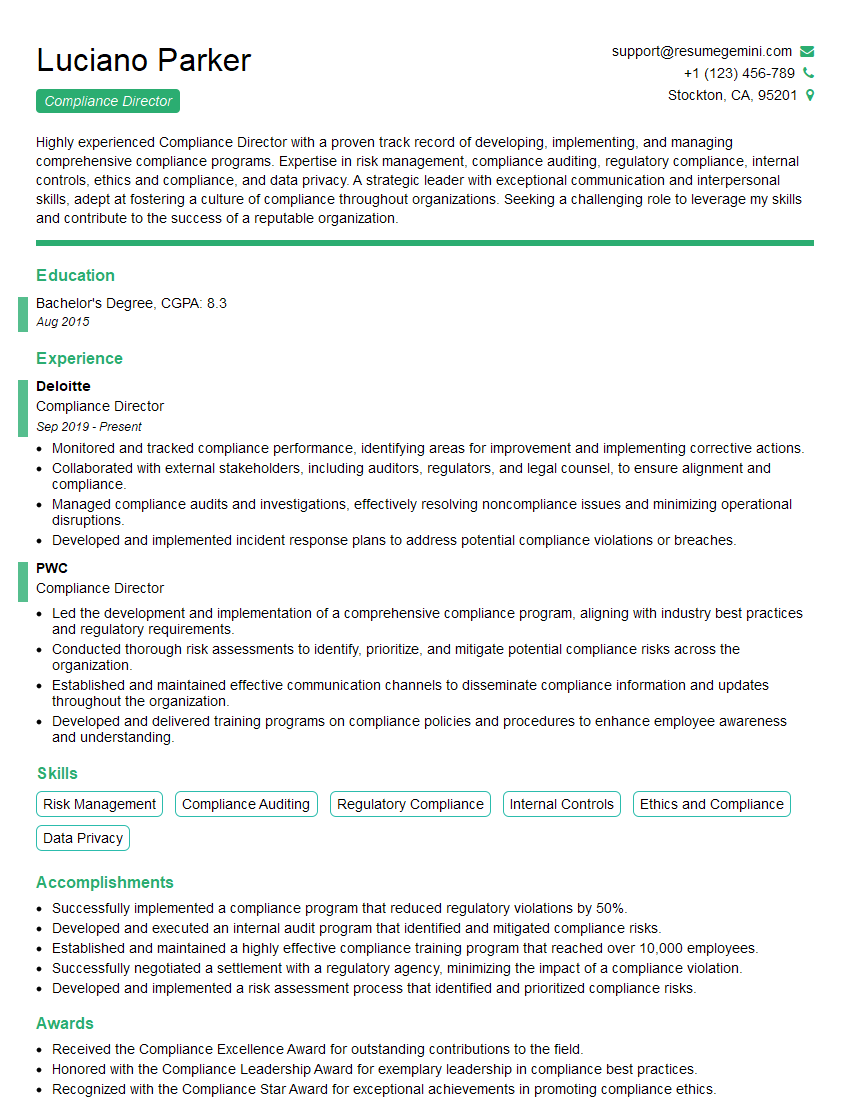
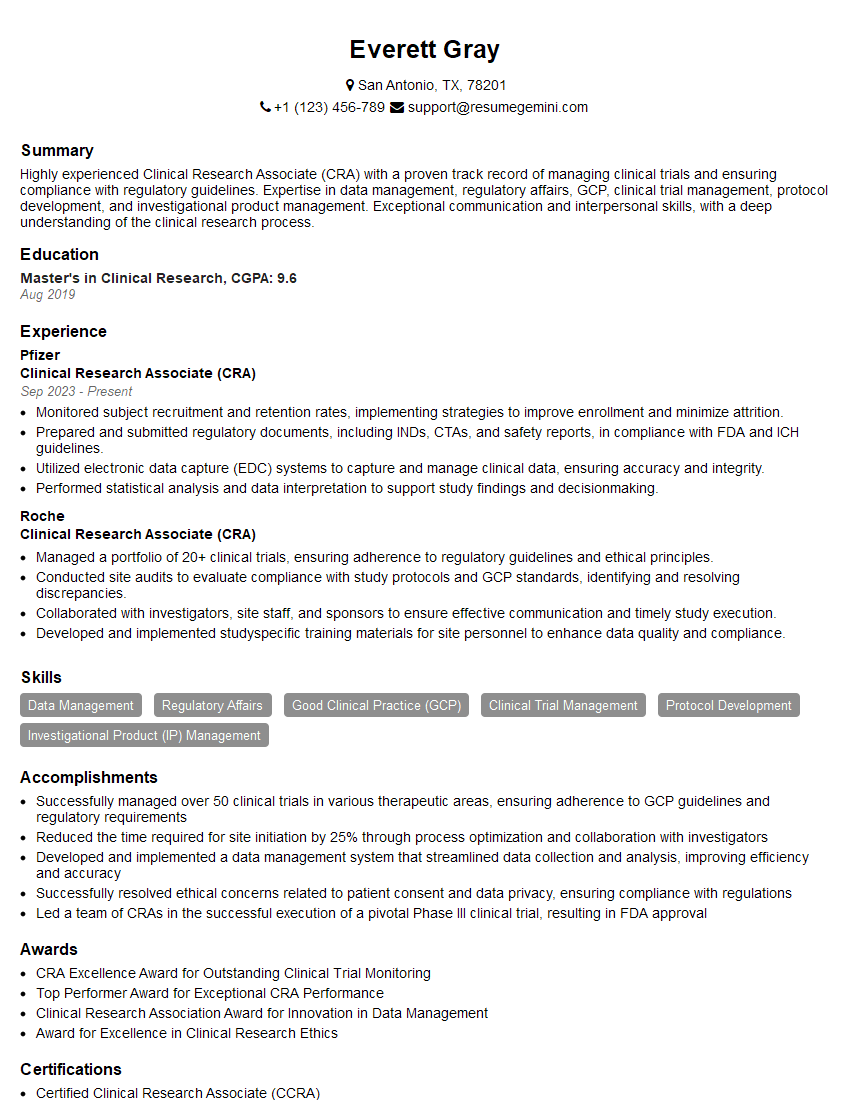
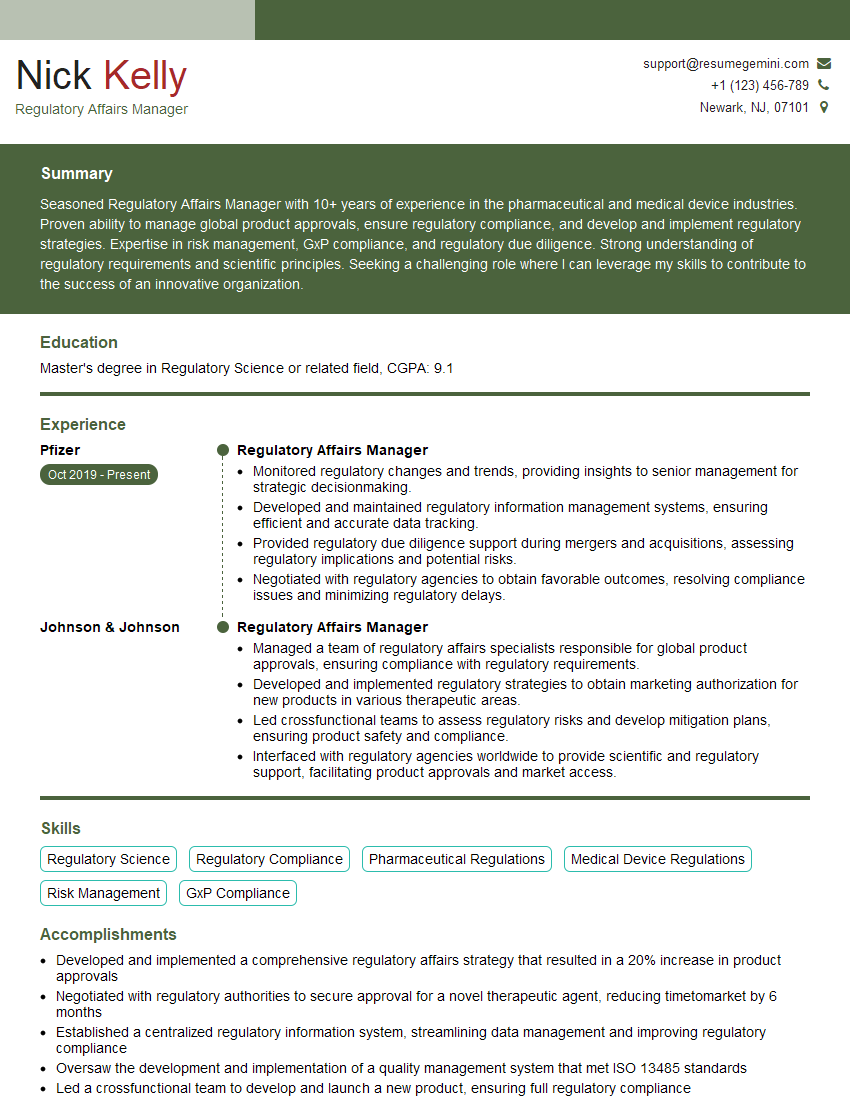
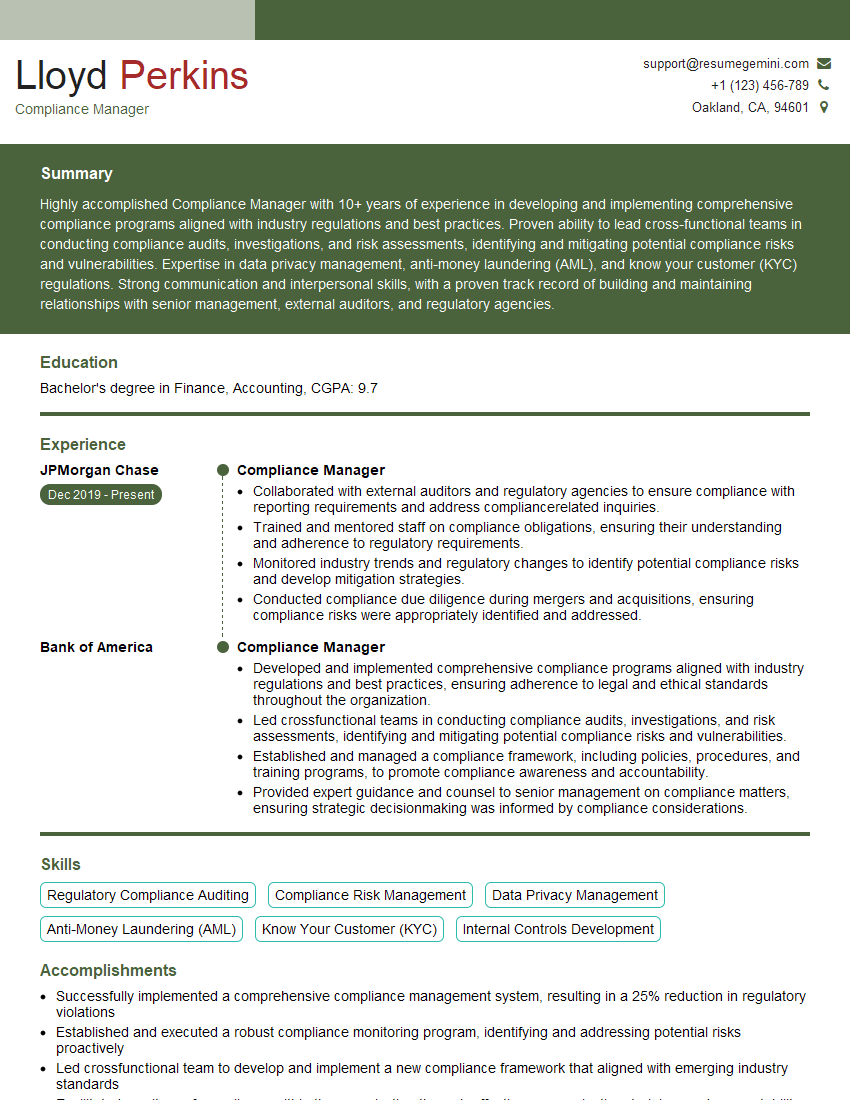
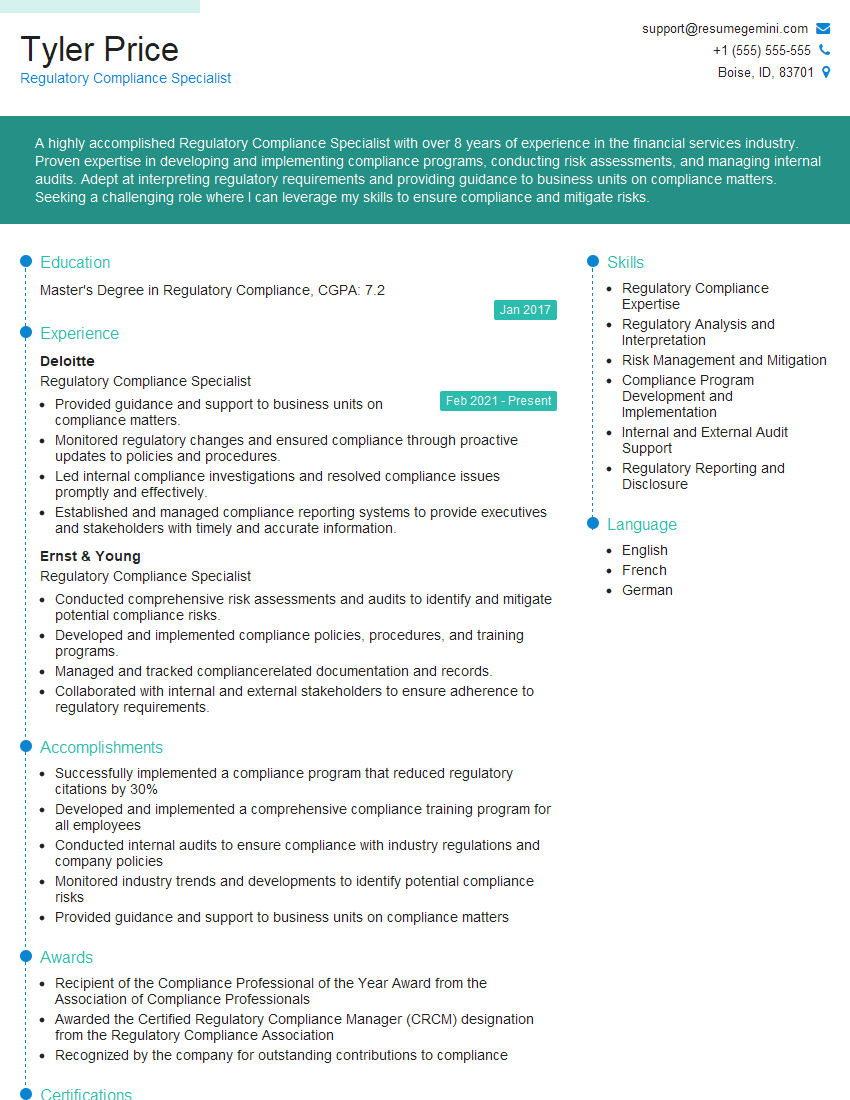
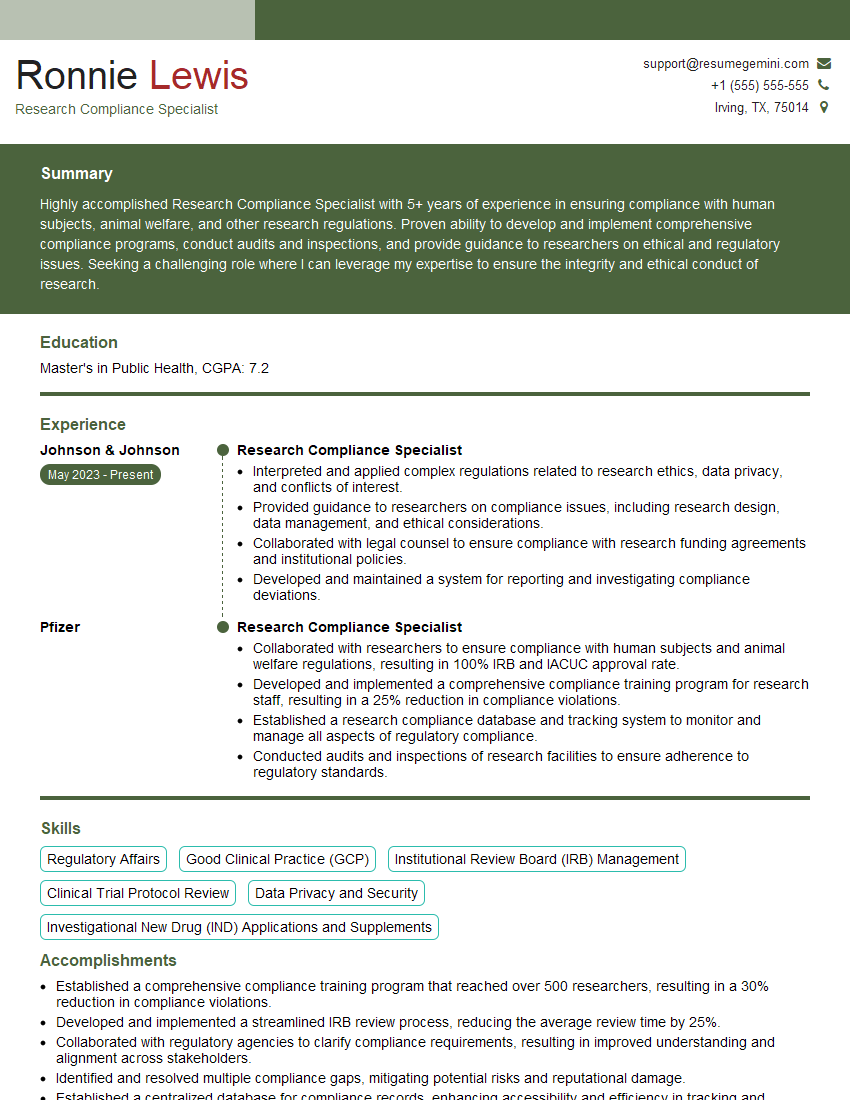
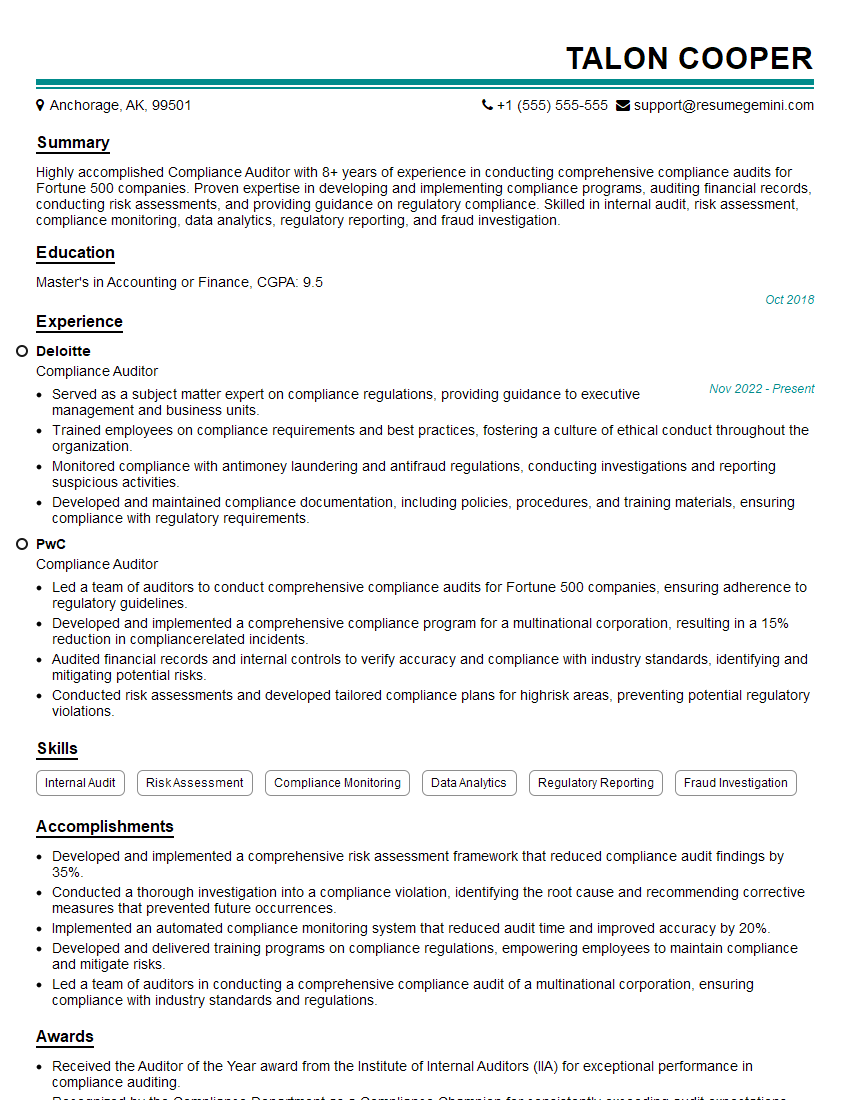
Mastering Knowledge of Research Ethics and Compliance Regulations is crucial for career advancement in research and related fields. It demonstrates your commitment to ethical conduct and your ability to navigate complex regulatory landscapes. Building a strong, ATS-friendly resume is essential for showcasing your expertise effectively and increasing your chances of securing interviews. ResumeGemini is a trusted resource to help you craft a compelling and professional resume that highlights your skills and experience. Examples of resumes tailored to showcasing expertise in Knowledge of Research Ethics and Compliance Regulations are available to help you get started.
Explore more articles
Users Rating of Our Blogs
Share Your Experience
We value your feedback! Please rate our content and share your thoughts (optional).
What Readers Say About Our Blog
To the interviewgemini.com Webmaster.
Very helpful and content specific questions to help prepare me for my interview!
Thank you
To the interviewgemini.com Webmaster.
This was kind of a unique content I found around the specialized skills. Very helpful questions and good detailed answers.
Very Helpful blog, thank you Interviewgemini team.