Interviews are opportunities to demonstrate your expertise, and this guide is here to help you shine. Explore the essential Knowledge of special education law (e.g., IDEA, ADA) interview questions that employers frequently ask, paired with strategies for crafting responses that set you apart from the competition.
Questions Asked in Knowledge of special education law (e.g., IDEA, ADA) Interview
Q 1. Explain the key differences between IDEA and Section 504 of the Rehabilitation Act.
Both the Individuals with Disabilities Education Act (IDEA) and Section 504 of the Rehabilitation Act protect the rights of students with disabilities, but they differ significantly in scope and implementation. IDEA is a more specific and comprehensive law focused solely on students with disabilities who need specialized instruction. Section 504 is broader, applying to individuals with disabilities in any program or activity receiving federal funding, including schools.
- Funding: IDEA provides federal funding for special education services, while Section 504 doesn’t mandate specific funding for accommodations.
- Eligibility: IDEA requires a specific evaluation and identification process to determine eligibility for special education services, focusing on significant academic and developmental needs. Section 504 eligibility is determined by whether a student has a physical or mental impairment that substantially limits one or more major life activities.
- Services: IDEA mandates Individualized Education Programs (IEPs) with specialized instruction and related services. Section 504 provides accommodations and modifications to enable access to the general education curriculum within a general education setting. Think of it this way: IDEA is about specialized instruction *in addition* to the general curriculum, while Section 504 focuses on modifications to *access* the general curriculum.
- Due Process: IDEA offers extensive procedural safeguards, including due process hearings and mediation, to resolve disputes between parents and schools. Section 504 has a less formalized dispute resolution process.
For example, a student with a severe learning disability might qualify for an IEP under IDEA, receiving specialized reading instruction and speech therapy. A student with ADHD who can access the general education curriculum with some adjustments like preferential seating and extended time on tests might qualify for a 504 plan.
Q 2. Describe the procedural safeguards afforded to parents under IDEA.
IDEA grants parents significant procedural safeguards to ensure their child receives a free appropriate public education (FAPE). These include:
- Right to participate in all IEP meetings: Parents have the right to attend and actively participate in all meetings regarding their child’s education.
- Right to examine all relevant records: Parents have access to their child’s educational records and can review all relevant documents.
- Right to independent educational evaluation (IEE): If parents disagree with the school’s evaluation, they can obtain an IEE at public expense.
- Right to mediation: Parents can request mediation to resolve disputes before proceeding to a due process hearing.
- Right to due process hearing: If mediation fails, parents can request a due process hearing before an impartial hearing officer to resolve disputes.
- Right to appeal: Parents can appeal the hearing officer’s decision to state or federal courts.
Imagine a scenario where parents disagree with their child’s IEP. The procedural safeguards allow them to actively challenge the school’s proposed plan, ensuring their voice is heard and their child’s needs are met fairly.
Q 3. What are the requirements for developing an Individualized Education Program (IEP)?
Developing an IEP involves a collaborative process among parents, educators, and relevant professionals. Key requirements include:
- Present Levels of Performance (PLP): A detailed description of the student’s current academic, developmental, and functional performance.
- Measurable Annual Goals: Specific, measurable, achievable, relevant, and time-bound goals designed to address the student’s identified needs.
- Special Education and Related Services: A description of the specific special education and related services (e.g., speech therapy, occupational therapy) that will be provided to help the student achieve their goals.
- Participation in the General Education Curriculum: A description of how the student will participate in the general education curriculum and what accommodations or modifications will be provided.
- Evaluation Procedures: A plan for evaluating the student’s progress toward their goals and determining the effectiveness of the IEP.
- Service Delivery Schedule: The frequency, duration, and location of services.
- Transition Services: For students ages 16 and up, transition services to prepare them for post-school activities.
The IEP must be individualized to meet the unique needs of the student. It’s not a one-size-fits-all document; it’s a tailored plan focused on specific goals and needs, regularly reviewed and updated as needed.
Q 4. How does FAPE (Free Appropriate Public Education) apply in different educational settings?
FAPE ensures that children with disabilities receive appropriate educational services without cost to their parents. Its application varies depending on the educational setting:
- Public Schools: In public schools, FAPE is provided through the IEP process, ensuring specialized instruction, related services, and appropriate accommodations within the least restrictive environment (LRE).
- Private Schools: FAPE doesn’t automatically extend to private schools. However, if a student’s IEP requires services not available in their private school, the public school may be required to provide those services to that child at the private school.
- Residential Facilities: If a child resides in a residential facility, FAPE should still be provided, potentially through specialized services on-site or through a collaboration between the facility and the local school district.
The principle of LRE dictates that students with disabilities should be educated alongside their non-disabled peers to the maximum extent possible. The type of setting (e.g., general education classroom, resource room, self-contained classroom) should be determined based on the student’s unique needs. For example, a student with mild learning difficulties might benefit from inclusion in a general education classroom with supplementary support, while a student with significant cognitive impairments might require a more specialized setting.
Q 5. What constitutes a ‘disability’ under the ADA and IDEA?
The definition of ‘disability’ differs slightly under IDEA and the ADA, but both aim to protect individuals from discrimination.
- IDEA: IDEA defines disability through thirteen specific categories, including autism, intellectual disability, specific learning disabilities, emotional disturbance, and others. A student must meet the criteria within one of these categories and demonstrate a need for special education services.
- ADA: The ADA defines disability more broadly as a physical or mental impairment that substantially limits one or more major life activities. This definition encompasses a wider range of impairments and includes conditions that may not necessarily require special education services but still warrant reasonable accommodations.
Consider a student with dyslexia. Under IDEA, this student would likely be eligible for special education services if their reading skills significantly impact their academic performance. Under the ADA, the same student might qualify for reasonable accommodations (like extra time on tests or assistive technology) in a college setting, even if they don’t receive special education.
Q 6. Outline the steps involved in the IEP process, from referral to implementation.
The IEP process is a cyclical process that involves several steps:
- Referral: The process begins with a referral from parents, educators, or other professionals expressing concern about a student’s academic or developmental progress.
- Evaluation: If the referral is accepted, a comprehensive evaluation is conducted to determine if the student has a disability and needs special education services. This evaluation must be conducted by a multidisciplinary team.
- Eligibility Determination: Based on the evaluation, the team determines whether the student meets the eligibility criteria for special education services under IDEA.
- IEP Meeting: If the student is found eligible, an IEP meeting is held to develop an individualized education program. This is a collaborative meeting that includes the parents, educators, and relevant professionals.
- IEP Development and Implementation: The team collaborates to develop the IEP, specifying measurable goals, services, and accommodations. This IEP is then implemented by the school.
- Monitoring and Progress Evaluation: The student’s progress toward their goals is monitored regularly, and the IEP is reviewed and updated at least annually, or more frequently as needed.
Each step requires careful documentation and communication among all stakeholders to ensure the plan is effective and tailored to the student’s specific needs. The whole process is designed to be iterative and responsive to the student’s ongoing needs and progress.
Q 7. Explain the role of due process hearings in resolving disputes under IDEA.
Due process hearings are formal legal proceedings under IDEA to resolve disagreements between parents and schools regarding a student’s IEP or other educational issues. They’re a last resort after mediation has failed.
The hearing is presided over by an impartial hearing officer. Both parents and the school present evidence and witnesses to support their positions. The hearing officer makes a decision based on the evidence presented, and this decision is legally binding. The outcome can include modifications to the student’s IEP, compensatory education, or other remedies. The process is quite formal, akin to a mini-trial, requiring legal expertise or representation from both sides. The objective is to achieve a fair and just resolution that benefits the child’s education.
Think of a due process hearing as a safety net to ensure that if negotiations break down, there’s a fair and impartial way to resolve conflicts and protect the rights of the child and parents.
Q 8. How would you address a parent’s concerns regarding their child’s IEP?
Addressing a parent’s concerns about their child’s IEP requires a collaborative and empathetic approach. First, I would actively listen to their concerns without interruption, ensuring they feel heard and understood. I would then clarify any misunderstandings regarding the IEP goals, services, or progress. If the concerns are related to the child’s progress, I would present data-driven evidence of their performance, explaining any discrepancies or challenges. If the parent proposes modifications to the IEP, I would engage in a collaborative discussion to explore the feasibility and appropriateness of those changes based on the student’s needs and the available resources. Finally, I would document the meeting, including the parent’s concerns, the discussion, and any agreed-upon actions. If a resolution can’t be reached, I would explain the process for requesting a due process hearing, ensuring the parents understand their rights. Think of it like building a bridge – understanding and empathy are the foundational pillars, with clear communication and collaboration leading to a successful crossing.
For example, if a parent feels the IEP goals are not challenging enough, I’d show them examples of their child’s work, standardized test scores, and anecdotal records demonstrating their strengths and areas for growth. We would collaboratively revise the goals, making sure they’re ambitious yet attainable.
Q 9. Describe the process for resolving a complaint related to Section 504 compliance.
Resolving a Section 504 compliance complaint typically involves a multi-step process. First, an informal resolution is attempted. The complainant (often the parent or student) should submit a written complaint to the school’s Section 504 coordinator. The coordinator then investigates the complaint, gathers relevant information, and attempts to resolve the issue informally. This may involve meetings with the complainant, relevant school staff, and sometimes even the student. If an informal resolution fails, the complaint moves to a formal process, which may involve a formal hearing, depending on the institution’s policies and the nature of the complaint. This process might involve mediation or an appeal to higher authorities within the school district or even to an external agency responsible for enforcing Section 504 compliance. The process is documented throughout, with records of all meetings and decisions made.
Imagine it like a tiered system – starting with a simple conversation, then escalating to formal steps if needed, with each step carefully documented for transparency and accountability.
Q 10. What are the key elements of a legally sound 504 plan?
A legally sound 504 plan needs several key elements to ensure it effectively addresses the student’s needs and meets legal requirements. These include: a clear statement identifying the student’s disability that substantially limits one or more major life activities; a description of the student’s current educational performance; a statement of the plan’s goals; a description of the specific accommodations and supports to be provided; a timeline for implementing the plan; a process for evaluating the effectiveness of the plan and making necessary modifications; and the names of staff members responsible for implementing the plan. Importantly, the plan must be individualized based on the student’s unique needs, not just a checklist of generic accommodations. The plan should be regularly reviewed and revised as needed to reflect changes in the student’s performance and needs.
For example, a student with ADHD might have accommodations such as preferential seating, regular check-ins, and organizational strategies. The 504 plan would specifically detail these accommodations and how they will be implemented and monitored.
Q 11. How do you ensure compliance with FERPA regulations in the context of special education?
FERPA (Family Educational Rights and Privacy Act) compliance in special education requires careful attention to student record confidentiality. This involves restricting access to IEPs and other educational records to authorized personnel only. Parents have the right to access their child’s records, and schools must provide them with copies within a reasonable time frame. Any disclosure of information must be with parental consent, except in limited circumstances allowed by law, such as to school officials who have a legitimate educational interest. Strict record-keeping practices are essential, with clear procedures for securing physical and electronic records. Training staff on FERPA regulations is vital to ensure compliance. We should treat student information like highly confidential medical records – only those with a need-to-know have access.
For example, before sharing a student’s IEP with a therapist, written parental consent would be required. We must also secure electronic IEPs with strong passwords and access controls.
Q 12. What are some common legal challenges faced by special education professionals?
Special education professionals often face several legal challenges. One common issue is ensuring proper procedural due process, following all legal steps in the evaluation and IEP development process. Another significant challenge is ensuring the least restrictive environment (LRE) placement for every student, balancing the need for specialized services with inclusion in the general education setting. Disputes over the appropriate level of services or accommodations often arise. Accurate documentation is crucial to defend against accusations of non-compliance, as is having a thorough understanding of relevant state and federal laws and regulations. Staying updated on case law and legal precedents is also vital for addressing evolving legal interpretations. It’s like navigating a complex legal landscape, requiring constant vigilance and attention to detail.
For instance, a school might face a due process hearing if a parent challenges the accuracy of their child’s evaluation or the appropriateness of their IEP.
Q 13. Explain the concept of least restrictive environment (LRE) and its implications.
The Least Restrictive Environment (LRE) principle, mandated by IDEA, requires that students with disabilities be educated alongside their non-disabled peers to the maximum extent appropriate. This means that students should be placed in the educational setting that best meets their individual needs, while also providing opportunities for interaction with typically developing peers. It’s not about simply placing students in a general education classroom regardless of their needs; rather, it’s about finding the best balance between specialized instruction and inclusion. The IEP team determines the LRE, considering various factors including the student’s disability, academic needs, and social-emotional development. Full inclusion is often the goal, but only if it can be achieved without compromising the student’s educational progress. If a student requires specialized instruction or supports that can’t be provided in a general education setting, a more restrictive environment may be appropriate, but only after considering all less restrictive options.
For instance, a student with mild learning disabilities might thrive in a general education classroom with some accommodations, while a student with significant cognitive impairments might require more specialized instruction in a separate setting.
Q 14. Describe the different types of accommodations that might be included in an IEP or 504 plan.
IEPs and 504 plans can include a wide variety of accommodations tailored to a student’s individual needs. These accommodations can be categorized into several types. Instructional accommodations might include modifications to the curriculum, assignments, or teaching methods, such as providing graphic organizers, extended time on assignments, or allowing the use of assistive technology. Environmental accommodations address the physical learning environment, such as preferential seating, reduced distractions, or a quiet workspace. Assessment accommodations change how a student demonstrates their knowledge, including alternative assessment formats, extended time on tests, or using assistive technology during assessments. Support services can include specialized instruction from a special education teacher, speech therapy, occupational therapy, or counseling. The key is choosing the most effective and appropriate accommodations to help the student succeed. It’s like a toolbox, containing various tools to address different needs and overcome individual learning barriers.
For example, a student with dyslexia might benefit from text-to-speech software (assistive technology), while a student with ADHD might need preferential seating away from distractions (environmental accommodation).
Q 15. How do you handle situations where a student’s behavior interferes with their learning or the learning of others?
Addressing disruptive behavior in students with disabilities requires a multifaceted approach rooted in understanding the underlying cause. It’s crucial to remember that behavior is communication; the student is trying to tell us something. We need to move beyond simply punishing the behavior and instead focus on identifying its function.
My approach involves these steps:
- Functional Behavior Assessment (FBA): This involves systematically gathering information to determine the reasons behind the behavior. We observe the student in various settings, interview teachers, parents, and the student themselves (if appropriate), and review relevant data. The goal is to identify the triggers, the maintaining factors, and the function of the behavior (e.g., attention-seeking, escape from a task, access to preferred items).
- Behavior Intervention Plan (BIP): Based on the FBA, we develop a BIP that outlines strategies to prevent the behavior and teach replacement behaviors. This plan might include positive reinforcement, proactive strategies like providing choices or frequent breaks, teaching coping mechanisms, and addressing sensory needs. It’s crucial the BIP is individualized and data-driven, with regular monitoring and adjustments.
- Collaboration: Successful intervention requires collaboration with parents, teachers, specialists, and the student themselves. Regular communication and consistent implementation are key.
- Compliance with IDEA: All interventions must comply with the Individuals with Disabilities Education Act (IDEA), which mandates a positive behavior intervention and support (PBIS) framework and ensures the student’s rights are protected.
Example: A student with ADHD frequently disrupts class. An FBA reveals the disruptions are primarily triggered by frustration during challenging tasks. The BIP focuses on breaking down tasks into smaller steps, providing frequent positive reinforcement, and teaching self-regulation strategies like deep breathing. Regular data collection monitors the effectiveness of the BIP, allowing for ongoing adjustments.
Career Expert Tips:
- Ace those interviews! Prepare effectively by reviewing the Top 50 Most Common Interview Questions on ResumeGemini.
- Navigate your job search with confidence! Explore a wide range of Career Tips on ResumeGemini. Learn about common challenges and recommendations to overcome them.
- Craft the perfect resume! Master the Art of Resume Writing with ResumeGemini’s guide. Showcase your unique qualifications and achievements effectively.
- Don’t miss out on holiday savings! Build your dream resume with ResumeGemini’s ATS optimized templates.
Q 16. What are your strategies for effective communication with parents and other stakeholders?
Effective communication with parents and stakeholders is foundational to a successful special education program. I prioritize open, honest, and respectful communication, tailored to the individual needs and preferences of each family. My strategies include:
- Regular and proactive communication: I initiate contact frequently, not just when there’s a problem. I provide regular updates on the student’s progress, using easily understandable language.
- Various communication channels: I utilize phone calls, emails, parent-teacher conferences, and even digital platforms like learning management systems to reach parents in a way that works best for them.
- Active listening and empathy: I listen carefully to parents’ concerns and perspectives, validating their feelings even if I don’t agree with every point. I strive to build trust and a collaborative relationship.
- Collaborative problem-solving: I approach challenges as shared opportunities, working collaboratively with parents to develop solutions that meet the student’s needs.
- Documenting all communications: I maintain detailed records of all interactions, ensuring accountability and a clear history of the student’s educational journey.
Example: I had a parent who was struggling to understand her child’s IEP. Instead of simply explaining it, I scheduled a meeting at their convenience, used visual aids, and answered all her questions patiently. We collaboratively adjusted the IEP to better align with her expectations and concerns, strengthening our partnership.
Q 17. Explain the difference between an evaluation and an assessment in the context of special education.
While the terms ‘evaluation’ and ‘assessment’ are often used interchangeably, they have distinct meanings within special education.
- Evaluation: This is a comprehensive process conducted to determine whether a child has a disability and needs special education services. It’s a formal procedure often involving multiple professionals (psychologists, speech therapists, occupational therapists) using various tools like standardized tests, observations, and interviews. The results of the evaluation determine eligibility for special education services under IDEA.
- Assessment: This is a broader term encompassing any process used to gather information about a student’s strengths and weaknesses. It can be formal or informal, and it’s used for various purposes, including monitoring progress, planning instruction, and informing instructional decisions. Assessments may be part of an evaluation, but an evaluation always includes assessment.
In short: An evaluation is a specific type of assessment that leads to eligibility for special education; assessment is a broader term encompassing any method to collect information about a student.
Example: A school might conduct an evaluation using standardized achievement tests, cognitive assessments, and behavioral observations to determine if a student meets the criteria for a learning disability. Once the student is found eligible, the IEP team will use ongoing assessments (e.g., classroom-based observations, curriculum-based measures) to monitor progress and make adjustments to the IEP.
Q 18. How do you determine the appropriate placement for a student with disabilities?
Determining the appropriate placement for a student with disabilities is a crucial step, guided by the principle of the Least Restrictive Environment (LRE) as mandated by IDEA. The LRE means that students with disabilities should be educated alongside their non-disabled peers to the maximum extent appropriate. The decision-making process involves:
- Individualized Education Program (IEP) team meeting: The IEP team, including parents, educators, specialists, and the student (when appropriate), collaborates to determine the most suitable educational setting.
- Consideration of the student’s individual needs: The team assesses the student’s strengths, weaknesses, and specific learning needs to identify the support and services required.
- Review of available options: The team explores various placement options, including general education classroom with support services (such as tutoring or specialized instruction), resource room, self-contained classroom, specialized schools, and homebound instruction.
- Prioritizing inclusion: The IEP team strives to keep the student in the general education setting as much as possible while providing the necessary support for success. This involves carefully considering the level and type of support needed for successful participation in the general education environment.
- Data-driven decision making: Decisions are based on objective data from evaluations, assessments, and ongoing monitoring of the student’s progress.
Example: A student with a mild learning disability might be successfully served in a general education classroom with supplemental support from a special education teacher. However, a student with severe autism might require a more restrictive setting like a self-contained classroom, at least initially, to receive the intensive support they need.
Q 19. What are the responsibilities of an IEP team member?
Each member of an IEP team plays a vital role in ensuring the student receives appropriate and effective services. The responsibilities vary depending on the individual’s expertise, but generally include:
- Parents/Guardians: Have the primary responsibility for making decisions about their child’s education, including the IEP goals and placement. They participate in the IEP development process, providing essential information about the child and advocating for their needs.
- General Education Teacher: Provides input on the student’s academic progress in the general education curriculum, discusses modifications and accommodations needed, and collaborates with the special education teacher to integrate the student effectively into the general education classroom.
- Special Education Teacher: Designs and implements the specialized instruction outlined in the IEP, monitors the student’s progress, and collaborates with the general education teacher and other team members.
- School Psychologist: Conducts assessments to identify learning disabilities and other special needs. They often provide recommendations for interventions and support the IEP team in making appropriate decisions.
- Other Specialists (e.g., speech-language pathologist, occupational therapist): Provide expertise and services related to their area of specialization and contribute their insights to the IEP development process.
- Administrator: Ensures the school has the resources and personnel to support the student’s IEP and monitors compliance with federal and state regulations.
- Student (when appropriate): Older students have the right to participate in the IEP process, sharing their preferences, and offering insight into their strengths and challenges.
Effective IEP teams are characterized by open communication, collaborative problem-solving, and shared responsibility in meeting the student’s educational needs.
Q 20. Describe a time you had to navigate a complex legal issue related to special education.
I once encountered a situation where a parent disputed the results of a psychoeducational evaluation, claiming it didn’t accurately reflect their child’s abilities. They requested an Independent Educational Evaluation (IEE). This raised complex legal issues concerning procedural safeguards under IDEA.
Navigating the situation involved:
- Understanding IDEA’s provisions regarding IEEs: IDEA grants parents the right to obtain an IEE at public expense if they disagree with the school’s evaluation. However, the school has the right to challenge the IEE’s validity and methodology.
- Careful review of the initial evaluation and the IEE: I meticulously reviewed both evaluations, examining the assessment instruments, procedures, and interpretations. I focused on areas of agreement and disagreement to identify any methodological inconsistencies.
- Collaboration and communication with the parents and legal counsel (when necessary): Open communication with the parents was crucial. We sought to understand their concerns and find common ground. Involving legal counsel helped clarify legal requirements and potential implications.
- Due process hearing preparation (if necessary): Given the disagreement, we prepared for a potential due process hearing by gathering supporting documentation, expert testimony, and legal advice. The aim was to present a well-reasoned case supporting the school’s position if the matter could not be resolved through mediation.
Ultimately, through careful analysis, open communication, and collaboration, we were able to reach a mutually acceptable resolution. This involved modifying the IEP to incorporate elements from both evaluations while ensuring compliance with IDEA.
Q 21. How do you stay up-to-date on changes in special education law?
Staying current with changes in special education law is vital for effective practice. My strategies include:
- Professional development: I actively participate in workshops, conferences, and training sessions related to special education law and best practices. These opportunities allow me to learn about recent case law, legislative changes, and emerging research.
- Membership in professional organizations: I am a member of professional organizations (e.g., CEC, NASP) that provide regular updates, publications, and resources on special education law and practice.
- Subscription to relevant journals and newsletters: I subscribe to journals and newsletters focusing on special education, law, and related fields. This keeps me informed about relevant legal cases, policy changes, and research.
- Networking with colleagues: I actively network with other professionals in the field, exchanging information and discussing current challenges and best practices.
- Monitoring relevant websites and resources: I regularly check websites of government agencies (e.g., the Office of Special Education Programs, state departments of education) and legal organizations to stay abreast of changes in laws and regulations.
By employing these strategies, I ensure my practice is up-to-date and complies with current legal standards, ultimately protecting the rights of students with disabilities while enhancing their educational opportunities.
Q 22. What are the ethical considerations involved in special education decision-making?
Ethical considerations in special education decision-making are paramount, ensuring fairness, respect, and the best interests of the student. They center around principles of non-maleficence (avoiding harm), beneficence (acting in the student’s best interest), justice (fair and equitable treatment), and respect for autonomy (respecting the student’s and family’s wishes and preferences, to the extent possible).
- Confidentiality: Maintaining the privacy of student information is crucial. All discussions regarding a student’s disability should be conducted in a confidential manner, only involving those directly involved in the student’s education program.
- Avoiding Bias: Decisions must be free from bias based on race, ethnicity, gender, socioeconomic status, or any other irrelevant factor. Assessments and interventions must be culturally responsive and appropriate.
- Due Process: Parents have the right to due process, including the ability to challenge decisions and request impartial hearings. Practitioners must follow all legal procedures and ensure parents are fully informed and involved.
- Advocacy: Special education professionals have an ethical obligation to advocate for their students’ needs and ensure they receive appropriate services and accommodations. This might involve navigating bureaucratic hurdles or challenging systemic inequities.
For instance, if a teacher suspects a student might have a learning disability, they must follow the proper referral and assessment procedures without making assumptions or prejudging the child’s abilities. Furthermore, if a parent disagrees with a recommendation, ethical conduct demands open communication and a collaborative approach to finding a resolution that benefits the child.
Q 23. How do you ensure that all students with disabilities have equal access to the curriculum?
Ensuring equal access to the curriculum for students with disabilities requires a multifaceted approach, primarily guided by the Individualized Education Program (IEP) or 504 plan. These legally mandated documents outline individualized accommodations and modifications tailored to a student’s specific needs.
- Universal Design for Learning (UDL): This framework promotes designing curriculum and instruction to be accessible to all learners from the outset. This reduces the need for extensive accommodations later on. It includes providing multiple means of representation (presenting information in various formats), action and expression (allowing students to demonstrate understanding in multiple ways), and engagement (motivating and challenging students).
- Accommodations: These changes in *how* a student learns the material don’t alter the curriculum’s content or expectations. Examples include extended time on tests, preferential seating, assistive technology, or use of graphic organizers.
- Modifications: These changes alter *what* a student learns, adjusting the curriculum’s content or expectations. Examples include reducing the number of assignments, simplifying reading material, or modifying assessment criteria.
- Assistive Technology: This encompasses a broad range of tools and devices designed to enhance learning, from speech-to-text software to adaptive keyboards and communication aids. The IEP team determines appropriate assistive technology based on the student’s needs.
For example, a student with dyslexia might receive accommodations such as extra time on tests, use of text-to-speech software, and preferential seating away from distractions. A student with a physical disability might need modifications to physical education requirements and access to adaptive equipment.
Q 24. Describe your experience with transition planning for students with disabilities.
Transition planning is a critical aspect of special education, focusing on preparing students with disabilities for life after high school. My experience involves working collaboratively with IEP teams, students, parents, and community agencies to develop personalized transition plans, typically beginning around age 16. These plans address post-secondary education, employment, independent living, and community participation.
- Individualized Plans: Each plan is tailored to the student’s unique aspirations, skills, and needs. We assess their strengths and weaknesses, explore vocational interests, and connect them with relevant resources.
- Collaboration: Effective transition planning involves regular meetings with the student, parents, school staff, vocational rehabilitation counselors, and other community professionals. The goal is to foster a comprehensive and supportive network.
- Community Involvement: We arrange job shadowing experiences, internships, or volunteer opportunities to help students explore careers and develop relevant skills.
- Post-Secondary Options: We explore options ranging from college or university to vocational training programs or supported employment opportunities.
- Independent Living Skills: We work to build skills necessary for independent living, such as budgeting, transportation, and self-advocacy.
For instance, I worked with a student with autism who aspired to become a computer programmer. We collaborated with a vocational rehabilitation agency to secure an internship, provided him with assistive technology for coding, and helped him develop self-advocacy skills to communicate his needs in a professional setting. The result was a successful transition to a post-secondary program in computer science.
Q 25. How do you support students with disabilities in participating in extracurricular activities?
Supporting students with disabilities in extracurricular activities is vital for their social-emotional development and overall well-being. It requires proactive planning and removing barriers to participation.
- Individualized Support: The key is to provide appropriate supports based on individual needs. This might involve modifications to rules or activities, peer buddies, or assistive technology.
- Accessibility: Ensure physical accessibility of venues and equipment. Consider the need for ramps, adapted sports equipment, or sign language interpreters.
- Communication: Establish clear communication with coaches, advisors, and other activity leaders to explain the student’s needs and accommodations. This collaborative effort prevents misunderstandings and ensures proper support.
- Positive Reinforcement: Focus on the student’s strengths and celebrate their successes. Positive reinforcement fosters self-esteem and encourages continued participation.
For example, a student with cerebral palsy might participate in adapted sports with appropriate equipment and modified rules. A student with social anxiety might benefit from a peer buddy to help them integrate into the activity. The goal is to create an inclusive and welcoming environment where all students can participate and thrive.
Q 26. What are some strategies for creating an inclusive classroom environment?
Creating an inclusive classroom environment requires a proactive and intentional approach. It’s not just about accepting differences; it’s about actively building a community where all students feel valued, respected, and empowered.
- Differentiated Instruction: Provide varied instructional methods and materials to cater to diverse learning styles and needs. This includes offering choices in assignments and assessments.
- Positive Classroom Climate: Cultivate a respectful, supportive, and collaborative atmosphere where students feel safe taking risks and asking questions. Emphasize empathy and understanding.
- Cooperative Learning Activities: Employ strategies that encourage collaboration and peer support, such as group projects and peer tutoring. This helps foster a sense of belonging and mutual respect.
- Universal Design for Learning (UDL): Apply UDL principles to design lessons and materials that are accessible to all students from the start, reducing the need for individualized accommodations.
- Accessible Materials: Ensure that all materials—printed and digital—are accessible to students with visual or auditory impairments. This might involve providing large-print materials, audio versions of textbooks, or captioned videos.
For example, a teacher might use visual aids, graphic organizers, and hands-on activities to cater to diverse learning styles. They might also create opportunities for peer interaction and collaboration, allowing students to learn from and support each other.
Q 27. Explain the importance of parent involvement in the special education process.
Parent involvement is crucial in special education because parents are their child’s primary advocates and possess unique insights into their child’s strengths, challenges, and preferences. Their participation ensures that decisions are child-centered, relevant, and effective.
- Shared Decision-Making: Parents are essential members of the IEP team, contributing their perspectives and expertise to the development and implementation of the child’s educational program.
- Improved Outcomes: Research shows that greater parent involvement is associated with improved student outcomes, including increased academic achievement, social-emotional development, and positive self-esteem.
- Communication: Open and regular communication between parents and educators is critical for ensuring a seamless transition between home and school environments.
- Collaboration: Collaboration between parents and educators helps create a unified and supportive environment for the student, fostering consistency in expectations and interventions.
For example, parents might share information about their child’s behavior at home, preferences for learning, or medical concerns. They might also participate in IEP meetings, advocating for their child’s needs and ensuring that the plan aligns with their goals and expectations.
Q 28. How would you handle a situation where a parent disagrees with the IEP team’s recommendations?
When a parent disagrees with the IEP team’s recommendations, it’s crucial to approach the situation with empathy, respect, and a commitment to finding a resolution that benefits the child. The focus should be on collaborative problem-solving rather than conflict.
- Open Communication: Start by actively listening to the parent’s concerns and perspectives. Seek to understand their reasoning and address their anxieties.
- Review the IEP: Review the IEP thoroughly with the parent, clarifying any misunderstandings about the recommendations and the rationale behind them.
- Mediation: Consider involving a neutral mediator to facilitate communication and help the parties find common ground.
- Due Process: If mediation fails to resolve the disagreement, parents have the right to pursue due process, which might involve an impartial hearing or mediation to resolve disagreements. It’s important to explain their rights in a clear and accessible manner.
- Compromise: Explore alternative solutions or compromises that might address the parent’s concerns while still meeting the student’s educational needs. Flexibility and willingness to adapt are crucial.
For example, if a parent disagrees with the placement recommendation, the team might explore alternative placements or offer additional supports to address the parent’s concerns. The goal is to find a solution that respects the parent’s input while ensuring that the student receives an appropriate education.
Key Topics to Learn for Knowledge of Special Education Law (e.g., IDEA, ADA) Interview
- IDEA (Individuals with Disabilities Education Act): Understand the key principles of FAPE (Free Appropriate Public Education), including individualized education programs (IEPs), least restrictive environments (LRE), and due process procedures. Consider the practical application of these principles in various educational settings.
- ADA (Americans with Disabilities Act): Grasp the implications of the ADA for students with disabilities in post-secondary education and the workplace. Focus on reasonable accommodations and the prohibition of discrimination.
- IEP Development and Implementation: Familiarize yourself with the IEP process, including participation rights of parents and students, the role of assessment in IEP development, and the process of goal setting and progress monitoring. Explore practical case studies of IEP development and implementation challenges.
- Due Process Hearings and Mediation: Learn about the procedures involved in due process hearings under IDEA, including the roles of different participants and potential outcomes. Understand the role of mediation in resolving disputes.
- Section 504 of the Rehabilitation Act: Comprehend the differences between IDEA and Section 504 and how they intersect to support students with disabilities. Consider the practical application of Section 504 plans in various educational settings.
- Discipline of Students with Disabilities: Understand the regulations surrounding the discipline of students with disabilities under IDEA, including manifestation determination reviews and the limitations on suspension and expulsion.
- Transition Planning: Familiarize yourself with the transition planning requirements of IDEA for students as they move from secondary to post-secondary education or employment. Understand the importance of individualized transition plans (ITPs).
- Ethical Considerations: Explore the ethical considerations involved in serving students with disabilities, including confidentiality, advocacy, and collaboration with families and professionals.
Next Steps
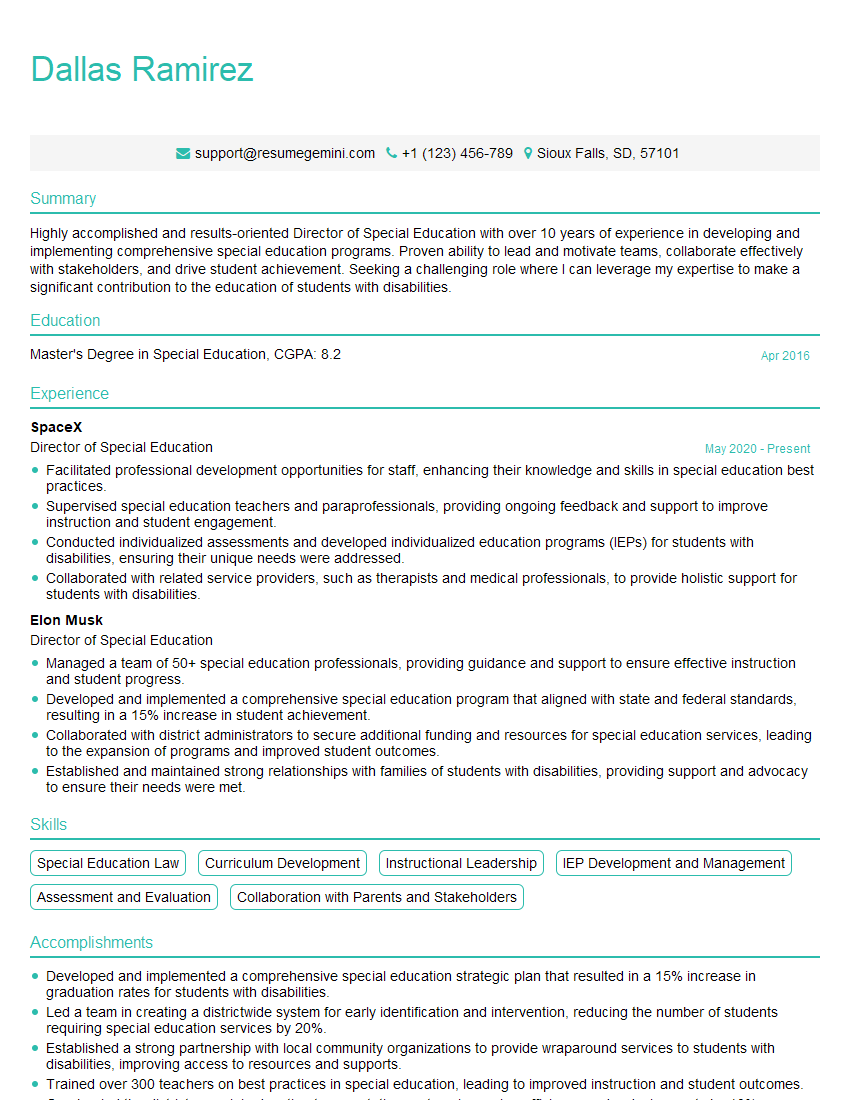
Mastering special education law, particularly IDEA and ADA, is crucial for career advancement in this field. A strong understanding of these laws demonstrates your competence and commitment to ensuring students receive appropriate and equitable educational opportunities. To maximize your job prospects, create an ATS-friendly resume that highlights your expertise and experience. ResumeGemini is a trusted resource to help you build a professional and effective resume that showcases your skills and knowledge. Examples of resumes tailored to special education law expertise are available, providing valuable guidance for crafting your own compelling application materials.
Explore more articles
Users Rating of Our Blogs
Share Your Experience
We value your feedback! Please rate our content and share your thoughts (optional).
What Readers Say About Our Blog
To the interviewgemini.com Webmaster.
Very helpful and content specific questions to help prepare me for my interview!
Thank you
To the interviewgemini.com Webmaster.
This was kind of a unique content I found around the specialized skills. Very helpful questions and good detailed answers.
Very Helpful blog, thank you Interviewgemini team.