Every successful interview starts with knowing what to expect. In this blog, we’ll take you through the top Knowledge of wildlife captive breeding and reintroduction interview questions, breaking them down with expert tips to help you deliver impactful answers. Step into your next interview fully prepared and ready to succeed.
Questions Asked in Knowledge of wildlife captive breeding and reintroduction Interview
Q 1. Describe the process of captive breeding for an endangered species, focusing on genetic management.
Captive breeding for endangered species is a crucial conservation tool, aiming to increase population size and genetic diversity before reintroduction into the wild. Genetic management is paramount to prevent inbreeding depression and maintain long-term viability. The process begins with a thorough assessment of the existing population’s genetic diversity, often using techniques like microsatellite analysis or genomic sequencing. This helps identify individuals with unique genetic lineages, which are prioritized for breeding pairs. A carefully planned breeding program is then implemented, often employing studbooks (detailed records of the lineage and breeding history of each animal) to track parentage and avoid close relatives mating. Techniques like artificial insemination or embryo transfer may be used to overcome breeding difficulties or enhance reproductive success. Regular genetic monitoring continues throughout the program to ensure that diversity remains high and inbreeding is minimized. For example, the California condor captive breeding program successfully used these techniques to recover a species once teetering on the brink of extinction, demonstrating the power of strategic genetic management.
Think of it like tending a garden; you want diversity among your plants to ensure resilience against diseases and pests. Similarly, genetic diversity ensures the captive population is robust and capable of surviving various environmental challenges upon release.
Q 2. What are the key considerations for selecting suitable release sites for reintroduced animals?
Selecting appropriate release sites is critical for successful reintroduction. Several factors are considered: habitat quality, availability of resources (food, water, shelter), presence of predators and competitors, disease prevalence, and the level of human disturbance. The chosen site must closely resemble the species’ historical range and offer sufficient carrying capacity to support the reintroduced population. Additionally, consideration should be given to the social structure of the species; a suitable site needs to offer enough territory to support the anticipated population size without increasing competition. The site also needs to be protected from illegal poaching and other threats. For instance, the successful reintroduction of wolves to Yellowstone National Park involved meticulous site selection to balance habitat quality and human proximity.
Imagine it like finding the perfect home. You wouldn’t just pick any house; you need to consider factors such as location, size, features, and neighborhood safety. Similarly, the reintroduction site needs to meet specific criteria for the animals to thrive.
Q 3. Explain the role of population viability analysis (PVA) in captive breeding and reintroduction programs.
Population viability analysis (PVA) is a crucial tool for assessing the long-term prospects of a population, both in captivity and in the wild. It employs mathematical models to predict the probability of extinction within a given timeframe, based on various factors like population size, birth and death rates, and environmental stochasticity (random environmental fluctuations). In captive breeding, PVA helps determine the minimum population size needed to avoid extinction and guides management decisions related to breeding strategies and genetic management. For reintroduction programs, PVA helps evaluate the feasibility of reintroduction by forecasting the likelihood of success given specific release site characteristics and potential threats. A PVA can even suggest adjustments to the reintroduction process, such as the number of animals released or the type of support provided after release. It’s essentially a risk assessment for the species.
Think of it as a financial risk analysis, but for conservation. Before investing in a program, we need to analyze the chances of success to make informed decisions.
Q 4. How do you mitigate the risks of inbreeding depression in captive breeding populations?
Inbreeding depression, the reduced fitness of offspring due to mating between closely related individuals, is a major concern in captive breeding programs. To mitigate this risk, several strategies are employed. These include maintaining large and genetically diverse captive populations, using studbooks to track parentage and avoid close matings, implementing computer-based breeding programs (using software to optimize mating pairs while minimizing inbreeding), and occasionally introducing new individuals from other captive populations or even from the wild (if possible and safe). Cryopreservation of genetic material (sperm or eggs) allows for future breeding possibilities and maintains genetic diversity across generations. Careful monitoring of genetic diversity via molecular markers is crucial to detect and address any emerging inbreeding. For example, zoological institutions frequently collaborate to manage breeding programs for endangered species, exchanging animals and genetic materials to avoid inbreeding.
It’s similar to diversifying your investment portfolio – you wouldn’t put all your eggs in one basket. Similarly, genetic diversity helps mitigate the risk of inbreeding depression.
Q 5. What are the different approaches to soft release and hard release techniques?
Release techniques are categorized into ‘hard’ and ‘soft’ release. Hard release involves releasing animals directly into the wild with minimal human intervention. It is cost-effective and less labor-intensive, but has higher mortality and lower success rates due to the sudden lack of human support. In contrast, soft release involves a gradual transition from captivity to independence. This can include acclimation periods in enclosures in the release area, supplemental feeding, or even temporary radio-collars for monitoring and tracking. Soft release allows for training and habituation to the new environment, increasing the chances of survival and long-term success. The choice depends on the species’ characteristics, the available resources, and the specific goals of the reintroduction program. For example, a species accustomed to human interaction might require a soft release approach, while a less adaptable species might benefit from a hard release after an extensive captive-to-wild acclimation process.
Think of it like learning to swim – you wouldn’t just throw someone into the deep end (hard release). A soft release provides gradual support and increased chances of success.
Q 6. Discuss the ethical considerations involved in captive breeding and reintroduction.
Ethical considerations in captive breeding and reintroduction are vital. They include ensuring the welfare of the animals in captivity, minimizing stress and maximizing their chances of survival. The impact on wild populations and ecosystems also needs to be carefully evaluated, avoiding unintended competition or disease transmission. Transparency and public engagement are essential to gain support for these often expensive and long-term projects. Decisions should be based on scientific evidence, avoiding anthropomorphism, and acknowledging the limitations of our ability to predict ecological outcomes. In some cases, a species may be better served by focusing conservation efforts on in-situ conservation (protecting species within their natural habitats) than by captive breeding and reintroduction, which comes with risks of its own.
Ethical considerations are at the core of successful conservation. Ensuring the animals’ welfare is as important as achieving our conservation goals.
Q 7. How do you monitor the success of a reintroduction program post-release?
Monitoring post-release is essential to assess the success of a reintroduction program. Techniques used include radio-telemetry (tracking animals using radio collars), mark-recapture studies (estimating population size based on marked and unmarked individuals), camera trapping (monitoring animal activity remotely), and genetic monitoring (assessing the genetic diversity and population structure). Data gathered allows us to assess survival rates, reproductive success, habitat use, dispersal patterns, and the overall integration of the reintroduced population into the existing ecosystem. These data inform management actions, such as supplemental feeding, predator control, or modifications to the release strategy. For instance, monitoring the movement patterns of released animals can inform decisions about habitat protection and management. This allows for continuous improvement and adaptation to challenges encountered post-release.
Think of it as tracking the progress of a project. Regular monitoring provides feedback that helps us adjust our strategy for optimum results.
Q 8. Explain the importance of public education and outreach in wildlife conservation.
Public education and outreach are absolutely vital for successful wildlife conservation, especially when it comes to captive breeding and reintroduction programs. Imagine trying to protect a species without the public’s understanding and support – it’s nearly impossible. Effective outreach builds crucial public awareness about the importance of biodiversity, the threats facing specific species, and the role individuals can play in conservation efforts.
For example, engaging educational programs in schools and community centers can instill a sense of responsibility towards wildlife from a young age. Similarly, public awareness campaigns highlighting the plight of endangered species and the success stories of reintroduction projects can garner crucial support for conservation initiatives. This support translates into political will, funding, and public cooperation in protecting habitats and reducing threats.
- Increased funding for conservation projects.
- Greater political will to implement protective legislation.
- Reduced poaching and habitat destruction through public awareness and engagement.
- Volunteer support for monitoring and habitat restoration efforts.
Q 9. Describe your experience with handling and managing wildlife in a captive setting.
My experience with handling and managing wildlife in a captive setting spans over 15 years, primarily focusing on endangered primates and raptors. This involves a multifaceted approach. It’s not just about feeding and cleaning enclosures; it’s about understanding each animal’s individual needs and temperament. We conduct daily health checks, maintain meticulously clean enclosures to minimize disease risk, and employ species-specific enrichment activities to stimulate natural behaviors. These enrichment programs often involve providing puzzle feeders, creating opportunities for exploration within the enclosure, or simulating natural social interactions if the species is social.
For instance, during my work with California Condors, we developed a complex enrichment program involving the introduction of life-sized puppets mimicking natural prey to simulate hunting. This improved their foraging skills, reduced stress, and maintained their physical fitness in preparation for release. Safety is paramount. We utilize specialized equipment and techniques to minimize risks to both the animals and handlers. Proper training and strict adherence to safety protocols are non-negotiable.
Q 10. How do you assess the health and fitness of animals before and after release?
Assessing the health and fitness of animals before and after release is critical to the success of a reintroduction program. We use a combination of methods to evaluate their overall condition. Before release, thorough veterinary examinations are conducted, including blood tests, parasite checks, and assessments of body condition. We also monitor their behavior, looking for signs of stress, aggression, or illness. Their ability to perform essential survival tasks, such as foraging or hunting, is carefully evaluated. This often involves behavioral tests and observation in semi-natural enclosures.
Post-release monitoring is equally crucial. We employ telemetry, which involves attaching radio collars or GPS trackers, to monitor their movements and habitat use. We regularly conduct surveys to assess their survival rates and reproductive success. Physical examinations are conducted whenever possible, though this is often challenging with wild animals. Any signs of disease, injury, or malnutrition are promptly addressed. Regular data collection and analysis help to identify potential problems early on and inform management strategies.
Q 11. What are the potential challenges in reintroducing animals to fragmented habitats?
Reintroducing animals to fragmented habitats presents significant challenges. Habitat fragmentation, caused by human activities like deforestation and urbanization, results in isolated populations, reducing genetic diversity and increasing the risk of inbreeding. These small, isolated populations are also more vulnerable to environmental changes and diseases. The lack of suitable habitat may mean insufficient food and shelter, making it difficult for the released animals to survive and reproduce.
Another challenge is the presence of human-induced threats, such as poaching, habitat encroachment, and road mortality. Furthermore, reintroduced animals may lack the necessary skills to survive in their new environment due to their captive upbringing. They might struggle to find food, avoid predators, or navigate the landscape effectively. Pre-release training programs focusing on foraging, predator avoidance, and navigation are essential to mitigate these challenges.
Q 12. What are some examples of successful and unsuccessful reintroduction programs?
The reintroduction of the California Condor is a notable success story. Through dedicated captive breeding and habitat restoration programs, the condor population has grown from a mere 22 individuals to several hundred today. In contrast, the reintroduction of the Arabian Oryx in Oman faced several setbacks. Despite initial successes, a significant portion of the reintroduced population succumbed to disease and predation, highlighting the difficulties of reintroduction programs.
Successful programs emphasize careful pre-release preparation, post-release monitoring, and adaptive management, responding to challenges as they arise. Unsuccessful attempts often lack sufficient planning, underestimation of the challenges involved, and lack of continuous monitoring and response to issues faced by reintroduced populations.
Q 13. How can you ensure the long-term sustainability of a reintroduced population?
Ensuring the long-term sustainability of a reintroduced population requires a multi-pronged approach. First, a large enough founding population is needed to ensure genetic diversity and resilience. Careful habitat selection and restoration are crucial, ensuring ample resources and minimal human disturbance. Continuous monitoring provides valuable insights into population dynamics and potential threats, allowing for timely intervention.
Collaborative efforts with local communities are paramount to ensure the protection of the reintroduced species. This can be done via education, sustainable livelihood initiatives, and conflict mitigation strategies. Adaptive management strategies, which involves making adjustments based on monitoring data, is vital for long-term success. The establishment of protected areas and mitigation of human-wildlife conflict are also key.
Q 14. How do you adapt captive breeding techniques to different species?
Adapting captive breeding techniques to different species necessitates a deep understanding of their unique biology, behavior, and ecological needs. For example, breeding techniques for social species, such as wolves, will differ considerably from those for solitary species, like tigers. Social species require careful management of social dynamics within the breeding group to minimize stress and aggression. Solitary species need ample space and enrichment to prevent stress-related breeding problems.
Dietary requirements, reproductive cycles, and environmental preferences also vary widely. For instance, maintaining appropriate temperature and humidity levels is critical for some species, while others may require specific nesting materials or social cues for successful reproduction. The use of artificial insemination, embryo transfer, and other assisted reproductive technologies might be required for some endangered species. A flexible and adaptive approach, informed by scientific research and practical experience, is key to success.
Q 15. What are the challenges of assessing genetic diversity in wild and captive populations?
Assessing genetic diversity in both wild and captive populations presents unique challenges. In wild populations, accessing sufficient samples across a geographically dispersed area can be logistically difficult and expensive. Furthermore, obtaining high-quality DNA from scat or other non-invasive samples can be technically challenging, leading to potentially biased results. We rely on techniques such as microsatellite analysis or more recently, genome-wide sequencing, to assess variation. However, these techniques require specialized equipment and expertise, impacting accessibility for some researchers.
Captive populations, while easier to sample directly, often suffer from founder effects – a reduced genetic diversity resulting from a small initial population. This bottleneck can limit their ability to adapt to changing environments or disease outbreaks. Maintaining a genetically diverse captive population requires careful pedigree management, potentially including the introduction of new individuals from different wild populations (if legally and ethically permissible), to mitigate inbreeding. Inbreeding depression can manifest in reduced fertility, increased susceptibility to diseases, and decreased overall fitness. We must use sophisticated population viability analysis software to model the effects of different breeding strategies to optimize genetic diversity.
For example, in a captive breeding program for a critically endangered bird species, we might initially use microsatellite analysis to assess genetic diversity. Identifying low diversity would lead us to implement a breeding program that prioritized mating individuals from distinct lineages, perhaps even incorporating individuals from different geographic locations (with careful quarantine measures) to broaden the gene pool. Regular genetic monitoring would be essential to ensure the effectiveness of this strategy.
Career Expert Tips:
- Ace those interviews! Prepare effectively by reviewing the Top 50 Most Common Interview Questions on ResumeGemini.
- Navigate your job search with confidence! Explore a wide range of Career Tips on ResumeGemini. Learn about common challenges and recommendations to overcome them.
- Craft the perfect resume! Master the Art of Resume Writing with ResumeGemini’s guide. Showcase your unique qualifications and achievements effectively.
- Don’t miss out on holiday savings! Build your dream resume with ResumeGemini’s ATS optimized templates.
Q 16. Explain the role of disease management in captive breeding programs.
Disease management is paramount in captive breeding programs, as outbreaks can decimate fragile populations. Effective disease management involves proactive and preventative measures. This begins with meticulous quarantine procedures for any new animals entering the facility to prevent the introduction of pathogens. We employ stringent hygiene protocols to minimize the risk of disease transmission. Regular health checks and preventative vaccinations (where available) are crucial. Moreover, we maintain detailed health records for each animal to monitor trends and address potential problems early. Creating optimal environmental conditions, such as providing appropriate housing and nutrition, plays a key role in bolstering immune function. This includes ensuring appropriate space, temperature, and humidity, to keep the animals in peak physical condition.
In some cases, we may need to implement more advanced measures, such as developing species-specific diagnostic tests, establishing effective treatment protocols, and employing biosecurity measures to prevent pathogen transmission between enclosures. It’s often a collaborative effort with veterinary specialists, researchers, and conservation biologists to ensure comprehensive disease management that minimizes risk to the entire population. Consider a program breeding California Condors, where lead poisoning was historically a significant problem. Careful monitoring of environmental lead exposure and development of specific treatment protocols were essential to improve survival rates.
Q 17. How do you evaluate the effectiveness of different habitat restoration techniques?
Evaluating habitat restoration success is a multifaceted process requiring a long-term perspective. We use a combination of quantitative and qualitative methods to gauge effectiveness. Quantitative measures might include monitoring vegetation cover, species richness and abundance, water quality, and soil properties. For example, we might employ vegetation surveys and camera trapping to assess changes in plant community structure and wildlife presence over time. We often establish control sites to compare restored areas with undisturbed, similar habitats. We carefully monitor physical characteristics, such as water flow and soil composition, which are critical for the target species.
Qualitative assessments involve community participation and stakeholder engagement. This includes gathering data on local perceptions of the restoration’s impact, changes in traditional uses of the land, and any potential conflicts that arise. The integration of both quantitative and qualitative data provides a holistic understanding of the restoration effort’s success and identifies areas for improvement. For instance, restoring a riparian zone for endangered fish might involve assessing water quality parameters like dissolved oxygen and temperature, comparing fish abundance in the restored area with a reference site, and interviewing local communities to understand whether the restoration has enhanced their livelihoods or altered their traditional practices.
Q 18. What are the potential impacts of climate change on wildlife reintroduction efforts?
Climate change poses significant challenges to wildlife reintroduction efforts. Shifting climate patterns can alter habitat suitability, resulting in reduced availability of food and water resources. Changes in temperature and precipitation can also influence disease dynamics and predator-prey interactions. Moreover, the increased frequency and intensity of extreme weather events (droughts, floods, wildfires) can directly impact reintroduced populations and their habitats. This means reintroduction sites need careful selection; we need to choose locations that are projected to remain suitable for the species in the future, considering climate change projections.
For example, reintroducing a species adapted to cool, moist environments into an area projected to experience significant warming and drying would likely result in failure. Therefore, adaptive management strategies are crucial. We should use climate models and projections to predict future habitat suitability and incorporate climate resilience into habitat restoration efforts, and monitoring is key to adjust reintroduction efforts based on changes in environmental conditions.
Q 19. Describe your experience with working with interdisciplinary teams in a conservation project.
My experience working with interdisciplinary teams in conservation has been consistently rewarding. Successful conservation initiatives require expertise from various fields – biology, ecology, genetics, veterinary science, social sciences, and even law and policy. In a recent project involving the reintroduction of a primate species, our team comprised primatologists, veterinarians, ecologists, sociologists, and local community representatives. The sociologists helped build support among local communities by addressing their concerns about potential human-wildlife conflict, while the veterinarians ensured animal health. The ecologists identified suitable release sites, and the primatologists monitored post-release behavior.
Effective communication and collaboration are vital. Regular team meetings, transparent data sharing, and a shared understanding of project goals are essential to success. The strength of an interdisciplinary team lies in its ability to synthesize diverse perspectives and address the multifaceted aspects of conservation. In our primate reintroduction program, integrating the community members’ perspectives shaped the project significantly, which enhanced both the ecological and the social success of the reintroduction.
Q 20. How do you manage conflicts between human activities and wildlife conservation goals?
Managing conflicts between human activities and wildlife conservation goals necessitates a collaborative and participatory approach. Understanding the root causes of conflict is the first step – is it competition for resources (e.g., water, crops), fear of wildlife, or a lack of awareness about conservation issues? Addressing these issues requires open dialogue with local communities and stakeholders. We need to develop strategies to mitigate conflict, such as providing alternative livelihoods, implementing compensation schemes for livestock losses, or improving human-wildlife coexistence measures (e.g., livestock guarding dogs, improved fencing). Effective communication and education are also crucial to address misconceptions and increase appreciation for wildlife.
For instance, in an area where human-elephant conflict is prevalent, we might engage with local communities to develop strategies for crop protection (e.g., beehive fences, chilli fences) while simultaneously ensuring that elephant corridors are preserved. Participatory approaches ensure that conservation solutions are both effective and sustainable. It’s about finding solutions that benefit both wildlife and people.
Q 21. What is your understanding of CITES and its relevance to captive breeding programs?
CITES (the Convention on International Trade in Endangered Species of Wild Fauna and Flora) is a crucial international agreement that regulates the trade of endangered species and their products. It plays a significant role in captive breeding programs, as it provides a legal framework for the international movement of animals for conservation purposes. Captive breeding facilities often need CITES permits to import or export animals, ensuring that these actions are legal and ethically sound. The permits are often required to transport animals between countries to establish new breeding populations or for reintroduction efforts. The requirements vary depending on the species’ CITES listing (Appendix I, II, or III). For example, a facility breeding an Appendix I species (critically endangered) would face stricter regulations regarding documentation and permits compared to a facility working with an Appendix II species (less threatened).
CITES compliance is crucial for the legitimacy and success of captive breeding programs. Failure to comply with CITES regulations can result in legal penalties and undermine conservation efforts. It is essential to understand the specific requirements for each species and to work closely with relevant CITES management authorities to ensure compliance.
Q 22. How can you minimize stress on animals during capture, transport, and release?
Minimizing stress during capture, transport, and release of animals is crucial for their survival and successful reintroduction. It involves a multi-faceted approach focusing on minimizing handling time, providing appropriate environmental conditions, and employing humane capture techniques.
Capture: We use methods like darting with immobilizing drugs (carefully chosen based on species and individual health), which allows for remote capture, minimizing direct human interaction. For smaller animals, carefully designed traps are employed. Pre-capture assessment of the animal’s health is crucial to predict potential stress responses.
Transport: Appropriate crates or containers, designed to meet the specific needs of the species, are used. These are climate-controlled to maintain ideal temperature and humidity, and provide sufficient space to prevent injury. Transport duration is kept to a minimum, and regular checks are made for signs of stress (increased heart rate, panting, restlessness).
Release: The release site is carefully chosen, considering habitat suitability and minimizing potential risks (predators, human disturbance). Animals may be temporarily held in acclimation enclosures to allow them to adjust to their new environment before final release. Post-release monitoring helps assess the success of the process and identify any necessary adjustments for future releases. For example, we’ve used soft release methods with some species, providing supplemental food initially before complete independence.
Q 23. What are the different methods used to monitor animal movement and behavior post-release?
Monitoring animal movement and behavior post-release is vital for assessing reintroduction success. We employ a combination of techniques, depending on the species and available resources:
Radio telemetry: Radio transmitters are attached to animals, allowing us to track their location and movement patterns remotely. This provides valuable data on home range size, habitat use, and movement corridors. For example, we used this method to track the movements of reintroduced wolves, which helped in understanding their dispersal patterns and identifying potential threats.
GPS tracking: Similar to radio telemetry but with greater precision and potential for data logging of other parameters. GPS collars provide real-time location data, allowing for continuous monitoring of individual animals. This is particularly useful for studying animals with large home ranges or complex migratory patterns.
Camera trapping: Motion-activated cameras are used to photograph and video record animals in their natural habitat. This allows for non-invasive monitoring of behavior, population size, and species interactions. The data provides insight into survival rates and reproductive success.
Mark-recapture studies: This involves capturing, marking (e.g., with tags or unique identifiers), and releasing animals, then recapturing them at a later date to estimate population size, survival rates, and movement patterns. This is commonly used for smaller, more elusive species.
Behavioral observations: Direct observation (often complemented by camera trapping) of animal behavior, including foraging, social interactions, and responses to environmental stimuli, provides valuable insights into the animals’ adaptation to the reintroduction site. We use detailed ethograms to standardize observations.
Q 24. Explain your experience with data analysis and reporting in wildlife conservation.
Data analysis and reporting are integral to successful wildlife conservation projects. My experience encompasses data collection, cleaning, statistical analysis, and visualization, using software like R and ArcGIS. I’m skilled in various statistical techniques including survival analysis, generalized linear models (GLMs), and spatial analysis.
For instance, in a recent project involving the reintroduction of a critically endangered primate, I analyzed GPS tracking data to assess habitat utilization and evaluate the effectiveness of different habitat management strategies. My analysis revealed a strong preference for specific forest types and highlighted areas requiring further protection. The results were presented in scientific publications, reports for conservation agencies, and engaging infographics for the public.
I also have experience in creating comprehensive reports summarizing project findings, including data tables, graphs, and maps. These reports communicate results clearly and concisely to both technical and non-technical audiences, facilitating informed decision-making for conservation efforts.
Q 25. How do you adapt your communication style to different stakeholders (scientists, policymakers, public)?
Effective communication is crucial for successful wildlife conservation. I tailor my communication style to the audience, ensuring the message is clear, accurate, and engaging. For scientists, I utilize technical terminology and present data rigorously, focusing on statistical significance and research methodology. For policymakers, I emphasize the broader implications of conservation efforts, including economic benefits and impacts on human well-being, using concise, data-driven presentations. With the public, I focus on telling compelling stories that connect people emotionally to conservation issues, employing visuals and relatable analogies to enhance understanding and inspire action.
For example, when presenting findings to a scientific audience, I might detail statistical methods used and discuss limitations of the study. When presenting to the public, I might use compelling images of the animal and tell a story about its plight and the importance of conservation efforts. Adaptability in communication is key to fostering collaboration and building support for conservation initiatives.
Q 26. Describe a time you had to solve a complex problem in a conservation project. What was your approach?
In a project involving the reintroduction of a specific bird species, we encountered unexpectedly high predation rates on juvenile birds. Initial analyses indicated habitat suitability was adequate, and we were puzzled. My approach involved a systematic problem-solving process:
Identify the problem: High juvenile mortality due to predation.
Gather data: We intensified monitoring using camera traps and increased field observations to identify the specific predators and determine predation patterns.
Analyze data: Data analysis revealed that introduced invasive predators were responsible for the high mortality.
Develop solutions: We developed and implemented several strategies: (a) predator control in sensitive areas through trapping and relocation; (b) supplemental feeding of juvenile birds to increase their survival chances during vulnerable stages; (c) habitat modification to increase cover for juvenile birds.
Implement and monitor: We implemented these solutions and closely monitored their effectiveness through continued data collection and analysis.
Evaluate results: We demonstrated a significant decrease in predation rates and an increase in juvenile survival following the implementation of our management strategies.
This experience highlighted the importance of adaptive management, continuous monitoring, and collaborative problem-solving in conservation projects.
Q 27. How do you ensure compliance with regulations and permits in wildlife conservation work?
Compliance with regulations and permits is paramount in wildlife conservation. I have extensive experience working within legal frameworks at both national and international levels, understanding the nuances of endangered species acts, CITES regulations, and other relevant legislation. My approach involves:
Proactive planning: Before initiating any project, we conduct thorough due diligence to ensure compliance with all applicable permits and regulations. This includes researching specific laws, obtaining necessary permits from relevant authorities (e.g., wildlife agencies, environmental protection agencies), and collaborating with legal experts as needed.
Meticulous record-keeping: We maintain detailed records of all activities, including capture, transport, release, and post-release monitoring data. This meticulous record-keeping not only ensures compliance but also provides valuable data for project evaluation and reporting.
Ethical considerations: We prioritize ethical considerations in all aspects of our work, ensuring our activities are aligned with best practices in animal welfare and conservation ethics. All procedures are reviewed by an ethical committee or relevant board.
Regular audits and reviews: We conduct regular internal audits to assess compliance and identify areas for improvement. We also cooperate fully with any external audits conducted by regulatory authorities.
Compliance is not merely a legal obligation but a critical component of building trust among stakeholders and ensuring the sustainability and credibility of our conservation efforts.
Q 28. What are your future career goals in the field of wildlife conservation?
My future career goals center on advancing the field of wildlife conservation through leadership, research, and advocacy. I aim to lead and manage large-scale conservation projects that integrate cutting-edge technologies and innovative approaches. My research interests include developing more effective reintroduction strategies, improving our understanding of the impacts of climate change on wildlife populations, and using advanced data analytics for improved decision-making in conservation. I also plan to engage more actively in science communication and policy advocacy, translating scientific findings into practical conservation actions and influencing policy decisions to protect biodiversity.
Ultimately, I want to contribute to a future where human activities coexist sustainably with nature, ensuring the survival and flourishing of wildlife populations for generations to come.
Key Topics to Learn for Knowledge of Wildlife Captive Breeding and Reintroduction Interview
- Population Genetics and Management: Understanding genetic diversity, inbreeding depression, and the use of studbooks and population viability analysis (PVA) in captive breeding programs. Practical application: Designing a breeding program to maximize genetic diversity and minimize inbreeding in a critically endangered species.
- Husbandry and Animal Welfare: Knowledge of appropriate housing, nutrition, and enrichment techniques for various wildlife species. Practical application: Developing a husbandry plan that promotes the physical and psychological well-being of animals in a captive breeding facility.
- Disease Management and Prevention: Understanding common wildlife diseases, quarantine protocols, and vaccination strategies. Practical application: Implementing a disease surveillance and prevention program to protect a captive population from disease outbreaks.
- Reintroduction Biology and Planning: Understanding the ecological requirements of a species, habitat selection, and techniques for successful reintroduction. Practical application: Developing a reintroduction plan that considers factors such as habitat suitability, predator control, and post-release monitoring.
- Behavioral Ecology and Training: Understanding the behavioral adaptations of wildlife in both captive and wild environments and the use of training techniques to facilitate reintroduction. Practical application: Designing a training program to prepare captive-bred animals for release into the wild, focusing on foraging skills and predator avoidance.
- Monitoring and Evaluation: Understanding techniques for monitoring the success of captive breeding and reintroduction programs, including population monitoring, genetic monitoring and impact assessment. Practical application: Analyzing data to assess the long-term success of a reintroduction program and identify areas for improvement.
- Ethical Considerations and Legislation: Understanding the ethical implications of captive breeding and reintroduction, as well as relevant national and international regulations. Practical application: Evaluating the ethical considerations of a specific captive breeding or reintroduction project and ensuring compliance with relevant regulations.
Next Steps
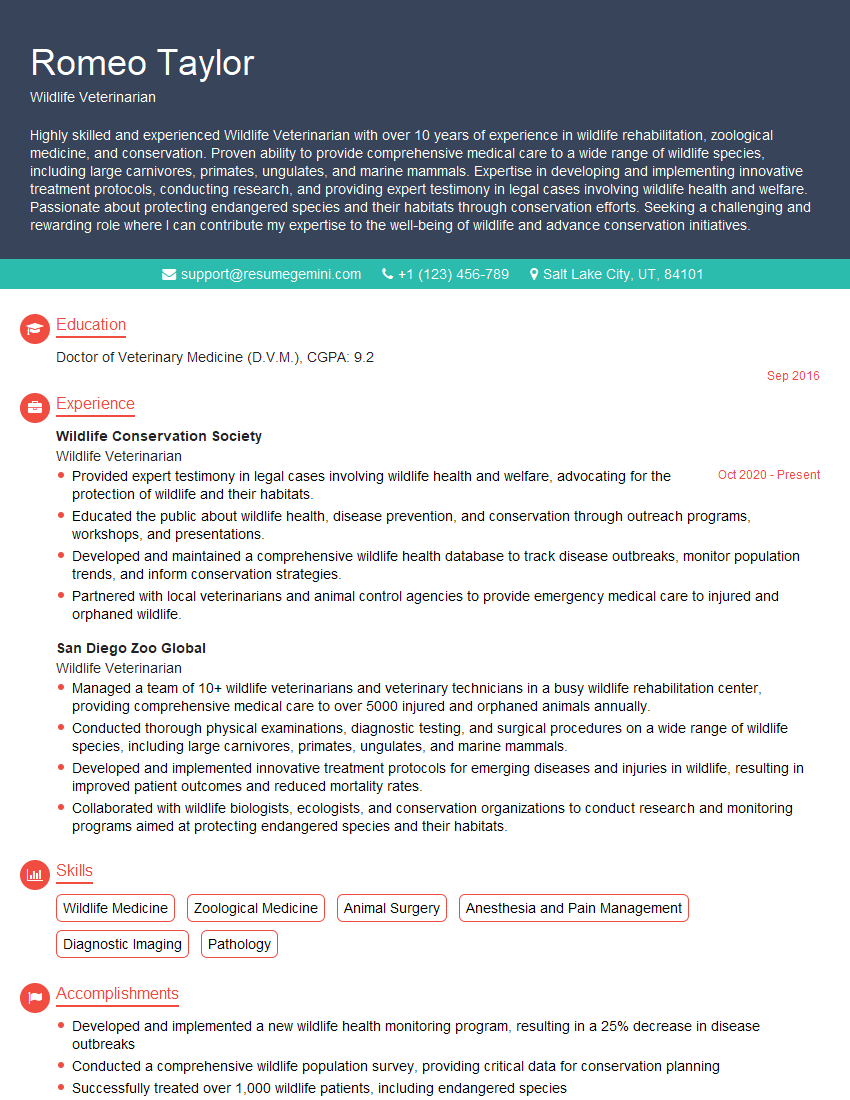
Mastering knowledge of wildlife captive breeding and reintroduction significantly enhances your career prospects in conservation biology, zoology, and wildlife management. A strong understanding of these principles demonstrates a commitment to preserving biodiversity and showcases your practical skills in conservation efforts. To maximize your job opportunities, crafting an ATS-friendly resume is crucial. ResumeGemini is a trusted resource for building professional and effective resumes that get noticed. Take advantage of their tools and resources; examples of resumes tailored to Knowledge of wildlife captive breeding and reintroduction are available to guide you.

Explore more articles
Users Rating of Our Blogs
Share Your Experience
We value your feedback! Please rate our content and share your thoughts (optional).
What Readers Say About Our Blog
To the interviewgemini.com Webmaster.
Very helpful and content specific questions to help prepare me for my interview!
Thank you
To the interviewgemini.com Webmaster.
This was kind of a unique content I found around the specialized skills. Very helpful questions and good detailed answers.
Very Helpful blog, thank you Interviewgemini team.