The thought of an interview can be nerve-wracking, but the right preparation can make all the difference. Explore this comprehensive guide to Knowledge of wildlife conservation biology interview questions and gain the confidence you need to showcase your abilities and secure the role.
Questions Asked in Knowledge of wildlife conservation biology Interview
Q 1. Explain the concept of habitat fragmentation and its impact on wildlife populations.
Habitat fragmentation occurs when a large, continuous habitat is broken up into smaller, isolated patches. Imagine a forest being divided by roads, agricultural fields, or urban development. This process drastically alters the landscape, significantly impacting wildlife populations.
The consequences are multifaceted. Smaller patches support smaller populations, making them more vulnerable to extinction due to factors like inbreeding depression (reduced genetic diversity leading to weaker offspring) and increased susceptibility to random events like disease outbreaks. Fragmentation also limits access to resources like food and mates, hindering breeding success. Animals may also experience increased mortality attempting to cross human-altered landscapes to reach necessary resources.
For instance, consider a population of jaguars in the Amazon rainforest. Deforestation fragments their habitat, isolating jaguar groups. This leads to smaller, less genetically diverse populations, increasing the risk of local extinction. Similarly, road construction through a forest can create barriers, isolating plant populations, impacting the diversity of insect species, and in turn affecting animals that depend on these insects for food.
Q 2. Describe different wildlife population monitoring techniques and their advantages/disadvantages.
Monitoring wildlife populations is crucial for effective conservation. Various techniques exist, each with its strengths and weaknesses.
- Visual surveys/Transects: Involves walking or driving along predetermined routes and recording animal sightings. Advantages: Relatively inexpensive and easy to implement. Disadvantages: Can be subjective, biased by observer skills, and may underestimate elusive species.
- Camera trapping: Uses motion-activated cameras to photograph or video record animals. Advantages: Provides objective data, captures elusive species, and can be used over long periods. Disadvantages: Can be expensive, requires maintenance, and may not capture all species equally.
- Mark-recapture studies: Individuals are captured, marked (e.g., with tags or paint), released, and then recaptured at a later date. Population size can be estimated using statistical models. Advantages: Provides estimates of population size, survival rates, and movement patterns. Disadvantages: Can be labor-intensive, may stress animals, and assumptions made by statistical models may not always hold.
- Genetic monitoring: Uses DNA analysis to assess population size, genetic diversity, and relatedness of individuals. Advantages: Non-invasive, can identify cryptic species, and provides insights into population structure. Disadvantages: Can be expensive and requires specialized expertise.
The choice of technique depends on the species being studied, the research questions, available resources, and the accessibility of the study area.
Q 3. What are the key threats to biodiversity, and how can conservation efforts mitigate them?
Biodiversity faces numerous threats, all interconnected and often exacerbated by human activities. Key threats include:
- Habitat loss and degradation: The conversion of natural habitats for agriculture, urbanization, and infrastructure development is the biggest threat. Degradation involves activities that reduce the quality of the remaining habitat, such as pollution or unsustainable resource extraction.
- Climate change: Shifting climate patterns alter species distributions, disrupt ecological interactions, and increase the frequency and intensity of extreme weather events.
- Overexploitation: Unsustainable harvesting of species for food, medicine, or trade, depletes populations and can drive species to extinction.
- Invasive species: Non-native species can outcompete native species, introduce diseases, and disrupt ecosystem functions.
- Pollution: Air, water, and soil pollution contaminate habitats and affect the health of wildlife.
Conservation efforts can mitigate these threats through a multi-pronged approach:
- Habitat protection and restoration: Establishing protected areas, restoring degraded habitats, and promoting sustainable land management practices.
- Climate change mitigation and adaptation: Reducing greenhouse gas emissions and assisting species to adapt to changing climate conditions.
- Sustainable resource management: Implementing regulations to prevent overexploitation and promoting sustainable harvesting techniques.
- Invasive species control: Preventing the introduction and spread of invasive species and managing existing populations.
- Pollution reduction: Implementing policies to reduce pollution from various sources.
Successful conservation requires integrated approaches involving governments, communities, scientists, and conservation organizations.
Q 4. Discuss the role of protected areas in wildlife conservation.
Protected areas, such as national parks, wildlife reserves, and biosphere reserves, play a vital role in wildlife conservation by providing safe havens for threatened species and maintaining ecosystem integrity. They safeguard habitats, regulate human activities, and serve as crucial areas for research and education. For example, Yellowstone National Park protects a large expanse of habitat for grizzly bears, wolves, and bison, enabling these populations to thrive.
However, effectively managing protected areas is essential. This includes controlling poaching, managing visitor impacts, addressing habitat degradation within the protected area boundaries, and ensuring that protected areas are adequately funded and staffed. The effectiveness of a protected area also depends on its size, connectivity to other habitats, and the enforcement of regulations within its boundaries. Small, isolated protected areas may not be sufficient to support viable populations of large animals with wide-ranging needs.
Q 5. Explain the principles of landscape ecology and its application in conservation planning.
Landscape ecology examines the spatial patterns and processes that influence ecological interactions across heterogeneous landscapes. It considers the relationships between different habitat patches, their connectivity, and the flow of energy and organisms among them. This understanding is critical for effective conservation planning.
Conservation applications include designing wildlife corridors to connect fragmented habitats, optimizing the size and shape of protected areas to maximize biodiversity, and assessing the impacts of habitat modification on species distributions. For instance, understanding how a river acts as a corridor for wildlife movement can help in planning road crossings or other developments to minimize negative impacts. The use of GIS (Geographic Information Systems) and spatial modeling is crucial in landscape ecology for analyzing spatial data and simulating different management scenarios.
A practical example is the design of a network of protected areas to conserve a particular species. Landscape ecology principles would guide the selection of areas that maximize habitat diversity, connectivity, and minimize isolation effects. It would also assess the potential impacts of climate change, considering how species’ ranges might shift over time, necessitating strategic planning to maintain connectivity.
Q 6. What are the ethical considerations in wildlife research and management?
Ethical considerations in wildlife research and management are paramount. The welfare of the animals is of primary concern. This involves minimizing stress and harm during research, ensuring humane handling practices, and adhering to strict ethical guidelines for animal use. For example, any research involving capturing and handling animals should be reviewed and approved by an appropriate ethics committee.
Transparency and accountability are crucial. Research data should be shared openly and honestly, avoiding bias or misrepresentation of findings. Conservation management decisions should be based on sound scientific evidence, considering the potential impacts on both wildlife and local communities. Furthermore, indigenous and local knowledge should be respected and incorporated into conservation efforts, recognizing their deep connection to the land and its resources.
There’s a constant ethical balancing act between human needs and wildlife conservation. For instance, the development of renewable energy sources is crucial to address climate change, but this should be planned carefully to minimize habitat disruption and avoid harm to wildlife.
Q 7. Describe different methods for assessing the genetic diversity of a wildlife population.
Assessing genetic diversity provides insights into the health and resilience of wildlife populations. Several methods are used:
- Microsatellite analysis: Examines variations in short, repeating DNA sequences. It’s relatively inexpensive and widely used to assess genetic diversity within and between populations.
- SNP genotyping: Analyzes single nucleotide polymorphisms (SNPs), which are single-base variations in the DNA sequence. SNPs provide high-throughput data and are useful for identifying genetic markers associated with adaptation or disease resistance.
- Mitochondrial DNA (mtDNA) analysis: Examines the mtDNA, which is inherited maternally. This is useful for tracking maternal lineages and identifying population bottlenecks (significant reductions in population size).
- Whole-genome sequencing: The most comprehensive approach, sequencing an organism’s entire genome. Provides detailed information about genetic variation, but it’s expensive and data-intensive.
The choice of method depends on the research questions, the available resources, and the characteristics of the target species. For instance, microsatellite analysis might be suitable for a preliminary assessment of genetic diversity in a population of endangered primates, while whole-genome sequencing might be necessary for a more detailed investigation of adaptation to a particular environmental stressor. These data can inform conservation strategies, for example, guiding decisions about population management, captive breeding programs, or habitat restoration.
Q 8. How can GIS technology be utilized for wildlife conservation?
Geographic Information Systems (GIS) technology is a cornerstone of modern wildlife conservation. It allows us to visualize, analyze, and manage spatial data related to wildlife populations, habitats, and human impacts. Imagine it as a powerful map that can do much more than simply show locations.
- Habitat Mapping and Monitoring: GIS helps create detailed maps of habitats, identifying crucial areas for species survival. This allows for effective monitoring of habitat loss or degradation over time, enabling proactive conservation measures. For instance, we can track deforestation rates in a rainforest to identify areas needing immediate protection.
- Species Distribution Modeling: By combining species sightings with environmental variables (elevation, temperature, rainfall), GIS can predict where species are likely to occur, even in areas with limited data. This is crucial for identifying potential new habitats and planning translocations.
- Human-Wildlife Conflict Management: GIS can pinpoint areas of conflict between humans and wildlife (e.g., crop raiding by elephants). This helps design strategies to mitigate these conflicts, such as creating wildlife corridors or implementing community-based conservation programs in specific locations.
- Conservation Planning and Prioritization: GIS facilitates the identification of priority conservation areas by analyzing multiple factors simultaneously, like biodiversity hotspots, human impact, and conservation costs. This allows for more efficient allocation of limited resources.
For example, researchers use GIS to map the distribution of endangered tigers, overlaying this with data on human settlements and forest cover to identify areas requiring heightened protection and anti-poaching efforts.
Q 9. Explain the concept of ecological restoration and its importance in conservation.
Ecological restoration is the process of assisting the recovery of an ecosystem that has been degraded, damaged, or destroyed. Think of it like repairing a damaged part of a complex machine – the ecosystem. It’s far more than just planting trees; it involves restoring the full suite of biological and physical processes that define a healthy ecosystem.
Its importance lies in its ability to reverse environmental damage, enhance biodiversity, improve ecosystem services (like clean water and carbon sequestration), and contribute to climate change mitigation. For instance, restoring degraded wetlands can help control floods, improve water quality, and provide habitat for a variety of species. Rehabilitating degraded grasslands can increase carbon sequestration and enhance the resilience of the landscape to climate change.
Successful ecological restoration requires a deep understanding of the ecosystem’s natural processes, its history, and the factors that caused its degradation. It often involves removing invasive species, reintroducing native species, and managing water flow or soil conditions.
For example, the restoration of the Everglades in Florida is a massive undertaking that aims to reverse decades of damage caused by water diversion and agricultural practices. The project involves restoring natural water flows, removing invasive species, and reintroducing native plants and animals.
Q 10. What are the challenges in managing human-wildlife conflict?
Managing human-wildlife conflict (HWC) is a complex challenge that involves balancing the needs of both humans and wildlife. The challenges are multifaceted:
- Economic Losses: Wildlife can cause significant economic losses to farmers through crop raiding, livestock predation, or damage to property. Compensating farmers for these losses is often difficult and requires substantial funding.
- Safety Concerns: Encounters between humans and wildlife can pose a danger to both. Large predators, for instance, can threaten human safety, while humans can unintentionally harm wildlife through actions like poisoning or habitat encroachment.
- Lack of Awareness and Education: Misunderstandings about wildlife behavior and the importance of conservation can lead to conflict escalation. Educating local communities about safe coexistence is crucial.
- Limited Resources: Effective HWC management requires resources for monitoring wildlife populations, implementing mitigation strategies, and providing compensation to affected communities. These resources are often scarce, especially in developing countries.
- Political and Social Barriers: Successful HWC management requires collaboration among various stakeholders, including government agencies, local communities, and conservation organizations. Conflicts of interest and differing priorities can hinder effective solutions.
For example, managing elephant-human conflict in Africa often requires a combination of approaches, such as building elephant-resistant fences, establishing wildlife corridors to reduce human-elephant encounters, and compensating farmers for crop damage.
Q 11. Discuss the role of community engagement in successful conservation projects.
Community engagement is absolutely critical for successful conservation projects. Local communities are the custodians of the land and its resources, and their participation is essential for long-term conservation success. Without their buy-in, projects are often doomed to fail.
Effective community engagement involves:
- Involving communities in the planning process: Ensuring local voices are heard from the outset, understanding their needs and concerns, and incorporating them into project design.
- Building trust and relationships: Developing a strong foundation of mutual respect and understanding between conservationists and communities.
- Providing benefits to communities: Conservation projects should generate tangible benefits for local people, such as employment opportunities, improved livelihoods, or access to resources. This fosters a sense of ownership and investment in the project.
- Empowering communities: Giving communities a voice in decision-making and equipping them with the skills and resources to manage their own natural resources.
- Monitoring and evaluation: Regularly assessing the impact of the project on communities and adapting the approach based on feedback.
A successful example is the involvement of indigenous communities in managing protected areas in the Amazon rainforest. Their traditional knowledge and practices are integral to conservation efforts.
Q 12. Describe the different types of conservation strategies (in-situ vs. ex-situ).
Conservation strategies are broadly categorized into in-situ and ex-situ approaches.
In-situ conservation involves protecting species in their natural habitats. This is generally considered the most desirable approach as it preserves the entire ecosystem and its complex interactions. Examples include:
- Establishing protected areas: National parks, wildlife reserves, and other protected areas safeguard critical habitats and species.
- Habitat restoration: Rehabilitating degraded habitats to improve their suitability for wildlife.
- Community-based conservation: Working with local communities to manage and protect natural resources.
Ex-situ conservation involves protecting species outside their natural habitats. This is often a necessary measure when species are critically endangered or their habitats are severely degraded. Examples include:
- Zoos and aquariums: These institutions provide a safe haven for endangered species and often participate in breeding programs.
- Botanical gardens: These gardens conserve plant species, often maintaining seed banks and propagating rare plants.
- Captive breeding programs: Breeding endangered species in controlled environments to increase their populations for potential reintroduction into the wild.
Ideally, in-situ and ex-situ approaches should complement each other, with ex-situ efforts supporting in-situ conservation by providing a safety net for species and contributing to research and restoration efforts.
Q 13. Explain the importance of species-specific conservation plans.
Species-specific conservation plans are crucial because each species has unique ecological requirements, threats, and conservation needs. A “one-size-fits-all” approach is unlikely to be effective. A generalized plan wouldn’t account for the specific challenges faced by a particular species.
These plans typically involve:
- Assessing the species’ status: Determining population size, distribution, and the major threats it faces.
- Identifying critical habitats: Pinpointing areas essential for the species’ survival.
- Developing conservation actions: Designing specific strategies to address identified threats, such as habitat protection, anti-poaching measures, or captive breeding programs.
- Monitoring and evaluation: Regularly tracking the effectiveness of conservation actions and adjusting the plan as needed.
For example, the conservation plan for a critically endangered bird might focus on protecting its nesting sites from habitat destruction, while the plan for an endangered mammal might prioritize anti-poaching efforts.
Tailoring plans to each species increases efficiency, making sure that efforts are focused on the most pressing issues and ultimately maximizing the chances for survival.
Q 14. How do climate change impacts influence wildlife conservation strategies?
Climate change significantly impacts wildlife conservation strategies by altering habitats, shifting species distributions, and increasing the frequency and intensity of extreme weather events. These changes necessitate adapting existing conservation plans and developing new strategies to address these new challenges.
The impacts include:
- Habitat loss and fragmentation: Changes in temperature and precipitation patterns can lead to habitat loss and fragmentation, forcing species to migrate or adapt to new conditions.
- Range shifts: Species are shifting their ranges in response to changing climate conditions, often leading to interactions with new species and competition for resources.
- Increased disease prevalence: Warmer temperatures can favor the spread of diseases, affecting both wildlife and human populations.
- Extreme weather events: More frequent and intense extreme weather events, such as droughts, floods, and wildfires, can severely impact wildlife populations and habitats.
Conservation strategies must adapt by incorporating climate change projections into habitat management plans, establishing climate-resilient protected areas, assisting species migration, and developing strategies for managing increased disease risk. For instance, conservationists are planning for the potential migration routes of species and creating corridors to facilitate this movement, minimizing habitat fragmentation and ensuring species connectivity.
Q 15. What are some common wildlife diseases and their impacts?
Wildlife diseases pose a significant threat to biodiversity and ecosystem health. These diseases can be caused by bacteria, viruses, fungi, parasites, or even prions (misfolded proteins). Their impacts vary greatly depending on the disease, host species, and environmental factors.
- Rabies: A viral disease affecting mammals, including wildlife like bats, foxes, and raccoons. It can cause fatal neurological damage and has significant implications for both wildlife populations and human health. Control often involves vaccination programs targeting susceptible species.
- Chytridiomycosis: A fungal disease devastating amphibian populations globally. The chytrid fungus infects their skin, disrupting water and electrolyte balance, leading to death. Conservation efforts involve captive breeding programs, habitat restoration, and research into disease resistance.
- Chronic wasting disease (CWD): A prion disease affecting cervids (deer, elk, moose). It’s highly contagious and fatal, leading to population declines. Management strategies include surveillance, culling, and hunting regulations to minimize spread.
- Avian influenza: Highly pathogenic avian influenza viruses can cause severe outbreaks in bird populations, impacting migratory birds and domestic poultry. Surveillance, biosecurity measures, and culling are crucial for control.
Understanding the transmission dynamics, prevalence, and impacts of these diseases is crucial for effective conservation planning and management. It often involves collaboration between wildlife veterinarians, ecologists, and public health officials.
Career Expert Tips:
- Ace those interviews! Prepare effectively by reviewing the Top 50 Most Common Interview Questions on ResumeGemini.
- Navigate your job search with confidence! Explore a wide range of Career Tips on ResumeGemini. Learn about common challenges and recommendations to overcome them.
- Craft the perfect resume! Master the Art of Resume Writing with ResumeGemini’s guide. Showcase your unique qualifications and achievements effectively.
- Don’t miss out on holiday savings! Build your dream resume with ResumeGemini’s ATS optimized templates.
Q 16. Describe your experience with data analysis in conservation projects.
Data analysis is the backbone of many successful conservation projects. My experience spans several projects, from population viability analyses to habitat suitability modeling. For example, in a recent project focused on the conservation of the endangered Amur leopard, we used GIS (Geographic Information Systems) and remote sensing data to map habitat fragmentation and identify critical corridors. We then employed occupancy modeling techniques to estimate leopard population density and distribution, considering factors such as prey availability and human encroachment. This involved using statistical software like R and ArcGIS to analyze large datasets, creating predictive models, and visualizing results.
Another project involved analyzing long-term monitoring data on bird populations to assess the effectiveness of habitat restoration efforts. We used time-series analysis to detect trends and identify significant changes in species richness and abundance over time. This informed adaptive management strategies and allowed for a more nuanced understanding of the restoration’s success.
Ultimately, data analysis helps us move beyond anecdotal evidence, allowing us to make informed decisions based on rigorous scientific evidence, improving conservation outcomes.
Q 17. How do you prioritize conservation efforts when resources are limited?
Prioritizing conservation efforts with limited resources requires a strategic approach. I typically use a framework that considers several key factors:
- Species vulnerability: Focusing on endangered or critically endangered species with small populations or limited distribution is a high priority. The IUCN Red List provides crucial information on species’ threat status.
- Ecosystem services: Protecting ecosystems that provide essential services like clean water, pollination, or carbon sequestration is vital. A cost-benefit analysis can be valuable in this context.
- Threats: Addressing the most immediate and significant threats, such as habitat loss, poaching, or invasive species, is crucial. This necessitates prioritizing conservation actions with the highest potential impact.
- Feasibility and cost-effectiveness: Choosing actions that are realistically achievable given the available resources and expertise is essential. Cost-effectiveness analyses help maximize the impact of limited funding.
- Stakeholder engagement: Involving local communities and other stakeholders ensures the long-term success of conservation efforts. Collaboration is key for community-based conservation initiatives.
This holistic approach ensures that conservation efforts are targeted, efficient, and sustainable, even under resource constraints. For example, focusing on a single, highly vulnerable species might be more effective than spreading resources thinly across many species with less severe threats.
Q 18. Explain the importance of adaptive management in wildlife conservation.
Adaptive management is a crucial approach in wildlife conservation, recognizing that our understanding of ecosystems and species is constantly evolving. It’s essentially a cyclical process of learning, monitoring, and adjusting management strategies based on new data and feedback.
The process typically involves:
- Setting clear objectives: Defining specific, measurable, achievable, relevant, and time-bound (SMART) goals for the conservation program.
- Developing management actions: Implementing specific strategies based on the best available scientific knowledge.
- Monitoring and evaluation: Regularly collecting data to assess the effectiveness of management actions and the progress towards achieving the objectives. This might include population monitoring, habitat assessments, or surveys of human impacts.
- Adaptive management decisions: Analyzing the monitoring data to identify what’s working, what’s not, and where improvements are needed. Adjustments to management strategies are then implemented based on the findings.
Adaptive management minimizes risks by allowing flexibility and continuous improvement. It acknowledges uncertainty and embraces a learning-by-doing approach, which is particularly essential in complex and dynamic ecosystems.
Q 19. What are the legal frameworks and regulations surrounding wildlife protection?
Legal frameworks and regulations surrounding wildlife protection vary across countries and jurisdictions but generally aim to protect endangered species, regulate hunting and trade, and control invasive species. Many nations have legislation based on international conventions such as the Convention on International Trade in Endangered Species of Wild Fauna and Flora (CITES) which regulates international trade of threatened species.
National laws typically cover several aspects, including:
- Endangered Species Acts: These acts provide legal protection to threatened and endangered species, often prohibiting their killing, harming, or trade without permits.
- Hunting and fishing regulations: These regulations govern hunting seasons, bag limits, and other hunting practices to ensure sustainable use of wildlife resources.
- Protected area establishment: Laws often facilitate the establishment of national parks, wildlife refuges, and other protected areas to conserve critical habitats.
- Regulations on wildlife trade: Laws control the import, export, and domestic trade of wildlife and wildlife products to combat illegal wildlife trade.
- Invasive species management: Laws and regulations may address the introduction and spread of invasive species, including measures to prevent their introduction and control their populations.
Enforcement of these regulations is vital for their effectiveness, often involving collaboration between government agencies, law enforcement, and local communities.
Q 20. Describe the role of invasive species in disrupting ecosystems.
Invasive species, organisms introduced outside their native range, can profoundly disrupt ecosystems. They can have devastating effects on native biodiversity and ecosystem function through various mechanisms:
- Competition: Invasive species may outcompete native species for resources like food, water, and habitat, leading to population declines or even extinctions.
- Predation: Invasive predators can decimate native prey populations, disrupting food webs and causing trophic cascades.
- Disease transmission: Invasive species can introduce new diseases to native species, which may lack immunity and suffer high mortality rates.
- Habitat alteration: Invasive plants can alter habitats by changing vegetation structure, soil composition, or hydrology, making them unsuitable for native species.
- Hybridization: Invasive species can hybridize with native species, leading to genetic dilution and loss of unique adaptations.
Examples abound: the impact of the brown tree snake on Guam’s native bird populations, the spread of zebra mussels in the Great Lakes, and the devastation caused by kudzu in the southeastern United States. Effective management often involves a combination of prevention, early detection, rapid response, and long-term control measures, often requiring integrated pest management strategies.
Q 21. How can you evaluate the success of a conservation program?
Evaluating the success of a conservation program requires a multifaceted approach that goes beyond simply monitoring population numbers. We need a robust framework encompassing various indicators:
- Population trends: Monitoring the population size, distribution, and genetic diversity of target species. Statistical analyses like population viability analyses (PVA) can help assess the long-term prospects of the species.
- Habitat condition: Assessing the quality and extent of the habitat, including measures of habitat fragmentation, degradation, and restoration success.
- Threat reduction: Evaluating the effectiveness of management actions in reducing specific threats, such as poaching, habitat loss, or pollution.
- Stakeholder engagement: Measuring the level of community participation, support for conservation efforts, and conflict resolution success.
- Economic and social impacts: Assessing the economic benefits of conservation, such as ecotourism, and the social impacts on local communities.
Using a combination of quantitative data (e.g., population counts, habitat area) and qualitative data (e.g., stakeholder interviews, community feedback) allows for a holistic assessment of program success. This is often done by comparing pre- and post-intervention data or by comparing the outcomes to baseline conditions or projections without the intervention. Finally, it’s important to use adaptive management principles to incorporate the findings from evaluation into future program design and implementation.
Q 22. What are the key metrics used to assess wildlife population health?
Assessing wildlife population health requires a multifaceted approach, employing several key metrics. These metrics help us understand not just the size of a population, but also its viability and resilience.
- Population Size and Density: This is the most basic metric, often estimated through techniques like mark-recapture studies, camera trapping, or aerial surveys. A declining population size or density is a significant warning sign.
- Population Growth Rate: This indicates whether a population is increasing, decreasing, or remaining stable. Calculating this requires monitoring population size over time.
- Age and Sex Structure: An unbalanced age structure (e.g., a lack of young animals) suggests reproductive problems or high mortality rates. Similarly, skewed sex ratios can indicate issues.
- Genetic Diversity: Low genetic diversity makes a population vulnerable to disease and environmental changes. Genetic analysis helps assess this crucial aspect of population health.
- Body Condition: Measuring body weight, fat reserves, and overall health can reveal the nutritional status of animals and identify potential threats like habitat degradation or food scarcity. For example, observing emaciated animals in a population indicates a serious issue.
- Disease Prevalence: Monitoring disease outbreaks through serological surveys or necropsy is vital. Diseases can decimate populations quickly.
- Survival and Mortality Rates: Tracking these rates helps pinpoint critical life stages where animals are most vulnerable. High mortality among young animals, for instance, may signal habitat issues or predation pressures.
By considering these metrics together, we obtain a holistic picture of a population’s health and can identify potential threats more effectively. For example, a declining population with low genetic diversity and high disease prevalence signals an urgent need for conservation intervention.
Q 23. Explain the concept of ecosystem services and their relevance to conservation.
Ecosystem services are the myriad of benefits that humans derive from the natural environment. These services are crucial for human well-being and are inextricably linked to wildlife conservation. Ignoring these connections jeopardizes both biodiversity and human prosperity.
- Provisioning Services: These are the tangible goods we get from ecosystems, like food (fish, game), fresh water, timber, and medicinal plants. For example, healthy forests provide timber and diverse plant species used in medicines.
- Regulating Services: These are the benefits obtained from the regulation of ecosystem processes, such as climate regulation, water purification, pollination, and disease control. A healthy wetland acts as a natural flood control system.
- Supporting Services: These are the fundamental processes necessary for the production of all other ecosystem services, such as nutrient cycling, soil formation, and primary production. Healthy soil supports agricultural production.
- Cultural Services: These are the non-material benefits people obtain from ecosystems, including recreational opportunities (hiking, bird watching), spiritual enrichment, and aesthetic value. National parks provide recreational and spiritual value.
Conservation efforts are vital because protecting biodiversity safeguards the supply of these services. For instance, deforestation reduces carbon sequestration (a regulating service), decreases biodiversity, and diminishes the availability of timber (a provisioning service). Conversely, successful conservation projects can enhance ecosystem services, improving human well-being and livelihoods.
Q 24. Describe your experience with wildlife capture and handling techniques.
My experience with wildlife capture and handling techniques spans numerous species and contexts. The methods used always prioritize the safety of both the animal and the researchers. Ethical considerations are paramount.
I’ve employed various techniques, including:
- Netting: Used for birds and small mammals, requiring careful timing and placement to minimize stress.
- Trapping: Live traps are used for many species, ensuring humane capture and release. The choice of trap depends on the target species and the terrain.
- Darting: For larger mammals, dart guns deliver immobilizing agents. This demands precise aim and knowledge of appropriate dosages, taking into account the animal’s size and health.
- Snaring: Used sparingly and only when necessary, as it can cause injury if not properly managed. It often requires precise camera monitoring to ensure successful capture.
Following capture, animals are carefully assessed for health, measured, sampled (blood, tissue), tagged (if necessary), and released as quickly as possible to minimize stress. Data from such captures are crucial for monitoring population health and conducting research.
Safety protocols, including personal protective equipment and adherence to all relevant permits and regulations, are strictly followed.
Q 25. How do you communicate complex scientific information to a non-scientific audience?
Communicating complex scientific information to a non-scientific audience requires careful planning and a strategic approach. The key is to translate technical jargon into easily understandable language, using relatable analogies and engaging storytelling.
- Simplify Language: Avoid jargon and technical terms whenever possible. Replace them with everyday equivalents.
- Use Analogies and Metaphors: Relate complex concepts to familiar ideas or experiences to make them easier to grasp.
- Visual Aids: Charts, graphs, and images can significantly enhance understanding. A picture truly is worth a thousand words.
- Storytelling: Weaving scientific findings into narratives makes information more memorable and relatable.
- Engage the Audience: Use interactive elements, such as Q&A sessions, to foster a dialogue and address concerns.
- Tailor the Message: Adapt the level of detail and complexity to the audience’s knowledge base and interests.
For example, when explaining genetic diversity to a lay audience, I might use the analogy of a garden. A garden with only one type of plant is vulnerable to disease, while a diverse garden with many species is more resilient.
Q 26. Discuss your experience working collaboratively with diverse stakeholders.
Collaborative work with diverse stakeholders is essential for successful conservation. My experience involves working with:
- Government Agencies: Negotiating permits, obtaining funding, and collaborating on policy development.
- Local Communities: Engaging local people, understanding their perspectives, and integrating their traditional knowledge into conservation plans. Often this includes community-based conservation strategies.
- Non-Governmental Organizations (NGOs): Collaborating on projects, sharing resources, and leveraging different expertise.
- Landowners and Businesses: Working with landowners to implement sustainable land management practices and engaging businesses in corporate social responsibility initiatives.
- Scientists from other disciplines: This includes collaborating with ecologists, economists, and social scientists to address the multifaceted nature of conservation challenges.
Success requires effective communication, mutual respect, shared goals, and a willingness to compromise. For instance, in a community-based conservation project, we had to work closely with local farmers to balance their needs with wildlife protection, finding sustainable solutions that work for both. Building trust and demonstrating the benefits of conservation to all stakeholders is key.
Q 27. What are the future challenges and opportunities in wildlife conservation?
Wildlife conservation faces unprecedented challenges in the 21st century, but also presents exciting opportunities.
- Climate Change: This is arguably the biggest threat, altering habitats, disrupting ecosystems, and increasing the vulnerability of many species. Adaptation and mitigation strategies are crucial.
- Habitat Loss and Fragmentation: Continued conversion of natural habitats for agriculture, urbanization, and infrastructure development poses a major threat. Habitat restoration and connectivity initiatives are needed.
- Human-Wildlife Conflict: Growing human populations are increasing interactions with wildlife, leading to conflict and threatening both human safety and wildlife populations. Conflict mitigation strategies are essential.
- Poaching and Illegal Wildlife Trade: This continues to be a major problem, pushing many species towards extinction. Stronger law enforcement and international cooperation are needed.
- Emerging Diseases: Spillover events from wildlife to humans are becoming increasingly common, highlighting the interconnectedness of human and wildlife health. Surveillance and preventative measures are necessary.
Opportunities lie in leveraging new technologies (e.g., remote sensing, genetic analysis, artificial intelligence), strengthening international collaboration, promoting sustainable development, engaging communities, and raising public awareness. The integration of technological advancements with community-based conservation strategies shows great promise for the future.
Q 28. Describe your experience with grant writing or fundraising for conservation projects.
Securing funding is crucial for wildlife conservation projects. My experience includes writing grant proposals for various funding agencies, including government bodies, private foundations, and corporate sponsors.
The process generally involves:
- Identifying Funding Opportunities: Researching relevant funding sources and their priorities.
- Developing a Compelling Narrative: Crafting a clear and concise project proposal that highlights the problem, proposed solutions, expected outcomes, and budget.
- Demonstrating Impact: Clearly outlining the expected benefits of the project and using robust indicators to measure success.
- Building Strong Partnerships: Collaborating with other organizations to leverage their expertise and resources.
- Budgeting and Financial Management: Developing a detailed and justifiable budget and implementing effective financial management strategies.
I have a strong track record of securing funding for research, conservation, and community development projects. Success often hinges on clearly articulating the significance of the project, demonstrating feasibility, and presenting a strong team with the necessary expertise. A strong narrative that showcases potential impact on both the environment and local communities helps.
Key Topics to Learn for a Wildlife Conservation Biology Interview
- Population Ecology and Dynamics: Understanding population growth models, carrying capacity, metapopulations, and factors influencing population fluctuations. Practical application: Analyzing population data to inform conservation strategies.
- Habitat Conservation and Management: Concepts of habitat fragmentation, habitat restoration, protected area design, and the impact of human activities on wildlife habitats. Practical application: Evaluating the effectiveness of different habitat management techniques.
- Wildlife Disease and Epidemiology: Understanding disease transmission dynamics in wildlife populations, the impact of disease on conservation efforts, and disease surveillance methods. Practical application: Designing and implementing disease monitoring programs.
- Conservation Genetics: Principles of genetic diversity, inbreeding depression, and the use of genetic tools in conservation management. Practical application: Assessing genetic diversity to inform captive breeding programs or translocation strategies.
- Conservation Planning and Policy: Understanding the development and implementation of conservation plans, the role of legislation and policy in conservation, and the importance of stakeholder engagement. Practical application: Developing a conservation plan for a specific species or ecosystem.
- Climate Change and Conservation: The impacts of climate change on wildlife and ecosystems, climate change adaptation strategies, and mitigation efforts. Practical application: Assessing the vulnerability of a species to climate change and developing adaptation strategies.
- Data Analysis and Interpretation: Statistical methods used in wildlife research and conservation, including data visualization and interpretation. Practical application: Analyzing ecological data to draw meaningful conclusions and inform management decisions.
Next Steps
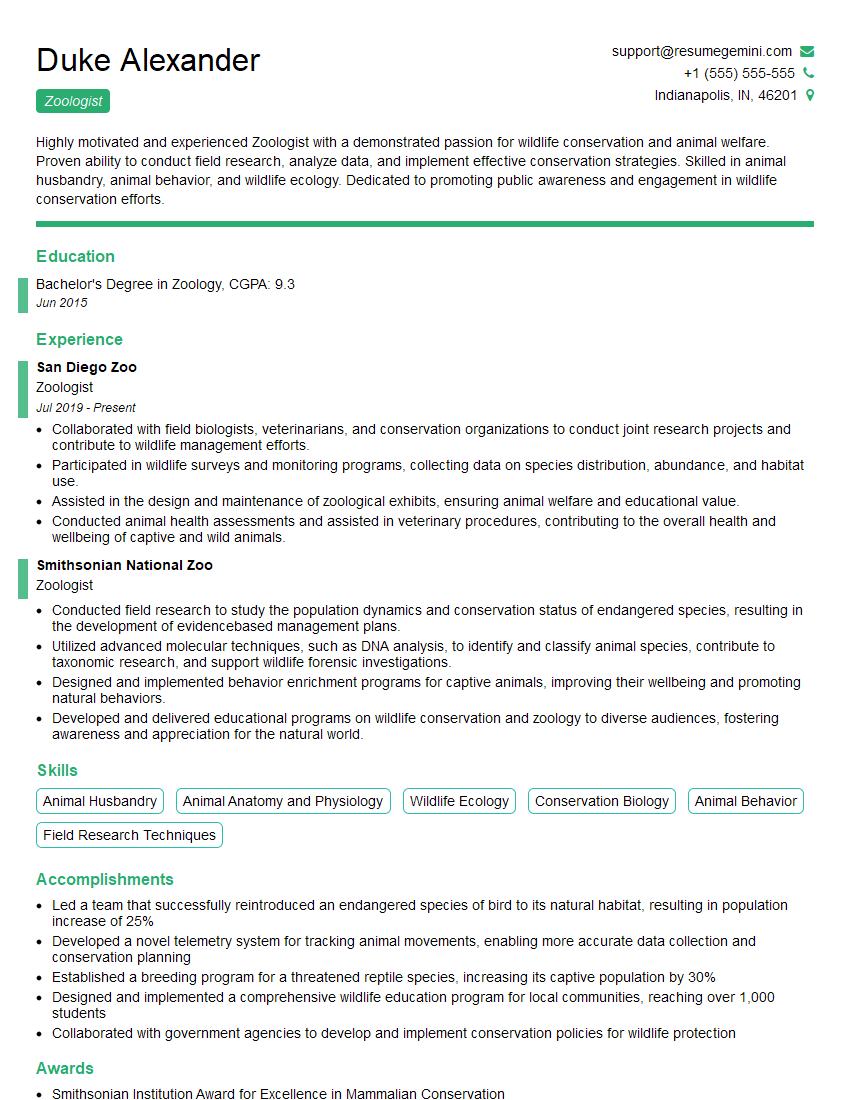
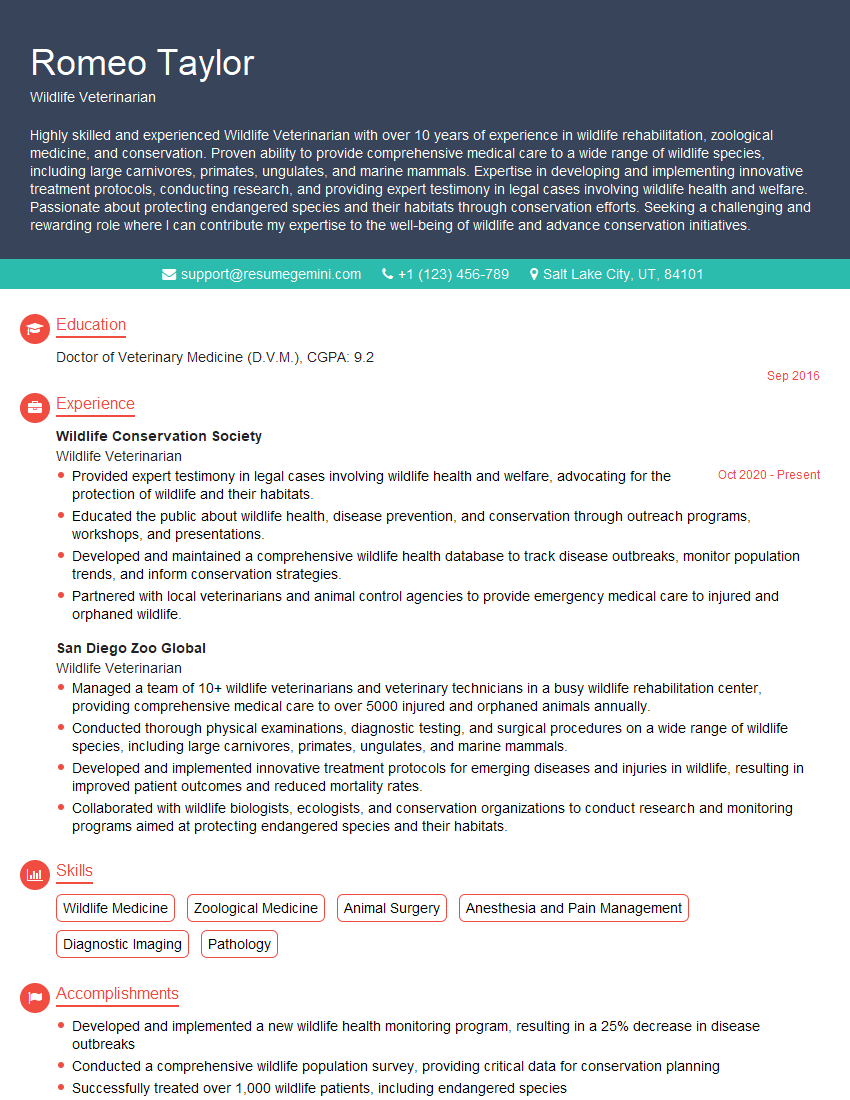
Mastering knowledge of wildlife conservation biology is crucial for a successful and impactful career in this vital field. A strong understanding of these concepts will significantly enhance your interview performance and open doors to exciting opportunities. To further strengthen your job prospects, it’s essential to present your skills and experience effectively through a well-crafted, ATS-friendly resume. ResumeGemini is a trusted resource that can help you build a professional resume that highlights your expertise. Examples of resumes tailored to wildlife conservation biology are available to help guide you in creating a compelling document that showcases your qualifications. Invest the time to create a strong resume – it’s your first impression on potential employers.


Explore more articles
Users Rating of Our Blogs
Share Your Experience
We value your feedback! Please rate our content and share your thoughts (optional).
What Readers Say About Our Blog
To the interviewgemini.com Webmaster.
Very helpful and content specific questions to help prepare me for my interview!
Thank you
To the interviewgemini.com Webmaster.
This was kind of a unique content I found around the specialized skills. Very helpful questions and good detailed answers.
Very Helpful blog, thank you Interviewgemini team.