Interviews are more than just a Q&A session—they’re a chance to prove your worth. This blog dives into essential Knowledge of wildlife diseases and their management interview questions and expert tips to help you align your answers with what hiring managers are looking for. Start preparing to shine!
Questions Asked in Knowledge of wildlife diseases and their management Interview
Q 1. Explain the epidemiological triangle in the context of wildlife diseases.
The epidemiological triangle is a fundamental model in epidemiology that illustrates the interaction of three major factors necessary for a disease to occur: host, agent, and environment. In wildlife, the host is the animal species affected; the agent is the infectious organism (virus, bacteria, parasite, etc.) or other disease-causing factor (toxin, nutritional deficiency); and the environment encompasses all external factors influencing the interaction between the host and the agent, including climate, habitat, and the presence of vectors.
For example, consider the outbreak of West Nile Virus in birds. The host is various bird species (e.g., crows, jays), the agent is the West Nile Virus, and the environment includes factors like mosquito populations (which act as vectors), water bodies for mosquito breeding, and temperature influencing viral replication and mosquito activity. Changes in any of these three elements can significantly influence the occurrence and spread of the disease.
Understanding the epidemiological triangle helps us identify potential points of intervention for disease management. For instance, we might target the agent through vaccination, control the environment by reducing mosquito breeding sites, or enhance host resistance through improved nutrition.
Q 2. Describe different methods for wildlife disease surveillance.
Wildlife disease surveillance involves the systematic collection, analysis, and interpretation of data on animal health to detect, monitor, and control disease outbreaks. Several methods are employed:
- Passive Surveillance: This relies on reports from veterinarians, hunters, wildlife rehabilitators, and the public. While cost-effective, it’s often incomplete and may miss less obvious outbreaks.
- Active Surveillance: This involves proactive searching for diseases through targeted sampling and testing of specific animal populations. It’s more effective at detecting disease early but is more resource-intensive.
- Sentinel Surveillance: This uses strategically selected indicator species or populations to monitor disease trends. For instance, using crows to monitor West Nile Virus activity, as their susceptibility and mortality are well-documented.
- Remote Sensing: Technological advancements allow for monitoring wildlife populations and detecting potential disease outbreaks through satellite imagery and drone technology. Changes in animal behavior or habitat use can indicate disease presence.
- Molecular Surveillance: This employs molecular techniques such as PCR to detect pathogens directly from environmental samples (water, soil) or wildlife specimens, even in the absence of clinical signs.
Effective surveillance programs often integrate multiple approaches, adapting their strategies based on the specific disease and wildlife species in question.
Q 3. What are the common diagnostic techniques used in wildlife disease investigations?
Diagnosing wildlife diseases requires a multi-faceted approach due to the challenges of handling and sampling wild animals. Common diagnostic techniques include:
- Necropsy/Post-mortem Examination: This involves a thorough examination of a deceased animal to identify gross lesions and collect samples for further analysis.
- Histopathology: Microscopic examination of tissue samples reveals cellular-level changes indicative of disease.
- Bacteriology/Virology/Parasitology: Laboratory techniques isolate and identify bacteria, viruses, and parasites, respectively, from collected samples.
- Serology: Detects antibodies in blood samples, indicating past or current infection. This is particularly useful for chronic or latent infections.
- Molecular Diagnostics (PCR, qPCR): Highly sensitive techniques to detect specific pathogens’ genetic material in various samples. Real-time PCR (qPCR) also quantifies the pathogen load.
- Toxicology: Tests for the presence of toxins or poisons in tissues.
The choice of diagnostic technique depends on the suspected disease, the available resources, and the condition of the animal.
Q 4. Discuss the challenges of controlling zoonotic diseases in wildlife populations.
Zoonotic diseases, transmitted from animals to humans, pose significant challenges in wildlife populations due to the interconnectedness of wildlife, domestic animals, and humans. Control is difficult because:
- Difficulty in Access and Treatment: Wild animals are challenging to capture, treat, and monitor, limiting the effectiveness of interventions like vaccination or medication.
- Disease Reservoir Maintenance: Wild animals often act as reservoirs for zoonotic pathogens, making eradication challenging. Controlling the disease in the wildlife population is crucial to prevent spillover events into domestic animals and humans.
- Environmental Complexity: The wide range and diverse habitats occupied by wildlife make disease control strategies complex. Identifying and managing transmission routes can be difficult.
- Ethical Considerations: Intervention strategies, especially those involving culling or population control, raise significant ethical concerns.
- Globalization and Wildlife Trade: Increased international trade and movement of wildlife can accelerate the spread of zoonotic diseases across geographical boundaries.
Effective control requires a One Health approach involving collaboration between wildlife, veterinary, and human health professionals to address the disease at the human-animal-environmental interface.
Q 5. How do you assess the risk of disease transmission between wildlife and domestic animals?
Assessing the risk of disease transmission between wildlife and domestic animals requires careful consideration of various factors:
- Spatial Proximity and Overlap: The degree of habitat overlap and proximity between wildlife and domestic animal populations influences the opportunity for contact and disease transmission. Increased overlap increases the risk.
- Shared Resources: Competition for food and water sources can increase the risk of contact and disease transmission.
- Susceptibility of Domestic Animals: The susceptibility of domestic animals to specific wildlife pathogens is a critical risk factor. Species with similar immune systems might be at increased risk.
- Presence of Vectors: The role of vectors (e.g., ticks, mosquitoes) in transmitting diseases between wildlife and domestic animals needs to be assessed. Control of vectors can reduce the risk.
- Pathogen Characteristics: The transmission route, infectious dose, and environmental persistence of the pathogen influence the risk.
Risk assessment often involves epidemiological modeling and field investigations to estimate the probability of disease transmission under different scenarios. This informs the development of appropriate mitigation strategies.
Q 6. What are the ethical considerations in managing wildlife diseases?
Ethical considerations are paramount in wildlife disease management. Key ethical principles include:
- Minimizing Animal Suffering: Disease control strategies should prioritize minimizing pain, stress, and suffering experienced by affected animals.
- Respect for Wildlife: Interventions should respect the intrinsic value and ecological role of wildlife populations. Culling, for instance, should be considered only as a last resort and after careful evaluation of the potential benefits and harms.
- Transparency and Public Engagement: Decision-making processes should be transparent and involve public participation, ensuring that affected communities are informed and their concerns are addressed.
- Scientific Rigor: Disease management strategies should be based on sound scientific evidence and should minimize uncertainty and unintended consequences.
- Precautionary Principle: In situations where scientific knowledge is limited, a precautionary approach should be adopted to avoid potential harm to wildlife and ecosystems.
Ethical considerations often involve balancing the need to protect human and animal health with the conservation of biodiversity and the well-being of wildlife populations.
Q 7. Explain the concept of wildlife disease emergence and its implications.
Wildlife disease emergence refers to the appearance of a new disease or the sudden increase in incidence or geographic range of an existing disease in wildlife populations. Several factors contribute to emergence:
- Habitat Change and Loss: Changes in land use and habitat fragmentation can alter wildlife-pathogen interactions, increasing disease risk.
- Climate Change: Shifting climate patterns can influence the distribution and abundance of vectors and pathogens, increasing transmission opportunities.
- Wildlife Trade and Movement: The global movement of animals can facilitate the spread of diseases across geographical boundaries.
- Human-Wildlife Interaction: Increased contact between humans and wildlife due to urbanization and encroachment into wildlife habitats can increase the risk of zoonotic disease spillover.
- Evolution of Pathogens: Pathogens may evolve increased virulence or host range, leading to new diseases or increased disease severity.
Emergence has significant implications, including the potential for devastating losses in wildlife populations, threats to human health through zoonotic spillover, and significant economic consequences (e.g., impacts on agriculture, tourism).
Early detection and rapid response are critical for preventing widespread outbreaks and mitigating the impacts of emerging diseases.
Q 8. Describe different methods for sampling wildlife for disease testing.
Sampling wildlife for disease testing requires careful consideration of the species, the suspected disease, and the available resources. The goal is to obtain representative samples that accurately reflect the health status of the population while minimizing stress and harm to the animals. Several methods are employed, each with its strengths and weaknesses:
Non-invasive sampling: This approach prioritizes minimizing disturbance. Examples include collecting fecal samples for detecting parasites or viral DNA/RNA, analyzing hair or feathers for hormonal or genetic markers, and using remote sensing techniques (e.g., drones with thermal imaging) to assess body temperature or behavior indicative of disease.
Minimally invasive sampling: These methods involve a small degree of intrusion. Examples include collecting blood samples via a small prick of the wing or leg vein in birds, or using blow dart techniques to collect blood from larger mammals. Careful attention to sterilization and handling is crucial to minimize infection risk.
Invasive sampling: This approach requires more significant intervention and is generally reserved for situations where other methods are insufficient or when the animal is already under veterinary care. Examples include collecting tissue biopsies, performing necropsy (animal autopsy), or collecting respiratory samples. This approach necessitates specialized training and expertise, focusing on animal welfare and safety.
The choice of sampling method depends on various factors, including the species’ behavior, the type of disease being investigated, and the resources available. For instance, fecal sampling is ideal for studying intestinal parasites in large ungulates, while blood sampling is more suitable for diagnosing viral diseases requiring serological testing.
Q 9. How do you interpret serological test results for wildlife disease diagnosis?
Interpreting serological test results for wildlife disease diagnosis requires a nuanced understanding of both the test’s limitations and the epidemiological context. Serological tests, such as ELISA (Enzyme-Linked Immunosorbent Assay) or Western blotting, detect antibodies produced by an animal’s immune system in response to an infection. A positive result indicates exposure to the pathogen, but it doesn’t necessarily mean the animal is currently infected. The animal might have been infected in the past and developed immunity, or it could be in an early or late stage of infection where the viral load is too low to be detected by other methods.
Several factors influence interpretation:
Antibody titers: Higher antibody titers generally suggest a more recent or stronger infection, although this is not always the case. The specific interpretation of titer levels varies depending on the test and the pathogen.
Test specificity and sensitivity: The specificity refers to the test’s ability to correctly identify only the target antibody, preventing false positives. Sensitivity refers to the ability to correctly identify infected individuals, preventing false negatives. A highly specific and sensitive test yields more reliable results.
Prevalence of the disease: The prevalence of the disease in the population affects the likelihood of false positives. In a population with a high prevalence, a positive result is more likely to indicate a true infection.
Cross-reactivity: Some antibodies may cross-react with other pathogens, leading to false-positive results. This is crucial to consider when interpreting the results, particularly if multiple pathogens are suspected.
Therefore, interpreting serological test results should be done in conjunction with other data such as clinical signs, epidemiological data and other diagnostic tests for confirmation. A comprehensive approach is needed to gain a clear picture of the disease status of the wildlife population.
Q 10. What are the key factors to consider when developing a wildlife disease management plan?
Developing a robust wildlife disease management plan requires a multidisciplinary approach and careful consideration of several key factors:
Disease Surveillance: This is crucial for early detection and tracking of disease outbreaks. It involves systematic monitoring of wildlife populations through various methods, including sampling and testing, clinical observation, and mortality surveys.
Risk Assessment: Identifying the factors contributing to the spread of disease is essential. This includes understanding the pathogen’s transmission routes, host susceptibility, environmental factors (e.g., climate, habitat), and human activities.
Management Objectives: Clear, measurable objectives must be defined, such as reducing disease prevalence, preventing outbreaks, or minimizing the impact on wildlife populations. These should align with conservation goals and ethical considerations.
Intervention Strategies: Various strategies may be considered depending on the disease, including vaccination, culling, habitat management, biosecurity measures (e.g., restricting access to wildlife areas), or a combination of these.
Monitoring and Evaluation: Regular monitoring of the effectiveness of implemented strategies is crucial. This allows for adaptive management, adjusting interventions as needed based on data collected and outcomes observed.
Stakeholder Engagement: Collaboration is essential. Involving various stakeholders, such as wildlife agencies, land managers, researchers, and local communities, ensures buy-in and effective implementation of the plan.
For example, a plan to manage bovine tuberculosis in badgers might involve a combination of surveillance using blood tests, culling of infected badgers in high-risk areas, and habitat management to reduce badger density.
Q 11. Describe the role of wildlife reservoirs in maintaining disease cycles.
Wildlife reservoirs play a critical role in maintaining disease cycles by acting as long-term carriers of pathogens. These animals may harbor the pathogen without showing clinical signs of disease (asymptomatic carriers), thus serving as a source of infection for other animals, including domestic and even humans. The reservoir’s characteristics influence the disease dynamics:
Pathogen persistence: Reservoirs can maintain the pathogen in the environment, ensuring its survival between outbreaks.
Transmission to susceptible hosts: Reservoirs can transmit the pathogen to other susceptible animals, leading to new outbreaks.
Evolutionary adaptation: Reservoirs can provide an environment for the pathogen to evolve and potentially adapt to new hosts or become more virulent.
A classic example is the role of rodents in maintaining hantavirus circulation. Rodents can harbor the virus asymptomatically, shedding it in their urine and feces. Humans can become infected by inhaling aerosolized virus particles from contaminated rodent excreta. Effectively managing the disease requires addressing both the rodent reservoir population and preventing human exposure.
Q 12. Explain the importance of One Health approach in managing wildlife diseases.
The One Health approach recognizes the interconnectedness of human, animal, and environmental health. Applying this approach to wildlife disease management is crucial because wildlife diseases often have implications beyond the affected wildlife populations. For example, zoonotic diseases (those transmissible from animals to humans) pose a direct threat to human health, while wildlife diseases can also impact livestock production and ecosystems.
Key aspects of the One Health approach in wildlife disease management include:
Surveillance and data sharing: Collaboration between human, animal, and environmental health professionals facilitates the early detection and rapid response to disease outbreaks. This includes sharing data across disciplines.
Multidisciplinary collaboration: Addressing wildlife diseases requires expertise from various fields, including veterinary medicine, ecology, epidemiology, and public health. A coordinated effort is essential for effective management strategies.
Integrated risk assessment: Evaluating the risks posed by wildlife diseases requires considering the human, animal, and environmental components. This comprehensive approach provides a more accurate picture of the potential impacts of a disease.
Intersectoral collaboration: Effective management involves collaboration between different sectors, including government agencies, research institutions, and local communities. This approach ensures the implementation of strategies that are both effective and sustainable.
A successful example of the One Health approach is the management of avian influenza. Surveillance in both wild birds and poultry farms, combined with preventative measures in poultry and public health messaging, helps to minimize the impact of outbreaks on both human and animal populations.
Q 13. What are the limitations of using vaccination in wildlife populations?
While vaccination is a valuable tool for controlling infectious diseases in many animal populations, using it in wildlife presents significant challenges:
Delivery challenges: Reaching and vaccinating sufficient numbers of wildlife in a vast and often inaccessible habitat can be extremely difficult and costly. Techniques like oral baits, aerial delivery, or darting are often required, each with its limitations and potential for stress or harm to animals.
Vaccine efficacy: Vaccine efficacy can be impacted by factors like stress levels, nutritional status, and co-infection in wild animals. Furthermore, the optimal vaccine formulation and dosage may vary among different species.
Population heterogeneity: Wildlife populations are genetically diverse, and individual responses to the vaccine can vary. Achieving sufficient herd immunity is therefore more complex compared to homogeneous domestic animal populations.
Ethical considerations: Captive handling for vaccination raises ethical concerns about the welfare of the animals. Furthermore, the potential ecological impact of interventions should be thoroughly evaluated.
Cost and feasibility: The expense of developing, producing, and administering vaccines in large, geographically dispersed wildlife populations can be prohibitive.
For example, vaccinating large populations of endangered species against a novel disease is exceptionally difficult and costly, requiring careful consideration of the risks versus benefits.
Q 14. Discuss the impact of climate change on wildlife disease patterns.
Climate change is significantly altering wildlife disease patterns in numerous ways:
Range expansion: Changing temperatures and precipitation patterns can alter the geographical distribution of both disease vectors (e.g., ticks, mosquitoes) and wildlife hosts, leading to the emergence of diseases in new areas. For example, warming temperatures may enable disease vectors to expand their ranges to higher altitudes or latitudes.
Altered transmission dynamics: Changes in temperature, humidity, and rainfall can affect the life cycle and abundance of disease vectors, impacting the transmission rate of pathogens. For example, increased rainfall might lead to increased mosquito populations and subsequently, higher incidence of mosquito-borne diseases.
Host susceptibility: Climate change can stress wildlife populations through habitat loss, food scarcity, or extreme weather events, potentially reducing their immune function and increasing their susceptibility to diseases.
Disease emergence: Changes in environmental conditions can create new opportunities for pathogen evolution and emergence. This might involve the interaction of pathogens with new hosts or the emergence of novel strains with altered virulence.
For instance, the expansion of Lyme disease into new regions due to changing tick habitats and the increased prevalence of certain pathogens in marine mammals under conditions of ocean warming and acidification are indicative of climate change’s influence on wildlife disease ecology.
Q 15. How do you assess the impact of a wildlife disease outbreak on a population?
Assessing the impact of a wildlife disease outbreak on a population requires a multi-faceted approach. We need to consider the disease’s mortality rate, its effect on reproduction, and its impact on the overall population size and structure. Imagine a population of deer afflicted with a highly contagious disease. We wouldn’t just count the dead animals; we’d also examine birth rates, the number of surviving young, and the overall health of the remaining population.
Here’s a breakdown of the assessment process:
- Mortality Rate: This is the proportion of infected animals that die. A high mortality rate obviously indicates a severe impact.
- Reproductive Rate: The disease may reduce the number of offspring produced. This can have long-term implications for population recovery.
- Population Viability Analysis (PVA): Sophisticated modeling techniques (which I’ll discuss later) can simulate the population’s trajectory under different disease scenarios. PVA helps determine the likelihood of extinction or a significant population decline.
- Disease Prevalence and Incidence: We’ll track the number of infected animals in the population (prevalence) and the rate of new infections (incidence). These metrics tell us how widespread the disease is and how quickly it’s spreading.
- Geographic Distribution: Mapping the locations of infected animals helps us understand the spread of the disease and inform control strategies.
Combining these data points provides a comprehensive picture of the disease’s impact and guides management decisions.
Career Expert Tips:
- Ace those interviews! Prepare effectively by reviewing the Top 50 Most Common Interview Questions on ResumeGemini.
- Navigate your job search with confidence! Explore a wide range of Career Tips on ResumeGemini. Learn about common challenges and recommendations to overcome them.
- Craft the perfect resume! Master the Art of Resume Writing with ResumeGemini’s guide. Showcase your unique qualifications and achievements effectively.
- Don’t miss out on holiday savings! Build your dream resume with ResumeGemini’s ATS optimized templates.
Q 16. Explain the difference between active and passive surveillance for wildlife diseases.
Active and passive surveillance are two distinct approaches to monitoring wildlife diseases. Think of it like looking for a lost pet: active surveillance is like actively searching, while passive surveillance is like waiting for someone to report finding your pet.
Active Surveillance: This involves actively searching for the disease. For instance, we might capture and test a sample of animals, conduct regular surveys of specific populations, or analyze environmental samples for the presence of pathogens. Active surveillance is more expensive and resource-intensive but provides a more comprehensive picture of the disease’s prevalence.
Passive Surveillance: This relies on reports from various sources, including hunters, veterinarians, wildlife rehabilitators, and the public. While less costly, passive surveillance is often less thorough as it depends on the voluntary reporting of disease occurrences and might miss less obvious outbreaks.
Many successful programs integrate both strategies. Active surveillance can target high-risk areas or populations identified through passive surveillance, creating a more efficient and robust system.
Q 17. Describe various methods for controlling wildlife disease vectors.
Controlling wildlife disease vectors—the organisms that transmit diseases—is crucial for preventing outbreaks. Methods vary depending on the vector involved. For example, controlling mosquitoes that transmit West Nile Virus requires different strategies than controlling ticks that transmit Lyme disease.
- Vector Control Insecticides: Carefully targeted insecticide applications can reduce vector populations. The selection of insecticide must be tailored to the target vector and minimize negative impacts on other wildlife.
- Habitat Modification: Altering the environment to reduce breeding grounds or resting sites for vectors can be effective. This might involve draining stagnant water (for mosquitoes) or reducing brush cover (for ticks).
- Biological Control: Introducing natural predators or parasites of the vector can help reduce their numbers. For example, introducing specific fish species to control mosquito larvae in wetlands.
- Vaccination of Vectors: In some cases, it’s possible to vaccinate the vector against the pathogen, preventing its transmission. This is a relatively new and specialized approach.
- Community Engagement: Public education campaigns can encourage practices that reduce vector habitats or contact with vectors. This is critical for success.
It’s important to note that vector control strategies must be implemented responsibly to avoid unintended consequences for the environment and non-target species.
Q 18. How do you evaluate the effectiveness of a wildlife disease control program?
Evaluating the effectiveness of a wildlife disease control program is essential to ensure the allocated resources are used efficiently and to adapt strategies if needed. A good evaluation involves a variety of metrics tracked before, during, and after the program’s implementation.
- Disease Prevalence and Incidence: A significant reduction in the number of infected animals and the rate of new infections indicates success.
- Mortality Rate: A lower mortality rate shows the program is reducing disease-related deaths.
- Population Trends: Monitoring the overall population size and structure provides insight into the program’s long-term effectiveness.
- Vector Population Levels: Measuring the success in controlling the vectors demonstrates the program’s impact on transmission.
- Cost-Effectiveness Analysis: Comparing the program’s costs to its achievements allows for a more comprehensive evaluation.
Statistical analysis, including before-and-after comparisons and control group comparisons, is often used to demonstrate a causal link between the program and the observed changes.
Q 19. What are the potential consequences of human intervention in wildlife disease outbreaks?
Human intervention in wildlife disease outbreaks, while often necessary, can have both positive and negative consequences. The potential for unintended impacts must always be carefully considered.
- Disease Spread: Well-intentioned interventions, such as relocation or treatment of infected animals, can unintentionally spread the disease to new areas or populations.
- Ecological Imbalance: Removal of infected animals, even if necessary, can disrupt the delicate balance of the ecosystem. This can have unforeseen consequences on other species.
- Evolution of Resistance: The use of antibiotics or other treatments can lead to the development of drug-resistant strains of pathogens, complicating future control efforts.
- Animal Welfare Concerns: Intervention methods, such as capture and handling, can cause stress or injury to animals.
- Economic Impacts: Outbreaks can impact human livelihoods, particularly in areas where wildlife is a significant source of income (e.g., hunting, tourism).
Careful planning, risk assessment, and monitoring are crucial to mitigate these potential negative impacts. A thorough understanding of the ecosystem and the disease dynamics is paramount.
Q 20. Describe different types of wildlife disease modeling techniques.
Wildlife disease modeling employs various techniques to simulate the spread and impact of diseases. These models help us understand disease dynamics, predict future outbreaks, and evaluate the effectiveness of potential interventions. Imagine trying to predict the weather – complex models use similar principles.
- Deterministic Models: These models use known parameters to predict disease spread. They’re useful for understanding basic disease dynamics but don’t account for random variation.
- Stochastic Models: These models incorporate randomness, reflecting the inherent uncertainty in disease processes. They provide a more realistic representation of disease spread and are particularly valuable for predicting the risk of extinction.
- Agent-Based Models: These models simulate individual animals and their interactions, allowing for a detailed exploration of disease transmission dynamics. They’re computationally intensive but provide valuable insights into complex scenarios.
- Network Models: These models represent the relationships between animals (e.g., social networks) to understand how disease spreads through populations. They are particularly useful when studying diseases transmitted through close contact.
The choice of modeling technique depends on the specific disease, the available data, and the research questions.
Q 21. How do you communicate complex scientific findings related to wildlife disease to non-technical audiences?
Communicating complex scientific findings about wildlife diseases to non-technical audiences requires careful consideration of the audience’s background and understanding. The key is to translate technical jargon into clear, concise, and relatable language.
Here are some strategies:
- Use Simple Language: Avoid jargon and technical terms whenever possible. If unavoidable, explain them in clear, non-technical language.
- Visual Aids: Use graphs, charts, maps, and images to illustrate key concepts and findings. A picture is often worth a thousand words!
- Analogies and Metaphors: Relate complex ideas to everyday experiences to make them more easily understandable.
- Storytelling: Use narratives to engage the audience and make the information more memorable. A compelling story can make complex data easier to grasp.
- Interactive Presentations: Involve the audience by asking questions and encouraging discussion. Interactive formats are often more engaging.
- Tailor the Message: Adjust the level of detail and complexity based on the audience’s background and interest.
Effective communication is critical for informing the public, policymakers, and other stakeholders about wildlife diseases and ensuring support for effective management strategies.
Q 22. What is your experience with disease outbreak investigation protocols?
Disease outbreak investigation protocols are crucial for containing and mitigating the impact of wildlife diseases. My experience involves a systematic approach, starting with the initial detection of unusual mortality or morbidity. This typically involves field investigations to collect samples, assess the affected population, and conduct preliminary epidemiological analyses.
The subsequent steps involve laboratory analysis to identify the causative agent, characterizing the disease’s characteristics (e.g., pathogenicity, transmission routes), and implementing appropriate control measures. This often includes defining the geographic extent of the outbreak through surveillance efforts. For example, during an avian influenza outbreak, we used a combination of active and passive surveillance – actively sampling birds in high-risk areas and passively collecting reports from wildlife rehabilitators and the public – to accurately map the spread. This data guided targeted interventions and minimized the impact.
A vital aspect of my approach is rigorous documentation and reporting, which is essential for transparent communication with stakeholders and for informing future disease management strategies. I’m also proficient in using epidemiological modeling to predict the course of the outbreak and optimize resource allocation for control efforts.
Q 23. Describe your experience with analyzing spatial and temporal patterns of wildlife disease occurrences.
Analyzing spatial and temporal patterns of wildlife disease occurrences is vital for understanding disease dynamics and predicting future outbreaks. My experience includes utilizing Geographic Information Systems (GIS) to map disease incidence and prevalence over time and space. This allows for the identification of potential risk factors, such as habitat characteristics or proximity to human populations.
For example, in studying the spread of chronic wasting disease (CWD) in deer populations, we used GIS to map the location of infected animals, factoring in variables like habitat type and deer density. This analysis revealed that CWD spread more rapidly in areas with higher deer density and specific habitat types. We also analyzed temporal trends to identify seasonal variations in disease transmission, which can be due to changes in animal behavior or environmental conditions. Statistical methods, such as spatial autocorrelation analysis and time series analysis, are also integral to my approach, helping to identify spatial clusters and temporal trends.
Q 24. How do you collaborate with other stakeholders (e.g., landowners, agencies) to manage wildlife diseases?
Effective wildlife disease management necessitates strong collaboration. My approach emphasizes building relationships with various stakeholders, including landowners, government agencies (like wildlife agencies and public health departments), researchers, and local communities. Open communication and transparency are paramount.
For instance, when working on a project involving brucellosis in bison, we collaborated with ranchers whose lands were affected. We worked closely with them to develop a management plan that balanced their economic interests with the need to control the disease. This involved sharing scientific information, incorporating their perspectives into decision-making, and providing them with the necessary resources to implement the agreed-upon strategies. Building trust and mutual understanding was crucial for the success of this collaborative effort.
Q 25. Discuss the role of genetics in wildlife disease susceptibility and resistance.
Genetics plays a significant role in determining a wildlife species’ susceptibility or resistance to diseases. Genetic variation within a population influences an individual’s immune response, ability to clear infections, and overall fitness.
For instance, some individuals possess genes that code for proteins providing increased resistance to specific pathogens. Studying genetic markers associated with disease resistance can identify resilient individuals for breeding programs aimed at enhancing population-level resistance. Conversely, understanding the genetic basis of susceptibility can inform the development of targeted interventions and help prioritize susceptible populations for monitoring or management.
Modern molecular techniques, like genome-wide association studies (GWAS), are instrumental in identifying specific genes related to disease susceptibility and resistance. This information contributes to a more comprehensive understanding of disease dynamics within wildlife populations and aids in developing effective management strategies.
Q 26. Describe different methods used to estimate disease prevalence in wildlife populations.
Estimating disease prevalence in wildlife populations requires employing appropriate methods considering the species, disease, and resources available. Common methods include:
- Serological surveys: Testing blood samples for antibodies against a specific pathogen provides an indication of past exposure. This method can reveal the prevalence of infection, even in animals that have recovered.
- Pathological examinations: Examining tissues and organs for signs of infection, particularly during necropsy of deceased animals. This is often necessary for confirmation of diagnosis but provides a less comprehensive picture of population-level prevalence.
- Molecular diagnostic techniques: Using PCR (polymerase chain reaction) or other molecular assays to detect the pathogen’s genetic material directly from samples (e.g., blood, fecal matter). This offers a high sensitivity for detecting infection, even in animals with low levels of the pathogen.
- Capture-mark-recapture studies: Capturing, marking, and releasing animals, then recapturing them to assess the infection rate in the population. This is more time and labor-intensive but can provide accurate estimates of prevalence in readily trappable populations.
The choice of method often involves a combination of techniques, and the resulting estimates are critically assessed for potential biases and limitations. For example, the sensitivity and specificity of the diagnostic test significantly influence the accuracy of prevalence estimates.
Q 27. What are some of the major challenges in studying wildlife diseases in remote areas?
Studying wildlife diseases in remote areas poses significant challenges. Accessibility is often a major hurdle, limiting sampling efforts and making timely intervention difficult.
- Logistical difficulties: Transporting equipment, personnel, and samples across challenging terrain can be expensive and time-consuming.
- Limited infrastructure: Lack of proper infrastructure (e.g., roads, laboratories, communication networks) can hinder fieldwork and data analysis.
- Wildlife capture and handling: Capturing and handling wildlife in remote areas requires specialized skills and safety precautions, often making it difficult to acquire enough samples for robust epidemiological analyses.
- Environmental factors: Extreme weather conditions, rugged terrain, and dense vegetation can pose significant safety risks and complicate data collection.
Overcoming these challenges requires careful planning, collaboration with local communities or organizations with experience in the area, and the use of innovative technologies such as remote sensing and drone technology.
Q 28. How do you prioritize wildlife disease management actions based on risk assessment?
Prioritizing wildlife disease management actions involves a risk assessment framework. This typically includes:
- Identifying susceptible species: Determining which species are most vulnerable to specific diseases based on their biology, ecology, and population dynamics.
- Assessing disease prevalence and distribution: Mapping the geographic range and temporal trends of infection.
- Evaluating the potential impact of the disease: Quantifying the likely effect on the wildlife population and its ecosystem.
- Considering economic and social implications: Assessing the potential impacts on human livelihoods (e.g., tourism, hunting, agriculture) and public health.
Based on this assessment, a risk matrix can be created to prioritize management strategies. High-risk situations, such as emerging diseases with a high potential for spread and significant ecological impacts, generally warrant immediate action, while lower-risk situations may allow for more gradual intervention. For example, a novel disease with a high mortality rate in a keystone species would be prioritized higher than a disease with low mortality and minimal ecological impact.
Key Topics to Learn for Knowledge of Wildlife Diseases and their Management Interview
- Disease Ecology: Understanding the interplay between pathogens, hosts, and the environment in wildlife disease outbreaks. Consider factors influencing transmission dynamics and disease emergence.
- Disease Surveillance and Diagnostics: Methods for monitoring wildlife populations for disease, including sample collection, laboratory techniques (e.g., PCR, serology), and data analysis. Explore the practical application of these techniques in different wildlife settings.
- Disease Management Strategies: Review various approaches to managing wildlife diseases, such as vaccination, culling, habitat management, and biosecurity measures. Analyze the effectiveness and ethical implications of each strategy.
- Emerging Infectious Diseases: Focus on the challenges posed by newly emerging diseases in wildlife, including spillover events and zoonotic potential. Discuss risk assessment and preparedness strategies.
- Conservation Implications: Understand how wildlife diseases can impact biodiversity and conservation efforts. Explore the role of disease management in achieving conservation goals.
- Case Studies and Problem-solving: Analyze real-world examples of wildlife disease outbreaks and their management. Practice applying theoretical knowledge to solve hypothetical scenarios.
- Legislation and Regulations: Familiarity with relevant laws and regulations pertaining to wildlife disease management and reporting is crucial.
Next Steps
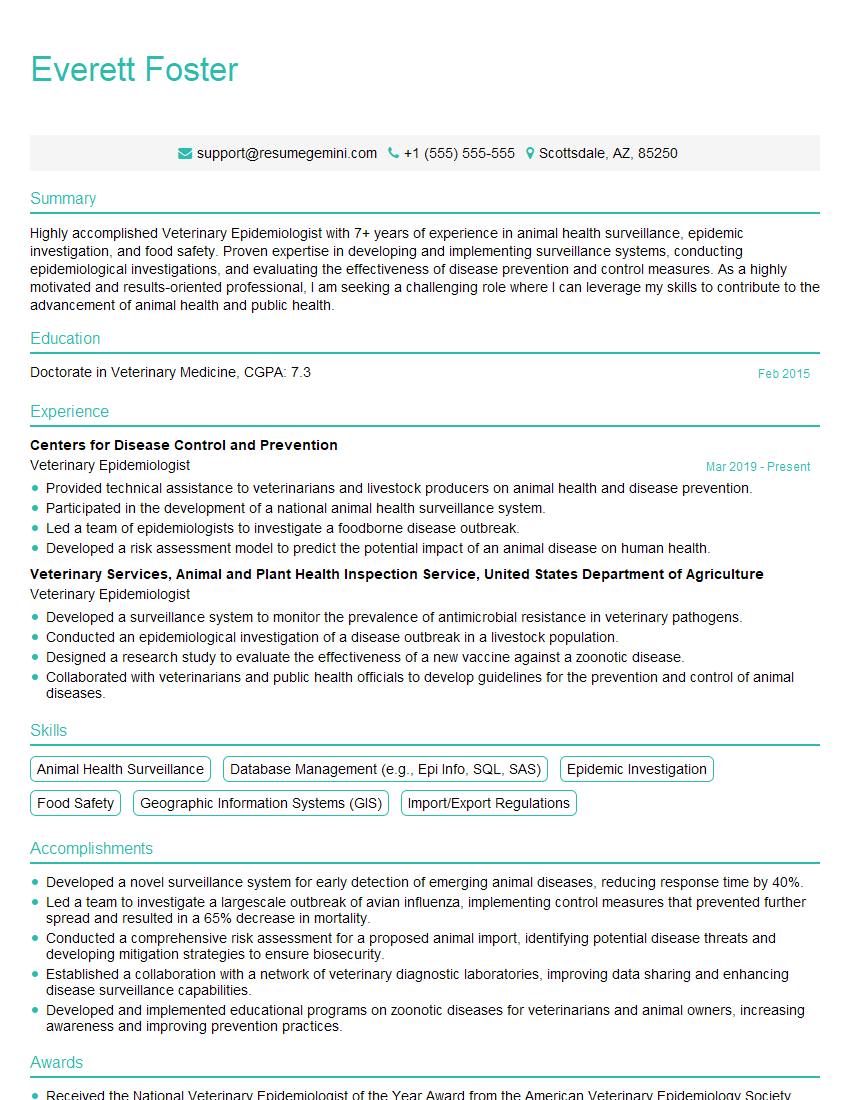
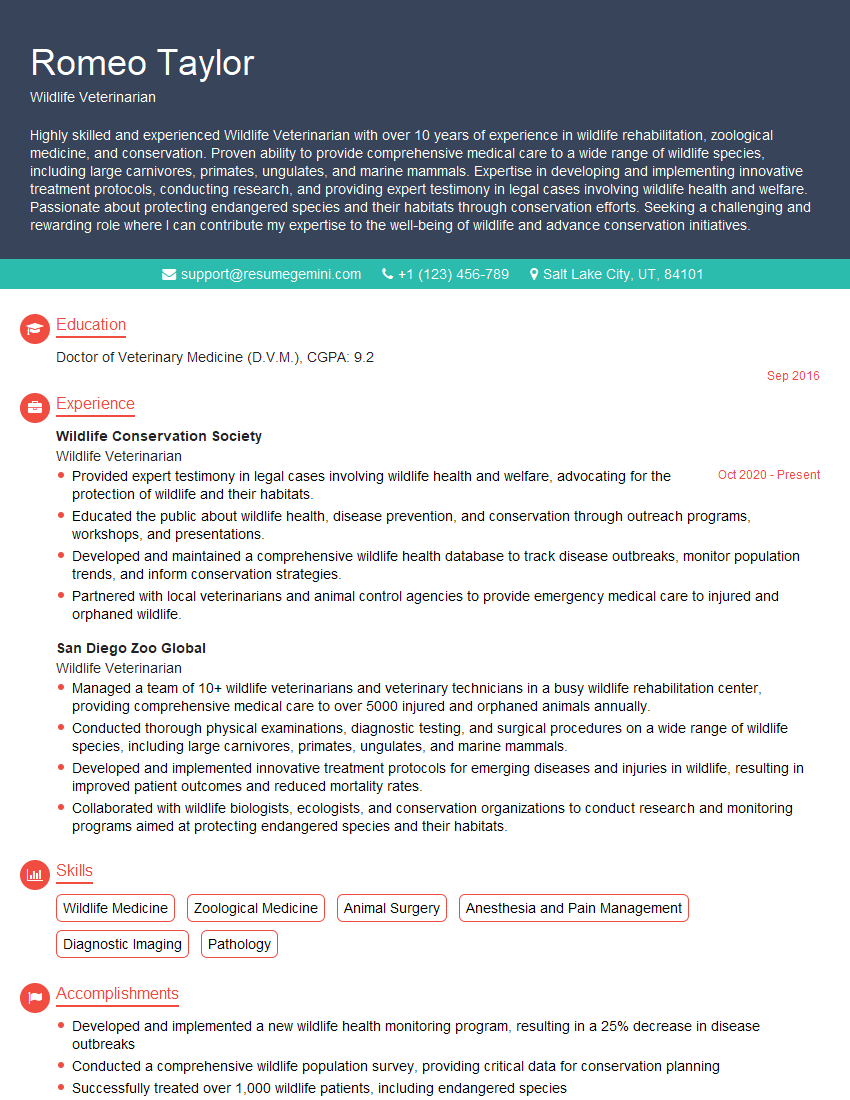
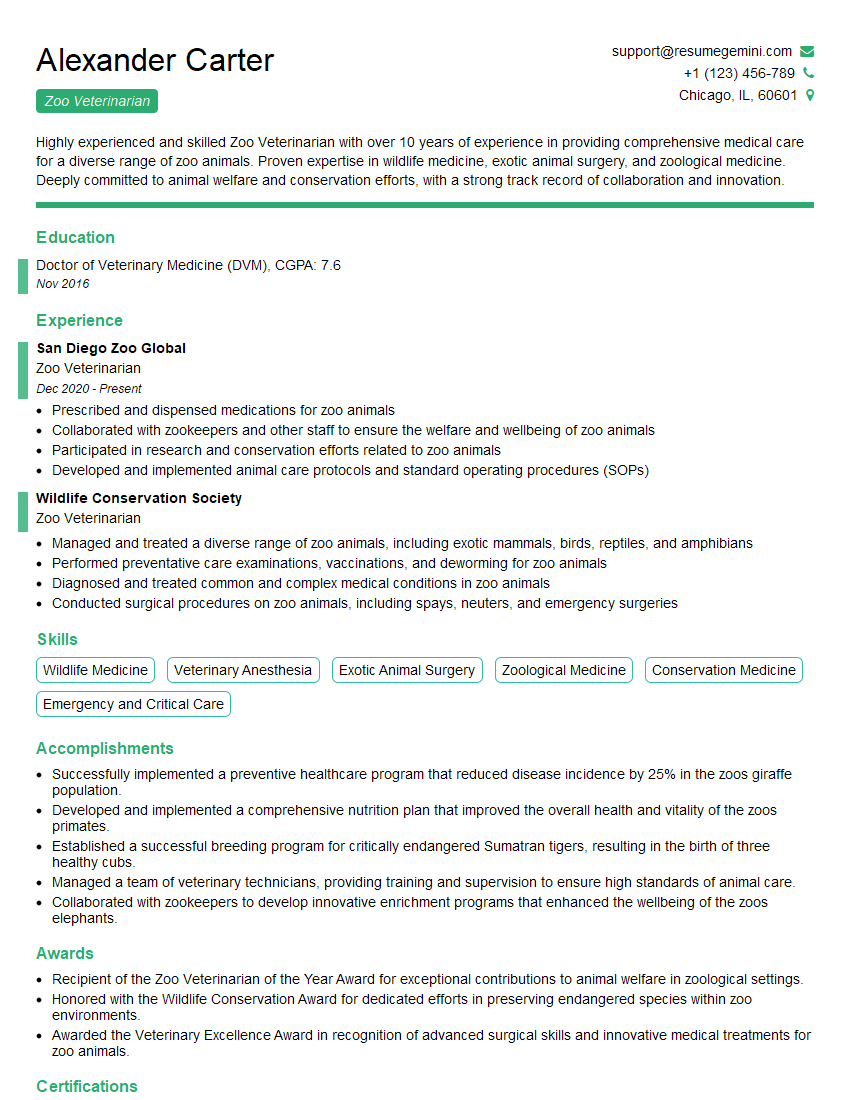
Mastering knowledge of wildlife diseases and their management is crucial for career advancement in wildlife biology, conservation, and public health. A strong understanding of these concepts demonstrates your expertise and commitment to protecting wildlife populations. To significantly improve your job prospects, creating an ATS-friendly resume is essential. ResumeGemini offers a trusted platform to build a professional resume that highlights your skills and experience effectively. We provide examples of resumes tailored to showcase expertise in Knowledge of wildlife diseases and their management, helping you present your qualifications in the best possible light.




Explore more articles
Users Rating of Our Blogs
Share Your Experience
We value your feedback! Please rate our content and share your thoughts (optional).
What Readers Say About Our Blog
To the interviewgemini.com Webmaster.
Very helpful and content specific questions to help prepare me for my interview!
Thank you
To the interviewgemini.com Webmaster.
This was kind of a unique content I found around the specialized skills. Very helpful questions and good detailed answers.
Very Helpful blog, thank you Interviewgemini team.