Cracking a skill-specific interview, like one for Laboratory Quality Control and Quality Assurance, requires understanding the nuances of the role. In this blog, we present the questions you’re most likely to encounter, along with insights into how to answer them effectively. Let’s ensure you’re ready to make a strong impression.
Questions Asked in Laboratory Quality Control and Quality Assurance Interview
Q 1. Describe your experience with GLP/GMP compliance.
GLP (Good Laboratory Practice) and GMP (Good Manufacturing Practice) are regulatory frameworks ensuring the quality and reliability of non-clinical laboratory studies (GLP) and the production of pharmaceutical products (GMP). My experience spans several years working in laboratories adhering strictly to both. In a GLP environment, I’ve been involved in maintaining detailed records of all testing procedures, ensuring proper sample handling and storage, and meticulously documenting any deviations. For GMP, I’ve focused on aspects like equipment calibration and validation to maintain consistent product quality. For example, in one project involving a new drug formulation, we implemented strict GMP guidelines for weighing, mixing, and filling processes, resulting in zero product recalls. Another example involved participating in GLP audits resulting in minor corrective actions which we successfully implemented to maintain compliance.
Specifically, my responsibilities included:
- Developing and implementing SOPs (Standard Operating Procedures) aligned with GLP/GMP principles.
- Participating in internal and external audits to ensure compliance.
- Implementing corrective and preventive actions (CAPA) to address any identified discrepancies.
- Maintaining accurate records and documentation to support regulatory inspections.
Q 2. Explain the difference between accuracy and precision in laboratory measurements.
Accuracy and precision are crucial concepts in laboratory measurements, often confused but distinctly different. Accuracy refers to how close a measurement is to the true or accepted value. Precision, on the other hand, describes the reproducibility of measurements – how close repeated measurements are to each other. Think of it like archery: accuracy is how close your arrows are to the bullseye, while precision is how tightly clustered your arrows are, regardless of whether they hit the bullseye.
A measurement can be precise but not accurate (e.g., consistently measuring 10.1g when the true value is 10.0g), or accurate but not precise (e.g., measurements scattered around 10.0g, but averaging to 10.0g). Ideally, we strive for both high accuracy and high precision. For instance, in calibrating a balance, we’d use certified weight standards to assess accuracy, and take multiple measurements of a known weight to assess the balance’s precision.
Q 3. How do you handle out-of-specification results?
Out-of-specification (OOS) results are any test results that fall outside the pre-defined acceptance criteria. Handling OOS results requires a systematic and thorough investigation. Our process typically involves these steps:
- Immediate review: Verify the data, checking for transcription errors or instrument malfunctions.
- Investigation: A thorough investigation determines the root cause, including a review of the entire analytical process, equipment calibration records, and personnel training.
- Re-testing: Re-testing samples using the same and/or alternative methods can help determine the validity of the OOS results.
- Documentation: All steps, findings, and conclusions are meticulously documented, including the corrective actions taken.
- CAPA Implementation: Corrective and preventive actions are implemented to prevent future occurrences of similar OOS results. This might involve retraining personnel, recalibrating equipment, or revising the test method.
For example, if we obtain an OOS result for a drug’s purity, the investigation may involve checking the raw material’s certificate of analysis, examining the chromatographic conditions, verifying the cleanliness of glassware, and ensuring correct weighing procedures.
Q 4. What are the key elements of a robust quality control system?
A robust quality control (QC) system ensures reliable and accurate results. Key elements include:
- Standard Operating Procedures (SOPs): Detailed, documented procedures for every test or process, ensuring consistency and reproducibility.
- Equipment Qualification and Calibration: Regular calibration and validation of instruments to ensure accuracy and reliability.
- Reagent and Standard Control: Proper handling, storage, and traceability of reagents and standards.
- Quality Control Samples: The routine analysis of QC samples (e.g., blanks, standards, and spiked samples) to monitor the accuracy and precision of the analytical process.
- Data Integrity: Ensuring the completeness, accuracy, consistency, and reliability of all data generated.
- Personnel Training: Ensuring staff receive appropriate training and are competent in the use of equipment, and adherence to SOPs.
- Internal Audits: Regular internal audits to evaluate the effectiveness of the QC system and identify areas for improvement.
- Corrective and Preventive Actions (CAPA): A system for identifying, investigating, and correcting any deviations from established procedures.
Q 5. Describe your experience with method validation.
Method validation is a critical process demonstrating that a specific analytical method is suitable for its intended purpose. My experience includes validating various analytical methods, including HPLC, GC, and spectrophotometry. This involves evaluating parameters such as:
- Specificity: The ability of the method to measure the analyte of interest in the presence of other components.
- Linearity: The ability of the method to produce results proportional to the analyte concentration over a specific range.
- Accuracy: The closeness of the measured value to the true value.
- Precision: The reproducibility of the method.
- Range: The concentration range over which the method is reliable.
- Limit of Detection (LOD) and Limit of Quantification (LOQ): The lowest concentration of the analyte that can be reliably detected or quantified.
For example, in validating an HPLC method for the analysis of a pharmaceutical impurity, we systematically evaluated each of these parameters and documented the results in a comprehensive validation report, ensuring compliance with regulatory guidelines. Failure to properly validate a method can lead to inaccurate results and potentially jeopardize the quality of the product or study.
Q 6. How do you ensure the traceability of calibration standards?
Traceability of calibration standards is essential for ensuring the accuracy of measurements. We achieve this through a chain of custody linking our standards to national or international standards. This typically involves:
- Purchasing certified reference materials (CRMs): CRMs are supplied with certificates of analysis that provide traceability information.
- Maintaining accurate records: Detailed records are kept for each standard, including its origin, certification date, and expiry date.
- Regular calibration: Standards are regularly calibrated against higher-order standards or traceable to national standards.
- Proper storage and handling: Standards are stored and handled according to the manufacturer’s instructions to maintain their integrity.
For instance, our balances are calibrated using weights traceable to NIST (National Institute of Standards and Technology) standards. This ensures that our measurements are accurate and comparable across different laboratories and over time. Any break in traceability can compromise the reliability of all subsequent measurements.
Q 7. What are your experiences with internal audits and CAPA implementation?
I have extensive experience with internal audits and CAPA implementation. Internal audits help assess the effectiveness of our quality system and identify areas for improvement. These audits follow a planned schedule, covering various aspects of the laboratory operations, including SOP adherence, equipment calibration, data integrity, and record-keeping. Findings from internal audits are documented, and any deviations are investigated through the CAPA process.
The CAPA process involves identifying the root cause of a problem, implementing corrective actions to address the immediate issue, and implementing preventive actions to prevent similar problems from occurring in the future. For example, if an internal audit reveals inconsistencies in the calibration records, the CAPA process would involve revising the calibration procedures, retraining personnel, and implementing stricter procedures for tracking and verifying calibrations. This cyclical process of auditing and improvement ensures continuous quality improvement and enhances compliance.
Q 8. Explain your understanding of statistical process control (SPC).
Statistical Process Control (SPC) is a powerful methodology used to monitor and control the variation in a process over time. Think of it like a check-up for your laboratory’s processes. It helps identify trends and patterns before they lead to significant problems. This is achieved by collecting data, plotting it on control charts, and analyzing the results to determine if the process is stable and within acceptable limits.
Control charts, the heart of SPC, visually display data points over time, with upper and lower control limits. These limits are calculated based on historical process data and represent the expected range of variation. If a data point falls outside these limits, or if a clear trend is observed (e.g., consistently increasing or decreasing values), it signals potential problems requiring investigation.
Example: Imagine monitoring the concentration of a reagent in a particular test. By regularly measuring the concentration and plotting it on a control chart, we can quickly identify if the concentration is drifting outside the acceptable range, suggesting potential issues with reagent preparation or storage. Early detection allows for prompt corrective action, preventing flawed results and wasted resources.
Different types of control charts exist, each suitable for different data types. For example, X-bar and R charts are used for continuous data (like weight or concentration), while p-charts are used for attribute data (like the number of defective samples).
Q 9. How do you manage deviations and non-conformances?
Managing deviations and non-conformances is crucial for maintaining laboratory quality. A deviation is any unplanned event that deviates from established procedures, while a non-conformance is a failure to meet a specific requirement. My approach involves a structured, multi-step process:
- Immediate Action: When a deviation or non-conformance is identified, immediate corrective action is taken to prevent further occurrences. This might involve halting the process, isolating affected materials, or notifying relevant personnel.
- Investigation: A thorough investigation is conducted using root cause analysis techniques (discussed later) to understand the underlying causes. This often involves reviewing procedures, equipment logs, and personnel training records.
- Corrective Actions: Based on the root cause analysis, appropriate corrective actions are implemented to prevent recurrence. This might involve modifying procedures, retraining staff, recalibrating equipment, or improving inventory management.
- Preventative Actions: Steps are taken to prevent similar events in the future. This could include implementing new quality checks, improving training programs, or investing in better equipment.
- Documentation: All deviations, non-conformances, investigations, corrective actions, and preventative actions are meticulously documented. This documentation is essential for demonstrating compliance with quality standards and continuous improvement.
Example: If a batch of samples fails a quality control check, immediate action might involve isolating the batch. The investigation may reveal contamination of the reagent. Corrective actions would include discarding the contaminated batch, cleaning the area, and retraining personnel on proper aseptic techniques. Preventative actions might involve implementing more stringent reagent testing procedures.
Q 10. Describe your experience with root cause analysis.
Root cause analysis is a systematic approach to identifying the underlying causes of problems, rather than just addressing the symptoms. My experience encompasses various methods, including the ‘5 Whys,’ Fishbone diagrams (Ishikawa diagrams), and Fault Tree Analysis.
The ‘5 Whys’ is a simple yet effective technique where you repeatedly ask ‘why’ to peel back layers of explanation. For instance, if a test result is inaccurate, you might ask: ‘Why was the result inaccurate?’ (e.g., due to instrument malfunction). ‘Why did the instrument malfunction?’ (e.g., due to improper calibration). ‘Why was it improperly calibrated?’ (e.g., due to lack of training). ‘Why was there a lack of training?’ (e.g., due to scheduling conflicts). ‘Why were there scheduling conflicts?’ (e.g., due to understaffing).
Fishbone diagrams provide a visual representation of potential causes, categorized into main branches (e.g., personnel, equipment, materials, methods). This helps brainstorm a wide range of possible causes systematically.
Fault Tree Analysis is a more complex method used for critical systems, tracing back potential failure points to their root causes. I use the most appropriate method based on the complexity of the problem and the information available.
In practice, I always aim for a thorough and unbiased investigation, involving multiple team members to ensure a comprehensive understanding of the root cause and prevent future issues.
Q 11. What are your experiences with laboratory instrument calibration and maintenance?
Laboratory instrument calibration and maintenance are cornerstones of quality control. My experience involves all aspects of this crucial process, from scheduling preventive maintenance to troubleshooting equipment malfunctions.
- Calibration: I ensure all instruments are calibrated according to manufacturers’ instructions and relevant standards (e.g., ISO 17025). This involves using traceable standards and documenting all calibration activities.
- Preventive Maintenance: A schedule is implemented for routine maintenance activities to prolong equipment life and minimize downtime. This includes cleaning, inspection, and replacement of parts as needed.
- Corrective Maintenance: In case of equipment malfunctions, I troubleshoot the issue and implement corrective actions. This might involve contacting vendors for repairs or replacing faulty components.
- Record Keeping: All calibration and maintenance activities are meticulously documented, including dates, results, and any corrective actions. This documentation is crucial for demonstrating compliance with regulations and internal procedures.
Example: A spectrophotometer is calibrated regularly using certified standards to ensure accurate absorbance readings. Preventive maintenance involves regular cleaning of the cuvettes and light source. If a malfunction occurs, a log is filled, repair is attempted, and then documentation is updated.
Q 12. Explain your knowledge of different types of sampling methods.
Appropriate sampling methods are essential to ensure the collected data accurately reflects the characteristics of the entire population. The choice of sampling method depends on the nature of the material, the objectives of the testing, and resource constraints. Some common methods include:
- Simple Random Sampling: Every sample has an equal chance of being selected. This is ideal for homogeneous materials but can be inefficient for large populations.
- Stratified Random Sampling: The population is divided into subgroups (strata), and samples are randomly selected from each stratum. This is useful for heterogeneous populations to ensure representation from each subgroup.
- Systematic Sampling: Samples are selected at regular intervals. This is simple and efficient but may not be representative if there’s a pattern in the population.
- Convenience Sampling: Samples are selected based on their ease of access. This is the least reliable method and should be avoided unless other methods are impractical.
Example: If testing the quality of a large batch of tablets, stratified random sampling would be preferable, ensuring that tablets from different manufacturing stages are included. Simple random sampling would be suitable for a well-mixed liquid sample.
Q 13. How do you ensure data integrity in the laboratory?
Data integrity is paramount in any laboratory. It refers to the completeness, accuracy, reliability, and consistency of the data generated. Ensuring data integrity requires a multi-faceted approach:
- Standard Operating Procedures (SOPs): Clear, well-defined SOPs for data acquisition, handling, processing, storage, and reporting are essential. These SOPs should include specific details on instrument use, data recording methods, and data validation procedures.
- Electronic Data Management Systems (EDMS): Using validated EDMS helps track and manage data efficiently, reducing manual handling errors and enhancing traceability. Access control and audit trails are vital components of an EDMS.
- Data Validation: Regular data validation checks are necessary to verify the accuracy and reliability of data. This includes reviewing raw data, comparing results to expected values, and investigating any outliers or inconsistencies.
- Training: Personnel should receive adequate training in data management and quality assurance procedures. This helps to ensure data is handled correctly at each stage.
- Regular Audits: Internal and external audits provide independent verification of data integrity practices.
Example: A LIMS (Laboratory Information Management System) can help manage data electronically, providing audit trails and ensuring that only authorized personnel can access data. Regular data validation checks can identify inconsistencies early and facilitate prompt corrective actions.
Q 14. Describe your experience with quality documentation and record keeping.
Quality documentation and record-keeping are fundamental to demonstrating compliance with regulatory requirements and maintaining the credibility of laboratory results. My experience encompasses various aspects:
- SOP Development and Maintenance: I actively contribute to the development, review, and update of SOPs for all laboratory procedures. This ensures the procedures are clear, concise, and consistent with industry best practices and regulatory requirements.
- Record Keeping: I maintain accurate and complete records of all laboratory activities, including calibration data, maintenance logs, test results, and deviations. This includes both paper-based and electronic records, ensuring proper organization and traceability.
- Archiving: Records are archived according to established procedures, ensuring long-term accessibility and compliance with data retention policies.
- Audit Readiness: I ensure that all records are readily accessible and auditable, allowing for efficient and effective review during internal and external audits.
Example: Each test performed is documented in a laboratory notebook, including the date, time, sample identification, methodology followed, and results obtained. Calibration certificates, instrument maintenance records, and quality control data are meticulously stored and readily accessible.
Q 15. How do you handle equipment malfunction or failure?
Equipment malfunction is a serious concern in any laboratory setting, potentially impacting data accuracy and compromising the integrity of results. My approach begins with proactive preventative maintenance. We adhere to strict schedules for calibration, verification, and routine checks, using documented procedures and checklists. This reduces the likelihood of unexpected failures.
However, when a malfunction occurs, our protocol is as follows:
- Immediate Action: The equipment is immediately taken out of service and clearly labeled as ‘Out of Service’ to prevent accidental use. Any potentially compromised samples are identified and their status documented.
- Documentation and Reporting: A detailed report is filed, including the time of failure, nature of the malfunction, any preceding events, and the individual who identified the problem. This is crucial for troubleshooting and preventative measures.
- Troubleshooting: Based on the nature of the malfunction and the equipment manual, initial troubleshooting attempts are made. This might involve checking power supply, connections, or simple repairs within the scope of our training.
- Escalation: If the problem cannot be resolved internally, we contact the manufacturer or a qualified service engineer. The equipment remains out of service until repaired and verified.
- Verification and Validation: After repair, the equipment undergoes rigorous testing and validation to ensure it’s performing within acceptable tolerances before being returned to service. This often involves recalibration and running quality control samples.
For example, if our automated cell counter malfunctions, we immediately follow this protocol, documenting the error codes and attempting basic troubleshooting. If unsuccessful, we contact the manufacturer, and in the interim, manual cell counting is performed to minimize delays, ensuring we maintain a robust workflow even during equipment downtime.
Career Expert Tips:
- Ace those interviews! Prepare effectively by reviewing the Top 50 Most Common Interview Questions on ResumeGemini.
- Navigate your job search with confidence! Explore a wide range of Career Tips on ResumeGemini. Learn about common challenges and recommendations to overcome them.
- Craft the perfect resume! Master the Art of Resume Writing with ResumeGemini’s guide. Showcase your unique qualifications and achievements effectively.
- Don’t miss out on holiday savings! Build your dream resume with ResumeGemini’s ATS optimized templates.
Q 16. What is your approach to risk assessment in a laboratory setting?
Risk assessment is paramount in laboratory settings, where we handle hazardous materials and delicate equipment. My approach is a systematic process based on established frameworks like HAZOP (Hazard and Operability Study) and FMEA (Failure Mode and Effects Analysis).
The process typically involves:
- Identification of Hazards: This includes identifying potential hazards related to chemicals, biological agents, equipment, and procedures. We review safety data sheets (SDS), standard operating procedures (SOPs), and past incident reports.
- Risk Evaluation: We assess the likelihood and severity of each identified hazard, considering factors like frequency of exposure, potential consequences (e.g., injury, contamination, data loss), and control measures in place. A risk matrix is often used to visualize and categorize risks.
- Risk Control: Based on the risk evaluation, we develop and implement control measures to mitigate identified risks. This might involve engineering controls (e.g., safety cabinets), administrative controls (e.g., SOPs, training), and personal protective equipment (PPE).
- Monitoring and Review: The risk assessment isn’t a one-time event. We regularly review and update the assessment as new information becomes available, procedures change, or new risks emerge. Regular safety audits and incident reviews are crucial for this continuous improvement process.
For example, when introducing a new chemical, we conduct a thorough risk assessment, reviewing its SDS, determining appropriate storage conditions, selecting necessary PPE, and documenting the handling procedures in a detailed SOP. This ensures that the potential risks associated with the chemical are adequately controlled.
Q 17. Explain your understanding of quality metrics and KPIs.
Quality metrics and Key Performance Indicators (KPIs) are essential for evaluating laboratory performance and identifying areas for improvement. They provide objective data to track progress towards quality goals. Examples include:
- Turnaround Time (TAT): The time taken to complete a test from sample receipt to result reporting. A shorter TAT indicates improved efficiency.
- Accuracy and Precision: Measured through quality control samples and proficiency testing, these indicate the reliability and repeatability of test results.
- Error Rate: The number of errors (e.g., incorrect results, sample mix-ups) divided by the total number of tests performed. A low error rate indicates improved quality control.
- Equipment Uptime: The percentage of time equipment is operational and available for use. High uptime indicates reduced downtime and improved efficiency.
- Customer Satisfaction: Measured through surveys or feedback, this reflects the overall client experience with the laboratory services.
We use these metrics to create dashboards and reports to track performance, identify trends, and measure the effectiveness of improvement initiatives. For instance, a consistently high error rate in a specific test might indicate a need for improved training, updated SOPs, or equipment recalibration. By using data-driven insights, we can make informed decisions to enhance laboratory performance and quality.
Q 18. How do you ensure compliance with relevant regulatory requirements (e.g., ISO 17025)?
Compliance with regulatory requirements like ISO 17025 is fundamental to ensuring the credibility and reliability of our laboratory results. Our compliance strategy is multifaceted and incorporates:
- Implementation of a Quality Management System (QMS): We follow a robust QMS, documenting all procedures, processes, and records according to ISO 17025 guidelines. This includes maintaining a comprehensive quality manual and standard operating procedures (SOPs).
- Personnel Competence: We ensure all personnel receive adequate training, maintain their competency through regular training and continuing education, and possess the necessary skills and experience to perform their tasks.
- Equipment Calibration and Maintenance: A comprehensive calibration and maintenance program ensures all equipment is functioning correctly and within specified tolerances.
- Quality Control (QC): We implement rigorous QC procedures, including the use of control samples and proficiency testing programs to monitor the accuracy and precision of our results.
- Internal Audits: Regular internal audits are conducted to verify compliance with ISO 17025 requirements and identify any areas needing improvement.
- Corrective and Preventive Actions (CAPA): A robust CAPA system ensures that any nonconformities are addressed promptly, root causes are identified, and corrective and preventive actions are implemented to prevent recurrence.
- Management Review: Regular management reviews are conducted to assess the effectiveness of the QMS and identify opportunities for improvement.
For example, we meticulously document all calibration records and maintain a traceable chain of custody for samples, ensuring that any deviation from standard procedures is investigated and corrected through the CAPA process. This rigorous approach demonstrates our commitment to compliance and maintaining the highest quality standards.
Q 19. Describe your experience with laboratory quality management systems (e.g., ISO 9001).
My experience with laboratory quality management systems (QMS), specifically ISO 9001, is extensive. I’ve been involved in the implementation, maintenance, and improvement of QMS in several laboratories. My understanding encompasses all aspects of the standard, from defining the scope of the QMS to conducting internal audits and management reviews.
My roles have included:
- Developing and implementing SOPs: Creating clear, concise, and user-friendly standard operating procedures for all laboratory processes.
- Conducting internal audits: Identifying areas of non-compliance and recommending corrective actions.
- Participating in management reviews: Assessing the effectiveness of the QMS and identifying areas for improvement.
- Document control: Managing and maintaining the laboratory’s document control system, ensuring that all documents are current, accurate, and readily accessible.
- Training: Delivering training to laboratory staff on QMS requirements and procedures.
In one specific instance, I led the implementation of ISO 9001 in a newly established clinical laboratory. This involved developing a comprehensive quality manual, implementing a document control system, and training all personnel on the new QMS. We successfully completed the ISO 9001 certification audit within six months, demonstrating my ability to lead and manage the entire implementation process.
Q 20. How do you manage and resolve conflicts within the laboratory team?
Conflict resolution is a vital skill for effective team management in a laboratory. My approach centers around open communication, active listening, and a focus on finding mutually agreeable solutions. I don’t shy away from addressing conflicts directly but prioritize a collaborative approach.
My strategies typically include:
- Open Communication: I encourage open and honest communication among team members, creating a safe space where individuals feel comfortable expressing their concerns.
- Active Listening: I actively listen to all perspectives involved in a conflict, ensuring that everyone feels heard and understood before attempting to find a solution.
- Mediation: If necessary, I act as a mediator, facilitating discussion and helping the parties involved find common ground.
- Focus on Solutions: I shift the focus from blame to solutions, encouraging the team to collaboratively identify ways to resolve the conflict and prevent future occurrences.
- Documentation: I maintain a record of the conflict, the steps taken to resolve it, and the outcome. This provides valuable data for identifying patterns and improving team dynamics.
For example, if a disagreement arises regarding a testing procedure, I bring the involved individuals together, facilitating a discussion to understand their perspectives. We collaboratively review the relevant SOPs and, if necessary, modify them to address the issues raised. The focus is always on improving the process, not on assigning blame.
Q 21. Describe your experience with laboratory safety procedures.
Laboratory safety is non-negotiable. My experience with laboratory safety procedures is extensive, encompassing a range of safety protocols, training programs, and emergency response plans.
My understanding and practice cover:
- Chemical Safety: Proper handling, storage, and disposal of hazardous chemicals, including the use of safety data sheets (SDS) and appropriate personal protective equipment (PPE).
- Biological Safety: Safe handling of biological materials, including the use of biological safety cabinets, proper sterilization techniques, and adherence to biosafety level guidelines.
- Radiation Safety: Safe handling and use of radioactive materials, including the use of radiation shielding and appropriate monitoring equipment.
- Electrical Safety: Safe use of electrical equipment, including the proper grounding of equipment and the use of surge protectors.
- Fire Safety: Knowing fire safety procedures, including the use of fire extinguishers and evacuation plans.
- Emergency Response: Knowledge of emergency response procedures, including the location of emergency exits, eyewash stations, and safety showers, and familiarity with spill response procedures.
- Waste Management: Safe disposal of laboratory waste, including hazardous waste, chemical waste, and biological waste, in compliance with all relevant regulations.
For instance, in my previous role, I developed and implemented a comprehensive laboratory safety training program that covered all aspects of laboratory safety, including hands-on training with safety equipment. This program ensured that all laboratory personnel were adequately trained to work safely in the laboratory environment. Regular safety drills and inspections further reinforce these practices.
Q 22. Explain your understanding of different types of quality control charts.
Quality control charts are essential tools in a laboratory setting, visually representing data over time to monitor the stability and performance of analytical processes. They help identify trends, outliers, and potential problems before they significantly impact results. Several types exist, each with its own application:
- Shewhart Charts (Control Charts): These are the most common type, using mean and standard deviation to establish control limits. Points outside these limits signal potential issues. For example, we might use a Shewhart chart to track the daily absorbance readings of a spectrophotometer. Consistent readings within the control limits demonstrate good instrument performance.
- Cusum Charts (Cumulative Sum Charts): These charts monitor the cumulative sum of deviations from a target value. They’re particularly sensitive to small, consistent shifts in the process mean, which Shewhart charts might miss. Imagine using a Cusum chart to track the pH of a buffer solution over several batches; small, gradual changes are readily apparent.
- Levey-Jennings Charts: These are similar to Shewhart charts, often used in clinical laboratories. They display individual data points plotted against established mean and standard deviation limits. Patterns such as shifts or trends are easily visualized. This is frequently used to monitor quality control samples in clinical chemistry assays.
- Moving Range Charts: These charts assess the variability of a process by plotting the range (difference between the highest and lowest values) of subgroups of data. They complement Shewhart charts by giving insights into the process’s variability. We might utilize these in conjunction with Shewhart charts to monitor the precision of a weighing balance.
The selection of an appropriate chart depends on the specific application and the nature of the data being monitored. Regular review of these charts is crucial for maintaining quality control within the lab.
Q 23. How do you ensure the accuracy of reference standards?
Ensuring the accuracy of reference standards is paramount in a laboratory. This involves a multi-step process:
- Source Selection: We choose reference standards from reputable suppliers with certified traceability to national or international standards organizations (e.g., NIST, ISO). Certificates of analysis are carefully reviewed.
- Proper Handling and Storage: Reference standards are stored under appropriate conditions (temperature, humidity, light exposure) as specified by the manufacturer to prevent degradation. We maintain meticulous records of storage conditions and any potential exposure to contamination.
- Verification and Calibration: Before use, reference standards are often verified against an independent standard or calibrated using a traceable method. This confirms their stated values and ensures accuracy. We might use a secondary reference standard, independently verified, to check the primary reference standard for consistency.
- Regular Audits and Checks: We employ a system of regular checks to monitor the stability of our reference standards over time. This often involves periodic analysis against a known standard or comparison with data from other trusted labs.
- Documentation: Complete and accurate documentation of the entire lifecycle of the reference standards – from receipt and storage to use and disposal – is maintained, adhering to relevant regulatory guidelines.
By meticulously following these steps, we maintain the integrity and reliability of our reference standards, ensuring the accuracy and validity of our laboratory results.
Q 24. What is your experience with proficiency testing programs?
Proficiency testing (PT) programs are crucial for assessing laboratory performance against external benchmarks. My experience involves participating in various PT programs across different analytical techniques. I’ve been responsible for:
- Sample Receipt and Analysis: Following the PT program’s instructions precisely, I’ve analyzed the provided samples using our standard operating procedures.
- Data Reporting: Accurate and timely reporting of results, adhering to the program’s specified format and deadlines. This includes documenting any issues or deviations.
- Result Interpretation and Corrective Actions: Careful evaluation of the results compared to the program’s consensus values or target values. Significant discrepancies trigger investigations into potential issues within our laboratory processes, including review of equipment, reagents, or technique. Corrective actions are implemented and documented following established procedures.
- Participation in Program Assessments: Actively participating in the program’s assessment and review processes to learn from the collective experience of participating laboratories and identify areas for improvement.
Participation in PT programs is essential for continuous improvement and provides a valuable mechanism for demonstrating our laboratory’s competence and maintaining accreditation.
Q 25. How do you train and mentor junior laboratory personnel in QA/QC procedures?
Training and mentoring junior laboratory personnel in QA/QC procedures is a key responsibility. I utilize a blended approach:
- On-the-Job Training: Hands-on training in various aspects of QA/QC, including proper use of equipment, handling of samples, and documentation procedures. This involves shadowing experienced personnel and gradually increasing responsibilities.
- Formal Training Programs: Using a structured curriculum that covers relevant theoretical concepts and practical skills, supplemented by online modules and interactive sessions.
- Mentorship and Feedback: Providing regular feedback and guidance to junior staff, addressing their specific strengths and weaknesses. I offer support and encourage questions to foster a positive learning environment.
- Documentation and SOP Review: Ensuring all personnel are familiar with and follow established standard operating procedures (SOPs) for QA/QC. This is reviewed regularly and updated as needed.
- Competency Assessments: Regular assessment to evaluate the knowledge and skills of junior staff, using both practical and theoretical examinations to ensure competency.
By combining practical experience with formal training and ongoing mentorship, I aim to create a skilled and confident QA/QC workforce capable of maintaining high standards of laboratory quality.
Q 26. Explain your understanding of the different types of laboratory errors and their sources.
Laboratory errors can be broadly categorized as:
- Pre-analytical Errors: These occur before the actual analysis and are often the most frequent source of error. Examples include improper patient identification, incorrect sample collection, inadequate sample handling, and inappropriate storage conditions. For instance, a hemolyzed blood sample could lead to inaccurate results in certain clinical chemistry tests.
- Analytical Errors: These are errors that occur during the testing process. They include problems with instrumentation (calibration, maintenance), reagent quality, inaccurate pipetting, and method-related biases. A poorly calibrated instrument might lead to systematic errors in measurements.
- Post-analytical Errors: These arise after the analysis is completed, such as transcription errors, data entry mistakes, or misinterpretation of results. A simple typing error in reporting can have serious consequences.
The sources of these errors are multifaceted, ranging from human error (inadequate training, fatigue, distractions) to equipment malfunctions, poor reagent quality, and inadequate SOPs. Identifying and addressing the root causes of errors requires a thorough investigation and often involves a combination of preventive measures (e.g., training, equipment maintenance) and corrective actions.
Q 27. How would you improve the efficiency of existing QA/QC processes?
Improving the efficiency of existing QA/QC processes requires a systematic approach:
- Process Mapping and Optimization: Analyze the current workflow, identify bottlenecks, and eliminate unnecessary steps. This often involves using process mapping tools to visualize the entire QA/QC process flow.
- Automation: Introduce automation where appropriate to reduce manual tasks and minimize human error. Automated pipetting systems and data management software can significantly enhance efficiency.
- Improved Data Management: Implement robust data management systems to streamline data entry, analysis, and reporting. This could involve electronic laboratory notebooks (ELNs) and LIMS integration.
- Standard Operating Procedures (SOP) Review and Update: Regularly review and update SOPs to ensure they are clear, concise, and efficient. This prevents ambiguity and ensures consistency in procedures.
- Training and Staff Development: Invest in training to improve staff competency in QA/QC procedures. Well-trained personnel are more efficient and less prone to errors.
- Regular Monitoring and Evaluation: Continuously monitor key performance indicators (KPIs) to assess the effectiveness of changes and identify further areas for improvement. This might involve using statistical process control charts to track performance.
Implementing these improvements will increase the overall efficiency of QA/QC processes, resulting in improved data quality and reduced operational costs.
Q 28. Describe your experience with implementing new QA/QC methodologies.
I have extensive experience in implementing new QA/QC methodologies. This typically follows a structured process:
- Needs Assessment: Careful evaluation of the current system to identify areas for improvement and determine the suitability of new methodologies. This might involve analyzing the current error rates, turnaround times, or compliance requirements.
- Method Validation/Verification: Thorough validation or verification of the new methodology to ensure its accuracy, precision, and reliability. This involves meticulous documentation and adherence to regulatory guidelines.
- Training and Implementation: Providing comprehensive training to staff on the new methods and procedures. A phased implementation approach may be adopted, starting with a pilot phase in which the new method is tested in a controlled environment before full deployment.
- Monitoring and Evaluation: Closely monitor the performance of the new methodology after implementation, comparing results to the previous system. Statistical process control charts can be invaluable for this purpose.
- Documentation and SOP Update: Updating all relevant documentation, including standard operating procedures (SOPs), to reflect the new methodology. This ensures consistency and traceability.
One specific example involved implementing a new automated system for blood analysis, which significantly improved turnaround time and reduced manual handling errors. Careful planning, thorough validation, and comprehensive training were key to a successful transition. Post-implementation monitoring helped fine-tune the process and identify areas for further optimization.
Key Topics to Learn for Laboratory Quality Control and Quality Assurance Interview
- Good Laboratory Practices (GLP): Understand the principles and applications of GLP in ensuring data integrity and reliability. Consider practical scenarios where GLP adherence is crucial.
- Quality Management Systems (QMS): Familiarize yourself with ISO 9001, ISO 17025, and other relevant standards. Think about how these standards are implemented in a laboratory setting and how you’d contribute to their maintenance.
- Method Validation and Verification: Grasp the theoretical concepts behind these processes and be prepared to discuss practical applications, including accuracy, precision, and linearity assessments.
- Calibration and Maintenance of Equipment: Understand the importance of regular calibration and preventative maintenance to ensure accurate and reliable results. Be ready to discuss troubleshooting scenarios.
- Data Integrity and Management: Explore the principles of ALCOA+ (Attributable, Legible, Contemporaneous, Original, Accurate + Complete, Consistent, Enduring) and how they are applied in maintaining data integrity within a laboratory setting.
- Internal Audits and Corrective Actions: Understand the process of conducting internal audits, identifying non-conformances, and implementing effective corrective and preventative actions.
- Regulatory Compliance: Be familiar with relevant regulations (e.g., FDA, EPA) and their impact on laboratory operations. Consider how you would ensure compliance within a specific regulatory framework.
- Statistical Process Control (SPC): Understand the application of statistical methods to monitor and control laboratory processes. Be prepared to discuss different control charts and their interpretations.
- Risk Assessment and Management: Understand how to identify and mitigate potential risks within a laboratory environment, including safety and quality risks.
- Quality Control Documentation and Reporting: Understand the importance of accurate and complete documentation, including SOPs (Standard Operating Procedures) and reports. Consider practical examples of effective documentation practices.
Next Steps
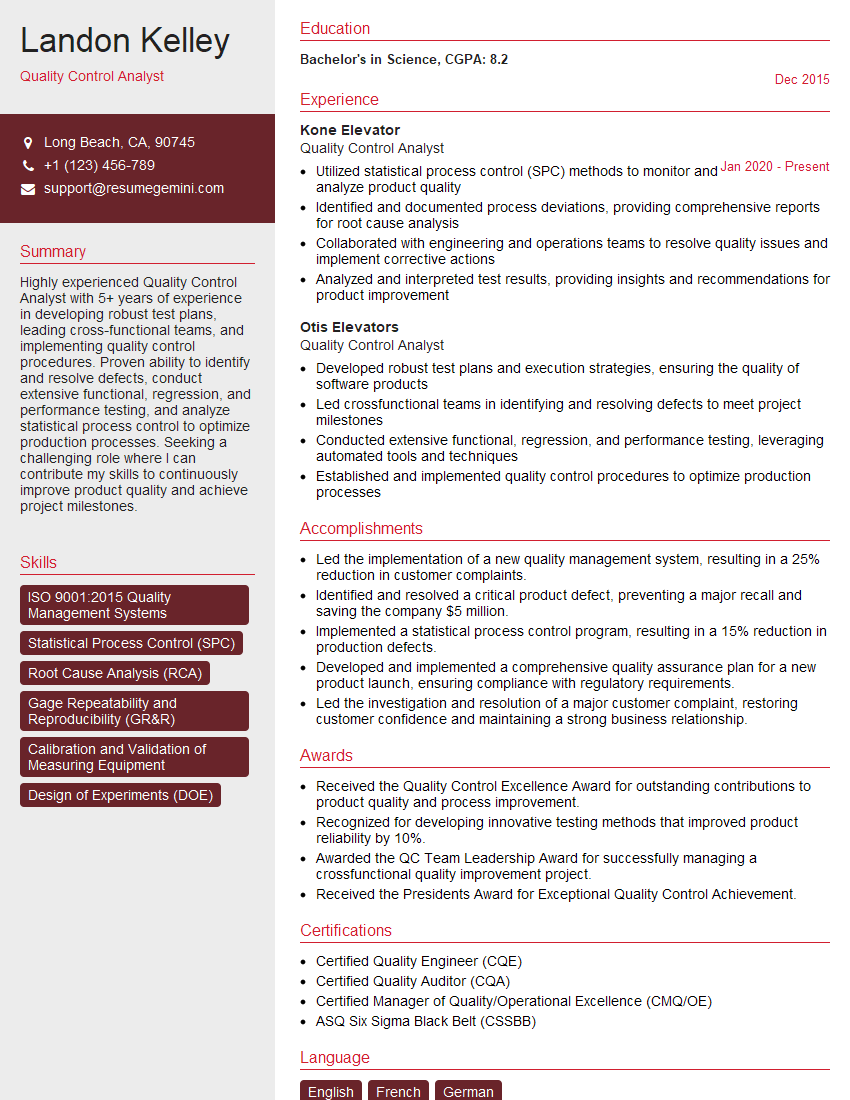
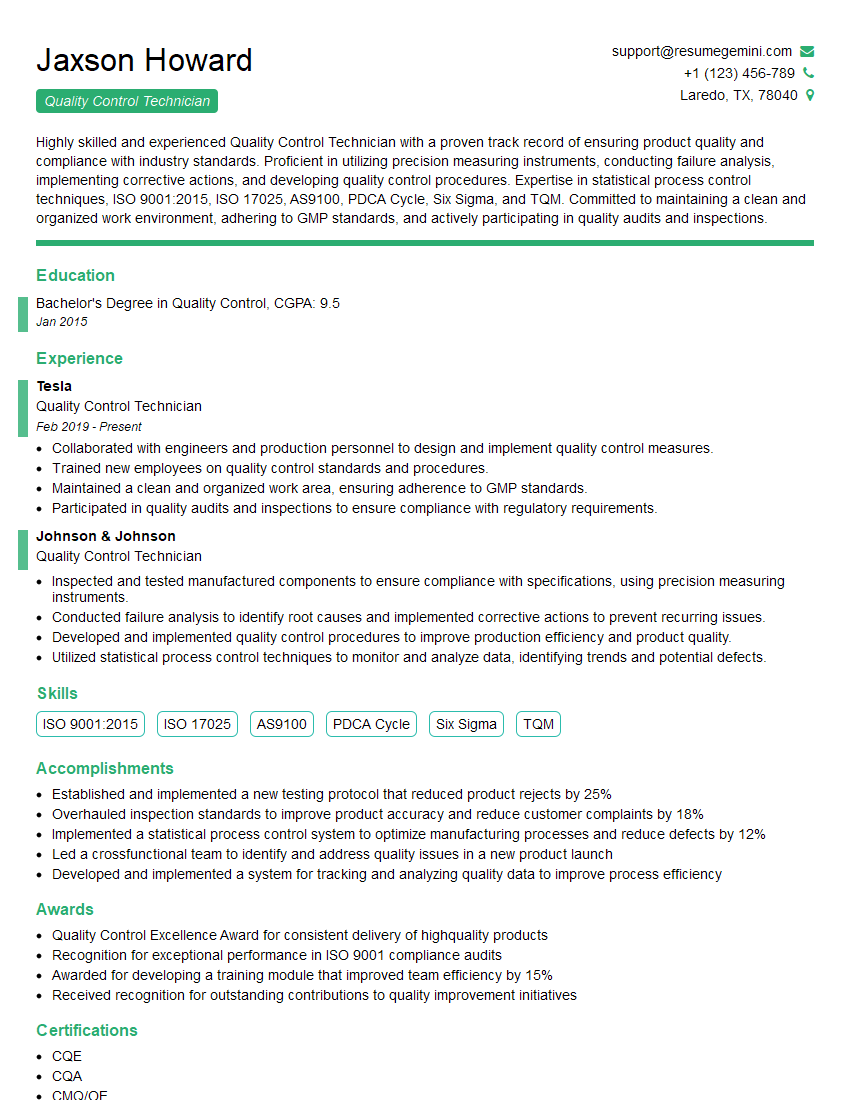
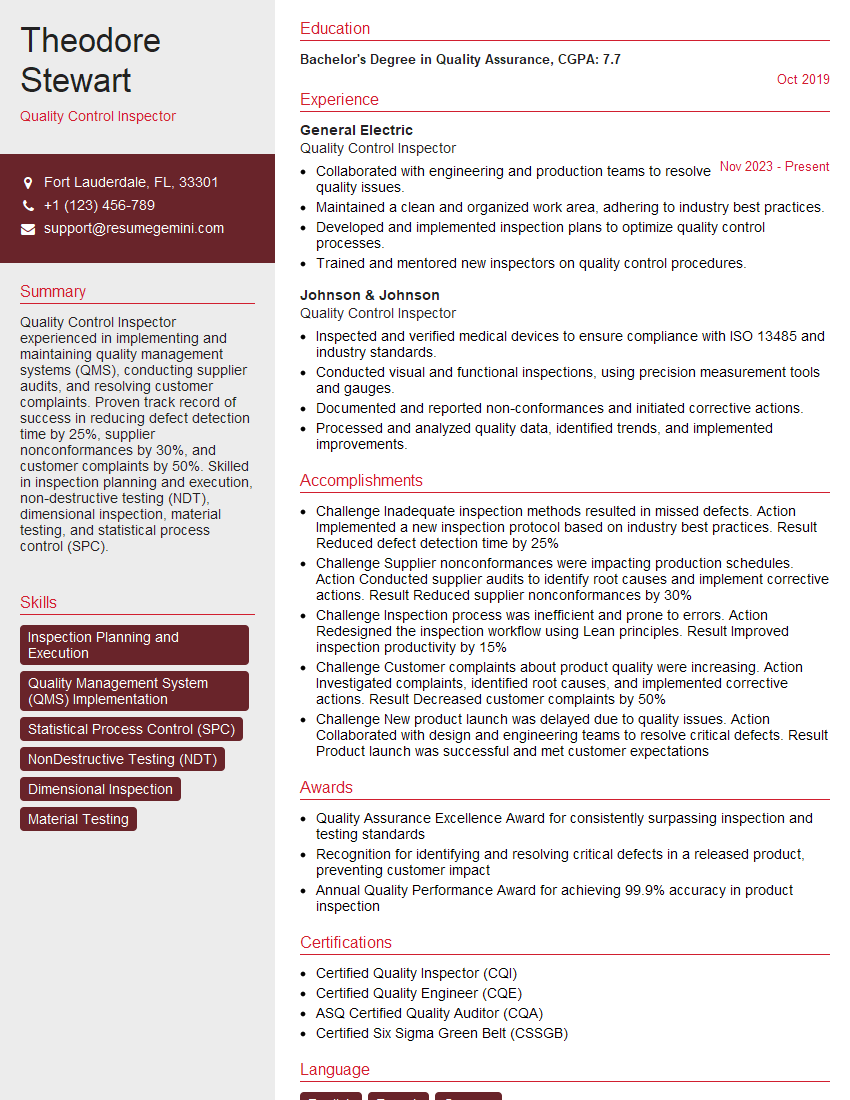
Mastering Laboratory Quality Control and Quality Assurance is crucial for career advancement in this dynamic field, opening doors to leadership roles and specialized areas. A strong resume is your first step. Creating an ATS-friendly resume significantly increases your chances of getting noticed by recruiters. We recommend using ResumeGemini to build a professional and effective resume that highlights your skills and experience. ResumeGemini provides examples of resumes tailored to Laboratory Quality Control and Quality Assurance, helping you present yourself as the ideal candidate.

Explore more articles
Users Rating of Our Blogs
Share Your Experience
We value your feedback! Please rate our content and share your thoughts (optional).
What Readers Say About Our Blog
To the interviewgemini.com Webmaster.
Very helpful and content specific questions to help prepare me for my interview!
Thank you
To the interviewgemini.com Webmaster.
This was kind of a unique content I found around the specialized skills. Very helpful questions and good detailed answers.
Very Helpful blog, thank you Interviewgemini team.