Interviews are opportunities to demonstrate your expertise, and this guide is here to help you shine. Explore the essential Laminectomy interview questions that employers frequently ask, paired with strategies for crafting responses that set you apart from the competition.
Questions Asked in Laminectomy Interview
Q 1. Describe the different types of laminectomy procedures.
Laminectomy procedures are categorized based on the extent of bone removal and the surgical approach. A simple laminectomy involves removing only the lamina (the bony arch of the vertebra). A hemilaminectomy removes only half of the lamina, often used to minimize surgical trauma. A extended laminectomy might involve resection of the lamina, spinous process, and sometimes portions of the articular processes, depending on the extent of the spinal stenosis or other pathology. Furthermore, the surgical approach can be either open (traditional) or minimally invasive, influencing the extent and location of incisions.
- Simple Laminectomy: Removal of the lamina only.
- Hemilaminectomy: Removal of half of the lamina.
- Extended Laminectomy: Removal of lamina, spinous process, and potentially other bony structures.
- Laminectomy with Foraminotomy: Removal of lamina and part of the bone around the nerve root opening (foramen).
The choice of laminectomy type depends on the individual patient’s anatomy, the location and severity of the spinal compression, and the surgeon’s preference.
Q 2. Explain the indications and contraindications for a laminectomy.
Laminectomy is indicated primarily to relieve pressure on the spinal cord or nerve roots caused by conditions such as spinal stenosis (narrowing of the spinal canal), herniated discs, bone spurs, or tumors. It’s a surgical option when conservative treatments like medication and physical therapy have failed to provide adequate relief of symptoms like pain, numbness, weakness, or bowel/bladder dysfunction.
Indications:
- Spinal stenosis
- Herniated disc
- Spondylolisthesis (forward slippage of a vertebra)
- Spinal tumors
- Trauma
Contraindications: A laminectomy may not be appropriate if the patient has:
- Severe osteoporosis (brittle bones): Increased risk of fracture during surgery.
- Significant infection at the surgical site.
- Uncontrolled bleeding disorders.
- Severe cardiovascular or pulmonary disease: Anesthesia carries significant risks in these cases.
- Unrealistic expectations or poor understanding of the procedure and potential risks.
A thorough assessment is crucial to determine suitability, weighing the potential benefits against the risks.
Q 3. What are the potential complications of a laminectomy?
While generally safe, laminectomy carries potential complications, including:
- Infection: As with any surgery, infection at the incision site or deeper within the spinal canal is a possibility.
- Bleeding: Excessive bleeding during or after surgery can necessitate blood transfusions.
- Nerve root injury: Damage to nerve roots during the procedure can result in new or worsened neurological deficits.
- Cerebrospinal fluid (CSF) leak: Leakage of CSF from the spinal canal can lead to headaches and other complications.
- Dural tear: A tear in the dura mater (the outermost layer of the protective covering around the spinal cord) requires repair.
- Instability: Removing bone can sometimes lead to spinal instability requiring additional stabilization procedures.
- Postoperative pain: Pain at the surgical site is common and usually managed with medication. In some cases, chronic pain can develop.
- Recurrence of stenosis: The condition that necessitated the surgery could recur.
The risk of these complications varies depending on factors such as the patient’s overall health, the complexity of the surgery, and the surgeon’s experience.
Q 4. How do you assess a patient’s suitability for a laminectomy?
Assessing patient suitability involves a thorough evaluation encompassing several key aspects:
- Detailed medical history: Including past surgeries, medications, allergies, and any relevant systemic conditions.
- Neurological examination: Assessing motor strength, sensation, reflexes, and coordination to determine the extent of nerve compression and the baseline neurological status.
- Imaging studies: X-rays, CT scans, and MRI scans are essential to visualize the spine and identify the source of compression.
- Pain assessment: Understanding the nature, location, severity, and duration of the patient’s pain is crucial.
- Functional assessment: Evaluating the patient’s ability to perform daily activities to determine the impact of the condition on their quality of life.
- Patient expectations: Realistic expectations about surgical outcomes and potential complications must be established.
This comprehensive evaluation enables informed decision-making, ensuring the surgery is the appropriate course of action and addressing any potential contraindications.
Q 5. What imaging modalities are used to plan a laminectomy?
Various imaging modalities play crucial roles in planning a laminectomy:
- X-rays: Provide basic views of the spine’s alignment and bony structures. They help identify deformities, fractures, or degenerative changes.
- CT scans (Computed Tomography): Offer detailed cross-sectional images of the bony structures, providing precise information about the location and extent of bone spurs, stenosis, or other abnormalities.
- MRI scans (Magnetic Resonance Imaging): Show soft tissue structures such as the spinal cord, nerve roots, discs, and ligaments with exceptional clarity. They are invaluable in identifying disc herniations, spinal cord compression, and ligamentous abnormalities.
- Myelography: This procedure involves injecting contrast dye into the spinal canal, improving visualization of the spinal cord and nerve roots during X-ray or CT studies, particularly helpful when MRI is contraindicated.
The combination of these imaging techniques allows for a precise surgical plan, minimizing the risk of complications and maximizing the chance of successful decompression.
Q 6. Describe your approach to patient selection for minimally invasive laminectomy.
Patient selection for minimally invasive laminectomy (MIL) is crucial because it’s not suitable for all cases. Ideal candidates typically exhibit:
- Focal spinal stenosis or compression: MIL is better suited for localized problems rather than widespread spinal degeneration.
- Specific anatomical considerations: The patient’s anatomy should be amenable to the smaller incision required for MIL.
- Good overall health: Similar to any surgical procedure, good health reduces the risk of complications.
- Realistic expectations: Patients must understand that even with MIL, some pain and discomfort may persist.
- Compliance with post-operative instructions: The patient must be capable of and willing to follow post-operative instructions carefully.
I often avoid MIL in patients with severe osteoporosis, significant obesity, extensive spinal pathology, or those with conditions making them higher risk for complications. Careful consideration of potential benefits vs. risks is essential in selecting the best surgical approach for each individual.
Q 7. Explain the surgical technique for a standard laminectomy.
The surgical technique for a standard open laminectomy involves these steps:
- Incision: A midline incision is made over the affected vertebral segment(s).
- Muscle dissection: The paraspinal muscles are carefully dissected and retracted to expose the lamina.
- Bone removal: Using specialized instruments such as a Kerrison rongeur, the lamina is removed, creating enough space to decompress the spinal canal or nerve root.
- Debridement: Any compressed or herniated disc material is carefully removed.
- Hemostasis: Bleeding is carefully controlled.
- Wound closure: The muscles are closed in layers, and the skin is sutured.
- Post-operative care: Includes pain management, mobility assistance, and monitoring for complications.
The specific details of the procedure may vary based on the individual patient’s anatomy and the nature of the spinal compression, but this outline represents the core steps. Intraoperative neurophysiological monitoring (IONM) may be employed to continuously monitor nerve function during the procedure.
Q 8. What are the key anatomical landmarks to identify during a laminectomy?
Precise identification of anatomical landmarks is crucial for a safe and effective laminectomy. This involves visualizing the spinous processes, lamina, facet joints, and the underlying nerve roots. We use a combination of palpation, fluoroscopy (X-ray imaging), and meticulous surgical dissection.
- Spinous Processes: These bony projections are readily palpable and serve as the initial reference point. Their alignment helps determine the level of the surgery.
- Lamina: This is the portion of the vertebra removed during a laminectomy. Careful identification is vital to avoid damage to underlying structures.
- Facet Joints: These joints connect adjacent vertebrae. Their preservation is crucial for spinal stability. We must carefully dissect around them to avoid injury.
- Nerve Roots: These delicate structures are located within the vertebral canal and are at risk during the procedure. Careful retraction and identification are paramount.
For example, in a lumbar laminectomy, we carefully identify the L4-L5 or L5-S1 level using palpation and then confirm this using fluoroscopy before proceeding with the lamina removal. This careful approach minimizes risk to the patient.
Q 9. How do you manage intraoperative bleeding during a laminectomy?
Managing intraoperative bleeding is a critical aspect of laminectomy. The vertebral venous plexus is highly vascular, and bleeding can obscure the surgical field and potentially compress the spinal cord. We employ several strategies:
- Careful Dissection: Gentle, precise dissection using sharp instruments minimizes bleeding.
- Bone Wax: Application of bone wax to bleeding bone surfaces helps achieve hemostasis (stopping bleeding).
- Electrocautery: This technique uses electrical current to seal small bleeding vessels.
- Cottonoid Strips & Sponges: These absorb blood and provide pressure to bleeding sites.
- Surgical Suction: Efficient suction helps maintain a clear surgical field.
In cases of significant bleeding, we might use bipolar cautery for more precise hemostasis, or if necessary, consider surgical exploration to identify and address the source of bleeding.
Q 10. What are the postoperative care instructions for a laminectomy patient?
Postoperative care is essential for a successful outcome after a laminectomy. Instructions focus on pain management, wound care, and monitoring for complications.
- Pain Management: Patients are typically given analgesics (pain relievers) to control postoperative pain. This might include oral medications, intravenous medication or regional blocks. We work to provide effective and safe pain control tailored to the individual.
- Wound Care: The surgical site is monitored for signs of infection such as redness, swelling, or drainage. Patients are advised on proper wound hygiene. Sterile dressings are usually applied initially.
- Physical Therapy: A customized rehabilitation program is essential to help regain strength, range of motion, and functionality. This program is usually initiated early in the recovery period.
- Activity Restrictions: Patients are advised to avoid activities that put excessive strain on the spine, at least initially. The extent of activity restriction varies according to the patient and surgical procedure.
- Follow-up Appointments: Regular follow-up appointments are crucial to monitor healing, assess neurological status, and address any issues that may arise.
For example, I might advise a patient to avoid lifting heavy objects for at least six to eight weeks postoperatively, and to gradually increase their activity levels under the guidance of a physical therapist.
Q 11. Describe your experience with different types of retractors used in laminectomy.
My experience encompasses a wide range of retractors used in laminectomy, each with its advantages and disadvantages. Selection depends on the surgical approach and the patient’s anatomy.
- Self-retaining retractors (e.g., Weitlaner, Adson-Beckman): These provide excellent visualization and hand-free operation, but can sometimes cause nerve root compression if not carefully positioned. I find them particularly useful in lumbar laminectomies.
- Ribbon retractors: These are versatile and less invasive, offering gentle retraction. They are ideal for delicate structures and situations where minimized tissue trauma is key.
- Gelpi retractors: These are excellent for providing gentle, controlled retraction of soft tissue. I often use them in combination with other retractors.
- Spinal retractors: Specialized spinal retractors are used to ensure proper protection of spinal cord and nerves during the procedure. These retractors often have variable blades to allow for precise retraction.
Choosing the right retractor involves careful consideration of the surgical field, the anatomy of the patient, and the need for precise or wide-field retraction. I might, for instance, start with a self-retaining retractor for initial exposure and then switch to a ribbon retractor for more delicate work around nerve roots.
Q 12. How do you monitor a patient’s neurological status during and after a laminectomy?
Continuous monitoring of neurological status is paramount during and after a laminectomy. Any compromise can have severe consequences. Monitoring techniques include:
- Intraoperative Neurophysiological Monitoring (IONM): This involves real-time monitoring of evoked potentials (sensory and motor) to detect any nerve damage. Any changes are immediately addressed by the surgical team.
- Frequent Neurological Examinations: Throughout the procedure and in the postoperative period, we assess motor strength, sensation, and reflexes in the lower extremities to detect any changes.
- Postoperative Neurological Assessments: Regular neurological examinations are performed after the surgery, usually on a daily basis initially, to detect any deterioration. We meticulously document these findings.
For example, during a laminectomy, if IONM shows a change in evoked potentials, it alerts us to possible nerve root compression, allowing for immediate adjustments in surgical technique. Postoperatively, any new weakness or numbness warrants immediate attention and investigation.
Q 13. What are the common postoperative complications of a laminectomy and how do you manage them?
Postoperative complications of laminectomy are relatively uncommon but can be serious. They include:
- Dural Tear: A tear in the dura mater (the outermost membrane surrounding the spinal cord) can lead to cerebrospinal fluid leakage and requires immediate repair. This is usually managed with surgical closure.
- Infection: Wound infection, while rare with proper aseptic technique, can occur and requires treatment with antibiotics. We ensure appropriate surgical techniques and post-operative wound care to minimize infection.
- Postoperative Bleeding: Hematoma formation can compress the spinal cord, leading to neurological deficits. This requires immediate surgical evacuation.
- Nerve Root Injury: Damage to nerve roots during surgery can cause weakness, numbness, or pain in the lower extremities, and necessitates appropriate post-operative management.
- Spinal Instability: In some cases, laminectomy can lead to spinal instability, requiring additional stabilization procedures.
Management strategies depend on the specific complication. For example, a dural tear necessitates immediate surgical repair and postoperative monitoring for CSF leak. Infection usually warrants IV antibiotics and close monitoring. We always implement a plan to address such complications and tailor it to the patient’s needs.
Q 14. Explain the difference between a laminectomy and a laminotomy.
Laminectomy and laminotomy are both surgical procedures aimed at relieving pressure on the spinal cord or nerve roots, but they differ in their extent.
- Laminectomy: Involves the complete removal of the lamina, a portion of the vertebra, creating a wider opening in the spinal canal. It’s typically used for conditions requiring extensive decompression.
- Laminotomy: Involves the removal of only a portion of the lamina, creating a smaller opening. It is often used when less extensive decompression is needed.
Imagine a window. A laminectomy is like removing the entire window frame, while a laminotomy is like removing only a section of the frame. The choice between the two depends on the specific clinical scenario and the extent of decompression needed. For example, a small disc herniation might be adequately addressed by a laminotomy, while a large stenosis would likely require a laminectomy.
Q 15. Discuss your experience with different surgical approaches to laminectomy (e.g., posterior, anterior).
Laminectomy, the surgical removal of a portion of the lamina (the bony arch of a vertebra), can be approached from either the posterior (back) or anterior (front) aspect of the spine. The choice depends heavily on the specific location and nature of the spinal pathology.
Posterior Laminectomy: This is the most common approach. It involves an incision on the back, directly over the affected vertebra(e). Muscles are carefully retracted to expose the lamina, which is then removed using specialized instruments. This provides decompression of the spinal cord or nerve roots. I have extensive experience with this technique, having performed hundreds of posterior laminectomies for various conditions, including spinal stenosis, disc herniation, and spondylolisthesis.
Anterior Laminectomy: This approach is less common and typically reserved for specific situations where posterior access is difficult or undesirable, such as lesions in the anterior portion of the spinal canal or conditions requiring fusion. It involves a larger incision, often requiring the removal of rib portions to access the spine from the front. The complexity is significantly higher, demanding greater precision and surgical expertise. My experience with anterior approaches is more limited compared to posterior, reflecting its less frequent application in my practice.
The surgical technique itself also varies depending on factors like the number of vertebrae involved, the presence of spinal stenosis, and the surgeon’s preference. For example, some surgeons utilize microsurgical techniques for enhanced precision, particularly in cases involving delicate neural structures.
Career Expert Tips:
- Ace those interviews! Prepare effectively by reviewing the Top 50 Most Common Interview Questions on ResumeGemini.
- Navigate your job search with confidence! Explore a wide range of Career Tips on ResumeGemini. Learn about common challenges and recommendations to overcome them.
- Craft the perfect resume! Master the Art of Resume Writing with ResumeGemini’s guide. Showcase your unique qualifications and achievements effectively.
- Don’t miss out on holiday savings! Build your dream resume with ResumeGemini’s ATS optimized templates.
Q 16. How do you manage patients with spinal stenosis requiring a laminectomy?
Managing patients with spinal stenosis requiring a laminectomy involves a multi-faceted approach encompassing preoperative assessment, surgical planning, intraoperative technique, and meticulous postoperative care.
Preoperative Assessment: This includes a thorough neurological examination to assess the extent of neurological compromise, imaging studies (MRI, CT) to precisely define the location and severity of the stenosis, and a careful review of the patient’s medical history to identify potential risks. I always discuss with the patient their symptoms, functional limitations, and expectations from surgery.
Surgical Planning: The surgical plan is tailored to the individual patient. It determines the extent of the laminectomy (e.g., unilateral vs. bilateral, single level vs. multilevel), the need for additional procedures (e.g., foraminotomy to enlarge nerve root openings), and the type of anesthesia to be used. Careful consideration is given to the potential risks and benefits of surgery.
Intraoperative Technique: During surgery, meticulous attention is paid to preserving the integrity of the spinal cord and nerve roots. Intraoperative neuromonitoring is frequently employed to continuously assess neural function during the procedure.
Postoperative Care: Postoperative care includes pain management, physical therapy, and close monitoring for any neurological complications. Patient education is crucial to ensure proper rehabilitation and recovery.
Q 17. Describe your experience with using navigation systems during laminectomy procedures.
Navigation systems have revolutionized spinal surgery, enhancing accuracy and minimizing invasiveness. I have extensive experience using image-guided navigation systems during laminectomies.
These systems utilize pre-operative imaging (CT or MRI) to create a three-dimensional model of the spine. During surgery, a tracking device monitors the position of surgical instruments in relation to the anatomical model. This allows the surgeon to see, in real-time, the exact location of the instruments relative to the spinal cord, nerve roots, and other critical structures. This is particularly beneficial in complex cases with significant anatomical variations or previous surgeries.
The advantages include improved precision, reduced risk of nerve root injury, smaller incisions (potentially leading to less muscle damage and faster recovery), and shorter operating times. However, it’s crucial to remember that navigation systems are tools, not replacements for surgical expertise. The surgeon’s skill and judgment remain paramount.
For instance, in a case of revision laminectomy, where previous scar tissue obscures anatomical landmarks, navigation greatly facilitates safe and accurate removal of bone without injuring vital structures.
Q 18. What are the advantages and disadvantages of minimally invasive laminectomy techniques?
Minimally invasive laminectomy techniques aim to reduce the invasiveness of traditional open procedures. This is achieved through smaller incisions, less muscle dissection, and the use of specialized instruments.
Advantages: Minimally invasive techniques generally lead to less pain, reduced blood loss, shorter hospital stays, faster recovery times, and smaller scars. They can also result in less muscle damage and improved cosmesis. These benefits translate to improved patient satisfaction and reduced healthcare costs.
Disadvantages: Minimally invasive techniques can be technically more challenging and require specialized training and equipment. The limited surgical access can sometimes restrict the surgeon’s ability to adequately visualize and address the spinal pathology. The operative field may be more confined, increasing the risk of inadvertent injury to nerve roots. Not all patients are suitable candidates for minimally invasive approaches. The choice between a minimally invasive and open approach is a decision made collaboratively between the surgeon and the patient after careful assessment of the individual’s condition and preferences.
Q 19. How do you counsel patients about the risks and benefits of a laminectomy?
Counseling patients about laminectomy involves a thorough discussion of the procedure’s potential benefits and risks. This conversation emphasizes shared decision-making, ensuring the patient feels informed and empowered.
Benefits: I explain how the procedure can alleviate pain, improve neurological function, enhance mobility, and improve the patient’s quality of life. I use simple language to describe how the surgery relieves pressure on the spinal cord or nerves.
Risks: I clearly outline the potential risks, including infection, bleeding, nerve damage, cerebrospinal fluid leaks, pain, and the possibility of needing revision surgery. I discuss the likelihood of each risk and the measures taken to minimize them. I present realistic expectations, acknowledging that not every patient experiences the same degree of improvement.
I always answer questions patiently and honestly and provide written material to reinforce our discussion. The goal is to ensure that the patient feels confident in their understanding of the procedure before making an informed decision.
Q 20. What are the long-term outcomes associated with laminectomy procedures?
Long-term outcomes following a laminectomy are generally positive for most patients, but individual experiences vary. Success is often judged based on pain relief, improvement in neurological function, and enhanced quality of life.
Positive Outcomes: Many patients experience significant pain reduction and improved mobility. Neurological deficits may resolve or improve. Return to normal activities of daily living is often possible.
Potential Long-Term Issues: While uncommon, some patients may experience persistent pain, recurrent stenosis, instability of the spine (requiring further surgery), or other complications. The long-term success often depends on factors like the underlying condition, the patient’s overall health, adherence to the rehabilitation plan, and the surgical technique employed.
Long-term follow-up appointments are crucial to monitor the patient’s progress, identify any issues early on, and adjust the management plan as needed. I frequently track outcomes via questionnaires and physical examinations to ensure patient well-being.
Q 21. Describe your experience with revision laminectomy procedures.
Revision laminectomy, the re-operation on a previously operated spine, presents unique challenges. My experience with these procedures underscores the importance of meticulous surgical planning and technique.
These revisions are often necessary due to recurrent stenosis, persistent pain, or complications from the initial surgery. The presence of scar tissue, distorted anatomy, and potential adhesion formation significantly increase the surgical difficulty. Preoperative imaging, including MRI and CT scans, is essential to precisely map the anatomy and plan the surgical approach. Intraoperative neuromonitoring is also critical to protect neural structures.
I use specialized techniques, such as microsurgery, to maximize precision and minimize trauma. Careful dissection and preservation of remaining structures are paramount to achieve a successful outcome. Postoperative care may involve a longer rehabilitation period due to the increased complexity of the procedure. The decision to proceed with a revision laminectomy is always made carefully considering the potential risks and benefits in relation to the patient’s overall health and functional status.
Q 22. How do you handle unexpected intraoperative findings during a laminectomy?
Handling unexpected intraoperative findings during a laminectomy requires a calm, systematic approach. Imagine encountering significant stenosis of a nerve root not initially visualized on imaging. My first step would be to carefully assess the situation, taking high-quality images using intraoperative fluoroscopy to better define the anatomy. This helps avoid inadvertent nerve root injury. Second, I’d carefully dissect around the affected nerve root, taking my time and using microsurgical techniques to maximize visualization and minimize trauma. If the stenosis is severe and impacting neurological function, I may need to adjust the planned extent of the laminectomy, potentially performing a wider resection or considering adjunctive procedures like foraminotomy or discectomy. Communication with the surgical team and anesthesia is crucial throughout this process. Thorough documentation of the unexpected finding and the modifications made to the surgical plan is essential for the patient’s record and for potential future surgical planning.
Another example: discovering an unexpected mass during a routine laminectomy. In this scenario, I would immediately carefully document the location, size, and consistency of the mass. I would then adjust my surgical plan to include a biopsy, if appropriate. This may involve sending samples to pathology for analysis while continuing with the primary laminectomy procedure if the mass isn’t acutely obstructing or endangering the surrounding structures. If the mass is suspicious for malignancy, a more extensive surgical resection may be considered, often requiring referral to an oncologist.
Q 23. What are the criteria for considering fusion following a laminectomy?
The decision to perform spinal fusion following a laminectomy is made on a case-by-case basis, considering several factors. Think of it like repairing a broken fence – sometimes removing the damaged section (laminectomy) is enough, but sometimes you need to reinforce the structure (fusion). Primarily, we look for evidence of instability. This might include significant spondylolisthesis (forward slippage of one vertebra over another), severe degenerative disc disease leading to instability, or evidence of fracture or severe ligamentous injury. Imaging studies such as X-rays, CT scans, and MRI scans are crucial in evaluating spinal alignment and stability. The presence of significant pain refractory to conservative management is another key factor. Finally, patient-specific factors like age, overall health, and activity level play a significant role in determining the best course of action. A young, active patient with significant instability might benefit greatly from fusion, while an older, less active patient with mild instability might be adequately managed with laminectomy alone.
Q 24. Describe your familiarity with different types of bone grafts used in laminectomy.
My experience encompasses a wide range of bone graft materials used in spinal fusion following laminectomy. We use different grafts depending on the patient and the specific surgical situation. Autografts, harvested from the patient’s own iliac crest, are considered the gold standard due to their osteoinductive and osteoconductive properties. However, harvesting autografts involves a second surgical site, and this procedure is associated with donor site morbidity, including pain and potential for infection. Allografts, derived from cadaveric bone, are readily available but carry a slightly increased risk of disease transmission. Synthetic bone grafts, such as those made from calcium phosphate ceramics, are also an option; they avoid the issues associated with harvesting and disease transmission, but their integration may be slower compared to autografts. Finally, bone morphogenetic proteins (BMPs) are growth factors that can stimulate bone formation, often used in conjunction with other graft materials to enhance fusion rates. The choice depends on a careful assessment of the patient’s overall health and the specifics of their condition.
Q 25. How do you manage postoperative pain in laminectomy patients?
Postoperative pain management after laminectomy is crucial for patient recovery and satisfaction. We employ a multimodal approach, combining different pain relief strategies. This typically includes perioperative analgesia with opioids, for example, intravenous morphine or fentanyl in the immediate postoperative period. We then transition to oral analgesics, such as NSAIDs (nonsteroidal anti-inflammatory drugs) and/or acetaminophen, and often incorporate adjuvant medications like gabapentinoids or antidepressants to manage neuropathic pain. Epidural analgesia, where pain medication is delivered directly to the spinal cord, can provide excellent pain control in the early postoperative period. Physical therapy plays a key role in optimizing recovery and promoting pain reduction, focusing on strengthening and mobility exercises. Regular follow-up appointments allow for assessment of pain levels, modification of analgesic regimens as needed, and prompt identification and management of any complications.
Q 26. Discuss your experience with managing patients who develop infections after a laminectomy.
Managing infections after laminectomy is a serious matter. Early detection is key. Any signs of infection, such as fever, increasing pain, wound drainage, or redness, require immediate attention. We would conduct a thorough examination, take cultures from the wound site, and order blood tests to confirm infection. Appropriate antibiotics, guided by culture results and the patient’s clinical presentation, are initiated promptly. If the infection is localized, wound debridement (removal of infected tissue) may be sufficient. However, for more extensive infections, surgical revision, including potential removal of infected bone grafts and possibly even additional laminectomy, might be necessary. Close monitoring of vital signs, along with repeated cultures and imaging to assess the extent and resolution of infection, is crucial to ensure successful treatment. In severe cases, intensive care may be needed.
Q 27. Describe your knowledge of current research and advancements in laminectomy techniques.
Current research in laminectomy focuses on several key areas. Minimally invasive techniques, such as endoscopic or tubular approaches, are gaining traction, aimed at reducing surgical trauma and improving patient outcomes. These techniques require specialized training and are particularly suitable for certain cases. There’s also ongoing research into optimizing bone graft materials and fusion techniques to improve the success rates of spinal fusions. The use of advanced imaging, including intraoperative navigation and neuromonitoring, is improving surgical precision and reducing the risk of complications. Finally, studies are evaluating novel analgesic approaches to improve pain management and reduce opioid dependence in the postoperative period. For example, research into targeted nerve blocks and advanced drug delivery systems to reduce postoperative pain is an ongoing endeavor.
Q 28. How do you stay updated with the latest advancements in spine surgery?
Staying updated in spine surgery involves a multi-pronged approach. I actively participate in professional societies like the North American Spine Society (NASS) and the Congress of Neurological Surgeons (CNS). Attending their annual meetings provides access to the latest research presentations and surgical techniques. I also subscribe to leading peer-reviewed journals in spine surgery and regularly review the literature to remain abreast of advancements. Participation in continuing medical education courses and workshops, both online and in-person, provides valuable hands-on training and updates on novel techniques. Furthermore, collaboration and discussions with colleagues from other centers, through case conferences and professional networks, provide a valuable way of sharing experiences and learning from other experts’ successful practices and problem-solving strategies.
Key Topics to Learn for Laminectomy Interview
- Anatomy and Physiology: Thorough understanding of the vertebral column, spinal cord, nerves, and surrounding musculature. Focus on the specific anatomical structures affected by laminectomy procedures.
- Surgical Techniques: Master the various approaches to laminectomy (e.g., unilateral, bilateral, extended), including instrumentation and techniques for minimizing complications.
- Indications and Contraindications: Clearly define the conditions that warrant a laminectomy and those where it’s contraindicated. Understand the decision-making process in selecting appropriate surgical candidates.
- Pre-operative and Post-operative Care: Detail the patient assessment, preparation, and management throughout the surgical journey. Be prepared to discuss potential complications and their management.
- Complications and Management: Understand common complications (e.g., dural tear, nerve root injury, infection) and the strategies to prevent and manage them effectively.
- Imaging Interpretation: Demonstrate competency in interpreting relevant imaging modalities (e.g., X-rays, CT scans, MRI) to identify pathologies requiring laminectomy.
- Case Studies and Problem Solving: Prepare to discuss specific clinical scenarios, applying your knowledge to diagnose, plan treatment, and manage potential challenges during and after surgery.
- Ethical Considerations: Be prepared to discuss ethical dilemmas surrounding surgical decision-making, informed consent, and patient autonomy.
Next Steps
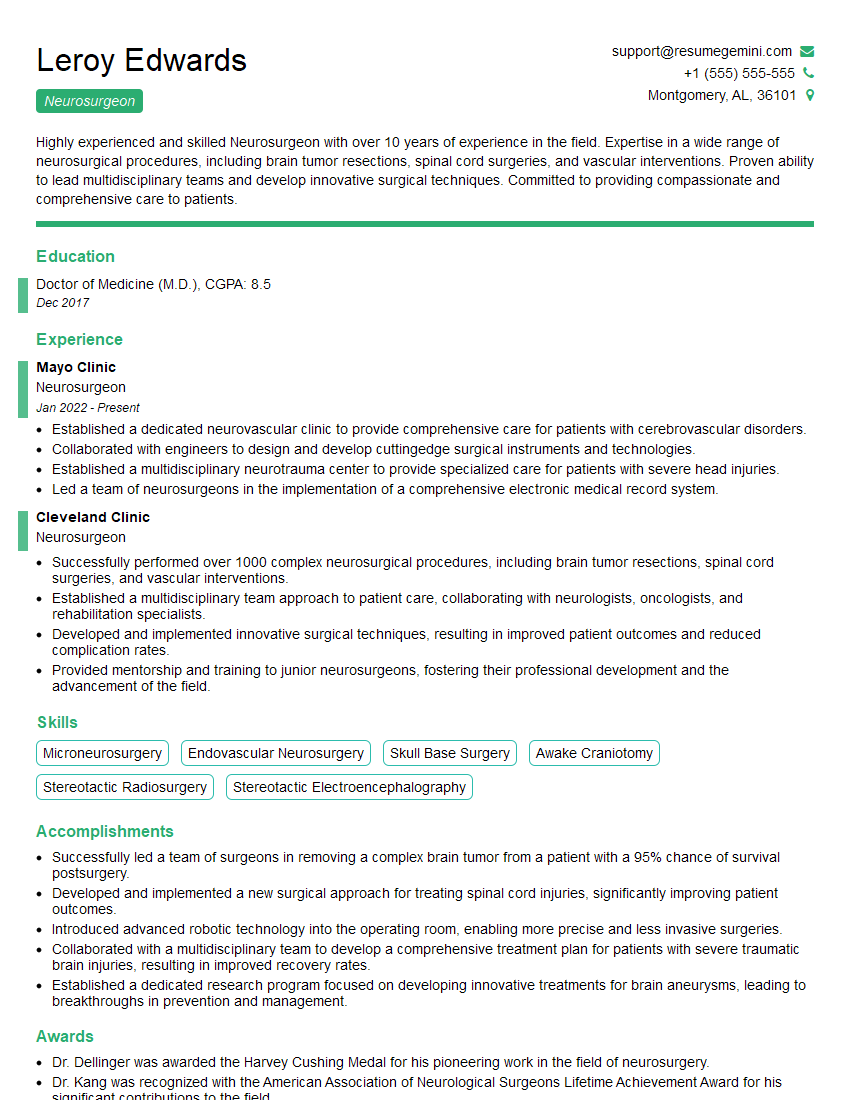
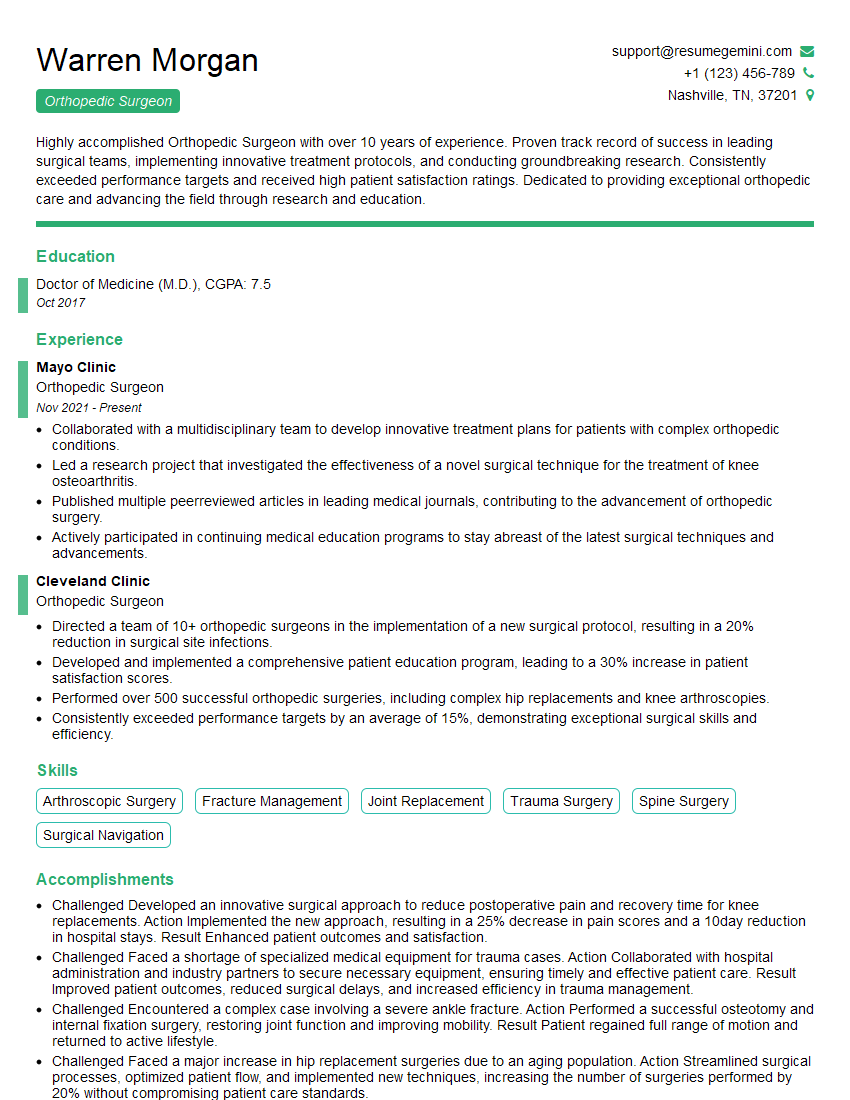
Mastering the intricacies of laminectomy is crucial for career advancement in the field of neurosurgery and spine care. A strong understanding of these procedures positions you as a highly valuable asset to any healthcare team. To significantly boost your job prospects, create a compelling and ATS-friendly resume that showcases your skills and experience effectively. ResumeGemini is a trusted resource to help you build a professional and impactful resume, tailored to highlight your expertise in Laminectomy. Examples of resumes tailored to Laminectomy are provided to guide you through the process.
Explore more articles
Users Rating of Our Blogs
Share Your Experience
We value your feedback! Please rate our content and share your thoughts (optional).
What Readers Say About Our Blog
To the interviewgemini.com Webmaster.
Very helpful and content specific questions to help prepare me for my interview!
Thank you
To the interviewgemini.com Webmaster.
This was kind of a unique content I found around the specialized skills. Very helpful questions and good detailed answers.
Very Helpful blog, thank you Interviewgemini team.